Induismo · Bhakti · Advaita Vedanta
Ramana Maharshi
ரமண மகரிஷி
1879 – 1950Persona storicamente documentata
Saggio tamil (1879–1950) che, dopo un'esperienza della morte a sedici anni, si ritirò sulla montagna sacra di Arunachala e non lasciò mai più Tiruvannamalai. Insegnò soprattutto con il silenzio e con una sola domanda, «Chi sono io?», l'indagine sul Sé che proponeva come via diretta alla liberazione. I suoi pochi scritti in tamil e i dialoghi annotati dai discepoli ne hanno fatto il riferimento centrale dell'Advaita moderno e della non dualità contemporanea.
- opere
- 33opere
- edizioni
- 50edizioni
- citazioni
- 8citazioni
- video
- 10video
- immagini
- 7immagini
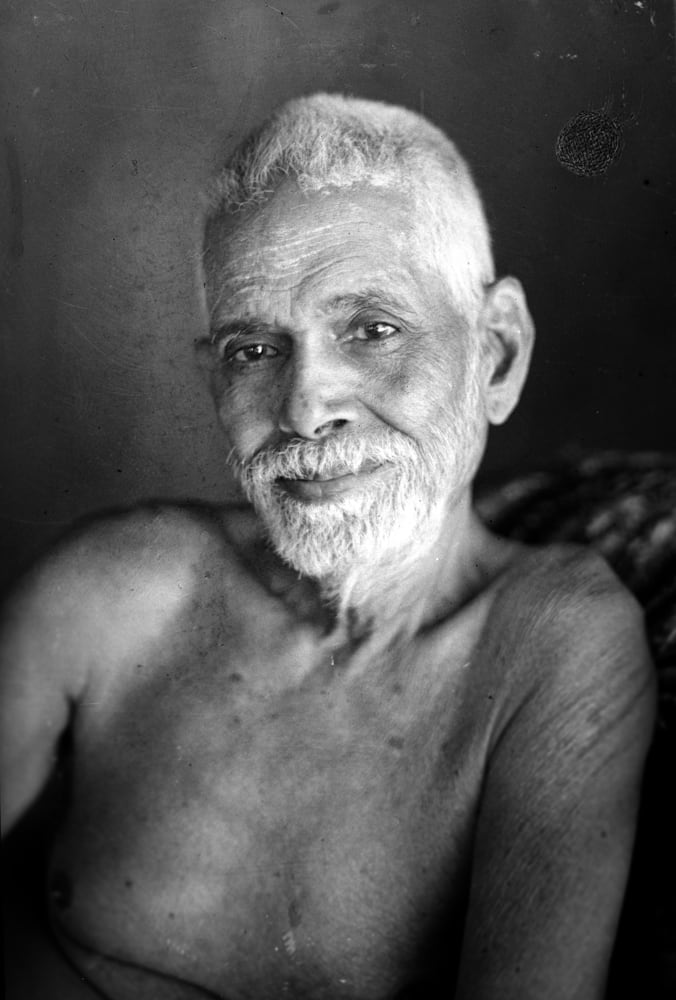
Retrato de Ramana Maharshi por G. G. Welling (1948) · Public domain
Con le sue parole
«I have set out in quest of my Father in accordance with his command.»Nota dejada a su hermano al salir de Madurai, 29 de agosto de 1896 (original tamil; trad. inglesa en Osborne 1954)

La sua idea centrale
Happiness is not obtained from objects: it is the very nature of the Self, glimpsed in deep sleep, when there are no thoughts or objects and no one feels unhappy.
Vederlo nel contesto
Biografia
6 min di lettura
Traduzione assistita dall'originale spagnolo, in attesa di revisione da parte di un traduttore madrelingua.
Un ragazzo di Madurai
Venkataraman Iyer nacque il 30 dicembre 1879 a Tiruchuli, un villaggio nel sud della presidenza di Madras, in una famiglia brahmana di lingua tamil. Il padre, Sundaram Iyer, esercitava come procuratore senza titolo presso i tribunali locali; la madre, Alagammal, sarebbe diventata molto più tardi una sua discepola. Quando il ragazzo aveva dodici anni il padre morì e la famiglia si disperse: Venkataraman andò a vivere da uno zio a Madurai, la grande città-tempio di Minakshi, dove studiò alla Scott's Middle School e poi nel liceo della Missione americana. I biografi lo descrivono come uno studente qualunque, appassionato di calcio, lotta e nuoto, senza alcuna apparente inclinazione per la vita religiosa. Solo due tratti annunciavano qualcosa di diverso: un sonno così profondo che i compagni potevano scuoterlo senza svegliarlo, e il turbamento che provò, nel novembre del 1895, sentendo un parente più anziano pronunciare il nome di Arunachala, la montagna sacra di Tiruvannamalai. Poco dopo lesse il Periya Puranam, le vite dei sessantatré santi shivaiti tamil, e qualcosa in lui rimase sospeso.
La morte a sedici anni
A metà luglio del 1896, solo in una stanza al piano superiore della casa dello zio, fu colto senza alcuna ragione da un'intensa paura di morire. Invece di cercare aiuto, si stese a terra, trattenne il respiro, irrigidì il corpo come quello di un cadavere e si chiese che cosa, esattamente, stesse morendo. Il corpo, capì, sarebbe stato portato al luogo di cremazione e ridotto in cenere; ma ciò che ne era consapevole restava presente, intatto, indipendente dal corpo. Non fu, secondo il suo racconto successivo, un ragionamento ma un'evidenza diretta: l'«io» vero era una corrente viva che la morte non raggiungeva. Da quel giorno, diceva, l'assorbimento in quel Sé non si interruppe mai. Occorre avvertire che tutto ciò che sappiamo di questo episodio proviene da quanto egli stesso raccontò decenni dopo, raccolto da B. V. Narasimha Swami nella biografia del 1931 e in dialoghi trascritti da discepoli; non esiste alcuna testimonianza coeva.
Verso Arunachala
Il ragazzo perse ogni interesse per gli studi. Il 29 agosto 1896, dopo un rimprovero del fratello maggiore, addusse il pretesto di una lezione speciale, lasciò un biglietto in cui diceva di essere partito in cerca di suo Padre e prese il treno. Giunse a Tiruvannamalai il 1° settembre, entrò nel grande tempio di Arunachaleshvara, si rasò il capo, gettò il denaro che gli restava e il cordone brahmanico, e si sedette. Gli anni seguenti sono quelli di un'immersione quasi totale: settimane nel Patala Lingam, una cripta buia del tempio dove gli insetti gli piagarono le gambe senza che sembrasse accorgersene; mesi nel santuario di Gurumurtam, dove un asceta di nome Palaniswami divenne il suo assistente; poi un frutteto di manghi, il tempio di Pavalakkunru e, dal 1899, la grotta di Virupaksha, sul fianco della montagna, dove sarebbe vissuto fino al 1916. Non parlava: non per voto, chiarì in seguito, ma perché non ne sentiva il bisogno. Quando la madre andò a supplicarlo di tornare, nel 1898, le rispose per iscritto che ciò che era destinato ad accadere sarebbe accaduto e che la cosa migliore era tacere.
In quel periodo rispose per iscritto, su lavagnette e pezzi di carta, alle domande di due visitatori, Gambhiram Seshayya e Sivaprakasam Pillai. Da quelle risposte sarebbero nati, anni dopo, Vichara Sangraham e Nan Yar? («Chi sono io?»), il testo più diffuso del suo insegnamento. Nel 1907 l'erudito sanscritista Kavyakantha Ganapati Muni, dopo aver ricevuto da lui una breve istruzione sull'origine della nozione di «io», lo proclamò Bhagavan Sri Ramana Maharshi, nome con cui fu conosciuto da allora in poi. Nel 1911 arrivò il primo occidentale, il giovane poliziotto britannico Frank Humphreys, le cui lettere, pubblicate a Londra nel 1913, descrivono per la prima volta in inglese la forza di quel silenzio. Nel 1914 compose per i suoi compagni di questua le centotto strofe della Ghirlanda nuziale di lettere per Arunachala.
Skandashram e la madre
Nel 1916 la madre si stabilì accanto a lui e la piccola comunità si trasferì a Skandashram, poco più in alto sul pendio. Alagammal, vedova ortodossa, imparò al suo fianco a rinunciare ai propri scrupoli di casta e finì per abbracciare la vita di rinunciante; morì il 19 maggio 1922 con il figlio seduto accanto, una mano sul suo petto e l'altra sul suo capo. Fu sepolta ai piedi della montagna. Pochi mesi dopo Ramana scese a visitare la tomba e non risalì più: intorno a quel sepolcro crebbe Sri Ramanasramam.
L'ashram e il silenzio
Dal dicembre 1922 fino alla morte visse in una sala aperta, la cui porta non era chiusa a nessuno. Si alzava prima dell'alba per tagliare le verdure in cucina, leggeva la posta e si rifiutava di ricevere cibo migliore o un trattamento migliore di qualsiasi altro residente. Il suo insegnamento aveva due registri: il silenzio, che i visitatori descrivono come una presenza percepibile, e le risposte, quasi sempre brevi, a chi lo interrogava. A tutti restituiva la stessa domanda: chi è che domanda? L'indagine sul Sé (ātma-vicāra) e l'abbandono completo a Dio o al maestro erano per lui due vie che sfociano nello stesso luogo. Nel 1927 e nel 1928 scrisse i suoi due maggiori poemi dottrinali, Upadesa Saram e Ulladu Narpadu.
La notte del 26 giugno 1924 alcuni ladri assaltarono l'ashram e lo percossero; egli chiese ai suoi di non difendersi, perché gli aggressori avevano la loro parte e loro la propria. Nel 1931 uscì la biografia di Narasimha Swami e quello stesso anno giunse il giornalista britannico Paul Brunton, il cui A Search in Secret India (1934) fece di Ramana una figura nota in Occidente. Da Tiruvannamalai passarono poi Paramahansa Yogananda (1935), Somerset Maugham (1938), l'indologo Heinrich Zimmer — che nel 1944 pubblicò un'antologia dei suoi insegnamenti con prefazione di C. G. Jung, pur non avendolo mai visitato — e una lunga serie di cercatori. Tra il 1935 e il 1939 Munagala Venkataramiah annotò le conversazioni che sarebbero state pubblicate nel 1955 come Talks with Sri Ramana Maharshi.
Malattia e morte
Alla fine del 1948 o all'inizio del 1949 — le fonti divergono — comparve un piccolo nodulo sotto il gomito sinistro; diagnosticato come tumore maligno, fu operato quattro volte tra febbraio e dicembre del 1949. Ramana rifiutò l'amputazione del braccio e accettò le cure che gli venivano proposte più per non contrariare i suoi che per convinzione. A chi gli chiedeva di guarirsi rispondeva che davano troppa importanza al corpo. Morì il 14 aprile 1950, alle 20.47, mentre fuori un gruppo di devoti cantava i versi ad Arunachala. Arthur Osborne, testimone della scena, riferisce che nello stesso istante diverse persone videro una grande stella cadente attraversare lentamente il cielo verso la cima della montagna. Il corpo fu sepolto nell'ashram, accanto al tempio eretto sulla tomba della madre.
Il documentato e il tramandato
La biografia di Ramana è insolitamente ricca di testimonianze, ma conviene leggerla per strati. I fatti esterni (date, luoghi, visitatori, la malattia finale) sono ben documentati da fonti molteplici. Le sue esperienze interiori ci giungono solo attraverso il suo stesso racconto, tardivo e mediato da traduttori. I suoi insegnamenti orali si conservano in appunti presi, spesso in fretta e in inglese, da interpreti che traducevano dal tamil, dal telugu o dal malayalam; gli scritti di suo pugno sono pochi e brevi. E intorno a lui crebbe, come intorno a ogni santo indiano, una corona di prodigi che egli stesso spesso sconfessava: negava di possedere poteri e riconduceva ogni domanda sui miracoli alla domanda su chi domanda.
Eredità
Sri Ramanasramam è tuttora aperto a Tiruvannamalai, gestito dai discendenti del fratello Niranjanananda, e conserva la sala in cui visse e la sua tomba. Attraverso Brunton, Osborne — che nel 1964 fondò la rivista The Mountain Path —, David Godman e discepoli indiani come H. W. L. Poonja, il suo insegnamento divenne una delle fonti principali della non dualità contemporanea. Pochi maestri del Novecento hanno lasciato un'opera scritta tanto esigua e un'impronta tanto ampia, fatta di una sola domanda: «Chi sono io?», formulata da un adolescente disteso sul pavimento di una casa di Madurai.
Fonti: Osborne, Arthur. Ramana Maharshi and the Path of Self-Knowledge. Londres: Rider, 1954 (reed. Sri Ramanasramam). Texto consultado en Internet Archive. · Narasimha Swami, B. V. Self-Realization: The Life and Teachings of Sri Ramana Maharshi. Tiruvannamalai: Sri Ramanasramam, 1931. · Venkataramiah, Munagala (Swami Ramanananda Saraswathi), ed. Talks with Sri Ramana Maharshi. Tiruvannamalai: Sri Ramanasramam, 1955 (conversaciones de 1935–1939; ed. 2006 consultada en Internet Archive). · Godman, David, ed. Be As You Are: The Teachings of Sri Ramana Maharshi. Londres: Arkana, 1985. · Brunton, Paul. A Search in Secret India. Londres: Rider, 1934 (caps. 9 y 16–17 sobre Ramana Maharshi).
Cronologia
La vita, anno per anno
Ogni punto è un evento documentato. Fai clic per leggerlo, con la sua fonte e il suo grado di certezza.
30 dicembre 18790 anniTiruchuli
Birth
Venkataraman Iyer is born, second son of Sundaram Iyer and Alagammal, into a Tamil Brahmin family, on the night of Ardra Darshanam, a festival of Shiva.
DocumentatoOsborne, Arthur. Ramana Maharshi and the Path of Self-Knowledge. Londres: Rider, 1954 (reed. Sri Ramanasramam). Texto consultado en Internet Archive.
Dopo la sua morte
- 1964The Mountain Path
30 dicembre 1879 · 0 anni
Birth
Venkataraman Iyer is born, second son of Sundaram Iyer and Alagammal, into a Tamil Brahmin family, on the night of Ardra Darshanam, a festival of Shiva.
Documentato
ca. 1892 · 12 anni
Father's death and move to Madurai
His father dies when the boy is about twelve; Venkataraman goes to live with an uncle in Madurai and attends Scott's Middle School and the American Mission High School.
Probabile
novembre 1895 · 15 anni
The name Arunachala
He hears an elderly relative say he has come from Arunachala, and the name gives him a shock he later described. Shortly afterwards he reads the Periya Puranam.
Probabile
luglio 1896 · 16 anni
The death experience
Alone in his uncle's house, a sudden fear of death leads him to enact his own death and enquire what it is that dies. From then on, by his account, absorption in the Self never ceases.
Probabile
29 agosto 1896 · 16 anni
Departure for Arunachala
He leaves a note for his brother ('I have set out in quest of my Father') with two rupees for the college fees and takes the train to Tiruvannamalai.
Documentato
1 settembre 1896 · 16 anni
Arrival at Tiruvannamalai
He enters the Arunachaleshvara temple, shaves his head, discards his money and sacred thread. He will never again leave the town and its mountain.
Documentato
febbraio 1897 · 17 anni
Gurumurtam and Palaniswami
After weeks in the Patala Lingam and other corners of the temple, he moves to the Gurumurtam shrine; the ascetic Palaniswami becomes his attendant for twenty-one years.
Documentato
1898 · 18 anni
His mother asks him to return
Alagammal finds him and begs him to come home. He replies in writing that what is destined to happen will happen and that the best course is to remain silent.
Documentato
1899 – 1916 · 19 anni
Virupaksha cave
He settles in Virupaksha cave on the slope of Arunachala, where he will live with his first disciples until 1916.
Documentato
ca. 1902 · 22 anni
Sivaprakasam Pillai's questions
He answers in writing Sivaprakasam Pillai's questions on how to know one's true identity. The answers will be published in 1923 as Nan Yar? ('Who Am I?').
Documentato
1907 · 27 anni
Ganapati Muni names him Bhagavan Sri Ramana Maharshi
The Sanskrit poet and scholar Kavyakantha Ganapati Muni receives instruction from him on self-enquiry and proclaims him Bhagavan Sri Ramana Maharshi.
Documentato
novembre 1911 · 31 anni
Frank Humphreys, the first Westerner
The British police officer Frank H. Humphreys visits him; his letters, published in 1913 in London's International Psychic Gazette, are the first Western account of his silence.
Documentato
1914 · 34 anni
Aksharamanamalai
He composes the 108 verses of the Marital Garland of Letters to Arunachala, at his companions' request, to be sung on the alms round.
Documentato
1916 · 36 anni
Skandashram and his mother's arrival
His mother and younger brother come to live with him; the community moves to Skandashram, a little higher up the mountain.
Documentato
19 maggio 1922 · 42 anni
His mother's death
Alagammal dies with her son beside her, one of his hands on her heart and the other on her head. She is buried at the foot of the mountain.
Documentato
dicembre 1922 · 42 anni
Sri Ramanasramam begins
He comes down to his mother's tomb and stays there. Around the grave grows the ashram where he will live until his death.
Documentato
26 giugno 1924 · 44 anni
The robbery
Three thieves raid the ashram and beat him; he forbids his companions to retaliate and invites the robbers to come in by the door. They were arrested days later.
Documentato
1927 · 47 anni
Upadesa Saram
At Muruganar's request he writes the thirty verses of Upadesa Undiyar, which he himself will render into Sanskrit as Upadesa Saram.
Documentato
1928 · 48 anni
Ulladu Narpadu
He composes the Forty Verses on Reality, his fullest doctrinal statement.
Documentato
1931 · 51 anni
First biography and Paul Brunton's visit
B. V. Narasimha Swami's Self-Realization is published; that same year Paul Brunton arrives, whose 1934 book will make Ramana known in the West.
Documentato
29 novembre 1935 · 55 anni
Paramahansa Yogananda's visit
Yogananda visits him with his secretary; the oldest surviving film footage of Ramana comes from that visit.
Documentato
1935 – 1939 · 55 anni
The Talks begin
Munagala Venkataramiah begins recording the conversations with visitors (1935–1939), published in 1955 as Talks with Sri Ramana Maharshi.
Documentato
18 giugno 1948 · 68 anni
Death of the cow Lakshmi
Lakshmi, the cow closest to him, dies; he stays with her in her last hours and writes an epitaph stating that she attained liberation.
Documentato
febbraio 1949 · 69 anni
First operation on the tumour
A nodule is removed from his left arm; it returns and he is operated on three more times in 1949. He refuses amputation.
Documentato
14 aprile 1950 · 70 anni
Death
He dies at 8.47 p.m. while devotees sing the verses to Arunachala. Witnesses describe a shooting star crossing the sky at that moment.
Documentato
1964
The Mountain Path
Arthur Osborne founds the ashram's quarterly journal, still published, which spreads his teachings in English.
Documentato
Opere
Opere essenziali
Le opere senza le quali non si comprende la sua eredità.
Insegnamento orale raccolto · ca. 1902
Who Am I? (Nan Yar?)
நான் யார்?
Ramana's most widely read text and the best gateway to his teaching. In a few pages it proposes that happiness is the nature of the Self, that the mind is nothing but a bundle of thoughts held together by the 'I'-thought, and that the direct path consists in turning attention to the source of that thought by asking 'Who am I?'. It distinguishes enquiry from mere suppression of thoughts, presents surrender as an equivalent path and states that the real Self is not attained: it is revealed when identification with body and mind ceases.
3 edizioni · amazon.com
Ramana Maharshi
Upadesa Saram (The Essence of Instruction)
Opera scritta · 1927
Upadesa Saram (The Essence of Instruction)
உபதேச உந்தியார் / उपदेशसारम्
Thirty verses that move in ascending order through the spiritual paths: ritual action without attachment, worship, repetition of the name, meditation, breath control and, at the summit, enquiry into the source of the mind. It does not disqualify the earlier paths but shows that all lead to the stillness of the heart. It is the text recited daily at Sri Ramanasramam.
2 edizioni · amazon.com
Ramana Maharshi
Ulladu Narpadu (Forty Verses on Reality)
Opera scritta · 1928
Ulladu Narpadu (Forty Verses on Reality)
உள்ளது நாற்பது
His fullest and most demanding doctrinal statement. It examines the relation between the world, the individual and God, the illusion of time and space, destiny and free will, and the status of the 'I'-thought as the root of all duality. Its thesis is that only what exists without interruption is real, and that this conscious existence is the Self. It has received extensive commentaries, including those of Lakshmana Sarma and Sadhu Om.
3 edizioni · amazon.es

Raccolta posteriore · 1955
Talks with Sri Ramana Maharshi
The broadest source for his oral teaching: 653 numbered conversations with Indian and Western visitors on enquiry, surrender, deep sleep, karma, meditation, the world and the master. Its value is immense and so are its limits: these are an interpreter's notes, not verbatim transcripts. It is the book from which many quotations attributed to Ramana derive.
4 edizioni · amazon.com

Raccolta posteriore · 1959
The Collected Works of Ramana Maharshi
The reference volume: Nan Yar, Vichara Sangraham, Upadesa Saram, Ulladu Narpadu and its supplement, the hymns to Arunachala, the Ekatma Panchakam, occasional verses and the versions of Shankara and the Gita. The ashram keeps its own revised edition.
3 edizioni · amazon.com

Raccolta posteriore · 1985
Be As You Are
The most widely used modern introduction to Ramana's teaching. Godman arranges the dialogues by question (the Self, enquiry, surrender, the master, meditation, suffering, the world) and prefaces each chapter with a short, precise explanation. It has been translated into many languages.
4 edizioni · amazon.com
Tutta la sua opera (33)

Vichara Sangraham (Self-Enquiry)
1901
Ramana Maharshi
The Marital Garland of Letters to Arunachala (Aksharamanamalai)
The Conscious LibraryThe Marital Garland of Letters to Arunachala (Aksharamanamalai)
1914
Ramana Maharshi
Five Hymns to Arunachala
The Conscious LibraryFive Hymns to Arunachala
1914
Ramana Maharshi
Supplement to the Forty Verses
The Conscious LibrarySupplement to the Forty Verses
1928
Ramana Maharshi
Five Verses on the One Self (Ekatma Panchakam)
The Conscious LibraryFive Verses on the One Self (Ekatma Panchakam)
1947
Ramana Maharshi
Tamil translations (Vivekachudamani, Atma Bodha, Drig-Drishya-Viveka and others)
The Conscious LibraryTamil translations (Vivekachudamani, Atma Bodha, Drig-Drishya-Viveka and others)

Sri Ramana Gita
1917
Ramana Maharshi
Maharshi's Gospel
The Conscious LibraryMaharshi's Gospel
1939

The Spiritual Teaching of Ramana Maharshi
1972

The Teachings of Bhagavan Sri Ramana Maharshi in His Own Words
1962

Day by Day with Bhagavan
1968

Letters from Sri Ramanasramam
1970
Ramana Maharshi
Self-Realization: The Life and Teachings of Sri Ramana Maharshi
The Conscious LibrarySelf-Realization: The Life and Teachings of Sri Ramana Maharshi
1931

Ramana Maharshi and the Path of Self-Knowledge
1954
Ramana Maharshi
Atma Vidya Kirtanam (Song on Self-Knowledge)
The Conscious LibraryAtma Vidya Kirtanam (Song on Self-Knowledge)
1927
Ramana Maharshi
Appalappattu (The Song of the Poppadum)
The Conscious LibraryAppalappattu (The Song of the Poppadum)
1914

Sat-Darshana Bhashya and Talks with Maharshi
1931
Ramana Maharshi
Spiritual Instruction (Upadesa Manjari)
The Conscious LibrarySpiritual Instruction (Upadesa Manjari)
1948
Ramana Maharshi
Guru Vachaka Kovai (The Garland of Guru's Sayings)
The Conscious LibraryGuru Vachaka Kovai (The Garland of Guru's Sayings)
1939

Crumbs from His Table

Gems from Bhagavan
1965
Ramana Maharshi
Conscious Immortality
The Conscious LibraryConscious Immortality
1984
Ramana Maharshi
Padamalai
The Conscious LibraryPadamalai
2004

The Essential Teachings of Ramana Maharshi: A Visual Journey
2002
Citazioni
Citazioni localizzate in un'opera precisa. Ciascuna porta con sé la sua provenienza e il suo grado di affidabilità.
I have set out in quest of my Father in accordance with his command.VerificataNota dejada a su hermano al salir de Madurai, 29 de agosto de 1896 (original tamil; trad. inglesa en Osborne 1954)
Idee essenziali (sintesi editoriale)
Per rispetto del diritto d'autore, queste idee sono riassunte con parole nostre e non sono presentate come citazioni letterali.
- Happiness is not obtained from objects: it is the very nature of the Self, glimpsed in deep sleep, when there are no thoughts or objects and no one feels unhappy.
- For Ramana, enquiry and surrender are not opposed paths: seeking the source of the 'I' or abandoning it entirely to God lead to the same result, the disappearance of the ego.
- The true master is not an outer person but the Self; the human master only pushes inward one who seeks outside, and his grace works above all in silence.
Citazioni apocrife o di attribuzione discussa (1)
«Wanting to reform the world without discovering one's true self is like trying to cover the world with leather to avoid the pain of walking on stones; it is much simpler to wear shoes.»
Widely circulated online under his name, but it does not appear in the Talks, the Gospel or the collected works. The image of leather covering the earth comes from Shantideva's Bodhicharyavatara (V, 12–13), an eighth-century Buddhist text.
Ultime parole
Racconto posteriore di testimoni
«"They say that I am dying but I am not going away. Where could I go? I am here."»They say that I am dying but I am not going away. Where could I go? I am here.
Ramana left no single final sentence. In his last days, according to Arthur Osborne, who was present, he answered those who grieved his going that they said he was dying, but he was not going away: where could he go? He was here. This is the sentence tradition remembers as his farewell. Osborne also records other words from those days: to those who asked him to will his recovery he asked who was there to will it; at noon on 14 April, asking the time, he added that henceforth time did not matter; and he thanked his attendants for their years of service by telling them that the English have the word 'thanks' but they only say santosham ('I am pleased'). At nightfall, no longer speaking, he opened his eyes on hearing the verses to Arunachala sung outside, smiled, shed a few tears and stopped breathing at 8.47 p.m. The words are known in the English version of witnesses who heard them in Tamil.
Fonte: Osborne, Arthur. Ramana Maharshi and the Path of Self-Knowledge. Londres: Rider, 1954 (reed. Sri Ramanasramam). Texto consultado en Internet Archive.
Chiedi
Ciò a cui risponde la sua opera
Dodici grandi domande dell'umanità e ciò che i suoi testi permettono di rispondere, con riferimenti. Non gli mettiamo mai parole in bocca.
Che cos'è l'Assoluto? Dio esiste?
God, soul and world are the one Reality, which is the Self
Un Assoluto impersonaleLo dice espressamente
Ramana Maharshi answers from Advaita. In the Forty Verses on Reality (Ulladu Narpadu) he notes that all doctrines start from three realities — world, soul and God — and states that it is the one Reality that appears as the three; to dispute whether they are three or one while the ego lasts is futile. That Reality is the Self, pure formless consciousness. Ramana does not deny God: in his conversations he admits Ishvara as long as there is a sense of individuality, and recommends surrender to God as a path as valid as enquiry. But a separate God exists only for one who believes himself separate; when the ego dissolves, God, the Self and the Absolute are the same. His practical teaching is not to debate God's existence but to ask who it is that asks.
Confronta questa domanda con altri maestriChi sono io? Esiste un vero sé?
Asking «Who am I?» dissolves the ego and reveals the Self
Il Sé è l'AssolutoLo dice espressamente
The question «Who am I?» is the core of Ramana Maharshi's teaching and gives its title to his best-known text, Nan Yar?, compiled from answers he gave in the 1900s. There he rules out, one by one, the body, the senses, the breath and the mind: none of these is the self. The ego is the «I»-thought, the first of all thoughts, which arises with the body and on which the others depend; if its source is sought, it vanishes. What remains is not nothingness but the Self (atman), pure consciousness identical with the Absolute, whose nature is happiness. Ramana teaches holding attention on that sense of «I» until it dissolves into its source. According to his biographers, he himself awoke to this understanding at sixteen, after an experience of his own death.
Confronta questa domanda con altri maestriPerché soffriamo?
Happiness is the Self's nature; we suffer by taking ourselves for the body
L'ignoranza di ciò che siamoLo dice espressamente
Ramana Maharshi answers in Nan Yar? that happiness is the very nature of the Self, and that when a desired object is obtained and one feels happy, what happens is that the mind turns for a moment towards its source and tastes that happiness, which was never in the object. Suffering appears when the mind goes out towards the world and identifies with the body: the thought «I am this body» is the root of all others and of all sorrows. In his conversations he insists that problems exist for the ego, and that asking who suffers undoes the one who suffers. He does not deny physical pain, which he himself endured with cancer in his last years, but distinguishes between the body's pain and identification with it. The remedy is to know what one is.
Confronta questa domanda con altri maestriChe cosa accade dopo la morte?
The body dies; the Self that knew it was never born and never dies
Ciò che sono non nasce e non muoreLo dice espressamente
Ramana Maharshi linked his awakening to an experience of death. According to the account he himself gave, at sixteen, in Madurai, he was seized by a sudden fear of dying; he lay down like a corpse, held his breath and asked what it was that died: the body would be inert, but the «I» that knew this remained present and was untouched by death. All his later teaching develops that insight. In the conversations recorded in Talks he distinguishes the body, which is born and dies, from the Self, which is pure consciousness without beginning or end. To those who asked about rebirth he replied that they should first find out who is born: as long as identification with the body persists there are births and deaths; for one who knows the Self, the question disappears. When his disciples lamented his final illness, he told them he was not going anywhere.
Confronta questa domanda con altri maestriCome si raggiunge la liberazione o la salvezza?
The enquiry «Who am I?» dissolves the false self; surrender is the other way
Con la conoscenza direttaLo dice espressamente
For Ramana Maharshi liberation is not something acquired, because the Self is already what one is: the only thing to remove is the ignorance that veils it, the identification with the thought «I» that takes itself to be the body. The principal means, set out in Who Am I? (Nan Yar), is enquiry: for each thought, ask to whom it arises and trace the sense of «I» back to its source until it dissolves in the Self. Ramana admitted a second, equally valid path, total surrender to God or the guru, because both lead to the disappearance of the ego. He regarded action, ritual devotion or breath control as preparatory aids, not causes of liberation.
Confronta questa domanda con altri maestriServe un maestro?
God, guru and Self are not different: the true teacher is within
Il maestro è dentroLo dice espressamente
Ramana Maharshi attained realisation at sixteen without a human teacher, and never gave formal initiation or presented himself as the guru of an organisation. His teaching, recorded in Who Am I? and in Talks with Sri Ramana Maharshi, holds that God, the guru and the Self are essentially the same: the true teacher is the Self dwelling in the heart. The outer guru fulfils a function, pushing the mind inward while the inner Self draws it, but his grace does not act without the disciple's effort. Ramana did not deny the usefulness of a human teacher for most people; he denied that it is something other than the Self to which it points.
Confronta questa domanda con altri maestriIl mondo è reale?
The world is unreal as a separate object and real as the Self
Apparenza sull'unica realtàLo dice espressamente
Ramana Maharshi takes up the Advaita thesis that only the Self is real, but formulates it from experience rather than speculation. In Who Am I? he explains that the world appears when the thought «I» arises and disappears in deep sleep, like the snake imagined in a rope: it cannot be attributed a reality independent of the perceiver. That is why he advised not getting lost in debates about whether the world is real, but finding out who sees it. In Forty Verses on Reality and in the conversations recorded by his disciples he qualifies that, for one who knows the Self, the world is not unreal: it is the Self itself, perceived without the division between subject and object.
Confronta questa domanda con altri maestriChe cos'è l'amore?
The Self is love; full devotion and knowledge are the same
Ciò che appare quando l'io cessaSi deduce dalla sua dottrina
Ramana Maharshi does not separate love from knowledge of the Self. To those who asked him about devotion (bhakti) he replied that supreme devotion and knowledge (jñāna) are one and the same: to love God fully is to surrender the ego to him, and what remains when the ego is surrendered is the Self. What everyone loves in everything, he said, is their own happiness, and happiness is the nature of the Self; so love of others, understood deeply, is love of the Self present in all. This love is not produced by emotional effort: it appears when the question «who am I?» dissolves identification with body and mind. Ramana nevertheless cultivated and encouraged devotion: his hymns to Arunachala, such as the Akshara Mana Malai, are poems of love and surrender to the hill he revered as Shiva.
Confronta questa domanda con altri maestriSiamo liberi o è tutto determinato?
What is destined will happen; the only freedom is not being the doer
Non c'è un agenteLo dice espressamente
Ramana holds that what the body is to live through was fixed by *prarabdha karma*, the karma that has already begun to bear fruit. In the note he wrote to his mother in 1898, when she came to fetch him at Tiruvannamalai, he states that what is destined to happen will happen however one tries to prevent it, and that the best course is to remain silent. In *Upadesa Saram* (vv. 1–2) he recalls that karma bears fruit by the Lord's ordinance and that action by itself is insentient. Where, then, is freedom? According to the conversations recorded in *Talks*, there are only two ways out: to enquire who it is that believes he has free will —and discover that it does not exist as a separate entity— or to surrender completely to God. Both dissolve the idea of a doer.
Confronta questa domanda con altri maestriPerché meditare o pregare?
Asking «who am I?» until the «I»-thought dissolves in its source
Tornare alla sorgente dell'ioLo dice espressamente
Ramana is the reference for this key. In *Who Am I?* (*Nan Yar*), his written answers of around 1901-1902 to Sivaprakasam Pillai, he explains that of all thoughts the first is the «I»-thought, and all the others depend on it. The practice is to ask, each time a thought arises, to whom it occurs; the answer is «to me», and then one enquires who that I is. Thus the mind turns towards its source and eventually dissolves in the Self, which is not an object but what has always been present. Ramana also accepts complete surrender to God as an equivalent path, but holds that mantra repetition or breath control only quiet the mind temporarily.
Confronta questa domanda con altri maestriPuò la ragione conoscere l'ultimo?
The mind does not know the Self: it dissolves into it
L'ultimo è al di là della menteLo dice espressamente
For Ramana the mind is not an instrument able to know the Self, because the mind itself arises from the Self as the «I»-thought and veils it. In *Who Am I?* he explains that the mind is nothing but a bundle of thoughts and that, when its origin is sought, it vanishes; what remains is the Self, which is not an object of knowledge but knowledge itself. In *Ulladu Narpadu* (*Forty Verses on Reality*) he adds that all arguments over whether the world is real or illusory, one or many, belong to the ego. He did not scorn scripture, which he could quote precisely, but considered it useful only to turn one towards enquiry: endless reading, he said, is useless unless one seeks who reads.
Confronta questa domanda con altri maestriRitirarsi dal mondo o trasformarlo?
True renunciation is of the ego, not of home or work
Contemplazione nell'azioneLo dice espressamente
Ramana Maharshi's life looks like an example of withdrawal: he came to Arunachala at sixteen, spent years in temples and caves on the hill and never again left Tiruvannamalai. His teaching, however, does not require anyone to do the same. In the conversations recorded in Talks, to those who wished to abandon family and work to devote themselves to the search he replied that true renunciation does not consist in leaving external things but in giving up the sense of being the doer; the ego that goes to the forest takes the problem along with it. One can work and live in the world with attention on the Self, and then actions happen without attachment. Asked how to help the world, he held that one who knows himself helps the world more than through any activity, and that the world is not outside the Self.
Confronta questa domanda con altri maestri
Affinità e tensioni
Affinità e tensioni
Calcolate domanda per domanda a partire dalle sue posizioni. Il perché di ogni accordo o contrasto, con un clic.
La pensa in modo simile a
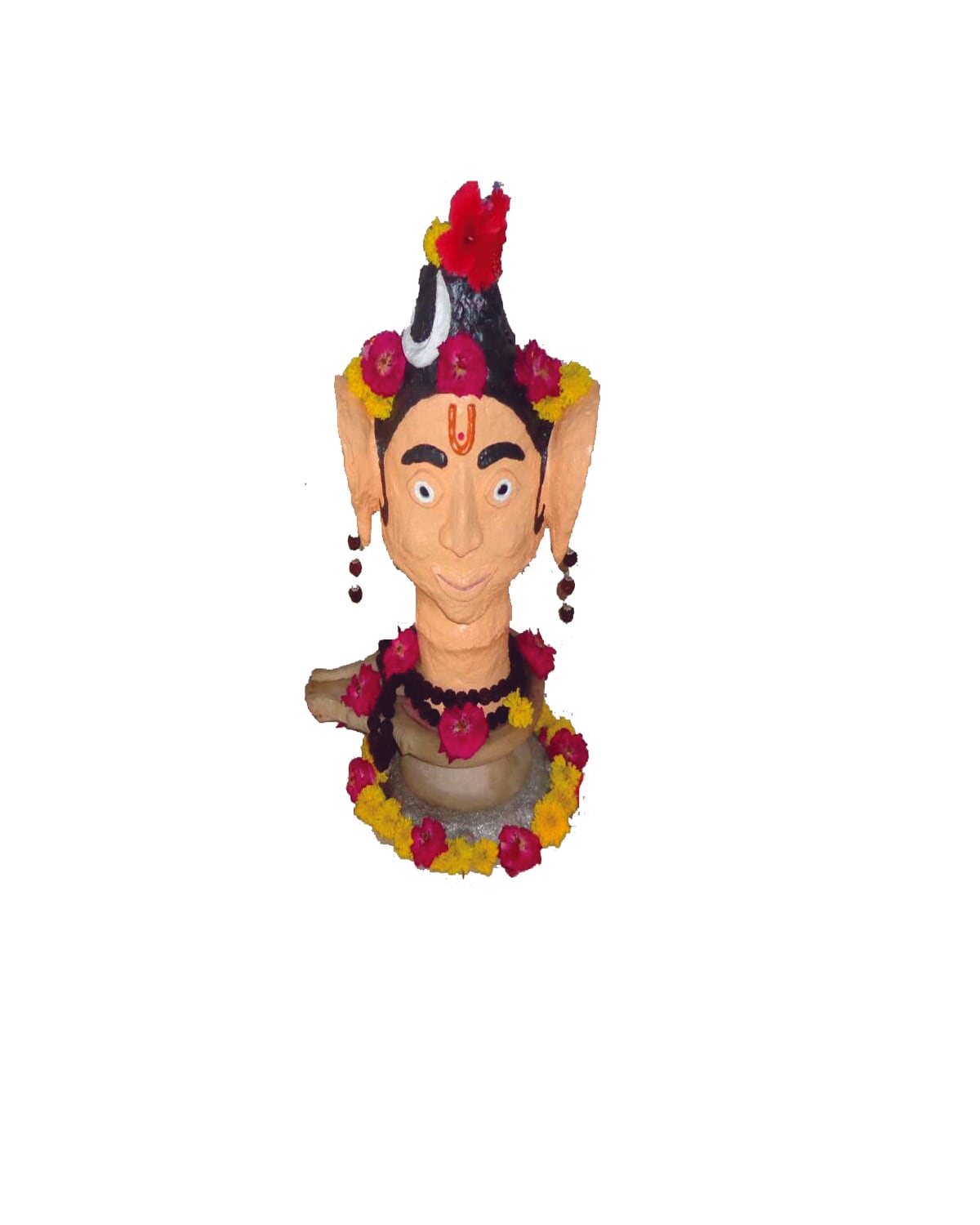
Nisargadatta Maharaj
Concordano su: Chi sono io? Esiste un vero sé? · Perché soffriamo? · Che cosa accade dopo la morte?
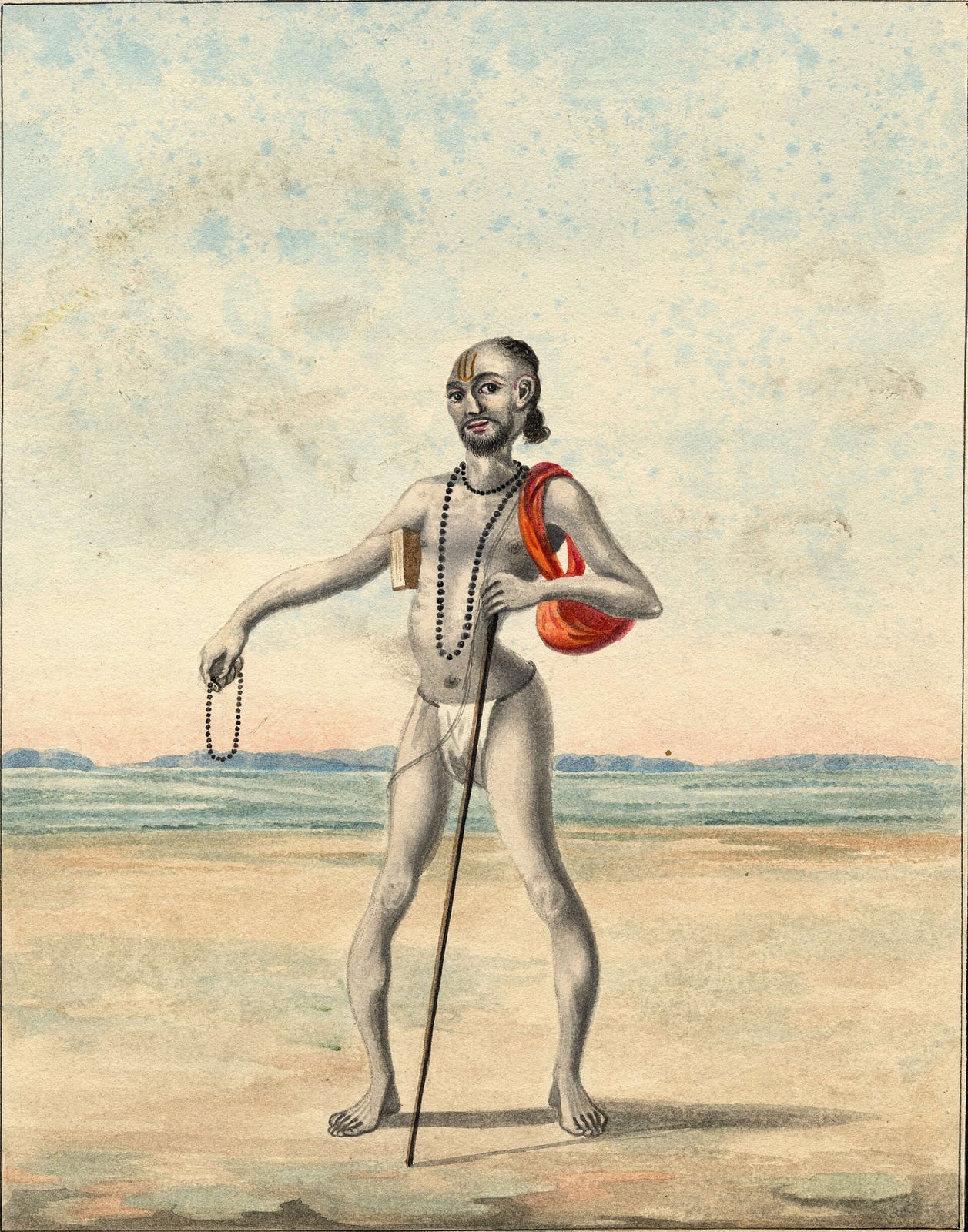
Ashtavakra
Concordano su: Che cos'è l'Assoluto? Dio esiste? · Chi sono io? Esiste un vero sé? · Perché soffriamo?
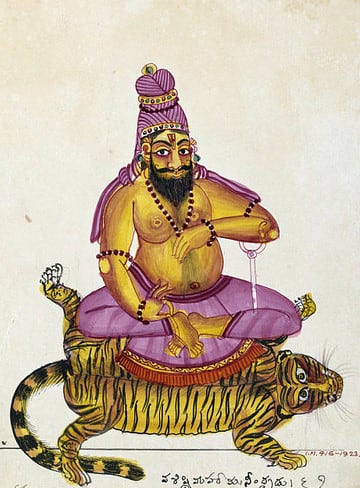
Vasishtha
Concordano su: Che cos'è l'Assoluto? Dio esiste? · Chi sono io? Esiste un vero sé? · Perché soffriamo?
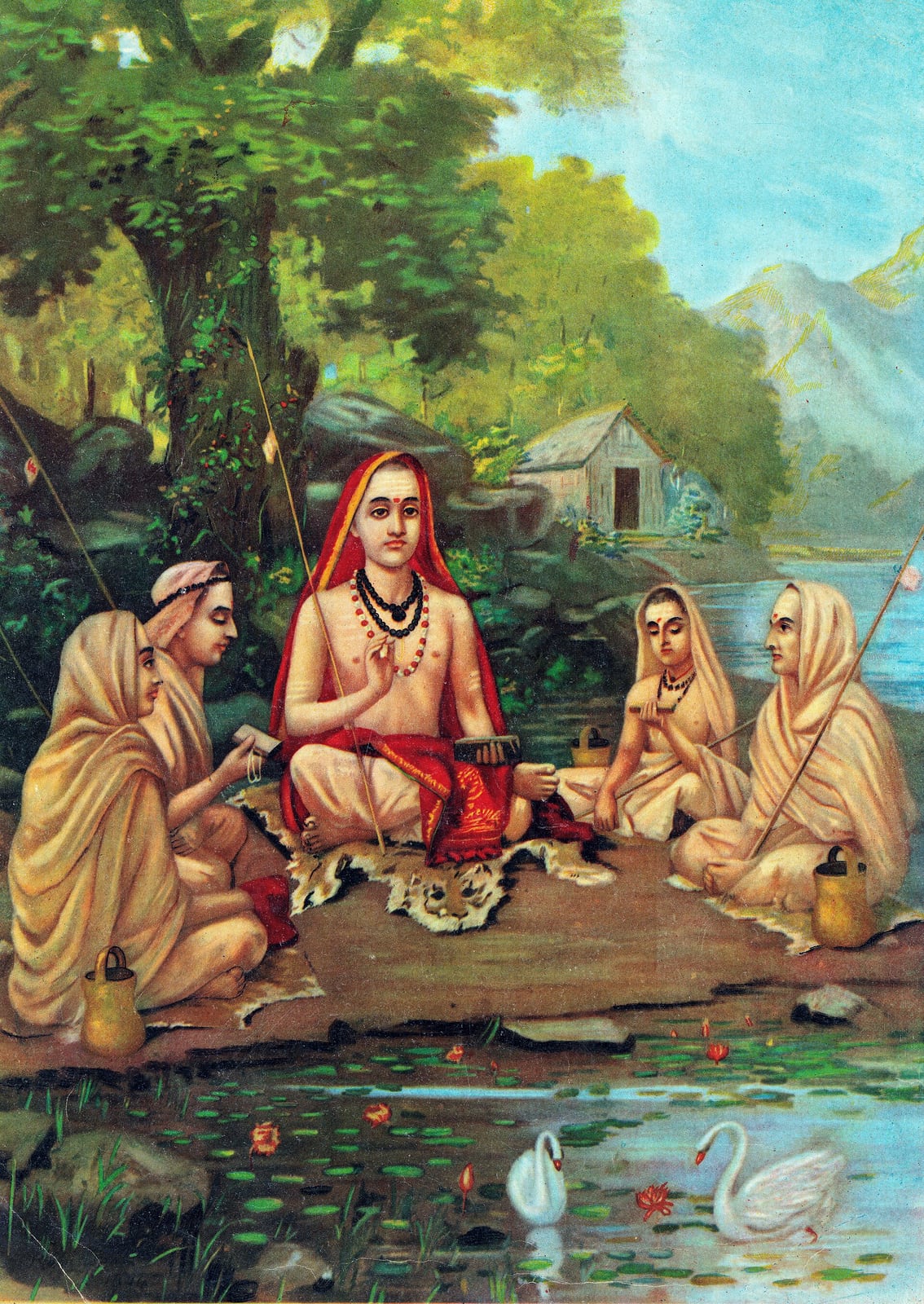
Adi Shankara
Concordano su: Che cos'è l'Assoluto? Dio esiste? · Chi sono io? Esiste un vero sé? · Perché soffriamo?
La pensa diversamente da

Julian of Norwich
Si scontrano su: Chi sono io? Esiste un vero sé? · Il mondo è reale?
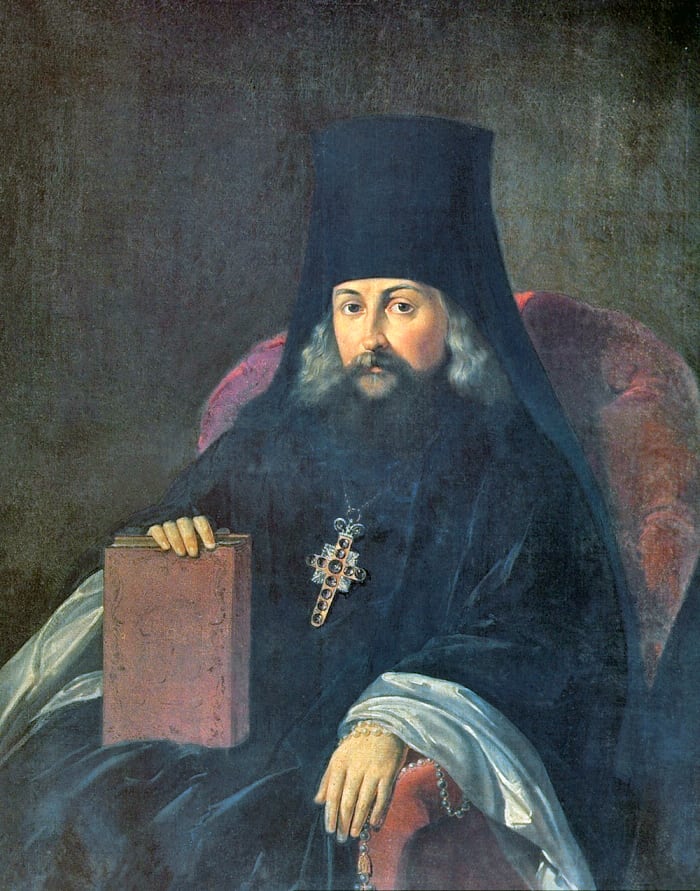
Ignatius Brianchaninov
Si scontrano su: Chi sono io? Esiste un vero sé? · Il mondo è reale?
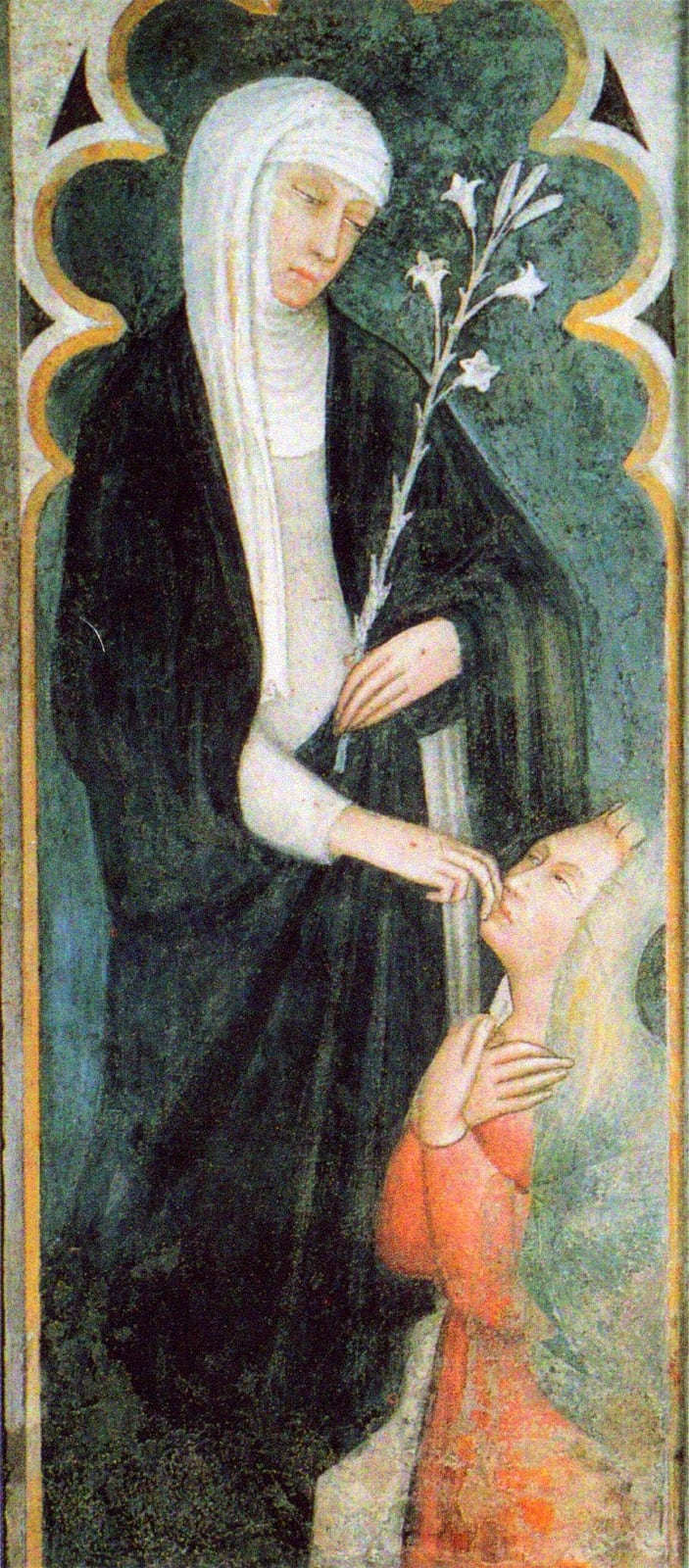
Catherine of Siena
Si scontrano su: Chi sono io? Esiste un vero sé? · Il mondo è reale?
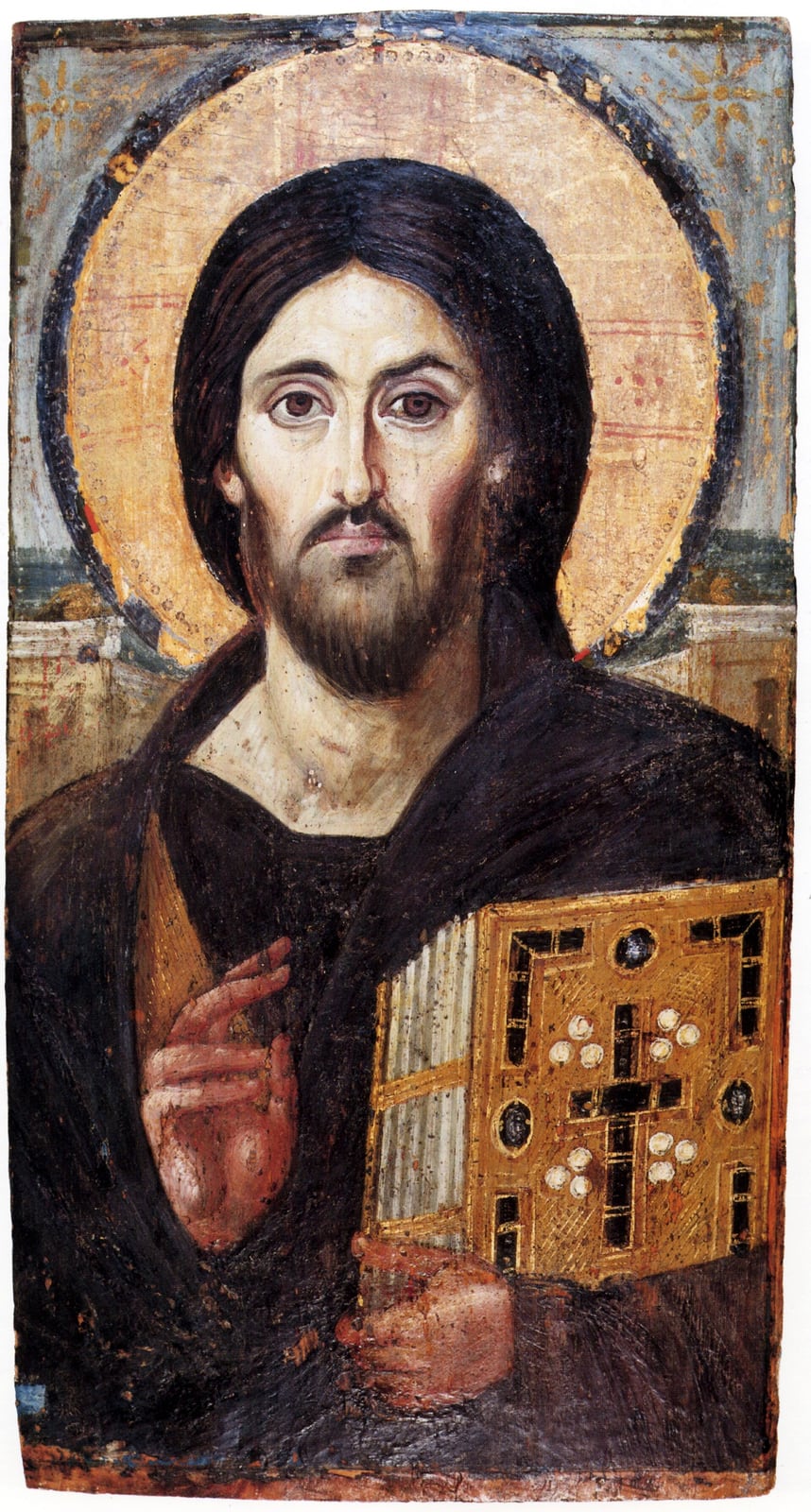
Jesus of Nazareth
Si scontrano su: Il mondo è reale? · Chi sono io? Esiste un vero sé?
Si scontrano suContraddizione apparente
Ramana Maharshi · G. I. Gurdjieff
Conscious effort versus being what one already is: a smaller conflict than it seems
Perché: The contradiction is largely apparent because they speak from different levels. Gurdjieff describes the human being from the side of sleep and the machine, and his effort is the condition for something to awaken; Ramana speaks from the Self, for which effort produces nothing new, and he admits it only as a means of stopping the ego from interfering. Both deny the ordinary doer. A real difference remains, however, and should not be glossed over: for Gurdjieff the permanent self does not exist and must be created; for Ramana it already exists and one need only stop veiling it. In one effort builds; in the other, it clears away.
Concordano su
Ramana Maharshi · Eckhart Tolle
You are not what you think: the shift of the subject on the hill and in the now
Perché: The affinity has a contextual explanation: Tolle writes in a contemporary Western milieu that had received Advaita, among other sources, through Ramana and his popularisers, and he adopts a vocabulary without scriptures or gods. The differences are of register and audience. Ramana speaks from the Vedantic tradition, with an explicit metaphysical horizon, since the Self is identical with the Absolute, and with a very precise question-method; Tolle addresses readers without religious training, stresses the now and the inner body, and extends the diagnosis to a collective scale. One asks who; the other asks one to be present. Both point to the same shift of the subject.
Si scontrano suContraddizione apparente
Ramana Maharshi · Rumi
The path of knowledge and the path of love: two ways ending in the same burning of the ego
Perché: The contradiction is apparent at the level of the path: both seek the dissolution of the ego and attribute it to something that exceeds the subject, the Beloved who draws in Rumi, the Self or grace in Ramana. The difference of language comes from their traditions: Persian Sufism expresses the way in terms of lover and Beloved; Advaita, in terms of knowledge of the Self. A metaphysical difference remains, however, that is not apparent: Rumi stays within the Islamic doctrine of creation, and the soul returns to a God who is not itself, while Ramana affirms that the Self is the Absolute. They agree on the how more than on the what.
Si scontrano suContraddizione apparente
Ramana Maharshi · P. D. Ouspensky
Many I's or a single Self: the same word for two levels
Perché: The contradiction is apparent at the level of diagnosis because they use the word I for different levels: Ouspensky calls I's the psychological states of ordinary man; Ramana reserves the term Self for the awareness that witnesses them all, which is neither a state nor a content. Ramana's ego and Ouspensky's many I's are the same reality seen from two systems. There is a real difference in the goal: the Fourth Way aims to build a permanent I through work, whereas for Ramana the Self is not built but recognised. One starts from a psychology of the machine; the other, from a Vedantic metaphysics.
Concordano su
Ramana Maharshi · Adi Shankara
The Advaita of the commentaries and the Advaita of silence
Perché: The relationship is documented in one sense: Ramana rendered into Tamil texts attributed to Shankara, such as the Vivekachudamani and the Atmabodha, although scholars dispute Shankara's authorship of them. The difference is one of method and authority. Shankara is a commentator who holds that Brahman is known only through scripture, with reason in its service, and who assigns monastic renunciation to the sage. Ramana never received scholastic training, spoke from an experience lived at sixteen, proposed a single question as method and considered that true renunciation is of the ego, not of home or work. One argues for the identity; the other invites one to verify it.
Concordano su
Ramana Maharshi · Jiddu Krishnamurti
No outer authority: the question who am I and the observer who is the observed
Perché: The affinity is comparative: there is no record that they met. It is explained by a shared distrust of institutional religion and of learning, which in Ramana stems from an early experience lived without teacher or study, and in Krishnamurti from his break with the Theosophical organisation that had formed him. The underlying difference is metaphysical. Ramana speaks from Advaita and affirms a Self that is the Absolute, and accepts devotion and surrender as a path; Krishnamurti rejects any doctrine of the Self, which he sees as another projection of thought seeking security, and every tradition. One enquires in order to find what has always been; the other observes so that what thought manufactures comes to an end.
Aneddoti e racconti
Aneddoti e racconti
Testimonianzajulio de 1896
The boy who rehearsed his own death
Origine del racconto: It comes from Ramana's own account, recorded by B. V. Narasimha Swami for Self-Realization (1931) from conversations with him, and repeated with minimal variations in later dialogues (Talks, 1935–1939; collected by Godman in Be As You Are). There are no witnesses: it is an autobiographical testimony given more than thirty years later.
Fonte: Narasimha Swami, B. V. Self-Realization: The Life and Teachings of Sri Ramana Maharshi. Tiruvannamalai: Sri Ramanasramam, 1931.
Testimonianza1896–1897
In the vault of the Patala Lingam
Origine del racconto: Narrated by Narasimha Swami (1931) with testimony from those involved, including Venkatachala Mudali, and followed by Osborne (1954). The details (the sores, Seshadri's intervention) come from witnesses; the reading that he did not feel the pain because he was absorbed in the Self is the biographers' and Ramana's own interpretation.
Testimonianza1896–1950
A silence that could be felt
Origine del racconto: The fame of his stillness has a traceable early origin: Humphreys' letters (The International Psychic Gazette, London, 1913), reproduced by Narasimha Swami and Osborne; Brunton's A Search in Secret India (1934), which spread it in the West; and Ramana's own words on silence in the Talks (talks 20 and 398). The explanation that it was not a vow is his own, quoted by Osborne. What witnesses felt is, by nature, subjective testimony.
Fonte: Humphreys, Frank H. Cartas sobre su visita a Ramana Maharshi (1911), publicadas en The International Psychic Gazette, Londres, 1913; reproducidas en Osborne 1954 y por Sri Ramanasramam (Glimpses of the Life and Teachings of Bhagavan Sri Ramana Maharshi).
Documentato1924
The thieves of the night of 26 June
Origine del racconto: A documented event: there was a police report, the thieves were arrested and sentenced, and several eyewitnesses (Kunjuswami, Ramakrishnaswami) left their accounts. Osborne narrates it in detail following Narasimha; Ramana's words come from those witnesses.
Testimonianza1926–1948
The cow Lakshmi
Origine del racconto: Told by Osborne (1954), who was living at the ashram at the time, and by Devaraja Mudaliar, who asked Ramana whether the epitaph was a conventional formula or literally meant liberation. The grave with the epitaph exists at Sri Ramanasramam; the spiritual interpretation of the episode belongs to the devotees and to Ramana himself.
Testimonianza14 de abril de 1950
The star of 14 April 1950
Origine del racconto: It comes from the account of Osborne (1954), an eyewitness, who in turn relays what the photographer told him. Osborne does not name him; he is usually identified as Henri Cartier-Bresson, who photographed Ramana in his last days, an identification we have not been able to confirm in a primary source. That a fireball was seen that night is plausible; that its passage coincided exactly with the death, and its reading as a sign, belong to devotional testimony.
Non verificabilesin fecha
The shadow that could not be seen
Origine del racconto: It cannot be traced. It does not appear in the full texts of Osborne (1954) or the Talks (1955), which we have reviewed in full, nor have we found it in Narasimha (1931), Mudaliar, Nagamma, Godman or any accessible primary source; nor in searches in English and Spanish. The surviving photographs and films (1935–1950) do not support it; that many were taken in diffuse light (overcast sky, umbrella, inside the hall) might explain why no marked shadow is visible in them, but this is our hypothesis. The motif of shadowless gods comes from the Nalopakhyana (Mahabharata III).
Insegnamenti
Insegnamenti
Le nozioni che articolano il suo pensiero, spiegate nel loro contesto.
Self-enquiryatma-vichara
It has roots in the Upanishads and Shankara, but in scholastic Advaita enquiry (vichara) is usually intellectual discrimination guided by scripture. Ramana turns it into a direct attentional practice, with no requirement of study or initiation.
Fonte: Osborne, Arthur, ed. The Collected Works of Ramana Maharshi. Londres: Rider, 1959; Tiruvannamalai: Sri Ramanasramam (ediciones posteriores).
The 'I'-thoughtaham-vritti
The expression 'knot between the conscious and the inert' (chit-jada-granthi) comes from the Tamil tradition and texts such as the Yoga Vasishtha, which Ramana knew. His analysis through the three states (waking, dream, deep sleep) follows the Mandukya Upanishad.
Fonte: Osborne, Arthur, ed. The Collected Works of Ramana Maharshi. Londres: Rider, 1959; Tiruvannamalai: Sri Ramanasramam (ediciones posteriores).
The Hearthridayam
Placing the spiritual heart on the right does not come from the classical Upanishads, which put it in the chest without laterality; Ramana based it on his experience and said he found confirmation in a Malayalam Ayurvedic treatise (the index of the Talks refers to the Ashtanga Hridayam) and in the Sita Upanishad (Talks, talk 4).
Silence (mauna)mauna
The ideal of the silent master has a long history in South Indian Shaivism (the hymn to Dakshinamurti attributed to Shankara, which Ramana translated into Tamil). Jung and Zimmer noted that the figure of the silent saint fitted deep-rooted Indian notions of holiness.
Surrender (saranagati)saranagati
The notion comes from the devotional (bhakti) tradition and, in South India, from Vaishnavism and Tamil Shaivism, whose saints (the Nayanmars of the Periya Puranam) marked Ramana in his adolescence.
Fonte: Godman, David, ed. Be As You Are: The Teachings of Sri Ramana Maharshi. Londres: Arkana, 1985.
Natural samadhi (sahaja samadhi)sahaja-samadhi
The terminology of degrees of samadhi comes from yoga and late Vedanta; the insistence that the ultimate state is natural (sahaja) and compatible with activity connects with the jivanmukta ideal and the Tamil siddha traditions.
Fonte: Godman, David, ed. Be As You Are: The Teachings of Sri Ramana Maharshi. Londres: Arkana, 1985.
Ritiri
Ritiri e centri
Luoghi e incontri legati al suo insegnamento. Ti mettiamo in contatto con chi li organizza.
Tiruvannamalai, Tamil Nadu · India
Sri Ramanasramam, Tiruvannamalai
Sri Ramanasramam
Sri Ramanasramam is the ashram that grew around Ramana Maharshi at the foot of Arunachala, the sacred hill of Tiruvannamalai, where he lived until his death in 1950. Today it preserves his samadhi shrine, the old hall where he received visitors and his mother's shrine, and keeps the daily chanting and routine. It does not run courses or guided retreats: the ashram makes itself available as a simple home for anyone who wishes to sit in silence and practise the enquiry Who am I. It provides rooms and South Indian meals to visitors from all over the world.
Tiruvannamalai, Tamil Nadu · India
Giri pradakshina: walking around Arunachala
Sri Ramanasramam (información) · Arulmigu Arunachaleswarar Temple
Giri pradakshina is the walking circuit of about fourteen kilometres around Arunachala, the hill Ramana Maharshi regarded as the visible form of the Self. It is walked clockwise, keeping the mountain on one's right, past the temples, tanks and lingams that mark the route. Ramana recommended it to everyone: go round the hill once and you will see that it attracts you, he told one devotee, and to the elderly or unwell he simply said they could go slowly. Sri Ramanasramam explains the meaning of the practice on its website, along with the places on the path connected to the teacher.
Jamaica (Queens), Nueva York · Bridgetown, Nueva Escocia · Estados Unidos / Canadá
Arunachala Ashrama (New York and Nova Scotia)
Arunachala Ashrama – Bhagavan Sri Ramana Maharshi Center
Arunachala Ashrama is the oldest centre devoted to Ramana Maharshi in North America, with a house in the New York borough of Queens and another in rural Nova Scotia, Canada. It holds satsangs, chanting and readings from the teacher's works, and marks occasions such as his Jayanthi or birth anniversary, some of them livestreamed. It also distributes books and materials connected with Sri Ramanasramam. It does not present itself as a centre for guided retreats, but as a simple space of devotion and study for anyone who wants to approach the teaching of self-enquiry without travelling to India.
Video
Video
Registrazioni, interviste e documentari. I video vengono riprodotti da YouTube; non sono ospitati qui.
The Archival Films - Sri Ramanasramam
Registrazione originale· 1950· 60 min
Sri RamanasramamCanale ufficiale
The Archival Films of Sri Ramana Maharshi (1935–1950) | Complete Restored Footage
Registrazione originale· 1950· 60 min
Arunachala AshramaCanale ufficiale
Sri Ramana Maharshi – Full Documentary: The Sage of Arunachala (English)
Documentario· EN· 73 min
Arunachala AshramaCanale ufficiale
Sri Ramana Maharshi full Documentary in Spanish
Documentario· ES· 73 min
Arunachala AshramaCanale ufficiale
'Ulladu Narpadu' Forty Verses On Reality - Sri Ramana Maharshi (recitation by Sri J. Jayaraman)
Registrazione di terzi· TA
Arunachala AshramaCanale ufficiale
Annamalai Swami in Tamil from a 1989
Intervista· TA· 1989
Arunachala AshramaCanale ufficiale
Ramaswami Pillai 1989 interview
Intervista· 1989
Arunachala AshramaCanale ufficiale
From Sri Ramanasramam to Skandasramam, Walking in Meditation - Home of Bhagavan Ramana Maharshi
Registrazione di terzi· 34 min
Sri RamanasramamCanale ufficiale
Turiya, "The Life and Teachings of Ramana Maharshi" - Full HD Film
Documentario· EN· 55 min
AwakenTheWorldFilm
Turiya (Spanish), «La vida y las enseñanzas de Ramana Maharshi» - Película en Full HD
Documentario· ES· 55 min
AwakenTheWorldFilm
Galleria
Galleria
Immagini con licenza verificata. Ciascuna conserva la sua paternità e la sua attribuzione.
Relazioni
Relazioni
Influenze, discepolati e affinità. Si distingue la relazione documentata dalla somiglianza individuata per analisi.
Ricevette l'influenza di
Ramana was not trained in scholastic Advaita, but recognised his experience in the texts attributed to Shankara and translated into Tamil the Vivekachudamani, the Atma Bodha, the Drig-Drishya-Viveka and the hymn to Dakshinamurti.
Relazione documentata
Incontrò
Yogananda visited Sri Ramanasramam in November 1935 and described it in Autobiography of a Yogi (ch. 41); a short film of the visit survives.
Relazione documentata
Maestro di
Kavyakantha Ganapati Muni
In 1907 Ganapati Muni received instruction from Ramana on enquiry and proclaimed him Bhagavan Sri Ramana Maharshi; he later composed the Sri Ramana Gita.
Relazione documentata
Incontrò
Paul Brunton
Brunton visited him in 1931 and devoted the central chapters of A Search in Secret India (1934) to him, the book that made him known in the West.
Relazione documentata
Contemporaneo di
C. G. Jung
In 1944 Jung wrote the foreword to Heinrich Zimmer's anthology Der Weg zum Selbst, devoted to Ramana; he did not visit him during his 1937–1938 trip to India.
Relazione documentata
Contemporaneo di
Contemporaries in South India, some hundred kilometres apart (Pondicherry and Tiruvannamalai); there is no record that they met, though disciples of both moved between the two ashrams.
Somiglianza individuata per analisi
Idee affini a
Both centre their teaching on the sense 'I am' as the gateway to what precedes it; there is no record that they met.
Somiglianza individuata per analisi
Idee affini a
The emphasis on presence and disidentification from thought takes up, in contemporary language, themes of Ramana's teaching.
Somiglianza individuata per analisi
Contemporaneo di
Contemporaries, both from South India; both rejected methods and outer authority, but there is no record that they met.
Somiglianza individuata per analisi
Collegato da altre schede
- Uddalaka Aruni · Idee affini a
- David R. Hawkins · Idee affini a
- Eckhart Tolle · Idee affini a
- Byron Katie · Idee affini a
- Sri Aurobindo · Contemporaneo di
- Adi Shankara · Influenzò
- Carl Gustav Jung · Contemporaneo di
- Osho · Idee affini a
- Meher Baba · Contemporaneo di
- Jiddu Krishnamurti · Idee affini a
- Dattatreya · Influenzò
- Gaudapada · Idee affini a
- Nisargadatta Maharaj · Idee affini a
- Anandamayi Ma · Contemporaneo di
- Ramakrishna · Idee affini a
- Paramahansa Yogananda · Incontrò
- Vasishtha · Idee affini a
- Yajnavalkya · Idee affini a
- Ashtavakra · Influenzò
Fonti
Fonti
Bibliografia e cataloghi consultati per questa scheda.
- Osborne, Arthur. Ramana Maharshi and the Path of Self-Knowledge. Londres: Rider, 1954 (reed. Sri Ramanasramam). Texto consultado en Internet Archive.
- Narasimha Swami, B. V. Self-Realization: The Life and Teachings of Sri Ramana Maharshi. Tiruvannamalai: Sri Ramanasramam, 1931.
- Venkataramiah, Munagala (Swami Ramanananda Saraswathi), ed. Talks with Sri Ramana Maharshi. Tiruvannamalai: Sri Ramanasramam, 1955 (conversaciones de 1935–1939; ed. 2006 consultada en Internet Archive).
- Godman, David, ed. Be As You Are: The Teachings of Sri Ramana Maharshi. Londres: Arkana, 1985.
- Brunton, Paul. A Search in Secret India. Londres: Rider, 1934 (caps. 9 y 16–17 sobre Ramana Maharshi).
- Osborne, Arthur, ed. The Collected Works of Ramana Maharshi. Londres: Rider, 1959; Tiruvannamalai: Sri Ramanasramam (ediciones posteriores).
- Wikidata: Ramana Maharshi (Q288441).
- Sri Ramanasramam, Tiruvannamalai. Web oficial del ashram (biografía, obras, publicaciones).
- Humphreys, Frank H. Cartas sobre su visita a Ramana Maharshi (1911), publicadas en The International Psychic Gazette, Londres, 1913; reproducidas en Osborne 1954 y por Sri Ramanasramam (Glimpses of the Life and Teachings of Bhagavan Sri Ramana Maharshi).
- Arunachala Ashrama. The Archival Films 1935 to 1950: Research Booklet. Nueva York: Arunachala Ashrama, 1996–2012 (artículos publicados en The Maharshi, 1991–1993).
- Yogananda, Paramahansa. Autobiography of a Yogi. Nueva York: Philosophical Library, 1946, cap. 41.
- Zimmer, Heinrich. Der Weg zum Selbst: Lehre und Leben des indischen Heiligen Shri Ramana Maharshi aus Tiruvannamalai. Ed. C. G. Jung. Zúrich: Rascher, 1944.
- Mudaliar, A. Devaraja. Day by Day with Bhagavan (diario del 16-3-1945 al 4-1-1947). Tiruvannamalai: Sri Ramanasramam, 1968 (ed. 2002, ISBN 81-88018-82-1).
- Nagamma, Suri. Letters from Sri Ramanasramam. Trad. D. S. Sastri. Tiruvannamalai: Sri Ramanasramam, 1970.
- Open Library (Internet Archive): registros de obra y edición de Ramana Maharshi y de sus compiladores, consultados el 2026-10-23.
- Mahabharata, Vana Parva (Aranyaka Parvan), episodio de Nala y Damayanti (Nalopakhyana). Edición crítica, Poona: Bhandarkar Oriental Research Institute, 1933–1966; libro III, adhyaya 54.
- Shantideva. Bodhicharyavatara (s. VIII), cap. V, estrofas 12–13 (imagen de cubrir la tierra de cuero frente a calzarse).
- Maugham, W. Somerset. «The Saint», en Points of View. Londres: Heinemann, 1958 (ensayo sobre su visita a Ramana Maharshi en 1938).
- Sri Ramanasramam. «The Mountain Path» (revista trimestral fundada en 1964 por Arthur Osborne y publicada por el ashram). Web oficial de Sri Ramanasramam.
- Arunachala Ashrama (Nueva York). «Sri Ramanasramam's Centenary Celebration»: cronología del ashram y de su presidencia (T. N. Venkataraman, V. S. Ramanan, Venkat S. Ramanan).
- Lucas, Phillip Charles. «Non-Traditional Modern Advaita Gurus in the West and Their Traditional Modern Advaita Critics». Nova Religio 17, n.º 3 (2014): 6–37. doi:10.1525/nr.2014.17.3.6.
- Osborne, Arthur, ed. The Collected Works of Ramana Maharshi. Tiruvannamalai: Sri Ramanasramam, 1974 (índice: obras originales, versos sueltos, traducciones de los Agamas y de Shankara, Vichara Mani Mala). Escaneo en Internet Archive (colección eGangotri).
- Ramana Maharshi. Sri Ramana Nool Thirattu (obras reunidas en tamil), 3.ª ed. Tiruvannamalai: Sri Ramanasramam (publ. por Niranjanananda Swami), c. 1940. Digital Library of India 2015.384252, en Internet Archive.
- Titolare dei diritti
- Sri Ramanasramam (Tiruvannamalai) es titular de los derechos de las traducciones, compilaciones y ediciones que publica (Talks, Collected Works, Sri Ramana Gita, The Mountain Path) y del archivo fotográfico y fílmico. Los textos originales en tamil de Ramana (m. 1950) están en dominio público en la India; las traducciones y antologías modernas (Godman, Osborne y otras) tienen derechos de sus autores y editores.
- Sito ufficiale
- www.sriramanamaharshi.org/
In attesa di conferma
Ciò che questa scheda non ha ancora potuto chiarire. Preferiamo dirlo piuttosto che riempirlo.
- Ediciones en español con ISBN de Upadesa Saram, de los Talks (traducción completa) y de las Obras completas: no aparecen en Open Library y Google Books devuelve cuota 0 sin clave.
- Ediciones en italiano, ruso, hindi y árabe de las obras principales: no localizadas en catálogo.
- Confirmar que «Enseñanzas de Bhagavan Sri Ramana Maharshi» (Kier, ISBN 9501700828) es la traducción de la antología de Osborne; el registro no da traductor ni año.
- Manuscritos: localizar los autógrafos conservados en el archivo de Sri Ramanasramam (respuestas originales de Nan Yar y Vichara Sangraham, cuadernos de himnos) y, si existe, su digitalización; no se ha encontrado catálogo público.
- Transcribir de una edición fiable los originales tamiles de la nota de 1896 y de la respuesta a su madre de 1898, para dar text_original en tamil.
- Confirmar en fuente primaria la identidad del fotógrafo francés de la noche del 14 de abril de 1950 (se suele decir Henri Cartier-Bresson; Osborne no lo nombra).
- Fijar mes de la proclamación de Ganapati Muni (1907) y fecha exacta de la primera visita de Brunton (1931).
- Imágenes descartadas por metadatos poco fiables en Commons (autor y fecha erróneos): Ramana-Maharshi-walk.jpg, Ramana-Maharshi-stand.jpg, Ramana-Maharshi-1949.jpg, Paramahansa-Yogananda-with-Ramana-Maharshi.jpg. Revisar con la fuente original antes de usarlas.
- Sin programas de afiliación verificados (ni Sri Ramanasramam ni sus editoriales).
- Obras (2026-10-25): se añadieron 10 obras (dos composiciones de su mano —Atma Vidya Kirtanam y Appalappattu— y ocho recopilaciones reconocidas). Los cinco himnos a Arunachala, el Gita Saram y las traducciones de Shankara ya figuraban agrupados. Quedan fuera las antologías modernas derivadas (Words of Grace, A Practical Guide to Know Yourself, Sayings of Sri Ramana Maharshi), los libros de recuerdos de devotos (Guru Ramana de S. S. Cohen, The Power of the Presence de David Godman) y las ediciones autopublicadas.
- Fijar fecha de primera edición de Crumbs from His Table y de Upadesa Manjari en tamil (la de Appalappattu se resolvió el 2026-10-25: «1914 o 1915», Collected Works 1974).
- Localizar ISBN de The Garland of Guru's Sayings (Sri Ramanasramam, 1990) y de la traducción de Sadhu Om y Michael James de Guru Vachaka Kovai; y de Conscious Immortality (ed. revisada).
- Sala de lectura (2026-10-25): solo se registra el Nool Thirattu tamil (c. 1940). Las traducciones inglesas antiguas localizadas no son aún de dominio público en los países de 70 años p. m.: Upadesa Saram trad. B. V. Narasimha Swami, 1938 (m. 1956; libre en 2027), o tienen autoría del comentario sin identificar (Sri Ramana Gita con comentario sánscrito, 1946, archive.org/details/sriramanagitawithsanskritcommentaryganapatimuni1946_202004_376_r). Revisar en 2027 y confirmar el estatus en España (80 años p. m.: 2031).
Ricerca effettuata il 2026-10-25