Induismo · Yoga · Advaita Vedanta · Tradizione vedica
Yajnavalkya
याज्ञवल्क्य
Storicità dibattuta
Saggio vedico, protagonista della Bṛhadāraṇyaka Upaniṣad e autorità rituale dello Śatapatha Brāhmaṇa, testi della scuola dello Yajurveda Bianco a lui attribuita. Alla corte di Janaka di Videha sconfigge i brahmani, insegna a Gārgī l'imperituro e al re che l'ātman è luce a se stesso, definibile solo come «non così, non così». Prima di partire come asceta istruisce la moglie Maitreyī. La sua storicità è discussa; la Yājñavalkya Smṛti e lo Yoga Yājñavalkya, che ne portano il nome, sono molto più tardi.
- opere
- 12opere
- edizioni
- 35edizioni
- citazioni
- 11citazioni
- video
- 15video
- immagini
- 7immagini
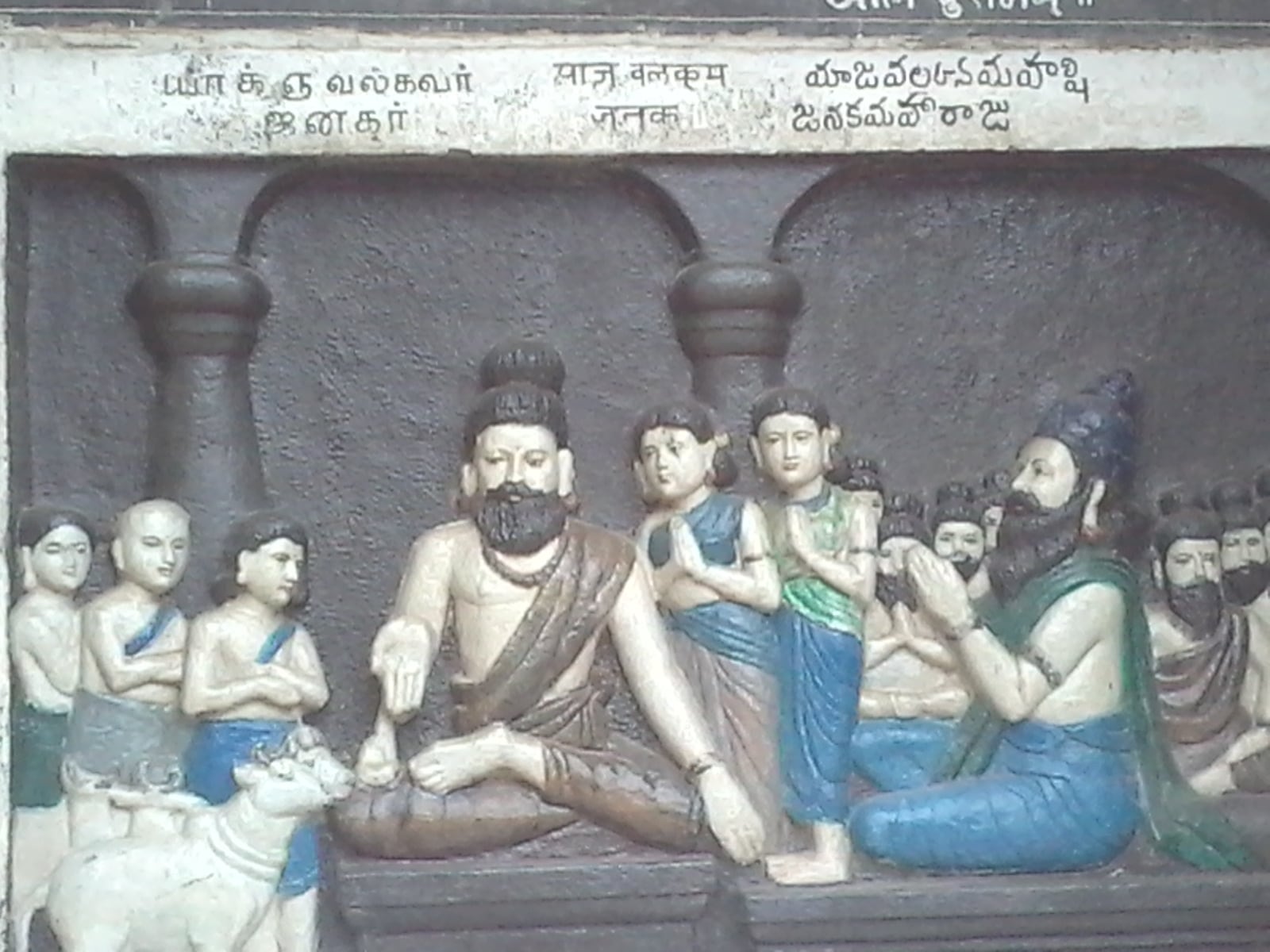
Yājñavalkya con el rey Janaka (relieve) · CC BY-SA 3.0
Con le sue parole
«It is not for the love of the husband, my dear, that a husband is loved, but for the love of the ātman. […] It is the ātman, my dear, that must be seen, heard, reflected on and meditated upon, Maitreyī.»Bṛhadāraṇyaka Upaniṣad 2.4.5 (traducción propia del sánscrito)

La sua idea centrale
Neti neti ("not this, not this"): The formula with which the Bṛhadāraṇyaka designates the ātman or brahman: it cannot be described by any attribute, because anything said of it would turn it into one object among others.
Vederlo nel contesto
Biografia
5 min di lettura
Traduzione assistita dall'originale spagnolo, in attesa di revisione da parte di un traduttore madrelingua.
Un nome che esiste solo in due libri
Quasi tutto ciò che si può dire di Yājñavalkya proviene da due testi della scuola dello Yajurveda Bianco: lo Śatapatha Brāhmaṇa, il grande trattato sul sacrificio, e la Bṛhadāraṇyaka Upaniṣad, che ne costituisce l'ultimo libro. Entrambi sono stati tramandati in due recensioni, la Kāṇva e la Mādhyandina, e questa doppia tradizione consente, secondo Michael Witzel, di verificare che il ritratto non è invenzione di una sola scuola. Non esistono iscrizioni, cronache né testimonianze esterne: Yājñavalkya è un personaggio dei testi, e la sua storicità è discussa. Ciò che invece si può affermare è che la tradizione gli attribuisce la rivelazione delle formule dello Yajus «bianco», e che lo stesso Śatapatha chiude la sua genealogia di maestri dicendo che quelle formule, ricevute dal Sole, furono proclamate da Yājñavalkya Vājasaneya.
Il ritualista che rideva delle regole
Lo Yājñavalkya più antico è un sacerdote. Nei libri dal primo al quinto dello Śatapatha, e di nuovo in quelli dall'undicesimo al tredicesimo, discute dettagli tecnici del rito con un'acutezza che talvolta rasenta l'insolenza. Quando il testo vieta di mangiare la carne della vacca o del bue perché questi animali «sostengono tutto ciò che è sulla terra», aggiunge senza transizione: «Eppure Yājñavalkya disse: io la mangio, purché sia tenera» (Śatapatha 3.1.2.21). In un altro passo lo si vede ormai anziano, mentre mostra le braccia canute. Witzel osserva che non compare nei libri dal sesto al decimo, di tradizione più occidentale, e lo descrive come una figura dell'est, del regno di Videha, benché il testo lo annoveri tra i brahmani dei Kuru e dei Pañcāla: un immigrato, dunque, in un oriente che si andava integrando nella cultura vedica nei secoli precedenti il Buddha.
Mille vacche alla corte di Janaka
La scena che gli ha dato l'immortalità letteraria si trova nel terzo libro della Bṛhadāraṇyaka. Janaka, re di Videha, celebra un sacrificio dai doni abbondanti e mette da parte mille vacche, con monete d'oro legate alle corna, per il più sapiente dei brahmani. Nessuno osa reclamarle, tranne Yājñavalkya, che ordina al suo discepolo Sāmaśravas di condurle via; di fronte allo scandalo, risponde che si inchina al più sapiente, ma che lui vuole soltanto le vacche. Lo interrogano, uno dopo l'altro, Aśvala, Ārtabhāga, Bhujyu, Uṣasta, Kahola, Gārgī Vācaknavī, Uddālaka Āruṇi, di nuovo Gārgī e infine Vidagdha Śākalya. Con Ārtabhāga si ritira a parlare in disparte, e ciò di cui trattano, dice il testo, è l'azione: si diventa buoni con l'azione buona e cattivi con la cattiva. A Gārgī, che chiede che cosa sorregga i mondi del brahman, consiglia di non domandare troppo se non vuole che le cada la testa; quando lei torna con due domande «come frecce», le parla dell'imperituro, che vede senza essere visto. Śākalya, che insiste, muore con la testa spaccata.
La luce dell'uomo e il «non così, non così»
Nel quarto libro Yājñavalkya istruisce Janaka in persona. Il re gli chiede quale sia la luce dell'uomo: il sole, risponde, e quando il sole tramonta, la luna; poi il fuoco, poi la voce, e quando tutto ciò viene meno, il sé, l'ātman, che è luce a se stesso. Segue un'esplorazione degli stati di coscienza — la veglia, il sogno e il sonno profondo, nel quale colui che vede diventa «un solo oceano, senza secondo» — e una spiegazione della morte e della rinascita secondo il desiderio e l'azione: «come si agisce, così si diventa». L'ātman si può indicare solo per negazione: neti neti, «non così, non così»; è inafferrabile, indistruttibile, privo di attaccamento. Alla fine Janaka offre se stesso e il suo popolo come schiavi al maestro.
Maitreyī e la partenza
Per due volte l'Upaniṣad racconta che Yājñavalkya, in procinto di abbandonare la vita di capofamiglia, volle dividere i suoi beni tra le due mogli, Maitreyī e Kātyāyanī. Maitreyī, che il testo chiama «colei che disserta sul brahman», domanda se l'intera terra colma di ricchezze la renderebbe immortale; davanti alla risposta negativa, replica: «Che farei di ciò che non mi rende immortale?». Egli le insegna allora che non si amano il marito, la moglie, i figli o la ricchezza per se stessi, ma per l'ātman, e che là dove tutto è divenuto ātman non resta nessuno che veda un altro. Witzel sottolinea che è la prima persona di cui un testo indiano dica che lascia la casa per vivere senza dimora; Joel Brereton ha mostrato come le due versioni del dialogo siano state composte e assemblate secondo un disegno deliberato.
Ciò che dicono i testi e ciò che dice la critica
Patrick Olivelle colloca la Bṛhadāraṇyaka e la Chāndogya, le due Upaniṣad più antiche, intorno al VII e al VI secolo a.C., prima del Buddha, e avverte che la prima è un'opera composta per strati. Witzel, sulla scia di Tsuji, sostiene che il ritualista dello Śatapatha e il pensatore dell'Upaniṣad siano la stessa persona e che i suoi contemporanei — Uddālaka Āruṇi, Janaka di Videha, Ajātaśatru di Kāśī — rimandino a un'epoca anteriore a quella del Buddha; altri studiosi, come Horsch o Ruben, hanno dubitato di questa unità. Brian Black e Steven Lindquist leggono il personaggio come una costruzione letteraria: il modello del brahmano che vince i dibattiti, la cui biografia si scrive attraverso quegli stessi dibattiti. Nessuna di queste letture consente di fissare date di nascita o di morte.
Il nome che continuò a crescere
Dopo le Upaniṣad, il nome di Yājñavalkya divenne una calamita. Il Viṣṇu Purāṇa narra che il suo maestro Vaiśaṃpāyana, offeso, pretese che restituisse quanto aveva appreso; egli vomitò le formule dello Yajus, che altri discepoli raccolsero trasformati in pernici (tittiri) — donde verrebbe il nome della scuola Taittirīya —, e ottenne poi dal Sole, apparso in forma di cavallo, lo Yajus bianco dei Vājasaneyin. Il Mahābhārata gli fa esporre la dottrina del Sāṃkhya al re Janaka, e il canone jaina lo include tra i suoi saggi con il nome di Jannavakka. Sotto il suo nome circolano opere molto più tarde: la Yājñavalkya Smṛti, trattato di dharma e di diritto che Olivelle data al IV o V secolo d.C. e che, con il commento Mitākṣarā, ha governato buona parte del diritto indù; e lo Yoga Yājñavalkya, un manuale di yoga la cui datazione oscilla, secondo gli studiosi, tra l'inizio della nostra era e il XII secolo.
Un'eredità alla radice del Vedānta
Śaṅkara commentò la Bṛhadāraṇyaka, e il metodo della negazione, l'ātman come luce di se stesso e l'unità tra ātman e brahman che si leggono nei dialoghi di Yājñavalkya divennero elementi centrali dell'Advaita Vedānta. Le tradizioni della rinuncia videro nella sua partenza il modello del saṃnyāsa, e due Upaniṣad tarde, la Jābāla e quella che porta il suo nome, lo presentano mentre insegna a farsi monaco. Per la filosofia comparata, Yājñavalkya è tra i primi pensatori di cui si conservi qualcosa di simile a una voce propria: ironico, avido di vacche, implacabile nella disputa e, al tempo stesso, il primo a dire che ciò che è ultimo non può essere nominato.
Fonti: Olivelle, Patrick (ed. y trad.). The Early Upaniṣads: Annotated Text and Translation. Nueva York: Oxford University Press, 1998 (South Asia Research). Introducción (datación, pp. 12–13) y Bṛhadāraṇyaka 2.4, 3.1–3.9, 4.1–4.5, 6.5. · Olivelle, Patrick (trad.). Upaniṣads. Oxford World's Classics. Oxford: Oxford University Press, 1996. · Müller, F. Max (trad.). The Upanishads, Part II (Sacred Books of the East, vol. 15). Oxford: Clarendon Press, 1884. Incluye la Bṛhadāraṇyaka Upaniṣad. · Eggeling, Julius (trad.). The Śatapatha-Brāhmaṇa according to the Text of the Mādhyandina School, 5 vols. (Sacred Books of the East, vols. 12, 26, 41, 43, 44). Oxford: Clarendon Press, 1882–1900. · Black, Brian. The Character of the Self in Ancient India: Priests, Kings, and Women in the Early Upaniṣads. Albany: State University of New York Press, 2007.
Cronologia
La vita, anno per anno
Ogni punto è un evento documentato. Fai clic per leggerlo, con la sua fonte e il suo grado di certezza.
VIII secolo a.C. – 600 a.C.Videha y Kuru-Pañcāla (llanura del Ganges)
The ritualist of the Śatapatha Brāhmaṇa
The ritual opinions attributed to Yājñavalkya in books 1–5 and 11–13 of the Śatapatha Brāhmaṇa reflect, according to Witzel, the late Vedic period before the Buddha. The range is an estimate, not a date.
ProbabileWitzel, Michael. «Yājñavalkya as Ritualist and Philosopher, and His Personal Language». En Siamak Adhami (ed.), Paitimāna: Essays in Iranian, Indo-European, and Indian Studies in Honor of Hanns-Peter Schmidt. Costa Mesa: Mazda Publishers, 2003, pp. 103–143.
VIII secolo a.C. – 600 a.C.
The ritualist of the Śatapatha Brāhmaṇa
The ritual opinions attributed to Yājñavalkya in books 1–5 and 11–13 of the Śatapatha Brāhmaṇa reflect, according to Witzel, the late Vedic period before the Buddha. The range is an estimate, not a date.
Probabile
VII secolo a.C.
Revelation of the White Yajus (according to tradition)
The Bṛhadāraṇyaka (6.5.3) credits Yājñavalkya Vājasaneya with proclaiming the "white" Yajus formulas received from the Sun; the Purāṇas add the story of Vaiśaṃpāyana and the partridges.
Tradizione
VII secolo a.C.
The debate of the thousand cows
At Janaka's sacrifice Yājñavalkya answers nine interlocutors, including Gārgī Vācaknavī and Uddālaka Āruṇi (Bṛhadāraṇyaka 3.1–3.9). It is a literary account of uncertain date.
Tradizione
VII secolo a.C.
The teachings to Janaka
The light of man, the states of waking, dreaming and deep sleep, death and rebirth, and "neti neti" (Bṛhadāraṇyaka 4.1–4.4).
Tradizione
VII secolo a.C.
Dialogue with Maitreyī and departure as an ascetic
Before leaving household life he teaches Maitreyī the doctrine of the ātman (Bṛhadāraṇyaka 2.4 and 4.5). Witzel regards it as the first textual case of a "proto-renouncer".
Tradizione
II secolo a.C. – 400
Yājñavalkya in the Mahābhārata
The Śāntiparvan (12.298 ff.) has him expound Sāṃkhya doctrine to Janaka. The epic took shape between the third century BCE and the fourth century CE.
Probabile
IV secolo – 500
Composition of the Yājñavalkya Smṛti
Treatise on dharma in three books attributed to Yājñavalkya; Olivelle dates it to around the fourth or fifth century CE.
Probabile
XI secolo
Vijñāneśvara's Mitākṣarā
Vijñāneśvara's commentary on the Yājñavalkya Smṛti (late eleventh or twelfth century) became the principal authority of Hindu law in much of India and, later, the basis of the "Hindu law" of British courts.
Probabile
1884
Max Müller's translation
Max Müller publishes the Bṛhadāraṇyaka in volume 15 of the Sacred Books of the East, which made Yājñavalkya's dialogues known in the West.
Documentato
2019
Olivelle's edition of the Yājñavalkya Smṛti
Patrick Olivelle publishes the text and translation of the Smṛti in the Murty Classical Library of India.
Documentato
Opere
Opere essenziali
Le opere senza le quali non si comprende la sua eredità.
Raccolta posteriore · VII secolo a.C.
Bṛhadāraṇyaka Upaniṣad (The Great Forest Upaniṣad)
बृहदारण्यकोपनिषद् (Bṛhadāraṇyaka Upaniṣad)
The longest and probably the oldest of the Upaniṣads. It is traditionally divided into three sections: the Madhu-kāṇḍa (chapters 1–2), with the first dialogue between Yājñavalkya and Maitreyī; the Muni- or Yājñavalkya-kāṇḍa (3–4), with the debate at Janaka's court and the teachings to the king on the light of the ātman, the states of consciousness, death and "neti neti"; and the Khila-kāṇḍa (5–6), a supplement of doctrines and rites ending with the lists of teachers. It is the main source for the early form of the doctrine of karma and rebirth, and one of the textual foundations of Vedānta.
13 edizioni · amazon.es
Attribuzione tradizionale · VII secolo a.C.
Yājñavalkya-kāṇḍa (Muni-kāṇḍa): the debate at Janaka's court and the teachings to the king
याज्ञवल्कीयकाण्ड / मुनिकाण्ड (Bṛhadāraṇyaka 3–4)
Chapter 3 narrates the contest at the sacrifice of Janaka of Videha: Yājñavalkya answers Aśvala, Ārtabhāga, Bhujyu, Uṣasta, Kahola, Gārgī Vācaknavī, Uddālaka Āruṇi and Vidagdha Śākalya on ritual, death, karma, the "inner controller" (antaryāmin) and the imperishable (akṣara). Chapter 4 records his conversations with Janaka: the light of man, the states of waking, dreaming and deep sleep, death and rebirth, desire and liberation, and the doctrine of the ātman as "not this, not this". It ends with the second version of the dialogue with Maitreyī.
3 edizioni · amazon.es
Yajnavalkya
Śatapatha Brāhmaṇa (The Brāhmaṇa of a Hundred Paths)
Attribuzione tradizionale · VIII secolo a.C.
Śatapatha Brāhmaṇa (The Brāhmaṇa of a Hundred Paths)
शतपथब्राह्मण (Śatapatha Brāhmaṇa)
The longest of the Vedic prose treatises on sacrifice. It explains, rite by rite, the meaning of the new- and full-moon offerings, the soma sacrifice, the great fire altar (agnicayana), royal consecration and the horse sacrifice, and includes famous narratives such as the flood and Manu, Purūravas and Urvaśī, and Videgha Māthava, which tells of the eastward spread of the sacrificial fire. Its later books contain the first speculative debates (brahmodya) involving Yājñavalkya, Uddālaka Āruṇi and Janaka.
4 edizioni

Attribuzione tradizionale · IV secolo
Yājñavalkya Smṛti (Yājñavalkya's Treatise on Dharma)
याज्ञवल्क्यस्मृति (Yājñavalkya Smṛti)
About a thousand verses in three books: conduct (ācāra), legal procedure (vyavahāra) and expiation (prāyaścitta). More concise and systematic than the Laws of Manu, it gives priority to documentary evidence, describes the trial in four stages (plaint, answer, proof and verdict) and grants women broader inheritance rights. It also includes passages on medicine, embryology and yoga. With Vijñāneśvara's Mitākṣarā commentary (eleventh–twelfth century) it was the main authority of Hindu law across much of India and the basis of the "Hindu law" applied by British courts.
5 edizioni
Tutta la sua opera (12)

The dialogue with Maitreyī
650
Yajnavalkya
Vājasaneyi Saṃhitā (White Yajurveda)
The Conscious LibraryVājasaneyi Saṃhitā (White Yajurveda)
800

Yoga Yājñavalkya
Yajnavalkya
Bṛhad Yogi Yājñavalkya Smṛti
The Conscious LibraryBṛhad Yogi Yājñavalkya Smṛti

Jābāla Upaniṣad and Yājñavalkya Upaniṣad (Upaniṣads of renunciation)
Yajnavalkya
The dialogue of Yājñavalkya and Janaka in the Mahābhārata
The Conscious LibraryThe dialogue of Yājñavalkya and Janaka in the Mahābhārata
100
Yajnavalkya
Vṛddha-Yājñavalkya and Bṛhad-Yājñavalkya (fragments)
The Conscious LibraryVṛddha-Yājñavalkya and Bṛhad-Yājñavalkya (fragments)
Yajnavalkya
Yājñavalkya Śikṣā (treatise on phonetics)
The Conscious LibraryYājñavalkya Śikṣā (treatise on phonetics)
Citazioni
Citazioni localizzate in un'opera precisa. Ciascuna porta con sé la sua provenienza e il suo grado di affidabilità.
It is not for the love of the husband, my dear, that a husband is loved, but for the love of the ātman. […] It is the ātman, my dear, that must be seen, heard, reflected on and meditated upon, Maitreyī.न वा अरे पत्युः कामाय पतिः प्रियो भवत्यात्मनस्तु कामाय पतिः प्रियो भवति । … आत्मा वा अरे द्रष्टव्यः श्रोतव्यो मन्तव्यो निदिध्यासितव्यो मैत्रेयि ।
VerificataBṛhadāraṇyaka Upaniṣad 2.4.5 (traducción propia del sánscrito)
Ultime parole
Non esistono testimonianze verificabili delle sue ultime parole.
There is no record of his death or of his last words. The Bṛhadāraṇyaka closes his story with a departure, not a death: the last words the text gives him are those addressed to Maitreyī, "such, my dear, is immortality" (etāvad are khalv amṛtatvam), after which "Yājñavalkya went away" (4.5.15). They are not last words in a biographical sense. What the Purāṇas and the local traditions of Mithilā tell afterwards is late hagiography.
Fonte: Olivelle, Patrick (ed. y trad.). The Early Upaniṣads: Annotated Text and Translation. Nueva York: Oxford University Press, 1998 (South Asia Research). Introducción (datación, pp. 12–13) y Bṛhadāraṇyaka 2.4, 3.1–3.9, 4.1–4.5, 6.5.
Chiedi
Ciò a cui risponde la sua opera
Dodici grandi domande dell'umanità e ciò che i suoi testi permettono di rispondere, con riferimenti. Non gli mettiamo mai parole in bocca.
Che cos'è l'Assoluto? Dio esiste?
«Not this, not this»: the ultimate cannot be the object of any knowing
L'innominabileLo dice espressamente
In the Bṛhadāraṇyaka Upaniṣad, Yājñavalkya designates the ātman, identical with brahman, by the formula «not this, not this» (neti neti): it is ungraspable because it cannot be grasped, indestructible because it is not destroyed. To Gārgī he describes the imperishable (akṣara) through a long series of negations —neither coarse nor fine, neither short nor long, with no inside or outside— and, at the same time, as that under whose command the sun and moon are held apart. The reason for so much negation is epistemological: the ultimate is the knower, and he asks Maitreyī by what the knower could be known. It is not nihilism; it is the impossibility of turning into an object what is the subject of all knowing.
Confronta questa domanda con altri maestriChi sono io? Esiste un vero sé?
The ātman sees without being seen: it is its own light and is brahman
Il Sé è l'AssolutoLo dice espressamente
In the Bṛhadāraṇyaka, Yājñavalkya defines the ātman as the ultimate subject of experience: the one who sees without being seen, hears without being heard, thinks without being thought and knows without being known (3.7.23). When King Janaka asks him what the light of a person is once the sun and moon have set, the fire has gone out and the voice is silent, he answers that the ātman is then its own light (4.3.6). That ātman persists in waking, dream and deep sleep, where it becomes «one ocean, without a second» (4.3.32). And Yājñavalkya identifies it plainly with the principle of everything: «this ātman is brahman» (4.4.5). The true self is not the body or the mind, but what illumines them and cannot be known as an object.
Confronta questa domanda con altri maestriPerché soffriamo?
Everything other than the ātman is afflicted
L'ignoranza di ciò che siamoLo dice espressamente
In the debate at Janaka's court, Yājñavalkya closes several of his answers with the same phrase: what is other than the ātman is afflicted (ārta). He says it to Uṣasta, to Kahola and to Uddālaka Āruṇi, after describing the ātman as the one who sees without being seen (3.4.2; 3.5.1; 3.7.23). Suffering is thus tied to living turned towards what is perceived as something else, instead of recognising oneself in the subject who perceives it. Before Janaka he adds the mechanism: a person is made of desire; as is his desire, so is his will, as his will, so his action, and as his action, so he becomes (4.4.5). Whoever knows the ātman, he tells Kahola, leaves behind hunger, thirst, sorrow, delusion, old age and death.
Confronta questa domanda con altri maestriChe cosa accade dopo la morte?
As a caterpillar moves from blade to blade, the ātman passes to another body
Rinascita secondo il karmaLo dice espressamente
The Bṛhadāraṇyaka contains, in Yājñavalkya's mouth, one of the first formulations of transmigration according to one's deeds. What he discusses alone with Ārtabhāga, away from the debate, is action: one becomes good by good action and bad by bad (3.2.13). Before Janaka he describes death: the senses gather in the heart, and the ātman, with its knowledge, its deeds and its past experience, leaves the body like a caterpillar that reaches for another blade before letting go of the last, or like a goldsmith who gives gold a new and more beautiful form (4.4.3–4). As is his desire, so will be his action, and as his action, so he will become. But one who desires nothing, whose only desire is the ātman, does not transmigrate: being brahman, he goes to brahman (4.4.6).
Confronta questa domanda con altri maestriCome si raggiunge la liberazione o la salvezza?
Whoever knows the ātman and desires nothing more becomes brahman
Con la conoscenza direttaLo dice espressamente
For the Yājñavalkya of the Bṛhadāraṇyaka, liberation is knowledge. He tells Maitreyī that it is the ātman that must be seen, heard, reflected on and meditated upon, for by knowing it everything is known (2.4.5). He teaches Janaka that one who desires nothing, whose only desire is the ātman, does not transmigrate: being brahman, he goes to brahman (4.4.6). That knowledge goes together with renunciation: the brahmins who know the ātman, he says, give up the desire for sons, wealth and worlds, and live on alms (3.5.1). Ritual, Vedic study, generosity and austerity serve to make one wish to know it (4.4.22), but do not produce it. He himself, before departing as an ascetic, proposes to divide his goods between his two wives.
Confronta questa domanda con altri maestriServe un maestro?
Knowledge is won in debate and passes through a lineage of teachers
Comunità e tradizioneSi deduce dalla sua dottrina
Yājñavalkya appears in the Bṛhadāraṇyaka within a network of teachers and disciples. He is presented as a pupil of Uddālaka Āruṇi (6.3.7) and in turn teaches King Janaka, his wife Maitreyī and those who question him at court. Knowledge is tested in public, in the theological debate (brahmodya) for Janaka's thousand cows, where Yājñavalkya answers eight opponents, and transmitted in private, as when he withdraws with Ārtabhāga to speak of action. The Upaniṣad closes its sections with lists of lineages (vaṃśa) that trace the teaching from teacher to teacher back to its source. The text contains no thesis on the need for a teacher: what it shows is that knowledge of the ātman lives in a community that debates, transmits and tests.
Confronta questa domanda con altri maestriIl mondo è reale?
Where there is something like duality, one sees the other
Apparenza sull'unica realtàSi deduce dalla sua dottrina
Yājñavalkya does not deny that the world exists: he explains to Gārgī that all that is above the sky, below the earth and between them is woven on space, and space on the imperishable (3.8). But he introduces a decisive distinction. He tells Maitreyī that where there is «something like duality» (dvaitam iva) one sees, hears and knows the other; when everything has become one's own ātman, with what and whom would one see? (2.4.14). Multiplicity belongs to ordinary experience; in the ultimate vision there is no second. Verses he quotes before Janaka add that there is no diversity here at all, and that whoever sees as if there were goes from death to death (4.4.19). The world is real as that in which the ātman is manifest, not as something separate from it.
Confronta questa domanda con altri maestriChe cos'è l'amore?
The husband is not loved for the husband's sake, but for the ātman
Anelito e unioneLo dice espressamente
Yājñavalkya's most famous passage on love is in his farewell dialogue with Maitreyī. Before leaving as an ascetic he offers to divide his goods; she asks whether wealth would make her immortal, and he answers with a teaching: it is not for love of the husband that the husband is dear, but for love of the ātman; and likewise the wife, the sons, wealth, the gods and all beings (2.4.5). All love has the ātman as its ultimate object, and that is why it is the ātman that must be seen, heard, reflected on and meditated upon. Love, then, is not rejected: one discovers what it was always seeking. Beneath every bond lies a longing for the one thing that is not lost, and wisdom consists in recognising it.
Confronta questa domanda con altri maestriSiamo liberi o è tutto determinato?
As is one's desire, so is one's will; as one's action, so one becomes
Karma e sceltaLo dice espressamente
The Bṛhadāraṇyaka ascribes to Yājñavalkya an early and precise formulation of the relation between action and destiny. Before Janaka he explains that a person is made of desire: as is his desire, so is his will; as his will, so his action; and according to the action he performs, so he becomes (4.4.5). As one acts and behaves, so one becomes: the one who does good becomes good; the one who does evil, evil. The past conditions, because at death the ātman departs accompanied by its deeds and experience; but the chain begins in desire, and that is why it can be broken. One who desires nothing, whose only desire is the ātman, leaves it. Responsibility thus rests on what each person desires and does.
Confronta questa domanda con altri maestriPerché meditare o pregare?
It is the ātman that must be seen, heard, reflected on and meditated upon
Tornare alla sorgente dell'ioLo dice espressamente
The phrase Yājñavalkya addresses to Maitreyī —it is the ātman, my dear, that must be seen, heard, reflected on and meditated upon (2.4.5)— became the programme of Vedāntic practice: hearing the teaching (śravaṇa), reflecting on it (manana) and meditating on it until it becomes evident (nididhyāsana). What is meditated on is not an image or an external god, but the subject itself: the one who sees without being seen and knows without being known. His dialogues with Janaka traverse the states of waking, dream and deep sleep to show what remains in all three, and ask the knower to become calm, restrained, withdrawn, patient and collected, and to see the ātman in himself (4.4.23).
Confronta questa domanda con altri maestriPuò la ragione conoscere l'ultimo?
By what could one know the knower?
L'ultimo è al di là della menteLo dice espressamente
Yājñavalkya is a master of debate: at Janaka's court he answers eight opponents and wins the king's thousand cows. And yet what he defends with arguments is that the ultimate cannot be reached by them. To Uṣasta, who asks him to show the ātman as one points to a cow, he replies that one cannot see the seer of seeing or think the thinker of thought (3.4.2). He asks Maitreyī by what one could know the knower (2.4.14). To Gārgī, who insists on asking on what brahman is woven, he warns her not to ask too much, or her head will fall off (3.6.1). Reasoning can clear away errors and point towards the subject, but the subject never becomes an object of thought.
Confronta questa domanda con altri maestriRitirarsi dal mondo o trasformarlo?
Those who know the ātman leave sons, wealth and worlds, and beg
Ritirarsi per trovareLo dice espressamente
The Bṛhadāraṇyaka presents Yājñavalkya on the point of «going forth» from his home to lead a wandering life: before leaving he wishes to divide his goods between his two wives, and Maitreyī asks for his teaching instead (2.4.1; 4.5.2). In Janaka's debate he describes the knowers of the ātman as those who, giving up the desire for sons, wealth and worlds, live on alms (3.5.1). Knowledge of the ātman leads to detachment from everything else, and detachment is expressed in a way of life. Michael Witzel regards him as the first textual case of a «proto-renouncer», prior to the systematisation of the stages of life. The late Upaniṣads of renunciation made him the teacher par excellence of saṃnyāsa.
Confronta questa domanda con altri maestri
Affinità e tensioni
Affinità e tensioni
Calcolate domanda per domanda a partire dalle sue posizioni. Il perché di ogni accordo o contrasto, con un clic.
La pensa in modo simile a
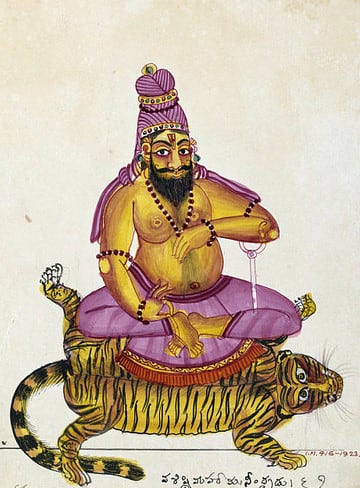
Vasishtha
Concordano su: Chi sono io? Esiste un vero sé? · Perché soffriamo? · Come si raggiunge la liberazione o la salvezza?
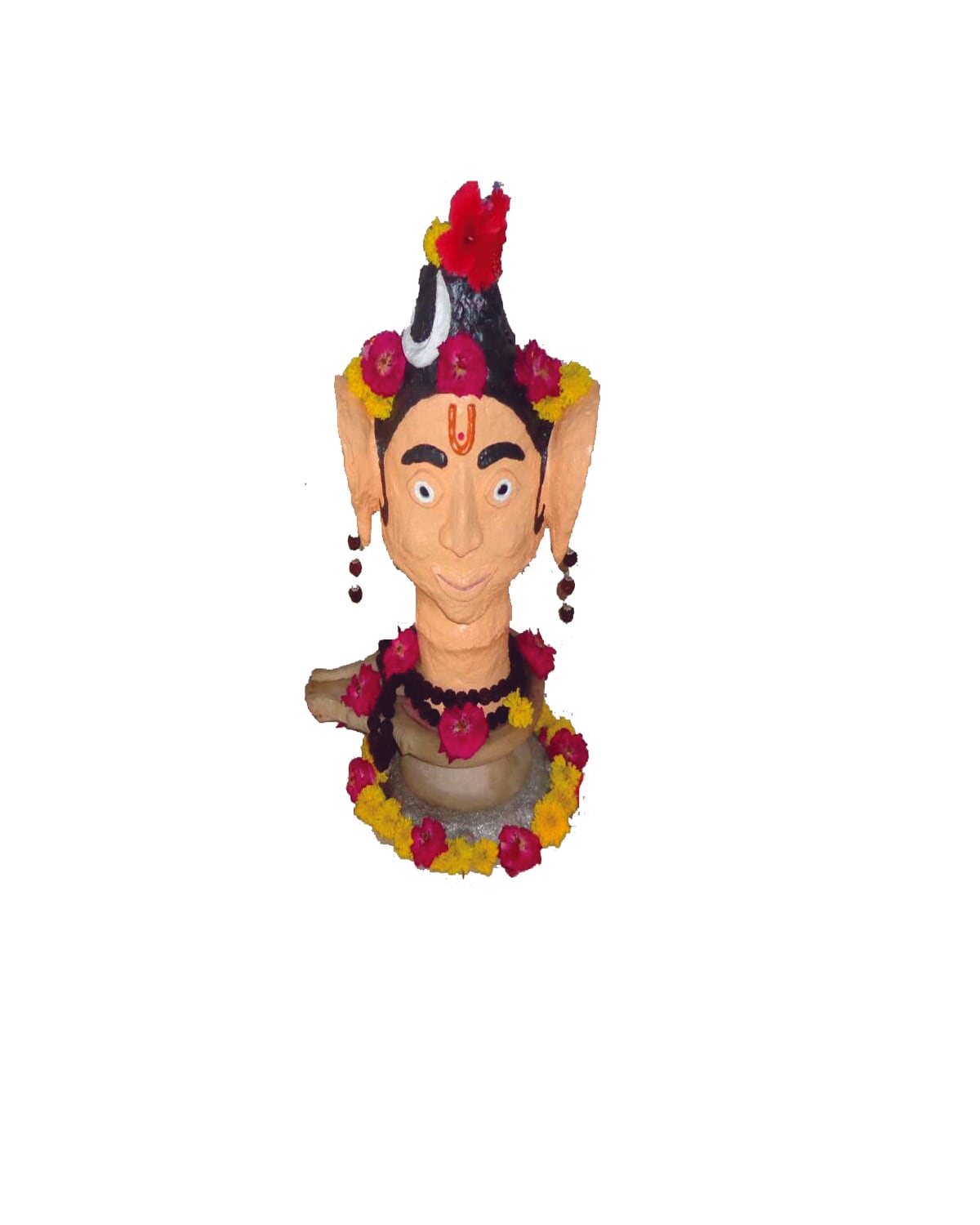
Nisargadatta Maharaj
Concordano su: Che cos'è l'Assoluto? Dio esiste? · Chi sono io? Esiste un vero sé? · Perché soffriamo?
Sadhguru
Concordano su: Chi sono io? Esiste un vero sé? · Che cosa accade dopo la morte? · Il mondo è reale?
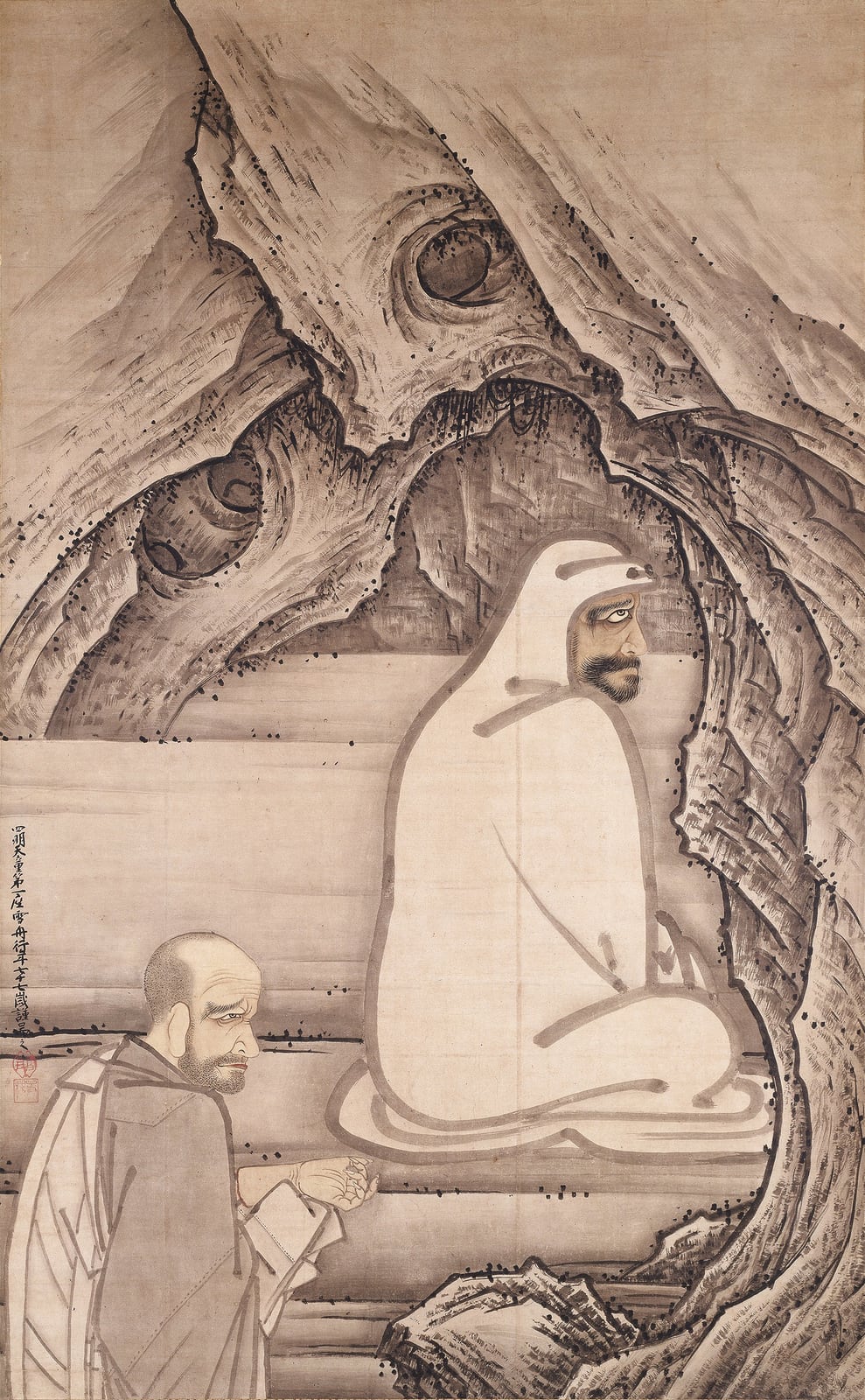
Bodhidharma
Concordano su: Chi sono io? Esiste un vero sé? · Che cosa accade dopo la morte? · Siamo liberi o è tutto determinato?
La pensa diversamente da
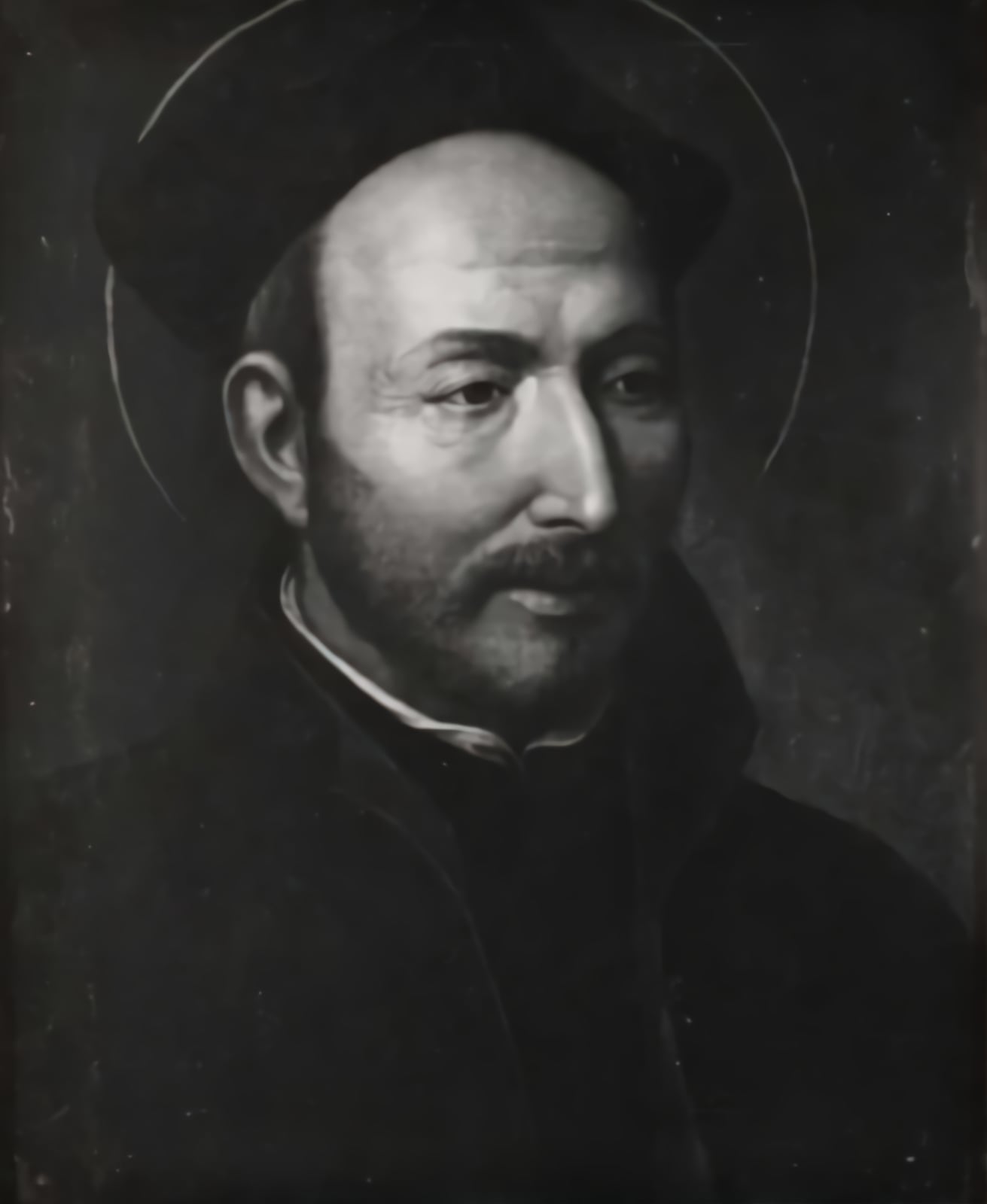
Ignatius of Loyola
Si scontrano su: Chi sono io? Esiste un vero sé? · Che cosa accade dopo la morte? · Il mondo è reale?

Teresa of Ávila
Si scontrano su: Chi sono io? Esiste un vero sé? · Che cosa accade dopo la morte? · Il mondo è reale?
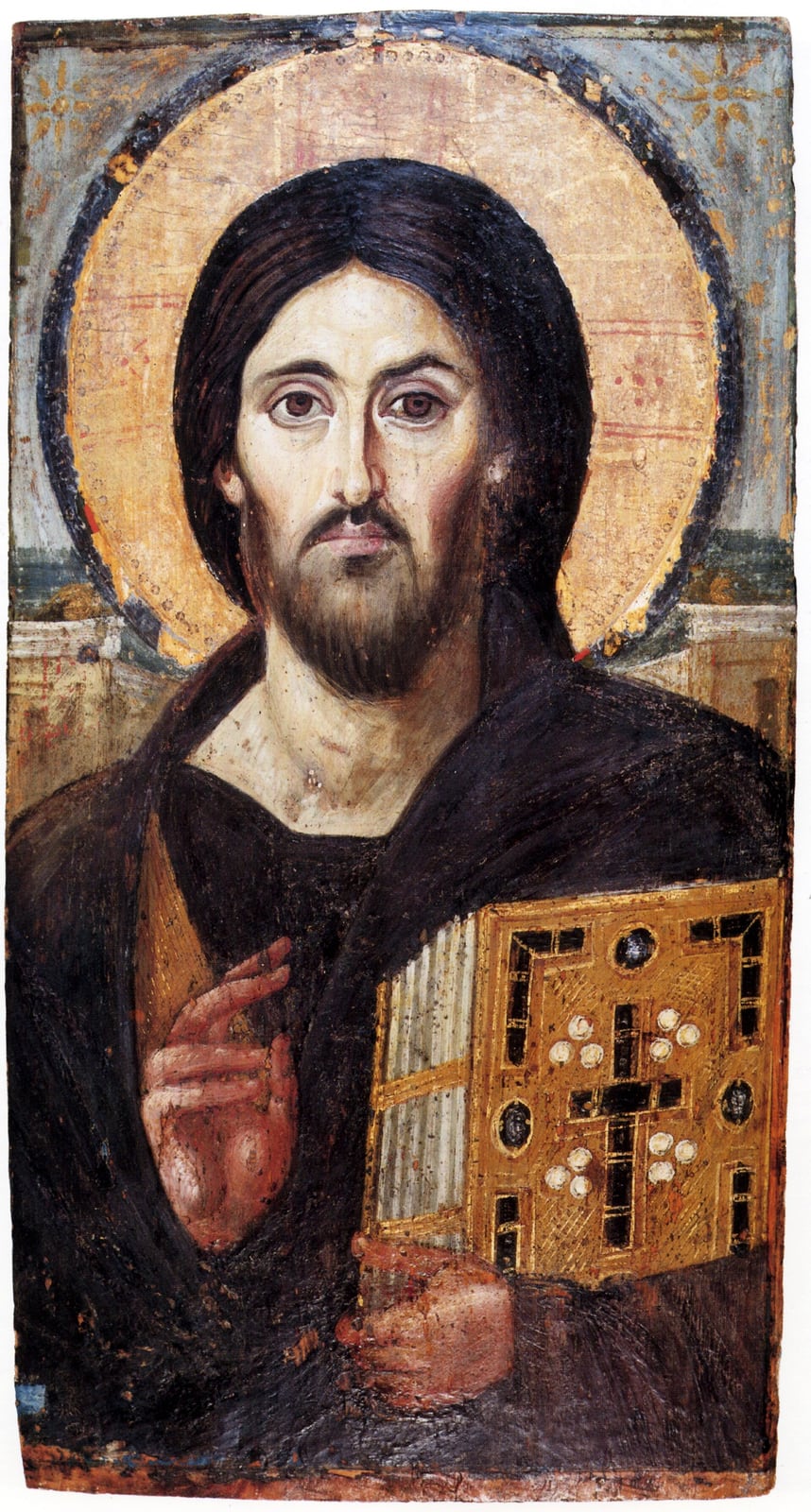
Jesus of Nazareth
Si scontrano su: Il mondo è reale? · Chi sono io? Esiste un vero sé? · Che cosa accade dopo la morte?

Francis of Assisi
Si scontrano su: Chi sono io? Esiste un vero sé? · Che cosa accade dopo la morte? · Il mondo è reale?
Aneddoti e racconti
Aneddoti e racconti
Documentatoépoca védica tardía (ss. VII–VI a. C., según la datación del texto)
The thousand cows with gold on their horns
Origine del racconto: Bṛhadāraṇyaka Upaniṣad 3.1.1–2 (parallel in Śatapatha Brāhmaṇa 11.6.3). "Documented" means here that the story is in the text; it does not imply that the scene is historical.
Fonte: Olivelle, Patrick (ed. y trad.). The Early Upaniṣads: Annotated Text and Translation. Nueva York: Oxford University Press, 1998 (South Asia Research). Introducción (datación, pp. 12–13) y Bṛhadāraṇyaka 2.4, 3.1–3.9, 4.1–4.5, 6.5.
Documentatoépoca védica tardía
Gārgī and the two arrows
Origine del racconto: Bṛhadāraṇyaka Upaniṣad 3.6 and 3.8. Later traditions turn her into a philosopher of Janaka's court or, in one manuscript of the Yoga Yājñavalkya, into Yājñavalkya's wife; none of this is in the Upaniṣad.
Fonte: Lindquist, Steven E. «Gender at Janaka's Court: Women in the Bṛhadāraṇyaka Upaniṣad Reconsidered». Journal of Indian Philosophy 36 (2008): 405–426.
Documentatoépoca védica tardía
The death of Śākalya
Origine del racconto: Bṛhadāraṇyaka Upaniṣad 3.9 (with a parallel in Śatapatha Brāhmaṇa 11.6.3 and in Jaiminīya Brāhmaṇa 2.76–77, according to Witzel). The analysis is Lindquist's (2011).
Fonte: Lindquist, Steven E. «Literary Lives and a Literal Death: Yājñavalkya, Śākalya, and an Upaniṣadic Death Sentence». Journal of the American Academy of Religion 79, n.º 1 (2011): 33–57.
Documentatoépoca védica tardía
"I eat it, provided it is tender"
Origine del racconto: Śatapatha Brāhmaṇa 3.1.2.21 (and 3.8.2.24 for the scene of the grey-haired arms), following Eggeling's translation and Witzel's analysis (2003).
Racconto agiograficorelato purāṇico (primer milenio d. C.)
The pupil who vomited the Veda
Origine del racconto: Viṣṇu Purāṇa 3.5 and Bhāgavata Purāṇa 12.6. It does not come from the Taittirīya Upaniṣad, as is sometimes said, but from the Purāṇas, which thus explain the names of the two schools of the Yajurveda. The Bṛhadāraṇyaka (6.5.3) says only that the white formulas come from the Sun.
Documentatoépoca védica tardía
Janaka offers himself as a slave
Origine del racconto: Bṛhadāraṇyaka Upaniṣad 4.3.1–4.4.23 (the final sentence at 4.4.23). The reading of the relation between king and brahmin is Black's (2007).
Fonte: Black, Brian. The Character of the Self in Ancient India: Priests, Kings, and Women in the Early Upaniṣads. Albany: State University of New York Press, 2007.
Insegnamenti
Insegnamenti
Le nozioni che articolano il suo pensiero, spiegate nel loro contesto.
Neti neti ("not this, not this")neti-neti
Bṛhadāraṇyaka 2.3.6, 3.9.26, 4.2.4, 4.4.22, 4.5.15 (Kāṇva recension). Gauḍapāda quotes it in the Māṇḍūkya Kārikā 3.26.
Fonte: Olivelle, Patrick (ed. y trad.). The Early Upaniṣads: Annotated Text and Translation. Nueva York: Oxford University Press, 1998 (South Asia Research). Introducción (datación, pp. 12–13) y Bṛhadāraṇyaka 2.4, 3.1–3.9, 4.1–4.5, 6.5.
Ātman (the self)atman
Bṛhadāraṇyaka 2.4, 3.4–3.7, 4.3–4.5.
Fonte: Olivelle, Patrick (ed. y trad.). The Early Upaniṣads: Annotated Text and Translation. Nueva York: Oxford University Press, 1998 (South Asia Research). Introducción (datación, pp. 12–13) y Bṛhadāraṇyaka 2.4, 3.1–3.9, 4.1–4.5, 6.5.
Karma and rebirthkarman-y-renacimiento
Bṛhadāraṇyaka 3.2.13 and 4.4.2–7; Witzel 2003.
Akṣara (the imperishable)akshara
Bṛhadāraṇyaka 3.8.
Fonte: Olivelle, Patrick (ed. y trad.). The Early Upaniṣads: Annotated Text and Translation. Nueva York: Oxford University Press, 1998 (South Asia Research). Introducción (datación, pp. 12–13) y Bṛhadāraṇyaka 2.4, 3.1–3.9, 4.1–4.5, 6.5.
Antaryāmin (the inner controller)antaryamin
Bṛhadāraṇyaka 3.7.
Fonte: Olivelle, Patrick (ed. y trad.). The Early Upaniṣads: Annotated Text and Translation. Nueva York: Oxford University Press, 1998 (South Asia Research). Introducción (datación, pp. 12–13) y Bṛhadāraṇyaka 2.4, 3.1–3.9, 4.1–4.5, 6.5.
Renunciation (saṃnyāsa)renuncia-samnyasa
Bṛhadāraṇyaka 3.5.1, 4.4.22, 4.5.1; Olivelle 1992.
Fonte: Olivelle, Patrick (trad.). The Saṃnyāsa Upaniṣads: Hindu Scriptures on Asceticism and Renunciation. Nueva York: Oxford University Press, 1992 (incluye la Jābāla y la Yājñavalkya Upaniṣad).
Video
Video
Registrazioni, interviste e documentari. I video vengono riprodotti da YouTube; non sono ospitati qui.
1. Brihadaranyaka Upanishad - Introduction | Swami Sarvapriyananda
Conferenza· EN· 2026· 71 min
Vedanta Society of New YorkCanale ufficiale
3. Brihadaranyaka Upanishad - Mantras 2.4.1 to 2.4.5 | Swami Sarvapriyananda
Conferenza· EN· 2026· 73 min
Vedanta Society of New YorkCanale ufficiale
4. Brihadaranyaka Upanishad - Mantra 2.4.5 continued | Swami Sarvapriyananda
Conferenza· EN· 2026· 68 min
Vedanta Society of New YorkCanale ufficiale
5. Brihadaranyaka Upanishad - Mantra 2.4.6 | Swami Sarvapriyananda
Conferenza· EN· 2026· 75 min
Vedanta Society of New YorkCanale ufficiale
Swami Atmajnanananda on "Yajnavalkya and Maitreyi - An Interesting Dialogue"
Conferenza· EN· 2016· 66 min
Austin VedantaCanale ufficiale
Swami Yogatmananda - Dialogue on the Self (Yajnavalkya and Maitreyi)
Conferenza· EN· 2021· 58 min
VedantaSTLCanale ufficiale
Yagnavalkya Upadesham (Brihadaranyaka Upanishad) | Kanchipuram | 2024
Conferenza· TA· 2024· 95 min
Voice of Rishis Swami Ramanacharanatirtha (Nochur)Canale ufficiale
Understanding the Dharma Shastras: A Conversation with Dr. Patrick Olivelle and Dr. Donald Davis
Intervista· EN· 2022· 113 min
Meru Media
Patrick Olivelle on Law, Religion, and Dharma
Conferenza· EN· 2014· 45 min
Central European UniversityCanale ufficiale
The Central Doctrines of the Upanishads
Conferenza· EN· 2016· 37 min
Vidya-mitraCanale ufficiale
'Introduction to Shatpath Brahmana' - 100 paths of Moksha; Dr Aparna Dhir Khandelwal
Conferenza· EN· 2021· 31 min
Sattology
Shatapatha Brahmana Parayana in presence of His Holiness
Registrazione originale· SA· 2020· 20 min
Sri Kanchi Kamakoti Peetam, KanchipuramCanale ufficiale
Yajnavalkya / ಯಾಜ್ಞವಲ್ಕ್ಯ | Upanishat Rushigalu | Vid C G Vijayasimha Acharya
Conferenza· KN· 2021· 12 min
JnanaGamya Prasarana
YAJNAVALKYA: La Búsqueda del Conocimiento Interior y de la Realidad Última. 1
Analisi· ES· 2024· 28 min
Una Historia Pequeña de la Filosofía
La metafísica de los Upanishad. José Carlos Fernández
Conferenza· ES· 2021· 60 min
Nueva Acrópolis EspañaCanale ufficiale
Galleria
Galleria
Immagini con licenza verificata. Ciascuna conserva la sua paternità e la sua attribuzione.
Manoscritti
Manoscritti
Testimoni manoscritti e testi antichi, con il loro custode e le loro condizioni di consultazione.
SA · Devanagari · c. ss. VII–VI a. C. (Olivelle)
बृहदारण्यकोपनिषद् (adhyāya 1, folio 3b)
- Testimone conservato
- Manuscrito en papel sin fecha publicada
- Custode
- University of Pennsylvania Libraries (Filadelfia)
- Digitalizzazione
- commons.wikimedia.org/wiki/File:Brihadaranyaka_u…
SA · Devanagari · c. ss. VIII–VI a. C.
शतपथब्राह्मण (kāṇḍa 14, prapāṭhaka 3–4)
- Testimone conservato
- Manuscrito del siglo XIII según la descripción de Commons
- Digitalizzazione
- commons.wikimedia.org/wiki/File:13th-century_Sha…
SA · Escrituras del norte de la India sobre hoja de palma · Fecha discutida (entre el inicio de la era común y el s. XII)
योगयाज्ञवल्क्य
- Testimone conservato
- Manuscritos en hoja de palma de finales del s. IX o inicios del X y de 1024 d. C., según Wujastyk
- Custode
- National Archives of Nepal (Katmandú, NAK 5-696) y British Library (Londres, Or. 3568) · NAK 5-696; BL Or. 3568
Relazioni
Relazioni
Influenze, discepolati e affinità. Si distingue la relazione documentata dalla somiglianza individuata per analisi.
Dissentì da
Debate on the "thread" and the "inner controller" (Bṛhadāraṇyaka 3.7), which Uddālaka loses.
Relazione documentata
Discepolo di
The Bṛhadāraṇyaka's lists of teachers make him a pupil of Uddālaka Āruṇi: in the list for the mantha rite (6.3.7, Kāṇva recension) and in the final lineage, "Yājñavalkya from Uddālaka; Uddālaka from Aruṇa"; in 3.7 Uddālaka questions him at Janaka's court and falls silent. Witzel regards them as contemporaries.
Relazione documentata
Maestro di
Janaka de Videha
King of Videha, organizer of the contest and Yājñavalkya's pupil in Bṛhadāraṇyaka 4.1–4.4 and Śatapatha 11.6.2.
Relazione documentata
Incontrò
Gārgī Vācaknavī
His interlocutor in Bṛhadāraṇyaka 3.6 and 3.8.
Relazione documentata
Famiglia di
Maitreyī
One of his two wives, together with Kātyāyanī; recipient of the dialogue on the ātman (Bṛhadāraṇyaka 2.4 and 4.5).
Relazione documentata
Influenzò
Śaṅkara wrote an extensive commentary on the Bṛhadāraṇyaka and based much of his doctrine of the ātman and of renunciation on Yājñavalkya's dialogues.
Relazione documentata
Influenzò
The Māṇḍūkya Kārikā (3.26) quotes the Bṛhadāraṇyaka's "neti neti" as proof that scripture denies all difference.
Relazione documentata
Ricevette l'influenza di
According to the Purāṇas, Yājñavalkya was a pupil of Vaiśaṃpāyana, himself a pupil of Vyāsa, who is said to have divided the Veda. This is a traditional lineage, not a historical fact.
Somiglianza individuata per analisi
Idee affini a
The Yājñavalkya of the Mahābhārata (12.298 ff.) expounds to Janaka the Sāṃkhya doctrine that tradition attributes to Kapila.
Somiglianza individuata per analisi
Idee affini a
The Yoga Yājñavalkya expands the eight-limbed yoga of the Yoga Sūtras (ten restraints and ten observances instead of five and five).
Somiglianza individuata per analisi
Idee affini a
Ramana's "Who am I?" inquiry and his description of the self as an objectless witness recall "neti neti" and the ātman that sees without being seen.
Somiglianza individuata per analisi
Idee affini a
His method of denying identification with body and mind has a clear precedent in "not this, not this".
Somiglianza individuata per analisi
Idee affini a
A classic comparison in comparative philosophy (Rudolf Otto, among others) between Eckhart's negative way and the ungraspable ātman of the Upaniṣads.
Somiglianza individuata per analisi
Fonti
Fonti
Bibliografia e cataloghi consultati per questa scheda.
- Wikidata, «Yajnavalkya», QID Q1423663.
- Olivelle, Patrick (ed. y trad.). The Early Upaniṣads: Annotated Text and Translation. Nueva York: Oxford University Press, 1998 (South Asia Research). Introducción (datación, pp. 12–13) y Bṛhadāraṇyaka 2.4, 3.1–3.9, 4.1–4.5, 6.5.
- Olivelle, Patrick (trad.). Upaniṣads. Oxford World's Classics. Oxford: Oxford University Press, 1996.
- Müller, F. Max (trad.). The Upanishads, Part II (Sacred Books of the East, vol. 15). Oxford: Clarendon Press, 1884. Incluye la Bṛhadāraṇyaka Upaniṣad.
- Eggeling, Julius (trad.). The Śatapatha-Brāhmaṇa according to the Text of the Mādhyandina School, 5 vols. (Sacred Books of the East, vols. 12, 26, 41, 43, 44). Oxford: Clarendon Press, 1882–1900.
- Witzel, Michael. «Yājñavalkya as Ritualist and Philosopher, and His Personal Language». En Siamak Adhami (ed.), Paitimāna: Essays in Iranian, Indo-European, and Indian Studies in Honor of Hanns-Peter Schmidt. Costa Mesa: Mazda Publishers, 2003, pp. 103–143.
- Brereton, Joel P. «The Composition of the Maitreyī Dialogue in the Bṛhadāraṇyaka Upaniṣad». Journal of the American Oriental Society 126, n.º 3 (2006): 323–345.
- Black, Brian. The Character of the Self in Ancient India: Priests, Kings, and Women in the Early Upaniṣads. Albany: State University of New York Press, 2007.
- Lindquist, Steven E. «Literary Lives and a Literal Death: Yājñavalkya, Śākalya, and an Upaniṣadic Death Sentence». Journal of the American Academy of Religion 79, n.º 1 (2011): 33–57.
- Olivelle, Patrick (ed. y trad.). Yājñavalkya: A Treatise on Dharma. Murty Classical Library of India 20. Cambridge (Mass.): Harvard University Press, 2019. Introducción, pp. vii–xxxvii.
- Mohan, A. G., con Ganesh Mohan (trad.). Yoga Yājñavalkya. 2.ª ed. Singapur: Svastha Yoga, 2013.
- Dutt, Manmatha Nath (trad.). A Prose English Translation of Vishnupuranam. Calcuta, 1896; libro III, cap. 5 (la historia de Yājñavalkya y Vaiśaṃpāyana). Project Gutenberg n.º 66208. Véase también H. H. Wilson, The Vishńu Puráńa, Londres, 1840.
- Mahābhārata, Śāntiparvan 12.298 y ss. (edición crítica de Poona): diálogo de Yājñavalkya y Janaka (Daivarāti). Trad. inglesa de Kisari Mohan Ganguli, The Mahabharata of Krishna-Dwaipayana Vyasa, Calcuta, 1883–1896.
- Wikipedia (en inglés), «Yajnavalkya», consultada el 26 de octubre de 2026.
- Hume, Robert Ernest (trad.). The Thirteen Principal Upanishads. Londres: Oxford University Press, 1921.
- Herold, A.-Ferdinand (trad.). L'Upanishad du grand Aranyaka (Bṛhadāraṇyakopaniṣad). París: Librairie de l'art indépendant, 1894.
- Wikisource en sánscrito, «बृहदारण्यकोपनिषद्» (texto sánscrito, seis adhyāya).
- Röer, Edward, y W. A. Montriou (trads.). Hindu Law and Judicature from the Dharma-Sástra of Yájnavalkya. Calcuta, 1859. Project Gutenberg n.º 21918.
- Divanji, Prahlad Chandrashekhar (ed.). Yoga-Yājñavalkya: A Treatise on Yoga as Taught by Yogī Yājñavalkya. Bombay: Bombay Branch of the Royal Asiatic Society, 1954.
- Wikipedia (en inglés), «Yoga Yajnavalkya» y «Yajnavalkya Smriti» (resumen de las dataciones de Divanji, Mohan, White, Wujastyk y Olivelle), consultadas el 26 de octubre de 2026.
- Ilárraz, Félix G., y Óscar Pujol (trads.). La sabiduría del bosque: antología de las principales Upaniṣad. Madrid: Trotta, 2003.
- Martín, Consuelo (trad.). Gran Upaniṣad del Bosque (Bṛhadāraṇyaka Upaniṣad), con el comentario advaita de Śaṅkara. Madrid: Trotta, 2002.
- Wikisource en sánscrito, «याज्ञवल्क्यस्मृतिः» (texto de la Yājñavalkya Smṛti por prakaraṇa).
- Wikisource en sánscrito, «शतपथब्राह्मणम्» (texto del Śatapatha Brāhmaṇa por kāṇḍa).
- Deussen, Paul (trad.). Sechzig Upanishad's des Veda. Leipzig: F. A. Brockhaus, 1897.
- Wikimedia Commons, ficheros y metadatos de licencia consultados mediante la API (imageinfo/extmetadata).
- Olivelle, Patrick (trad.). The Saṃnyāsa Upaniṣads: Hindu Scriptures on Asceticism and Renunciation. Nueva York: Oxford University Press, 1992 (incluye la Jābāla y la Yājñavalkya Upaniṣad).
- Dvivedi, Manilal N. (trad.). The Māṇḍūkyopanishad with Gauḍapāda's Kārikās and the Bhāshya of Śaṅkara. Bombay: Tookaram Tatya, 1894 (Kārikā 3.26).
- Lindquist, Steven E. «Gender at Janaka's Court: Women in the Bṛhadāraṇyaka Upaniṣad Reconsidered». Journal of Indian Philosophy 36 (2008): 405–426.
- Titolare dei diritti
- Los textos sánscritos (Śatapatha Brāhmaṇa, Bṛhadāraṇyaka, Yājñavalkya Smṛti, Yoga Yājñavalkya) son de dominio público. Las traducciones modernas tienen derechos propios: Oxford University Press (Olivelle; Hume hasta 2029 en España), Harvard University Press (Olivelle 2019), Trotta (Ilárraz y Pujol; Consuelo Martín), Penguin (Roebuck), Svastha Yoga (Mohan). Las de Müller (1884), Eggeling (1882–1900), Herold (1894), Deussen (1897), Stenzler (1849), Röer y Montriou (1859) y Vidyarnava (1918) son de dominio público.
In attesa di conferma
Ciò che questa scheda non ha ancora potuto chiarire. Preferiamo dirlo piuttosto che riempirlo.
- Mahābhārata: confirmar en la edición crítica de Poona el final del diálogo de Yājñavalkya y Janaka (empieza en 12.298) y la equivalencia con las secciones de Ganguli; confirmar el año del volumen de Ganguli (Śānti Parva).
- Bṛhad Yogi Yājñavalkya Smṛti: confirmar año y responsables de la edición de Kaivalyadhama y localizar el estudio de 2017 que revisa la tesis de White sobre la autoría común con el Yoga Yājñavalkya.
- Yoga Yājñavalkya: comprobar en el libro la atribución a T. K. V. Desikachar de la edición del Krishnamacharya Yoga Mandiram (ISBN 9788187847007); Open Library no indica traductor.
- Ediciones: buscar ISBN de traducciones al español, alemán, italiano, ruso e hindi de la Bṛhadāraṇyaka y de la Yājñavalkya Smṛti; confirmar el ISBN de la edición de Motilal de Deussen (Sixty Upanishads).
- Sala de lectura: no se ha encontrado en Internet Archive un escaneo con OCR de Deussen, Sechzig Upanishad's des Veda (1897); no hay texto español de dominio público de la Bṛhadāraṇyaka en es.wikisource.
- Relaciones: los slugs janaka-de-videha, gargi-vachaknavi y maitreyi no existen todavía en el Atlas.
- Isibhāsiyāiṃ: localizar el capítulo exacto de «Jannavakka» en la edición de Schubring.
- Vídeos: no se ha encontrado una clase universitaria monográfica en español ni un documental de televisión pública sobre Yājñavalkya.
Ricerca effettuata il 2026-10-26