Induismo · Yoga · Advaita Vedanta · Tradizione vedica
Vasishtha
वसिष्ठ · Vasiṣṭha · योगवासिष्ठ
Figura leggendaria
Saggio vedico a cui la tradizione attribuisce il settimo libro del Ṛgveda, composto da una famiglia di poeti-sacerdoti nella seconda metà del II millennio a.C. Negli inni compare accanto al re Sudas nella battaglia dei dieci re; nel Ramayana è il cappellano della dinastia di Ayodhya, rivale di Vishvamitra e maestro di Rama, e nel Mahabharata bisnonno di Vyasa. Portano il suo nome il Vasiṣṭha Dharmasūtra e lo Yoga Vāsiṣṭha, dialogo vedantico medievale rielaborato a partire dal Mokṣopāya kashmiro. Non è una persona documentata, ma una stirpe e una figura leggendaria.
- opere
- 10opere
- edizioni
- 15edizioni
- citazioni
- 6citazioni
- video
- 13video
- immagini
- 9immagini
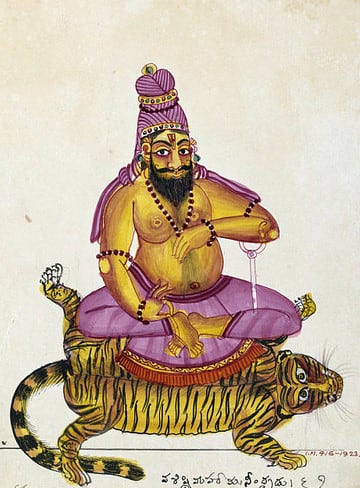
Maharishi Vasiṣṭha sentado sobre una piel de tigre · Public domain
Con le sue parole
«Free us from sins committed by our fathers, from those wherein we have ourselves offended. O King, loose, like a thief who feeds the cattle, as from the cord a calf, set free Vasistha.»Ṛgveda 7.86.5; trad. inglesa de R. T. H. Griffith (1896, dominio público); versión española del investigador

La sua idea centrale
The world as a projection of the mind: The Yoga Vāsiṣṭha maintains that the whole universe is a creation of the mind (manas) or of consciousness (cit), comparable to a dream or an imagined city: it exists while it is thought and ceases to exist when thought is stilled.
Vederlo nel contesto
Biografia
5 min di lettura
Traduzione assistita dall'originale spagnolo, in attesa di revisione da parte di un traduttore madrelingua.
Un nome che attraversa tremila anni
Poche figure della letteratura sanscrita ricompaiono in tanti strati quanto Vasishtha. È il poeta-sacerdote a cui la tradizione attribuisce il settimo libro del Ṛgveda, il cappellano della dinastia solare di Ayodhya nel Ramayana, il rivale di Vishvamitra, il bisnonno di Vyasa nel Mahabharata, una delle stelle dell'Orsa Maggiore e, già nel Medioevo, il maestro che istruisce Rama nello Yoga Vāsiṣṭha. Nessun documento consente di parlare di un individuo storico al di là degli inni vedici: il nome designa al tempo stesso una stirpe di sacerdoti — i Vasishtha, un gotra brahmanico che esiste tuttora — e un saggio leggendario annoverato tra i sette ṛṣi del cielo. Le date che si possono indicare sono quelle dei testi, mai quelle della persona.
Il poeta del settimo libro
Il Ṛgveda raccoglie nei libri dal II al VII, i cosiddetti «libri di famiglia», le collezioni di diversi clan di poeti. Il settimo, con 104 inni, è attribuito a Vasishtha Maitravaruni e ai suoi discendenti ed è uno dei nuclei più antichi del corpus, composto nel Punjab nella seconda metà del II millennio a.C. secondo la datazione più accreditata. Contiene inni ad Agni, a Indra, all'Aurora e soprattutto una serie rivolta a Varuna (7.86–89) dal tono insolitamente personale: il poeta si chiede quale colpa abbia commesso e prega il dio di scioglierlo «come un vitello dalla sua corda». L'inno 7.33 narra la nascita di Vasishtha: figlio di Mitra e Varuna, nato dal loro desiderio per la ninfa Urvashi da un seme raccolto in una brocca da cui uscì anche Agastya. Verificare simili genealogie è impossibile; ciò che esse documentano è come vedeva sé stessa una famiglia sacerdotale che rivendicava un'origine divina.
Sudas e la battaglia dei dieci re
Gli inni 7.18, 7.33 e 7.83 celebrano la vittoria di Sudas, re dei Tritsu-Bharata, su una coalizione di dieci re presso il fiume Parushni, l'attuale Ravi. I Vasishtha se ne attribuiscono il merito: Indra, dicono, ascoltò la loro preghiera e diede ai Tritsu «spazio e libertà». Michael Witzel ha letto questi inni come il riflesso di un evento reale del periodo vedico medio, l'ascesa dei Bharata che avrebbero finito per dare il nome all'India, e ha osservato che anche il terzo libro, quello di Vishvamitra, conosce Sudas. Da qui deriva, probabilmente, la rivalità tra le due famiglie sacerdotali che i poemi epici avrebbero fatto uno dei loro grandi temi.
La rivalità con Vishvamitra
Il Ramayana drammatizza quella memoria. Nel Bālakāṇḍa il re Vishvamitra visita l'eremo di Vasishtha, che lo ospita sontuosamente grazie a Shabala, la vacca dell'abbondanza; il re vuole portarla via, la vacca fa sorgere eserciti e il potere del guerriero si infrange contro quello del brahmano, finché Vishvamitra rinuncia al trono e si sottopone per millenni all'ascesi per essere riconosciuto brahmarṣi. Il Mahabharata aggiunge l'episodio più cupo: il re Kalmashapada, trasformato in demone, divora Shakti, il figlio maggiore di Vasishtha; il saggio tenta di togliersi la vita e i fiumi si rifiutano di annegarlo; solo la voce del nipote Parashara, che recita il Veda dal grembo della madre, gli restituisce la voglia di vivere. Parashara sarà il padre di Vyasa.
Cappellano degli Ikshvaku e maestro di Rama
Nell'epica Vasishtha è il purohita ereditario dei re di Ayodhya: officia i riti di Dasharatha, educa i principi, manda a chiamare Bharata dopo la morte del re e, nella foresta di Chitrakuta, ricorda a Rama la consuetudine che obbliga il primogenito a regnare. Sua moglie Arundhati divenne il modello della fedeltà coniugale; il suo nome è dato alla piccola stella Alcor, accanto a Mizar, la stella di Vasishtha nell'Orsa Maggiore, che i riti nuziali mostrano alla sposa. L'indologo Georg Bühler osservava già nel 1882 che il prestigio di questo Vasishtha, «campione del brahmanesimo», spiega perché tante opere siano state poste sotto il suo nome.
Lo Yoga Vāsiṣṭha
L'opera più influente che porta il suo nome è lo Yoga Vāsiṣṭha o Mahārāmāyaṇa, un dialogo immenso — circa trentamila versi secondo la tradizione — diviso in sei libri. Il giovane Rama torna da un pellegrinaggio in preda al disincanto; Vishvamitra giunge a corte e Vasishtha intraprende la sua istruzione, incastonata in una catena di cornici narrative di cui Valmiki è il narratore. La sua dottrina è un idealismo radicale: il mondo è una proiezione della mente, e la coscienza che lo sogna può risvegliarsi in vita (jīvanmukti). La insegna con racconti memorabili — Lila, il re Lavana, il brahmano Gadhi, la regina Chudala — e con un'insistenza singolare sullo sforzo umano di fronte al destino. Le datazioni proposte vanno dal VI al XIV secolo; Walter Slaje e Jürgen Hanneder hanno dimostrato che il testo è una rielaborazione vedantica di un'opera kashmira anteriore, il Mokṣopāya, del X secolo circa. Esistono inoltre un compendio, il Laghu Yoga Vāsiṣṭha, attribuito a Gauda Abhinanda, e una traduzione persiana eseguita alla corte moghul, il cui manoscritto miniato del 1602 è conservato a Dublino.
Leggi, yoga, fonetica e astronomia
Il nome fu anche un sigillo di autorità. Il Vasiṣṭha Dharmasūtra, uno dei quattro trattati in prosa sul dharma giunti fino a noi, è per Bühler l'ultimo resto di una scuola vedica scomparsa e per Patrick Olivelle il più tardo del gruppo, con aggiunte successive; il testo stesso invoca tre volte Vasishtha e si chiude con un saluto «al figlio di Mitra e Varuna e di Urvashi». Portano inoltre il suo nome una Vasiṣṭha Saṃhitā sullo yoga, una Vasiṣṭha Smṛti, un trattato di fonetica vedica (Vāsiṣṭhī Śikṣā), un altro sul tiro con l'arco (Dhanurveda Saṃhitā) e un sistema astronomico, il Vasiṣṭha Siddhānta, riassunto da Varahamihira nel VI secolo. Nessuno può essere attribuito a una persona: l'attribuzione dice quale autorità si voleva invocare.
Ciò che si può affermare
Lo storico può sostenere che nel periodo vedico esistette una famiglia di poeti e sacerdoti che chiamava sé stessa Vasishtha, che compose o trasmise il settimo libro del Ṛgveda e che fu legata alla corte di Sudas. Tutto il resto — la nascita dalla brocca, la vacca prodigiosa, la morte dei cento figli, il magistero presso Rama — appartiene a una tradizione letteraria che continuò a scriversi per più di duemila anni e fece di Vasishtha la figura stessa del brahmano saggio: sereno di fronte alla forza, fedele alla parola e maestro di re.
Fonti: Jamison, Stephanie W., y Joel P. Brereton (trads.). The Rigveda: The Earliest Religious Poetry of India. 3 vols. Nueva York: Oxford University Press, 2014. Introducción general e introducción al libro VII. · Griffith, Ralph T. H. (trad.). The Hymns of the Rigveda. 2.ª ed. Benarés: E. J. Lazarus, 1896–1897. Libro VII (himnos 18, 33, 59, 83, 86–89), texto en Wikisource. · Goldman, Robert P. (trad. e introd.). The Rāmāyaṇa of Vālmīki: An Epic of Ancient India. Vol. I: Bālakāṇḍa. Princeton: Princeton University Press, 1984 (episodio de Vasiṣṭha y Viśvāmitra, sargas 50–64 de la edición crítica). · Mitra, Vihari-Lala (trad.). The Yoga-Vásishtha Mahárámáyana of Válmiki. 4 vols. en 7 partes. Calcuta: Bonnerjee & Co., 1891–1899. Edición digital en Project Gutenberg (n.º 71326 y siguientes). · Slaje, Walter. Vom Mokṣopāya-Śāstra zum Yogavāsiṣṭha-Mahārāmāyaṇa. Philologische Untersuchungen zur Entwicklungs- und Überlieferungsgeschichte eines indischen Lehrwerks mit Anspruch auf Heilsrelevanz. Viena: Verlag der Österreichischen Akademie der Wissenschaften, 1994.
Cronologia
La vita, anno per anno
Ogni punto è un evento documentato. Fai clic per leggerlo, con la sua fonte e il suo grado di certezza.
ca. 1300 a.C. – 1000 a.C.Panyab (Sapta Sindhu)
The hymns of the seventh book of the Ṛgveda
Composition, by the priestly family of the Vasiṣṭhas, of the 104 hymns of maṇḍala VII, one of the 'family books' that form the ancient core of the Ṛgveda. The range is that of the composition of the corpus, not of a person.
ProbabileJamison, Stephanie W., y Joel P. Brereton (trads.). The Rigveda: The Earliest Religious Poetry of India. 3 vols. Nueva York: Oxford University Press, 2014. Introducción general e introducción al libro VII.
ca. 1300 a.C. – 1000 a.C.
The hymns of the seventh book of the Ṛgveda
Composition, by the priestly family of the Vasiṣṭhas, of the 104 hymns of maṇḍala VII, one of the 'family books' that form the ancient core of the Ṛgveda. The range is that of the composition of the corpus, not of a person.
Probabile
ca. 1200 a.C.
The Battle of the Ten Kings
Hymns 7.18, 7.33 and 7.83 celebrate the victory of King Sudās of the Tṛtsu-Bharatas over a coalition of ten kings and ascribe Indra's favour to the prayer of the Vasiṣṭhas. Witzel interprets it as a real event of the Vedic period; the date is approximate.
Discusso
ca. 500 a.C. – 300
Vasiṣṭha in the Rāmāyaṇa
In the Rāmāyaṇa, whose composition spans centuries (the Bālakāṇḍa and the Uttarakāṇḍa are late strata), Vasiṣṭha is Daśaratha's purohita, the teacher of the princes and the protagonist of the conflict with Viśvāmitra over the cow Śabalā.
Probabile
ca. 300 a.C. – 300
Vasiṣṭha in the Mahābhārata
The Ādiparvan narrates the death of Śakti at the hands of King Kalmāṣapāda, Vasiṣṭha's attempts at suicide frustrated by the rivers Vipāśā and Śatadru, and the birth of his grandson Parāśara, father of Vyāsa.
Tradizione
ca. 100 a.C. – 100
The Vasiṣṭha Dharmasūtra
Redaction of the treatise on dharma that bears his name, the latest of the four surviving dharmasūtras according to Olivelle, with later additions. The range is approximate.
Discusso
ca. 950
The Mokṣopāya
Composition in Kashmir of the Mokṣopāya, the dialogue between Vasiṣṭha and Rāma that Slaje and Hanneder have identified as the basis of the Yoga Vāsiṣṭha.
Probabile
ca. 1100 – 1400
The Vedāntic version: the Yoga Vāsiṣṭha
Reworking of the Mokṣopāya in a Vedāntic key and spread of the Yoga Vāsiṣṭha or Mahārāmāyaṇa, together with the abridgement ascribed to Gauḍa Abhinanda (Laghu Yoga Vāsiṣṭha). The dates are still debated.
Discusso
1602
The illustrated Jūg Bāsisht
For Prince Salīm, the future emperor Jahāngīr, an illustrated copy of the Persian translation of the Yoga Vāsiṣṭha is completed at Allahabad, with paintings by Bishan Das and others; it is now in the Chester Beatty Library, Dublin.
Documentato
1882
Bühler translates the Vasiṣṭha Dharmasūtra
Georg Bühler publishes the English translation of the Vasiṣṭha Dharmasūtra in volume 14 of the Sacred Books of the East.
Documentato
1891 – 1899
Vihari-Lala Mitra's translation
The first complete English translation of the Yoga Vāsiṣṭha, in four volumes, by Vihari-Lala Mitra, appears in Calcutta.
Documentato
1896
Griffith publishes the Ṛgveda in English
Second edition of Ralph T. H. Griffith's The Hymns of the Rigveda, the complete public-domain English translation in which Vasiṣṭha's hymns are read today.
Documentato
Opere
Opere essenziali
Le opere senza le quali non si comprende la sua eredità.
Raccolta posteriore · ca. 1200 a.C.
Ṛgveda, Book VII (hymns of the Vasiṣṭhas)
ऋग्वेद, सप्तमं मण्डलम् (Ṛgveda, saptamaṃ maṇḍalam)
The 104 hymns of the seventh book of the Ṛgveda, one of the 'family books'. They include hymns to Agni, Indra, Uṣas, the Maruts and Mitra-Varuṇa; the chronicle of the Battle of the Ten Kings (7.18, 7.33, 7.83); the account of Vasiṣṭha's birth (7.33); the confessional hymns to Varuṇa (7.86–89); the mantra to Tryambaka (7.59.12), still recited as the 'mahāmṛtyuñjaya', and the hymn of the frogs (7.103). It is one of the oldest strata of Indian literature.
4 edizioni

Attribuzione tradizionale · ca. 1100
Yoga Vāsiṣṭha (Mahārāmāyaṇa)
योगवासिष्ठ (Yogavāsiṣṭha), también महारामायण (Mahārāmāyaṇa), आर्षरामायण, वासिष्ठरामायण
A dialogue of some thirty thousand verses, according to tradition, in six books (prakaraṇa): Vairāgya (Rāma's disenchantment), Mumukṣu (the seeker of liberation), Utpatti (creation), Sthiti (persistence), Upaśama (quiescence) and Nirvāṇa (extinction). Vasiṣṭha teaches Rāma that the world is a projection of the mind and that liberation is possible in life, through dozens of nested tales —Līlā, Lavaṇa, Gādhi, Cūḍālā and Śikhidhvaja, the crow Bhuśuṇḍa— and a constant defence of human effort (pauruṣa) against fate.
6 edizioni

Attribuzione tradizionale · ca. 100 a.C.
Vasiṣṭha Dharmasūtra (The Sacred Law of Vasiṣṭha)
वासिष्ठधर्मसूत्र / वासिष्ठधर्मशास्त्र (Vāsiṣṭha Dharmasūtra / Dharmaśāstra)
A prose manual with interspersed verses, in thirty chapters, on the rules of conduct: the sources of dharma, the four social classes, the stages of life (student, householder, hermit, ascetic), purity, women, inheritance, adoption, lawful interest on loans, the king and penances. It ends with a chapter of maxims and a salutation to Vasiṣṭha, 'son of Mitra and Varuṇa and of Urvaśī'.
3 edizioni
Tutta la sua opera (10)
Vasishtha
Mokṣopāya ('The Means to Liberation')
The Conscious LibraryMokṣopāya ('The Means to Liberation')
950

Laghu Yoga Vāsiṣṭha (The Shorter Yoga Vāsiṣṭha)
Vasishtha
Vasiṣṭha Saṃhitā (Yoga section)
The Conscious LibraryVasiṣṭha Saṃhitā (Yoga section)
Vasishtha
Vasiṣṭha Smṛti
The Conscious LibraryVasiṣṭha Smṛti
Vasishtha
Vāsiṣṭhī Śikṣā (treatise on Vedic phonetics)
The Conscious LibraryVāsiṣṭhī Śikṣā (treatise on Vedic phonetics)
Vasishtha
Vasiṣṭha's Dhanurveda Saṃhitā (treatise on archery)
The Conscious LibraryVasiṣṭha's Dhanurveda Saṃhitā (treatise on archery)
Vasishtha
Vasiṣṭha Siddhānta (astronomical system)
The Conscious LibraryVasiṣṭha Siddhānta (astronomical system)
Citazioni
Citazioni localizzate in un'opera precisa. Ciascuna porta con sé la sua provenienza e il suo grado di affidabilità.
Free us from sins committed by our fathers, from those wherein we have ourselves offended. O King, loose, like a thief who feeds the cattle, as from the cord a calf, set free Vasistha.áva drugdhā́ni pítryā sṛjā nó, áva yā́ vayáṃ cakṛmā́ tanū́bhiḥ / áva rājan paśutṛ́paṃ ná tāyúṃ sṛjā́ vatsáṃ ná dā́mno vásiṣṭham
VerificataṚgveda 7.86.5; trad. inglesa de R. T. H. Griffith (1896, dominio público); versión española del investigador
Ultime parole
Non esistono testimonianze verificabili delle sue ultime parole.
There is no record of his death or of any last words. Vasiṣṭha is a lineage name and a legendary figure; tradition places him among the seven sages who dwell as stars in the Great Bear.
Fonte: Jamison, Stephanie W., y Joel P. Brereton (trads.). The Rigveda: The Earliest Religious Poetry of India. 3 vols. Nueva York: Oxford University Press, 2014. Introducción general e introducción al libro VII.
Chiedi
Ciò a cui risponde la sua opera
Dodici grandi domande dell'umanità e ciò che i suoi testi permettono di rispondere, con riferimenti. Non gli mettiamo mai parole in bocca.
Che cos'è l'Assoluto? Dio esiste?
The only reality is pure consciousness; the universe is its imagining
Un Assoluto impersonaleLo dice espressamente
In the Yoga Vāsiṣṭha, Vasiṣṭha teaches Rāma that the ultimate is brahman, pure consciousness (cit) without form, beginning or second. Worlds, bodies and the gods themselves appear in that consciousness like the images of a dream or an imagined city, and have no substance other than it. The work's stories —Līlā, who traverses her husband's successive lives within the space of a single room; King Lavaṇa, who lives a whole existence as an outcaste in an instant— serve to dissolve the solidity of what is taken to be real. Brahmā, Viṣṇu and Śiva appear in the text, but as figures within that consciousness, not as its ground. The question of a creator God is thus absorbed into another: what is the consciousness that represents the world to itself.
Confronta questa domanda con altri maestriChi sono io? Esiste un vero sé?
The suffering self is a product of the mind; the Self is pure consciousness
Il Sé è l'AssolutoLo dice espressamente
In the Yoga Vāsiṣṭha, Vasiṣṭha distinguishes between the ego (ahaṃkāra), which arises when consciousness thinks itself to be a particular body and mind, and the Self, which is unbounded consciousness (cit) itself. The ego has no more reality than a dream: it arises with accumulated impressions and desires (vāsanā) and dissolves when they are extinguished. What remains is not nothingness, but the consciousness that always was, identical with brahman. The work does not present this identity as a dogma, but as the result of an enquiry: Rāma must examine who it is that suffers until he finds that he cannot find him. Whoever understands this is liberated while living (jīvanmukta), and goes on acting in the world without identifying with any of it.
Confronta questa domanda con altri maestriPerché soffriamo?
We suffer because the mind takes as real the world it imagines
L'ignoranza di ciò che siamoLo dice espressamente
The Yoga Vāsiṣṭha opens with Rāma's despondency: back from a pilgrimage, the young prince stops eating and acting, because he has seen the transience of youth, wealth and the body, and the thirst (tṛṣṇā) that is never quenched. Vasiṣṭha does not deny that diagnosis, but takes it deeper. Suffering arises because consciousness identifies with a body and a mind and takes as solid the world the mind itself projects, like someone suffering within a dream. What sustains that identification are accumulated impressions and desires (vāsanā). That is why the remedy is not to flee the world, but to understand its nature: when the vāsanās are extinguished and the mind grows still, suffering loses the ground it stood on.
Confronta questa domanda con altri maestriChe cosa accade dopo la morte?
Death is a change of dream; consciousness is neither born nor dies
Ciò che sono non nasce e non muoreLo dice espressamente
In the Yoga Vāsiṣṭha, death interrupts nothing essential. The story of Līlā shows it: at the death of her husband Padma, the queen discovers that he goes on living, in the same instant and within the space of her own chamber, the life of King Vidūratha, who in turn dies and finds himself again in another world. For Vasiṣṭha, what we call dying is the mind, laden with its impressions (vāsanā), ceasing to represent one body and beginning to represent another, like passing from one dream to the next. As long as those impressions persist, the round of births continues. But consciousness itself, which is brahman, is neither born nor dies; whoever recognises it is liberated while still living and has nowhere to go.
Confronta questa domanda con altri maestriCome si raggiunge la liberazione o la salvezza?
Enquiry, sustained by one's own effort, liberates in this life
Con la conoscenza direttaLo dice espressamente
For the Vasiṣṭha of the Yoga Vāsiṣṭha, liberation results from knowledge gained through enquiry (vicāra): examining who I am, what the world is and where suffering arises, until impressions and desires (vāsanā) are extinguished and the mind grows still. It is not a gift nor the fruit of a rite, and it demands personal effort (pauruṣa): Vasiṣṭha holds that what is called fate is nothing but past action, and that present effort can overcome it as the stronger ram overcomes the weaker. The work describes seven stages of knowledge, from the wish for the good to a state with no trace of duality. Its ideal is the one liberated while living (jīvanmukta): not someone who abandons the world, but someone who lives in it without bonds.
Confronta questa domanda con altri maestriServe un maestro?
The teacher and the texts guide; one's own understanding liberates
Utile ma non indispensabileLo dice espressamente
The Yoga Vāsiṣṭha takes the form of a teaching: Vasiṣṭha, teacher of the royal house, instructs Rāma for days before the court. But the text stresses that neither the teacher nor the scriptures suffice without the disciple's own understanding. Vasiṣṭha even says that reasonable words should be accepted even if spoken by a child, and that what does not accord with reason should be discarded like straw even if Brahmā himself had said it. His praise of personal effort (pauruṣa) points the same way: fate saves no one, and neither does the mere presence of a sage. The teacher awakens, reasons and offers stories that make one see; the disciple must enquire for himself until the teaching becomes his own evidence.
Confronta questa domanda con altri maestriIl mondo è reale?
The world is like a dream: it exists while the mind thinks it
Apparenza sull'unica realtàLo dice espressamente
The central thesis of the Yoga Vāsiṣṭha is that the entire universe is a creation of the mind (manas) or of consciousness (cit), comparable to a dream, an imagined city or the sky that looks blue without being so. It exists while it is thought and ceases to exist when thought grows still. Vasiṣṭha demonstrates this with stories of worlds within worlds: Līlā visits, within the space of a room, lives that last for years, and King Lavaṇa lives in an instant an entire existence as an outcaste, which he later finds confirmed in a real village. Time and space thus lose their solidity. The world is nothing in itself, but neither is it an absolute nothing: it is consciousness appearing to itself in forms.
Confronta questa domanda con altri maestriChe cos'è l'amore?
The Yoga Vāsiṣṭha does not make love a path; the hymns seek divine friendship
Non si è pronunciato
The Yoga Vāsiṣṭha has no doctrine of love. Its affective vocabulary revolves around attachment (rāga) and thirst (tṛṣṇā), which it treats as bonds, and its ideal is the one liberated while living, who acts with equanimity and without aversion to anyone. The story of Cūḍālā and Śikhidhvaja, in which an awakened queen patiently guides her husband to liberation and both return to rule together, shows a bond in the service of awakening, but the text does not raise it to a theory. The closest thing to love in the work ascribed to Vasiṣṭha lies in another place and age: in Ṛgveda VII, the poet ponders in his own heart how he may again be united with Varuṇa and find him gracious (7.86.2), and recalls an ancient friendship with the god.
Confronta questa domanda con altri maestriSiamo liberi o è tutto determinato?
Fate is past action; present effort can overcome it
Karma e sceltaLo dice espressamente
One of the most characteristic theses of the Yoga Vāsiṣṭha is the primacy of human effort (pauruṣa) over fate (daiva). In the opening chapters of the book of the seeker, Vasiṣṭha holds that what is called fate is not an external force, but the subject's own past action. Fate and effort, he says, contend with each other like two rams of unequal strength, in which the mightier overcomes the other, and present effort, well directed, can prevail. Fatalism is the excuse of the lazy. The thesis is striking in a work that also holds that the world is a mental projection: the effort it demands is, above all, that of the enquiry that leads to recognising the illusory nature of one's bonds.
Confronta questa domanda con altri maestriPerché meditare o pregare?
Enquire who I am until the mind comes to rest in its source
Tornare alla sorgente dell'ioLo dice espressamente
The Yoga Vāsiṣṭha makes enquiry (vicāra) its central practice: asking who I am, what this world is and where suffering arises, until the mind, deprived of the objects with which it identified, comes to rest in the consciousness from which it arises. Vasiṣṭha recognises two means of stilling the mind's agitation: yoga, understood as mastery of the breath, and knowledge; and although he devotes stories to the first —that of the immortal crow Bhusuṇḍa, who lives through control of the breath—, he prefers the second. Meditation does not mean withdrawing from life, but seeing through it: the one liberated while living meditates while ruling, conversing or fighting, because he no longer takes as real what the mind projects.
Confronta questa domanda con altri maestriPuò la ragione conoscere l'ultimo?
Reasoning guides to the threshold; the mind is extinguished in crossing it
L'ultimo è al di là della menteLo dice espressamente
Few Indian works grant reasoning as much value as the Yoga Vāsiṣṭha. Vasiṣṭha even says that reasonable words (yukti) should be accepted even if spoken by a child, and that what does not accord with reason must be discarded like straw even if Brahmā himself had said it. His stories work as arguments that dismantle the solidity of time and space. But reasoning is not the goal: it is the instrument of an enquiry that ends when the mind itself is extinguished (manonāśa). The ultimate is not a true thought about consciousness, but the objectless consciousness that remains when thinking ceases. Reason, well used, leads beyond itself.
Confronta questa domanda con altri maestriRitirarsi dal mondo o trasformarlo?
Rāma must not withdraw: the one liberated in life rules without bonds
Contemplazione nell'azioneLo dice espressamente
The whole Yoga Vāsiṣṭha answers a temptation to withdraw. Rāma, disillusioned with the world, wants to abandon his princely duties, and Viśvāmitra needs him to protect a sacrifice. Vasiṣṭha's teaching does not invite him to renounce, but to understand: whoever has seen the nature of the world can go on acting in it without identifying with anything. That is the one liberated while living (jīvanmukta). The work illustrates this with kings: Janaka attains knowledge on hearing the song of some sages and goes on reigning; Queen Cūḍālā, awakened, guides her husband Śikhidhvaja, who had withdrawn to the forest, and both return to rule. Liberation lies not in the place where one lives, but in the manner of being there.
Confronta questa domanda con altri maestri
Affinità e tensioni
Affinità e tensioni
Calcolate domanda per domanda a partire dalle sue posizioni. Il perché di ogni accordo o contrasto, con un clic.
La pensa in modo simile a
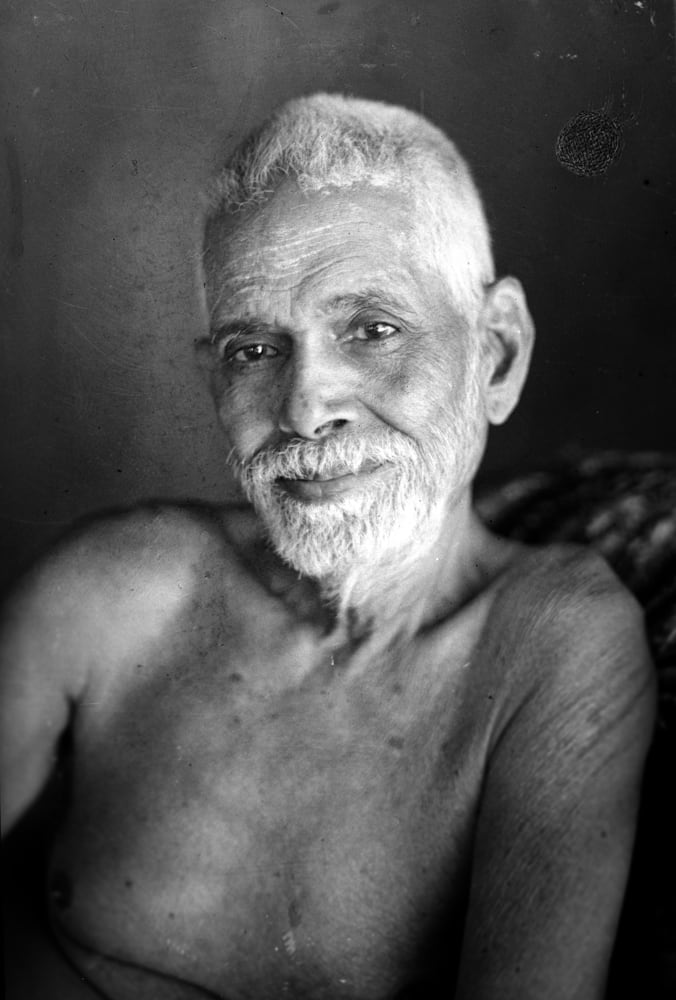
Ramana Maharshi
Concordano su: Che cos'è l'Assoluto? Dio esiste? · Il mondo è reale? · Chi sono io? Esiste un vero sé?
Ashtavakra
Concordano su: Che cos'è l'Assoluto? Dio esiste? · Chi sono io? Esiste un vero sé? · Perché soffriamo?
Parmenides
Concordano su: Che cos'è l'Assoluto? Dio esiste? · Come si raggiunge la liberazione o la salvezza? · Serve un maestro?
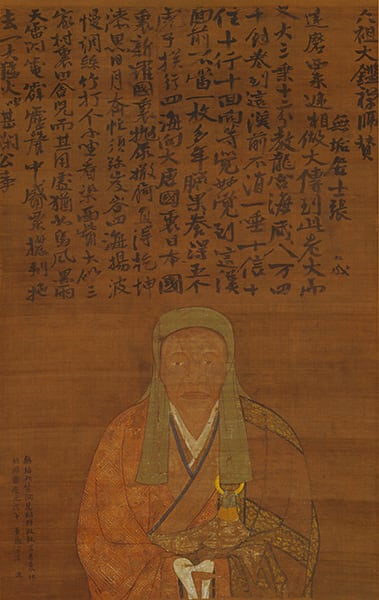
Huineng
Concordano su: Che cos'è l'Assoluto? Dio esiste? · Chi sono io? Esiste un vero sé? · Perché soffriamo?
La pensa diversamente da
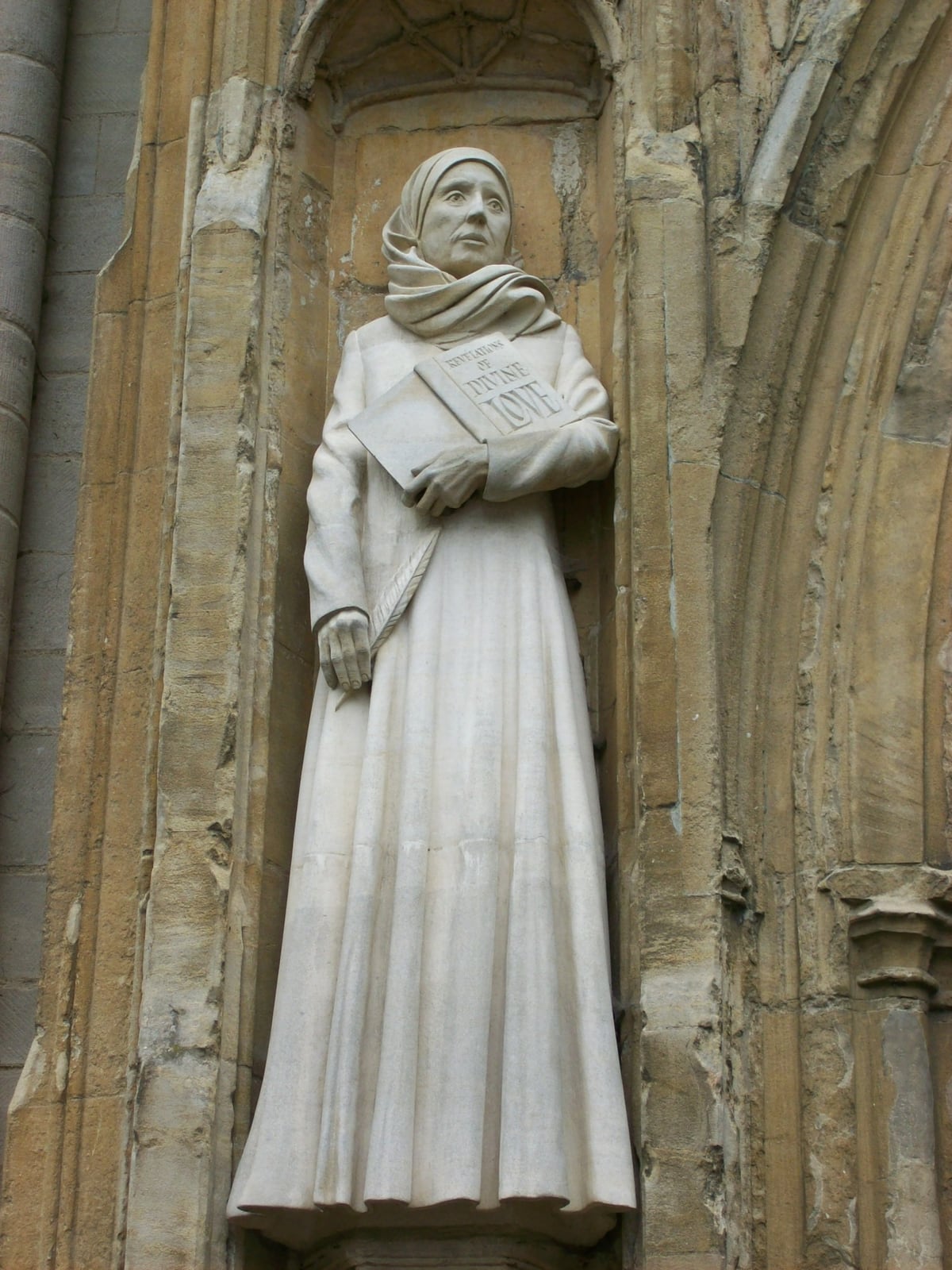
Julian of Norwich
Si scontrano su: Chi sono io? Esiste un vero sé? · Il mondo è reale?
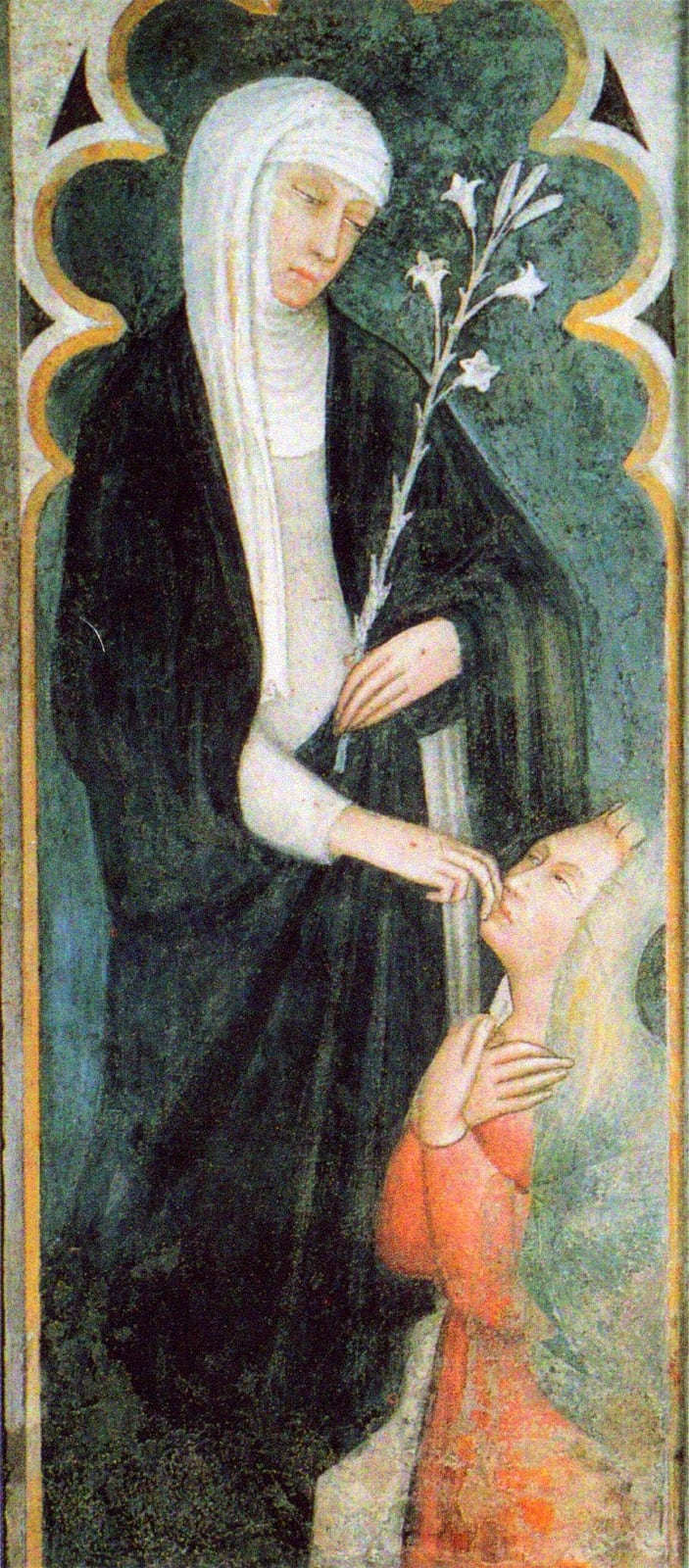
Catherine of Siena
Si scontrano su: Chi sono io? Esiste un vero sé? · Il mondo è reale?
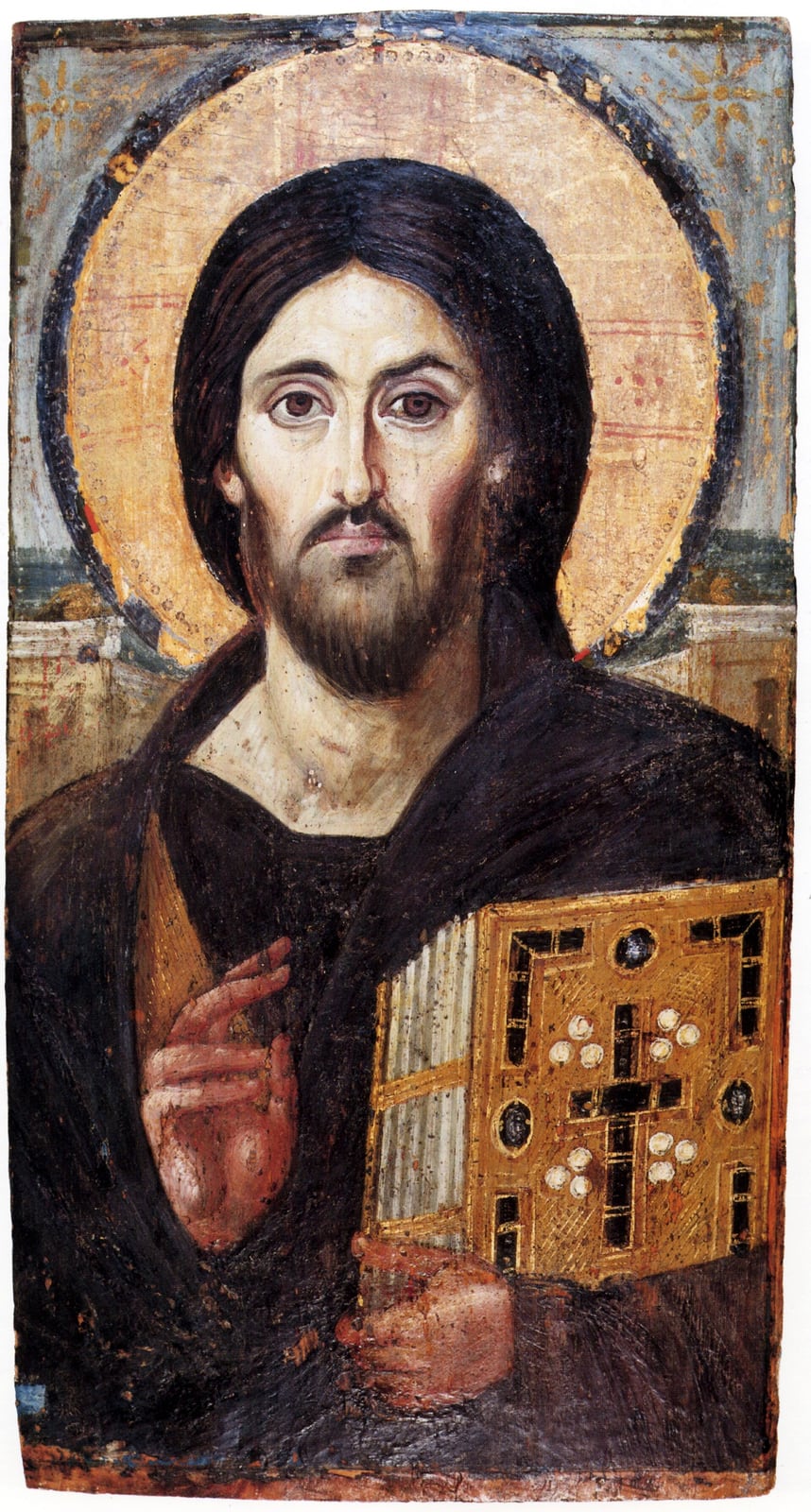
Jesus of Nazareth
Si scontrano su: Il mondo è reale? · Chi sono io? Esiste un vero sé?

Francis of Assisi
Si scontrano su: Chi sono io? Esiste un vero sé? · Il mondo è reale?
Aneddoti e racconti
Aneddoti e racconti
Tradizione oraleperiodo védico
Born from a pitcher
Origine del racconto: Ṛgveda 7.33.9–13 (Griffith's translation, Wikisource), from Vedic oral transmission. The Vasiṣṭha Dharmasūtra (30.11) preserves the same genealogy in its final salutation.
Tradizione oraleperiodo védico
'Set Vasiṣṭha free like a calf'
Origine del racconto: Ṛgveda 7.86 (Griffith's translation). The attribution to Vasiṣṭha comes from the anukramaṇī and from the hymn itself, which names him in verse 5.
Racconto agiograficorelato épico
The cow of plenty
Origine del racconto: Rāmāyaṇa, Bālakāṇḍa, sargas 50–55 of the critical edition (Goldman's translation, 1984). The Mahābhārata (Ādiparvan) tells a version in which the cow is called Nandinī. It is epic legend with no verifiable historical basis, though it probably remembers the real rivalry of two priestly families.
Fonte: Goldman, Robert P. (trad. e introd.). The Rāmāyaṇa of Vālmīki: An Epic of Ancient India. Vol. I: Bālakāṇḍa. Princeton: Princeton University Press, 1984 (episodio de Vasiṣṭha y Viśvāmitra, sargas 50–64 de la edición crítica).
Racconto agiograficorelato épico
The rivers that would not drown him
Origine del racconto: Mahābhārata, Ādiparvan (Caitraratha), in K. M. Ganguli's translation, sections CLXXVIII–CLXXIX. It is an epic aetiology of the names of the rivers Beas (Vipāśā) and Sutlej (Śatadru), with no historical basis.
Racconto agiograficoYoga Vāsiṣṭha (s. X–XIV)
The queen who taught her husband
Origine del racconto: A didactic tale from book VI (Nirvāṇa-prakaraṇa, first half) of the Yoga Vāsiṣṭha, put in Vasiṣṭha's mouth (Mitra's translation, 1891–1899). It is a parable, not an event: the work presents it as an example.
Tradizione oraletradición ritual
Arundhatī, the star shown to the bride
Origine del racconto: Astronomical and ritual tradition recorded in the gṛhyasūtras (wedding rites) and in the Mahābhārata (episode of Agni and the wives of the ṛṣis); summary after the bibliography cited in s14. It is not a historical fact about Vasiṣṭha but a documented practice around his figure.
Insegnamenti
Insegnamenti
Le nozioni che articolano il suo pensiero, spiegate nel loro contesto.
The world as a projection of the mindmundo-como-mente
Central doctrine of the Yoga Vāsiṣṭha and the Mokṣopāya.
Fonte: Hanneder, Jürgen. Studies on the Mokṣopāya. Wiesbaden: Harrassowitz, 2006 (Abhandlungen für die Kunde des Morgenlandes 58).
Purohita (royal chaplain)purohita
Vedic and epic society; relation between Brahmins and kings.
Fonte: Witzel, Michael. «Rigvedic History: Poets, Chieftains and Polities». En George Erdosy (ed.), The Indo-Aryans of Ancient South Asia: Language, Material Culture and Ethnicity. Berlín y Nueva York: Walter de Gruyter, 1995, pp. 307–352.
Saptarṣi (the seven sages)saptarshi
Mythology, astronomy and Brahmin kinship.
Pauruṣa (human effort versus fate)paurusha
Yoga Vāsiṣṭha, Mumukṣu-prakaraṇa, chaps. IV–IX.
Jīvanmukti (liberation while living)jivanmukti
Yoga Vāsiṣṭha and later Vedāntic tradition.
Dharma in the dharmasūtrasdharma
Brahmin normative literature (3rd c. BCE–1st c. CE).
Fonte: Olivelle, Patrick (trad.). Dharmasūtras: The Law Codes of Āpastamba, Gautama, Baudhāyana, and Vasiṣṭha. Oxford: Oxford University Press (Oxford World's Classics), 1999. Introducción, sobre la fecha y la composición del Vasiṣṭha Dharmasūtra.
Video
Video
Registrazioni, interviste e documentari. I video vengono riprodotti da YouTube; non sono ospitati qui.
Dream, Reality, and Love in Yoga Vasistha | Prof. Arindam Chakrabarti
Conferenza· EN· 2019· 96 min
Vedanta Society of New YorkCanale ufficiale
Inside the Dream of Vasistha | Prof. Sthaneshwar Timalsina
Conferenza· EN· 2026· 62 min
Vedanta Society of New YorkCanale ufficiale
On Freedom and Fatalism: The Yogavasistha and Arthur Schopenhauer | Dr. Aleksandar Uskokov
Conferenza· EN· 2026· 85 min
Vedanta Society of New YorkCanale ufficiale
Swami Sarvapriyananda - The Serene Light of the Yoga Vasistha
Conferenza· EN· 2025· 51 min
Theosophical Society in England & WalesCanale ufficiale
Elizabeth Crofts - The teaching on Liberation in The Yoga Vasistha
Conferenza· EN· 2025· 56 min
Theosophical Society in England & WalesCanale ufficiale
Sampoorna Yoga Vasishtha | सत्र 1 | स्वामी अभेदानन्द
Conferenza· HI· 2025· 89 min
Chinmaya Mission South AfricaCanale ufficiale
Dashrajna War of the Rigveda - The First Epochal War of India
Conferenza· EN· 2021· 33 min
Bhandarkar Oriental Research InstituteCanale ufficiale
Bharat Ek Khoj | Episode-3 | The Vedic People and The Rigveda
Documentario· HI· 1988· 52 min
Prasar Bharati ArchivesCanale ufficiale
Introduction to the Rig Veda and Upanishads | Kendall Sharp | First Friday Lecture
Conferenza· EN· 2024· 78 min
The University of Chicago Graham SchoolCanale ufficiale
Introduction to the Rig Veda | Swami Tattwamayananda
Conferenza· EN· 2022· 77 min
Vedanta Society of New YorkCanale ufficiale
Vedic Chanting | Vedamu | Rig Veda | Samhitapatha | Mandala 7 (7.1.1–7.67.10)
Registrazione di terzi· SA· 2023· 134 min
Vedamu org
Complete Rigveda Recitation - Part 28; Mandala 7 Sookta 1 to Mandala 7 Sookta 20
Registrazione di terzi· SA· 2021· 44 min
Vedokhilo Dharmamoolam
Yoga Vasishtha: La enseñanza de la no dualidad | Introducción al retiro
Conferenza· ES· 2023· 8 min
Advaitavidya Vídeos
Galleria
Galleria
Immagini con licenza verificata. Ciascuna conserva la sua paternità e la sua attribuzione.
Manoscritti
Manoscritti
Testimoni manoscritti e testi antichi, con il loro custode e le loro condizioni di consultazione.
FA · Nastaʿlīq (persa) · Copia terminada en Allahabad en 1602
Jūg Bāsisht (traducción persa del Yoga Vāsiṣṭha), copia ilustrada
- Testimone conservato
- Manuscrito ilustrado de 1602
- Custode
- Chester Beatty Library, Dublín · In 05
Relazioni
Relazioni
Influenze, discepolati e affinità. Si distingue la relazione documentata dalla somiglianza individuata per analisi.
Famiglia di
According to the Mahābhārata, Vyāsa is the son of Parāśara, grandson of Śakti and great-grandson of Vasiṣṭha. It is a textual genealogy, not a historical one.
Relazione documentata
Contemporaneo di
In the Rāmāyaṇa both are contemporaries of Rāma; the Yoga Vāsiṣṭha puts its teachings in Vasiṣṭha's mouth and the narration in Vālmīki's. A literary relationship.
Relazione documentata
Idee affini a
The Yoga Vāsiṣṭha was read as an Advaita Vedānta text because of its doctrine of the world as an appearance of consciousness; there is no documented relation between the work and Śaṅkara.
Somiglianza individuata per analisi
Idee affini a
Affinity between the Yoga Vāsiṣṭha's thesis (the world as the mind's dream) and the non-origination of the Māṇḍūkya-kārikā.
Somiglianza individuata per analisi
Idee affini a
The enquiry and liberation in life of the Yoga Vāsiṣṭha come close to Ramana's teaching; the affinity is doctrinal.
Somiglianza individuata per analisi
Idee affini a
The Vasiṣṭha Saṃhitā sets out an eight-limbed yoga related to that of the Yogasūtras; there is no documented relation between the figures.
Somiglianza individuata per analisi
Idee affini a
Both are Vedic sages to whom treatises on dharma and texts on yoga and knowledge are ascribed alike.
Somiglianza individuata per analisi
Idee affini a
The Yoga Vāsiṣṭha's exaltation of human effort (pauruṣa) matches the tone of Vivekananda's Vedāntic preaching; no documented link is recorded in this entry.
Somiglianza individuata per analisi
Fonti
Fonti
Bibliografia e cataloghi consultati per questa scheda.
- Jamison, Stephanie W., y Joel P. Brereton (trads.). The Rigveda: The Earliest Religious Poetry of India. 3 vols. Nueva York: Oxford University Press, 2014. Introducción general e introducción al libro VII.
- Wikidata, «Vasiṣṭha», QID Q241900 (sabio de la India antigua; LCCN n85108214; GND 139310479; BnF 10636717x).
- Griffith, Ralph T. H. (trad.). The Hymns of the Rigveda. 2.ª ed. Benarés: E. J. Lazarus, 1896–1897. Libro VII (himnos 18, 33, 59, 83, 86–89), texto en Wikisource.
- Witzel, Michael. «Rigvedic History: Poets, Chieftains and Polities». En George Erdosy (ed.), The Indo-Aryans of Ancient South Asia: Language, Material Culture and Ethnicity. Berlín y Nueva York: Walter de Gruyter, 1995, pp. 307–352.
- Goldman, Robert P. (trad. e introd.). The Rāmāyaṇa of Vālmīki: An Epic of Ancient India. Vol. I: Bālakāṇḍa. Princeton: Princeton University Press, 1984 (episodio de Vasiṣṭha y Viśvāmitra, sargas 50–64 de la edición crítica).
- Mitra, Vihari-Lala (trad.). The Yoga-Vásishtha Mahárámáyana of Válmiki. 4 vols. en 7 partes. Calcuta: Bonnerjee & Co., 1891–1899. Edición digital en Project Gutenberg (n.º 71326 y siguientes).
- Slaje, Walter. Vom Mokṣopāya-Śāstra zum Yogavāsiṣṭha-Mahārāmāyaṇa. Philologische Untersuchungen zur Entwicklungs- und Überlieferungsgeschichte eines indischen Lehrwerks mit Anspruch auf Heilsrelevanz. Viena: Verlag der Österreichischen Akademie der Wissenschaften, 1994.
- Hanneder, Jürgen. Studies on the Mokṣopāya. Wiesbaden: Harrassowitz, 2006 (Abhandlungen für die Kunde des Morgenlandes 58).
- Chapple, Christopher. «Introduction». En Swami Venkatesananda (trad.), The Concise Yoga Vāsiṣṭha. Albany: State University of New York Press, 1984 (resumen de las dataciones propuestas, del s. VI al XIV).
- Olivelle, Patrick (trad.). Dharmasūtras: The Law Codes of Āpastamba, Gautama, Baudhāyana, and Vasiṣṭha. Oxford: Oxford University Press (Oxford World's Classics), 1999. Introducción, sobre la fecha y la composición del Vasiṣṭha Dharmasūtra.
- Bühler, Georg (trad.). The Sacred Laws of the Âryas as Taught in the Schools of Âpastamba, Gautama, Vâsishtha, and Baudhâyana. Part II: Vâsishtha and Baudhâyana. Oxford: Clarendon Press, 1882 (Sacred Books of the East 14). Introducción a Vasiṣṭha, pp. ix–xxviii; cap. XXX.
- Ganguli, Kisari Mohan (trad.). The Mahabharata of Krishna-Dwaipayana Vyasa. Calcuta: Bharata Press / P. C. Roy, 1883–1896. Ādi Parva (Caitraratha Parva), secciones CLXXIV–CLXXXIII (Vasiṣṭha, Viśvāmitra, Kalmāṣapāda y el nacimiento de Parāśara). Project Gutenberg n.º 15474.
- Leach, Linda York. Mughal and Other Indian Paintings from the Chester Beatty Library. 2 vols. Londres: Scorpion Cavendish, 1995 (el Jūg Bāsisht ilustrado para el príncipe Salīm, Allahabad, 1602, CBL In 05).
- Wikipedia (inglés), «Vasishtha», con sus referencias sobre Arundhatī, el saptarṣi y las obras atribuidas.
- Wikisource en sánscrito: «वासिष्ठधर्मशास्त्रम्» (texto del Vasiṣṭha Dharmasūtra) y relación de textos atribuidos a Vasiṣṭha (Vasiṣṭha Smṛti, Vāsiṣṭhī Śikṣā, Vasiṣṭha Dhanurveda Saṃhitā).
- Wikisource en sánscrito: «योगवासिष्ठः» y «लघुयोगवासिष्ठः» (texto sánscrito por libros y cantos).
- Titolare dei diritti
- Textos sánscritos de dominio público. Traducciones con derechos propios: Oxford University Press (Jamison y Brereton; Olivelle), Penguin Classics (Doniger), State University of New York Press y Timeless Books (Venkatesananda), Theosophical Publishing House (Aiyer, reimpr.), Collège de France (Chenet). Son de dominio público las de Griffith (1896), Bühler (1882) y, en EE. UU., Mitra (1891–1899).
In attesa di conferma
Ciò che questa scheda non ha ancora potuto chiarire. Preferiamo dirlo piuttosto che riempirlo.
- Fechas: no hay nacimiento ni muerte; la línea de tiempo usa las fechas de los textos. La horquilla del Vasiṣṭha Dharmasūtra (c. 100 a. C.–100 d. C.) es aproximada: precisar con la introducción de Olivelle (1999/2000).
- Yoga Vāsiṣṭha: precisar con Slaje (1994) y Hanneder (2006) la fecha de la reelaboración vedántica y la del Laghu Yoga Vāsiṣṭha de Gauḍa Abhinanda.
- Sala de lectura: la traducción de Mitra queda con caution por desconocerse la fecha de muerte del traductor; buscar una autoridad bibliográfica (VIAF, Biblioteca Nacional de la India) que la fije. La traducción de K. N. Aiyer del Laghu Yoga Vāsiṣṭha (1896) también tiene traductor de fecha de muerte no verificada; no se ha registrado.
- Ediciones: no se han encontrado en Open Library ediciones en español con ISBN del Yoga Vāsiṣṭha ni del Ṛgveda completo; buscar las de Kairós, Trotta o Siruela, y ediciones en alemán e italiano.
- Obras atribuidas menores (Vasiṣṭha Saṃhitā, Vasiṣṭha Smṛti, Vāsiṣṭhī Śikṣā, Dhanurveda Saṃhitā, Vasiṣṭha Siddhānta): faltan ediciones con ISBN (p. ej., la de Kaivalyadhama de la Vasiṣṭha Saṃhitā) y fuente académica propia para cada una.
- Imagen y manuscrito: localizar la URL del visor digital de la Chester Beatty Library para el Jūg Bāsisht (In 05).
Ricerca effettuata il 2026-10-26