Filosofia presocratica
Parmenides
Παρμενίδης ὁ Ἐλεάτης
ca. 515 a.C. – ?Persona storicamente documentata
Filosofo di Elea, nella Magna Grecia (nato intorno al 515 a.C.), autore di un poema in esametri del quale restano circa centosessanta versi. In esso una dea insegna che solo «ciò che è» può essere pensato e detto, e che è ingenerato, imperituro, uno e immobile; la seconda parte espone le opinioni dei mortali. Fondatore della scuola eleatica, maestro di Zenone e, secondo la tradizione, legislatore della sua città, segnò con il suo argomento tutta la filosofia successiva.
- opere
- 5opere
- edizioni
- 22edizioni
- citazioni
- 14citazioni
- video
- 12video
- immagini
- 5immagini
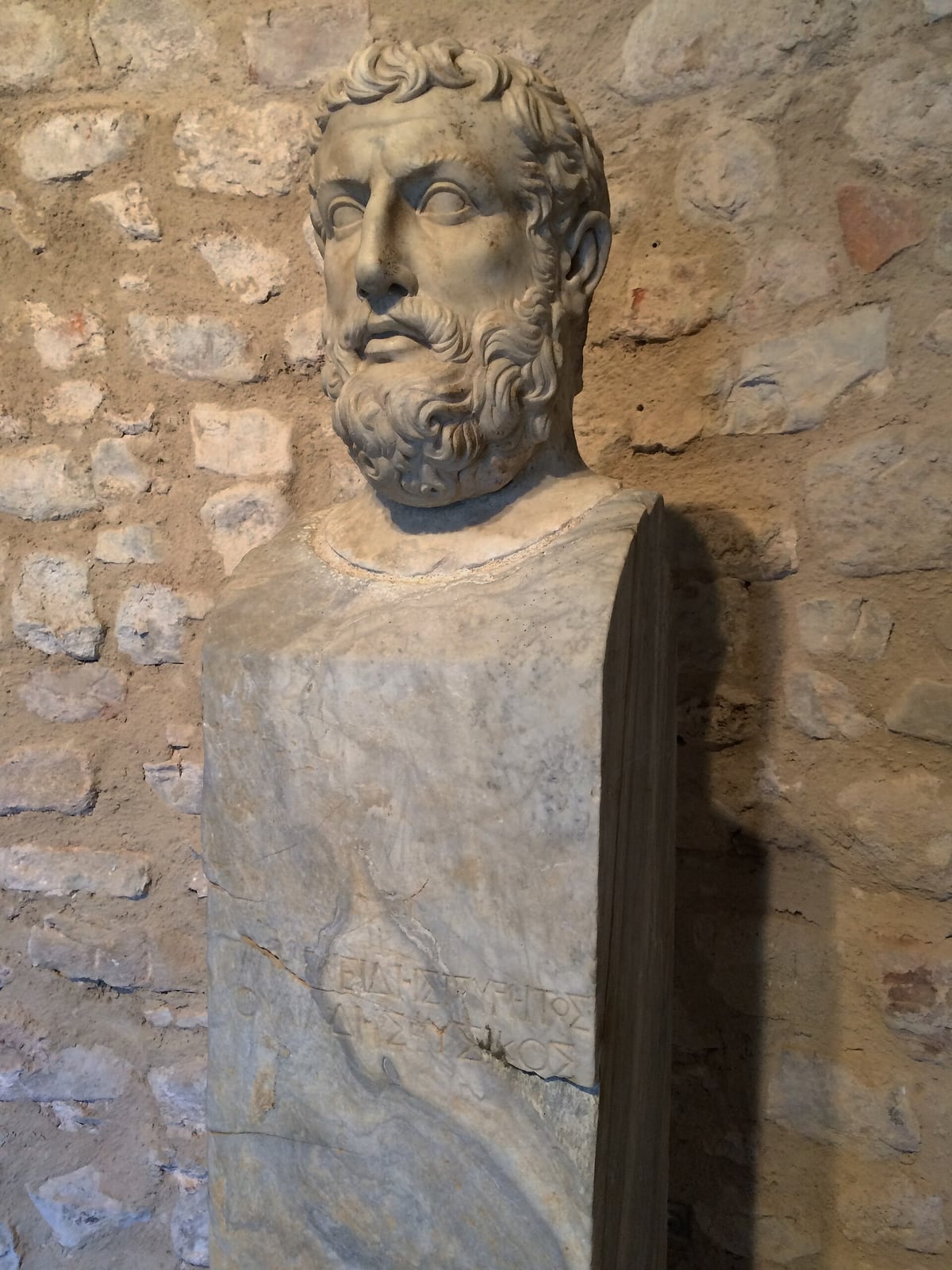
Cabeza identificada con Parménides (Velia) · CC BY-SA 4.0
Con le sue parole
«Meet it is that thou shouldst learn all things, as well the unshaken heart of well-rounded truth, as the opinions of mortals in which is no true belief at all.»DK 28 B1.28–30, en Sexto Empírico, Contra los matemáticos VII 111, y Simplicio, Comentario al Sobre el cielo 557. Griego: Diels-Kranz; inglés: John Burnet, Early Greek Philosophy (1908); español: traducción propia.

La sua idea centrale
What is (to eon): The poem turns on a single word, the Greek verb *esti*, "is", often without an expressed subject.
Vederlo nel contesto
Biografia
5 min di lettura
Traduzione assistita dall'originale spagnolo, in attesa di revisione da parte di un traduttore madrelingua.
Il poema di una sola via
Parmenide scrisse un unico poema in esametri, il verso di Omero e di Esiodo, del quale si conservano circa centosessanta versi grazie alle citazioni di Sesto Empirico, Simplicio, Proclo, Plutarco e altri. È il primo testo della filosofia greca che argomenta passo dopo passo, e il primo che si domanda che cosa significhi dire che qualcosa «è». Platone, che lo definì «venerando e terribile», gli dedicò un dialogo e presentò la rottura con la sua dottrina come un «parricidio»; Aristotele discusse le sue tesi all'inizio della Fisica. Tutta la filosofia della natura successiva, da Empedocle agli atomisti, può leggersi come una risposta alla sua negazione della nascita e della morte.
Elea
Elea — Hyele per i suoi fondatori, Velia per i Romani — era una giovane colonia sulla costa tirrenica, a sud di Poseidonia. L'avevano fondata intorno al 540 a.C. i Focei in fuga dall'avanzata persiana in Ionia, come racconta Erodoto. Diogene Laerzio fa di Parmenide il figlio di Pirete, di famiglia nobile e ricca, e, seguendo Apollodoro, colloca la sua akmè nella 69ª olimpiade (504-501 a.C.), il che darebbe una nascita intorno al 540. Platone, invece, racconta nel Parmenide che il filosofo visitò Atene a circa sessantacinque anni, quando Socrate era giovanissimo, il che lo farebbe nascere verso il 515. Burnet sospettò che Apollodoro avesse fatto coincidere la sua akmè con la fondazione di Elea; molti studiosi preferiscono la cronologia platonica, benché la scena del dialogo sia probabilmente una finzione letteraria; Burnet, che la riteneva storica, era tra i pochi a difenderla.
Maestri, discepoli e leggi
Gli antichi gli attribuirono diversi maestri. Aristotele riferisce che lo si diceva discepolo di Senofane, il poeta filosofo che aveva criticato gli dèi di Omero e che visse anch'egli nell'Occidente greco; Teofrasto lo collegò ad Anassimandro. Sozione, più preciso, raccontava che fu un pitagorico povero ma nobile, Aminia figlio di Diochete, a condurlo alla vita tranquilla dello studio, e che alla sua morte Parmenide gli eresse un santuario eroico. Speusippo, nipote di Platone, affermava che diede leggi alla sua città, e Plutarco aggiunge che i magistrati di Elea giuravano ogni anno di attenervisi; Strabone attribuisce il buon governo della città a Parmenide e a Zenone, il suo discepolo più celebre.
Nel 1962 gli scavi di Velia riportarono alla luce un'erma acefala del I secolo d.C. con l'iscrizione «Parmenide, figlio di Pirete, Uliade, filosofo della natura». Altre iscrizioni dello stesso edificio onorano medici con il titolo di Ouliádes, che rimanda ad Apollo Ulio, il guaritore. La notizia suggerisce che, secoli dopo, una scuola medica di Elea si proclamasse erede di Parmenide. Peter Kingsley ha proposto di vedere in lui uno iatromantis, sacerdote guaritore che praticava l'incubazione, e di leggere il poema come il racconto di un'esperienza visionaria; l'ipotesi è suggestiva, ma non poggia su prove dirette e la maggior parte degli studiosi la considera speculativa.
Il viaggio
Il poema comincia con un viaggio. Un giovane è condotto su un carro da cavalle sapienti, guidate dalle figlie del Sole, che hanno lasciato la dimora della Notte; gli assi stridono nei mozzi delle ruote. Giungono alle porte dei sentieri della Notte e del Giorno, di cui custodisce le chiavi la Giustizia vendicatrice; le fanciulle la persuadono e le porte si aprono. Dall'altra parte, una dea senza nome prende il giovane per la mano destra e gli annuncia che dovrà apprendere ogni cosa: «il cuore che non trema della ben rotonda verità» e le opinioni dei mortali, nelle quali non c'è vera certezza. Sesto Empirico, che conserva questo proemio, lo lesse come un'allegoria della conoscenza; Walter Burkert vi vide una discesa agli inferi, altri un'iniziazione.
La via della verità
La dea insegna che vi sono soltanto due vie di ricerca pensabili: che «è» e che non è possibile che non sia, e che «non è» ed è necessario che non sia. La seconda è impercorribile, perché ciò che non è non si può né conoscere né dire; «infatti lo stesso è pensare ed essere» (B3). I mortali, tuttavia, vagano per un terzo sentiero: «a due teste», privi di giudizio, credono che essere e non essere siano lo stesso e non lo stesso. Il lungo frammento 8, che Simplicio ricopiò nel VI secolo perché, a quanto dice, il libro era divenuto raro, deduce i «segni» di ciò che è: non è nato né perirà, perché da ciò che non è non può venire; è intero, unico, immobile e compiuto; «né era né sarà, perché è ora tutto insieme, uno, continuo»; ed è limitato da ogni parte, simile alla massa di una sfera ben rotonda.
Che cosa sia esattamente «ciò che è» resta oggetto di discussione. Per l'interpretazione tradizionale, Parmenide nega la pluralità e il mutamento del mondo; G. E. L. Owen vi lesse una tesi su tutto ciò che può essere oggetto di pensiero; Alexander Mourelatos e Charles Kahn sottolinearono il senso predicativo e veritativo del verbo greco; John Palmer ha sostenuto un «monismo generoso», secondo cui Parmenide descrive ciò che è necessariamente senza negare che esistano altre cose.
La via dell'opinione
Chiuso il suo «discorso affidabile», la dea espone l'«ordine ingannevole» delle opinioni mortali: un mondo costruito con due forme, la luce o fuoco etereo e la notte densa, del quale conserviamo pochi versi. Vi si parla di anelli celesti, di una divinità che tutto governa e che concepì Eros primo fra tutti gli dèi, della luna che brilla «di luce altrui» guardando sempre verso i raggi del sole, della formazione dell'embrione e del pensiero secondo la mescolanza delle membra. A Parmenide si attribuì il merito di aver riconosciuto che la stella del mattino e quella della sera sono lo stesso astro e che la terra è sferica, sebbene le stesse notizie si diano di Pitagora. Perché una dea insegni nei dettagli una cosmologia che dichiara falsa è uno degli enigmi del poema.
L'eredità di Elea
Zenone, suo discepolo, difese la dottrina con paradossi che mostravano le assurdità della pluralità e del movimento; Melisso di Samo la riformulò in prosa. Empedocle, Anassagora, Leucippo e Democrito accettarono che nulla nasca dal nulla né si annienti, e spiegarono il mutamento come mescolanza e separazione di elementi che non mutano. Platone, nel Sofista, dovette «mettere le mani sul padre Parmenide» per dare senso al non essere come alterità. Della sua morte non si sa nulla. Il suo poema, perduto come libro, sopravvisse nei commenti neoplatonici ed è oggi uno dei testi più studiati dell'Antichità.
Fonti: Diógenes Laercio. Vidas y opiniones de los filósofos ilustres IX 21–23 (Parménides), 25 (Zenón) y 24 (Meliso), s. III d. C. Trad. inglesa de C. D. Yonge, Bohn, Londres, 1853 (Project Gutenberg n.º 57342); trad. inglesa de R. D. Hicks, Loeb, 1925 (Wikisource). · Diels, Hermann y Kranz, Walther. Die Fragmente der Vorsokratiker, 6.ª ed. Weidmann, Berlín, 1951–1952, cap. 28 (Parmenides), A (testimonios) y B 1–19. Texto griego consultado en la transcripción de Wikisource en griego («Περί φύσεως (Παρμενίδης)»). · Kirk, G. S., Raven, J. E. y Schofield, M. The Presocratic Philosophers, 2.ª ed. Cambridge University Press, 1983, cap. VIII (Parmenides of Elea). Trad. esp. de Jesús García Fernández, Gredos, 1987. · Burnet, John. Early Greek Philosophy, 2.ª ed. A. and C. Black, Londres, 1908, cap. IV (Parmenides of Elea), §§ 84–97 (Project Gutenberg n.º 67097). · Coxon, A. H. The Fragments of Parmenides: A Critical Text with Introduction and Translation, the Ancient Testimonia and a Commentary. Van Gorcum, Assen, 1986; ed. revisada por Richard McKirahan, Parmenides Publishing, Las Vegas, 2009.
Cronologia
La vita, anno per anno
Ogni punto è un evento documentato. Fai clic per leggerlo, con la sua fonte e il suo grado di certezza.
ca. 540 a.C.Elea (Hyele), Campania
Foundation of Elea
Phocaeans fleeing the Persian advance found Hyele on the Tyrrhenian coast after the battle of Alalia (Herodotus I 163–167). Years BCE are expressed as negative numbers.
ProbabileHeródoto. Historias I 163–167 (los focenses y la fundación de Hyele/Elea), s. V a. C. Trad. inglesa de G. C. Macaulay, Macmillan, Londres, 1890 (Project Gutenberg n.º 2707).
ca. 540 a.C.
Foundation of Elea
Phocaeans fleeing the Persian advance found Hyele on the Tyrrhenian coast after the battle of Alalia (Herodotus I 163–167). Years BCE are expressed as negative numbers.
Probabile
ca. 515 a.C. · 0 anni
Birth
Born in Elea, son of Pyres, of a noble and wealthy family. The date is inferred from Plato (Parmenides 127b); Apollodorus' chronology would place his birth around 540.
Probabile
ca. 504 a.C.
Floruit according to Apollodorus
Diogenes Laertius (IX 23) places his prime in the 69th Olympiad (504–501 BCE), the same as Heraclitus'.
Tradizione
ca. 490 a.C.
Ameinias and the contemplative life
According to Sotion (in Diogenes Laertius IX 21), the Pythagorean Ameinias turns him to the life of study; at his death Parmenides dedicates a hero-shrine to him. Date unknown.
Tradizione
ca. 480 a.C.
Composition of the poem
He composes his hexameter poem, traditionally called On Nature. The date is an estimate; the poem seems to respond to Heraclitus and precedes Empedocles and Zeno.
Discusso
ca. 470 a.C.
Lawgiver of Elea
Speusippus (in Diogenes Laertius IX 23) and Plutarch (Against Colotes 1126a) credit him with Elea's laws, which magistrates swore each year to obey. Date unknown.
Tradizione
ca. 450 a.C. · 65 anni
Visit to Athens with Zeno
According to Plato's Parmenides (127a–c), he attends the Great Panathenaea with Zeno, stays in the Ceramicus and converses with a very young Socrates. The meeting is probably a literary fiction; Athenaeus (XI 505f) already doubted it.
Discusso
ca. 370 a.C.
Plato writes the Parmenides and the Sophist
Plato makes Parmenides the protagonist of a dialogue and, in the Sophist (241d), presents the critique of his thesis on not-being as "parricide".
Probabile
ca. 530
Simplicius copies fragment 8
In his commentary on Aristotle's Physics, Simplicius transcribes long passages of the poem "because of the rarity of the book" (In Phys. 144.25). Without him the way of truth would be unknown.
Documentato
1897
Diels's Parmenides Lehrgedicht
Hermann Diels publishes the critical edition of the poem with German translation, the basis of the DK 28 numbering.
Documentato
1962
Discovery of the Velia herm
Excavations bring to light a headless herm of the 1st century CE inscribed «Παρμενείδης Πύρητος Οὐλιάδης φυσικός», alongside others dedicated to Ouliad physicians.
Documentato
1965
Tarán's edition
Leonardo Tarán publishes Parmenides: A Text with Translation, Commentary and Critical Essays, one of the standard twentieth-century editions.
Documentato
Opere
Opere essenziali
Le opere senza le quali non si comprende la sua eredità.
Opera scritta · ca. 480 a.C.
On Nature (poem)
Περὶ φύσεως (título convencional)
A didactic poem in dactylic hexameters, divided into a proem and two parts. In the proem (B1) a youth travels by chariot to the gates of Night and Day and is received by a goddess who promises to teach him the truth and the opinions of mortals. The way of truth (B2–B8.49) argues that only "what is" can be thought and said, and deduces that it is unborn, imperishable, one, continuous, unmoving and like a sphere. The way of opinion (B8.50–B19) sets out a cosmology of two principles, light and night, with theories of the stars, the moon, generation and thought. It is the founding text of Western ontology.
18 edizioni · amazon.es
Opera scritta · ca. 480 a.C.
Way of Truth (B2–B8.49)
Ἀλήθεια (DK 28 B2–B8.49)
The goddess's central teaching. It presents two ways of inquiry—"is" and "is not"—, rules out the second because what is not can be neither thought nor said, and censures the "two-headed" mortals who confuse being and not-being. In B8 it deduces the properties of what is: unborn and imperishable, whole and single, unmoving, without past or future, continuous, bounded and like a well-rounded sphere. It is the first extended deductive argument in Greek philosophy.
4 edizioni
Citazioni
Citazioni localizzate in un'opera precisa. Ciascuna porta con sé la sua provenienza e il suo grado di affidabilità.
Meet it is that thou shouldst learn all things, as well the unshaken heart of well-rounded truth, as the opinions of mortals in which is no true belief at all.χρεὼ δέ σε πάντα πυθέσθαι / ἠμὲν Ἀληθείης εὐκυκλέος ἀτρεμὲς ἦτορ / ἠδὲ βροτῶν δόξας, ταῖς οὐκ ἔνι πίστις ἀληθής.
VerificataDK 28 B1.28–30, en Sexto Empírico, Contra los matemáticos VII 111, y Simplicio, Comentario al Sobre el cielo 557. Griego: Diels-Kranz; inglés: John Burnet, Early Greek Philosophy (1908); español: traducción propia.
Citazioni apocrife o di attribuzione discussa (4)
«Nothing comes from nothing (ex nihilo nihil fit).»
The idea is in B8.7–10, but the Latin formula is not his: it comes from Lucretius (I 150, "nil posse creari de nilo") and scholasticism. It is ascribed to him through textbook summary.
«Being is and non-being is not.»
A textbook formula condensing B2 and B6, but not found as such in the poem. Parmenides says "is" with no expressed subject, and the nominalised "Being" is a later interpretation.
«Change is an illusion.»
A modern paraphrase. The poem says that coming to be, perishing, changing place and colour are "names" mortals have given believing them true (B8.38–41); it does not speak of illusion.
«If the one is not, nothing is.»
The conclusion of Plato's dialogue Parmenides (166c), spoken by the character Parmenides. It is a Platonic construction, not a quotation from the historical philosopher.
Ultime parole
Non esistono testimonianze verificabili delle sue ultime parole.
No record of his last words or of the circumstances of his death survives.
Chiedi
Ciò a cui risponde la sua opera
Dodici grandi domande dell'umanità e ciò che i suoi testi permettono di rispondere, con riferimenti. Non gli mettiamo mai parole in bocca.
Che cos'è l'Assoluto? Dio esiste?
What is: one, ungenerated, imperishable and complete like a sphere
Un Assoluto impersonaleSi deduce dalla sua dottrina
Parmenides does not speak of God in the Way of Truth. What his poem presents as ultimate is “what is”: that which cannot not be, which is neither born nor perishes, which is all at once, one and continuous, and complete on every side like the bulk of a well-rounded sphere. It is held within its limits by Justice and Necessity, divine figures that in the poem function almost as names of logical law. The revelation itself is spoken by a nameless goddess who welcomes the youth in the proem. What the text allows us to affirm is an absolute without personal features, accessible only to thought, from which all genesis, change and plurality are excluded.
Confronta questa domanda con altri maestriChi sono io? Esiste un vero sé?
The poem does not treat the self: only being and thinking
Non si è pronunciato
The surviving fragments of Parmenides contain no doctrine of the self or of the individual soul. The Way of Truth deals with “what is” and its relation to thought — the same is thinking and being, says B3 — but this thinking is not presented as the consciousness of a subject. In the Way of Opinion, B16 explains that the mind of humans depends on the mixture of their limbs at each moment, a physical psychology the goddess herself has labelled the opinion of mortals. The figure of the youth brought before the goddess in the proem is narrative. Readings that see in B3 an identity between consciousness and being belong to the later tradition.
Confronta questa domanda con altri maestriPerché soffriamo?
The poem deals with mortals' error, not their pain
Non si è pronunciato
Parmenides does not ask why we suffer. What his poem diagnoses is something else: the straying of “two-headed” mortals, who know nothing, wander deaf and blind, and take being and not-being as the same and not the same (B6). That error is cognitive, not moral or existential, and the remedy the goddess offers is to judge by reason and not be carried along by the habit of the senses (B7). Neither the Way of Truth nor the remains of the Way of Opinion, devoted to cosmology and physiology, treat human pain as a problem. Attributing a doctrine of suffering to him would be inventing it.
Confronta questa domanda con altri maestriChe cosa accade dopo la morte?
What is is neither born nor dies; the poem ignores the individual
Non si è pronunciato
The fragments of Parmenides do not deal with what happens to the person after death. The Way of Truth holds that what is is ungenerated and imperishable, because from what is not nothing can come and into it nothing can go; Justice does not loosen her fetters to let it be born or perish. But that argument concerns being as such, not the individual soul, and applying it to the soul would be an extrapolation. The Way of Opinion, which contains the cosmology, mentions a divinity that governs birth and the union of the sexes, but the surviving remains say nothing of a destiny after death.
Confronta questa domanda con altri maestriCome si raggiunge la liberazione o la salvezza?
A journey from night to light to learn well-rounded truth
Con la conoscenza direttaSi deduce dalla sua dottrina
Parmenides' proem narrates a journey: mares carry the youth, “the man who knows”, along the road of the goddess; the daughters of the Sun leave the halls of Night and open for him the gates guarded by Justice. There the goddess promises to teach him everything: both the unshaken heart of well-rounded truth and the opinions of mortals, in which there is no true belief. The rest of the poem is that teaching, and its condition is to judge by reason and not by the unseeing eye or the echoing ear. If one can speak of liberation in Parmenides, it is that of thought leaving the path of mortals.
Confronta questa domanda con altri maestriServe un maestro?
A goddess teaches, but asks that her proof be judged by reason
Utile ma non indispensabileSi deduce dalla sua dottrina
Parmenides' poem takes the form of teaching: a nameless goddess welcomes the youth, takes his right hand and promises to teach him the truth and the opinions of mortals. It might seem a revelation accepted on authority. Yet the goddess asks for no faith: she urges him not to be carried by the habit of the senses and to judge by reason the much-contested refutation she sets before him (B7). The divine guide opens the way, but assent depends on the disciple's reasoning. The fragments say nothing of human teachers; tradition makes Parmenides a pupil of Xenophanes and of the Pythagorean Ameinias, and teacher of Zeno of Elea.
Confronta questa domanda con altri maestriIl mondo è reale?
Only what is is; the world of mortals is name and opinion
Apparenza sull'unica realtàLo dice espressamente
The Way of Truth proves that what is can neither come to be nor perish, nor move, nor be divided, because that would mean admitting what is not. It follows that the world the senses perceive — birth, death, change of place, alteration of colour — consists of names mortals have laid down trusting them to be true. Yet the goddess does not simply dismiss that world: in the second part of the poem she sets out a complete cosmology, based on light and night, so that no mortal may outstrip him in knowledge, although she warns that its arrangement is deceptive. The world has the consistency of appearance; only what is is fully real.
Confronta questa domanda con altri maestriChe cos'è l'amore?
Eros appears only in the cosmogony, as the first of the gods
Non si è pronunciato
Parmenides does not treat love as a human experience or as a path. In the Way of Opinion, devoted to the cosmology of mortals, a divinity who governs all things drives the union of female and male (B12), and of her it is said that she devised Eros, first of all the gods (B13), a line Plato quotes in the Symposium. It is a cosmogonic force explaining generation, not a doctrine of love as a bond between persons or as longing for the divine. Moreover, the goddess presents that whole section of the poem as the opinion of mortals. On love in an ethical or mystical sense, Parmenides is silent.
Confronta questa domanda con altri maestriSiamo liberi o è tutto determinato?
Necessity binds being, but the poem says nothing of human action
Non si è pronunciato
In Parmenides' poem Necessity and Justice appear often, but not as forces governing human life. In the Way of Truth mighty Necessity holds what is in the bonds of the limit, and Justice does not loosen her fetters to let it come to be or perish: they are figures of the immutability of being. In the cosmology, Necessity binds the heaven to hold the limits of the stars (B10). None of the fragments asks whether humans choose their acts or whether everything is determined. Ancient tradition made Parmenides lawgiver of Elea, but his laws do not survive. On this question he is silent.
Confronta questa domanda con altri maestriPerché meditare o pregare?
The proem's journey is no method of prayer or meditation
Non si è pronunciato
The fragments of Parmenides contain no teachings on prayer or meditative practices. The proem narrates a chariot journey to a goddess and is full of religious imagery — the daughters of the Sun, Justice holding the keys, the gates of the paths of Night and Day —, but its function in the poem is to introduce a teaching that must be judged by reason. A recent line of interpretation, represented by Peter Kingsley, has linked Parmenides with Apollo's healer-priests at Elea and with incubation practices; it rests on inscriptions found at Velia, not on the poem. Attributing a doctrine of prayer to him would go beyond the texts.
Confronta questa domanda con altri maestriPuò la ragione conoscere l'ultimo?
A goddess reveals the truth, but demands it be judged by reason alone
Fede e ragione si aiutanoSi deduce dalla sua dottrina
Parmenides is at once the thinker of revelation and the founder of deductive argument. His poem puts the truth in the mouth of a goddess, reached by a journey far from the paths of men; but what the goddess teaches is rigorous reasoning, and her watchword is not to be carried by the habit of the senses but to judge by reason the refutation she proposes. For Parmenides thought does reach the ultimate: thinking and being are the same, and what is not cannot be thought or said. Divine revelation and reason do not compete: the first provides the frame, the second the proof; the senses are relegated to opinion.
Confronta questa domanda con altri maestriRitirarsi dal mondo o trasformarlo?
The poem does not treat social life; tradition made him a lawgiver
Non si è pronunciato
The fragments of Parmenides' poem contain no reflection on how to live among humans, whether to withdraw or act in the city. The proem's journey takes the youth far from the paths of men, but that distance is one of knowledge, not a programme of life. Reports of his public life come from other sources: Speusippus, according to Diogenes Laertius, said he gave laws to his fellow citizens of Elea, and Plutarch adds that magistrates swore each year to observe them. If so, Parmenides would have been an active citizen; but his laws do not survive and cannot be connected with his doctrine. On this question his work is silent.
Confronta questa domanda con altri maestri
Affinità e tensioni
Affinità e tensioni
Calcolate domanda per domanda a partire dalle sue posizioni. Il perché di ogni accordo o contrasto, con un clic.
La pensa in modo simile a
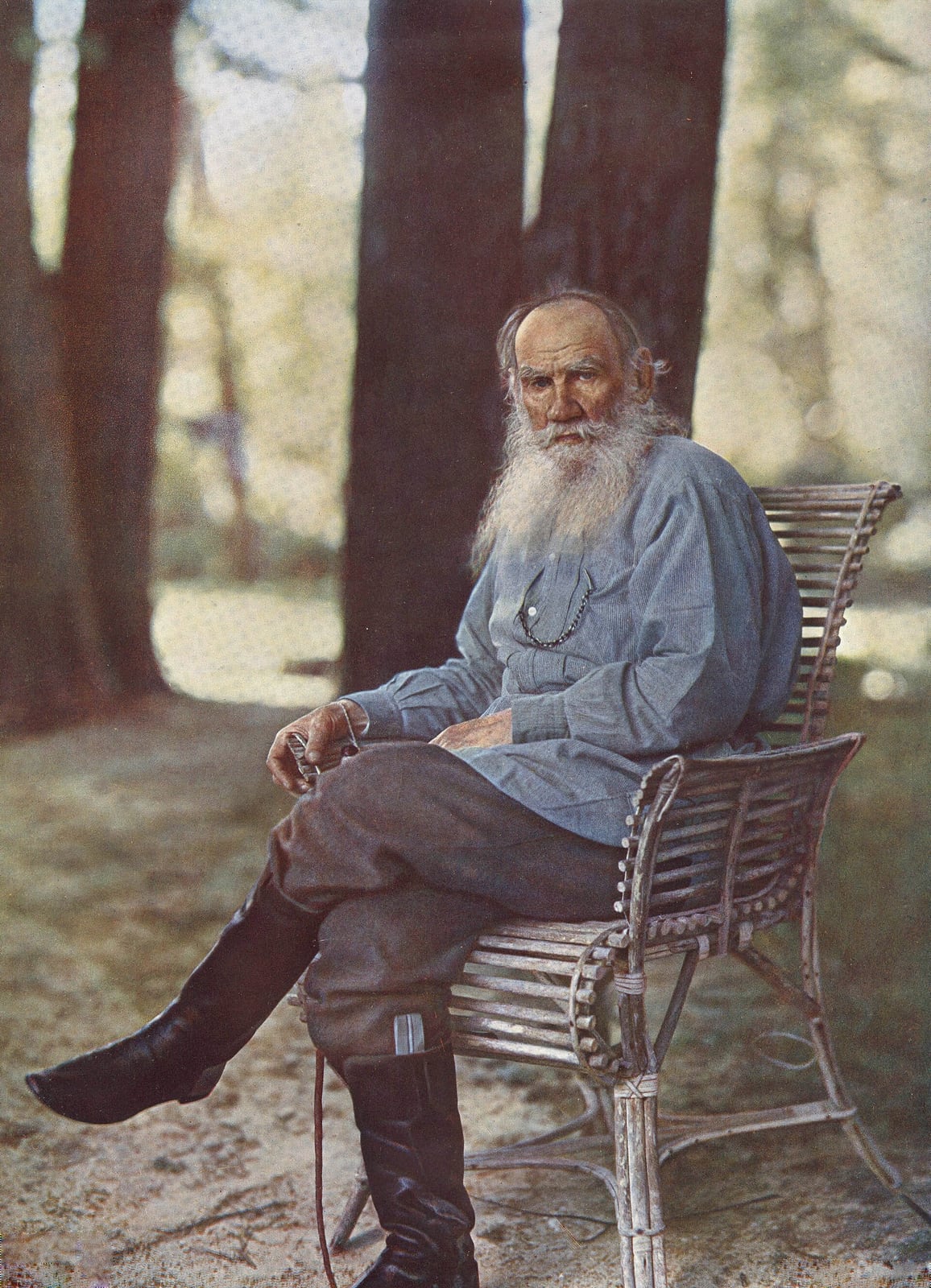
Leo Tolstoy
Concordano su: Che cos'è l'Assoluto? Dio esiste? · Serve un maestro? · Può la ragione conoscere l'ultimo?
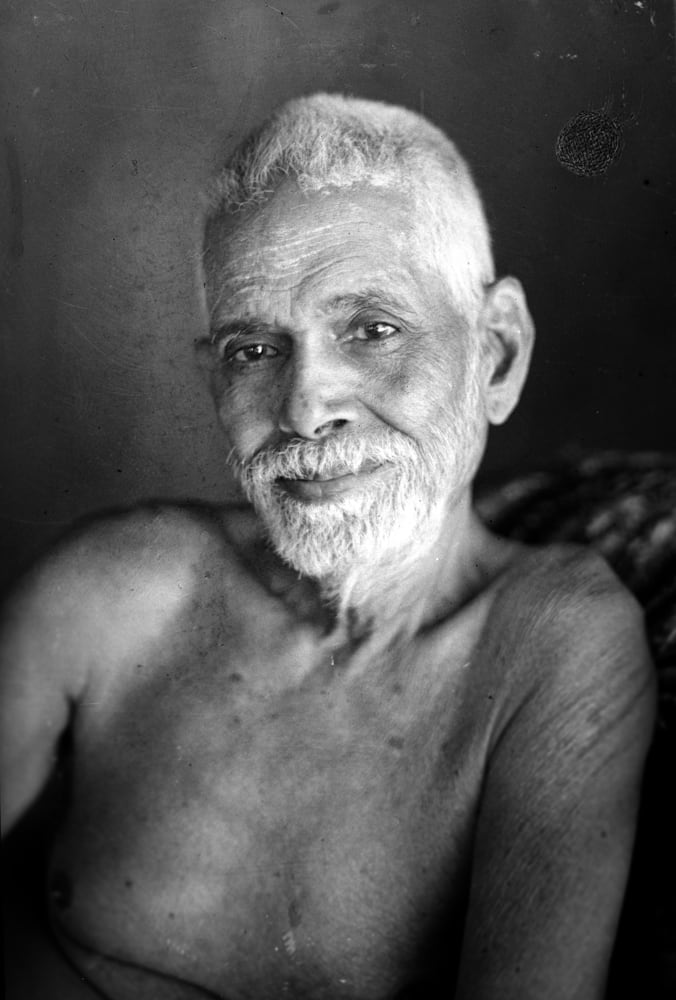
Ramana Maharshi
Concordano su: Che cos'è l'Assoluto? Dio esiste? · Come si raggiunge la liberazione o la salvezza? · Il mondo è reale?
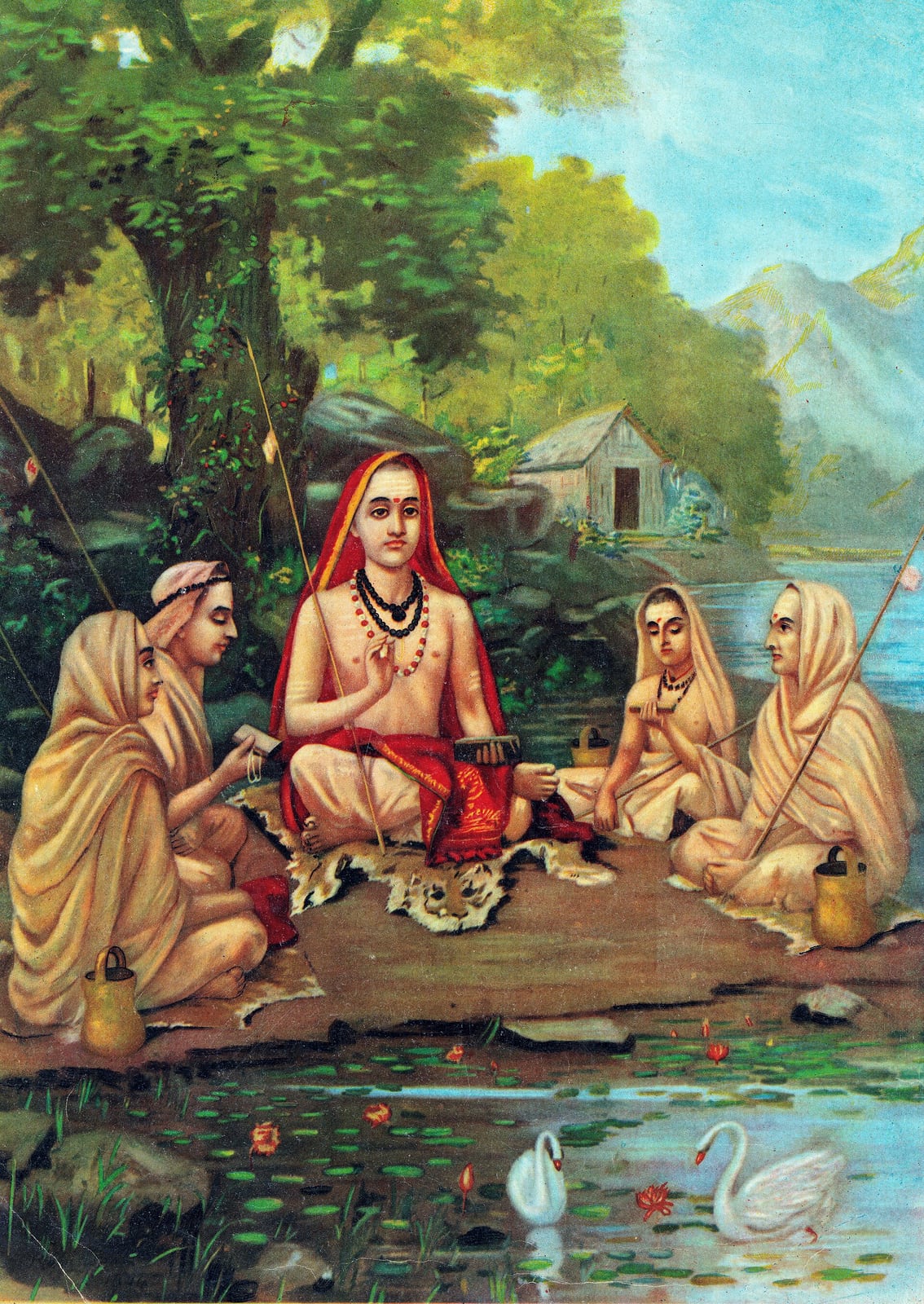
Adi Shankara
Concordano su: Che cos'è l'Assoluto? Dio esiste? · Come si raggiunge la liberazione o la salvezza? · Il mondo è reale?
- BKByron Katie
Byron Katie
Concordano su: Che cos'è l'Assoluto? Dio esiste? · Come si raggiunge la liberazione o la salvezza? · Il mondo è reale?

Aneddoti e racconti
Aneddoti e racconti
Contestatoc. 500–490 a. C. (incierto)
Ameinias' shrine
Origine del racconto: Diogenes Laertius IX 21, quoting Sotion of Alexandria (2nd century BCE). There is no other source. Burnet (Early Greek Philosophy, § 84) considers it plausible.
Testimonianzas. V a. C.
The magistrates' oath
Origine del racconto: Speusippus in Diogenes Laertius IX 23; Plutarch, Against Colotes 1126a–b; Strabo VI 1.1. The three sources are independent of one another, though none is contemporary.
Fonte: Plutarco. Contra Colotes 1126a–b; Estrabón, Geografía VI 1.1; Espeusipo citado por Diógenes Laercio IX 23.
Contestatoc. 450 a. C.
The meeting with the young Socrates
Origine del racconto: Plato, Parmenides 127a–c; Theaetetus 183e; Sophist 217c. Athenaeus, Deipnosophists XI 505f, considers it anachronistic. It is a literary testimony without independent confirmation.
Documentatos. I d. C. (inscripción); 1962 (hallazgo)
"Parmenides, son of Pyres, Ouliades, natural philosopher"
Origine del racconto: Packard Humanities Institute, inscription no. 301222 (Apollo 2, 1962, 125–136; SEG 38.1020). Reading "Ouliades" as the title of a medical school is the most widespread interpretation; Peter Kingsley developed it into his hypothesis of Parmenides the healer.
Contestatos. V a. C.
The evening star and the morning star
Origine del racconto: Diogenes Laertius IX 21 and 23 (Theophrastus, Favorinus); VIII 14 and 48 ascribe the same to Pythagoras. Fragments B14 and B15 are transmitted by Plutarch.
Documentatoc. 530 d. C.
Simplicius and the rarity of the book
Origine del racconto: Simplicius, Commentary on Aristotle's Physics 144.25–28 (ed. Diels, 1882). The commentator himself states his motive.
Fonte: Simplicio. In Aristotelis Physicorum libros commentaria, ed. Hermann Diels, Commentaria in Aristotelem Graeca IX, Reimer, Berlín, 1882, pp. 144–146 (transcripción de B8 «por la rareza del libro»).
Insegnamenti
Insegnamenti
Le nozioni che articolano il suo pensiero, spiegate nel loro contesto.
What is (to eon)lo-que-es
The core of the way of truth (B2, B6, B8).
The two ways of inquirylas-dos-vias
Fragments B2, B6, B7 and B8.1–2.
Fonte: Mourelatos, Alexander P. D. The Route of Parmenides. Yale University Press, New Haven, 1970 (ed. revisada, Parmenides Publishing, 2008); y Palmer, John, Parmenides and Presocratic Philosophy, Oxford University Press, 2009.
Thinking and beingpensar-y-ser
Fragments B3 and B8.34–36; reception in Plotinus (Enneads V 1, 8).
Truth (aletheia) and opinion (doxa)verdad-y-opinion
Fragments B1.28–32, B8.50–61, B9–B19.
Fonte: Kirk, G. S., Raven, J. E. y Schofield, M. The Presocratic Philosophers, 2.ª ed. Cambridge University Press, 1983, cap. VIII (Parmenides of Elea). Trad. esp. de Jesús García Fernández, Gredos, 1987.
The well-rounded sphereesfera
Fragment B8.42–49.
The journey of the proemel-viaje-del-proemio
Fragment B1; testimony of Sextus Empiricus (Against the Mathematicians VII 111–114).
Fonte: Sexto Empírico. Contra los matemáticos VII 111–114 (cita y alegoría del proemio, B1.1–30). Trad. inglesa de R. G. Bury, Loeb Classical Library, 1935.
Video
Video
Registrazioni, interviste e documentari. I video vengono riprodotti da YouTube; non sono ospitati qui.
Parmenides: Pre-Socratic Philosophy
Conferenza· EN· 2022· 47 min
Philosophy Overdose
The Eleatic Monists (Parmenides & Zeno)
Conferenza· EN· 2017· 73 min
Adam RosenfeldCanale ufficiale
Parmenides of Elea | Being and Non-Being | Philosophy Core Concepts
Analisi· EN· 2019· 14 min
Gregory B. Sadler - That Philosophy GuyCanale ufficiale
4. All is One: Parmenides & Zeno on Being and Nothingness
Conferenza· EN· 2014· 46 min
Mark ThorsbyCanale ufficiale
Parmenides of Elea
Conferenza· EN· 2021· 30 min
Michael WiitalaCanale ufficiale
Gadamer on Parmenides & the Birth of Philosophy
Intervista· DE· 2021· 8 min
Philosophy Overdose
Parménides de Elea
Documentario· ES· 2017· 28 min
UNEDCanale ufficiale
Conferencia José Luis Díaz Arroyo "Parménides"
Conferenza· ES· 2018· 135 min
Hercritia-Cátedra de Hermenéutica CríticaCanale ufficiale
Parménides | Historia de la filosofía (6/61)
Conferenza· ES· 2017· 80 min
Ernesto CastroCanale ufficiale
Filosofía más allá de la academia. Ciclo de filosofía antigua. Parménides y Heráclito
Conferenza· ES· 2022· 88 min
Universidad Nacional Abierta y a Distancia UNADCanale ufficiale
Le Parménide historique et le «Parménide» de Platon — Francesco Fronterotta
Conferenza· FR· 2019· 94 min
Andrea Cirla
Parménide avec Lambros Couloubaritsis
Intervista· FR· 2016· 44 min
Résonance[s]
Galleria
Galleria
Immagini con licenza verificata. Ciascuna conserva la sua paternità e la sua attribuzione.
Relazioni
Relazioni
Influenze, discepolati e affinità. Si distingue la relazione documentata dalla somiglianza individuata per analisi.
Discepolo di
Jenófanes
Aristotle (Metaphysics A 5) records that he "is said" to have been his pupil, and Diogenes Laertius states it; the relationship is traditional and disputed.
Somiglianza individuata per analisi
Ricevette l'influenza di
According to Sotion, it was the Pythagorean Ameinias who led him to the life of study; the link with Pythagoreanism is indirect.
Somiglianza individuata per analisi
Contemporaneo di
Contemporaries; many read in B6 ("two-headed mortals… for whom the path of all things turns back on itself") a polemical allusion to Heraclitus.
Somiglianza individuata per analisi
Maestro di
Zenón de Elea
His pupil and, according to Plato, his beloved; he defended his doctrine with the paradoxes against plurality and motion.
Relazione documentata
Maestro di
Meliso de Samos
Diogenes Laertius (IX 24) makes him a pupil of Parmenides; he reformulated the Eleatic thesis in prose, with what is as infinite.
Relazione documentata
Influenzò
Theophrastus, quoted by Diogenes Laertius (VIII 55), calls him an "emulator and imitator" of Parmenides in his poems; Empedocles accepts that nothing comes to be or perishes.
Relazione documentata
Incontrò
Plato narrates a meeting in Athens around 450 BCE (Parmenides 127a–c; Theaetetus 183e; Sophist 217c); many consider it fictitious, though Burnet accepted it as historical.
Somiglianza individuata per analisi
Influenzò
He devotes the dialogue Parmenides to him and, in the Sophist, presents his own theory of not-being as "parricide" against him.
Relazione documentata
Influenzò
He discusses the Eleatic thesis at the start of the Physics (I 2–3) and in the Metaphysics (A 5), and explains the pluralists as a response to it.
Relazione documentata
Influenzò
In the Enneads (V 1, 8) he quotes B3 and presents Parmenides as a forerunner of the identity of Intellect and being.
Relazione documentata
Idee affini a
The affirmation of a single reality, unborn and unchanging, against apparent multiplicity has led to comparisons between the way of truth and Advaita Vedanta; there is no historical contact.
Somiglianza individuata per analisi
Fonti
Fonti
Bibliografia e cataloghi consultati per questa scheda.
- Wikidata, entidad Q125551 «Parmenides» (112 enlaces entre wikis; P31=Q5). Registra nacimiento en 515 a. C. y muerte en 470 a. C. (esta última incompatible con la cronología platónica) y Elea como lugar de nacimiento.
- Diógenes Laercio. Vidas y opiniones de los filósofos ilustres IX 21–23 (Parménides), 25 (Zenón) y 24 (Meliso), s. III d. C. Trad. inglesa de C. D. Yonge, Bohn, Londres, 1853 (Project Gutenberg n.º 57342); trad. inglesa de R. D. Hicks, Loeb, 1925 (Wikisource).
- Diels, Hermann y Kranz, Walther. Die Fragmente der Vorsokratiker, 6.ª ed. Weidmann, Berlín, 1951–1952, cap. 28 (Parmenides), A (testimonios) y B 1–19. Texto griego consultado en la transcripción de Wikisource en griego («Περί φύσεως (Παρμενίδης)»).
- Kirk, G. S., Raven, J. E. y Schofield, M. The Presocratic Philosophers, 2.ª ed. Cambridge University Press, 1983, cap. VIII (Parmenides of Elea). Trad. esp. de Jesús García Fernández, Gredos, 1987.
- Palmer, John. «Parmenides». The Stanford Encyclopedia of Philosophy, ed. Edward N. Zalta y Uri Nodelman; primera publicación el 8 de febrero de 2008, revisión sustancial del 4 de marzo de 2025.
- Burnet, John. Early Greek Philosophy, 2.ª ed. A. and C. Black, Londres, 1908, cap. IV (Parmenides of Elea), §§ 84–97 (Project Gutenberg n.º 67097).
- Coxon, A. H. The Fragments of Parmenides: A Critical Text with Introduction and Translation, the Ancient Testimonia and a Commentary. Van Gorcum, Assen, 1986; ed. revisada por Richard McKirahan, Parmenides Publishing, Las Vegas, 2009.
- Laks, André y Most, Glenn W. (eds. y trads.). Early Greek Philosophy, vol. V: Western Greek Thinkers, Part 2. Loeb Classical Library 528, Harvard University Press, 2016.
- Graham, Daniel W. (ed. y trad.). The Texts of Early Greek Philosophy, 2 vols. Cambridge University Press, 2010.
- Eggers Lan, Conrado y otros (introd., trad. y notas). Los filósofos presocráticos I. Biblioteca Clásica Gredos 12, Gredos, Madrid, 1978.
- Platón. Parménides 127a–128b; Teeteto 183e–184a; Sofista 237a, 241d–242a; Banquete 178b. Trad. inglesa de Benjamin Jowett, The Dialogues of Plato, 3.ª ed., Clarendon Press, Oxford, 1892 (Project Gutenberg n.º 1687, Parmenides).
- Aristóteles. Metafísica A 5, 986b18–987a2; Física I 2–3, 184b–187a; Sobre la generación y la corrupción I 8, 325a. Trad. inglesa de W. D. Ross y R. P. Hardie (Internet Classics Archive, MIT).
- Simplicio. In Aristotelis Physicorum libros commentaria, ed. Hermann Diels, Commentaria in Aristotelem Graeca IX, Reimer, Berlín, 1882, pp. 144–146 (transcripción de B8 «por la rareza del libro»).
- Sexto Empírico. Contra los matemáticos VII 111–114 (cita y alegoría del proemio, B1.1–30). Trad. inglesa de R. G. Bury, Loeb Classical Library, 1935.
- Packard Humanities Institute, Searchable Greek Inscriptions, n.º 301222: herma acéfala de mármol blanco de Velia, s. I d. C., «Παρμενείδης Πύρητος Οὐλιάδης φυσικός»; primera publicación en Apollo 2 (1962) 125–136; SEG 38.1020 y 53.1114.
- Kingsley, Peter. In the Dark Places of Wisdom. Golden Sufi Center, Inverness (California), 1999.
- Plutarco. Contra Colotes 1126a–b; Estrabón, Geografía VI 1.1; Espeusipo citado por Diógenes Laercio IX 23.
- Cordero, Néstor Luis. Siendo, se es. La tesis de Parménides. Biblos, Buenos Aires, 2005.
- Tarán, Leonardo. Parmenides: A Text with Translation, Commentary and Critical Essays. Princeton University Press, Princeton, 1965.
- Gallop, David. Parmenides of Elea: Fragments. A Text and Translation with an Introduction. University of Toronto Press (Phoenix, suppl. vol. 18), Toronto, 1984.
- Davidson, Thomas. «The Fragments of Parmenides». Journal of Speculative Philosophy, 4 (1870); separata, E. P. Gray, St. Louis, 1869 (Wikisource).
- Fairbanks, Arthur (ed. y trad.). The First Philosophers of Greece. Kegan Paul, Trench, Trübner, Londres, 1898 (Project Gutenberg n.º 78670).
- «Parmenides», Wikipedia en inglés, y «Parménides», Wikipedia en español (consultadas para contrastar datos y bibliografía; texto propio).
- Open Library (Internet Archive): ediciones del poema de Parménides verificadas por ISBN.
- Heródoto. Historias I 163–167 (los focenses y la fundación de Hyele/Elea), s. V a. C. Trad. inglesa de G. C. Macaulay, Macmillan, Londres, 1890 (Project Gutenberg n.º 2707).
- Bernabé, Alberto (ed. y trad.) y Pérez de Tudela, Jorge (introd., notas y comentarios). Parménides. Poema. Fragmentos y tradición textual, epílogo de Néstor-Luis Cordero. Istmo (Fundamentos), Madrid, 2007.
- Mourelatos, Alexander P. D. The Route of Parmenides. Yale University Press, New Haven, 1970 (ed. revisada, Parmenides Publishing, 2008); y Palmer, John, Parmenides and Presocratic Philosophy, Oxford University Press, 2009.
- Owen, G. E. L. «Eleatic Questions». The Classical Quarterly, 10 (1960), pp. 84–102.
- Plotino. Enéadas V 1, 8 (Parménides y la identidad de pensar y ser). Trad. inglesa de Stephen MacKenna, 1917–1930.
- Titolare dei diritti
- Textos antiguos en dominio público; cada traducción y edición crítica pertenece a su traductor o editorial
In attesa di conferma
Ciò che questa scheda non ha ancora potuto chiarire. Preferiamo dirlo piuttosto che riempirlo.
- Muerte: no hay ningún dato antiguo sobre su fecha o lugar; Wikidata da 470 a. C., incompatible con la visita a Atenas a los 65 años que narra Platón. Se deja como «unknown».
- Nacimiento: se adopta c. 515 a. C. (Platón, Parménides 127b; Wikidata); la cronología de Apolodoro (madurez en 504–501) lo situaría hacia el 540.
- Edición de Akal (Básica de Bolsillo, 2008): traductor no verificado en catálogo. Tarán (Princeton, 1965): ISBN no verificado.
- Traducción española de dominio público del poema: no localizada en línea con URL estable.
- Manuscritos: el poema depende de los códices de Simplicio y Sexto Empírico; falta identificar signaturas y digitalizaciones fiables.
- Programas de afiliación: ninguno verificado. Lista vacía.
- Año de los vídeos: el de la grabación cuando la descripción lo indica y, si no, el de publicación en YouTube.
Ricerca effettuata il 2026-10-25