Non-dualità contemporanea · Contemplazione secolare
Byron Katie
1942 –ViventePersona storicamente documentata
Scrittrice e conferenziera statunitense (n. 1942), ideatrice di «The Work», un metodo di autoindagine fondato su quattro domande e sul rovesciamento dei pensieri che causano sofferenza. Dopo un decennio di depressione, nel 1986 visse una trasformazione che colloca in una mattina trascorsa in un centro di cura di Los Angeles. Con Stephen Mitchell ha scritto Amare ciò che è e A Mind at Home with Itself («Una mente in pace con se stessa»).
- opere
- 12opere
- edizioni
- 27edizioni
- citazioni
- 7citazioni
- video
- 11video
- immagini
- 0immagini
Con le sue parole
«I discovered that when I believed my thoughts, I suffered, but that when I didn't believe them, I didn't suffer»Relato de su experiencia de 1986 en la web oficial y en Loving What Is (2002)

Per cominciare, un'opera
Loving What IsLa sua idea centrale
Suffering does not come from events but from believing the thoughts we have about them; when a stressful thought is examined and no longer believed, the distress it produced fades.
Vederlo nel contesto
Biografia
4 min di lettura
Traduzione assistita dall'originale spagnolo, in attesa di revisione da parte di un traduttore madrelingua.
Un'infanzia nel deserto del Mojave
Byron Kathleen Reid nacque il 6 dicembre 1942 a Breckenridge, in Texas, e crebbe a Barstow, piccola città del deserto del Mojave, in California. Il padre, Rodney Reid, era macchinista ferroviario; la madre, Marion Campbell, casalinga. Nel 1963, a diciannove anni, sposò a San Bernardino Robert Robinson; ebbe tre figli — Bob, Ross e Roxann — e si guadagnò da vivere nel settore immobiliare, affittando abitazioni. La figlia avrebbe descritto anni dopo quell'ambiente come del tutto estraneo alla terapia e alla spiritualità.
Dieci anni di oscurità
A metà degli anni Ottanta, sposata in seconde nozze, Katie sprofondava da un decennio nella depressione, nell'agorafobia, nell'alimentazione compulsiva e nella dipendenza da codeina e alcol. I figli la ricordano allora come una donna collerica, imprevedibile e quasi sempre a letto. Nel febbraio 1986, a quarantatré anni, la sua assicurazione sanitaria la indirizzò a Hope House, un centro residenziale di Los Angeles per donne con disturbi alimentari che oggi non esiste più.
Il mattino dello scarafaggio
Secondo il suo racconto, meno di due settimane dopo il ricovero si svegliò una mattina sentendo uno scarafaggio camminarle sul piede. Quando aprì gli occhi, narra in Amare ciò che è, fu come se qualcosa di diverso si fosse destato e guardasse attraverso i suoi occhi, ebbro di gioia; la rabbia e la paura erano scomparse. Scoprì, dice, che quando credeva ai propri pensieri soffriva e che quando non ci credeva non soffriva. Da quell'istante fa nascere le domande che avrebbe poi formulato come «The Work». I figli e una delle terapeute del centro confermarono al Los Angeles Times un cambiamento radicale di personalità; altri particolari dell'episodio sono noti soltanto attraverso la sua testimonianza.
Da Barstow al mondo
Tornata a Barstow, perse peso, abbandonò l'alcol e trascorreva ore immobile, in un silenzio che sconcertava la famiglia. Sconosciuti incontrati per caso cominciarono a farle visita per vedere come viveva; lei insegnava loro a scrivere ciò che li angosciava e a interrogarlo. Il secondo matrimonio finì. L'invito di un gruppo di psicologi e terapeuti dell'area di Berkeley diede forma ai suoi primi seminari e, dal 1992, percorse gli Stati Uniti e l'Europa con incontri pubblici nei quali lavorava sul palco con dei volontari. Nacquero la Work Foundation, senza scopo di lucro, e la società Byron Katie International. Nel 1999 l'Ordine degli psicologi della California (California Board of Psychology) esaminò se la sua attività costituisse psicoterapia e archiviò l'indagine senza rilievi a suo carico.
Il metodo
The Work consiste nell'annotare i pensieri che provocano disagio — «mio marito dovrebbe ascoltarmi» — e nel sottoporre ciascuno a quattro domande: è vero? puoi sapere con assoluta certezza che è vero? come reagisci, che cosa succede, quando credi a quel pensiero? chi saresti senza quel pensiero? Segue il «rigiro»: si capovolge la frase — «io dovrei ascoltare me stessa», «io dovrei ascoltare mio marito» — e si cercano esempi concreti per cui potrebbe essere vera quanto l'originale. Katie sostiene di non insegnare una dottrina ma un procedimento che chiunque può praticare da sé, e rifiuta di presentarsi come maestra illuminata. Alcuni psicologi ne hanno sottolineato la parentela con la terapia cognitiva.
Tra spiritualità e auto-aiuto
Il reportage che Allison Adato pubblicò sul Los Angeles Times nel 2002 offrì un ritratto sfumato del fenomeno. Il metodo era già riconosciuto come formazione continua per assistenti sociali, infermiere e terapeuti di coppia; gli incontri pubblici erano gratuiti, ma la School for The Work, un corso intensivo di poco più di una settimana, costava fra i 1800 e i 3000 dollari, e la società vendeva registrazioni e oggetti con il proprio emblema. Una psicologa interpellata osservava che le prime due domande sono quelle della terapia cognitivo-comportamentale e che lavorare con persone in carne e ossa davanti al pubblico si muoveva lungo un confine incerto con la psicoterapia; alcuni partecipanti rimproveravano al metodo una certa passività di fronte a ciò che accade. Katie, dal canto suo, diceva di andare soltanto dove la chiamano — un carcere del Texas nel 1996, gruppi in Germania — e di non avere alcuna ambizione: «sono una donna senza futuro», disse alla giornalista.
Libri e diffusione
Nel 2000 la rivista Time le dedicò un servizio. Nel 2002 pubblicò con il marito, il traduttore e scrittore Stephen Mitchell, che aveva sposato da poco, Amare ciò che è (Loving What Is), l'esposizione sistematica del metodo, tradotta in numerose lingue. Seguirono I Need Your Love—Is That True? (2005, con Michael Katz), A Thousand Names for Joy (2007), che commenta passi del Tao Te Ching nella versione di Mitchell, Who Would You Be Without Your Story? (2008), due fiabe per bambini illustrate da Hans Wilhelm e A Mind at Home with Itself (2017), costruito sul Sutra del Diamante. Il figlio Ross Robinson è un noto produttore musicale.
Una pratica sotto esame
Dagli anni Dieci di questo secolo il metodo è oggetto di ricerca accademica con il nome di inquiry-based stress reduction (IBSR), soprattutto da parte di gruppi israeliani. Una revisione sistematica pubblicata nel 2021 ha raccolto diciassette studi, diversi dei quali con miglioramenti nello stress, nell'ansia e nel benessere, ma solo tre studi randomizzati, concludendo che servono ricerche di qualità più elevata; lo stesso anno uno studio clinico su donne portatrici di varianti BRCA ha pubblicato risultati favorevoli. Byron Katie International, con sede a Ojai (California), porta avanti la School for The Work e una rete internazionale di facilitatori certificati, e la sua fondatrice continua a insegnare in incontri dal vivo e online.
Fonti: Katie, Byron y Mitchell, Stephen. Loving What Is: Four Questions That Can Change Your Life. Nueva York: Harmony Books, 2002 (prólogo de Stephen Mitchell). · Katie, Byron y Mitchell, Stephen. A Thousand Names for Joy: Living in Harmony with the Way Things Are. Nueva York: Harmony Books, 2007. · Katie, Byron y Mitchell, Stephen. A Mind at Home with Itself: How Asking Four Questions Can Free Your Mind, Open Your Heart, and Turn Your World Around. Nueva York: HarperOne, 2017. · Mitchell, Stephen (ed.). Question Your Thinking, Change the World: Quotations from Byron Katie. Carlsbad: Hay House, 2007.
Cronologia
La vita, anno per anno
Ogni punto è un evento documentato. Fai clic per leggerlo, con la sua fonte e il suo grado di certezza.
6 dicembre 19420 anniBreckenridge, Texas
Birth
Byron Kathleen Reid is born on 6 December in Breckenridge, Texas; she will grow up in Barstow, California.
DocumentatoWikidata, «Byron Katie» (Q437339).
6 dicembre 1942 · 0 anni
Birth
Byron Kathleen Reid is born on 6 December in Breckenridge, Texas; she will grow up in Barstow, California.
Documentato
1963
First marriage
Marries Robert Robinson in San Bernardino; they will have three children.
Documentato
febbraio 1986 · 43 anni
The Hope House transformation
In February, while staying at Hope House (Los Angeles), she undergoes by her account the awakening from which The Work arises.
Documentato
1992 · 49 anni
First travelling workshops
Begins travelling across the United States and Europe with public events on The Work.
Documentato
1996 · 53 anni
The Work in a Texas prison
Takes her method to a Texas prison at the institution's request.
Documentato
1998 · 55 anni
Losing the Moon
The Work Foundation publishes Losing the Moon, the first collection of her dialogues.
Documentato
1999 · 56 anni
Board of Psychology inquiry
The California Board of Psychology examines her activity and closes the inquiry.
Documentato
2001 · 58 anni
Marriage to Stephen Mitchell
Marries the translator and writer Stephen Mitchell (date inferred from 2002 press coverage).
Probabile
2002 · 59 anni
Loving What Is
Publishes Loving What Is with Stephen Mitchell (Harmony Books).
Documentato
2007 · 64 anni
A Thousand Names for Joy
Publishes A Thousand Names for Joy, based on the Tao Te Ching.
Documentato
2010 · 67 anni
Peace in the Present Moment
Peace in the Present Moment, a book shared with Eckhart Tolle, appears.
Documentato
2017 · 74 anni
A Mind at Home with Itself
Publishes A Mind at Home with Itself with Stephen Mitchell (HarperOne).
Documentato
2021 · 78 anni
Scientific review of the method
A systematic review in the Journal of Clinical Psychology assesses seventeen studies on IBSR; the revised edition of Loving What Is is also published.
Documentato
Opere
Opere essenziali
Le opere senza le quali non si comprende la sua eredità.
Opera scritta · 2002
Loving What Is
Loving What Is: Four Questions That Can Change Your Life
Systematic account of The Work, written with Stephen Mitchell, who signs the foreword and narrates the 1986 awakening. It explains the Judge-Your-Neighbor Worksheet, the four questions and the turnaround, illustrating them with many transcripts of real dialogues about couples, family, work, money, illness or fear of death. It is the method's reference book, translated into many languages; a revised edition appeared in 2021.
6 edizioni

Opera scritta · 2007
A Thousand Names for Joy
A Thousand Names for Joy: Living in Harmony with the Way Things Are
Book structured on the 81 chapters of the Tao Te Ching: Stephen Mitchell selected passages from his version of the Taoist classic and Katie responds to each by describing her experience of living in harmony with what is, with no mind opposing reality. It is her most personal work and the closest to contemplative literature.
4 edizioni

Opera scritta · 2017
A Mind at Home with Itself
A Mind at Home with Itself: How Asking Four Questions Can Free Your Mind, Open Your Heart, and Turn Your World Around
Written with Stephen Mitchell on his version of the Diamond Sutra: Katie comments on passages of the Buddhist text from her own experience, alternating them with dialogues of The Work and autobiographical episodes. It is her most extensive book on the nature of mind and self.
4 edizioni
Tutta la sua opera (12)
Byron Katie
Losing the Moon
The Conscious LibraryLosing the Moon
1998

The Work of Byron Katie: An Introduction
2002

I Need Your Love—Is That True?
2005

Your Inner Awakening
2005

Question Your Thinking, Change the World
2007

Who Would You Be Without Your Story?
2008

Tiger-Tiger, Is It True?
2009
Byron Katie
Peace in the Present Moment
The Conscious LibraryPeace in the Present Moment
2010

The Four Questions
2016
Citazioni
Citazioni localizzate in un'opera precisa. Ciascuna porta con sé la sua provenienza e il suo grado di affidabilità.
I discovered that when I believed my thoughts, I suffered, but that when I didn't believe them, I didn't sufferVerificataRelato de su experiencia de 1986 en la web oficial y en Loving What Is (2002)
Idee essenziali (sintesi editoriale)
Per rispetto del diritto d'autore, queste idee sono riassunte con parole nostre e non sono presentate come citazioni letterali.
- Suffering does not come from events but from believing the thoughts we have about them; when a stressful thought is examined and no longer believed, the distress it produced fades.
- Arguing with reality — thinking that what happens should not happen — is a battle lost in advance; accepting what is does not mean resignation but seeing clearly before acting.
- Much anguish comes from mentally minding other people's business, or reality's, instead of one's own.
- The judgements we make about others usually describe ourselves; turning them around reveals what truth they hold about the person making them.
- Inquiry does not seek positive thoughts to replace negative ones, but to understand the thought until it loses its power.
- Anyone can practise the method alone, with pen and paper, without believing in anything or depending on a teacher.
Chiedi
Ciò a cui risponde la sua opera
Dodici grandi domande dell'umanità e ciò che i suoi testi permettono di rispondere, con riferimenti. Non gli mettiamo mai parole in bocca.
Che cos'è l'Assoluto? Dio esiste?
She calls reality as it is God, because it is reality that rules
Un Assoluto impersonaleSi deduce dalla sua dottrina
Byron Katie does not develop a theology. In Loving What Is she uses the word God in a deliberately bare way: she calls reality, what is, God, for the simple reason that it always prevails. Hence her maxim that arguing with reality is a battle lost one hundred per cent of the time. Her work contains no God who listens or intervenes, nor any doctrine of a hidden principle: the ultimate is the present fact, and what separates us from it are the thoughts we believe about it. In A Thousand Names for Joy, built on the Tao Te Ching, she describes that living in accord with what is as her experience, not as a thesis.
Confronta questa domanda con altri maestriChi sono io? Esiste un vero sé?
The self is a story believed; without it, someone remains who cannot be described
L'ego è una costruzione del pensieroLo dice espressamente
Byron Katie's question is the fourth in her method: who would you be without that thought. Her whole work applies it to identity. What we call self, in her account, is made of stories we believe about ourselves and about others: I am someone who was abandoned, someone who needs approval, someone who ought to be different. Who Would You Be Without Your Story?, a collection of dialogues with participants, shows how those identities loosen when examined. Katie proposes no alternative true self and no doctrine about one; she describes what remains when thought is no longer believed as something free, open and hard to name. In the account of her 1986 experience she puts it this way: it was as if something else had woken up.
Confronta questa domanda con altri maestriPerché soffriamo?
We suffer not from what happens but from believing what we think about it
Il pensiero e il tempo psicologicoLo dice espressamente
Byron Katie's diagnosis comes from her 1986 experience, which she sums up as follows: she discovered that when she believed her thoughts she suffered, and that when she did not believe them she did not suffer. Suffering is caused not by events but by the stressful thoughts we believe about them, especially those that argue with reality: he should not have left, I should be different. Since what has already happened cannot not have happened, that argument is always lost. In Loving What Is she adds that much anguish comes from mentally minding other people's business, or reality's, instead of one's own. The remedy is not positive thinking but examining each thought with the four questions until it loses its power.
Confronta questa domanda con altri maestriChe cosa accade dopo la morte?
No speculation about the hereafter: she examines the thoughts that make death fearsome
Silenzio o riserboSi deduce dalla sua dottrina
Byron Katie offers no doctrine about what happens after death. What she does is apply her method to death as to any other stressful situation: fear, in her account, comes not from death, which no one has experienced, but from the thoughts one has about it. In Who Would You Be Without Your Story? she collects dialogues with people facing the death of a child or a serious illness, and shows how beliefs such as «he shouldn't have died» or «I won't be able to bear it» produce the suffering attributed to the event. In A Thousand Names for Joy she describes her own serenity before death as the result of not arguing with what is. What matters is how one looks at what is happening now.
Confronta questa domanda con altri maestriCome si raggiunge la liberazione o la salvezza?
Four questions and a turnaround: inquiry undoes what was believed
Con la conoscenza direttaLo dice espressamente
What Byron Katie offers is neither years of practice nor a grace, but a method of inquiry anyone can apply with pen and paper. One writes down the stressful thought and asks it four questions: is it true?, can you absolutely know that it's true?, how do you react when you believe that thought?, who would you be without that thought? Then the statement is turned around, to oneself, to the other or to its opposite, and one looks for examples of how the turnaround is as true or truer. The aim is not to replace negative thoughts with positive ones but to understand them until they lose their power. Freedom, in Loving What Is, is that clarity: seeing what is without the story that covered it.
Confronta questa domanda con altri maestriServe un maestro?
The answers lie with the one asking; the method needs no teacher
Il maestro è dentroSi deduce dalla sua dottrina
Byron Katie does not present herself as a guru or ask for adherence. Her method was designed so that anyone could practise it alone, with pen and paper, without believing anything or depending on anyone: one asks the questions oneself, and the answers can come only from the one who answers them. In her public sessions, collected in Loving What Is and in Who Would You Be Without Your Story?, she simply asks the questions and waits; she describes her role in a terse sentence: she clears people's minds. At the same time she suggests that those who irritate us can act as teachers, because they show the judgements we still believe. Authority lies in one's own inquiry, not in her.
Confronta questa domanda con altri maestriIl mondo è reale?
The world we suffer is the story we tell; what is, is kind
Apparenza sull'unica realtàSi deduce dalla sua dottrina
Byron Katie distinguishes two things we usually confuse: what is and the story we tell about it. The first is not to be argued with; the second is projection. Much of what we call the world, the hostility of others, the injustice of what happens to us, is for her the image of our own thoughts projected outwards, which is why turning judgements around returns to the one judging what was attributed to the world. In A Mind at Home with Itself, her commentary on Stephen Mitchell's version of the Diamond Sutra, she relates this experience to the Buddhist teaching that things are not what the mind fixes in them. Without the story, what is always seems to her kinder than what was imagined.
Confronta questa domanda con altri maestriChe cos'è l'amore?
Seeking love and approval drives it away; without the search, love is already there
Ciò che appare quando l'io cessaLo dice espressamente
Byron Katie devoted a book to the question, I Need Your Love: Is That True?, written with Michael Katz. Her thesis is that the search for love, approval and recognition arises from thoughts we believe without examining them: I need her to love me, I cannot be happy without him. Those thoughts produce dependence, manipulation and fear, and drive away precisely what they seek. When they are examined and no longer believed, what remains is not a lack but a way of loving that needs nothing in return. In her account love is neither obtained from others nor cultivated as a technique: it is what appears when one is not busy defending one's own story.
Confronta questa domanda con altri maestriSiamo liberi o è tutto determinato?
Things do themselves; the problem is believing they should be otherwise
Non c'è un agenteSi deduce dalla sua dottrina
Byron Katie does not frame the problem philosophically, but her descriptions come close to the idea that there is no separate doer. In A Thousand Names for Joy, commenting on the Tao Te Ching, she describes her own life as something that happens, rather than as a series of decisions taken by someone in control of it. Hence her maxim that arguing with what is is always lost: what happened could not have been otherwise, because it is what happened. This does not lead to passivity; she holds that without the argument with reality action is clearer and kinder. The responsibility she proposes is to mind one's own business.
Confronta questa domanda con altri maestriPerché meditare o pregare?
Inquiry is her meditation: questioning until the thought lets go
Tornare alla sorgente dell'ioLo dice espressamente
Byron Katie teaches no techniques of concentration or prayer. What she proposes instead is inquiry, which she describes as a form of meditation: after writing down a stressful thought, one asks it the four questions and waits in silence for the answer to arise, instead of reasoning it out. The decisive question is the fourth, who would you be without that thought?, which leads one to observe what the present moment would be like without the story that covers it. The aim is not to reach a special state, but to see clearly what the mind believed, until it lets go of itself. In A Mind at Home with Itself she alternates this work with commentary on the Diamond Sutra.
Confronta questa domanda con altri maestriPuò la ragione conoscere l'ultimo?
You cannot absolutely know that a thought is true
Il pensiero è limitatoSi deduce dalla sua dottrina
The second of Byron Katie's four questions, can you absolutely know that it's true?, contains her epistemology. The thoughts that cause suffering present themselves as facts, but when examined turn out to be interpretations that cannot be proved. Katie does not despise the mind; in A Mind at Home with Itself she speaks of a mind that, by questioning itself, stops fighting with itself. But thought gives no access to an ultimate truth: the only incontestable thing is what is, before the story. Her method uses questions that look like reasoning, but the answers it seeks are not arguments but what is seen in silence while contemplating the question.
Confronta questa domanda con altri maestriRitirarsi dal mondo o trasformarlo?
Question your thinking, change the world
La rivoluzione è interioreLo dice espressamente
The title of the anthology Stephen Mitchell compiled from her sayings sums up Byron Katie's position: Question Your Thinking, Change the World. She proposes neither withdrawal nor activism, but examining the thoughts through which one looks at what happens. She holds that action born of anger or fear, of the belief that the world should not be as it is, tends to reproduce what it fights, while action born of clarity is more effective and kinder. Loving what is, she insists, does not mean resignation or approving of injustice: it is seeing clearly before acting. Changing the world passes through changing the one who looks at it, one person at a time.
Confronta questa domanda con altri maestri
Affinità e tensioni
Affinità e tensioni
Calcolate domanda per domanda a partire dalle sue posizioni. Il perché di ogni accordo o contrasto, con un clic.
La pensa in modo simile a
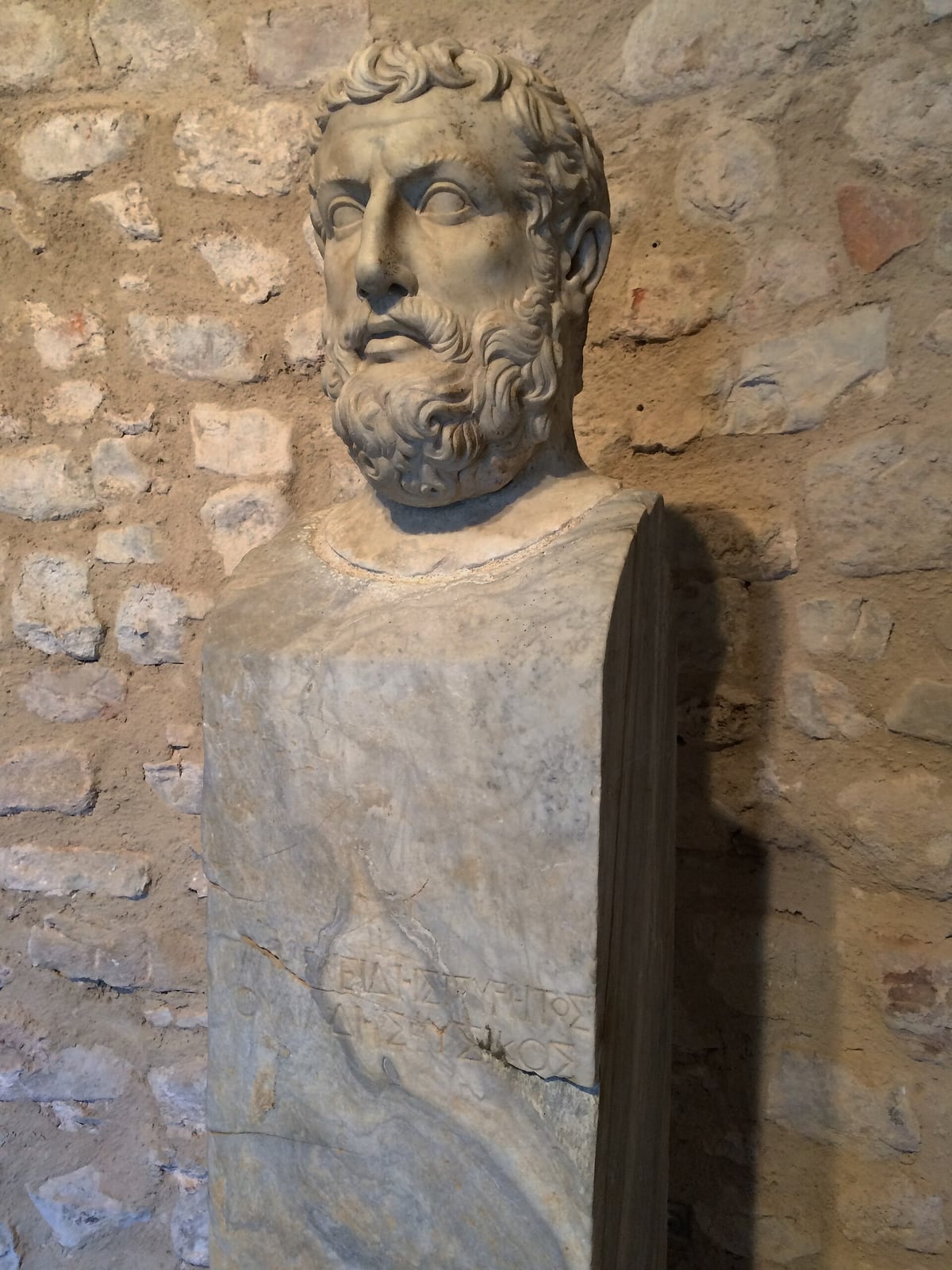
Parmenides
Concordano su: Che cos'è l'Assoluto? Dio esiste? · Come si raggiunge la liberazione o la salvezza? · Il mondo è reale?
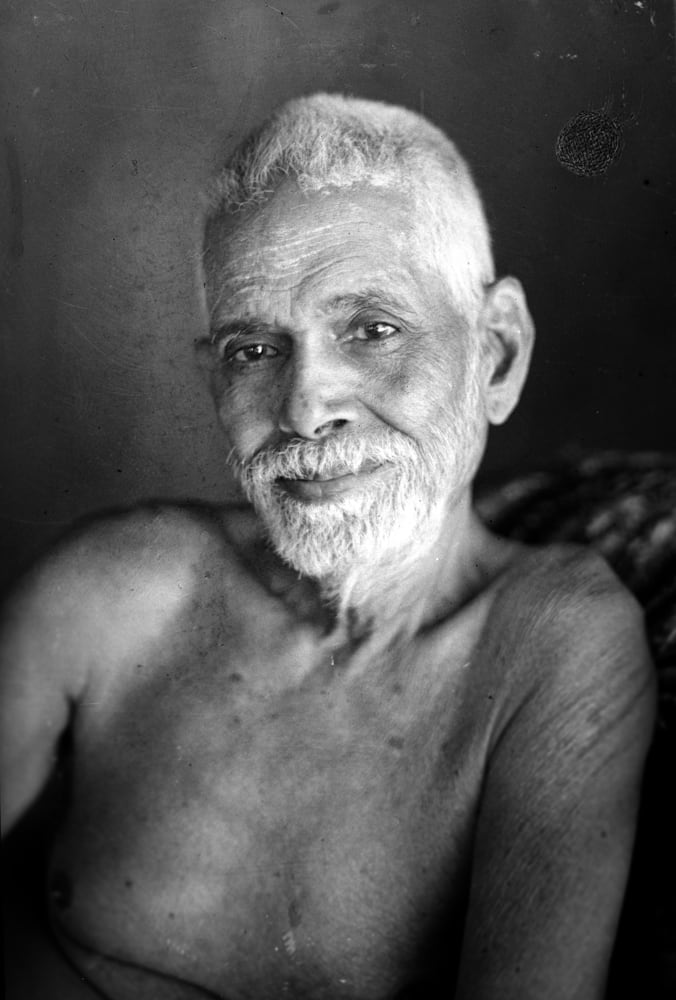
Ramana Maharshi
Concordano su: Che cos'è l'Assoluto? Dio esiste? · Come si raggiunge la liberazione o la salvezza? · Serve un maestro?

Nisargadatta Maharaj
Concordano su: Come si raggiunge la liberazione o la salvezza? · Serve un maestro? · Il mondo è reale?
Osho
Concordano su: Che cos'è l'Assoluto? Dio esiste? · Chi sono io? Esiste un vero sé? · Perché soffriamo?



Aneddoti e racconti
Aneddoti e racconti
Testimonianzafebrero de 1986
A cockroach on her foot
Origine del racconto: Katie's own account in the foreword of Loving What Is (2002) and in interviews. Allison Adato (Los Angeles Times, 2002) noted that the episode had been left out of the method's early literature and that several details cannot be corroborated; the detail of the mattress on the floor comes from her own account.
Fonte: Katie, Byron y Mitchell, Stephen. Loving What Is: Four Questions That Can Change Your Life. Nueva York: Harmony Books, 2002 (prólogo de Stephen Mitchell).
Testimonianza1986
'As if they had dropped off a different person'
Origine del racconto: Testimonies gathered by Allison Adato for the Los Angeles Times Magazine (24 November 2002).
Testimonianza1986–1992
The Barstow living room
Origine del racconto: Katie's account and testimony from her son Bob Robinson and Judith Avalon in the Los Angeles Times Magazine (2002).
Documentato1999
A tape before the Board of Psychology
Origine del racconto: Los Angeles Times Magazine (2002), based on Katie's account; the Board declined to comment and did not release the file.
Documentato1992–
Only for those who ask
Origine del racconto: Los Angeles Times Magazine (2002) and the official website, which offers the method in more than thirty languages.
Insegnamenti
Insegnamenti
Le nozioni che articolano il suo pensiero, spiegate nel loro contesto.
The Workel-trabajo
Formulated from 1986; systematic account in Loving What Is (2002). In academic research it is called inquiry-based stress reduction (IBSR).
Fonte: Katie, Byron y Mitchell, Stephen. Loving What Is: Four Questions That Can Change Your Life. Nueva York: Harmony Books, 2002 (prólogo de Stephen Mitchell).
The turnaroundla-inversion
Loving What Is (2002) and the official worksheet.
Fonte: Katie, Byron y Mitchell, Stephen. Loving What Is: Four Questions That Can Change Your Life. Nueva York: Harmony Books, 2002 (prólogo de Stephen Mitchell).
The three kinds of businesstres-asuntos
Loving What Is (2002), ch. 1.
Fonte: Katie, Byron y Mitchell, Stephen. Loving What Is: Four Questions That Can Change Your Life. Nueva York: Harmony Books, 2002 (prólogo de Stephen Mitchell).
Loving what isamar-lo-que-es
Loving What Is (2002); A Thousand Names for Joy (2007).
Inquiry-based stress reduction (IBSR)ibsr
Hook et al., Journal of Clinical Psychology (2021); Landau et al., JAMA Network Open (2021).
Video
Video
Registrazioni, interviste e documentari. I video vengono riprodotti da YouTube; non sono ospitati qui.
No One Can Wrong Me—The Work of Byron Katie
Registrazione originale· EN· 18 min
Byron KatieCanale ufficiale
I Want Mom to Be Happy—The Work of Byron Katie
Registrazione originale· EN· 41 min
Byron KatieCanale ufficiale
How to be Successful—The Work of Byron Katie
Registrazione originale· EN· 57 min
Byron KatieCanale ufficiale
I'm Afraid of Trump—The Work of Byron Katie
Registrazione originale· EN· 2016· 37 min
Byron KatieCanale ufficiale
The Work: A Two Hour Intensive | Byron Katie | Wisdom 2.0
Conferenza· EN· 119 min
Wisdom 2.0 with Soren Gordhamer
The four questions that can help your mind heal | Byron Katie
Intervista· EN· 7 min
Big Think
Why You Shouldn't Look for Mr. Right | SuperSoul Sunday
Intervista· EN· 2 min
OWN
The Question to Ask Yourself Every Day | SuperSoul Sunday
Intervista· EN· 3 min
OWN
Cómo encontrar la iluminación con el poder de la auto indagación | Byron Katie & Lewis Howes
Intervista· ES· 87 min
Lewis Howes Español
El cáncer frente a la indagación - El Trabajo de Byron Katie (subtítulos en español)
Registrazione originale· ES· 49 min
Sofía Torre
Le Travail de Byron Katie : Qui es tu sans ton histoire ?
Registrazione originale· FR· 23 min
Le Travail en Francophonie
Relazioni
Relazioni
Influenze, discepolati e affinità. Si distingue la relazione documentata dalla somiglianza individuata per analisi.
Famiglia di
Stephen Mitchell
Her husband since the early 2000s, translator and writer; co-author of Loving What Is, A Thousand Names for Joy and A Mind at Home with Itself.
Relazione documentata
Famiglia di
Ross Robinson
Her son, a music producer who credits The Work with improving his life.
Relazione documentata
Contemporaneo di
The two share the book of texts and photographs Peace in the Present Moment (2010).
Relazione documentata
Ebbe corrispondenza con
Michael Katz
Co-author of I Need Your Love—Is That True? (2005).
Relazione documentata
Idee affini a
A Thousand Names for Joy (2007) comments on the 81 chapters of the Tao Te Ching in Stephen Mitchell's version.
Relazione documentata
Idee affini a
Ramana's self-enquiry ('who am I?') and Katie's fourth question ('who would you be without the thought?') share the same movement back to the subject, though she comes from no tradition.
Somiglianza individuata per analisi
Idee affini a
Both teach non-identification with thoughts and put direct experience above doctrine.
Somiglianza individuata per analisi
Contemporaneo di
Contemporary teachers with large English-speaking audiences who propose meeting distress rather than fleeing it, from different frameworks.
Somiglianza individuata per analisi
Collegato da altre schede
Fonti
Fonti
Bibliografia e cataloghi consultati per questa scheda.
- Wikidata, «Byron Katie» (Q437339).
- «Byron Katie», Wikipedia en inglés y en español (consultadas para cotejar hechos y bibliografía; texto propio).
- Adato, Allison. «How a Self-Help Guru Is Born». Los Angeles Times Magazine, 24 de noviembre de 2002 (entrevistas con Byron Katie, Stephen Mitchell, sus hijos Roxann Burroughs, Bob y Ross Robinson y la terapeuta Pat Scales).
- Katie, Byron y Mitchell, Stephen. Loving What Is: Four Questions That Can Change Your Life. Nueva York: Harmony Books, 2002 (prólogo de Stephen Mitchell).
- The Work of Byron Katie, web oficial de Byron Katie International (método, hoja de trabajo, libros y actividades).
- «New Age: Four Questions to Inner Peace». Time, 11 de diciembre de 2000.
- Katie, Byron y Mitchell, Stephen. A Thousand Names for Joy: Living in Harmony with the Way Things Are. Nueva York: Harmony Books, 2007.
- Katie, Byron y Mitchell, Stephen. A Mind at Home with Itself: How Asking Four Questions Can Free Your Mind, Open Your Heart, and Turn Your World Around. Nueva York: HarperOne, 2017.
- Hook, Joshua N.; Penberthy, J. Kim; Davis, Don E.; Van Tongeren, Daryl R. «Inquiry-based stress reduction: A systematic review of the empirical literature». Journal of Clinical Psychology 77, n.º 6 (2021): 1280–1295.
- Landau, C. et al. «Effect of Inquiry-Based Stress Reduction on Well-being and Views on Risk-Reducing Surgery Among Women With BRCA Variants in Israel: A Randomized Clinical Trial». JAMA Network Open 4, n.º 12 (2021): e2139670.
- Open Library: obras y ediciones de Byron Katie (búsqueda por autor y por título).
- Matousek, Mark. «Quit Your Pain». AARP The Magazine, mayo-junio de 2006.
- Mitchell, Stephen (ed.). Question Your Thinking, Change the World: Quotations from Byron Katie. Carlsbad: Hay House, 2007.
- Registro bibliográfico de Mil nombres para el gozo (Barcelona: La Liebre de Marzo, 2009, trad. de Brianda Domecq), catálogo de bibliotecas públicas de Extremadura.
- Titolare dei diritti
- Byron Katie International, Inc. (marca «The Work of Byron Katie»); derechos de los libros según cada editorial
- Sito ufficiale
- thework.com
In attesa di conferma
Ciò che questa scheda non ha ancora potuto chiarire. Preferiamo dirlo piuttosto che riempirlo.
- Imágenes: no hay en Wikimedia Commons ningún retrato de Byron Katie con licencia libre verificada; no se incluye ninguna.
- ISBN sin verificar en catálogo: Losing the Moon (1998), Peace in the Present Moment (2010), las ediciones españolas de Faro (Cuestiona tu pensamiento, cambia el mundo, 2011; Necesito que me quieran, ¿es eso verdad?, 2012) y otras traducciones (francés, italiano, portugués).
- Año exacto del matrimonio con Stephen Mitchell (la prensa de noviembre de 2002 lo sitúa unos dieciocho meses antes).
- Localizar la página de la cita «When I argue with reality, I lose…» en la edición impresa de Loving What Is.
- Vídeos: no hay en el canal oficial versiones en español; los dos vídeos en castellano son de terceros (doblaje y subtítulos).
- Persona viva: revisar periódicamente su actividad y nuevas publicaciones.
Ricerca effettuata il 2026-10-25