Cristianesimo · Mistica cristiana · Cristianesimo ortodosso
Seraphim of Sarov
Серафим Саровский · Прохор Исидорович Мошнин
1754 – 1833Persona storicamente documentata
Monaco e starec russo (1754-1833) del monastero di Sarov, fondatore spirituale del convento di Diveevo e uno dei santi più venerati dell'ortodossia russa. Eremita nel bosco, recluso per quindici anni e poi direttore spirituale delle folle, che salutava con «Gioia mia, Cristo è risorto!», non scrisse nulla: la sua dottrina sull'acquisizione dello Spirito Santo è giunta attraverso le «Istruzioni» del 1839, la Cronaca di Diveevo e la «Conversazione con Motovilov», pubblicata nel 1903 e di letteralità discussa. Fu canonizzato nel 1903.
- opere
- 11opere
- edizioni
- 27edizioni
- citazioni
- 11citazioni
- video
- 12video
- immagini
- 9immagini
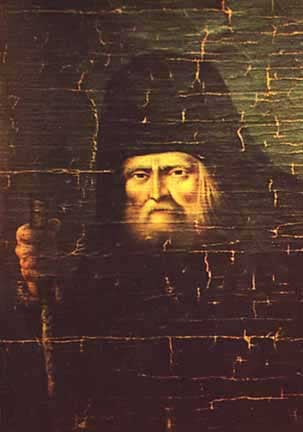
Retrato de Serafín de Sarov pintado en vida · Public domain
Con le sue parole
«Nothing so helps to acquire inner peace as silence and, as far as possible, constant converse with oneself and rare converse with others.»Instrucciones espirituales, cap. «О мире душевном» (De la paz del alma).

Per cominciare, un'opera
Conversation with Motovilov on the Aim of the Christian LifeLa sua idea centrale
The acquisition of the Holy Spirit: The Russian term stiazhanie means to acquire, gain, accumulate: it is the word of trade and saving.
Vederlo nel contesto
Biografia
6 min di lettura
Traduzione assistita dall'originale spagnolo, in attesa di revisione da parte di un traduttore madrelingua.
Un ragazzo di Kursk
Prochor Isidorovič Mošnin nacque a Kursk il 19 luglio 1754 secondo il calendario giuliano (30 luglio del gregoriano), in una famiglia di mercanti agiati. L'anno non è certo: le vite anteriori alla Rivoluzione indicavano il 1759, ricavato dall'età incisa sulla sua lapide a Sarov, e solo nel 2004, dopo le ricerche dello storico locale Vladimir Stepaškin nei registri parrocchiali di Kursk e nell'archivio del monastero, la Chiesa russa adottò il 1754. Il padre, Isidor, costruiva su commissione una chiesa della città e morì quando il bambino era piccolo; la madre, Agafja, portò a termine l'opera. Le agiografie raccontano che a sette anni cadde dall'alto della chiesa in costruzione senza farsi male e che, ammalatosi verso i dieci anni, guarì baciando l'icona della Madre di Dio del Segno che passava in processione davanti a casa sua. Sono racconti della tradizione familiare raccolti decenni dopo: il dettaglio del campanile, per esempio, compare solo nella vita pubblicata nel 1863, e nel 1761 quel campanile non esisteva ancora.
Sarov
Dopo un pellegrinaggio a Kiev, dove secondo la tradizione il recluso Dosifej gli indicò la via di Sarov, entrò come novizio in quel monastero delle foreste di Tambov il 20 novembre 1778. Fu fornaio, falegname e sacrestano; superò una malattia, un'idropisia che lo tenne a letto per quasi tre anni; ricevette l'abito monastico il 13 agosto 1786 con il nome di Serafino, fu ordinato diacono poco dopo e sacerdote il 2 settembre 1793. Sarov seguiva una regola severa, erede della rinascita monastica che Paisij Veličkovskij aveva promosso con la traduzione slava della Filocalia, e il giovane monaco si formò su quei testi: le «Istruzioni spirituali» che gli vengono attribuite citano di continuo Isacco il Siro, Giovanni Climaco, Barsanufio o Gregorio il Sinaita.
Il deserto
Nel 1794 si ritirò in una capanna nel bosco, a circa cinque chilometri dal monastero, il cosiddetto «deserto lontano». Coltivava un orto, leggeva i Vangeli e i Padri, digiunava fino a nutrirsi soltanto di ortaggi e di un'erba selvatica, la snyt' (l'egopodio), e tornava a Sarov la domenica per comunicarsi. Nel 1804, secondo le vite, alcuni briganti in cerca del denaro dei visitatori lo percossero con il manico della sua stessa ascia; rimase curvo per sempre e chiese che non fossero puniti. A quel periodo appartiene l'episodio più celebre della sua ascesi, i mille giorni e mille notti di preghiera su una pietra. La fonte più antica è più sobria: nel 1848 l'egumeno Isaia scrisse che, all'inizio della vita eremitica, Serafino aveva confidato a un confratello di pregare in piedi, immobile, diciassette ore al giorno, e di averlo fatto per più di tre anni; le «mille giornate sulla pietra» si fissarono nelle agiografie successive, soprattutto in quella di Čičagov.
Lo stesso accade con l'orso. Nel 1849 lo ieromonaco Ioasaf pubblicò la testimonianza di una monaca di Diveevo, Matrona Pleščeeva, che diceva di aver visto lo starec dare da mangiare del pane a un orso. Tra le carte del metropolita Filarete di Mosca, oggi nel Dipartimento dei manoscritti della Biblioteca statale russa, si conserva un fascicolo secondo il quale la stessa Matrona confessò prima di morire che Ioasaf l'aveva istruita a raccontarlo se la famiglia imperiale avesse visitato il convento. L'immagine dell'eremita con l'orso, che l'iconografia ha reso popolare, è dunque una leggenda dall'origine identificabile.
Reclusione e porte aperte
L'8 maggio 1810 tornò al monastero e si chiuse nella sua cella: cinque anni senza ricevere nessuno e altri dieci con la porta aperta a chiunque giungesse, ma senza uscirne, fino al 25 novembre 1825. Da allora, e soprattutto negli ultimi otto anni, Sarov divenne meta di pellegrinaggio. Riceveva centinaia di persone, contadini e nobili, salutando ciascuna con «Gioia mia, Cristo è risorto!» in qualsiasi stagione dell'anno, si inchinava davanti a loro e spesso rispondeva prima che lo interrogassero. Si prese cura della piccola comunità femminile di Diveevo, a dodici chilometri, e ne fondò accanto una seconda, la cosiddetta comunità del mulino, riservata alle vergini. Tra i suoi visitatori vi furono Michail Manturov, che vendette la sua tenuta per servire Diveevo, e un giovane proprietario terriero di Simbirsk, Nikolaj Motovilov, che attribuì alle sue preghiere la guarigione da una paralisi nel settembre 1831.
Ciò che lasciò
Serafino non scrisse libri. La sua dottrina è giunta per tre vie, tutte estranee alla sua mano. La prima sono le «Istruzioni spirituali», raccolte dal monaco Sergij di Sarov e pubblicate nel 1839 all'interno di una vita dell'eremita Marco, dopo che il metropolita Filarete ebbe corretto alcune espressioni «perché la lingua fosse più corretta» e per proteggere certe idee «da un'interpretazione erronea», come egli stesso scrisse nel 1838. La seconda sono i detti e i racconti conservati a Diveevo, che l'archimandrita Serafim Čičagov ordinò nella «Cronaca del monastero Serafimo-Diveevskij» (1896, ampliata nel 1903). La terza è la «Conversazione sullo scopo della vita cristiana», che Motovilov lasciò manoscritta.
In essa, un giorno di novembre del 1831, in una radura innevata presso il fiume Sarovka, lo starec spiega che la preghiera, il digiuno, la veglia e l'elemosina sono soltanto mezzi, e che il vero scopo della vita cristiana è l'acquisizione dello Spirito Santo; poi, prendendo il giovane per le spalle, gli fa vedere il proprio volto «più luminoso del sole». Il testo apparve nel 1903, alla vigilia della canonizzazione, in «Il grande nel piccolo» di Sergej Nilus, che raccontò di averlo trovato tra più di settanta chili di carte coperte di piume e di escrementi di uccelli consegnategli dalla vedova di Motovilov. La sua letteralità è discussa: l'arciprete Vsevolod Roško, che non dubita del nucleo dell'episodio, segnala una densità di citazioni teologiche poco plausibile in un giovane di ventidue anni, idee sull'anima degli animali estranee ai Padri e la mano di Nilus, che definisce «un forgiatore di miti, ma non un falsario consapevole»; è lo stesso curatore che nel 1905 incluse nel suo libro i «Protocolli dei Savi di Sion».
La morte e la canonizzazione
Morì solo nella sua cella il 2 gennaio 1833 (14 del calendario gregoriano). I monaci, allarmati da un odore di bruciato, lo trovarono inginocchiato davanti all'icona della Madre di Dio della Tenerezza, che chiamava «Gioia di tutte le gioie». Il suo culto crebbe nei decenni successivi con vite che si susseguivano, ciascuna più ricca di miracoli della precedente. La canonizzazione fu inoltre una questione politica: la promosse l'archimandrita Čičagov presso Nicola II, con l'appoggio dell'imperatrice, che sperava in un erede, e contro le riserve del procuratore del Sinodo, Pobedonoscev. La commissione che esaminò i resti nel gennaio 1903 non trovò un corpo incorrotto, come si attendeva la pietà popolare, e il metropolita Antonij dovette spiegare sulla stampa che non era necessario. Il 19 luglio 1903, davanti allo zar e a più di centomila pellegrini, Serafino fu proclamato santo.
Le reliquie furono confiscate dai bolscevichi nel 1920-1922, scomparvero nei depositi di un museo antireligioso e ricomparvero a Leningrado nel 1990; il 1° agosto 1991 tornarono in processione a Diveevo. Oggi Serafino è uno dei santi più venerati della Russia, commemorato anche dalla Comunione anglicana e chiamato santo da Giovanni Paolo II. La figura che emerge dalle fonti più antiche — un monaco austero, di una gioia disarmante, passato dal silenzio assoluto alla direzione spirituale delle folle — è meno spettacolare di quella della leggenda, e probabilmente più rara.
Fonti: Roshko, Vsévolod, prot. [Rochcau, Vsévolod]. Преподобный Серафим: Саров и Дивеево. Исследования и материалы. Moscú: Sampo, 2001 (ed. francesa: Saint Séraphim, Sarov et Divéyevo. Bégrolles-en-Mauges: Abbaye de Bellefontaine, 1987). Primera parte, «Historia y crítica histórica». · Nilus, Serguéi A. «Цель жизни христианской» [El fin de la vida cristiana], en Великое в малом, 1.ª ed., 1903; epílogo del editor fechado el 19 de mayo de 1903. Texto en Azbuka very. · Serafín de Sarov (atrib.). Духовные наставления мирянам и инокам [Instrucciones espirituales a laicos y monjes]. Recogidas por el monje Sergio (Vasíliev) de Sarov, revisadas por el metropolita Filaret (Drozdov) y publicadas en Краткое начертание жизни старца Саровской пустыни, схимонаха и пустынника Марка. Troitse-Sérguieva Lavra, 1839. Texto cotejado (ediciones de 1839, 1856, 1863 y 1903–1904) en Azbuka very. · Serafín (Chichagov), archimandrita. Летопись Серафимо-Дивеевского монастыря Нижегородской губ. Ардатовского уезда. Moscú: Pechatnia A. I. Snegirevoi, 1896; 2.ª ed. ampliada, San Petersburgo, 1903. Reed. Diveyevo: Izd-vo Bratstva sv. Aleksandra Nevskogo, 2004 (ISBN 9785882130649). · Stepashkin, Vladímir A. Преподобный Серафим Саровский: предания и факты. 3.ª ed. corregida y aumentada. Sarov: ZAO «INFO», 2009. ISBN 978-5-89269-010-2; y Серафим Саровский. Moscú: Molodaya gvardiya (ЖЗЛ), 2018.
Cronologia
La vita, anno per anno
Ogni punto è un evento documentato. Fai clic per leggerlo, con la sua fonte e il suo grado di certezza.
30 luglio 17540 anniKursk
Birth of Prokhor Moshnin
Born into a merchant family of Kursk (19 July, Julian calendar). Nineteenth-century lives gave 1759; the Russian Church adopted 1754 in 2004 on the basis of parish registers and the Sarov archive.
Probabile«Серафим Саровский», Wikipedia en ruso (biografía, fuentes hagiográficas, expediente de Matrona Plescheeva en el fondo del metropolita Filaret, carta del abad Isaías II de 1848, canonización y reliquias). Consultada el 25-10-2026.
Dopo la sua morte
- 1839First edition of the Instructions
- 19 luglio 1903Canonisation
- 1 agosto 1991Return of the relics
30 luglio 1754 · 0 anni
Birth of Prokhor Moshnin
Born into a merchant family of Kursk (19 July, Julian calendar). Nineteenth-century lives gave 1759; the Russian Church adopted 1754 in 2004 on the basis of parish registers and the Sarov archive.
Probabile
ca. 1761 · 7 anni
The fall from the church under construction
According to the lives, he falls from the top of the church his family was building and is unhurt. Hieromonk Sergius (1841) speaks of 'the building'; the bell tower appears in 1863.
Tradizione
1776 · 22 anni
Pilgrimage to Kiev
He visits the Kiev Caves Lavra; tradition says the recluse Dositheus directed him to Sarov monastery.
Tradizione
20 novembre 1778 · 24 anni
Novice at Sarov
He enters Sarov monastery, in the forests of Tambov province, as a novice under the elder Joseph.
Documentato
13 agosto 1786 · 32 anni
Monastic profession as Seraphim
He is tonsured a monk with the name Seraphim; shortly afterwards he is ordained hierodeacon.
Documentato
2 settembre 1793 · 39 anni
Priestly ordination
He is ordained hieromonk (priest-monk).
Documentato
1794 · 40 anni
Hermit in the forest
He withdraws to a hut some five kilometres from the monastery, with a garden and beehives; he returns on Sundays for communion.
Documentato
1804 · 50 anni
The robbers' attack
Robbers beat him; he is left bent for life and asks that they go unpunished. He convalesces for five months in the monastery.
Probabile
ca. 1807 – 1810 · 53 anni
Prayer on the stone
A period of standing prayer that the hagiographies fixed as 'a thousand days on a stone'. Abbot Isaiah II's letter (1848) speaks of seventeen hours a day standing for more than three years.
Discusso
8 maggio 1810 · 55 anni
Return to the monastery and seclusion
He returns to Sarov at the decision of the council of elders and shuts himself in his cell: five years without receiving anyone.
Documentato
1815 · 61 anni
He opens the door of his cell
He begins to receive visitors without leaving his cell; sources differ on whether this was 1815 or, regularly, around 1823.
Probabile
25 novembre 1825 · 71 anni
End of the seclusion
He ends his seclusion and again visits his forest hermitage; he begins his spiritual direction of the Diveyevo community.
Documentato
ca. 1827 – 1829 · 73 anni
The Mill community
Next to the Kazan community at Diveyevo he founds a second community, for unmarried girls only; its Nativity church is built in 1828–1829.
Documentato
1828 · 74 anni
A portrait from life
The painter Serebryakov (later the monk Joseph of Sarov) makes the only portrait from life, the basis of later iconography.
Probabile
novembre 1831 · 77 anni
Conversation with Motovilov
Date of the conversation on the acquisition of the Holy Spirit that Nikolai Motovilov left in writing; the text was published in 1903.
Discusso
14 gennaio 1833 · 78 anni
Death
He is found dead, kneeling before the icon of the Virgin of Tenderness (2 January, Julian calendar).
Documentato
1839
First edition of the Instructions
The Spiritual Instructions, revised by Metropolitan Philaret, are published within the life of the hermit Mark; the first life of Seraphim, by the monk Sergius, appears in 1841.
Documentato
19 luglio 1903
Canonisation
Following the Synod's decree of 29 January, his glorification is celebrated at Sarov in the presence of Nicholas II and over a hundred thousand pilgrims (19 July, Julian calendar). That same year Nilus publishes the Conversation with Motovilov.
Documentato
1 agosto 1991
Return of the relics
The relics, seized in 1920–1922 and found in 1990 in the Museum of the History of Religion in Leningrad, arrive in procession at Diveyevo.
Documentato
Opere
Opere essenziali
Le opere senza le quali non si comprende la sua eredità.
Attribuzione tradizionale · 1831
Conversation with Motovilov on the Aim of the Christian Life
О цели христианской жизни. Беседа преподобного Серафима Саровского с Н. А. Мотовиловым
In a snowy clearing by his hermitage, the elder answers the question Motovilov had asked since childhood: the aim of the Christian life is not prayer, fasting, vigil or almsgiving, which are means, but the acquisition of the Holy Spirit, likened to the accumulation of a capital 'of grace and eternal'; prayer is the means most to hand. When the young man asks how to know whether he is in the Spirit, Seraphim takes him by the shoulders and his face becomes 'brighter than the sun': Motovilov describes the light, peace, sweetness, warmth and fragrance he feels in the depth of winter. It is the most widely read text of modern Russian spirituality, the basis of Seraphim's iconography and of the interest of theologians such as Florensky and Lossky.
8 edizioni

Raccolta posteriore · 1839
Spiritual Instructions to Laypeople and Monks
Духовные наставления мирянам и инокам
Short chapters on God, faith, hope, prayer, tears, sorrow and despondency, peace of soul and its preservation, guarding the heart, the light of Christ, attention to oneself, silence, fasting and the active and contemplative life, with advice for the novice and for the superior. Woven from quotations of Isaac the Syrian, John Climacus, Barsanuphius, Gregory of Sinai, Ephrem and John Chrysostom, they convey a sober hesychast teaching: the Jesus Prayer repeated in the mind, inner peace as the condition of all light, and caution towards contemplation without a guide. It is the earliest and least manipulated source of his teaching.
7 edizioni
Seraphim of Sarov
Chronicle of the Seraphim-Diveyevo Monastery (sayings and accounts)
Raccolta posteriore · 1896
Chronicle of the Seraphim-Diveyevo Monastery (sayings and accounts)
Летопись Серафимо-Дивеевского монастыря
A history of the Diveyevo communities from their founder, Mother Alexandra, to the end of the nineteenth century, which is also the main collection of Seraphim's oral teaching to the sisters: advice on prayer, work, obedience and joy, prophecies about the convent, the ditch he had dug around the Mill community, his farewell words and the lives of his disciples. The second edition (1903) includes a new life of Seraphim and was the documentary basis for the canonisation.
3 edizioni
Tutta la sua opera (11)
Seraphim of Sarov
The Short Prayer Rule for Laypeople
The Conscious LibraryThe Short Prayer Rule for Laypeople
Seraphim of Sarov
The Rule of the Theotokos
The Conscious LibraryThe Rule of the Theotokos
Seraphim of Sarov
Notes of Nikolai Motovilov, Servant of the Mother of God and of St Seraphim
The Conscious LibraryNotes of Nikolai Motovilov, Servant of the Mother of God and of St Seraphim
Seraphim of Sarov
The Great Mystery of Diveyevo and other prophecies
The Conscious LibraryThe Great Mystery of Diveyevo and other prophecies
Seraphim of Sarov
Account of the Life and Labours of Father Seraphim (Hieromonk Sergius, 1841)
The Conscious LibraryAccount of the Life and Labours of Father Seraphim (Hieromonk Sergius, 1841)
1841
Seraphim of Sarov
Accounts of the Life of the Elder Seraphim (Hieromonk Georgy, 1844)
The Conscious LibraryAccounts of the Life of the Elder Seraphim (Hieromonk Georgy, 1844)
1844
Seraphim of Sarov
Accounts of the Labours of the Elder Seraphim (Hieromonk Joasaph, 1849)
The Conscious LibraryAccounts of the Labours of the Elder Seraphim (Hieromonk Joasaph, 1849)
1849
Seraphim of Sarov
Life of the Elder Seraphim (Nikolai Elagin, 1863)
The Conscious LibraryLife of the Elder Seraphim (Nikolai Elagin, 1863)
1863
Citazioni
Citazioni localizzate in un'opera precisa. Ciascuna porta con sé la sua provenienza e il suo grado di affidabilità.
The true aim of our Christian life consists in the acquisition of the Holy Spirit of God.Истинная же цель жизни нашей христианской состоит в стяжании Духа Святого Божьего.
ProbabileConversación con Motovílov (noviembre de 1831), en Nilus, Великое в малом (1903). Atribución sujeta a las dudas sobre la literalidad del manuscrito.
Citazioni apocrife o di attribuzione discussa (3)
«"Acquire the spirit of peace, and thousands around you will be saved."»
It is his most quoted saying, but it is not found in this form either in the Instructions of 1839 or in the Conversation with Motovilov as published by Nilus. The idea is in the chapter 'On peace of soul' of the Instructions ('when a man comes to a peaceful state, he can pour out on others the light…'); the short formula circulates in twentieth- and twenty-first-century devotional collections without reference to a primary source.
«Prophecies about the Antichrist, the fall of the dynasty and Seraphim's resurrection ('The Great Mystery of Diveyevo').»
They come from Motovilov manuscripts published by Nilus, who presented them as the elder's exact words; no independent source confirms them and church authority banned them.
«"This is the Christian way of crossing oneself! […] Crossing oneself with two fingers is contrary to the holy statutes."»
A condemnation of the Old Believer rite that first appears in the 1863 life (Elagin), written by a censor; the episode of the four Old Believers had been expanded in the 1844 life. Mikhail Novoselov held that Seraphim's polemic with the priestless Old Believers of Nizhny Novgorod became anti-ritual under the pen of synodal censors; the question remains open.
Ultime parole
Non esistono testimonianze verificabili delle sue ultime parole.
He died alone in his cell on the night of 1–2 January 1833 (Julian) and no one heard his last words: the monks, alerted by the smell of a candle that had set some books smouldering, found him dead, kneeling before the icon of the Virgin of Tenderness. The Diveyevo tradition recorded by Chichagov preserves as his farewell the charge he had earlier given the sisters: to come to his grave and tell him their sorrows 'as to a living man', for to them he would always be alive; these are not, however, words spoken at his death.
Fonte: Serafín (Chichagov), archimandrita. Летопись Серафимо-Дивеевского монастыря Нижегородской губ. Ардатовского уезда. Moscú: Pechatnia A. I. Snegirevoi, 1896; 2.ª ed. ampliada, San Petersburgo, 1903. Reed. Diveyevo: Izd-vo Bratstva sv. Aleksandra Nevskogo, 2004 (ISBN 9785882130649).
Chiedi
Ciò a cui risponde la sua opera
Dodici grandi domande dell'umanità e ciò che i suoi testi permettono di rispondere, con riferimenti. Non gli mettiamo mai parole in bocca.
Che cos'è l'Assoluto? Dio esiste?
God is the Trinity giving itself as the Holy Spirit to be acquired
Un Dio personaleLo dice espressamente
Seraphim of Sarov did not write; his teaching comes through testimonies. In them God is not an object of speculation but a presence to be received. The Spiritual Instructions of 1839 open with a chapter on God: where God is there is no evil, and everything that comes from him is peaceful and leads to humility. The Conversation with Motovilov, published in 1903, defines the aim of Christian life as the acquisition of the Holy Spirit of God, and recounts how Motovilov saw the elder's face illumined while both were, in his words, in the Spirit of God. The God of this testimony is that of the Orthodox faith: Father, Son and Spirit, who seeks the human heart as his throne and allows himself to be experienced as light, peace, sweetness and joy.
Confronta questa domanda con altri maestriChi sono io? Esiste un vero sé?
The human being is body, soul and spirit, made to receive the Holy Spirit
Un'anima creata e immortaleLo dice espressamente
In the Conversation with Motovilov, a testimony published in 1903, Seraphim explains the creation of the human being on the basis of Genesis: Adam was formed from dust and received from God the breath of life, so that the complete man is body, soul and spirit, and was made to live in the Spirit of God. The fall made him lose that fullness, and the meaning of Christian life is to recover it by acquiring the Holy Spirit. The true self is not, in this testimony, an impersonal consciousness nor a flow of elements, but a created and immortal person whose heart is the place where God wishes to dwell. The Spiritual Instructions add that without humility there is nothing in man but darkness: the self is illumined by receiving, not by asserting itself.
Confronta questa domanda con altri maestriPerché soffriamo?
Losing the Spirit of God darkened man; patience brings him back
La separazione da DioSi deduce dalla sua dottrina
In the testimony of the Conversation with Motovilov, the root of human evil lies in Adam's fall, which lost the fullness of the Spirit of God with which he had been created; since then man has lived in darkness, and Christian life consists in recovering that grace. The Spiritual Instructions draw the practical consequences: where God is there is no evil, and what comes from him brings peace and humility, while agitation reveals another source. In the face of sorrows they recommend patience and humility, without which there is nothing in man but darkness. Seraphim, who according to the lives was beaten by robbers and remained bent for ever, does not speculate on the why of pain: he treats it as an occasion for acquiring inner peace, whose fruit reaches others as well.
Confronta questa domanda con altri maestriChe cosa accade dopo la morte?
Christ is risen: the joy of the Kingdom can already be tasted in this life
Vita eterna e resurrezioneLo dice espressamente
Seraphim greeted everyone, at any time of year, with the words of Easter: my joy, Christ is risen. In the testimonies that preserve his teaching, death is viewed from the resurrection and eternal life of Orthodox faith, and what is distinctive is that this life is not postponed: in the Conversation with Motovilov, when his companion sees his face illumined, Seraphim asks him what he feels, and describes peace, sweetness, warmth and joy as a foretaste, a very small one, of what God prepares for those who love him. The Diveyevo chronicles also record his predictions of his own death and his promise to go on speaking with those who came to his grave. He died on his knees, at prayer, in 1833.
Confronta questa domanda con altri maestriCome si raggiunge la liberazione o la salvezza?
The aim of Christian life is to acquire the Holy Spirit; all else is means
Attraverso la grazia e l'amoreLo dice espressamente
Seraphim of Sarov's best-known formula, handed down by the Conversation with Motovilov, answers this question directly: the true aim of Christian life consists in the acquisition of the Holy Spirit of God. Fasting, vigil, prayer, almsgiving and every good deed done for Christ's sake are not the end, but means of acquiring it; and the acquisition of the Spirit is also a capital, but one of grace and eternal. Among the means, prayer is the most accessible, because it is always in anyone's hands. Salvation is thus God's gift, received and accumulated, not merit; and its sign is peace: according to the Instructions, whoever attains inner peace can pour out on others the light he has received. Motovilov claims to have seen it in the elder's luminous face.
Confronta questa domanda con altri maestriServe un maestro?
An elder within the Church, guiding towards the Spirit and not towards himself
Comunità e tradizioneSi deduce dalla sua dottrina
Seraphim embodied the figure of the starets, the elder who, after years of solitude, receives those who come seeking counsel; in his last years crowds visited him, and he was spiritual director of the nuns of Diveyevo. He himself was formed in obedience to the superiors and confessors of Sarov, and his teaching, handed down by the Spiritual Instructions and testimonies, constantly relies on the Scriptures and the Fathers, whose reading he recommended. But the elder does not occupy the centre: in the Conversation with Motovilov, the true teacher is the Holy Spirit, acquired through prayer and good works within the life of the Church and its sacraments. His prayer rules for lay people show, moreover, that he did not require monastic life or constant direction of everyone.
Confronta questa domanda con altri maestriIl mondo è reale?
Creation is good; the hermit lived in the forest at peace with the animals
Una creazione buona e realeSi deduce dalla sua dottrina
Seraphim left no reflections on the nature of the world, but his teaching and life presuppose the Orthodox vision of a good creation, God's work, wounded by the fall and called to transfiguration. In the Conversation with Motovilov the Genesis account serves as the starting point: Adam lived in a world created for him, in which nothing could harm him while he possessed the Spirit. During his years as a hermit in the forest near Sarov, according to the lives compiled after his death, he shared his bread with a bear and other animals, an image tradition read as a sign of paradisal harmony recovered through holiness. The world is neither illusion nor evil: it is the place where grace can become visible, like the light Motovilov claims to have seen.
Confronta questa domanda con altri maestriChe cos'è l'amore?
God seeks a heart full of love for him and for neighbour: that is his throne
Amore di Dio e del prossimoLo dice espressamente
At the end of the Conversation with Motovilov, according to the testimony published in 1903, Seraphim sums up his teaching in an image: the Lord seeks a heart full of love for God and neighbour, and that is the throne on which he likes to sit and on which he appears in the fullness of his glory. Love is for him not an isolated moral effort, but the fruit and dwelling place of the acquired Spirit. His way of treating others expressed it: he called each visitor my joy, received everyone without distinction and, according to the lives, forgave the robbers who left him badly injured and asked that they not be punished. The Spiritual Instructions add that one must judge no one and that the inner peace of the one who loves is communicated to those around him.
Confronta questa domanda con altri maestriSiamo liberi o è tutto determinato?
Grace does not force: each person decides whether to acquire the Spirit
Un libero arbitrio realeSi deduce dalla sua dottrina
Seraphim did not address the theoretical question of freedom and determinism, but the testimonies of his teaching presuppose the Orthodox doctrine of cooperation between grace and human freedom. In the Conversation with Motovilov, acquiring the Holy Spirit is compared to acquiring capital: each person chooses the good works that bear him most fruit and practises them, and what he receives depends on how he uses the means. God compels no one; he calls and awaits the answer. The Spiritual Instructions insist on vigilance over one's own thoughts and on repentance, which only make sense if the person can choose. God's providence governs all, but does not cancel each person's responsibility for his heart.
Confronta questa domanda con altri maestriPerché meditare o pregare?
Prayer is the most readily available means of acquiring the Holy Spirit
Amicizia con DioLo dice espressamente
In the Conversation with Motovilov, Seraphim explains that among all the good works that serve to acquire the Spirit, prayer is the one most easily within anyone's reach, rich or poor, learned or simple, and that when God himself comes to visit the one who prays, one must fall silent and let him act. The Spiritual Instructions advise those who wish to serve God to practise remembrance of God and unceasing prayer to Jesus Christ, saying with the mind: Lord Jesus Christ, Son of God, have mercy on me, a sinner; and a counsel handed down by Ignatius Brianchaninov warns that merely outward prayer is not enough. For lay people he left a small rule of prayer that could be said even while walking. To pray is to live before God until he himself speaks.
Confronta questa domanda con altri maestriPuò la ragione conoscere l'ultimo?
The ultimate is known by the light of grace, which illumines the pacified mind
L'ultimo è al di là della menteSi deduce dalla sua dottrina
Seraphim did not discuss the scope of reason, but the testimonies of his teaching place the knowledge of God on another plane. In the Conversation with Motovilov, his companion wants to understand how the presence of the Spirit is recognised, and Seraphim gives him not an explanation but an experience: he lets him see his illumined face and feel peace, warmth and joy. The Spiritual Instructions speak of the enlightenment of the mind attained by one who reaches inner peace and who can pour it out on others, and they recommend silence and recollection as its condition. Reason is not despised, and Seraphim read Scripture and the Fathers assiduously; but knowledge of the ultimate is a gift of grace, received in a humble heart, not the fruit of reasoning.
Confronta questa domanda con altri maestriRitirarsi dal mondo o trasformarlo?
Acquire peace in silence, and then you will be able to enlighten others
Ritirarsi per trovareLo dice espressamente
Seraphim's life has two halves. For decades he withdrew: he lived as a hermit in the forest near Sarov, spent, according to the lives, a thousand nights praying on a stone, kept silence for years and remained enclosed in his cell for another fifteen. Only then did he open his door and receive crowds. The Spiritual Instructions state the logic of that itinerary: nothing helps so much to acquire inner peace as silence and rare conversation with others; and when a man reaches a state of peace, he can pour out on others the light of the enlightenment of the mind. Withdrawal is not flight from one's neighbour, but preparation to serve him. Of lay people, however, he did not demand monastic life, but a small rule of prayer compatible with work.
Confronta questa domanda con altri maestri
Affinità e tensioni
Affinità e tensioni
Calcolate domanda per domanda a partire dalle sue posizioni. Il perché di ogni accordo o contrasto, con un clic.
La pensa in modo simile a
Fyodor Dostoevsky
Concordano su: Che cos'è l'Assoluto? Dio esiste? · Chi sono io? Esiste un vero sé? · Perché soffriamo?
Julian of Norwich
Concordano su: Che cos'è l'Assoluto? Dio esiste? · Chi sono io? Esiste un vero sé? · Perché soffriamo?

Francis of Assisi
Concordano su: Che cos'è l'Assoluto? Dio esiste? · Chi sono io? Esiste un vero sé? · Perché soffriamo?
John of the Cross
Concordano su: Che cos'è l'Assoluto? Dio esiste? · Chi sono io? Esiste un vero sé? · Perché soffriamo?
La pensa diversamente da

Pema Chödrön
Si scontrano su: Che cos'è l'Assoluto? Dio esiste? · Chi sono io? Esiste un vero sé? · Che cosa accade dopo la morte?

The 14th Dalai Lama (Tenzin Gyatso)
Si scontrano su: Che cos'è l'Assoluto? Dio esiste? · Chi sono io? Esiste un vero sé? · Che cosa accade dopo la morte?
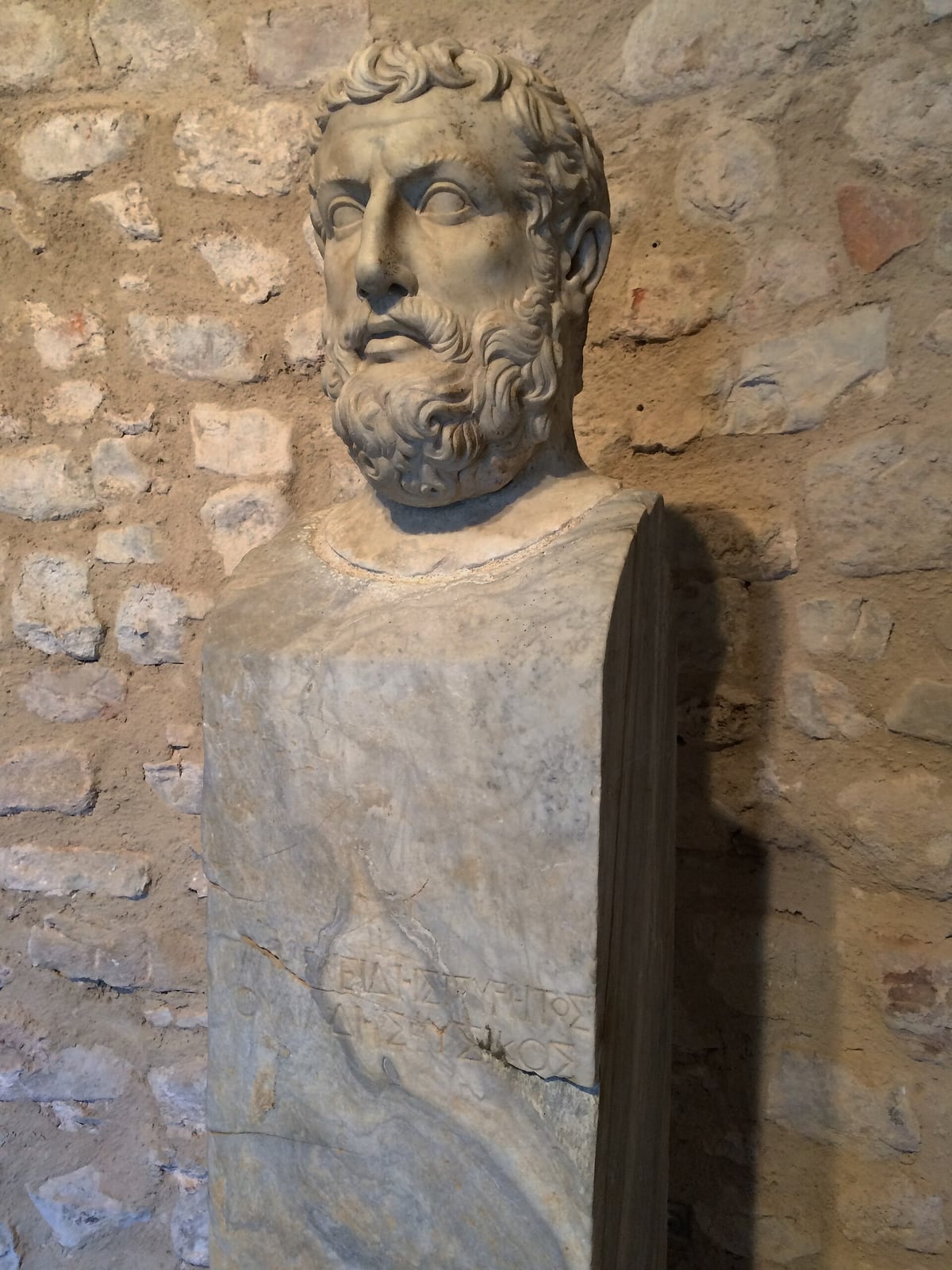
Parmenides
Si scontrano su: Il mondo è reale?

Nāgārjuna
Si scontrano su: Che cos'è l'Assoluto? Dio esiste? · Chi sono io? Esiste un vero sé? · Che cosa accade dopo la morte?
Aneddoti e racconti
Aneddoti e racconti
Testimonianza1804
The robbers in the forest
Origine del racconto: The lives tell it from Sergius's (1841) onwards, written from the testimony of Sarov monks; the bent back is confirmed by the 1828 portrait. The apparition during convalescence is a hagiographic element of monastic transmission.
Contestatoc. 1807–1810
A thousand days on the stone
Origine del racconto: Letter of Abbot Isaiah II (Putilov) to Hieromonk Abel (Vanyukov), December 1848, cited in Russian scholarship; the figure of a thousand days comes from the later lives, above all Chichagov's Chronicle (1903). The core—a long period of standing prayer—is plausible; the canonical form is undocumented.
Contestatopublicado en 1849
The bear
Origine del racconto: Published by Joasaph in 1849; the retraction is in the Manuscripts Department of the Russian State Library, papers of Metropolitan Philaret (Drozdov), according to recent Russian scholarship (Stepashkin). The 1844 life already mentioned animals coming to him; the bear as an episode with witnesses is a documented invention.
Testimonianza1815–1833
"My joy, Christ is risen!"
Origine del racconto: The greeting and the form of address are attested by many visitors, gathered in the Diveyevo Chronicle and the lives; the advice to keep a joyful spirit appears in the Instructions ('On preserving peace of soul').
Testimonianzanoviembre de 1831
The light on his face
Origine del racconto: A single witness: Motovilov's manuscript published by Nilus in 1903. Rochcau accepts the historicity of the episode; the literal wording is doubtful, and Sanidopoulos notes that another Motovilov manuscript claims he saw the illumined face many times, which weakens the uniqueness of the account. Florensky reproduced it in 1914 as an example of the light of grace.
Racconto agiograficoc. 1761
The fall from the church
Origine del racconto: Hieromonk Sergius, Account… (1841) for the original version; Elagin (1863) introduces the bell tower. A family tradition with no independent witnesses.
Testimonianza1–2 de enero de 1833
Kneeling before the Tenderness icon
Origine del racconto: The Sarov monks' account handed down by the first life (1841) and its successors; the icon's fate, in the literature on the canonisation and relics.
Insegnamenti
Insegnamenti
Le nozioni che articolano il suo pensiero, spiegate nel loro contesto.
The acquisition of the Holy Spiritadquisicion-del-espiritu-santo
It gathers the patristic doctrine of deification (theosis) and the emphasis of Symeon the New Theologian and of hesychasm on the conscious experience of grace. Twentieth-century theologians such as Vladimir Lossky made it a summary of Orthodox spirituality.
Peace of soulpaz-del-alma
It develops the hesychast notion of hesychia (stillness) from Isaac the Syrian, Barsanuphius and John Climacus, whom the Instructions cite explicitly.
The Jesus Prayer and the short ruleoracion-de-jesus
It continues the hesychast practice spread in Russia by Paisius Velichkovsky's Slavonic Philokalia (1793), which half a century later Theophan the Recluse would expand in Russian.
The light of graceluz-de-la-gracia
Related to Gregory Palamas's fourteenth-century doctrine of the uncreated light of Tabor and to the Desert Fathers' accounts of faces illumined in prayer.
The starets and spiritual directionstarchestvo
The revival of Russian eldership goes back to Paisius Velichkovsky (1722–1794); Florensky cites Seraphim alongside the Optina elders as those who 'gather as in a burning focus' popular holiness.
Video
Video
Registrazioni, interviste e documentari. I video vengono riprodotti da YouTube; non sono ospitati qui.
Великое чудо преподобного Серафима Саровского
Documentario· RU· 2016· 43 min
Свято-Троицкий Серафимо-Дивеевский монастырьCanale ufficiale
«Дивное Дивеево» — фильм о Серафимо-Дивеевском монастыре (2016)
Documentario· RU· 2016· 53 min
Дивное ДивеевоCanale ufficiale
Серафим Саровский. Рожденный пламенным
Documentario· RU· 2008· 10 min
SpasTVCanale ufficiale
Серафим Саровский и современность — А. И. Осипов
Conferenza· RU· 2023· 148 min
Алексей Ильич ОсиповCanale ufficiale
Преп. Серафим Саровский (святость и миф) — Вячеслав Рубский
Conferenza· RU· 2017· 89 min
Вячеслав РубскийCanale ufficiale
Преподобный Серафим Саровский. Священник Валерий Духанин
Conferenza· RU· 2026· 19 min
БИБЛИЯ и толкования — Экзегет.руCanale ufficiale
Серафим Саровский. Фрагмент лекции К. В. Корепанова в Храме на Крови (23.12.2013)
Conferenza· RU· 2013· 48 min
Официальный лекторий свящ. Константина КорепановаCanale ufficiale
Особая книга. В. Степашкин «Серафим Саровский»
Analisi· RU· 2023· 3 min
Библиотека Маяковского СаровCanale ufficiale
Metropolitan Kallistos Ware on Saint Seraphim of Sarov (Part 1/6)
Conferenza· EN· 2017· 56 min
OLTelevisionCanale ufficiale
AE40: Saint Seraphim of Sarov: Part 2/6
Conferenza· EN· 2025· 42 min
OLTelevisionCanale ufficiale
Saint Séraphim de Sarov 1/4 — Un moine russe
Documentario· FR· 2023· 26 min
RCF Hauts de FranceCanale ufficiale
Saint Séraphim de Sarov 4/4 — Sa spiritualité
Analisi· FR· 2023· 25 min
RCF Hauts de FranceCanale ufficiale
Galleria
Galleria
Immagini con licenza verificata. Ciascuna conserva la sua paternità e la sua attribuzione.
Manoscritti
Manoscritti
Testimoni manoscritti e testi antichi, con il loro custode e le loro condizioni di consultazione.
RU · Cyrillic · Fecha de redacción desconocida (entre 1831 y 1879)
Рукопись Н. А. Мотовилова «Дух Божий, явно почивший на отце Серафиме Саровском, в беседе его о цели христианской жизни…» (гл. VI)
- Testimone conservato
- Manuscrito único, conocido sólo por la edición de Nilus (1903)
Relazioni
Relazioni
Influenze, discepolati e affinità. Si distingue la relazione documentata dalla somiglianza individuata per analisi.
Maestro di
Nikolái Motovílov
A Simbirsk landowner (1809–1879), healed by his own account through Seraphim's prayers in September 1831 and from then on a disciple, 'servant of the Mother of God and of Seraphim' and benefactor of Diveyevo. His manuscripts are the source of the Conversation and of many accounts, and of the doubtful prophecies as well.
Relazione documentata
Ricevette l'influenza di
Isaac el Sirio
The author most quoted in the Spiritual Instructions (homilies on humility, despondency and stillness), together with John Climacus, Barsanuphius and Gregory of Sinai.
Relazione documentata
Ricevette l'influenza di
Padres del desierto
The Instructions quote Barsanuphius, Antiochus, Ephrem and the apophthegms; his life of forest, fasting and silence was consciously modelled on that of the ancient hermits.
Relazione documentata
Ricevette l'influenza di
Paisi Velichkovski
Sarov's spirituality belongs to the hesychast revival Paisius launched with the Slavonic Philokalia (1793); no personal link has been documented.
Somiglianza individuata per analisi
Idee affini a
Gregorio Palamas
The light of the face in the Conversation has been read as a manifestation of the light of Tabor defended by Palamas in the fourteenth century.
Somiglianza individuata per analisi
Influenzò
Florensky cites Seraphim in several letters of The Pillar and Ground of the Truth (1914) and reproduces in the fourth, 'The Light of Truth', the passage of the luminous face from the Conversation, following Nilus's 1905 edition; he places him alongside the Optina elders as a focus of Russian popular holiness.
Relazione documentata
Influenzò
Dmitri Merezhkovski
His essay 'The Last Saint' (in Not Peace but a Sword, 1908) examines Seraphim and his canonisation as a cipher of Russian religiosity; Florensky cites it.
Relazione documentata
Idee affini a
The Easter joy, the bowing before each visitor and the spiritual direction of laypeople of the elder Zosima in The Brothers Karamazov have been compared with Seraphim, though Dostoevsky's declared models were Tikhon of Zadonsk and the elder Ambrose of Optina.
Somiglianza individuata per analisi
Idee affini a
Theophan carried into Russian, for laypeople, the hesychast teaching on the prayer of the heart and the acquisition of grace that Seraphim transmitted orally; they never met. As Bishop of Tambov he was for a few months in 1861 in charge of the Diveyevo convent founded by Seraphim, to end its disorders.
Somiglianza individuata per analisi
Influenzò
In On the Jesus Prayer (Ascetic Experiences, vol. I) Ignatius relates, on the word of 'old monks', that at Sarov the Jesus Prayer was taught to everyone who entered and that 'the blessed elder Seraphim' advised monks to lead an attentive life and practise that prayer, and he quotes a saying of his on the insufficiency of merely outward prayer. There is no record that they met.
Relazione documentata
Fonti
Fonti
Bibliografia e cataloghi consultati per questa scheda.
- Wikidata, «Seraphim of Sarov» (Q44717): P31=Q5, nacimiento 1754/1759, muerte 1833, 48 enlaces entre wikis.
- Roshko, Vsévolod, prot. [Rochcau, Vsévolod]. Преподобный Серафим: Саров и Дивеево. Исследования и материалы. Moscú: Sampo, 2001 (ed. francesa: Saint Séraphim, Sarov et Divéyevo. Bégrolles-en-Mauges: Abbaye de Bellefontaine, 1987). Primera parte, «Historia y crítica histórica».
- Nilus, Serguéi A. «Цель жизни христианской» [El fin de la vida cristiana], en Великое в малом, 1.ª ed., 1903; epílogo del editor fechado el 19 de mayo de 1903. Texto en Azbuka very.
- Serafín de Sarov (atrib.). Духовные наставления мирянам и инокам [Instrucciones espirituales a laicos y monjes]. Recogidas por el monje Sergio (Vasíliev) de Sarov, revisadas por el metropolita Filaret (Drozdov) y publicadas en Краткое начертание жизни старца Саровской пустыни, схимонаха и пустынника Марка. Troitse-Sérguieva Lavra, 1839. Texto cotejado (ediciones de 1839, 1856, 1863 y 1903–1904) en Azbuka very.
- Serafín (Chichagov), archimandrita. Летопись Серафимо-Дивеевского монастыря Нижегородской губ. Ардатовского уезда. Moscú: Pechatnia A. I. Snegirevoi, 1896; 2.ª ed. ampliada, San Petersburgo, 1903. Reed. Diveyevo: Izd-vo Bratstva sv. Aleksandra Nevskogo, 2004 (ISBN 9785882130649).
- Stepashkin, Vladímir A. Преподобный Серафим Саровский: предания и факты. 3.ª ed. corregida y aumentada. Sarov: ZAO «INFO», 2009. ISBN 978-5-89269-010-2; y Серафим Саровский. Moscú: Molodaya gvardiya (ЖЗЛ), 2018.
- «Серафим Саровский», Wikipedia en ruso (biografía, fuentes hagiográficas, expediente de Matrona Plescheeva en el fondo del metropolita Filaret, carta del abad Isaías II de 1848, canonización y reliquias). Consultada el 25-10-2026.
- Polovtsov, A. A. (dir.). «Серафим (Мошнин)», en Русский биографический словарь, t. 18 (Sabanéiev–Smyslov). San Petersburgo, 1904, pp. 343–344. Texto en Wikisource.
- Sanidopoulos, John. «The Authenticity of the Conversation of St. Seraphim of Sarov with Nicholas Motovilov», Mystagogy Resource Center, 2 de enero de 2020.
- Zander, Valentine. St. Seraphim of Sarov. Trad. de la hermana Gabriel Anne; introducción de Boris Bobrinskoy. Crestwood (NY): St Vladimir's Seminary Press, 1975. ISBN 9780913836286.
- «Seraphim of Sarov», Wikipedia en inglés (reliquias, conmemoración anglicana, Juan Pablo II, bibliografía). Consultada el 25-10-2026.
- Motovílov, Nikolái A. Записки Николая Александровича Мотовилова, служки Божией Матери и преподобного Серафима. Ed. de Gueorgui Pávlovich. Moscú: Otchi dom, 2005. ISBN 9785873011278.
- Freeze, Gregory L. «Subversive Piety: Religion and the Political Crisis in Late Imperial Russia», The Journal of Modern History 68, n.º 2 (1996), pp. 308–350 (sobre la canonización de 1903).
- «Нилус, Сергей Александрович», Wikipedia en ruso (recepción del archivo de Motovílov en 1902, ediciones de Великое в малом de 1903, 1905 y 1911, inclusión de los «Protocolos» en la 2.ª ed.). Consultada el 25-10-2026.
- Azbuka very, página de autor «Серафим Саровский» (textos de la Conversación, las Instrucciones, el pequeño Правило y traducciones).
- Florenski, Pável. Столп и утверждение истины. Опыт православной теодицеи в двенадцати письмах. Moscú: Put', 1914. Carta cuarta, «Свет Истины» (cita la Conversación según Nilus, Великое в малом, 2.ª ed., Tsárskoie Seló, 1905, pp. 197–199) y cartas novena a duodécima. Texto en Azbuka very.
- Ignati (Brianchanínov). «О молитве Иисусовой. Отдел I», en Аскетические опыты, t. I (1865), cap. 26. Texto en Azbuka very.
- Merezhkovski, Dmitri S. «Последний святой» [El último santo], en Не мир, но меч. San Petersburgo, 1908. Texto en Wikisource.
- Titolare dei diritti
- Dominio público: Serafín no escribió; las fuentes rusas (Motovílov †1879, Nilus †1929, Sergio, Elaguin, Chichagov) están publicadas antes de 1917. Las traducciones modernas pertenecen a sus traductores y editoriales.
In attesa di conferma
Ciò che questa scheda non ha ancora potuto chiarire. Preferiamo dirlo piuttosto che riempirlo.
- Primera publicación de la Conversación: confirmar editorial y lugar de la 1.ª ed. de «Великое в малом» (1903) y si hubo publicación previa en prensa (se cita a veces «Московские ведомости», julio de 1903, sin verificar).
- Paradero actual del manuscrito de Motovílov de la Conversación y de los cuadernos 40–60 del archivo de Diveyevo.
- Fuente primaria exacta de la fórmula «Стяжи дух мирен…» (no está en las Instrucciones de 1839 ni en la Conversación según el texto de Nilus): revisar la Crónica de Chichagov y la vida de Elaguin.
- Texto completo de la carta del abad Isaías II al hieromonje Abel (1848) y signatura del expediente de Matrona Plescheeva en el fondo del metropolita Filaret (Biblioteca Estatal de Rusia).
- Traductor de la versión inglesa de la Conversación (SPCK, 1936) y de las traducciones del portal Azbuka very: sin identificar, por lo que no se han incluido en la sala de lectura en inglés.
- Ediciones inglesa e italiana de la Crónica de Diveyevo con ISBN verificado; edición española de la Crónica: no localizada.
- Web oficial del convento de Diveyevo (diveevo.ru): no respondió desde fuera de Rusia el 2026-10-25; no se ha consignado como official_site.
- Relación con León Tolstói y Vladímir Soloviov: no se ha encontrado ningún vínculo documentado; no se registran.
Ricerca effettuata il 2026-10-25