Platonismo
Plato
Πλάτων
ca. 428 a.C. – ca. 348 a.C.Persona storicamente documentata
Filosofo ateniese del IV secolo a.C., discepolo di Socrate e maestro di Aristotele, fondatore dell'Accademia. La sua opera, conservata integralmente, è fatta di dialoghi in cui per lo più è Socrate a parlare: vi propone la teoria delle Forme, l'immortalità dell'anima, l'ascesa attraverso l'amore verso il bello e l'idea di una città governata da chi conosce il Bene. Quasi tutta la filosofia occidentale, e buona parte della mistica cristiana, ebraica e islamica, si è pensata in dialogo con lui.
- opere
- 57opere
- edizioni
- 358edizioni
- citazioni
- 19citazioni
- video
- 15video
- immagini
- 11immagini
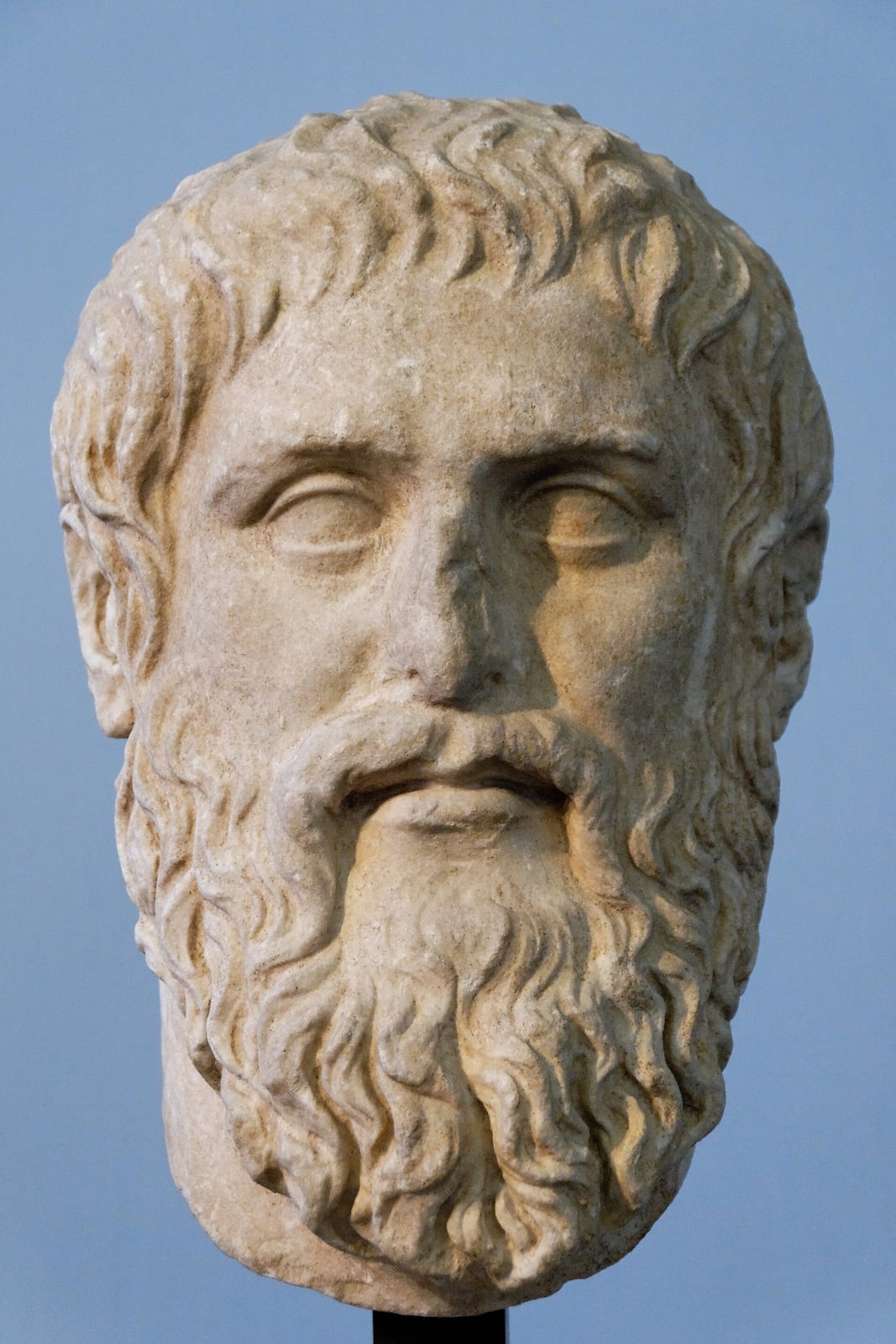
Busto de Platón (Museos Capitolinos, MC 1377) · CC BY 2.5
Con le sue parole
«He knows nothing, and thinks that he knows; I neither know nor think that I know.»Apología de Sócrates 21d (habla Sócrates). Español: traducción literal propia desde el griego (ed. Burnet). Inglés: Jowett, 1892 (dominio público).

La sua idea centrale
Theory of Forms (Ideas): Plato holds that, besides sensible things, which are many and changing, there exist intelligible realities, eternal and unchanging — the Forms or Ideas (eidos, idea) — such as the Beautiful itself, the Just itself or the Equal itself.
Vederlo nel contesto
Biografia
5 min di lettura
Traduzione assistita dall'originale spagnolo, in attesa di revisione da parte di un traduttore madrelingua.
Un aristocratico nell'Atene della guerra
Platone nacque ad Atene intorno al 428 o al 427 a.C., nei primi anni della guerra del Peloponneso, in una delle famiglie più antiche della città. Il padre, Aristone, si diceva discendente del re Codro; la madre, Perictione, era imparentata con Solone. Ebbe due fratelli maggiori, Adimanto e Glaucone, ai quali avrebbe dato voce nella Repubblica, e una sorella, Potone, madre del suo successore Speusippo. Morto Aristone, Perictione sposò lo zio Pirilampe, amico di Pericle. Il ragazzo crebbe dunque tra gente abituata al comando: Crizia, cugino della madre, e Carmide, suo zio, sarebbero stati figure centrali del regime oligarchico dei Trenta.
Della sua formazione si sa poco con sicurezza. Diogene Laerzio, che scrive sei secoli dopo, riferisce che il suo vero nome era Aristocle e che «Platone» era un soprannome dovuto all'ampiezza delle spalle o della fronte; che praticò la lotta, la pittura e la poesia; e che bruciò le sue tragedie dopo aver ascoltato Socrate. Sono notizie di biografi ellenistici che mescolavano tradizione, deduzioni ricavate dai dialoghi e pura invenzione, e la critica moderna le accoglie con cautela.
La ferita del 399
Ciò che appare certo è che Platone fece parte, in gioventù, della cerchia di Socrate, e che quel rapporto decise della sua vita. La Lettera VII, la cui autenticità è discussa ma che molti specialisti accettano, racconta che da giovane pensava di dedicarsi alla politica, che i Trenta lo invitarono a unirsi a loro e che la loro violenza — compreso il tentativo di coinvolgere Socrate nell'arresto di un cittadino destinato all'esecuzione — lo allontanò da essi. Restaurata la democrazia, nel 399 a.C. i nuovi governanti trascinarono Socrate in giudizio per empietà e corruzione dei giovani, ed egli fu condannato a bere la cicuta.
Platone fu presente al processo, come egli stesso segnala nell'Apologia, sebbene il Fedone lo dica assente, malato, il giorno della morte. Secondo la lettera, quell'epilogo lo portò alla conclusione che attraversa tutta la sua opera: le città non cesseranno di soffrire i loro mali finché i filosofi non governeranno o i governanti non filosoferanno davvero. Dopo l'esecuzione si rifugiò per qualche tempo a Megara, presso il socratico Euclide.
Viaggi e Accademia
Le fonti antiche gli attribuiscono in seguito viaggi a Cirene, nell'Italia dei pitagorici e in Egitto. Solo il contatto con i pitagorici è ben documentato: verso i quarant'anni visitò l'Italia meridionale, strinse amicizia con Archita di Taranto e passò a Siracusa, dove conobbe Dione, cognato del tiranno Dionigi I. La storia secondo cui il tiranno lo avrebbe fatto vendere come schiavo a Egina, e un cirenaico lo avrebbe riscattato, proviene da biografi tardi e non compare nella Lettera VII.
Tornato ad Atene, intorno al 387 a.C., fondò la sua scuola presso il ginnasio dell'Accademia, un recinto alberato consacrato all'eroe Academo, a nord-ovest della città. Non era un'università in senso moderno, ma una comunità di studio e di vita comune in cui si coltivavano la matematica, l'astronomia, la dialettica e la teoria politica, e dove lavorarono matematici come Teeteto ed Eudosso. Aristotele vi giunse nel 367 a.C., a diciassette anni, e vi rimase una ventina d'anni. Diogene Laerzio menziona perfino due donne, Assiotea di Fliunte e Lastenia di Mantinea, fra i suoi discepoli.
La tentazione della Sicilia
La filosofia politica di Platone conobbe una prova reale. Nel 367 a.C., morto Dionigi I, Dione gli chiese di venire a educare il nuovo tiranno, Dionigi II, nella speranza di farne il governante filosofo della Repubblica. L'esperienza si concluse con Dione esiliato e Platone di ritorno ad Atene. Verso il 361 tornò a Siracusa per tentare di riconciliarli, fu trattenuto contro la sua volontà e poté ripartire soltanto grazie ad Archita. Nel 357 Dione rovesciò Dionigi con l'appoggio di membri dell'Accademia, e nel 354 fu assassinato da Callippo, un ateniese della sua stessa cerchia. Le Lettere VII e VIII si presentano come il bilancio di quel fallimento.
I dialoghi
A differenza di quasi tutti i filosofi precedenti, la cui opera conosciamo per frammenti, di Platone si è conservato tutto ciò che l'antichità gli attribuiva: trentacinque dialoghi e una raccolta di tredici lettere, ordinati nel I secolo d.C. da Trasillo in nove tetralogie, oltre a una manciata di opere già riconosciute come spurie. Platone non vi parla mai in prima persona; di solito è Socrate a condurre la conversazione, e nei dialoghi tardi cede il ruolo a uno Straniero di Elea, a Timeo o a uno Straniero ateniese.
La cronologia è oggetto di dibattito, ma c'è accordo su uno schema generale. I dialoghi brevi, come il Lachete o l'Eutifrone, esaminano una virtù e si chiudono senza risposta. Il Fedone, il Simposio, la Repubblica e il Fedro espongono la teoria delle Forme, l'immortalità dell'anima e l'ascesa dell'amore verso la Bellezza. Il Parmenide, il Teeteto, il Sofista, il Timeo, il Filebo e le Leggi, opera che alla sua morte lasciò senza averla rifinita, sottopongono quelle idee a critica e le estendono alla cosmologia e alla legislazione.
Il Fedro e la Lettera VII aggiungono un avvertimento sulla scrittura stessa: ciò che più conta non si trasmette nei libri, ma si accende nell'anima dopo una lunga consuetudine di vita. Aristotele allude a «dottrine non scritte» del suo maestro, e la celebre lezione pubblica «Sul Bene», nella quale Platone parlò di matematica e concluse che il Bene è l'Uno, lasciò perplesso il suo uditorio. Quanto del suo pensiero sia rimasto fuori dai dialoghi resta una delle grandi questioni degli studi platonici.
Morte ed eredità
Platone morì ad Atene nel 348 o nel 347 a.C., a circa ottant'anni, e fu sepolto nell'Accademia. Le fonti non concordano sulle circostanze: un banchetto di nozze, la fatica della scrittura, una notte di febbre trascorsa ad ascoltare un flauto. Gli succedette il nipote Speusippo, e la scuola, attraverso profonde trasformazioni, si mantenne per secoli.
Il testo giunse alla stampa grazie ai codici bizantini — il più antico a conservare complete le prime sei tetralogie, il Clarkianus della Biblioteca Bodleiana, fu copiato nell'anno 895 — e nel 1578 Henri Estienne pubblicò a Ginevra l'edizione la cui paginazione serve ancora per citarlo: «Repubblica 514a» rimanda alla pagina 514, sezione a, di quel volume. In castigliano, Patricio de Azcárate diede tra il 1871 e il 1872 la prima traduzione delle opere complete.
La sua influenza non ha eguali. Plotino si considerò suo interprete e fondò il neoplatonismo; Agostino d'Ippona riconobbe che i libri platonici gli avevano aperto la via verso il Dio cristiano; il Timeo, in latino, fu per secoli quasi tutto ciò che l'Occidente lesse di lui, e la falsafa islamica e la teologia ebraica medievale lo accolsero per vie proprie. La traduzione latina integrale di Marsilio Ficino, nel 1484, lo riportò al centro della cultura europea. Alfred North Whitehead riassunse il debito scrivendo che la tradizione filosofica europea consiste in una serie di note a piè di pagina a Platone.
Fonti: Nails, Debra, The People of Plato: A Prosopography of Plato and Other Socratics, Indianápolis, Hackett, 2002 (entrada «Plato» y apéndices cronológicos). · Diógenes Laercio, Vidas y opiniones de los filósofos ilustres, libro III (Platón), s. III d. C. Trad. inglesa de R. D. Hicks, Loeb Classical Library, Harvard University Press, 1925 (texto en Wikisource). · Platón (atribuida), Carta VII, 324a–352a, en Platonis Opera, ed. John Burnet, vol. V, Oxford Classical Texts, 1907; trad. española de Juan Zaragoza y Pilar Gómez Cardó en Platón, Diálogos VII, Madrid, Gredos (Biblioteca Clásica Gredos 162), 1992. · Cooper, John M. (ed.) y Hutchinson, D. S. (ed. asociado), Plato: Complete Works, Indianápolis, Hackett, 1997 (introducción del editor sobre el corpus, las tetralogías de Trasilo y la autenticidad de cada obra). · Riginos, Alice Swift, Platonica: The Anecdotes Concerning the Life and Writings of Plato, Leiden, Brill (Columbia Studies in the Classical Tradition 3), 1976.
Cronologia
La vita, anno per anno
Ogni punto è un evento documentato. Fai clic per leggerlo, con la sua fonte e il suo grado di certezza.
ca. 428 a.C.0 anniAtenas (o Egina, según otra tradición)
Birth
Born into an aristocratic Athenian family: his father, Ariston, claimed descent from King Codrus; his mother, Perictione, from Solon's family. Diogenes Laertius dates the birth to the 88th Olympiad (428/427 BC), and Apollodorus has it coincide with Apollo's birthday. He had two brothers, Adeimantus and Glaucon, and a sister, Potone.
ProbabileDiógenes Laercio, Vidas y opiniones de los filósofos ilustres, libro III (Platón), s. III d. C. Trad. inglesa de R. D. Hicks, Loeb Classical Library, Harvard University Press, 1925 (texto en Wikisource).
Dopo la sua morte
- ca. 347 a.C.Speusippus heads the Academy
- ca. 14 a.C.Thrasyllus' tetralogies
- 895The Codex Clarkianus
- 1484Ficino's Latin translation
- 1578The Stephanus edition
- 1871 – 1872Complete works in Spanish
ca. 428 a.C. · 0 anni
Birth
Born into an aristocratic Athenian family: his father, Ariston, claimed descent from King Codrus; his mother, Perictione, from Solon's family. Diogenes Laertius dates the birth to the 88th Olympiad (428/427 BC), and Apollodorus has it coincide with Apollo's birthday. He had two brothers, Adeimantus and Glaucon, and a sister, Potone.
Probabile
ca. 423 a.C. · 5 anni
His mother marries Pyrilampes
After Ariston's death, Perictione marries her uncle Pyrilampes, a friend of Pericles; from this marriage is born Antiphon, Plato's half-brother, who appears in the Parmenides.
Probabile
ca. 408 a.C. · 20 anni
With Socrates
According to Diogenes Laertius, at twenty he began to frequent Socrates; tradition adds that he then burned his tragedies. The date and the burning episode are traditional.
Tradizione
404 a.C. · 24 anni
The Thirty Tyrants
After Athens' defeat, an oligarchic government including Critias, his mother's cousin, and Charmides, his uncle, invites the young Plato to collaborate. According to the Seventh Letter, its violence — and its attempt to involve Socrates in an unjust arrest — turned him away.
Probabile
399 a.C. · 29 anni
Trial and death of Socrates
Socrates is condemned to death for impiety and corrupting the young. Plato attends the trial, as he states in the Apology (34a, 38b), but according to the Phaedo (59b) he was not present at the death because he was ill.
Documentato
ca. 399 a.C. · 29 anni
Withdrawal to Megara
After the execution, with other Socratics, he takes refuge for a while in Megara with Euclides, according to Hermodorus as cited by Diogenes Laertius.
Probabile
ca. 395 a.C. · 33 anni
Journeys of study
Ancient tradition credits him with journeys to Cyrene, to the mathematician Theodorus, to the Pythagoreans of Italy and to Egypt. Only the contact with the Pythagoreans is well attested; the Egyptian journey is doubtful.
Tradizione
ca. 388 a.C. · 40 anni
First journey to Sicily
Around the age of forty (Seventh Letter, 324a) he visits Italy, where he befriends Archytas of Tarentum, and the court of Dionysius I in Syracuse, where he meets the young Dion. Later tradition relates that the tyrant had him sold as a slave in Aegina.
Probabile
ca. 387 a.C. · 41 anni
Founding of the Academy
He acquires land near the gymnasium of the Academy, north-west of Athens, and founds the community of study that will take its name. Mathematics, astronomy, dialectic and politics are studied there; it will survive, with transformations, for several centuries.
Probabile
367 a.C. · 61 anni
Aristotle enters the Academy
Aristotle, aged seventeen, arrives from Stagira and remains in the Academy for some twenty years, until Plato's death.
Documentato
ca. 367 a.C. – 365 a.C. · 61 anni
Second journey to Sicily
After Dionysius I's death, Dion calls him to educate the new tyrant, Dionysius II. The experiment fails: Dion is exiled and Plato returns to Athens.
Probabile
ca. 361 a.C. – 360 a.C. · 67 anni
Third journey to Sicily
He returns to Syracuse at Dionysius II's request, hoping to reconcile him with Dion. Held against his will, he manages to leave thanks to the intervention of Archytas of Tarentum.
Probabile
357 a.C. · 71 anni
Dion's expedition
Dion, with support from members of the Academy, overthrows Dionysius II. In 354 BC he is murdered by Callippus, an Athenian of his circle. Letters VII and VIII present themselves as written after his death.
Probabile
ca. 348 a.C. · 80 anni
Death
He dies in Athens in the first year of the 108th Olympiad (348/347 BC), aged about eighty or eighty-one, according to Hermippus as cited by Diogenes Laertius. He is buried in the Academy. He leaves the Laws not yet fair-copied.
Probabile
ca. 347 a.C.
Speusippus heads the Academy
He is succeeded by his nephew Speusippus, son of his sister Potone. Aristotle leaves Athens.
Documentato
ca. 14 a.C.
Thrasyllus' tetralogies
In the first century AD, the astrologer Thrasyllus, close to Tiberius, arranges the works in nine tetralogies, the order in which the corpus has come down to us.
Probabile
895
The Codex Clarkianus
John the Calligrapher copies for Arethas of Caesarea the codex now preserved in the Bodleian Library, the main witness for the first six tetralogies.
Documentato
1484
Ficino's Latin translation
Marsilio Ficino publishes the first complete Latin translation of the dialogues, commissioned by Cosimo de' Medici, which restores Plato to the centre of European thought.
Documentato
1578
The Stephanus edition
Henri Estienne publishes the Greek text in three volumes with Jean de Serres' Latin translation; its pagination becomes the universal system of reference.
Documentato
1871 – 1872
Complete works in Spanish
Patricio de Azcárate publishes the first Spanish translation of the complete works (11 volumes, 1871–1872).
Documentato
Opere
Opere essenziali
Le opere senza le quali non si comprende la sua eredità.
Opera scritta · ca. 395 a.C.
Apology of Socrates
Ἀπολογία Σωκράτους
A recreation of the defence speech Socrates delivered in 399 BC before the Athenian popular jury, accused of not recognising the city's gods and of corrupting the young. Socrates explains the Delphic oracle, his mission of examining those who think they know, and his conscious ignorance; after the verdict he ironically proposes to be maintained in the Prytaneum, and accepts death declaring that the unexamined life is not worth living. Plato was present at the trial (34a, 38b). It is the classic doorway into philosophy.
8 edizioni

Opera scritta · ca. 380 a.C.
Phaedo
Φαίδων
Phaedo of Elis tells Echecrates of Socrates' last hours in prison: the conversation on why the philosopher does not fear death, the arguments for the immortality of the soul (from opposites, recollection, affinity with the invisible, participation in Forms), the closing myth on the fate of souls, and the calm death by hemlock. Here the theory of Forms appears explicitly, as does the definition of philosophy as practice for dying. Plato is said to have been absent through illness (59b).
9 edizioni

Opera scritta · ca. 380 a.C.
Symposium
Συμπόσιον
At the house of the poet Agathon, celebrating his victory in the tragic contest of 416 BC, the guests deliver speeches in honour of Eros: Phaedrus, Pausanias, the physician Eryximachus, Aristophanes with the myth of spherical beings cut in two, Agathon, and Socrates, who relays the teaching of the priestess Diotima on the ladder of love, from one beautiful body to Beauty itself. It closes with the entry of a drunken Alcibiades, who delivers a eulogy of Socrates. A literary masterpiece and source of the whole Western mysticism of love.
9 edizioni

Opera scritta · ca. 375 a.C.
Republic
Πολιτεία
In the Piraeus, after a festival, Socrates discusses what justice is. To see it writ large he imagines an ideal city with three classes, ruled by philosophers whose education culminates in knowledge of the Form of the Good. Its ten books contain the critique of poetry, the equal education of women guardians, the images of the sun, the line and the cave, the typology of degenerate regimes and the myth of Er on the choice of lives. Plato's central work and that of political philosophy.
13 edizioni
Tutta la sua opera (57)
Euthyphro
395
Crito
395

Cratylus
385

Theaetetus
368

Sophist
360

Statesman
360

Parmenides
370

Philebus
355
Phaedrus
370
Alcibiades I
Alcibiades II
Hipparchus
Rival Lovers (Lovers)
Theages

Charmides
390
Laches
390

Lysis
390
Euthydemus
385

Protagoras
390

Gorgias
387
Meno
385
Hippias Major
390
Hippias Minor
395
Ion
395
Citazioni
Citazioni localizzate in un'opera precisa. Ciascuna porta con sé la sua provenienza e il suo grado di affidabilità.
He knows nothing, and thinks that he knows; I neither know nor think that I know.οὗτος μὲν οἴεταί τι εἰδέναι οὐκ εἰδώς, ἐγὼ δέ, ὥσπερ οὖν οὐκ οἶδα, οὐδὲ οἴομαι.
VerificataApología de Sócrates 21d (habla Sócrates). Español: traducción literal propia desde el griego (ed. Burnet). Inglés: Jowett, 1892 (dominio público).
Citazioni apocrife o di attribuzione discussa (2)
«'Let no one ignorant of geometry enter.'»
An inscription attributed to the Academy's door that appears only in sixth-century AD commentators; it is not found in any work of Plato or in sources of his time.
«'Only the dead have seen the end of war.'»
A widespread false attribution: it appears in no work of Plato. It comes from George Santayana, Soliloquies in England (1922), the soliloquy 'Tipperary'; General Douglas MacArthur popularised it as Platonic in an address at West Point (1962).
Ultime parole
Non esistono testimonianze verificabili delle sue ultime parole.
No final words of Plato survive. The ancient sources disagree even on the circumstances of his death: Hermippus, cited by Diogenes Laertius (III 2), says he died at a wedding feast; Cicero (On Old Age 13) that he died while writing, at eighty-one; and the Herculaneum papyrus of Philodemus' Index Academicorum, which goes back through Neanthes to Philip of Opus, relates that on his last night, feverish, he received a Chaldean visitor and that a Thracian girl played the flute while he marked the rhythm for her with a gesture. None of these versions records a sentence.
Fonte: Riginos, Alice Swift, Platonica: The Anecdotes Concerning the Life and Writings of Plato, Leiden, Brill (Columbia Studies in the Classical Tradition 3), 1976.
Chiedi
Ciò a cui risponde la sua opera
Dodici grandi domande dell'umanità e ciò che i suoi testi permettono di rispondere, con riferimenti. Non gli mettiamo mai parole in bocca.
Che cos'è l'Assoluto? Dio esiste?
A Good beyond being and a good craftsman who willed the world
Personale e impersonale insiemeSi deduce dalla sua dottrina
In Plato two faces of the ultimate coexist. In the Republic the Good is the source from which things receive being and knowability, and it is not essence but still beyond essence: an impersonal principle named only by analogy with the sun. In the Timaeus, by contrast, a good demiurge, free of envy, wills that everything become as like him as possible and orders the cosmos looking to an eternal model. The Laws add gods who care for small things as much as great and punish impiety. Plato does not explicitly unify the two levels; the later tradition read them as degrees of a single divine reality.
Confronta questa domanda con altri maestriChi sono io? Esiste un vero sé?
The immortal soul, akin to the Forms, imprisoned in the body
Un'anima creata e immortaleLo dice espressamente
Plato identifies the human being with the soul and devotes his most famous proofs to it. In the Phaedo the soul is like the divine, immortal, intelligible and always the same as itself, while the body resembles the mortal and changing; to philosophise is to separate it from the body. The Phaedrus defines it as a self-moving principle of motion that therefore is neither born nor dies. In the Timaeus the demiurge fashions the immortal part of the human soul from the same mixture as the world soul and entrusts it to the lesser gods. Its destiny is to become like God as far as possible. Yet Plato also ascribes successive reincarnations to this soul.
Confronta questa domanda con altri maestriPerché soffriamo?
Injustice is a civil war in the soul, and the body feeds it
Il disordine sociale e moraleLo dice espressamente
Plato gives two complementary explanations. In the Phaedo the body fills the soul with loves, desires, fears and images, and from its needs arise wars, revolts and fights over money. In the Republic evil is thought of as disorder: the soul has three parts, reason, spirit and appetite, and justice consists in each doing its own work under reason's rule; injustice is an inner uprising, a sickness of the soul. The same holds for the city, whose degenerate forms correspond to disordered souls. We suffer when order is inverted and appetite rules, in the soul and in the city.
Confronta questa domanda con altri maestriChe cosa accade dopo la morte?
The immortal soul is judged and reborn until philosophy frees it
Rinascita secondo il karmaLo dice espressamente
Plato upholds the immortality of the soul with arguments and describes it with myths. In the Phaedo philosophy is a practice of dying, because it prepares the soul to separate from the body; souls attached to it are reincarnated according to their habits, as asses, wolves or bees, while those purified by philosophy live with the gods. The Phaedrus tells of a ten-thousand-year cycle in which only the philosopher's soul regains its wings sooner. In the myth of Er, at the end of the Republic, judged souls choose their next life and drink from the river of forgetfulness. Plato warns that the form of the tale is approximate but that the risk of believing it is worth taking.
Confronta questa domanda con altri maestriCome si raggiunge la liberazione o la salvezza?
Turning the whole soul towards what is and becoming like God
Con la conoscenza direttaLo dice espressamente
For Plato liberation is a conversion of knowledge. The allegory of the cave presents humans chained before shadows; education does not consist in putting knowledge into the soul but in turning it whole, away from what becomes, until it can bear the contemplation of what is and of the Good. The way passes through mathematics and culminates in dialectic. The Phaedo calls philosophy purification and a practice of dying; the Symposium describes an ascent of love from beautiful bodies to Beauty itself; the Theaetetus sums up the goal as flight from here to there, which is becoming like God by becoming just and holy with understanding.
Confronta questa domanda con altri maestriServe un maestro?
Truth catches after long companionship, like a spark that leaps
Comunità e tradizioneLo dice espressamente
Plato founded the Academy, a community of study and life, and in his dialogues learning always happens between persons. The Seventh Letter, of disputed authenticity but very old, states the idea precisely: the essential cannot be put into words like other studies, but after long companionship with the matter itself and a shared life, it is suddenly born in the soul like a light kindled from a leaping spark. The Phaedrus criticises writing because it cannot answer the questioner and prefers the living word sown in a suitable soul. In the cave, someone has to unchain the prisoner and force him upward. Knowledge is passed on in a prolonged relationship, not in a book.
Confronta questa domanda con altri maestriIl mondo è reale?
The sensible always becomes and never fully is: an image of what is
Apparenza sull'unica realtàLo dice espressamente
Plato distinguishes what always is and never becomes, grasped by thought, from what always becomes and never fully is, the object of opinion and the senses. In the allegory of the cave the prisoners take projected shadows for reality; the divided line grades the levels of reality from images up to the Forms. But the sensible world is not nothing: in the Timaeus it is the work of a good craftsman, the most beautiful of generated things, an image of the intelligible which the dialogue's last sentence calls a perceptible god. The world is real as an image; the fully real are the Forms and, above them, the Good.
Confronta questa domanda con altri maestriChe cos'è l'amore?
Eros ascends from beautiful bodies to Beauty itself
Anelito e unioneLo dice espressamente
Plato makes love a force of ascent. In the Symposium, Diotima explains that Eros is not a god but an intermediary, child of Resource and Poverty, always lacking and always seeking; he desires the beautiful because he desires the good and immortality. Rightly guided, he climbs by degrees: from one beautiful body to all, from bodies to souls, to laws, to sciences, until suddenly beholding Beauty itself, the moment when, if ever, life is worth living. The Phaedrus describes love as divine madness: the sight of the beloved reminds the soul of the beauty it beheld before birth and makes its wings grow. To love is to remember the origin and return to it.
Confronta questa domanda con altri maestriSiamo liberi o è tutto determinato?
The responsibility is the chooser's; the god is not responsible
Karma e sceltaLo dice espressamente
The myth of Er, at the end of the Republic, is Plato's great image on this question. Souls, before being reborn, choose their next life from many patterns; a prophet proclaims that virtue has no master, that each will have more or less of it as he honours or scorns it, and that the responsibility is the chooser's, not the god's. But the choice is not neutral: most choose according to the habits of their former life, and once made, the Fates render it irrevocable. The Laws likewise hold that God left to our wills the causes of our being one way or another. The past conditions choice but does not replace it.
Confronta questa domanda con altri maestriPerché meditare o pregare?
Turning the soul towards what is until it contemplates the Good
Vedere la realtà così com'èLo dice espressamente
Plato proposes no meditation techniques, but contemplation is the centre of his philosophy. True education consists in turning the whole soul from what becomes until it can bear the sight of what is; the ascent of the Symposium culminates in the sudden contemplation of Beauty itself; the Phaedo describes philosophy as the soul's gathering into itself, away from the senses, to see the truth. Nor does Plato neglect prayer: the Timaeus opens with the remark that everyone with a little sense invokes the divine at the start of any undertaking. But the goal is to see: to know reality as it is.
Confronta questa domanda con altri maestriPuò la ragione conoscere l'ultimo?
After dialectic, the ultimate is born in the soul like a leaping spark
L'ultimo è al di là della menteLo dice espressamente
Plato trusts reason as few have: dialectic is the only method that ascends to the unhypothetical principle. But at the summit language falls short. The Good is beyond essence, and Socrates in the Republic declines to say what it is and offers only an image, the sun. In the Symposium Beauty itself is beheld suddenly at the end of the ascent. And the Seventh Letter states that the most serious matters cannot be put into words like other studies, but after long companionship with the subject, are born suddenly in the soul, like light kindled from a spark. Reason prepares the way; the ultimate is seen, not proved.
Confronta questa domanda con altri maestriRitirarsi dal mondo o trasformarlo?
Until philosophers rule, there will be no respite from evils for cities
Ordinare la societàLo dice espressamente
Plato sought to transform the world through government. The Republic holds that there will be no respite from evils for cities until philosophers rule or kings truly philosophise; the philosopher who has left the cave and beheld the Good is obliged to go back down to govern, though he would prefer contemplation. The Seventh Letter relates how the young Plato, disillusioned with Athenian politics after Socrates' death, reached that conviction, and his journeys to Syracuse attempted to put it into practice. The Laws, his last work, design a possible city in detail. Wisdom is realised in the good order of the city and the soul.
Confronta questa domanda con altri maestri
Affinità e tensioni
Affinità e tensioni
Calcolate domanda per domanda a partire dalle sue posizioni. Il perché di ogni accordo o contrasto, con un clic.
La pensa in modo simile a
Meher Baba
Concordano su: Che cos'è l'Assoluto? Dio esiste? · Che cosa accade dopo la morte? · Il mondo è reale?
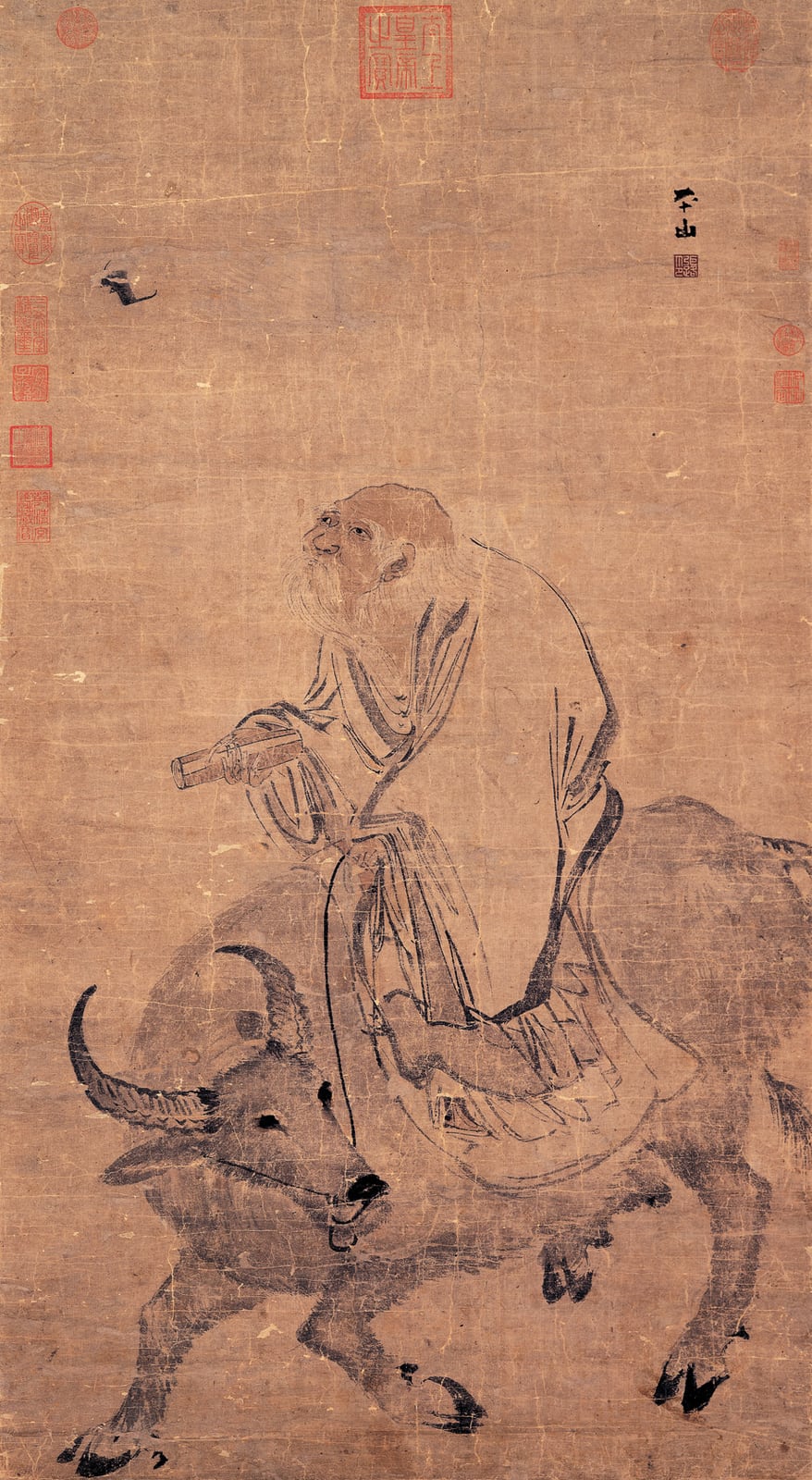
Laozi
Concordano su: Perché soffriamo? · Perché meditare o pregare? · Può la ragione conoscere l'ultimo?
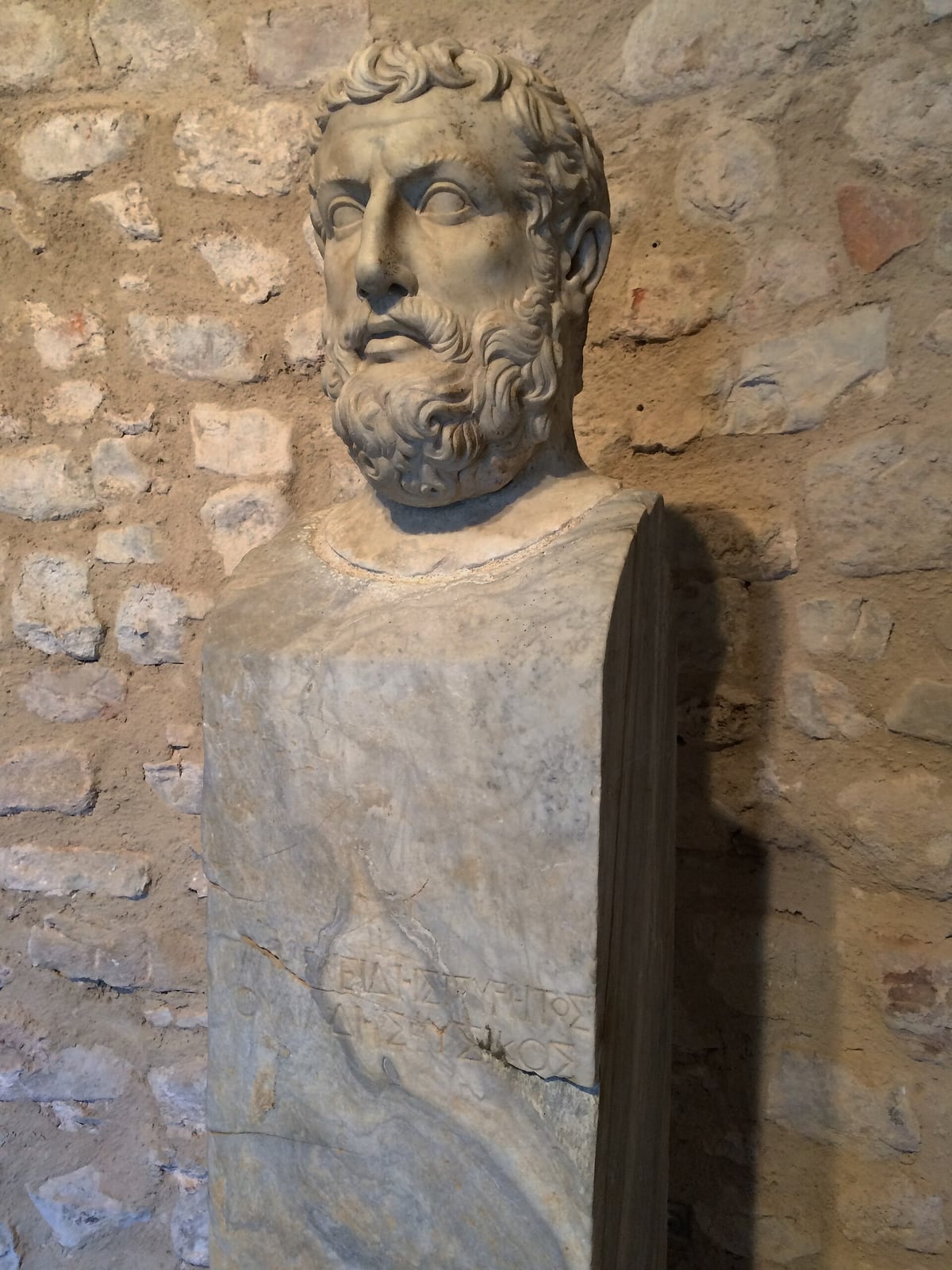
Parmenides
Concordano su: Come si raggiunge la liberazione o la salvezza? · Il mondo è reale?

Nāgārjuna
Concordano su: Come si raggiunge la liberazione o la salvezza? · Che cosa accade dopo la morte? · Perché meditare o pregare?
La pensa diversamente da
Leo Tolstoy
Si scontrano su: Chi sono io? Esiste un vero sé?
Epictetus
Si scontrano su: Chi sono io? Esiste un vero sé? · Il mondo è reale?

Epicurus
Si scontrano su: Chi sono io? Esiste un vero sé? · Che cosa accade dopo la morte?
Thomas Merton
Si scontrano su: Che cosa accade dopo la morte? · Il mondo è reale?
Aneddoti e racconti
Aneddoti e racconti
Contestatoc. 410 a. C.
The name Plato
Origine del racconto: Diogenes Laertius III 4, citing Alexander's Successions and Neanthes. Riginos (Platonica, 1976) and Nails (2002) treat it as a probable biographical invention.
Tradizione oralec. 408 a. C.
The tragedies in the fire
Origine del racconto: Diogenes Laertius III 5; Aelian, Varia Historia II 30. The line parodies Iliad XVIII 392. Riginos classes it among the literary conversion anecdotes.
Fonte: Riginos, Alice Swift, Platonica: The Anecdotes Concerning the Life and Writings of Plato, Leiden, Brill (Columbia Studies in the Classical Tradition 3), 1976.
Racconto agiograficoc. 408 a. C.
The dream of the swan
Origine del racconto: Diogenes Laertius III 5; also Pausanias I 30.3, Apuleius (On Plato I 1) and Olympiodorus. Riginos (1976) places it in the Apollonian cycle of Plato's biography.
Contestatoc. 387 a. C.
Sold as a slave in Aegina
Origine del racconto: Diogenes Laertius III 18–21; Diodorus Siculus XV 7; Plutarch, Dion 5. Absent from the Seventh Letter. Riginos and Nails discuss its plausibility.
Testimonianzas. IV a. C.
The lecture 'On the Good'
Origine del racconto: Aristoxenus, Elementa harmonica II 30–31, who transmits it as a story Aristotle often told. It is second-hand but close testimony: Aristoxenus was Aristotle's direct pupil.
Non verificabiles. IV a. C. (atribuido)
'Let no one ignorant of geometry enter'
Origine del racconto: First mentions in sixth-century AD Alexandrian Neoplatonic commentaries (John Philoponus, In De anima; Elias, In Categorias), and in a scholion on Aelius Aristides. Riginos (1976) considers it a late invention.
Fonte: Riginos, Alice Swift, Platonica: The Anecdotes Concerning the Life and Writings of Plato, Leiden, Brill (Columbia Studies in the Classical Tradition 3), 1976.
Tradizione orales. IV a. C.
Plato's man
Origine del racconto: Diogenes Laertius VI 40. The definition 'featherless biped' also appears in the pseudo-Platonic Definitions (415a). The anecdote circulated as a Cynic chreia, not as testimony.
Insegnamenti
Insegnamenti
Le nozioni che articolano il suo pensiero, spiegate nel loro contesto.
Theory of Forms (Ideas)teoria-de-las-formas
It answers Heraclitus (the flux of the sensible) and Parmenides (only what is can be known), and Socrates' search for definitions.
The Form of the Goodidea-del-bien
It crowns the central images of the Republic (sun, line, cave).
The allegory of the cavealegoria-de-la-caverna
It completes the images of the sun and the divided line; it is the most commented page of Western philosophy.
Recollection (anamnesis)anamnesis
It has Pythagorean roots (immortality and transmigration of the soul).
Immortality and parts of the soulinmortalidad-del-alma
It takes up Orphic and Pythagorean inheritances and subjects them to philosophical argument.
Eros and the ladder of beautyeros
Expressed as the teaching of a priestess, at a banquet, among speeches; the later 'Platonic love' greatly simplifies the doctrine.
The philosopher-ruler and justicefilosofo-rey
It arises from the experience of Socrates' condemnation by the democracy and of the tyranny of the Thirty; it has been read as utopia, as critique and, in the twentieth century (Popper), as the seed of totalitarianism.
Becoming like God (homoiosis theoi)homoiosis-theo
It is the bridge between Plato's philosophy and the spirituality of later Platonisms.
Video
Video
Registrazioni, interviste e documentari. I video vengono riprodotti da YouTube; non sono ospitati qui.
2. Socratic Citizenship: Plato's Apology
Conferenza· EN· 2006· 46 min
YaleCoursesCanale ufficiale
3. Socratic Citizenship: Plato's Crito
Conferenza· EN· 2006· 47 min
YaleCoursesCanale ufficiale
4. Philosophers and Kings: Plato's Republic, I-II
Conferenza· EN· 2006· 47 min
YaleCoursesCanale ufficiale
5. Philosophers and Kings: Plato's Republic, III-IV
Conferenza· EN· 2006· 47 min
YaleCoursesCanale ufficiale
6. Philosophers and Kings: Plato's Republic, V
Conferenza· EN· 2006· 45 min
YaleCoursesCanale ufficiale
Great Minds - Part 1 - Plato's Republic I: Justice, Power, and Knowledge
Conferenza· EN· 46 min
Michael SugrueCanale ufficiale
Plato's Symposium: The Dialectic of Reason, Love, and Wisdom
Conferenza· EN· 49 min
Michael SugrueCanale ufficiale
Socrates & Plato's Philosophy - Myles Burnyeat & Bryan Magee (1987)
Intervista· EN· 1987· 44 min
Philosophy Overdose
Plato and Aristotle: Crash Course History of Science #3
Analisi· EN· 2018· 12 min
CrashCourseCanale ufficiale
PHILOSOPHY - The Good Life: Plato [HD]
Analisi· EN· 6 min
Wireless PhilosophyCanale ufficiale
Who did Plato (not) Love? Oxford Abridged Short Talks
Conferenza· EN· 12 min
University of OxfordCanale ufficiale
Mentira la verdad IV: Platón, Apología de Sócrates - Canal Encuentro
Analisi· ES· 27 min
Canal EncuentroCanale ufficiale
01-03-2013. Timeo: El mito de Platón y la creación científica del mundo.
Documentario· ES· 2013· 27 min
UNEDCanale ufficiale
La alegoría de la caverna de Platón - Alex Gendler
Analisi· ES· 5 min
Sé Curioso — TED-EdCanale ufficiale
La filosofía helenística (IV): El neoplatonismo · La March
Conferenza· ES· 59 min
Fundación Juan MarchCanale ufficiale
Galleria
Galleria
Immagini con licenza verificata. Ciascuna conserva la sua paternità e la sua attribuzione.
Manoscritti
Manoscritti
Testimoni manoscritti e testi antichi, con il loro custode e le loro condizioni di consultazione.
GRC · Greek minuscule · s. IV a. C.
Πλάτωνος διάλογοι (tetralogías I–VI)
- Testimone conservato
- Codex Clarkianus (sigla B), pergamino, año 895
- Custode
- Bodleian Library, Oxford · MS. E. D. Clarke 39
- Digitalizzazione
- digital.bodleian.ox.ac.uk/…
GRC · Greek minuscule · s. IV a. C. (espurios, ss. IV–I a. C.)
Πλάτωνος διάλογοι (tetralogías VIII–IX y espurios)
- Testimone conservato
- Codex Parisinus graecus 1807 (sigla A), pergamino, s. IX
- Custode
- Bibliothèque nationale de France, París · Grec 1807
- Digitalizzazione
- gallica.bnf.fr/…
GRC · Greek majuscule (bookhand) · s. IV a. C.
Πολιτεία (fragmentos)
- Testimone conservato
- P. Oxy. LII 3679, papiro, s. III d. C.
- Custode
- Sackler Library / Egypt Exploration Society, Oxford · P. Oxy. 3679
- Digitalizzazione
- commons.wikimedia.org/wiki/File:POxy3679_Parts_P…
Relazioni
Relazioni
Influenze, discepolati e affinità. Si distingue la relazione documentata dalla somiglianza individuata per analisi.
Discepolo di
He was his companion for about ten years, attended his trial and made him the protagonist of almost all his dialogues. Distinguishing the historical Socrates from the Platonic one is one of the classic problems of ancient philosophy.
Relazione documentata
Maestro di
Aristotle studied and taught in the Academy for some twenty years (367–347 BC) and developed his own philosophy in critical discussion with the Platonic theory of Forms.
Relazione documentata
Ricevette l'influenza di
Aristotle (Metaphysics I 6) states that Plato followed the Pythagoreans in many things; his friendship with Archytas of Tarentum, the role of mathematics and the doctrine of the immortal soul confirm it.
Relazione documentata
Ricevette l'influenza di
According to Aristotle (Metaphysics I 6), Plato became familiar in his youth with Cratylus and the Heraclitean doctrines of flux, and concluded from them that there is no knowledge of sensible things.
Relazione documentata
Ricevette l'influenza di
The distinction between unchanging being and becoming, and the requirement that what is known must be, come from Parmenides, to whom Plato devotes a dialogue and with whom he breaks in the Sophist ('parricide').
Relazione documentata
Influenzò
Plotinus (3rd century AD) regarded himself as a mere interpreter of Plato; Neoplatonism arose from his reading of the Parmenides, the Timaeus, the Republic and the Symposium.
Relazione documentata
Influenzò
In the Confessions (VII 9) and the City of God (VIII) Augustine acknowledges that the 'books of the Platonists' opened his way to the Christian God; through him Platonism passed into Latin theology.
Relazione documentata
Ricevette l'influenza di
The theory of the four elements that the Timaeus reworks geometrically comes from Empedocles.
Somiglianza individuata per analisi
Dissentì da
Diogenes Laertius (VI 40, 53–54) transmits several gibes by the Cynic against Plato, such as the plucked chicken presented as 'Plato's man'; they are anecdotes of late tradition.
Relazione documentata
Idee affini a
The ascent of the soul towards a principle beyond being and conceptual knowledge has Platonic and Neoplatonic echoes in Rhineland mysticism.
Somiglianza individuata per analisi
Influenzò
Simone Weil read Plato as a mystic and devoted studies to him in Intimations of Christianity among the Ancient Greeks.
Somiglianza individuata per analisi
Idee affini a
The distinction between unchanging reality and the changing world of appearances invites comparison with Advaita, though without historical contact.
Somiglianza individuata per analisi
Collegato da altre schede
- Aristotle · Discepolo di
- Heraclitus · Influenzò
- Marcus Aurelius · Ricevette l'influenza di
- Simone Weil · Ricevette l'influenza di
- Parmenides · Influenzò
- Zeno of Citium · Dissentì da
- Epicurus · Dissentì da
- Nikolai Berdyaev · Dissentì da
- Socrates · Maestro di
- Diogenes of Sinope · Dissentì da
- Empedocles · Influenzò
- Epictetus · Ricevette l'influenza di
- Pavel Florensky · Ricevette l'influenza di
- Pythagoras · Influenzò
- Plotinus · Ricevette l'influenza di
- Vladimir Solovyov · Ricevette l'influenza di
- Augustine of Hippo · Ricevette l'influenza di
Fonti
Fonti
Bibliografia e cataloghi consultati per questa scheda.
- Nails, Debra, The People of Plato: A Prosopography of Plato and Other Socratics, Indianápolis, Hackett, 2002 (entrada «Plato» y apéndices cronológicos).
- Wikidata, «Plato» (Q859): identidad, fechas y nombre en griego (Πλάτων).
- Diógenes Laercio, Vidas y opiniones de los filósofos ilustres, libro III (Platón), s. III d. C. Trad. inglesa de R. D. Hicks, Loeb Classical Library, Harvard University Press, 1925 (texto en Wikisource).
- Platón (atribuida), Carta VII, 324a–352a, en Platonis Opera, ed. John Burnet, vol. V, Oxford Classical Texts, 1907; trad. española de Juan Zaragoza y Pilar Gómez Cardó en Platón, Diálogos VII, Madrid, Gredos (Biblioteca Clásica Gredos 162), 1992.
- Kraut, Richard, «Plato», Stanford Encyclopedia of Philosophy (primera versión 2004; revisión sustantiva 2022), ed. Edward N. Zalta.
- Cooper, John M. (ed.) y Hutchinson, D. S. (ed. asociado), Plato: Complete Works, Indianápolis, Hackett, 1997 (introducción del editor sobre el corpus, las tetralogías de Trasilo y la autenticidad de cada obra).
- Riginos, Alice Swift, Platonica: The Anecdotes Concerning the Life and Writings of Plato, Leiden, Brill (Columbia Studies in the Classical Tradition 3), 1976.
- Guthrie, W. K. C., A History of Greek Philosophy, vol. IV: Plato, the Man and his Dialogues: Earlier Period (1975) y vol. V: The Later Plato and the Academy (1978), Cambridge University Press.
- Burnet, John (ed.), Platonis Opera, 5 vols., Oxford Classical Texts, Oxford, Clarendon Press, 1900–1907 (texto griego citado por la paginación de Stephanus; edición digital en Perseus).
- Open Library: obras y ediciones de Platón (búsqueda por autor, título e ISBN).
- Lledó Íñigo, Emilio, «Introducción general», en Platón, Diálogos I, Madrid, Gredos (Biblioteca Clásica Gredos 37), 1981; y plan de la serie de Diálogos I–IX de la Biblioteca Clásica Gredos (1981–1999).
- Jowett, Benjamin (trad.), The Dialogues of Plato, 3.ª ed., 5 vols., Oxford, Clarendon Press, 1892 (textos en Project Gutenberg).
- Azcárate, Patricio de (trad.), Obras completas de Platón, 11 vols., Madrid, Medina y Navarro, 1871–1872 (edición digital en el Proyecto Filosofía en español y en Wikisource).
- Burnyeat, Myles y Frede, Michael, The Pseudo-Platonic Seventh Letter, ed. Dominic Scott, Oxford University Press, 2015.
- Kahn, Charles H., Plato and the Socratic Dialogue: The Philosophical Use of a Literary Form, Cambridge University Press, 1996.
- Dorandi, Tiziano (ed.), Filodemo. Storia dei filosofi: Platone e l'Academia (PHerc. 1021 e 164), Nápoles, Bibliopolis, 1991.
- Bodleian Library, Oxford, MS. E. D. Clarke 39 (Codex Clarkianus, año 895): ficha y reproducción digital en Digital Bodleian.
- Aristóxeno, Elementa harmonica II 30–31 (testimonio de la lección «Sobre el Bien»), citado y comentado en Kraut, «Plato», SEP, y en Guthrie, HGP V.
- Bibliothèque nationale de France, Département des Manuscrits, Grec 1807 (Codex Parisinus graecus 1807, s. IX), en Gallica.
- Suzanne, Bernard, «Did Plato write “Only the dead have seen the end of war”?», Plato and his dialogues (FAQ), 2002; cf. Santayana, George, Soliloquies in England and Later Soliloquies, 1922, n.º 25 «Tipperary».
- Whitehead, Alfred North, Process and Reality: An Essay in Cosmology, Nueva York, Macmillan, 1929, parte II, cap. 1, sección 1 («a series of footnotes to Plato»).
- Titolare dei diritti
- Los textos griegos de Platón (s. IV a. C.) son de dominio público, como las traducciones antiguas (Jowett, 1892; Burges, 1854–1855; Azcárate, 1871–1872). Las traducciones, introducciones y notas modernas pertenecen a sus traductores y editoriales (Gredos/RBA, Alianza, Akal, Cátedra, Hackett, Harvard University Press, Penguin, Oxford University Press, Cambridge University Press, entre otras).
In attesa di conferma
Ciò che questa scheda non ha ancora potuto chiarire. Preferiamo dirlo piuttosto che riempirlo.
- Confirmar el índice exacto de Gredos, Diálogos VII (BCG 162, 1992): se ha asumido que contiene Alcibíades I y II, Hiparco, Amantes, Teages, Clitofonte, Minos, Epínomis, los apócrifos (Definiciones, Sobre la justicia, Sobre la virtud, Demódoco, Sísifo, Erixias, Axíoco) y las Cartas; no se ha visto el índice en un catálogo. Alción no se ha asignado a ese volumen.
- Traductores de cada diálogo en los volúmenes I–III, V y VI de Gredos: no consignados por no haberlos verificado en catálogo (solo República, Eggers Lan; vol. VII, Zaragoza y Gómez Cardó).
- Ediciones con ISBN en español e inglés de varios dudosos y espurios fuera de los volúmenes generales (Hiparco, Teages, Minos, Demódoco, Sísifo, Alción): solo figuran en Gredos VII y Hackett Complete Works. Localizar el volumen Loeb XII (Charmides, Alcibiades I–II, Hipparchus, Lovers, Theages, Minos, Epinomis, LCL 201) y el X (Laws I–VI, LCL 187), cuyos ISBN no aparecieron en Open Library.
- Alción y Demódoco/Sísifo no tienen texto castellano de dominio público localizado; Alción tampoco en inglés (está en el corpus de Luciano: buscar traducción antigua de dominio público).
- Ediciones en francés (Belles Lettres/Budé, GF Flammarion), alemán (Schleiermacher, de dominio público) e italiano: no registradas en esta versión.
- Fechas de composición: se dan años aproximados de la cronología convencional (Kahn, Kraut); no son datos documentados. Los dudosos y espurios quedan sin año salvo Epínomis y las Cartas IV, VII y VIII.
- Contenido de las páginas «Primer Alcibíades», «Ion», «Lisis» y demás de Wikisource en español: comprobado que existen; la de Protágoras figura «en desarrollo».
- Traductor «Mr. Knight» de Alcibíades II y Erixias en la edición de Jowett: identificar nombre completo y fecha de muerte (Jowett solo le llama «my friend and secretary, Mr. Knight»).
- Imagen del Codex Clarkianus: la reproducción procede de la Bodleiana vía Commons; enlazar la ficha exacta de Digital Bodleian del MS. E. D. Clarke 39 en manuscripts[].digitization_url (ahora apunta a la portada del portal). Ídem Gallica para el Parisinus graecus 1807.
- Vídeos: año exacto de los de Michael Sugrue, Wireless Philosophy, Oxford, Canal Encuentro, TED-Ed y Fundación Juan March (no consignado). Solo tres vídeos en español de canales institucionales; buscar más (RTVE, Fundación Juan March, universidades).
- Sin programas de afiliación verificados para ninguna de las editoriales registradas.
Ricerca effettuata il 2026-10-25