Cinismo
Diogenes of Sinope
Διογένης ὁ Σινωπεύς · Διογένης ὁ Κυνικός
ca. 412 a.C. – ca. 323 a.C.Persona storicamente documentata
Filosofo greco (c. 412-323 a.C.), figura centrale del cinismo. Esiliato da Sinope dopo uno scandalo di moneta falsa, visse ad Atene e a Corinto in una povertà voluta, dormendo in una giara di terracotta e praticando in pubblico una vita «secondo natura» contro le convenzioni. Nulla di ciò che scrisse si è conservato: lo conosciamo grazie a centinaia di detti e aneddoti, molti leggendari, raccolti soprattutto da Diogene Laerzio. Si definì «cittadino del mondo».
- opere
- 33opere
- edizioni
- 17edizioni
- citazioni
- 11citazioni
- video
- 12video
- immagini
- 6immagini
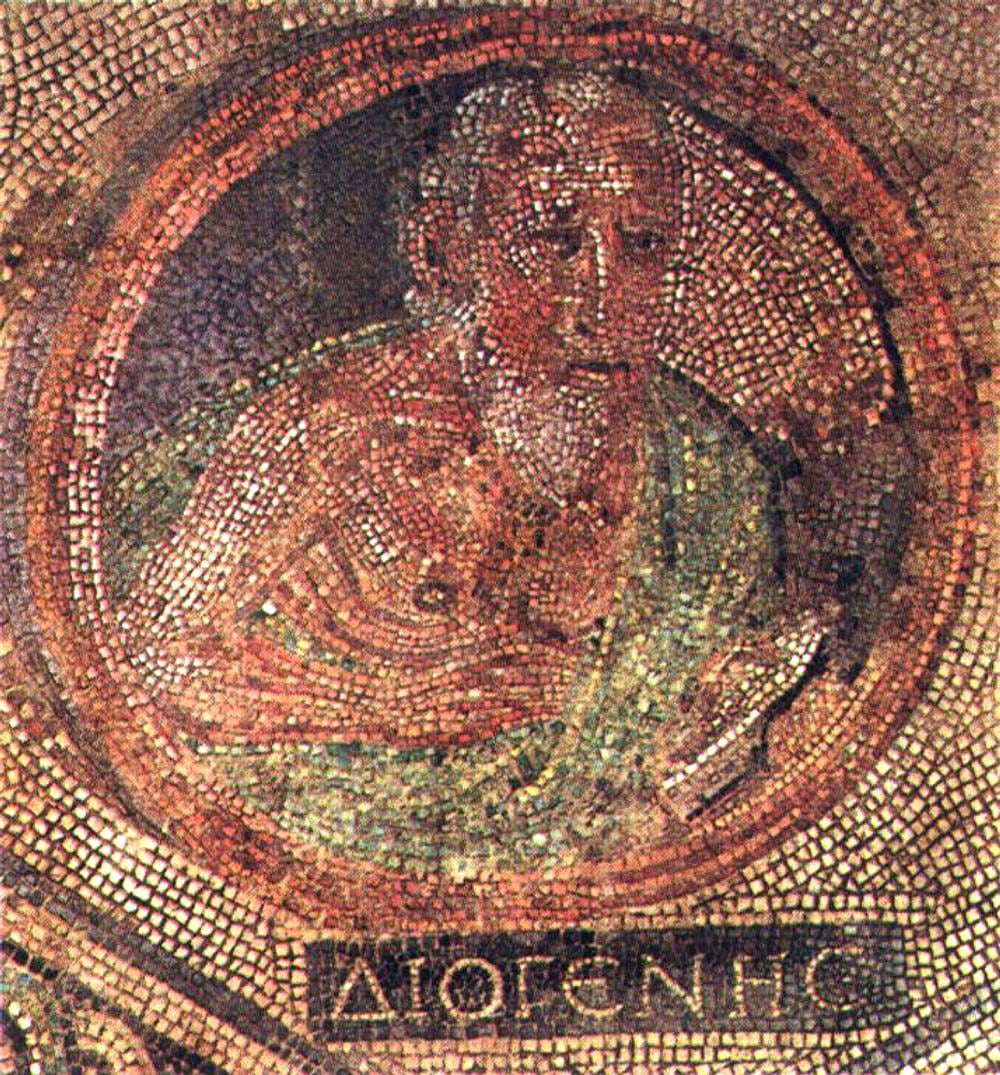
Mosaico de Diógenes (Colonia) · Public domain
Con le sue parole
«Diogenes the Dog called taverns "the mess-rooms of Attica".»Aristóteles, Retórica III 10, 1411a24, como ejemplo de metáfora. Es el único dicho de Diógenes atestiguado por un contemporáneo. Griego: Wikisource griega (Ρητορική/3); inglés: W. Rhys Roberts (1924); español: traducción propia.

La sua idea centrale
Defacing the currency (paracharattein to nomisma): Literally, the phrase names the offence that banished Diogenes from Sinope: defacing or debasing the coinage.
Vederlo nel contesto
Biografia
6 min di lettura
Traduzione assistita dall'originale spagnolo, in attesa di revisione da parte di un traduttore madrelingua.
Un uomo fatto di aneddoti
Di Diogene di Sinope non si conserva neppure una riga sicura. Ciò che sappiamo proviene quasi interamente da un'unica fonte tarda, il libro VI delle Vite dei filosofi di Diogene Laerzio, composto più di cinque secoli dopo la sua morte, che raccoglie notizie di biografi ellenistici e soprattutto centinaia di chreiai: detti brevi, arguti e facili da ricordare, che circolarono di bocca in bocca, passarono nelle scuole di retorica e spesso venivano attribuiti a più personaggi insieme. L'unico testimone contemporaneo sicuro è Aristotele, che nella Retorica cita una battuta del «Cane» sulle osterie di Atene. Scriverne la vita obbliga dunque a separare con pazienza ciò che è attestato da ciò che la tradizione gli ha via via attribuito.
Sinope e la moneta
Nacque a Sinope, colonia milesia sulla costa meridionale del Mar Nero, intorno al 412 a.C.: la data si ricava dal fatto che morì nel 323 «quasi novantenne», secondo Laerzio, benché Censorino gli attribuisca ottantun anni. Era figlio di Icesia, un banchiere (trapezites) che maneggiava fondi pubblici. Laerzio riporta diverse versioni di uno scandalo: secondo Diocle, il padre falsificò la moneta e il figlio dovette andare in esilio; secondo Eubulide, fu lo stesso Diogene, che l'avrebbe ammesso nel suo dialogo Pordalo. Un'altra versione aggiunge un oracolo di Apollo che gli avrebbe ordinato di «alterare la moneta» (paracharattein to nomisma), consiglio che egli intese alla lettera prima di scoprire che si riferiva ai costumi. Le monete di Sinope della metà del IV secolo a.C. sfregiate a scalpello, e altre con il nome di Icesia, danno un certo fondamento allo scandalo; l'oracolo, invece, sembra una costruzione posteriore che imita quello di Socrate.
Atene: il maestro e la giara
Esule, giunse ad Atene. Laerzio racconta che cercò Antistene, compagno di Socrate, che non accettava discepoli; quando questi alzò il bastone per scacciarlo, Diogene gli porse il capo: non avrebbe trovato legno tanto duro da allontanarlo finché avesse qualcosa da insegnargli. L'incontro è incerto, perché Antistene morì intorno al 366 e l'esilio di Diogene potrebbe essere posteriore; parte della critica sospetta che la catena Socrate–Antistene–Diogene sia stata costruita più tardi per dare al cinismo, e poi allo stoicismo, una discendenza socratica. Poiché l'amico al quale aveva chiesto una casetta tardava, prese per abitazione una giara (pithos) del Metroon, il santuario della Madre degli dèi accanto all'agorà. Non era una botte di legno, recipiente estraneo alla Grecia del suo tempo, ma un grande vaso di terracotta per il grano o l'olio; Giovenale la chiama ancora testa, coccio. La botte è un'immagine posteriore, fissata dalla pittura moderna.
Vivere secondo natura
Ciò che Diogene insegnava era una forma di vita. Laerzio gli attribuisce l'idea che vi siano due esercizi, quello del corpo e quello dell'anima, e che la pratica costante (askesis) possa vincere tutto; che si debbano preferire le fatiche che la natura richiede a quelle inutili che impone il costume, e che il disprezzo del piacere, una volta che vi si è abituati, risulti più piacevole del piacere stesso. Opponeva, diceva, il coraggio alla fortuna, la natura alla legge e la ragione alla passione. Di qui la sua impudenza (anaideia): mangiava nell'agorà e faceva in pubblico ciò che si riteneva privato, con l'argomento che ciò che non è vergognoso in casa non lo è neppure in piazza. E di qui la sua franchezza, la parresia, che secondo Laerzio considerava «la cosa più bella fra gli uomini». Richiesto di dove fosse, rispose con una parola destinata a lunga fortuna: kosmopolites, cittadino del mondo.
Platone, Alessandro e la lanterna
Molti dei suoi aneddoti lo mettono di fronte a filosofi e potenti. Saputo che Platone definiva l'uomo «animale bipede implume», gli portò un gallo spennato: «Ecco l'uomo di Platone». Accese una lucerna in pieno giorno e andò in giro dicendo «cerco l'uomo»; nessuna fonte antica aggiunge «onesto». E al Craneo di Corinto, quando Alessandro gli si piantò davanti e gli offrì qualunque cosa desiderasse, gli chiese di scostarsi dal sole. La scena la raccontano Cicerone, Plutarco, Arriano e Laerzio, e Plutarco aggiunge che il re disse che, se non fosse stato Alessandro, avrebbe voluto essere Diogene. Poterono incontrarsi nel 336 o nel 335, quando Alessandro si trovava all'Istmo; ma il dialogo ha la forma perfetta della chreia e servì per secoli da luogo comune scolastico sul saggio e il re, sicché la sua storicità non può darsi per certa.
Corinto e il mercato degli schiavi
Trascorse gli ultimi anni a Corinto. Secondo una storia che Laerzio trae in parte dalla satira di Menippo La vendita di Diogene, alcuni pirati lo catturarono durante la traversata verso Egina e lo vendettero a Creta; al banditore che gli domandava che cosa sapesse fare rispose «comandare uomini» e indicò un ricco corinzio, Seniade: «Vendimi a quello, che ha bisogno di un padrone». Seniade gli affidò l'educazione dei figli. L'origine satirica del racconto e il suo carattere esemplare — lo schiavo più libero del suo padrone — invitano a diffidarne, e già nell'Antichità circolavano versioni diverse sul fatto che fosse stato liberato o fosse invecchiato in casa del suo compratore.
Una morte in più versioni
Morì intorno al 323 a.C., secondo la tradizione al Craneo, il ginnasio alle porte di Corinto. Laerzio riporta tre cause: una colica per aver mangiato un polpo crudo, il morso di un cane mentre gli spartiva un polpo, o la volontaria trattenuta del respiro, versione che già celebrava il poeta Cercida e che i suoi discepoli dedussero trovandolo morto avvolto nel mantello. Demetrio di Magnesia affermava che morì lo stesso giorno di Alessandro a Babilonia, sincronia troppo perfetta per essere credibile. Cicerone racconta che chiese di essere gettato via senza sepoltura e che, quando gli amici obiettarono che le fiere lo avrebbero divorato, chiese un bastone per scacciarle: se non avrebbe sentito nulla, che cosa poteva importargli?
Ciò che scrisse, o no
Laerzio dà un elenco di tredici dialoghi, di lettere e di sette tragedie, ma aggiunge che Sosicrate e Satiro negavano che Diogene avesse scritto alcunché e che Satiro attribuiva le tragedie al suo discepolo Filisco di Egina; Sozione offriva un altro elenco, diverso. Di tutto ciò restano titoli e testimonianze. L'opera più discussa è la Repubblica (Politeia), che sosteneva la comunanza delle donne e dei figli, l'uso degli astragali come moneta e l'indifferenza verso tabù come il cannibalismo. Alcuni stoici, a disagio di fronte a un testo che aveva ispirato il fondatore della loro scuola, la dichiararono spuria; Filodemo di Gadara, in un trattato conservato tra i papiri di Ercolano, replicò che Cleante e Crisippo la citavano come autentica, e oggi la maggior parte degli studiosi le dà credito. Le cinquantuno Lettere che portano il suo nome sono invece esercizi retorici di età romana.
L'eredità del cane
Il suo discepolo Cratete di Tebe trasmise il modo di vita cinico a Zenone di Cizio, che avrebbe fondato la Stoà; attraverso gli stoici, Diogene giunse a Epitteto, che lo propone come modello del filosofo libero, e a Marco Aurelio, che lo pone accanto a Eraclito e a Socrate al di sopra di Alessandro e di Cesare. Il cinismo rifiorì in età imperiale, e la figura di Diogene — la lanterna, la giara, il sole di Alessandro — passò nella pittura, da Gérôme a Waterhouse, e nella filosofia moderna: nelle sue ultime lezioni, del 1984, Michel Foucault lesse in lui la parresia portata all'estremo, la verità detta con la propria vita.
Fonti: Hard, Robin (trad.). Diogenes the Cynic: Sayings and Anecdotes, with Other Popular Moralists. Oxford University Press (Oxford World's Classics), Oxford, 2012. · Diógenes Laercio. Vidas y opiniones de los filósofos ilustres, libro VI, 20–81 (Diógenes), 85–93 (Crates) y 104–105 (doctrina cínica), s. III d. C. Trad. inglesa de R. D. Hicks, Lives of Eminent Philosophers, vol. II, Loeb Classical Library 185, Heinemann / Harvard University Press, 1925 (Wikisource en inglés); texto griego en Wikisource griega; trad. de C. D. Yonge, Bohn, Londres, 1853 (Project Gutenberg n.º 57342). · Diógenes Laercio. Los diez libros de Diógenes Laercio sobre las vidas, opiniones y sentencias de los filósofos más ilustres, trad. de José Ortiz y Sanz, tomo II (libros VI–X). Imprenta Real, Madrid, 1792 (ejemplar de la Biblioteca de la Universidad de Sevilla en Internet Archive). · Plutarco. Vida de Alejandro 14, en Vidas paralelas, s. I–II d. C. Trad. inglesa llamada «de Dryden», revisada por Arthur Hugh Clough, Plutarch's Lives, 1864 (Project Gutenberg n.º 674). · Cicerón. Disputaciones tusculanas I 104 y V 92, 45 a. C. Texto latino en The Latin Library; trad. inglesa de C. D. Yonge, Cicero's Tusculan Disputations, Harper, Nueva York, 1877 (Project Gutenberg n.º 14988).
Cronologia
La vita, anno per anno
Ogni punto è un evento documentato. Fai clic per leggerlo, con la sua fonte e il suo grado di certezza.
ca. 412 a.C.0 anniSinope (Paflagonia)
Birth
Born in Sinope, son of the banker Hicesias. The date is inferred from his death in 323 "at nearly ninety" (Diogenes Laertius VI 76); Censorinus gives eighty-one, which would point to 404. Wikidata records 412, 403 and 400. Years BCE are expressed as negative numbers.
ProbabileDiógenes Laercio. Vidas y opiniones de los filósofos ilustres, libro VI, 20–81 (Diógenes), 85–93 (Crates) y 104–105 (doctrina cínica), s. III d. C. Trad. inglesa de R. D. Hicks, Lives of Eminent Philosophers, vol. II, Loeb Classical Library 185, Heinemann / Harvard University Press, 1925 (Wikisource en inglés); texto griego en Wikisource griega; trad. de C. D. Yonge, Bohn, Londres, 1853 (Project Gutenberg n.º 57342).
Dopo la sua morte
- ca. 312 a.C.Zeno of Citium, pupil of Crates
- ca. 225 a.C.Diogenes Laertius writes his life
- ca. 108 a.C.Epictetus and the ideal Cynic
- ca. 50 a.C.Philodemus defends Diogenes' Republic
- 1860Gérôme's Diogenes
- 1984Foucault and Cynic parrhesia
ca. 412 a.C. · 0 anni
Birth
Born in Sinope, son of the banker Hicesias. The date is inferred from his death in 323 "at nearly ninety" (Diogenes Laertius VI 76); Censorinus gives eighty-one, which would point to 404. Wikidata records 412, 403 and 400. Years BCE are expressed as negative numbers.
Probabile
ca. 362 a.C.
The coinage scandal and exile
He or his father debases the coinage of Sinope and Diogenes goes into exile (Diogenes Laertius VI 20–21, in contradictory versions). Sinopean coins of the mid-fourth century BCE defaced with a chisel support a historical core; the exact date is unknown and it is debated whether it preceded or followed Antisthenes' death (c. 366).
Discusso
ca. 360 a.C.
Arrival in Athens and the jar in the Metroon
He settles in Athens, adopts the doubled cloak and the wallet and lives in a clay jar (pithos) in the Metroon beside the agora (Diogenes Laertius VI 22–23). His link with Antisthenes (VI 21) is uncertain on chronological grounds.
Probabile
338 a.C.
Prisoner of Philip
According to Dionysius the Stoic (in Diogenes Laertius VI 43), after the battle of Chaeronea he is brought before Philip II; asked who he is, he answers "a spy upon your insatiable greed" and is set free.
Tradizione
ca. 336 a.C.
The encounter with Alexander
Alexander, chosen at the Isthmus as leader of the expedition against Persia, visits him at the Craneum and receives the answer "stand out of my sun" (Plutarch, Alexander 14; Arrian, Anabasis VII 2.1; Cicero, Tusculans V 92; Diogenes Laertius VI 38). An episode of disputed historicity.
Discusso
ca. 330 a.C.
Aristotle quotes "the Dog"
In the Rhetoric (III 10, 1411a24), written in these years, Aristotle records a metaphor by "the Dog": taverns are "the common messes of Attica". It is the only certain contemporary testimony about Diogenes.
Probabile
ca. 323 a.C.
Death
He dies at a great age. Diogenes Laertius (VI 76–79) gives three causes—raw octopus, dog bite, holding his breath—and the report by Demetrius of Magnesia that he died on the same day as Alexander (10–11 June 323). He is buried by the gate to the Isthmus, beneath a pillar topped by a marble dog.
Probabile
ca. 312 a.C.
Zeno of Citium, pupil of Crates
Zeno of Citium reaches Athens and becomes a pupil of Crates of Thebes, Diogenes' pupil (Diogenes Laertius VII 2–4); his Republic, written "on the dog's tail", continues Diogenes' own.
Probabile
ca. 225 a.C.
Diogenes Laertius writes his life
Diogenes Laertius writes the Lives of Eminent Philosophers; Book VI (20–81) is the main source on Diogenes and preserves the list of his writings. The date of the work is approximate (first half of the third century).
Probabile
ca. 108 a.C.
Epictetus and the ideal Cynic
In the Discourses recorded by Arrian (III 22, "On Cynicism"), Epictetus presents Diogenes as the model of the free philosopher and messenger of the gods. Years BCE are negative; this one, CE, is positive.
Probabile
ca. 50 a.C.
Philodemus defends Diogenes' Republic
In his treatise On the Stoics (PHerc. 155 and 339), Philodemus of Gadara maintains, against the Stoics who held it spurious, that Diogenes' Republic is genuine and that Cleanthes and Chrysippus quoted it.
Documentato
1860
Gérôme's Diogenes
Jean-Léon Gérôme paints Diogenes seated in his clay jar lighting his lamp, surrounded by dogs; the painting is now in the Walters Art Museum, Baltimore.
Documentato
1984
Foucault and Cynic parrhesia
In his last course, The Courage of Truth (February–March 1984), Michel Foucault devotes several lectures to Cynicism and to Diogenes as a radical form of telling the truth with one's own life.
Documentato
Opere
Opere essenziali
Le opere senza le quali non si comprende la sua eredità.
Raccolta posteriore · ca. 300 a.C.
Sayings and anecdotes (chreiai)
Χρεῖαι / Ἀποφθέγματα Διογένους
Hundreds of short replies and exemplary scenes that in effect make up Diogenes' surviving work: the lamp lit in broad daylight, the plucked fowl shown to Plato, the "stand out of my sun" said to Alexander, the cup thrown away on seeing a child drink, the sale into slavery, the "citizen of the world". The genre, the chreia, was a school exercise in rhetoric, which explains its polished form and its ease in migrating from one figure to another. Read together, they sketch a coherent ethic: self-sufficiency, training, frankness and mockery of convention.
7 edizioni · amazon.com

Attribuzione tradizionale
Republic (Politeia)
Πολιτεία
A political treatise known only from testimonies, chiefly Philodemus and Diogenes Laertius (VI 72–73). It proposed a community without marriage—the free union of the man who persuades with the woman who consents—with children held in common, knucklebones instead of coinage, indifference to dietary and religious taboos, cannibalism included, and the idea that the only right constitution is that of the cosmos. It inspired the Republic of Zeno of Citium, written according to tradition "on the dog's tail", and stands at the origin of ancient cosmopolitanism.
2 edizioni · amazon.es
Tutta la sua opera (33)
Letters of Diogenes (Cynic Epistles)
50
Diogenes of Sinope
Letters
The Conscious LibraryLetters
Diogenes of Sinope
Cephalion
The Conscious LibraryCephalion
Diogenes of Sinope
Ichthyas
The Conscious LibraryIchthyas
Diogenes of Sinope
The Jackdaw
The Conscious LibraryThe Jackdaw
Diogenes of Sinope
Pordalus
The Conscious LibraryPordalus
Diogenes of Sinope
The Athenian Demos
The Conscious LibraryThe Athenian Demos
Diogenes of Sinope
Art of Ethics
The Conscious LibraryArt of Ethics
Diogenes of Sinope
On Wealth
The Conscious LibraryOn Wealth
Diogenes of Sinope
Erotikos (On Love)
The Conscious LibraryErotikos (On Love)
Diogenes of Sinope
Theodorus
The Conscious LibraryTheodorus
Diogenes of Sinope
Hypsias
The Conscious LibraryHypsias
Diogenes of Sinope
Aristarchus
The Conscious LibraryAristarchus
Diogenes of Sinope
On Death
The Conscious LibraryOn Death
Diogenes of Sinope
Helen
The Conscious LibraryHelen
Diogenes of Sinope
Thyestes
The Conscious LibraryThyestes
Diogenes of Sinope
Heracles
The Conscious LibraryHeracles
Diogenes of Sinope
Achilles
The Conscious LibraryAchilles
Diogenes of Sinope
Medea
The Conscious LibraryMedea
Diogenes of Sinope
Chrysippus
The Conscious LibraryChrysippus
Diogenes of Sinope
Oedipus
The Conscious LibraryOedipus
Diogenes of Sinope
On Virtue
The Conscious LibraryOn Virtue
Diogenes of Sinope
On the Good
The Conscious LibraryOn the Good
Diogenes of Sinope
The Beggar
The Conscious LibraryThe Beggar
Citazioni
Citazioni localizzate in un'opera precisa. Ciascuna porta con sé la sua provenienza e il suo grado di affidabilità.
I am looking for a man.Ἄνθρωπον ζητῶ.
ProbabileDiógenes Laercio VI 41: lo decía mientras recorría la ciudad con una lámpara encendida a pleno día. Dicho transmitido como chreía, sin fuente nombrada. Griego: Diógenes Laercio, ed. de Wikisource griega; inglés: R. D. Hicks (Loeb, 1925, dominio público); español: traducción propia.
Citazioni apocrife o di attribuzione discussa (2)
«I am looking for an honest man.»
The ancient saying (Diogenes Laertius VI 41) is "I am looking for a man" (anthropon zeto), that is, a human being worthy of the name. The adjective "honest" is a modern addition found in no Greek or Latin source.
«Diogenes lived in a barrel.»
Not a quotation but a commonplace that often accompanies his sayings. Greek sources speak of a pithos, a large clay storage jar (Diogenes Laertius VI 23 and 43), and Juvenal calls it a testa, earthenware (Satires XIV 308–310). The wooden barrel is a later image spread by modern iconography.
Ultime parole
Versioni contraddittorie
«"How am I then injured by being torn by those animals, if I have no sensation?"»quid igitur mihi ferarum laniatus oberit nihil sentienti?
There are no reliable last words. What is transmitted are instructions about his body, in versions that do not agree. Cicero (Tusculans I 104) relates that he ordered himself to be thrown out unburied; when his friends objected—"to the birds and beasts?"—he asked them to leave a stick beside him to drive them off, and when they said he would not perceive them, he answered with the sentence quoted. Diogenes Laertius (VI 79) records other variants: that he be cast out unburied for any beast to feed on, thrust into a ditch with a little dust over him, or thrown into the Ilissus to be useful to his brethren; and, according to Eubulus (VI 32), that he asked to be buried face down because what was below would soon be on top. The circumstances of his death also vary (raw octopus, dog bite, holding his breath, VI 76–77), and Antisthenes of Rhodes' version says his friends found him already dead, wrapped in his cloak, which would rule out any final words. English: C. D. Yonge (1877); Spanish: own translation.
Fonte: Cicerón. Disputaciones tusculanas I 104 y V 92, 45 a. C. Texto latino en The Latin Library; trad. inglesa de C. D. Yonge, Cicero's Tusculan Disputations, Harper, Nueva York, 1877 (Project Gutenberg n.º 14988).
Chiedi
Ciò a cui risponde la sua opera
Dodici grandi domande dell'umanità e ciò che i suoi testi permettono di rispondere, con riferimenti. Non gli mettiamo mai parole in bocca.
Che cos'è l'Assoluto? Dio esiste?
The gods exist, but the Dog's philosophy is played out in conduct
Riserbo davanti al trascendenteSi deduce dalla sua dottrina
Diogenes left no theology, and his writings were lost; what survives are sayings and anecdotes collected centuries later, above all by Diogenes Laertius. In them the gods appear as a model of self-sufficiency: it belongs to the gods to need nothing, and to those like them to need little. Laertius also attributes to him a syllogism by which everything belongs to the gods, the wise are friends of the gods and friends hold their goods in common, so everything belongs to the wise. At the same time he mocks votive offerings and ritual purifications. The divine serves as a horizon; attention is set on living according to nature.
Confronta questa domanda con altri maestriChi sono io? Esiste un vero sé?
He did not theorise the self: he tested it by stripping off conventions
Non si è pronunciato
The sayings and anecdotes Diogenes Laertius collects about Diogenes of Sinope contain no theory of the soul and no answer to the question of who I am. What they do show is a practice: reducing what one needs in order to discover what remains once wealth, reputation and customs are removed. That is why he throws away his cup on seeing a child drink with his hands, answers “citizen of the world” to someone asking where he is from, and looks for a man with a lamp in broad daylight. The Cynic self is defined by what it does not need and by the frankness with which it speaks, not by a substance to be known.
Confronta questa domanda con altri maestriPerché soffriamo?
Whoever needs much suffers; free is whoever comes close to needing nothing
Brama e attaccamentoSi deduce dalla sua dottrina
The anecdotes Diogenes Laertius transmits sketch a consistent diagnosis. Humans make themselves wretched by depending on the superfluous: wealth, comforts, honours, other people's opinions. The gods need nothing and whoever resembles them needs little; that is why Diogenes lived in a jar and threw away his cup on seeing a child drink with his hands. Against fortune he set courage, against convention nature, and against passion reason. Suffering comes not from things but from attachment to needs that convention has created; the remedy is training, a daily exercise of privation that makes light what once seemed indispensable.
Confronta questa domanda con altri maestriChe cosa accade dopo la morte?
How can something be an evil if we do not feel it?
Silenzio o riserboLo dice espressamente
The anecdotes collected by Diogenes Laertius show Diogenes treating death with the same nonchalance as other conventions. Asked whether death was an evil, he replied how could it be, since we do not feel it when it is present. He asked to be thrown out unburied when he died so that the beasts could have their share, and when told they would tear him apart he suggested leaving him a stick to drive them off; if he would not feel them, what did it matter. None of the sayings describes a life after death. Attention is directed to living now without fear, and funeral rites appear as one more convention.
Confronta questa domanda con altri maestriCome si raggiunge la liberazione o la salvezza?
Nothing is achieved without training, of body and soul together
Con una pratica disciplinataLo dice espressamente
Diogenes Laertius attributes to Diogenes a doctrine of training (askesis) that is the closest thing to a method in Cynicism. There is a twofold exercise, of body and soul, and neither suffices without the other; nothing in life succeeds without training, and training can overcome everything. That is why Diogenes rolled in hot sand in summer and embraced frozen statues in winter, and begged from statues to get used to refusal. The aim is self-sufficiency and freedom: to be prepared for any fortune, as he said when asked what he had gained from philosophy. To be freed is to strip oneself, by daily exercise, of the needs imposed by convention.
Confronta questa domanda con altri maestriServe un maestro?
He followed Antisthenes against his will, but taught by example
Utile ma non indispensabileSi deduce dalla sua dottrina
Tradition relates that Diogenes wished to become a disciple of Antisthenes, who admitted no one, and that when Antisthenes raised his staff against him he offered his head, saying he would find no stick hard enough to drive him off while he had something to say. Later, sold as a slave, he offered to govern men and educated the sons of his buyer, Xeniades, teaching them to live simply. But his pedagogy is above all demonstrative: showing with his own body that one can live without the superfluous. The teacher orients and provokes; the training, however, each person does, and Diogenes distrusted any authority not proved by conduct.
Confronta questa domanda con altri maestriIl mondo è reale?
I see the table, not “tableness”: the real is what is before us
Un ordine naturale in trasformazioneSi deduce dalla sua dottrina
Diogenes elaborated no cosmology, but the anecdotes passed down by Laertius show his attitude. When Plato spoke of the Forms and named “tableness” and “cupness”, Diogenes replied that he saw the table and the cup but not tableness or cupness. To a sophist proving by arguments that motion does not exist, he answered by getting up and walking about. His ethical programme — to live according to nature, not convention — presupposes that nature is real and holds the measure. The world is not an appearance over another reality but the only stage, to be inhabited with the least.
Confronta questa domanda con altri maestriChe cos'è l'amore?
Erotic love, a pastime of the idle; frankness, the most beautiful thing
Non si è pronunciato
Diogenes wrote an Erotic dialogue, now lost, and what survives about love in his sayings is scant and disdainful. According to Diogenes Laertius, he called erotic love the occupation of those with nothing to do, and treated sexual desire as a natural need to be satisfied without fuss or convention. In the surviving material there is no doctrine of love as a path, nor an ethic of compassion. The closest is his cosmopolitanism — being a citizen of the world — and his idea that the most beautiful thing among humans is frankness, exercised precisely towards those one wishes to improve. Later tradition made the Cynics physicians of humanity.
Confronta questa domanda con altri maestriSiamo liberi o è tutto determinato?
Setting courage against fortune: freedom is won by training
Un libero arbitrio realeSi deduce dalla sua dottrina
Diogenes did not theorise about determinism, but freedom (eleutheria) is one of the axes of Cynicism. According to Diogenes Laertius, he said he set courage against fortune, nature against convention and reason against passion; and he declared that he preferred freedom above all. When he was sold as a slave, he asked to be sold to someone who needed a master, reversing the roles. Philosophy had at least given him readiness for any fortune. That freedom is not metaphysical but practical: that of one who, needing little, depends on no one. Fortune exists and strikes, but the response to it lies in each person's hands.
Confronta questa domanda con altri maestriPerché meditare o pregare?
He mocks purifications and votive offerings; his practice is training
Non si è pronunciato
The anecdotes attribute to Diogenes no positive teaching on prayer or meditation; what they transmit is mockery. To someone purifying himself with water he said that errors of life were not washed off that way, any more than errors of grammar. Before the votive offerings at Samothrace, dedicated by those who had been saved, he remarked that there would have been many more if those who were not saved had offered them too. He criticised people for asking the gods for what seemed good to them and not for what truly is. His daily exercise is not prayer or contemplation but the training of body and soul to need little.
Confronta questa domanda con altri maestriPuò la ragione conoscere l'ultimo?
He cared for reason to live by, not to speculate on the ultimate
Non si è pronunciato
Diogenes did not pronounce on whether reason can know the ultimate, and the anecdotes show a deliberate lack of interest in such questions. He marvelled that grammarians investigated the ills of Odysseus and ignored their own, that musicians tuned the lyre and left their souls out of tune, and that mathematicians gazed at the sun and moon without seeing what lay at their feet. At the same time, he valued reason as a practical guide: he said that to live one needed reason or a halter. Cynic reason serves to unmask conventions and live according to nature; speculation about the ultimate seemed to him time wasted.
Confronta questa domanda con altri maestriRitirarsi dal mondo o trasformarlo?
Defacing the currency: overturning the city's values through one's own life
La rivoluzione è interioreSi deduce dalla sua dottrina
Diogenes did not withdraw to the desert: he lived right in the street, in Athens and Corinth, in full view. But neither did he seek to govern or reform the laws. His motto, according to tradition, was “deface the currency”, an allusion to an episode of counterfeiting at Sinope that he turned into a programme: to discredit current values — wealth, fame, lineage, conventional modesty — and replace them with those of nature. He declared himself a citizen of the world and said that the only right constitution is the one that embraces the cosmos. His method was provocative example and frankness. The transformation he sought was not political but a revolution in each person's way of living.
Confronta questa domanda con altri maestri
Affinità e tensioni
Affinità e tensioni
Calcolate domanda per domanda a partire dalle sue posizioni. Il perché di ogni accordo o contrasto, con un clic.
La pensa in modo simile a
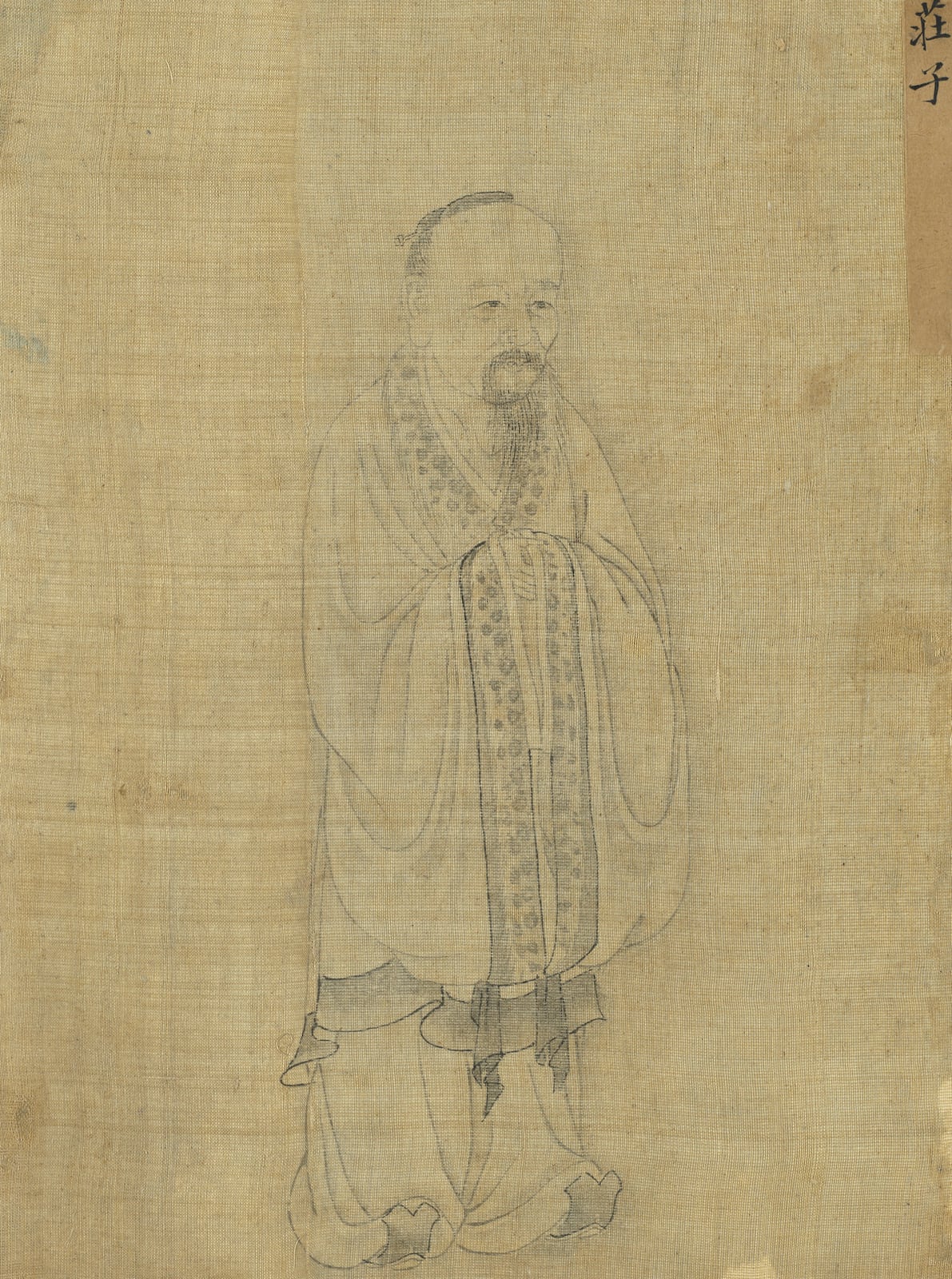
Zhuangzi
Concordano su: Perché soffriamo? · Che cosa accade dopo la morte? · Serve un maestro?
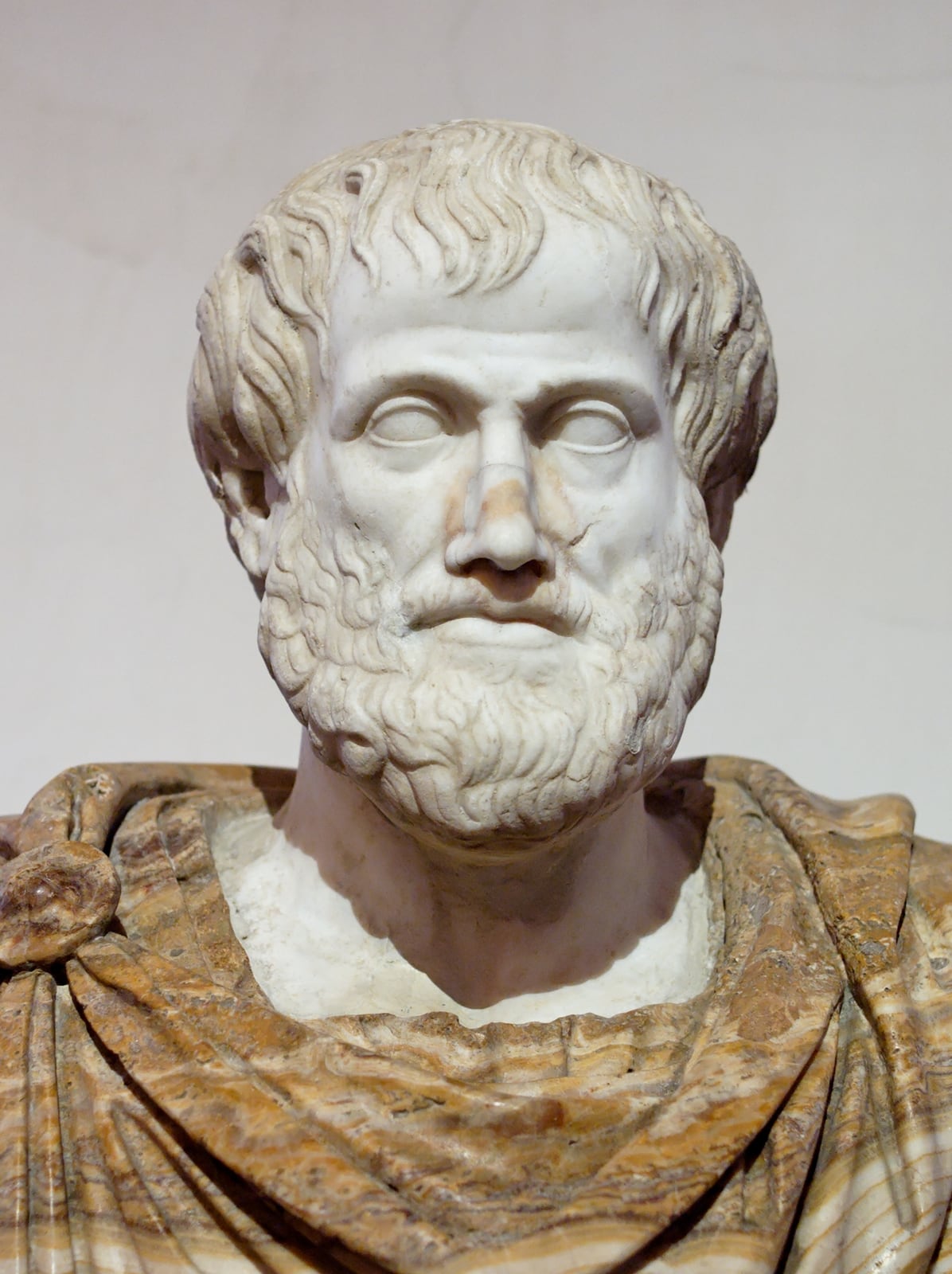
Aristotle
Concordano su: Che cosa accade dopo la morte? · Serve un maestro? · Il mondo è reale?

Epicurus
Concordano su: Perché soffriamo? · Come si raggiunge la liberazione o la salvezza? · Il mondo è reale?

Pema Chödrön
Concordano su: Perché soffriamo? · Come si raggiunge la liberazione o la salvezza? · Serve un maestro?
La pensa diversamente da
Alan Watts
Si scontrano su: Come si raggiunge la liberazione o la salvezza?
Narada
Si scontrano su: Che cos'è l'Assoluto? Dio esiste? · Perché soffriamo? · Come si raggiunge la liberazione o la salvezza?
Gaudapada
Si scontrano su: Che cos'è l'Assoluto? Dio esiste? · Perché soffriamo? · Che cosa accade dopo la morte?
Uddalaka Aruni
Si scontrano su: Che cos'è l'Assoluto? Dio esiste? · Che cosa accade dopo la morte? · Come si raggiunge la liberazione o la salvezza?
Aneddoti e racconti
Aneddoti e racconti
Contestato336–335 a. C. (si ocurrió)
Stand out of my sun
Origine del racconto: Plutarch, Alexander 14 (with the line "were I not Alexander…"); Arrian, Anabasis VII 2.1; Cicero, Tusculans V 92; Diogenes Laertius VI 32, 38, 60 and 68. The sources date from the first century BCE to the third CE. The meeting is chronologically possible, but the reply has the shape of a school chreia and circulated as a rhetorical exercise; most historians regard it as of uncertain historicity or legendary. The same-day death comes from Demetrius of Magnesia (Diogenes Laertius VI 79).
Testimonianzac. 360–340 a. C.
The jar in the Metroon (and the barrel that never was)
Origine del racconto: Diogenes Laertius VI 23, citing Diogenes' own (lost) letters, and VI 43; Juvenal, Satires XIV 308–314. Life in the pithos is well attested in the ancient tradition; its transformation into a barrel comes from later readings of the Latin dolium and from medieval and modern iconography (Roubineau 2023).
Tradizione orales. IV a. C.
The lamp in broad daylight
Origine del racconto: Diogenes Laertius VI 41 (the lamp), VI 32 (citing Hecato's Chreiai: "I called for men") and VI 60 (Olympia). Laertius gives no source for the lamp. It is a chreia of oral and school transmission; its meaning is certain, its historicity is not. The adjective "honest" is modern.
Tradizione oralec. 360–347 a. C.
Plato's man
Origine del racconto: Diogenes Laertius VI 40 (the fowl), VI 26 (the carpets, with a variant attributed to Sotion), VI 53 ("tablehood") and VI 54 ("a Socrates gone mad", a phrase Aelian, Varia Historia XIV 33, puts in Plato's mouth). They are chreiai with no contemporary source; the playful definition of featherless bipeds is in Plato, Statesman 266e.
Contestatofecha desconocida
Sell me to that man; he needs a master
Origine del racconto: Diogenes Laertius VI 29–31 and 74–75, citing The Sale of Diogenes by the satirist Menippus of Gadara (third century BCE), a work of the same title by Eubulus and Cleomenes' On Pedagogues. The origin in a satire, the exemplary tone and the contradictory versions of his release lead many specialists to regard it as literary fiction; others accept a historical core. Lucian took up the motif in Philosophies for Sale.
Contestatomediados del s. IV a. C.
Defacing the currency
Origine del racconto: Diogenes Laertius VI 20–21, 56 and 71, with contradictory sources (Diocles, Eubulides and Diogenes' own lost Pordalus). Sinopean coins of c. 350–340 BCE defaced with a chisel and issues bearing the name of Hicesias (Hikesio) support a historical core, according to Navia and Branham; the oracle is generally considered a later invention inspired by Socrates' own.
Fonte: Navia, Luis E. Diogenes the Cynic: The War Against the World. Humanity Books, Amherst (Nueva York), 2005.
Contestatoc. 323 a. C.
Three deaths and a marble dog
Origine del racconto: Diogenes Laertius VI 76–79, with multiple sources (Cercidas, Antisthenes of Rhodes, Demetrius of Magnesia). The tomb with the marble dog is also mentioned by Pausanias (II 2.4) at the entrance to Corinth. The causes of death are mutually incompatible and several have a symbolic intent (the dog, self-mastery); the synchronism with Alexander is legendary.
Insegnamenti
Insegnamenti
Le nozioni che articolano il suo pensiero, spiegate nel loro contesto.
Defacing the currency (paracharattein to nomisma)paracharattein-to-nomisma
Diogenes Laertius VI 20–21, 56 and 71. It is the key through which ancient tradition read his whole life, and the one modern studies take up (Desmond, Roubineau).
Askesis (training)askesis
Diogenes Laertius VI 70–71, a passage studied by Marie-Odile Goulet-Cazé (L'Ascèse cynique, 1986). The notion passed into Stoicism and, by other routes, into the vocabulary of Christian monasticism.
Self-sufficiency (autarkeia)autarkeia
Diogenes Laertius VI 37, 78 and 105. The idea has Socratic roots (Xenophon, Memorabilia I 6.10) and will be central to Stoicism and Epicureanism, though with different content.
Shamelessness (anaideia)anaideia
Diogenes Laertius VI 35, 58, 61 and 69. The early Stoics inherited part of this programme, as Zeno's Republic shows; the Stoics of the imperial age softened it.
Frankness (parrhesia)parresia
Diogenes Laertius VI 69; Foucault, Le Courage de la vérité (2009). Cynic parrhesia became a commonplace of imperial-age moral literature (Epictetus, Dio of Prusa, Lucian).
Fonte: Foucault, Michel. Le Courage de la vérité. Le gouvernement de soi et des autres II. Cours au Collège de France, 1983–1984, ed. Frédéric Gros. Gallimard / Seuil (Hautes Études), París, 2009.
Citizen of the world (kosmopolites)kosmopolites
Diogenes Laertius VI 63 and 72; Schofield, The Stoic Idea of the City (1991). It is one of Cynicism's legacies most studied by contemporary political philosophy.
Fonte: Schofield, Malcolm. The Stoic Idea of the City. Cambridge University Press, Cambridge, 1991 (cap. 1 y apéndices sobre la República de Diógenes y la de Zenón).
Nature versus convention (physis and nomos)physis-nomos
Diogenes Laertius VI 22, 37, 38 and 71–73. The tension between Cynic radicalism and its Stoic domestication is well documented in Philodemus (On the Stoics) and in Diogenes Laertius VII 32–34.
Video
Video
Registrazioni, interviste e documentari. I video vengono riprodotti da YouTube; non sono ospitati qui.
Los filósofos cínicos (I): los sabios insumisos · La March
Conferenza· ES· 2025· 64 min
Fundación Juan MarchCanale ufficiale
Los filósofos cínicos (II): la búsqueda de valores naturales · La March
Conferenza· ES· 2025· 69 min
Fundación Juan MarchCanale ufficiale
Cinismos. Parte I. Carlos García Gual
Conferenza· ES· 2025· 92 min
A 6 Mil Pies. Crítica y transvaloración
Cynics, Stoics, Epicureans
Conferenza· EN· 2021· 46 min
Gresham CollegeCanale ufficiale
The philosophy of cynicism - William D. Desmond
Analisi· EN· 2019· 5 min
TED-EdCanale ufficiale
Thomas W. Laqueur: Diogenes and His "Preposterous" Views on the Dead || Radcliffe Institute
Conferenza· EN· 2014· 3 min
Harvard UniversityCanale ufficiale
Hellenistic Philosophy 2.3.2 Diogenes of Sinope and Cynicism (version 1)
Conferenza· EN· 2020· 30 min
Monte Johnson
Diogenes of Sinope, Cynicism, & Ancient Athens | Philosophers In The Midst Of History
Conferenza· EN· 2025· 85 min
Gregory B. Sadler - That Philosophy Guy
Diogenes Laertes, Lives of Philosophers | Diogenes' Cynic Mode of Living | Philosophy Core Concepts
Analisi· EN· 2021· 17 min
Gregory B. Sadler - That Philosophy Guy
Diogenes Expert Inger Kuin On The Most Misunderstood Philosopher | Daily Stoic Podcast
Intervista· EN· 2026· 70 min
Daily Stoic
Diógenes, Epicuro y Crisipo | Historia de la filosofía (8/61)
Conferenza· ES· 2017· 87 min
Ernesto Castro
Foucault - Le courage de la vérité 5 - 29 février 1984 - Cours au Collège de France
Conferenza· FR· 1984· 103 min
Cours Philo
Galleria
Galleria
Immagini con licenza verificata. Ciascuna conserva la sua paternità e la sua attribuzione.
Manoscritti
Manoscritti
Testimoni manoscritti e testi antichi, con il loro custode e le loro condizioni di consultazione.
GRC · Minúscula griega · Obra de c. 225 d. C.; copia del s. XII
Βίοι καὶ γνῶμαι τῶν ἐν φιλοσοφίᾳ εὐδοκιμησάντων (Codex Borbonicus, «B»)
- Testimone conservato
- Uno de los tres testimonios principales y completos de la obra, con el Parisinus graecus 1759 (P) y el Laurentianus 69.13 (F), según la edición crítica de Tiziano Dorandi.
- Custode
- Biblioteca Nazionale «Vittorio Emanuele III», Nápoles · Neapolitanus III B 29
GRC · Mayúscula griega (papiro) · s. I a. C.
Φιλοδήμου Περὶ τῶν Στωικῶν (PHerc. 155 y 339)
- Testimone conservato
- Rollos de papiro carbonizados en la erupción del Vesubio del 79 d. C., hallados en la Villa de los Papiros de Herculano.
- Custode
- Biblioteca Nazionale «Vittorio Emanuele III», Officina dei Papiri Ercolanesi, Nápoles · PHerc. 155; PHerc. 339
Relazioni
Relazioni
Influenze, discepolati e affinità. Si distingue la relazione documentata dalla somiglianza individuata per analisi.
Ricevette l'influenza di
Cynicism claimed descent from Socrates through Antisthenes; Plato reportedly called Diogenes "a Socrates gone mad" (Diogenes Laertius VI 54; Aelian, Varia Historia XIV 33).
Relazione documentata
Discepolo di
Antístenes
Diogenes Laertius (VI 21) relates that Antisthenes accepted him as a pupil after trying to drive him off with his staff; the relationship is doubtful on chronological grounds (Antisthenes died around 366).
Relazione documentata
Dissentì da
Diogenes Laertius (VI 24–26, 40, 53–54, 58) transmits many jibes between them—the plucked fowl, the carpets, "tablehood"; they are anecdotes of late tradition, but reflect a real opposition between Cynicism and the Academy.
Relazione documentata
Contemporaneo di
Aristotle quotes in the Rhetoric (III 10, 1411a24) a metaphor by "the Dog" about taverns: the only certain contemporary testimony on Diogenes. Diogenes Laertius (V 18) adds an anecdote about figs between them, of doubtful historicity.
Relazione documentata
Maestro di
Crates de Tebas
Crates, the "door-opener", was his most famous pupil according to Diogenes Laertius (VI 85–87) and passed Cynicism on to Zeno of Citium.
Relazione documentata
Influenzò
A pupil of Crates (Diogenes Laertius VII 2–4); his Republic, which an ancient joke says he wrote "on the dog's tail", continues Diogenes', as Philodemus stresses in On the Stoics.
Relazione documentata
Contemporaneo di
Epicurus (b. 341 BCE) did his ephebic service in Athens around 323, the year Diogenes died; there is no report that they met. Epicurean ethics expressly rejected the Cynic life: the sage, according to Epicurus, "will not play the Cynic" (Diogenes Laertius X 119).
Somiglianza individuata per analisi
Influenzò
Epictetus devotes Discourse III 22 ("On Cynicism") to the ideal Cynic and holds up Diogenes as a model of freedom and frankness.
Relazione documentata
Influenzò
In the Meditations (VIII 3) he places Diogenes, with Heraclitus and Socrates, above Alexander, Caesar and Pompey; in XI 6 he compares his freedom of speech with that of Old Comedy.
Relazione documentata
Incontrò
Alejandro Magno
The encounter at the Craneum is transmitted by Plutarch, Arrian, Cicero and Diogenes Laertius; it is chronologically possible (336–335 BCE), but its historicity is debated.
Somiglianza individuata per analisi
Idee affini a
Some scholars (F. Gerald Downing, John Dominic Crossan) have compared Jesus' itinerancy, poverty and social critique with those of the Cynics; the hypothesis is much debated and implies no direct influence.
Somiglianza individuata per analisi
Idee affini a
A typological parallel: rejection of convention, humour and a preference for the natural over the artificial bring them together, without any historical contact.
Somiglianza individuata per analisi
Fonti
Fonti
Bibliografia e cataloghi consultati per questa scheda.
- Hard, Robin (trad.). Diogenes the Cynic: Sayings and Anecdotes, with Other Popular Moralists. Oxford University Press (Oxford World's Classics), Oxford, 2012.
- Wikidata, entidad Q59180 «Diogenes of Sinope» (122 enlaces entre wikis; P31=Q5). Registra nacimiento en 412, 403 o 400 a. C. y muerte en 323 a. C. (precisión: año); lugar de muerte, Corinto.
- Diógenes Laercio. Vidas y opiniones de los filósofos ilustres, libro VI, 20–81 (Diógenes), 85–93 (Crates) y 104–105 (doctrina cínica), s. III d. C. Trad. inglesa de R. D. Hicks, Lives of Eminent Philosophers, vol. II, Loeb Classical Library 185, Heinemann / Harvard University Press, 1925 (Wikisource en inglés); texto griego en Wikisource griega; trad. de C. D. Yonge, Bohn, Londres, 1853 (Project Gutenberg n.º 57342).
- Diógenes Laercio. Los diez libros de Diógenes Laercio sobre las vidas, opiniones y sentencias de los filósofos más ilustres, trad. de José Ortiz y Sanz, tomo II (libros VI–X). Imprenta Real, Madrid, 1792 (ejemplar de la Biblioteca de la Universidad de Sevilla en Internet Archive).
- Plutarco. Vida de Alejandro 14, en Vidas paralelas, s. I–II d. C. Trad. inglesa llamada «de Dryden», revisada por Arthur Hugh Clough, Plutarch's Lives, 1864 (Project Gutenberg n.º 674).
- Cicerón. Disputaciones tusculanas I 104 y V 92, 45 a. C. Texto latino en The Latin Library; trad. inglesa de C. D. Yonge, Cicero's Tusculan Disputations, Harper, Nueva York, 1877 (Project Gutenberg n.º 14988).
- Aristóteles. Retórica III 10, 1411a24 («el Perro» llama a las tabernas «los comedores comunes del Ática»). Trad. inglesa de W. Rhys Roberts, Oxford, 1924 (Internet Classics Archive, MIT); texto griego en Wikisource griega (Ρητορική/3).
- Malherbe, Abraham J. (ed. y trad.). The Cynic Epistles: A Study Edition. Scholars Press para la Society of Biblical Literature, Missoula, 1977 (Sources for Biblical Study, 12).
- Giannantoni, Gabriele (ed.). Socratis et Socraticorum Reliquiae, 4 vols. Bibliopolis, Nápoles, 1990; vol. II, sección V B: testimonios y fragmentos de Diógenes de Sinope.
- Dorandi, Tiziano. «Filodemo, Gli Stoici (PHerc. 155 e 339)». Cronache Ercolanesi 12 (1982). Edición del tratado de Filodemo que defiende la autenticidad de la República de Diógenes y discute la de Zenón.
- Schofield, Malcolm. The Stoic Idea of the City. Cambridge University Press, Cambridge, 1991 (cap. 1 y apéndices sobre la República de Diógenes y la de Zenón).
- Dudley, Donald R. A History of Cynicism from Diogenes to the 6th Century A.D. Methuen, Londres, 1937.
- Navia, Luis E. Diogenes the Cynic: The War Against the World. Humanity Books, Amherst (Nueva York), 2005.
- Desmond, William D. Cynics. Acumen, Stocksfield, 2008 (Ancient Philosophies, 3); ed. estadounidense University of California Press, 2008.
- Roubineau, Jean-Manuel. Diogène. L'antiphilosophe. Presses Universitaires de France, París, 2020; trad. inglesa: Dangerous Life and Ideas of Diogenes the Cynic, Oxford University Press, Nueva York, 2023.
- Piering, Julie. «Diogenes of Sinope». Internet Encyclopedia of Philosophy (ISSN 2161-0002), Universidad de Tennessee en Martin.
- Branham, R. Bracht y Goulet-Cazé, Marie-Odile (eds.). The Cynics: The Cynic Movement in Antiquity and Its Legacy. University of California Press, Berkeley, 1996.
- Epicteto. Disertaciones recogidas por Arriano III 22 («Sobre el cinismo»), c. 108 d. C. Trad. inglesa de George Long, A Selection from the Discourses of Epictetus with the Encheiridion (Project Gutenberg n.º 10661).
- Marco Aurelio. Meditaciones VIII 3 y XI 6 (numeración estándar; en la traducción de Casaubon, VIII 3 y XI 5), c. 170–180 d. C. Trad. inglesa de Meric Casaubon (1634), Meditations (Project Gutenberg n.º 2680).
- «Diogenes», Wikipedia en inglés, y «Diógenes de Sinope», Wikipedia en español (consultadas para contrastar datos y bibliografía; texto propio).
- Open Library (Internet Archive): ediciones de Diógenes Laercio y de los cínicos verificadas por ISBN.
- García Gual, Carlos. La secta del perro. Diógenes Laercio: Vidas de los filósofos cínicos. Alianza Editorial, Madrid, 1987.
- Juvenal. Sátiras XIV 308–314 («dolia nudi non ardent Cynici… testa cum vidit in illa magnum habitatorem»), comienzos del s. II d. C. Texto latino en The Latin Library.
- Arriano. Anábasis de Alejandro VII 2.1, s. II d. C. Trad. inglesa de E. J. Chinnock, The Anabasis of Alexander, Hodder and Stoughton, Londres, 1884 (Project Gutenberg n.º 46976).
- Foucault, Michel. Le Courage de la vérité. Le gouvernement de soi et des autres II. Cours au Collège de France, 1983–1984, ed. Frédéric Gros. Gallimard / Seuil (Hautes Études), París, 2009.
- Wikimedia Commons: Jean-Léon Gérôme, «Diogenes» (1860), Walters Art Museum, Baltimore, n.º 37.131; ficha del fichero con la descripción del museo.
- Juliano. Discursos «Contra los cínicos ignorantes» y «Al cínico Heraclio», 362 d. C. Trad. inglesa de Wilmer Cave Wright, The Works of the Emperor Julian, vol. II, Loeb Classical Library, 1913 (Wikisource en inglés).
- Dorandi, Tiziano (ed.). Diogenes Laertius: Lives of Eminent Philosophers. Cambridge University Press (Cambridge Classical Texts and Commentaries, 50), Cambridge, 2013 (edición crítica; introducción sobre la tradición manuscrita: B, P y F).
- Martín García, José Antonio (ed. y trad.). Los filósofos cínicos y la literatura moral serioburlesca, 2 vols., revisión de Cristóbal Macías Villalobos. Akal (Clásica), Madrid, 2008.
- Titolare dei diritti
- Textos antiguos en dominio público; cada traducción y edición moderna pertenece a su traductor o editorial
In attesa di conferma
Ciò che questa scheda non ha ancora potuto chiarire. Preferiamo dirlo piuttosto che riempirlo.
- Fecha de nacimiento: se adopta c. 412 a. C. (muerte en 323 «casi a los noventa», Diógenes Laercio VI 76); Censorino da 81 años (c. 404) y Wikidata registra 412, 403 y 400. Fecha y lugar exactos de la muerte, inciertos (Corinto según la tradición mayoritaria).
- Tradiciones: el catálogo (content/traditions.json) no tiene «cinismo»; se asigna provisionalmente «stoicism» por la filiación Diógenes–Crates–Zenón. Valorar dar de alta una tradición «cynicism».
- Edición española con ISBN de la República y de los testimonios: solo se ha verificado el ISBN de Akal (2008), que Open Library registra sin tomo; confirmar si corresponde al vol. I o al II.
- Manuscritos: no se ha verificado digitalización oficial del Neapolitanus III B 29 de Diógenes Laercio ni de los papiros PHerc. 155 y 339; añadir también el Parisinus gr. 1759 (P) y el Laurentianus 69.13 (F) con sus enlaces cuando se comprueben.
- Numismática: citar la publicación original sobre las monedas de Sinope desfiguradas y con el nombre de Hicesias (se ha usado la síntesis de Navia y Branham).
- Programas de afiliación: ninguno verificado (Alianza, Akal, OUP, Harvard). Lista vacía.
- Vídeos: no se ha encontrado un documental de televisión pública dedicado a Diógenes en un canal oficial; el curso de Foucault y la conferencia de García Gual proceden de canales no oficiales.
Ricerca effettuata il 2026-10-25