Diogenes of Sinope
Thyestes
Traditional attribution
Thyestes
Θυέστης
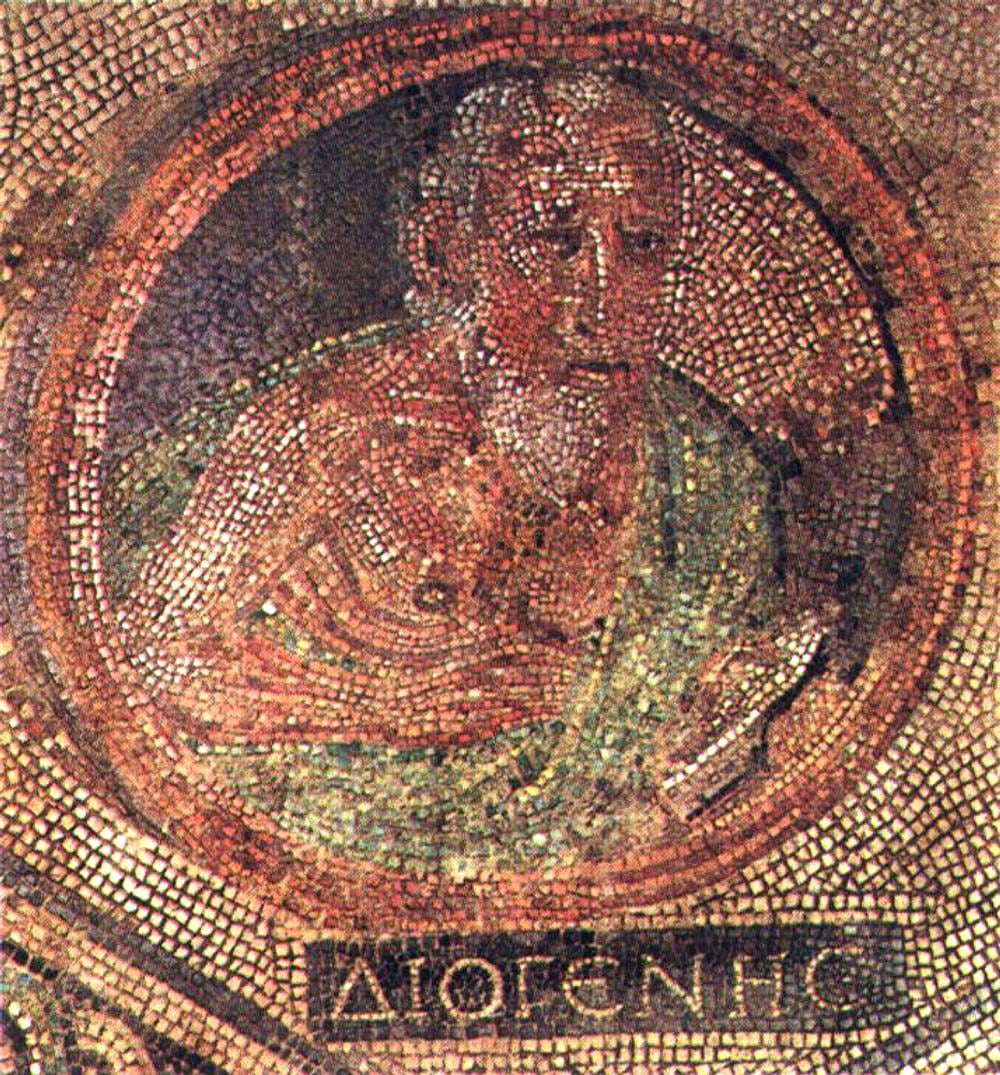
It is the only tragedy on the list about which something is known: according to Diogenes Laertius (VI 73), it argued that there was nothing impious in tasting human flesh and that, by right reason, all elements are in all things, so that meat is in bread. The myth of Thyestes, who unknowingly ate his own children, served as an occasion for Cynic provocation.
No edition of this work is currently on sale in a store we have been able to verify.
Authorship note
A lost work whose authorship has been disputed since antiquity. Satyrus (in Diogenes Laertius VI 80) assigned the seven tragedies to Philiscus of Aegina, a pupil of Diogenes; Favorinus (VI 73) also mentioned a certain Pasiphon; the emperor Julian held them to be by Philiscus.
Editions and translations
Editions in your language first, without hiding the others. Each with its cover and its store.
No editions recorded yet.
Other works by Diogenes of Sinope
- Sayings and anecdotes (chreiai) · 300
- Republic (Politeia)
- Letters of Diogenes (Cynic Epistles) · 50
- Letters
- Cephalion
- Ichthyas
- The Jackdaw
- Pordalus
- The Athenian Demos
- Art of Ethics
- On Wealth
- Erotikos (On Love)
- Theodorus
- Hypsias
- Aristarchus
- On Death
- Helen
- Heracles
- Achilles
- Medea
- Chrysippus
- Oedipus
- On Virtue
- On the Good
- The Beggar
- Tolmaeus
- Casandrus
- Philiscus
- Sisyphus
- Ganymede
- Chreiai (Anecdotes)
- Life of Diogenes (Diogenes Laertius, Book VI) · 225
Sources
- Diógenes Laercio. Vidas y opiniones de los filósofos ilustres, libro VI, 20–81 (Diógenes), 85–93 (Crates) y 104–105 (doctrina cínica), s. III d. C. Trad. inglesa de R. D. Hicks, Lives of Eminent Philosophers, vol. II, Loeb Classical Library 185, Heinemann / Harvard University Press, 1925 (Wikisource en inglés); texto griego en Wikisource griega; trad. de C. D. Yonge, Bohn, Londres, 1853 (Project Gutenberg n.º 57342).
Affiliate link: if you buy through it, the library may receive a commission at no extra cost to you. When an edition's real cover is not available, we show an illustrative library cover.