Induismo · Advaita Vedanta · Tradizione vedica
Uddalaka Aruni
उद्दालक आरुणि
Storicità dibattuta
Saggio vedico dei Kuru-Pañcāla, della stirpe dei Gautama, che le Upaniṣad presentano come maestro del figlio Śvetaketu e di Yājñavalkya. Nel sesto libro della Chāndogya insegna con esperimenti — l'argilla, il seme del baniano, il sale disciolto nell'acqua — che tutto procede dall'essere, «uno senza secondo», e lo riassume nel ritornello «tat tvam asi». Non scrisse nulla; la sua figura, di storicità discussa, proviene dallo Śatapatha Brāhmaṇa e dalle Upaniṣad più antiche, risalenti all'incirca al VII–VI secolo a.C.
- opere
- 9opere
- edizioni
- 24edizioni
- citazioni
- 7citazioni
- video
- 12video
- immagini
- 4immagini
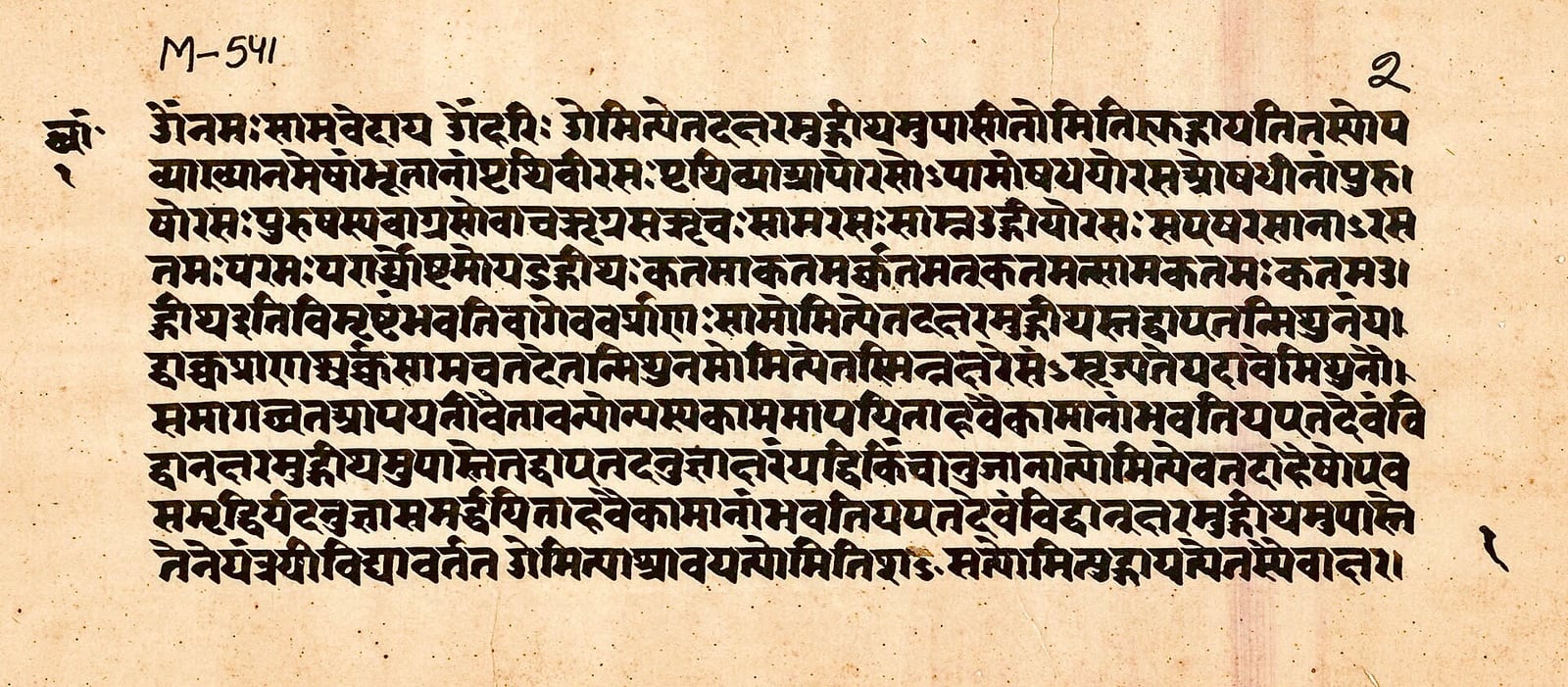
Manuscrito de la Chāndogya Upaniṣad (1849) · CC BY-SA 4.0
Con le sue parole
«In the beginning, my dear, this was being alone, one only, without a second.»Chāndogya Upaniṣad 6.2.1 (traducción propia)

Per cominciare, un'opera
The teaching to Śvetaketu (Chāndogya Upaniṣad, book VI)La sua idea centrale
Tat tvam asi ("you are that"): The refrain that closes nine of Uddālaka's lessons to Śvetaketu in the Chāndogya (6.8.7–6.16.3): that subtle essence (aṇiman) is what all this has as its self; that is the real; that is the ātman; tat tvam asi.
Vederlo nel contesto
Biografia
5 min di lettura
Traduzione assistita dall'originale spagnolo, in attesa di revisione da parte di un traduttore madrelingua.
Un maestro negli elenchi dei maestri
Uddālaka Āruṇi non ha lasciato alcuno scritto. È un nome che ricorre di continuo nella prosa vedica tarda — lo Śatapatha Brāhmaṇa, la Bṛhadāraṇyaka e la Chāndogya Upaniṣad, la Kauṣītaki, il Jaiminīya Upaniṣad Brāhmaṇa — come autorità rituale, come interlocutore nei dibattiti e, soprattutto, come maestro. I testi lo chiamano anche Gautama, dal nome della sua stirpe, e gli assegnano un padre, Aruṇa Aupaveśi, e un figlio, Śvetaketu Āruṇeya; a partire da queste menzioni Michael Witzel ha ricostruito un albero di quattro generazioni. Era un brahmano dei Kuru-Pañcāla, il cuore del mondo vedico nella pianura del Gange occidentale, e gli elenchi dei maestri della Bṛhadāraṇyaka ne fanno il maestro di Yājñavalkya: «Yājñavalkya, da Uddālaka; Uddālaka, da Aruṇa».
Il viaggiatore del nord
Lo Śatapatha Brāhmaṇa conserva un episodio che lo ritrae come sacerdote itinerante. Uddālaka percorreva il paese del nord come officiante e portava con sé una moneta d'oro, perché anticamente, dice il testo, chi viaggiava così offriva un premio per sfidare gli altri a una disputa. I brahmani del nord, temendo che quel brahmano dei Kuru-Pañcāla sottraesse loro il terreno, mandarono Svaidāyana Śaunaka. Costui gli pose una serie di domande sul senso nascosto delle offerte di luna nuova e di luna piena; Uddālaka gli consegnò la moneta, ne riconobbe il sapere e tornò poi con della legna in mano — il gesto di chi chiede di diventare discepolo — perché gliele spiegasse. In un altro passo è lui a rispondere, una per una, alle domande di Śauceya Prācīnayogya sull'agnihotra.
Padre e maestro
L'insegnamento che lo ha reso celebre è quello del sesto libro della Chāndogya. Suo figlio Śvetaketu, mandato a studiare a dodici anni, torna a ventiquattro, racconta il testo, «borioso, presuntuoso, convinto di essere istruito». Il padre gli chiede se conosca l'insegnamento grazie al quale si ode il non udito, si pensa il non pensato e si conosce il non conosciuto. Di fronte alla sua ignoranza, glielo offre: come per mezzo di una sola zolla d'argilla si conosce tutto ciò che è fatto d'argilla — e i vasi non sono altro che «una questione di parole, una modificazione, un nome» —, così per mezzo dell'essere (sat) si conosce tutto ciò che esiste. «In principio, mio caro, questo era l'essere soltanto, uno senza secondo». Da esso sorgono il calore, l'acqua e il cibo, che si combinano in tutte le cose.
Nove lezioni e un ritornello
Uddālaka insegna con esperimenti. Fa digiunare il figlio per quindici giorni, bevendo soltanto acqua, e constata che non riesce a recitare i Veda; quando torna a mangiare, la memoria ritorna come una brace ravvivata con la paglia. Seguono nove lezioni: il miele che riunisce il nettare di molti alberi senza che ogni goccia sappia da quale albero proviene, i fiumi che si perdono nel mare, l'albero che vive finché la vita lo impregna, il seme del baniano che, spaccato, non mostra nulla e da cui tuttavia nasce il grande albero, il sale disciolto nell'acqua, che non si vede e si gusta ovunque, l'uomo bendato che ritrova la strada per il Gandhāra perché qualcuno gliela indica. Ogni lezione si chiude con lo stesso ritornello: quell'essenza sottile è ciò che tutto questo ha per essere; quello è il reale; quello è l'ātman; tat tvam asi, Śvetaketu.
Che cosa significa «tat tvam asi»
La tradizione advaita, a partire da Śaṅkara, ha letto la frase come un'identità — «tu sei quello»: l'ātman individuale è il brahman — e l'ha annoverata tra i quattro «grandi detti» delle Upaniṣad. Joel Brereton ha proposto nel 1986 un'altra lettura, attenta alla grammatica e al contesto: il pronome neutro rimanda all'essenza sottile di cui si è appena parlato, e la frase significherebbe qualcosa come «così sei tu». Patrick Olivelle traduce di conseguenza «e così sei tu, Śvetaketu». Le due letture concordano sull'essenziale — il figlio è fatto della stessa realtà invisibile di cui è fatto tutto il resto —, ma divergono sul punto se il testo formuli un'identità metafisica o una spiegazione della natura della persona.
Un brahmano disposto a imparare
I testi insistono su un tratto del suo carattere: Uddālaka non teme di tornare allievo. Alla corte di Janaka interroga Yājñavalkya sul «filo» che unisce i mondi e sul «reggitore interiore», ricorda ciò che apprese presso Patañcala Kāpya nel paese dei Madra e, dopo la risposta, tace. Quando il re Pravāhaṇa Jaivali umilia Śvetaketu con cinque domande sul destino dopo la morte, il padre si reca a corte, chiede di essere istruito e riceve la dottrina dei cinque fuochi, che il re dichiara non essere mai giunta prima a un brahmano. Ad altri brahmani che lo interrogano sull'ātman universale ammette che non saprà rispondere del tutto e li conduce dal re Aśvapati Kaikeya. Brian Black ha studiato queste scene, in cui il sapere passa dai re ai sacerdoti.
Ciò che si sa e ciò che non si sa
Non ci sono date: la storicità di Uddālaka è discussa come quella dell'intera generazione delle prime Upaniṣad, che Olivelle colloca intorno al VII e al VI secolo a.C. e Witzel nell'epoca vedica tarda, prima del Buddha. Ben-Ami Scharfstein lo annovera tra i primi filosofi della storia, e il marxista Debiprasad Chattopadhyaya vide in lui il primo «scienziato della natura», per il suo metodo di osservazione e di esperimento. La Kaṭha Upaniṣad menziona un Auddālaki Āruṇi, padre di Naciketas, che Śaṅkara identificò con lui; Max Müller osservò che la forma del nome solleva dubbi.
L'Āruṇi dell'epica
Il Mahābhārata gli ha attribuito una giovinezza leggendaria. Āruṇi di Pañcāla, discepolo del saggio Āyoda Dhaumya, fu mandato a tappare una breccia nell'argine di un campo; non riuscendoci, vi si distese e fermò l'acqua con il proprio corpo. Quando il maestro lo chiamò, si alzò rompendo l'argine, e Dhaumya gli diede il nome di Uddālaka, «colui che si è levato dall'argine». La stessa epica fa di sua figlia Sujātā la madre di Aṣṭāvakra e attribuisce a Śvetaketu l'istituzione della fedeltà coniugale. Un'Upaniṣad tarda della rinuncia porta il suo nome, l'Āruṇi Upaniṣad, e Madhva citava una «Āruṇi-śruti» oggi perduta. Il ritornello della Chāndogya, intanto, è diventato una delle frasi più ripetute della spiritualità indiana.
Fonti: Olivelle, Patrick (ed. y trad.). The Early Upaniṣads: Annotated Text and Translation. Nueva York: Oxford University Press, 1998. Chāndogya 5.3–5.24 y 6; Bṛhadāraṇyaka 3.7, 6.2, 6.3.7 y 6.5; Kauṣītaki 1.1. · Olivelle, Patrick (trad.). Upaniṣads. Oxford World's Classics. Oxford: Oxford University Press, 1996 (traducción «And that's how you are, Śvetaketu» de Chāndogya 6.8.7 y ss.). · Müller, F. Max (trad.). The Upanishads, Part I (Sacred Books of the East, vol. 1). Oxford: Clarendon Press, 1879 (Khândogya y Kaushîtaki-brâhmaṇa-upanishad); y Part II (SBE 15), 1884, nota a Kaṭha 1.11. · Eggeling, Julius (trad.). The Śatapatha-Brāhmaṇa, Part V (Sacred Books of the East, vol. 44). Oxford: Clarendon Press, 1900. XI.4.1 (Uddālaka Āruṇi y Svaidāyana) y XI.5.3 (Śauceya Prācīnayogya y Uddālaka Āruṇi sobre el agnihotra). · Chattopadhyaya, Debiprasad. Science and Society in Ancient India. Calcuta: Research India Publications, 1977.
Cronologia
La vita, anno per anno
Ogni punto è un evento documentato. Fai clic per leggerlo, con la sua fonte e il suo grado di certezza.
VIII secolo a.C. – 600 a.C.Kuru-Pañcāla
Ritual authority of the Śatapatha Brāhmaṇa
His opinions and debates appear in the later books of the Śatapatha (XI.4.1, XI.5.3) and in the Jaiminīya Upaniṣad Brāhmaṇa. The range is an estimate of the period of the texts.
ProbabileEggeling, Julius (trad.). The Śatapatha-Brāhmaṇa, Part V (Sacred Books of the East, vol. 44). Oxford: Clarendon Press, 1900. XI.4.1 (Uddālaka Āruṇi y Svaidāyana) y XI.5.3 (Śauceya Prācīnayogya y Uddālaka Āruṇi sobre el agnihotra).
VIII secolo a.C. – 600 a.C.
Ritual authority of the Śatapatha Brāhmaṇa
His opinions and debates appear in the later books of the Śatapatha (XI.4.1, XI.5.3) and in the Jaiminīya Upaniṣad Brāhmaṇa. The range is an estimate of the period of the texts.
Probabile
VII secolo a.C.
Svaidāyana's challenge
Travelling in the north as an officiant, he loses a disputation to Svaidāyana Śaunaka and returns with firewood in hand to be instructed (Śatapatha XI.4.1).
Tradizione
VII secolo a.C.
The teaching to Śvetaketu
Chāndogya 6: being, one without a second, the experiments and the refrain "tat tvam asi".
Tradizione
VII secolo a.C.
Pupil of King Pravāhaṇa Jaivali
After his son's humiliation at the Pañcāla assembly, he receives from the king the doctrine of the five fires (Chāndogya 5.3–10; Bṛhadāraṇyaka 6.2).
Tradizione
VII secolo a.C.
He questions Yājñavalkya
He asks about the "thread" and the "inner controller" and falls silent after the answer (Bṛhadāraṇyaka 3.7).
Tradizione
II secolo a.C. – 400
The Āruṇi of the Mahābhārata
The epic, fixed between the third century BCE and the fourth century CE, tells the episode of the dyke and how his teacher Dhaumya gave him the name Uddālaka.
Probabile
1862
First English translation of the Chāndogya
Rājendralāla Mitra publishes the Chāndogya with extracts from Śaṅkara's commentary in the Bibliotheca Indica.
Documentato
1879
The Chāndogya in the Sacred Books of the East
Max Müller opens the series with the Chāndogya and popularizes the rendering "Thou art that".
Documentato
1986
Brereton rereads "tat tvam asi"
Joel Brereton proposes reading the refrain in its grammatical context as "that's how you are", a reading Olivelle adopts.
Documentato
Opere
Opere essenziali
Le opere senza le quali non si comprende la sua eredità.
Attribuzione tradizionale · VII secolo a.C.
The teaching to Śvetaketu (Chāndogya Upaniṣad, book VI)
छान्दोग्योपनिषद् षष्ठोऽध्यायः (Chāndogya Upaniṣad VI)
Sixteen prose sections. Śvetaketu returns conceited after twelve years of study, and his father teaches him what he did not learn: how, by knowing one thing, everything is known. He sets out the origin of the world from being (sat), "one without a second", which produces heat, water and food; the threefold composition of all things; the experiment of fasting; and nine illustrations — honey, rivers, the tree, the fig seed, salt in water, the man from Gandhāra, the dying man, the thief put to the ordeal of the axe — ending with the refrain "tat tvam asi, Śvetaketu". It is one of the founding texts of Vedānta.
9 edizioni
Uddalaka Aruni
Chāndogya Upaniṣad (passages of Uddālaka Āruṇi)
Raccolta posteriore · VII secolo a.C.
Chāndogya Upaniṣad (passages of Uddālaka Āruṇi)
छान्दोग्योपनिषद् (Chāndogya Upaniṣad)
Together with the Bṛhadāraṇyaka, the oldest of the Upaniṣads. Its first books interpret the chants (sāman) and the syllable Om; the following ones contain teachings on the ātman and brahman attributed to various masters. In book 5 Uddālaka receives from King Pravāhaṇa the doctrine of the five fires and the two paths of the dead, and accompanies other brahmins to Aśvapati Kaikeya to learn the universal ātman (vaiśvānara). Book 6 is his teaching to Śvetaketu.
6 edizioni
Tutta la sua opera (9)
The question of the thread and the inner controller (Bṛhadāraṇyaka 3.7)
650
The doctrine of the five fires (pañcāgni-vidyā), received from Pravāhaṇa Jaivali
650
The teaching of the universal ātman (vaiśvānara-vidyā), before Aśvapati Kaikeya
650
Uddalaka Aruni
Uddālaka's debates in the Śatapatha Brāhmaṇa
The Conscious LibraryUddālaka's debates in the Śatapatha Brāhmaṇa
700
Kauṣītaki Upaniṣad, chapter 1: Āruṇi and Citra Gāṅgyāyani
500

Āruṇi Upaniṣad (Āruṇeyī Upaniṣad)
Uddalaka Aruni
Āruṇi-śruti (lost text)
The Conscious LibraryĀruṇi-śruti (lost text)
Citazioni
Citazioni localizzate in un'opera precisa. Ciascuna porta con sé la sua provenienza e il suo grado di affidabilità.
In the beginning, my dear, this was being alone, one only, without a second.सदेव सोम्येदमग्र आसीदेकमेवाद्वितीयम् ।
VerificataChāndogya Upaniṣad 6.2.1 (traducción propia)
Ultime parole
Non esistono testimonianze verificabili delle sue ultime parole.
There is no account of his death or last words in the Vedic texts, the epic or the Purāṇas. The only words of his that survive are the teachings and dialogues attributed to him by the Śatapatha Brāhmaṇa and the Upaniṣads.
Fonte: Olivelle, Patrick (ed. y trad.). The Early Upaniṣads: Annotated Text and Translation. Nueva York: Oxford University Press, 1998. Chāndogya 5.3–5.24 y 6; Bṛhadāraṇyaka 3.7, 6.2, 6.3.7 y 6.5; Kauṣītaki 1.1.
Chiedi
Ciò a cui risponde la sua opera
Dodici grandi domande dell'umanità e ciò che i suoi testi permettono di rispondere, con riferimenti. Non gli mettiamo mai parole in bocca.
Che cos'è l'Assoluto? Dio esiste?
In the beginning there was only being, one without a second
Un Assoluto impersonaleLo dice espressamente
In the sixth book of the Chāndogya Upaniṣad, Uddālaka Āruṇi teaches his son Śvetaketu that in the beginning there was only being (sat), one without a second, and rejects those who held that being was born from non-being. From that principle come heat, water and food, and from their mixture all things. He does not describe a god who judges or loves: he describes a single substance, so subtle that it is not perceived, which is the ātman of all that exists. His examples —the clay of which all pots are made, the dissolved salt that is unseen yet present in every sip, the invisible seed from which the fig tree grows— aim to make the disciple recognise that principle in things and in himself.
Confronta questa domanda con altri maestriChi sono io? Esiste un vero sé?
The subtle essence of all is the ātman, «and that's how you are»
Il Sé è l'AssolutoLo dice espressamente
Nine of Uddālaka's lessons to Śvetaketu in the Chāndogya end with the same refrain: that subtle essence (aṇiman) is what all this has as its ātman; that is the real; that is the ātman; tat tvam asi (6.8.7–6.16.3). Śvetaketu's self is therefore not something apart: like the river that returns to the sea and no longer knows it was that river, or like honey made from different flowers, the individual comes from being and shares its essence. The Advaita tradition read the refrain as the great saying «you are that», a strict identity between the individual and brahman. The lesson is not presented as a theory, but as something the disciple must verify in things and recognise in himself.
Confronta questa domanda con altri maestriPerché soffriamo?
He does not analyse pain; he speaks of one lost who needs guidance
Non si è pronunciato
The teachings the Chāndogya puts in Uddālaka Āruṇi's mouth contain no diagnosis of suffering. Their subject is the origin and essence of things, not the cause of pain. The closest is a parable (6.14): a man is blindfolded, led far from his land of Gandhāra and abandoned in a deserted place; he cries out that he has been brought there blindfolded, until someone removes the blindfold and points out the way, and he, asking from village to village, returns home. So, says Uddālaka, one who has a teacher knows that he will remain here only as long as he is not set free. The image suggests that the human condition is a disorientation that knowledge corrects, but the text does not formulate it as a theory of suffering.
Confronta questa domanda con altri maestriChe cosa accade dopo la morte?
The body deprived of life dies; life does not die
Ciò che sono non nasce e non muoreSi deduce dalla sua dottrina
Uddālaka explains death to Śvetaketu with the image of a great tree: if its root, trunk or crown is struck, it bleeds but lives, because life pervades it; if life leaves a branch, the branch withers. So, he concludes, it is the body deprived of life that dies; life does not die (Chāndogya 6.11.3). In another passage he describes the process: in the dying person, speech is gathered into the mind, the mind into breath, breath into heat and heat into the highest deity, the being from which all proceeds (6.8.6; 6.15). Death is thus a return to the subtle essence that never ceased to be. Uddālaka also appears, in book V, receiving from a king the doctrine of the five fires and of the paths beyond.
Confronta questa domanda con altri maestriCome si raggiunge la liberazione o la salvezza?
To know that by which the unheard is heard and the unthought is thought
Con la conoscenza direttaSi deduce dalla sua dottrina
Uddālaka's teaching in the Chāndogya begins with a reproach: Śvetaketu returns proud after twelve years of Vedic study, and his father asks whether he knows the teaching by which the unheard becomes heard, the unthought thought and the unknown known (6.1.2–3). The goal is that knowledge of the being from which everything proceeds, and what follows are the lessons through which it is reached: clay, salt, the fig seed. The parable of the man from Gandhāra shows where it leads: one who has a teacher knows that he will remain here only as long as he is not set free, and then he will arrive (6.14.2). In the last lesson, the one who speaks the truth is not burned when he grasps the red-hot axe (6.16). Known truth protects and frees.
Confronta questa domanda con altri maestriServe un maestro?
One who has a teacher knows the way home
IndispensabileLo dice espressamente
Uddālaka is, in the Chāndogya, the figure of the father who teaches: his entire sixth book is an instruction to his son Śvetaketu, made of questions, examples and small tests. And it is in that book that the need for a teacher is most clearly formulated. A blindfolded man is abandoned far from his land of Gandhāra; only when someone removes the blindfold and points out the direction can he return, asking from village to village. So, Uddālaka concludes, one who has a teacher (ācāryavān) knows: I remain here only as long as I am not set free, and then I shall arrive (6.14.2). The teacher does not replace the path, which the disciple walks himself, but without him one does not know which way to go.
Confronta questa domanda con altri maestriIl mondo è reale?
Being became many: heat, water and food, and entered into them
Manifestazione del divinoLo dice espressamente
For Uddālaka, the world comes from being (sat), which, wishing to be many, emitted heat; heat, water; and water, food (Chāndogya 6.2.3–4). It then entered those three «deities» with the living ātman and made them threefold, so that each thing contains all three: the red of fire is that of heat, the white that of water, the black that of food (6.3–4). His most famous example is clay: by one lump everything made of clay is known, because the modification is «a matter of words», a name, and the real is the substance (6.1.4). The world is not a dream, but being itself under names and forms; what dissolves on understanding it is the belief that things are something apart from their source.
Confronta questa domanda con altri maestriChe cos'è l'amore?
His lessons concern being, not love; they ask for trust
Non si è pronunciato
The teachings the Chāndogya and the Bṛhadāraṇyaka put in Uddālaka Āruṇi's mouth do not address love. Their subject is the origin of things, the subtle essence that sustains them and the relation between that essence and the disciple. The closest thing to an affective dimension lies in the tone of the teaching: he is a father instructing his son, calls him «dear one» (somya) again and again and, when Śvetaketu cannot see the invisible essence of the fig seed, asks him for trust (śraddhā). But the trust he asks for is that of a disciple who accepts what he does not yet understand, not a love directed to God or to one's neighbour, and the text does not develop it as a teaching.
Confronta questa domanda con altri maestriSiamo liberi o è tutto determinato?
He does not treat freedom; his last lesson is about truth
Non si è pronunciato
The teachings ascribed to Uddālaka Āruṇi do not address the question of freedom or fate. Their interest lies in the origin of things and in the subtle essence that sustains them, not in human action or its consequences. The doctrine of rebirth according to deeds, which the Chāndogya sets out in book V, Uddālaka receives from a king, Pravāhaṇa Jaivali, who warns him that this knowledge had not previously reached the brahmins. The closest thing to an ethic in his teaching is the last lesson to Śvetaketu (6.16): a man accused of theft is made to grasp a red-hot axe; if he has lied he is burned, and if he speaks the truth, protected by it, he is not. Truth is what frees, not a choice between alternatives.
Confronta questa domanda con altri maestriPerché meditare o pregare?
He teaches no meditation: he teaches looking and verifying
Non si è pronunciato
Uddālaka's lessons in the Chāndogya contain no practice of meditation or prayer. His method is different: questions, observation and small tests. He has Śvetaketu fast for fifteen days so that he finds that, without food, he cannot recall the Vedas, and that on eating he remembers them again (6.7); he asks him to dissolve salt in water and look for it by sight and by taste (6.13); he has him split a fig fruit and then a seed until he sees nothing inside (6.12). What is sought is not an induced inner state, but that the disciple should see for himself the subtle essence in things. When observation no longer reaches, Uddālaka proposes not a technique, but trust: «have faith, my dear».
Confronta questa domanda con altri maestriPuò la ragione conoscere l'ultimo?
Observe, compare, verify; and where sight fails, trust
Fede e ragione si aiutanoSi deduce dalla sua dottrina
Uddālaka's method in the Chāndogya is almost experimental. To teach Śvetaketu, who returns proud after twelve years of study, he does not cite texts: he has him fast for fifteen days to verify the relation between food and mind (6.7), dissolve salt in water and taste it (6.13), split a fig seed until he sees nothing (6.12). He reasons by analogies drawn from clay, copper and iron, and argues against those who said that being was born from non-being: how could that happen? (6.2.2). But observation has a limit: when the essence of the seed cannot be seen, Uddālaka asks for trust (śraddhā). Reason prepares and trust completes, in a knowledge the disciple must end up recognising in himself.
Confronta questa domanda con altri maestriRitirarsi dal mondo o trasformarlo?
A householder who teaches his son; he does not raise renunciation
Non si è pronunciato
Uddālaka Āruṇi's teachings do not address the choice between withdrawing from the world and transforming it. His figure, as presented by the Śatapatha Brāhmaṇa and the Upaniṣads, is that of a brahmin householder, an expert in ritual, who debates in assemblies, travels to learn from others —including kings such as Pravāhaṇa Jaivali and Aśvapati Kaikeya— and passes his knowledge on to his son and his disciples. He sends Śvetaketu to study with a teacher, receives him on his return and instructs him at home. The knowledge of being that he teaches does not require leaving that life, but the text does not raise it as a question either. The renunciation associated with his name belongs to the Āruṇi Upaniṣad, a much later text.
Confronta questa domanda con altri maestri
Affinità e tensioni
Affinità e tensioni
Calcolate domanda per domanda a partire dalle sue posizioni. Il perché di ogni accordo o contrasto, con un clic.
La pensa in modo simile a
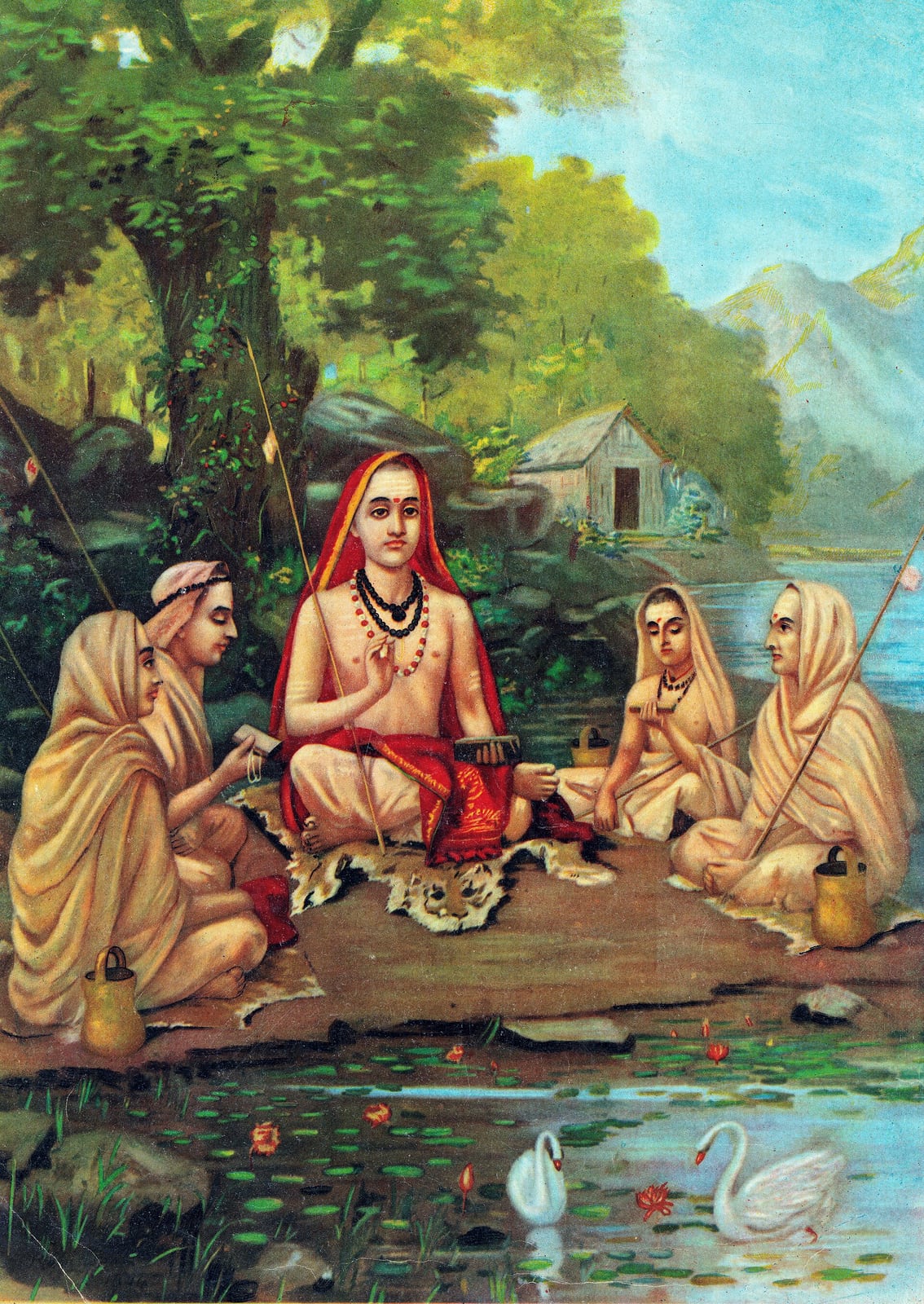
Adi Shankara
Concordano su: Che cos'è l'Assoluto? Dio esiste? · Chi sono io? Esiste un vero sé? · Che cosa accade dopo la morte?
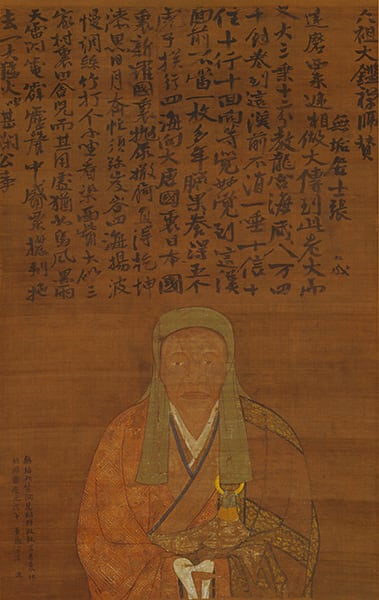
Huineng
Concordano su: Che cos'è l'Assoluto? Dio esiste? · Chi sono io? Esiste un vero sé? · Che cosa accade dopo la morte?
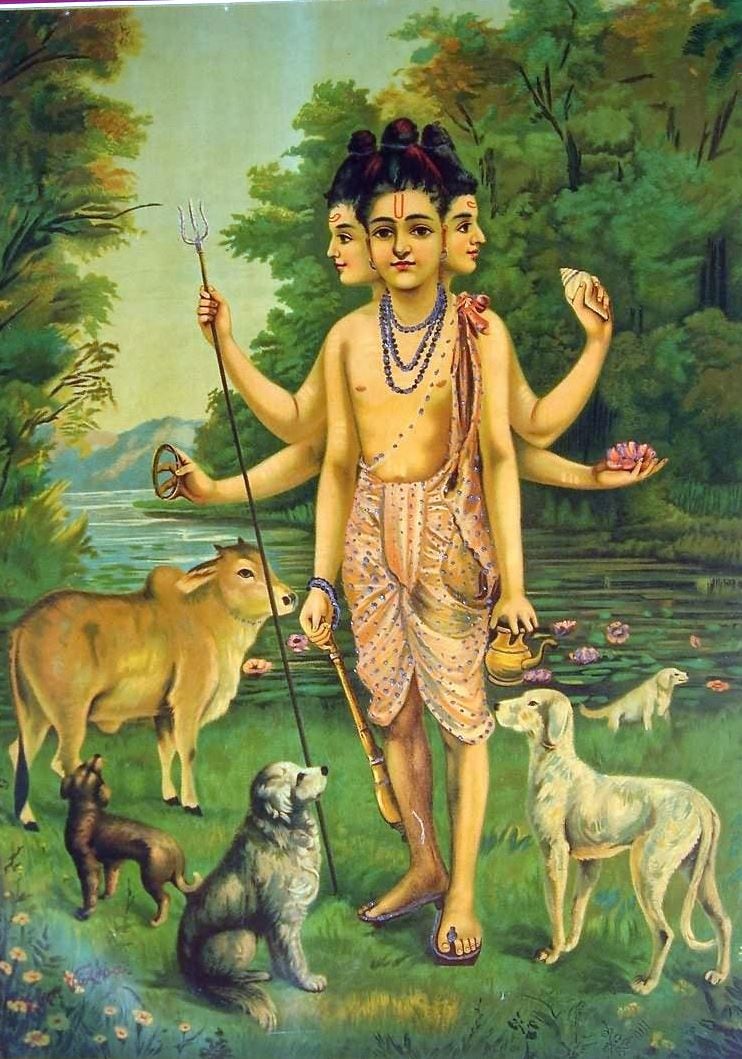
Dattatreya
Concordano su: Che cos'è l'Assoluto? Dio esiste? · Chi sono io? Esiste un vero sé? · Che cosa accade dopo la morte?
Leo Tolstoy
Concordano su: Che cos'è l'Assoluto? Dio esiste? · Chi sono io? Esiste un vero sé? · Che cosa accade dopo la morte?




Aneddoti e racconti
Aneddoti e racconti
Documentatoépoca védica tardía (Chāndogya, ss. VII–VI a. C.)
Salt in water
Origine del racconto: Chāndogya Upaniṣad 6.13. "Documented" indicates that the story is in the text, not that the scene is historical.
Fonte: Olivelle, Patrick (ed. y trad.). The Early Upaniṣads: Annotated Text and Translation. Nueva York: Oxford University Press, 1998. Chāndogya 5.3–5.24 y 6; Bṛhadāraṇyaka 3.7, 6.2, 6.3.7 y 6.5; Kauṣītaki 1.1.
Documentatoépoca védica tardía
The fifteen-day fast
Origine del racconto: Chāndogya Upaniṣad 6.7. The "scientific" reading is Chattopadhyaya's (1977).
Fonte: Chattopadhyaya, Debiprasad. Science and Society in Ancient India. Calcuta: Research India Publications, 1977.
Documentatoépoca védica tardía
The gold coin and the firewood
Origine del racconto: Śatapatha Brāhmaṇa XI.4.1.1–10 (Eggeling's translation, SBE 44, pp. 50–54), with a parallel version in Gopatha Brāhmaṇa 1.3.6. The exact meaning of some phrases (the coin, the "head that splits") is disputed, as Eggeling notes.
Documentatoépoca védica tardía
The king's five questions
Origine del racconto: Chāndogya Upaniṣad 5.3 (with another version in Bṛhadāraṇyaka 6.2). Black (2007) analyses these scenes of knowledge passing from kings to brahmins.
Fonte: Black, Brian. The Character of the Self in Ancient India: Priests, Kings, and Women in the Early Upaniṣads. Albany: State University of New York Press, 2007.
Racconto agiograficorelato épico (Mahābhārata, ss. III a. C.–IV d. C.)
The pupil who lay down in the dyke
Origine del racconto: Mahābhārata 1.3 (Pauṣya-parvan; section 3 of Ganguli's translation). There is no Vedic parallel; the relation between this Āruṇi and the Uddālaka of the Upaniṣads is a traditional identification.
Tradizione oralerelato épico
Śvetaketu and the law of marriage
Origine del racconto: Mahābhārata 1.113 of the critical edition (section 122 of Ganguli's translation). It is an epic legend with no basis in the Vedic texts.
Insegnamenti
Insegnamenti
Le nozioni che articolano il suo pensiero, spiegate nel loro contesto.
Tat tvam asi ("you are that")tat-tvam-asi
Chāndogya Upaniṣad 6; Brereton 1986; Olivelle 1996.
Fonte: Brereton, Joel P. «Tat Tvam Asi in Context». Zeitschrift der Deutschen Morgenländischen Gesellschaft 136 (1986): 98–109.
Sat (being, one without a second)sat
Chāndogya 6.2.
Fonte: Olivelle, Patrick (ed. y trad.). The Early Upaniṣads: Annotated Text and Translation. Nueva York: Oxford University Press, 1998. Chāndogya 5.3–5.24 y 6; Bṛhadāraṇyaka 3.7, 6.2, 6.3.7 y 6.5; Kauṣītaki 1.1.
Trivṛtkaraṇa (the triplication of the elements)trivrtkarana
Chāndogya 6.3–6.6.
Fonte: Chattopadhyaya, Debiprasad. Science and Society in Ancient India. Calcuta: Research India Publications, 1977.
Aṇiman (the subtle essence)animan
Chāndogya 6.8–6.16.
Fonte: Olivelle, Patrick (ed. y trad.). The Early Upaniṣads: Annotated Text and Translation. Nueva York: Oxford University Press, 1998. Chāndogya 5.3–5.24 y 6; Bṛhadāraṇyaka 3.7, 6.2, 6.3.7 y 6.5; Kauṣītaki 1.1.
Vācārambhaṇa (modification is only a name)vacarambhana
Chāndogya 6.1.4–6; Brahmasūtra 2.1.14 and its commentaries.
Fonte: Olivelle, Patrick (ed. y trad.). The Early Upaniṣads: Annotated Text and Translation. Nueva York: Oxford University Press, 1998. Chāndogya 5.3–5.24 y 6; Bṛhadāraṇyaka 3.7, 6.2, 6.3.7 y 6.5; Kauṣītaki 1.1.
Video
Video
Registrazioni, interviste e documentari. I video vengono riprodotti da YouTube; non sono ospitati qui.
Tat Tvam Asi (That Thou Art) | Swami Sarvapriyananda
Conferenza· EN· 2021· 101 min
Vedanta Society of New YorkCanale ufficiale
Talk on Tat Tvam Asi - The Ultimate Equation by Swami Sarvapriyananda
Conferenza· EN· 2026· 115 min
Ramakrishna Vedanta Centre U.K.Canale ufficiale
The Story of Svetaketu - Thou Art That - Chandogya Upanishad | Pravrajika Divyanandaprana
Conferenza· EN· 2018· 20 min
VivekaVani
Chandogya Upanishad Chapter-6 01
Conferenza· EN· 2022· 74 min
Chinmaya Mission San JoseCanale ufficiale
Chandogya Upanishad Ch 6 – An Exposition of Tat Tvam Asi | Swami Ramakrishnananda | Dis 01
Conferenza· EN· 2026· 68 min
Shravana Mangalam
Chandogya Upanishad Lecture - 1 (Chapter 6 - 1 - 1 to 6 - 1 - 4)
Conferenza· EN· 2026· 76 min
Vedanta Students
श्वेतकेतु और उद्दालक, उपनिषद की कहानी, छान्द्योग्यापनिषद
Conferenza· HI· 2020· 35 min
G.V.B. The University of Veda
CHANDOGYA. VER LO INVISIBLE
Analisi· ES· 2022· 14 min
Vedanta en Español
El pensamiento en la India: Hinduismo
Documentario· ES· 2017· 25 min
UNED DocumentosCanale ufficiale
The Upanishads: The Sacred Text that Changed India and the West | Jeffery Long, Ph.D.
Conferenza· EN· 2022· 56 min
Theosophical SocietyCanale ufficiale
Introduction to the Rig Veda and Upanishads | Kendall Sharp | First Friday Lecture
Conferenza· EN· 2024· 78 min
The University of Chicago Graham SchoolCanale ufficiale
The Central Doctrines of the Upanishads
Conferenza· EN· 2016· 37 min
Vidya-mitraCanale ufficiale
Galleria
Galleria
Immagini con licenza verificata. Ciascuna conserva la sua paternità e la sua attribuzione.
Manoscritti
Manoscritti
Testimoni manoscritti e testi antichi, con il loro custode e le loro condizioni di consultazione.
SA · Devanagari · c. ss. VII–VI a. C. (Olivelle)
छान्दोग्योपनिषद् (1.1.1–1.1.9)
- Testimone conservato
- Manuscrito fechado en 1849
- Digitalizzazione
- commons.wikimedia.org/wiki/File:Chandogya_Upanis…
SA · Grantha
छान्दोग्योपनिषद्विवरण
- Testimone conservato
- Hoja de palma adquirida en julio de 1836
- Custode
- Kahle-Austin Foundation (según la descripción de Commons)
- Digitalizzazione
- commons.wikimedia.org/wiki/File:1836_CE_July_pur…
Relazioni
Relazioni
Influenze, discepolati e affinità. Si distingue la relazione documentata dalla somiglianza individuata per analisi.
Maestro di
The Bṛhadāraṇyaka's lists of teachers make Yājñavalkya Uddālaka's pupil ("Yājñavalkya from Uddālaka; Uddālaka from Aruṇa").
Relazione documentata
Dissentì da
He questions him at Janaka's court about the thread and the inner controller and falls silent after his answer (Bṛhadāraṇyaka 3.7).
Relazione documentata
Famiglia di
Śvetaketu Āruṇeya
His son and pupil, recipient of the teaching of Chāndogya 6.
Relazione documentata
Famiglia di
According to the Mahābhārata (3.132–134), Aṣṭāvakra was the son of Sujātā, Uddālaka's daughter, and of his pupil Kahoḍa; that is, his grandson. A legendary, not Vedic, relationship.
Somiglianza individuata per analisi
Discepolo di
Pravāhaṇa Jaivali
The king of the Pañcālas teaches him the doctrine of the five fires (Chāndogya 5.3–10; Bṛhadāraṇyaka 6.2).
Relazione documentata
Influenzò
Śaṅkara commented on the Chāndogya and made "tat tvam asi" one of the great sayings of Advaita; he analyses it at length in the Upadeśasāhasrī.
Relazione documentata
Idee affini a
Inquiry into the self as the substratum of all experience extends the Advaita reading of "tat tvam asi".
Somiglianza individuata per analisi
Idee affini a
Comparative philosophy (Scharfstein) has linked Uddālaka's search for a single principle behind change with that of the first Greek philosophers.
Somiglianza individuata per analisi
Idee affini a
The theory of three elements combining in all things has been compared with Empedocles' roots.
Somiglianza individuata per analisi
Idee affini a
The rejection of being arising from non-being (Chāndogya 6.2.2) is a frequent parallel in comparative philosophy.
Somiglianza individuata per analisi
Influenzò
Gauḍapāda's Kārikā develops, in terms of non-origination, the thesis that the effect is not different from its cause, illustrated by the clay of Chāndogya 6.1.
Somiglianza individuata per analisi
Fonti
Fonti
Bibliografia e cataloghi consultati per questa scheda.
- Wikidata, «Aruni» (Uddālaka Āruṇi), QID Q2724299.
- Olivelle, Patrick (ed. y trad.). The Early Upaniṣads: Annotated Text and Translation. Nueva York: Oxford University Press, 1998. Chāndogya 5.3–5.24 y 6; Bṛhadāraṇyaka 3.7, 6.2, 6.3.7 y 6.5; Kauṣītaki 1.1.
- Olivelle, Patrick (trad.). Upaniṣads. Oxford World's Classics. Oxford: Oxford University Press, 1996 (traducción «And that's how you are, Śvetaketu» de Chāndogya 6.8.7 y ss.).
- Müller, F. Max (trad.). The Upanishads, Part I (Sacred Books of the East, vol. 1). Oxford: Clarendon Press, 1879 (Khândogya y Kaushîtaki-brâhmaṇa-upanishad); y Part II (SBE 15), 1884, nota a Kaṭha 1.11.
- Brereton, Joel P. «Tat Tvam Asi in Context». Zeitschrift der Deutschen Morgenländischen Gesellschaft 136 (1986): 98–109.
- Eggeling, Julius (trad.). The Śatapatha-Brāhmaṇa, Part V (Sacred Books of the East, vol. 44). Oxford: Clarendon Press, 1900. XI.4.1 (Uddālaka Āruṇi y Svaidāyana) y XI.5.3 (Śauceya Prācīnayogya y Uddālaka Āruṇi sobre el agnihotra).
- Chattopadhyaya, Debiprasad. Science and Society in Ancient India. Calcuta: Research India Publications, 1977.
- Witzel, Michael. «Yājñavalkya as Ritualist and Philosopher, and His Personal Language». En S. Adhami (ed.), Paitimāna: Essays in Iranian, Indo-European, and Indian Studies in Honor of Hanns-Peter Schmidt. Costa Mesa: Mazda, 2003, pp. 103–143 (n. 13: árbol genealógico Upaveśi – Aruṇa Aupaveśi – Uddālaka Āruṇi Gautama – Śvetaketu Āruṇeya).
- Black, Brian. The Character of the Self in Ancient India: Priests, Kings, and Women in the Early Upaniṣads. Albany: State University of New York Press, 2007.
- Ganguli, Kisari Mohan (trad.). The Mahabharata of Krishna-Dwaipayana Vyasa, vol. 1: Adi Parva. Calcuta, 1883–1896; Project Gutenberg n.º 15474 (sección 3, Āruṇi y Dhaumya; sección 122 de la vulgata, Śvetaketu). Para Aṣṭāvakra, Vana Parva 132–134 de la edición crítica.
- Olivelle, Patrick (trad.). The Saṃnyāsa Upaniṣads: Hindu Scriptures on Asceticism and Renunciation. Nueva York: Oxford University Press, 1992 (Āruṇi Upaniṣad).
- Scharfstein, Ben-Ami. A Comparative History of World Philosophy: From the Upanishads to Kant. Albany: State University of New York Press, 1998.
- Wikisource en sánscrito, «छान्दोग्योपनिषद्» (texto por adhyāya; adhyāya 5 y 6) y «बृहदारण्यकोपनिषद्» (6.5).
- Wikipedia (en inglés), «Uddalaka Aruni», consultada el 26 de octubre de 2026 (Āruṇi Upaniṣad, Āruṇi-śruti citada por Madhva, episodio de Dhaumya).
- Hume, Robert Ernest (trad.). The Thirteen Principal Upanishads. Londres: Oxford University Press, 1921.
- Ilárraz, Félix G., y Óscar Pujol (trads.). La sabiduría del bosque: antología de las principales Upaniṣad. Madrid: Trotta, 2003.
- Wikimedia Commons, ficheros y metadatos de licencia consultados mediante la API (imageinfo/extmetadata).
- Mitra, Rājendralāla (trad.). The Chhándogya Upanishad of the Sáma Veda, with Extracts from the Commentary of Śankara Áchárya. Calcuta: Baptist Mission Press (Bibliotheca Indica), 1862.
- Gambhirananda, Swami (trad.). Chāndogya Upaniṣad, with the Commentary of Śaṅkarācārya. Calcuta: Advaita Ashrama, 1983 (reimpr. 2006).
- Deussen, Paul (trad.). Sechzig Upanishad's des Veda. Leipzig: F. A. Brockhaus, 1897.
- Titolare dei diritti
- Los textos sánscritos son de dominio público. Las traducciones modernas tienen derechos propios: Oxford University Press (Olivelle; Hume hasta 2029 en España), Trotta (Ilárraz y Pujol), Penguin (Roebuck), Advaita Ashrama (Gambhirananda), Hastinapura (versión española de Nikhilananda). Las de Mitra (1862), Müller (1879), Eggeling (1900) y Deussen (1897) son de dominio público.
In attesa di conferma
Ciò che questa scheda non ha ancora potuto chiarire. Preferiamo dirlo piuttosto che riempirlo.
- Mahābhārata: comprobar en la edición crítica las referencias 1.3 (Āruṇi y Dhaumya), 1.113 (Śvetaketu) y 3.132–134 (Aṣṭāvakra) frente a la numeración de Ganguli.
- Kaṭha Upaniṣad 1.11: localizar la nota exacta de Max Müller (SBE 15) sobre «Auddālaki Āruṇi» y la identificación de Śaṅkara.
- Chattopadhyaya, Science and Society in Ancient India: confirmar paginación del capítulo sobre Uddālaka y la editorial de la primera edición (Calcuta, 1977; reimpresión de B. R. Grüner, Ámsterdam).
- Āruṇi-śruti citada por Madhva: localizar la referencia en las obras de Madhva o en un estudio especializado.
- Ediciones: buscar ISBN de traducciones de la Chāndogya al francés, alemán, ruso e hindi; identificar al traductor español de la edición de Hastinapura (ISBN 9789509102699).
- Relaciones: los slugs svetaketu y pravahana-jaivali no existen en el Atlas.
- Vídeos: no se ha encontrado un documental de televisión pública ni una clase universitaria monográfica sobre Uddālaka; los vídeos registrados son conferencias de instituciones vedánticas y clases generales sobre las Upaniṣad.
Ricerca effettuata il 2026-10-26