Induismo · Yoga · Bhakti · Advaita Vedanta
Swami Vivekananda
স্বামী বিবেকানন্দ · নরেন্দ্রনাথ দত্ত · स्वामी विवेकानन्द
1863 – 1902Persona storicamente documentata
Monaco bengalese, principale discepolo di Ramakrishna e fondatore dell'Ordine e della Missione Ramakrishna. Il suo intervento al Parlamento delle religioni di Chicago (1893) ne fece il primo grande interprete dell'induismo presso l'Occidente. In appena nove anni di insegnamento pubblico formulò un Vedānta pratico — i quattro yoga, la divinità potenziale di ogni anima, il servizio all'essere umano come culto — che ha segnato lo yoga moderno, il nazionalismo indiano e il dialogo tra le religioni. Morì a trentanove anni.
- opere
- 55opere
- edizioni
- 113edizioni
- citazioni
- 15citazioni
- video
- 12video
- immagini
- 8immagini
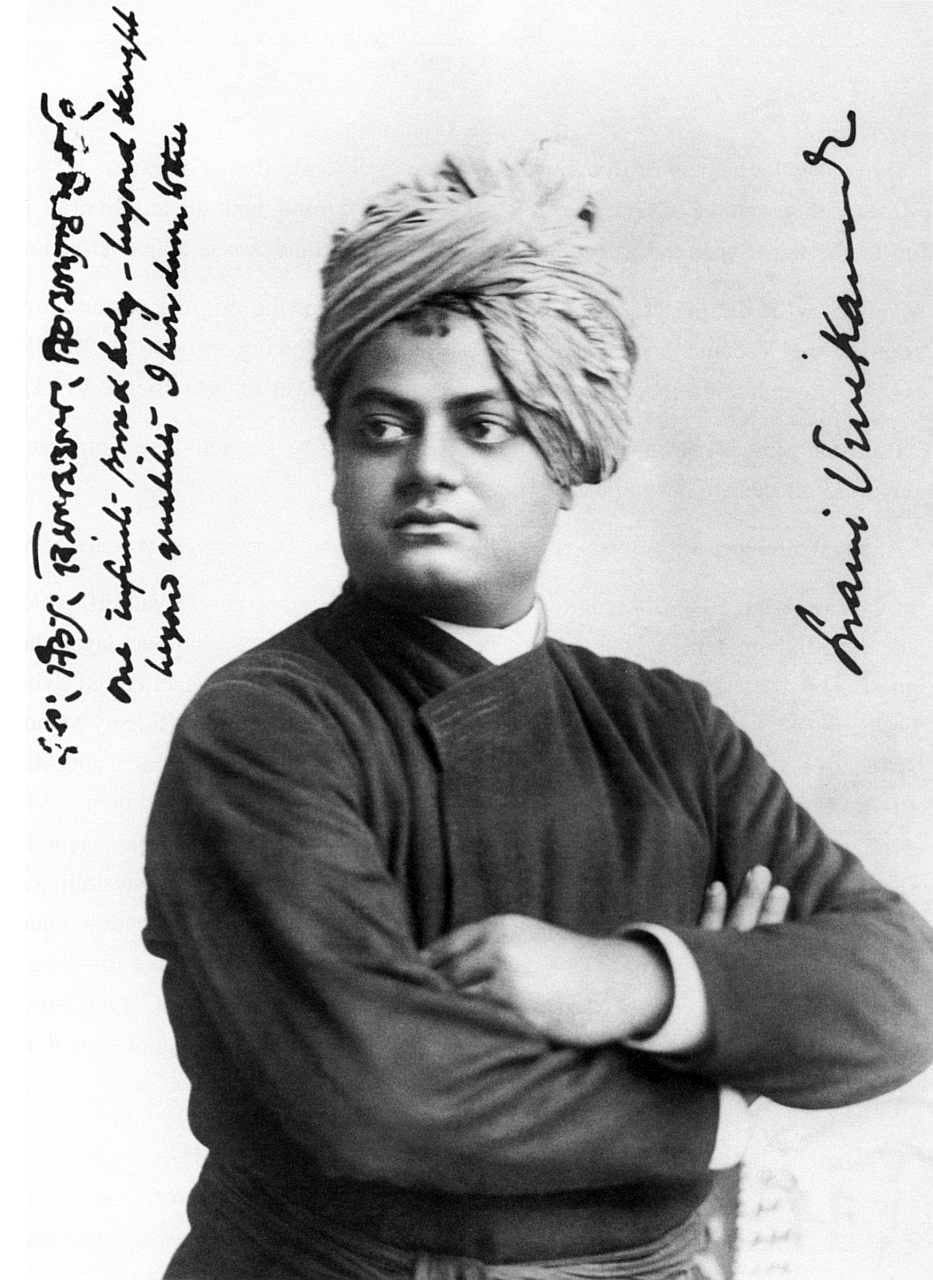
Swami Vivekananda en Chicago, septiembre de 1893 (con dedicatoria autógrafa) · Public domain
Con le sue parole
«Sisters and Brothers of America,»Discurso de bienvenida, Parlamento Mundial de las Religiones, Chicago, 11 de septiembre de 1893 (Complete Works, vol. 1, «Response to Welcome»)

La sua idea centrale
The four yogas: Vivekananda organised Hindu spiritual practice into four paths corresponding to four temperaments: karma yoga, for the active, purifies through work done without attachment; bhakti yoga, for the emotional, transforms love into devotion to God; raja yoga, for the contemplative, controls the mind through concentration and meditation; jnana yoga, for the intellectual, attains freedom through discrimination between the real and the unreal.
Vederlo nel contesto
Biografia
5 min di lettura
Traduzione assistita dall'originale spagnolo, in attesa di revisione da parte di un traduttore madrelingua.
Un giovane di Calcutta che voleva prove
Narendranath Datta nacque il 12 gennaio 1863 a Calcutta, in un'agiata famiglia kayastha del quartiere di Simla. Il padre, Vishwanath Datta, avvocato presso l'Alta Corte, era uomo di gusti cosmopoliti e lettore di poesia persiana; la madre, Bhuvaneswari Devi, gli trasmise i racconti del Rāmāyaṇa e del Mahābhārata. Narendra fu uno studente brillante e discontinuo: musica classica, ginnastica, logica occidentale, Mill, Spencer e Hume alla General Assembly's Institution (oggi Scottish Church College), dove si laureò nel 1884. Come tanti giovani dell'élite bengalese, frequentò il Brahmo Samaj, il movimento riformatore che aveva sostituito gli idoli con un teismo razionale. Ma i sermoni non gli bastavano. Secondo il racconto che egli stesso ripeté anni dopo e che i suoi biografi riportano, andava chiedendo ai maestri religiosi di Calcutta se avessero visto Dio. Nessuno rispose di sì.
Dakshineswar
Verso la fine del 1881 conobbe Ramakrishna, il sacerdote estatico del tempio di Kālī a Dakshineswar, sulle rive del Gange. Alla stessa domanda quell'uomo quasi analfabeta rispose di sì: vedeva Dio come vedeva lui, e con maggiore intensità. Il rapporto tra i due, documentato dai diari di Mahendranath Gupta (Sri Sri Ramakrishna Kathamrita), fu per cinque anni un braccio di ferro tra lo scetticismo del discepolo e la certezza del maestro. Narendra si faceva beffe dell'idolatria e della dottrina dell'advaita secondo cui «tutto è Brahman»; Ramakrishna lo trattava da eletto. La morte improvvisa del padre nel 1884 lasciò la famiglia in rovina e lo mise di fronte alla fame; il racconto secondo cui, mandato da Ramakrishna a chiedere alla dea un sollievo materiale, riuscì a chiederle soltanto discernimento e distacco proviene dalla tradizione dell'Ordine e va letto come tale. Quando Ramakrishna morì, nell'agosto 1886 a Cossipore, Narendra era già il centro di un piccolo gruppo di giovani che, alla fine di quell'anno, si costituirono in comunità monastica in una casa diroccata di Baranagar.
Il monaco errante
Tra il 1888 e il 1893 percorse l'India a piedi e in treno, con nomi monastici sempre diversi, dormendo nei palazzi dei maharaja e nelle capanne dei paria. Quegli anni — documentati in modo diseguale da lettere e da testimonianze raccolte decenni più tardi — gli diedero l'esperienza diretta della miseria rurale e dell'abiezione prodotta dalle caste che avrebbe alimentato la sua critica sociale. Nel dicembre 1892 giunse a Kanyakumari, l'estremità meridionale del subcontinente, e meditò su uno scoglio di fronte alla costa; lì, come raccontò poi nelle sue lettere, concepì l'idea di cercare in Occidente i mezzi per risollevare le masse dell'India. Il nome di Vivekananda, «la beatitudine del discernimento», si fissò poco prima del viaggio, nell'entourage del maharaja di Khetri, che pagò parte della traversata.
Chicago, 1893
Arrivò a Chicago nel luglio 1893 senza credenziali di alcuna organizzazione. Un professore di greco di Harvard, John Henry Wright, gli procurò l'accesso al Parlamento mondiale delle religioni, riunito nel quadro dell'Esposizione colombiana. L'11 settembre aprì il suo breve intervento con le parole «Sisters and Brothers of America», che secondo le cronache raccolte da John Henry Barrows suscitarono una lunga ovazione. Nei giorni successivi presentò un induismo senza caste né idoli, incentrato sulla divinità dell'anima — «l'indù si rifiuta di chiamarvi peccatori» — e sull'armonia di tutte le religioni. La stampa ne fece la figura simbolo del Parlamento.
Maestro in Occidente
Per più di tre anni tenne conferenze negli Stati Uniti e in Inghilterra. Nel 1894 fondò la Vedanta Society di New York; nell'estate del 1895 insegnò a un gruppo ristretto a Thousand Island Park (gli Inspired Talks); a Londra conobbe Margaret Noble, la futura Sorella Nivedita; a Oxford fece visita a Max Müller e a Kiel a Paul Deussen. Da quelle lezioni nacquero i quattro libri che fissarono il suo sistema: Karma Yoga e Raja Yoga (1896), Bhakti Yoga e, postume, le conferenze raccolte come Jnana Yoga. Raja Yoga, con la sua traduzione commentata degli Yoga Sūtra di Patañjali, fu per decenni la porta d'ingresso allo yoga per il lettore occidentale; la storica Elizabeth De Michelis lo considera il testo fondativo dello «yoga moderno», con la sua lettura psicologica e sperimentale della meditazione.
Tornare per servire
Nel gennaio 1897 sbarcò a Colombo e risalì l'India meridionale fino ad Almora tra accoglienze di folla; le conferenze di quel viaggio, Lectures from Colombo to Almora, sono il nucleo del suo messaggio agli indiani: forza, fiducia in se stessi, istruzione delle masse, critica senza riguardi dell'intoccabilità e del ritualismo. Il 1° maggio 1897 fondò a Calcutta la Ramakrishna Mission Association, che univa la vita monastica al servizio sociale; nel dicembre 1898 fu consacrato il monastero di Belur e nel 1899 l'Advaita Ashrama di Mayavati. La sua formula, attribuita in origine a Ramakrishna, era servire l'essere umano come Dio stesso (shiva jnane jiva seva). Tra il 1899 e il 1900 compì un secondo viaggio in Occidente — la California, New York, il Congresso di storia delle religioni di Parigi —, già gravemente malato di diabete e d'asma.
La morte a trentanove anni
Morì a Belur Math il 4 luglio 1902, all'imbrunire, durante la meditazione, al termine di una giornata che i compagni descrissero come normale. Aveva trentanove anni; i discepoli ricordarono che aveva annunciato che non sarebbe arrivato ai quaranta. Fu cremato sulla riva del Gange, di fronte al luogo dove sedici anni prima era arso il corpo del suo maestro.
Il documentato e il tramandato
Di Vivekananda conserviamo un volume eccezionale di fonti primarie: conferenze stenografate, lettere, articoli e conversazioni, raccolti nei nove volumi delle Complete Works. Gli anni del pellegrinaggio e molti episodi del suo rapporto con Ramakrishna si conoscono invece soprattutto attraverso la biografia ufficiale dei discepoli (1912-1918) e testimonianze tardive, con l'inclinazione agiografica propria del genere. Le ricerche di Marie Louise Burke sulla stampa statunitense hanno permesso di ricostruire con precisione gli anni americani e di correggere più di una leggenda. Non si conserva alcuna registrazione della sua voce: quelle che circolano come tali sono letture posteriori.
Eredità
L'Ordine e la Missione Ramakrishna, con sede a Belur, gestiscono oggi centinaia di centri, ospedali e scuole. La sua lettura del Vedānta — l'esperienza come prova della religione, l'unità delle religioni, l'induismo come fede universale — è stata criticata da studiosi come Anantanand Rambachan e Wilhelm Halbfass per aver proiettato categorie occidentali sulla tradizione, e fatta propria dal nazionalismo indù in sensi che egli non aveva previsto. Gandhi, Tagore, Aurobindo e Subhas Chandra Bose ne riconobbero l'influenza, e l'India celebra il suo compleanno come Giornata nazionale della gioventù. Fuori dall'India, senza di lui non si comprende l'arrivo in Occidente dello yoga, del Vedānta e dell'idea stessa di una spiritualità universale.
Fonti: Vivekananda, Swami. The Complete Works of Swami Vivekananda. Mayavati Memorial Edition, 9 vols. Calcuta: Advaita Ashrama, 1907–1997 (vol. 9 añadido en 1997). · His Eastern and Western Disciples. The Life of Swami Vivekananda. 2 vols. Mayavati / Calcuta: Advaita Ashrama, 1912–1918; 6.ª ed. revisada, 1979–1981. · Nikhilananda, Swami. Vivekananda: A Biography. Nueva York: Ramakrishna-Vivekananda Center, 1953. · Burke, Marie Louise. Swami Vivekananda in the West: New Discoveries. 6 vols. Calcuta: Advaita Ashrama, 1983–1987 (1.ª ed. en un volumen, 1958). · Barrows, John Henry (ed.). The World's Parliament of Religions. 2 vols. Chicago: The Parliament Publishing Company, 1893.
Cronologia
La vita, anno per anno
Ogni punto è un evento documentato. Fai clic per leggerlo, con la sua fonte e il suo grado di certezza.
12 gennaio 18630 anniCalcuta
Birth of Narendranath Datta
Born at the family home in Gourmohan Mukherjee Street, son of the attorney Vishwanath Datta and Bhuvaneswari Devi.
DocumentatoHis Eastern and Western Disciples. The Life of Swami Vivekananda. 2 vols. Mayavati / Calcuta: Advaita Ashrama, 1912–1918; 6.ª ed. revisada, 1979–1981.
Dopo la sua morte
- 1907First Complete Works
- 1984National Youth Day
12 gennaio 1863 · 0 anni
Birth of Narendranath Datta
Born at the family home in Gourmohan Mukherjee Street, son of the attorney Vishwanath Datta and Bhuvaneswari Devi.
Documentato
1881 · 18 anni
First meeting with Ramakrishna
Ramakrishna hears him sing at Surendranath Mitra's house (November 1881, according to the official biography) and he soon visits Dakshineswar, where he asks whether he has seen God.
Probabile
1884 · 21 anni
Degree and father's death
He graduates (B.A.) from Calcutta University. His father's sudden death leaves the family in debt and poverty.
Documentato
16 agosto 1886 · 23 anni
Death of Ramakrishna
Ramakrishna dies of throat cancer at the Cossipore garden house, where Narendra and other young men had nursed him for months.
Documentato
dicembre 1886 · 23 anni
Birth of the monastic community
The young disciples settle in a house at Baranagar—the Order's first monastery—and at Antpur on Christmas Eve take the vow of renunciation; formal ordination (viraja homa) follows early in 1887.
Documentato
1888 – 1893 · 25 anni
Years of wandering
He travels India as a wandering monk until 1893, in contact with maharajas, pandits and peasants.
Documentato
dicembre 1892 · 29 anni
The rock at Kanyakumari
He meditates on a rock off Cape Comorin; in his letters he places there the decision to seek help for India's masses. The rock now holds the Vivekananda Rock Memorial (1970).
Documentato
31 maggio 1893 · 30 anni
Sails for America
He sails from Bombay via Ceylon, Singapore, Hong Kong, Japan and Vancouver, reaching Chicago at the end of July.
Documentato
11 settembre 1893 · 30 anni
Welcome address at the Parliament of Religions
'Sisters and Brothers of America.' Until 27 September he speaks several times, the 'Paper on Hinduism' (19 September) being the central text.
Documentato
novembre 1894 · 31 anni
Vedanta Society of New York
He founds the first Vedanta society in the West, still active.
Documentato
giugno 1895 · 32 anni
The Thousand Island Park talks
Seven weeks of teaching a small group of disciples; Sarah Ellen Waldo's notes will be published as Inspired Talks (1908).
Documentato
novembre 1895 · 32 anni
Meeting Margaret Noble
The Irish educator, the future Sister Nivedita, hears him in a West End drawing room.
Documentato
1896 · 33 anni
Raja Yoga, Karma Yoga and meetings with Max Müller and Deussen
Longmans publishes Raja Yoga in London; Karma Yoga and Bhakti Yoga appear. He visits Max Müller in Oxford (May) and Paul Deussen in Kiel (September).
Documentato
15 gennaio 1897 · 34 anni
Triumphant return to India
He lands at Colombo and travels north to Calcutta and Almora; his speeches form Lectures from Colombo to Almora.
Documentato
1 maggio 1897 · 34 anni
Founding of the Ramakrishna Mission
He establishes the Ramakrishna Mission Association, joining monastic renunciation to social service.
Documentato
9 dicembre 1898 · 35 anni
Consecration of Belur Math
He installs Ramakrishna's relics in the new monastery on the Ganges, the Order's headquarters.
Documentato
20 giugno 1899 – 1900 · 36 anni
Second journey to the West
He leaves with Turiyananda and Nivedita; teaches in New York and California (Shanti Ashrama) and in 1900 attends the Congress of the History of Religions in Paris.
Documentato
4 luglio 1902 · 39 anni
Death
He dies in the evening in his room, during meditation; the monks speak of mahasamadhi. He is cremated the next day on the bank of the Ganges.
Documentato
1907
First Complete Works
Advaita Ashrama begins publishing the Complete Works (Mayavati Memorial Edition), which will reach nine volumes in 1997.
Documentato
1984
National Youth Day
The Government of India declares 12 January, his birthday, National Youth Day (observed since 1985).
Documentato
Opere
Opere essenziali
Le opere senza le quali non si comprende la sua eredità.
Conferenze pubblicate · 1896
Raja Yoga
Raja Yoga, or Conquering the Internal Nature
The exposition of meditative yoga that most influenced the West for half a century. It presents raja yoga as an experimental science of the mind—posture, control of prana, withdrawal of the senses, concentration, meditation and samadhi—without prior faith. The second part translates and comments on Patañjali's aphorisms. Its language of energy, psychology and method, and its syncretism with notions of the time, were decisive in making yoga understood in the West as a universal technique; Elizabeth De Michelis regards it as the founding text of modern yoga.
8 edizioni · amazon.com

Conferenze pubblicate · 1896
Karma Yoga
Karma-Yoga
The yoga of action: how work done without attachment to its fruits purifies the mind and leads to freedom. Drawing on the Bhagavad Gita, Vivekananda develops an ethic of duty relative to each person ('each is great in his own place'), the idea that in helping the world we help ourselves, and the ideal of work for work's sake. It is the doctrinal foundation of the Ramakrishna Mission and of social service as spiritual practice.
7 edizioni · amazon.com

Conferenze pubblicate · ca. 1896
Bhakti Yoga
Bhakti-Yoga
The path of love for God. Vivekananda defines bhakti as 'a real, genuine search after the Lord' that begins, continues and ends in love, and follows it from preparatory devotion—with symbols, images, names and the need for a teacher—to supreme devotion, in which lover, love and beloved merge. He defends image worship as a legitimate step against reformist critics and reconciles it with non-dual Vedanta.
6 edizioni · amazon.com

Conferenze pubblicate · ca. 1899
Jnana Yoga
Jnana-Yoga
The path of knowledge according to Advaita Vedanta: the necessity of religion, maya as a statement of facts rather than a theory, the personal and impersonal God, the unity of existence and the realisation of the Self. It is his most philosophical exposition: a defence of monism as the rational culmination of religion, in dialogue with the science and agnosticism of his time, and the basis of his thesis that all religions lead to the same unity.
8 edizioni · amazon.com
Tutta la sua opera (55)
Swami Vivekananda
Chicago Addresses
The Conscious LibraryChicago Addresses
1893

The Complete Works
1907

Lectures from Colombo to Almora
1897

Inspired Talks
1908

My Master
1901
Swami Vivekananda
Letters
The Conscious LibraryLetters
1940

Practical Vedanta
1896

The Vedanta Philosophy (Harvard address)
1896
Swami Vivekananda
Memoirs of European Travel (Parivrajak)
The Conscious LibraryMemoirs of European Travel (Parivrajak)
1899
Swami Vivekananda
Modern India (Bartaman Bharat)
The Conscious LibraryModern India (Bartaman Bharat)
1899
Swami Vivekananda
The East and the West (Prachya o Paschatya)
The Conscious LibraryThe East and the West (Prachya o Paschatya)
1902
Swami Vivekananda
Poems
The Conscious LibraryPoems
1947

Talks with Swami Vivekananda
1902

Meditation and Its Methods
1976
Swami Vivekananda
Sangeet Kalpataru
The Conscious LibrarySangeet Kalpataru
1887
Swami Vivekananda
The Ideal of a Universal Religion
The Conscious LibraryThe Ideal of a Universal Religion
1896
Swami Vivekananda
The Real and the Apparent Man
The Conscious LibraryThe Real and the Apparent Man
1896
Swami Vivekananda
Vedanta Philosophy: Lecture on "The Atman"
The Conscious LibraryVedanta Philosophy: Lecture on "The Atman"
1896

Speeches and Writings of Swami Vivekananda: A Comprehensive Collection
1899
Swami Vivekananda
Christ, the Messenger
The Conscious LibraryChrist, the Messenger
1900
Swami Vivekananda
The Science and Philosophy of Religion
The Conscious LibraryThe Science and Philosophy of Religion
1908

Essentials of Hinduism
1919

Hinduism
1943

Religion of Love
1947
Citazioni
Citazioni localizzate in un'opera precisa. Ciascuna porta con sé la sua provenienza e il suo grado di affidabilità.
Sisters and Brothers of America,VerificataDiscurso de bienvenida, Parlamento Mundial de las Religiones, Chicago, 11 de septiembre de 1893 (Complete Works, vol. 1, «Response to Welcome»)
Citazioni apocrife o di attribuzione discussa (3)
«'Talk to yourself once in a day, otherwise you may miss meeting an excellent person in this world.'»
It circulates massively on social media and posters under his name, but it does not appear in any of the nine volumes of the Complete Works (search of the full Wikisource text, 2026-10-23). Neither its style nor its vocabulary is Vivekananda's.
«'In a day, when you don't come across any problems – you can be sure that you are travelling in a wrong path.'»
Not located in the Complete Works (Wikisource search, 2026-10-23). It belongs to the self-help sayings attributed online without a source.
«The audio recordings circulating as 'the voice of Swami Vivekananda' delivering the Chicago address.»
No sound recording of Vivekananda survives. The recordings presented as his 'own voice' are modern readings; neither the Ramakrishna Order nor Marie Louise Burke's research on his American stay mentions any recording.
Ultime parole
Non esistono testimonianze verificabili delle sue ultime parole.
His disciples' official biography (The Life of Swami Vivekananda, 1912–1918) describes 4 July 1902 in detail—three hours of meditation in the morning, a Sanskrit grammar class, a walk, talk of a planned Vedic college—and says that around seven in the evening he withdrew to meditate and died at about nine; sources differ on the time (9:10 or 9:20). It records no words spoken at the moment of death. A remark he supposedly made that day, overheard by a brother monk, that only 'another Vivekananda' would understand what Vivekananda had done, circulates widely; it could not be checked against the primary source and is in any case not his last words.
Fonte: His Eastern and Western Disciples. The Life of Swami Vivekananda. 2 vols. Mayavati / Calcuta: Advaita Ashrama, 1912–1918; 6.ª ed. revisada, 1979–1981.
Chiedi
Ciò a cui risponde la sua opera
Dodici grandi domande dell'umanità e ciò che i suoi testi permettono di rispondere, con riferimenti. Non gli mettiamo mai parole in bocca.
Che cos'è l'Assoluto? Dio esiste?
The personal God is the Absolute as read by the human mind
Personale e impersonale insiemeLo dice espressamente
Swami Vivekananda, disciple of Ramakrishna, defends Advaita Vedanta without disdaining devotion. In his Jnana Yoga lectures he holds that the only reality is the impersonal Brahman, existence, consciousness and bliss, and that the human soul is identical with it. In Bhakti Yoga, in the chapter on the philosophy of Ishvara, he explains that the personal God is that same Absolute as perceived by the human mind: not an illusion to be discarded but the highest reading of the Absolute available to one who still feels himself an individual. Hence his claim that dualism, qualified non-dualism and non-dualism are stages of one path. For Vivekananda, the divine has a face that is loved and a formless ground with which, ultimately, one is identified.
Confronta questa domanda con altri maestriChi sono io? Esiste un vero sé?
Each soul is potentially divine; the real man is the infinite Atman
Il Sé è l'AssolutoLo dice espressamente
Swami Vivekananda distinguishes, in the lecture «The Real and the Apparent Man» collected in Jnana Yoga, between the limited individual we believe ourselves to be and the real man, the Atman, infinite, immortal and one with Brahman. The apparent man is a passing manifestation of that Atman through body and mind; everything that limits us belongs to the level of appearance. Hence his motto, which heads his exposition of Raja Yoga: each soul is potentially divine, and the goal is to manifest this divinity within by controlling nature, external and internal, through work, devotion, psychic control or philosophy. Vivekananda stresses the ethical consequences: if we are all the same Self, serving another is serving God. The true self is not a part of the Absolute but the Absolute itself.
Confronta questa domanda con altri maestriPerché soffriamo?
Maya always mixes pleasure and pain; only the Atman is free of both
L'ignoranza di ciò che siamoLo dice espressamente
Swami Vivekananda treats suffering in his lectures on maya, collected in Jnana Yoga. Maya is not for him a theory of illusion but a statement of the contradiction in which we live: every pleasure drags its pain, every good its evil, and no worldly progress will remove that mixture, because it belongs to the nature of the relative world. Whoever seeks complete happiness in the finite is condemned to frustration. The root of suffering is ignorance of our true nature: we identify with body and mind, subject to contradiction, rather than with the Atman, which lies beyond it. Vivekananda does not draw indifference from this: in Karma Yoga he proposes working to relieve the pain of others without attachment to results, as a way of purifying oneself and of serving God in every being.
Confronta questa domanda con altri maestriChe cosa accade dopo la morte?
The Atman is immortal; bodies change, are reborn and are finally known as illusory
Ciò che sono non nasce e non muoreLo dice espressamente
Vivekananda sets out the question of death from Vedanta in lectures such as «Immortality», included in Jnana Yoga. He denies that the soul is created or can die: what has a beginning has an end, and the Atman, which is Brahman, has none. On the relative plane he accepts reincarnation: the subtle mind, laden with impressions (samskaras), leaves the body and seeks another in accordance with its karma, and Vivekananda defends it as a more rational explanation of the differences between beings than the creation of new souls at each birth. But on the ultimate plane, that of non-duality, the soul never came and never went: the same infinite Self appears under names and forms. The goal is not an eternal life in a heaven, which would be another form of birth, but to recognise that one was never born.
Confronta questa domanda con altri maestriCome si raggiunge la liberazione o la salvezza?
Manifest the inner divinity through work, devotion, mental control or knowledge
Con una pratica disciplinataLo dice espressamente
Swami Vivekananda sums up his position in the preface to Raja Yoga: each soul is potentially divine and the goal is to manifest that divinity by controlling nature, external and internal, whether by work, by worship, by psychic control or by philosophy, by one, several or all of these means. The other elements of religion (doctrines, rites, books or temples) are secondary details. He devoted a book to each path: Karma Yoga, Bhakti Yoga, Raja Yoga and Jnana Yoga. His originality lies in presenting them as verifiable, almost experimental methods suited to different temperaments, and in joining them to service of others, whom he asked people to see as manifestations of the divine. The ultimate horizon is the Advaitic realisation of identity with Brahman.
Confronta questa domanda con altri maestriServe un maestro?
Spiritual impulse passes from soul to soul: a true guru is needed
IndispensabileLo dice espressamente
In Bhakti Yoga, Swami Vivekananda devotes chapters to the need for a guru and to the qualities of the aspirant and the teacher. He holds that books alone do not awaken the soul: the spiritual impulse must come from another, already awakened soul, and the one who transmits it is the guru. He asks much of the teacher: he must know the spirit of the scriptures, be free from sin and not teach for money or fame. And he asks of the disciple purity, thirst for knowledge and perseverance. His own life illustrates this position: he attributed everything he was to his master Ramakrishna. At the same time, Vivekananda rejected credulity and asked that teaching be examined; the guru is necessary, but not just anyone is one.
Confronta questa domanda con altri maestriIl mondo è reale?
Maya is not a theory: it is a description of the world as it is
Apparenza sull'unica realtàLo dice espressamente
In the lectures collected in Jnana Yoga, Swami Vivekananda devotes several talks to maya and warns against understanding it as a claim that the world does not exist. Maya is, for him, a description of facts: the world is a contradictory mixture of good and evil, pleasure and pain, life and death, which cannot be resolved within itself. It is neither simply unreal nor real in the ultimate sense: it is the appearance the Absolute takes on through time, space and causality. Behind that appearance stands Brahman, the only reality, which is also the Self of each person. Hence his practical emphasis: seeing the divine in the beings one serves.
Confronta questa domanda con altri maestriChe cos'è l'amore?
Love for love's sake, without asking or fearing, leads to union
Anelito e unioneLo dice espressamente
Vivekananda devoted one of his four yogas to love. In Bhakti Yoga he defines devotion as the search for God through love and describes its culmination, supreme devotion (para-bhakti), through what he calls the triangle of love: love asks nothing in return, knows no fear and has no other object than love itself, which is its own ideal. He goes through the forms the relationship with God takes — as Father, as Mother, as friend, as beloved — and holds that all human love, even the most limited, is a reflection of divine love. At its height, the lover, love and the beloved become one, and devotion flows into the same non-duality that knowledge reaches. At the same time, Vivekananda joins love of God with service: to serve the human being is to serve God present in him.
Confronta questa domanda con altri maestriSiamo liberi o è tutto determinato?
We are what our acts have made us, and we can remake ourselves
Karma e sceltaLo dice espressamente
Vivekananda stresses human responsibility with almost programmatic vigour: in *Karma Yoga* (1896) he holds that each person is the sum of his past thoughts and actions, and therefore holds in his own hands what he will become. His critique of the fatalism of the India of his day is explicit: weakness, not destiny, is the cause of misery. But as a Vedantin he distinguishes levels. In his *Jnana Yoga* lectures he explains that the will, as a phenomenon of the world of *māyā*, is subject to cause and effect and is not free in an absolute sense; what is free is the Ātman, beyond the causal chain. Practice consists in using conditioned action to reach that freedom which does not depend on choosing.
Confronta questa domanda con altri maestriPerché meditare o pregare?
Concentrating the mind until the soul knows itself in samadhi
Tornare alla sorgente dell'ioLo dice espressamente
In *Raja Yoga* (1896), his commentary on Patañjali's *Yoga Sutras*, Vivekananda presents meditation as an experimental science: just as the chemist focuses his instruments on matter, the yogi focuses the mind on itself. His ladder runs from ethics and posture through breath control, withdrawal of the senses, concentration and meditation up to *samādhi*, a superconscious state in which the soul recognises itself as free and independent of nature. He does not deny the value of devotion, to which he devotes *Bhakti Yoga*, nor of selfless action, but for him the end of meditative practice is realisation of the Ātman, identical with Brahman, not petition to a separate God.
Confronta questa domanda con altri maestriPuò la ragione conoscere l'ultimo?
Religion must withstand reason's scrutiny and culminate in superconsciousness
Fede e ragione si aiutanoLo dice espressamente
Vivekananda claims for religion the same rational scrutiny applied to science: in his lecture «Reason and Religion» he holds that a religion unable to defend itself before reason does not deserve to survive, and presents Vedānta as the most rational of doctrines. But in *Raja Yoga* (ch. 7, «Dhyāna and Samādhi») he sets out a scale of knowledge: instinct, reason and superconsciousness. Reason surpasses instinct but moves within a limited circle; beyond it is *samādhi*, in which truths are known that reason cannot reach, though they never contradict it. The statements of sages and scriptures, he insists, must be verified in one's own experience.
Confronta questa domanda con altri maestriRitirarsi dal mondo o trasformarlo?
Serving the human being is worshipping God: a practical Vedanta
Impegnarsi nel mondoLo dice espressamente
Swami Vivekananda, a renunciant monk, set out to bring Vedanta out of the forests and caves and into daily life. In his lectures on Practical Vedanta, delivered in London in 1896, he holds that the unity of all beings in the Ātman is not an idea for isolated contemplation but the foundation of an ethic of service: if God is in every human being, serving the poor, the sick or the ignorant is worshipping God. He takes up his master Ramakrishna's teaching of serving beings by seeing them as Shiva, and in 1897 founds the Ramakrishna Mission, which joins monastic life with hospitals, schools and relief in famines and epidemics. In Karma Yoga he presents selfless action as a path to liberation. He harshly criticised a religiosity concerned with rites while the people of India went hungry.
Confronta questa domanda con altri maestri
Affinità e tensioni
Affinità e tensioni
Calcolate domanda per domanda a partire dalle sue posizioni. Il perché di ogni accordo o contrasto, con un clic.
La pensa in modo simile a
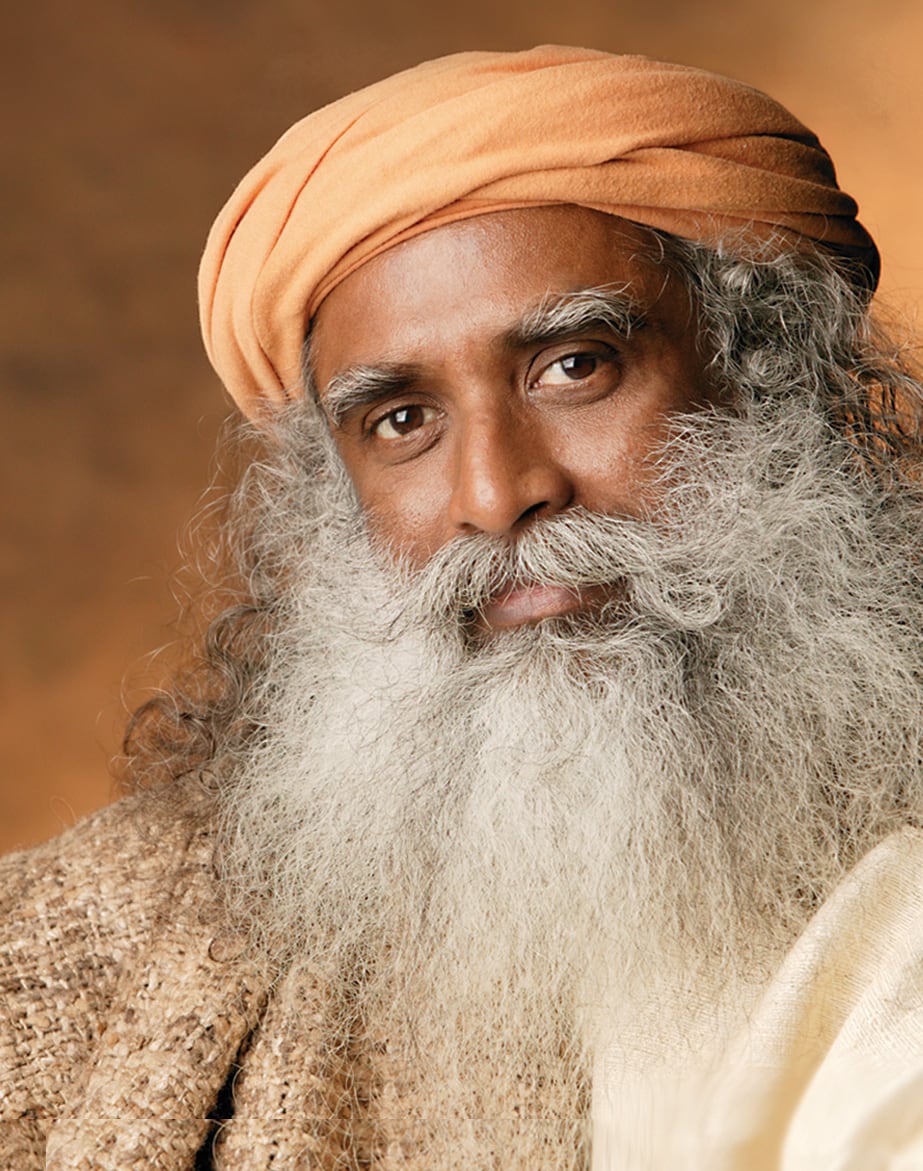
Sadhguru
Concordano su: Come si raggiunge la liberazione o la salvezza? · Chi sono io? Esiste un vero sé? · Serve un maestro?
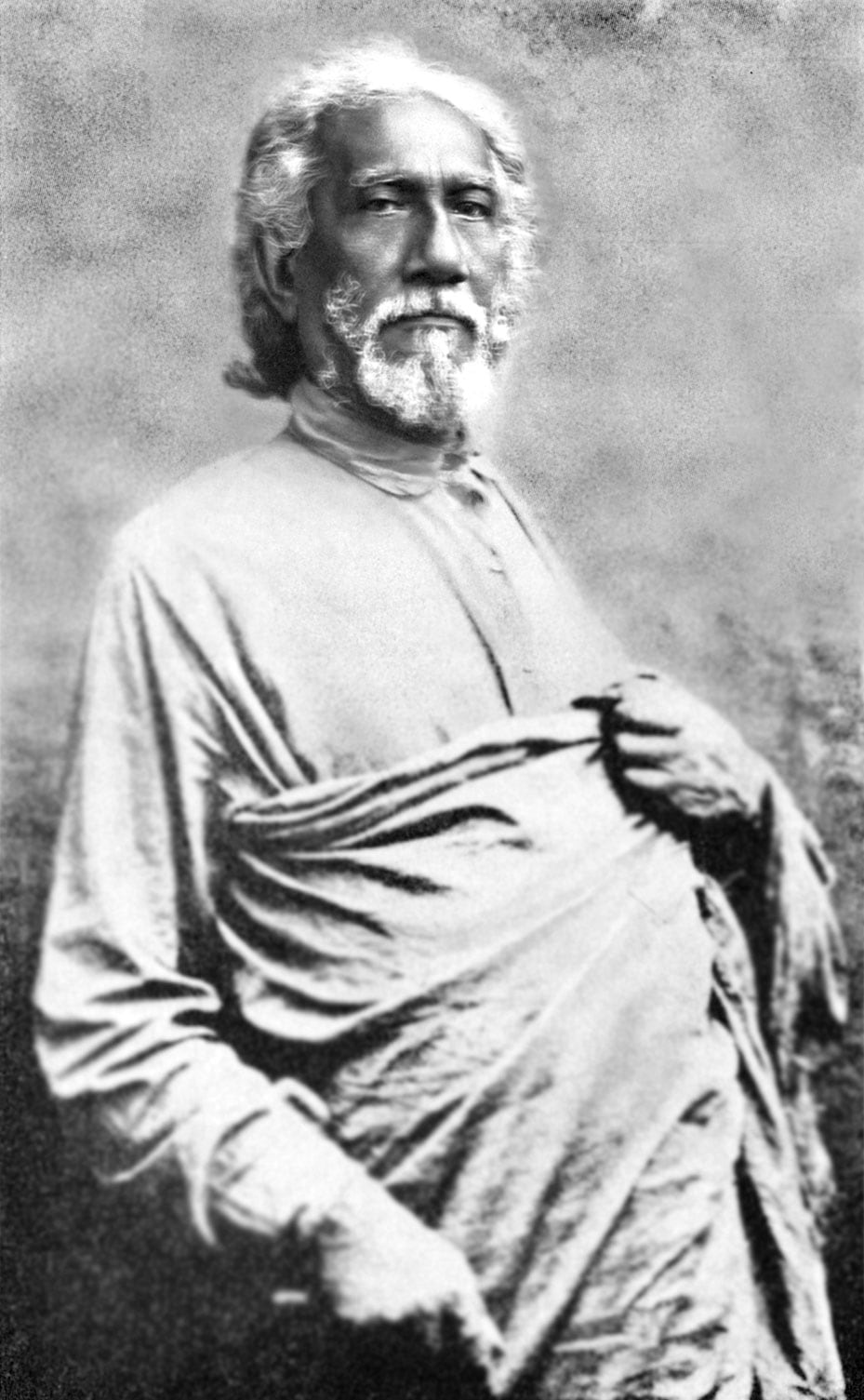
Sri Yukteswar
Concordano su: Perché meditare o pregare? · Chi sono io? Esiste un vero sé? · Perché soffriamo?
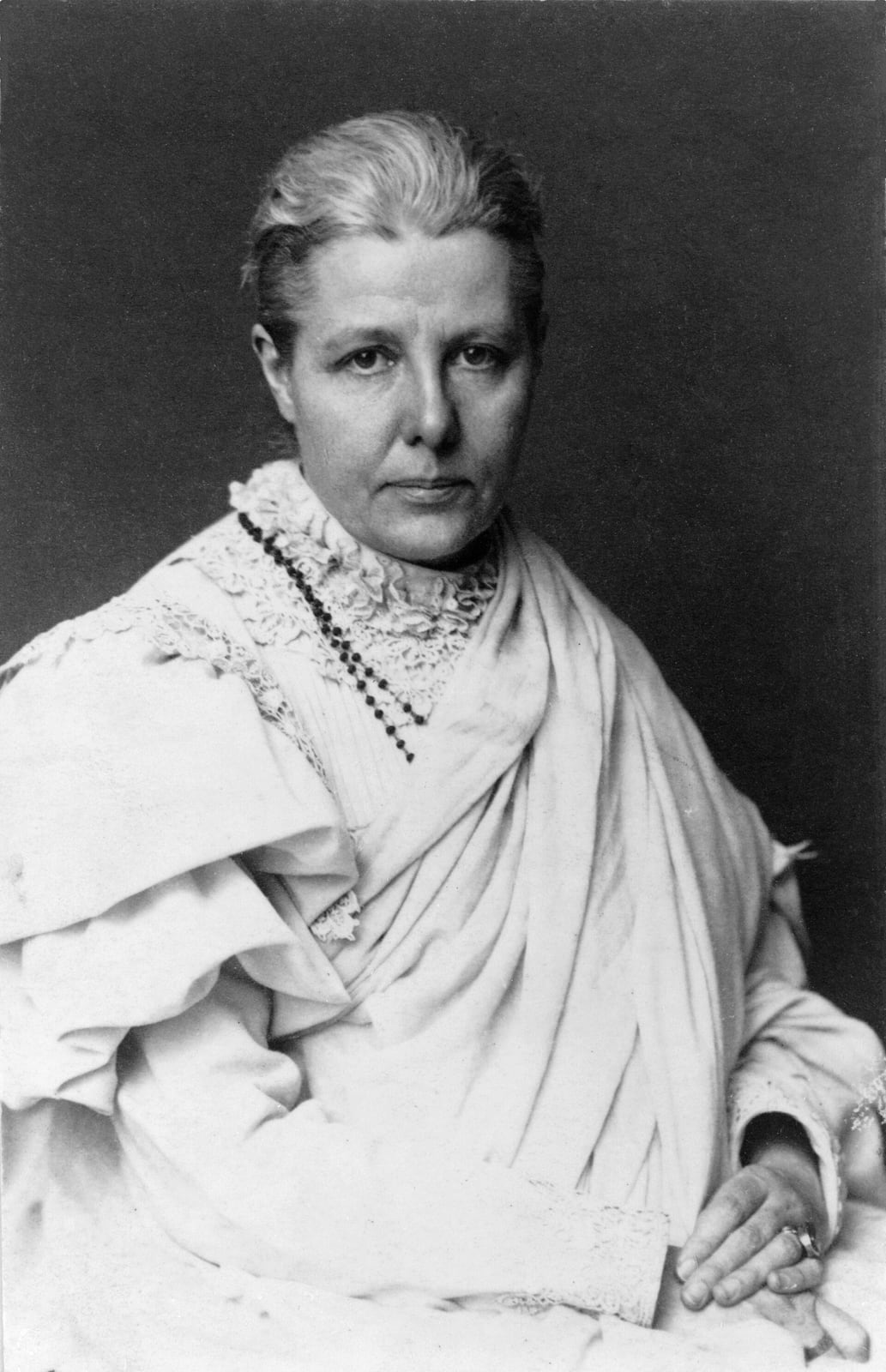
Annie Besant
Concordano su: Siamo liberi o è tutto determinato? · Che cos'è l'Assoluto? Dio esiste? · Come si raggiunge la liberazione o la salvezza?
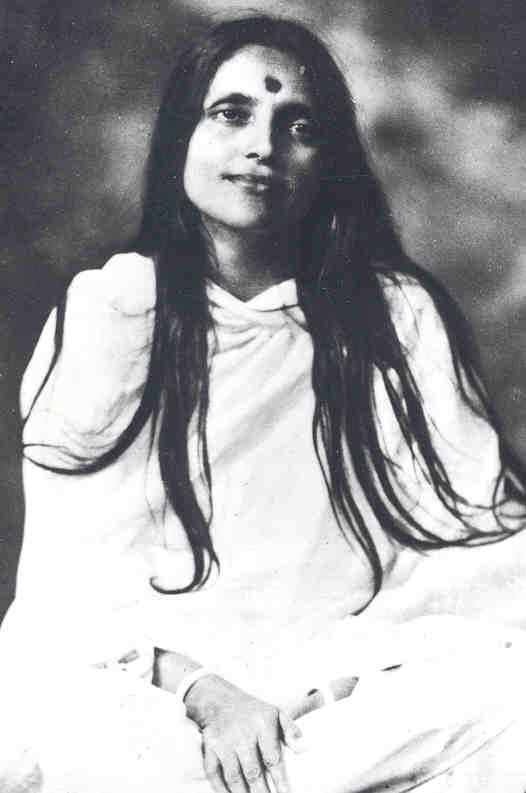
Anandamayi Ma
Concordano su: Che cos'è l'Assoluto? Dio esiste? · Chi sono io? Esiste un vero sé? · Perché soffriamo?
La pensa diversamente da

Francis of Assisi
Si scontrano su: Chi sono io? Esiste un vero sé? · Il mondo è reale?

Seraphim of Sarov
Si scontrano su: Chi sono io? Esiste un vero sé? · Il mondo è reale?
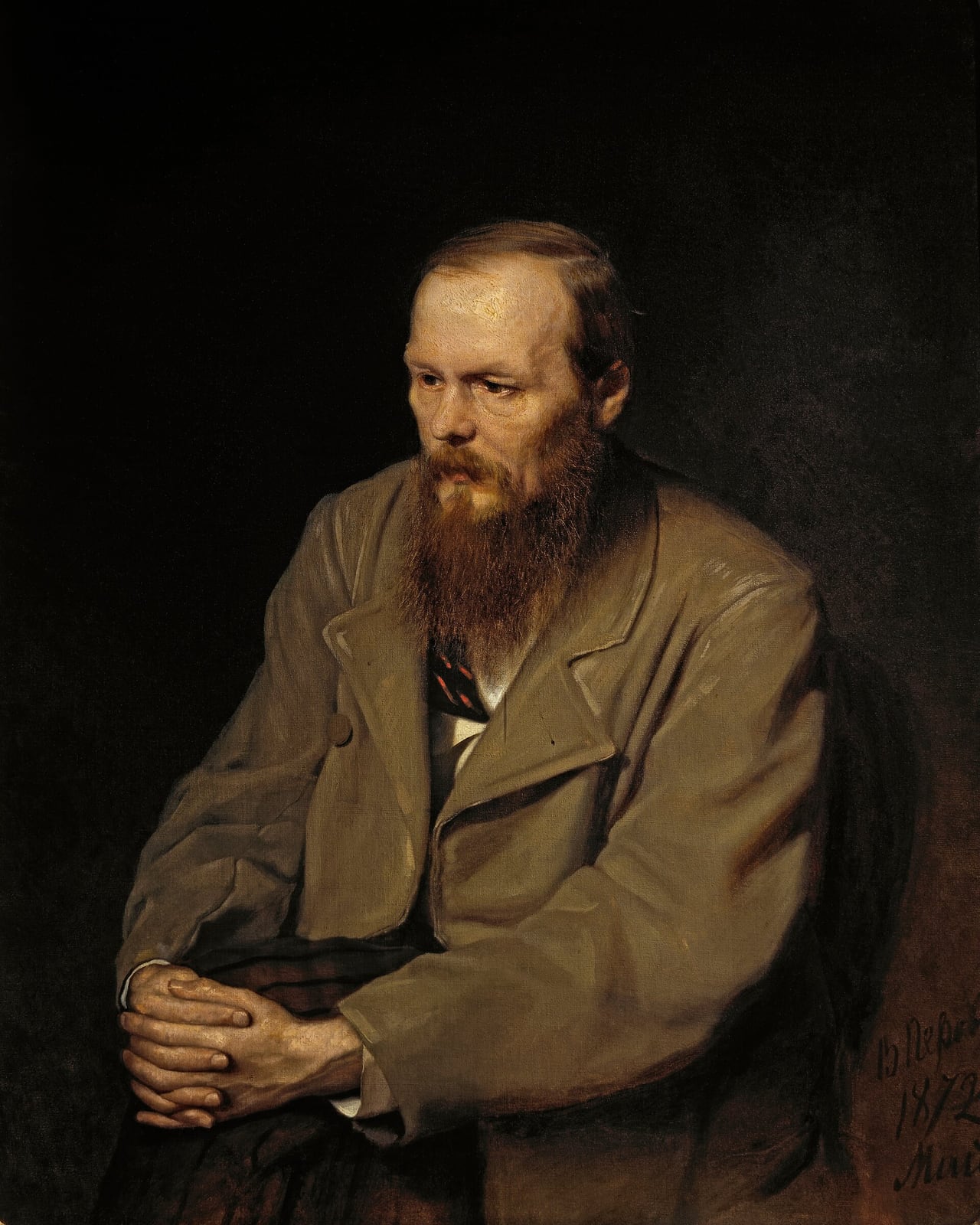
Fyodor Dostoevsky
Si scontrano su: Chi sono io? Esiste un vero sé? · Il mondo è reale?
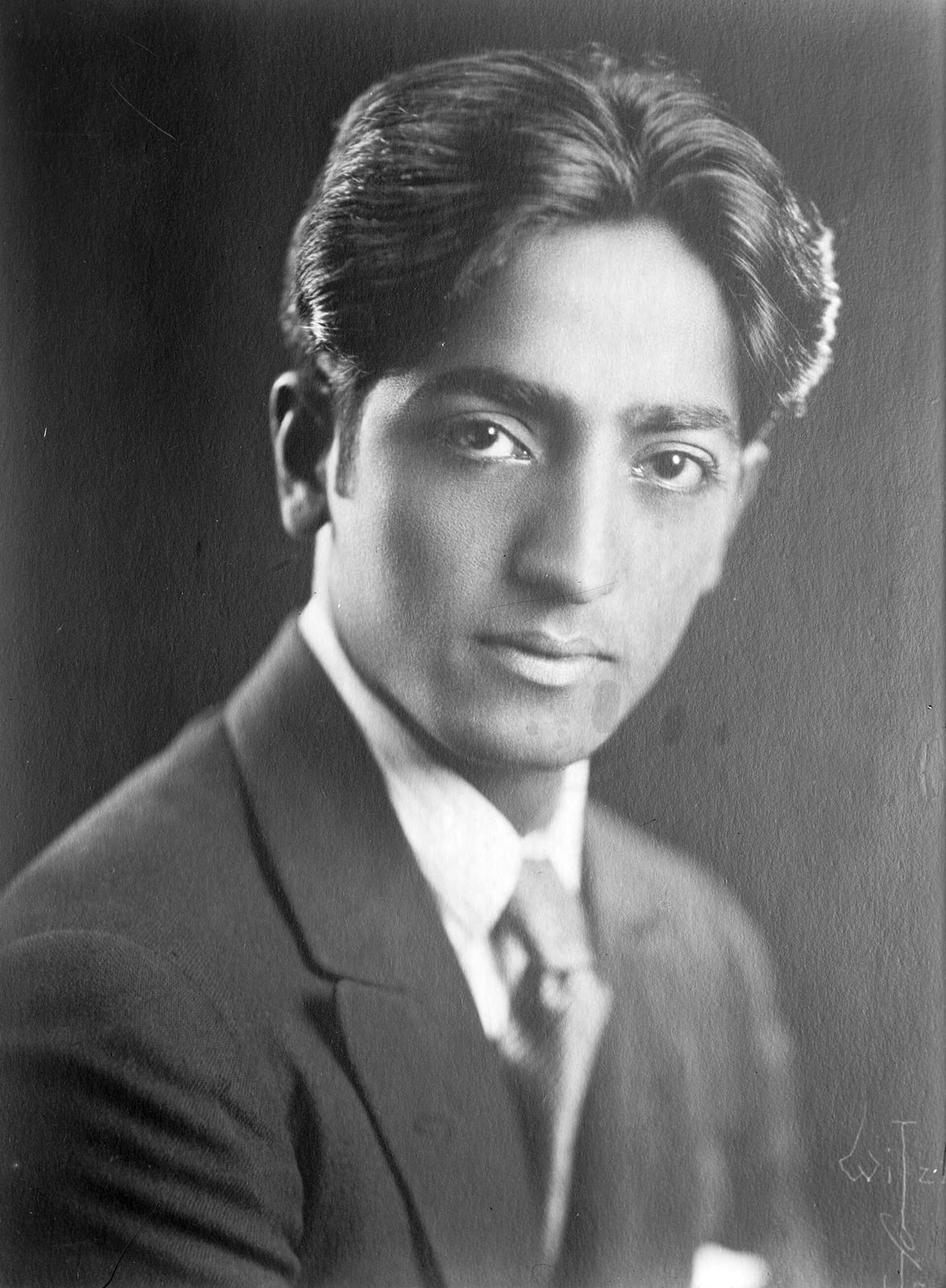
Jiddu Krishnamurti
Si scontrano su: Come si raggiunge la liberazione o la salvezza? · Serve un maestro?
Si scontrano suContraddizione apparente
Swami Vivekananda · Adi Shankara
The sage who renounces and the sage who serves: two readings of the same Advaita
Perché: The contradiction is largely apparent. Shankara does not condemn action: he regards it as the purifying duty of those who do not yet know, and Vivekananda presents karma yoga precisely as a path of purification towards a knowledge that remains, for him, the summit. What changes is audience and era. Shankara writes for renunciants, in a scholastic dispute with those who combined ritual and knowledge; Vivekananda, who saw himself as heir to Advaita, speaks to a colonised and impoverished India and to a Western public, and turns service into worship of the divine in every being. A real difference of emphasis remains: in Shankara the liberated one ceases to act; in Vivekananda, he goes on serving.
Si scontrano suDisaccordo di fondo
Swami Vivekananda · Annie Besant
Chicago, 1893: the wisdom of the hidden Masters versus a Vedanta to be verified
Perché: The relationship is historical: both spoke at the 1893 Parliament of Religions in Chicago, which launched Vivekananda, and they later competed to represent India's wisdom before the West. Vivekananda publicly distanced himself from the Theosophical Society and its doctrine of the Mahatmas, which he regarded as foreign to the Vedantic tradition. The tension is not only one of rivalry: Besant inherits from Blavatsky a wisdom presented as hidden and revealed to initiates; Vivekananda, from Ramakrishna and Vedanta, a public teaching anyone can test through practice. Both wanted to reconcile religion and science; they differed over the place they left for secrecy.
Concordano su
Swami Vivekananda · The 14th Dalai Lama (Tenzin Gyatso)
A religion that accepts examination: the monk of Chicago and the monk of Nalanda
Perché: The convergence is explained by context: both present an Asian tradition before a West shaped by modern science and by the critique of religion, and both want to show that their tradition does not fear that examination. Each also draws on resources specific to his tradition: Vivekananda, on the experimental reading of yoga and on Vedanta; the Dalai Lama, on the logic and epistemology of Nalanda. They differ on the goal: for Vivekananda experience culminates in identity with Brahman; for the Dalai Lama, in the understanding of emptiness, which denies precisely a permanent Self. No relationship between them is documented.
Aneddoti e racconti
Aneddoti e racconti
Testimonianza1881–1882
'Have you seen God?'
Origine del racconto: Vivekananda's own account transmitted by his disciples: The Life of Swami Vivekananda (1912–1918) and Nikhilananda, Vivekananda: A Biography (1953). Ramakrishna left his own version of the first meetings in the conversations recorded by M. in the Kathamrita.
Fonte: His Eastern and Western Disciples. The Life of Swami Vivekananda. 2 vols. Mayavati / Calcuta: Advaita Ashrama, 1912–1918; 6.ª ed. revisada, 1979–1981.
Racconto agiografico1884–1885
The prayer before the goddess
Origine del racconto: It comes from the disciples' biography (The Life…) and Swami Saradananda's Sri Ramakrishna Lilaprasanga (1909–1919), which present it as Vivekananda's own recollection. There is no independent contemporary testimony.
Fonte: His Eastern and Western Disciples. The Life of Swami Vivekananda. 2 vols. Mayavati / Calcuta: Advaita Ashrama, 1912–1918; 6.ª ed. revisada, 1979–1981.
Testimonianzac. 1888–1890
'Face the brutes'
Origine del racconto: Autobiographical account in the lecture 'What Is Religion?', Complete Works, vol. 1 (Lectures and Discourses). There are no witnesses; it is his own recollection used as a moral example.
DocumentatoDiciembre de 1892
The rock at Kanyakumari
Origine del racconto: The plan conceived at Kanyakumari is documented in his letter to Ramakrishnananda of 19 March 1894 (Complete Works, vol. 6). The swim and the length of the meditation come from the Order's oral tradition recorded in The Life…, with no direct testimony.
TestimonianzaSeptiembre de 1893
The night in the freight car
Origine del racconto: Account transmitted by the disciples' biography from Vivekananda's own recollections and those of the Hale family; Marie Louise Burke (Swami Vivekananda in the West: New Discoveries) checked the chronology against the Chicago press and confirms the Hales' role, though the details of the night rest on the protagonist's account.
Fonte: His Eastern and Western Disciples. The Life of Swami Vivekananda. 2 vols. Mayavati / Calcuta: Advaita Ashrama, 1912–1918; 6.ª ed. revisada, 1979–1981.
Tradizione orale1891 o 1893
The singer of Khetri
Origine del racconto: It comes from The Life of Swami Vivekananda, which attributes it to Vivekananda's own recollections; the date (first visit to Khetri in 1891 or that of 1893) and the singer's name vary between versions. No contemporary source.
Fonte: His Eastern and Western Disciples. The Life of Swami Vivekananda. 2 vols. Mayavati / Calcuta: Advaita Ashrama, 1912–1918; 6.ª ed. revisada, 1979–1981.
Insegnamenti
Insegnamenti
Le nozioni che articolano il suo pensiero, spiegate nel loro contesto.
The four yogasfour-yogas
Karma Yoga, Raja Yoga, Bhakti Yoga and Jnana Yoga (1896–1907); Complete Works, vols. 1–3. On its role in modern yoga: De Michelis (2004).
Fonte: De Michelis, Elizabeth. A History of Modern Yoga: Patañjali and Western Esotericism. Londres / Nueva York: Continuum, 2004.
The potential divinity of the soulpotential-divinity
Raja Yoga (1896); 'Paper on Hinduism' (1893); writings on education collected in the Complete Works.
Practical Vedantapractical-vedanta
Practical Vedanta (London, 1896); Lectures from Colombo to Almora (1897). Critiques: Halbfass (1988), Rambachan (1994).
Fonte: Halbfass, Wilhelm. India and Europe: An Essay in Understanding. Albany: State University of New York Press, 1988.
Serving human beings as God (shiva jnane jiva seva)service-as-worship
Founding of the Ramakrishna Mission (1897); letters of 1894–1897; Lectures from Colombo to Almora.
Fonte: His Eastern and Western Disciples. The Life of Swami Vivekananda. 2 vols. Mayavati / Calcuta: Advaita Ashrama, 1912–1918; 6.ª ed. revisada, 1979–1981.
Universal acceptance of religionsharmony-of-religions
Chicago addresses (1893), especially 'Response to Welcome' and 'Address at the Final Session'; lectures on universal religion (Complete Works, vol. 2).
Maya as a statement of factsmaya-statement-of-facts
Jnana Yoga, lectures 'Maya and Illusion' and 'Maya and the Evolution of the Conception of God' (London, 1896; Complete Works, vol. 2).
Ritiri
Ritiri e centri
Luoghi e incontri legati al suo insegnamento. Ti mettiamo in contatto con chi li organizza.
Belur, Howrah (junto a Calcuta), Bengala Occidental · India
Belur Math, headquarters of the Ramakrishna Order
Ramakrishna Math and Ramakrishna Mission
Belur Math, on the banks of the Ganges, is the headquarters of the Ramakrishna Order that Swami Vivekananda founded on his return from the West, and the place where he died in 1902. The grounds hold the Sri Ramakrishna temple, whose architecture Vivekananda conceived to bring together motifs from different religions, the temples of Sarada Devi and of Vivekananda himself, the room where he lived and a museum. The institution describes it as a place of pilgrimage for people of all faiths. It has a guest house for pilgrims, and its branch centres worldwide share the same spirit of service and study.
Kanyakumari, Tamil Nadu · India
Vivekananda Rock Memorial and Vivekananda Kendra, Kanyakumari
Vivekananda Rock Memorial & Vivekananda Kendra
At the southern tip of India, on a rock off Kanyakumari, Vivekananda meditated in December 1892 before setting out for the West; the Vivekananda Rock Memorial now stands there. Its sister organisation, Vivekananda Kendra, is based at Vivekanandapuram on the mainland and describes itself as a spiritually oriented service mission working in education, health and rural development. As well as receiving the pilgrims who visit the memorial, it runs residential yoga camps, certificate courses and spiritual retreats, taught mainly in English and Hindi, under the motto that they alone live who live for others.
Nueva York (Upper West Side) · Estados Unidos
Vedanta Society of New York
Vedanta Society of New York (Orden de Ramakrishna)
The Vedanta Society of New York is the first Vedanta society in the West: Swami Vivekananda founded it in 1894, during his first stay in the United States, and it belongs to the Ramakrishna Order. From its home on West 71st Street it offers Sunday lectures, weekday discussions on the Upanishads, the Bhagavad Gita and other texts, and daily vesper services. Its talks, particularly those of its current minister, are published openly as videos and podcasts, which has made it one of the most accessible sources for studying Advaita Vedanta in Vivekananda's line from anywhere in the world.
Video
Video
Registrazioni, interviste e documentari. I video vengono riprodotti da YouTube; non sono ospitati qui.
Swami Vivekananda in Chicago 1893: A short film
Documentario· EN· 24 min
Ramakrishna Math & Ramakrishna Mission, Belur MathCanale ufficiale
Vivekananda By Vivekananda (película biográfica, versión inglesa)
Documentario· EN· 128 min
Sri Ramakrishna Math ChennaiCanale ufficiale
स्वामी विवेकानंद की आत्मकथा (Vivekananda Ki Atmakatha), versión hindi
Documentario· HI· 127 min
Sri Ramakrishna Math ChennaiCanale ufficiale
A Documentary on Swami Vivekananda's Swadesh Chetana
Documentario· EN· 38 min
Ramakrishna Math & Ramakrishna Mission, Belur MathCanale ufficiale
The Life and Message of Swami Vivekananda / स्वामी विवेकानंद का जीवन और संदेश
Documentario· EN· 71 min
Films DivisionCanale ufficiale
BELUR MATH: The heart of Ramakrishna Movement (documental completo)
Documentario· EN· 54 min
Ramakrishna Mission Ashrama, NarendrapurCanale ufficiale
Swami Ranganathananda – Swami Vivekananda at the World's Parliament of Religions in Chicago 1893
Conferenza· EN· 40 min
Vedanta Video
Karma Yoga: The Path of Action (Part 1) | Swami Sarvapriyananda
Conferenza· EN· 68 min
Vedanta Society of New YorkCanale ufficiale
Swami Vivekananda en Chicago, 1893 | Serie de Discursos Famosos | Audio en Español
Registrazione di terzi· ES· 9 min
Moksha Life
Swami Vivekananda's 1893 Speech at the World's Parliament of Religions
Registrazione di terzi· EN· 4 min
Satchidananda Ashram – Yogaville
Swami Vivekananda – Die vier Stufen des Yoga
Analisi· DE· 10 min
Neue Akropolis – Schule der Philosophie
Swami Vivekananda's Chicago Address | Chicago Addresses | English Speech
Guarda su YouTube
Questo video non consente l'incorporamento; si apre su YouTube.
Swami Vivekananda's Chicago Address | Chicago Addresses | English Speech
Registrazione di terzi· EN· 4 min
Udbodhan – Ramakrishna Math BaghbazarCanale ufficiale
Galleria
Galleria
Immagini con licenza verificata. Ciascuna conserva la sua paternità e la sua attribuzione.
Relazioni
Relazioni
Influenze, discepolati e affinità. Si distingue la relazione documentata dalla somiglianza individuata per analisi.
Discepolo di
Chief disciple from 1881–82 until the master's death in 1886; organised his disciples into a monastic order and spread his message.
Relazione documentata
Ricevette l'influenza di
His jnana yoga starts from Shankara's Advaita, which he often quotes and discusses, while reinterpreting it in a practical, universalist key.
Relazione documentata
Ricevette l'influenza di
He translated and commented on the Yoga Sutras in the second part of Raja Yoga (1896).
Relazione documentata
Maestro di
Sister Nivedita (Margaret Noble)
He met her in London in 1895 and initiated her as a brahmacharini in Calcutta in 1898; she left the portrait The Master as I Saw Him (1910).
Relazione documentata
Influenzò
Aurobindo wrote that during his imprisonment at Alipore (1908–09) he felt Vivekananda's presence guiding his meditation for a fortnight; they never met.
Relazione documentata
Contemporaneo di
Both spoke at the World's Parliament of Religions in Chicago (1893). Vivekananda later criticised the Theosophical Society in his 1897 speeches.
Relazione documentata
Idee affini a
Two successive generations of Bengali monks who founded lasting organisations in the United States to teach yoga and Vedanta and presented meditation as a universal science. Similarity identified by the editors, with no personal relationship (Yogananda was nine when Vivekananda died).
Somiglianza individuata per analisi
Idee affini a
Both join Vedantic spirituality to India's national regeneration and conceive spiritual realisation as transforming life in the world.
Somiglianza individuata per analisi
Collegato da altre schede
- Annie Besant · Incontrò
- Adi Shankara · Influenzò
- Sri Aurobindo · Ricevette l'influenza di
- Helena Blavatsky · Dissentì da
- Patañjali · Influenzò
- Nicholas Roerich · Ricevette l'influenza di
- Ramakrishna · Maestro di
- Helena Roerich · Ricevette l'influenza di
- Kahlil Gibran · Contemporaneo di
- Paramahansa Yogananda · Idee affini a
- Sri Yukteswar · Contemporaneo di
- Sadhguru · Idee affini a
Fonti
Fonti
Bibliografia e cataloghi consultati per questa scheda.
- Vivekananda, Swami. The Complete Works of Swami Vivekananda. Mayavati Memorial Edition, 9 vols. Calcuta: Advaita Ashrama, 1907–1997 (vol. 9 añadido en 1997).
- His Eastern and Western Disciples. The Life of Swami Vivekananda. 2 vols. Mayavati / Calcuta: Advaita Ashrama, 1912–1918; 6.ª ed. revisada, 1979–1981.
- Nikhilananda, Swami. Vivekananda: A Biography. Nueva York: Ramakrishna-Vivekananda Center, 1953.
- Burke, Marie Louise. Swami Vivekananda in the West: New Discoveries. 6 vols. Calcuta: Advaita Ashrama, 1983–1987 (1.ª ed. en un volumen, 1958).
- Barrows, John Henry (ed.). The World's Parliament of Religions. 2 vols. Chicago: The Parliament Publishing Company, 1893.
- De Michelis, Elizabeth. A History of Modern Yoga: Patañjali and Western Esotericism. Londres / Nueva York: Continuum, 2004.
- Wikidata, «Swami Vivekananda» (Q47478): nacimiento 12-01-1863, muerte 04-07-1902, 138 enlaces entre wikis.
- Gupta, Mahendranath («M.»). The Gospel of Sri Ramakrishna. Trad. de Swami Nikhilananda. Nueva York: Ramakrishna-Vivekananda Center, 1942 (original bengalí: Sri Sri Ramakrishna Kathamrita, 1902–1932).
- Sen, Amiya P. Swami Vivekananda. Nueva Delhi: Oxford University Press, 2000.
- Rambachan, Anantanand. The Limits of Scripture: Vivekananda's Reinterpretation of the Vedas. Honolulu: University of Hawaii Press, 1994.
- Nivedita, Sister (Margaret E. Noble). The Master as I Saw Him: Being Pages from the Life of the Swami Vivekananda. Londres / Nueva York: Longmans, Green and Co., 1910.
- Ramakrishna Math & Ramakrishna Mission, Belur Math. Sitio oficial (historia de la Orden, Swami Vivekananda).
- Advaita Ashrama (Mayavati), departamento de publicaciones de la Orden Ramakrishna. Sitio oficial y tienda en línea.
- Open Library, registros de ediciones de Swami Vivekananda (consultados por ISBN).
- Halbfass, Wilhelm. India and Europe: An Essay in Understanding. Albany: State University of New York Press, 1988.
- Wikimedia Commons, metadatos de licencia de las fotografías de Swami Vivekananda (API imageinfo).
- Vivekananda, Swami. Raja Yoga, or Conquering the Internal Nature. Londres / Nueva York: Longmans, Green and Co., 1896.
- Aurobindo, Sri. Sri Aurobindo on Himself and on the Mother. Pondicherry: Sri Aurobindo Ashram, 1953 (ed. ampliada en Collected Works, vol. 26, 1972).
- Rolland, Romain. La vie de Vivekananda et l'évangile universel. París: Stock, 1930.
- Wikipedia (en). «Swami Vivekananda», sección Works/Publications (lista de obras publicadas en vida y póstumas, con referencias a Chattopadhyaya 1999).
- Wikipedia (en), «National Youth Day (India)»: el Gobierno de la India declaró en 1984 el 12 de enero, aniversario del nacimiento de Vivekananda, Día Nacional de la Juventud, celebrado desde 1985; consultada el 2026-10-25.
- Ramakrishna Math & Ramakrishna Mission, Belur Math, «Fact Check and Clarifications»: la voz de Vivekananda se grabó un par de veces en vida, pero esas grabaciones no se han localizado; los vídeos que dicen contener su «voz original» son falsos. Consultada el 2026-10-25.
- Titolare dei diritti
- Dominio público (fallecido en 1902; toda su obra publicada antes de 1929 está en dominio público). Las traducciones, compilaciones y aparato editorial modernos pertenecen a sus editores, principalmente Advaita Ashrama (Ramakrishna Math, Belur), titular de la edición de referencia de las Complete Works.
- Sito ufficiale
- belurmath.org/
In attesa di conferma
Ciò che questa scheda non ha ancora potuto chiarire. Preferiamo dirlo piuttosto che riempirlo.
- Cotejar en The Life of Swami Vivekananda (ed. 1979-1981) la frase atribuida a Vivekananda el 4 de julio de 1902 sobre «otro Vivekananda» y quién la oyó (se suele citar a Swami Premananda).
- Hora exacta de la muerte (9:10 o 9:20 p. m.) y diagnóstico: las fuentes de la Orden difieren.
- Resuelto (2026-10-25): Fecha y editorial de la primera edición en libro de Jnana Yoga (conferencias de Londres, 1896): el prefacio de 1907 dice que apareció «varios años antes»; no localizada. → localizada la edición de 1902 (Nueva York, The Vedânta Society; Internet Archive vedaantaphilosop00viveuoft), añadida a las ediciones.
- Ediciones con ISBN en alemán, italiano y ruso de Raja Yoga y Jnana Yoga publicadas por editoriales establecidas: Open Library solo registra ediciones antiguas sin ISBN o autoediciones.
- Ediciones bengalíes de Udbodhan Karyalaya (Bani o Rachana, 10 vols.) con ISBN: no localizadas en Open Library.
- Los cuatro primeros títulos de Kier (Raja, Karma, Gnana, Bhakti) figuran sin año en algunos registros; confirmar en el catálogo de la editorial.
- Las fotografías subidas a Commons en 2025 por «RKM Archives» llevan licencia CC BY-SA 2.5 aunque son de 1886-1899 (dominio público por antigüedad): confirmar la procedencia del escaneo.
- Identificar al fotógrafo del retrato de Chicago de septiembre de 1893 (la ficha de Commons solo nombra al usuario que lo subió).
- Obras (2026-10-25): se añadieron 26 obras (libro de 1887, folletos de conferencias de 1896-1900 publicados en vida, colecciones de Natesan y antologías de la Orden Ramakrishna). Quedan fuera, por ser folletos sueltos o extractos ya incluidos en otras obras: Six Lessons on Raja Yoga, Work and Its Secret, Is Vedanta the Future Religion?, Immortality, Powers of the Mind, Personality Development, Thus Spake Vivekananda, Ramakrishna and His Message, My India the India Eternal, Para-Bhakti, Addresses on Bhakti-Yoga, la traducción de los Narada Bhakti Sutras y decenas de antologías en lenguas indias (Open Library registra unos 550 títulos bajo su nombre, mayoritariamente ediciones y selecciones).
- Sangeet Kalpataru (1887): localizar una edición (original bengalí o reimpresión moderna) con editorial y año; no figura en Open Library.
- Bhavbar Katha (ensayos bengalíes) y Pavhari Baba: confirmar si circularon como libros independientes antes de integrarse en The Complete Works.
- Fechas de primera edición de las antologías de la Orden (Thoughts on Vedanta, Realisation and Its Methods, Teachings, To the Youth of India, Our Women, etc.): las de Open Library pueden ser reimpresiones; se marcaron como aproximadas.
- Sala de lectura (2026-10-25): confirmar la fecha y el traductor de las versiones inglesas de Bartaman Bharat (Modern India), Prachya o Paschatya (The East and the West) y Parivrajak (Memoirs of European Travel) que transcribe Wikisource; mientras tanto van con caution.
- Sala de lectura: confirmar la primera publicación de «Is Vedanta the Future Religion?» (vol. 8 de las Complete Works); si es posterior a 1930, puede no ser dominio público en EE. UU. (va con caution).
- Sala de lectura: no se ha localizado ninguna traducción española de Vivekananda en dominio público (las de Kier y otras editoriales son modernas); solo se registran textos en inglés.
- Obras (2026-10-25): añadidas 11 (Para-Bhakti, Addresses on Bhakti-Yoga, Narada-Bhakti-Sutras, Work and Its Secret, The Powers of the Mind, Is Vedanta the Future Religion?, Ramakrishna and His Message, Thus Spake Vivekananda, Personality Development, My India: The India Eternal, Living at the Source). Siguen fuera Six Lessons on Raja Yoga e Immortality (sin edición independiente localizada en Open Library) y la biografía de Pavhari Baba (artículo sin edición independiente localizada).
Ricerca effettuata il 2026-10-23