Induismo · Yoga
Sri Yukteswar
শ্রীযুক্তেশ্বর গিরি · श्रीयुक्तेश्वर गिरि
1855 – 1936Persona storicamente documentata
Sri Yukteswar Giri (1855-1936), nato Priya Nath Karar a Serampore, fu discepolo di Lahiri Mahasaya, maestro di kriya yoga e guru di Paramahansa Yogananda. Scrisse il Kaivalya Darshanam (La scienza sacra, 1894), che cerca l'unità tra il sāṃkhya indiano e il Nuovo Testamento e propone una cronologia degli yuga basata su un ciclo di 24.000 anni. Astrologo, educatore e fondatore degli eremi di Serampore e di Puri, ci è noto soprattutto attraverso l'Autobiografia di uno yogi.
- opere
- 8opere
- edizioni
- 18edizioni
- citazioni
- 10citazioni
- video
- 12video
- immagini
- 7immagini
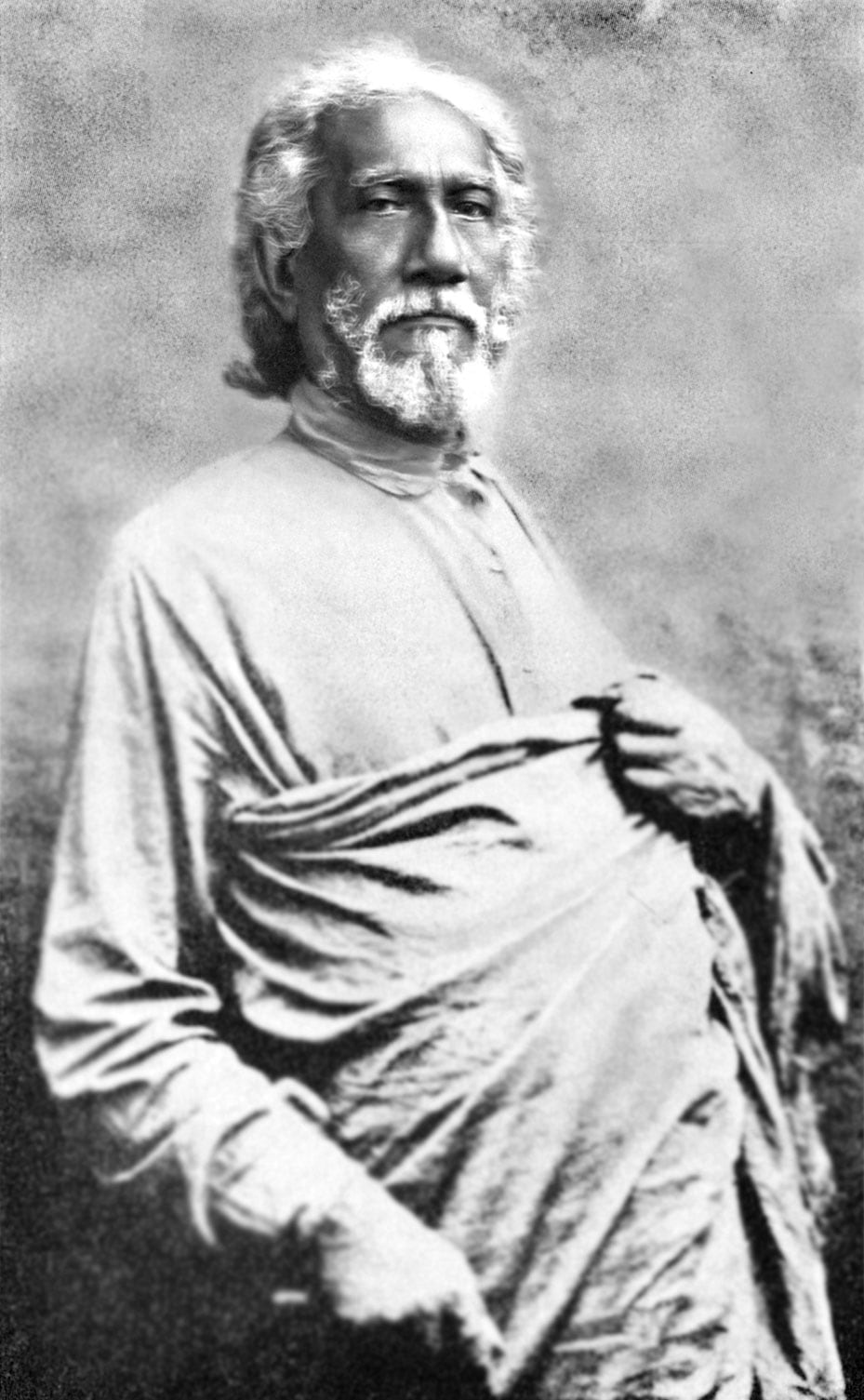
Sri Yukteswar, retrato de la primera edición de la Autobiografía · Public domain
Con le sue parole
«The purpose of this book is to show as clearly as possible that there is an essential unity in all religions; that there is no difference in the truths inculcated by the various faiths; that there is but one method by which the world, both external and internal, has evolved; and that there is but one Goal admitted by all scriptures.»The Holy Science, ed. SRF 1972 (texto de 1894), Introducción

Per cominciare, un'opera
Kaivalya Darsanam: The Holy ScienceLa sua idea centrale
The 24,000-year cycle of the yugas: In the introduction to *The Holy Science*, Sri Yukteswar holds that the Sun, with its planets, revolves around a companion star in a period of about 24,000 years, and that nearness to or distance from a 'grand centre' of divine magnetism determines the development of human intelligence.
Vederlo nel contesto
Biografia
5 min di lettura
Traduzione assistita dall'originale spagnolo, in attesa di revisione da parte di un traduttore madrelingua.
Un figlio di proprietari terrieri a Serampore
Priya Nath Karar nacque il 10 maggio 1855 a Serampore, l'antica colonia danese sulle rive dell'Hooghly, a una ventina di chilometri da Calcutta. I genitori, Kshetranath Karar e Kadambini, appartenevano a una famiglia di proprietari rurali; il padre morì presto e il ragazzo dovette farsi carico delle terre di famiglia. Studiò nel collegio missionario cristiano della città, dove strinse con la Bibbia una familiarità che non avrebbe più abbandonato, e frequentò per quasi due anni gli studi di medicina a Calcutta senza laurearsi. Si sposò, ebbe una figlia e rimase vedovo dopo pochi anni. È la parte della sua vita meno documentata: ciò che ne sappiamo proviene dalla biografia bengalese del suo discepolo Swami Satyananda Giri e dalle pagine che gli dedicò Paramahansa Yogananda, entrambe opera di devoti.
Lahiri Mahasaya e il kriya yoga
Nel 1884 conobbe a Benares Shyama Charan Lahiri, che i suoi seguaci chiamavano Lahiri Mahasaya, un contabile dell'amministrazione britannica che insegnava a capifamiglia una tecnica di meditazione basata sul controllo del respiro, il kriya yoga. Priya Nath ricevette da lui l'iniziazione e negli anni seguenti lo visitò spesso. La tradizione del lignaggio conserva il ricordo che il maestro lo chiamava affettuosamente «Priya», l'amato. Da Lahiri ereditò due tratti che avrebbero definito il suo insegnamento: la convinzione che la pratica meditativa si possa vivere senza abbandonare il mondo e una lettura delle scritture come mappe di stati interiori.
Allahabad, 1894: la Scienza sacra
Nel gennaio del 1894, durante la Kumbh Mela di Allahabad, secondo la sua stessa testimonianza, fu chiamato da uno sconosciuto sulle rive del Gange e condotto al cospetto di Babaji, il maestro di Lahiri Mahasaya, figura della quale non esiste documentazione storica indipendente. In quel colloquio, sempre secondo il racconto dell'autore, Babaji gli chiese un breve libro che mostrasse l'armonia tra le scritture cristiane e quelle indù e gli conferì il titolo di swami. Il libro, Kaivalya Darshanam, l'«esposizione della verità ultima», si presenta nella prima pagina come scritto da «Priya Nath Swami» su richiesta di Babaji, nell'anno 194 del Dvapara Yuga. I capitoli apparvero dapprima nella sua rivista Sadhusambad; nel 1920 il suo discepolo Atul Chandra Chowdhury li stampò in volume, e nel 1949 la Self-Realization Fellowship ne pubblicò una versione riveduta con il titolo The Holy Science (La scienza sacra).
Il libro ha quattro capitoli — il Vangelo, la Meta, il Procedimento e la Rivelazione —, organizzati in aforismi sanscriti composti dallo stesso autore e commentati in inglese, con abbondanti citazioni del Nuovo Testamento e soprattutto dell'Apocalisse. La sua ossatura è la cosmologia del sāṃkhya; la sua tesi, che tutte le religioni condividano un'unica meta. L'introduzione ne contiene la parte più celebre e più discussa: una cronologia degli yuga che sostituisce le centinaia di migliaia di anni della tradizione puranica con un ciclo di 24.000 anni, legato a una presunta orbita del Sole attorno a una stella compagna, e che colloca l'umanità non nel Kali Yuga ma nella fase ascendente del Dvapara a partire dal 1699. L'astronomia accademica non avalla l'ipotesi della stella doppia; la cronologia, invece, ha avuto una lunga discendenza nella letteratura spirituale.
Due eremi e una disciplina severa
Dopo l'ordinazione formale nell'ordine degli swami, ricevuta dall'abate di Bodh Gaya nel ramo Giri, trasformò la casa di famiglia a Serampore in un eremo e nel 1903 ne fondò un altro a Puri, sul golfo del Bengala, il Karar Ashram, la cui inaugurazione fissò, secondo la tradizione della casa, nell'equinozio di primavera. Divideva l'anno fra i due. Fondò un'associazione, la Sadhu Sabha, per riunire religiosi di correnti diverse; redasse programmi scolastici di fisica, fisiologia, geografia e astronomia, un manuale di inglese e hindi per bengalesi e un trattato elementare di astrologia, e si interessò all'educazione femminile. Praticava lo jyotisha, l'astrologia indiana, e prescriveva ai discepoli bracciali di metalli e gemme, convinto che la scienza degli astri potesse servire da scorciatoia finché l'anima non fosse libera.
Ebbe pochi discepoli stabili. Yogananda attribuì questa scarsità a un metodo che «non può essere descritto se non come drastico»: rimproverava in pubblico, esigeva ordine domestico e non tollerava il compiacimento. L'antropologo e tibetologo W. Y. Evans-Wentz, che lo visitò a Serampore, lo ricordava alto, eretto, dalla voce mite e dalla presenza serena.
Il maestro di Yogananda
Nel 1910, in una strada di Benares, incrociò Mukunda Lal Ghosh, un ragazzo di diciassette anni fuggito di casa in cerca di un maestro. Per un decennio lo formò a Serampore e a Puri; nel luglio del 1915 lo ordinò swami con il nome di Yogananda e lo incoraggiò ad accettare, nel 1920, l'invito a un congresso religioso a Boston. Quando Yogananda tornò in India nel 1935, Sri Yukteswar gli conferì il titolo di paramahansa e lo designò suo successore alla guida della Sadhu Sabha e dei suoi eremi. Altri suoi discepoli, come Swami Satyananda Giri, Sailendra Bejoy Dasgupta o Swami Hariharananda, fondarono in seguito lignaggi paralleli di kriya yoga che leggono la sua figura con accenti diversi da quelli della Self-Realization Fellowship.
La morte a Puri e la costruzione del racconto
Morì nel Karar Ashram di Puri alle sette di sera del 9 marzo 1936, dopo una breve febbre, seduto nella posizione del loto secondo coloro che ne trovarono il corpo. Yogananda, che si trovava a Calcutta, arrivò il giorno seguente e presiedette alla sepoltura nel giardino dell'eremo, secondo l'usanza degli swami, che non vengono cremati. L'Amrita Bazar Patrika di Calcutta lo salutò come uno dei grandi interpreti della Bhagavad Gita. Nell'Autobiografia di uno yogi (1946), Yogananda aggiunse un capitolo in cui racconta di averlo visto in carne e ossa in un albergo di Bombay il 19 giugno 1936 e di averne ricevuto una lunga descrizione del mondo astrale. È una testimonianza di fede del discepolo, non un fatto verificabile, e va letta come tale.
Eredità
L'immagine di Sri Yukteswar che circola nel mondo è in buona parte quella tracciata da Yogananda: lo jnanavatar, l'«incarnazione della saggezza», esigente e affettuoso, astrologo e lettore della Bibbia. Il suo volto compare fra quelli della copertina di Sgt. Pepper's Lonely Hearts Club Band (1967), e La scienza sacra continua a essere pubblicata in una dozzina di lingue. Il suo commento bengalese alla Gita, tradotto in inglese nel 2004 da Yoga Niketan, e la biografia di Satyananda mostrano un autore più tecnico e meno leggendario, da leggere accanto al ritratto dell'Autobiografia.
Fonti: Yogananda, Paramhansa. Autobiography of a Yogi. Nueva York: The Philosophical Library, 1946 (1.ª ed.), caps. 10, 12, 14-16, 36, 42 y 43; prefacio de W. Y. Evans-Wentz. Texto en Wikisource y Project Gutenberg #7452. · Yukteswar Giri, Swami Sri. The Holy Science (Kaivalya Darsanam). Los Ángeles: Self-Realization Fellowship, 7.ª ed. 1972, 3.ª reimpr. 1977 (texto de 1894; copyright de la revisión, 1949). Consultado en Internet Archive. · Satyananda Giri, Swami. «Swami Sri Yuktesvar Giri Maharaj: A Biography», en A Collection of Biographies of 4 Kriya Yoga Gurus. Trad. Yoga Niketan. Lincoln (Nebraska): iUniverse, 2006. ISBN 9780595386758. · Selbie, Joseph, y David Steinmetz. The Yugas: Keys to Understanding Our Hidden Past, Emerging Present and Future Enlightenment. Nevada City: Crystal Clarity Publishers, 2010. ISBN 9781565892538. · Dasgupta, Sailendra Bejoy. Kriya Yoga and Swami Sriyukteshvar. Calcuta: S. B. Dasgupta, 1979.
Cronologia
La vita, anno per anno
Ogni punto è un evento documentato. Fai clic per leggerlo, con la sua fonte e il suo grado di certezza.
10 maggio 18550 anniSerampore
Birth of Priya Nath Karar
Born into a family of Bengali landowners, son of Kshetranath Karar and Kadambini.
DocumentatoYogoda Satsanga Society of India, «Swami Sri Yukteswar».
Dopo la sua morte
- dicembre 1946*Autobiography of a Yogi* spreads his figure
- 1949Revised Self-Realization Fellowship edition
- giugno 1967On the cover of *Sgt. Pepper*
10 maggio 1855 · 0 anni
Birth of Priya Nath Karar
Born into a family of Bengali landowners, son of Kshetranath Karar and Kadambini.
Documentato
ca. 1875
Studies at the missionary college and the medical college
Studies at the Christian missionary college of Serampore, where he becomes interested in the Bible, and spends about two years at medical college in Calcutta. Approximate dates.
Probabile
ca. 1880
Marriage, a daughter and widowhood
After his father's death he marries at his mother's wish; he has a daughter and is widowed a few years later.
Probabile
1884 · 29 anni
Initiation into kriya yoga by Lahiri Mahasaya
Meets Lahiri Mahasaya, who initiates him into kriya yoga; he will visit him often in the following years.
Documentato
gennaio 1894 · 38 anni
Meeting with Babaji at the Kumbha Mela
By his own account in the introduction to *Kaivalya Darsanam*, Babaji asks him for a book on the harmony of Christian and Hindu scriptures and gives him the title of swami. Babaji has no independent historical documentation.
Tradizione
1894 · 39 anni
Writes *Kaivalya Darsanam*
Writes the work in a short time, dated to the 194th year of the Dvapara Yuga; the chapters first appear in his journal *Sadhusambad*.
Documentato
22 marzo 1903 · 47 anni
Founding of the Karar Ashram
Founds his seaside hermitage in Puri; his lineage's tradition dates the opening to the spring equinox, chosen for astrological reasons.
Tradizione
1910 · 55 anni
Meeting with Mukunda Lal Ghosh
Meets the future Paramahansa Yogananda, who will spend ten years training in his hermitages.
Documentato
luglio 1915 · 60 anni
Ordains Yogananda a swami
Gives Mukunda the vows of the Swami order, Giri branch, with the name Yogananda.
Documentato
1920 · 65 anni
First book edition of *Kaivalya Darsanam*
His disciple Atul Chandra Chowdhury, secretary of the Sadhu Sabha, privately prints the book.
Documentato
1935 · 80 anni
Confers on Yogananda the title of paramahansa
During Yogananda's visit to India he grants him the monastic title of paramahansa and charges him with continuing his work.
Documentato
9 marzo 1936 · 80 anni
Death at the Karar Ashram
Dies at about seven in the evening after a brief fever; he is buried on 10 March in the hermitage garden. The funeral bhandara is held on 21 March.
Documentato
dicembre 1946
*Autobiography of a Yogi* spreads his figure
Yogananda devotes several chapters of his autobiography to him, including the account of his appearance after death, which builds his international image.
Documentato
1949
Revised Self-Realization Fellowship edition
SRF publishes *The Holy Science* with a foreword by Yogananda and changes to terminology and grammar; in 1963 an English translation of the Sanskrit sutras is added.
Documentato
giugno 1967
On the cover of *Sgt. Pepper*
His portrait appears among the figures on the cover of the Beatles' album.
Documentato
Opere
Opere essenziali
Le opere senza le quali non si comprende la sua eredità.
Opera scritta · 1894
Kaivalya Darsanam: The Holy Science
Kaivalya Darsanam (The Holy Science)
A treatise in four chapters—the Gospel, the Goal, the Procedure and the Revelation—that sets out Samkhya cosmology and yogic practice through commented Sanskrit aphorisms and places them alongside passages from the New Testament and Revelation. It argues that all religions share a single goal and describes five states of the heart through which the seeker advances, guided by the 'heart's natural love'. Its introduction proposes a 24,000-year cycle of yugas, tied to a hypothetical companion star of the Sun, and places humanity in an ascending Dvapara: the most famous and most disputed part of the book.
15 edizioni

Opera scritta
Spiritual commentary on the Bhagavad Gita
Srimad Bhagavad Gita (comentario espiritual, bengalí)
A reading of the *Bhagavad Gita* as an allegory of kriya yoga practice, in the line begun by Lahiri Mahasaya: the poem's characters and battles are interpreted as forces and states of the practitioner's consciousness. It is the text that best shows the technical Sri Yukteswar, the meditation teacher, as against the literary character of *Autobiography of a Yogi*. Yogananda said his master encouraged him to give his own interpretation of the *Gita*, the distant origin of *God Talks with Arjuna*.
1 edizione
Tutta la sua opera (8)
Sri Yukteswar
First Book (English and Hindi primer)
The Conscious LibraryFirst Book (English and Hindi primer)
Sri Yukteswar
Elementary treatise on astrology
The Conscious LibraryElementary treatise on astrology
Sri Yukteswar
School science syllabi
The Conscious LibrarySchool science syllabi
Sri Yukteswar
Sadhusambad (journal)
The Conscious LibrarySadhusambad (journal)

Biography of Sri Yukteswar by Swami Satyananda Giri
Sri Yukteswar
Kriya Yoga and Swami Sriyukteshvar (S. B. Dasgupta)
The Conscious LibraryKriya Yoga and Swami Sriyukteshvar (S. B. Dasgupta)
1979
Citazioni
Citazioni localizzate in un'opera precisa. Ciascuna porta con sé la sua provenienza e il suo grado di affidabilità.
The purpose of this book is to show as clearly as possible that there is an essential unity in all religions; that there is no difference in the truths inculcated by the various faiths; that there is but one method by which the world, both external and internal, has evolved; and that there is but one Goal admitted by all scriptures.VerificataThe Holy Science, ed. SRF 1972 (texto de 1894), Introducción
Ultime parole
Non esistono testimonianze verificabili delle sue ultime parole.
No reliable record of his last words is known. Yogananda, his main biographer, was not present (he was in Calcutta and reached Puri the next day) and says so explicitly in a note to the *Autobiography*. The words 'My task on earth is now finished; you must carry on', addressed to Yogananda when conferring the title of paramahansa in 1935, are sometimes quoted as a farewell, but they precede his death by months.
Fonte: Yogananda, Paramhansa. Autobiography of a Yogi. Nueva York: The Philosophical Library, 1946 (1.ª ed.), caps. 10, 12, 14-16, 36, 42 y 43; prefacio de W. Y. Evans-Wentz. Texto en Wikisource y Project Gutenberg #7452.
Chiedi
Ciò a cui risponde la sua opera
Dodici grandi domande dell'umanità e ciò che i suoi testi permettono di rispondere, con riferimenti. Non gli mettiamo mai parole in bocca.
Che cos'è l'Assoluto? Dio esiste?
Parambrahma, the one eternal substance, manifests as Father, Son and Om
Un Assoluto impersonaleLo dice espressamente
In the Kaivalya Darsanam Sri Yukteswar opens with the statement that Parambrahma, Spirit, is the only real substance, eternal, complete and without beginning or end. From it he explains creation with a scheme meant to show the unity of Hinduism and Christianity: God the Father (Sat) is beyond creation; his manifestation as vibration, the Word or Om, is the Holy Ghost; and his conscious reflection in creation is the Son (Tat), the Christ consciousness. The ultimate is therefore not a person who acts but a substance of love and consciousness that expresses itself through vibration and maya. The personal figures of Father and Son are ways of naming those aspects, not beings distinct from the Absolute.
Confronta questa domanda con altri maestriChi sono io? Esiste un vero sé?
Man is a son of God wrapped in five sheaths
Il Sé è l'AssolutoLo dice espressamente
In the Kaivalya Darsanam Sri Yukteswar describes the human being as a reflection of Spirit, the ‘son of God’, covered by five sheaths (koshas) ranging from the subtlest to the physical. Out of ignorance man identifies with those sheaths and with the body, and forgets his divine nature. Wisdom consists in progressively withdrawing consciousness from these layers until one recognises that the true self is one with the eternal Father, beyond creation. To describe that return he uses both the vocabulary of Samkhya and that of the Gospel: the prodigal son coming home is the soul recovering its unity with Spirit. Kaivalya, oneness, is the name of that goal.
Confronta questa domanda con altri maestriPerché soffriamo?
Ignorance makes man think himself the body and exiles him from the inner Eden
L'ignoranza di ciò che siamoLo dice espressamente
In the Kaivalya Darsanam Sri Yukteswar explains that man suffers because, through avidya, ignorance, he identifies with the material body and its desires and forgets that he is a reflection of Spirit. From that identification arise attachment, aversion and fear, which he sets out in the vocabulary of yoga’s afflictions. Yogananda, in his Autobiography, attributes to him a biblical image of the same idea: outward longings drive us from the inner Eden and offer false pleasures that supplant the soul’s happiness, and the lost paradise is regained through meditation. Suffering is thus an exile from one’s own nature, and the way back is the heart’s natural love disciplined by yoga.
Confronta questa domanda con altri maestriChe cosa accade dopo la morte?
The soul passes to subtle worlds and returns according to its karma
Rinascita secondo il karmaSi deduce dalla sua dottrina
Sri Yukteswar taught within the framework of reincarnation: as long as the soul is not freed from desires and karma it is born again, and his astrology presupposes that each birth matches that individual karma. In the Kaivalya Darsanam he describes creation as a series of spheres (lokas) of decreasing density between the physical world and Spirit, through which the soul descends and ascends. The best-known description of his teaching on the afterlife is not his own: in Autobiography of a Yogi Yogananda relates a posthumous appearance of his master in which he describes the astral and causal worlds where souls live between one incarnation and the next.
Confronta questa domanda con altri maestriCome si raggiunge la liberazione o la salvezza?
Kriya yoga, discipline and the heart’s natural love
Con una pratica disciplinataLo dice espressamente
Sri Yukteswar, a disciple of Lahiri Mahasaya, transmitted Kriya Yoga as a precise method for withdrawing consciousness from the body and directing it towards Spirit. In the Kaivalya Darsanam he makes the heart’s natural love the main requirement and defines faith (sraddha) as its intensification; from there he sets out the steps of yoga: ethical discipline, breath control, interiorisation and meditation on the vibration of Om. His teaching combines method with moral demand: according to Yogananda he was a stern master who corrected without indulgence. Liberation is a gradual process the disciple travels by his own effort, guided by a true master, until he recognises himself one with the Father.
Confronta questa domanda con altri maestriServe un maestro?
The true master, the sadguru, is the disciple’s saviour
IndispensabileLo dice espressamente
In the Kaivalya Darsanam Sri Yukteswar describes the meeting with the sadguru, the true master, as the decisive step: the heart’s natural love leads the seeker into the company of the saints, and from there to the master who initiates him into practice and guides him to the goal. He himself lived that relationship with Lahiri Mahasaya and exercised it with his disciples. Yogananda describes in his Autobiography the strict discipline of the Serampore ashram, where the master corrected each of the disciple’s faults so that he could receive the teaching. For Sri Yukteswar the guru does not replace the disciple’s effort, but without his transmission and guidance practice bears no fruit.
Confronta questa domanda con altri maestriIl mondo è reale?
Creation is the vibration of Om in fourteen spheres
Piani di esistenzaLo dice espressamente
In the Kaivalya Darsanam Sri Yukteswar explains creation as the manifestation of Spirit through the vibration of Om, which gives rise to maya, the illusion of separateness, and to a series of spheres of increasing density. He describes seven worlds (lokas), from the subtlest, close to Spirit, to the material, together with their corresponding regions of darkness, forming a hierarchical creation. To that scheme he adds a cyclical theory of time, that of the yugas, which he adjusts to his own astronomical calculations. The physical world is not false, but it is the densest plane of a stratified reality, and the human being is called to climb back through those planes to their source.
Confronta questa domanda con altri maestriChe cos'è l'amore?
The heart’s natural love is the gateway to the holy life
Anelito e unioneLo dice espressamente
In the Kaivalya Darsanam Sri Yukteswar places love at the start of the path: the heart’s natural love is the main requirement for a holy life, and faith (sraddha) is its intensification. That love is the soul’s attraction to its source, Spirit, and when rightly directed it leads to the company of saints and to the master. Yogananda attributes to him in his Autobiography a clear distinction: ordinary love is selfish, rooted in desires and gratifications, whereas divine love has no condition, no limit and no change. Sri Yukteswar, known for his severity, understood the demanding correction of the disciple as a form of that unconditional love.
Confronta questa domanda con altri maestriSiamo liberi o è tutto determinato?
The stars reflect karma, but spiritual effort overcomes it
Karma e sceltaLo dice espressamente
Sri Yukteswar was an astrologer and defended astrology as a science, but not as fatalism. According to Yogananda’s account in Autobiography of a Yogi, he taught that a child is born at the moment when the celestial rays are in mathematical harmony with its individual karma: the horoscope does not cause destiny, it reflects it. And that karma can be changed. The same account attributes to him the exhortation to forget the past, since human conduct is uncertain until anchored in the divine, and all will improve if spiritual effort is made now. He even recommended astrological remedies, but insisted that wisdom and the practice of yoga are the real means of freeing oneself from such influences.
Confronta questa domanda con altri maestriPerché meditare o pregare?
Reverse the current inward and regain the inner Eden
Tornare alla sorgente dell'ioLo dice espressamente
For Sri Yukteswar meditation is the return of consciousness to its source. In the Kaivalya Darsanam he describes how, through regulation of the breath and interiorisation, the yogi withdraws attention from the senses, perceives the light and sound of Om and climbs back through the sheaths that separate him from Spirit. This is the logic of the Kriya Yoga he received from Lahiri Mahasaya: not a prayer addressed to an external God but a technique for reversing the life current that flows outward. Yogananda attributes to him the image of the lost paradise quickly regained through divine meditation. To meditate is to return home, to where the soul knows itself one with the Father.
Confronta questa domanda con altri maestriPuò la ragione conoscere l'ultimo?
A holy science that reconciles scriptures and is verified within oneself
Conoscenza esotericaLo dice espressamente
Sri Yukteswar wrote the Kaivalya Darsanam, translated as The Holy Science, with a purpose stated in its opening: to show as clearly as possible the essential unity of all religions. To that end he compares passages of the Bible and Hindu texts with reasoned arguments and presents his system as a science. But that science is not merely intellectual: it rests on a technique transmitted from master to disciple, Kriya Yoga, and on a cosmic chronology, that of the yugas, which he regards as recovered knowledge. Yogananda attributes to him the warning not to confuse understanding with a larger vocabulary: wisdom is assimilated not with the eyes but with the atoms.
Confronta questa domanda con altri maestriRitirarsi dal mondo o trasformarlo?
From home to ashram: inner discipline does not require flight
Contemplazione nell'azioneSi deduce dalla sua dottrina
Sri Yukteswar lived most of his life as a householder and property owner in Serampore, and only after being widowed did he take monastic vows in the Giri order. His master, Lahiri Mahasaya, was the model of the yogi who attains realisation without leaving work or family, and Kriya Yoga was transmitted precisely as a practice compatible with life in the world. Sri Yukteswar took an interest in education, astronomy and medicine, wrote science syllabuses for schools and guided his disciples with practical rigour. For him what mattered was not where one lives but inner discipline and the heart’s love directed towards Spirit.
Confronta questa domanda con altri maestri
Affinità e tensioni
Affinità e tensioni
Calcolate domanda per domanda a partire dalle sue posizioni. Il perché di ogni accordo o contrasto, con un clic.
La pensa in modo simile a
Helena Blavatsky
Concordano su: Siamo liberi o è tutto determinato? · Che cos'è l'Assoluto? Dio esiste? · Che cosa accade dopo la morte?
Sadhguru
Concordano su: Come si raggiunge la liberazione o la salvezza? · Che cos'è l'Assoluto? Dio esiste? · Chi sono io? Esiste un vero sé?
Paramahansa Yogananda
Concordano su: Che cosa accade dopo la morte? · Come si raggiunge la liberazione o la salvezza? · Il mondo è reale?
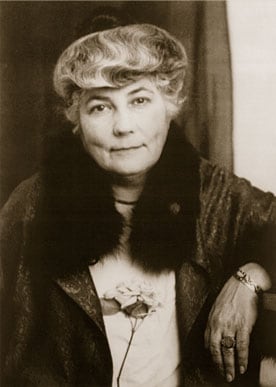
Helena Roerich
Concordano su: Che cos'è l'Assoluto? Dio esiste? · Che cosa accade dopo la morte? · Serve un maestro?
La pensa diversamente da
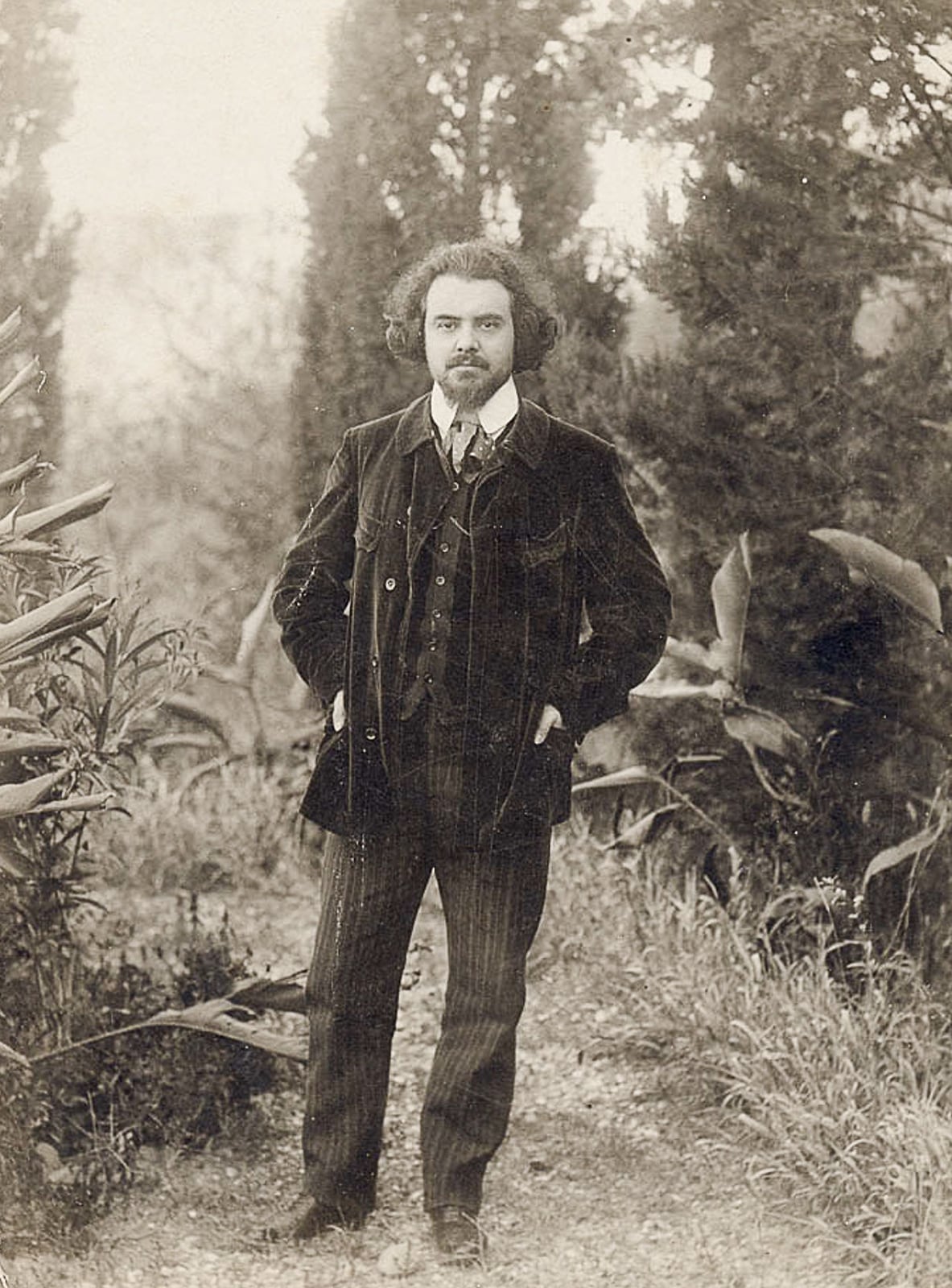
Nikolai Berdyaev
Si scontrano su: Chi sono io? Esiste un vero sé? · Che cosa accade dopo la morte? · Serve un maestro?

Julian of Norwich
Si scontrano su: Chi sono io? Esiste un vero sé? · Che cosa accade dopo la morte?
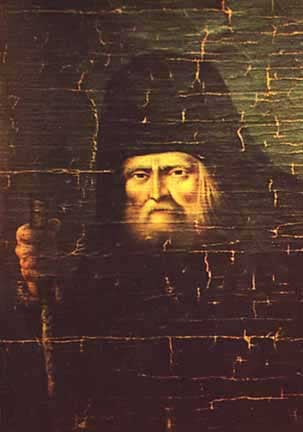
Seraphim of Sarov
Si scontrano su: Chi sono io? Esiste un vero sé? · Che cosa accade dopo la morte?
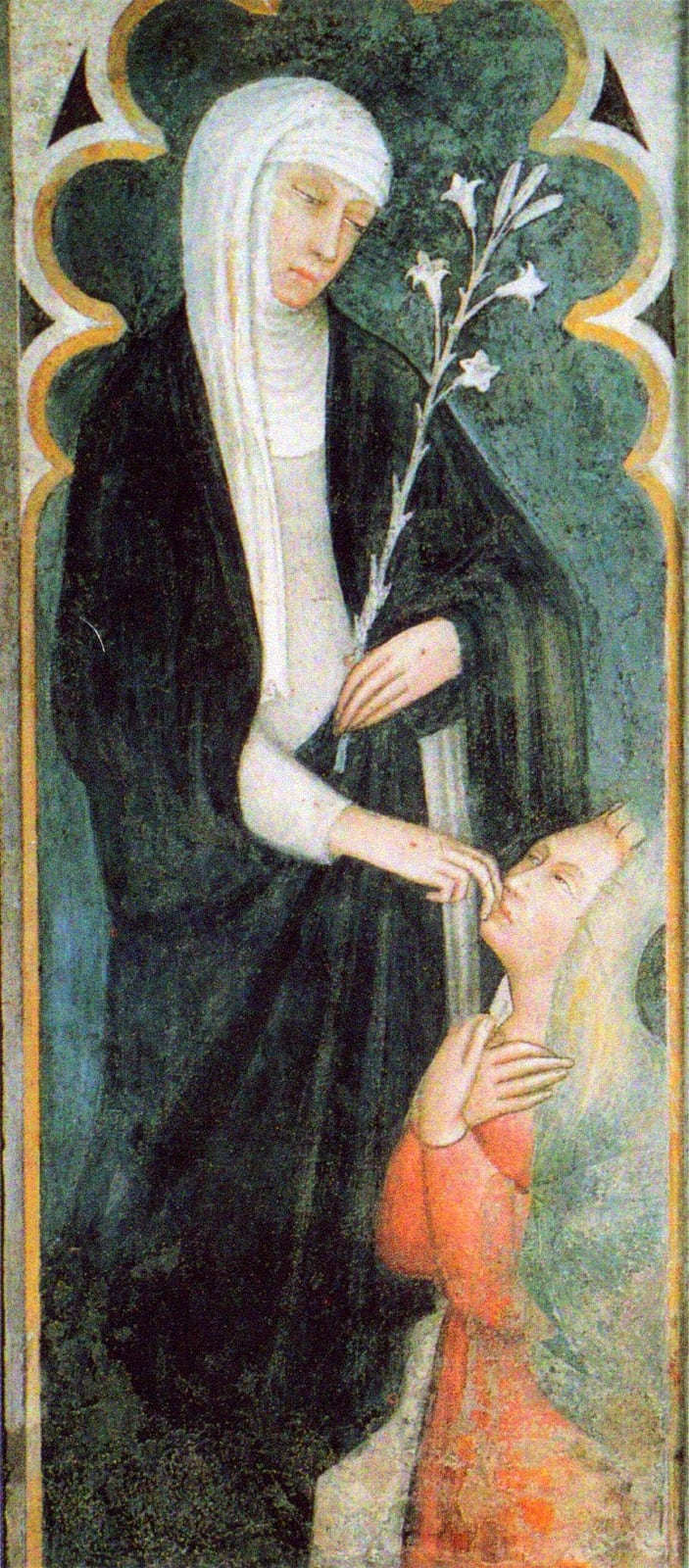
Catherine of Siena
Si scontrano su: Chi sono io? Esiste un vero sé? · Che cosa accade dopo la morte?
Aneddoti e racconti
Aneddoti e racconti
Testimonianza1910
'How many years I have waited for you!'
Origine del racconto: Yogananda's account in *Autobiography of a Yogi* (1946), ch. 10, written thirty-five years later. There are no independent witnesses.
Testimonianzac. 1910-1915
The cauliflower robbery
Origine del racconto: *Autobiography of a Yogi* (1946), ch. 15, 'The Cauliflower Robbery'. Sole source; the element of clairvoyance is the narrator's interpretation.
Testimonianzac. 1910-1911
A tap on the chest
Origine del racconto: *Autobiography of a Yogi* (1946), ch. 14, 'An Experience in Cosmic Consciousness'. A subjective experience narrated by the one who lived it.
Testimonianza1894
The commission at Allahabad
Origine del racconto: Two sources from the protagonist himself: the introduction to *Kaivalya Darsanam* (1894) and his account recorded by Yogananda in *Autobiography of a Yogi*, ch. 36. Babaji's historical existence is not documented outside his lineage.
Racconto agiografico1936
The appearance in the Bombay hotel
Origine del racconto: *Autobiography of a Yogi* (1946), ch. 43. A vision narrated by a single witness, Yogananda himself, beyond verification; the Kriya Yoga International lineage relates similar appearances to Swami Hariharananda.
Testimonianzac. 1915
The bangle against the stars
Origine del racconto: *Autobiography of a Yogi* (1946), ch. 16, 'Outwitting the Stars'. The prediction and its fulfilment are recorded only in the disciple's account.
Insegnamenti
Insegnamenti
Le nozioni che articolano il suo pensiero, spiegate nel loro contesto.
The 24,000-year cycle of the yugasciclo-de-los-yugas
A reinterpretation of the Puranic doctrine of the four ages (*caturyuga*) with nineteenth-century astronomical arguments.
The essential unity of religionsunidad-de-las-religiones
A commission attributed to Babaji in 1894; inherited by Self-Realization Fellowship as a founding principle.
The heart's natural love (sraddha)amor-natural-del-corazon
Aphorisms 5-6 of chapter 3; takes up the notion of *śraddhā* from the *Yoga Sutras* (I.20).
Kriya yogakriya-yoga
Lineage Babaji – Lahiri Mahasaya – Sri Yukteswar – Yogananda.
The guru as guide, not saviourguru
The conception of the guru in the kriya yoga lineage.
Astrology as a science of karmaastrologia-como-ciencia
The Indian astrological tradition (*jyotisha*) read in a yogic key.
Video
Video
Registrazioni, interviste e documentari. I video vengono riprodotti da YouTube; non sono ospitati qui.
Sri Yukteshwar video 2
Registrazione originale· UND· 1 min
Avatarsandyogis
Sri Yukteshwar video 1
Registrazione originale· UND· 1 min
Avatarsandyogis
Paramahansa Yogananda & Swami Sri Yukteswar
Registrazione originale· UND· 1 min
Fred McCabe (cgny69)
The Yugas and Spiritual Awakening: The Revolutionary Wisdom of Swami Sri Yukteswar
Conferenza· EN· 58 min
Ananda Sangha WorldwideCanale ufficiale
Swami Sri Yukteswar: Inspiration from the "Holy Science"
Conferenza· EN· 44 min
Ananda Sangha WorldwideCanale ufficiale
Sri Yukteswar's Advice on How to Develop the Natural Love of the Heart
Conferenza· EN· 51 min
Ananda Sangha WorldwideCanale ufficiale
"What are the Yugas?" with Joseph Selbie, co-author of "The Yugas"
Intervista· EN· 6 min
Ananda Sangha WorldwideCanale ufficiale
Puri - with the Kriya Yoga Ashram founded by Sri Yukteswar, India 1977
Documentario· EN· 1977· 34 min
Kriya Yoga Masters of Kriya Yoga InternationalCanale ufficiale
Online Class on The Holy Science by Sri Yukteswar April & May 2020
Conferenza· EN· 2020· 12 min
Kriya Yoga Online with Ryan Kurczak
The Spiritual Guidance of Swami Sri Yukteswar: Navigating Life's Challenges
Conferenza· EN· 51 min
Yogacharya Ellen Grace O'Brian
Swami Sri Yukteswar Giri: O Leão da Bengala | Grandes Mestres Ep. 6
Analisi· PT· 32 min
Guilherme Romano
Home of Swami Sri Yukteshwar ji, Ananda Lok & Babaji's Banyan Tree | Serampore
Documentario· HI· 12 min
Connect with Thyself - Ruchi Shukla
Galleria
Galleria
Immagini con licenza verificata. Ciascuna conserva la sua paternità e la sua attribuzione.
Relazioni
Relazioni
Influenze, discepolati e affinità. Si distingue la relazione documentata dalla somiglianza individuata per analisi.
Discepolo di
Lahiri Mahasaya
His guru; initiated him into kriya yoga in 1884.
Relazione documentata
Incontrò
Mahavatar Babaji
A meeting the author himself relates in his book's introduction (Allahabad, 1894); Babaji's historical existence is not documented outside the lineage.
Relazione documentata
Maestro di
His best-known disciple (1910-1936); ordained him swami in 1915 and gave him the title of paramahansa in 1935.
Relazione documentata
Maestro di
Swami Satyananda Giri
Disciple and biographer; ran the Ranchi school.
Relazione documentata
Maestro di
Paramahamsa Hariharananda
Disciple who spread kriya yoga from the Karar Ashram and founded Kriya Yoga International.
Relazione documentata
Ricevette l'influenza di
Comments on the words of Jesus and Revelation in *Kaivalya Darsanam* as expressions of the same truths as the Vedas.
Relazione documentata
Ricevette l'influenza di
The practice and the notion of *śraddhā* in his third chapter closely follow the *Yoga Sutras*.
Somiglianza individuata per analisi
Incontrò
W. Y. Evans-Wentz
The scholar visited him at Serampore and described him in the preface to the *Autobiography*.
Relazione documentata
Contemporaneo di
A Bengali contemporary who, like him, presented yoga to the West as a universal science of religion.
Somiglianza individuata per analisi
Contemporaneo di
A contemporary from the Calcutta region; both defended the convergence of religions, by different paths.
Somiglianza individuata per analisi
Collegato da altre schede
Fonti
Fonti
Bibliografia e cataloghi consultati per questa scheda.
- Yogananda, Paramhansa. Autobiography of a Yogi. Nueva York: The Philosophical Library, 1946 (1.ª ed.), caps. 10, 12, 14-16, 36, 42 y 43; prefacio de W. Y. Evans-Wentz. Texto en Wikisource y Project Gutenberg #7452.
- Yukteswar Giri, Swami Sri. The Holy Science (Kaivalya Darsanam). Los Ángeles: Self-Realization Fellowship, 7.ª ed. 1972, 3.ª reimpr. 1977 (texto de 1894; copyright de la revisión, 1949). Consultado en Internet Archive.
- Satyananda Giri, Swami. «Swami Sri Yuktesvar Giri Maharaj: A Biography», en A Collection of Biographies of 4 Kriya Yoga Gurus. Trad. Yoga Niketan. Lincoln (Nebraska): iUniverse, 2006. ISBN 9780595386758.
- Wikidata, «Yukteswar Giri» (Q380790).
- Wikipedia (en), «Swami Sri Yukteswar Giri» (apoyada en la biografía de Satyananda y en la Autobiografía).
- «The Holy Science – 1920 Original Edition: Introduction and Study». Yogananda Harmony (estudio de la historia editorial: Sadhusambad, edición de Atul Chandra Chowdhury de 1920, revisiones de SRF de 1949, 1963 y 1972).
- Yogoda Satsanga Society of India, «Swami Sri Yukteswar».
- Kriya Yoga International (linaje de Paramahamsa Hariharananda), «Swami Shriyukteshwar Giri».
- Yoga Niketan, «Scriptural Commentaries» (Srimad Bhagavad Gita, Spiritual Commentary by Swami Sriyukteshvar Giri).
- Open Library, ediciones de The Holy Science y del comentario a la Gita (ISBN 9780876120514, 9780876120569, 9780595665211, 9788189955038, etc.).
- Selbie, Joseph, y David Steinmetz. The Yugas: Keys to Understanding Our Hidden Past, Emerging Present and Future Enlightenment. Nevada City: Crystal Clarity Publishers, 2010. ISBN 9781565892538.
- Dasgupta, Sailendra Bejoy. Kriya Yoga and Swami Sriyukteshvar. Calcuta: S. B. Dasgupta, 1979.
- Titolare dei diritti
- El texto original de 1894/1920 es de dominio público (autor fallecido en 1936). Self-Realization Fellowship (Los Ángeles) y Yogoda Satsanga Society of India son titulares de la edición revisada de 1949 y de sus traducciones; Yoga Niketan, de la traducción inglesa del comentario a la Gita.
- Sito ufficiale
- yssofindia.org/about/swami-sri-yukteswar
In attesa di conferma
Ciò che questa scheda non ha ancora potuto chiarire. Preferiamo dirlo piuttosto che riempirlo.
- Localizar un facsímil o transcripción con OCR limpio de la edición de 1920 de Kaivalya Darsanam (dominio público en EE. UU., UE y España): las copias de Internet Archive son de la edición revisada de SRF (copyright 1949) y no sirven para la sala de lectura.
- Confirmar fechas y alcance del comentario bengalí a la Bhagavad Gita (¿primeros capítulos?) y la fecha de su primera edición en Bengala.
- Identificar título y ejemplares del tratado de astrología y del «First Book», conocidos solo por la biografía de Satyananda.
- Consultar directamente la biografía de Satyananda (iUniverse, 2006) para fijar las fechas de los estudios, el matrimonio y la ordenación en Bodh Gaya.
- Vídeos: no se encontró material serio en español sobre él; las filmaciones históricas están subidas por terceros sin datos de procedencia (posiblemente la película de C. Richard Wright de 1935-1936).
- Imágenes: la serie «Sri-Yukteswar-1» a «-8» de Commons tiene metadatos inverosímiles (fechas inventadas, el propio Yukteswar como autor); no se ha usado.
- Relaciones con slugs fuera del catálogo (lahiri-mahasaya, mahavatar-babaji, swami-satyananda-giri, swami-hariharananda, w-y-evans-wentz): la ficha de Yogananda usa «sri-yukteswar-giri» como slug de esta persona; conviene unificarlo con «sri-yukteswar».
Ricerca effettuata il 2026-10-25