Induismo · Tantra · Bhakti · Advaita Vedanta
Ramakrishna
শ্রীরামকৃষ্ণ পরমহংস · গদাধর চট্টোপাধ্যায় · रामकृष्ण परमहंस
1836 – 1886Persona storicamente documentata
Mistico bengalese, sacerdote del tempio di Kali a Dakshineswar, presso Calcutta. Quasi illetterato, percorse le vie del tantra, della devozione vishnuita e del vedanta advaita, e praticò brevemente l'islam e il cristianesimo, ricavandone il suo celebre insegnamento: tante fedi, tante vie. Non scrisse nulla: la sua parola ci giunge attraverso i diari di Mahendranath Gupta (il Kathamrita) e i suoi discepoli, tra cui Vivekananda, che fondò in suo nome l'Ordine e la Missione Ramakrishna.
- opere
- 18opere
- edizioni
- 48edizioni
- citazioni
- 9citazioni
- video
- 13video
- immagini
- 7immagini
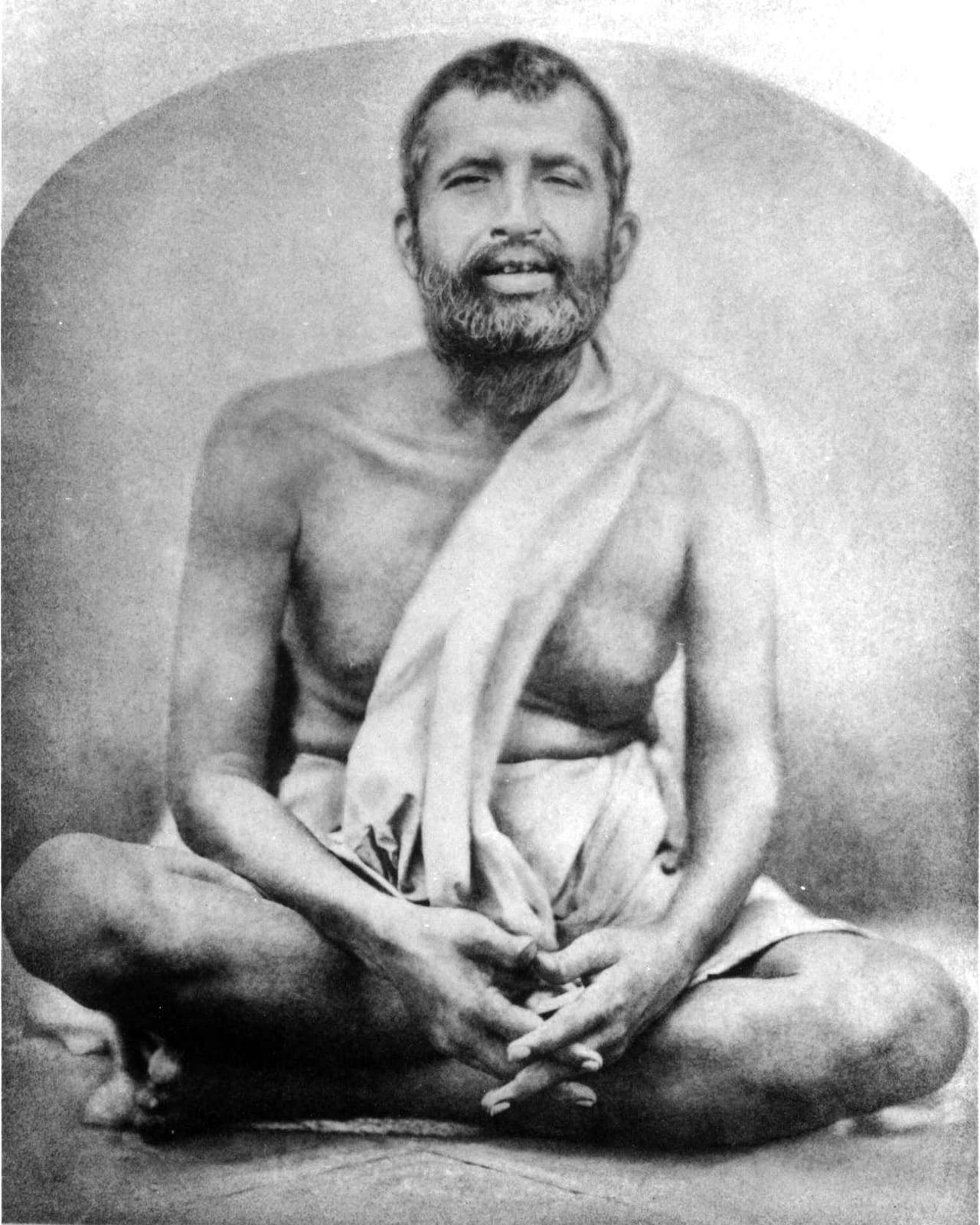
Ramakrishna sentado, la fotografía más difundida · Public domain
Con le sue parole
«Thou seest many stars at night in the sky, but findest them not when the sun rises. Canst thou say that there are no stars, then, in the heaven of day? So, O man, because thou beholdest not the Almighty in the days of thy ignorance, say not that there is no God.»Müller, Râmakrishna: His Life and Sayings (1898), dicho n.º 1 (versión inglesa de los discípulos)

Per cominciare, un'opera
Sri Sri Ramakrishna Kathamrita (The Gospel of Sri Ramakrishna)La sua idea centrale
As many faiths, so many paths: The Bengali formula yato mat, tato path—as many views, so many paths—sums up Ramakrishna’s most quoted teaching.
Vederlo nel contesto
Biografia
6 min di lettura
Traduzione assistita dall'originale spagnolo, in attesa di revisione da parte di un traduttore madrelingua.
Un brahmano povero di Kamarpukur
Gadadhar Chattopadhyay nacque il 18 febbraio 1836 a Kamarpukur, un villaggio del distretto di Hooghly, nel Bengala, quarto figlio di un brahmano impoverito, Khudiram Chattopadhyay, e di Chandramani Devi. Quasi tutto ciò che sappiamo della sua infanzia proviene da racconti tardi dei discepoli, soprattutto dal Sri Sri Ramakrishna Lilaprasanga di Swami Saradananda, scritto tra il 1909 e il 1919. Vi si narrano i sogni premonitori dei genitori — Vishnu che a Gaya promette di nascere come loro figlio, una luce che dal lingam del tempio del villaggio penetra nella madre —, che appartengono al genere agiografico e come tali vanno letti. Più verosimile, perché era lui stesso a raccontarlo, è l'episodio del bambino di sei o sette anni che, vedendo uno stormo di gru bianche stagliarsi contro una nube temporalesca, cadde privo di sensi: la sua prima estasi. Frequentò per poco la scuola del villaggio, imparò a leggere e scrivere il bengali e detestò l'aritmetica; i Purana, il Ramayana e il Mahabharata li apprese dai recitatori e dai monaci che attraversavano Kamarpukur diretti a Puri.
Il sacerdote di Kali
Il padre morì nel 1843 e nel 1852 il fratello maggiore, Ramkumar, lo portò con sé a Calcutta perché lo aiutasse nelle sue funzioni sacerdotali; Gadadhar rifiutò la scuola sanscrita con l'argomento, che la tradizione gli attribuisce, di non volere un'istruzione fatta per guadagnarsi il pane. Nel maggio del 1855 Rani Rasmani, una ricca vedova di una casta che i brahmani ortodossi consideravano bassa, consacrò a Dakshineswar, sulle rive dello Hooghly, un grande tempio a Kali; Ramkumar accettò di officiarvi e, alla sua morte nel 1856, Gadadhar rimase sacerdote sotto la protezione di Mathur Babu, genero della fondatrice. Lì visse quasi trent'anni. Ciò che seguì è il nucleo della sua leggenda e della sua autobiografia orale: un anelito così violento di vedere la dea da smettere di mangiare e di dormire, e una visione di Kali come un oceano di luce quando, disperato, afferrò la spada del santuario. Nel tempio lo presero per pazzo; per calmarlo, la famiglia lo diede in sposo nel 1859 a Saradamani Mukhopadhyay, una bambina di cinque anni del vicino villaggio di Jayrambati. Tutte le fonti concordano nel dire che il matrimonio non fu mai consumato.
Tutte le vie
Tra il 1861 e i primi anni Settanta dell'Ottocento percorse, con guide diverse, quasi l'intero ventaglio della religiosità indiana. Un'asceta errante, la cosiddetta Bhairavi Brahmani, lo iniziò alle pratiche tantriche e fu la prima a proclamare davanti a un gruppo di eruditi che egli era un'incarnazione divina. Un monaco vishnuita, Jatadhari, gli insegnò ad adorare Rama bambino, ed egli stesso visse per mesi nell'atteggiamento amoroso di Radha verso Krishna. Intorno al 1864 o 1865 un monaco errante dell'ordine di Shankara, Totapuri, gli conferì l'iniziazione del rinunciante e lo introdusse al vedanta advaita; la tradizione afferma che raggiunse il samadhi senza forma in tre giorni e che il maestro, sbalordito, si trattenne undici mesi. Intorno al 1866 praticò l'islam sotto la guida di un indù convertito al sufismo, Govinda Ray, e intorno al 1874, dopo aver ascoltato la lettura della Bibbia, ebbe una visione di Cristo che si fondeva con lui. Da questa sequenza, che conosciamo dal suo stesso racconto ai discepoli, nasce l'insegnamento che lo avrebbe reso celebre: tante fedi, tante vie. Walter Neevel e Jeffrey Kripal hanno sottolineato, contro la lettura vedantica che si impose in seguito, il peso del tantra in quella formazione.
Sarada e i brahmo
Nel 1872 la giovane moglie giunse a Dakshineswar. Ramakrishna la accolse, la istruì e quello stesso anno la adorò ritualmente come manifestazione della Dea; Sarada Devi visse accanto a lui, in una minuscola stanza del recinto, fino alla fine, e sarebbe poi divenuta la Santa Madre dell'ordine. Nel 1875 conobbe Keshab Chandra Sen, il carismatico capo di un ramo del Brahmo Samaj, il movimento riformatore che aveva rifiutato le immagini. Keshab ne rimase affascinato e pubblicò sulla stampa brahmo un breve profilo del suo insegnamento e alcuni dei suoi detti; Protap Chandra Mozoomdar gli dedicò nel 1879 un articolo, «The Hindu Saint», che Max Müller avrebbe ripubblicato anni dopo. Cominciò così ad affluire a Dakshineswar il ceto medio colto di Calcutta — studenti, maestri, medici, il drammaturgo Girish Chandra Ghosh — e, alla fine del 1881, un giovane scettico di nome Narendranath Datta, il futuro Vivekananda, che gli domandò se avesse visto Dio e ricevette un sì senza esitazioni.
Il testimone con il taccuino
Nel febbraio del 1882 comparve un maestro di scuola, Mahendranath Gupta. Teneva un diario dall'età di tredici anni e cominciò ad annotare, rientrato a casa, ciò che aveva visto e udito: data, ora, luogo, chi era presente, quali canti erano stati intonati. Da quegli appunti sarebbe nato il Sri Sri Ramakrishna Kathamrita, cinque volumi pubblicati con la firma «M.» tra il 1902 e il 1932. È la fonte principale sul suo insegnamento e un classico della prosa bengali, ma non un verbale: lo storico Sumit Sarkar ha osservato che copre soltanto circa centottantasei giorni degli ultimi quattro anni, che fu pubblicato tra quindici e cinquant'anni dopo i fatti e che è un testo costruito, con strategie d'autore. In quelle pagine Ramakrishna parla un bengali contadino pieno di parabole, battute e scene domestiche; si fa beffe degli eruditi, diffida del denaro e del desiderio — «la donna e l'oro», kamini-kanchana — e cade in estasi nel mezzo della conversazione.
Cossipore
All'inizio del 1885 un disturbo alla gola si rivelò un cancro. I discepoli lo trasferirono in autunno in una casa di Shyampukur, a Calcutta, e in dicembre in una casa con giardino a Cossipore, dove lo assistettero medici come Mahendralal Sarkar mentre egli continuava a parlare contro il parere di tutti. Lì, il 1° gennaio 1886, benedisse un gruppo di devoti nel giardino — il giorno che la tradizione chiama Kalpataru, dall'albero che esaudisce i desideri — e lì, attorno a Narendra, si formò il nucleo di giovani che sarebbero stati i primi monaci. Morì poco dopo l'una di notte del 16 agosto 1886. I discepoli parlarono di mahasamadhi; le testimonianze non concordano sulle sue ultime parole.
Un santo letto da altri
Ramakrishna non scrisse nulla. Tutto ciò che sappiamo di lui ci arriva attraverso altri: i diari di M., la biografia devozionale di Saradananda, il poema narrativo di Akshay Kumar Sen, i ricordi dei discepoli e la lettura di Vivekananda, che nel 1897 fondò la Missione Ramakrishna e presentò il maestro all'Occidente come la sintesi vivente del vedanta. Max Müller pubblicò nel 1898 la sua vita e i suoi detti, dopo aver chiesto a Vivekananda un resoconto che egli stesso giudicò non privo di elementi tradizionali; Romain Rolland gli dedicò un altro libro nel 1929. La traduzione inglese del Kathamrita di Swami Nikhilananda (1942), con prefazione di Aldous Huxley, ne fece un classico spirituale. Dagli anni Novanta la sua figura è anche oggetto di controversia accademica: Kali's Child (1995) di Jeffrey Kripal propose una lettura psicoanalitica e tantrica delle sue estasi, che l'ordine respinse con energia e alla quale replicarono Swami Tyagananda e Pravrajika Vrajaprana nel 2010. Tra l'avatar dei devoti e il mistico sottoposto ad analisi resta un uomo di villaggio la cui parola parlata, filtrata da chi lo ascoltava, è ancora una delle più lette dell'India moderna.
Fonti: Chetanananda, Swami (ed. y trad.). Ramakrishna as We Saw Him. St. Louis: Vedanta Society of St. Louis, 1990. · Isherwood, Christopher. Ramakrishna and His Disciples. Nueva York: Simon & Schuster, 1965. · Gupta, Mahendranath («M.»). Sri Sri Ramakrishna Kathamrita (শ্রীশ্রীরামকৃষ্ণকথামৃত). 5 vols. Calcuta, 1902, 1904, 1908, 1910 y 1932. Trad. inglesa: The Gospel of Sri Ramakrishna, trad. e introd. de Swami Nikhilananda, prólogo de Aldous Huxley. Nueva York: Ramakrishna-Vivekananda Center, 1942. · Saradananda, Swami. Sri Sri Ramakrishna Lilaprasanga. 5 partes. Calcuta: Udbodhan, escrita entre 1909 y 1919. Trad. inglesa: Sri Ramakrishna, the Great Master, trad. de Swami Jagadananda. Madrás: Sri Ramakrishna Math, 1952; y Sri Ramakrishna and His Divine Play, trad. de Swami Chetanananda. St. Louis: Vedanta Society of St. Louis, 2003. · Müller, F. Max. Râmakrishna: His Life and Sayings. Londres / Nueva York: Longmans, Green and Co., 1898 (reimpr. 1899).
Cronologia
La vita, anno per anno
Ogni punto è un evento documentato. Fai clic per leggerlo, con la sua fonte e il suo grado di certezza.
18 febbraio 18360 anniKamarpukur
Birth of Gadadhar
Born in Kamarpukur, fourth child of Khudiram Chattopadhyay and Chandramani Devi, poor Brahmins.
DocumentatoWikidata, «Ramakrishna» (Q183126): fechas y lugares de nacimiento y muerte, 114 enlaces entre wikis.
Dopo la sua morte
- agosto 1896Max Müller’s “A Real Mahatman”
- 1 maggio 1897Founding of the Ramakrishna Mission
- 1902First volume of the Kathamrita
- 1942The Gospel of Sri Ramakrishna
- 1995The Kali’s Child controversy
18 febbraio 1836 · 0 anni
Birth of Gadadhar
Born in Kamarpukur, fourth child of Khudiram Chattopadhyay and Chandramani Devi, poor Brahmins.
Documentato
1843 · 7 anni
Father’s death and first ecstasy
Khudiram dies. Tradition places in these years the boy’s ecstasy at the sight of white cranes against a dark cloud.
Tradizione
1852 · 16 anni
To Calcutta with his brother
His brother Ramkumar takes him to Calcutta to assist him as a priest; he refuses the Sanskrit school.
Probabile
31 maggio 1855 · 19 anni
Consecration of the Kali temple
Rani Rasmani consecrates the Dakshineswar temple; Ramkumar is its first priest and Gadadhar accompanies him.
Documentato
1856 · 20 anni
Priest of Kali
Ramkumar dies and Gadadhar becomes priest of the temple. The years of longing follow, and the vision of Kali he would later recount.
Probabile
maggio 1859 · 23 anni
Marriage to Saradamani
His family marries him to the five-year-old Saradamani Mukhopadhyay. The marriage is never consummated.
Documentato
1861 · 25 anni
The Bhairavi Brahmani and Tantra
A wandering ascetic initiates him into Tantric practice, which tradition says he completed around 1863.
Probabile
ca. 1864 · 28 anni
Initiation by Totapuri
The Advaita monk Totapuri gives him monastic initiation (sannyasa) and teaches him non-dual Vedanta; sources waver between late 1864 and 1865.
Probabile
ca. 1866 · 30 anni
Practice of Islam
Guided by Govinda Ray, a Hindu convert to Sufism, he lives for some days according to Muslim practice.
Tradizione
1872 · 36 anni
Sarada Devi arrives; the shodashi puja
His wife settles at Dakshineswar. Ramakrishna ritually worships her as the Goddess.
Documentato
ca. 1874 · 38 anni
Vision of Christ
After hearing Shambhu Charan Mallick read the Bible, he recounts a vision of Jesus merging into him.
Tradizione
1875 · 39 anni
Meeting with Keshab Chandra Sen
He meets the Brahmo leader, who spreads his fame in Calcutta’s reformist press.
Documentato
21 settembre 1879 · 43 anni
First photograph and Mozoomdar’s article
At Keshab’s house he is photographed in ecstasy; that year Mozoomdar publishes “The Hindu Saint”.
Documentato
novembre 1881 · 45 anni
Narendranath Datta arrives
He meets the future Vivekananda, who asks him whether he has seen God.
Probabile
febbraio 1882 · 45 anni
M.’s first visit
Mahendranath Gupta begins noting down the conversations that will become the Kathamrita.
Documentato
11 dicembre 1885 · 49 anni
Move to Cossipore
Ill with throat cancer, after some months at Shyampukur, he moves to the garden house at Cossipore.
Probabile
1 gennaio 1886 · 49 anni
Kalpataru day
He blesses a group of lay devotees in the garden; the order celebrates the date every year.
Documentato
16 agosto 1886 · 50 anni
Death
He dies shortly after one in the morning. His disciples call it mahasamadhi.
Documentato
agosto 1896
Max Müller’s “A Real Mahatman”
The Indologist introduces Ramakrishna to the British public in The Nineteenth Century; in 1898 he publishes his life and sayings.
Documentato
1 maggio 1897
Founding of the Ramakrishna Mission
Vivekananda founds the association that bears his name.
Documentato
1902
First volume of the Kathamrita
M. publishes the first of the five volumes (the last in 1932).
Documentato
1942
The Gospel of Sri Ramakrishna
Swami Nikhilananda publishes the English translation of the Kathamrita, with a foreword by Aldous Huxley.
Documentato
1995
The Kali’s Child controversy
Jeffrey Kripal publishes his psychoanalytic and Tantric reading; Tyagananda and Vrajaprana reply in 2010.
Documentato
Opere
Opere essenziali
Le opere senza le quali non si comprende la sua eredità.
Raccolta posteriore · 1902
Sri Sri Ramakrishna Kathamrita (The Gospel of Sri Ramakrishna)
শ্রীশ্রীরামকৃষ্ণকথামৃত (Sri Sri Ramakrishna Kathamrita)
The principal source for Ramakrishna’s teaching and a classic of Bengali prose. Every scene is dated and placed: the master’s room at Dakshineswar, visits to devotees’ houses in Calcutta, the last illness at Shyampukur and Cossipore. Brahmos, pandits, actors, schoolboys and widows pass through its pages, and Ramakrishna answers with rustic parables, songs of Ramprasad and sudden ecstasies. Its themes are all there: God-realisation as life’s only goal, the harmony of religions, the divine Mother as identical with Brahman, the danger of “woman and gold”, service and devotion for those who live in the world. Aldous Huxley compared it with Boswell’s Johnson; the historian Sumit Sarkar reads it as a constructed text covering only 186 days.
10 edizioni

Raccolta posteriore · ca. 1909
Sri Ramakrishna, the Great Master (Lilaprasanga)
শ্রীশ্রীরামকৃষ্ণলীলাপ্রসঙ্গ (Sri Sri Ramakrishna Lilaprasanga)
The tradition’s great biography: childhood in Kamarpukur, the years of longing at Dakshineswar, the successive disciplines—Tantra with the Bhairavi Brahmani, Vaishnava devotion, Advaita with Totapuri, Islam and Christianity—, the relationship with Sarada Devi and the arrival of the disciples. Saradananda writes as theologian as well as witness and devotes chapters to explaining the master as a divine incarnation, but his information on the years before 1879, which he did not witness, comes from what Ramakrishna and others told him. Translated into English by Swami Jagadananda (1952) and again by Swami Chetanananda (2003).
5 edizioni
Ramakrishna
Râmakrishna: His Life and Sayings
Raccolta posteriore · 1898
Râmakrishna: His Life and Sayings
Müller expands his article “A Real Mahatman” (The Nineteenth Century, August 1896) with a biography, a critical assessment—he warns that Vivekananda’s account is not free of traditional elements and discusses Mozoomdar’s judgement—and a long series of sayings and parables: the water called by many names, the chameleon, the blind men and the elephant, the salt doll, the lamp without oil. It is the channel through which many of Ramakrishna’s images entered European culture.
3 edizioni
Tutta la sua opera (18)
Ramakrishna
The Gospel of Sri Ramakrishna according to M. (M.’s own English version)
The Conscious LibraryThe Gospel of Sri Ramakrishna according to M. (M.’s own English version)
1897

The Gospel of Râmakrishna (Abhedananda edition, 1907)
1907

Sayings of Sri Ramakrishna
1903
Ramakrishna
Tales and Parables of Sri Ramakrishna
The Conscious LibraryTales and Parables of Sri Ramakrishna

Teachings of Sri Ramakrishna
1934
Ramakrishna
Words of the Master
The Conscious LibraryWords of the Master
Ramakrishna
Sri Sri Ramakrishna Punthi (A Portrait of Sri Ramakrishna)
The Conscious LibrarySri Sri Ramakrishna Punthi (A Portrait of Sri Ramakrishna)
1901
Ramakrishna
Life of Sri Ramakrishna Paramahamsa (Ramchandra Datta)
The Conscious LibraryLife of Sri Ramakrishna Paramahamsa (Ramchandra Datta)
1890

Ramakrishna as We Saw Him
1990

The Life of Ramakrishna (Romain Rolland)
1929

Ramakrishna and His Disciples (Christopher Isherwood)
1965

Kali’s Child (Jeffrey J. Kripal)
1995
Ramakrishna
Interpreting Ramakrishna (Tyagananda and Vrajaprana)
The Conscious LibraryInterpreting Ramakrishna (Tyagananda and Vrajaprana)
2010
Ramakrishna
Ramakrishna Paramahamsa: Sadhaka of Dakshineswar (Amiya P. Sen)
The Conscious LibraryRamakrishna Paramahamsa: Sadhaka of Dakshineswar (Amiya P. Sen)
2010

Great Swan (Lex Hixon)
1992
Citazioni
Citazioni localizzate in un'opera precisa. Ciascuna porta con sé la sua provenienza e il suo grado di affidabilità.
Thou seest many stars at night in the sky, but findest them not when the sun rises. Canst thou say that there are no stars, then, in the heaven of day? So, O man, because thou beholdest not the Almighty in the days of thy ignorance, say not that there is no God.VerificataMüller, Râmakrishna: His Life and Sayings (1898), dicho n.º 1 (versión inglesa de los discípulos)
Ultime parole
Versioni contraddittorie
«“Kali!” (three times), according to one account; “Ma” (“Mother”), according to another.»কালী
There is no final sentence recorded by M., whose Kathamrita ends on 24 April 1886. The versions come from disciples present at Cossipore on the night of 15–16 August 1886 and were written down years later: according to one, he uttered the name of Kali three times in a clear voice and entered samadhi; according to another, his last word was “Ma”, mother. Swami Chetanananda brings both together in Ramakrishna as We Saw Him (1990, pp. 56 and 408). Both fit his devotion to the divine Mother, but neither can be taken as literal.
Fonte: Chetanananda, Swami (ed. y trad.). Ramakrishna as We Saw Him. St. Louis: Vedanta Society of St. Louis, 1990.
Chiedi
Ciò a cui risponde la sua opera
Dodici grandi domande dell'umanità e ciò che i suoi testi permettono di rispondere, con riferimenti. Non gli mettiamo mai parole in bocca.
Che cos'è l'Assoluto? Dio esiste?
Brahman and Shakti are one: the divine with form and without form
Personale e impersonale insiemeLo dice espressamente
According to the conversations recorded by Mahendranath Gupta (M.) in the Kathamrita, Ramakrishna holds that the motionless Brahman and the active Shakti, the divine Mother he worshipped as Kali, are one and the same reality, like fire and its power to burn. When the divine is inactive it is called Brahman; when it creates, preserves and destroys, Shakti. So he need not choose between a personal God and an impersonal Absolute: the same Sat-chit-ananda appears with form to the devotee and without form to one who follows the path of knowledge. His image of the single substance that some call water and others aqua or pani, recorded among his sayings, also serves to argue that the different names of God point to the same thing. To one who denies God he replies that the stars are still in the sky even though they cannot be seen by day.
Confronta questa domanda con altri maestriChi sono io? Esiste un vero sé?
The salt doll dissolves in the ocean; the servant’s ‘I’ remains
Il Sé è l'AssolutoLo dice espressamente
According to the Kathamrita, Ramakrishna teaches that the true self is not the ego that says ‘mine’: in samadhi the individual dissolves into Brahman like the salt doll that went to measure the depth of the ocean and never came back to tell. A human being is like a pillowcase: they come in different colours, but all contain the same cotton. Yet he distinguishes the ‘unripe I’, which thinks itself doer and owner, from the devotee’s ‘ripe I’, which knows itself child or servant of God; this second, harmless self may be kept in order to love and to teach. His ideal of vijnana is to have known the unity and to return to live the relationship with the divine without losing it.
Confronta questa domanda con altri maestriPerché soffriamo?
God is in all, but not all are in God: hence suffering
La separazione da DioLo dice espressamente
One of Ramakrishna’s sayings gathered by his disciples sums it up: God is in all men, but not all men are in God, and that is why they suffer. Pain does not come from God’s absence but from the human being living turned towards something else. In the Kathamrita that something else has a name: ‘woman and gold’ (kamini-kanchana), that is, lust and greed, which bind the mind to the world and draw it away from the divine. Ramakrishna compares the attached mind to a damp match that will not light. The remedy is not resignation but longing: to cry for God as a child cries for its mother, until the Mother answers.
Confronta questa domanda con altri maestriChe cosa accade dopo la morte?
One is reborn while desire remains; boiled paddy no longer sprouts
Rinascita secondo il karmaLo dice espressamente
In the conversations of the Kathamrita Ramakrishna takes the doctrine of rebirth for granted: as long as desires and attachment to the world remain, the soul is born again. His best-known image is agricultural: paddy in its husk, if sown, will sprout; paddy that has been boiled will not. So whoever has realised God is not reborn, for knowledge has cooked the seed of desire. Ramakrishna does not dwell on describing intermediate worlds or the soul’s fate after death; what matters to him is the urgency of seeking God in this life. His biographers relate that in his last months, ill with throat cancer, he kept speaking of God and entering samadhi.
Confronta questa domanda con altri maestriCome si raggiunge la liberazione o la salvezza?
Cry for God as a child cries for its mother
Con la devozione e l'abbandonoLo dice espressamente
According to his biographers, Ramakrishna practised the disciplines of Tantra, Vedanta, Vaishnava devotion and even Islam and Christianity, and concluded that every sincere path leads to the same goal: as many faiths, so many paths. But for his age he chiefly recommended bhakti. One of his recorded sayings asks where the aspirant’s strength lies and answers: in his tears; just as a mother finally grants the child who cries insistently what it asks for, so God gives himself to one who truly longs for him. In the Kathamrita he advises chanting the Name, the company of holy people and periodic retreat into solitude. What is decisive is not technique but the intensity of longing.
Confronta questa domanda con altri maestriServe un maestro?
Sachchidananda alone is the guru; the human is its instrument
Il maestro è dentroLo dice espressamente
Ramakrishna had several human teachers, among them the Bhairavi Brahmani, who guided him in Tantra, and the monk Totapuri, who initiated him into Advaita. Yet according to the Kathamrita he resisted being called guru and repeated that Sachchidananda, the Absolute, alone is the guru: if someone in human form awakens another’s spiritual consciousness, it is God who has taken that form. He compared one who thinks himself a teacher of others to a water snake trying to swallow a frog too big for it. For most people a guide is necessary, as on an unknown road; but whoever truly longs will receive teaching from God himself, who speaks from within.
Confronta questa domanda con altri maestriIl mondo è reale?
The Mother has become all this: the world is her play (lila)
Manifestazione del divinoLo dice espressamente
Ramakrishna knew in Advaita the experience in which the world vanishes, but he did not stop there. According to the Kathamrita, one who has attained full knowledge (vijnana) sees that the same Brahman which is motionless has become the universe and living beings: the world is the manifestation and play (lila) of the divine Mother. Hence he can say that God is in everything, and also, with humour, that if God is in the elephant he is also in its driver, who warns people to stand aside: seeing the divine in all does not exempt one from discernment. Against those who call the world illusory, Ramakrishna sometimes describes it as a mansion of mirth for one who has seen God.
Confronta questa domanda con altri maestriChe cos'è l'amore?
Love God with the miser’s craving for his gold
Anelito e unioneLo dice espressamente
In the Kathamrita Ramakrishna describes love of God as a longing that must combine three attractions at once: the miser’s for his money, the faithful wife’s for her husband and the mother’s for her child. When the desire for God reaches that intensity, God reveals himself. He distinguishes formal devotion, governed by rules, from ecstatic love (prema), in which the devotee forgets the world and even his own body, like the gopis of Vrindavan. But that love does not close in on itself: the formula he passed on to Vivekananda, serving beings as forms of Shiva, turns love of God into service of others, not out of condescending pity but out of reverence.
Confronta questa domanda con altri maestriSiamo liberi o è tutto determinato?
Thou art the operator and I the machine
Non c'è un agenteLo dice espressamente
In the Kathamrita Ramakrishna repeats a formula of surrender in which he addresses the Mother as the operator and calls himself the machine, or the house of which She is the indweller. Whoever has seen God understands that it is He who acts through all, and that the sense of being the author of one’s acts comes from the unripe ego. But he does not preach passivity to one who still feels he chooses: as long as one thinks oneself the doer, one is responsible for what one does and must strive, pray and discern. With realisation that sense of authorship falls away of itself, like the husk of a ripe fruit. True freedom, for him, belongs to one who no longer claims anything.
Confronta questa domanda con altri maestriPerché meditare o pregare?
Pray like a child calling its mother, sincerely and with tears
Amicizia con DioLo dice espressamente
Ramakrishna’s prayer, as the Kathamrita and his biographers describe it, was a filial conversation with the divine Mother: he spoke to her, reproached her, begged her to reveal herself and wept when she did not. He advised his visitors to pray sincerely, in solitude, and above all with longing; the aspirant’s strength lies in his tears. Meditation, he said, should be done in the mind, in a corner and in the forest, and should be as continuous as oil flowing without a break. For him praying and meditating serve the same end: to make God cease to be an idea and become someone present.
Confronta questa domanda con altri maestriPuò la ragione conoscere l'ultimo?
The salt doll never returns to tell how deep the sea is
L'ultimo è al di là della menteLo dice espressamente
Ramakrishna, who could barely read and write, distrusted the bookish learning of scholars (pandits), whom he compared to vultures that soar high but keep their eyes on carrion. According to the Kathamrita, Brahman is the only thing the human tongue has not defiled, because no one has been able to say what it is. His parable of the salt doll that wanted to measure the depth of the ocean and dissolved in it expresses the limit of all conceptual knowledge: whoever arrives does not come back to describe it. Yet he did not despise reflection: he considered it useful for discriminating between the real and the unreal. Reason prepares the ground; knowledge of God comes through direct experience.
Confronta questa domanda con altri maestriRitirarsi dal mondo o trasformarlo?
Live in the world like a maidservant in another’s house
Contemplazione nell'azioneLo dice espressamente
Ramakrishna trained young men who would become monks, but most of his visitors were householders, and he did not ask them to abandon the world. According to the Kathamrita he proposed that they live like the maidservant of a rich house: she looks after the master’s children and calls them ‘my children’, but knows her real home is elsewhere. Or like the mudfish, which lives in the mud without being soiled. He advised withdrawing into solitude from time to time to pray, and then returning to one’s duties with the heart set on God. His formula of serving beings as forms of Shiva inspired Vivekananda’s Ramakrishna Mission, which joined monasticism with social service.
Confronta questa domanda con altri maestri
Affinità e tensioni
Affinità e tensioni
Calcolate domanda per domanda a partire dalle sue posizioni. Il perché di ogni accordo o contrasto, con un clic.
La pensa in modo simile a
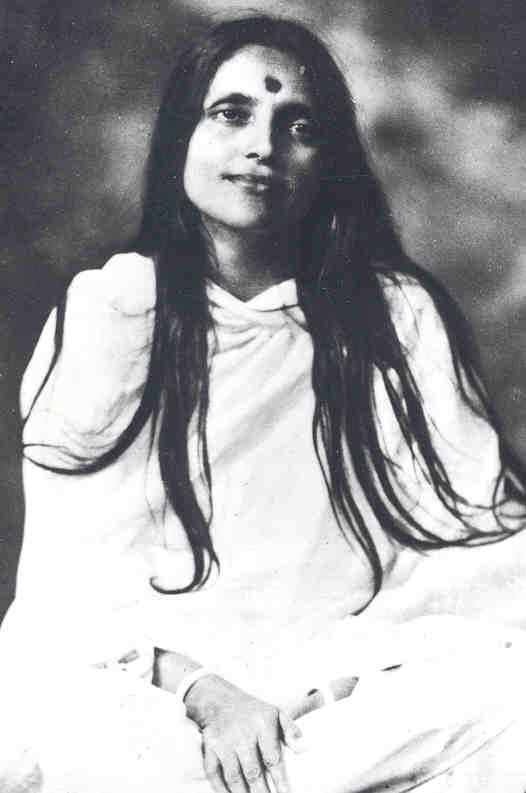
Anandamayi Ma
Concordano su: Perché meditare o pregare? · Che cos'è l'Assoluto? Dio esiste? · Chi sono io? Esiste un vero sé?
Meher Baba
Concordano su: Perché meditare o pregare? · Che cos'è l'Assoluto? Dio esiste? · Chi sono io? Esiste un vero sé?
Ibn Arabi
Concordano su: Che cos'è l'Assoluto? Dio esiste? · Chi sono io? Esiste un vero sé? · Perché soffriamo?
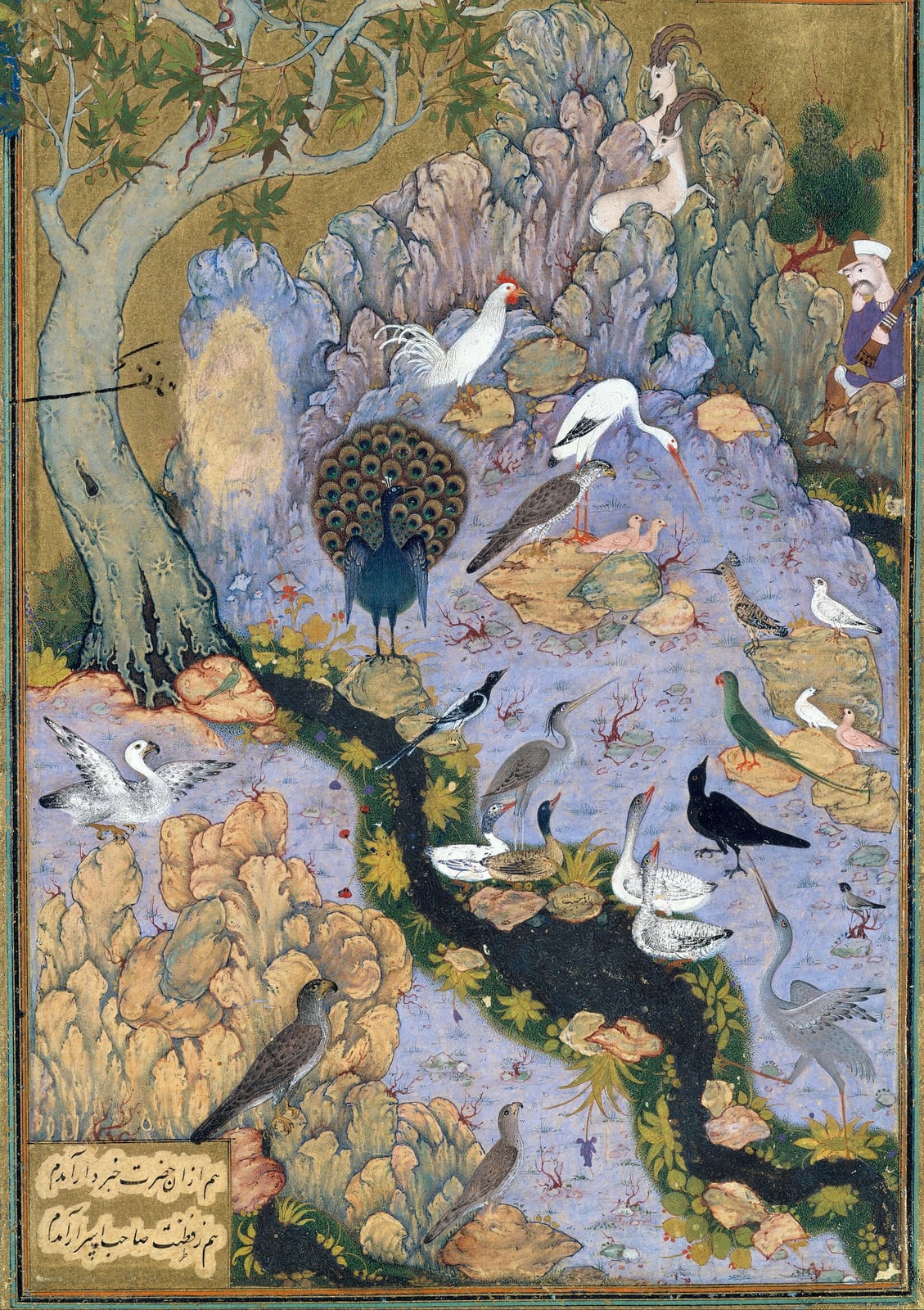
Attar
Concordano su: Che cos'è l'Assoluto? Dio esiste? · Chi sono io? Esiste un vero sé? · Perché soffriamo?
La pensa diversamente da

Epicurus
Si scontrano su: Chi sono io? Esiste un vero sé? · Che cosa accade dopo la morte?

Emanuel Swedenborg
Si scontrano su: Chi sono io? Esiste un vero sé? · Che cosa accade dopo la morte?
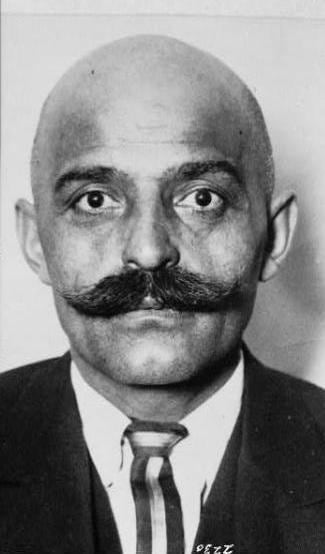
G. I. Gurdjieff
Si scontrano su: Chi sono io? Esiste un vero sé?
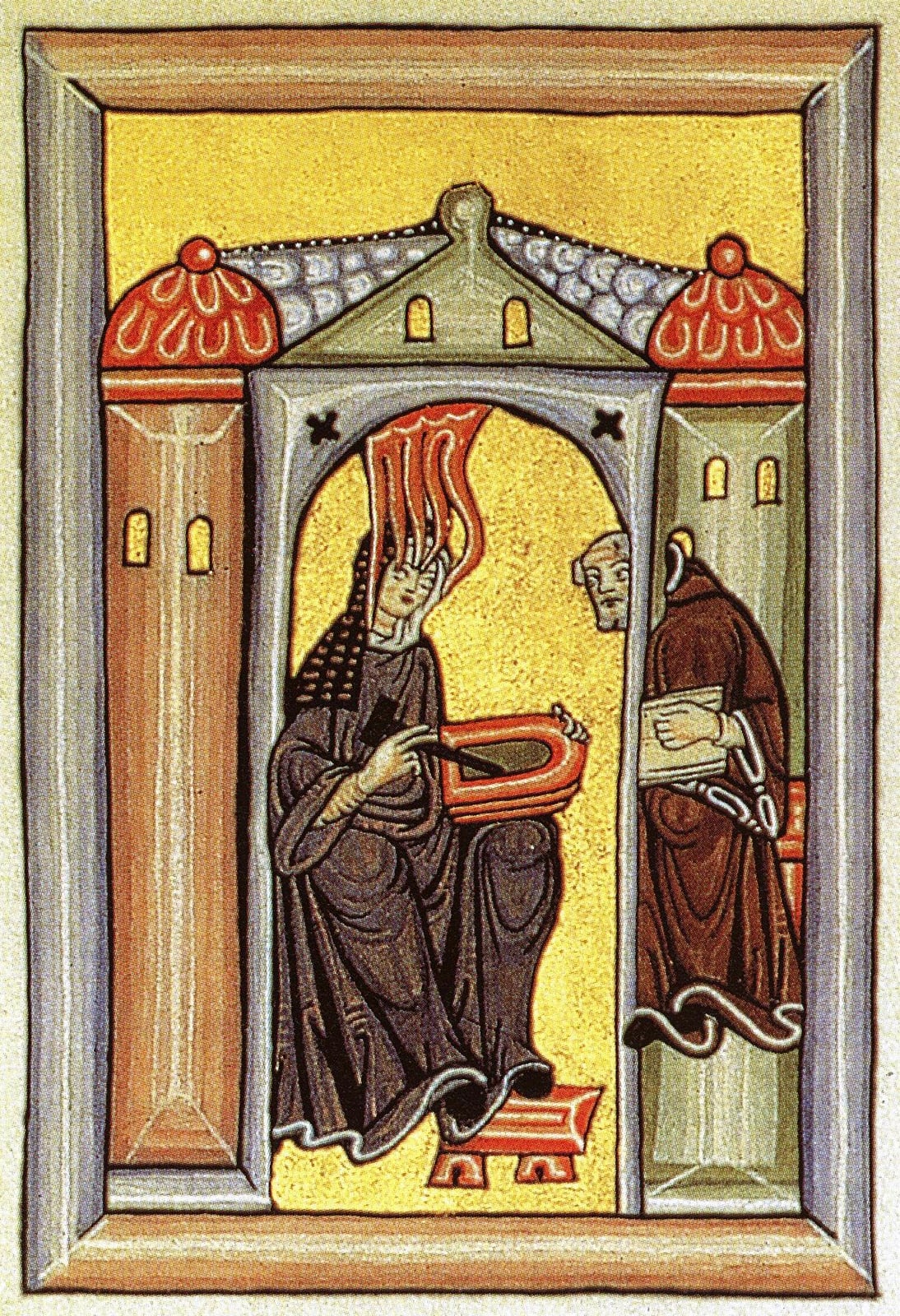
Hildegard of Bingen
Si scontrano su: Chi sono io? Esiste un vero sé? · Che cosa accade dopo la morte?
Aneddoti e racconti
Aneddoti e racconti
Testimonianzac. 1842-1843
The white cranes
Origine del racconto: An autobiographical account Ramakrishna gave his disciples decades later; recorded by Saradananda in the Lilaprasanga and, in short form, by other lives from the Order. There are no independent witnesses.
Fonte: Saradananda, Swami. Sri Sri Ramakrishna Lilaprasanga. 5 partes. Calcuta: Udbodhan, escrita entre 1909 y 1919. Trad. inglesa: Sri Ramakrishna, the Great Master, trad. de Swami Jagadananda. Madrás: Sri Ramakrishna Math, 1952; y Sri Ramakrishna and His Divine Play, trad. de Swami Chetanananda. St. Louis: Vedanta Society of St. Louis, 2003.
Testimonianzac. 1856
The sword of the shrine
Origine del racconto: It comes from what Ramakrishna told his disciples; Saradananda fixes it in the Lilaprasanga and it reappears in the Kathamrita in Ramakrishna’s own words. It is testimony of a visionary experience, not a verifiable fact.
Fonte: Saradananda, Swami. Sri Sri Ramakrishna Lilaprasanga. 5 partes. Calcuta: Udbodhan, escrita entre 1909 y 1919. Trad. inglesa: Sri Ramakrishna, the Great Master, trad. de Swami Jagadananda. Madrás: Sri Ramakrishna Math, 1952; y Sri Ramakrishna and His Divine Play, trad. de Swami Chetanananda. St. Louis: Vedanta Society of St. Louis, 2003.
Testimonianza1864-1865
The shard of glass
Origine del racconto: Ramakrishna’s own account recorded by Saradananda in the Lilaprasanga; the three days and Totapuri’s reaction belong to the Order’s tradition. There is no independent testimony from Totapuri.
Fonte: Saradananda, Swami. Sri Sri Ramakrishna Lilaprasanga. 5 partes. Calcuta: Udbodhan, escrita entre 1909 y 1919. Trad. inglesa: Sri Ramakrishna, the Great Master, trad. de Swami Jagadananda. Madrás: Sri Ramakrishna Math, 1952; y Sri Ramakrishna and His Divine Play, trad. de Swami Chetanananda. St. Louis: Vedanta Society of St. Louis, 2003.
Testimonianza1872
The worship of Sarada
Origine del racconto: Known from what Ramakrishna and Sarada Devi herself later told; Saradananda narrates it in the Lilaprasanga and Rolland repeats it. The exact date within 1872 varies between sources.
Fonte: Saradananda, Swami. Sri Sri Ramakrishna Lilaprasanga. 5 partes. Calcuta: Udbodhan, escrita entre 1909 y 1919. Trad. inglesa: Sri Ramakrishna, the Great Master, trad. de Swami Jagadananda. Madrás: Sri Ramakrishna Math, 1952; y Sri Ramakrishna and His Divine Play, trad. de Swami Chetanananda. St. Louis: Vedanta Society of St. Louis, 2003.
Testimonianza1881-1882
“Have you seen God?”
Origine del racconto: It comes from Vivekananda’s own recollection, told on several occasions and recorded by Saradananda (Lilaprasanga) and by the biography of Vivekananda by his disciples. The exact words vary from version to version.
Fonte: Saradananda, Swami. Sri Sri Ramakrishna Lilaprasanga. 5 partes. Calcuta: Udbodhan, escrita entre 1909 y 1919. Trad. inglesa: Sri Ramakrishna, the Great Master, trad. de Swami Jagadananda. Madrás: Sri Ramakrishna Math, 1952; y Sri Ramakrishna and His Divine Play, trad. de Swami Chetanananda. St. Louis: Vedanta Society of St. Louis, 2003.
Testimonianza1 de enero de 1886
Kalpataru day
Origine del racconto: Testimonies from several of those present, gathered in Saradananda’s Lilaprasanga and in Ramakrishna as We Saw Him (Chetanananda, 1990). The young monks were not in the garden; the name Kalpataru is later.
Fonte: Chetanananda, Swami (ed. y trad.). Ramakrishna as We Saw Him. St. Louis: Vedanta Society of St. Louis, 1990.
Testimonianzafebrero-marzo de 1882
The schoolmaster and the rebuke
Origine del racconto: M.’s own narrative at the opening of the Kathamrita (vol. 1), written from his diary and published twenty years later; it is the only testimony of the meeting.
Fonte: Gupta, Mahendranath («M.»). Sri Sri Ramakrishna Kathamrita (শ্রীশ্রীরামকৃষ্ণকথামৃত). 5 vols. Calcuta, 1902, 1904, 1908, 1910 y 1932. Trad. inglesa: The Gospel of Sri Ramakrishna, trad. e introd. de Swami Nikhilananda, prólogo de Aldous Huxley. Nueva York: Ramakrishna-Vivekananda Center, 1942.
Insegnamenti
Insegnamenti
Le nozioni che articolano il suo pensiero, spiegate nel loro contesto.
As many faiths, so many pathsjato-mat-tato-path
Recorded in the Kathamrita in many conversations; historians debate whether it is full pluralism or an inclusion of other religions within a Vedantic frame, as part of the academic critique holds.
Fonte: Gupta, Mahendranath («M.»). Sri Sri Ramakrishna Kathamrita (শ্রীশ্রীরামকৃষ্ণকথামৃত). 5 vols. Calcuta, 1902, 1904, 1908, 1910 y 1932. Trad. inglesa: The Gospel of Sri Ramakrishna, trad. e introd. de Swami Nikhilananda, prólogo de Aldous Huxley. Nueva York: Ramakrishna-Vivekananda Center, 1942.
Brahman and Shakti: the Motherbrahman-y-shakti
It derives from the Bengali Shakta tradition, from Ramprasad Sen and from the Tantra the Bhairavi Brahmani taught him; Neevel and Kripal see here the Tantric matrix of his thought.
Fonte: Neevel, Walter G. «The Transformation of Śrī Rāmakrishna». En Bardwell L. Smith (ed.), Hinduism: New Essays in the History of Religions. Leiden: E. J. Brill, 1976, pp. 53–97.
“Woman and gold” (kamini-kanchana)kamini-kanchana
Sumit Sarkar relates the insistence on gold to the experience of the Bengali middle class subject to office work (chakri) in colonial Calcutta; Kripal and Tyagananda debate the scope of the sexual part.
Fonte: Sarkar, Sumit. «“Kaliyuga”, “Chakri” and “Bhakti”: Ramakrishna and His Times». Economic and Political Weekly 27, n.º 29 (1992): 1543–1566. Ampliado en An Exploration of the Ramakrishna Vivekananda Tradition. Shimla: Indian Institute of Advanced Study, 1993.
Vijnana: knowing God in everythingvijnana
Recent studies from within the Order (Swami Medhananda) propose reading vijnana as a philosophy in its own right, distinct from Shankara’s Advaita; the classic reading subordinates it to non-dual Vedanta.
Fonte: Gupta, Mahendranath («M.»). Sri Sri Ramakrishna Kathamrita (শ্রীশ্রীরামকৃষ্ণকথামৃত). 5 vols. Calcuta, 1902, 1904, 1908, 1910 y 1932. Trad. inglesa: The Gospel of Sri Ramakrishna, trad. e introd. de Swami Nikhilananda, prólogo de Aldous Huxley. Nueva York: Ramakrishna-Vivekananda Center, 1942.
Samadhi and bhavasamadhi
The vocabulary combines classical yoga, Tantric kundalini and Vaishnava devotion; the debate on the nature of these states is central to Kripal (1995) and to Tyagananda and Vrajaprana’s reply (2010).
Fonte: Saradananda, Swami. Sri Sri Ramakrishna Lilaprasanga. 5 partes. Calcuta: Udbodhan, escrita entre 1909 y 1919. Trad. inglesa: Sri Ramakrishna, the Great Master, trad. de Swami Jagadananda. Madrás: Sri Ramakrishna Math, 1952; y Sri Ramakrishna and His Divine Play, trad. de Swami Chetanananda. St. Louis: Vedanta Society of St. Louis, 2003.
Serving beings as Shivashiva-jnane-jiva-seva
It comes from the Lilaprasanga, not the Kathamrita; historians stress that the social orientation is chiefly Vivekananda’s work, though the Order traces it back to this episode.
Fonte: Saradananda, Swami. Sri Sri Ramakrishna Lilaprasanga. 5 partes. Calcuta: Udbodhan, escrita entre 1909 y 1919. Trad. inglesa: Sri Ramakrishna, the Great Master, trad. de Swami Jagadananda. Madrás: Sri Ramakrishna Math, 1952; y Sri Ramakrishna and His Divine Play, trad. de Swami Chetanananda. St. Louis: Vedanta Society of St. Louis, 2003.
Video
Video
Registrazioni, interviste e documentari. I video vengono riprodotti da YouTube; non sono ospitati qui.
Ramakrishna | A documentary
Documentario· EN· 1990· 78 min
Vedanta Brasília
মানবতার প্রস্ফুটিত শতদল: Documentary on Ramakrishna Mission
Documentario· BN· 47 min
Ramakrishna Math & Ramakrishna Mission, Belur MathCanale ufficiale
BELUR MATH | The heart of Ramakrishna Movement: A Documentary on Belur Math (Full)
Documentario· EN· 54 min
Ramakrishna Mission Ashrama, NarendrapurCanale ufficiale
Hindi Version: BELUR MATH | The heart of Ramakrishna Movement
Documentario· HI· 54 min
Ramakrishna Mission Ashrama, NarendrapurCanale ufficiale
The Living Photographs of Sri Ramakrishna | Swami Harinamananda
Conferenza· EN· 2018· 76 min
Vedanta Society of New YorkCanale ufficiale
Teachings of Sri Ramakrishna | Swami Sarvapriyananda
Conferenza· EN· 77 min
Vedanta Society of New YorkCanale ufficiale
Glimpses of Sri Ramakrishna | Swami Sarvapriyananda
Conferenza· EN· 90 min
Vedanta Society of New YorkCanale ufficiale
Gospel | Chapter 1: Feb 1882 (Part 1) | Swami Sarvapriyananda
Conferenza· EN· 70 min
Vedanta Society of New YorkCanale ufficiale
Sri Ramakrishna: The Synthesis of Vedanta | Prof. Jeffery Long
Conferenza· EN· 89 min
Vedanta Society of New YorkCanale ufficiale
Kali's Child - Jeffrey Kripal and Host Michael Lerner
Intervista· EN· 2025· 78 min
CommonwealNewSchool
Sri Ramakrishna & Universal Hinduism
Analisi· EN· 2025· 46 min
Let's Talk Religion
কথামৃত পাঠ ও ব্যাখ্যা (20): স্বামী ঈশাত্মানন্দ
Conferenza· BN· 60 min
RAMAKRISHNA ORDER
Una Trinidad Vedántica | Sri Ramakrishna, Vivekananda y la Santa Madre
Conferenza· ES· 32 min
Ramakrishna Ashrama ArgentinaCanale ufficiale
Galleria
Galleria
Immagini con licenza verificata. Ciascuna conserva la sua paternità e la sua attribuzione.
Relazioni
Relazioni
Influenze, discepolati e affinità. Si distingue la relazione documentata dalla somiglianza individuata per analisi.
Maestro di
Narendranath Datta met him at the end of 1881 and was his disciple until 1886; as Vivekananda he founded the Ramakrishna Order and Mission and spread his message in the West.
Relazione documentata
Famiglia di
Sarada Devi
His wife from 1859, in a marriage never consummated; he worshipped her as the Goddess in 1872 and she later became the Holy Mother of the Order.
Relazione documentata
Maestro di
Mahendranath Gupta («M.»)
Schoolmaster who visited him from 1882 and recorded his conversations in the Kathamrita.
Relazione documentata
Discepolo di
Totapuri
Advaita monk who gave him monastic initiation and taught him non-dual Vedanta around 1864–65.
Relazione documentata
Discepolo di
Bhairavi Brahmani
Wandering ascetic who initiated him into Tantric practice from 1861.
Relazione documentata
Incontrò
Keshab Chandra Sen
Brahmo leader he met in 1875; Keshab made him known in the Calcutta press, and his New Dispensation shows Ramakrishna’s influence.
Relazione documentata
Ricevette l'influenza di
He revered Chaitanya as an incarnation of devotion and often cites him in the Kathamrita; he lived the devotional attitudes of the Bengali Vaishnavism Chaitanya founded.
Relazione documentata
Ricevette l'influenza di
Around 1874, after hearing the Bible read, he recounted a vision of Christ merging into him; he kept a picture of Jesus in his room.
Relazione documentata
Influenzò
Aurobindo cites Ramakrishna’s life in the introduction to The Synthesis of Yoga as an example of a spiritual capacity that runs through all the disciplines in a short time and unites them. They never met.
Relazione documentata
Influenzò
Indirect influence: as a boy Yogananda frequented Mahendranath Gupta, author of the Kathamrita, to whom he devoted a chapter of his Autobiography of a Yogi; he never met Ramakrishna, who died more than six years before his birth.
Relazione documentata
Idee affini a
Similarity identified by the editors: two mystics with almost no schooling whose teaching reaches us through dialogues recorded by disciples, and whom tradition links to Advaita. No personal relationship (Ramana was six when Ramakrishna died).
Somiglianza individuata per analisi
Idee affini a
Similarity identified by the editors: Bengali mystics of frequent ecstasies who did not write and whose words were recorded by devotees; both associated with devotion to the divine Mother. No personal relationship.
Somiglianza individuata per analisi
Idee affini a
He received Advaita through Totapuri, a monk of the order founded by Shankara, but integrated it into a vision that does not deny the reality of the world as the Mother’s play.
Somiglianza individuata per analisi
Collegato da altre schede
Fonti
Fonti
Bibliografia e cataloghi consultati per questa scheda.
- Chetanananda, Swami (ed. y trad.). Ramakrishna as We Saw Him. St. Louis: Vedanta Society of St. Louis, 1990.
- Isherwood, Christopher. Ramakrishna and His Disciples. Nueva York: Simon & Schuster, 1965.
- Gupta, Mahendranath («M.»). Sri Sri Ramakrishna Kathamrita (শ্রীশ্রীরামকৃষ্ণকথামৃত). 5 vols. Calcuta, 1902, 1904, 1908, 1910 y 1932. Trad. inglesa: The Gospel of Sri Ramakrishna, trad. e introd. de Swami Nikhilananda, prólogo de Aldous Huxley. Nueva York: Ramakrishna-Vivekananda Center, 1942.
- Saradananda, Swami. Sri Sri Ramakrishna Lilaprasanga. 5 partes. Calcuta: Udbodhan, escrita entre 1909 y 1919. Trad. inglesa: Sri Ramakrishna, the Great Master, trad. de Swami Jagadananda. Madrás: Sri Ramakrishna Math, 1952; y Sri Ramakrishna and His Divine Play, trad. de Swami Chetanananda. St. Louis: Vedanta Society of St. Louis, 2003.
- Müller, F. Max. Râmakrishna: His Life and Sayings. Londres / Nueva York: Longmans, Green and Co., 1898 (reimpr. 1899).
- Rolland, Romain. La Vie de Ramakrishna (Essai sur la mystique et l’action de l’Inde vivante, I). París: Stock, 1929. Trad. inglesa de E. F. Malcolm-Smith: The Life of Ramakrishna. Almora / Calcuta: Advaita Ashrama, 1930.
- Sarkar, Sumit. «“Kaliyuga”, “Chakri” and “Bhakti”: Ramakrishna and His Times». Economic and Political Weekly 27, n.º 29 (1992): 1543–1566. Ampliado en An Exploration of the Ramakrishna Vivekananda Tradition. Shimla: Indian Institute of Advanced Study, 1993.
- Kripal, Jeffrey J. Kālī’s Child: The Mystical and the Erotic in the Life and Teachings of Ramakrishna. Chicago: University of Chicago Press, 1995 (2.ª ed., 1998).
- Tyagananda, Swami, y Pravrajika Vrajaprana. Interpreting Ramakrishna: Kali’s Child Revisited. Delhi: Motilal Banarsidass, 2010.
- Sen, Amiya P. Ramakrishna Paramahamsa: Sadhaka of Dakshineswar. Nueva Delhi: Viking / Penguin Books India, 2010.
- Neevel, Walter G. «The Transformation of Śrī Rāmakrishna». En Bardwell L. Smith (ed.), Hinduism: New Essays in the History of Religions. Leiden: E. J. Brill, 1976, pp. 53–97.
- Abhedananda, Swami (ed.). The Gospel of Râmakrishna. Nueva York: The Vedanta Society, 1907 (edición autorizada para América de los diarios de M.).
- Wikidata, «Ramakrishna» (Q183126): fechas y lugares de nacimiento y muerte, 114 enlaces entre wikis.
- Wikipedia en inglés, «Sri Sri Ramakrishna Kathamrita»: historia de la publicación (1897–1932), método de M. y juicio de Sumit Sarkar sobre los 186 días que cubre el texto.
- Wikimedia Commons, «Category:Ramakrishna» y fotografías de 1879, 1881 y 1885 (metadatos y licencias consultados por API).
- Mozoomdar, Protap Chunder. «The Hindu Saint». Theistic Quarterly Review (Calcuta), 1879; reproducido en Müller 1898.
- Sen, Akshay Kumar. Sri Sri Ramakrishna Punthi (poema narrativo en bengalí, escrito entre 1887 y 1901). Trad. inglesa en prosa: A Portrait of Sri Ramakrishna. Calcuta: Ramakrishna Mission Institute of Culture, 1999.
- Wikipedia en inglés, «Ramakrishna» (cronología de las sadhanas, últimos días y versiones de sus últimas palabras, con remisión a Chetanananda 1990, pp. 56 y 408).
- Sri Aurobindo. The Synthesis of Yoga, «Introduction: The Conditions of the Synthesis» (Arya, 1914–1921). Complete Works of Sri Aurobindo, vols. 23–24. Pondicherry: Sri Aurobindo Ashram, 1999.
- Yogananda, Paramahansa. Autobiography of a Yogi. Nueva York: The Philosophical Library, 1946, cap. 9 («The Blissful Devotee and His Cosmic Romance»), sobre Mahendranath Gupta.
- Titolare dei diritti
- Las palabras de Ramakrishna (m. 1886) y el texto bengalí del Kathamrita (M., m. 1932) son de dominio público. Las traducciones modernas tienen titulares propios: The Gospel of Sri Ramakrishna de Nikhilananda, el Ramakrishna-Vivekananda Center of New York; Sri Ramakrishna, the Great Master, el Sri Ramakrishna Math de Chennai; la traducción de Dharm Pal Gupta, el Sri Ma Trust.
- Sito ufficiale
- belurmath.org/
In attesa di conferma
Ciò che questa scheda non ha ancora potuto chiarire. Preferiamo dirlo piuttosto che riempirlo.
- Traducción española completa del Kathamrita o del Gospel con ISBN: solo se localizó la edición de 144 pp. (Luis Cárcamo, 2020), que es abreviada. Comprobar si existe una traducción íntegra (Kier, Ramakrishna Ashrama Argentina).
- Fecha y datos de la primera edición inglesa del propio M. (Madrás, 1907) y del folleto A Leaf from the Gospel of Sri Ramakrishna (1897).
- Año de las primeras ediciones de Tales and Parables, Teachings of Sri Ramakrishna y Words of the Master (Open Library solo da reimpresiones).
- Datación de la fotografía sentada más difundida: Commons dice octubre de 1885; la Orden, 1883 en Dakshineswar. Confirmar con el estudio de Swami Vidyatmananda o con los archivos de Belur Math.
- Rolland, La Vie de Ramakrishna: dominio público en EE. UU. (1929, desde 2025), la UE y España (Rolland m. 1944). Wikisource francés tiene el índice pero no las páginas transcritas; buscar un texto completo legible para la sala de lectura.
- Kathamrita bengalí: localizar una transcripción completa (no escaneo) para la sala de lectura; los escaneos de Internet Archive no tienen OCR fiable.
- Ramchandra Datta, Jivanvrittanta: confirmar el año (se da 1890) y editorial de la primera edición.
- Cotejar con el texto bengalí la cita exacta de las últimas palabras («Kali» tres veces / «Ma») en el Lilaprasanga y en Ramakrishna as We Saw Him.
- Suresh Chandra Datta publicó en vida de Ramakrishna (c. 1884) una colección de sus enseñanzas (Sri Sri Ramakrishnadever Upadesh); verificar título, año y si debe registrarse como obra aparte.
Ricerca effettuata il 2026-10-25