Induismo · Tantra · Bhakti · Advaita Vedanta
Anandamayi Ma
আনন্দময়ী মা · নির্মলা সুন্দরী · आनन्दमयी माँ
1896 – 1982Persona storicamente documentata
Mistica bengalese priva di istruzione scolastica e di maestro umano, che si diede da sé l'iniziazione nel 1922 e per mezzo secolo percorse l'India circondata da devoti che vedevano in lei una manifestazione della Dea. Non scrisse nulla: le sue parole, pronunciate in bengali e spesso in forma di giochi di parole, furono raccolte da altri in Sad Vani, Matri Vani e nei diari di Gurupriya Devi. La conobbero Yogananda, Gandhi, Krishnamurti, la famiglia Nehru e la Madre di Pondicherry.
- opere
- 22opere
- edizioni
- 32edizioni
- citazioni
- 8citazioni
- video
- 14video
- immagini
- 7immagini
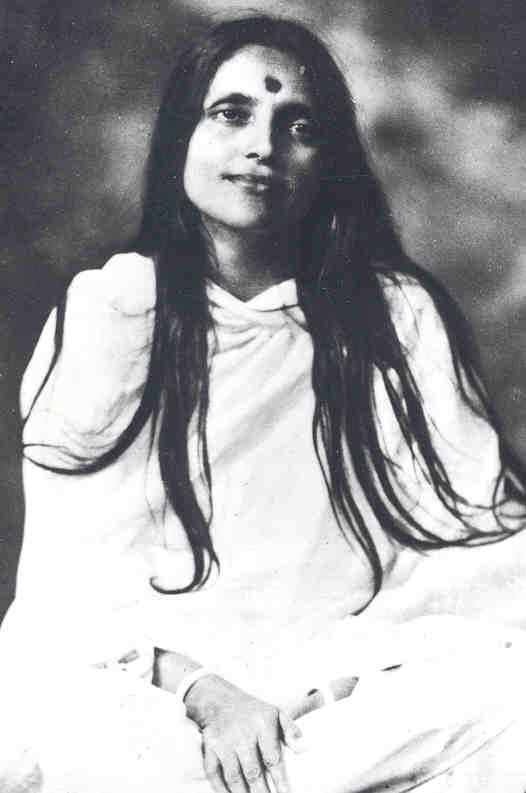
Anandamayi Ma joven · Public domain
Con le sue parole
«My consciousness has never associated itself with this temporary body. Before I came on this earth, Father, ‘I was the same.’ As a little girl, ‘I was the same.’»Palabras dirigidas a Yogananda en Calcuta (1935), en la versión inglesa de Autobiography of a Yogi, cap. 45
Anandamayi Ma
Sad Vani (true words)
Per cominciare, un'opera
Sad Vani (true words)La sua idea centrale
Seeking the realisation of God is every human being’s supreme calling; other obligations are secondary, though they should not be abandoned but carried out as service.
Vederlo nel contesto
Biografia
5 min di lettura
Traduzione assistita dall'originale spagnolo, in attesa di revisione da parte di un traduttore madrelingua.
Nirmala di Kheora
Nirmala Sundari nacque il 30 aprile 1896 a Kheora, un villaggio del distretto di Tripura, nel Bengala orientale — l'odierno Bangladesh —, figlia di Bipin Bihari Bhattacharya, un brahmano povero e cantore di inni vishnuiti, e di Mokshada Sundari Devi, che in vecchiaia avrebbe preso i voti di rinunciante. Frequentò la scuola appena per qualche mese. Ciò che si racconta della sua infanzia — l'estasi di una bambina di due anni all'ascolto di canti devozionali, un essere luminoso che la adora quando ha dieci mesi — proviene dalla cronologia dei suoi devoti e da quanto lei stessa raccontò decenni dopo, e appartiene al registro agiografico. Nel febbraio del 1909, a dodici anni e dieci mesi, la diedero in sposa a Ramani Mohan Chakrabarti, di Bikrampur, che più tardi avrebbe chiamato Bholanath.
Una sposa che non lo fu
Visse cinque anni con la famiglia del cognato e verso il 1914 raggiunse il marito ad Ashtagram. Il matrimonio non fu mai consumato: secondo il racconto che lei stessa fece a Yogananda nel 1935, la prima volta che il marito la toccò con desiderio ricevette una scossa come di fulmine, e da allora la trattò come la sua guida. I vicini parlavano di isteria; lui la difese davanti ai suoceri. A Bajitpur, tra il 1918 e il 1924, i suoi stati divennero continui: posture yogiche che, diceva, il corpo assumeva da sé, la ripetizione incessante del nome divino, canti e trance. Nella notte di luna piena dell'agosto 1922 si diede da sé l'iniziazione, spiegando più tardi che, come maestra, aveva rivelato il mantra e, come discepola, lo aveva accolto. Seguì un lungo periodo di silenzio, e alla fine di quell'anno iniziò il proprio marito.
Dacca: la Madre permeata di gioia
Nel 1924 Bholanath fu nominato amministratore dei giardini del nawab di Dacca a Shahbag, e lì cominciarono ad arrivare i devoti. Uno di loro, Jyotish Chandra Ray, un alto funzionario che tutti chiamavano Bhaiji, le diede nel 1925 il nome di Anandamayi Ma, «la Madre permeata di gioia». Nel 1926 giunse Adarini Mukherjee, che come Gurupriya Devi l'avrebbe accompagnata fino alla morte e avrebbe tenuto per decenni un diario della sua vita. A Dacca la chiamavano la Kali vivente, e nel 1929 i suoi seguaci le costruirono il primo ashram a Ramna, accanto al tempio di Kali. Lei rifiutava di essere chiamata guru, non preparava alcun discorso e parlava di sé come di «questo corpo» o di «questa bambina».
La pellegrina
Nel 1932 lasciò Dacca con Bholanath e Bhaiji senza una meta dichiarata e si stabilì a Dehradun, ai piedi dell'Himalaya. Da allora non ebbe più una dimora fissa: per mezzo secolo percorse l'India, di ashram in ashram e di casa in casa, secondo quello che chiamava il suo kheyal, un impulso spontaneo che i devoti consideravano volontà divina. Kamala Nehru la visitò a partire dal 1933 e, attraverso di lei, la famiglia Nehru; Indira Gandhi sarebbe stata una visitatrice assidua. Bholanath morì a Kishenpur nel maggio del 1938. Paramahansa Yogananda la conobbe a Calcutta nel dicembre del 1935 e la ritrasse nella sua Autobiografia di uno yogi; Gandhi la ricevette a Sevagram nel 1942. Intorno al 1948 conversò a Delhi con Jiddu Krishnamurti, al quale rimproverò con dolcezza che, negando i guru, diventava il guru di chi lo ascoltava, e nel 1952 fece visita a Pondicherry alla Madre dell'ashram di Sri Aurobindo.
Parole raccolte da altri
Anandamayi Ma non scrisse nulla. Parlava in bengali, spesso con giochi di parole quasi intraducibili, e le sue frasi le annotarono altri: Bhaiji raccolse le prime in Sad Vani (1935); Gurupriya Devi tenne il suo diario dal 1925; l'austriaca Blanca Schlamm, Atmananda, che la conobbe nel 1943, tradusse in inglese Matri Vani e Words of Sri Anandamayi Ma, e la rivista Ananda Varta pubblicò dagli anni Cinquanta i suoi dialoghi. È un'opera corale, filtrata dall'affetto e dalla memoria dei devoti, e così va letta. Il suo insegnamento ripete che cercare Dio è l'unica vocazione umana, che tutte le vie sono legittime e che lei non ne aveva una propria, e propone una disciplina semplice: un tempo fisso ogni giorno per la contemplazione, la ripetizione del nome divino e il servizio.
Il kheyal
I testimoni concordano nel descrivere una presenza più che una dottrina. Anandamayi Ma non seguiva orari né programmi: diceva di agire secondo il suo kheyal, parola bengali che significa all'incirca idea improvvisa o impulso repentino, e che i devoti intendevano come la volontà divina che si esprimeva in lei senza deliberazione. Per questo partiva da un luogo a mezzanotte, rinunciava a una visita preparata da mesi o compariva dove nessuno l'aspettava. Parlava di sé in terza persona e si rifiutava di fare la maestra: rispondeva alle domande, cantava, scherzava e raccomandava a ciascuno la pratica della propria tradizione. A chi le chiedeva chi fosse, rispondeva, secondo i suoi cronisti, che era ciò che era sempre stata, e anche ciò che ciascuno pensava che fosse.
Una santa ortodossa
La sua figura riunisce tratti difficili da conciliare. Accoglieva musulmani, cristiani e stranieri, ma nei suoi ashram si osservavano le regole brahmaniche di purità rituale, che riguardavano anche il cibo dei visitatori non indù; per anni lei stessa mangiò soltanto dalla mano delle sue assistenti, come osservò Yogananda. Lisa Lassell Hallstrom, autrice del principale studio accademico, pone questa tensione al centro del suo ruolo: una donna senza istruzione che si muoveva con assoluta libertà e che, al tempo stesso, sosteneva l'ortodossia dei monaci e degli eruditi che la circondavano, come il sanscritista Gopinath Kaviraj. Le guarigioni, le bilocazioni e le predizioni che le attribuirono i seguaci appartengono alla testimonianza devozionale e non sono state verificate.
Morte e culto
Morì verso le otto di sera del 27 agosto 1982 nel suo ashram di Kishenpur, a Dehradun. Due giorni dopo il corpo fu sepolto — non cremato, come si conviene ai santi rinuncianti — nel cortile dell'ashram di Kankhal, presso Haridwar, alla presenza della prima ministra Indira Gandhi. Il suo samadhi è oggi luogo di pellegrinaggio, e l'antropologa Orianne Aymard ha studiato come i devoti continuino a rapportarsi a lei come se fosse presente. La Shree Shree Anandamayee Sangha mantiene i suoi ashram a Varanasi, Kankhal, Vrindavan, Dehradun e in altre città.
Fonti: Lannoy, Richard. Anandamayi: Her Life and Wisdom. Shaftesbury: Element, 1996. · Bhaiji (Jyotish Chandra Ray). Mother as Revealed to Me (orig. bengalí Matri Darshan). Trad. de G. Das Gupta. Varanasi: Shree Shree Anandamayee Sangha, 2004. · Maschmann, Melita. Encountering Bliss: My Journey through India with Anandamayi Ma. Trad. de S. B. Shrotri. Delhi: Motilal Banarsidass, 2002. · Bhaiji (Jyotish Chandra Ray). Sad Vani: A Collection of the Teachings of Sri Anandamayi Ma (original bengalí, 1935). Trad. inglesa de Atmananda. Varanasi / Calcuta: Shree Shree Anandamayee Charitable Society, 1973 (reimpr. 1975). · Gurupriya Devi. Sri Sri Ma Anandamayi (diarios, original bengalí desde 1925). Trad. inglesa, vols. 1–9 y ss. Calcuta: Shree Shree Anandamayee Charitable Society, 1984–1996.
Cronologia
La vita, anno per anno
Ogni punto è un evento documentato. Fai clic per leggerlo, con la sua fonte e il suo grado di certezza.
30 aprile 18960 anniKheora
Birth of Nirmala Sundari
Born at her maternal great-grandparents’ house, daughter of Bipin Bihari Bhattacharya and Mokshada Sundari Devi.
Documentatoanandamayi.org (sitio de devotos vinculado a la Shree Shree Anandamayee Sangha): «Life History» 1896–1982, cronología año por año, y páginas «Meeting with Saints and Mahatmas».
Dopo la sua morte
- 2014When a Goddess Dies
30 aprile 1896 · 0 anni
Birth of Nirmala Sundari
Born at her maternal great-grandparents’ house, daughter of Bipin Bihari Bhattacharya and Mokshada Sundari Devi.
Documentato
febbraio 1909 · 12 anni
Marriage to Ramani Mohan Chakrabarti
Married at twelve years and ten months; her husband will be Bholanath. Marriage never consummated.
Documentato
ca. 1914 · 18 anni
With her husband at Ashtagram
She joins Ramani Mohan; first states of absorption in public.
Probabile
1918 · 22 anni
The Bajitpur years
Period of spontaneous sadhana: postures, repetition of the divine name, trances (1918–1924).
Tradizione
agosto 1922 · 26 anni
Self-initiation
On the full moon of August she initiates herself; a long silence follows.
Tradizione
1924 · 28 anni
Shahbag
Bholanath is appointed manager of the Nawab’s gardens; the first devotees arrive, among them Bhaiji.
Documentato
1925 · 29 anni
The name Anandamayi
Bhaiji calls her Anandamayi Ma, “the bliss-permeated Mother”.
Documentato
1926 · 30 anni
Gurupriya Devi arrives
She meets Adarini Mukherjee (Gurupriya Devi), her companion and chronicler for more than fifty years.
Documentato
13 aprile 1929 · 32 anni
First ashram at Ramna
She enters the land bought for the Ramna ashram, beside the Kali temple.
Documentato
giugno 1932 · 36 anni
Departure from Dhaka
She leaves Bengal with Bholanath and Bhaiji and settles at Raipur, Dehradun. Half a century of wandering begins.
Documentato
luglio 1933 · 37 anni
Kamala Nehru
Jawaharlal Nehru’s mother and wife visit her for the first time.
Documentato
dicembre 1935 · 39 anni
Meeting with Yogananda
Paramahansa Yogananda visits her at Bhowanipur and invites her to his Ranchi school.
Documentato
6 maggio 1938 · 42 anni
Death of Bholanath
Her husband dies at the Kishenpur ashram.
Documentato
febbraio 1942 · 45 anni
Meeting with Gandhi
After Jamnalal Bajaj’s death, she visits Gandhi at Sevagram.
Documentato
1943 · 47 anni
Atmananda arrives
She meets the Austrian Blanca Schlamm, future translator of her words into English.
Documentato
gennaio 1947 · 50 anni
Gayatri Mahayajna
A three-year uninterrupted rite begins at the Varanasi ashram, concluded in January 1950.
Documentato
ca. 1948 · 52 anni
Conversation with Krishnamurti
They meet in Kitty Shiva Rao’s garden and discuss the need for a guru.
Probabile
3 novembre 1952 · 56 anni
Meeting with the Mother of Pondicherry
On her southern tour she visits Mirra Alfassa at the Sri Aurobindo Ashram and Ramana Maharshi’s ashram at Tiruvannamalai.
Documentato
1959 · 63 anni
Arnaud Desjardins’s film
The French filmmaker films her for French television, making her known in Europe.
Documentato
27 agosto 1982 · 86 anni
Death
She dies at about eight in the evening at her Dehradun ashram.
Documentato
29 agosto 1982
Samadhi at Kankhal
Her body is entombed at the Kankhal ashram in the presence of Indira Gandhi.
Documentato
2014
When a Goddess Dies
Orianne Aymard publishes her study of the worship of Anandamayi Ma after her death.
Documentato
Opere
Opere essenziali
Le opere senza le quali non si comprende la sua eredità.
Anandamayi Ma
Sad Vani (true words)
Raccolta posteriore · 1935
Sad Vani (true words)
সদ্বাণী (Sad Vani)
Short sayings arranged by theme: the search for God as life’s only goal, repetition of the divine name, surrender, the company of saints, duty done without attachment. It records the teaching of the Dhaka years with the closeness of a daily witness and the devotion of one who saw in her the divine Mother. It is the earliest source for her words.
2 edizioni
Anandamayi Ma
Matri Vani (words of the Mother)
Raccolta posteriore · 1963
Matri Vani (words of the Mother)
Matri Vani
Personal advice turned into general teaching: how to live in the world without losing sight of God, how to face the death of a loved one, illness or doubt, why to set aside a time each day for contemplation. The tone is intimate and practical rather than doctrinal. It is her most translated work and the one that best conveys her way of addressing each person.
3 edizioni
Anandamayi Ma
Sri Sri Ma Anandamayi (Gurupriya Devi’s diaries)
Raccolta posteriore · ca. 1925
Sri Sri Ma Anandamayi (Gurupriya Devi’s diaries)
শ্রীশ্রীমা আনন্দময়ী (Sri Sri Ma Anandamayi)
The most detailed source for her life: dates, places, people, dialogues and episodes—from the first years in Dhaka to the decades of wandering—noted almost daily by a constant witness. It includes, for example, the account of the meeting with Gandhi at Wardha in 1942. Its documentary value coexists with the devotional perspective of its author.
1 edizione
Anandamayi Ma
Mother as Revealed to Me (Matri Darshan)
Raccolta posteriore
Mother as Revealed to Me (Matri Darshan)
মাতৃদর্শন (Matri Darshan)
Spiritual diary of Bhaiji’s relationship with Anandamayi Ma from 1924 until his death, with his interpretation of her gestures and words. It contains, among other things, the hymn that came from her lips in 1929 on leaving the Ramna ashram, only partly transcribed. It is an essential source for the Dhaka years.
2 edizioni
Tutta la sua opera (22)
Anandamayi Ma
Words of Sri Anandamayi Ma
The Conscious LibraryWords of Sri Anandamayi Ma
1961
Anandamayi Ma
Ananda Varta (journal)
The Conscious LibraryAnanda Varta (journal)
1952
Anandamayi Ma
Mother Reveals Herself
The Conscious LibraryMother Reveals Herself
2014
Anandamayi Ma
Svakriya Svarasamrita
The Conscious LibrarySvakriya Svarasamrita
Anandamayi Ma
In Association with Sri Sri Ma Anandamayi
The Conscious LibraryIn Association with Sri Sri Ma Anandamayi
1986
Anandamayi Ma
Vangmayee Ma (the Mother as word)
The Conscious LibraryVangmayee Ma (the Mother as word)
2024
Anandamayi Ma
Ma in Her Words
The Conscious LibraryMa in Her Words
Anandamayi Ma
Amar Vani (immortal words)
The Conscious LibraryAmar Vani (immortal words)
1968
Anandamayi Ma
The Teaching of Ma Ananda Moyi
The Conscious LibraryThe Teaching of Ma Ananda Moyi
1974

Pearls of Light
1995

Death Must Die (Atmananda’s diaries)
2000

Mother of Bliss (Lisa Lassell Hallstrom)
1999

Life and Teaching of Sri Anandamayi Ma (Alexander Lipski)
1977

Life and Teachings of Sri Ma Anandamayi (Bithika Mukerji)
1998

My Days with Sri Ma Anandamayi (Bithika Mukerji)
2002

Anandamayi: Her Life and Wisdom (Richard Lannoy)
1996

Encountering Bliss (Melita Maschmann)
2002

When a Goddess Dies (Orianne Aymard)
2014
Citazioni
Citazioni localizzate in un'opera precisa. Ciascuna porta con sé la sua provenienza e il suo grado di affidabilità.
My consciousness has never associated itself with this temporary body. Before I came on this earth, Father, ‘I was the same.’ As a little girl, ‘I was the same.’VerificataPalabras dirigidas a Yogananda en Calcuta (1935), en la versión inglesa de Autobiography of a Yogi, cap. 45
Idee essenziali (sintesi editoriale)
Per rispetto del diritto d'autore, queste idee sono riassunte con parole nostre e non sono presentate come citazioni letterali.
- Seeking the realisation of God is every human being’s supreme calling; other obligations are secondary, though they should not be abandoned but carried out as service.
- There is no single path: each person advances according to their innate nature, and every sincere path leads to the same end. She said she had no path of her own.
- One should set aside each day, morning and evening, a fixed time for contemplation, just as working hours are kept; with habit, contemplation becomes part of one’s nature.
- All suffering arises from perceiving duality; whoever finds the One in everything and everyone puts an end to pain.
- Everyone is right from their own standpoint: faced with doctrinal disputes, she invited people to see the point from which the other speaks.
Ultime parole
Non esistono testimonianze verificabili delle sue ultime parole.
No recorded final sentence is known. In her last months, already ill, she spoke little; the Sangha’s chronicles note that she died at about eight in the evening of 27 August 1982 at Kishenpur (Dehradun), without recording any farewell words.
Fonte: anandamayi.org (sitio de devotos vinculado a la Shree Shree Anandamayee Sangha): «Life History» 1896–1982, cronología año por año, y páginas «Meeting with Saints and Mahatmas».
Chiedi
Ciò a cui risponde la sua opera
Dodici grandi domande dell'umanità e ciò che i suoi testi permettono di rispondere, con riferimenti. Non gli mettiamo mai parole in bocca.
Che cos'è l'Assoluto? Dio esiste?
There is nothing but Him: with form and without, all is God
Personale e impersonale insiemeLo dice espressamente
Anandamayi Ma set out no system, but her words, gathered by devotees in Matri Vani and Sad Vani, return again and again to one claim: there is nothing but Him alone, and everyone and everything are but a form of God. That One can be worshipped with form, as Krishna, Shiva or the Mother, or sought as the attributeless Self, and she refused to rank the two ways: with form and without form are the same, seen from different places. To those who asked about her religion she answered that she was also Christian, Muslim, or whatever they wished. For Anandamayi the existence of God is not proved: it is all there is, and the human task is to recognise it.
Confronta questa domanda con altri maestriChi sono io? Esiste un vero sé?
‘I was the same’: consciousness was never tied to the body
Il Sé è l'AssolutoLo dice espressamente
Anandamayi Ma spoke of herself as ‘this body’, never as ‘I’, and her devotees took this as a sign that she did not identify with the person. To Yogananda she declared that her consciousness had never associated itself with the transient body and that before birth, as a girl and as an adult she had been the same. To those who listened she put the same question: the self that identifies with a name, a family and a history is not what one is, and discovering one’s own nature is discovering God, for there is nothing but Him. That is why she recommended both remembrance of the Name and enquiry: both lead to recognising the one Self that appears in every form.
Confronta questa domanda con altri maestriPerché soffriamo?
All suffering comes from seeing duality where there is only One
L'ignoranza di ciò che siamoLo dice espressamente
In the words gathered by her devotees, Anandamayi Ma explains that all suffering arises from perceiving duality: from feeling separate from others and from God, and from seeking outside what one believes to be missing. Whoever finds the One in everything and everyone puts an end to pain, because there is no longer another who threatens nor anything to lose. At the same time she welcomed those who came with concrete sorrows, the death of a child or illness, and told them that suffering is also a way in which God calls his creature to himself. She neither denied pain nor idealised it: she placed it in a horizon where the only lasting cure is to recognise the Self.
Confronta questa domanda con altri maestriChe cosa accade dopo la morte?
The body dies; what is does not come or go
Ciò che sono non nasce e non muoreLo dice espressamente
Anandamayi Ma said of herself that before coming to earth, as a child and in maturity, she had been the same, and that her consciousness had never associated itself with the transient body. She invited her devotees to look at death from there: what dies is the body, and the Self is neither born nor dies. At the same time she spoke naturally of successive lives and of the value of practice for the hereafter: one of her recorded sayings contrasts the earthly pension, which ends with life, with the divine pension, which continues long after death. Realisation consists in knowing oneself already, now, beyond birth and death.
Confronta questa domanda con altri maestriCome si raggiunge la liberazione o la salvezza?
Every sincere path leads to Him; the Name, always
Con la devozione e l'abbandonoLo dice espressamente
Anandamayi Ma said she had no path of her own and accepted that each person advance according to their nature: through knowledge, meditation, action or devotion, every sincere path leads to the same end. Yet what she most often recommended was constant remembrance of God, above all through repetition of the Name (nama japa), and setting aside a fixed time each day for contemplation. She organised annual weeks of intensive discipline (samyam saptah) with fasting, silence and meditation. For her, seeking God-realisation is the supreme calling of the human being, and grace accompanies whoever seeks it steadily. What matters is never to stop seeking.
Confronta questa domanda con altri maestriServe un maestro?
Whoever denies the guru becomes guru to those who believe him
IndispensabileLo dice espressamente
Anandamayi Ma had no human teacher: according to her biographers she initiated herself in 1922 and went through the practices of many traditions alone. Even so, she defended the need for a guru for others. One of her recorded sayings puts it ironically: when someone says no guru and no practice are needed, they automatically become the guru of those who accept their view. For her the true guru is not an individual but God himself manifesting as teacher when the seeker is ready, and he can come through a person, a book or an event. But that encounter is necessary, and the disciple must obey with trust.
Confronta questa domanda con altri maestriIl mondo è reale?
Everyone and everything is but a form of God
Manifestazione del divinoLo dice espressamente
Anandamayi Ma’s answer is consistent with her central statement: there is nothing but Him alone, and everyone and everything are but a form of God. For her the world is not an illusion to be despised but the way the One shows itself; hence she asked people to serve others as forms of the divine and to carry out daily duties as an offering. At the same time she recalled that what appears changes and passes, and that whoever clings to forms without seeing what is in them suffers. The world’s reality therefore depends on how it is seen: as something separate it is transient; recognised as a form of God, it is He himself.
Confronta questa domanda con altri maestriChe cos'è l'amore?
To love God is to love Him in every form, for He alone exists
Anelito e unioneSi deduce dalla sua dottrina
Anandamayi Ma lived in an atmosphere of intense devotion: her biographers describe states of ecstasy during kirtan and a motherly tenderness towards all who approached her. In her words, true love is directed to God, and all human love, if pure, reflects that longing. Since He alone exists, loving God does not take one away from others: it includes them, because each person is a form of Him. Hence she asked people to fulfil their duties with love and serve without expecting reward. She warned, however, against attachment, which confuses love with possession of a passing form. Longing for God is, for her, the supreme calling of the human being.
Confronta questa domanda con altri maestriSiamo liberi o è tutto determinato?
All happens by His will; while you think you are the doer, strive
Non c'è un agenteLo dice espressamente
Anandamayi Ma explained her own way of acting through the word kheyal: a spontaneous impulse that came not from a personal decision but from the divine will. Her devotees learned that there was no point asking her to make plans: whatever had to happen would happen. For her, ultimately, the only doer is God. But she did not apply that view to others as an excuse for passivity. She asked those who felt themselves authors of their acts to strive, to fulfil their duties seriously and to practise every day, because as long as there is a sense of being a doer there is also responsibility. True freedom consists in surrendering the will until only His remains.
Confronta questa domanda con altri maestriPerché meditare o pregare?
A fixed time each day to remember God, until it becomes natural
Amicizia con DioLo dice espressamente
Anandamayi Ma asked everyone, lay and monastic, to set aside each day, morning and evening, a fixed time for contemplation, with the same punctuality with which working hours are kept; with habit, she said, contemplation becomes part of one’s nature. She especially recommended repetition of God’s Name (nama japa) and devotional singing, without excluding silent meditation or enquiry. The aim was not to attain experiences but to keep the remembrance of God in every activity, until there is no moment when He is absent. To pray is to live in God’s company, even if the mind does not yet fully know it.
Confronta questa domanda con altri maestriPuò la ragione conoscere l'ultimo?
Each is right from their own standpoint; Truth lies beyond
L'ultimo è al di là della menteSi deduce dalla sua dottrina
Anandamayi Ma received philosophers, scholars and sceptics, and answered their questions briefly, often with paradoxes. In the face of doctrinal disputes she invited people to look at the point from which the other speaks: everyone is right from their own standpoint. This attitude was not relativism but recognition that the intellect grasps only partial aspects of a Truth that exceeds it. For her, what is reached by thinking remains within the mind; God-realisation is something else, a knowing in which there is no subject separate from object. Reason can orient and purify, but the ultimate is revealed when the mind is stilled and surrendered.
Confronta questa domanda con altri maestriRitirarsi dal mondo o trasformarlo?
Fulfil each day’s duties with love, step by step towards God
Contemplazione nell'azioneLo dice espressamente
Anandamayi Ma did not ask most of her devotees to leave family or work. One of her recorded sayings sums it up: with seriousness, love and goodwill, fulfil the duties of each day and try to rise step by step. Seeking God is the supreme calling, but other obligations are not abandoned: they are carried out as service, seeing in each person a form of the divine. She asked people to set aside fixed times for contemplation within the day and to regard work as an offering. She herself lived in constant movement across India, surrounded by people, and her ashrams supported schools, hospitals and relief work.
Confronta questa domanda con altri maestri
Affinità e tensioni
Affinità e tensioni
Calcolate domanda per domanda a partire dalle sue posizioni. Il perché di ogni accordo o contrasto, con un clic.
La pensa in modo simile a
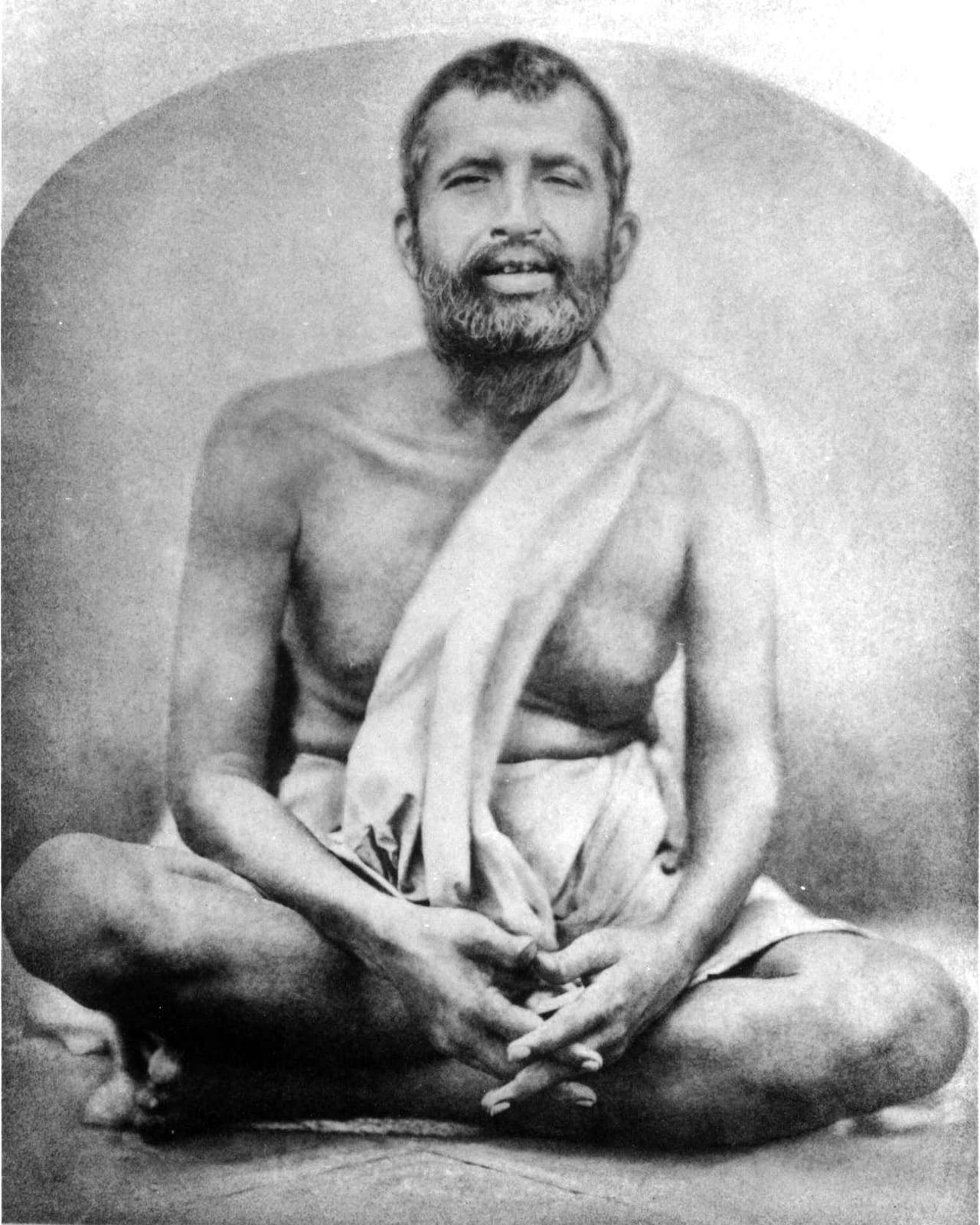
Ramakrishna
Concordano su: Che cos'è l'Assoluto? Dio esiste? · Chi sono io? Esiste un vero sé? · Come si raggiunge la liberazione o la salvezza?
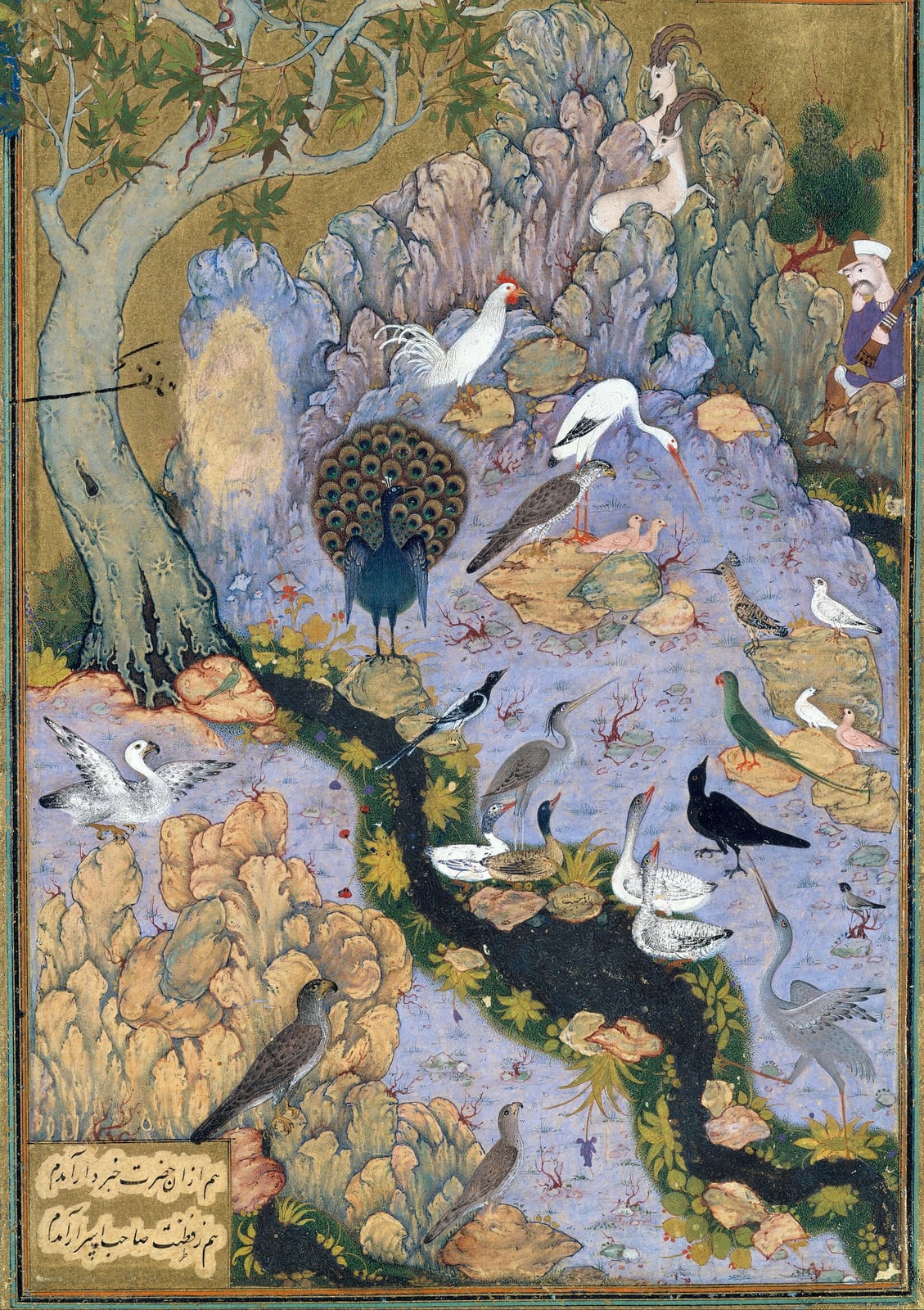
Attar
Concordano su: Che cos'è l'Assoluto? Dio esiste? · Chi sono io? Esiste un vero sé? · Serve un maestro?
Meher Baba
Concordano su: Perché meditare o pregare? · Che cos'è l'Assoluto? Dio esiste? · Chi sono io? Esiste un vero sé?
Ibn Arabi
Concordano su: Che cos'è l'Assoluto? Dio esiste? · Chi sono io? Esiste un vero sé? · Il mondo è reale?




Aneddoti e racconti
Aneddoti e racconti
Testimonianzaagosto de 1922
Teacher and disciple
Origine del racconto: Known from what she herself told years later, recorded by Bhaiji and in Mother Reveals Herself; there were no witnesses to the ceremony.
Fonte: Hallstrom, Lisa Lassell. Mother of Bliss: Ānandamayī Mā (1896–1982). Nueva York: Oxford University Press, 1999.
Testimonianzadiciembre de 1935
“I was the same”
Origine del racconto: Yogananda’s account in Autobiography of a Yogi (1946), ch. 45; the date comes from the Sangha’s chronology. Her words are known in Yogananda’s English version.
Testimonianzac. 1948
The guru of those who deny gurus
Origine del racconto: Two concordant versions: Atmananda’s diary (Death Must Die), recording what Anandamayi Ma told, and Pupul Jayakar’s biography of Krishnamurti (1986). The date is inferred from a conversation of November 1948 recorded by Amulya Kumar Datta Gupta.
Fonte: Atmananda. Death Must Die: A Western Woman’s Life-Long Spiritual Quest in India with Shree Anandamayee Ma, ed. Ram Alexander. Varanasi: Indica Books, 2000.
Testimonianza3 de noviembre de 1952
The rose and the chocolate
Origine del racconto: Account by devotees present recorded in Anandamayee: The Universal Mother and, in Anandamayi’s own version, in Ananda Varta (vol. VII, no. 4, 1960); both reproduced by anandamayi.org.
Documentatofebrero de 1942
Eight hours at Sevagram
Origine del racconto: Entry of 20 February 1942 in Gurupriya Devi’s diaries (vol. 10 of the English translation) and a devotee’s recollection, both reproduced by anandamayi.org.
Fonte: Gurupriya Devi. Sri Sri Ma Anandamayi (diarios, original bengalí desde 1925). Trad. inglesa, vols. 1–9 y ss. Calcuta: Shree Shree Anandamayee Charitable Society, 1984–1996.
Testimonianzac. 1925
The name
Origine del racconto: It comes from Bhaiji’s testimony (Mother as Revealed to Me) and the Sangha’s chronology, which places the episode at Siddheswari in 1925.
Fonte: Bhaiji (Jyotish Chandra Ray). Mother as Revealed to Me (orig. bengalí Matri Darshan). Trad. de G. Das Gupta. Varanasi: Shree Shree Anandamayee Sangha, 2004.
Insegnamenti
Insegnamenti
Le nozioni che articolano il suo pensiero, spiegate nel loro contesto.
Kheyalkheyal
Analysed by Hallstrom (1999) and by Anil Ganguli in Anandamayi Ma’s Inscrutable Kheyal (1980).
Fonte: Hallstrom, Lisa Lassell. Mother of Bliss: Ānandamayī Mā (1896–1982). Nueva York: Oxford University Press, 1999.
“This body”: speaking without egoeste-cuerpo
Attested in all the sources (Yogananda, Bhaiji, Gurupriya Devi, Atmananda).
All pathstodos-los-caminos
Comparable to Ramakrishna’s teaching on the plurality of paths, though no direct influence is documented.
Fonte: Hallstrom, Lisa Lassell. Mother of Bliss: Ānandamayī Mā (1896–1982). Nueva York: Oxford University Press, 1999.
The divine name and the fixed timenama-japa
Rooted in the Bengali tradition of nama-japa (Chaitanya) and in the Tantric practice of mantra.
Fonte: Matri Vani: From the Wisdom of Sri Anandamayi Ma, vol. I (cartas recogidas por Gurupriya Devi, trad. de Atmananda, pról. de Gopinath Kaviraj). Varanasi: Shree Shree Anandamayee Sangha, 1963; vol. II (selección de Sister Uma), Calcuta, 1977.
Samyam Saptah: the week of disciplinesamyam-saptah
Described in the Sangha’s chronology and in Ananda Varta; the twenty-fifth was held in 1974.
Video
Video
Registrazioni, interviste e documentari. I video vengono riprodotti da YouTube; non sono ospitati qui.
Ma Anandamayi is present at a sacred thread ceremony at Tarapeeth in 1936
Registrazione originale· 1936· 8 min
SriRam108
Yogananda visits Anandamayi Ma
Registrazione originale· 1935· 1 min
Heart is Thy Name, O Lord
Ma Anandamayi, vidéo 1959 par Arnaud Desjardins
Documentario· FR· 1959· 10 min
Silence Within
Ma Anandamayi 1959 (subtítulos en español)
Documentario· ES· 1959· 10 min
CanalGanges
A compilation of cine film clips of Ma Anandamayi from 1956-1981
Registrazione originale· 76 min
SriRam108
Ma Anandamayi talks at Suktal in 1961 (English subtitles)
Registrazione originale· BN· 1961· 21 min
SriRam108
Ma Anandamayi at the samyam saptah at Rama Tirtha Mission, Dehra Dun, in 1974
Registrazione originale· 1974· 27 min
SriRam108
Questions and answers by Sri Ma Anandamayi at Nadiad in 1978 - No 1
Registrazione originale· 1978· 12 min
SriRam108
Ma & Me: The Anandamayi Ma Documentary
Documentario· EN· 2019· 94 min
Ma Documentary
ANANDAMAYI MA (Documental subtitulado en español)
Documentario· ES· 94 min
Anandamayi Ma
Arnaud Desjardins talks about his experiences with Ma Anandamayi
Intervista· FR· 33 min
SriRam108
ANANDAMAYI MA 1 (Recuerdos de Arnaud Desjardins), subtitulado en español
Intervista· ES
CanalGanges
The Life of Sri Ma Anandamayi, as narrated by Bithika Mukerjee
Conferenza· EN· 43 min
SriRam108
साधना की 10 अवस्थाएँ | सद् वाणी - भाग 4 | श्री आनंदमयी माँ सत्संग
Conferenza· HI· 72 min
MA Sharanam
Galleria
Galleria
Immagini con licenza verificata. Ciascuna conserva la sua paternità e la sua attribuzione.
Relazioni
Relazioni
Influenze, discepolati e affinità. Si distingue la relazione documentata dalla somiglianza individuata per analisi.
Incontrò
They met in Calcutta in December 1935; he devoted chapter 45 of Autobiography of a Yogi to her and she visited his Ranchi school.
Relazione documentata
Incontrò
They talked around 1948 in Delhi, at Kitty Shiva Rao’s house, about the need for a guru; Atmananda and Pupul Jayakar both recount it.
Relazione documentata
Incontrò
La Madre (Mirra Alfassa)
Meeting at the Sri Aurobindo Ashram, Pondicherry, on 3 November 1952.
Relazione documentata
Contemporaneo di
Bengali contemporaries; they never met. She visited his ashram in 1952, two years after his death.
Somiglianza individuata per analisi
Contemporaneo di
They never met in life; on her 1952 tour she visited Ramana’s ashram at Tiruvannamalai, two years after his death.
Relazione documentata
Incontrò
Mahatma Gandhi
She visited him at Sevagram in February 1942 and in 1946 attended one of his prayer meetings in Delhi at his request.
Relazione documentata
Famiglia di
Bholanath (Ramani Mohan Chakrabarti)
Her husband from 1909, in an unconsummated marriage; he received initiation from her in 1922 and died in 1938.
Relazione documentata
Maestro di
Bhaiji (Jyotish Chandra Ray)
One of the first devotees; he gave her the name Anandamayi and compiled Sad Vani and Matri Darshan.
Relazione documentata
Maestro di
Gurupriya Devi
Companion from 1926 and author of the diaries that are the main chronicle of her life.
Relazione documentata
Maestro di
Gopinath Kaviraj
The great Banaras Sanskritist frequented her from 1928 and wrote the foreword to Matri Vani.
Relazione documentata
Idee affini a
Bengali mystics of frequent ecstasies, with no writings of their own, who taught the legitimacy of all paths. Similarity identified by the editors; no personal relationship.
Somiglianza individuata per analisi
Idee affini a
Her insistence on the divine name and kirtan continues the Bengali Vaishnava devotion of Chaitanya, in whose tradition her father sang. Relationship noted by the editors.
Somiglianza individuata per analisi
Collegato da altre schede
Fonti
Fonti
Bibliografia e cataloghi consultati per questa scheda.
- Lannoy, Richard. Anandamayi: Her Life and Wisdom. Shaftesbury: Element, 1996.
- Wikimedia Commons: fotografías de Anandamayi Ma y de sus ashrams (metadatos y licencias consultados por API).
- Shree Shree Anandamayee Sangha, catálogo de publicaciones (bookshop) con fechas, compiladores y traductores.
- Bhaiji (Jyotish Chandra Ray). Mother as Revealed to Me (orig. bengalí Matri Darshan). Trad. de G. Das Gupta. Varanasi: Shree Shree Anandamayee Sangha, 2004.
- Maschmann, Melita. Encountering Bliss: My Journey through India with Anandamayi Ma. Trad. de S. B. Shrotri. Delhi: Motilal Banarsidass, 2002.
- Bhaiji (Jyotish Chandra Ray). Sad Vani: A Collection of the Teachings of Sri Anandamayi Ma (original bengalí, 1935). Trad. inglesa de Atmananda. Varanasi / Calcuta: Shree Shree Anandamayee Charitable Society, 1973 (reimpr. 1975).
- Gurupriya Devi. Sri Sri Ma Anandamayi (diarios, original bengalí desde 1925). Trad. inglesa, vols. 1–9 y ss. Calcuta: Shree Shree Anandamayee Charitable Society, 1984–1996.
- Hallstrom, Lisa Lassell. Mother of Bliss: Ānandamayī Mā (1896–1982). Nueva York: Oxford University Press, 1999.
- Lipski, Alexander. Life and Teaching of Śrī Ānandamayī Mā. Delhi: Motilal Banarsidass, 1977.
- Mukerji, Bithika. From the Life of Sri Anandamayi Ma. Varanasi: Shree Shree Anandamayee Sangha, 1970; y The Most Gracious Presence, Sri Ma Anandamayi, 3 vols., 2009–2014.
- Yogananda, Paramahansa. Autobiography of a Yogi. Nueva York: The Philosophical Library, 1946, cap. 45 («The Bengali “Joy-Permeated” Mother»). Texto de 1946 en Project Gutenberg (n.º 7452).
- Wikidata, «Anandamayi Ma» (Q433594): fechas y lugares, 38 enlaces entre wikis.
- Wikipedia en inglés, «Anandamayi Ma».
- anandamayi.org (sitio de devotos vinculado a la Shree Shree Anandamayee Sangha): «Life History» 1896–1982, cronología año por año, y páginas «Meeting with Saints and Mahatmas».
- Aymard, Orianne. When a Goddess Dies: Worshipping Ma Anandamayi after Her Death. Nueva York: Oxford University Press, 2014.
- Atmananda. Death Must Die: A Western Woman’s Life-Long Spiritual Quest in India with Shree Anandamayee Ma, ed. Ram Alexander. Varanasi: Indica Books, 2000.
- Jayakar, Pupul. J. Krishnamurti: A Biography. San Francisco: Harper & Row, 1986 (sobre el encuentro en casa de Kitty Shiva Rao, Delhi).
- Matri Vani: From the Wisdom of Sri Anandamayi Ma, vol. I (cartas recogidas por Gurupriya Devi, trad. de Atmananda, pról. de Gopinath Kaviraj). Varanasi: Shree Shree Anandamayee Sangha, 1963; vol. II (selección de Sister Uma), Calcuta, 1977.
- Titolare dei diritti
- Anandamayi Ma murió en 1982; sus palabras se conocen en recopilaciones cuyos derechos pertenecen a la Shree Shree Anandamayee Sangha (Varanasi/Kankhal), a la Shree Shree Anandamayee Charitable Society (Calcuta) y a los compiladores y traductores (Bhaiji, Gurupriya Devi, Atmananda). Ningún texto suyo es de dominio público en la UE, España o EE. UU.
- Sito ufficiale
- www.shreeshreeanandamayeesangha.org/
In attesa di conferma
Ciò che questa scheda non ha ancora potuto chiarire. Preferiamo dirlo piuttosto che riempirlo.
- Sala de lectura: ningún texto de Anandamayi Ma (m. 1982) ni de sus compiladores es de dominio público; no se registra reading_texts. La única fuente libre en EE. UU. es el capítulo 45 de Autobiography of a Yogi (Gutenberg), que pertenece a la ficha de Yogananda.
- ISBN de las ediciones de la Sangha (Sad Vani, Matri Vani, Words, diarios de Gurupriya Devi): no figuran en Open Library.
- Ediciones españolas: ISBN de Palabras de la Madre (Advaitavidya, 2024), de La Madre según me fue revelada y de la traducción de Lannoy; identificar el libro con ISBN 9788497773249 («Vida y enseñanzas de Sri Anandamayi Ma», editorial desconocida en Open Library).
- Confirmar si Worte der Glückseligen Mutter (Mangalam, 1986) es la versión alemana de Words of Sri Anandamayi Ma, y el original de Leben und Weisheit der Glückseligen Mutter (Ed. Maitri, 1995).
- Año y título bengalí exactos de Matri Darshan (Bhaiji) y fecha de muerte de Bhaiji (las fuentes oscilan entre 1937 y 1938).
- Citas tomadas de anandamayi.org (respuesta al periodista irlandés, «pensión divina», encuentro con la Madre) marcadas como probables: localizar la página exacta en Matri Vani, Ananda Varta o las biografías de Bithika Mukerji.
- Último mensaje o palabras finales: revisar los diarios de Gurupriya Devi y las crónicas de 1982 por si se registró alguna frase.
- Imágenes: localizar en Commons fotografías de madurez con licencia libre verificada; las de los años cuarenta a ochenta suelen tener derechos de la Sangha o de fotógrafos identificados.
Ricerca effettuata il 2026-10-25