Islam · Sufismo
Attar
فریدالدین ابوحامد محمد عطار نیشابوری · عطار
ca. 1145 – 1221Persona storicamente documentata
Poeta e agiografo persiano (Nishapur, 1145 ca. – 1221 ca.), speziale di mestiere e figura di primo piano della poesia sufi. Il suo Verbo degli uccelli (Mantiq al-tayr) narra il viaggio degli uccelli attraverso sette valli, finché scoprono che il Simurgh sono loro stessi; con l'Ilahi-nama, il Musibat-nama e l'Asrar-nama forma un ciclo di masnavi mistici, e la sua Tadhkirat al-awliya è la grande raccolta persiana di vite di santi. Molte opere che circolano sotto il suo nome sono di un altro Attar. Rumi fu il suo erede.
- opere
- 29opere
- edizioni
- 32edizioni
- citazioni
- 6citazioni
- video
- 13video
- immagini
- 8immagini
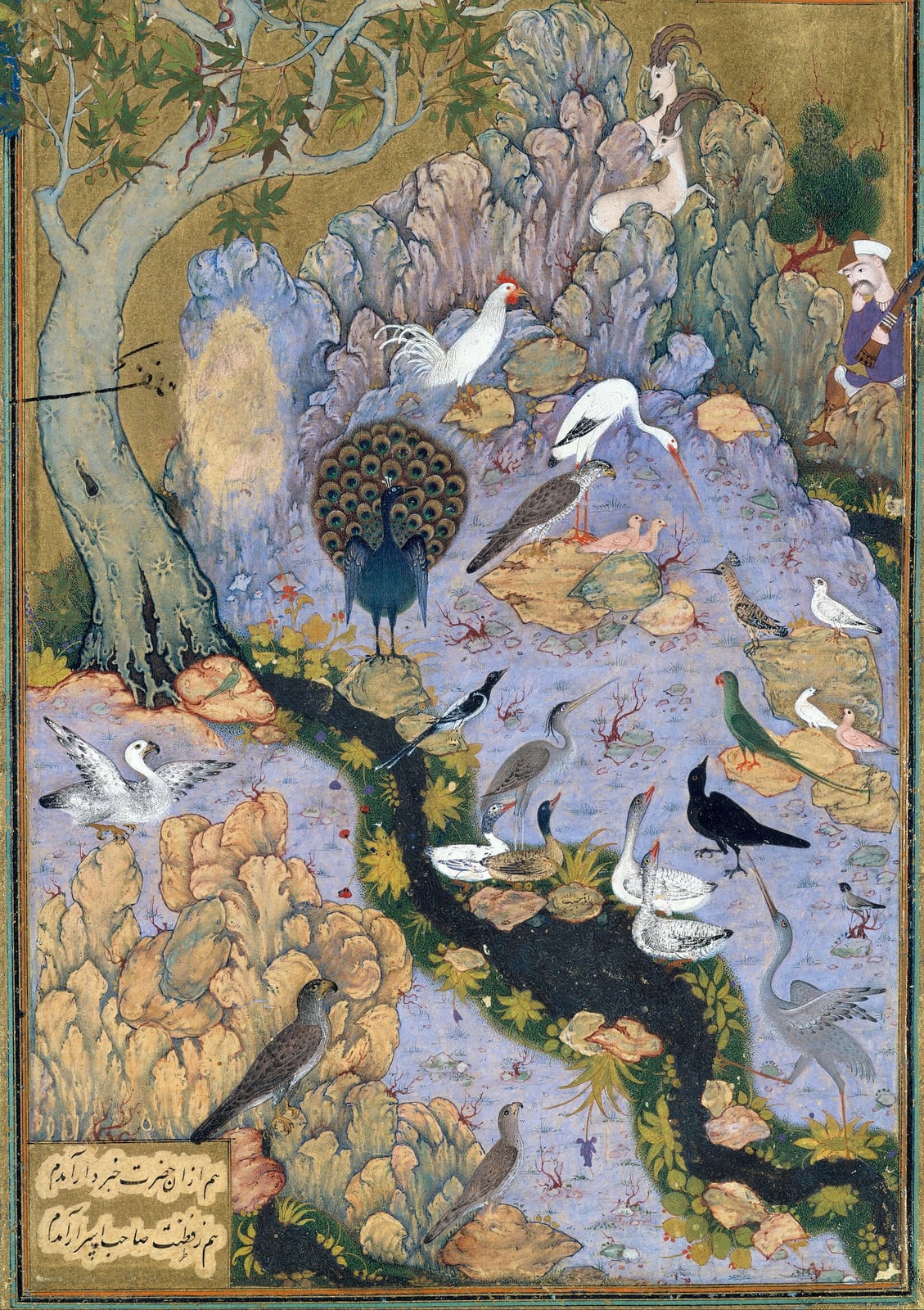
La asamblea de las aves · CC0
Con le sue parole
«Praise to the pure Creator of the soul, who gave the dust a soul and gave it faith.»Mantiq al-tayr, dístico inicial («Fi al-tawhid»), texto persa según Ganjoor; traducciones propias.

La sua idea centrale
The Simorgh and the thirty birds: The Simorgh is a fabulous bird of Iranian tradition, wise and benevolent, which in the *Shahnameh* raises the hero Zal.
Vederlo nel contesto
Biografia
5 min di lettura
Traduzione assistita dall'originale spagnolo, in attesa di revisione da parte di un traduttore madrelingua.
Lo speziale di Nishapur
Abu Hamid Muhammad, figlio di Abu Bakr Ibrahim, firmò la sua opera con due nomi: Farid al-Din, «perla della religione», e Attar, il mestiere di chi vende profumi, droghe e rimedi. Visse a Nishapur, la grande città del Khorasan, e della sua vita si sa con certezza assai poco. Solo due contemporanei lo menzionano: l'antologista Muhammad Awfi, che lo colloca tra i poeti dell'età selgiuchide, e il filosofo Nasir al-Din Tusi, che da studente gli fece visita quando Attar era ormai vecchio e raccontò anni dopo al suo discepolo Ibn al-Fuwati di essere rimasto colpito dalla sua eloquenza. La notizia successiva, il Tarikh-i guzida di Hamdallah Mustawfi, è del 1330.
La sua opera dice poco di lui, ma dice una cosa precisa: che esercitava la farmacia e serviva di persona moltissimi clienti, e che compose il Musibat-nama e l'Ilahi-nama mentre lavorava nella sua bottega. Non dovendo vivere di poesia, poté disprezzare il mestiere del panegirista di corte, che non praticò mai. Bernd Reinert sottolinea che la sua esistenza di farmacista e di sufi non sembra essere stata interrotta da viaggi e che in vecchiaia visse assai appartato; i grandi pellegrinaggi alla Mecca, a Damasco o in India che gli attribuiscono biografie posteriori appartengono alla leggenda.
Date incerte
Badiozzaman Foruzanfar calcolò che nacque intorno al 540 dell'Egira (1145-1146); l'unica data che Attar stesso menziona, il 573 (1177), come anno in cui terminò Il verbo degli uccelli, compare in un verso che non si trova in tutti i manoscritti. Quanto alla morte, l'opinione più diffusa, seguita da Foruzanfar e da Reinert, è che sia perito nella strage con cui i Mongoli devastarono Nishapur nel mese di safar del 618, nell'aprile del 1221; Hermann Landolt ricorda che il 1230 resta possibile. L'Encyclopaedia Britannica del 1911, fedele alle fonti tarde, gli assegnava ancora centodieci anni di vita, dal 1119 al 1229: un esempio di come la figura sia cresciuta man mano che la sua opera diventava famosa.
Le leggende
In vita Attar era poco conosciuto fuori da Nishapur. La sua grandezza di mistico e di narratore fu scoperta nel XV secolo, ed è allora che Jami e Dawlatshah di Samarcanda adornarono la sua biografia di racconti fantastici. Secondo Dawlatshah, un derviscio che osservava la sua bottega gli domandò come pensasse di morire lasciandosi dietro tante mercanzie; Attar abbandonò la spezieria e si fece sufi. Secondo lo stesso autore, un soldato mongolo che lo aveva catturato rifiutò mille dirham per lui e, quando un altro gli offrì un sacco di paglia, Attar gli disse di venderlo, perché non valeva di più; il soldato, furioso, lo uccise. Foruzanfar dimostrò che i maestri che gli furono attribuiti – Najm al-Din Kubra, Qutb al-Din Haydar e altri – sono invenzioni; è possibile soltanto il suo legame con Majd al-Din Baghdadi, che egli stesso dice di aver conosciuto, e forse una filiazione uwaysi, interiore, con Abu Sa'id Abu'l-Khayr.
Un'opera cresciuta con la fama
La leggenda gli attribuì tante opere quante sono le sure del Corano, e stabilire quali siano davvero sue ha impegnato gli studiosi per un secolo. Hellmut Ritter notò differenze di stile e di confessione – alcune opere sono sunnite, altre sciite – e pensò dapprima a un'evoluzione del poeta; nel 1941 Sa'id Nafisi dimostrò che quelle di ispirazione sciita, come il Mazhar al-aja'ib e il Lisan al-ghayb, sono di un altro Attar, nativo di Tun, vissuto a Mashhad circa duecentocinquant'anni dopo. Neppure un secondo gruppo, capeggiato dal Jawhar al-dhat e incentrato sulla figura di al-Hallaj, è suo, per ragioni di stile, benché il suo autore resti ignoto. Lo stesso Attar elenca le proprie opere nei prologhi: il Divan, l'Asrar-nama, Il verbo degli uccelli, il Musibat-nama, l'Ilahi-nama, il Jawahir-nama e lo Sharh al-qalb, e aggiunge di aver distrutto con le proprie mani questi ultimi due.
A quell'elenco si aggiungono il Mukhtar-nama, scelta delle sue quartine, e la Tadhkirat al-awliya, la sua sola opera in prosa. Il caso più discusso è quello del Khusraw-nama, un romanzo cortese detto anche Gol o Hormoz: Reinert lo riteneva autentico; Mohammad Reza Shafi'i-Kadkani sostenne che si tratta di un falso posteriore e che il titolo con cui Attar si riferiva a un'altra sua opera corrispondeva in realtà all'Ilahi-nama, tesi che Landolt considera dimostrata; nel 2019 Austin O'Malley ha riaperto la questione con un manoscritto del 1297 che già lo attribuisce ad Attar.
I quattro masnavi mistici
L'Asrar-nama, il «Libro dei segreti», privo di racconto-cornice, medita in ventidue discorsi sulla caduta dell'anima e sulla sua liberazione dai lacci del mondo. Il verbo degli uccelli (Mantiq al-tayr), il suo capolavoro, riprende dalla Risalat al-tayr attribuita ai fratelli Ghazali l'assemblea degli uccelli in cerca di un re: guidati dall'upupa, attraversano sette valli e solo trenta giungono al cospetto del Simurgh, per scoprire che il Simurgh sono loro stessi, si murgh, «trenta uccelli». Il Musibat-nama segue un viandante che interroga quaranta esseri, dall'arcangelo Gabriele ai profeti, finché l'Anima universale gli rivela che ciò che cerca è in lui. Nell'Ilahi-nama, il «Poema celeste», un califfo risponde ai desideri mondani dei suoi sei figli – la figlia del re delle fate, la magia, la coppa di Jamshid, l'acqua della vita, l'anello di Salomone, l'alchimia – mostrandone il senso interiore. Le quattro opere dicono la stessa cosa in quattro modi: la meta dell'uomo è latente in lui.
Il memoriale dei santi
La Tadhkirat al-awliya, il Memoriale dei santi, raccoglie vite e detti dei maestri del sufismo classico, da Ja'far al-Sadiq, Uways al-Qarani e Hasan di Bassora fino ad al-Hallaj, nel quale Attar vedeva colui che aveva portato il sufismo alla perfezione. Le biografie più tarde che compaiono in alcune copie non sono sue. Attar non nomina quasi mai le sue fonti e rielabora i racconti a modo suo, sicché il libro serve poco come storia delle persone che ritrae, ma molto come documento della sensibilità sufi; inoltre tradusse in persiano con grande fedeltà i detti tramandati in arabo. Dalla seconda metà del XIII secolo fu assai letto; un'antica versione in turco orientale, in scrittura uigura, fu tradotta in francese da Pavet de Courteille nel 1889.
Eredità
Rumi adottò per il suo Masnavi il metro del Verbo degli uccelli e rielaborò storie di Attar. La tradizione volle di più: che il vecchio poeta, vedendo passare per Nishapur la famiglia di Baha al-Din Walad, avesse donato al piccolo Rumi una copia dell'Asrar-nama. Ritter spiegò la leggenda come frutto dell'influenza di quell'opera sul prologo del Masnavi, e Franklin Lewis la considera un mito di successione. Ali Shir Nava'i adattò Il verbo degli uccelli in turco ciagataico e fece innalzare il mausoleo di Nishapur, restaurato nel 1940. L'Europa lo conobbe attraverso il Pand-nama tradotto da Silvestre de Sacy nel 1819, oggi ritenuto apocrifo, e attraverso l'edizione (1857) e la traduzione (1863) del Mantiq al-tayr di Garcin de Tassy, che entusiasmò Edward FitzGerald al punto da indurlo a renderlo liberamente in inglese nel suo Bird-Parliament, rimasto inedito in vita e pubblicato postumo nel 1889.
Fonti: «Farīd ud-Dīn ʽAttār». Encyclopædia Britannica, 11.ª ed., vol. 10. Cambridge, 1910–1911 (resume los relatos de Dawlatshah sobre su conversión y su muerte). Texto en Wikisource. · FitzGerald, Edward. Letters and Literary Remains of Edward FitzGerald, ed. William Aldis Wright, vol. II. Londres: Macmillan, 1889 (incluye «Bird-Parliament» con la nota de E. B. Cowell sobre su génesis). · Attar, Farid al-Din. The Tadhkiratu 'l-awliya («Memoirs of the saints»), ed. Reynold A. Nicholson, con introducción de Mirza Muhammad Qazvini. 2 vols. Londres y Leiden: Luzac / Brill, 1905–1907 (Persian Historical Texts).
Cronologia
La vita, anno per anno
Ogni punto è un evento documentato. Fai clic per leggerlo, con la sua fonte e il suo grado di certezza.
ca. 11450 anniNishapur
Birth in Nishapur
Abu Hamid Muhammad, son of Abu Bakr Ibrahim, is born. Foruzanfar calculates c. 540/1145–1146; the 1911 Britannica, following late sources, gave 1119.
ProbabileReinert, Bernd. «ʿAṭṭār, Farīd-al-Dīn». Encyclopaedia Iranica, vol. III, fasc. 1, pp. 20–25. Publicado el 15-12-1987.
Dopo la sua morte
- 1297Oldest manuscript of the Khusraw-nama
- 1330Mustawfi's mention
- ca. 1486The legend is born
- 1819The Pand-nama in Europe
- 1857 – 1863Garcin de Tassy's edition
- 1905 – 1907Nicholson's edition of the Tadhkirat
- 1940Ilahi-nama edition and renovation of the mausoleum
- 1941Nafisi identifies the 'other Attar'
- 1984Davis and Darbandi translation
ca. 1145 · 0 anni
Birth in Nishapur
Abu Hamid Muhammad, son of Abu Bakr Ibrahim, is born. Foruzanfar calculates c. 540/1145–1146; the 1911 Britannica, following late sources, gave 1119.
Probabile
ca. 1170 – 1221
Druggist and Sufi
He practises pharmacy in Nishapur and attends many customers; according to his prefaces, he composes the *Musibat-nama* and the *Ilahi-nama* in the shop. The legends of his conversion by a dervish date from the fifteenth century.
Documentato
1177
Date of the Mantiq al-tayr
A closing line of the *Mantiq al-tayr* dates its completion to 573/1177, but it is not found in all manuscripts.
Discusso
ca. 1209
Meeting with Majd al-Din Baghdadi
Attar says in the *Tadhkirat al-awliya* that he met Majd al-Din Baghdadi, disciple of Najm al-Din Kubra, who died around 1209; he is the only plausible master among those tradition ascribed to him.
Probabile
ca. 1215 – 1221
Visit of Nasir al-Din Tusi
The young Tusi visits the aged Attar in Nishapur (between 612/1215 and 618/1221, according to Foruzanfar) and praises his eloquence, as transmitted by his pupil Ibn al-Fuwati.
Documentato
aprile 1221
Death in the Mongol sack of Nishapur
According to the most widespread opinion (Foruzanfar, Reinert), he dies violently in the massacre of Safar 618/April 1221; Landolt considers 1230 possible. The tale of the sack of straw is Dawlatshah's legend.
Probabile
1297
Oldest manuscript of the Khusraw-nama
A copy of 1297, now in the Bibliothèque nationale de France, already contains the romance and its preface under Attar's name: Austin O'Malley adduces it in 2019 against the forgery thesis.
Documentato
1330
Mustawfi's mention
Hamdallah Mustawfi mentions him in the *Tarikh-e guzida*, the third surviving notice after those of Awfi and Tusi.
Documentato
ca. 1486
The legend is born
In the fifteenth century his work is rediscovered; Jami (*Nafahat al-uns*, 1476–1478) and Dawlatshah (*Tadhkirat al-shu'ara*, 1486) embroider his life with tales of conversion, masters and death. Ali Shir Nava'i raises a mausoleum for him in Nishapur.
Documentato
1819
The Pand-nama in Europe
Silvestre de Sacy publishes in Paris the *Pend-Namèh, ou le Livre des conseils*, the first 'Attar' work translated in Europe; modern scholarship considers it apocryphal.
Documentato
1857 – 1863
Garcin de Tassy's edition
Joseph Garcin de Tassy edits the Persian text of the *Mantiq al-tayr* (1857) and publishes his French translation in 1863; Edward FitzGerald, delighted, composes his free version *Bird-Parliament* (1862, posthumous in 1889).
Documentato
1905 – 1907
Nicholson's edition of the Tadhkirat
Reynold A. Nicholson publishes in London and Leiden, with an introduction by Muhammad Qazvini, the edition of the *Tadhkirat al-awliya* (1905–1907).
Documentato
1940
Ilahi-nama edition and renovation of the mausoleum
Hellmut Ritter publishes the critical edition of the *Ilahi-nama* (Leipzig and Istanbul); the Nishapur mausoleum is fully renovated under Reza Shah.
Documentato
1941
Nafisi identifies the 'other Attar'
Sa'id Nafisi shows in his *Jostoju dar ahval o asar-e Farid al-Din Attar* that the Shi'ite works ascribed to Attar belong to a namesake from Tun who lived in Mashhad some two and a half centuries later.
Documentato
1984
Davis and Darbandi translation
Afkham Darbandi and Dick Davis publish *The Conference of the Birds* in Penguin Classics, the most widely read English verse version.
Documentato
Opere
Opere essenziali
Le opere senza le quali non si comprende la sua eredità.
Opera scritta · ca. 1177
Mantiq al-tayr (The Conference of the Birds)
منطقالطیر (Mantiq al-tayr), también مقامات الطیور (Maqamat al-tuyur)
A masnavi of several thousand couplets and Attar's masterpiece. The birds of the world gather to choose a king; the hoopoe, Solomon's messenger, proposes that they seek the Simorgh. Each bird excuses itself with a human weakness (the nightingale's love for the rose, the parrot's longing for immortality, the peacock's paradise) and the hoopoe answers with stories, among them that of Shaykh San'an in love with a Christian girl. Those who set out cross seven valleys: quest, love, knowledge, detachment, unity, bewilderment, and poverty and annihilation. Only thirty arrive, and they discover that the Simorgh is their own reflection: *si morgh*, 'thirty birds'. The frame story comes from the Ghazalis' *Risalat al-tayr*.
14 edizioni
Attar
Ilahi-nama (The Book of God)
Opera scritta
Ilahi-nama (The Book of God)
الهینامه (Ilahi-nama)
A masnavi of some 6,500 couplets with a frame story: a caliph asks his six sons what they desire, and each asks for something marvellous (the daughter of the king of the fairies, mastery of magic, Jamshid's world-reflecting cup, the water of life, Solomon's ring, alchemy). The father shows them that, taken literally, these wishes are absurd, but that understood inwardly they can be fulfilled: the princess is the purified soul, the cup is the mystic united with God, the elixir is the divine light that transforms everything. Hundreds of stories, from three to four hundred lines, illustrate the same message as the *Mantiq al-tayr*: what man seeks is within him.
3 edizioni

Opera scritta
Tadhkirat al-awliya (Memorial of God's Friends)
تذکرة الأولیاء (Tadhkirat al-awliya)
Attar's only prose work and the great Persian collection of saints' lives: some seventy biographies of masters of classical Sufism, from Ja'far al-Sadiq, Uways al-Qarani and Hasan of Basra to al-Hallaj, with their sayings and anecdotes, among them those of Rabi'a al-Adawiyya. Attar relies almost solely on written sources he rarely names and reworks the stories with a taste of his own, but he translates the Arabic sayings faithfully. The account of al-Hallaj's execution is its most famous page. Widely read since the thirteenth century, it also matters as a specimen of early Persian prose.
6 edizioni
Tutta la sua opera (29)

Musibat-nama (The Book of Affliction)
Attar
Asrar-nama (The Book of Secrets)
The Conscious LibraryAsrar-nama (The Book of Secrets)

Divan
Attar
Mukhtar-nama (The Book of Selections)
The Conscious LibraryMukhtar-nama (The Book of Selections)
Attar
Khusraw-nama (Gol and Hormoz)
The Conscious LibraryKhusraw-nama (Gol and Hormoz)
Attar
Mi'raj-nama (Book of the Ascension)
The Conscious LibraryMi'raj-nama (Book of the Ascension)
Attar
Jumjuma-nama (Book of the Skull)
The Conscious LibraryJumjuma-nama (Book of the Skull)
Attar
Jawahir-nama (Book of Jewels)
The Conscious LibraryJawahir-nama (Book of Jewels)
Attar
Sharh al-qalb (Commentary on the Heart)
The Conscious LibrarySharh al-qalb (Commentary on the Heart)
Attar
Kashf al-asrar and Ma'rifat al-nafs
The Conscious LibraryKashf al-asrar and Ma'rifat al-nafs
Attar
Pand-nama (Book of Counsel)
The Conscious LibraryPand-nama (Book of Counsel)
Attar
Bulbul-nama (Book of the Nightingale)
The Conscious LibraryBulbul-nama (Book of the Nightingale)
Attar
Jawhar al-dhat (The Essence of Essence)
The Conscious LibraryJawhar al-dhat (The Essence of Essence)
Attar
Ushtur-nama (Book of the Camel)
The Conscious LibraryUshtur-nama (Book of the Camel)
Attar
Haylaj-nama
The Conscious LibraryHaylaj-nama
Attar
Mansur-nama
The Conscious LibraryMansur-nama
Attar
Bisar-nama (Book of the Headless)
The Conscious LibraryBisar-nama (Book of the Headless)
Attar
Mazhar al-aja'ib (Manifestation of Wonders)
The Conscious LibraryMazhar al-aja'ib (Manifestation of Wonders)
Attar
Lisan al-ghayb (The Tongue of the Unseen)
The Conscious LibraryLisan al-ghayb (The Tongue of the Unseen)
Attar
Waslat-nama (Book of Union)
The Conscious LibraryWaslat-nama (Book of Union)
Attar
Khayyat-nama (Book of the Tailor)
The Conscious LibraryKhayyat-nama (Book of the Tailor)
Attar
Kanz al-asrar (The Treasure of Secrets)
The Conscious LibraryKanz al-asrar (The Treasure of Secrets)
Attar
Miftah al-futuh (The Key of Openings)
The Conscious LibraryMiftah al-futuh (The Key of Openings)
Attar
Wasiyat-nama (Book of the Testament)
The Conscious LibraryWasiyat-nama (Book of the Testament)
Citazioni
Citazioni localizzate in un'opera precisa. Ciascuna porta con sé la sua provenienza e il suo grado di affidabilità.
Praise to the pure Creator of the soul, who gave the dust a soul and gave it faith.آفرین جان آفرین پاک را / آن که جان بخشید و ایمان خاک را
VerificataMantiq al-tayr, dístico inicial («Fi al-tawhid»), texto persa según Ganjoor; traducciones propias.
Citazioni apocrife o di attribuzione discussa (2)
«Boundless praise to that pure God who gave faith to a handful of dust.»
Opening couplet of the *Pand-nama*, which imitates the beginning of the *Mantiq al-tayr*. Ritter considers it apocryphal: there is no trace of the work before the fifteenth century and its language is alien to Attar's, although it was the first work 'of his' translated in Europe (Silvestre de Sacy, 1819).
«Praise to the Creator of the soul and soul of the soul, who is both manifest and hidden.»
Opening of the *Mazhar al-aja'ib*, a fifteenth-century Shi'ite poem composed by the Attar of Tun and ascribed for centuries to Farid al-Din; Sa'id Nafisi showed in 1941 that it belongs to that late namesake.
Ultime parole
Attribuzione tradizionale
«Sell me for the sack of straw, for I am worth no more.»Words put in his mouth by the legend transmitted by Dawlatshah of Samarkand (1486), more than two and a half centuries later: captured by a Mongol soldier, he is said to have refused to be sold for a thousand dirhams and then advised accepting a sack of straw (or fodder), which enraged the soldier, who killed him. It is a Sufi parable on the worth of the self, not a testimony; it is not even certain that he died in 1221.
Fonte: «Farīd ud-Dīn ʽAttār». Encyclopædia Britannica, 11.ª ed., vol. 10. Cambridge, 1910–1911 (resume los relatos de Dawlatshah sobre su conversión y su muerte). Texto en Wikisource.
Chiedi
Ciò a cui risponde la sua opera
Dodici grandi domande dell'umanità e ciò che i suoi testi permettono di rispondere, con riferimenti. Non gli mettiamo mai parole in bocca.
Che cos'è l'Assoluto? Dio esiste?
The Creator praised is also the mirror where the seeker is lost
Personale e impersonale insiemeLo dice espressamente
Attar opens The Conference of the Birds by praising a personal Creator who gave soul to dust and granted it faith, and in the Memorial of the Saints he gathers prayers addressed to a Thou who answers. But the ending of the same poem shows another face of the divine. The Simurgh, the king the birds seek through seven valleys, turns out to be a mirror: the thirty birds who arrive — si murgh, in Persian — see that those thirty birds are the Simurgh, and the Presence explains to them, without tongue, that whoever arrives sees himself in it. Then they are lost in Him like a shadow in the sun. The Absolute is at once the King who is sought and entreated and the faceless unity in which the seeker is extinguished.
Confronta questa domanda con altri maestriChi sono io? Esiste un vero sé?
The thirty birds discover that they are the Simurgh
Il Sé è l'AssolutoLo dice espressamente
Attar's answer lies in the ending of The Conference of the Birds. Thousands of birds set out in search of their king, the Simurgh; only thirty survive the seven valleys. On arriving, they see that those thirty birds, si murgh in Persian, are the Simurgh, and the Presence tells them it is a mirror in which whoever arrives sees himself, soul and body. What the seeker finds at the end of the path is not a different object but his own reality in God. To get there one must cross the valley of poverty and annihilation (fana), where the self is consumed like the moth in the flame. The self being sought is not the one that sets out on the journey: it is the one that appears when that one has been extinguished.
Confronta questa domanda con altri maestriPerché soffriamo?
The soul's unrest is longing for the King; its pain is already the path
La separazione da DioLo dice espressamente
Attar wrote an entire book on affliction, the Musibat-nama: a restless wayfarer, guided by his master, questions angels, prophets, elements and creatures without anything calming his unrest, until he discovers that what he seeks lies in the ocean of the soul. The root of suffering is separation from the King: the birds of The Conference of the Birds live without a sovereign, scattered and busy with their attachments, and each makes an excuse not to set out. But Attar does not want to suppress this pain. The pain (dard) of the search is precious, because it is what sets one moving: whoever enters the valley of the quest meets a hundred hardships at every moment, and only through them advances. What is truly tragic is not to feel the lack.
Confronta questa domanda con altri maestriChe cosa accade dopo la morte?
Dying to oneself in the valley of annihilation to subsist in God
Vita eterna e resurrezioneLo dice espressamente
Attar shares the eschatology of Islam, but his attention lies on another death: the one the seeker must pass through in life. The seventh valley of The Conference of the Birds is that of poverty and annihilation (fana), where the self is lost like a drop in the ocean or a moth in the flame; the poem adds that after this extinction the birds are returned to themselves and subsist in God. In the Memorial of the Saints he narrates the death of many masters as the culmination of their path, and his account of the execution of al-Hallaj is one of the most famous. Legend attributes to Attar himself a death at the hands of a Mongol soldier, with a last gesture of detachment, but it is a late account.
Confronta questa domanda con altri maestriCome si raggiunge la liberazione o la salvezza?
Crossing seven valleys with a guide: of thousands of birds, thirty arrive
Con una pratica disciplinataLo dice espressamente
The Conference of the Birds is an itinerary. The hoopoe announces to the birds that there are seven valleys on the way: the quest, love, knowledge, detachment, unity, bewilderment and, finally, poverty and annihilation; after that lies the King's court. Before setting out, each bird presents its excuse — the nightingale its rose, the hawk its king, the duck its water — and the hoopoe answers each with a story that dismantles its attachment. Liberation thus requires sustained effort, a guide and the progressive renunciation of all that holds one back. Many die on the way or give up; only thirty arrive. What they find at the end, however, is not a reward earned: it is their own annihilation in the Simurgh.
Confronta questa domanda con altri maestriServe un maestro?
Without the hoopoe, no bird would have set out to seek the King
IndispensabileLo dice espressamente
In The Conference of the Birds the birds do not set out on their own: they need the hoopoe, who knows the way, has been with Solomon and knows where the Simurgh lives. Before leaving they cast lots to choose a guide, and the lot falls on her; from then on they follow her, question her and confide their fears to her, and she answers each with a story. In The Book of Affliction the wayfarer also advances accompanied by a master who interprets what each creature tells him. For Attar, without a guide the soul gets lost in its excuses and in the dangers of the journey. The Memorial of the Saints is, at bottom, a gallery of masters whose lives and words serve as a guide to the reader.
Confronta questa domanda con altri maestriIl mondo è reale?
All the birds are the shadow of the Simurgh
Manifestazione del divinoLo dice espressamente
In The Conference of the Birds the hoopoe tells that the Simurgh first manifested itself in China, at midnight, and let fall a feather; all the images and arts of the world arise from the attempt to reproduce it. Later she explains to the birds that when the Simurgh showed its face its shadow fell upon the earth, and from that shadow came the birds: each of them is a shadow of the King it seeks. The world, then, is neither illusion nor autonomous reality but manifestation: reflection, shadow or trace of a beauty that exceeds it. That is why it can lead the seeker to that beauty, and why it can also hold him back, when the shadow is mistaken for the one who casts it.
Confronta questa domanda con altri maestriChe cos'è l'amore?
Love is a fire that burns reason: the valley of love
Anelito e unioneLo dice espressamente
In The Conference of the Birds the second valley is that of love: whoever enters it must be all fire, and whoever is not cannot cross it. Love does not calculate, knows neither prudence nor reputation, and that is why Attar constantly sets it against reason, which stops at the threshold. His most famous story shows it to the point of scandal: Shaykh San'an, a venerated master, falls in love with a Christian girl, abandons his faith, tends pigs for her, and returns to Islam only through his disciples' intercession. The story does not approve of apostasy; it teaches that love drags one on to lose everything and that only such total detachment prepares for true Love, in which the lover is finally consumed.
Confronta questa domanda con altri maestriSiamo liberi o è tutto determinato?
No theory of freedom: in the valley of independence, all is God's
Non si è pronunciato
Attar does not address free will as a theological problem. His poems presuppose both the seeker's decision and God's sovereignty. The birds of The Conference of the Birds choose to set out or to stay, and each is responsible for its excuses; but in the fourth valley, that of independence (istighna), the hoopoe describes a God who needs nothing and no one, before whom a hundred worlds may burn without its mattering. And in the valley of unity everything is discovered to be one, so that the distinction between the one who acts and what happens fades away. Attar lets effort and absolute divine self-sufficiency coexist without trying to reconcile them in a doctrine.
Confronta questa domanda con altri maestriPerché meditare o pregare?
The prayer of the saints: intimate converse with God, without calculation
Amicizia con DioSi deduce dalla sua dottrina
Attar wrote no treatise on prayer, but his work is full of it. His masnavis open with praises and supplications to God, and the Memorial of the Saints gathers dozens of prayers of the Sufi masters, among them Rabia's famous one, which asks to be burned in hell if she worships from fear and not to be deprived of eternal beauty if she worships for God Himself. In the stories of his poems, the one who truly prays is often God's madman or the beggar, who speaks to the Lord with a frankness that would scandalise the pious. What Attar celebrates is that relationship without intermediaries or calculation, in which the soul addresses God as a Friend, with complaints, entreaties and love.
Confronta questa domanda con altri maestriPuò la ragione conoscere l'ultimo?
Reason stops at the threshold; love and bewilderment go on
L'ultimo è al di là della menteLo dice espressamente
Attar insistently sets love against reason. In the valley of love of The Conference of the Birds reason has no place: love is fire and reason, smoke. In the valley of knowledge each traveller sees according to his capacity, and no knowledge is the same for all. Further on, in the valley of bewilderment (hayrat), the seeker no longer knows anything, not even whether he exists or not, whether he is inside or outside; it is a perplexity worth more than all certainties. The stories of God's madmen that fill his masnavis say the same with humour: the one who has lost his mind sometimes sees more than the sage. For Attar the ultimate is not thought: it is suffered and loved.
Confronta questa domanda con altri maestriRitirarsi dal mondo o trasformarlo?
He wrote his poems in the pharmacy, among hundreds of patients
Contemplazione nell'azioneSi deduce dalla sua dottrina
Attar was neither a withdrawn ascetic nor the shaykh of an order, but a pharmacist of Nishapur. In the introduction to the Khusraw-nama he tells that he composed The Book of Affliction and The Divine Book in his pharmacy, where hundreds of patients consulted him every day. His doctrine, however, demands radical detachment: the birds of The Conference of the Birds must abandon wealth, affections and securities, and the fourth valley is that of independence from everything. Attar resolves the tension in a way characteristic of Persian Sufism: detachment is inward and does not require giving up one's trade. One can heal bodies, sell remedies and write verses while the heart travels the valleys of the path.
Confronta questa domanda con altri maestri
Affinità e tensioni
Affinità e tensioni
Calcolate domanda per domanda a partire dalle sue posizioni. Il perché di ogni accordo o contrasto, con un clic.
La pensa in modo simile a
Ibn Arabi
Concordano su: Che cos'è l'Assoluto? Dio esiste? · Chi sono io? Esiste un vero sé? · Perché soffriamo?
Anandamayi Ma
Concordano su: Perché meditare o pregare? · Che cos'è l'Assoluto? Dio esiste? · Chi sono io? Esiste un vero sé?

Al-Hallaj
Concordano su: Perché soffriamo? · Chi sono io? Esiste un vero sé? · Che cosa accade dopo la morte?
Rumi
Concordano su: Perché soffriamo? · Che cosa accade dopo la morte? · Serve un maestro?
La pensa diversamente da
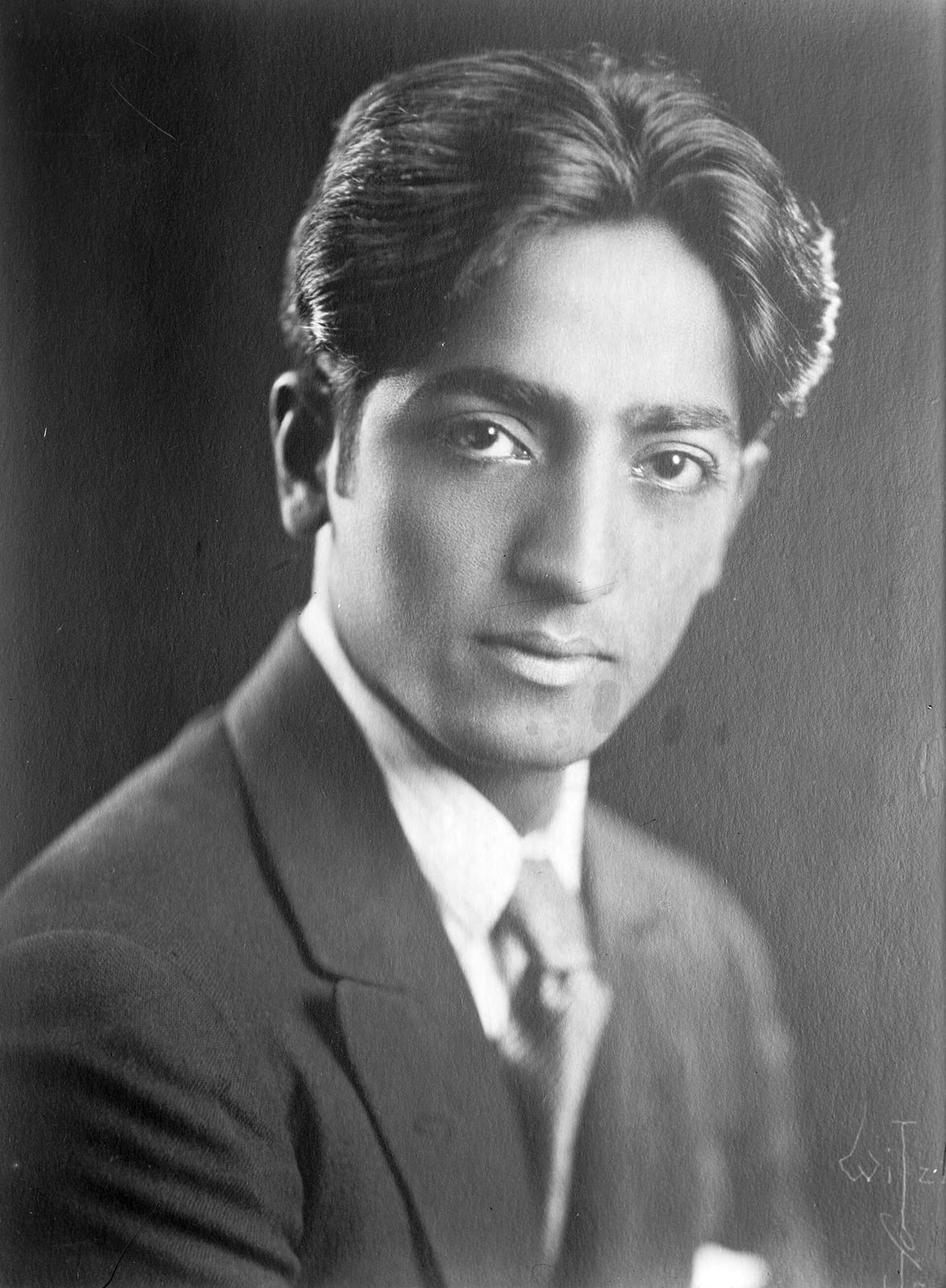
Jiddu Krishnamurti
Si scontrano su: Come si raggiunge la liberazione o la salvezza? · Serve un maestro?

Pema Chödrön
Si scontrano su: Chi sono io? Esiste un vero sé? · Che cosa accade dopo la morte?

Nāgārjuna
Si scontrano su: Chi sono io? Esiste un vero sé? · Che cosa accade dopo la morte?

Epicurus
Si scontrano su: Chi sono io? Esiste un vero sé? · Che cosa accade dopo la morte?
Aneddoti e racconti
Aneddoti e racconti
Racconto agiograficos. XII (según la leyenda)
The dervish at the shop
Origine del racconto: A story transmitted by Dawlatshah of Samarkand (*Tadhkirat al-shu'ara*, 1486) and summarised by the 1911 *Britannica*; Reinert counts it among the initiation myths created in the fifteenth century. Attar's own work shows that he went on practising as a pharmacist while writing his poems.
Racconto agiografico1221 (según la leyenda)
A thousand dirhams or a sack of straw
Origine del racconto: Dawlatshah (1486), summarised by the 1911 *Britannica*. That Attar died in the Nishapur massacre of 1221 is the most widespread opinion (Foruzanfar, Reinert), but Landolt allows for 1230; the details of the dialogue are legend.
Racconto agiograficoc. 1216 (según la leyenda)
The old poet and the boy Rumi
Origine del racconto: A tradition of the late anthologies. Hellmut Ritter explained it as a reflection of the *Asrar-nama*'s influence on the prologue of the *Masnavi* (Reinert), and Franklin Lewis (2000) considers it a succession myth, as summarised by Landolt. There is no contemporary source for the meeting.
Testimonianza1215–1221
Tusi visits the old druggist
Origine del racconto: Tusi's report transmitted by his pupil Ibn al-Fuwati (d. 1323); dates according to Foruzanfar's reckoning. Recorded by Reinert and Landolt.
Documentatos. XII–XIII
Poems written in the pharmacy
Origine del racconto: Attar's own statements in the *Asrar-nama* (p. 170 and vv. 3146–3151 of Gowharin's edition) and in the second preface of the *Khusraw-nama* (Ritter, 'Philologika X', 1939), recorded by Reinert. Should the *Khusraw-nama* not be his, as Shafi'i-Kadkani argues, this last point would lose support.
Documentatos. XII–XIII
Two books cast into the fire
Origine del racconto: Preface to the *Mukhtar-nama* (text in Ritter, 'Philologika X', pp. 147–153), cited by Reinert and Landolt.
Insegnamenti
Insegnamenti
Le nozioni che articolano il suo pensiero, spiegate nel loro contesto.
The Simorgh and the thirty birdssimurgh
It reworks the motif of the birds' journey to the king from the *Risalat al-tayr* of Avicenna and the Ghazalis.
The seven valleyshaft-vadi
It turns into an itinerary the stations (*maqamat*) and states (*ahwal*) of the Sufi manuals.
Love and reasonishq-o-aql
A common theme of Persian mysticism since Ahmad Ghazali and Sanai; Rumi inherited it from Attar.
Hayrat: bewildermenthayrat
A concept present in Islamic mysticism since Dhu'l-Nun and al-Junayd.
Faqr and fana: poverty and annihilationfana
Classical Sufi doctrine formulated by al-Junayd and Bayazid; in al-Hallaj, hero of the *Tadhkirat*, it reaches its extreme expression.
Video
Video
Registrazioni, interviste e documentari. I video vengono riprodotti da YouTube; non sono ospitati qui.
The Long Journey Home | Attar's «The Conference of the Birds» | Spotlight
Analisi· EN· 2022· 7 min
The MetCanale ufficiale
Attar's «Conference of the Birds» — The Greatest Sufi Masterpiece?
Analisi· EN· 25 min
Let's Talk Religion
Life-changing power of Attar's Conference of the Birds
Intervista· EN· 3 min
Sholeh WolpéCanale ufficiale
La quête de l'Autre : «Le cantique des oiseaux» d'Attâr par Leili Anvar
Conferenza· FR· 2014· 59 min
Résonance[s]
Et Dieu dans tout ça : «Le cantique des oiseaux» d'Attâr avec Leili Anvar
Intervista· FR· 2012· 18 min
Résonance[s]
Leili Anvar présente le livre d'art Le Cantique des oiseaux sur Public Sénat
Intervista· FR· 9 min
Éditions Diane de SelliersCanale ufficiale
Lecture du Cantique des Oiseaux d'Attâr au Festival des Musiques Sacrées de Fès 2014
Registrazione di terzi· FR· 2014· 68 min
Transcordancias | Global Music Live
Philosophie et Littérature — Attar : La Conférence des Oiseaux (Jeudis Philo)
Conferenza· FR· 106 min
Ancrages Éditions
هفت شهر عشق عطار ۱ (Las siete ciudades del amor de Attar, 1)
Conferenza· FA· 26 min
Dr Elahi Ghomshei — canal oficialCanale ufficiale
دکتر الهی قمشهای — آشنایی با عطار نیشابوری
Conferenza· FA· 2025· 39 min
Majalle-ye farhangi-honari-ye Attar
حکایت نوشیروان و پیرمرد | الهی نامه عطار نیشابوری
Registrazione di terzi· FA· 28 min
Rashid KakavandCanale ufficiale
مختارنامه | رباعیات عطار نیشابوری
Registrazione di terzi· FA· 2026· 24 min
Rashid KakavandCanale ufficiale
La conferencia de los pájaros — Farid ud-Din Attar
Analisi· ES· 2022· 3 min
Universidad Externado de ColombiaCanale ufficiale
Galleria
Galleria
Immagini con licenza verificata. Ciascuna conserva la sua paternità e la sua attribuzione.
Manoscritti
Manoscritti
Testimoni manoscritti e testi antichi, con il loro custode e le loro condizioni di consultazione.
FA · Nastaliq · c. 1177 (texto)
منطقالطیر (Mantiq al-tayr), manuscrito de Herat
- Testimone conservato
- Códice copiado en 892/1487 por Sultán Ali Mashhadi; pinturas timúridas y otras añadidas hacia 1600 por Habiballah de Saveh
- Custode
- Metropolitan Museum of Art, Nueva York · 63.210
FA · Perso-árabe · s. XII–XIII
خسرونامه (Khusraw-nama), copia de 1297
- Testimone conservato
- Manuscrito fechado en 1297 que contiene el romance y su prólogo atribuido a Attar
- Custode
- Bibliothèque nationale de France, París
CHG · Uigur · s. XIII (original persa)
تذکرة الأولیاء (Tadhkirat al-awliya), versión turca oriental en escritura uigur
- Testimone conservato
- Manuscrito de la Biblioteca Nacional de Francia traducido por Pavet de Courteille (*Tezkereh-i-Evliâ*, 1889-1890)
- Custode
- Bibliothèque nationale de France, París
Relazioni
Relazioni
Influenze, discepolati e affinità. Si distingue la relazione documentata dalla somiglianza individuata per analisi.
Influenzò
Documented literary influence: Rumi adopted the metre of the *Mantiq al-tayr* for the *Masnavi* and reworked Attar's stories. By contrast, the meeting in Nishapur in which the aged Attar supposedly gave the *Asrar-nama* to the boy Rumi is a late legend: Ritter explained it by that work's influence on the prologue of the *Masnavi*, and Franklin Lewis considers it a succession myth (classification: hagiographic, no contemporary source).
Relazione documentata
Ricevette l'influenza di
The frame story of the *Mantiq al-tayr* comes from the *Risalat al-tayr* ascribed to Ahmad Ghazali or to his brother Abu Hamid Muhammad al-Ghazali; Attar expanded and deepened the allegory.
Relazione documentata
Ricevette l'influenza di
Attar closes the *Tadhkirat al-awliya* with the life and martyrdom of al-Hallaj, whom he regarded as the perfecter of Sufism; the apocryphal *Jawhar al-dhat* and other 'second group' works make him their central figure.
Relazione documentata
Ricevette l'influenza di
Attar devotes a chapter of the *Tadhkirat al-awliya* to Rabi'a, the main source for many of her sayings and anecdotes in the Persian tradition, among them the prayer of disinterested love.
Relazione documentata
Contemporaneo di
Contemporaries (Ibn Arabi was born in 1165 and Attar died around 1221), at the two ends of the Islamic world; no contact or mutual knowledge of their works is recorded.
Relazione documentata
Idee affini a
Attar's *qalandari* ghazals, with their language of wine and the libertine, anticipate the figure of the *rend* that Hafez brought to its most refined form.
Somiglianza individuata per analisi
Idee affini a
Both teach that what is sought lies within the seeker and distrust outward religion; no historical connection is known.
Somiglianza individuata per analisi
Fonti
Fonti
Bibliografia e cataloghi consultati per questa scheda.
- Wikidata, Q194091 «Attar of Nishapur» (P31=Q5; 69 enlaces entre wikis; P569 1145-03; P570 1221-04-26; P1559 فَریدالدّین ابوحامِد محمّد عطّار نِیشابوری).
- Reinert, Bernd. «ʿAṭṭār, Farīd-al-Dīn». Encyclopaedia Iranica, vol. III, fasc. 1, pp. 20–25. Publicado el 15-12-1987.
- Landolt, Hermann. «Farid al-Din 'Attar». En Medieval Islamic Civilization: An Encyclopaedia. Nueva York: Routledge, 2006; versión publicada por The Institute of Ismaili Studies.
- O'Malley, Austin. «An Unexpected Romance: Reevaluating the Authorship of the Khosrow-nāma». Al-'Usur al-Wusta 27 (2019), pp. 201–232. DOI 10.7916/alusur.v27i1.6785.
- «Farīd ud-Dīn ʽAttār». Encyclopædia Britannica, 11.ª ed., vol. 10. Cambridge, 1910–1911 (resume los relatos de Dawlatshah sobre su conversión y su muerte). Texto en Wikisource.
- Attar. Obras en persa: Diván, Mantiq al-tayr, Ilahi-nama, Asrar-nama, Musibat-nama, Mujtar-nama, Tadhkirat al-awliya y obras atribuidas (Pand-nama, Bulbul-nama, Ushtur-nama, Yawhar al-dhat, Mazhar al-ayaib, Haylay-nama, Bisar-nama, Waslat-nama, Si fasl, Bayan al-irshad, Nuzhat al-ahbab, Jusraw-nama). Ganjoor.
- «Attar of Nishapur». Wikipedia en inglés (mausoleo de Navai y su renovación de 1940; recepción moderna).
- FitzGerald, Edward. Letters and Literary Remains of Edward FitzGerald, ed. William Aldis Wright, vol. II. Londres: Macmillan, 1889 (incluye «Bird-Parliament» con la nota de E. B. Cowell sobre su génesis).
- Attar, Farid al-Din. The Tadhkiratu 'l-awliya («Memoirs of the saints»), ed. Reynold A. Nicholson, con introducción de Mirza Muhammad Qazvini. 2 vols. Londres y Leiden: Luzac / Brill, 1905–1907 (Persian Historical Texts).
- Titolare dei diritti
- Dominio público (obra de los siglos XII–XIII). Las ediciones críticas (Shafii-Kadkani, Sukhan) y las traducciones modernas (Penguin, Norton, Islamic Texts Society, Paulist Press, Manchester University Press, Cerf, Diane de Selliers, Seuil, Fayard…) están sujetas a los derechos de sus editores y traductores.
In attesa di conferma
Ciò che questa scheda non ha ancora potuto chiarire. Preferiamo dirlo piuttosto che riempirlo.
- Sala de lectura en inglés: el *Bird-Parliament* de FitzGerald (dominio público) solo se ha encontrado dentro del vol. II de *Letters and Literary Remains* (archive.org/details/lettersliteraryr02fitziala, OCR limpio), que contiene otras obras; no se registra hasta hallar una página propia.
- Sala de lectura en francés: la traducción de Garcin de Tassy (1863) está en Internet Archive con un OCR inservible (texto francés leído como persa); buscar una transcripción limpia (Wikisource o Gallica en modo texto).
- No se ha encontrado traducción española del *Ilahi-nama*, del *Musibat-nama* ni del *Asrar-nama* en Open Library; confirmar traductor de las ediciones de Humanitas (2007), Troquel (1994) y de «72 santos sufíes» (Hastinapura, 2000), y si esta última procede del *Tadhkirat*.
- Localizar ISBN de las ediciones críticas de Shafii-Kadkani del *Ilahi-nama*, *Asrar-nama*, *Musibat-nama*, *Mujtar-nama* y *Tadhkirat* (Sukhan).
- Imagen: la miniatura de Hossein Behzad (1960) que usa Wikidata como retrato figura en Commons como dominio público por la ley iraní, pero el pintor murió en 1968; no se ha incluido por dudas sobre su situación en la UE.
- Verificar con la edición impresa (Shafii-Kadkani, introducción al *Ilahi-nama*) la tesis de que el *Jusraw-nama* citado por Attar es el *Ilahi-nama*; aquí se apoya en Landolt (2006). Leer el artículo de O'Malley (2019), del que solo se ha consultado el resumen.
- Comprobar el enlace de la ficha del Met (63.210) y la signatura del manuscrito de 1297 del *Jusraw-nama* en la BnF.
- Vídeos en español de canales institucionales: solo uno (Universidad Externado de Colombia); faltan documentales de televisiones públicas.
Ricerca effettuata il 2026-10-25