Teosofia · Non-dualità contemporanea · Contemplazione secolare
Jiddu Krishnamurti
జిడ్డు కృష్ణమూర్తి
1895 – 1986Persona storicamente documentata
Pensatore e oratore indiano (1895–1986). Educato dalla Società Teosofica come futuro «Istruttore del Mondo», nel 1929 sciolse l'Ordine creato per lui e negò ogni autorità spirituale, compresa la propria. Per quasi sessant'anni parlò in tutto il mondo del condizionamento, del pensiero, della paura e della libertà, senza metodo né dottrina, e lasciò scuole, fondazioni e un archivio eccezionale di discorsi e dialoghi, tra cui quelli con il fisico David Bohm.
- opere
- 93opere
- edizioni
- 190edizioni
- citazioni
- 8citazioni
- video
- 14video
- immagini
- 8immagini

Retrato de Jiddu Krishnamurti (Bain News Service, años veinte) · Public domain
Con le sue parole
«I maintain that Truth is a pathless land, and you cannot approach it by any path whatsoever, by any religion, by any sect.»Discurso de disolución de la Orden de la Estrella, Ommen (Países Bajos), 3 de agosto de 1929; publicado en International Star Bulletin, septiembre de 1929

La sua idea centrale
Every human being is conditioned by nation, religion, class, education and personal memory. The point is not to replace one conditioning with a better one but to see it whole, without justifying or condemning it; that seeing is already the beginning of freedom, not a reward obtained at the end of a path.
Vederlo nel contesto
Biografia
5 min di lettura
Traduzione assistita dall'originale spagnolo, in attesa di revisione da parte di un traduttore madrelingua.
Un ragazzo sulla spiaggia di Adyar
Jiddu Krishnamurti nacque l'11 maggio 1895 a Madanapalle, una piccola città dell'attuale Andhra Pradesh, ottavo figlio di una famiglia brahmana di lingua telugu. Il padre, Jiddu Narianiah, era funzionario dell'amministrazione britannica e membro della Società Teosofica; la madre, Sanjeevamma, morì nel 1905. Quando Narianiah andò in pensione, ottenne un modesto impiego presso la sede della Società ad Adyar, alle porte di Madras, e nel 1909 vi si stabilì con i figli.
Nella primavera di quell'anno Charles Webster Leadbeater, il teosofo che si attribuiva una visione chiaroveggente, notò un ragazzo magro e distratto che faceva il bagno con altri bambini sulla spiaggia. Secondo il suo stesso racconto, ciò che lo colpì fu un'aura di un disinteresse per sé insolito. I teosofi attendevano la venuta dell'Istruttore del Mondo, il Maitreya, che si sarebbe manifestato in un «veicolo» umano. Leadbeater e Annie Besant, presidente della Società dal 1907, decisero che quel bambino, che i maestri di scuola consideravano tardo, era il prescelto. Fu nutrito, vestito, istruito in inglese e sottoposto, insieme al fratello minore Nityananda, a una disciplina di purezza fisica e morale che non aveva nulla a che vedere con la sua infanzia.
L'Istruttore del Mondo
Nel 1910 Besant ottenne da Narianiah la tutela legale dei due fratelli. Quello stesso anno uscì Ai piedi del Maestro, firmato «Alcyone», breve manuale di condotta presentato come gli insegnamenti ricevuti in sogno dal Maestro Kuthumi; la paternità e il grado di intervento di Leadbeater furono discussi fin dall'inizio. Nel 1911 fu fondato l'Ordine della Stella d'Oriente per preparare il mondo alla venuta, con Krishnamurti come capo nominale. Il padre, allarmato dall'influenza di Leadbeater, fece causa nel 1912 per riavere i figli; Besant perse a Madras e vinse nel 1914 davanti al Consiglio privato di Londra.
Gli anni della formazione trascorsero in Inghilterra e in Francia. Krishnamurti fallì ripetutamente l'esame di ammissione all'Università di Londra e visse la Prima guerra mondiale tra precettori, aristocratici teosofi e una malinconia che le sue lettere non nascondono. Nel 1922 i due fratelli giunsero in California, in cerca di un clima favorevole alla tubercolosi di Nitya. In agosto, in una casetta della valle di Ojai, cominciò quello che la cerchia avrebbe chiamato «il processo»: dolori intensi alla nuca e lungo la colonna, stati di semincoscienza e un'esperienza che lo stesso Krishnamurti descrisse per lettera come un'immensa compassione e una pace senza oggetto. Gli episodi, attestati da Nitya, da Rosalind Williams e dal teosofo A. P. Warrington, si ripeterono per anni. La loro natura — risveglio mistico, crisi nervosa, kuṇḍalinī — resta materia di interpretazione, non di fatto.
Lo scioglimento dell'Ordine
Il 13 novembre 1925 Nitya morì a Ojai mentre Krishnamurti era in viaggio verso l'India, fiducioso che i Maestri non avrebbero permesso quella morte. I testimoni descrivono giorni di pianto e, al loro termine, un uomo diverso. Nel 1927 Besant annunciò che l'Istruttore del Mondo era arrivato; a quel punto Krishnamurti parlava già con una voce propria che sconcertava la gerarchia teosofica.
Il 3 agosto 1929, nell'accampamento di Ommen (Paesi Bassi), davanti a Besant e a migliaia di membri, sciolse l'Ordine della Stella. «La verità è una terra senza sentieri», disse: nessuna organizzazione, nessun credo e nessun maestro può condurvi. Restituì le proprietà e i fondi donati e nel 1930 lasciò la Società Teosofica. È il gesto che fonda tutto ciò che venne dopo: un uomo preparato per vent'anni a essere venerato rifiutava di essere l'autorità spirituale di chiunque.
Cinquant'anni di parola
Da allora parlò in pubblico per più di mezzo secolo, in India, in Europa, negli Stati Uniti e in Australia, senza appartenere ad alcuna tradizione. Si stabilì a Ojai, dove D. Rajagopal, ex membro dell'Ordine, organizzò la pubblicazione dei suoi discorsi. La Seconda guerra mondiale lo trattenne in California, in un silenzio quasi completo; a quegli anni risale l'amicizia con Aldous Huxley, che lo incoraggiò a scrivere e firmò la prefazione di La prima e ultima libertà (1954). Dal 1947 tornò ogni inverno in India, dove frequentò politici e intellettuali come Pupul Jayakar, sua futura biografa.
Il suo insegnamento si lascia riassumere male. Sosteneva che l'essere umano è condizionato dalla sua cultura, dalla sua religione, dalla sua nazionalità e dalla sua stessa memoria; che il pensiero, per sua natura, è vecchio e frammentario; che l'«io» che pretende di cambiare non è distinto da ciò che vuole cambiare — «l'osservatore è l'osservato» —; e che la trasformazione non arriva attraverso metodi, discipline o guru, ma attraverso un'attenzione senza scelta a ciò che accade, istante per istante. Rifiutò la meditazione come tecnica e la devozione verso la sua persona; negli ultimi anni parlava di sé come di «colui che parla».
Dal 1961 dialogò con il fisico David Bohm, e quei dialoghi, raccolti in La fine del tempo (The Ending of Time, 1985), lo avvicinarono a scienziati e psicoterapeuti. Nel 1984 parlò al Laboratorio nazionale di Los Alamos e nel 1985 davanti alla Pacem in Terris Society, alle Nazioni Unite.
Scuole, fondazioni e cause
L'educazione fu la sua altra opera. Promosse la scuola di Rishi Valley, vicino alla città natale, e quella di Rajghat a Benares; nel 1969 aprì Brockwood Park, nello Hampshire, e nel 1975 la Oak Grove School di Ojai. Tra il 1968 e il 1970 si costituirono le fondazioni che oggi custodiscono la sua opera: la Krishnamurti Foundation Trust in Inghilterra, la Krishnamurti Foundation of America e la Krishnamurti Foundation India. La rottura con Rajagopal, che tratteneva diritti, archivi e proprietà, sfociò in cause legali che si protrassero fin dopo la sua morte.
Nel 1991 Radha Rajagopal Sloss, figlia di Rajagopal, rese pubblico che Krishnamurti aveva intrattenuto per decenni una relazione amorosa con sua madre, Rosalind. Mary Lutyens, biografa autorizzata, rispose con un altro libro. L'episodio appartiene al terreno delle testimonianze contrapposte, non a quello dei fatti accertati, e conviene leggerlo così.
La morte a Ojai
Tenne il suo ultimo discorso pubblico a Madras il 4 gennaio 1986. Tornò malato a Ojai, dove gli fu diagnosticato un cancro al pancreas. Il 7 febbraio registrò una dichiarazione sull'«immensa energia» che, a suo giudizio, aveva attraversato il suo corpo per settant'anni e che se ne sarebbe andata con lui. Morì a Pine Cottage il 17 febbraio 1986, pochi minuti dopo la mezzanotte. Per sua volontà non vi fu alcuna cerimonia, e le sue ceneri furono divise tra Ojai, Brockwood e l'India.
Il documentato e il tramandato
Di Krishnamurti si conserva un archivio eccezionale: migliaia di discorsi e dialoghi trascritti, registrati in audio e, dagli anni Sessanta, in video, oggi pubblicati nelle Opere complete e sul sito delle fondazioni. Sono documenti. Appartengono invece all'ambito della testimonianza la chiaroveggenza di Leadbeater, i Maestri della teosofia, il senso ultimo del «processo» e la lettura che i suoi intimi diedero del suo stato interiore. La sua biografia esige di tenere separate le due colonne: quella dell'uomo che parlò, le cui parole si possono leggere, e quella del mito che altri costruirono intorno a lui e che egli stesso dedicò la vita a smontare.
Fonti: Sloss, Radha Rajagopal. Lives in the Shadow with J. Krishnamurti. Londres: Bloomsbury, 1991. · Vernon, Roland. Star in the East: Krishnamurti, the Invention of a Messiah. Londres: Constable, 2000. · Lutyens, Mary. Krishnamurti: The Years of Awakening. Londres: John Murray, 1975. · Lutyens, Mary. Krishnamurti: The Years of Fulfilment. Londres: John Murray, 1983. · Lutyens, Mary. Krishnamurti: The Open Door. Londres: John Murray, 1988.
Cronologia
La vita, anno per anno
Ogni punto è un evento documentato. Fai clic per leggerlo, con la sua fonte e il suo grado di certezza.
11 maggio 18950 anniMadanapalle
Birth
Eighth child of Jiddu Narianiah and Sanjeevamma, a Telugu-speaking Brahmin family. Official sources give 11 May; some catalogues give the 12th because he was born just after midnight.
DocumentatoKrishnamurti Foundation of America. The Life of Krishnamurti — cronologías 1895–1986.
11 maggio 1895 · 0 anni
Birth
Eighth child of Jiddu Narianiah and Sanjeevamma, a Telugu-speaking Brahmin family. Official sources give 11 May; some catalogues give the 12th because he was born just after midnight.
Documentato
1905 · 10 anni
Death of his mother
Sanjeevamma dies when Krishnamurti, a sickly and withdrawn child, is about ten.
Documentato
ca. 1909 · 14 anni
Leadbeater 'discovers' him on the beach
The family settles at the Theosophical headquarters. C. W. Leadbeater claims to have seen an exceptional aura in the boy and declares him the vehicle of the coming World Teacher.
Documentato
1910 · 15 anni
Annie Besant's guardianship and 'At the Feet of the Master'
Narianiah transfers guardianship of Krishnamurti and Nityananda to Besant. At the Feet of the Master appears under the name 'Alcyone'.
Documentato
gennaio 1911 · 15 anni
Founding of the Order of the Star in the East
The Order is created to prepare for the World Teacher's coming, with Krishnamurti as its head. That year he travels to England for the first time.
Documentato
1914 · 19 anni
Privy Council ruling
His father had sued Besant in 1912 to recover his sons; the Madras High Court found for him, but in 1914 the Privy Council ruled for Besant.
Documentato
17 agosto 1922 · 27 anni
'The process' begins
In a cottage in the Ojai Valley, intense pain and altered states which Krishnamurti describes by letter as an experience of compassion and peace; they will recur for years.
Documentato
13 novembre 1925 · 30 anni
Death of Nityananda
His brother dies of tuberculosis while he is travelling to India. The loss breaks his trust in the promises of the Theosophical hierarchy.
Documentato
3 agosto 1929 · 34 anni
Dissolution of the Order of the Star
Speech 'Truth is a Pathless Land'. He returns properties and funds; in 1930 he leaves the Theosophical Society.
Documentato
ca. 1938 · 43 anni
Friendship with Aldous Huxley
He meets Huxley, who encourages him to write and will preface The First and Last Freedom.
Documentato
1947 · 52 anni
Return to India
After the war and independence he returns to India, where he will speak every winter for nearly forty years.
Documentato
1954 · 59 anni
The First and Last Freedom
Published with a foreword by Aldous Huxley; his first widely read book outside Theosophical circles.
Documentato
1961 · 66 anni
First meeting with David Bohm
The physicist, who had read The First and Last Freedom, writes to him and they meet in London; a twenty-five-year dialogue begins.
Documentato
1968 · 73 anni
Krishnamurti Foundation Trust
The English foundation is set up; the American (1969) and Indian ones follow. The break with Rajagopal opens lawsuits over rights and archives.
Documentato
1969 · 74 anni
Brockwood Park School
His European school opens, which will also be his residence in England.
Documentato
1975 · 80 anni
Oak Grove School
The Ojai school opens at Arya Vihara.
Documentato
1980 · 85 anni
'The Ending of Time' dialogues
A series of recorded conversations with David Bohm, published in 1985.
Documentato
aprile 1985 · 89 anni
Talk at the United Nations
He speaks before the Pacem in Terris Society at UN headquarters.
Documentato
4 gennaio 1986 · 90 anni
Last public talk
Third Madras talk; the official channel preserves its ending as 'his last public words'.
Documentato
17 febbraio 1986 · 90 anni
Death
Dies of pancreatic cancer at Pine Cottage, just after midnight. No ceremony; ashes divided between Ojai, Brockwood and India.
Documentato
Opere
Opere essenziali
Le opere senza le quali non si comprende la sua eredità.
Raccolta posteriore · 1954
The First and Last Freedom
Twenty-one chapters and thirty-eight questions covering the whole of his mature thought: the individual and society, self-knowledge, belief, fear, relationship, the thinker and the thought, time and transformation. Huxley's foreword presented it to the educated English-speaking public as a radical critique of symbols and ideologies. It was the book that led David Bohm to seek him out and remains the most cited gateway to his work.
6 edizioni · amazon.com

Opera scritta · 1956
Commentaries on Living
Short prose pieces combining the description of a landscape (an Indian river, a California wood) with a conversation with someone who comes with a problem: a politician, a grieving mother, a sannyasi, an ambitious man. The dialogue gradually dismantles the initial question. It is his most literary work and the one that best shows the method of joint inquiry; many readers consider it the best introduction to his tone.
7 edizioni · amazon.com

Conferenze pubblicate · 1964
Think on These Things
First published as This Matter of Culture (1964): talks to students, teachers and parents at the schools in India, edited by D. Rajagopal. In some thirty short chapters it treats freedom and discipline, ambition, religion, fear, relationship with nature and the meaning of education. Its clarity and school origin have made it one of his most read books and a common first reading.
2 edizioni · amazon.com

Raccolta posteriore · 1969
Freedom from the Known
Sixteen chapters setting out continuously the core of his teaching: the rejection of all spiritual authority, conditioning, pleasure and fear, violence, relationship, time and death, the observer and the observed, meditation. Lutyens removed the repetitions of the talks and produced a fluent text that works as a synthesis. It is probably his most translated book; in Spanish it circulates as Libérese del pasado.
7 edizioni · amazon.com
Tutta la sua opera (93)

At the Feet of the Master
1910

The Kingdom of Happiness
1927

The Immortal Friend
1928

Truth is a Pathless Land
1929

Education and the Significance of Life
1953

Life Ahead
1963

The Only Revolution
1970

The Urgency of Change
1970

The Flight of the Eagle
1971

You Are the World
1972

The Awakening of Intelligence
1973

Beginnings of Learning
1975

Krishnamurti's Notebook
1976

Truth and Actuality
1977

The Wholeness of Life
1978

Meditations
1979

Exploration into Insight
1979

Letters to the Schools
1981

Krishnamurti's Journal
1982

The Network of Thought
1982

The Ending of Time
1985

The Future of Humanity
1986

Last Talks at Saanen 1985
1986

Krishnamurti to Himself
1987
Citazioni
Citazioni localizzate in un'opera precisa. Ciascuna porta con sé la sua provenienza e il suo grado di affidabilità.
I maintain that Truth is a pathless land, and you cannot approach it by any path whatsoever, by any religion, by any sect.VerificataDiscurso de disolución de la Orden de la Estrella, Ommen (Países Bajos), 3 de agosto de 1929; publicado en International Star Bulletin, septiembre de 1929
Idee essenziali (sintesi editoriale)
Per rispetto del diritto d'autore, queste idee sono riassunte con parole nostre e non sono presentate come citazioni letterali.
- Every human being is conditioned by nation, religion, class, education and personal memory. The point is not to replace one conditioning with a better one but to see it whole, without justifying or condemning it; that seeing is already the beginning of freedom, not a reward obtained at the end of a path.
- Thought is the response of memory and is therefore always old, limited and fragmentary. It is indispensable for technology and practical life, but in the psychological field it manufactures the 'I' and its divisions, and so it cannot resolve the conflicts it produces.
- Fear is less the fear of something particular than a movement of thought that projects the past onto the future. Observed without running away from it, without naming it and without trying to overcome it, it loses the continuity thought lends it.
- Meditation is not a technique, nor the repetition of a formula, nor a concentration that excludes everything else. It is complete attention to one's own life — how one speaks, eats, judges — in which no one remains who meditates in order to obtain something.
- Relationship is the mirror in which one discovers oneself as one is. The images each person builds of the other, made of accumulated hurts and pleasures, take the place of actual relationship; while those images rule, what we call relationship is a dealing between memories.
- Education should not produce obedient technicians or citizens adjusted to society but whole human beings, free of fear, able to think for themselves and to see life as a whole. In his schools teacher and pupil were to learn together, without comparison or punishment.
- Every identification that divides — national, religious, ideological — breeds violence. Whoever wishes to understand violence cannot belong, psychologically, to any country or creed, because each human being is responsible for the state of the whole world.
- No master, guru, interpreter or organisation can lead to truth, and he himself was to be no exception: he asked that no one speak in his name or present themselves as his successor. Each must be a light to oneself.
- Dying each day to the known — to memories, attachments, the image of oneself — is the only way to live with a fresh mind. Death is not something separate from life waiting at the end, but the ending of the continuity of the self.
- Love is not pleasure, desire, attachment or duty. Where there is jealousy, possession or comparison there is no love; it appears when self-centred activity ceases, and it alone gives meaning to intelligence and knowledge.
Citazioni apocrife o di attribuzione discussa (1)
«It is no measure of health to be well adjusted to a profoundly sick society.»
It is the most widely circulated sentence under his name and has not been found in any of his books or in the foundations' archive of talks. Its earliest known attestation is The Eden Express (1975), Mark Vonnegut's memoir, which attributes it to Krishnamurti without giving a source (p. 208). It may summarise an idea of his, but the wording is undocumented.
Ultime parole
Parole ascoltate e documentate
«"But nobody has done it. Nobody. And so that's that."»But nobody has done it. Nobody. And so that's that.
No 'last words' in the strict sense survive: Krishnamurti died at Pine Cottage (Ojai) at 12:10 a.m. on 17 February 1986, attended by friends and medical staff, and no witness recorded a final sentence. What is documented is his last recorded statement, of 7 February 1986, ten days before his death: Scott Forbes captured it on tape at Pine Cottage and Mary Lutyens transcribed and discussed it in The Open Door (1988) and The Life and Death of Krishnamurti (1990); the Krishnamurti Foundation of America holds the recording. In it, already greatly weakened by pancreatic cancer, he says that nobody has understood the extraordinary energy and intelligence that, in his view, had acted through his body for seventy years; that this consciousness would end with his death and would not appear again for many centuries; and that others might perhaps come close to it by living the teaching, though nobody had done so. The sentence given here closes that passage. The statement is under copyright (KFT/KFA), so it is described in our own words and only a brief fragment is quoted.
Fonte: Lutyens, Mary. Krishnamurti: The Open Door. Londres: John Murray, 1988.
Chiedi
Ciò a cui risponde la sua opera
Dodici grandi domande dell'umanità e ciò che i suoi testi permettono di rispondere, con riferimenti. Non gli mettiamo mai parole in bocca.
Che cos'è l'Assoluto? Dio esiste?
The God of thought is invented; the sacred appears only when thought falls silent
L'innominabileLo dice espressamente
Jiddu Krishnamurti rejects both belief and disbelief in God, since both are products of thought, and thought, he holds, is conditioned memory: whatever it imagines about the divine is a projection of its own fear and desire for security. In his speech dissolving the Order of the Star (1929) he states that truth is a pathless land, to which no religion, sect or authority leads. At the same time, in his talks and in the diary known as Krishnamurti's Notebook he speaks of the immeasurable, the sacred, an «otherness» that appears when the mind is completely still, without seeking it. On this he refuses to build doctrine: to name it would be to bring it back into the field of the known. The ultimate exists, but no word, image or belief reaches it.
Confronta questa domanda con altri maestriChi sono io? Esiste un vero sé?
The self is a bundle of memories; the observer is the observed
L'ego è una costruzione del pensieroLo dice espressamente
Jiddu Krishnamurti holds that the psychological «I» is a construction of thought: a bundle of memories, images, hurts, pleasures and conclusions that thought accumulates and then treats as a central entity. That centre presents itself as the observer who judges, controls and wishes to change, but, according to him, the observer is not separate from the observed: whoever tries to master anger is made of the same stuff as the anger. Understanding this, not as an idea but in the very act of observing, ends inner conflict. Krishnamurti also rejects the search for a higher Self or a soul, which he regards as another projection of thought seeking security. What he proposes is not to discover a true self but to see the structure of the self with choiceless awareness; in that seeing, he says, freedom begins.
Confronta questa domanda con altri maestriPerché soffriamo?
Thought creates fear and sorrow by projecting past and future
Il pensiero e il tempo psicologicoLo dice espressamente
For Jiddu Krishnamurti, psychological suffering is the work of thought. Thought is memory, and by projecting itself into time it creates fear: fear of losing what one has, of not becoming what one wants, of death. Sorrow over a loss, he holds, is mostly self-pity and the self's sense of loneliness, clinging to its image of the other and to its own continuity. He distinguishes physical pain, which is a fact, from psychological suffering, which thought prolongs by comparing, remembering and anticipating. His proposal is not to console oneself or flee into explanations, but to remain with suffering without moving away from it, to look at it completely without the observer who wants to escape. In that total attention, he claims, suffering ends, and with its ending comes passion, which he also calls compassion.
Confronta questa domanda con altri maestriChe cosa accade dopo la morte?
Dying to the known every day: there is no other serious question about death
Morire ogni giorno al conosciutoLo dice espressamente
Krishnamurti refuses to answer what lies after death and shifts the question. For him, the desire to know whether one continues is the desire for the self to continue, that is, memory, attachments and accumulated images; beliefs in reincarnation or heaven are consolations of thought in the face of its own end. What he proposes is to die now, while living: to end each day with everything one has accumulated — pleasures, grudges, knowledge about oneself — without arguing with death or postponing it. Only in that psychological ending, he holds, is there renewal, something new, and in it life, love and death are not separate. To someone who asks about reincarnation he replies that, if one believes in it, the consistent thing would be to live with complete rectitude today, since what one is now is what would continue.
Confronta questa domanda con altri maestriCome si raggiunge la liberazione o la salvezza?
Truth is a pathless land: no method, master or organisation leads to it
Senza metodo: l'attenzione totaleLo dice espressamente
Jiddu Krishnamurti formulated his position in 1929, when he dissolved the Order of the Star in the East that had been built around him: truth is a pathless land and cannot be reached through any religion, sect or organisation. From then on he held for six decades that every method, practice or discipline produces new conditioning, because it springs from the same thought that seeks a result. Freedom is not an end reached through time; it lies at the beginning: in the immediate, choiceless perception of what one is, of one's fears, desires and conflicts, observed without condemnation or justification. That observation, if it is total, by itself brings about a transformation that no effort can manufacture.
Confronta questa domanda con altri maestriServe un maestro?
Following another destroys freedom: he wanted no disciples or followers
Nessuna autorità spiritualeLo dice espressamente
Jiddu Krishnamurti is the most radical example of this position, and his life explains it. Raised from childhood by the Theosophical Society to be the World Teacher, in 1929 he dissolved the organisation built around him and declared that he wanted no followers, because following someone means ceasing to seek truth for oneself. For the rest of his life he held that psychological authority, that of the guru, the priest or the sacred book, is incompatible with freedom: it creates dependence, fear and imitation. He did distinguish technical authority, that of the doctor or scientist, which is legitimate. Inwardly, each must be a light to oneself, and he did not present himself as an authority.
Confronta questa domanda con altri maestriIl mondo è reale?
Thought manufactures the psychological world; you are the world
Una rete di cause senza sostanzaSi deduce dalla sua dottrina
Jiddu Krishnamurti does not deny physical reality: the tree, the mountain or the river are not creations of thought. What he examines is the psychological and social world, which he regards as the product of conditioned thought: the self, national and religious divisions, conflicts. In the dialogues with the physicist David Bohm collected in Truth and Actuality he distinguishes reality, everything thought can touch and build, from truth, which thought does not reach. He repeats that the individual is the world and the world is the individual: society is the projection of what each person is. There is thus no permanent substance behind the self, but a conditioned process of memory and reaction.
Confronta questa domanda con altri maestriChe cos'è l'amore?
Where the self is, love is not: love is not attachment, jealousy or pleasure
Ciò che appare quando l'io cessaLo dice espressamente
Krishnamurti refuses to define love positively and proceeds by negation. Love is not attachment, which fears loss; it is not jealousy, possession or dependence; it is not pleasure, which thought remembers and wishes to repeat; it is not duty or respectability. All of that, he holds, is the activity of the self, of the centre that protects and prolongs itself. When one sees clearly what love is not, without rejecting or cultivating it, what it is may appear. That is why love cannot be practised or learned like a technique: there is no path to it, because every path is walked by the self. In Freedom from the Known and in the anthology On Love and Loneliness he links it with compassion and intelligence, and states that without love no social reform changes anything.
Confronta questa domanda con altri maestriSiamo liberi o è tutto determinato?
Choosing is not freedom: the one who chooses is a product of conditioning
Non c'è un agenteLo dice espressamente
Krishnamurti turns the question around. The freedom of choice we usually defend is, in his view, an illusion of the conditioned mind: the one who chooses is the «self», a bundle of inherited memories, fears and desires, so that its choice always repeats the past. Hence he speaks of choiceless awareness, in which conditioning is observed without an observer judging it. When one sees that the observer is the observed, the conflict between what I am and what I should be ends, and in that ending, not in a decision, lies freedom. In *The First and Last Freedom* and *Freedom from the Known* freedom is not something reached at the end of a path, but what is there at the beginning, when the choosing centre ceases.
Confronta questa domanda con altri maestriPerché meditare o pregare?
Meditation is not a method: it is attention without a centre or effort
La meditazione non è una tecnicaLo dice espressamente
Krishnamurti rejects every meditation system: repeating a mantra, controlling the breath or following a teacher's steps only produces a mechanical, dulled mind, and also strengthens the self that wants to achieve something. Meditation, as he describes it in *Freedom from the Known*, *The Only Revolution* and his journals, is not something practised for a while each day but a quality of attention that observes every thought and feeling without condemning or justifying it, without an observer who chooses. From that attention a silence arises that has not been sought. It is not a path to a goal: it is self-understanding in the act of living, and it begins by seeing one's own mind as it is.
Confronta questa domanda con altri maestriPuò la ragione conoscere l'ultimo?
Thought is born of memory and can never touch the new
Il pensiero è limitatoLo dice espressamente
Krishnamurti is the reference for this key. His analysis, constant from *The First and Last Freedom* to his dialogues with the physicist David Bohm collected in *The Ending of Time* (1985), holds that thought is the response of memory, and memory is the result of accumulated experience; therefore thought is always limited and old, and cannot touch what is new, the immeasurable. Useful in the technical sphere, it becomes a source of conflict when it claims to reach truth or to build a self. In his 1929 speech dissolving the Order of the Star he declared that truth is a pathless land, unreachable by any organisation, creed or method. Only when thought sees its own limit and falls quiet can another perception arise.
Confronta questa domanda con altri maestriRitirarsi dal mondo o trasformarlo?
You are the world: without transforming consciousness, every reform repeats the conflict
La rivoluzione è interioreLo dice espressamente
Krishnamurti rejects both withdrawal and conventional activism. He holds that the individual is not separate from society: you are the world, and the violence, greed and division seen outside are projections of each person's consciousness. Political revolutions, economic reforms and religious organisations change the surface but leave the centre untouched, and that is why conflict reappears in another form. The only real revolution is the radical transformation of the mind, which is not achieved by following a leader or a system. Consistently, in 1929 he dissolved the Order of the Star, created for him, declaring that truth is a pathless land. He did not preach withdrawal: he lived travelling and speaking in public, and founded schools in India, England and the United States to educate children free of fear and competition.
Confronta questa domanda con altri maestri
Affinità e tensioni
Affinità e tensioni
Calcolate domanda per domanda a partire dalle sue posizioni. Il perché di ogni accordo o contrasto, con un clic.
La pensa in modo simile a
Osho
Concordano su: Chi sono io? Esiste un vero sé? · Perché soffriamo? · Come si raggiunge la liberazione o la salvezza?
- BKByron Katie
Byron Katie
Concordano su: Chi sono io? Esiste un vero sé? · Perché soffriamo? · Che cos'è l'amore?
Eckhart Tolle
Concordano su: Chi sono io? Esiste un vero sé? · Perché soffriamo? · Come si raggiunge la liberazione o la salvezza?
Alan Watts
Concordano su: Perché soffriamo? · Come si raggiunge la liberazione o la salvezza? · Serve un maestro?
La pensa diversamente da

Mirabai
Si scontrano su: Come si raggiunge la liberazione o la salvezza? · Serve un maestro?
Nicholas Roerich
Si scontrano su: Serve un maestro?
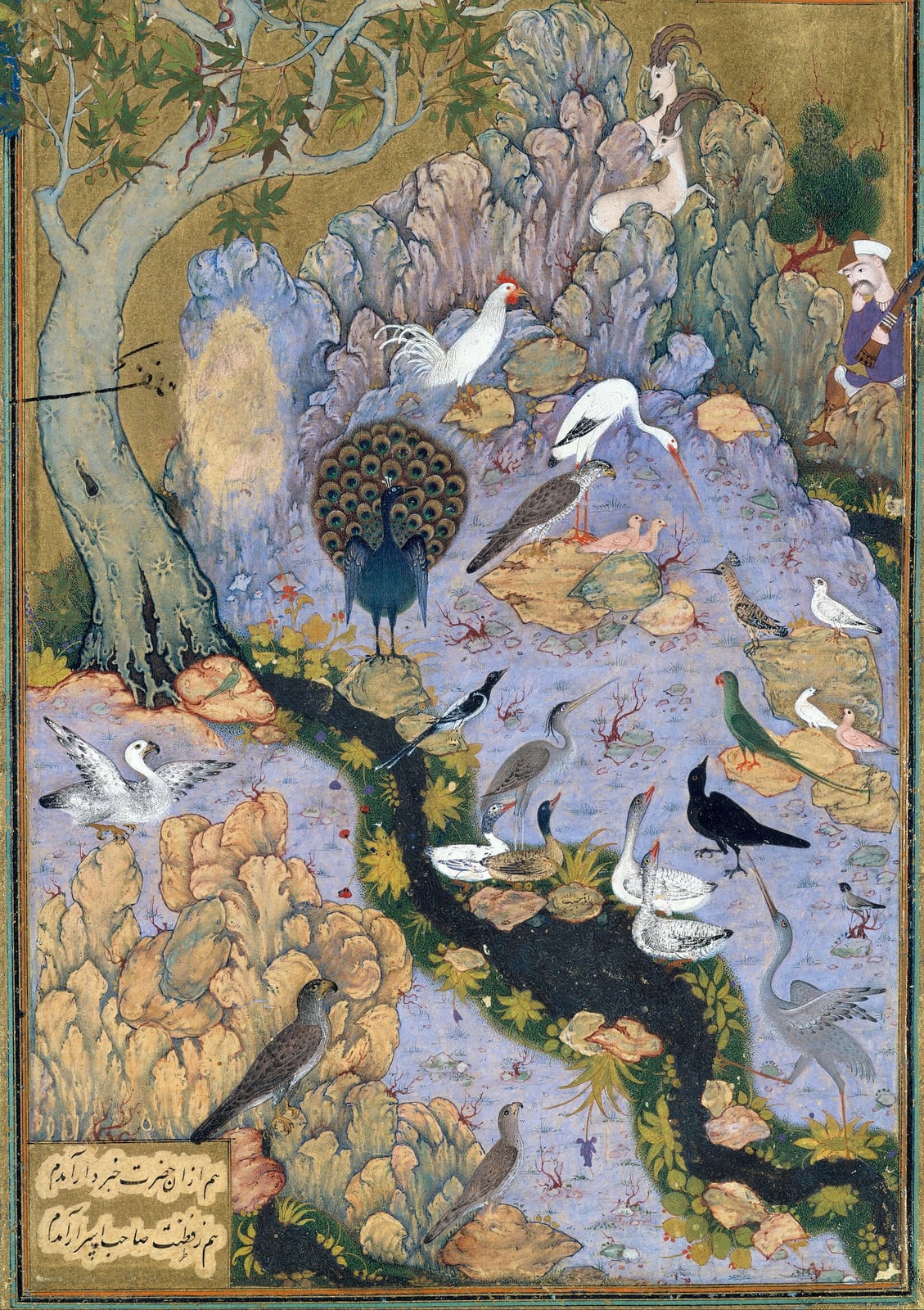
Attar
Si scontrano su: Come si raggiunge la liberazione o la salvezza? · Serve un maestro?

Chaitanya Mahaprabhu
Si scontrano su: Come si raggiunge la liberazione o la salvezza? · Serve un maestro?
Si scontrano suDisaccordo di fondo
Jiddu Krishnamurti · Annie Besant
The adoptive mother and the Teacher who refused the role: the master as path or as obstacle
Perché: The contradiction is real and also biographical. Besant, together with Charles Leadbeater, had adopted and raised Krishnamurti as the vehicle of the World Teacher: her doctrine of discipleship needed precisely a master who would embody the Hierarchy. Krishnamurti rejected from within the role that doctrine assigned him, after having lived it, and his critique of spiritual authority is largely a response to that upbringing. They speak on the same plane, the seeker's path, and exclude each other: she affirms transmission and hierarchy; he holds that transmission itself is the obstacle. Besant remained at the head of the Theosophical Society until her death in 1933.
Si scontrano suContraddizione apparente
Jiddu Krishnamurti · Thich Nhat Hanh
No method versus daily practice: two ways of not turning attention into a technique
Perché: The contradiction is largely apparent: both fight meditation understood as a technique for obtaining a state. Krishnamurti, raised in the occult disciplines of the Theosophical Society, attacks the word method because it implies time, imitation and a progressing self. Thich Nhat Hanh keeps the language of practice because he teaches monastic and lay communities that need a shared discipline, but he insists that peace is not the goal of the path but the path itself. The real difference lies in pedagogy: one trusts immediate perception; the other, the habit that makes it possible. There is no record that they ever met.
Concordano su
Jiddu Krishnamurti · Laozi
What can be said is not it: the nameless Way and the pathless land
Perché: There is no record that Krishnamurti engaged with the Daodejing; the affinity is structural. Both react against an excess of form: the Chinese text, against the proliferation of virtues, rites and learning in the schools of its time; Krishnamurti, against organisations, beliefs and spiritual methods, starting with those of the Theosophical Society that raised him. Hence the same gesture of subtraction. The difference lies in context and aim: the Daodejing also addresses the ruler and seeks a natural order of the community; Krishnamurti speaks to individuals and seeks a mutation of consciousness. One contemplates the return of things to their root; the other, the movement of thought.
Si scontrano suDisaccordo di fondo
Jiddu Krishnamurti · David R. Hawkins
A ladder of levels versus a pathless land
Perché: The contradiction is real, though it starts from a shared diagnosis. Hawkins, trained as a psychiatrist and a reader of devotional traditions, offers his readers a map that lets them locate themselves and orient inner work, and his way is surrender. Krishnamurti, raised in the Theosophical Society, with its doctrine of initiations and grades, rejected precisely every spiritual hierarchy: a map of levels would seem to him the subtlest form of ambition. One sees the scale as an aid to letting go; the other, as a trap that turns letting go into another achievement. They agree that no one can do the work for another and that thought is not the goal.
Si scontrano suDisaccordo di fondo
Jiddu Krishnamurti · G. I. Gurdjieff
Both see man as conditioned; one demands a school and effort, the other forbids them
Perché: The contradiction is real and comes from two opposite experiences of teaching. Gurdjieff presents himself as a seeker of an ancient knowledge transmitted in schools of Central Asia, and believes that this knowledge, scarce and almost material, can pass only from one who has it to one who works. Krishnamurti was raised precisely within an esoteric organisation with masters, grades and initiations, and his break in 1929 made the rejection of all authority the centre of his teaching. Both distrust comfortable spirituality and inherited beliefs; they part over whether directed effort awakens or lulls.
Concordano su
Jiddu Krishnamurti · Eckhart Tolle
Suffering needs time: thought projecting past and future
Perché: No relationship between them is documented in this library, although Tolle writes in a milieu that knew Krishnamurti's work well, published and circulated for decades. The differences are real. Krishnamurti rejects any metaphysics of a true Being, which he considers another projection of thought, and any exercise, which he considers a method; Tolle affirms a presence or formless consciousness he calls Being, proposes concrete exercises such as feeling the inner body and adds the notion of the pain-body. Krishnamurti speaks harshly of conditioning and revolution; Tolle, in a tone of accompaniment. They agree on the diagnosis of psychological time, not on what they find on the other side.
Concordano su
Jiddu Krishnamurti · Siddhartha Gautama, the Buddha
A bundle of processes without a centre: no-self and the observer who is the observed
Perché: The relationship is documented in a precise sense: in the late 1970s Krishnamurti held conversations at Brockwood Park with the monk and scholar Walpola Rahula and other Buddhists, later published as Can Humanity Change?, in which they discussed whether his teaching coincided with the Buddha's. Rahula saw a great affinity; Krishnamurti declined any comparison, because comparing seemed to him another form of authority. The real difference lies in the path: the canon proposes a gradual path of ethics, concentration and wisdom, with teacher and community, while Krishnamurti rejects every method. The diagnosis of the self brings them close; pedagogy separates them.
Concordano su
Jiddu Krishnamurti · Ramana Maharshi
No outer authority: the question who am I and the observer who is the observed
Perché: The affinity is comparative: there is no record that they met. It is explained by a shared distrust of institutional religion and of learning, which in Ramana stems from an early experience lived without teacher or study, and in Krishnamurti from his break with the Theosophical organisation that had formed him. The underlying difference is metaphysical. Ramana speaks from Advaita and affirms a Self that is the Absolute, and accepts devotion and surrender as a path; Krishnamurti rejects any doctrine of the Self, which he sees as another projection of thought seeking security, and every tradition. One enquires in order to find what has always been; the other observes so that what thought manufactures comes to an end.
Si scontrano suDisaccordo di fondo
Jiddu Krishnamurti · Sadhguru
Inner technology with initiation versus an attention without method or guru
Perché: The contradiction is real and reflects two ideas of tradition. Sadhguru belongs to the yogic line that trusts body, energy and breath as vehicles of transformation, and the relationship with the guru as what makes it possible; hence his organisation transmits techniques by initiation. Krishnamurti, formed in an organisation with masters and disciplines, concluded that every practice aimed at a result arises from the very thought it claims to overcome. Sadhguru would say that cultivating body and mind is not pursuing meditation but creating the conditions for it to flower; Krishnamurti would see in those conditions another form of time and seeking.
Aneddoti e racconti
Aneddoti e racconti
Testimonianzaabril de 1909
The boy on the beach at Adyar
Origine del racconto: The meeting itself is documented; the perception of the aura comes solely from Leadbeater's testimony, recorded by Mary Lutyens in Krishnamurti: The Years of Awakening (1975) and examined by Roland Vernon (Star in the East, 2000). Ernest Wood's judgement comes from his own recollections, quoted by the same biographers.
Fonte: Lutyens, Mary. Krishnamurti: The Years of Awakening. Londres: John Murray, 1975.
Testimonianzaagosto–octubre de 1922
The 'process' under the pepper tree at Ojai
Origine del racconto: It comes from Krishnamurti's letter to Annie Besant and Leadbeater and from the report written by Nitya, both of 1922, which Mary Lutyens published in Krishnamurti: The Years of Awakening (1975, chs. 18–21) and summarised in The Years of Fulfilment (1983, p. 170). There are witnesses to the symptoms, not to the inner experience, which is known only from his account.
Fonte: Lutyens, Mary. Krishnamurti: The Years of Awakening. Londres: John Murray, 1975.
Documentatonoviembre de 1925
The death of Nitya
Origine del racconto: The date and cause of death are documented. Krishnamurti's reaction comes from witnesses on the voyage recorded by Mary Lutyens (The Years of Awakening, 1975) and from Pupul Jayakar's interpretation (Krishnamurti: A Biography, 1986).
Fonte: Lutyens, Mary. Krishnamurti: The Years of Awakening. Londres: John Murray, 1975.
Documentato3 de agosto de 1929
Ommen, 3 August 1929: the dissolution of the Order
Origine del racconto: The speech survives in writing: it was published in the International Star Bulletin of September 1929 and the foundations circulate it under the title 'Truth is a Pathless Land'. The return of property is documented by Mary Lutyens (The Years of Awakening, 1975, pp. 276–284). Leadbeater's remark is second-hand testimony.
Documentato1938–1954
Huxley, the war and the silence of Ojai
Origine del racconto: The friendship and the encouragement to write are documented by Mary Lutyens (The Years of Fulfilment, 1983); Huxley's role with Harper is added by Radha Rajagopal Sloss (1991). The 1954 foreword is a published text (source s9). The remark about the war years comes from later statements by Krishnamurti recorded by Lutyens.
Fonte: Lutyens, Mary. Krishnamurti: The Years of Fulfilment. Londres: John Murray, 1983.
Documentato1959–1986
A physicist in the audience at Wimbledon
Origine del racconto: Bohm's prior reading of the book and the 1961 meeting at Wimbledon are recorded by Mary Lutyens (The Years of Fulfilment, 1983, pp. 188 and 208) and in Basil Hiley's biographical memoir for the Royal Society (1997, p. 124). The later estrangement is related by F. David Peat (Infinite Potential, 1997). The dialogues are published (source s16).
Documentato1960–1996
Rajagopal and the lawsuits
Origine del racconto: The litigation is documented in Erna Lilliefelt's account for the Krishnamurti Foundation of America (1995) and, from the foundation's side, by Mary Lutyens (Krishnamurti and the Rajagopals, 1996). The Rajagopal family's version is in Radha Rajagopal Sloss (Lives in the Shadow with J. Krishnamurti, 1991). The two sides disagree about motives and responsibility.
Fonte: Lilliefelt, Erna. Formation of the Krishnamurti Foundation of America and the Lawsuits Which Took Place Between 1968 and 1986 to Recover Assets for Krishnamurti's Work. Ojai: Krishnamurti Foundation of America, 1995.
Insegnamenti
Insegnamenti
Le nozioni che articolano il suo pensiero, spiegate nel loro contesto.
Truth is a pathless landpathless-land
It arose against the Theosophical framework in which he was raised, with its hierarchy of Masters, initiations and paths of discipleship; hence its most famous formulation is a speech of rupture rather than a treatise.
Choiceless awarenesschoiceless-awareness
The phrase became common in the talks of the 1940s and 1950s and gives its title to a 1992 anthology. It echoes Buddhist mindfulness, but Krishnamurti explicitly refused to turn it into a methodical practice.
Fonte: Krishnamurti, J. The First and Last Freedom. Prólogo de Aldous Huxley. Nueva York: Harper & Brothers; Londres: Victor Gollancz, 1954.
The observer is the observedobserver-is-the-observed
It already appears in The First and Last Freedom (1954) as the relation between the thinker and the thought (ch. XV) and is developed in Freedom from the Known (ch. 12). It has been compared with the Buddhist critique of a permanent self and with Advaita, though Krishnamurti appeals to no metaphysics.
Fonte: Krishnamurti, J. Freedom from the Known. Ed. Mary Lutyens. Nueva York: Harper & Row; Londres: Gollancz, 1969.
The ending of psychological timepsychological-time
The distinction is clearly formulated in Freedom from the Known (ch. 9), where he defines psychological time as the interval between idea and action, and it runs through the 1980 dialogues with Bohm.
Fonte: Krishnamurti, J., y David Bohm. The Ending of Time. San Francisco: Harper & Row; Londres: Gollancz, 1985.
The religious mindreligious-mind
It is set out in the last chapter of Freedom from the Known (1969) and in the talks of the 1970s; Krishnamurti's Notebook (1976) records the lived side of the idea.
Fonte: Krishnamurti, J. Freedom from the Known. Ed. Mary Lutyens. Nueva York: Harper & Row; Londres: Gollancz, 1969.
Conditioning and the limits of thoughtconditioning-and-thought
It runs through his whole work, from Education and the Significance of Life (1953) to The Network of Thought (1982) and The Limits of Thought (1999), and was the meeting ground with scientists and psychotherapists.
Fonte: Krishnamurti, J. Freedom from the Known. Ed. Mary Lutyens. Nueva York: Harper & Row; Londres: Gollancz, 1969.
You are the worldyou-are-the-world
The idea is already in The First and Last Freedom (1954) — the transformation of the world comes through that of oneself — and gives its title to the talks at American universities published in 1972.
Fonte: Krishnamurti, J. The First and Last Freedom. Prólogo de Aldous Huxley. Nueva York: Harper & Brothers; Londres: Victor Gollancz, 1954.
Ritiri
Ritiri e centri
Luoghi e incontri legati al suo insegnamento. Ti mettiamo in contatto con chi li organizza.
Ojai, California · Estados Unidos
Krishnamurti Retreat and Pine Cottage, Ojai
Krishnamurti Foundation of America
Ojai was Krishnamurti's Californian home for decades, and there the Krishnamurti Foundation of America keeps two places open to the public. The Krishnamurti Retreat occupies eleven acres of nature where one may withdraw to enquire, with in-person programmes, silent retreats and an annual gathering. Pine Cottage, the house where he lived, now hosts the Krishnamurti Center and Library, dedicated to the study of his teachings, with a library and daily video screenings. The foundation also offers multi-day online dialogue programmes for those unable to travel, keeping the spirit of open enquiry at the centre.
Bramdean, Hampshire · Reino Unido
The Krishnamurti Centre, Brockwood Park
Krishnamurti Foundation Trust
The Krishnamurti Centre is the retreat house built beside Brockwood Park School, in the South Downs National Park, at Krishnamurti's own wish. Its motto sums it up: a place of no authority, where nothing is imposed. Group retreats are built on dialogue and supported by the teacher's recordings and texts to enquire into a particular aspect of the teachings; there are also silent retreats, longer gatherings and individual stays with access to the library, video room and quiet room. It offers single en-suite rooms and vegetarian meals, and outside group retreats there is no structured guidance.
Chennai, Tamil Nadu (sede) y otros centros en la India · India
Vasanta Vihar and the KFI centres
Krishnamurti Foundation India
Vasanta Vihar in Chennai was Krishnamurti's home in India and is now the headquarters of Krishnamurti Foundation India and a retreat and study centre. The foundation organises residential retreats and stays on campus intended, in its own words, for stepping away from routine and observing without plunging into new knowledge. KFI also has retreat centres in Uttarkashi, in the Himalaya, and in Jalna, study centres in Mumbai, Kolkata and Cuttack, and the schools he founded, such as Rishi Valley and Rajghat, whose study centres also host guests interested in the teachings.
Video
Video
Registrazioni, interviste e documentari. I video vengono riprodotti da YouTube; non sono ospitati qui.
Krishnamurti reading ‘Truth is a Pathless Land’ – Ojai, 1930
Registrazione originale· EN· 1930· 5 min
The Life of KrishnamurtiCanale ufficiale
Krishnamurti – Short interview in New York City, 1928
Intervista· EN· 1928· 1 min
The Life of KrishnamurtiCanale ufficiale
Krishnamurti - Historical footage in Ommen (Netherlands) in 1924 & 1926, and Adyar (India) in 1925
Registrazione originale· EN· 1926· 35 min
The Life of KrishnamurtiCanale ufficiale
Newsreel of Krishnamurti in Sydney, 1934
Registrazione originale· EN· 1934· 1 min
The Life of KrishnamurtiCanale ufficiale
Krishnamurti | Historical footage | 1935 Latin America Tour - A Silent Film Documentary
Guarda su YouTube
Questo video non consente l'incorporamento; si apre su YouTube.
Krishnamurti | Historical footage | 1935 Latin America Tour - A Silent Film Documentary
Documentario· 1935· 44 min
Krishnamurti Foundation TrustCanale ufficiale
J Krishnamurti - The Real Revolution - 1. Where are we going?
Conferenza· EN· 1966· 29 min
J. Krishnamurti - Official ChannelCanale ufficiale
Audio | J. Krishnamurti & David Bohm - Ojai 1980 - The Ending of Time - Conversation 1
Registrazione originale· EN· 1980· 81 min
J. Krishnamurti - Official ChannelCanale ufficiale
J. Krishnamurti - New York 1985 - United Nations Talk - Why can't man live peacefully on the earth?
Conferenza· EN· 1985· 67 min
J. Krishnamurti - Official ChannelCanale ufficiale
J. Krishnamurti - The challenge of change
Documentario· EN· 77 min
J. Krishnamurti - Official ChannelCanale ufficiale
J. Krishnamurti - 1989 Documentary - Krishnamurti: With a silent mind
Documentario· EN· 1989· 105 min
J. Krishnamurti - Official ChannelCanale ufficiale
Krishnamurti's Last Year at Brockwood Park (1985)
Documentario· EN· 1985· 26 min
Brockwood Park SchoolCanale ufficiale
Krishnamurti's Last Public Words
Registrazione originale· EN· 1986· 9 min
Krishnamurti Foundation TrustCanale ufficiale
Krishnamurti - El darse cuenta
Registrazione originale· ES· 3 min
FKLatinoamericana
Anders Leben – Gespräch 1: Wissen & die Umwandlung des Menschen
Intervista· DE· 1974· 59 min
J. Krishnamurti – offizieller deutscher KanalCanale ufficiale
Galleria
Galleria
Immagini con licenza verificata. Ciascuna conserva la sua paternità e la sua attribuzione.
Relazioni
Relazioni
Influenze, discepolati e affinità. Si distingue la relazione documentata dalla somiglianza individuata per analisi.
Discepolo di
President of the Theosophical Society, she obtained his legal guardianship in 1910, confirmed by the Privy Council in 1914, and presented him as the vehicle of the World Teacher. She was present at the dissolution of the Order in 1929 and kept her affection for him until her death in 1933.
Relazione documentata
Discepolo di
Charles Webster Leadbeater
He 'discovered' him on the beach at Adyar in 1909, declared him the vehicle of the Maitreya and directed his early education and supposed occult training. After the dissolution of the Order they grew apart.
Relazione documentata
Ricevette l'influenza di
They never overlapped (Blavatsky died in 1891), but Krishnamurti was raised within the Theosophical Society she founded and in the doctrine of the Masters and the World Teacher derived from her work; his break of 1929 was precisely with that framework.
Relazione documentata
Famiglia di
Jiddu Nityananda
His younger brother and inseparable companion from Adyar to Ojai; witness and chronicler of the 1922 'process'. His death in 1925 broke Krishnamurti's trust in the Theosophical hierarchy.
Relazione documentata
Influenzò
David Bohm
The physicist met him in 1961 after reading The First and Last Freedom and talked with him for twenty-five years; those dialogues produced The Ending of Time (1985) and The Limits of Thought (1999), and his reflections on the fragmentation of thought and on dialogue owe much to them.
Relazione documentata
Incontrò
Aldous Huxley
Friends from 1938 in California; Huxley encouraged him to write, introduced him to his publisher, Harper, and wrote the foreword to The First and Last Freedom (1954).
Relazione documentata
Dissentì da
Desikacharya Rajagopal
Editor and manager of his publications from 1930, he lived with him at Ojai. The break over control of rights, archives and property led to litigation formally begun in 1971 and settled in 1986.
Relazione documentata
Idee affini a
Siddhartha Gautama, the Buddha
The critique of a permanent self, attention to what arises without clinging and the rejection of scriptural authority bring his teaching close to early Buddhism; Krishnamurti, however, rejected every method and every gradual path.
Somiglianza individuata per analisi
Idee affini a
Contemporaries from South India who distrusted outer authority and pointed to direct observation of the self; there is no record that they met.
Somiglianza individuata per analisi
Idee affini a
Non-judgemental observation of thought and the critique of psychological time reappear, in another language, in Tolle's teaching, which names Krishnamurti among its references.
Somiglianza individuata per analisi
Idee affini a
Both denied the need for cumulative practices and pointed to seeing what one is not; Nisargadatta commented in I Am That on Krishnamurti's thesis that the guru is unnecessary.
Somiglianza individuata per analisi
Collegato da altre schede
- Annie Besant · Maestro di
- Alan Watts · Idee affini a
- Eckhart Tolle · Idee affini a
- Ramana Maharshi · Contemporaneo di
- Sri Aurobindo · Contemporaneo di
- Osho · Contemporaneo di
- Helena Blavatsky · Influenzò
- Rudolf Steiner · Dissentì da
- G. I. Gurdjieff · Idee affini a
- Nisargadatta Maharaj · Idee affini a
- Anandamayi Ma · Incontrò
- Alice A. Bailey · Contemporaneo di
Fonti
Fonti
Bibliografia e cataloghi consultati per questa scheda.
- Sloss, Radha Rajagopal. Lives in the Shadow with J. Krishnamurti. Londres: Bloomsbury, 1991.
- Vernon, Roland. Star in the East: Krishnamurti, the Invention of a Messiah. Londres: Constable, 2000.
- Lutyens, Mary. Krishnamurti: The Years of Awakening. Londres: John Murray, 1975.
- Lutyens, Mary. Krishnamurti: The Years of Fulfilment. Londres: John Murray, 1983.
- Lutyens, Mary. Krishnamurti: The Open Door. Londres: John Murray, 1988.
- Lutyens, Mary. The Life and Death of Krishnamurti. Londres: John Murray, 1990 (resumen en un volumen de la biografía en tres tomos; pp. 159–160 para la declaración del 7 de febrero de 1986).
- Jayakar, Pupul. Krishnamurti: A Biography. San Francisco: Harper & Row, 1986.
- Krishnamurti, J. «Truth is a Pathless Land». Discurso de disolución de la Orden de la Estrella, Ommen, 3 de agosto de 1929; publicado en International Star Bulletin, septiembre de 1929. Texto en jkrishnamurti.org.
- Krishnamurti, J. The First and Last Freedom. Prólogo de Aldous Huxley. Nueva York: Harper & Brothers; Londres: Victor Gollancz, 1954.
- Krishnamurti, J. Freedom from the Known. Ed. Mary Lutyens. Nueva York: Harper & Row; Londres: Gollancz, 1969.
- Wikidata: Jiddu Krishnamurti (Q179266).
- Krishnamurti Foundation Trust / Krishnamurti Foundation of America. J. Krishnamurti Online (archivo oficial de textos, audio y vídeo).
- Krishnamurti Foundation of America. The Life of Krishnamurti — cronologías 1895–1986.
- J. Krishnamurti – Official Channel (YouTube), gestionado por la Krishnamurti Foundation Trust y la Krishnamurti Foundation of America.
- Vonnegut, Mark. The Eden Express. Nueva York: Praeger, 1975, p. 208 (primera atestación conocida de la frase sobre la «sociedad profundamente enferma»).
- Krishnamurti, J., y David Bohm. The Ending of Time. San Francisco: Harper & Row; Londres: Gollancz, 1985.
- Krishnamurti, J. Krishnamurti's Notebook. Londres: Gollancz; Nueva York: Harper & Row, 1976.
- Open Library (Internet Archive): registros de obra y edición de J. Krishnamurti, consultados el 2026-10-23.
- Wikiquote: Jiddu Krishnamurti (comprobación de atribuciones dudosas).
- Lutyens, Mary. Krishnamurti and the Rajagopals. Ojai: Krishnamurti Foundation of America, 1996.
- Wikipedia (en). «Jiddu Krishnamurti bibliography» (listado de obras por periodos, con referencias de catálogo).
- Open Library: búsqueda por autor y fichas de edición por ISBN (comprobado el 2026-10-25).
- Krishnamurti, J. Education and the Significance of Life. Nueva York: Harper & Brothers, 1953 (cap. 1).
- Peat, F. David. Infinite Potential: The Life and Times of David Bohm. Reading (Massachusetts): Addison-Wesley, 1997.
- Lilliefelt, Erna. Formation of the Krishnamurti Foundation of America and the Lawsuits Which Took Place Between 1968 and 1986 to Recover Assets for Krishnamurti's Work. Ojai: Krishnamurti Foundation of America, 1995.
- Wikipedia (en), «Jiddu Krishnamurti» (versión consultada el 2026-10-25; contraste de fechas del «proceso», la muerte de Nityananda, la amistad con Huxley y los pleitos, con remisión a Lutyens, Jayakar, Vernon y Sloss).
- Hiley, Basil J. «David Joseph Bohm. 20 December 1917 – 27 October 1992». Biographical Memoirs of Fellows of the Royal Society 43 (1997): 106–131 (p. 124 para el encuentro con Krishnamurti).
- Titolare dei diritti
- Krishnamurti Foundation Trust Ltd (Brockwood Park, Inglaterra) y Krishnamurti Foundation of America (Ojai), titulares de los derechos de autor de las obras, grabaciones y archivos de J. Krishnamurti; la Krishnamurti Foundation India gestiona las ediciones y los derechos en la India. Las traducciones publicadas por editoriales comerciales se hacen bajo licencia de estas fundaciones.
- Sito ufficiale
- www.jkrishnamurti.org/
In attesa di conferma
Ciò che questa scheda non ha ancora potuto chiarire. Preferiamo dirlo piuttosto che riempirlo.
- Commerce: no se ha localizado ninguna edición de Krishnamurti en Edhasa (Open Library y búsqueda web); no se incluye. Sin programas de afiliación verificados para las fundaciones.
- Obras: quedan fuera, a propósito, los «Authentic Reports» y «Verbatim Reports» de charlas (decenas de cuadernos de la Star Publishing Trust, Krishnamurti Writings Inc. y la KFI, 1930–1985) y los folletos de 1927–1931 («Who Brings the Truth?», «Let Understanding Be the Law», «Life the Goal», «The Path», «War Abolished», 1943): su contenido está en The Collected Works y en jkrishnamurti.org (fuente s12, s21).
- Obras: no se registran como obras las antologías que reempaquetan libros ya listados (The Penguin Krishnamurti Reader, 1970; The Second Penguin Krishnamurti Reader, 1973; Freedom, Love, and Action, Shambhala, 1994; The Pocket Krishnamurti; Sayings of J. Krishnamurti, Chetana, 1986) ni las recopilaciones recientes de la KFI sobre educación (School Without Fear, 2016; Unconditioning and Education, 2017–2018; Insights into Education, 2018): confirmar su contenido antes de añadirlas.
- Obras: «A Flame of Learning» (diálogos con profesores; Mirananda, 2001 en Open Library) y «Things of the Mind» (Philosophical Library, 1985) sin confirmar año de primera edición ni autoría editorial; no añadidas.
- Obras: «Talks with American Students» figura en catálogo desde 1988 (Shambhala); comprobar si hubo una edición anterior de 1970.
- Obras: «Questions and Answers» registrado con año aproximado (1982, Krishnamurti Foundation Trust); en catálogo solo consta la reedición de la KFI de 2009.
- Sala de lectura (2026-10-25): no se registra ningún texto de Krishnamurti. Murió en 1986, así que su obra no es de dominio público en la UE ni en España hasta 2057/2067. «At the Feet of the Master» (1910) y «Education as Service» (1912) son libres en EE. UU. por fecha, pero no en Europa mientras se atribuyan a él; si algún día se registran, debe ser con "caution": true.
- Obras (2026-10-25): cotejadas con «Jiddu Krishnamurti bibliography» (s21) y Open Library. Siguen sin añadirse «Krishnamurti at Los Alamos 1984» (folleto de la KFA, OCLC 33022899, coherente con la exclusión de folletos), «The Last Talks» (KFI, 1989; probablemente las mismas charlas de Madrás que «The Future Is Now») y «The First Step is the Last Step» (KFI, 2004; reedición de «Krishnamurti in India 1970–71», sin ISBN verificado en catálogo).
- Vídeos: la fecha y el año de «El darse cuenta» (FKLatinoamericana) no constan en la ficha del vídeo; queda en null.
- Citas (2026-10-25): la de Education and the Significance of Life se localiza por capítulo (cap. 1), no por página: no se ha podido consultar una edición paginada. Las de Freedom from the Known siguen la paginación de Harper & Row (Perennial Library); las de The First and Last Freedom, la de Gollancz 1954.
- Anécdotas (2026-10-25): la obtención del libro por Bohm (en qué biblioteca y quién lo encontró) circula en versiones distintas; solo se afirma que lo leyó antes de las charlas de Wimbledon de 1961. Confirmar en Peat (1997) el detalle.
- Relaciones (2026-10-25): charles-webster-leadbeater, jiddu-nityananda, david-bohm, aldous-huxley y d-rajagopal no tienen ficha propia en el catálogo; se usan como slugs provisionales con target_name.
Ricerca effettuata il 2026-10-23