Mistica cristiana · Teosofia · Antroposofia
Rudolf Steiner
1861 – 1925Persona storicamente documentata
Filosofo, esoterista e riformatore austriaco (1861-1925). Curatore degli scritti scientifici di Goethe e autore della Filosofia della libertà (1894), diresse la sezione tedesca della Società Teosofica e fondò nel 1913 l'antroposofia, una «scienza dello spirito» di radice cristiana e goethiana. Dalla sua opera sono nate la pedagogia Waldorf, l'agricoltura biodinamica, la medicina antroposofica e l'euritmia. Ha lasciato più di trenta libri e circa seimila conferenze, discussi per il loro carattere pseudoscientifico.
- opere
- 68opere
- edizioni
- 131edizioni
- citazioni
- 7citazioni
- video
- 12video
- immagini
- 10immagini
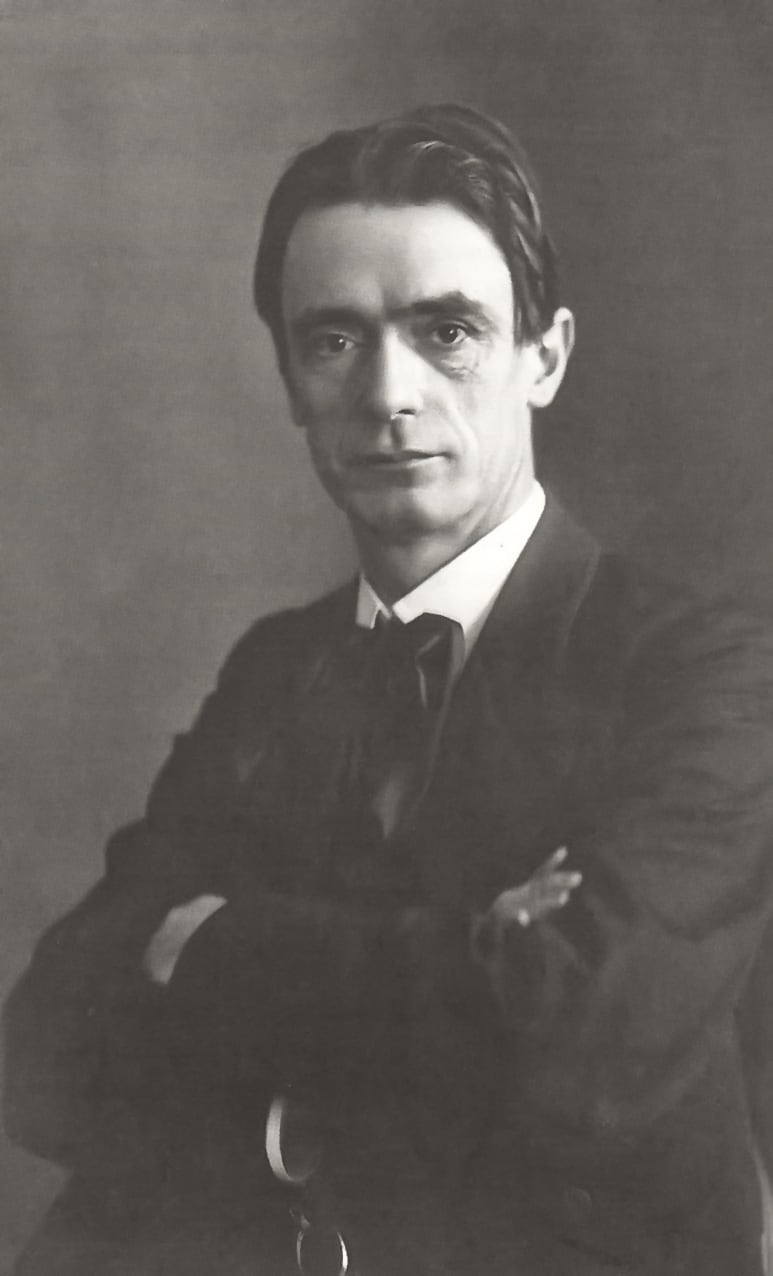
Rudolf Steiner hacia 1905 · Public domain
Con le sue parole
«Only when I follow my love for the object is it I myself who act.»Die Philosophie der Freiheit (1894), cap. «Die Idee der Freiheit»

Per cominciare, un'opera
The Philosophy of Freedom (Intuitive Thinking as a Spiritual Path)La sua idea centrale
Anthroposophy (spiritual science): Steiner took the term 'anthroposophy' from a book by the Austrian philosopher Robert Zimmermann (1856) and defined it as 'a path of knowledge that would lead the spiritual in the human being to the spiritual in the universe'.
Vederlo nel contesto
Biografia
5 min di lettura
Traduzione assistita dall'originale spagnolo, in attesa di revisione da parte di un traduttore madrelingua.
Il figlio del telegrafista
Rudolf Joseph Lorenz Steiner nacque a Kraljevec, nella regione del Muraköz — allora parte del Regno d'Ungheria e oggi della Croazia —, il 27 febbraio 1861 secondo la data che egli stesso indicò sempre, benché alcuni documenti di famiglia rimandino al 25. Il padre, Johann Steiner, era stato guardacaccia dei conti Hoyos e lavorava come telegrafista della Ferrovia Meridionale austriaca; la madre, Franziska Blie, aveva prestato servizio nella stessa casa. La famiglia visse in piccole stazioni della Bassa Austria — Mödling, Pottschach — e, dal 1869, a Neudörfl, un villaggio ungherese al confine con la Bassa Austria, fra il telegrafo, i treni e il paesaggio alpino. Nell'autobiografia Steiner racconta di aver trovato da bambino nella geometria la prova che l'anima può conoscere qualcosa che i sensi non vedono, e di aver avuto a otto o nove anni la prima percezione di ciò che avrebbe chiamato il mondo spirituale. Sono ricordi scritti sessant'anni dopo, e la critica li legge come parte della costruzione della sua stessa figura.
Vienna e Goethe
Studiò alla Realschule di Wiener Neustadt e, dal 1879 al 1883, al Politecnico di Vienna, dove seguì corsi di matematica, scienze naturali, letteratura e filosofia senza giungere alla laurea. Lì trovò il suo maestro, il germanista Karl Julius Schröer, che nel 1882 lo raccomandò a Joseph Kürschner per curare gli scritti scientifici di Goethe nella collana Deutsche National-Litteratur. Il giovane, appena ventunenne, redasse le introduzioni a quei volumi (1883-1897) e le Linee fondamentali di una gnoseologia della concezione goethiana del mondo (1886). Per mantenersi fu per sei anni precettore in casa della famiglia Specht, a Vienna, dove educò con successo un bambino idrocefalo ritenuto incapace di apprendere, che sarebbe poi diventato medico.
Weimar e la filosofia della libertà
Nel 1890 si trasferì a Weimar per lavorare all'Archivio Goethe e Schiller alla grande edizione delle opere di Goethe. Nel 1891 si addottorò in filosofia all'Università di Rostock con una tesi sulla teoria della conoscenza di Fichte, ampliata l'anno seguente in Verità e scienza. Nel 1894 pubblicò La filosofia della libertà, l'opera che considerò sempre il fondamento di tutto ciò che venne dopo: una teoria della conoscenza che fa del pensare l'attività in cui l'essere umano si sperimenta libero, e un'etica dell'«individualismo etico», nella quale l'azione libera nasce dall'amore per l'azione stessa e non da norme esterne. In quegli anni frequentò Ernst Haeckel, ammirò Max Stirner e scrisse Friedrich Nietzsche, un lottatore contro il suo tempo (1895); nel 1896 Elisabeth Förster-Nietzsche lo condusse al cospetto del filosofo malato.
Berlino: dal libero pensiero alla teosofia
Nel 1897 si stabilì a Berlino come direttore del Magazin für Literatur e si mosse negli ambienti bohémien e anarchico-individualisti della capitale. Insegnò storia e oratoria alla Scuola di formazione operaia fondata da Wilhelm Liebknecht (1899-1904) e nel 1899 sposò Anna Eunike, una vedova nella cui casa abitava. L'anno successivo, nel 1900, cominciò a tenere conferenze nella biblioteca teosofica dei conti Brockdorff; nel 1902, dopo essersi iscritto alla Società Teosofica soltanto nel gennaio di quello stesso anno, accettò di diventare segretario generale della sua nuova sezione tedesca, al fianco di Marie von Sivers, che sarebbe stata sua collaboratrice e, dal 1914, sua seconda moglie. In pochi anni pubblicò i libri che costituiscono il nucleo del suo insegnamento: Teosofia (1904), L'iniziazione. Come si conseguono conoscenze dei mondi superiori? (1904-1905) e La scienza occulta (1910).
L'antroposofia e il Goetheanum
Steiner orientò la teosofia verso la tradizione esoterica occidentale — il rosacrocianesimo, la mistica tedesca, Goethe — e pose al centro il «Mistero del Golgota», l'incarnazione del Cristo come evento cosmico unico. Le tensioni con la direzione di Adyar giunsero al culmine quando Annie Besant proclamò il giovane Jiddu Krishnamurti futuro istruttore del mondo; nel 1912-1913 la maggioranza della sezione tedesca si separò e fondò la Società Antroposofica. Fra il 1910 e il 1913 scrisse e mise in scena a Monaco quattro drammi-mistero e, con Marie von Sivers, sviluppò l'euritmia, un'arte del movimento. Nel 1913 fu posta a Dornach, vicino a Basilea, la prima pietra del Goetheanum, un grande edificio di legno a due cupole che egli stesso progettò e che volontari di diciassette paesi innalzarono durante la prima guerra mondiale.
Gli impulsi pratici
La sconfitta tedesca del 1918 spinse Steiner all'azione sociale. Nei Punti essenziali della questione sociale (1919) propose la «triarticolazione dell'organismo sociale», ossia la separazione della vita culturale, giuridica ed economica. Quello stesso anno, su richiesta dell'industriale Emil Molt, fondò a Stoccarda per i figli degli operai della fabbrica di sigarette Waldorf-Astoria la prima scuola Waldorf. Seguirono corsi per medici, tenuti con Ita Wegman, da cui ebbero origine la medicina antroposofica e il laboratorio Weleda; un corso per sacerdoti da cui nacque nel 1922 la Comunità dei Cristiani di Friedrich Rittelmeyer; e nel 1924 il corso di agricoltura di Koberwitz, all'origine dell'agricoltura biodinamica. Al tempo stesso era attaccato dalla destra nazionalista: nel 1922 una sua conferenza a Monaco fu interrotta con violenza.
L'incendio e il Natale del 1923
Nella notte di San Silvestro del 1922 il primo Goetheanum andò completamente distrutto da un incendio che la polizia attribuì con ogni probabilità a un atto doloso. Steiner progettò un secondo edificio, questa volta in cemento, ultimato nel 1928. Nel Natale del 1923 rifondò la Società come Società Antroposofica Universale, ne assunse personalmente la presidenza e la guida della sua Libera Università di Scienza dello Spirito, e pronunciò la Meditazione della Pietra di fondazione. Il 1924 fu un anno di attività estenuante: centinaia di conferenze, fra cui i cicli sui nessi karmici, i corsi di pedagogia curativa, di agricoltura e di arte della parola.
La fine e l'eredità
Il 28 settembre 1924 tenne la sua ultima conferenza; malato, trascorse i mesi seguenti nel suo atelier di Dornach, dove continuò a scrivere l'autobiografia, La mia vita, che si interrompe all'altezza del 1907. Lì morì il 30 marzo 1925, a sessantaquattro anni. Lasciò più di trenta libri e circa seimila conferenze, in gran parte trascritte da stenografi e non rivedute da lui, che formano oggi una Gesamtausgabe di oltre 350 volumi. La sua opera ha suscitato tanto adesione quanto critiche severe: storici come Helmut Zander hanno messo in luce i suoi prestiti dalla letteratura teosofica, il carattere pseudoscientifico di molte affermazioni e la sua teoria delle razze, mentre le sue iniziative — più di mille scuole Waldorf, l'agricoltura biodinamica, la medicina antroposofica, le comunità Camphill — restano attive in tutto il mondo.
Fonti: Steiner, Rudolf. Mein Lebensgang. Eine nicht vollendete Autobiographie (GA 28). Dornach: Philosophisch-Anthroposophischer Verlag, 1925; ed. actual Basilea: Rudolf Steiner Verlag. · Lindenberg, Christoph. Rudolf Steiner. Eine Biographie. 2 vols. Stuttgart: Verlag Freies Geistesleben, 1997. · Zander, Helmut. Rudolf Steiner. Die Biografie. Múnich: Piper, 2011 (ed. rústica 2016). · Lachman, Gary. Rudolf Steiner: An Introduction to His Life and Work. Nueva York: Jeremy P. Tarcher/Penguin, 2007. · Steiner, Rudolf. Die Philosophie der Freiheit. Grundzüge einer modernen Weltanschauung. Berlín: Emil Felber, 1894 (texto en Project Gutenberg, ebook n.º 53493).
Cronologia
La vita, anno per anno
Ogni punto è un evento documentato. Fai clic per leggerlo, con la sua fonte e il suo grado di certezza.
27 febbraio 18610 anniKraljevec (Muraköz, Reino de Hungría; hoy Donji Kraljevec, Croacia)
Birth
The first child of the railway telegraphist Johann Steiner and Franziska Blie is born. Steiner always gave 27 February; family documents suggest the 25th.
DiscussoSteiner, Rudolf. Mein Lebensgang. Eine nicht vollendete Autobiographie (GA 28). Dornach: Philosophisch-Anthroposophischer Verlag, 1925; ed. actual Basilea: Rudolf Steiner Verlag.
Dopo la sua morte
- 29 settembre 1928Second Goetheanum
- 1956The Gesamtausgabe begins
27 febbraio 1861 · 0 anni
Birth
The first child of the railway telegraphist Johann Steiner and Franziska Blie is born. Steiner always gave 27 February; family documents suggest the 25th.
Discusso
1869 · 8 anni
Neudörfl
The family settles in Neudörfl; Steiner would date his first supersensible experiences and his fascination with geometry to these years.
Probabile
1879 – 1883 · 18 anni
Vienna Technical University
He studies science and attends Karl Julius Schröer's literature lectures; he leaves in 1883 without a degree.
Documentato
1882 · 21 anni
Editor of Goethe
On Schröer's recommendation, Joseph Kürschner commissions him to edit Goethe's scientific writings (published 1883–1897).
Documentato
1884 – 1890 · 23 anni
Tutor to the Specht family
For six years he tutors the children of the merchant Ladislaus Specht, among them a hydrocephalic boy who later becomes a physician.
Documentato
1890 – 1897 · 29 anni
Goethe and Schiller Archive
He works on the Weimar (Sophien) edition of Goethe's scientific works until 1897.
Documentato
ottobre 1891 · 30 anni
Doctorate
He takes his doctorate at the University of Rostock with a thesis on Fichte's theory of knowledge.
Probabile
1894 · 33 anni
The Philosophy of Freedom
He publishes Die Philosophie der Freiheit (dated 1894, issued at the end of 1893).
Documentato
gennaio 1896 · 34 anni
Before Nietzsche
Elisabeth Förster-Nietzsche takes him to see her brother, already incapacitated; for a time Steiner arranges the philosopher's library.
Probabile
1897 · 36 anni
Magazin für Literatur
He moves to Berlin as co-owner and editor of the literary magazine; in 1899 he marries Anna Eunike and begins teaching at the Workers' Education School.
Documentato
ottobre 1902 · 41 anni
General Secretary of the German Section of the Theosophical Society
With Marie von Sivers he takes charge of the new German Section; he publishes Christianity as Mystical Fact.
Documentato
1904 · 43 anni
Theosophy and the path of knowledge
He publishes Theosophy and begins serialising How to Know Higher Worlds in Lucifer-Gnosis.
Documentato
maggio 1907 · 46 anni
Munich Congress
He organises the congress of the Federation of European Sections of the Theosophical Society, with a Rosicrucian aesthetic announcing his own direction.
Documentato
1910 · 49 anni
Occult Science and the first mystery drama
Die Geheimwissenschaft im Umriss appears (dated 1910) and The Portal of Initiation is premiered in Munich.
Documentato
febbraio 1913 · 51 anni
Founding of the Anthroposophical Society
After expulsion from the Theosophical Society over the Krishnamurti dispute, most of the German Section forms the Anthroposophical Society.
Documentato
20 settembre 1913 · 52 anni
Foundation stone of the Goetheanum
The foundation stone of the double-domed wooden building designed by Steiner is laid.
Documentato
24 dicembre 1914 · 53 anni
Marriage to Marie von Sivers
He marries his collaborator of twelve years; Anna Eunike had died in 1911.
Probabile
7 settembre 1919 · 58 anni
First Waldorf school
He opens the Freie Waldorfschule for the children of workers at Emil Molt's Waldorf-Astoria factory; that year he publishes Towards Social Renewal.
Documentato
31 dicembre 1922 · 61 anni
Fire at the Goetheanum
On New Year's Eve the first Goetheanum burns to the ground; police point to arson.
Documentato
24 dicembre 1923 – 1924 · 62 anni
Christmas Conference
He refounds the General Anthroposophical Society, assumes its presidency and gives the Foundation Stone Meditation (24 December 1923 – 1 January 1924).
Documentato
7 giugno 1924 · 63 anni
Agriculture course
He gives the eight lectures that originate biodynamic agriculture (7–16 June).
Documentato
28 settembre 1924 · 63 anni
Last lecture
He gives his last address, on the eve of Michaelmas; thereafter he remains ill in his studio.
Documentato
30 marzo 1925 · 64 anni
Death
He dies in his studio beside the Goetheanum under construction; the autobiography is left unfinished.
Documentato
29 settembre 1928
Second Goetheanum
The second Goetheanum, in concrete, built to Steiner's model, is inaugurated.
Probabile
1956
The Gesamtausgabe begins
The Rudolf Steiner Nachlassverwaltung begins the complete edition (GA), which today exceeds 350 volumes.
Probabile
Opere
Opere essenziali
Le opere senza le quali non si comprende la sua eredità.
Opera scritta · 1894
The Philosophy of Freedom (Intuitive Thinking as a Spiritual Path)
Die Philosophie der Freiheit. Grundzüge einer modernen Weltanschauung (GA 4)
Steiner's central philosophical work. Part one, 'The Science of Freedom', analyses the observation of thinking as the secure starting point of knowledge and the relation between percept and concept; part two, 'The Reality of Freedom', founds an 'ethical individualism': free action springs from a moral intuition loved for its own sake, guided by 'moral imagination'. Steiner reissued it in 1918 with additions and regarded it as the philosophical germ of anthroposophy.
5 edizioni
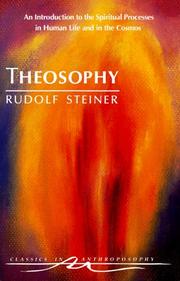
Opera scritta · 1904
Theosophy
Theosophie. Einführung in übersinnliche Welterkenntnis und Menschenbestimmung (GA 9)
A fundamental book of his teaching. It describes the human being in three aspects—body, soul and spirit—subdivided into nine members; explains reincarnation and karma as spiritual law; surveys the three worlds (physical, soul and spiritual) through which the human being passes between death and a new birth; and ends with an outline of the 'path of knowledge'. Steiner revised it in many editions.
4 edizioni

Opera scritta · ca. 1904
How to Know Higher Worlds
Wie erlangt man Erkenntnisse der höheren Welten? (GA 10)
A manual of inner development serialised in Lucifer-Gnosis (1904–1905) and published as a book in 1909. It describes the conditions of discipleship—reverence, inner calm, control of thought, equanimity—meditation exercises and the stages of preparation, illumination and initiation, with the warning to take three steps in moral improvement for every step in occult knowledge.
5 edizioni

Opera scritta · 1910
An Outline of Esoteric Science
Die Geheimwissenschaft im Umriss (GA 13)
His principal cosmological work, issued in December 1909 with the date 1910. It describes the nature of the human being, sleep and death, and the evolution of the cosmos through the planetary states of Saturn, Sun, Moon, Earth and the future Jupiter, Venus and Vulcan, with the intervention of the spiritual hierarchies, of Lucifer and Ahriman and of Christ; it closes with the path of knowledge of higher worlds.
5 edizioni
Tutta la sua opera (68)

Goethean Science
1883

A Theory of Knowledge Implicit in Goethe's World-Conception
1886

Truth and Knowledge
1892

Documents on The Philosophy of Freedom
1994

Friedrich Nietzsche, Fighter for Freedom
1895

Goethe's World View
1897

Mysticism at the Dawn of the Modern Age
1901

Christianity as Mystical Fact
1902

Cosmic Memory
1904

The Stages of Higher Knowledge
1905

The Education of the Child in the Light of Anthroposophy
1907

Four Mystery Dramas
1910

The Spiritual Guidance of the Individual and Humanity
1911

A Way of Self-Knowledge
1912

The Threshold of the Spiritual World
1913

The Riddles of Philosophy
1914

The Riddle of Man
1916

Riddles of the Soul
1917

Goethe's Standard of the Soul
1918

Towards Social Renewal (The Threefold Commonwealth)
1919

The Renewal of the Social Organism
1961
Rudolf Steiner
Cosmology, Religion and Philosophy
The Conscious LibraryCosmology, Religion and Philosophy
1922

Anthroposophical Leading Thoughts
1925
Rudolf Steiner
Extending Practical Medicine (Fundamentals of Therapy)
The Conscious LibraryExtending Practical Medicine (Fundamentals of Therapy)
1925
Citazioni
Citazioni localizzate in un'opera precisa. Ciascuna porta con sé la sua provenienza e il suo grado di affidabilità.
Only when I follow my love for the object is it I myself who act.Nur wenn ich meiner Liebe zu dem Objekte folge, dann bin ich es selbst, der handelt.
VerificataDie Philosophie der Freiheit (1894), cap. «Die Idee der Freiheit»
Citazioni apocrife o di attribuzione discussa (1)
«"Receive the child in reverence, educate him in love, and send him forth in freedom."»
A widely circulated Waldorf motto attributed to Steiner. We have not found this literal wording in his books or in the GA education cycles; it summarises ideas from his lectures to teachers and appears to be a later synthesis by the Waldorf movement. It should be cited as a motto, not as a verbatim quotation.
Ultime parole
Non esistono testimonianze verificabili delle sue ultime parole.
No reliable last words survive. He died on the morning of 30 March 1925 in his studio at Dornach, attended by the physician Ita Wegman; Marie Steiner arrived from Stuttgart after he had died. The accounts of those present, gathered by Guenther Wachsmuth, describe a peaceful death, with his hands crossed on his breast, but record no final sentence.
Fonte: Wachsmuth, Guenther. Die Geburt der Geisteswissenschaft. Rudolf Steiners Lebensgang von der Jahrhundertwende bis zum Tode. Dornach: Philosophisch-Anthroposophischer Verlag, 1941 (trad. ingl. The Life and Work of Rudolf Steiner, 1955).
Chiedi
Ciò a cui risponde la sua opera
Dodici grandi domande dell'umanità e ciò che i suoi testi permettono di rispondere, con riferimenti. Non gli mettiamo mai parole in bocca.
Che cos'è l'Assoluto? Dio esiste?
A divine-spiritual world with hierarchies of beings and a cosmic Christ
Personale e impersonale insiemeSi deduce dalla sua dottrina
Steiner hardly uses the word God in the abstract. In The Philosophy of Freedom he defends a monism that needs no lawgiver outside the world. In his anthroposophical period he describes, in An Outline of Esoteric Science, a divine-spiritual world populated by hierarchies of beings who, through the cosmic phases he calls Saturn, Sun, Moon and Earth, have guided the evolution of the human being. Within that picture he places a trinity: the paternal ground of the world, Christ as a cosmic being incarnated in Jesus, whose death at Golgotha he regards as the centre of earthly evolution, and the Spirit. The divine thus has an aspect of universal ground and another of personal beings with whom the human being relates, but both are to be known through spiritual research, not accepted on faith.
Confronta questa domanda con altri maestriChi sono io? Esiste un vero sé?
The I is the spiritual core that reincarnates in body, soul and spirit
Un'anima in evoluzioneLo dice espressamente
In Theosophy, of 1904, Steiner describes the human being as body, soul and spirit, and divides these members into a physical body, an etheric or life body, an astral body and the I, to which are added spiritual members still in germ. The I is the centre: the instance that says I of itself and that no other person can utter for it. This spiritual core is not exhausted in one life; in the chapter on the reincarnation of the spirit and destiny he maintains that it incarnates again, and that the capacities and destiny of each biography are the fruit of earlier lives. Already in The Philosophy of Freedom he had placed individuality in thinking and free action. The true self is not an illusion: it is a spiritual individuality in evolution.
Confronta questa domanda con altri maestriPerché soffriamo?
Destiny is the fruit of earlier lives and an organ of the I's development
Il karma e l'apprendimento dell'animaLo dice espressamente
Steiner approaches suffering through karma. In Theosophy he maintains that each person's destiny, including their pains, is the consequence of what their individuality did in earlier lives; and in the lecture cycle Manifestations of Karma, of 1910, he studies how illnesses, accidents and catastrophes relate to spiritual causes. But he insists that karma is neither punishment nor fatalism: the I, before birth, in some way seeks out the circumstances it needs in order to compensate and develop, and pain can become strength and capacity in a future life. In his cosmology, moreover, suffering is inscribed in the evolution of humanity, in which act powers he calls Luciferic and Ahrimanic, which the Christ impulse makes it possible to balance.
Confronta questa domanda con altri maestriChe cosa accade dopo la morte?
The I passes through the soul world and spirit land before reincarnating
Rinascita secondo il karmaLo dice espressamente
Steiner describes the path after death in the chapter on the three worlds in Theosophy. At death the human being leaves the physical body and, shortly afterwards, the etheric, at which point he beholds his past life as a great tableau. He then passes through the soul world, where he must free himself from desires bound to the physical, a phase he elsewhere calls kamaloka, and enters spirit land, where he works over the fruits of the completed life and prepares the next. Afterwards he incarnates again, according to accumulated karma. In his lectures he developed these stages in detail, as well as the relation between the living and the dead, to whom he recommended reading spiritual texts. Death is neither end nor fusion, but a rhythm in the evolution of the I.
Confronta questa domanda con altri maestriCome si raggiunge la liberazione o la salvezza?
A path of conscious exercises awakening organs of spiritual perception
Con un lavoro interiore consapevoleLo dice espressamente
Steiner does not speak of salvation in an ecclesiastical sense, but of a development of the human being that each person can freely undertake. In How to Know Higher Worlds and in An Outline of Esoteric Science he describes a path of exercises: reverence, inner calm, a retrospective review of the day, concentration of thought, control of the will, equanimity, unprejudiced openness and meditation on images and phrases, which gradually awaken faculties of spiritual perception he calls imagination, inspiration and intuition. The moral condition is strict: for every step in occult knowledge, three must be taken in the perfection of character. To one's own work he adds the Christ impulse, which he regards as the force that makes the freedom of the I possible in the Earth's evolution, but which does not replace conscious effort.
Confronta questa domanda con altri maestriServe un maestro?
The teacher gives directions, but the modern pupil must test everything by thinking
Utile ma non indispensabileLo dice espressamente
Steiner was for decades the teacher of a large movement and gave personal esoteric instruction to many pupils, but he insisted that the modern path of knowledge does not require blind obedience. In How to Know Higher Worlds he explains that the spiritual teacher can indicate the exercises and conditions, but that the pupil must travel them freely and understand what he is doing; the communications of spiritual research, he adds in other writings, can be examined with sound thinking even before one has verified them by one's own vision. Already in The Philosophy of Freedom he had argued that authentic moral action springs from one's own intuition and not from authority. He therefore recognises the guide's value, but subordinates it to the freedom of the I.
Confronta questa domanda con altri maestriIl mondo è reale?
Physical world, soul world and spirit land, in cosmic evolution
Piani di esistenzaLo dice espressamente
In Theosophy, Steiner describes three worlds: the physical, perceived by the senses; the soul world, made of forces of sympathy and antipathy, desires and feelings; and spirit land, where the archetypes of everything that exists reside. The human being belongs to all three through body, soul and spirit. In An Outline of Esoteric Science he adds a temporal dimension: the present world is the fourth phase of a cosmic evolution, preceded by those he calls Saturn, Sun and Moon, in which hierarchies of spiritual beings have gradually formed the cosmos and the human being. The physical world is real and must be studied with the rigour of natural science, which Steiner admired since his work on Goethe, but it is the outer manifestation of spiritual realities accessible to an extended knowledge.
Confronta questa domanda con altri maestriChe cos'è l'amore?
The Earth is the cosmos of love; free action is born of love for the deed
Amore di Dio e del prossimoLo dice espressamente
Steiner treats love on two levels. In The Philosophy of Freedom, truly free action proceeds not from duty or authority but from love of the action's object: only when I follow my love for the object am I the one who acts; and the maxim of free human beings is to live in love for the deed and let live in understanding of the other's will. In An Outline of Esoteric Science he gives love a cosmic dimension: the old Moon was the cosmos of wisdom, and the Earth's mission is to become the cosmos of love. In that process he assigns a central role to the Christ impulse, which he regards as the source of a love able to unite human beings without cancelling their individuality. Love is thus both the fruit of freedom and the task of evolution.
Confronta questa domanda con altri maestriSiamo liberi o è tutto determinato?
Freedom is not given: it is won in pure thinking, within karma
Karma e sceltaLo dice espressamente
The Philosophy of Freedom, of 1894, asks whether the human being is free or determined, and answers that he is neither in advance: he can become free. He is free when he acts moved by moral intuitions he himself grasps through thinking, and not by impulses, habits or others' commands; Steiner calls this view ethical individualism. In his anthroposophical period he adds the law of karma: the circumstances of each life are the consequence of earlier lives, but they do not determine how the I responds to them, which can transform them and, by present action, sow future destiny. In his writings and lectures on karma he insists that it does not contradict freedom: it inherits the starting situation, not the response.
Confronta questa domanda con altri maestriPerché meditare o pregare?
Meditating to awaken organs that perceive spiritual reality
Vedere la realtà così com'èLo dice espressamente
Steiner conceives meditation as an instrument of knowledge. In How to Know Higher Worlds and An Outline of Esoteric Science he proposes exercises of concentration on symbolic images and phrases, such as the cross with roses, which strengthen the soul until faculties of spiritual perception awaken in it: imagination, inspiration and intuition. The aim is to see reality as it is, including what the senses do not reach, with the same clarity with which scientific thinking sees nature. Meditation must be practised in full consciousness, without losing the I or falling into trance states, and accompanied by moral work. He also wrote meditative verses for each week of the year in the Calendar of the Soul.
Confronta questa domanda con altri maestriPuò la ragione conoscere l'ultimo?
There are no limits to knowledge: thinking can investigate the spiritual
Conoscenza esotericaLo dice espressamente
Steiner argues expressly with Kant and with those who assert insuperable limits to knowledge. In Truth and Knowledge, in A Theory of Knowledge Implicit in Goethe's World-Conception and in The Philosophy of Freedom he holds that knowing is the synthesis of percept and concept, and that thinking, which lies beyond subject and object, grasps reality itself, not a subjective representation of it. From there he takes the step to his spiritual science: if thinking is strengthened through meditative exercises, it can investigate the spiritual worlds with a rigour comparable to that of natural science. He calls this research anthroposophy and maintains that its results, though born of supersensible experience, can be examined with sound thinking.
Confronta questa domanda con altri maestriRitirarsi dal mondo o trasformarlo?
Spiritual science must fertilise school, farm, medicine and social order
Impegnarsi nel mondoLo dice espressamente
Few spiritual teachers have left so practical a mark as Steiner. From 1919 he applied his spiritual science to almost every field: he founded in Stuttgart the first Waldorf school for the children of workers at a cigarette factory; in 1924 he gave the agriculture course from which biodynamic farming arose; with the physician Ita Wegman he developed anthroposophical medicine and a curative education; and in The Threefold Social Order he proposed a threefolding of the social organism into three autonomous spheres, free spiritual life, egalitarian legal life and fraternal economic life. He warned that there is no panacea for ordering social relations. Inner life is not separated from the world: it must transform it.
Confronta questa domanda con altri maestri
Affinità e tensioni
Affinità e tensioni
Calcolate domanda per domanda a partire dalle sue posizioni. Il perché di ogni accordo o contrasto, con un clic.
La pensa in modo simile a
Alice A. Bailey
Concordano su: Che cos'è l'Assoluto? Dio esiste? · Chi sono io? Esiste un vero sé? · Perché soffriamo?
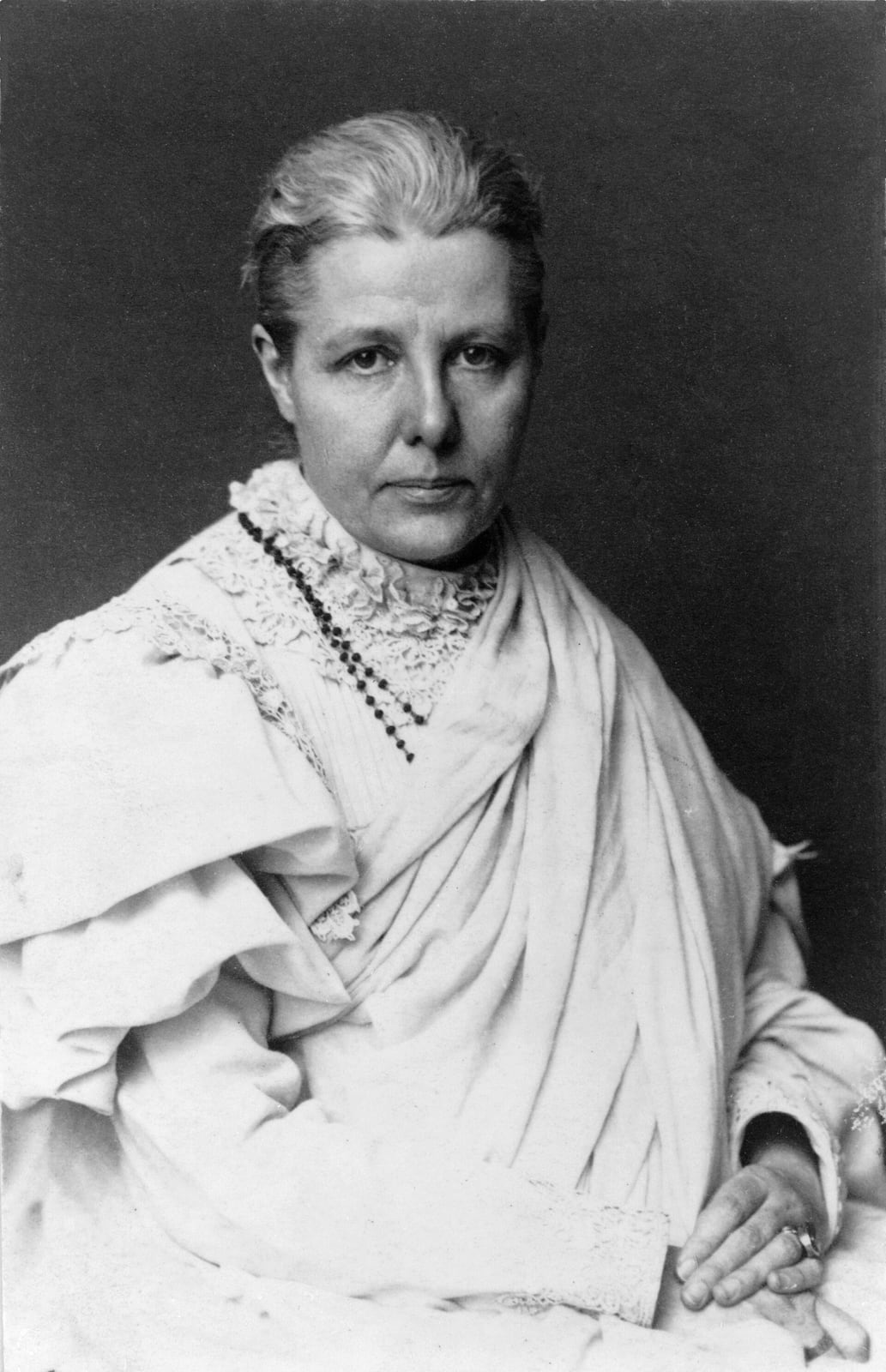
Annie Besant
Concordano su: Siamo liberi o è tutto determinato? · Che cos'è l'Assoluto? Dio esiste? · Chi sono io? Esiste un vero sé?
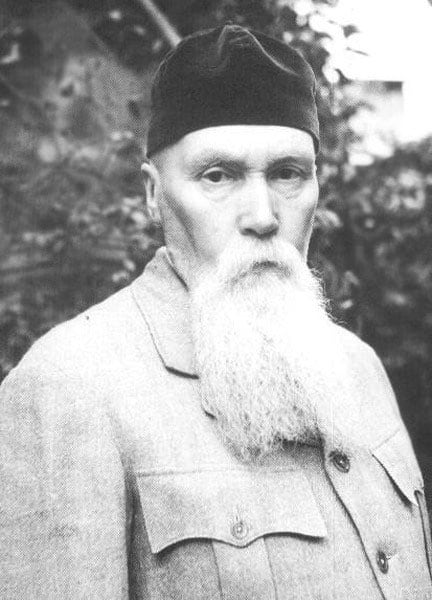
Nicholas Roerich
Concordano su: Il mondo è reale? · Può la ragione conoscere l'ultimo? · Ritirarsi dal mondo o trasformarlo?
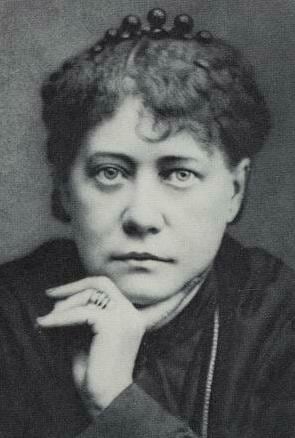
Helena Blavatsky
Concordano su: Siamo liberi o è tutto determinato? · Chi sono io? Esiste un vero sé? · Perché soffriamo?



Aneddoti e racconti
Aneddoti e racconti
Testimonianzac. 1868
The visit of the dead aunt
Origine del racconto: Steiner's autobiographical lecture in Berlin, 4 February 1913 (published in the Beiträge zur Rudolf Steiner Gesamtausgabe); recorded by Lindenberg and critically discussed by Zander.
Fonte: Lindenberg, Christoph. Rudolf Steiner. Eine Biographie. 2 vols. Stuttgart: Verlag Freies Geistesleben, 1997.
Testimonianzac. 1879–1882
The herb gatherer on the train
Origine del racconto: The Course of My Life, ch. III; Koguzki's identity and house were documented by anthroposophical researchers. The figure of the 'Master' has no documentary support (Zander).
Fonte: Steiner, Rudolf. Mein Lebensgang. Eine nicht vollendete Autobiographie (GA 28). Dornach: Philosophisch-Anthroposophischer Verlag, 1925; ed. actual Basilea: Rudolf Steiner Verlag.
Testimonianza1884–1890
The boy who could not learn
Origine del racconto: The Course of My Life, ch. VI. Otto Specht's medical career and death in the war are confirmed by biographers (Lindenberg); the degree of his initial disability is known only from Steiner.
Fonte: Steiner, Rudolf. Mein Lebensgang. Eine nicht vollendete Autobiographie (GA 28). Dornach: Philosophisch-Anthroposophischer Verlag, 1925; ed. actual Basilea: Rudolf Steiner Verlag.
Documentato1896
Before the sick Nietzsche
Origine del racconto: The Course of My Life, ch. XVIII, and Steiner's articles on the Nietzsche archive (1900). The lessons and the break with Elisabeth Förster-Nietzsche are documented in letters.
Fonte: Steiner, Rudolf. Mein Lebensgang. Eine nicht vollendete Autobiographie (GA 28). Dornach: Philosophisch-Anthroposophischer Verlag, 1925; ed. actual Basilea: Rudolf Steiner Verlag.
Documentato1922–1923
The night of the fire
Origine del racconto: Police reports and contemporary press; eyewitness accounts gathered by Wachsmuth and Lindenberg. Responsibility for the fire remains unproven.
Fonte: Zander, Helmut. Rudolf Steiner. Die Biografie. Múnich: Piper, 2011 (ed. rústica 2016).
Documentato1924
The farmers of Koberwitz
Origine del racconto: Transcript of the course (GA 327) and documentation of the Agriculture Section of the Goetheanum.
Fonte: Steiner, Rudolf. Geisteswissenschaftliche Grundlagen zum Gedeihen der Landwirtschaft. Landwirtschaftlicher Kurs (GA 327). Koberwitz, 7–16 de junio de 1924.
Insegnamenti
Insegnamenti
Le nozioni che articolano il suo pensiero, spiegate nel loro contesto.
Anthroposophy (spiritual science)antroposofia
From German idealism and Goethe to Theosophy and Western esotericism.
Fonte: Zander, Helmut. Rudolf Steiner. Die Biografie. Múnich: Piper, 2011 (ed. rústica 2016).
Ethical individualism and free thinkingindividualismo-etico
Post-Kantian epistemology; nineteenth-century individualism.
The members of the human beingmiembros-del-ser-humano
Reworked Theosophical anthropology.
Fonte: Zander, Helmut. Rudolf Steiner. Die Biografie. Múnich: Piper, 2011 (ed. rústica 2016).
Reincarnation and karmareencarnacion-y-karma
Theosophy; German idealism (Lessing).
Fonte: Zander, Helmut. Rudolf Steiner. Die Biografie. Múnich: Piper, 2011 (ed. rústica 2016).
Imagination, Inspiration, Intuitionimaginacion-inspiracion-intuicion
Western mysticism and Rosicrucian esotericism.
Fonte: Steiner, Rudolf. Mein Lebensgang. Eine nicht vollendete Autobiographie (GA 28). Dornach: Philosophisch-Anthroposophischer Verlag, 1925; ed. actual Basilea: Rudolf Steiner Verlag.
The threefold social ordertriformacion-social
Postwar German crisis; European social thought.
The Mystery of Golgotha, Lucifer and Ahrimanmisterio-del-golgota
Esoteric Christology; break with the Theosophical Society.
Fonte: Zander, Helmut. Rudolf Steiner. Die Biografie. Múnich: Piper, 2011 (ed. rústica 2016).
Video
Video
Registrazioni, interviste e documentari. I video vengono riprodotti da YouTube; non sono ospitati qui.
Rudolf Steiner and his Waldorf philosophy
Documentario· EN· 2025· 43 min
DW DocumentaryCanale ufficiale
Rudolf Steiner y su universo Waldorf
Documentario· ES· 2025· 43 min
DW DocumentalCanale ufficiale
Mythos Rudolf Steiner – was steckt hinter Waldorfschulen, Weleda und Demeter?
Documentario· DE· 2024· 30 min
Terra X HistoryCanale ufficiale
Rudolf Steiner und die Anthroposophie (Sternstunde Philosophie)
Intervista· DE· 2022· 65 min
SRF Kultur SternstundenCanale ufficiale
Dr. Rudolf Steiner, aus seinem Lebensgang (ARTE)
Documentario· DE· 2025· 90 min
videoattac2
The Life of Rudolf Steiner (Rudolf Steiners Leben)
Documentario· DE· 59 min
Steinerfilms
The Challenge of Rudolf Steiner, part one
Documentario· DE· 93 min
Steinerfilms
The Life and Work of Rudolf Steiner with Gary Lachman
Intervista· EN· 2018· 66 min
New Thinking Allowed with Jeffrey Mishlove
Rudolf Steiner's First Goetheanum with Brian Gray
Conferenza· EN· 2022· 94 min
Anthroposophical Society · Faust Branch Sacramento
André Leu — Rudolf Steiner: 100 years ahead of the science of his time
Conferenza· EN· 2019· 31 min
Sektion für LandwirtschaftCanale ufficiale
Intuitive Thinking as a Spiritual Path (The Philosophy of Freedom) — audiolibro
Registrazione di terzi· EN· 2019· 457 min
Rudolf Steiner Press AudioCanale ufficiale
El desafío de Rudolf Steiner
Guarda su YouTube
Questo video non consente l'incorporamento; si apre su YouTube.
El desafío de Rudolf Steiner
Documentario· ES· 93 min
Benjamin Moreno
Galleria
Galleria
Immagini con licenza verificata. Ciascuna conserva la sua paternità e la sua attribuzione.
Manoscritti
Manoscritti
Testimoni manoscritti e testi antichi, con il loro custode e le loro condizioni di consultazione.
DE · Latin (Kurrent y escritura latina) · 1879–1925
Nachlass Rudolf Steiner (manuscritos, cuadernos de notas, cartas, dibujos de pizarra)
- Testimone conservato
- Unos 600 cuadernos de notas, manuscritos de libros, cartas y alrededor de 1100 dibujos en pizarra
- Custode
- Rudolf Steiner Archiv, Dornach (Suiza)
DE · Taquigrafía Gabelsberger · 1900–1924
Mitschriften der Vorträge (estenogramas)
- Testimone conservato
- Unas 3700 transcripciones taquigráficas de conferencias
- Custode
- Rudolf Steiner Archiv, Dornach
Relazioni
Relazioni
Influenze, discepolati e affinità. Si distingue la relazione documentata dalla somiglianza individuata per analisi.
Ricevette l'influenza di
Her cosmology (root races, Atlantis, planes) is a reworked source of Cosmic Memory and Occult Science; Steiner acknowledged her work and disagreed with its Eastern orientation.
Relazione documentata
Dissentì da
She appointed him head of the Esoteric School in Germany (1904); the proclamation of Krishnamurti as World Teacher led to the 1912–1913 break.
Relazione documentata
Dissentì da
Steiner publicly rejected the doctrine that Krishnamurti was the vehicle of the World Teacher; it was the immediate cause of the German Section's separation.
Relazione documentata
Incontrò
Friedrich Nietzsche
He devoted a book to him (1895) and saw him ill at Naumburg in 1896.
Relazione documentata
Ricevette l'influenza di
Johann Wolfgang von Goethe
Editor of his scientific writings (1883–1897); his method of observation is the basis of Steiner's theory of knowledge and gives the Goetheanum its name.
Relazione documentata
Discepolo di
Karl Julius Schröer
His teacher in Vienna, who introduced him to Goethe and recommended him to Kürschner.
Relazione documentata
Famiglia di
Marie Steiner-von Sivers
Collaborator from 1902 and wife from 1914; co-founder of eurythmy and speech formation and editor of his legacy.
Relazione documentata
Incontrò
Ita Wegman
Physician, co-author of Extending Practical Medicine and member of the Society's executive from 1923; she attended him in his last illness.
Relazione documentata
Ricevette l'influenza di
The first chapter of Mysticism at the Dawn of the Modern Age (1901).
Relazione documentata
Ricevette l'influenza di
Studied in Mysticism at the Dawn of the Modern Age (1901) as a precursor of his spiritual science.
Relazione documentata
Ricevette l'influenza di
The centre of his Christology: he devoted cycles to the four Gospels and to the 'fifth Gospel'.
Relazione documentata
Incontrò
Édouard Schuré
Friend and collaborator; Steiner adapted and staged his dramas (GA 42), and Schuré prefaced the French translation of Christianity as Mystical Fact.
Relazione documentata
Ricevette l'influenza di
Ernst Haeckel
Steiner defended his evolutionary monism in Haeckel and His Opponents (1900) before his Theosophical period.
Relazione documentata
Contemporaneo di
Contemporaries in the German-speaking world with shared interests in Goethe, Gnosis and the life of the spirit, with no documented relationship.
Somiglianza individuata per analisi
Contemporaneo di
Contemporaries in early twentieth-century European esotericism; no direct relationship is recorded.
Somiglianza individuata per analisi
Idee affini a
Both conceived Christ and Sophia within a religious philosophy of evolution; the affinity was noted by Russian anthroposophists, not by Steiner himself.
Somiglianza individuata per analisi
Contemporaneo di
Both reworked Blavatsky's Theosophy in their own directions; there was no relationship.
Somiglianza individuata per analisi
Fonti
Fonti
Bibliografia e cataloghi consultati per questa scheda.
- Steiner, Rudolf. Mein Lebensgang. Eine nicht vollendete Autobiographie (GA 28). Dornach: Philosophisch-Anthroposophischer Verlag, 1925; ed. actual Basilea: Rudolf Steiner Verlag.
- Lindenberg, Christoph. Rudolf Steiner. Eine Biographie. 2 vols. Stuttgart: Verlag Freies Geistesleben, 1997.
- Zander, Helmut. Rudolf Steiner. Die Biografie. Múnich: Piper, 2011 (ed. rústica 2016).
- Lachman, Gary. Rudolf Steiner: An Introduction to His Life and Work. Nueva York: Jeremy P. Tarcher/Penguin, 2007.
- Steiner, Rudolf. Die Philosophie der Freiheit. Grundzüge einer modernen Weltanschauung. Berlín: Emil Felber, 1894 (texto en Project Gutenberg, ebook n.º 53493).
- Goetheanum, Dornach: sede de la Sociedad Antroposófica General y de la Escuela Superior de Ciencia Espiritual.
- McDermott, Robert (ed.). The Essential Steiner. San Francisco: Harper & Row, 1984 (nueva ed. The New Essential Steiner, Lindisfarne, 2009).
- Wikipedia (de), «Rudolf Steiner» (secciones «Edition des Werkes» y «Schriften»), y Wikipedia (en), «Rudolf Steiner», consultadas el 25 de octubre de 2026.
- Wikidata, «Rudolf Steiner» (Q78484).
- Rudolf Steiner Archiv, Dornach / Rudolf Steiner Verlag, Basilea: Rudolf Steiner Gesamtausgabe (GA).
- Rudolf Steiner Archive (Steiner Online Library), rsarchive.org: índice de la GA con traducciones inglesas (p. ej. «GA 37. Writings on the History of the Anthroposophical Movement and Society 1902–1925»).
- Jonas, Margaret (comp.). GA–RSE Titles: Listing of GA volumes and published English translations. Londres: Rudolf Steiner House Library, 1999, act. 2019.
- Deutsche Nationalbibliothek, catálogo en línea (SRU): ediciones del Rudolf Steiner Verlag por número de GA.
- Project Gutenberg: obras de Rudolf Steiner en alemán e inglés (Die Philosophie der Freiheit, n.º 53493; Die Kernpunkte der sozialen Frage, n.º 28494; The Way of Initiation, n.º 39986; etc.).
- Wachsmuth, Guenther. Die Geburt der Geisteswissenschaft. Rudolf Steiners Lebensgang von der Jahrhundertwende bis zum Tode. Dornach: Philosophisch-Anthroposophischer Verlag, 1941 (trad. ingl. The Life and Work of Rudolf Steiner, 1955).
- Steiner, Rudolf. Geisteswissenschaftliche Grundlagen zum Gedeihen der Landwirtschaft. Landwirtschaftlicher Kurs (GA 327). Koberwitz, 7–16 de junio de 1924.
- Titolare dei diritti
- Dominio público en la UE (desde 1996) y en España (desde 2006) para toda la obra de Steiner (m. 1925), y en EE. UU. para lo publicado antes de 1930. Las ediciones de la GA, sus aparatos críticos y las traducciones modernas pertenecen a la Rudolf Steiner-Nachlassverwaltung / Rudolf Steiner Verlag (Basilea) y a sus editoriales.
- Sito ufficiale
- www.rudolf-steiner.com/
In attesa di conferma
Ciò che questa scheda non ha ancora potuto chiarire. Preferiamo dirlo piuttosto che riempirlo.
- Fecha de nacimiento: Steiner dio siempre el 27 de febrero de 1861; algunos documentos y biógrafos apuntan al 25. Se registra el 27 con certeza «disputed» en la cronología.
- Verificar el título y contenido exactos de la GA 41 y de la reordenación reciente de documentos (GA 46) que aparece en rsarchive.org; no se han registrado por falta de fuente fiable.
- Completar ISBN españoles e ingleses para varias obras escritas (GA 5, 7, 11, 14, 16, 18, 20, 22, 24–25, 29–39, 42–44) y localizar ediciones en francés, italiano y ruso.
- Registrar uno por uno los demás ciclos de conferencias significativos (p. ej. GA 107, 113, 129, 136, 146, 157, 194, 230, 233) siempre como transcripciones no revisadas.
- Cotejar con el texto alemán de GA 4 (ed. 1918) y GA 10 las dos citas marcadas como «probable».
- Confirmar las fechas marcadas como probables: doctorado (octubre de 1891), boda con Marie von Sivers (24-XII-1914), inauguración del segundo Goetheanum (29-IX-1928) e inicio de la GA (1956).
- Localizar textos alemanes de dominio público en línea (Wikisource alemán, Internet Archive con OCR limpio) de Theosophie, Wie erlangt man…? y Die Geheimwissenschaft im Umriss para la sala de lectura.
Ricerca effettuata il 2026-10-25