Teosofia · Quarta Via
P. D. Ouspensky
Пётр Демьянович Успенский
1878 – 1947Persona storicamente documentata
Pëtr Dem'janovič Uspenskij (1878-1947), noto come P. D. Ouspensky, fu un giornalista e pensatore russo che passò dalle speculazioni sulla quarta dimensione (Tertium Organum, 1912) al ruolo di grande espositore dell'insegnamento di G. I. Gurdjieff, con il quale lavorò dal 1915 al 1924. Da Londra e poi dal New Jersey insegnò per venticinque anni la «Quarta Via» a gruppi da cui uscirono discepoli come Maurice Nicoll o Rodney Collin. I Frammenti di un insegnamento sconosciuto, pubblicati postumi, restano l'esposizione più chiara di quel sistema.
- opere
- 17opere
- edizioni
- 42edizioni
- citazioni
- 8citazioni
- video
- 11video
- immagini
- 3immagini
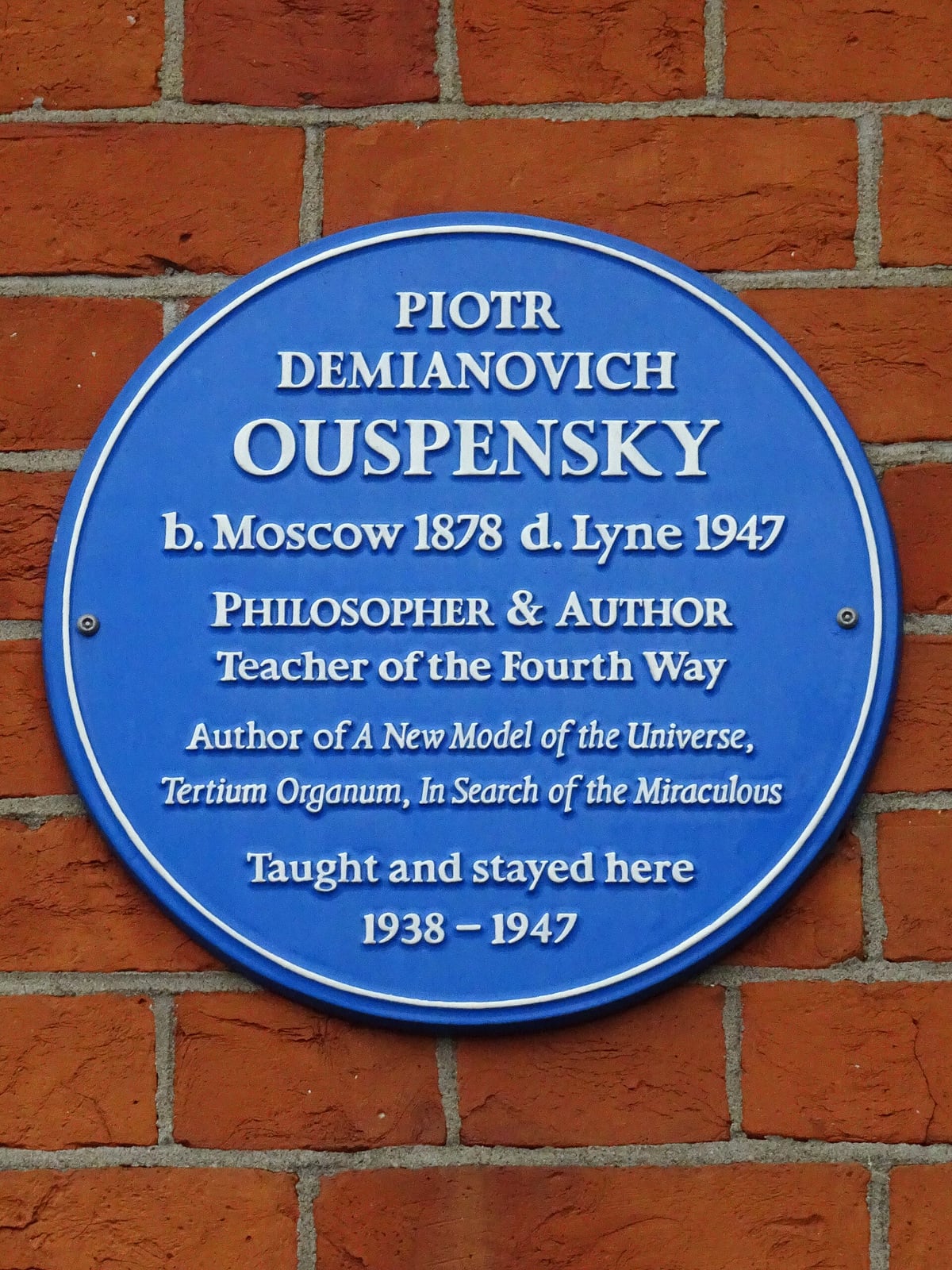
Placa azul de P. D. Ouspensky en Colet House · CC BY-SA 4.0
Con le sue parole
«Man does not know himself.»The Psychology of Man's Possible Evolution, primera conferencia

La sua idea centrale
Ordinary man does not 'do': everything happens to him, just as wars and revolutions happen to nations. Only one who has achieved inner unity and consciousness can act in the proper sense.
Vederlo nel contesto
Biografia
4 min di lettura
Traduzione assistita dall'originale spagnolo, in attesa di revisione da parte di un traduttore madrelingua.
Un autodidatta nella Mosca di fine secolo
Pëtr Dem'janovič Uspenskij nacque a Mosca nel marzo del 1878, in una famiglia di funzionari di modeste origini: il padre prestava servizio nell'amministrazione del catasto e nel Brefotrofio; la madre era figlia di un commerciante. Le fonti divergono sul giorno esatto, perché in Russia vigeva ancora il calendario giuliano. Studiò al Secondo Ginnasio di Mosca, da cui fu espulso verso i sedici anni – racconta la tradizione biografica – per aver tracciato una scritta su un muro sotto gli occhi di un ispettore. Da allora si formò da sé, con una passione precoce per la matematica, la psicologia e i fenomeni che la scienza del suo tempo lasciava fuori.
Giornalista e ricercatore
Nei primi anni del secolo lavorò come giornalista a Mosca e a San Pietroburgo. Intorno al 1907 scoprì la teosofia, allora in piena espansione in Russia, e nel 1908 intraprese un primo viaggio in Oriente. L'anno seguente pubblicò La quarta dimensione, un opuscolo debitore di Charles Howard Hinton in cui la quarta dimensione è un'estensione dello spazio che la nostra percezione non coglie. Da quell'intuizione nacque Tertium Organum (1912), la sua prima opera maggiore: un «terzo canone del pensiero», dopo l'Organon di Aristotele e il Novum Organum di Bacone, che nega la realtà ultima dello spazio e del tempo e propone una logica superiore in cui A è al tempo stesso A e non-A. Negli stessi anni pubblicò un saggio sul simbolismo dei tarocchi, due conferenze sul «circolo interno» e sul superuomo, un opuscolo sullo yoga, delle Conversazioni con il diavolo e il romanzo Kinemadrama, che sarebbe diventato La strana vita di Ivan Osokin.
Nel 1913-1914 viaggiò in Egitto, in India e a Ceylon alla ricerca di una scuola vivente di conoscenza esoterica; visitò la sede teosofica di Adyar, ma lo scoppio della prima guerra mondiale lo costrinse a rientrare senza averla trovata. Nella primavera del 1915 tenne a San Pietroburgo e a Mosca conferenze sui suoi viaggi che intitolava, appunto, Alla ricerca del miracoloso.
L'incontro con Gurdjieff
Quello stesso anno, dopo aver resistito a vari inviti, accettò di incontrare in un piccolo caffè di Mosca un uomo dall'aspetto orientale, con i baffi neri e lo sguardo penetrante, che gli parve «travestito»: Georgij Ivanovič Gurdjieff. Quella conversazione gli cambiò la vita. Negli anni successivi Ouspensky fece parte del gruppo di San Pietroburgo, prese appunti minuziosi delle spiegazioni del maestro sull'uomo-macchina, sui centri, sulla legge del tre e su quella del sette, sull'enneagramma e sul «ricordo di sé», e visse esperienze che avrebbe narrato con scrupolosa sobrietà, come la comunicazione telepatica che disse di aver avuto con Gurdjieff in Finlandia nell'agosto del 1916.
La rivoluzione disperse il gruppo. Ouspensky seguì Gurdjieff a Essentuki nel 1917, se ne allontanò nel 1918 e sopravvisse alla guerra civile nella Russia meridionale; da lì inviò le cronache che A. R. Orage pubblicò a Londra e che sarebbero state raccolte come Lettere dalla Russia, 1919. Nel 1920 trovò rifugio a Costantinopoli.
Londra e l'indipendenza
Nel frattempo Tertium Organum era arrivato negli Stati Uniti: l'architetto Claude Bragdon lo tradusse con Nicholas Bessaraboff e lo pubblicò nel 1920, e il successo trasformò un emigrato sconosciuto in un autore celebre. Con l'appoggio di Lady Rothermere, Ouspensky si stabilì a Londra nel 1921, dove le sue conferenze attirarono scrittori, medici e giornalisti; le fonti citano tra i suoi uditori Aldous Huxley, T. S. Eliot e Gerald Heard. Contribuì a raccogliere fondi perché Gurdjieff potesse aprire il suo Istituto a Fontainebleau, ma nel 1924 annunciò che avrebbe proseguito da solo. Nell'ultimo capitolo dei Frammenti spiega la sua decisione con una frase di rara nobiltà: la via di Gurdjieff poteva essere più giusta della sua, ma non era la sua.
Per quindici anni insegnò a Londra – dal 1938 anche a Colet House – e a Lyne Place (Surrey), dove i suoi gruppi univano lo studio delle idee al lavoro pratico. Nel 1931 uscì Un nuovo modello dell'universo, che raccoglieva e ampliava i saggi scritti prima di Gurdjieff. Tra i suoi discepoli figurarono Maurice Nicoll, Kenneth Walker, Robert S. de Ropp, Rodney Collin e, per un certo periodo, J. G. Bennett.
Gli Stati Uniti e la fine
La seconda guerra mondiale lo portò negli Stati Uniti nel 1941; lì si stabilì con la moglie, Sof'ja Grigor'evna, in una fattoria del New Jersey e continuò a tenere incontri a New York. Gravemente malato, tornò da solo in Inghilterra nel 1947. Nelle riunioni di quei mesi sconcertò gli allievi insistendo che dovevano ricominciare da capo e non fidarsi del «sistema» appreso; Rodney Collin interpretò che avesse abbandonato l'insegnamento, lettura che i resoconti di quegli incontri non confermano con chiarezza. Morì a Lyne Place il 2 ottobre 1947 ed è sepolto nel cimitero della chiesa della Santissima Trinità di Lyne.
Un'opera in due tempi
Poco dopo la sua morte furono pubblicati Frammenti di un insegnamento sconosciuto – con il benestare, secondo la tradizione, dello stesso Gurdjieff – e L'evoluzione interiore dell'uomo, cinque conferenze concepite come introduzione. Seguirono La quarta via (1957) e diverse raccolte di incontri. L'opera di Ouspensky ha così due tempi: quello del pensatore che cercava una logica al di là del senso comune e quello del discepolo che mise per iscritto, con una precisione da giornalista, l'insegnamento di un altro. La chiarezza di quella trascrizione spiega perché la Quarta Via sia conosciuta, ancora oggi, soprattutto attraverso la sua voce. Le sue carte sono conservate presso la biblioteca dell'Università di Yale.
Fonti: Ouspensky, P. D. In Search of the Miraculous: Fragments of an Unknown Teaching. Nueva York: Harcourt, Brace & World, 1949; Londres: Routledge & Kegan Paul, 1950. · Ouspensky, P. D. The Psychology of Man's Possible Evolution. Nueva York: Hedgehog Press, 1950. · Lachman, Gary. In Search of P. D. Ouspensky: The Genius in the Shadow of Gurdjieff. Wheaton: Quest Books, 2004. · Webb, James. The Harmonious Circle: The Lives and Work of G. I. Gurdjieff, P. D. Ouspensky, and Their Followers. Nueva York: G. P. Putnam's Sons, 1980. · Ouspensky, P. D. Tertium Organum: The Third Canon of Thought, a Key to the Enigmas of the World. Trad. de Nicholas Bessaraboff y Claude Bragdon. Rochester (NY): Manas Press, 1920.
Cronologia
La vita, anno per anno
Ogni punto è un evento documentato. Fai clic per leggerlo, con la sua fonte e il suo grado di certezza.
marzo 18780 anniMoscú
Born in Moscow
Pyotr Demyanovich Uspensky is born, son of Demyan Petrovich Uspensky, an official, and Ekaterina Semyonovna Borisova. Sources give 4, 5 or 17 March, depending on the calendar used.
DocumentatoWikidata, «Peter Demianovich Ouspensky» (Q434266): fechas y lugares de nacimiento y muerte (registra tres fechas de nacimiento: 4, 5 y 17 de marzo de 1878).
Dopo la sua morte
- 1949In Search of the Miraculous published
marzo 1878 · 0 anni
Born in Moscow
Pyotr Demyanovich Uspensky is born, son of Demyan Petrovich Uspensky, an official, and Ekaterina Semyonovna Borisova. Sources give 4, 5 or 17 March, depending on the calendar used.
Documentato
ca. 1894 · 16 anni
Expelled from the gymnasium
He is expelled from the Second Moscow Gymnasium, tradition says for graffiti painted in view of an inspector. From then on he is self-taught.
Probabile
1907 · 29 anni
Journalism and Theosophy
He works as a journalist on the Moscow daily Utro (The Morning) and discovers Theosophy, which will shape his first books.
Documentato
1909 · 31 anni
The Fourth Dimension
He publishes his first book, on theories of the fourth dimension.
Documentato
1912 · 34 anni
Tertium Organum
Tertium Organum appears, his first major work, proposing a higher logic and a theory of cosmic consciousness.
Documentato
1913 – 1914
Journey to the East
He travels to Egypt, India and Ceylon in search of an esoteric school; he visits Adyar. The war forces him back to Russia.
Documentato
febbraio 1915 · 36 anni
Lectures 'In Search of the Miraculous'
In February and March he lectures in St Petersburg on his travels under the titles 'In Search of the Miraculous' and 'The Problems of Death'.
Documentato
1915 · 37 anni
Meeting Gurdjieff
In a small Moscow café he meets G. I. Gurdjieff and joins his work group.
Documentato
agosto 1916 · 38 anni
The Finland experiences
By his own account he has telepathic communication with Gurdjieff at a Finnish country house. He himself admits he cannot prove it.
Discusso
1918 · 40 anni
First separation from Gurdjieff
Having followed him to the Caucasus, he decides to leave Gurdjieff and continue the work independently.
Documentato
1919 · 41 anni
Letters from Russia
During the civil war he sends dispatches that A. R. Orage publishes in London in The New Age.
Documentato
1920 · 42 anni
Exile in Constantinople; Tertium Organum in English
A refugee in Constantinople, he is unaware that in Rochester Claude Bragdon has published Tertium Organum in English with great success.
Documentato
agosto 1921 · 43 anni
Arrival in London
He leaves Constantinople in August and settles in London with Lady Rothermere's support; he begins lecturing.
Documentato
1924 · 46 anni
Final break with Gurdjieff
He announces in London that he will continue teaching independently, apart from Gurdjieff and his Fontainebleau Institute.
Documentato
1931 · 53 anni
A New Model of the Universe
The collection of his pre-Gurdjieff essays is published in English.
Documentato
1938 · 60 anni
Colet House
He teaches at Colet House, later the home of The Study Society, where a blue plaque now commemorates him.
Documentato
1941 · 63 anni
Move to the United States
Because of the war he moves to the United States; with his wife Sophia Grigorievna he settles on a New Jersey farm and lectures in New York.
Probabile
2 ottobre 1947 · 69 anni
Death at Lyne Place
Having returned to England that year, he dies at Lyne Place. He is buried in Holy Trinity churchyard, Lyne.
Documentato
1949
In Search of the Miraculous published
In Search of the Miraculous is published posthumously and becomes the standard account of Gurdjieff's system.
Documentato
Opere
Opere essenziali
Le opere senza le quali non si comprende la sua eredità.
Opera scritta · 1912
Tertium Organum: A Key to the Enigmas of the World
Tertium Organum. Ключ к загадкам мира
His first major work: after Aristotle's Organon and Bacon's Novum Organum, it proposes a 'third canon of thought' that denies the ultimate reality of space and time, explores cosmic consciousness (Bucke, the mystics) and formulates a higher logic in which A is both A and not-A. It was a success in America in the 1920s.
4 edizioni · amazon.com

Opera scritta · 1931
A New Model of the Universe
A collection of essays on esotericism, the fourth dimension, the superman, Christianity and the New Testament, the Tarot, yoga, dreams, eternal recurrence, sex and evolution, unified by the 'psychological method': examining each problem from the level of consciousness of the one who thinks it.
4 edizioni · amazon.com

Opera postuma · 1949
In Search of the Miraculous
In Search of the Miraculous: Fragments of an Unknown Teaching
A first-person chronicle of the years with Gurdjieff in Moscow, St Petersburg and the Caucasus and a systematic account of his teaching: man as a machine, the seven categories of man, the centres, self-remembering, the laws of three and seven, the ray of creation, the enneagram. It is the standard introduction to the Fourth Way.
7 edizioni · amazon.com

Conferenze pubblicate · 1950
The Psychology of Man's Possible Evolution
The five lectures Ouspensky read to newcomers: man does not know himself, is a machine capable of knowing it, lives in lower states of consciousness and can evolve only through conscious work on himself. It is the shortest and clearest gateway to his teaching.
4 edizioni · amazon.com
Tutta la sua opera (17)
P. D. Ouspensky
The Fourth Dimension
The Conscious LibraryThe Fourth Dimension
1909

The Symbolism of the Tarot
1912
P. D. Ouspensky
The Inner Circle: On the Superman
The Conscious LibraryThe Inner Circle: On the Superman
1913

What Is Yoga?
1913

Strange Life of Ivan Osokin
1915

Talks with a Devil
1916

The Fourth Way
1957

Letters from Russia, 1919
1978

Conscience: The Search for Truth
1979

A Further Record
1986

The Cosmology of Man's Possible Evolution
1989

A Record of Meetings
1992
P. D. Ouspensky
Memory
The Conscious LibraryMemory
1953
Citazioni
Citazioni localizzate in un'opera precisa. Ciascuna porta con sé la sua provenienza e il suo grado di affidabilità.
Man does not know himself.VerificataThe Psychology of Man's Possible Evolution, primera conferencia
Idee essenziali (sintesi editoriale)
Per rispetto del diritto d'autore, queste idee sono riassunte con parole nostre e non sono presentate come citazioni letterali.
- Ordinary man does not 'do': everything happens to him, just as wars and revolutions happen to nations. Only one who has achieved inner unity and consciousness can act in the proper sense.
- There are four possible states of consciousness — sleep, ordinary waking state, self-consciousness and objective consciousness — and man lives almost always in the first two while believing he has the last two.
- Human evolution is neither automatic nor collective: it is an individual possibility requiring knowledge, conscious effort and the guidance of a school.
- Time is the way we imperfectly perceive a higher dimension of space; hence the possibility that life recurs, an idea he dramatised in Strange Life of Ivan Osokin.
- Every great question of science, religion or art should be examined with a 'psychological method', asking from what level of consciousness it is posed.
Ultime parole
Non esistono testimonianze verificabili delle sue ultime parole.
There is no reliable record of his last words. Accounts of his final months — notably Rodney Collin's and the records of the 1947 meetings — report his insistence that pupils 'start again', but transmit no verifiable final words.
Chiedi
Ciò a cui risponde la sua opera
Dodici grandi domande dell'umanità e ciò che i suoi testi permettono di rispondere, con riferimenti. Non gli mettiamo mai parole in bocca.
Che cos'è l'Assoluto? Dio esiste?
At the top of the ray of creation, the Absolute, subject to one law
Un Assoluto impersonaleSi deduce dalla sua dottrina
P. D. Ouspensky approached the Absolute in two stages. In Tertium Organum (1912), before meeting Gurdjieff, he speculates on higher dimensions of space and on a cosmic consciousness the human being may attain, without appealing to a personal God. In In Search of the Miraculous (1949), where he records what he learned from Gurdjieff, he sets out the ray of creation: a scale of worlds descending from the Absolute, subject to one law, down to the Moon, subject to ninety-six; each level is more mechanical the further it is from the source. The Absolute appears there as the principle from which everything proceeds and whose will reaches directly only the first level, not as someone with whom one has dealings. His interest is not devotional but cosmological and psychological: to understand where the human being stands on that scale.
Confronta questa domanda con altri maestriChi sono io? Esiste un vero sé?
Man has no permanent I, only many I's taking turns
Non c'è un sé permanenteLo dice espressamente
P. D. Ouspensky sets out in In Search of the Miraculous (1949) and The Psychology of Man's Possible Evolution (1950) the central thesis of the Fourth Way: the ordinary human being has no single, permanent I. Each thought, desire or sensation says «I» for a moment and is replaced by another; there are hundreds of small I's, often contradictory, taking turns in command without any of them representing the whole. Man in this state is a machine: everything happens to him, he does nothing. Self-observation reveals this multiplicity, and seeing it is the first step. Unlike Buddhist non-self, however, the teaching holds that a real I can come to be formed through long and conscious work; the point is not to discover a Self already given but to create what does not yet exist.
Confronta questa domanda con altri maestriPerché soffriamo?
We suffer from identification, imagination and needless negative emotions
L'ignoranza di ciò che siamoLo dice espressamente
P. D. Ouspensky sets out in The Psychology of Man's Possible Evolution (1950) and The Fourth Way (1957) a psychological explanation of suffering. Ordinary man lives asleep: he identifies with every thought, emotion or circumstance, loses himself in it and believes he is that. To identification are added imagination, which produces uncontrolled scenarios, and the expression of negative emotions, which Ouspensky regards as unnecessary: they have no centre of their own in the organism, are maintained by habit and justified by reasoning. Much human suffering, he holds, comes from this mechanical functioning, which passes for natural. Self-observation, non-identification and ceasing to express negative emotions make it possible to reduce it. The teaching further distinguishes this useless mechanical suffering from the conscious suffering that work on oneself may demand.
Confronta questa domanda con altri maestriChe cosa accade dopo la morte?
Life repeats itself: eternal recurrence, which only consciousness can change
Rinascita secondo il karmaLo dice espressamente
Ouspensky defended throughout his life an idea of his own, eternal recurrence, which he sets out in A New Model of the Universe and fictionalises in Strange Life of Ivan Osokin. At death, the human being does not pass into another world or a different body: he is born again into the same life, at the same time and with the same circumstances, because time has more dimensions than we perceive. Most people repeat the same things mechanically; only someone who acquires memory and self-consciousness can introduce changes into the repetition. In In Search of the Miraculous he also records Gurdjieff's doctrine: ordinary man does not have an immortal soul already given, but the possibility of forming higher bodies through work, and only what has crystallised can survive the death of the body.
Confronta questa domanda con altri maestriCome si raggiunge la liberazione o la salvezza?
Man is a sleeping machine; awakening requires self-remembering within a school
Con un lavoro interiore consapevoleLo dice espressamente
Peter D. Ouspensky sets out in In Search of the Miraculous the teaching he received from Gurdjieff between 1915 and 1918, and in The Psychology of Man's Possible Evolution the version he himself taught. The starting point is that ordinary human beings live asleep: each is a machine moved by external influences, without a permanent «I» but with a multitude of small I's succeeding one another. Evolution is neither automatic nor guaranteed; it is only possible for those who undertake it consciously. Its tools are self-observation, «self-remembering», effort against mechanicalness and work with others within a school, because no one can awaken alone. The end of that development is higher states of consciousness.
Confronta questa domanda con altri maestriServe un maestro?
No one awakens alone: a school is needed, with its system and group work
Comunità e tradizioneLo dice espressamente
In In Search of the Miraculous, Peter D. Ouspensky transmitted the idea, received from Gurdjieff, that a sleeping man cannot wake himself: he needs a system of knowledge and other people to remind him of his sleep. That is the reason for schools, organised groups working with rules, with knowledge coming from a higher source and with common tasks. After separating from Gurdjieff in 1918 and definitively in the 1920s, Ouspensky led his own groups in London for decades, centred on studying the system. His emphasis falls more on the school and collective work than on the personal figure of the teacher.
Confronta questa domanda con altri maestriIl mondo è reale?
The ray of creation: worlds of differing density and number of laws
Piani di esistenzaLo dice espressamente
In In Search of the Miraculous, Peter D. Ouspensky sets out the cosmology he received from Gurdjieff: the ray of creation, a scale of worlds running from the Absolute to the Moon through all worlds, our galaxy, the Sun, the planets and the Earth. Each level is subject to an increasing number of laws, so that the Earth, subject to many, is a place of great mechanicalness. Human beings live in one of the worst places in the universe, in the system's expression, and their possible evolution consists in freeing themselves from some of those laws. Before meeting Gurdjieff, in Tertium Organum, he had already argued that the three-dimensional world is a limited perception of a reality of more dimensions.
Confronta questa domanda con altri maestriChe cos'è l'amore?
Love is a cosmic phenomenon that can open onto higher consciousness
Anelito e unioneSi deduce dalla sua dottrina
In Tertium Organum, P. D. Ouspensky treats love as a cosmic phenomenon not made to the measure of human ends: people use it for reproduction, pleasure or possession, but its nature exceeds all of that and belongs to an order of reality of higher dimensions. That is why, he holds, love can momentarily open a higher perception, akin to the mystical consciousness he studies in the same book, and also why it is degraded when shut up in the personal. In A New Model of the Universe, in the chapter on sex and evolution, he examines sexual energy as a force that can serve inner evolution or be wasted. Later, within the Fourth Way, he would add that mechanical man cannot truly love as long as he lacks a permanent I.
Confronta questa domanda con altri maestriSiamo liberi o è tutto determinato?
Man is a machine: everything happens to him, he does nothing
Siamo macchine finché non ci risvegliamoLo dice espressamente
*In Search of the Miraculous* (1949) records as the starting point of Gurdjieff's teaching the thesis that ordinary man is a machine: he cannot do, everything happens to him, as it rains or clears up. Ouspensky makes it the axis of his own lectures, published as *The Psychology of Man's Possible Evolution*: the human being has no single permanent self but many small «I»s that take turns, and therefore has no will. Freedom is not a given but a possibility. Only through work on oneself, beginning with self-remembering, can a centre capable of doing be formed. Most people, he warns, will never leave mechanicalness.
Confronta questa domanda con altri maestriPerché meditare o pregare?
Self-remembering: being present to oneself while acting
Essere presentiLo dice espressamente
In the Fourth Way Ouspensky sets out in *In Search of the Miraculous* and *The Fourth Way*, the central practice is neither sitting meditation nor prayer but self-remembering: dividing attention so that, while looking at something, one is at the same time aware of oneself looking. Ouspensky recounts that when he tried it he discovered he almost never remembered himself and that most of his life passed in sleep. To that effort are added non-judgemental self-observation and the struggle against identification and the expression of negative emotions. The aim is to wake from mechanicalness and form a permanent self; self-remembering is the first step towards consciousness.
Confronta questa domanda con altri maestriPuò la ragione conoscere l'ultimo?
A higher logic and a school knowledge ordinary science cannot reach
Conoscenza esotericaLo dice espressamente
Ouspensky trained as a mathematician and journalist, and his first answer was intellectual: in *Tertium Organum* (1912) he proposed a «third logic» to surpass those of Aristotle and Bacon in order to think about consciousness and the higher dimensions of space. Meeting Gurdjieff in 1915 convinced him that something more was needed: an esoteric knowledge preserved by schools, which, according to *In Search of the Miraculous*, is not transmitted through books but from teacher to pupil, and only to one who has prepared his being to receive it. That knowledge must be verified personally: nothing is to be accepted on faith. The ordinary, mechanical intellect cannot reach it; one developed by work on oneself can.
Confronta questa domanda con altri maestriRitirarsi dal mondo o trasformarlo?
The Fourth Way requires no withdrawal: one works in ordinary life
Contemplazione nell'azioneLo dice espressamente
In In Search of the Miraculous, P. D. Ouspensky sets out Gurdjieff's classification of the traditional ways: that of the fakir, who works on the body; that of the monk, on the emotions; and that of the yogi, on the mind. All three require leaving ordinary life and withdrawing. The Fourth Way, by contrast, does not ask one to go to the desert or the monastery: it is followed in the conditions of ordinary life, which are considered the best possible for work on oneself, and it works at once on body, emotions and mind. The practitioner keeps his trade and his family, but uses them as material for self-remembering and for observing his mechanicalness. Ouspensky led groups for decades, in London and later in the United States, on this basis. As for society, he was sceptical: collective changes, he said, happen mechanically.
Confronta questa domanda con altri maestri
Affinità e tensioni
Affinità e tensioni
Calcolate domanda per domanda a partire dalle sue posizioni. Il perché di ogni accordo o contrasto, con un clic.
La pensa in modo simile a
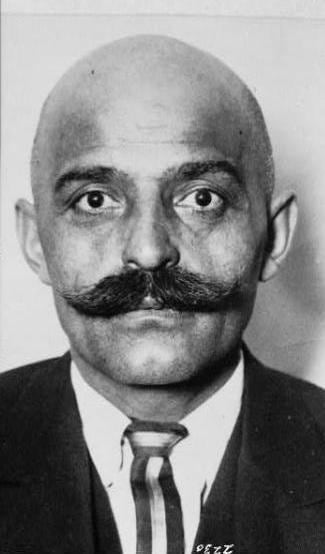
G. I. Gurdjieff
Concordano su: Chi sono io? Esiste un vero sé? · Perché soffriamo? · Come si raggiunge la liberazione o la salvezza?
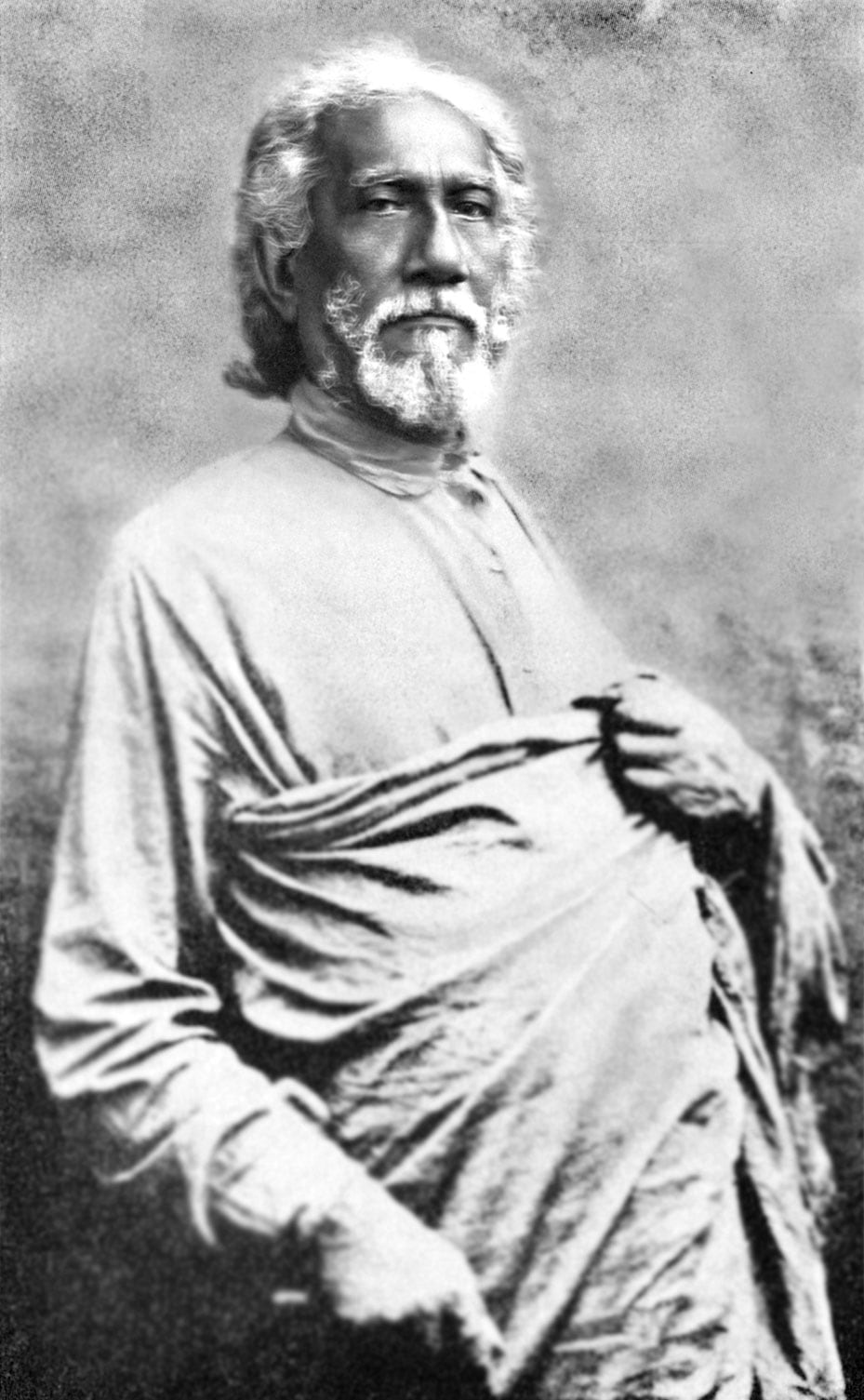
Sri Yukteswar
Concordano su: Che cos'è l'Assoluto? Dio esiste? · Perché soffriamo? · Che cosa accade dopo la morte?
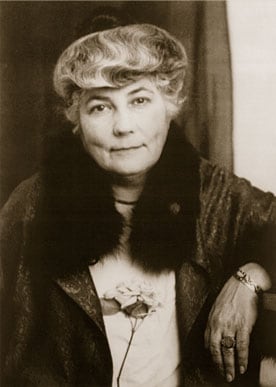
Helena Roerich
Concordano su: Che cos'è l'Assoluto? Dio esiste? · Che cosa accade dopo la morte? · Il mondo è reale?
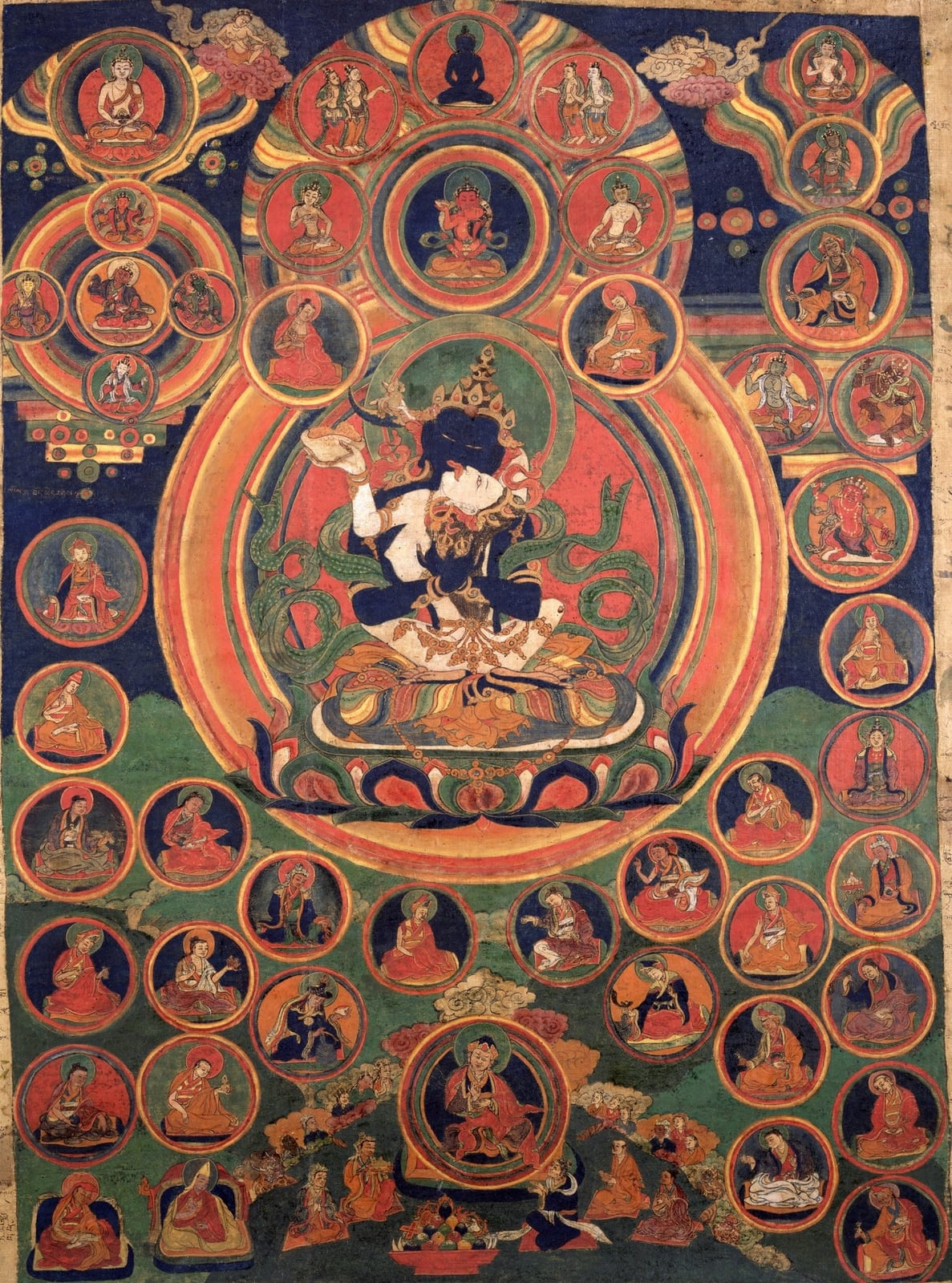
Padmasambhava
Concordano su: Che cos'è l'Assoluto? Dio esiste? · Chi sono io? Esiste un vero sé? · Perché soffriamo?
La pensa diversamente da

Nikolai Berdyaev
Si scontrano su: Chi sono io? Esiste un vero sé? · Che cosa accade dopo la morte?
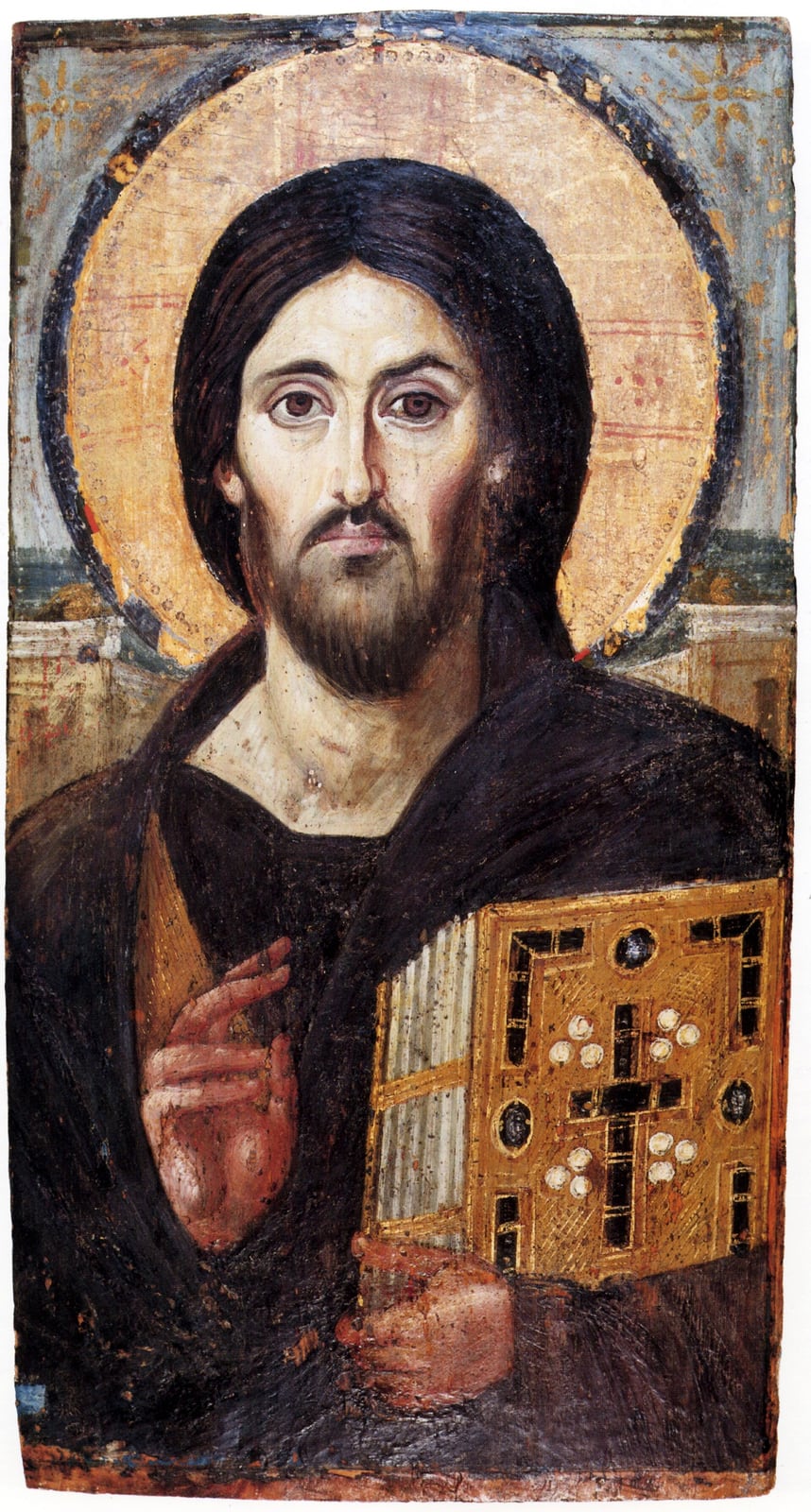
Jesus of Nazareth
Si scontrano su: Chi sono io? Esiste un vero sé? · Che cosa accade dopo la morte?
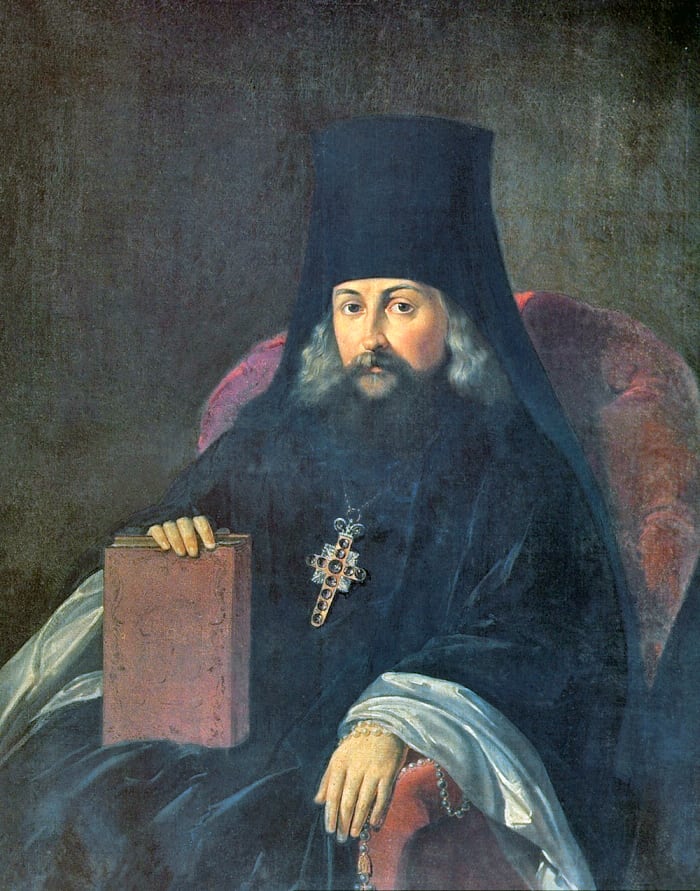
Ignatius Brianchaninov
Si scontrano su: Chi sono io? Esiste un vero sé? · Che cosa accade dopo la morte?
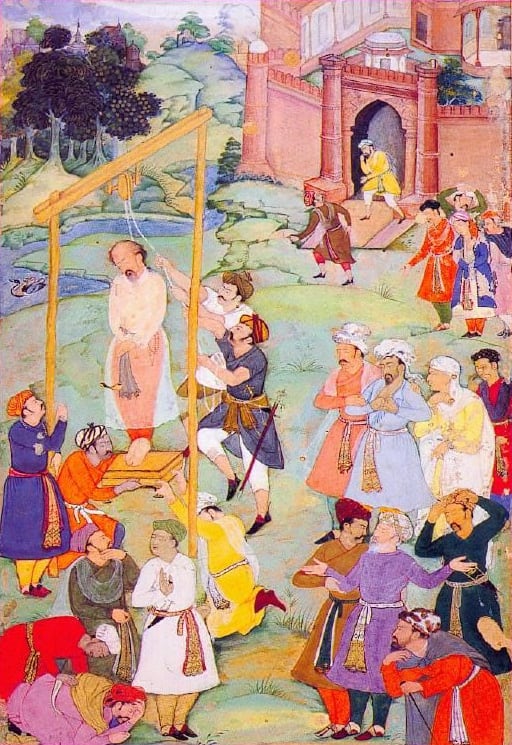
Al-Hallaj
Si scontrano su: Chi sono io? Esiste un vero sé? · Che cosa accade dopo la morte?
Si scontrano suContraddizione apparente
P. D. Ouspensky · Ramana Maharshi
Many I's or a single Self: the same word for two levels
Perché: The contradiction is apparent at the level of diagnosis because they use the word I for different levels: Ouspensky calls I's the psychological states of ordinary man; Ramana reserves the term Self for the awareness that witnesses them all, which is neither a state nor a content. Ramana's ego and Ouspensky's many I's are the same reality seen from two systems. There is a real difference in the goal: the Fourth Way aims to build a permanent I through work, whereas for Ramana the Self is not built but recognised. One starts from a psychology of the machine; the other, from a Vedantic metaphysics.
Concordano su
P. D. Ouspensky · G. I. Gurdjieff
Man is a machine: the master and the disciple who systematised his teaching
Perché: The affinity is that of a master and his most systematic disciple: Ouspensky worked with Gurdjieff in Russia between 1915 and 1918 and transmitted that teaching in In Search of the Miraculous, published posthumously in 1949. The relationship broke down: Ouspensky withdrew in 1918 and definitively in the 1920s, and led his own groups in London, centred on the study of the system rather than on the figure of the master. They agree in doctrine, not in style: Gurdjieff taught in a demanding and disconcerting way, with dances, movements and provoked situations; Ouspensky, intellectually and in an orderly fashion. Hence they part on the question of the master: one deems him indispensable; the other stresses the school.
Concordano su
P. D. Ouspensky · Eckhart Tolle
Waking from automatic pilot: self-remembering and the power of now
Perché: There is no documented relationship between them, although the vocabulary of awakening and automatic pilot found in contemporary spirituality owes much to the Fourth Way. The affinity has clear limits. Self-remembering demands effort, a deliberate division of attention and a system of group work, and its goal is to form a permanent self that does not yet exist; Tolle's presence is presented as something not manufactured or reached in time but recognised as one's own being. Ouspensky writes for a school with discipline and hierarchy; Tolle, for individual readers without a tradition. They agree on the first step, not on the path or the goal.
Aneddoti e racconti
Aneddoti e racconti
Testimonianza1915
The disguised man in the Moscow café
Origine del racconto: In Search of the Miraculous, ch. 1, written by Ouspensky years later from his notes.
Testimonianza1915–1916
The cigarettes on the Nevsky
Origine del racconto: In Search of the Miraculous, ch. 7. Autobiographical account; there are no other witnesses.
Testimonianza1916
The voice in the chest: Finland, August 1916
Origine del racconto: In Search of the Miraculous, ch. 13. Ouspensky deliberately omits the content of the questions.
Documentato1920–1921
The book that travelled to America on its own
Origine del racconto: Documented by the Manas Press edition (1920) and recounted by Wikipedia and Lachman (2004).
Fonte: Wikipedia (en), «P. D. Ouspensky» (vida, obras y bibliografía).
Contestato1947
'Start again': the 1947 meetings
Origine del racconto: English Wikipedia records Collin's view and qualifies it with A Record of Meetings; the detailed version is in Lachman (2004) and the published records.
Fonte: Wikipedia (en), «P. D. Ouspensky» (vida, obras y bibliografía).
Insegnamenti
Insegnamenti
Le nozioni che articolano il suo pensiero, spiegate nel loro contesto.
Self-rememberingrecuerdo-de-si
In many respects the functional equivalent of Buddhist mindfulness or the 'watchfulness' of other traditions, though framed in its own psychological vocabulary.
Man as a machinehombre-maquina
It comes from Gurdjieff; Ouspensky made it the core of his introductory exposition.
Fonte: Ouspensky, P. D. The Psychology of Man's Possible Evolution. Nueva York: Hedgehog Press, 1950.
The four states of consciousnessestados-de-conciencia
Ouspensky had already explored 'cosmic consciousness' in Tertium Organum before meeting Gurdjieff.
Fonte: Ouspensky, P. D. The Psychology of Man's Possible Evolution. Nueva York: Hedgehog Press, 1950.
The Fourth Waycuarto-camino
It gives its name to the Atlas's fourth-way tradition.
Fonte: Wikipedia (en), «P. D. Ouspensky» (vida, obras y bibliografía).
Eternal recurrence and the fourth dimensioneterno-retorno
It is in dialogue with Nietzsche, Hinton and early twentieth-century theories of time.
Ritiri
Ritiri e centri
Luoghi e incontri legati al suo insegnamento. Ti mettiamo in contatto con chi li organizza.
Nueva York (Upper East Side) · Estados Unidos
Gurdjieff Foundation of New York
The Gurdjieff Foundation of New York
The Gurdjieff Foundation of New York belongs to the network of foundations established after Gurdjieff's death by his pupil Jeanne de Salzmann, together with the Institut Gurdjieff in Paris and the Gurdjieff Society in London. Its first president, Lord Pentland, had been a pupil of Ouspensky before working with Gurdjieff, and many of Ouspensky's pupils joined this work. It offers weekly group meetings led by senior students, classes in the Movements, the sacred dances and exercises Gurdjieff taught, meditation and retreats. Access is gradual and begins with introductory events.
Barons Court, Londres · Reino Unido
The Study Society, Colet House (London)
The Study Society
The Study Society was registered in 1951, four years after Ouspensky's death, at the initiative of his pupil Dr Francis Roles, to continue his work as a school of the Fourth Way. It is based at Colet House in west London, which presents itself as a spiritual gateway in the centre of the city. Its current programme brings together meditation, the Movements, study groups on the Masnavi and meetings devoted to Rumi, the dervish turning and a Sunday Advaita gathering. Its main website sometimes rejects automated requests; the Colet House site responds normally.
Londres · Reino Unido
Gurdjieff Studies, London
Gurdjieff Studies Ltd (organización benéfica registrada)
Gurdjieff Studies is a London charity devoted to the Fourth Way that offers group meetings, reading groups, practical activities, Movements classes and intensive residential stays. It holds that the teaching is passed on from teacher to pupil in direct lines of transmission, and maintains two reference websites: one on Gurdjieff's life and work, with his music, dances and chronology, and another devoted to P. D. Ouspensky, reconstructing his work in England, including the Lyne Place period. It is independent of the network of foundations established by Jeanne de Salzmann.
Video
Video
Registrazioni, interviste e documentari. I video vengono riprodotti da YouTube; non sono ospitati qui.
Gary Lachman - Gurdjieff, Ouspensky, and the Fourth Way
Conferenza· EN· 80 min
Theosophical Society in England & Wales
Gary Lachman on P.D. Ouspensky — Kensington Central Library
Conferenza· EN· 96 min
Gary Lachman
P. D. Ouspensky and the Gurdjieff Work with Gary Lachman
Intervista· EN· 83 min
New Thinking Allowed with Jeffrey Mishlove
The Philosophy of the Cosmic Dance 2017 pt1. The Story of Colet House
Conferenza· EN· 57 min
Philip Jacobs
The Strange Life of P.D. Ouspensky
Analisi· EN· 6 min
Theodore Nottingham
С. А. Панин — Семинар: «Эзотерический текст как форма философии. П. Д. Успенский, Tertium Organum»
Conferenza· RU· 2020· 96 min
АИЭМ · ASEM
Шелковников А. Ю. — Пётр Демьянович Успенский — философ эзотеризма
Conferenza· RU· 2026· 27 min
АИЭМ · ASEM
Валерий Бондаренко «Пётр Успенский. Искатель чудесного»
Conferenza· RU· 2019· 127 min
СМИБС
Tertium Organum by P.D. Ouspensky (Book Review)
Analisi· EN· 2026· 32 min
Hermitix Podcast
Gurdjieff in Finland, Pinpointing the Legendary Ouspensky Telepathy Incident
Intervista· EN· 2022· 7 min
Appleknocker Radio
¿Quién fue P.D. Ouspensky?
Registrazione di terzi· ES· 2023· 7 min
Vojo Talks
Galleria
Galleria
Immagini con licenza verificata. Ciascuna conserva la sua paternità e la sua attribuzione.
Manoscritti
Manoscritti
Testimoni manoscritti e testi antichi, con il loro custode e le loro condizioni di consultazione.
RU · Cyrillic / Latin · 1900–1947
P. D. Ouspensky Memorial Collection
- Testimone conservato
- Papeles, manuscritos y notas de reuniones (1935–1947)
- Custode
- Yale University Library, Manuscripts and Archives · MS 840
- Digitalizzazione
- hdl.handle.net/10079/fa/mssa.ms.0840…
Relazioni
Relazioni
Influenze, discepolati e affinità. Si distingue la relazione documentata dalla somiglianza individuata per analisi.
Discepolo di
Gurdjieff's pupil from 1915 to 1918 in Russia and intermittent collaborator until 1924; author of the most widely read account of his teaching.
Relazione documentata
Dissentì da
He separated from him in 1918 and definitively in 1924; in In Search of the Miraculous he explains that Gurdjieff's way was not his.
Relazione documentata
Ricevette l'influenza di
Ouspensky was interested in Theosophy from 1907 and visited Adyar in 1913–1914; the influence is that of the Theosophical movement generally, not a personal relationship (Blavatsky had died in 1891).
Somiglianza individuata per analisi
Contemporaneo di
Contemporaries from the Theosophical milieu who founded their own esoteric schools in the interwar English-speaking world; no relationship between them is recorded.
Somiglianza individuata per analisi
Collegato da altre schede
Fonti
Fonti
Bibliografia e cataloghi consultati per questa scheda.
- Ouspensky, P. D. In Search of the Miraculous: Fragments of an Unknown Teaching. Nueva York: Harcourt, Brace & World, 1949; Londres: Routledge & Kegan Paul, 1950.
- Wikidata, «Peter Demianovich Ouspensky» (Q434266): fechas y lugares de nacimiento y muerte (registra tres fechas de nacimiento: 4, 5 y 17 de marzo de 1878).
- Ouspensky, P. D. The Psychology of Man's Possible Evolution. Nueva York: Hedgehog Press, 1950.
- Open Library, autor OL2263413A (Uspenskiĭ, Petr Demʹi͡anovich): obras y ediciones con ISBN.
- Lachman, Gary. In Search of P. D. Ouspensky: The Genius in the Shadow of Gurdjieff. Wheaton: Quest Books, 2004.
- Webb, James. The Harmonious Circle: The Lives and Work of G. I. Gurdjieff, P. D. Ouspensky, and Their Followers. Nueva York: G. P. Putnam's Sons, 1980.
- Ouspensky, P. D. Tertium Organum: The Third Canon of Thought, a Key to the Enigmas of the World. Trad. de Nicholas Bessaraboff y Claude Bragdon. Rochester (NY): Manas Press, 1920.
- Ouspensky, P. D. A New Model of the Universe: Principles of the Psychological Method in Its Application to Problems of Science, Religion, and Art. Londres: Kegan Paul, Trench, Trubner, 1931.
- Wikipedia (en), «P. D. Ouspensky» (vida, obras y bibliografía).
- Wikipedia (ru), «Успенский, Пётр Демьянович» (familia, primeras publicaciones rusas y bibliografía).
- Yale University Library, Manuscripts and Archives. P. D. Ouspensky Memorial Collection (MS 840).
- Wikisource en ruso, «Автор:Пётр Демьянович Успенский» (página de autor con la relación de textos de dominio público: Tertium Organum, Символы Таро, Странная жизнь Ивана Осокина, Разговоры с дьяволом).
- Wikidata, «Nicholas Bessaraboff» (Q26244034): musicólogo estadounidense, cotraductor de Tertium Organum (1894–1973).
- Titolare dei diritti
- Herederos de P. D. Ouspensky y editoriales titulares de cada obra (Knopf/Penguin Random House, Routledge, Harcourt). Fallecido en 1947: dominio público en los países con plazo de 70 años post mortem desde 2018; en EE. UU. siguen protegidas las obras publicadas desde 1931.
In attesa di conferma
Ciò che questa scheda non ha ancora potuto chiarire. Preferiamo dirlo piuttosto che riempirlo.
- «Obispon invita», en la transcripción original del encargo, podría referirse a P. D. Ouspensky (posible error de dictado de «Ouspensky»); confirmarlo con quien hizo el encargo.
- Día exacto de nacimiento: Wikipedia (en) da el 5 de marzo de 1878, Wikipedia (ru) el 17 de marzo (5 de marzo del calendario juliano) y Wikidata registra además el 4; se deja con precisión de mes.
- Año de la primera edición rusa de Tertium Organum (1911 o 1912) y de El simbolismo del tarot (1912 o 1913); de Kinemadrama / Iván Osokin (1915 o 1917).
- Edición castellana verificada de Conversaciones con el diablo, La cuarta dimensión y de las recopilaciones póstumas (A Further Record, Cosmology, A Record of Meetings).
- Fecha y circunstancias exactas de su traslado a EE. UU. (enero de 1941 según algunas biografías) y del regreso a Inglaterra en 1947.
- Obras menores no registradas como obra: Memory (Stourton Press, 1953), New Horizons (Globe Press, 1990) y las traducciones de Kipling, Bret Harte, Poe, Ouida, Mark Twain, Edward Carpenter y Hinton que Ouspensky hizo al ruso (fuente: Open Library OL2263413A y Wikipedia ru). Los títulos de Kessinger (Superman, What Is Yoga?, etc.) son capítulos sueltos de A New Model of the Universe.
- No hay en Wikimedia Commons un retrato fotográfico de Ouspensky con licencia libre verificada; buscar fotografías anteriores a 1917 en archivos rusos de dominio público.
- Sala de lectura (2026-10-25): los seis textos registrados quedan con caution por la regla española de 80 años (Ouspensky †1947, libre en España el 1 de enero de 2028). Además: la traducción inglesa de Tertium Organum lleva derechos de Bessaraboff (†1973) en la UE y en España; falta la fecha de muerte de R. R. Merton, traductor de A New Model of the Universe (en EE. UU. libre el 1 de enero de 2027); y hay que fijar qué redacción reproducen las páginas rusas de Символы Таро y de Iván Osokin. No registrados: Четвёртое измерение (sin texto en línea fiable localizado) y Letters from Russia 1919 (la copia de Internet Archive lleva la introducción de la edición de 1978, con derechos; el texto original está en The New Age, 1919, en el Modernist Journals Project, en números sueltos).
- Vídeos (2026-10-25): en español solo se ha localizado una semblanza divulgativa breve (Vojo Talks); no hay conferencias académicas en castellano ni documentales de televisión pública sobre Ouspensky en YouTube.
Ricerca effettuata il 2026-10-25