Teosofia
Alice A. Bailey
1880 – 1949Persona storicamente documentata
Alice A. Bailey (1880–1949), scrittrice esoterica britannica stabilitasi negli Stati Uniti, firmò ventiquattro libri che formano uno dei corpus più influenti della teosofia successiva a Blavatsky. Diciannove li presentò come dettati telepatici di un maestro che chiamò «il Tibetano» (più tardi Djwhal Khul); cinque come opera propria. Con il marito, Foster Bailey, fondò Lucis Trust e la Scuola Arcana, diffuse la Grande Invocazione e rese popolare l'espressione «Nuova Era». La sua eredità è tanto vasta quanto discussa.
- opere
- 33opere
- edizioni
- 55edizioni
- citazioni
- 8citazioni
- video
- 9video
- immagini
- 3immagini
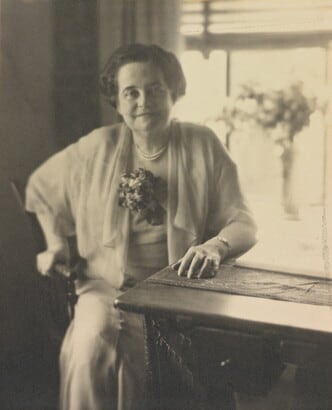
Alice A. Bailey en la década de 1940 · Public domain
Con le sue parole
«From the point of Light within the Mind of God / Let light stream forth into the minds of men.»La Gran Invocación (versión de 1945), en The Reappearance of the Christ, páginas preliminares

La sua idea centrale
Bailey distinguishes automatic writing, which she considers dangerous because it requires passivity, from the conscious telepathy she claimed to practise: positive attention, full control of the senses and faithful transcription, correcting only the English.
Vederlo nel contesto
Biografia
5 min di lettura
Traduzione assistita dall'originale spagnolo, in attesa di revisione da parte di un traduttore madrelingua.
Una bambina della grande borghesia vittoriana
Alice La Trobe-Bateman nacque a Manchester il 16 giugno 1880, in una famiglia di ingegneri. Il nonno, John Frederic La Trobe-Bateman, era uno dei grandi costruttori di dighe e acquedotti dell'Inghilterra industriale; il padre, Frederic Foster La Trobe-Bateman, lavorava per l'impresa di famiglia e portò la bambina, di pochi mesi, a Montréal, dove partecipò ai lavori del ponte Victoria sul San Lorenzo. Tutto ciò che sappiamo di quegli anni proviene da un'unica testimonianza: l'Autobiografia incompiuta che lei stessa redasse tra il 1945 e il 1948 e che il vedovo pubblicò nel 1951. È una fonte preziosa e, al tempo stesso, interessata, scritta da una donna che leggeva la propria vita alla luce della missione che credeva di aver ricevuto.
In quel racconto l'infanzia appare circondata dal lusso e da una tristezza persistente. La madre morì a ventinove anni, quando Alice ne aveva sei; il padre, malato, morì poco dopo durante un viaggio per mare verso la Tasmania. Le due sorelle crebbero con i nonni a Moor Park (Surrey) e, dopo la morte del nonno, tra istitutrici e lunghi soggiorni a Castramont, la casa scozzese di una zia, Margaret Maxwell. L'autrice non nasconde ciò che molti biografi avrebbero taciuto: prima dei quindici anni, dice, tentò tre volte di togliersi la vita.
Il visitatore con il turbante
L'episodio che dà ordine a tutta la sua autobiografia avvenne domenica 30 giugno 1895, a Castramont. Sola nel salotto mentre la famiglia era in chiesa, vide entrare — secondo il suo racconto — un uomo alto, vestito all'europea e con un turbante in capo, che le annunciò che c'era un lavoro previsto per lei nel mondo se fosse riuscita a dominare il proprio carattere. Anni dopo, nella sala dei ritratti della sezione esoterica della Società Teosofica, a Krotona, credette di riconoscerlo nell'immagine del maestro Koot Hoomi. Nessun altro testimone conferma la scena; è, in senso stretto, una testimonianza personale.
Evangelista, moglie, operaia
La giovane anglicana trovò dapprima la sua vocazione nell'evangelizzazione. Lavorò nelle case del soldato che Elise Sandes dirigeva in Irlanda e poi nell'India britannica, dove aprì centri a Umballa e a Ranikhet. Lì conobbe Walter Evans, un soldato che aspirava al sacerdozio; si sposarono in Gran Bretagna intorno al 1907 e si trasferirono a Cincinnati, dove lui studiò al seminario teologico di Lane prima di essere ordinato nella Chiesa episcopale. Il matrimonio, raccontato da lei con durezza, fu una sequela di stenti e violenze. Nacquero tre figlie — Dorothy, Mildred ed Ellison — e nel 1915, ormai a Pacific Grove (California), la coppia si separò. Per mantenere le bambine, la nipote dell'ingegnere di Manchester lavorò in un conservificio di sardine.
Teosofia e rottura
A Pacific Grove due donne inglesi la condussero alla loggia teosofica locale. La lettura della Dottrina segreta di Blavatsky scalzò la Bibbia dal suo comodino e verso il 1917-1918 si stabilì a Krotona, la sede californiana della Società Teosofica, dove diresse la caffetteria, entrò nella sezione esoterica e arrivò a curare la rivista The Messenger. Nel gennaio 1919 conobbe Foster Bailey, nominato quello stesso anno segretario nazionale; ottenuto il divorzio, si sposarono nel 1921.
La coppia guidò una corrente critica verso la direzione di Adyar e verso l'influenza della sezione esoterica sulla società, in piena controversia sulle profezie di Annie Besant riguardo a Krishnamurti. La convention di Chicago del 1920 si concluse con la rimozione di entrambi dai loro incarichi. Gli storici — Bruce F. Campbell, Olav Hammer — aggiungono un motivo di fondo: la diffidenza di Besant verso le comunicazioni che Alice diceva di ricevere.
La voce del Tibetano
Nel novembre 1919, seduta su una collina vicino alla sua casa di Hollywood, Bailey udì, a suo dire, una nota musicale e una voce che le chiedeva di scrivere libri per il pubblico. Rifiutò; la voce tornò tre settimane dopo e lei accettò di provare. Nacquero così i primi capitoli di Iniziazione umana e solare (1922). Per trent'anni scrisse sotto dettatura — insistendo sempre che non si trattava di scrittura automatica, bensì di telepatia cosciente — diciannove volumi attribuiti al «Tibetano», che finì per identificare con Djwhal Khul, un maestro della tradizione teosofica. Cinque libri li firmò come propri. La paternità è dunque la questione centrale della sua opera: i lettori teosofici la accolgono come trasmissione; gli storici la trattano come una produzione letteraria di Bailey che assume la forma della rivelazione. Lei stessa riferisce, con ironia, che Jung avrebbe visto nel Tibetano la personificazione del suo sé superiore.
Lucis Trust e la Scuola Arcana
Stabilitisi a New York, i Bailey fondarono nel 1922 la casa editrice che avrebbe pubblicato tutta la sua opera — dapprima Lucifer Publishing Company, nome che allude alla luce e che presto mutarono in Lucis — e nell'aprile 1923 la Scuola Arcana, una formazione per corrispondenza alla meditazione e al servizio che non richiedeva giuramenti di obbedienza. Attorno a essa crebbero la rivista The Beacon, World Goodwill (con un esplicito sostegno alle Nazioni Unite) e la rete dei Triangoli, gruppi di tre persone che meditano ogni giorno. Nel 1937 apparve una prima strofa della Grande Invocazione e nel 1945 la versione che oggi circola in decine di lingue.
Dottrina, influenza e controversia
Il suo sistema rielabora la teosofia di Blavatsky e di Leadbeater: una gerarchia di maestri che guida l'evoluzione, sette raggi di energia che qualificano persone e nazioni, un'astrologia e una guarigione «esoteriche», e l'attesa di una riapparizione del Cristo che fonderebbe una religione universale. Il suo uso insistente dell'espressione «Nuova Era» spiega perché molti studiosi la annoverino tra i precursori del movimento omonimo, attraverso Findhorn e altri gruppi.
La controversia fa parte dell'eredità e va registrata senza attenuarla. Testi come L'educazione nella Nuova Era e Il destino delle nazioni contengono una teoria delle razze spirituali e passi sull'ebraismo che autori come Yonassan Gershom, Hannah Newman e Victor Shnirelman hanno definito antisemiti o razzisti. Lucis Trust sostiene che quelle letture estrapolano dal contesto un linguaggio evolutivo e simbolico; il lettore troverà entrambi gli argomenti.
Fine
Malata di cuore e di sangue, dal 1946 Bailey rifiutò di considerarsi invalida e continuò a dettare lettere dall'ospedale. Morì a New York il 15 dicembre 1949. La sua autobiografia rimase interrotta; I raggi e le iniziazioni, ultimo volume del Trattato dei sette raggi, fu pubblicato nel 1960. Lucis Trust detiene i diritti e mantiene i suoi libri disponibili in rete e tradotti in numerose lingue.
Fonti: Bailey, Alice A. The Unfinished Autobiography. Nueva York: Lucis Publishing Company, 1951 (© 1951, renovado 1979, Lucis Trust). · Campbell, Bruce F. Ancient Wisdom Revived: A History of the Theosophical Movement. Berkeley: University of California Press, 1980. · Hammer, Olav. Claiming Knowledge: Strategies of Epistemology from Theosophy to the New Age. Leiden: Brill, 2001. · Sutcliffe, Steven J. Children of the New Age: A History of Spiritual Practices. Londres: Routledge, 2003. · Bailey, Alice A. The Reappearance of the Christ. Nueva York: Lucis Publishing Company, 1948 (texto de la Gran Invocación en las páginas preliminares).
Cronologia
La vita, anno per anno
Ogni punto è un evento documentato. Fai clic per leggerlo, con la sua fonte e il suo grado di certezza.
16 giugno 18800 anniMánchester
Born in Manchester
Alice La Trobe-Bateman is born, daughter of the engineer Frederic Foster La Trobe-Bateman and Alice Hollinshead, granddaughter of the waterworks builder John Frederic La Trobe-Bateman.
DocumentatoBailey, Alice A. The Unfinished Autobiography. Nueva York: Lucis Publishing Company, 1951 (© 1951, renovado 1979, Lucis Trust).
Dopo la sua morte
- 1951The Unfinished Autobiography published
- 1960Last volume of the dictation
16 giugno 1880 · 0 anni
Born in Manchester
Alice La Trobe-Bateman is born, daughter of the engineer Frederic Foster La Trobe-Bateman and Alice Hollinshead, granddaughter of the waterworks builder John Frederic La Trobe-Bateman.
Documentato
ca. 1886 · 6 anni
Death of her mother
Her mother dies at twenty-nine, when Alice is six; soon after, her father dies on a voyage to Tasmania and the girls are left with their grandparents at Moor Park, Surrey.
Documentato
30 giugno 1895 · 15 anni
The visitor in the turban
According to her autobiography, a stranger in a turban visits her at her aunt's house and announces a future task. She later identifies him with the Master Koot Hoomi. It is uncorroborated personal testimony.
Discusso
ca. 1900 – 1906
Evangelist in the Soldiers' Homes
She works with Elise Sandes in the evangelical homes for British soldiers, first in Ireland and then in India, where she opens homes at Umballa and Ranikhet and meets Walter Evans.
Documentato
ca. 1907 · 27 anni
Marriage to Walter Evans
She marries Walter Evans in a private chapel in Britain and moves with him to Cincinnati, where he studies at Lane Theological Seminary before being ordained an Episcopal priest.
Probabile
1915 · 35 anni
Separation and the sardine cannery
She separates definitively from Walter Evans and, with three young daughters (Dorothy, Mildred and Ellison), works in a sardine cannery to support them.
Documentato
ca. 1918 · 38 anni
Esoteric Section of the Theosophical Society
Having discovered Theosophy in Pacific Grove she settles at Krotona, joins the Esoteric Section and, in the shrine room, believes she recognises her 1895 visitor as the Master K. H.
Documentato
novembre 1919 · 39 anni
First contact with 'the Tibetan'
According to her account, a voice asks her to write books for the public. After refusing once, she agrees to try and receives the first chapters of Initiation, Human and Solar.
Discusso
1920 · 40 anni
Break at the Chicago convention
The 1920 American Theosophical convention seals the confrontation between Adyar loyalists and the Baileys' group, who lose their posts and leave the Society.
Documentato
1921 · 41 anni
Marriage to Foster Bailey
Her divorce from Walter Evans granted, she marries Foster Bailey (1888–1977), who will be her partner in every later undertaking.
Documentato
1922 · 42 anni
First book and own press
Initiation, Human and Solar, Letters on Occult Meditation and The Consciousness of the Atom are published. The Baileys found the Lucifer Publishing Company, soon renamed Lucis.
Documentato
aprile 1923 · 42 anni
Founding of the Arcane School
They organise the Arcane School, a correspondence training in meditation and service, with no vows of obedience to any person.
Documentato
1925 · 45 anni
A Treatise on Cosmic Fire
Her longest and most technical work appears, dedicated to H. P. Blavatsky.
Documentato
1936 · 56 anni
A Treatise on the Seven Rays begins
Esoteric Psychology I is published, the first of the treatise's five volumes; the last will appear in 1960.
Documentato
1945 · 65 anni
The Great Invocation
She circulates the version of the Great Invocation now used in many languages ('From the point of Light within the Mind of God…'); a first stanza had appeared in 1937.
Documentato
15 dicembre 1949 · 69 anni
Death in New York
She dies after years of heart and blood disease. Foster Bailey announces the news by letter to students around the world.
Documentato
1951
The Unfinished Autobiography published
Foster Bailey edits the autobiography left off in 1948, with a foreword and appendices on the Arcane School.
Documentato
1960
Last volume of the dictation
Lucis publishes The Rays and the Initiations, closing A Treatise on the Seven Rays and the cycle of twenty-four books.
Documentato
Opere
Opere essenziali
Le opere senza le quali non si comprende la sua eredità.
Attribuzione tradizionale · 1922
Initiation, Human and Solar
An account of the Hierarchy of masters that, in Theosophy, guides human evolution, and of the five initiations through which the disciple is said to pass. It describes the organisation of that Hierarchy, the role of the Lords of the Flame and the meaning of solar initiation. It is the classic entry point to Bailey's corpus.
4 edizioni · amazon.com

Attribuzione tradizionale · 1925
A Treatise on Cosmic Fire
The longest and most technical work in the corpus: a cosmology of over a thousand pages on the three fires (by friction, solar and electric), the planes, the devas and the evolution of solar systems, conceived as a psychological development of The Secret Doctrine. It is the reference text for advanced students of Bailey.
2 edizioni · amazon.com

Attribuzione tradizionale · 1934
A Treatise on White Magic
A Treatise on White Magic, or The Way of the Disciple
A commentary on fifteen 'rules for magic' concerning the creation of thought-forms by the soul: 'white magic' here means the soul's creative work through the personality, in service of the group. It contains the formula that energy follows thought and extensive practical advice for the disciple.
2 edizioni · amazon.com

Attribuzione tradizionale · 1936
Esoteric Psychology I
A Treatise on the Seven Rays, Vol. I: Esoteric Psychology I
First volume of A Treatise on the Seven Rays: it presents the seven fundamental energies (will, love-wisdom, active intelligence, harmony through conflict, concrete knowledge, devotion and ceremonial order) and their action on the kingdoms of nature. It is the foundation of 'ray psychology'.
2 edizioni · amazon.com

Opera postuma · 1951
The Unfinished Autobiography
A first-person account of childhood in the English upper middle class, evangelism in India, the unhappy marriage to Walter Evans, poverty in California, the discovery of Theosophy, the break with Adyar and the beginning of the work with the Tibetan. It is the indispensable primary source on her life.
2 edizioni · amazon.com
Tutta la sua opera (33)

Letters on Occult Meditation
1922

The Consciousness of the Atom
1922

The Light of the Soul
1927

The Soul and Its Mechanism
1930

From Intellect to Intuition
1932

From Bethlehem to Calvary
1937

Esoteric Psychology II
1942
Alice A. Bailey
Between War and Peace
The Conscious LibraryBetween War and Peace
1942

Discipleship in the New Age I
1944

The Problems of Humanity
1947

The Reappearance of the Christ
1948

The Destiny of the Nations
1949

Glamour: A World Problem
1950

Telepathy and the Etheric Vehicle
1950

Esoteric Astrology
1951

Esoteric Healing
1953

Education in the New Age
1954

Discipleship in the New Age II
1955

The Externalisation of the Hierarchy
1957

The Rays and the Initiations
1960

Ponder on This
1971

Serving Humanity
1972

The Soul: The Quality of Life
1974

The Labours of Hercules
1974
Citazioni
Citazioni localizzate in un'opera precisa. Ciascuna porta con sé la sua provenienza e il suo grado di affidabilità.
From the point of Light within the Mind of God / Let light stream forth into the minds of men.VerificataLa Gran Invocación (versión de 1945), en The Reappearance of the Christ, páginas preliminares
Idee essenziali (sintesi editoriale)
Per rispetto del diritto d'autore, queste idee sono riassunte con parole nostre e non sono presentate come citazioni letterali.
- Bailey distinguishes automatic writing, which she considers dangerous because it requires passivity, from the conscious telepathy she claimed to practise: positive attention, full control of the senses and faithful transcription, correcting only the English.
- The Tibetan's books are presented without any claim to authority: readers should accept them only if their intuition and practice confirm them, not out of devotion to a master.
- Service to humanity, rather than personal devotion, is for Bailey the soul's own instinct and the way of approach to the spiritual Hierarchy.
- All religions spring from one spiritual source; humanity will come to recognise this in a universal religion that does not abolish the traditions but gathers them.
- Illness has its ultimate root in a blocked soul life; healing consists in restoring the right relation between soul and personality.
Ultime parole
Racconto posteriore di testimoni
«I have much to be thankful for. I have had a rich and full life.»I have much to be thankful for. I have had a rich and full life.
Words spoken, according to Foster Bailey, 'that last afternoon' in the New York hospital; he reproduces them in the letter sent to students the morning after her death, included in the foreword to the Unfinished Autobiography. The sentence goes on to thank the many people around the world who had been kind to her. They are not necessarily her last words in a literal sense, but the last her husband recorded. The same letter says her Master K. H. came for her, a statement of faith rather than verifiable testimony.
Fonte: Bailey, Alice A. The Unfinished Autobiography. Nueva York: Lucis Publishing Company, 1951 (© 1951, renovado 1979, Lucis Trust).
Chiedi
Ciò a cui risponde la sua opera
Dodici grandi domande dell'umanità e ciò che i suoi testi permettono di rispondere, con riferimenti. Non gli mettiamo mai parole in bocca.
Che cos'è l'Assoluto? Dio esiste?
An Absolute of which nothing can be said, and conscious Logoi animating the worlds
Personale e impersonale insiemeLo dice espressamente
Alice Bailey, who attributes most of her books to a Tibetan master, Djwhal Khul, proposes a hierarchical theology. At the summit she places the One About Whom Naught May Be Said, an unknowable absolute. Below are the entities she calls Logoi: the Solar Logos, whose body of manifestation is the solar system, and the Planetary Logos, the life animating the Earth, whom she identifies with Sanat Kumara. These Logoi are conscious, purposeful and manifest as will, love-wisdom and active intelligence, so that to speak of God is to speak of real beings in evolution, in whose life, in the Pauline formula she takes up (Acts 17:28), «we live and move and have our being». In A Treatise on Cosmic Fire she develops this cosmology in detail. The divine thus has an ineffable ground and conscious faces at different scales, though none is the creator God of the Abrahamic religions.
Confronta questa domanda con altri maestriChi sono io? Esiste un vero sé?
Monad, soul and personality: a soul learning to govern its vehicle
Un'anima in evoluzioneLo dice espressamente
Alice Bailey describes the human being on three levels: the Monad, a spiritual spark of the Logos; the soul or Ego, dwelling on the higher mental plane; and the personality, made up of the physical, emotional and mental bodies, which is the soul's vehicle in each incarnation. The everyday self is the personality, which over many lives believes itself independent and pursues its own ends. Evolution consists in the soul taking control of that vehicle, until the personality is integrated and becomes the soul's instrument, and later the soul itself merges with the Monad. In A Treatise on White Magic (1934) she presents this process as the disciple's great work, and in The Light of the Soul (1927), her commentary on the Yoga Sutras, she links it to meditation.
Confronta questa domanda con altri maestriPerché soffriamo?
Illness and pain have karmic roots, individual and collective
Il karma e l'apprendimento dell'animaLo dice espressamente
Alice Bailey addresses suffering mainly in Esoteric Healing (1953), where she sets out the causes of disease. She distinguishes individual causes, arising from the person's emotional and mental life and karma; group causes, inherited from humanity as a whole; and planetary causes, linked to the evolution of the Earth's Logos. Pain results from friction between the soul, which seeks expression, and a personality that resists or is still unintegrated. In her framework suffering is not punishment but the consequence of causes and a means of learning: it forces the personality to reorient towards the soul and prepares the disciple for service. Bailey insists that karma is also collective, and that much of an individual's pain comes from debts of the humanity they share.
Confronta questa domanda con altri maestriChe cosa accade dopo la morte?
Dying is withdrawing consciousness from the body; the soul incarnates again
Rinascita secondo il karmaLo dice espressamente
Alice Bailey treats death as a technical process of the soul's withdrawal. In Esoteric Healing, in the section on the art of dying, she describes how the soul withdraws the thread of consciousness and the thread of life, from the head and the heart, and leaves the physical body; it then sheds the etheric, astral and mental bodies in what she calls the elimination of the vehicles. The freed soul remains on its own plane assimilating experience and then incarnates again according to the law of rebirth and karma, until it completes its evolutionary and initiatory cycle. Bailey criticises the fear of death, which she attributes to identification with form and to materialism, and proposes that it should become a conscious and orderly transition. She also announces that future humanity will understand death as a mere change of state.
Confronta questa domanda con altri maestriCome si raggiunge la liberazione o la salvezza?
Discipleship, meditation and group service lead to the initiations under the Hierarchy
Con una pratica disciplinataLo dice espressamente
Alice Bailey, who attributes most of her work to a Tibetan master named Djwhal Khul, describes liberation as the result of a long evolution through successive initiations. In Initiation, Human and Solar she presents those initiations as expansions of consciousness the disciple attains after purifying the personality and placing it at the service of the soul. The method is occult meditation, control of the mind and, characteristically, service to humanity carried out in groups rather than individual perfection. A Treatise on White Magic develops the rules of that inner work. The last stage is not escape from the world but incorporation into the spiritual Hierarchy which, according to her system, guides planetary evolution.
Confronta questa domanda con altri maestriServe un maestro?
The Masters of the Hierarchy guide the disciple, but are found through the soul
IndispensabileLo dice espressamente
In Alice Bailey's system, spiritual evolution is guided by a Hierarchy of Masters, and discipleship consists in entering into conscious relationship with it. Initiation, Human and Solar describes initiations as events in which those Masters intervene, and Discipleship in the New Age gathers instructions she attributes to one of them, the Tibetan, addressed to groups of disciples. At the same time, Bailey insists that contact with the Master is not sought for the personality nor brought about by fascination with a figure: it is reached through the soul, once the disciple has become useful for service. The outer teacher is structural, but the way to him passes through the interior.
Confronta questa domanda con altri maestriIl mondo è reale?
Cosmic and systemic planes: the physical world is the densest of seven
Piani di esistenzaLo dice espressamente
Alice Bailey inherited and expanded Theosophical cosmology. In A Treatise on Cosmic Fire she describes a universe organised into seven planes, each divided into seven subplanes, which in turn form part of the cosmic physical plane of a still greater reality. All of it is the body of manifestation of a great Entity, the Solar Logos, just as the human body is the vehicle of the soul. The physical world is real, but it is the densest of these levels and a limited expression of higher energies. Bailey understands evolution as the process by which consciousness ascends through these planes, and matter is the necessary medium of that expression.
Confronta questa domanda con altri maestriChe cos'è l'amore?
Love-wisdom is God's nature and the principle of the new age
Amore di Dio e del prossimoLo dice espressamente
Alice Bailey places love at the centre of her cosmology. In Esoteric Psychology she describes seven rays or qualities of divine energy, and the second, that of love-wisdom, is for her the dominant quality of our solar system: God is love in a literal, energetic sense. Christ is the embodiment of that principle, and his reappearance, which she announces in The Reappearance of the Christ, would consist in the manifestation of that love in humanity. Bailey insists that this is not personal affection or sentimentality, but an impersonal, inclusive and lucid love, expressed as goodwill towards the whole and as group service. The disciple moves from love of self and of one's own to love of the group, of humanity and of the divine plan.
Confronta questa domanda con altri maestriSiamo liberi o è tutto determinato?
The soul chooses to incarnate and the personality learns to answer it
Karma e sceltaSi deduce dalla sua dottrina
Bailey inherits from theosophy the law of karma as the law of cause and effect, but articulates it around the relation between soul and personality. In *Esoteric Psychology* and *A Treatise on White Magic* the soul chooses its conditions of incarnation according to its purpose and karma, while the personality at first lives ruled by its desires and environment, without true freedom. As contact with the soul is established through meditation and service, the person moves from being driven by forces to directing them consciously. Freedom, then, is not a starting point but an evolutionary achievement: it grows as personal will aligns with the soul's will and, beyond it, with the Plan.
Confronta questa domanda con altri maestriPerché meditare o pregare?
Meditating to align personality with soul and place oneself in service
Tornare alla sorgente dell'ioLo dice espressamente
Bailey devoted her early books to meditation, *Letters on Occult Meditation* (1922) and *From Intellect to Intuition* (1932). There she presents it as a gradual process: concentration, meditation and contemplation, whose aim is to establish conscious contact between the personality (body, emotions and mind) and the soul, and then to receive by intuition impressions from higher planes. But unlike other paths, contact with the soul is not the end: it must be translated into service to humanity. Hence her insistence on group meditation and on the *Great Invocation*, a prayer she spread from 1945 to be recited by people of any creed.
Confronta questa domanda con altri maestriPuò la ragione conoscere l'ultimo?
From intellect to intuition: the trained mind opens the way to higher knowledge
Conoscenza esotericaLo dice espressamente
Bailey does not set reason against spiritual knowledge: she orders them. In *From Intellect to Intuition* (1932) she holds that the concrete mind must be educated and disciplined, because only a trained intellect can, through meditation, open to intuition, which she defines as direct apprehension of truth coming from the soul. That intuition gives access to a wisdom which, according to her, is guarded by a hierarchy of masters and revealed gradually to humanity according to its capacity. Her own books are presented as telepathic transmission from one of those masters, the Tibetan. Reason is a necessary stage of the path, not its end, and esoteric knowledge is tested in the disciple's own experience.
Confronta questa domanda con altri maestriRitirarsi dal mondo o trasformarlo?
The modern disciple serves in the world: goodwill as a spiritual task
Impegnarsi nel mondoLo dice espressamente
Alice Bailey holds that the disciple of the new age does not withdraw to an ashram or a monastery but serves in the midst of modern life, in politics, education, science or finance. In the 1930s she launched the idea of the New Group of World Servers, an invisible network of people of goodwill working, each in their own field, for human unity, and created activities such as Triangles and World Goodwill within the Lucis Trust. In The Problems of Humanity (1947) she analyses issues of her time — post-war reconstruction, relations between races and nations, capital and labour, the churches, education — and proposes tackling them through goodwill. For her, meditation is itself a form of service, since it channels spiritual energy into the world, but it must be translated into concrete action.
Confronta questa domanda con altri maestri
Affinità e tensioni
Affinità e tensioni
Calcolate domanda per domanda a partire dalle sue posizioni. Il perché di ogni accordo o contrasto, con un clic.
La pensa in modo simile a
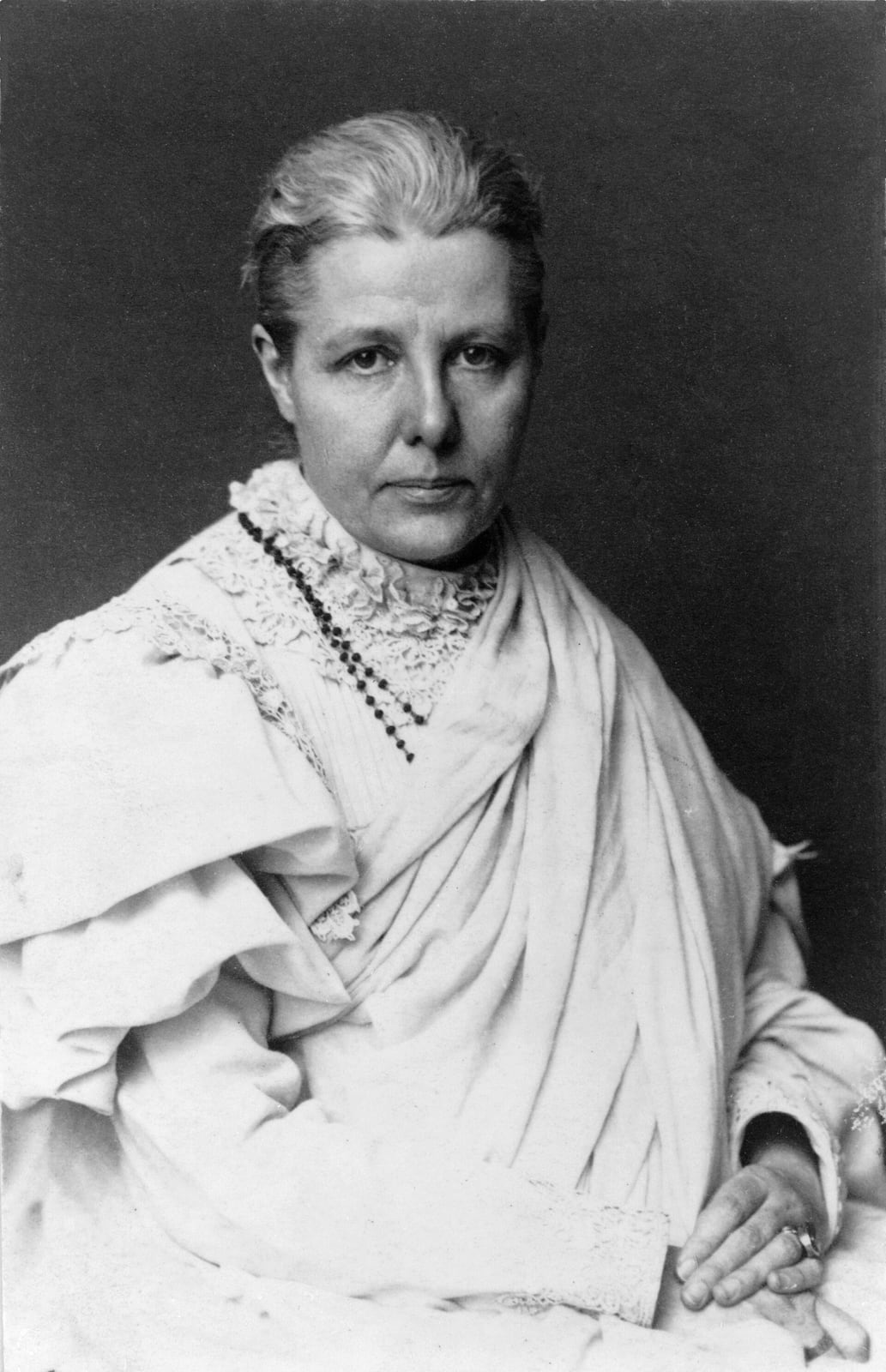
Annie Besant
Concordano su: Siamo liberi o è tutto determinato? · Che cos'è l'Assoluto? Dio esiste? · Chi sono io? Esiste un vero sé?
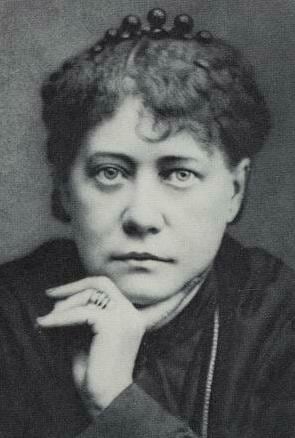
Helena Blavatsky
Concordano su: Siamo liberi o è tutto determinato? · Chi sono io? Esiste un vero sé? · Perché soffriamo?
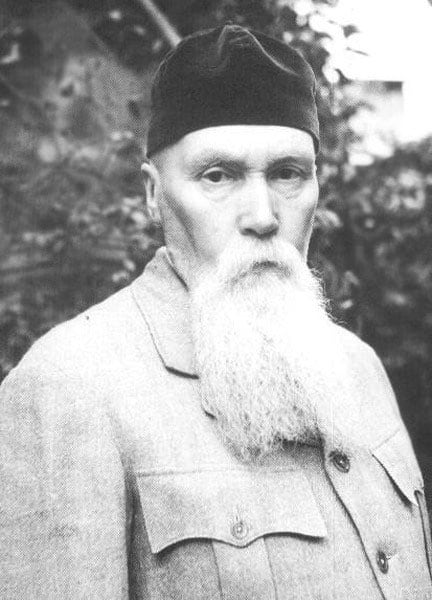
Nicholas Roerich
Concordano su: Serve un maestro? · Il mondo è reale? · Può la ragione conoscere l'ultimo?
Rudolf Steiner
Concordano su: Perché soffriamo? · Che cos'è l'Assoluto? Dio esiste? · Chi sono io? Esiste un vero sé?
La pensa diversamente da
Alan Watts
Si scontrano su: Come si raggiunge la liberazione o la salvezza? · Serve un maestro?

Jiddu Krishnamurti
Si scontrano su: Come si raggiunge la liberazione o la salvezza? · Serve un maestro?

Rabia al-Adawiyya
Si scontrano su: Che cosa accade dopo la morte?
Maimonides
Si scontrano su: Che cosa accade dopo la morte?
Concordano su
Alice A. Bailey · Helena Blavatsky
Seven planes and a nameless Principle: Theosophical cosmology and its second generation
Perché: The affinity is one of direct inheritance: Bailey was formed in the Theosophical Society, where she worked in California until her break with its leadership around 1920, and she presented her work as a continuation of the line opened by The Secret Doctrine. She attributes most of her books to a Tibetan master, Djwhal Khul, a claim of hers that cannot be verified, just as the existence of Blavatsky's Mahatmas could not be verified. The differences are of emphasis and period: Blavatsky polemicises against the dogma and materialism of the nineteenth century; Bailey writes in the interwar years, with a strong emphasis on service, goodwill and the preparation of a new age.
Aneddoti e racconti
Aneddoti e racconti
Testimonianza1895
The man in the turban at Castramont
Origine del racconto: Sole source: The Unfinished Autobiography, ch. I, written fifty years later. There are no other witnesses.
Testimonianza1918
The portrait in the Krotona shrine room
Origine del racconto: The Unfinished Autobiography, ch. IV. Bailey's own account; the person who answered her is not named.
Testimonianza1919
'I'm not a darned psychic'
Origine del racconto: The Unfinished Autobiography, ch. IV. Bailey says she did not even tell Foster Bailey about the first episode at the time.
Testimonianza1915
The engineer's granddaughter in the cannery
Origine del racconto: The Unfinished Autobiography, chs. I and III. Autobiographical account, consistent with the known chronology but without independent documentation.
Non verificabiledécada de 1930–1940
The parcels from India
Origine del racconto: The Unfinished Autobiography, ch. IV. Jung's opinion is hearsay ('I have been told'); it has not been located in his published work.
Insegnamenti
Insegnamenti
Le nozioni che articolano il suo pensiero, spiegate nel loro contesto.
The Tibetan (Djwhal Khul) and telepathic impressionel-tibetano-djwhal-khul
It extends the Theosophical figure of the Masters of Wisdom and the practice of receiving teachings from them, which with Blavatsky took the form of letters.
The seven rayssiete-rayos
It reworks Theosophical notions and the image of the 'seven spirits before the throne' found in several traditions.
Fonte: Campbell, Bruce F. Ancient Wisdom Revived: A History of the Theosophical Movement. Berkeley: University of California Press, 1980.
The Great Invocationgran-invocacion
It belongs to the public, service-oriented side of Bailey's work, alongside World Goodwill and Triangles.
Trianglestriangulos
It is one of the Lucis Trust's services alongside the Arcane School and World Goodwill.
The New Group of World Serversnuevo-grupo-de-servidores-del-mundo
It translates into social and political language the Theosophical idea of universal brotherhood.
The reappearance of the Christreaparicion-de-cristo
It inherits the Theosophical expectation of a world teacher that Besant and Leadbeater had projected onto Krishnamurti.
Ritiri
Ritiri e centri
Luoghi e incontri legati al suo insegnamento. Ti mettiamo in contatto con chi li organizza.
Por correspondencia y en línea (sede en Asheville, Carolina del Norte) · Estados Unidos
School for Esoteric Studies
School for Esoteric Studies
The School for Esoteric Studies offers what it calls training in purposeful living based on the Ageless Wisdom, a distance school of meditation and study that works with the teachings transmitted through Alice Bailey alongside other sources of the esoteric tradition. The work is done by correspondence and online, in English, Spanish and Italian, with a quarterly newsletter and video materials. Together with the Arcane School, it is one of the two best-known organised routes for studying Bailey's books under guidance, and it is particularly accessible to Spanish-speaking students.
Por correspondencia (oficinas en Nueva York, Londres y Ginebra) · Internacional
The Arcane School (Lucis Trust)
Lucis Trust – Arcane School
The Arcane School began in 1923, when Alice Bailey, helped by her husband Foster Bailey, started answering by correspondence the questions of readers of her books. It is part of the Lucis Trust, the organisation the couple created, and offers training in meditation and study based on the teachings set out in Bailey's work, with personal written work and guidance at a distance. The Lucis Trust also keeps up activities such as full-moon meditation meetings. Its official website sometimes rejects automated requests, but it is the organisation's known website.
Video
Video
Registrazioni, interviste e documentari. I video vengono riprodotti da YouTube; non sono ospitati qui.
Life of Alice Bailey Part 1 of 3
Documentario· EN· 10 min
Lucis TrustCanale ufficiale
The Life of Alice Bailey Part 2 of 3
Documentario· EN· 10 min
Lucis TrustCanale ufficiale
Life of Alice Bailey Part 3 of 3
Documentario· EN· 10 min
Lucis TrustCanale ufficiale
The Great Invocation - A World Prayer
Registrazione originale· EN· 2 min
Lucis TrustCanale ufficiale
Great Invocation Video
Registrazione originale· EN· 5 min
Lucis TrustCanale ufficiale
Triangles Meditation Group Webinar - Alice Bailey's first recitation of The Great Invocation in 1945
Conferenza· EN· 64 min
Lucis TrustCanale ufficiale
The Great Invocation in Greek
Registrazione originale· EL· 3 min
Lucis TrustCanale ufficiale
La Gran Invocación (voces)
Registrazione originale· ES· 4 min
Fundación LucisCanale ufficiale
La Gran Invocación – 01. Introducción
Conferenza· ES· 9 min
Fundación LucisCanale ufficiale
Galleria
Galleria
Immagini con licenza verificata. Ciascuna conserva la sua paternità e la sua attribuzione.
Relazioni
Relazioni
Influenze, discepolati e affinità. Si distingue la relazione documentata dalla somiglianza individuata per analisi.
Ricevette l'influenza di
Bailey discovered Theosophy through The Secret Doctrine, dedicated A Treatise on Cosmic Fire to Blavatsky and presented herself as continuing her teaching.
Relazione documentata
Dissentì da
The Baileys clashed with the leadership of Besant and the Esoteric Section in 1920; according to Hammer and Campbell, Besant distrusted the Tibetan communications.
Relazione documentata
Contemporaneo di
Bailey cites Besant's pronouncements about Krishnamurti as one of the factors dividing the Theosophical Society when she left it.
Relazione documentata
Ricevette l'influenza di
The Light of the Soul (1927) is an annotated paraphrase of the Yoga Sutras.
Relazione documentata
Ricevette l'influenza di
From Bethlehem to Calvary interprets Jesus' life as five initiations; her esoteric Christology distinguishes Jesus from the Christ.
Relazione documentata
Idee affini a
Both left the Adyar Theosophical Society and built their own systems with an esoteric Christology; no direct relationship between them is recorded.
Somiglianza individuata per analisi
Fonti
Fonti
Bibliografia e cataloghi consultati per questa scheda.
- Bailey, Alice A. The Unfinished Autobiography. Nueva York: Lucis Publishing Company, 1951 (© 1951, renovado 1979, Lucis Trust).
- Wikidata, «Alice Bailey» (Q260575): fechas y lugares de nacimiento y muerte.
- Lucis Trust. Catálogo de libros de Alice A. Bailey y biblioteca en línea.
- Open Library, autora OL2328289A (Alice A. Bailey): obras y ediciones con ISBN.
- Campbell, Bruce F. Ancient Wisdom Revived: A History of the Theosophical Movement. Berkeley: University of California Press, 1980.
- Hammer, Olav. Claiming Knowledge: Strategies of Epistemology from Theosophy to the New Age. Leiden: Brill, 2001.
- Sutcliffe, Steven J. Children of the New Age: A History of Spiritual Practices. Londres: Routledge, 2003.
- Bailey, Alice A. The Reappearance of the Christ. Nueva York: Lucis Publishing Company, 1948 (texto de la Gran Invocación en las páginas preliminares).
- Bailey, Alice A. Glamour: A World Problem. Nueva York: Lucis Publishing Company, 1950 (incluye «Extract from a Statement by the Tibetan», agosto de 1934).
- Bailey, Alice A. A Treatise on White Magic, or The Way of the Disciple. Nueva York: Lucis Publishing Company, 1934.
- Wikipedia (en), «Alice Bailey» (bibliografía, recepción y críticas, con referencias a Gershom, Newman, Shnirelman y Lubelsky).
- Blackthorn, Isobel. Alice A. Bailey: Life and Legacy. Edición independiente, 2020.
- Newman, Hannah. «Invocation, The Great», en Richard S. Levy (ed.), Antisemitism: A Historical Encyclopedia of Prejudice and Persecution. Santa Bárbara: ABC-CLIO, 2005, pp. 351–352.
- Gershom, Yonassan. «Antisemitic Stereotypes in Alice Bailey's Writings», 1997 (revisado en 2005); copia de archivo de 2007.
- Shnirelman, Victor A. Russian Neo-pagan Myths and Antisemitism. Acta, n.º 13: Analysis of Current Trends in Antisemitism. Jerusalén: Vidal Sassoon International Center for the Study of Antisemitism, Universidad Hebrea, 1998.
- Titolare dei diritti
- Lucis Trust (Nueva York, Londres, Ginebra). Bailey murió en 1949: sus obras son de dominio público en los países con plazo de 70 años post mortem, pero los libros publicados en Estados Unidos después de 1930 y las recopilaciones póstumas siguen protegidos allí.
- Sito ufficiale
- www.lucistrust.org
In attesa di conferma
Ciò che questa scheda non ha ancora potuto chiarire. Preferiamo dirlo piuttosto che riempirlo.
- Ediciones españolas con ISBN de Cartas sobre meditación ocultista, Tratado sobre fuego cósmico, La luz del alma, El alma y su mecanismo, Del intelecto a la intuición, De Belén al Calvario, Psicología esotérica II, Curación esotérica, La exteriorización de la Jerarquía, El discipulado II y la Autobiografía inconclusa (Fundación Lucis las publica, pero no se han visto en catálogo).
- Años de las ediciones españolas de Fundación Lucis, Sirio y Cárcamo (el catálogo de Open Library no los consigna).
- Folletos no registrados como obra: The Next Three Years (1934), The Present World Crisis, Today (1940), The Coming World Order, The Immediate Plans, The Interlude between War and Peace y otros mensajes de guerra, absorbidos después en La exteriorización de la Jerarquía (fuente: Open Library OL2328289A).
- Fecha original de The Labours of Hercules (1974 en libro; Wikipedia cita 1957).
- Fecha exacta y lugar del matrimonio con Walter Evans (hacia 1907) y año exacto de la muerte del padre.
- Comprobar el estatus de dominio público de la fotografía de Clara E. Sipprell (fallecida en 1975) declarada PD en Commons.
- No se ha encontrado grabación sonora ni filmada verificada de Alice Bailey; confirmar si el webinario de Lucis Trust sobre 1945 contiene audio de archivo.
- Programa de afiliación: no localizado para Lucis Trust ni Editorial Sirio.
- Sala de lectura (2026-10-25): también son de dominio público en EE. UU. y en la UE (no en España hasta 2030) A Treatise on Cosmic Fire (1925), The Light of the Soul (1927) y The Soul and Its Mechanism (1930, libre en EE. UU. desde el 1 de enero de 2026), pero no se ha localizado texto completo limpio: el ejemplar de 1925 en archive.org (treatiseoncosmic0001alic) no tiene OCR y la biblioteca en línea de Lucis Trust está tras un control de Cloudflare que impide la descarga automática. Las obras publicadas desde 1931 pueden conservar derechos en EE. UU. si se renovaron (consta la renovación de la autobiografía, 1979); comprobar renovación por título.
- Sala de lectura: los tres textos registrados llevan «caution»: entran en la sala el 1 de enero de 2030, cuando expiren los derechos en España.
- Comprobar en la Autobiografía inconclusa la participación del padre en «las obras del puente Victoria» de Montreal hacia 1880: el puente se construyó en 1854–1859 y se reconstruyó en 1897–1898 (señalado al traducir, 2026-10-25).
Ricerca effettuata il 2026-10-25