Quarta Via
G. I. Gurdjieff
Георгий Иванович Гурджиев · Գեորգի Գյուրջիև
ca. 1872 – 1949Persona storicamente documentata
Maestro spirituale, scrittore e compositore nato nell'Armenia russa tra il 1866 e il 1877 circa e morto a Parigi nel 1949. Insegnò che l'essere umano vive addormentato, come una macchina, e che il risveglio richiede un lavoro simultaneo del corpo, del sentimento e del pensiero nel mezzo della vita ordinaria. Fondò l'Istituto per lo sviluppo armonico dell'uomo, creò i Movimenti, compose con Thomas de Hartmann circa duecento brani e lasciò la trilogia Tutto e ogni cosa, aperta dai Racconti di Belzebù a suo nipote.
- opere
- 14opere
- edizioni
- 60edizioni
- citazioni
- 7citazioni
- video
- 10video
- immagini
- 8immagini
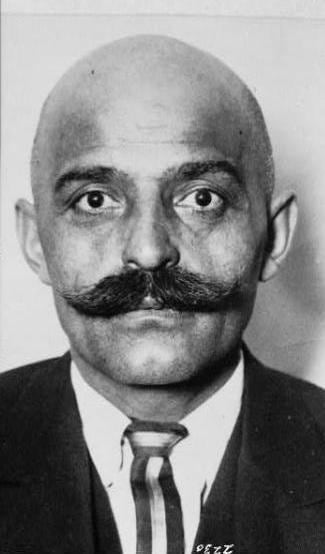
Retrato de G. I. Gurdjieff, 1925 · Public domain
Con le sue parole
«In life never do as others do.»Beelzebub's Tales to His Grandson, cap. 1, «The Arousing of Thought»: consejo de la abuela moribunda

La sua idea centrale
Ordinary man has no single, permanent I but a multitude of small I's that take turns according to circumstance; each speaks in the name of the whole, which is why no one keeps what he promises.
Vederlo nel contesto
Biografia
5 min di lettura
Traduzione assistita dall'originale spagnolo, in attesa di revisione da parte di un traduttore madrelingua.
Un bambino di frontiera
Georgij Ivanovič Gurdjieff nacque ad Aleksandropol – oggi Gyumri, in Armenia –, città di guarnigione dell'Impero russo in cui convivevano armeni, greci, russi, curdi e turchi. L'anno non si conosce con certezza, ed è bene dirlo fin dall'inizio: i passaporti e i documenti ufficiali indicano il 1877, con il giorno 28 dicembre; lo stesso Gurdjieff parlò ai suoi allievi di una data intorno al 1866 o al 1867, sostenuta dalla nipote Luba Gurdjieff Everitt e dal biografo James Moore; un ricordo familiare e la lapide della sua tomba ad Avon indicano il 1872. Egli festeggiava il compleanno il 1° gennaio del calendario giuliano, il 13 di quello gregoriano. Il padre, Ivan Ivanovič Georgiades, di famiglia greca, era un allevatore rovinato da un'epizoozia e un ashugh, bardo popolare che recitava a memoria lunghe epopee; la madre era armena, anche se alcuni studiosi recenti la ritengono anch'essa greca. La famiglia si stabilì a Kars, da poco conquistata dalla Russia, dove il ragazzo cantò nel coro della cattedrale e fu affidato alla tutela del decano Borsh, al quale avrebbe dedicato uno dei ritratti più affettuosi di Incontri con uomini straordinari.
Gli anni della ricerca
Ciò che segue, all'incirca tra il 1887 e il 1911, lo conosciamo quasi soltanto dal suo racconto, e quel racconto è deliberatamente allegorico. In Incontri con uomini straordinari Gurdjieff si presenta come membro di un gruppo di «Cercatori della verità» che avrebbe percorso l'Egitto, l'Abissinia, la Persia, il Turkestan e l'Hindu Kush alla ricerca di una conoscenza antica, fino a raggiungere il monastero di una confraternita Sarmoung in Asia centrale. Nessun documento indipendente conferma quei viaggi né l'esistenza della confraternita. Gli storici – James Webb, James Moore – ammettono che viaggiò molto e che conobbe di prima mano il sufismo, il cristianesimo orientale, le musiche e le danze del Caucaso e dell'Asia centrale, ma leggono il libro come un'autobiografia simbolica; del resto l'autore avvertiva che andava letto tra le righe. Raccontò anche di essersi guadagnato da vivere come commerciante, ipnotizzatore, riparatore di oggetti e mercante di tappeti, e di essere arrivato a tingere dei passeri per venderli come canarini americani.
Mosca, la rivoluzione e l'esodo
Intorno al 1912 compare a Mosca, sposato con Julia Ostrowska, una giovane di origine polacca, e comincia a riunire allievi. Nel 1915 lo conosce P. D. Ouspensky, giornalista e autore di scritti matematici ed esoterici appena rientrato dall'India. Il suo racconto, Frammenti di un insegnamento sconosciuto, pubblicato nel 1949, resta l'esposizione più ordinata dell'insegnamento di quegli anni: l'uomo come macchina che vive addormentata, l'assenza di un «io» permanente, i tre centri, la legge del tre e la legge del sette, l'enneagramma, la necessità del «ricordo di sé». Nel 1916 si aggiungono il compositore Thomas de Hartmann e sua moglie Olga. Con la rivoluzione Gurdjieff conduce un piccolo gruppo a Essentuki, nel Caucaso; nel 1919, a Tiflis, fonda l'Istituto per lo sviluppo armonico dell'uomo, cui aderiscono Alexandre e Jeanne de Salzmann. Dopo Costantinopoli e Berlino, giunge a Parigi nel 1922.
Il Priorato di Avon
Nell'ottobre del 1922 insedia l'Istituto nel Château du Prieuré des Basses Loges, ad Avon, presso Fontainebleau. Tra estenuanti lavori agricoli, cantieri, cucina ed esercizi di attenzione, vi si insegnavano i Movimenti, danze di enorme difficoltà che Gurdjieff diceva di aver raccolto in monasteri e confraternite d'Oriente. La scrittrice Katherine Mansfield, malata di tubercolosi, vi trascorse gli ultimi mesi e vi morì il 9 gennaio 1923, il che procurò al Priorato una fama scandalosa sulla stampa britannica. Alla fine del 1923 i Movimenti furono presentati al Théâtre des Champs-Élysées e nel 1924 approdarono a New York e in altre città statunitensi. A. R. Orage, già direttore di The New Age, divenne il suo rappresentante in America.
L'incidente e la scrittura
Nel luglio del 1924 Gurdjieff subì un grave incidente automobilistico nei pressi di Fontainebleau. Ristabilitosi, annunciò la chiusura dell'Istituto nella forma precedente e si dedicò alla scrittura. Nel dicembre di quell'anno iniziò I racconti di Belzebù a suo nipote, un'immensa allegoria cosmica in cui un essere di un altro sistema solare spiega al nipote la strana psicologia degli abitanti della Terra. Vi lavorò per un decennio, scrivendo in russo e in armeno nei caffè di Parigi, sottoponendo i capitoli a letture davanti agli allievi e riscrivendoli per renderli meno accessibili a una lettura frettolosa. Nel 1925 morì sua madre, nel 1926 sua moglie. Dalla collaborazione con de Hartmann, soprattutto tra il 1925 e il 1927, nacquero circa duecento brani per pianoforte. Il Priorato chiuse nel 1932, assediato dai debiti. Nel 1933 Gurdjieff stampò in edizione privata L'araldo del bene che verrà, l'unico libro che pubblicò in vita, e poco dopo lo ritirò.
Parigi, la Corda e l'Occupazione
Dal 1936 visse in un appartamento al numero 6 di rue des Colonels-Renard. Lì insegnò alla «Corda», un gruppo di donne – Jane Heap, Margaret Anderson, Solita Solano, Kathryn Hulme – e, dal 1940, al gruppo di Jeanne de Salzmann a Sèvres. Durante l'Occupazione mantenne i suoi pasti rituali, con i brindisi alle diverse categorie di «idioti», e incontri di cui si conservano le trascrizioni. Dopo la guerra tornarono vecchi allievi e arrivarono quelli di Ouspensky, morto nel 1947; J. G. Bennett lo rivide nel 1948, dopo venticinque anni.
Morte ed eredità
Nel 1949, già malato, preparò l'edizione del Belzebù. Morì il 29 ottobre 1949 all'Ospedale americano di Neuilly-sur-Seine e fu sepolto ad Avon, non lontano dal Priorato. Il libro uscì nel 1950; Incontri con uomini straordinari, in francese nel 1960 e in inglese nel 1963; La vita è reale solo quando «Io sono», in edizione privata a metà degli anni Settanta. Jeanne de Salzmann, alla quale aveva affidato la trasmissione, organizzò l'Institut Gurdjieff di Parigi, la Gurdjieff Foundation di New York, fondata nel 1953, la Gurdjieff Society di Londra e la fondazione di Caracas. Al di fuori di questa rete sorsero altre linee, come quelle di Bennett o di Willem Nyland. Peter Brook portò Incontri con uomini straordinari sul grande schermo nel 1979.
Gurdjieff continua a risultare scomodo. I discepoli descrivono una presenza travolgente, capace di una compassione molto concreta e di una durezza calcolata; i critici, un uomo che chiedeva denaro senza ritegno, che manipolava e che ebbe diversi figli da sue allieve. Entrambe le immagini trovano riscontro nei documenti. Ciò che non si discute è la sua influenza: l'idea che l'essere umano viva addormentato e che il risveglio richieda di lavorare insieme con il corpo, il sentimento e il pensiero, nel mezzo della vita ordinaria e non fuori di essa – ciò che Ouspensky chiamò la «quarta via» –, attraversa buona parte della spiritualità occidentale del Novecento.
Fonti: Moore, James. Gurdjieff: The Anatomy of a Myth. Shaftesbury: Element, 1991. · Ouspensky, P. D. In Search of the Miraculous: Fragments of an Unknown Teaching. Nueva York: Harcourt, Brace, 1949. · De Hartmann, Thomas y Olga de Hartmann. Our Life with Mr. Gurdjieff. Nueva York: Cooper Square, 1964 (ed. ampliada, Harper & Row, 1983). · Gurdjieff, G. I. Meetings with Remarkable Men. Londres: Routledge & Kegan Paul, 1963 (ed. francesa: Rencontres avec des hommes remarquables, París: Julliard, 1960). · Gurdjieff, G. I. All and Everything: Beelzebub's Tales to His Grandson. Nueva York: Harcourt, Brace, 1950; Londres: Routledge & Kegan Paul, 1950.
Cronologia
La vita, anno per anno
Ogni punto è un evento documentato. Fai clic per leggerlo, con la sua fonte e il suo grado di certezza.
ca. 18720 anniAlexandropol (hoy Gyumri, Armenia)
Birth (disputed date)
Born in Alexandropol. Three versions: 1877 (28 December, in passports and official papers); c. 1866–1867 (what he told pupils; supported by his niece Luba Gurdjieff Everitt and James Moore); 1872 (a family recollection and the plaque on his grave at Avon). He celebrated his birthday on 1/13 January.
DiscussoWikipedia (en), «George Gurdjieff», sección sobre la fecha de nacimiento (remite a Churton, Tobias. Deconstructing Gurdjieff, Inner Traditions, 2017, pp. 3–4 y 316–317).
Dopo la sua morte
- 1950Beelzebub published
- 1953Gurdjieff Foundation
- 1979Peter Brook's film
ca. 1872 · 0 anni
Birth (disputed date)
Born in Alexandropol. Three versions: 1877 (28 December, in passports and official papers); c. 1866–1867 (what he told pupils; supported by his niece Luba Gurdjieff Everitt and James Moore); 1872 (a family recollection and the plaque on his grave at Avon). He celebrated his birthday on 1/13 January.
Discusso
ca. 1878
The family in Kars
After his father's ruin the family moves to Kars, newly taken by Russia. He sings in the cathedral choir and is tutored by Dean Borsh (according to Meetings with Remarkable Men).
Tradizione
ca. 1887
The years of search
Period of travels (c. 1887–1911) known almost only from his allegorical account: the 'Seekers of Truth', the Sarmoung Brotherhood. No independent documentary confirmation.
Tradizione
ca. 1912
First groups in Moscow
He appears in Moscow, married to Julia Ostrowska, and begins to gather pupils in Moscow and St Petersburg.
Probabile
1915
Meeting with Ouspensky
P. D. Ouspensky meets him in a Moscow café; from that meeting comes In Search of the Miraculous.
Documentato
1916
The de Hartmanns join
The composer Thomas de Hartmann and his wife Olga become his pupils.
Documentato
1917
Essentuki
With the revolution he withdraws with a small group to Essentuki, where intensive work continues.
Documentato
1919
Institute for the Harmonious Development of Man
He founds the Institute in Tiflis; Alexandre and Jeanne de Salzmann join.
Documentato
ottobre 1922
The Prieuré
After Constantinople and Berlin, he installs the Institute at the Château du Prieuré des Basses Loges.
Documentato
9 gennaio 1923
Death of Katherine Mansfield
The writer, ill with tuberculosis, dies at the Prieuré after spending her last months there.
Documentato
gennaio 1924
The Movements in America
After the Paris demonstrations (December 1923), he presents the Movements in New York and other cities.
Documentato
luglio 1924
The accident
Serious car accident. On recovering he closes the Institute in its former shape and turns to writing.
Documentato
dicembre 1924
Beelzebub begun
He begins writing Beelzebub's Tales to His Grandson, on which he will work for a decade.
Documentato
giugno 1926
Death of his wife
Julia Ostrowska dies of cancer; his mother had died in 1925.
Documentato
1932
The Prieuré closes
The Prieuré ceases to operate, beset by debts.
Documentato
1933
The Herald of Coming Good
He prints privately the only book published in his lifetime; he soon withdraws it.
Documentato
1936
The Rope
He settles in the flat on rue des Colonels-Renard, where he teaches the women's group 'the Rope'.
Documentato
1940
The Occupation
He begins teaching Jeanne de Salzmann's group at Sèvres; during the Occupation he keeps up meetings and ritual meals.
Documentato
1948
Ouspensky's pupils arrive
After Ouspensky's death (1947), his pupils and J. G. Bennett come to Paris.
Documentato
29 ottobre 1949
Death
He dies at the American Hospital in Neuilly; funeral at the Russian Orthodox cathedral on rue Daru and burial at Avon.
Documentato
1950
Beelzebub published
All and Everything: Beelzebub's Tales to His Grandson appears.
Documentato
1953
Gurdjieff Foundation
The Gurdjieff Foundation of New York is established, within the network organised by Jeanne de Salzmann.
Documentato
1979
Peter Brook's film
Release of Meetings with Remarkable Men, directed by Peter Brook in collaboration with Jeanne de Salzmann.
Documentato
Opere
Opere essenziali
Le opere senza le quali non si comprende la sua eredità.
Opera postuma · 1950
Beelzebub's Tales to His Grandson
Рассказы Вельзевула своему внуку / Beelzebub's Tales to His Grandson
First series of All and Everything. Beelzebub, a cosmic being travelling on the ship Karnak, tells his grandson Hassein what he observed on Earth over centuries: the history of a humanity that, through a cosmic accident and the atrophy of an organ that let it see reality, lives ruled by vanity, self-love and suggestibility. Beneath outsized humour and an invented vocabulary, the book sets out a complete cosmology—the law of three, the law of seven, the reciprocal feeding of everything that exists—and a relentless critique of religion, science, art and war. Gurdjieff wanted it read three times and in different ways.
14 edizioni · amazon.com

Opera postuma · 1963
Meetings with Remarkable Men
Встречи с замечательными людьми / Meetings with Remarkable Men
A memoir of youth organised as portraits: the bard father, Dean Borsh, Prince Yuri Lubovedsky, Professor Skridlov, Ekim Bey and other companions among the 'Seekers of Truth', up to the arrival at the monastery of the Sarmoung Brotherhood. It is at once autobiography, adventure story and training manual: each meeting teaches a quality. Critics agree it should not be read as literal chronicle; none of its exotic episodes has independent documentary confirmation. Peter Brook filmed it in 1979.
9 edizioni · amazon.com

Opera postuma · ca. 1975
Life Is Real Only Then, When 'I Am'
Жизнь реальна только тогда, когда «Я есть» / Life Is Real Only Then, When 'I Am'
Gurdjieff's most personal book: the account of the crisis after the 1924 accident, the decision to 'remember himself' through constant effort, the break with the New York pupils in 1931 and a series of lectures on 'I am', the body and sensation. Fragmentary and sometimes abrupt, it shows the teacher applying his own method to himself and doubting it.
8 edizioni · amazon.com

Opera scritta · 1933
The Herald of Coming Good
A programmatic booklet subtitled 'First appeal to contemporary humanity'. It sets out the history of the Institute, the aims of the work, the plan of the All and Everything trilogy and a long declaration of intent, in a deliberately convoluted style. Its withdrawal made it a rarity; reprinted since 1969, it is a key document for dating the crisis of 1931–1933.
6 edizioni · amazon.com
Tutta la sua opera (14)

Views from the Real World
1973

The Struggle of the Magicians
1957
G. I. Gurdjieff
Gurdjieff–de Hartmann Music for the Piano
The Conscious LibraryGurdjieff–de Hartmann Music for the Piano
1996
G. I. Gurdjieff
Transcripts of Gurdjieff's Meetings 1941–1946
The Conscious LibraryTranscripts of Gurdjieff's Meetings 1941–1946
2008
G. I. Gurdjieff
Gurdjieff's Early Talks 1914–1931
The Conscious LibraryGurdjieff's Early Talks 1914–1931
2014

Paris Meetings 1943
2017

In Search of the Miraculous (P. D. Ouspensky)
1949

Our Life with Mr. Gurdjieff (Thomas and Olga de Hartmann)
1964

The Reality of Being (Jeanne de Salzmann)
2010

In Search of Being
2012
Citazioni
Citazioni localizzate in un'opera precisa. Ciascuna porta con sé la sua provenienza e il suo grado di affidabilità.
In life never do as others do.VerificataBeelzebub's Tales to His Grandson, cap. 1, «The Arousing of Thought»: consejo de la abuela moribunda
Idee essenziali (sintesi editoriale)
Per rispetto del diritto d'autore, queste idee sono riassunte con parole nostre e non sono presentate come citazioni letterali.
- Ordinary man has no single, permanent I but a multitude of small I's that take turns according to circumstance; each speaks in the name of the whole, which is why no one keeps what he promises.
- Man cannot do: in him everything happens, as it rains or clears. True doing presupposes a unified being, and that unity is not a gift but the result of long work.
- Work on oneself requires conditions of friction: difficult people, uncomfortable tasks, fatigue. Without resistance there is no effort and without effort no transformation.
- Knowledge must be accompanied by an equivalent development of being; knowledge that grows without being becomes theoretical, useless or dangerous.
Citazioni apocrife o di attribuzione discussa (1)
«'I leave you all in a fine mess' ('Je vous laisse dans de beaux draps'), as last words.»
It circulates online as Gurdjieff's final words, but it has not been found in the published testimonies of his pupils or in the biographies consulted. No primary source.
Ultime parole
Versioni contraddittorie
«Do everything, even the impossible, to develop what I have brought.»Do everything, even the impossible, to develop what I have brought.
There is no single, unambiguously attested final phrase; several versions of differing weight circulate. (1) Testimony attributed to Jeanne de Salzmann: the phrase above, which she reportedly received as his last words to her; it recurs in the literature on Gurdjieff, but its original publication has not been located (Wikipedia flags it 'citation needed'). (2) Instructions from his last weeks, passed on by de Salzmann and recorded by W. P. Patterson (Struggle of the Magicians, pp. 224–225): publish the first and second series 'as and when you are sure that the time has come', first prepare a nucleus of people, and the third need not be published. These are not last words in the strict sense. (3) J. G. Bennett, who saw him often in 1948–1949, narrated his last months (Witness, 1962; the diaries published as Idiots in Paris), but it has not been verified that he records a final phrase; pending. (4) His American physician William Welch left a testimony on the manner of his death—'he died like a king'—which are not Gurdjieff's words. (5) The phrase 'I leave you all in a fine mess' has no source and is treated as apocryphal.
Fonte: The Gurdjieff Legacy Foundation, «Jeanne de Salzmann» (archivo), que cita a William Patrick Patterson, Struggle of the Magicians, pp. 224–225.
Chiedi
Ciò a cui risponde la sua opera
Dodici grandi domande dell'umanità e ciò che i suoi testi permettono di rispondere, con riferimenti. Non gli mettiamo mai parole in bocca.
Che cos'è l'Assoluto? Dio esiste?
Our Common Father Endlessness created the universe and suffers for it
Un Dio personaleLo dice espressamente
G. I. Gurdjieff speaks of God chiefly in Beelzebub's Tales to His Grandson (1950), a cosmic allegory in deliberately strange language. There the creator bears names such as Our Common Father, His Endlessness or Our Lord Sovereign Endlessness; He dwells on the Sun Absolute and creates the universe to counter the destructive action of time, the Heropass, establishing a system of reciprocal exchange of substances. This God has purpose, sends messengers to humanity and, according to the tale, grieves over the state of beings. The aim of inner work is partly to help Him: the conscious human being can lighten the burden of his Creator. Unlike the abstract account transmitted by Ouspensky, here the Absolute is someone with will and feeling, though wrapped in a myth designed to disconcert the reader.
Confronta questa domanda con altri maestriChi sono io? Esiste un vero sé?
Man is born without a soul or an I: work must form them
Non c'è un sé permanenteLo dice espressamente
According to G. I. Gurdjieff's teachings as recorded by Ouspensky, ordinary man lacks individuality, a single I and will: he is a plurality of I's following one another mechanically. In one of the Moscow talks reproduced in chapter 2 of In Search of the Miraculous, Gurdjieff compares the human being to a carriage, a horse, a coachman and a master who is absent, and states that man is not born with an immortal soul: he may come to form higher bodies, and with them a permanent I, only through intense work. In Beelzebub's Tales to His Grandson he develops this idea in mythic language, speaking of bodies that a being may or may not crystallise. The self, then, is not a given substance but a possibility that most people do not realise.
Confronta questa domanda con altri maestriPerché soffriamo?
The legacy of the organ Kundabuffer: man lives asleep and suffers senselessly
L'ignoranza di ciò che siamoLo dice espressamente
G. I. Gurdjieff offers in Beelzebub's Tales to His Grandson a mythic explanation of human suffering. According to the tale, at the dawn of humanity higher powers implanted in human beings an organ, the Kundabuffer, which made them perceive reality upside down and prevented them from seeing their true situation; although it was later removed, its properties — vanity, self-love, suggestibility, egoism — were passed down from generation to generation. Hence war, reciprocal destruction and mechanical life, which plunge people into a sleep of which they are unaware. In the teachings transmitted by Ouspensky, this state appears as identification and sleep. Gurdjieff distinguishes mechanical suffering, which serves no purpose, from intentional suffering, consciously accepted, which together with conscious labour is the means of the being's evolution.
Confronta questa domanda con altri maestriChe cosa accade dopo la morte?
Immortality is not possessed: it is acquired by first dying to oneself
Morire ogni giorno al conosciutoLo dice espressamente
Gurdjieff denies that ordinary man possesses an immortal soul. According to the teaching recorded by Ouspensky in In Search of the Miraculous, man is a machine without a permanent I, and the only thing that could survive death are the higher bodies — the astral and those beyond it — which are formed only through conscious work and voluntary suffering; whoever has not formed them dies completely. In Beelzebub's Tales he speaks of the Kesdjan body and the higher being-body as achievements, not gifts. Hence the importance of an earlier death: Gurdjieff taught that to be born again one must die, and to die one must awaken; what must die is false personality, with its vanity and self-love. The decisive question is not what happens after death, but whether there is already someone capable of surviving it.
Confronta questa domanda con altri maestriCome si raggiunge la liberazione o la salvezza?
Awakening through conscious effort and voluntary suffering: the Fourth Way in ordinary life
Con un lavoro interiore consapevoleLo dice espressamente
George I. Gurdjieff taught that human beings are born without a finished soul and, unless they work on themselves, remain asleep and mechanical. According to Ouspensky's testimony, he distinguished four ways: the fakir's, working on the body; the monk's, on the emotions; the yogi's, on the mind; and a Fourth Way working on all three at once without leaving ordinary life. Its means are self-observation, self-remembering, the movements and dances he designed, and what Beelzebub's Tales to His Grandson calls conscious labours and intentional sufferings. The work requires a teacher who knows and a group; the result is the formation of a real and permanent «I».
Confronta questa domanda con altri maestriServe un maestro?
Only one who knows can wake the sleeper: teacher and school are necessary
IndispensabileLo dice espressamente
According to Ouspensky's testimony, George I. Gurdjieff taught that ordinary human beings cannot escape their sleep alone, because the very means they would use to wake up are asleep. They need someone who is awake, or more awake, who knows the way and enables them to work on themselves; and that knowledge is not invented but received from a source that possesses it. Gurdjieff played that role demandingly, often disconcertingly, with his pupils in Russia and later at the Prieuré in Fontainebleau. In Meetings with Remarkable Men he presents his own formation as a search for teachers and ancient knowledge through Central Asia and the Near East.
Confronta questa domanda con altri maestriIl mondo è reale?
A hierarchical cosmos of laws and matters, where everything feeds on everything
Piani di esistenzaLo dice espressamente
George I. Gurdjieff taught a cosmology in which the universe is a hierarchy of worlds governed by two fundamental laws, the law of three and the law of seven (the octave). According to Ouspensky's testimony, everything in it is material, though with different degrees of density and vibration, and everything forms part of a reciprocal exchange of substances in which each level feeds others. In Beelzebub's Tales to His Grandson he develops it in mythic form, with a Sun Absolute at the centre and the Earth as a peripheral place where mechanical humanity serves cosmic purposes it does not know. The world is fully real, but ordinary human beings do not see it as it is, because they live asleep.
Confronta questa domanda con altri maestriChe cos'è l'amore?
Mechanical man cannot love: only one who is conscious truly loves
Ciò che appare quando l'io cessaLo dice espressamente
Gurdjieff denies that ordinary man is capable of loving. According to the teaching recorded by Ouspensky, mechanical man can do nothing, and cannot love either: what he calls love is a mixture of attraction, habit, identification and self-love, which changes with circumstances and easily turns into its opposite. In a talk collected in Views from the Real World he distinguishes love of the body, which depends on type and polarity; love of feeling, which evokes its opposite; and conscious love, which evokes the same in response. In Beelzebub's Tales, vanity and self-love appear as consequences of the organ Kundabuffer and as the main obstacles to development. Real love is possible only for one who, through conscious labour and intentional suffering, has ceased to be governed by those forces.
Confronta questa domanda con altri maestriSiamo liberi o è tutto determinato?
No one does anything: only one who works on himself gains a will
Siamo macchine finché non ci risvegliamoLo dice espressamente
The thesis of human mechanicalness is the core of Gurdjieff's teaching as his pupils recorded it. Man has no self but a multitude of contradictory «I»s; he is not conscious but lives asleep, and what he calls his decisions are reactions of a machine driven by external influences. In his talks collected in *Views from the Real World* and in his major work, *Beelzebub's Tales to His Grandson*, he adds that humanity, being mechanical, serves cosmic purposes it does not understand. Only conscious labour and intentional suffering can create a permanent self and a real will. Freedom is not a birthright but something that must be manufactured.
Confronta questa domanda con altri maestriPerché meditare o pregare?
Remembering oneself amid life, through conscious effort
Essere presentiLo dice espressamente
For Gurdjieff the human being lives asleep, and all practice has a single aim: to wake up. The main instrument, according to his pupils' testimony, is self-remembering, divided attention that includes the perceiver along with the perceived, exercised amid ordinary activities and not in retreat. To this he added practices of his own: the Movements, sacred dances requiring simultaneous attention of body, emotions and mind, exercises in sensing the body, hard physical work and what he called intentional suffering. In *Life Is Real Only Then, When «I Am»*, his last book, he describes that effort of presence as the condition for a real «I» to arise in man.
Confronta questa domanda con altri maestriPuò la ragione conoscere l'ultimo?
Real knowledge is scarce, material and transmitted; knowledge without being is useless
Conoscenza esotericaLo dice espressamente
According to Ouspensky's testimony in *In Search of the Miraculous*, Gurdjieff held that there is a true knowledge, preserved by an esoteric circle of humanity and transmitted through schools, and that this knowledge is in a certain sense material and limited: it cannot be shared out to everyone. He insisted on distinguishing knowledge from being: a man may know a great deal and be unable to do anything, and knowledge that grows without the development of being produces only theories. In *Meetings with Remarkable Men* he narrates his youthful search for that knowledge across the East, with the «Seekers of Truth». Ordinary reason belongs to the man-machine; real understanding requires transformation.
Confronta questa domanda con altri maestriRitirarsi dal mondo o trasformarlo?
Wars cannot be stopped from outside: mechanical man cannot do
La rivoluzione è interioreLo dice espressamente
Gurdjieff holds that ordinary man cannot do anything: everything happens to him, as rain happens. According to the 1915 conversation recorded by Ouspensky, when asked in the midst of the world war whether war could be stopped, he answered that it could not, because it is the result of cosmic influences and of the mechanicalness of millions of people, and that only men who had ceased to be machines could change things. In Beelzebub's Tales the periodic «reciprocal destruction» of the beings of the Earth is the most terrible symptom of their lack of consciousness. That is why he proposes no social reforms but work on oneself. Nor withdrawal: his Institute for the Harmonious Development of Man, at the Prieuré in Fontainebleau-Avon, was a community of intense physical work, sacred dances and deliberate friction between people, that is, life in the world used as a school.
Confronta questa domanda con altri maestri
Affinità e tensioni
Affinità e tensioni
Calcolate domanda per domanda a partire dalle sue posizioni. Il perché di ogni accordo o contrasto, con un clic.
La pensa in modo simile a
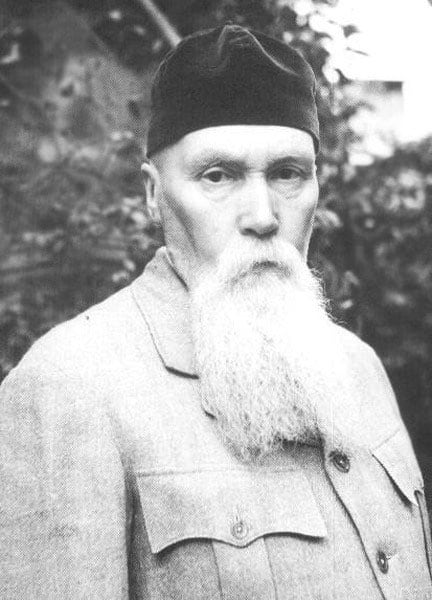
Nicholas Roerich
Concordano su: Serve un maestro? · Il mondo è reale? · Può la ragione conoscere l'ultimo?
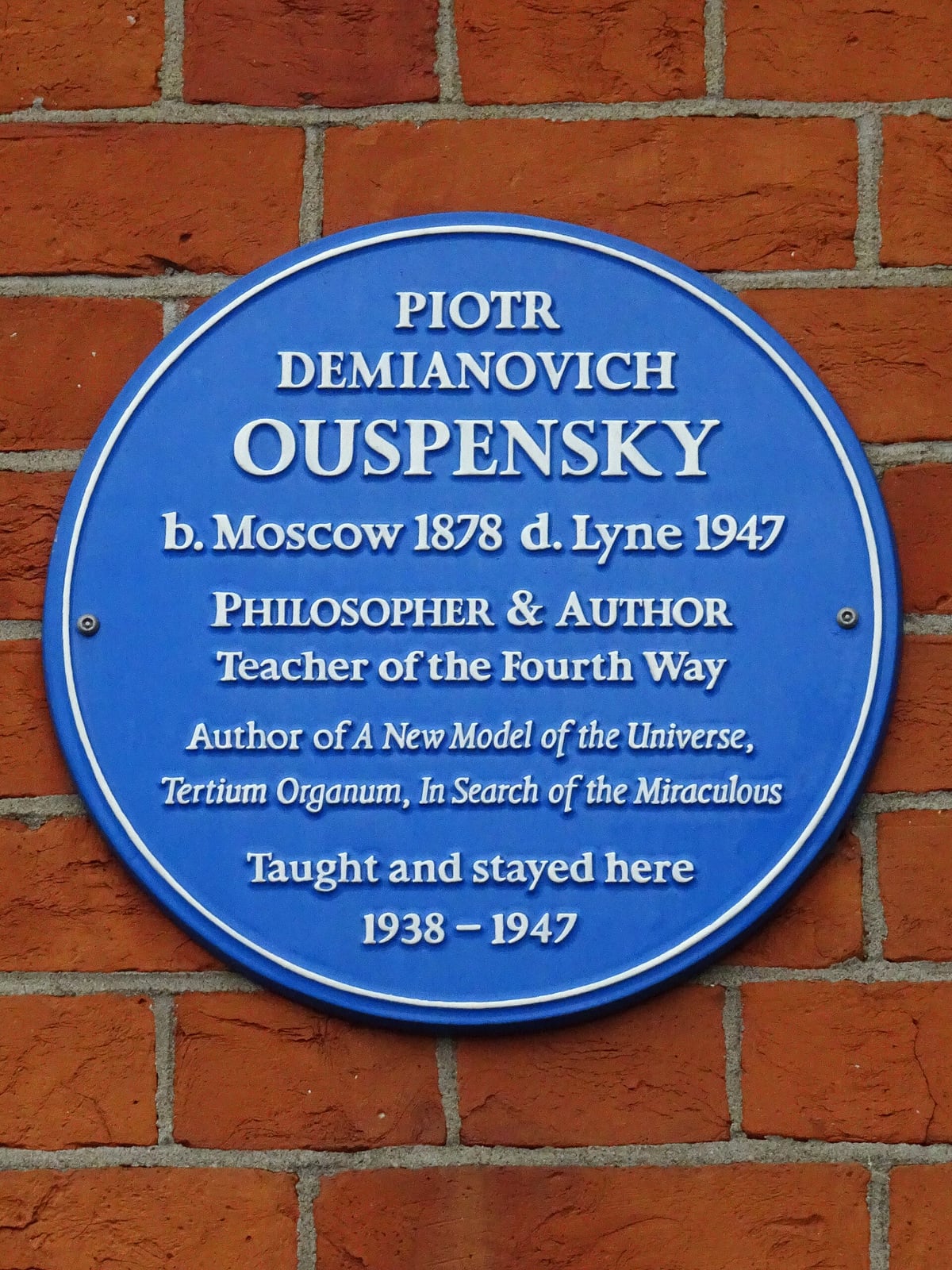
P. D. Ouspensky
Concordano su: Chi sono io? Esiste un vero sé? · Perché soffriamo? · Come si raggiunge la liberazione o la salvezza?
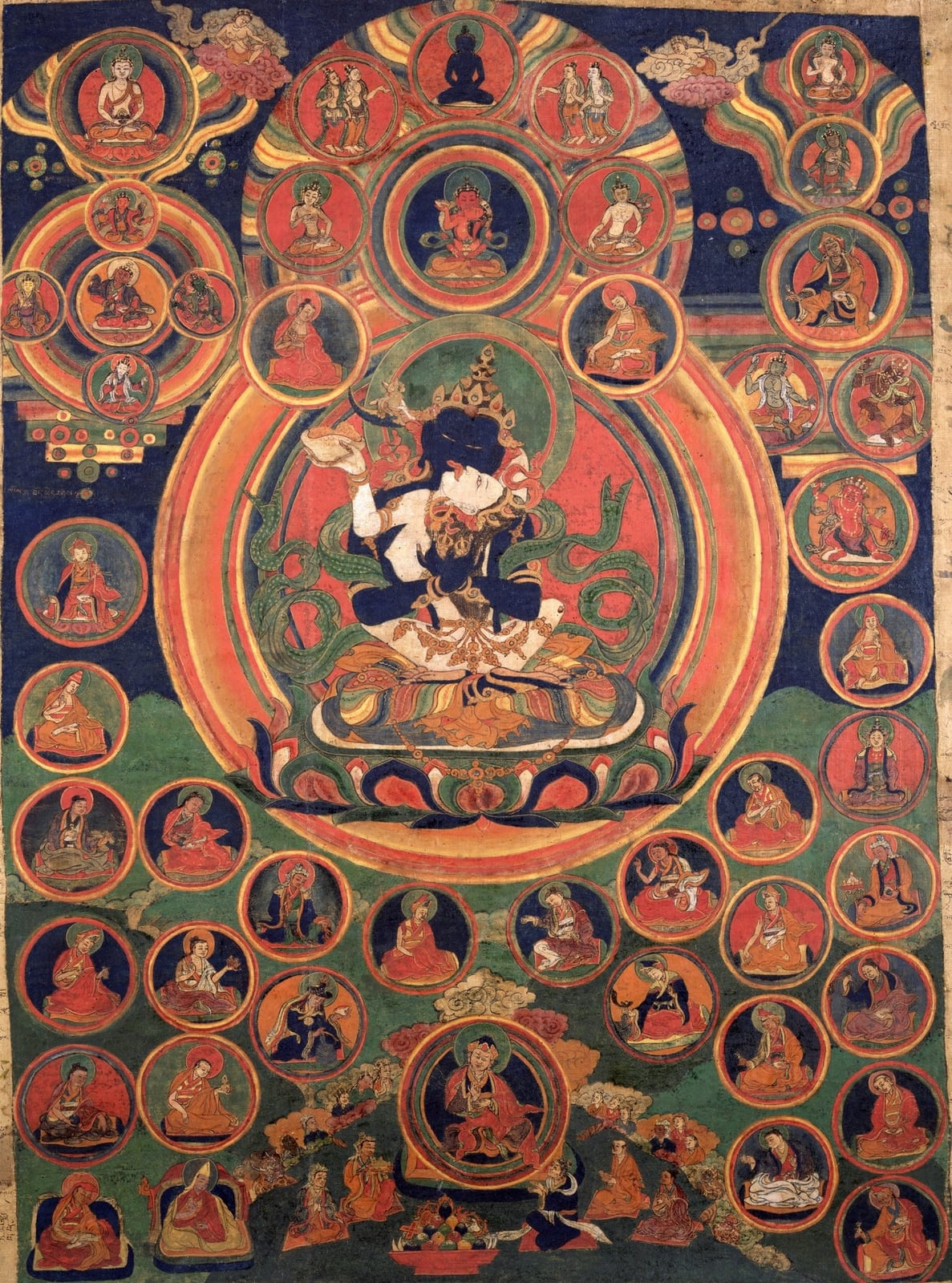
Padmasambhava
Concordano su: Chi sono io? Esiste un vero sé? · Perché soffriamo? · Serve un maestro?
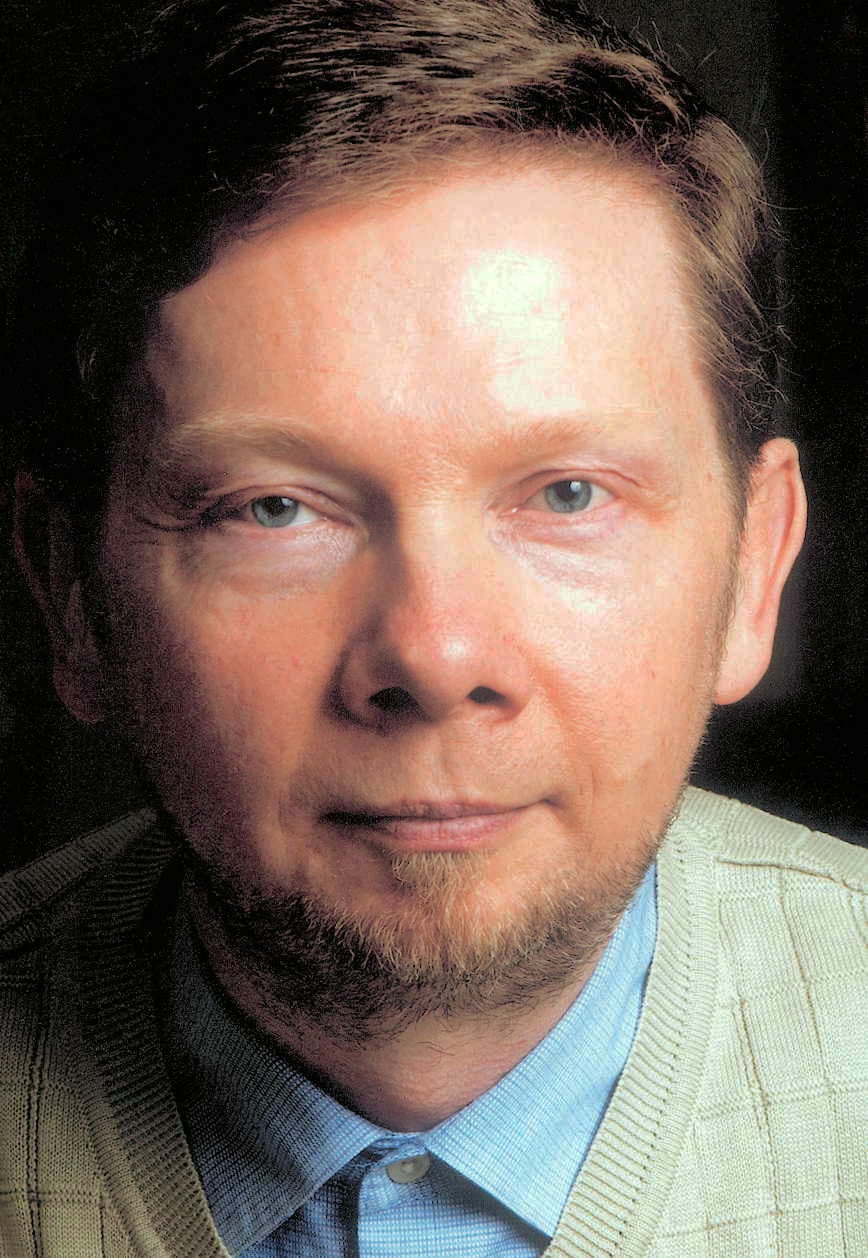
Eckhart Tolle
Concordano su: Che cos'è l'amore? · Siamo liberi o è tutto determinato? · Perché meditare o pregare?
La pensa diversamente da

Nikolai Berdyaev
Si scontrano su: Chi sono io? Esiste un vero sé? · Serve un maestro?
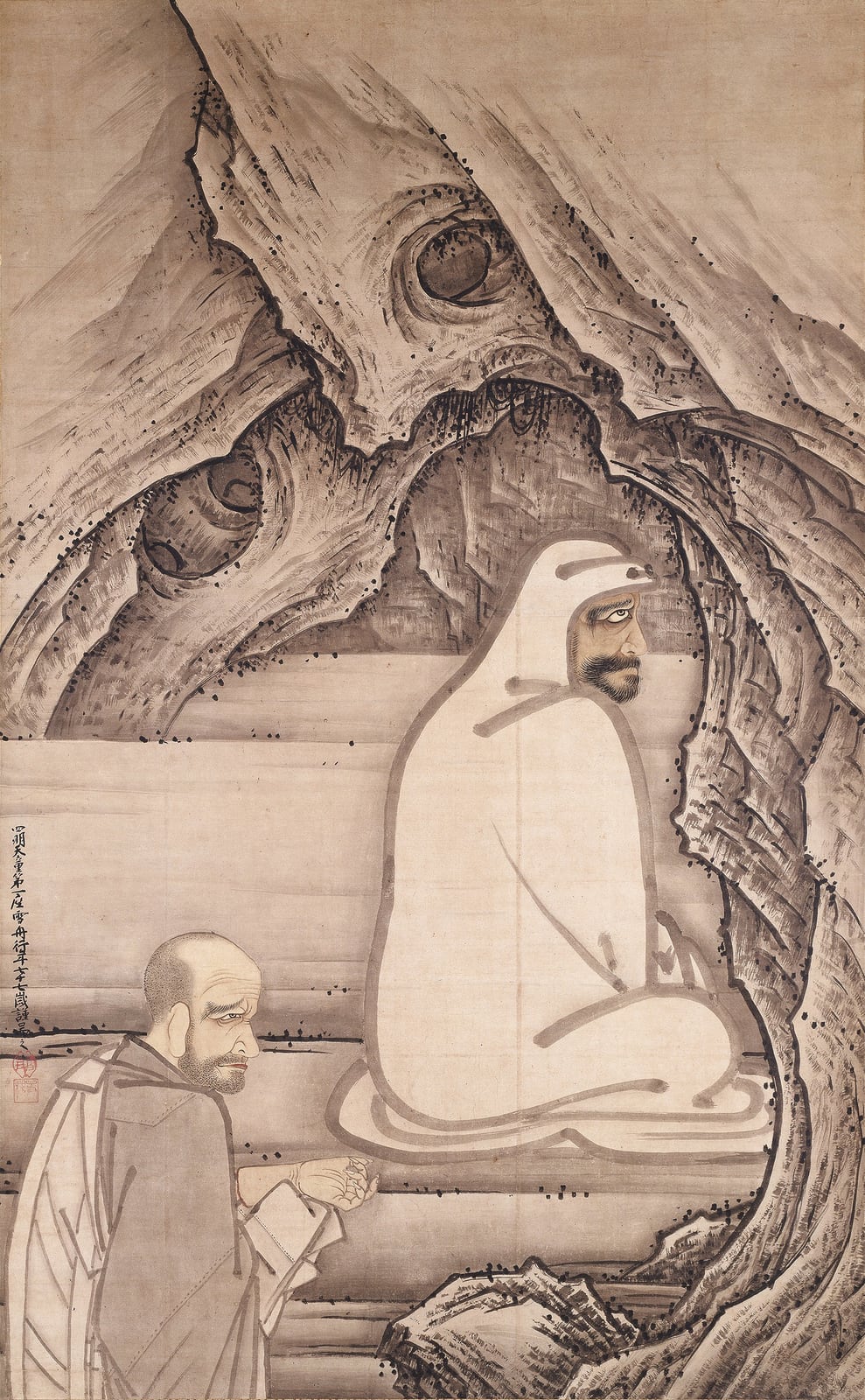
Bodhidharma
Si scontrano su: Chi sono io? Esiste un vero sé?

Patañjali
Si scontrano su: Che cos'è l'Assoluto? Dio esiste? · Chi sono io? Esiste un vero sé?
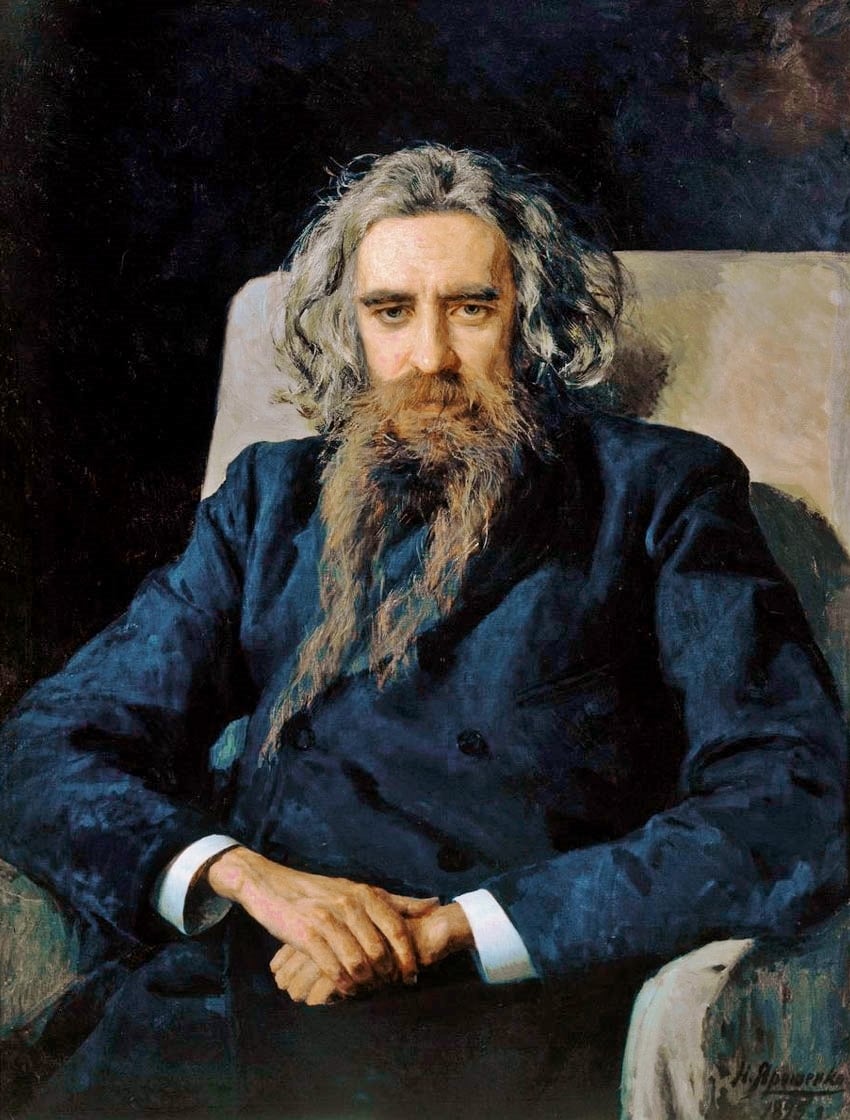
Vladimir Solovyov
Si scontrano su: Chi sono io? Esiste un vero sé?
Si scontrano suContraddizione apparente
G. I. Gurdjieff · Ramana Maharshi
Conscious effort versus being what one already is: a smaller conflict than it seems
Perché: The contradiction is largely apparent because they speak from different levels. Gurdjieff describes the human being from the side of sleep and the machine, and his effort is the condition for something to awaken; Ramana speaks from the Self, for which effort produces nothing new, and he admits it only as a means of stopping the ego from interfering. Both deny the ordinary doer. A real difference remains, however, and should not be glossed over: for Gurdjieff the permanent self does not exist and must be created; for Ramana it already exists and one need only stop veiling it. In one effort builds; in the other, it clears away.
Concordano su
G. I. Gurdjieff · P. D. Ouspensky
Man is a machine: the master and the disciple who systematised his teaching
Perché: The affinity is that of a master and his most systematic disciple: Ouspensky worked with Gurdjieff in Russia between 1915 and 1918 and transmitted that teaching in In Search of the Miraculous, published posthumously in 1949. The relationship broke down: Ouspensky withdrew in 1918 and definitively in the 1920s, and led his own groups in London, centred on the study of the system rather than on the figure of the master. They agree in doctrine, not in style: Gurdjieff taught in a demanding and disconcerting way, with dances, movements and provoked situations; Ouspensky, intellectually and in an orderly fashion. Hence they part on the question of the master: one deems him indispensable; the other stresses the school.
Si scontrano suDisaccordo di fondo
G. I. Gurdjieff · Teresa of Ávila
The soul as gift or as achievement: the diamond castle versus an immortality to be manufactured
Perché: The contradiction is real and touches the core of both anthropologies. Teresa speaks from the Christian doctrine of creation, in which God gives each soul its immortal being and grace precedes effort. Gurdjieff builds a cosmology of his own, of laws and materials, in which immortality is conditional and must be acquired. There is nonetheless a point of contact: both think that most people live outside themselves, in the outer courtyard of the castle or in sleep, and that knowing oneself demands long and painful work. But in Teresa what is unknown is already there, and in Gurdjieff what is unknown is that there is not yet anyone.
Si scontrano suDisaccordo di fondo
G. I. Gurdjieff · Jiddu Krishnamurti
Both see man as conditioned; one demands a school and effort, the other forbids them
Perché: The contradiction is real and comes from two opposite experiences of teaching. Gurdjieff presents himself as a seeker of an ancient knowledge transmitted in schools of Central Asia, and believes that this knowledge, scarce and almost material, can pass only from one who has it to one who works. Krishnamurti was raised precisely within an esoteric organisation with masters, grades and initiations, and his break in 1929 made the rejection of all authority the centre of his teaching. Both distrust comfortable spirituality and inherited beliefs; they part over whether directed effort awakens or lulls.
Aneddoti e racconti
Aneddoti e racconti
Testimonianzac. 1870s–1880s
The grandmother's advice
Origine del racconto: It comes from Gurdjieff himself, in chapter 1 of Beelzebub's Tales ('The Arousing of Thought'). There are no independent witnesses; it is an autobiographical account within an allegorical work.
Fonte: Gurdjieff, G. I. All and Everything: Beelzebub's Tales to His Grandson. Nueva York: Harcourt, Brace, 1950; Londres: Routledge & Kegan Paul, 1950.
Testimonianzac. 1890s
The sparrows of Samarkand
Origine del racconto: Gurdjieff's own account in Meetings with Remarkable Men. No independent confirmation; its parable-like character is obvious.
Fonte: Gurdjieff, G. I. Meetings with Remarkable Men. Londres: Routledge & Kegan Paul, 1963 (ed. francesa: Rencontres avec des hommes remarquables, París: Julliard, 1960).
Testimonianza1915
Ouspensky in the Moscow café
Origine del racconto: Ouspensky's testimony in chapter 1 of In Search of the Miraculous (1949), written years after the events.
Fonte: Ouspensky, P. D. In Search of the Miraculous: Fragments of an Unknown Teaching. Nueva York: Harcourt, Brace, 1949.
Documentato1922–1923
Katherine Mansfield in the cowshed
Origine del racconto: Documented by Mansfield's letters (ed. Murry, 1928) and by Moore's biographies (Gurdjieff and Mansfield, 1980; The Anatomy of a Myth, 1991).
Fonte: Mansfield, Katherine. The Letters of Katherine Mansfield. Ed. J. Middleton Murry. Londres: Constable, 1928 (cartas desde el Priorato, octubre de 1922 – enero de 1923).
Testimonianza1920s
Rachmilievitch, the necessary irritant
Origine del racconto: Fritz Peters's testimony in Boyhood with Gurdjieff (1964), written some thirty years later; Gurdjieff's words are the author's reconstruction.
Fonte: Peters, Fritz. Boyhood with Gurdjieff. Nueva York: E. P. Dutton, 1964.
Documentato1924
The 1924 accident
Origine del racconto: The accident is documented (Moore; de Hartmann; WRSP). The details of the cushion and of the recovery come from pupils' testimonies; the interpretation, from Gurdjieff himself.
Fonte: Moore, James. Gurdjieff: The Anatomy of a Myth. Shaftesbury: Element, 1991.
Non verificabilec. 1900
The Sarmoung Brotherhood
Origine del racconto: Sole source: Meetings with Remarkable Men. Webb (The Harmonious Circle) and Moore analyse the hypotheses about its location without finding confirmation.
Fonte: Gurdjieff, G. I. Meetings with Remarkable Men. Londres: Routledge & Kegan Paul, 1963 (ed. francesa: Rencontres avec des hommes remarquables, París: Julliard, 1960).
Insegnamenti
Insegnamenti
Le nozioni che articolano il suo pensiero, spiegate nel loro contesto.
Self-rememberingrecuerdo-de-si
Set out in Fragments (ch. 7) and in the Prieuré aphorisms; it runs through every phase of the teaching.
Fonte: Ouspensky, P. D. In Search of the Miraculous: Fragments of an Unknown Teaching. Nueva York: Harcourt, Brace, 1949.
Sleep and man-machinesueno-y-mecanicidad
Core of the Russian teaching (1915–1918) according to Ouspensky; it reappears satirically in Beelzebub.
Fonte: Ouspensky, P. D. In Search of the Miraculous: Fragments of an Unknown Teaching. Nueva York: Harcourt, Brace, 1949.
The three centrestres-centros
Basis of the Institute's name and of the 'fourth way' concept, which works on all three centres at once as against the ways of the fakir, the monk and the yogi.
Fonte: Ouspensky, P. D. In Search of the Miraculous: Fragments of an Unknown Teaching. Nueva York: Harcourt, Brace, 1949.
The law of three and the law of sevenley-de-tres-y-ley-de-siete
Set out by Ouspensky (chs. 4–5 and 7) and developed in mythic key in Beelzebub.
Fonte: Ouspensky, P. D. In Search of the Miraculous: Fragments of an Unknown Teaching. Nueva York: Harcourt, Brace, 1949.
The enneagrameneagrama
Ouspensky transmits it in chapter 14 of Fragments.
Fonte: Ouspensky, P. D. In Search of the Miraculous: Fragments of an Unknown Teaching. Nueva York: Harcourt, Brace, 1949.
The fourth waycuarto-camino
Origin of the tradition's name (fourth-way) in the Atlas.
Fonte: Ouspensky, P. D. In Search of the Miraculous: Fragments of an Unknown Teaching. Nueva York: Harcourt, Brace, 1949.
Conscious labour and intentional sufferingtrabajo-consciente-y-sufrimiento-intencional
Doctrine of the Prieuré period and of Beelzebub.
Fonte: Gurdjieff, G. I. All and Everything: Beelzebub's Tales to His Grandson. Nueva York: Harcourt, Brace, 1950; Londres: Routledge & Kegan Paul, 1950.
Ritiri
Ritiri e centri
Luoghi e incontri legati al suo insegnamento. Ti mettiamo in contatto con chi li organizza.
Nueva York (Upper East Side) · Estados Unidos
Gurdjieff Foundation of New York
The Gurdjieff Foundation of New York
The Gurdjieff Foundation of New York belongs to the network of foundations established after Gurdjieff's death by his pupil Jeanne de Salzmann, together with the Institut Gurdjieff in Paris and the Gurdjieff Society in London. Its first president, Lord Pentland, had been a pupil of Ouspensky before working with Gurdjieff, and many of Ouspensky's pupils joined this work. It offers weekly group meetings led by senior students, classes in the Movements, the sacred dances and exercises Gurdjieff taught, meditation and retreats. Access is gradual and begins with introductory events.
San Francisco y Guerneville (Sonoma), California · Estados Unidos
Gurdjieff Foundation of California
The Gurdjieff Foundation of California
The Gurdjieff Foundation of California was founded in 1955 under the direction of Lord John Pentland, whom Gurdjieff himself had entrusted with the early American groups, and describes itself as the oldest group in California devoted to his teaching of inner development. It is a non-profit voluntary community based in San Francisco, with a second property in Guerneville, Sonoma County, where practical work takes place. It offers group meetings, Movements, sittings, study of the ideas and music, and belongs to the International Association of the Gurdjieff Foundations alongside Paris, New York and London.
Londres · Reino Unido
Gurdjieff Studies, London
Gurdjieff Studies Ltd (organización benéfica registrada)
Gurdjieff Studies is a London charity devoted to the Fourth Way that offers group meetings, reading groups, practical activities, Movements classes and intensive residential stays. It holds that the teaching is passed on from teacher to pupil in direct lines of transmission, and maintains two reference websites: one on Gurdjieff's life and work, with his music, dances and chronology, and another devoted to P. D. Ouspensky, reconstructing his work in England, including the Lyne Place period. It is independent of the network of foundations established by Jeanne de Salzmann.
Video
Video
Registrazioni, interviste e documentari. I video vengono riprodotti da YouTube; non sono ospitati qui.
June 18, 1949 (improvisación al armonio)
Registrazione originale· ZXX· 1949· 2 min
G. I. Gurdjieff - Topic
Mme de Salzmann in New York 1988
Registrazione originale· EN· 1988· 3 min
Gurdjieff Meetings
Jacob Needleman - Gurdjieff: A Life in the Work
Conferenza· EN· 116 min
CommonwealNewSchoolCanale ufficiale
'Meetings with Remarkable Men' – An interview with Peter Brook
Intervista· EN· 10 min
Clarendon Events
The Gurdjieff Work and Gurdjieff Movements – J.G. Bennett at Sherborne, 1973
Registrazione originale· EN· 1973· 3 min
Avrom Altman
Gurdjieff: The Rascal Saint – Sadhguru Exclusive
Analisi· EN· 7 min
SadhguruCanale ufficiale
Gurdjieff : un maître spirituel unique en son genre
Analisi· FR· 7 min
Sadhguru FrançaisCanale ufficiale
L'avenir de Gurdjieff avec Pierre Schaeffer par Michel Camus
Intervista· FR· 20 min
Résonance[s]
El Cuarto Camino, Gurdjieff, 1992 (documental de TVE2, La tabla redonda)
Documentario· ES· 1992· 56 min
beapuertas
Георгий Гурджиев / George Gurdjieff. Жизнь Замечательных Людей
Documentario· RU· 62 min
ЖИЗНЬ ЗАМЕЧАТЕЛЬНЫХ ЛЮДЕЙ
Galleria
Galleria
Immagini con licenza verificata. Ciascuna conserva la sua paternità e la sua attribuzione.
Relazioni
Relazioni
Influenze, discepolati e affinità. Si distingue la relazione documentata dalla somiglianza individuata per analisi.
Maestro di
His pupil from 1915; he separated from him in the 1920s and taught independently in London. His In Search of the Miraculous is the main exposition of the Russian teaching.
Relazione documentata
Maestro di
Thomas de Hartmann
Composer, pupil from 1916 and collaborator on some two hundred piano pieces until 1929.
Relazione documentata
Maestro di
Jeanne de Salzmann
Pupil from 1919 in Tiflis; continuer of the teaching and organiser of the foundations after 1949.
Relazione documentata
Maestro di
J. G. Bennett
Met him in Constantinople in 1920 and studied with him in 1923 and 1948–1949; later founded his own line at Coombe Springs and Sherborne.
Relazione documentata
Maestro di
A. R. Orage
Editor of The New Age; pupil from 1922 and his representative in New York (1924–1931); collaborated on the translation of Beelzebub.
Relazione documentata
Incontrò
Katherine Mansfield
Spent her last months at the Prieuré (1922–1923).
Relazione documentata
Idee affini a
Both presented ancient knowledge transmitted by Eastern masters; Gurdjieff nonetheless mocked Theosophists and parlour occultism.
Somiglianza individuata per analisi
Contemporaneo di
Contemporaries in interwar Europe; both gave movement—eurythmy or dance—a central place in spiritual training. No meeting is recorded.
Somiglianza individuata per analisi
Idee affini a
Both insisted on self-observation without illusions about the 'I'; unlike Gurdjieff, Krishnamurti rejected every method and every school.
Somiglianza individuata per analisi
Fonti
Fonti
Bibliografia e cataloghi consultati per questa scheda.
- Wikidata, «George Gurdjieff» (Q217771).
- Moore, James. Gurdjieff: The Anatomy of a Myth. Shaftesbury: Element, 1991.
- Ouspensky, P. D. In Search of the Miraculous: Fragments of an Unknown Teaching. Nueva York: Harcourt, Brace, 1949.
- De Hartmann, Thomas y Olga de Hartmann. Our Life with Mr. Gurdjieff. Nueva York: Cooper Square, 1964 (ed. ampliada, Harper & Row, 1983).
- Gurdjieff, G. I. Meetings with Remarkable Men. Londres: Routledge & Kegan Paul, 1963 (ed. francesa: Rencontres avec des hommes remarquables, París: Julliard, 1960).
- Gurdjieff, G. I. All and Everything: Beelzebub's Tales to His Grandson. Nueva York: Harcourt, Brace, 1950; Londres: Routledge & Kegan Paul, 1950.
- Gurdjieff, G. I. Views from the Real World: Early Talks of Gurdjieff. Nueva York: E. P. Dutton, 1973.
- World Religions and Spirituality Project (Virginia Commonwealth University), «Gurdjieff» (perfil y cronología).
- The Gurdjieff Legacy Foundation, «Jeanne de Salzmann» (archivo), que cita a William Patrick Patterson, Struggle of the Magicians, pp. 224–225.
- The Gurdjieff Legacy Foundation, «Final Years» (últimos años, muerte y funeral).
- Wikipedia (en), «George Gurdjieff», sección sobre la fecha de nacimiento (remite a Churton, Tobias. Deconstructing Gurdjieff, Inner Traditions, 2017, pp. 3–4 y 316–317).
- Webb, James. The Harmonious Circle: The Lives and Work of G. I. Gurdjieff, P. D. Ouspensky, and Their Followers. Londres: Thames & Hudson, 1980.
- Peters, Fritz. Boyhood with Gurdjieff. Nueva York: E. P. Dutton, 1964.
- Bennett, J. G. Witness: The Story of a Search. Londres: Hodder & Stoughton, 1962.
- Open Library, registros de autor y ediciones de Georges Ivanovitch Gurdjieff (consultados para los ISBN).
- Gurdjieff Society of Austin, «Aphorisms» (aforismos inscritos en la Study House del Priorato; recogidos en Views from the Real World).
- Mansfield, Katherine. The Letters of Katherine Mansfield. Ed. J. Middleton Murry. Londres: Constable, 1928 (cartas desde el Priorato, octubre de 1922 – enero de 1923).
- Shambhala Publications, ficha de In Search of Being: The Fourth Way to Consciousness, por G. I. Gurdjieff, ed. Stephen A. Grant (2012; reed. 2021).
- Titolare dei diritti
- Derechos vigentes sobre los textos póstumos y sus traducciones. Las ediciones autorizadas en inglés salen bajo el sello Triangle Editions (vinculado a la Gurdjieff Foundation de Nueva York) y Penguin; en francés, las de la red del Institut Gurdjieff. Pendiente de confirmar el titular exacto en cada territorio.
- Sito ufficiale
- institut-gurdjieff.com/
In attesa di conferma
Ciò che questa scheda non ha ancora potuto chiarire. Preferiamo dirlo piuttosto che riempirlo.
- Fecha de nacimiento: no resoluble con las fuentes disponibles (1866/1867, 1872, 1877); el campo birth usa 1872 «approx» como valor central, con las tres versiones en la cronología.
- Localizar la publicación original de las palabras «Do everything, even the impossible, to develop what I have brought», atribuidas a Jeanne de Salzmann.
- Comprobar en Witness (Bennett, 1962/1974) y en Idiots in Paris si Bennett recoge una frase final de Gurdjieff.
- Cotejar contra un ejemplar de Views from the Real World la redacción y la página de los aforismos citados (verificados contra la lista de la Gurdjieff Society of Austin).
- ISBN de las ediciones inglesas de Book Studio (Transcripts 1941–1946; Early Talks) y de Paris Meetings 1943; editor de la edición de 2008 de Struggle of the Magicians.
- Ediciones italianas de editoriales establecidas (Incontri con uomini straordinari, Racconti di Belzebù): no localizadas con ISBN en Open Library.
- Titular exacto de los derechos por territorio (Triangle Editions / herederos / Institut Gurdjieff).
- Fechas de fundación del Institut Gurdjieff (París) y de la Gurdjieff Society (Londres): solo se ha confirmado 1953 para Nueva York.
- Obras completas (2026-10-25): cotejado el catálogo de Open Library (OL767343A y variantes). Todo lo publicado de Gurdjieff está registrado; además existen grabaciones de sus improvisaciones al armonio (1948–1949) editadas en disco, que no son libros y no se registran como obras. Las entradas atribuidas a Gurdjieff de Psychology of Man's Possible Evolution, Tertium Organum, A Further Record o The Theory of Conscious Harmony son errores de catálogo (obras de Ouspensky y de Rodney Collin).
- Sala de lectura (2026-10-25): sin textos registrables. Lo único publicado en vida, The Herald of Coming Good (París, 1933, en inglés, traductores no identificados), tiene escaneo en Internet Archive (in.ernet.dli.2015.127965), pero su OCR no es limpio y la obra no cumple los tres derechos: libre en la UE desde 2020 (autor fallecido en 1949), no en España hasta 2030 (80 años) ni en EE. UU. hasta 2029 (obra extranjera de 1933 restaurada por la URAA, 95 años). Las demás obras son póstumas (1950 en adelante) y tienen derechos vigentes de Triangle Editions y de sus traductores. Revisar en 2030.
Ricerca effettuata il 2026-10-23