Cristianesimo · Mistica cristiana · Protestantesimo · Ermetismo
Jakob Böhme
Jacob Böhme
1575 – 1624Persona storicamente documentata
Calzolaio di Görlitz (1575-1624) e uno dei grandi mistici speculativi dell'Occidente. Privo di studi e di latino, dopo un'illuminazione verso il 1600 scrisse l'Aurora nascente (1612), che gli costò il divieto di scrivere, e tra il 1618 e il 1624 un'opera immensa: I tre principi, La triplice vita, le Quaranta questioni sull'anima, il De signatura rerum, il Mysterium Magnum e La via a Cristo, l'unico libro stampato in vita. La sua teosofia dell'Ungrund, della Sofia e dell'origine del male segnò il pietismo, l'idealismo tedesco, il romanticismo e la filosofia religiosa russa.
- opere
- 32opere
- edizioni
- 63edizioni
- citazioni
- 5citazioni
- video
- 15video
- immagini
- 9immagini
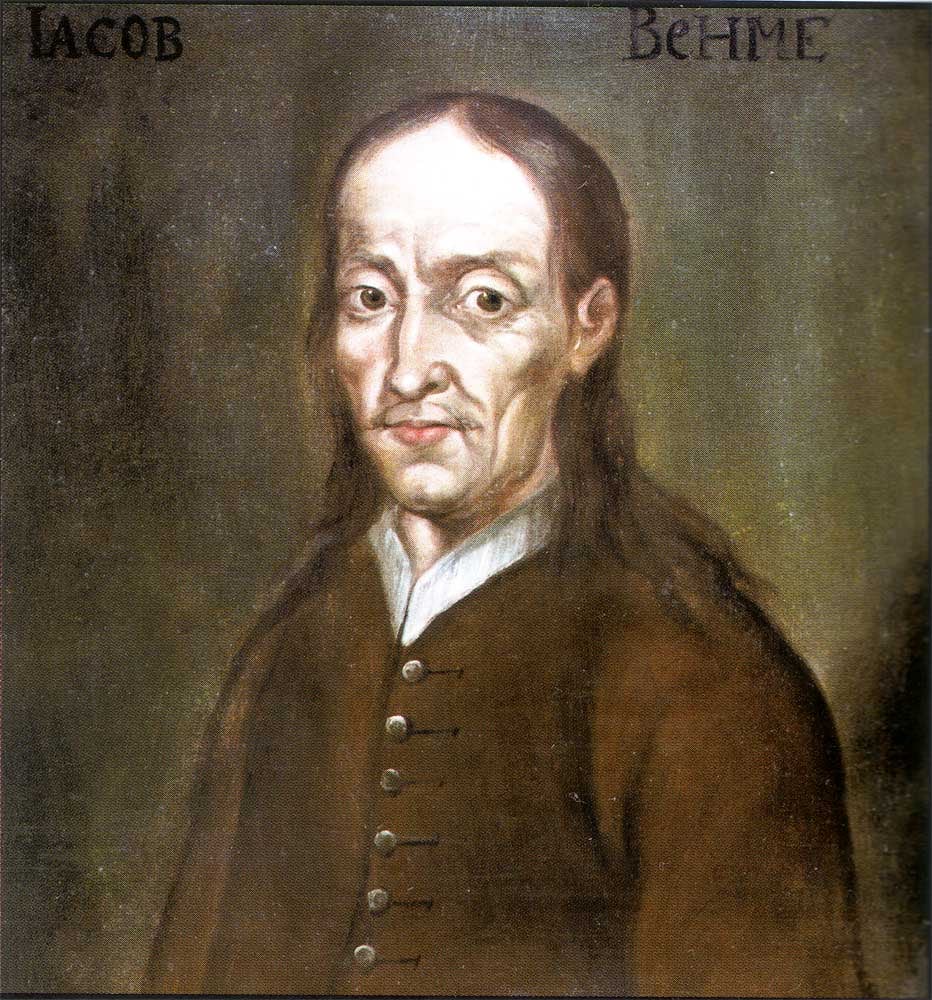
Retrato póstumo de Jakob Böhme · Public domain
Con le sue parole
«But when in my resolved zeal I stormed so hard against God and all the gates of hell, as if I had more strength still in reserve, ready to stake my life on it (which would not have been in my power without the help of God's Spirit), suddenly, after some hard storms, my spirit broke through the gates of hell into the innermost birth of the Godhead, and there was embraced with love, as a bridegroom embraces his dear bride.»Morgenröte im Aufgang (Aurora), cap. 19, § 11 (texto de la ed. de Friburgo, 1977, en Zeno.org)

La sua idea centrale
Ungrund (the groundless): Ungrund is the word with which Böhme names what lies 'before' God as revealed God: a bottomless abyss, without nature or determination, which is neither good nor evil, neither light nor darkness, but pure will that does not yet will anything.
Vederlo nel contesto
Biografia
5 min di lettura
Traduzione assistita dall'originale spagnolo, in attesa di revisione da parte di un traduttore madrelingua.
Il pastorello di Alt Seidenberg
Jakob Böhme nacque nel 1575 ad Alt Seidenberg, un villaggio dell'Alta Lusazia a pochi chilometri da Görlitz, nelle terre della Corona di Boemia; la data del 24 aprile riportata da alcuni repertori non trova un solido riscontro documentario. Era il quarto figlio di una famiglia contadina luterana di una certa agiatezza; il padre era inoltre fabbriciere della chiesa e scabino del tribunale locale. Troppo gracile per i lavori dei campi, da bambino custodì il bestiame e verso i quattordici anni andò a bottega da un calzolaio. Il poco che sappiamo di quegli anni proviene dalla biografia che il suo discepolo Abraham von Franckenberg scrisse nel 1651, più vicina al racconto edificante che alla cronaca: il tesoro intravisto in una fenditura del monte Landeskrone, lo sconosciuto che gli predisse che sarebbe diventato grande.
Dopo gli anni di garzone itinerante si stabilì a Görlitz. Il 24 aprile 1599 fu iscritto come cittadino e maestro calzolaio, acquistò uno dei banchi di calzature dell'Untermarkt e nello stesso anno sposò Katharina Kuntzschmann, figlia di un macellaio della città; dal matrimonio nacquero almeno quattro figli maschi. Böhme frequentava il circolo devoto raccolto attorno all'antico primo pastore Martin Moller, una spiritualità d'impronta mistica all'interno del luteranesimo, e leggeva la Bibbia con un'intensità che la teologia di scuola del suo tempo quasi non conosceva.
Un quarto d'ora
Verso il 1600 visse l'esperienza che diede ordine alla sua vita. Franckenberg la collega al riflesso del sole su un vaso di stagno, nel quale Böhme avrebbe scorto all'improvviso il fondo di tutte le cose. Egli stesso la raccontò vent'anni dopo, senza alcun vaso, in una lettera a Caspar Lindner, gabelliere di Beuthen: dopo una lunga malinconia e un'ostinata lotta con Dio «si aprì la porta», e in un quarto d'ora vide e seppe più che se avesse trascorso molti anni in un'università: l'essere di tutti gli esseri, il fondo e il senza-fondo, la nascita della Trinità, l'origine di questo mondo e di tutte le creature. Per dodici anni non scrisse nulla; la tradizione colloca nel 1610 un rinnovarsi di quella luce.
L'Aurora e il pastore Richter
Nel 1612 cominciò a scrivere, per sé solo, Morgenröte im Aufgang (Aurora nascente), il libro che gli amici avrebbero chiamato Aurora: un trattato incompiuto su Dio, gli angeli, la caduta di Lucifero e la natura, nel cui diciannovesimo capitolo narra come il suo spirito attraversò le porte dell'inferno fino alla nascita più intima della divinità e lì fu abbracciato «come uno sposo abbraccia la sua amata sposa». Il nobile Karl von Ender vide il manoscritto e lo fece copiare; una copia giunse al primo pastore di Görlitz, Gregor Richter, che lo denunciò dal pulpito. Nel luglio 1613 il consiglio cittadino trattenne brevemente Böhme, gli confiscò l'originale e gli proibì di scrivere. Obbedì per più di cinque anni; vendette il suo banco di calzolaio e si diede al commercio di filati e di guanti, che lo portò spesso a Praga.
Sei anni di scrittura
Nel 1618, incoraggiato da amici — medici, nobili slesiani, lettori di Paracelso —, riprese la penna e in sei anni innalzò un'opera di migliaia di pagine. Nel 1619 portò a termine I tre principi dell'essenza divina; nel 1620 La triplice vita dell'uomo, le Quaranta questioni sull'anima — risposta a quelle che gli aveva posto il medico Balthasar Walther, viaggiatore in Oriente che gli trasmise nozioni cabalistiche e alchemiche —, Dell'incarnazione di Gesù Cristo, i Sei punti teosofici e il Mysterium pansophicum. Seguirono le repliche ai suoi critici Balthasar Tilke ed Esaias Stiefel, il De signatura rerum (1622), una serie di brevi trattati devozionali sulla penitenza, sull'abbandono e sulla vita soprasensibile e, nel 1623, il suo grande commento alla Genesi, il Mysterium Magnum, insieme a Dell'elezione della grazia e Dei testamenti di Cristo. Tutto circolava in copie manoscritte; le sue lettere, di cui si conservano più di sessanta, restano la via d'accesso migliore al suo pensiero.
Böhme non conosceva il latino né aveva mai messo piede in un'università. Scriveva nel tedesco della Lusazia, mescolando il lessico della Bibbia di Lutero con quello di Paracelso e dell'alchimia, e coniava parole per ciò che non aveva nome: l'Ungrund, il «senza-fondo» anteriore a ogni determinazione; le Quellgeister, gli spiriti-sorgente che generano la natura eterna; la Sofia, vergine della sapienza che è specchio di Dio. La sua domanda costante è l'origine del male: come un Dio che è amore racchiuda nella sua natura eterna un fuoco oscuro, e come l'uomo, posto tra l'ira e l'amore, possa rinascere. Hegel, che lo lesse con ammirazione e insieme con insofferenza per il suo linguaggio, lo definì il primo filosofo tedesco.
La via a Cristo e la fine
All'inizio del 1624 alcuni amici fecero stampare a Görlitz, senza la sua autorizzazione secondo quanto egli stesso dichiarò davanti al consiglio, un piccolo volume dei suoi trattati devozionali: Der Weg zu Christo (La via a Cristo), l'unico suo libro che vide stampato. Richter rispose con un libello che lo accusava di eresia e di ubriachezza, e Böhme gli replicò con un'apologia. Il 26 marzo il consiglio lo invitò a lasciare la città. In maggio si recò a Dresda, dove fu ospite del medico di corte e conversò con teologi e consiglieri del principe elettore; tornò senza condanna e trascorse l'estate presso amici nobili in Slesia, dove iniziò le Centosettantasette questioni teosofiche. Richter morì in agosto. Malato di febbre e di un disturbo intestinale, Böhme rientrò a Görlitz ai primi di novembre; il nuovo clero lo sottopose a un interrogatorio prima di dargli la comunione. Morì il 17 novembre 1624. La sua sepoltura fu imposta dal consiglio contro la volontà del pastore, e la sua tomba fu profanata poco dopo.
L'eredità
I suoi scritti si salvarono grazie ai discepoli e, soprattutto, ai Paesi Bassi: Johann Georg Gichtel pubblicò ad Amsterdam nel 1682 la prima edizione completa, e nel 1730 uscì la Theosophia revelata. In Inghilterra lo tradussero John Sparrow, John Ellistone e Humphrey Blunden tra il 1645 e il 1662; i «behmenisti» influirono su quaccheri e filadelfiani, e nel Settecento William Law lo considerò il suo maestro, al punto che l'edizione inglese del 1764-1781 è nota con il suo nome. Attraverso Oetinger giunse al pietismo svevo e a Schelling; attraverso Saint-Martin, in Francia; attraverso Novalis, al romanticismo. Nel Novecento lo lessero Berdjaev, che vide nell'Ungrund l'intuizione di una libertà anteriore all'essere, e Jung, che riprodusse come mandala la sfera filosofica delle Quaranta questioni. Dal 2020 l'Università di Stoccarda prepara la prima edizione storico-critica delle sue opere.
Fonti: Franckenberg, Abraham von. Gründlich und wahrhafftiger Bericht von dem Leben und Abschied des in Gott selig-ruhenden Jacob Böhmens (1651). En: Des gottseeligen hocherleuchteten Jacob Böhmens Teutonici Philosophi Alle Theosophische Wercken, Ámsterdam, 1682, vol. [1]; reimpr. en Theosophia revelata, 1730. Trad. inglesa en The Works of Jacob Behmen, Londres, 1764, vol. I. · Weeks, Andrew. Boehme: An Intellectual Biography of the Seventeenth-Century Philosopher and Mystic. Albany: State University of New York Press, 1991. · Hessayon, Ariel, y Sarah Apetrei (eds.). An Introduction to Jacob Boehme: Four Centuries of Thought and Reception. Nueva York y Londres: Routledge, 2014. · Martensen, Hans Lassen. Jacob Boehme: His Life and Teaching. Trad. T. Rhys Evans. Londres: Hodder and Stoughton, 1885. · Böhme, Jacob. Concerning the Three Principles of the Divine Essence. Trad. John Sparrow (1648); reed. C. J. Barker, con introducción de Paul Deussen (incluye las actas del concejo de Görlitz de 1613 y 1624 y la cronología de los últimos meses). Londres: John M. Watkins, 1910.
Cronologia
La vita, anno per anno
Ogni punto è un evento documentato. Fai clic per leggerlo, con la sua fonte e il suo grado di certezza.
15750 anniAlt Seidenberg (Stary Zawidów)
Birth
Born at Alt Seidenberg, fourth child of a Lutheran peasant family. The year is secure; the day (24 April) given by some reference works is undocumented.
ProbabileFranckenberg, Abraham von. Gründlich und wahrhafftiger Bericht von dem Leben und Abschied des in Gott selig-ruhenden Jacob Böhmens (1651). En: Des gottseeligen hocherleuchteten Jacob Böhmens Teutonici Philosophi Alle Theosophische Wercken, Ámsterdam, 1682, vol. [1]; reimpr. en Theosophia revelata, 1730. Trad. inglesa en The Works of Jacob Behmen, Londres, 1764, vol. I.
Dopo la sua morte
- 1682First complete edition (Amsterdam)
- 1730Theosophia revelata
- 1764 – 1781The 'William Law' English edition
- 2020Historical-critical edition
1575 · 0 anni
Birth
Born at Alt Seidenberg, fourth child of a Lutheran peasant family. The year is secure; the day (24 April) given by some reference works is undocumented.
Probabile
ca. 1589 · 14 anni
Shoemaker's apprentice
After herding cattle as a boy, and owing to his frail constitution, he is apprenticed to a shoemaker at Seidenberg at about fourteen.
Probabile
24 aprile 1599 · 24 anni
Citizen and master in Görlitz; marriage
On 24 April he is enrolled as a citizen of Görlitz, buys a shoe stall on the Untermarkt and that year marries Katharina Kuntzschmann.
Documentato
ca. 1600 · 25 anni
The illumination
An experience he himself describes in his letter to Caspar Lindner: in a quarter of an hour he saw 'the Being of all beings'. Franckenberg ties it to sunlight reflected in a pewter vessel.
Documentato
1610 · 35 anni
Second illumination
The biographical tradition places a renewal of the vision and the awareness of a vocation in this year.
Tradizione
1612 · 37 anni
Aurora
He writes Morgenröte im Aufgang for himself; it remains unfinished. The nobleman Karl von Ender has it copied and it circulates.
Documentato
luglio 1613 · 38 anni
Council condemnation and ban on writing
Denounced by the chief pastor Gregor Richter, the council briefly detains him, confiscates the manuscript and forbids him to write. He sells his stall and takes up the trade in yarn and gloves.
Documentato
1618 · 43 anni
He writes again
Encouraged by friends, he breaks his silence. He begins The Three Principles of the Divine Essence, completed in 1619.
Documentato
1620 · 45 anni
The year of the great treatises
He writes The Threefold Life of Man, the Forty Questions of the Soul (for Balthasar Walther), The Incarnation of Jesus Christ, the Six Theosophic Points, the Six Mystical Points and the Mysterium pansophicum.
Documentato
1622 · 47 anni
De signatura rerum and the devotional treatises
He composes De signatura rerum and the short treatises on repentance, resignation and the supersensual life that will form Der Weg zu Christo.
Documentato
1623 · 48 anni
Mysterium Magnum
He completes his commentary on Genesis, Mysterium Magnum, and writes The Election of Grace and Of Christ's Testaments.
Documentato
gennaio 1624 · 48 anni
Der Weg zu Christo printed
At the beginning of the year his friends print Der Weg zu Christo in Görlitz, the only book of his published in his lifetime. Richter attacks it in a lampoon; Böhme answers with his Apology.
Documentato
26 marzo 1624 · 48 anni
The council invites him to leave
Summoned on 26 March, he declares that a nobleman printed the book without his involvement; the council warns him to leave the town.
Documentato
maggio 1624 · 49 anni
Stay in Dresden
From May he lives in Dresden at the house of the court physician; he converses with theologians and counsellors of the Elector of Saxony and returns uncondemned.
Documentato
17 novembre 1624 · 49 anni
Death
Ill since his stay in Silesia, he returns to Görlitz and dies on 17 November. The new clergy had examined him before giving him communion; the burial is imposed by the council.
Documentato
1682
First complete edition (Amsterdam)
Johann Georg Gichtel publishes the complete works in Amsterdam in fifteen parts, with Franckenberg's biography.
Documentato
1730
Theosophia revelata
Johann Wilhelm Ueberfeld's edition appears, the basis of most later editions and of Peuckert's facsimile.
Documentato
1764 – 1781
The 'William Law' English edition
The Works of Jacob Behmen appear in London (1764–1781) in four volumes, based on the seventeenth-century translations and associated with the name of William Law.
Documentato
2020
Historical-critical edition
The University of Stuttgart and Frommann-Holzboog begin the Historisch-kritische Gesamtausgabe, directed by Günther Bonheim.
Documentato
Opere
Opere essenziali
Le opere senza le quali non si comprende la sua eredità.
Opera scritta · 1612
Aurora, or the Day-Spring (Morning Redness in the Rising)
Morgenröte im Aufgang (Aurora)
His first book, written for himself in 1612 and never finished. Subtitled 'the root or mother of philosophy, astrology and theology', it covers the Trinity, the creation of the angels, the fall of Lucifer and the seven 'source-spirits' of divine nature, and comments on the first days of creation. In chapter nineteen Böhme narrates his own illumination. Copied without his permission, it provoked Pastor Richter's denunciation and the 1613 ban on writing; the manuscript remained in the authorities' hands. It already contains his whole thought in germ, in a language still groping and impassioned.
6 edizioni · amazon.com

Opera scritta · 1622
De Signatura Rerum (The Signature of All Things)
De signatura rerum, oder Von der Geburt und Bezeichnung aller Wesen
His treatise on the 'signature': everything visible bears inscribed in its form, colour and sound the inner quality that generated it, and whoever can read those marks reads the being of all beings. Böhme combines the Paracelsian doctrine of signatures with an alchemical-type process (the seven properties, the death and resurrection of matter) which he applies at once to metals, plants and the rebirth of the soul. It was one of his most widely read books in England and among the German Romantics.
5 edizioni · amazon.com

Raccolta posteriore · 1624
The Way to Christ
Der Weg zu Christo (Christosophia)
The only book of Böhme's printed in his lifetime (Görlitz, early 1624), at his friends' initiative. It gathers the devotional treatises on repentance, resignation and the supersensual life; later editions expanded it to nine 'little books' with the new birth, prayer, the dialogue of the two souls and divine contemplation. It is the most accessible way into his spirituality and the immediate cause of Richter's last persecution.
5 edizioni · amazon.com

Opera scritta · 1623
Mysterium Magnum, or an Exposition of the First Book of Moses called Genesis
Mysterium Magnum, oder Erklärung über das erste Buch Mosis
His longest work: a chapter-by-chapter commentary on Genesis, from creation to the death of Joseph, read as the history of God's revelation in nature and in the soul. Creation, the fall, Cain and Abel, Noah, Babel, Abraham, Isaac, Jacob and Joseph become figures of inner processes and of the struggle between wrath and love. It contains his most mature exposition of the Ungrund, Sophia and the 'language of nature'. Berdyaev considered it his chief work.
6 edizioni · amazon.com
Tutta la sua opera (32)

The Three Principles of the Divine Essence
1619

The Threefold Life of Man
1620

Forty Questions of the Soul
1620
Jakob Böhme
Of the Incarnation of Jesus Christ
The Conscious LibraryOf the Incarnation of Jesus Christ
1620

Six Theosophic Points
1620

Six Mystical Points
1620
Jakob Böhme
Mysterium Pansophicum (On the Earthly and Heavenly Mystery)
The Conscious LibraryMysterium Pansophicum (On the Earthly and Heavenly Mystery)
1620
Jakob Böhme
Of the Last Times (to Paul Kaym)
The Conscious LibraryOf the Last Times (to Paul Kaym)
1620
Jakob Böhme
The Four Complexions (A Consolatory Treatise)
The Conscious LibraryThe Four Complexions (A Consolatory Treatise)
1624
Jakob Böhme
Apologies against Balthasar Tilke
The Conscious LibraryApologies against Balthasar Tilke
1621
Jakob Böhme
Antistifelius (Considerations upon Esaias Stiefel's Book)
The Conscious LibraryAntistifelius (Considerations upon Esaias Stiefel's Book)
1621
Jakob Böhme
Of the Error of the Sects of Esaias Stiefel and Ezechiel Meth
The Conscious LibraryOf the Error of the Sects of Esaias Stiefel and Ezechiel Meth
1622

Of True Repentance
1622

Of True Resignation
1622

Of the Supersensual Life (Dialogue between a Master and a Disciple)
1622
Jakob Böhme
Of the New Birth (Regeneration)
The Conscious LibraryOf the New Birth (Regeneration)
1622
Jakob Böhme
Theoscopia, or Of Divine Contemplation
The Conscious LibraryTheoscopia, or Of Divine Contemplation
1622

Of the Election of Grace
1623
Jakob Böhme
Of Christ's Testaments (Baptism and the Supper)
The Conscious LibraryOf Christ's Testaments (Baptism and the Supper)
1623
Jakob Böhme
Of Holy Prayer
The Conscious LibraryOf Holy Prayer
1624
Jakob Böhme
Dialogue between an Enlightened and an Unenlightened Soul
The Conscious LibraryDialogue between an Enlightened and an Unenlightened Soul
1624
Jakob Böhme
Apology against Gregor Richter
The Conscious LibraryApology against Gregor Richter
1624
Jakob Böhme
Written Defence to the Council of Görlitz
The Conscious LibraryWritten Defence to the Council of Görlitz
1624
Theosophic Questions (177 Questions on Divine Revelation)
1624
Citazioni
Citazioni localizzate in un'opera precisa. Ciascuna porta con sé la sua provenienza e il suo grado di affidabilità.
But when in my resolved zeal I stormed so hard against God and all the gates of hell, as if I had more strength still in reserve, ready to stake my life on it (which would not have been in my power without the help of God's Spirit), suddenly, after some hard storms, my spirit broke through the gates of hell into the innermost birth of the Godhead, and there was embraced with love, as a bridegroom embraces his dear bride.Als ich aber in meinem angesetzten Eifer also hart wider Gott und aller Höllen Porten stürmete, als wären meiner Kräften noch mehr vorhanden, in willens, das Leben daran zu setzen – welches freilich nicht mein Vermögen wäre gewesen ohne des Geistes Gottes Beistand – alsbald nach etlichen harten Stürmen ist mein Geist durch der Höllen Porten durchgebrochen bis in die innerste Geburt der Gottheit und allda mit Liebe umfangen worden, wie ein Bräutigam seine liebe Braut umfähet.
VerificataMorgenröte im Aufgang (Aurora), cap. 19, § 11 (texto de la ed. de Friburgo, 1977, en Zeno.org)
Citazioni apocrife o di attribuzione discussa (1)
«He to whom time is as eternity and eternity as time is free from all strife.»
A verse circulating in German ('Wem Zeit wie Ewigkeit / und Ewigkeit wie Zeit, / der ist befreit / von allem Streit') as Böhme's motto. It is traditionally attributed to him as an album inscription, but has not been located in the 1682 or 1730 editions; it is recorded as a traditional attribution without a verified source.
Ultime parole
Racconto posteriore di testimoni
«Now I go hence into Paradise.»Nun fahre ich hin ins Paradeis.
Transmitted by Abraham von Franckenberg in his Bericht (1651), which relies on the account of those present, in particular the physician Tobias Kober, who attended Böhme in his last illness. According to that account, in the early hours of 17 November 1624 Böhme asked his son Tobias whether he did not hear a most sweet music and asked for the door to be opened so that it might be heard better; at about six in the morning he took leave of his wife and son, spoke these words and died. The sentence belongs to a devout narrative written by a disciple, not to an official record.
Fonte: Franckenberg, Abraham von. Gründlich und wahrhafftiger Bericht von dem Leben und Abschied des in Gott selig-ruhenden Jacob Böhmens (1651). En: Des gottseeligen hocherleuchteten Jacob Böhmens Teutonici Philosophi Alle Theosophische Wercken, Ámsterdam, 1682, vol. [1]; reimpr. en Theosophia revelata, 1730. Trad. inglesa en The Works of Jacob Behmen, Londres, 1764, vol. I.
Chiedi
Ciò a cui risponde la sua opera
Dodici grandi domande dell'umanità e ciò che i suoi testi permettono di rispondere, con riferimenti. Non gli mettiamo mai parole in bocca.
Che cos'è l'Assoluto? Dio esiste?
From the will-less Unground the self-revealing God is born
Personale e impersonale insiemeLo dice espressamente
Jakob Böhme places at the origin the Ungrund, the Unground: an eternal nothing, free of all determination, neither good nor evil as yet. In that abyss arises a will that longs to know itself and, to do so, gives itself a ground: thus the Trinity is begotten and, from it, eternal nature with its dark and luminous forces. The God who reveals himself is fully personal —Father, Son and Spirit, love and light overcoming wrath— but proceeds from a ground prior to all form. Böhme claims to have seen in his illumination of 1600 the ground and the Unground and the birth of the Trinity. Both aspects are true: the hidden deity and the manifested God.
Confronta questa domanda con altri maestriChi sono io? Esiste un vero sé?
The soul is an eternal fire that must be reborn into light
Un'anima creata e immortaleLo dice espressamente
Jakob Böhme devoted his Forty Questions on the Soul (1620) to the subject. The soul proceeds from God's eternal nature: it is a spark of fire, a centre of will with the same dark and luminous forces that exist at the origin, and is therefore an image of the whole. After the fall, the human being lives in three principles: the dark fire of wrath, the light of love and the outer world of the elements. The self-will, the will closed upon itself, is what burns in wrath; the true self is the soul that abandons its own will and is reborn in Christ, in the light. The soul does not die: it remains in the principle in which it has fixed itself.
Confronta questa domanda con altri maestriPerché soffriamo?
The will that closes on itself suffers, burning in wrath
La separazione da DioLo dice espressamente
Jakob Böhme looks for the origin of evil in eternal nature itself. In God there is a first dark principle, of fire and wrath, which in the deity is always overcome by the light of love. Lucifer, and later the human being, wanted to live in that fire by themselves, with a will of their own, and thus separated themselves from the light: hell is not an added place, but the wrath in which the will that turns from love locks itself. Suffering is the torment of that self-will. Hence the remedy is surrender (Gelassenheit): where self-love dies, God's will takes up the same space in the soul.
Confronta questa domanda con altri maestriChe cosa accade dopo la morte?
At death the soul remains in the principle it has chosen
Vita eterna e resurrezioneLo dice espressamente
Jakob Böhme treats the soul's destiny in the Forty Questions on the Soul. When the outer body, made of the elements, dissolves, the soul remains in the principle in which it has fixed its will: if it has been reborn in Christ, in the light of love; if it has shut itself up in itself, in the dark fire of wrath, which is hell. This is not a place to which one is sent, but the manifestation of what the soul already was. Böhme keeps the Christian hope of resurrection and of the heavenly body, which the reborn person already begins to bear in this life as an inner spiritual substance.
Confronta questa domanda con altri maestriCome si raggiunge la liberazione o la salvezza?
Rebirth: die to self-will so that Christ is born within
Attraverso la grazia e l'amoreLo dice espressamente
For Jakob Böhme, salvation is an inner new birth. The Way to Christ, his only book printed in his lifetime (1624), gathers treatises on true repentance, surrender and the supersensual life. The process begins with the conversion of the will: the soul recognises that it lives in the wrath of its self-will and turns toward God's mercy. Then comes Gelassenheit, self-abandonment, in which the will ceases to will on its own account. Then Christ is born in the soul as light and renews it. Böhme criticises reliance on a merely outward justification: without this rebirth, faith remains history and titles.
Confronta questa domanda con altri maestriServe un maestro?
A quarter-hour of light teaches more than years at university
Il maestro è dentroLo dice espressamente
Jakob Böhme, a shoemaker of Görlitz without university studies, recounts that after an inner struggle the gate was opened to him and in a quarter of an hour he saw and knew more than if he had spent many years at a university. His authority comes from no teacher and no school, but from the Spirit who teaches within. Hence his constant criticism of professional theologians and the «stone church», who know the history of Christ without having seen him born in themselves. Yet his Theosophical Letters show that he ended up acting as a guide for a circle of readers and friends, whom he always referred to their own experience of inner rebirth.
Confronta questa domanda con altri maestriIl mondo è reale?
Each thing bears the signature of what it is within
Manifestazione del divinoLo dice espressamente
For Jakob Böhme, the visible world is the outward manifestation of the inner, eternal world. In De signatura rerum he maintains that every thing has a signature: its form, colour, taste and sound express the inner quality that formed it, as a person's face and voice reveal their mood. The outer world proceeds from the mingling of the two eternal principles, the dark and the luminous, and therefore good and evil are intertwined in it. It is real, but not ultimate: it is God's language, which the illuminated can read. The Mysterium magnum comments on Genesis as an account of that divine self-revelation.
Confronta questa domanda con altri maestriChe cos'è l'amore?
Where self-love is banished, the love of God dwells
Ciò che appare quando l'io cessaLo dice espressamente
In the dialogue Of the Supersensual Life, the master explains to the disciple that the love of God and self-love exclude one another: where self-love is banished, there the love of God dwells, and as much of the self-will as has died, so much space does the divine will, which is love, occupy in the soul. Böhme further describes love as something that, in a sense, is nothing: it appropriates nothing, and therefore it is above all things and contains them. Whoever finds it finds it in the nothingness of their own will. Love is not a virtue the self cultivates, but what appears when the self-will surrenders.
Confronta questa domanda con altri maestriSiamo liberi o è tutto determinato?
Freedom is rooted in the eternal Unground
Un libero arbitrio realeLo dice espressamente
Jakob Böhme gives freedom a metaphysical foundation. The Ungrund, the Unground from which everything proceeds, is pure freedom, will without determination; and the human soul, born from eternal nature, retains something of that original freedom: it can turn toward the light of love or shut itself up in the fire of wrath. That is why in On the Election of Grace (1623) he combats the Calvinist doctrine of a predestination that would condemn some before they choose: God wills no one's evil, and each soul decides for the principle in which it wishes to live. Freedom is real and terrible: on it depends which fire the soul opens to.
Confronta questa domanda con altri maestriPerché meditare o pregare?
Cease for a moment from thinking and willing to hear God
Essere presentiLo dice espressamente
In the dialogue Of the Supersensual Life, the disciple asks how to come to see God and hear him speak. The master answers that if he can cease for a moment from all his thinking and willing, he will hear the unspeakable words of God. The obstacle is one's own thinking and willing, which shuts the soul up in its self-image and in the noise of outward things; when that movement stops, even for an instant, the space opens where God speaks. Böhme also composed a prayer book, On Holy Prayer, for each day of the week, in which vocal prayer is a path toward that stillness of the will.
Confronta questa domanda con altri maestriPuò la ragione conoscere l'ultimo?
The Spirit's light reveals the ground of all beings
Conoscenza esotericaLo dice espressamente
Jakob Böhme claims a knowledge that comes not from books or school reason, but from illumination. In Aurora (1612) he recounts that, after assailing God with zeal, his spirit broke through the gates of hell to the innermost generation of the deity; in a letter of 1621 he adds that he saw and knew the being of all beings, the ground and the Unground, the birth of the Trinity and the origin of the world. That knowledge, which he calls theosophy, is expressed in a language of its own made of qualities, principles and signatures. Böhme insists that it is verifiable: whoever is reborn of the Spirit can see it for himself. Outer reason, without that rebirth, knows only the husk.
Confronta questa domanda con altri maestriRitirarsi dal mondo o trasformarlo?
The outer man works; the inner man remains in God
Contemplazione nell'azioneLo dice espressamente
Jakob Böhme was neither monk nor cleric: he was a shoemaker, later a trader in gloves and wool, married and a family man in Görlitz, and wrote in the time his trade left him. His doctrine does not demand withdrawal from the world. In the dialogues of The Way to Christ, the master teaches the disciple that he may remain in his station and work with his hands and outer senses, while his will, surrendered to God, abides in the supersensual. What he rejects is outward religion of titles, disputes and the «stone church», and the confessional wars of his time. The change that matters is the inner new birth, lived in the midst of ordinary life.
Confronta questa domanda con altri maestri
Affinità e tensioni
Affinità e tensioni
Calcolate domanda per domanda a partire dalle sue posizioni. Il perché di ogni accordo o contrasto, con un clic.
La pensa in modo simile a
Augustine of Hippo
Concordano su: Chi sono io? Esiste un vero sé? · Perché soffriamo? · Che cosa accade dopo la morte?
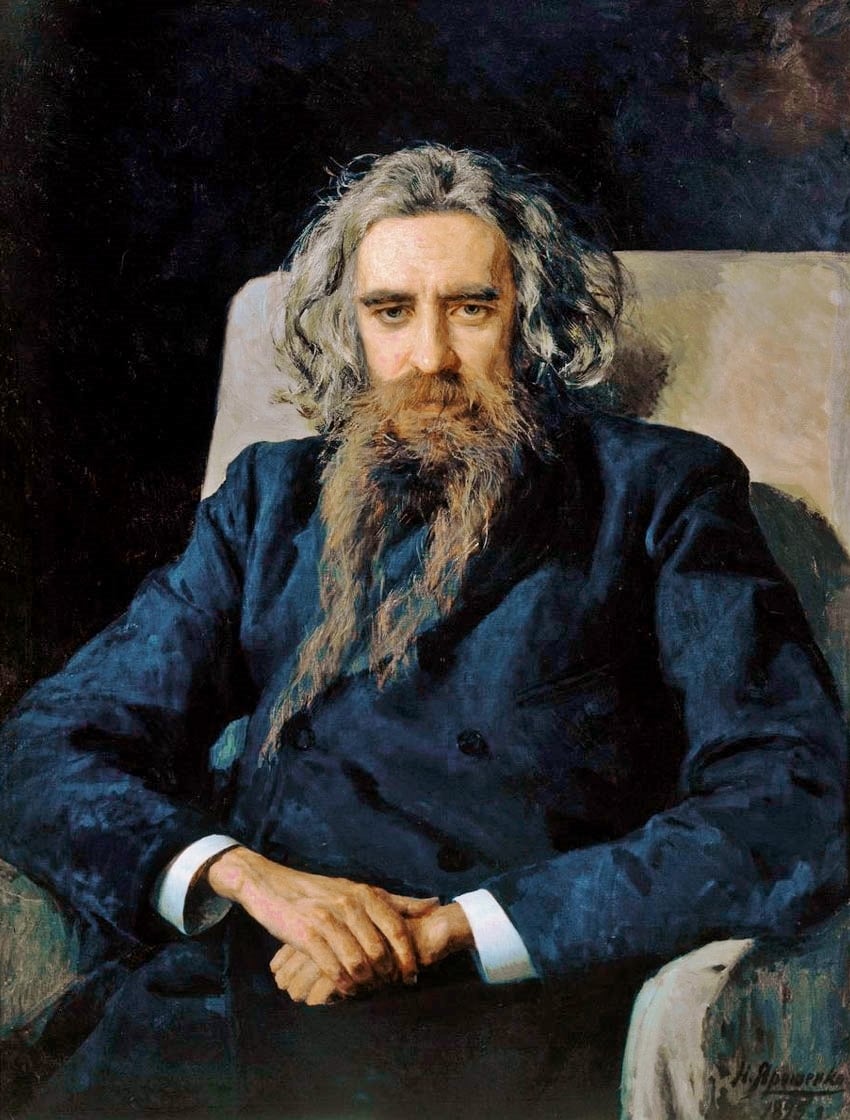
Vladimir Solovyov
Concordano su: Che cos'è l'Assoluto? Dio esiste? · Chi sono io? Esiste un vero sé? · Perché soffriamo?
Hafez
Concordano su: Chi sono io? Esiste un vero sé? · Perché soffriamo? · Che cosa accade dopo la morte?
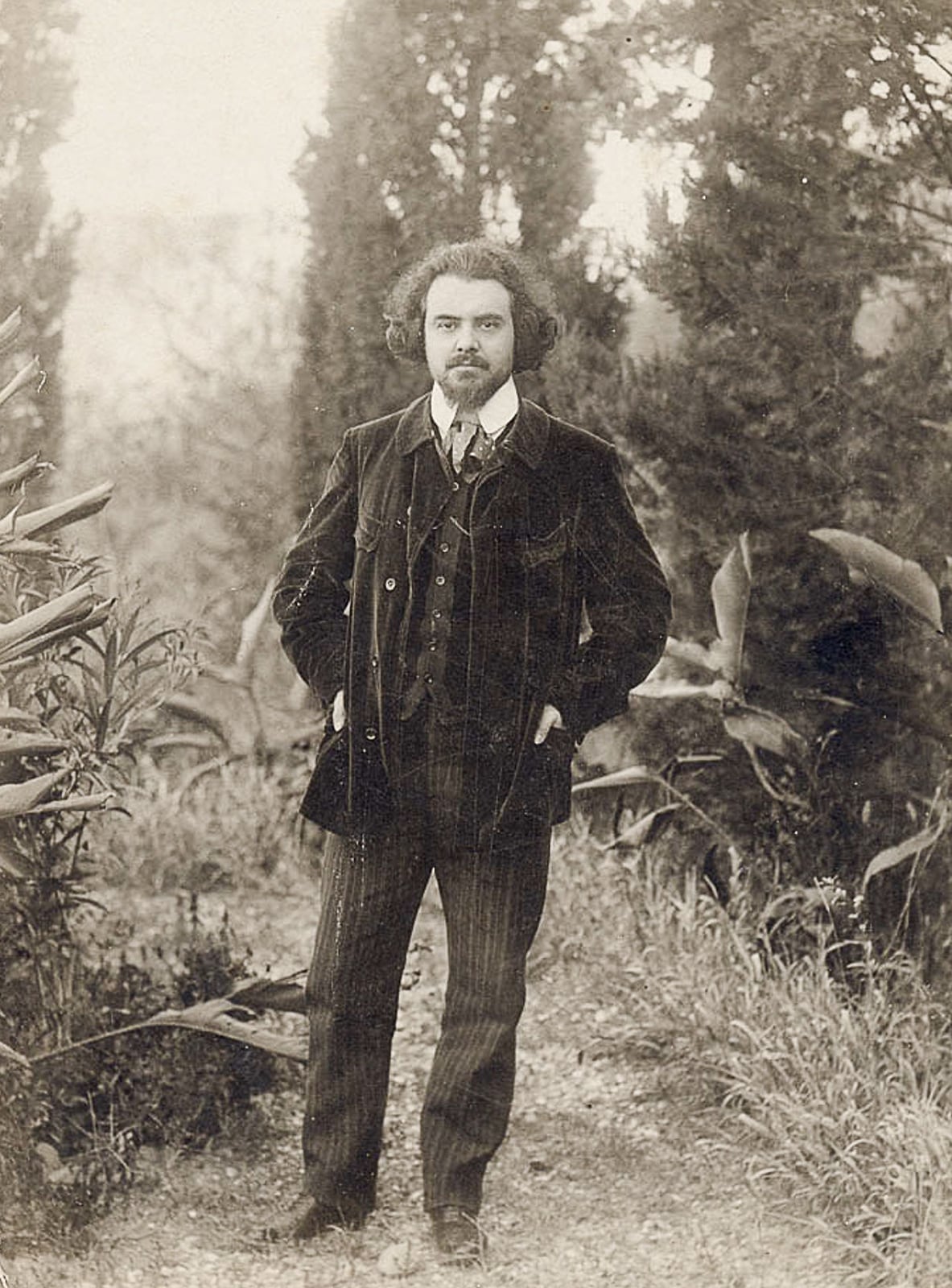
Nikolai Berdyaev
Concordano su: Che cos'è l'Assoluto? Dio esiste? · Chi sono io? Esiste un vero sé? · Perché soffriamo?
La pensa diversamente da

Patañjali
Si scontrano su: Chi sono io? Esiste un vero sé? · Che cosa accade dopo la morte?

Pema Chödrön
Si scontrano su: Chi sono io? Esiste un vero sé? · Che cosa accade dopo la morte?
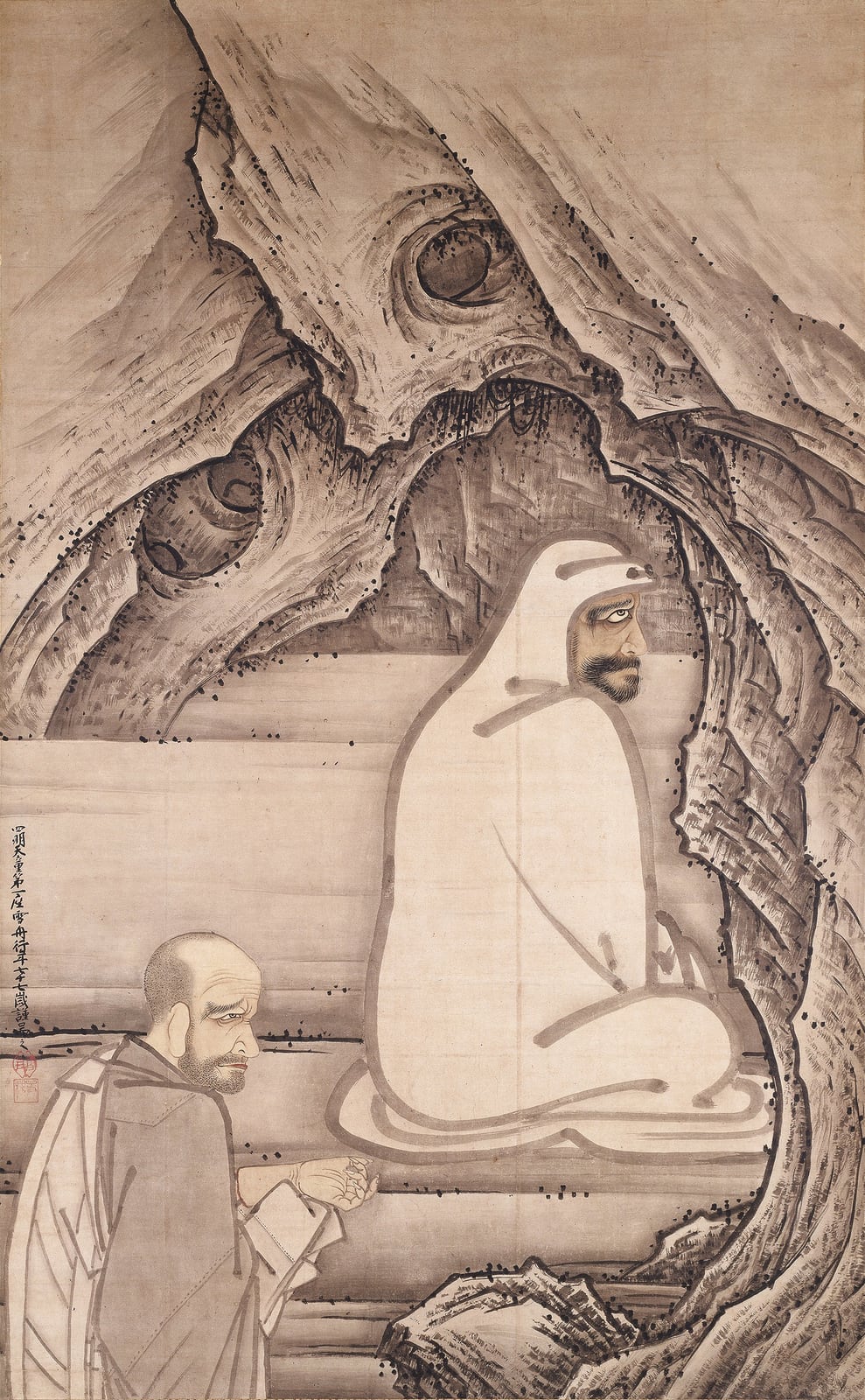
Bodhidharma
Si scontrano su: Chi sono io? Esiste un vero sé? · Che cosa accade dopo la morte?

Nāgārjuna
Si scontrano su: Chi sono io? Esiste un vero sé? · Che cosa accade dopo la morte?
Aneddoti e racconti
Aneddoti e racconti
Racconto agiograficoc. 1585
The treasure of the Landeskrone
Origine del racconto: Abraham von Franckenberg, Bericht von dem Leben und Abschied Jacob Böhmens (1651); repeated by all later biographies.
Racconto agiograficoc. 1590
The stranger at the workshop
Origine del racconto: Franckenberg, Bericht (1651). There is no independent testimony; the story belongs to the genre of the prophecy of vocation.
Contestatoc. 1600
The pewter vessel
Origine del racconto: Franckenberg, Bericht (1651); compare Böhme's letter to Caspar Lindner (1621), §§ 6–8, which describes the experience without that detail.
Tradizione orale1613–1624
Pastor Richter's slipper
Origine del racconto: Caption of the engraving in the 1686 series (Rijksmuseum RP-P-OB-2363; Van Eeghen 501-4, catalogue of the work of Jan and Casper Luyken; Wikipedia attributes it to Joseph Mulder) for the 1686 Amsterdam edition; Richter's hostility, in the 1613 and 1624 records published by Deussen (1910).
Fonte: Hessayon, Ariel, y Sarah Apetrei (eds.). An Introduction to Jacob Boehme: Four Centuries of Thought and Reception. Nueva York y Londres: Routledge, 2014.
Documentato1624
'It smells of shoemaker's pitch'
Origine del racconto: Richter's lampoon and Böhme's letter of 2 April 1624, quoted by Paul Deussen in the introduction to Concerning the Three Principles (1910), pp. xlviii–xlix, and by Martensen (1885), p. 13.
Testimonianza1624
The music of the last night
Origine del racconto: Franckenberg, Bericht (1651), based on the testimony of the physician Tobias Kober; the doctrinal examination and the resistance to the burial are also recorded in the sources gathered by Deussen (1910).
Insegnamenti
Insegnamenti
Le nozioni che articolano il suo pensiero, spiegate nel loro contesto.
Ungrund (the groundless)ungrund
Mysterium pansophicum, Six Theosophic Points, Mysterium Magnum (ch. 1–3) and Clavis; reception in German Idealism and Russian religious philosophy.
Fonte: O'Regan, Cyril. Gnostic Apocalypse: Jacob Boehme's Haunted Narrative. Albany: State University of New York Press, 2002.
The three principlesdrei-prinzipien
Systematic exposition in De tribus principiis (1619) and De triplici vita (1620); synoptic tables in the Tabulae principiorum (1624).
The seven source-spirits (Quellgeister)quellgeister
Aurora, ch. 8–11; Clavis; De signatura rerum.
Sophia, the virgin of wisdomsophia
Of the Incarnation of Jesus Christ, The Threefold Life, Mysterium Magnum; reception in English Behmenism and Russian sophiology.
Fonte: Berdyaev, Nicolas. «Unground and Freedom», ensayo introductorio a Jacob Boehme, Six Theosophic Points and Other Writings, trad. John Rolleston Earle. Ann Arbor: University of Michigan Press, 1958. Y «Из этюдов о Я. Беме. Этюд I: Учение об Ungrund и свободе; Этюд II: Учение о Софии и андрогине Я. Беме и русские софиологические течения», Путь (Put'), París, 1930, n.os 20–21.
The signature of things and the language of naturesignatura-rerum
De signatura rerum (1622), Mysterium Magnum (ch. 35–36), Aurora; Paracelsian tradition.
Fonte: Weeks, Andrew. Boehme: An Intellectual Biography of the Seventeenth-Century Philosopher and Mystic. Albany: State University of New York Press, 1991.
New birth and Gelassenheitwiedergeburt
Der Weg zu Christo and its treatises (repentance, resignation, supersensual life, new birth); continuity with Eckhart, Tauler and the Theologia Deutsch.
Video
Video
Registrazioni, interviste e documentari. I video vengono riprodotti da YouTube; non sono ospitati qui.
How is Jacob Böhme relevant today? Lecture by Scott Brown
Conferenza· EN· 39 min
Embassy of the Free MindCanale ufficiale
7 Most Important Themes in Jacob Böhme's Philosophy | Curator's Guided Tour
Documentario· EN· 20 min
Embassy of the Free MindCanale ufficiale
Infinite Fire Webinar VI - Prof. Dr. Wouter J. Hanegraaff on The Theosophical System of Jakob Böhme
Conferenza· DE· 61 min
Embassy of the Free MindCanale ufficiale
Jacob Böhme in Amsterdam | Curator's Guided Tour
Documentario· EN· 25 min
Embassy of the Free MindCanale ufficiale
Sophia and Sophiology: From Boehme to Schelling
Conferenza· EN· 90 min
Harvard Divinity SchoolCanale ufficiale
An Introduction to the Philosophical System of Jacob Boehme
Conferenza· EN· 77 min
Ephrata CloisterCanale ufficiale
ALLES IN ALLEM. Die Gedankenwelt des mystischen Philosophen Jacob Böhme
Documentario· DE· 5 min
Staatliche Kunstsammlungen DresdenCanale ufficiale
"Men Who've Walked With God #12: Jacob Boehme" a sermon by Howard Thurman (July 12, 1953)
Registrazione originale· EN· 1953· 34 min
American Museum of Paramusicology
How Theosophy Created Spiritual Alchemy - The Alchemy of Jakob Böhme
Analisi· EN· 41 min
ESOTERICA
The Mysticism of Jacob Boehme with Aaron French
Intervista· EN· 68 min
Hermitix Podcast
Trailer for "The Life and Legacy of Jacob Boehme"
Documentario· EN· 3 min
BoehmeFilm / meandriaCanale ufficiale
Jakob Böhme Tagung, Görlitz 2014: Ralf Gleide
Conferenza· DE· 77 min
Oberlausitz Leben
Jakob Böhme: El místico que atravesó el Misterio | Entrevista a Paco Martínez Albarracín (Boehme)
Intervista· ES· 78 min
Psicología y Espiritualidad
Mysterium Magnum: Jakob Böhme y la dialéctica del Abismo, con Isidoro Reguera
Intervista· ES· 46 min
La Taberna de Rudolf Steiner
Francisco Martínez Albarracín: Sophia en la visión cosmoteándrica de Jacob Boehme.
Conferenza· ES· 67 min
MIAS Latina
Galleria
Galleria
Immagini con licenza verificata. Ciascuna conserva la sua paternità e la sua attribuzione.
Relazioni
Relazioni
Influenze, discepolati e affinità. Si distingue la relazione documentata dalla somiglianza individuata per analisi.
Influenzò
Berdyaev made Böhme's Ungrund the basis of his philosophy of uncreated freedom; he devoted two studies to him in Put' (1930) and the essay 'Unground and Freedom' (1958).
Relazione documentata
Influenzò
Solovyov read Böhme in his formative years, particularly in London in 1875; Böhme's Sophia is one of the acknowledged sources of his sophiology.
Relazione documentata
Idee affini a
In 1930 Berdyaev compared Böhme's Sophia with that of Russian sophiology, from Solovyov to Florensky and Bulgakov, and noted their differences.
Relazione documentata
Idee affini a
Böhme's Ungrund and Eckhart's 'ground' (grunt), and the Gelassenheit of both, belong to the same family of German mysticism; there is no evidence that Böhme read Eckhart directly, though the tradition reached him through Tauler, the Theologia Deutsch and Weigel.
Somiglianza individuata per analisi
Idee affini a
Near contemporaries without theological schooling, both wrote down under inner command an experience that their church authorities examined with suspicion. Teresa describes the soul's itinerary; Böhme, the genesis of God and the world. There was no contact.
Somiglianza individuata per analisi
Influenzò
Blavatsky quoted him with admiration and gave him an entry in the Theosophical Glossary (1892), where she calls him 'a mystic and great philosopher', one of the most prominent theosophists; his terminology reached the Theosophical Society through Franz Hartmann.
Relazione documentata
Influenzò
Jung reproduced and discussed the philosophical sphere of the Forty Questions as a mandala in 'A Study in the Process of Individuation' and cited Böhme in his works on alchemy as a witness to the union of opposites.
Relazione documentata
Influenzò
Steiner devoted a chapter to him in Mystics of the Renaissance (1901), placing him among the forerunners of a modern consciousness of spirit.
Relazione documentata
Idee affini a
Two Protestant visionaries who described spiritual worlds and a correspondence between the visible and the invisible; Oetinger set them side by side in the eighteenth century. Swedenborg acknowledged no debt to Böhme and his method is very different.
Somiglianza individuata per analisi
Idee affini a
The devotional treatises of The Way to Christ share with The Imitation of Christ the renunciation of self-will and the distrust of knowledge that does not transform; Böhme adds a cosmology the Imitation ignores.
Somiglianza individuata per analisi
Collegato da altre schede
- Carl Gustav Jung · Ricevette l'influenza di
- Nikolai Berdyaev · Ricevette l'influenza di
- Emanuel Swedenborg · Idee affini a
- Thomas à Kempis · Idee affini a
- Rudolf Steiner · Ricevette l'influenza di
- Martin Buber · Ricevette l'influenza di
- Pavel Florensky · Idee affini a
- Vladimir Solovyov · Ricevette l'influenza di
Fonti
Fonti
Bibliografia e cataloghi consultati per questa scheda.
- Wikidata, Q77017 «Jakob Böhme» (P31=Q5; 59 enlaces entre wikis; P19 Alt Seidenberg; P20 Görlitz; P570 1624-11-17).
- Franckenberg, Abraham von. Gründlich und wahrhafftiger Bericht von dem Leben und Abschied des in Gott selig-ruhenden Jacob Böhmens (1651). En: Des gottseeligen hocherleuchteten Jacob Böhmens Teutonici Philosophi Alle Theosophische Wercken, Ámsterdam, 1682, vol. [1]; reimpr. en Theosophia revelata, 1730. Trad. inglesa en The Works of Jacob Behmen, Londres, 1764, vol. I.
- Weeks, Andrew. Boehme: An Intellectual Biography of the Seventeenth-Century Philosopher and Mystic. Albany: State University of New York Press, 1991.
- Hessayon, Ariel, y Sarah Apetrei (eds.). An Introduction to Jacob Boehme: Four Centuries of Thought and Reception. Nueva York y Londres: Routledge, 2014.
- Martensen, Hans Lassen. Jacob Boehme: His Life and Teaching. Trad. T. Rhys Evans. Londres: Hodder and Stoughton, 1885.
- Böhme, Jacob. Concerning the Three Principles of the Divine Essence. Trad. John Sparrow (1648); reed. C. J. Barker, con introducción de Paul Deussen (incluye las actas del concejo de Görlitz de 1613 y 1624 y la cronología de los últimos meses). Londres: John M. Watkins, 1910.
- Böhme, Jacob. The Epistles of Jacob Boehme. Trad. John Ellistone (1649). Reimpr. Glasgow, 1886. Carta segunda, a Caspar Lindner, aduanero de Beuthen (corresponde a la 12.ª de los Theosophische Sendbriefe, 1621).
- Böhme, Jakob. Aurora oder Morgenröte im Aufgang. Freiburg i. Br.: Aurum, 1977 (texto electrónico en Zeno.org, cap. 19, §§ 10–12).
- Böhme, Jacob. Dialogues on the Supersensual Life. Trad. William Law y otros; ed. Bernard Holland. Londres: Methuen, 1901 (Project Gutenberg n.º 33742).
- Böhme, Jacob. Sämtliche Schriften. Faksimile-Neudruck der Ausgabe von 1730. Ed. Will-Erich Peuckert. 11 vols. Stuttgart-Bad Cannstatt: Frommann-Holzboog, 1955–1989.
- Buddecke, Werner. Die Jakob Böhme-Ausgaben: Ein beschreibendes Verzeichnis. 2 vols. Gotinga, 1937–1957 (vol. 1: ediciones en alemán; vol. 2: traducciones).
- Hegel, G. W. F. Vorlesungen über die Geschichte der Philosophie, III, «Bacon und Böhme. B. Jakob Böhme». En Werke in zwanzig Bänden, vol. 20. Fráncfort: Suhrkamp, 1971.
- Berdyaev, Nicolas. «Unground and Freedom», ensayo introductorio a Jacob Boehme, Six Theosophic Points and Other Writings, trad. John Rolleston Earle. Ann Arbor: University of Michigan Press, 1958. Y «Из этюдов о Я. Беме. Этюд I: Учение об Ungrund и свободе; Этюд II: Учение о Софии и андрогине Я. Беме и русские софиологические течения», Путь (Put'), París, 1930, n.os 20–21.
- Jung, C. G. «A Study in the Process of Individuation» (1934, rev. 1950). En The Archetypes and the Collective Unconscious, Collected Works 9/I. Princeton: Princeton University Press, 1959 (reproduce y comenta la figura de las Cuarenta preguntas como mandala).
- Blavatsky, H. P. The Theosophical Glossary. Londres: Theosophical Publishing Society, 1892, s. v. «Boehme (Jacob)».
- Internationale Jacob-Böhme-Gesellschaft. «Lebens-Chronik» (cronología documentada de la vida de Böhme).
- Open Library (Internet Archive): registros consultados por autor, título e ISBN para las ediciones listadas.
- Wikimedia Commons: metadatos de licencia (extmetadata) de cada fichero, leídos por la API imageinfo el 2026-10-25.
- Marcial Pons Librero: fichas de Aurora (Siruela, 2012), Mysterium Magnum (Atalanta, 2024) y Sobre la vida espiritual (Olañeta, 2007), con ISBN, editorial y fecha.
- Steiner, Rudolf. Die Mystik im Aufgange des neuzeitlichen Geisteslebens und ihr Verhältnis zur modernen Weltanschauung. Berlín, 1901 (trad. inglesa Mystics of the Renaissance, Project Gutenberg n.º 75994).
- O'Regan, Cyril. Gnostic Apocalypse: Jacob Boehme's Haunted Narrative. Albany: State University of New York Press, 2002.
- Penman, Leigh T. I. «A Second Christian Rosencreuz? Jakob Böhme's Disciple Balthasar Walther (1558–c. 1630) and the Kabbalah». En Tore Ahlbäck (ed.), Western Esotericism (Scripta Instituti Donneriani Aboensis 20). Åbo, 2008, pp. 154–172.
- Brink, Claudia, y Lucinda Martin (eds.). Alles in Allem: Die Gedankenwelt des mystischen Philosophen Jacob Böhme. Catálogo de la exposición de las Staatliche Kunstsammlungen Dresden. Dresde: Sandstein, 2017.
- Koyré, Alexandre. La philosophie de Jacob Boehme. París: Vrin, 1929.
- Jacob-Böhme-Forschungsstelle, Stuttgart Research Center for Text Studies (Universität Stuttgart): Historisch-kritische Gesamtausgabe, ed. Günther Bonheim, Stuttgart-Bad Cannstatt: Frommann-Holzboog, 2020 ss.
- Embassy of the Free Mind (Bibliotheca Philosophica Hermetica, Ámsterdam): fondo y exposiciones sobre Böhme y su recepción neerlandesa.
- Kornblatt, Judith Deutsch (ed. y trad.). Divine Sophia: The Wisdom Writings of Vladimir Solovyov. Ithaca: Cornell University Press, 2009 (sobre las lecturas de Böhme y Swedenborg en Londres, 1875).
- Rijksmuseum, Ámsterdam: fichas de los grabados RP-P-OB-2353, RP-P-OB-2361, RP-P-OB-2362 y RP-P-OB-2363 (retrato y escenas de la vida de Böhme, 1686), dominio público (CC0).
- Titolare dei diritti
- Dominio público (Böhme murió en 1624). Las traducciones del siglo XVII (Sparrow, Ellistone, Blunden) y la edición inglesa de 1764–1781 son de dominio público; las ediciones modernas (Frommann-Holzboog, Deutscher Klassiker Verlag, Siruela, Atalanta, Olañeta, Paulist Press, James Clarke/Lutterworth) están sujetas a los derechos de sus editores y traductores.
- Sito ufficiale
- www.jacob-boehme.org/
In attesa di conferma
Ciò che questa scheda non ha ancora potuto chiarire. Preferiamo dirlo piuttosto che riempirlo.
- Localizar el texto alemán de la carta a Caspar Lindner (Theosophische Sendbriefe, 12) para dar las dos citas en su lengua original; hoy se citan en la traducción inglesa de Ellistone.
- Verificar la fecha de muerte de C. J. Barker, editor de las reediciones inglesas de 1909–1924 (Watkins), para confirmar el dominio público en la UE y España de esos volúmenes.
- Separar el texto de 1656/1654 de la introducción moderna en las ediciones electrónicas de D. S. Hehner (Aurora, Mysterium Magnum) o localizar escaneos limpios de las ediciones de Watkins de 1914 y 1924; hasta entonces van con caution.
- Sala de lectura: no se ha localizado texto limpio (OCR de calidad) de De signatura rerum (Ellistone, 1651), De la encarnación, Seis puntos teosóficos (trad. Earle, fecha de muerte del traductor no verificada) ni del alemán de 1730 (Fraktur con OCR deficiente). La transcripción EEBO-TCP de Signatura rerum (Oxford Text Archive, A28534) no respondió.
- Confirmar el traductor de la Aurora de Siruela (2012) y el contenido exacto de Sobre la vida espiritual (Olañeta, 2007), que se asigna por su título a Vom übersinnlichen Leben.
- Confirmar la autoría de la serie de grabados de la edición neerlandesa de 1686 (catálogo Van Eeghen de Jan y Casper Luyken frente a la atribución a Joseph Mulder).
- Fijar el lugar de custodia actual de los autógrafos (Die Urschriften, ed. Buddecke) para registrar manuscritos.
- Ediciones en español de De signatura rerum, El camino a Cristo, Los tres principios y De la triple vida: no localizadas en catálogo.
- Programas de afiliación: ninguno verificado; lista vacía.
Ricerca effettuata il 2026-10-25