Induismo · Yoga · Tantra · Advaita Vedanta
Sri Aurobindo
শ্রীঅরবিন্দ · অরবিন্দ ঘোষ · श्री अरविन्द
1872 – 1950Persona storicamente documentata
Filosofo, poeta e yogi bengalese, educato in Inghilterra, che passò dalla guida del nazionalismo indiano radicale a una vita ritirata a Pondicherry. Nella rivista Arya (1914-1921) e in un'immensa corrispondenza formulò lo yoga integrale: l'evoluzione della coscienza dalla materia alla mente e dalla mente al sopramentale, e la trasformazione della vita anziché la fuga dal mondo. Le sue opere maggiori sono La Vita Divina, La Sintesi dello Yoga, Saggi sulla Gita e l'epopea Savitri.
- opere
- 65opere
- edizioni
- 126edizioni
- citazioni
- 8citazioni
- video
- 15video
- immagini
- 7immagini
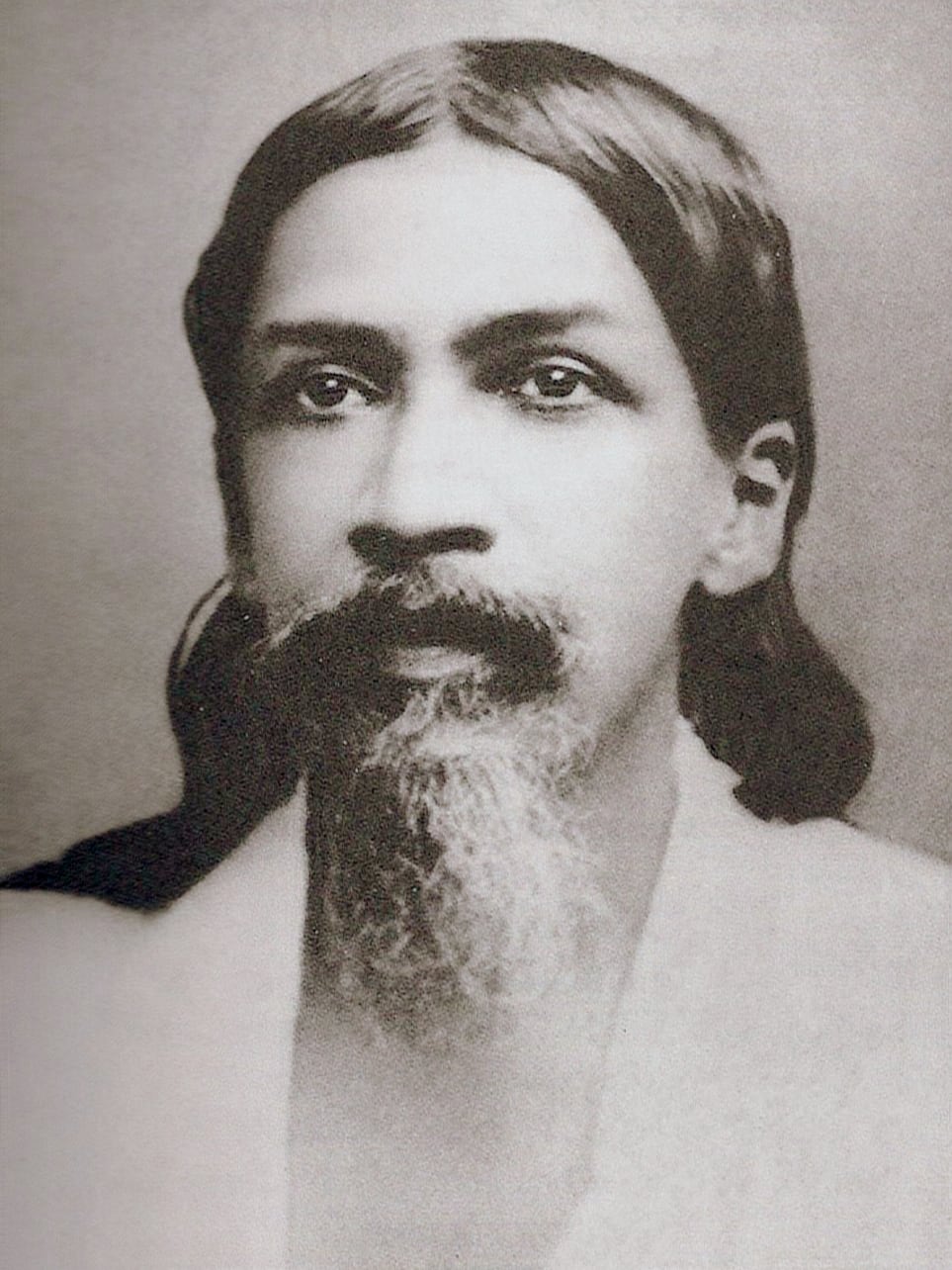
Sri Aurobindo hacia 1900 · Public domain
Con le sue parole
«The earliest preoccupation of man in his awakened thoughts and, as it seems, his inevitable and ultimate preoccupation,—for it survives the longest periods of scepticism and returns after every banishment,—is also the highest which his thought can envisage.»The Life Divine, libro I, cap. I («The Human Aspiration»); primera frase del libro (texto revisado de 1939, ed. de Nueva York 1951)

Per cominciare, un'opera
The Life DivineLa sua idea centrale
The Supermind (supramental): The Supermind is the central notion of his thought: a truth-consciousness (rita-chit) intermediate between the absolute Sachchidananda and mind, in which knowledge does not split into subject and object nor proceed by reasoning, but sees unity in diversity directly.
Vederlo nel contesto
Biografia
4 min di lettura
Traduzione assistita dall'originale spagnolo, in attesa di revisione da parte di un traduttore madrelingua.
Un bambino educato per essere inglese
Aurobindo Ghose nacque a Calcutta il 15 agosto 1872, terzo figlio di Krishna Dhun Ghose, medico formatosi a Edimburgo, anglofilo e miscredente, e di Swarnalata Devi, figlia del riformatore brahmo Rajnarayan Bose. Il padre volle fare dei figli dei gentiluomini inglesi: dopo un collegio di suore irlandesi a Darjeeling, nel 1879 li portò in Inghilterra e li affidò a un pastore congregazionalista di Manchester, con l'istruzione che non avessero rapporti con indiani. Aurobindo studiò poi alla St Paul's School di Londra e, con una borsa di studio, al King's College di Cambridge, dove si distinse nelle lingue classiche. Superò l'esame dell'Indian Civil Service, ma nel 1892 non si presentò alla prova di equitazione e ne fu escluso; più tardi avrebbe spiegato di non voler servire il governo britannico. Tornò in India nel febbraio del 1893; il padre era morto poco prima, alla falsa notizia che la nave del figlio era affondata.
Baroda: il funzionario e il cospiratore
Per tredici anni servì il maharaja di Baroda come funzionario, segretario e professore — arrivò a vicepreside del Baroda College — mentre imparava il bengali e il sanscrito e leggeva le Upanishad, la Gita e Kalidasa. Nel 1893 e nel 1894 pubblicò sull'Indu Prakash di Bombay una serie anonima, «New Lamps for Old», che accusava di servilismo il Congresso Nazionale Indiano. Nell'ombra andava organizzando, con il fratello Barindra, gruppi rivoluzionari nel Bengala. Nel 1901 sposò Mrinalini Bose, quattordicenne, alla quale nel 1905 scrisse una lettera celebre sulle sue tre «follie»: dare al paese tutto ciò che guadagnava, vedere Dio faccia a faccia e trattare l'India come una madre. Intorno al 1904 cominciò a praticare il controllo del respiro e all'inizio del 1908, a Baroda, seguì per tre giorni le indicazioni di uno yogi marathi, Vishnu Bhaskar Lele, e visse quello che descrisse come il silenzio completo della mente.
Bande Mataram
La spartizione del Bengala, nel 1905, lo portò a Calcutta. Fu il primo direttore del Bengal National College e, dal 1906, la penna principale del quotidiano Bande Mataram, dove fu tra i primi a rivendicare apertamente l'indipendenza completa e difese una resistenza passiva — boicottaggio, educazione nazionale, autogoverno — che non escludeva la forza. Al congresso di Surat, nel dicembre del 1907, guidò con Bal Gangadhar Tilak l'ala cosiddetta estremista. Il 2 maggio 1908, dopo l'attentato di Muzaffarpur, fu arrestato come presunto ispiratore della cospirazione di Maniktala, il processo delle bombe di Alipore, e trascorse un anno in carcerazione preventiva, in buona parte in cella d'isolamento. Lì, avrebbe raccontato nel discorso di Uttarpara, lesse la Gita e vide Vasudeva, Krishna, nei muri, negli alberi, nei detenuti e nei carcerieri. Difeso da Chittaranjan Das, fu assolto il 6 maggio 1909.
Pondicherry e la rivista Arya
Uscito di prigione, pubblicò due settimanali, Karmayogin in inglese e Dharma in bengali, ma la polizia preparava un nuovo processo. Nel febbraio del 1910, obbedendo a quello che chiamò un ordine interiore, si rifugiò a Chandernagore, e il 4 aprile giunse a Pondicherry, territorio francese. Non tornò più alla politica attiva. Nel marzo del 1914 conobbe Mirra Alfassa, una francese versata nell'occultismo, e con il marito di lei, Paul Richard, fondò la rivista mensile Arya, che tra l'agosto del 1914 e il gennaio del 1921 pubblicò a puntate quasi tutta la sua grande prosa: La Vita Divina, La Sintesi dello Yoga, Saggi sulla Gita, Il segreto dei Veda, Il ciclo umano, L'ideale dell'unità umana, La poesia futura. Nello stesso tempo teneva un diario della sua pratica, il Record of Yoga, che rivela un metodo minuzioso ed esperienze che solo lui poteva verificare.
L'ashram e il silenzio
Mirra Alfassa tornò nel 1920 per restare. Il 24 novembre 1926, data che i suoi seguaci considerano decisiva, Aurobindo si ritirò nelle sue stanze e affidò a lei, che da allora in poi chiamò la Madre, la guida del gruppo, divenuto lo Sri Aurobindo Ashram. Per ventiquattro anni si lasciò vedere soltanto poche volte all'anno. Rispondeva però per iscritto, spesso di notte e sui margini dei quaderni dei discepoli: migliaia di lettere che oggi riempiono quattro volumi di Lettere sullo Yoga. Rivide La Vita Divina per l'edizione in volume (1939-1940), scrisse e riscrisse Savitri, un'epopea in versi sciolti di circa ventiquattromila versi che rielabora un episodio del Mahabharata, e seguì da vicino il corso del mondo: appoggiò gli Alleati contro Hitler e la proposta Cripps del 1942, e il 15 agosto 1947, giorno dell'indipendenza e del suo settantacinquesimo compleanno, diffuse un messaggio in cui deplorava la spartizione.
Un'evoluzione dello spirito
Il suo pensiero è una sintesi deliberata. Respinge al tempo stesso il materialismo, che nega lo spirito, e la rinuncia ascetica, che considera il mondo un'illusione: lo spirito si è involuto nella materia, e l'evoluzione lo dispiega dalla vita alla mente e dalla mente a una coscienza superiore, il sopramentale. Lo yoga integrale non cerca di fuggire dal mondo ma di trasformarlo, corpo compreso. Questo orizzonte — una coscienza nuova sulla terra — spiega l'ambizione della sua opera e anche il suo punto debole agli occhi dello storico: molte delle sue affermazioni poggiano su esperienze che non si possono verificare dall'esterno.
La morte e la memoria
Morì a Pondicherry all'una e ventisei del mattino del 5 dicembre 1950, di uremia, dopo aver detto a chi lo assisteva che non stava usando contro la malattia la forza spirituale che gli attribuivano. Secondo l'ashram, il corpo rimase per oltre cento ore senza segni di decomposizione; fu sepolto il 9 dicembre nel cortile dell'edificio principale. La Madre proseguì la sua opera e fondò nel 1968 la città di Auroville. L'edizione delle sue opere complete in trentasette volumi e la biografia critica di Peter Heehs, The Lives of Sri Aurobindo (2008), che una parte dei devoti accolse con indignazione, segnano oggi i due poli della sua ricezione: il testo integrale e l'esame storico, di fronte a un'agiografia che lo presenta come un avatar.
Fonti: Sri Aurobindo. Complete Works of Sri Aurobindo (CWSA). 37 vols. Pondicherry: Sri Aurobindo Ashram Publication Department, 1997–2025. Sustituye a la Sri Aurobindo Birth Centenary Library (SABCL, 30 vols., 1972). · Heehs, Peter. The Lives of Sri Aurobindo. Nueva York: Columbia University Press, 2008. · Sri Aurobindo. Autobiographical Notes and Other Writings of Historical Interest. CWSA 36. Pondicherry: Sri Aurobindo Ashram, 2006. · Purani, A. B. The Life of Sri Aurobindo. Pondicherry: Sri Aurobindo Ashram, 1958 (4.ª ed., 1978). · Nirodbaran. Twelve Years with Sri Aurobindo. Pondicherry: Sri Aurobindo Ashram, 1972.
Cronologia
La vita, anno per anno
Ogni punto è un evento documentato. Fai clic per leggerlo, con la sua fonte e il suo grado di certezza.
15 agosto 18720 anniCalcuta
Birth
Aurobindo Ghose is born, third son of the physician Krishna Dhun Ghose and Swarnalata Devi.
DocumentatoWikidata, «Aurobindo Ghosh» (Q192207): fechas y lugares, 99 enlaces entre wikis.
Dopo la sua morte
- 28 febbraio 1968Founding of Auroville
- 1997Complete Works of Sri Aurobindo
- 2008The Lives of Sri Aurobindo
15 agosto 1872 · 0 anni
Birth
Aurobindo Ghose is born, third son of the physician Krishna Dhun Ghose and Swarnalata Devi.
Documentato
1879 · 7 anni
To England
His father takes him and his brothers to England; he lives with the Rev. W. H. Drewett in Manchester.
Documentato
1890 · 18 anni
King’s College and the ICS examination
He enters King’s College on a scholarship and passes the written Indian Civil Service examination.
Documentato
1892 · 20 anni
Disqualified from the civil service
He fails to appear for the riding test and is disqualified from the ICS.
Documentato
febbraio 1893 · 20 anni
Return to India
He lands at Bombay and enters the service of Baroda State. In August he begins “New Lamps for Old” in the Indu Prakash.
Documentato
aprile 1901 · 28 anni
Marriage to Mrinalini Bose
He marries Mrinalini, daughter of Bhupal Chandra Bose; she will die in December 1918.
Documentato
1906 · 34 anni
Bande Mataram and the National College
He settles in Calcutta, heads the Bengal National College and writes for the daily Bande Mataram.
Documentato
dicembre 1907 · 35 anni
The Surat split
At the Surat Congress he leads the radical nationalist wing with Tilak; the Congress splits.
Documentato
gennaio 1908 · 35 anni
Silence of mind with Lele
With the yogi Vishnu Bhaskar Lele he experiences the silent Brahman within three days.
Documentato
2 maggio 1908 · 35 anni
Arrest: the Alipore Bomb Case
Arrested after the Muzaffarpur bombing; he spends a year in Alipore jail.
Documentato
30 maggio 1909 · 36 anni
Acquittal and the Uttarpara speech
Acquitted on 6 May, on 30 May at Uttarpara he recounts his experiences in prison.
Documentato
4 aprile 1910 · 37 anni
Arrival in Pondicherry
After hiding in Chandernagore, he settles in French India and leaves politics.
Documentato
29 marzo 1914 · 41 anni
Meeting Mirra Alfassa
He meets Mirra and Paul Richard; on 15 August the first issue of Arya appears.
Documentato
gennaio 1921 · 48 anni
End of the Arya
The review ceases publication after six and a half years of monthly instalments.
Documentato
24 novembre 1926 · 54 anni
The “day of siddhi” and the withdrawal
He withdraws to his rooms; the Mother takes charge of the Sri Aurobindo Ashram.
Documentato
1939 · 67 anni
The Life Divine in book form
The revised Life Divine appears (1939–1940), published by Arya Publishing House.
Documentato
15 agosto 1947 · 75 anni
Message of 15 August
On Indian Independence Day and his birthday he issues a message on India’s future, lamenting partition.
Documentato
1950 · 78 anni
Publication of Savitri
The first part of Savitri is published (the other two in 1951).
Documentato
5 dicembre 1950 · 78 anni
Death
He dies at 1.26 a.m.; he is buried on 9 December in the ashram courtyard.
Documentato
28 febbraio 1968
Founding of Auroville
The Mother founds the experimental city inspired by his vision of human unity.
Documentato
1997
Complete Works of Sri Aurobindo
The 37-volume edition begins, completed in 2025.
Documentato
2008
The Lives of Sri Aurobindo
Peter Heehs publishes his critical biography, sparking a long controversy with parts of the ashram.
Documentato
Opere
Opere essenziali
Le opere senza le quali non si comprende la sua eredità.
Opera scritta · 1939
The Life Divine
His great metaphysical treatise. It starts from the human aspiration towards God, light, freedom and immortality, and reads it as the sign of an unfinished evolution: the Spirit (Sachchidananda) has involved itself in matter and emerges in it as life, mind and, in the future, supermind. It argues against materialism and against the illusionism of the Vedantins, analyses the Ignorance as partial knowledge rather than error, and culminates in the description of the “gnostic being” and of a divine life on earth. It is the philosophical basis of his whole yoga.
10 edizioni

Opera scritta · 1948
The Synthesis of Yoga
The manual of his integral yoga. After an introduction on the conditions of the synthesis—where he cites Ramakrishna’s life as an example of passing through every path—, it studies in turn the yoga of divine works, of integral knowledge, of divine love and of self-perfection, which was to culminate in supramental transformation. It takes up the Gita, Tantra and Vedanta and reorders them around surrender to the divine Shakti. It is his most technical work and the most read by practitioners.
8 edizioni

Opera scritta · 1922
Essays on the Gita
A reading of the Bhagavad Gita as a guide to active spirituality rather than a text of renunciation. Aurobindo seeks its “living message”: the union of knowledge, works and devotion, the sacrifice of action to the Lord, the doctrine of the avatar and, in the Second Series, that of the Purushottama, the supreme Being embracing personal and impersonal. Written in implicit dialogue with Tilak, Gandhi and Shankara, it is one of the most influential modern interpretations of the Gita.
5 edizioni

Opera scritta · 1950
Savitri: A Legend and a Symbol
A blank-verse epic of some twenty-four thousand lines in twelve books that turns into symbol the Mahabharata episode in which Savitri overcomes Death to win back her husband Satyavan. King Aswapati journeys through the worlds of consciousness; Savitri, incarnation of the divine Mother, confronts Death in a metaphysical dialogue and obtains not only Satyavan’s life but the promise of a divine life on earth. Aurobindo regarded it as his main work and wrote it as mantric poetry.
6 edizioni
Tutta la sua opera (65)

The Secret of the Veda
1956

Hymns to the Mystic Fire
1946

Isha Upanishad
1914

Kena and Other Upanishads
1915

The Human Cycle
1949
Sri Aurobindo
The Ideal of Human Unity
The Conscious LibraryThe Ideal of Human Unity
1919

War and Self-Determination
1920

The Future Poetry
1953
Sri Aurobindo
The Renaissance in India
The Conscious LibraryThe Renaissance in India
1920
Sri Aurobindo
A Defence of Indian Culture (The Foundations of Indian Culture)
The Conscious LibraryA Defence of Indian Culture (The Foundations of Indian Culture)
1953

The Problem of Rebirth
1952
Sri Aurobindo
Heraclitus
The Conscious LibraryHeraclitus
1941

The Mother
1928
Sri Aurobindo
Lights on Yoga
The Conscious LibraryLights on Yoga
1935

Bases of Yoga
1936
Sri Aurobindo
More Lights on Yoga
The Conscious LibraryMore Lights on Yoga
1948
Sri Aurobindo
The Riddle of This World
The Conscious LibraryThe Riddle of This World
1933

Letters on Yoga
1958

Letters on Himself and the Ashram
2011

Letters on Poetry and Art
2004

Thoughts and Glimpses
1920

Thoughts and Aphorisms
1958

Essays Divine and Human
1994
Sri Aurobindo
Essays in Philosophy and Yoga
The Conscious LibraryEssays in Philosophy and Yoga
1998
Citazioni
Citazioni localizzate in un'opera precisa. Ciascuna porta con sé la sua provenienza e il suo grado di affidabilità.
The earliest preoccupation of man in his awakened thoughts and, as it seems, his inevitable and ultimate preoccupation,—for it survives the longest periods of scepticism and returns after every banishment,—is also the highest which his thought can envisage.VerificataThe Life Divine, libro I, cap. I («The Human Aspiration»); primera frase del libro (texto revisado de 1939, ed. de Nueva York 1951)
Ultime parole
Racconto posteriore di testimoni
«“No.” … “Can’t explain; you won’t understand.”»No. … Can’t explain; you won’t understand.
No farewell sentence survives. The last words recorded by his attendants are from the day before, 4 December 1950: asked by Nirodbaran whether he was using his spiritual force to rid himself of the illness, he said no, and when pressed added that he could not explain and that they would not understand. Versions differ in the wording of the question (Nirodbaran, Twelve Years with Sri Aurobindo; Amal Kiran recalls “Aren’t you using your Yogic force on yourself?”). He died at 1.26 a.m. on 5 December. The Mother later stated that he had told her he was leaving the body on purpose; this is second-hand testimony.
Fonte: Nirodbaran. Twelve Years with Sri Aurobindo. Pondicherry: Sri Aurobindo Ashram, 1972.
Chiedi
Ciò a cui risponde la sua opera
Dodici grandi domande dell'umanità e ciò che i suoi testi permettono di rispondere, con riferimenti. Non gli mettiamo mai parole in bocca.
Che cos'è l'Assoluto? Dio esiste?
Sachchidananda is at once impersonal Being and divine Person
Personale e impersonale insiemeLo dice espressamente
In The Life Divine Sri Aurobindo builds a metaphysics in which the Absolute is Sachchidananda, existence, consciousness-force and bliss, not merely a featureless silence. He rejects both the materialist denial and the ascetic refusal that declares illusory everything except the motionless Brahman. The Supreme is at once impersonal and personal: a limitless being and a conscious Ishvara who, through his Shakti, involves himself in matter and re-emerges through evolution. In his writings on the Mother he presents that Shakti as the consciousness and force of the Supreme, at once transcendent, universal and individual. For Aurobindo the personal God is no concession to human weakness, nor is the impersonal Absolute the last word: both are truths of a reality that exceeds and integrates them.
Confronta questa domanda con altri maestriChi sono io? Esiste un vero sé?
The psychic being, a divine spark that grows from life to life
Un'anima in evoluzioneLo dice espressamente
Sri Aurobindo distinguishes several levels in the person. The ego is a provisional formation of nature, useful while ignorance lasts. Behind body, life and mind stands the psychic being, a spark of the Divine in the heart that grows and takes shape over many lives, assimilating the essence of each experience. Above it is the Jivatman, the central being, eternal and one with the Divine, which does not evolve but presides. In The Life Divine and in his Letters on Yoga he explains that the task of sadhana is to discover the psychic being, bring it forward and let it transform mind, life and body. The true self does not merely contemplate its origin: it takes part in the evolution of consciousness on earth.
Confronta questa domanda con altri maestriPerché soffriamo?
Pain arises from separative consciousness, a stage in an evolution
L'ignoranza di ciò che siamoLo dice espressamente
In The Life Divine Sri Aurobindo devotes several chapters to the origin of falsehood, evil and suffering. His answer is that pain does not belong to the ultimate nature of things, which is bliss (ananda), but to the Ignorance: the consciousness that, emerging from inconscient matter, perceives itself as a separate ego and experiences the world as foreign and threatening. Suffering is the reaction of a limited being not yet able to receive with equanimity the touch of universal life. It is neither a punishment nor a mistake of the Creator but a condition of evolution, meant to disappear when consciousness opens to its source and is transformed. Hence he rejects both resignation and flight from the world.
Confronta questa domanda con altri maestriChe cosa accade dopo la morte?
The psychic being is reborn to grow, not merely to pay debts
Rinascita secondo il karmaLo dice espressamente
In The Problem of Rebirth Sri Aurobindo accepts reincarnation but reinterprets it. He does not understand it as a punishment or a mechanical chain of moral causes, but as the means by which the psychic being grows and consciousness evolves on earth. After death the outer parts of the personality dissolve; the psychic being withdraws to its own world, assimilates the experience of the life and is born again when its development requires. Unlike the schools that seek to escape the cycle, Aurobindo does not see liberation as the end of rebirth: the goal is a divine life on earth, which even envisages the transformation of the body and the overcoming of physical death.
Confronta questa domanda con altri maestriCome si raggiunge la liberazione o la salvezza?
Aspiration from below, grace from above: surrender to the Mother
Attraverso la grazia e l'amoreLo dice espressamente
Sri Aurobindo proposes an integral yoga that seeks not merely individual liberation but the transformation of the whole nature. In The Synthesis of Yoga he integrates knowledge, works and devotion, and in The Mother he sums up practice in three movements: aspiration, rejection of what opposes the light, and surrender. But he insists that personal effort is not enough: only two powers can accomplish the work, a constant aspiration calling from below and a supreme grace answering from above. That grace acts through the divine Shakti, the Mother, to whom the disciple must open ever more. Liberation is the first step; the goal is to let the Divine do the yoga in oneself.
Confronta questa domanda con altri maestriServe un maestro?
The true guru is the Divine in the heart; the human guru helps
Il maestro è dentroLo dice espressamente
In the introduction to The Synthesis of Yoga Sri Aurobindo lists four aids to yoga: knowledge of the scriptures, persistent enthusiasm, the teacher and time. Of the teacher he says that the true guru is the Lord dwelling in the heart, the world-teacher, who guides the seeker even when the seeker does not know it. The human teacher is valuable when acting as a channel for that presence and teaching by example and influence more than by precept; he should not impose himself or create dependence. In practice, however, Aurobindo and the Mother acted as guides of the Pondicherry ashram, and in his letters he insists that the disciple must open to the Mother’s force.
Confronta questa domanda con altri maestriIl mondo è reale?
The world is real: Spirit involved in matter, now evolving
Manifestazione del divinoLo dice espressamente
Sri Aurobindo expressly rejects the idea that the world is an illusion. In the first chapters of The Life Divine he examines two negations: the materialist’s, which denies Spirit, and the ascetic’s, which denies the world; he considers both partial truths. The universe is a real manifestation of Sachchidananda, which has involved itself in inconscient matter and emerges again, through evolution, as life, mind and, in the future, supermind. That evolution also passes through planes of consciousness, from matter up to spiritual levels. The world is not a mistake to escape from but the stage on which the Divine discovers itself and is called to be transformed.
Confronta questa domanda con altri maestriChe cos'è l'amore?
Divine love descends and transforms; Savitri sets it against death
Anelito e unioneLo dice espressamente
The third part of The Synthesis of Yoga is devoted to the yoga of divine love: Sri Aurobindo presents it as one of the great paths to the Supreme, in which the soul turns to the Divine with all its emotions and discovers that He is the Beloved in all beings. Human love, mixed with desire and ego, is for him a still obscure form of a force that comes from the Divine. In Savitri, his epic poem, the heroine’s love defies Death to restore Satyavan to life, a symbol of a spiritual love able to overcome the law of mortality. Love is not merely longing for union: it is a force that transforms life.
Confronta questa domanda con altri maestriSiamo liberi o è tutto determinato?
Lower nature is determined; freedom lies in the Spirit
Siamo macchine finché non ci risvegliamoLo dice espressamente
In the Essays on the Gita Sri Aurobindo devotes a chapter to the determinism of nature. Following the Gita, he holds that on the level of lower nature all acts are performed by the qualities (gunas) of prakriti, and that the ego which thinks itself free is only an instrument of those forces; its supposed freedom is that of choosing among already conditioned impulses. True freedom exists, but on another level: in the Purusha, the spiritual being, which can awaken to itself, rise above the qualities and become a conscious instrument of the divine Will. One who is freed does not stop acting, but stops being moved by blind nature.
Confronta questa domanda con altri maestriPerché meditare o pregare?
Go within, find the psychic being and open upward
Tornare alla sorgente dell'ioLo dice espressamente
Sri Aurobindo proposes no single technique: in The Synthesis of Yoga he states that all life is yoga. But in his Letters on Yoga he gives concrete guidance for meditation: quieten the mind, concentrate in the heart to discover the psychic being, the inner divine presence, or above the head to open to the higher consciousness, and offer up whatever arises. The aim is not only silence but for that silence to allow the descent of a force that transforms nature. He distinguishes meditation, which works with ideas, from contemplation and concentration, and warns against tense effort. To meditate is to return to the inner source so that it may act in life.
Confronta questa domanda con altri maestriPuò la ragione conoscere l'ultimo?
Reason is an intermediate instrument; above it lie intuition and supermind
L'ultimo è al di là della menteLo dice espressamente
Sri Aurobindo, educated at Cambridge and author of an extensive philosophical body of work, does not despise reason: in The Human Cycle he analyses its historical role as an agent of progress and critic of custom. But he holds that it is an intermediate instrument, unable on its own to reach ultimate truth, because it divides and works with concepts. Above the rational mind he describes a ladder of planes of consciousness: higher mind, illumined mind, intuition, overmind and, at the summit, supermind, a truth-consciousness that knows by identity. Spiritual experience completes what reason cannot, and reason then serves to order and communicate what has been experienced. His own work is an example of that use.
Confronta questa domanda con altri maestriRitirarsi dal mondo o trasformarlo?
Without a change of consciousness, no social reform suffices
La rivoluzione è interioreLo dice espressamente
Sri Aurobindo was first a leader of radical Indian nationalism, imprisoned by the British in 1908. In prison he had spiritual experiences that led him in 1910 to withdraw to Pondicherry. He did not experience this as flight: in The Human Cycle and The Ideal of Human Unity he argues that political, economic or cultural revolutions fail if human consciousness does not change, and that humanity is heading towards a subjective and then a spiritual age. His yoga rejects both the asceticism that abandons the world and the activism that reforms it without transforming itself. The goal is a divine life on earth, which can only arise from a collective inner transformation.
Confronta questa domanda con altri maestri
Affinità e tensioni
Affinità e tensioni
Calcolate domanda per domanda a partire dalle sue posizioni. Il perché di ogni accordo o contrasto, con un clic.
La pensa in modo simile a
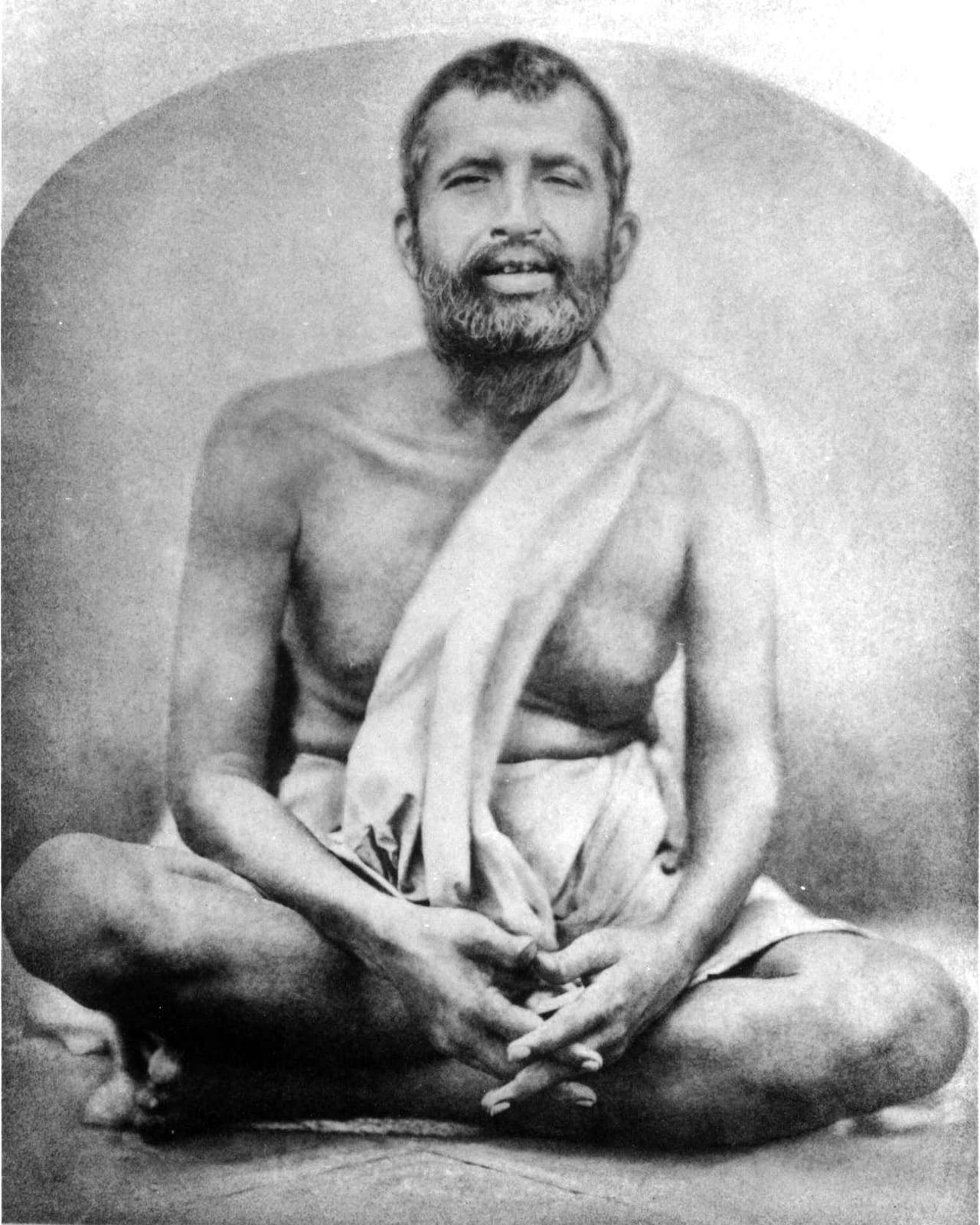
Ramakrishna
Concordano su: Che cos'è l'Assoluto? Dio esiste? · Che cosa accade dopo la morte? · Serve un maestro?
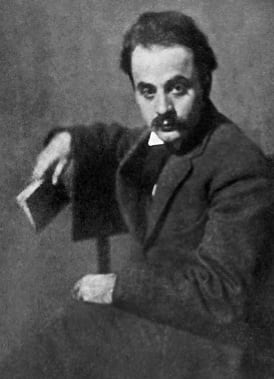
Kahlil Gibran
Concordano su: Che cos'è l'Assoluto? Dio esiste? · Chi sono io? Esiste un vero sé? · Che cosa accade dopo la morte?
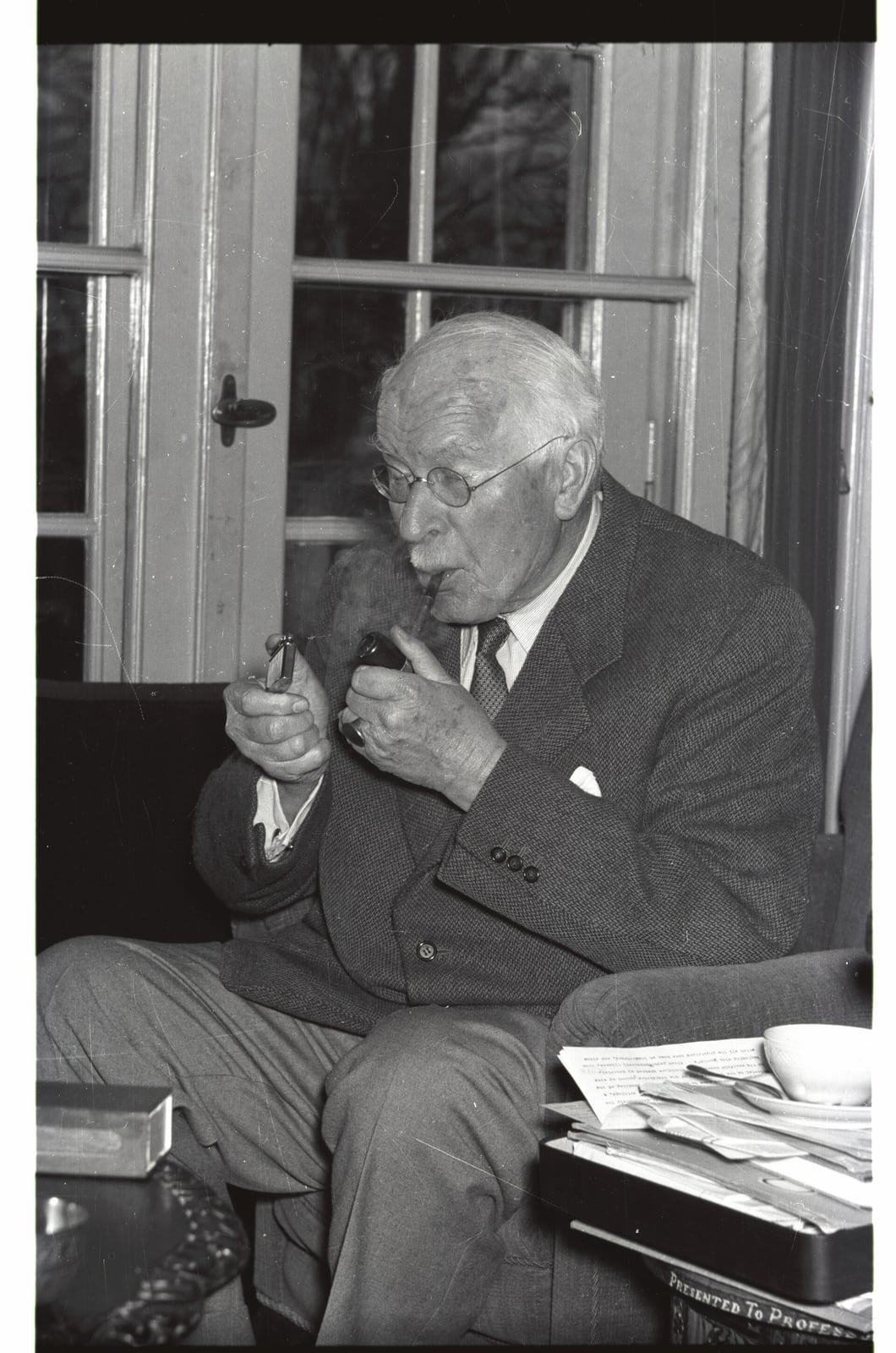
Carl Gustav Jung
Concordano su: Chi sono io? Esiste un vero sé? · Perché soffriamo? · Serve un maestro?
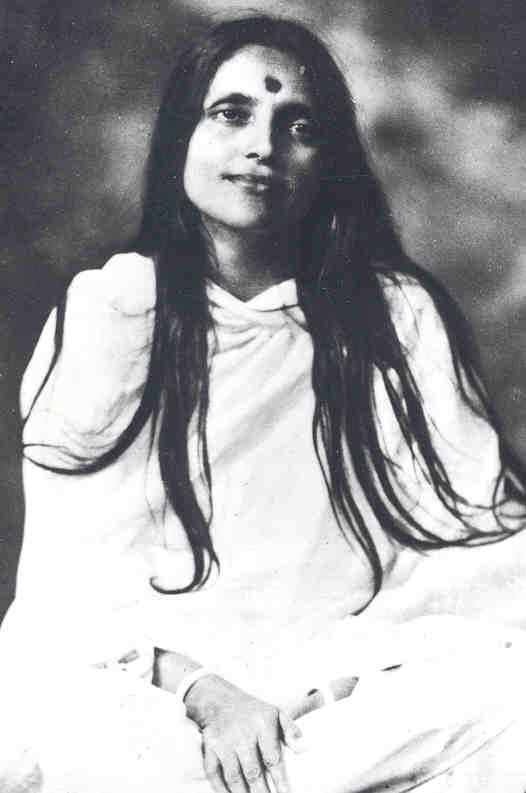
Anandamayi Ma
Concordano su: Che cos'è l'Assoluto? Dio esiste? · Perché soffriamo? · Il mondo è reale?


Aneddoti e racconti
Aneddoti e racconti
Documentato1892
The riding test
Origine del racconto: The facts are recorded in the Civil Service Commission files studied by Peter Heehs; the deliberate intent comes from Aurobindo’s own later statements (Autobiographical Notes, CWSA 36).
Fonte: Heehs, Peter. The Lives of Sri Aurobindo. Nueva York: Columbia University Press, 2008.
Testimonianzadiciembre de 1892 - febrero de 1893
The ship that did not sink
Origine del racconto: Aurobindo tells it himself in his autobiographical notes and his biographers repeat it (Purani, Heehs); the detail of the father’s last words is family tradition.
Testimonianzaenero de 1908
Three days with Lele
Origine del racconto: Aurobindo’s account in letters of the 1930s (CWSA 35) and in conversations noted by disciples; there is no testimony from Lele about the inner experience.
Fonte: Sri Aurobindo. Letters on Himself and the Ashram. CWSA 35. Pondicherry: Sri Aurobindo Ashram, 2011.
Testimonianza1908-1909
Vasudeva in Alipore jail
Origine del racconto: Primary source: the Uttarpara speech (30 May 1909) and the Bengali account Kara-kahini; Vivekananda’s voice in letters of the 1930s (CWSA 35). They are the protagonist’s own testimony.
Testimonianzafebrero-abril de 1910
The command to leave
Origine del racconto: Aurobindo’s own account (Autobiographical Notes, CWSA 36) and that of witnesses from his Calcutta circle; police reports confirm the flight and the dates, not the voice.
Documentato29-30 de marzo de 1914
“He whom we saw yesterday”
Origine del racconto: The entry of 30 March 1914 appears in the Mother’s Prières et méditations (published 1932); the recognition of the figure of her visions comes from the Mother’s later conversations recorded at the ashram.
Fonte: La Mère (Mirra Alfassa). Prières et méditations. Pondicherry: Sri Aurobindo Ashram, 1932 (anotación del 30 de marzo de 1914).
Testimonianza5-9 de diciembre de 1950
The hundred hours
Origine del racconto: It comes from ashram witnesses and statements by the Mother recorded in ashram publications; the existence and wording of the medical certificate are cited in those sources and have not been checked against an original.
Insegnamenti
Insegnamenti
Le nozioni che articolano il suo pensiero, spiegate nel loro contesto.
The Supermind (supramental)supramental
Aurobindo links the term to the Vedic notion of rita (truth-order) and the vijnana of the Upanishads; historians stress its relation to nineteenth-century evolutionary theories.
Integral yoga (purna yoga)yoga-integral
Set out in The Synthesis of Yoga and the Letters on Yoga; Aurobindo distinguished it from all earlier yogas, which he regarded as stages or fragments of a possible synthesis.
Involution and evolutioninvolucion-y-evolucion
Developed in The Life Divine; it has been compared with Teilhard de Chardin, Bergson and Whitehead, without demonstrated direct influence.
The psychic beingser-psiquico
Explained above all in the Letters on Yoga and The Life Divine; the Mother made it the axis of her educational teaching.
Fonte: Sri Aurobindo. Letters on Himself and the Ashram. CWSA 35. Pondicherry: Sri Aurobindo Ashram, 2011.
The ladder of mind: from higher mind to overmindplanos-de-la-mente
Set out in The Life Divine (Book II) and in the letters on poetry, where he applies it to the quality of inspiration.
Surrender to the divine Motherentrega-a-la-madre
Set out in The Mother (1928) and in the letters on the Mother (CWSA 32).
Video
Video
Registrazioni, interviste e documentari. I video vengono riprodotti da YouTube; non sono ospitati qui.
Rare Footage of Sri Aurobindo’s Mahasamadhi (5 December 1950)
Registrazione originale· 1950· 7 min
Overman Foundation
The Mother on Sri Aurobindo’s Mahasamadhi, 5th Dec 1950
Registrazione originale· EN· 12 min
Arvind T Akki Sri Aurobindo Ashram, Pondicherry
Sri Aurobindo: A Life Divine [a 1993 film]
Documentario· EN· 1993· 21 min
AuroMaa
THE TRANSFORMATION - A documentary film on Sri Aurobindo
Documentario· EN· 54 min
Sri Aurobindo SocietyCanale ufficiale
नया जन्म | Naya Janma | The Transformation (versión hindi)
Documentario· HI· 54 min
Sri Aurobindo
Journey To The Life Divine — Part I
Documentario· EN· 104 min
Sri Aurobindo AshramCanale ufficiale
Sri Aurobindo: An Indian Mystic Who Worked for Human Unity
Documentario· EN· 49 min
Sri Aurobindo Ashram Delhi BranchCanale ufficiale
Film: “Sri Aurobindo Ghose: The Beginning of Spiritual Journey”
Documentario· EN· 2022· 38 min
Consulado General de la India en Hamburgo (congendiahamburg)Canale ufficiale
The Mother reads Savitri by Sri Aurobindo: Book 01 Canto 01
Registrazione originale· EN· 23 min
AuroMaa
Sri Aurobindo’s Uttarpara Speech
Conferenza· EN· 32 min
Savitri Bhavan Auroville
Dr. Alok Pandey on Sri Aurobindo’s The Life Divine
Conferenza· EN· 60 min
Savitri Bhavan Auroville
Sri Aurobindo’s Savitri - Theme, Structure and Message (Part 1 of 3)
Conferenza· EN· 108 min
Debashish Banerji
Conversation with Peter Heehs - History, Spirituality, and Sri Aurobindo
Intervista· EN· 45 min
Academia Surge
Vicente Merlo - La conciencia y la evolución espiritual en Sri Aurobindo
Conferenza· ES· 61 min
Taller de Espiritualidad
¿Es Sri Aurobindo uno de los místicos más grandes de todos los tiempos? Un día con… Vicente Merlo
Intervista· ES· 58 min
Siglantana editorial
Galleria
Galleria
Immagini con licenza verificata. Ciascuna conserva la sua paternità e la sua attribuzione.
Relazioni
Relazioni
Influenze, discepolati e affinità. Si distingue la relazione documentata dalla somiglianza individuata per analisi.
Maestro di
La Madre (Mirra Alfassa)
He met her on 29 March 1914 and from 1920 she was his spiritual collaborator; he regarded her as an incarnation of the divine Mother and in 1926 entrusted her with the direction of the ashram, which she continued to lead after his death.
Relazione documentata
Ricevette l'influenza di
He wrote that in Alipore jail he heard for a fortnight Vivekananda’s voice guiding him in meditation; they never met in life.
Relazione documentata
Ricevette l'influenza di
In the introduction to The Synthesis of Yoga he presents Ramakrishna’s life as an example of a spiritual capacity running through all the disciplines and prefiguring the synthesis.
Relazione documentata
Discepolo di
Vishnu Bhaskar Lele
Maharashtrian yogi with whom he experienced silence of mind in January 1908; his only outer guide, briefly.
Relazione documentata
Incontrò
Bal Gangadhar Tilak
Companion in the radical wing of Congress; he presided with him over the Nationalist meeting at Surat (1907) and devoted an essay to him in 1918.
Relazione documentata
Ricevette l'influenza di
Bankim Chandra Chattopadhyay
He devoted essays to him in 1894 and 1907 and translated part of his novel Anandamath, source of the hymn Bande Mataram that named his daily.
Relazione documentata
Incontrò
Rabindranath Tagore
Tagore dedicated the poem “Namaskar” to him in 1907 and visited him in Pondicherry in 1928.
Relazione documentata
Incontrò
Sister Nivedita (Margaret Noble)
He worked with her in the Bengal nationalist circles from 1902; after his departure for Chandernagore in 1910 she took charge of Karmayogin.
Relazione documentata
Dissentì da
In The Life Divine he criticises the “illusionism” (mayavada) of Shankara’s Advaita, which holds the world unreal, while acknowledging the truth of the experience of the silent Brahman.
Relazione documentata
Idee affini a
He devoted the study Heraclitus (Arya, 1916–1917) to him, comparing his doctrine of fire and becoming with that of the Vedic rishis.
Relazione documentata
Contemporaneo di
Contemporaries in South India; some disciples (such as T. V. Kapali Sastri) frequented both. There is no record of a meeting. Relationship noted by the editors.
Somiglianza individuata per analisi
Idee affini a
Two Bengalis who presented yoga as a science of the evolution of consciousness and whose work found a wide echo in the West. Similarity identified by the editors; no meeting is recorded.
Somiglianza individuata per analisi
Contemporaneo di
Contemporaries with teachings opposed in method: Krishnamurti rejected all spiritual authority and every system; Aurobindo built one. No personal relationship is recorded.
Somiglianza individuata per analisi
Contemporaneo di
Bengali contemporaries of the independence generation; there is no record that they met.
Somiglianza individuata per analisi
Idee affini a
Both conceived evolution as an ascent of consciousness towards a spiritual culmination; the comparison is common in the literature, without documented mutual influence.
Somiglianza individuata per analisi
Collegato da altre schede
Fonti
Fonti
Bibliografia e cataloghi consultati per questa scheda.
- Sri Aurobindo. Complete Works of Sri Aurobindo (CWSA). 37 vols. Pondicherry: Sri Aurobindo Ashram Publication Department, 1997–2025. Sustituye a la Sri Aurobindo Birth Centenary Library (SABCL, 30 vols., 1972).
- Heehs, Peter. The Lives of Sri Aurobindo. Nueva York: Columbia University Press, 2008.
- Sri Aurobindo. Autobiographical Notes and Other Writings of Historical Interest. CWSA 36. Pondicherry: Sri Aurobindo Ashram, 2006.
- Purani, A. B. The Life of Sri Aurobindo. Pondicherry: Sri Aurobindo Ashram, 1958 (4.ª ed., 1978).
- Nirodbaran. Twelve Years with Sri Aurobindo. Pondicherry: Sri Aurobindo Ashram, 1972.
- Satprem. Sri Aurobindo ou l’aventure de la conscience. París: Buchet-Chastel, 1964 (trad. inglesa de Luc Venet, 1984).
- Wikidata, «Aurobindo Ghosh» (Q192207): fechas y lugares, 99 enlaces entre wikis.
- Wikipedia en inglés, «Sri Aurobindo» (cronología política, Alipore, Arya, ashram y ediciones).
- Wikimedia Commons, «Category:Sri Aurobindo» y ficheros asociados (metadatos y licencias consultados por API).
- Heehs, Peter. Sri Aurobindo: A Brief Biography. Delhi: Oxford University Press, 1989.
- Sri Aurobindo. «Uttarpara Speech» (30 de mayo de 1909), Karmayogin, 19 de junio de 1909. CWSA 8. Texto en Wikisource.
- SABDA (distribuidora del Sri Aurobindo Ashram), catálogo de las Complete Works y de las ediciones sueltas.
- Wikipedia en inglés, «Savitri: A Legend and a Symbol» (composición 1916–1950, edición 1950–1951).
- Deshpande, R. Y. «Sri Aurobindo’s Withdrawal — 5 December 1950». Overman Foundation (relato de los últimos días a partir de Nirodbaran, Champaklal y la Madre).
- «Yogic Sadhan». Sri Aurobindo: Archives and Research 10, n.º 1 (abril de 1986): texto de la edición de 1920 y notas sobre su origen en escritura automática.
- Sri Aurobindo. Record of Yoga. CWSA 10–11. Pondicherry: Sri Aurobindo Ashram, 2001.
- Sri Aurobindo. Essays on the Gita (First Series). Madrás: V. Ramaswamy Sastrulu & Sons, 1922. Texto parcial en Wikisource.
- Sri Aurobindo. The Life Divine. Nueva York: The Sri Aurobindo Library, 1949–1951 (texto de la edición revisada de 1939–1940). Copia digital en Internet Archive.
- Sri Aurobindo. Letters on Himself and the Ashram. CWSA 35. Pondicherry: Sri Aurobindo Ashram, 2011.
- Sri Aurobindo. The Mother. Calcuta: Arya Publishing House, 1928 (reimpr. 1937–1949). Copia digital en Internet Archive.
- La Mère (Mirra Alfassa). Prières et méditations. Pondicherry: Sri Aurobindo Ashram, 1932 (anotación del 30 de marzo de 1914).
- Titolare dei diritti
- Sri Aurobindo Ashram Trust (Pondicherry), que reivindica los derechos de todos sus textos. Situación por territorios: Aurobindo murió en 1950, por lo que su obra es de dominio público en la UE desde 2021 (70 años) y en la India desde 2011 (60 años); en España (80 años para autores fallecidos antes de 1987) no lo será hasta el 1 de enero de 2031; en EE. UU. solo lo publicado antes de 1931 es seguro dominio público. Las ediciones de la CWSA, con aparato y textos inéditos, tienen derechos propios.
- Sito ufficiale
- www.sriaurobindoashram.org/
In attesa di conferma
Ciò che questa scheda non ha ancora potuto chiarire. Preferiamo dirlo piuttosto che riempirlo.
- Ediciones españolas con ISBN de Ensayos sobre la Gita, Savitri, El ciclo humano, El ideal de la unidad humana, La Madre, Bases del yoga y Cartas sobre el yoga: no localizadas en Open Library (Google Books sin cuota). Revisar catálogos de Kier, Plaza & Janés, Obelisco y del Centro Sri Aurobindo de Barcelona.
- Comprobar la autoría de «La aventura de la consciencia» (Obelisco, 1993, ISBN 9788477200857): Open Library la atribuye a Aurobindo, pero el título corresponde al libro de Satprem.
- Fechas y editoriales de las primeras ediciones de Thoughts and Glimpses (c. 1920), War and Self-Determination (1920), Love and Death (1921), Ahana and Other Poems (1915), Heraclitus (1941) y The Ideal of the Karmayogin.
- Año de la primera compilación titulada Letters on Yoga (se da 1958, aproximado).
- Fecha exacta del primer libro de Satprem (se da 1964) y existencia de una traducción española íntegra con ISBN.
- Cotejar el certificado médico del doctor Barbet (diciembre de 1950) con un original o con una publicación del ashram que lo reproduzca.
- Precisar el barco (y la fecha) cuya noticia falsa de naufragio recibió su padre en 1892.
- Imagen: localizar en Commons un retrato de la etapa de Pondicherry con licencia libre verificada (las fotos de Henri Cartier-Bresson de 1950 están protegidas).
- Sala de lectura: todos los textos llevan caution por la regla española (libres desde 2031). Buscar transcripciones completas de Essays on the Gita y de los artículos de Arya.
Ricerca effettuata il 2026-10-25