Cristianesimo · Mistica cristiana · Cattolicesimo
Pierre Teilhard de Chardin
1881 – 1955Persona storicamente documentata
Gesuita, geologo e paleontologo francese (1881-1955) che partecipò allo studio dell'uomo di Pechino e trascorse vent'anni a fare ricerca in Cina. Volle unire la teoria dell'evoluzione e la fede cristiana: nel Fenomeno umano descrive un universo che ascende verso una maggiore complessità e coscienza, forma una «noosfera» e converge in un Punto Omega che egli identifica con Cristo. Roma gli proibì di pubblicare le sue opere filosofiche, apparse dopo la sua morte e di enorme influenza, insieme all'Ambiente divino e alla Messa sul mondo.
- opere
- 31opere
- edizioni
- 39edizioni
- citazioni
- 8citazioni
- video
- 12video
- immagini
- 9immagini
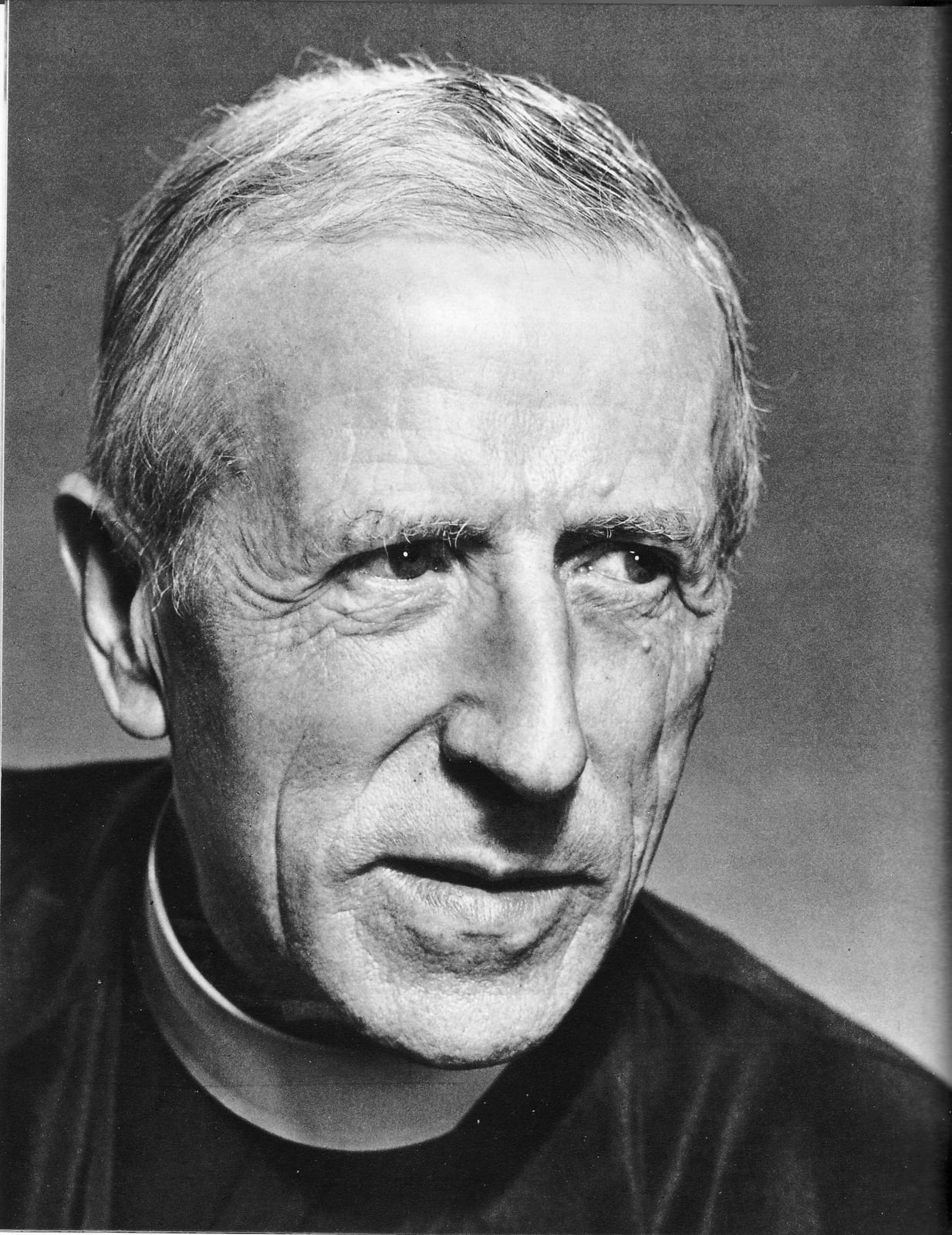
Pierre Teilhard de Chardin en 1955 · CC BY-SA 3.0
Con le sue parole
«To see. One could say that the whole of Life lies in that, if not finally, at least essentially.»Le Phénomène humain, prólogo «Voir»

Per cominciare, un'opera
The Human Phenomenon (The Phenomenon of Man)La sua idea centrale
Evolution is not merely a biological fact but the movement of the whole universe: matter arranges itself into ever more complex and, at the same time, ever more conscious structures. Teilhard formulates this as the law of complexity-consciousness and takes it as the thread of all cosmic history.
Vederlo nel contesto
Biografia
4 min di lettura
Traduzione assistita dall'originale spagnolo, in attesa di revisione da parte di un traduttore madrelingua.
Un bambino e il suo «Dio di ferro»
Marie-Joseph Pierre Teilhard de Chardin nacque il 1° maggio 1881 nel castello di Sarcenat, a Orcines, vicino a Clermont-Ferrand, quarto degli undici figli di Emmanuel Teilhard de Chardin, archivista e naturalista dilettante, e di Berthe-Adèle de Dompierre d'Hornoy, pronipote di Voltaire. Dal padre ereditò la passione per le pietre e gli insetti; dalla madre, una pietà ardente incentrata sul Sacro Cuore. Nel Cuore della materia, scritto alla fine della vita, ricordò che verso i sei o sette anni adorava in segreto il suo «Dio di ferro» — una caviglia d'aratro, la testa di un bullone, alcune schegge di granata — perché nulla gli sembrava più duro né più durevole: la «consistenza», scrive, fu per lui l'attributo fondamentale dell'Essere, e già cercava l'inalterabile nel cuore della materia.
Gesuita in esilio
Studiò nel collegio gesuita di Mongré, a Villefranche-sur-Saône, e nel marzo 1899 entrò nel noviziato della Compagnia di Gesù ad Aix-en-Provence. Le leggi contro le congregazioni del 1901 costrinsero i gesuiti francesi all'esilio, e Teilhard completò la sua formazione filosofica nell'isola di Jersey, dove la geologia divenne la sua vocazione. Dal 1905 al 1908 insegnò fisica e chimica nel collegio della Sacra Famiglia del Cairo, e dal 1908 al 1912 studiò teologia a Ore Place, presso Hastings, dove lesse L'evoluzione creatrice di Henri Bergson. Fu ordinato sacerdote il 24 agosto 1911.
La guerra, incontro con l'assoluto
Dal 1912 al 1914 si formò in paleontologia al Museo nazionale di storia naturale di Parigi con Marcellin Boule. Nel 1913 partecipò per qualche giorno agli scavi di Piltdown, che anni dopo si sarebbero rivelati una frode. Mobilitato nel dicembre 1914, servì come barelliere in un reggimento di tiratori marocchini a Ypres, a Verdun e allo Chemin des Dames e fu decorato con la Médaille militaire e la Legion d'onore. In trincea scrisse i suoi primi saggi — La vita cosmica (1916), L'ambiente mistico, La potenza spirituale della materia (1919) — e intrattenne con la cugina Marguerite Teillard-Chambon una corrispondenza in cui si vede nascere il suo pensiero. Pronunciò i voti solenni il 26 maggio 1918.
Dall'Institut catholique alla Cina
Dottore in scienze alla Sorbona nel 1922 con una tesi sui mammiferi dell'Eocene inferiore francese, insegnò geologia all'Institut catholique di Parigi. Nel 1923 si recò a Tientsin per unirsi al gesuita Émile Licent; nel deserto dell'Ordos, senza pane né vino per celebrare, scrisse La messa sul mondo. Una nota privata sul peccato originale, circolata senza il suo permesso, provocò l'intervento di Roma: nel 1925 gli fu tolto l'insegnamento e nel 1926 tornò in Cina, che sarebbe stata la sua base per vent'anni. Lì redasse L'ambiente divino (1926-1927), di cui gli fu negata la pubblicazione.
Il geologo dell'Asia
Come consulente del Laboratorio di ricerca cenozoica di Pechino partecipò agli scavi di Zhoukoudian, dove nel 1929 Pei Wenzhong trovò il cranio del Sinantropo, l'«uomo di Pechino»; Teilhard stabilì la geologia del giacimento e, con Henri Breuil, la presenza di utensili e di fuoco. Prese parte alla Croisière jaune della Citroën (1931-1932), percorse lo Yangtze, l'India, la Birmania e Giava e tracciò una carta geologica generale della Cina. Le sue centinaia di articoli scientifici, raccolti in undici volumi, lo collocarono fra i grandi geologi del continente. A Pechino strinse un'amicizia intensa e casta con la scultrice Lucile Swan, documentata da un lungo carteggio.
Il fenomeno umano
Fra il 1938 e il 1940, a Pechino, scrisse la sua opera maggiore, Il fenomeno umano: una lettura dell'evoluzione come ascesa di complessità e di coscienza che, dopo la biosfera, genera la «noosfera» e converge verso un polo di unità personale, il Punto Omega, che egli identifica con il Cristo cosmico. Trattenuto in Cina durante la seconda guerra mondiale, fondò con Pierre Leroy l'Istituto di Geobiologia. Tornato a Parigi nel 1946, godette di un prestigio crescente, ma Roma gli proibì di pubblicare opere filosofiche, rinnovò nel 1948 il rifiuto di stampare Il fenomeno umano e gli impedì di accettare una cattedra al Collège de France. Nel 1950 fu eletto all'Académie des sciences.
New York e la morte a Pasqua
Nel 1951 si stabilì a New York, legato alla Fondazione Wenner-Gren, da dove si recò due volte in Sudafrica per studiare gli australopitechi. Continuò a scrivere: Il cuore della materia (1950) e Il Cristico (1955) sono il suo testamento spirituale. Secondo vari testimoni, aveva espresso il desiderio di morire in una domenica di Risurrezione. Morì d'infarto la domenica di Pasqua, 10 aprile 1955, a New York, e fu sepolto nel cimitero del noviziato gesuita di Saint Andrew-on-Hudson, sulle rive dell'Hudson.
Un'opera venuta alla luce dopo
Prima di morire aveva affidato i suoi manoscritti alla segretaria, Jeanne Mortier, per aggirare il divieto di pubblicazione, che non si estendeva agli inediti di un defunto. Il fenomeno umano uscì presso Seuil nel 1955 e le Opere arrivarono a tredici volumi. La loro diffusione fu immensa negli anni Sessanta; il Sant'Uffizio rispose nel 1962 con un monitum che metteva in guardia contro ambiguità ed errori nei suoi scritti, mai formalmente ritirato. Scienziati come Peter Medawar ne criticarono duramente il linguaggio, mentre teologi come Henri de Lubac lo difesero. Benedetto XVI evocò nel 2009 la sua «grande visione» e Francesco lo citò nella Laudato si' (2015). La sua figura resta fra la mistica e la scienza: un gesuita obbediente che non smise mai di pensare.
Fonti: Cuénot, Claude. Pierre Teilhard de Chardin: les grandes étapes de son évolution. Paris: Plon, 1958. · Speaight, Robert. Teilhard de Chardin: A Biography. London: Collins, 1967. · King, Ursula. Spirit of Fire: The Life and Vision of Teilhard de Chardin. Maryknoll (N.Y.): Orbis Books, 1996 (ed. revisada, 2015). · Teilhard de Chardin, Pierre. Le Phénomène humain. Paris: Éditions du Seuil, 1955 (Œuvres, t. I). Texto en Wikisource. · Teilhard de Chardin, Pierre. Le Milieu divin. Paris: Éditions du Seuil, 1957 (Œuvres, t. IV). Texto en Wikisource.
Cronologia
La vita, anno per anno
Ogni punto è un evento documentato. Fai clic per leggerlo, con la sua fonte e il suo grado di certezza.
1 maggio 18810 anniSarcenat, Orcines
Birth
Fourth of eleven children of Emmanuel Teilhard de Chardin and Berthe-Adèle de Dompierre d'Hornoy.
DocumentatoWikipedia en inglés, «Pierre Teilhard de Chardin» (consultada para fechas y trayectoria, contrastada con las demás fuentes).
Dopo la sua morte
- 30 giugno 1962Monitum of the Holy Office
- 24 maggio 2015Laudato si'
1 maggio 1881 · 0 anni
Birth
Fourth of eleven children of Emmanuel Teilhard de Chardin and Berthe-Adèle de Dompierre d'Hornoy.
Documentato
marzo 1899 · 17 anni
Jesuit novice
He enters the Society of Jesus's novitiate.
Documentato
ca. 1902
Exile in Jersey
With the Jesuits expelled from France, he studies philosophy in Jersey and becomes passionate about the island's geology.
Documentato
1905
Teacher in Cairo
He teaches physics and chemistry at the Holy Family college (1905–1908).
Documentato
24 agosto 1911 · 30 anni
Ordination
Ordained priest at the end of his theology studies at Ore Place.
Documentato
1913
Piltdown excavations
He spends a few days at the Piltdown excavations with Charles Dawson; 'Piltdown Man' was exposed as a hoax in 1953.
Documentato
dicembre 1914
Stretcher-bearer in the Great War
Mobilised as a stretcher-bearer in a regiment of Moroccan riflemen; Médaille militaire and Legion of Honour.
Documentato
1916
Cosmic Life
He writes his first essay, the core of all his later work.
Documentato
26 maggio 1918
Solemn vows
During military leave he takes his final vows as a Jesuit.
Documentato
1922
Doctorate in science
He defends at the Sorbonne his thesis on the mammals of the French Lower Eocene.
Documentato
1923
The Mass on the World
On his first Chinese expedition, with no bread or wine to celebrate, he writes the offering of 'the whole Earth'.
Documentato
aprile 1926
Exile in China
Removed from teaching in Paris over a note on original sin, he returns to China; he writes The Divine Milieu (1926–1927).
Documentato
dicembre 1929
Peking Man
Pei Wenzhong finds the skull of Sinanthropus; Teilhard is the site's geologist.
Documentato
1931
Croisière jaune
He takes part as a scientist in the Citroën expedition across Central Asia (1931–1932).
Documentato
1938
The Human Phenomenon
He writes his major work (1938–1940); Rome refuses permission to publish it.
Documentato
1946
Return to France
After the war he returns to Paris, where his thought circulates in typescript copies.
Documentato
1950
Academy of Sciences
Elected to the Academy of Sciences; he writes The Heart of Matter.
Documentato
1951
New York
He settles in New York, attached to the Wenner-Gren Foundation; he travels to South Africa in 1951 and 1953.
Documentato
10 aprile 1955 · 73 anni
Death on Easter Sunday
He dies of a heart attack; he is buried in the cemetery of the Saint Andrew-on-Hudson novitiate.
Documentato
novembre 1955
Publication of The Human Phenomenon
Éditions du Seuil publishes the first volume of his Works, made possible because he had bequeathed his manuscripts to Jeanne Mortier.
Documentato
30 giugno 1962
Monitum of the Holy Office
A warning to bishops and superiors about ambiguities and doctrinal errors in his works.
Documentato
24 maggio 2015
Laudato si'
Pope Francis cites his contribution in the encyclical on integral ecology (no. 83, note 53).
Documentato
Opere
Opere essenziali
Le opere senza le quali non si comprende la sua eredità.
Opera postuma · 1955
The Human Phenomenon (The Phenomenon of Man)
Le Phénomène humain
His major work, presented as a 'purely phenomenological' essay. It covers Before Life (matter and its 'within'), Life (the biosphere and the law of complexity-consciousness), Thought (the threshold of reflection and the noosphere) and Survival, in which humanity, compressed on the closed surface of the planet, converges toward a personal centre, the Omega Point. An epilogue on the 'Christian phenomenon' identifies that centre with Christ. Its visionary prose fascinated millions of readers and exasperated scientists such as Peter Medawar.
6 edizioni

Opera postuma · 1957
The Divine Milieu
Le Milieu divin. Essai de vie intérieure
A treatise on spirituality for Christians living in the world. The first part shows the 'divinisation of activities': all human work, brought to perfection, collaborates in the consummation of the world in Christ, because God waits 'at the tip of my pen, my pick, my paintbrush'. The second deals with the 'divinisation of passivities' —what is undergone, diminishment, death—, and the third describes the 'divine milieu', the presence of Christ that envelops everything. It is his most widely read book as a spiritual guide.
5 edizioni

Opera postuma · 1923
The Mass on the World
La Messe sur le Monde
A prayer in the form of a cosmic Mass: with neither bread, wine nor altar, the priest offers 'on the altar of the whole Earth' the labour and suffering of the world, and asks that the consecration reach the entire universe. Its parts —the offering, fire over the world, fire in the world, communion, prayer— distil his mysticism of matter and his intuition of the cosmic Christ.
3 edizioni
Opera postuma · 1976
The Heart of Matter
Le Cœur de la Matière
A spiritual autobiography in three parts —the cosmic, the human, the christic— telling how the child fascinated by his 'iron God' came to discover the convergence of the universe and the personal 'heart' that draws it. Together with The Christic, written a month before his death, it is the final synthesis of his vision and the best biographical gateway to his thought.
2 edizioni
Tutta la sua opera (31)
Pierre Teilhard de Chardin
The Christic
The Conscious LibraryThe Christic
1955
Hymn of the Universe
1961

The Appearance of Man
1956

The Vision of the Past
1957
Pierre Teilhard de Chardin
Man's Place in Nature
The Conscious LibraryMan's Place in Nature
1956
The Future of Man
1959

Human Energy
1962

Activation of Energy
1963

Science and Christ
1965

Christianity and Evolution (How I Believe)
1969

Toward the Future
1973

Writings in Time of War
1965
Pierre Teilhard de Chardin
Cosmic Life
The Conscious LibraryCosmic Life
1916
Pierre Teilhard de Chardin
The Spiritual Power of Matter
The Conscious LibraryThe Spiritual Power of Matter
1919
Pierre Teilhard de Chardin
My Universe
The Conscious LibraryMy Universe
1924
The Spirit of the Earth
1931
Pierre Teilhard de Chardin
The Phenomenon of Spirituality
The Conscious LibraryThe Phenomenon of Spirituality
1937
Note on Some Possible Historical Representations of Original Sin
1922
Pierre Teilhard de Chardin
The Mammals of the French Lower Eocene and their Deposits
The Conscious LibraryThe Mammals of the French Lower Eocene and their Deposits
1922

Early Man in China
1941
Pierre Teilhard de Chardin
The Scientific Work
The Conscious LibraryThe Scientific Work
1971

The Making of a Mind
1961

Letters from a Traveller
1956
Pierre Teilhard de Chardin
Letters from Egypt and from Hastings and Paris
The Conscious LibraryLetters from Egypt and from Hastings and Paris
1963
Citazioni
Citazioni localizzate in un'opera precisa. Ciascuna porta con sé la sua provenienza e il suo grado di affidabilità.
To see. One could say that the whole of Life lies in that, if not finally, at least essentially.Voir. On pourrait dire que toute la Vie est là, — sinon finalement, du moins essentiellement.
VerificataLe Phénomène humain, prólogo «Voir»
Idee essenziali (sintesi editoriale)
Per rispetto del diritto d'autore, queste idee sono riassunte con parole nostre e non sono presentate come citazioni letterali.
- Evolution is not merely a biological fact but the movement of the whole universe: matter arranges itself into ever more complex and, at the same time, ever more conscious structures. Teilhard formulates this as the law of complexity-consciousness and takes it as the thread of all cosmic history.
- Every being has a 'without', what science measures, and a 'within', a degree of interiority or psychism, minute in atoms and greatest in human beings; without admitting that within, he says, the appearance of thought cannot be understood.
- With human beings evolution crosses a threshold: reflection, knowing that one knows. From then on evolution continues above all at the cultural and collective level, and the Earth is covered with a thinking layer, the noosphere, which grows denser as humanity communicates and unifies.
- The convergence of humanity does not lead to a depersonalised collective but to a union that differentiates: the more persons unite, the more personal they become. This process points to a supreme centre, personal and already existing, which Teilhard calls the Omega Point.
- For the believer, the Omega Point is the risen Christ: the cosmic Christ of the Pauline letters, in whom all things hold together, drawing evolution from ahead. The history of the cosmos is thus a christogenesis.
- Human work, research and technology do not lead away from God: brought to their perfection, they are collaboration in the consummation of the world. Likewise, what is undergone —illness, diminishment, death— can be taken up as communion. These are the two faces, active and passive, of his spirituality.
- Love is the energy that unites beings by what is most intimate in them; Teilhard speaks of the 'amorisation' of the universe and predicts that one day humanity will learn to harness that energy as it once harnessed fire.
Citazioni apocrife o di attribuzione discussa (1)
«'We are not human beings having a spiritual experience; we are spiritual beings having a human experience.'»
It is the most widely circulated saying under his name and it appears in none of his published writings. It was popularised in American self-help literature of the 1990s, without a source; some also attribute it to G. I. Gurdjieff or Wayne Dyer. It matches neither his vocabulary nor his thought, which does not oppose spirit and human experience.
Ultime parole
Non esistono testimonianze verificabili delle sue ultime parole.
No reliable record of his last words survives. He died of a heart attack on the afternoon of Easter Sunday, 10 April 1955, at friends' home in New York, after attending Mass that morning. Several sources hand down, in differing versions and without precise documentary citation, that shortly before he had expressed the wish to die on the day of the Resurrection. The last thing in his hand that survives is the Journal page of Holy Thursday, 7 April 1955, which sums up his creed in two articles: the cosmos is centred and 'Christ is its centre' (published in Le Cœur de la Matière).
Fonte: Teilhard de Chardin, Pierre. Le Cœur de la Matière (incluye Le Christique y la última página del Diario, 1955). Paris: Éditions du Seuil, 1976 (Œuvres, t. XIII). Texto en Wikisource.
Chiedi
Ciò a cui risponde la sua opera
Dodici grandi domande dell'umanità e ciò che i suoi testi permettono di rispondere, con riferimenti. Non gli mettiamo mai parole in bocca.
Che cos'è l'Assoluto? Dio esiste?
God is the personal Omega toward which evolution converges
Un Dio personaleLo dice espressamente
Teilhard de Chardin thinks of God from evolution. In The Human Phenomenon, the law of complexity-consciousness leads the universe to converge on an Omega point, which cannot be an abstraction: it must be already actual, transcendent and personal, because only a personal centre can unite persons without dissolving them. His faith identifies this Omega with the cosmic Christ, in whom all things are recapitulated: in How I Believe he sums up his journey as faith in the world, in Spirit, in immortality and in personality. The Divine Milieu describes this God present in all matter and in every action. The Absolute is for him hyper-personal: more a person, not less, than the human.
Confronta questa domanda con altri maestriChi sono io? Esiste un vero sé?
To be more is to be more united: union differentiates the person
Un sé coltivato nella relazioneLo dice espressamente
Teilhard de Chardin thinks of the self within evolution. In The Human Phenomenon, reflective consciousness appears when the universe, growing more complex, centres upon itself: the human being is evolution become conscious of itself. But that personal centre is not perfected by isolating itself, but by uniting: «to be more is to be more united» sums up the work, and its law is that true union does not confuse, it differentiates. The person is fulfilled in a process of centration, decentration in the other and super-centration in God. The self is not a closed substance, but a growing centre whose fullness lies in the convergence of all in Omega.
Confronta questa domanda con altri maestriPerché soffriamo?
Evil is the statistical price of a world in evolution
Il karma e l'apprendimento dell'animaLo dice espressamente
Teilhard de Chardin places evil within evolution. In the appendix to The Human Phenomenon on the place and part of evil, he explains that a universe advancing by trial and error toward unity inevitably produces disorder, failure, decomposition, loneliness and anguish: evil is the statistical by-product of a creation under way. The Divine Milieu adds the other half: the «passivities of diminishment» —illness, old age, death— can be taken up in communion with God, who does not will them for themselves but transforms them. Suffering is the cost of growth and can become an energy of union.
Confronta questa domanda con altri maestriChe cosa accade dopo la morte?
Death is the final diminishment, in which God takes us
Vita eterna e resurrezioneLo dice espressamente
Teilhard de Chardin believes in personal immortality and thinks of it on a cosmic scale. In The Human Phenomenon he argues that a universe that has produced consciousness cannot end in nothingness: evolution requires the irreversibility of the personal, which is preserved and consummated in Omega. In The Divine Milieu, death is the last and most radical of the passivities of diminishment, the one that strips us of everything; and his prayer asks that, at that moment, it be God who, from within, detaches us from ourselves in order to take us into him. Individual death is set within a collective consummation: humanity as a whole maturing toward its encounter with Christ.
Confronta questa domanda con altri maestriCome si raggiunge la liberazione o la salvezza?
God divinises both our activities and our passivities
Attraverso la grazia e l'amoreSi deduce dalla sua dottrina
Teilhard de Chardin does not conceive salvation as flight from the world, but as the divinisation of everything human. The Divine Milieu distinguishes two sides: activities, in which the human being cooperates with creation and, with right intention, builds something that Christ gathers up; and passivities, of growth and of diminishment, in which God acts upon us. Both, lived in communion, unite us to God. Salvation is personal and collective at once: all of humanity, converging on Omega, prepares the fullness of Christ. Human effort counts, but what divinises is God's presence in all things, received in faith.
Confronta questa domanda con altri maestriServe un maestro?
Leaving the current of Catholicism would be a biological error
Comunità e tradizioneLo dice espressamente
Teilhard de Chardin suffered for decades the censorship of his Jesuit superiors and of Rome: he was removed from teaching in Paris and forbidden to publish his philosophical and religious works, which appeared only after his death. Even so, he refused to leave the order or the Church. In the text «On my attitude toward the official Church», collected in The Heart of Matter, he justified this with a characteristic formula: it would be for him a biological error to break away from the religious current of Catholicism, because it is in that living trunk that Christian consciousness continues to grow. He claims no personal teacher, but belonging to an evolving organism, with its tensions, which he hopes will eventually take up his vision.
Confronta questa domanda con altri maestriIl mondo è reale?
For one who knows how to see, nothing here below is profane
Manifestazione del divinoLo dice espressamente
Teilhard de Chardin loves matter as the place of the divine. In The Divine Milieu he states that, by virtue of creation and still more of the incarnation, nothing here below is profane for one who knows how to see; God is found at the tip of the pen, the pick, the paintbrush or the needle. The world is neither a static backdrop nor an illusion: it is a cosmogenesis, a process of increasing complexity which, in The Human Phenomenon, moves toward consciousness and unity. In The Mass on the World, celebrated without an altar in the Ordos desert, he offers to God the labour and suffering of the whole Earth. The world is the divine becoming visible, on its way toward Christ.
Confronta questa domanda con altri maestriChe cos'è l'amore?
Love is the energy uniting beings toward Omega
Anelito e unioneLo dice espressamente
Teilhard de Chardin gives love a cosmic reach. In The Human Phenomenon he holds that love, in its biological reality, is the affinity of one being for another, present in rudimentary form throughout matter and fully conscious in the human being; it is the only force capable of uniting beings so that they complete one another without destruction, because it takes hold of them by what is deepest in them. Humanity will only be able to converge if it learns to love beyond its immediate circle, and that is possible only if there exists a loving and lovable centre toward which everything tends: Omega, which he identifies with Christ. Love is the energy that drives evolution toward its consummation.
Confronta questa domanda con altri maestriSiamo liberi o è tutto determinato?
Freedom grows with consciousness: evolution passes into our hands
Un libero arbitrio realeLo dice espressamente
Teilhard de Chardin sees freedom as a fruit of evolution. In The Human Phenomenon, as matter grows more complex, interiority grows, and with reflective thought appears a being capable of foreseeing, choosing and orienting itself: evolution, which advanced by groping, becomes conscious of itself and passes partly into human hands. Hence his insistence on the collective responsibility to build the Earth and on the «zest for living», without which humanity might refuse to go forward. Convergence toward Omega is no mechanical fate: it requires that human freedoms consent to unite. Providence acts through that freedom, not in its place.
Confronta questa domanda con altri maestriPerché meditare o pregare?
Offer on the altar of the Earth the labour and pain of the world
Rito e coltivazione di séLo dice espressamente
Teilhard de Chardin's most famous prayer was born from the impossibility of celebrating: in 1923, in the Ordos desert, with no bread, no wine and no altar, he composed The Mass on the World, in which he offers to God, on the altar of the whole Earth, the labour and suffering of the world. The liturgy expands to cosmic scale: the consecration reaches matter, which becomes the body of Christ. The Divine Milieu proposes a prayer united to action: purity of intention turns every work into communion, and daily faithfulness is the way of entering into contact with God. To meditate is to learn to see the divine in all things.
Confronta questa domanda con altri maestriPuò la ragione conoscere l'ultimo?
Science and faith converge in seeing the whole phenomenon
Fede e ragione si aiutanoLo dice espressamente
Teilhard de Chardin was a palaeontologist and a Jesuit, and sought to unite both vocations. The Human Phenomenon presents itself as a scientific work, neither theological nor metaphysical: an attempt to see the whole human phenomenon, consciousness included, within evolution. That gaze leads, by extrapolation from the facts, to the hypothesis of an Omega point; Christian faith recognises Christ in that Omega. In Science and Christ and How I Believe he argues that scientific research, carried through to the end, does not lead away from God but raises the questions that revelation answers. Reason prepares and faith consummates, without either absorbing the other.
Confronta questa domanda con altri maestriRitirarsi dal mondo o trasformarlo?
Building the Earth is cooperating in God's work
Impegnarsi nel mondoLo dice espressamente
Teilhard de Chardin rejects the spirituality that sees the world as an obstacle. In The Divine Milieu he holds that human effort —research, work, technology, art— is not indifferent to salvation: through right intention, every work contributes to the world's consummation in Christ, and nothing that is built is lost. In The Spirit of the Earth and the essays collected in The Future of Man he calls humanity to become aware of its unity and to build the Earth, joining forces across nations and races. The Christian must not flee the world, but be the first to work for its progress, knowing that it is ordered to something greater.
Confronta questa domanda con altri maestri
Affinità e tensioni
Affinità e tensioni
Calcolate domanda per domanda a partire dalle sue posizioni. Il perché di ogni accordo o contrasto, con un clic.
La pensa in modo simile a
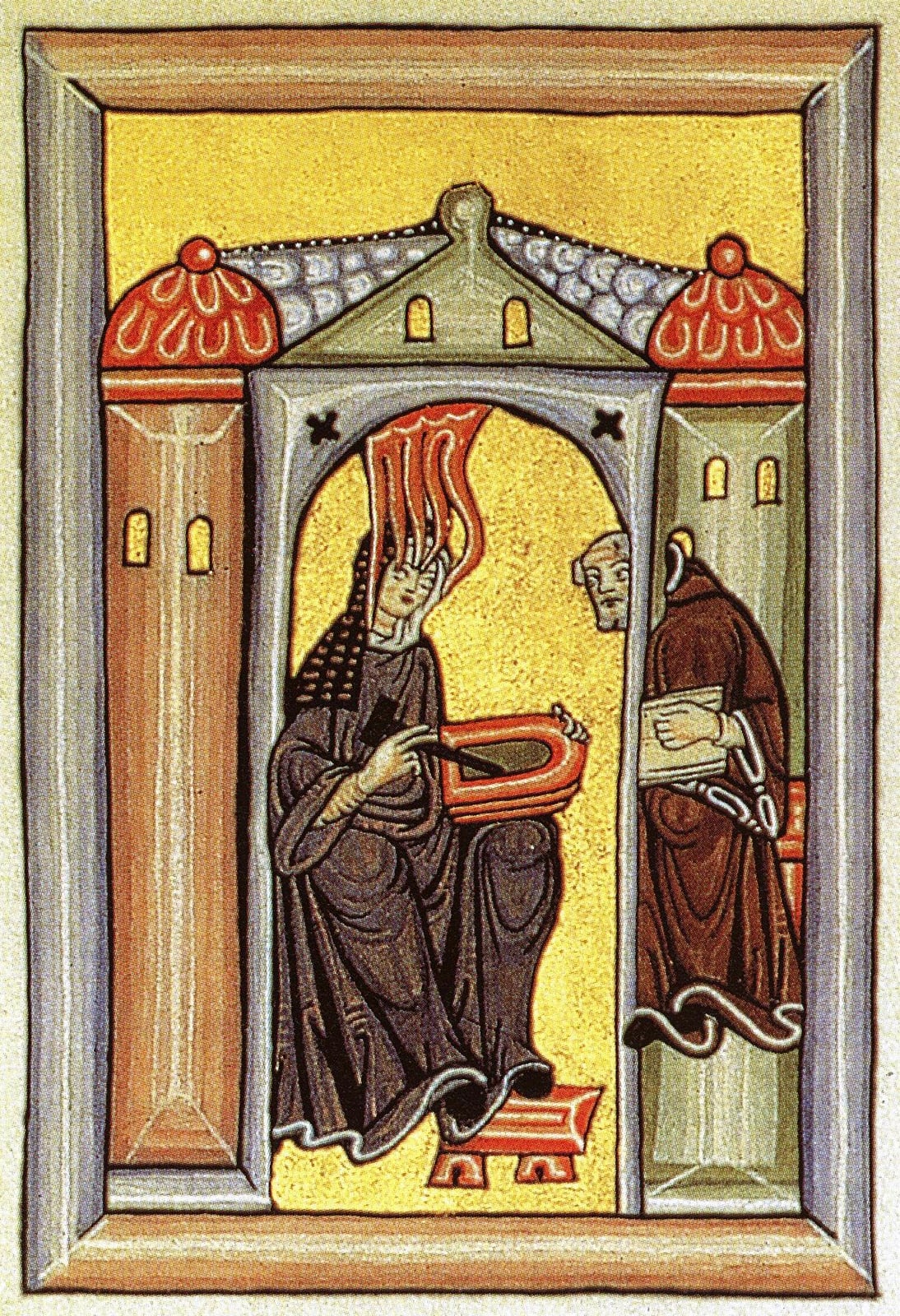
Hildegard of Bingen
Concordano su: Siamo liberi o è tutto determinato? · Che cos'è l'Assoluto? Dio esiste? · Che cosa accade dopo la morte?
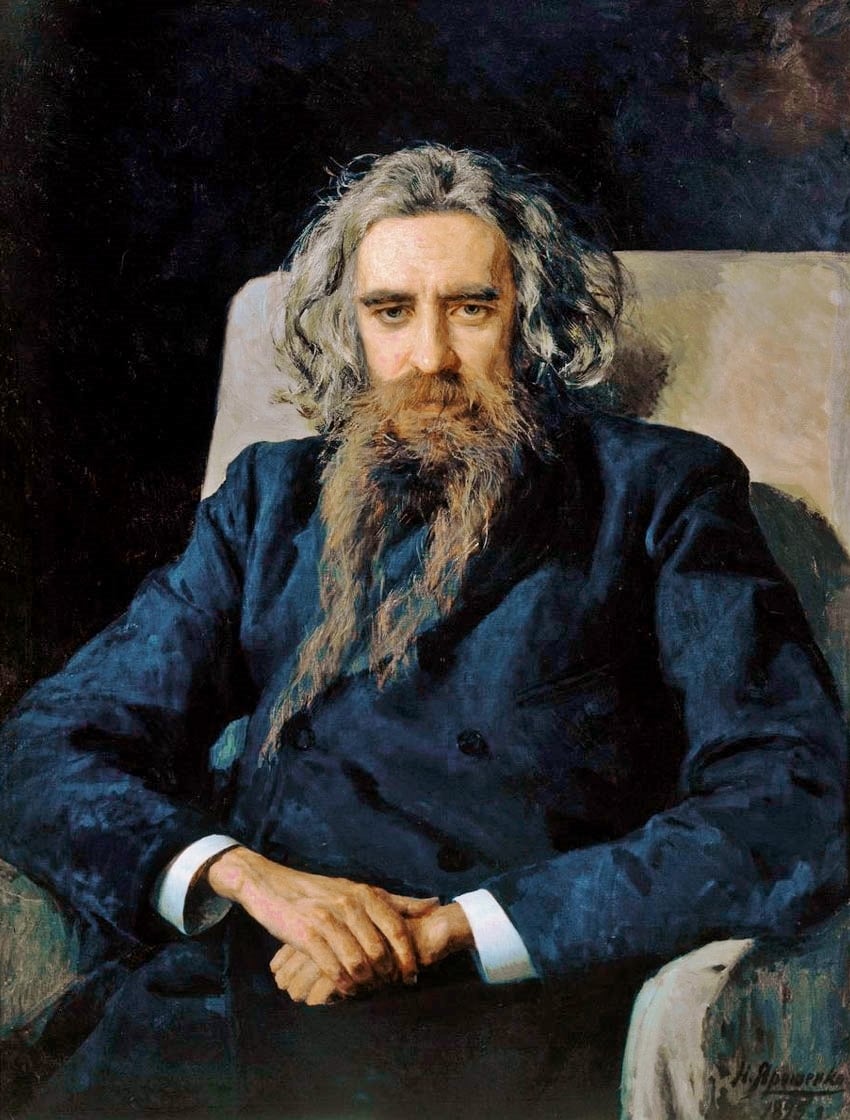
Vladimir Solovyov
Concordano su: Che cosa accade dopo la morte? · Come si raggiunge la liberazione o la salvezza? · Serve un maestro?
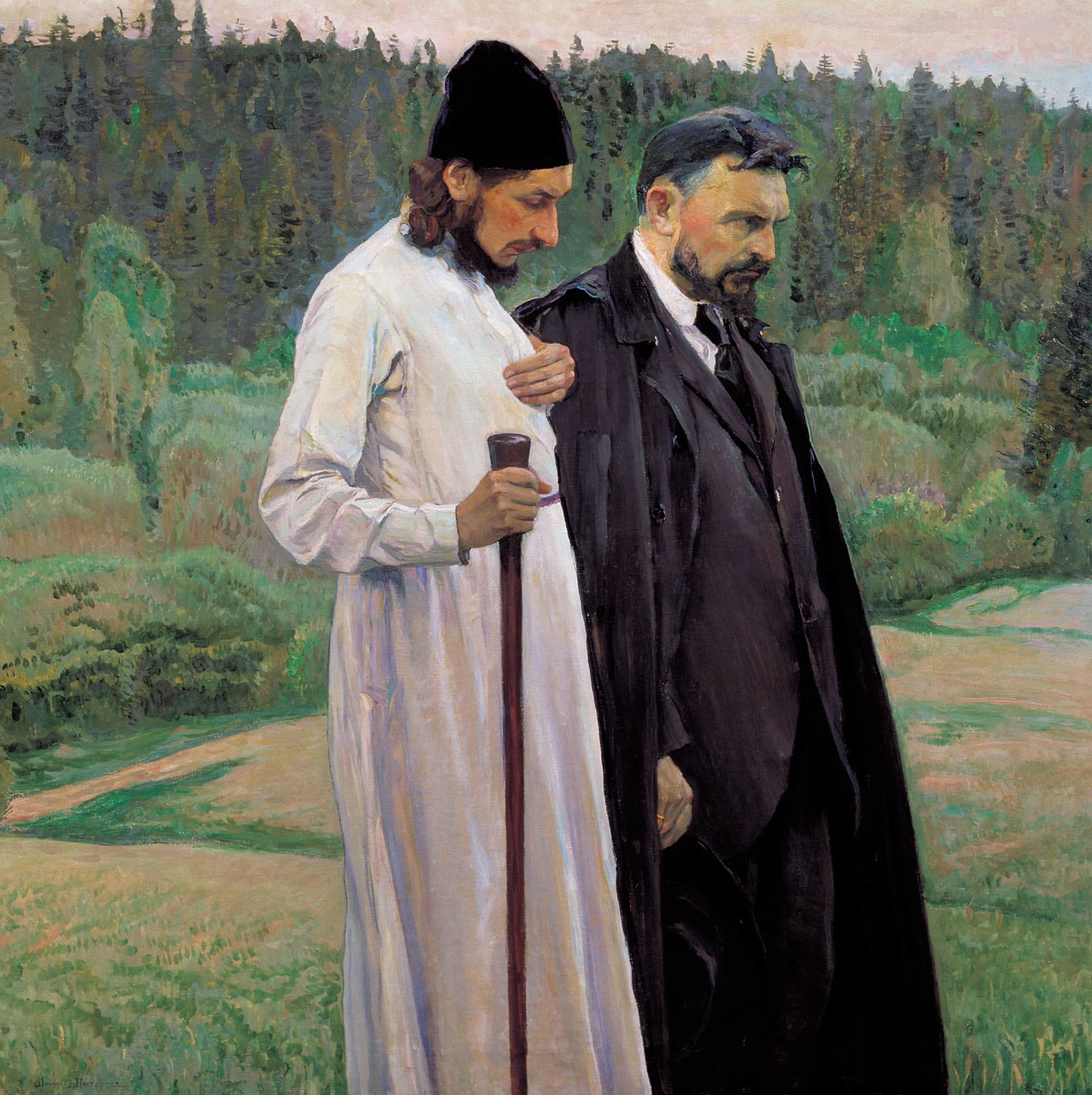
Pavel Florensky
Concordano su: Che cos'è l'Assoluto? Dio esiste? · Chi sono io? Esiste un vero sé? · Che cosa accade dopo la morte?
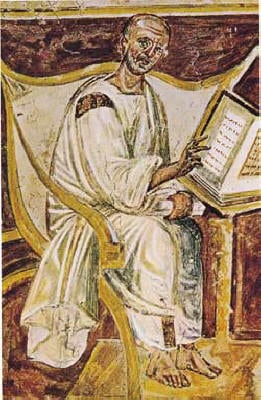
Augustine of Hippo
Concordano su: Come si raggiunge la liberazione o la salvezza? · Che cos'è l'Assoluto? Dio esiste? · Che cosa accade dopo la morte?
La pensa diversamente da

Pema Chödrön
Si scontrano su: Che cos'è l'Assoluto? Dio esiste? · Che cosa accade dopo la morte?
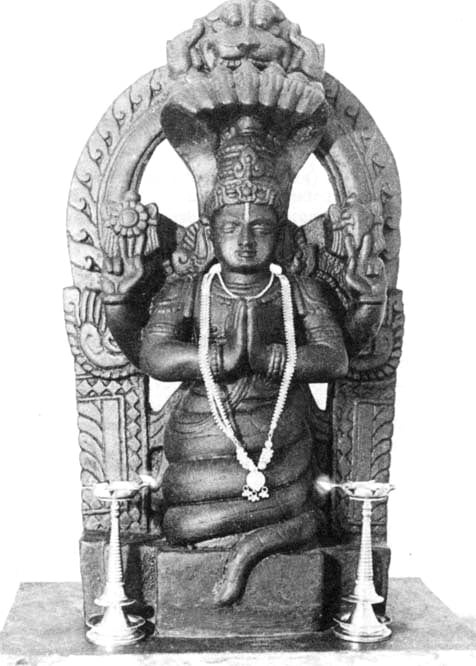
Patañjali
Si scontrano su: Che cos'è l'Assoluto? Dio esiste? · Che cosa accade dopo la morte?

Nāgārjuna
Si scontrano su: Che cos'è l'Assoluto? Dio esiste? · Che cosa accade dopo la morte?

Siddhartha Gautama, the Buddha
Si scontrano su: Che cos'è l'Assoluto? Dio esiste? · Che cosa accade dopo la morte?
Aneddoti e racconti
Aneddoti e racconti
Testimonianzac. 1887–1888
The 'iron God'
Origine del racconto: His own account in Le Cœur de la Matière (1950), part I, 'Le Cosmique'.
Documentato1914–1919
The stretcher-bearer of Verdun
Origine del racconto: Letters from the front published in Genèse d'une pensée (1961); decorations and postings according to the biographies and Wikipedia (s11).
Testimonianza1923
The Mass in the Ordos desert
Origine del racconto: The text itself places the scene 'in the steppes of Asia'; the dating to Ordos, 1923, comes from the edition of Hymne de l'Univers and the travel letters.
Contestato1913 / 1980
The shadow of Piltdown
Origine del racconto: The accusation was made in Gould (Natural History, 1980); its general rejection is summarised by Wikipedia (s11).
Fonte: Gould, Stephen Jay. «The Piltdown Conspiracy». Natural History 89, n.º 8 (1980): 8–28.
Documentato1929–1931
The Zhoukoudian skull
Origine del racconto: Facts from the history of palaeoanthropology recorded in Wikipedia and in his own articles in L'Apparition de l'Homme ('La découverte du Sinanthrope').
Testimonianza1920s–1955
A biological blunder
Origine del racconto: Text collected in Le Cœur de la Matière (1976), pp. 133–137.
Testimonianza1955
To die at Easter
Origine del racconto: It circulates in the biographies (Cuénot, King) in differing versions; the original testimony has not been checked.
Fonte: King, Ursula. Spirit of Fire: The Life and Vision of Teilhard de Chardin. Maryknoll (N.Y.): Orbis Books, 1996 (ed. revisada, 2015).
Insegnamenti
Insegnamenti
Le nozioni che articolano il suo pensiero, spiegate nel loro contesto.
Law of complexity-consciousnesscomplejidad-conciencia
The guiding thread of The Human Phenomenon (1938–1940).
Noospherenoosfera
A term coined around 1922–1925; central in The Human Phenomenon and The Future of Man.
Omega Pointpunto-omega
Introduced in The Human Phenomenon (book IV, 'Survival').
The cosmic Christ and christogenesiscristo-cosmico
Present from 1916; formulated on the last page of the Journal (1955): 'Christ is the centre of the Cosmos'.
The divine milieu: activities and passivitiesmedio-divino
Written in 1926–1927; his most widely read text as a spiritual guide.
Hominisation and the threshold of reflectionhominizacion
A theme of La Vision du Passé, The Human Zoological Group and book III of The Human Phenomenon.
Video
Video
Registrazioni, interviste e documentari. I video vengono riprodotti da YouTube; non sono ospitati qui.
Portrait en 1981 de Teilhard de Chardin, théologien et paléontologue
Documentario· FR· 28 min
Radio-Canada ArchivesCanale ufficiale
Teilhard de Chardin
Documentario· FR· 52 min
KTO TV
L'Unité créatrice du monde - Pierre Teilhard de Chardin
Guarda su YouTube
Questo video non consente l'incorporamento; si apre su YouTube.
L'Unité créatrice du monde - Pierre Teilhard de Chardin
Documentario· FR· 52 min
KTO TV
Le Centre Teilhard-de-Chardin : un lieu de dialogue entre sciences et spiritualité
Documentario· FR· 9 min
KTO TV
Teilhard et la Chine, un documentaire de Benoît Vermander
Documentario· FR· 44 min
Benoît Vermander Videos
Ilia Delio / Why Science and Religion Need Each Other: Teilhard de Chardin's Deep Catholicity
Conferenza· EN· 61 min
College of the Holy CrossCanale ufficiale
Ilia Delio: Teilhard's Evolution and the Body of Christ
Conferenza· EN· 48 min
Centre for Catholic Studies, Durham UniversityCanale ufficiale
Ilia Delio: "Teilhard de Chardin and World Religions"
Conferenza· EN· 100 min
Yale Forum on Religion and EcologyCanale ufficiale
Annual Teilhard de Chardin, S.J. Lecture feat. Sr. Ilia Delio
Conferenza· EN· 90 min
Hank Center for the Catholic Intellectual HeritageCanale ufficiale
Teilhard de Chardin, entre el cielo y el suelo: Testimonios para la Iglesia del futuro
Conferenza· ES· 68 min
Centro Loyola - Loiola ZentroaCanale ufficiale
Teilhard de Chardin | Ciclo Los viernes de la evolución
Conferenza· ES· 146 min
El Colegio Nacional (México)Canale ufficiale
Ringvorlesung: Pierre Teilhard de Chardin
Conferenza· DE· 69 min
CTS Berlin
Galleria
Galleria
Immagini con licenza verificata. Ciascuna conserva la sua paternità e la sua attribuzione.
Manoscritti
Manoscritti
Testimoni manoscritti e testi antichi, con il loro custode e le loro condizioni di consultazione.
FR · Latin · 1932–1955
Teilhard de Chardin Manuscripts (cartas a Lucile Swan y otras colecciones)
- Testimone conservato
- 205 cartas a Lucile Swan, 77 cartas a un sacerdote biólogo francés (1938–1952) y documentos de su etapa china
- Custode
- Booth Family Center for Special Collections, Georgetown University Library (Washington)
- Digitalizzazione
- guides.library.georgetown.edu/teilhard-de-chardi…
Relazioni
Relazioni
Influenze, discepolati e affinità. Si distingue la relazione documentata dalla somiglianza individuata per analisi.
Ricevette l'influenza di
A Jesuit from 1899, formed by the Spiritual Exercises; his search for God 'in all things' of matter extends Ignatian spirituality.
Relazione documentata
Ricevette l'influenza di
The risen Christ, read through Saint Paul, is the centre of his vision: Omega and centre of the cosmos.
Relazione documentata
Idee affini a
Both, contemporaries with no known contact, interpreted evolution as the rise of consciousness toward divine fulfilment (Aurobindo's Supermind, Teilhard's Omega Point); the comparison is common in comparative religion.
Somiglianza individuata per analisi
Idee affini a
Soloviov's vision of a cosmic process culminating in Godmanhood has been compared with Teilhardian christogenesis.
Somiglianza individuata per analisi
Contemporaneo di
A French contemporary engaging with Catholicism from an opposite position: Weil focused on affliction and necessity, Teilhard on convergence and progress. There is no record that they met.
Somiglianza individuata per analisi
Idee affini a
Franciscan cosmic fraternity and Teilhard's 'Hymn to Matter' share a mysticism of creation; Pope Francis, who took his name from the saint, cites Teilhard in Laudato si'.
Somiglianza individuata per analisi
Collegato da altre schede
Fonti
Fonti
Bibliografia e cataloghi consultati per questa scheda.
- Wikidata, «Pierre Teilhard de Chardin» (Q189564); orden religiosa: Compañía de Jesús (P611 = Q36380).
- Cuénot, Claude. Pierre Teilhard de Chardin: les grandes étapes de son évolution. Paris: Plon, 1958.
- Speaight, Robert. Teilhard de Chardin: A Biography. London: Collins, 1967.
- King, Ursula. Spirit of Fire: The Life and Vision of Teilhard de Chardin. Maryknoll (N.Y.): Orbis Books, 1996 (ed. revisada, 2015).
- Teilhard de Chardin, Pierre. Le Phénomène humain. Paris: Éditions du Seuil, 1955 (Œuvres, t. I). Texto en Wikisource.
- Teilhard de Chardin, Pierre. Le Milieu divin. Paris: Éditions du Seuil, 1957 (Œuvres, t. IV). Texto en Wikisource.
- Teilhard de Chardin, Pierre. Hymne de l'Univers (incluye La Messe sur le Monde, 1923). Paris: Éditions du Seuil, 1961. Texto en Wikisource.
- Teilhard de Chardin, Pierre. Le Cœur de la Matière (incluye Le Christique y la última página del Diario, 1955). Paris: Éditions du Seuil, 1976 (Œuvres, t. XIII). Texto en Wikisource.
- Teilhard de Chardin, Pierre. Écrits du temps de la guerre (1916–1919). Paris: Grasset, 1965; Seuil, 1976 (Œuvres, t. XII). Texto en Wikisource.
- Teilhard de Chardin, Pierre. Genèse d'une pensée: lettres 1914–1919. Ed. Alice Teillard-Chambon y Max Henri Begouën. Paris: Grasset, 1961. Texto en Wikisource.
- Wikipedia en inglés, «Pierre Teilhard de Chardin» (consultada para fechas y trayectoria, contrastada con las demás fuentes).
- Wikisource en francés, «Auteur:Pierre Teilhard de Chardin» (relación de las Œuvres de Seuil, 1955–1976, y de la correspondencia).
- Suprema Sagrada Congregación del Santo Oficio. Monitum sobre los escritos del P. Pierre Teilhard de Chardin, 30 de junio de 1962. Acta Apostolicae Sedis 54 (1962), p. 526.
- Francisco. Carta encíclica Laudato si' sobre el cuidado de la casa común, 24 de mayo de 2015, n.º 83 y nota 53.
- Teilhard de Chardin, Pierre, y Lucile Swan. The Letters of Teilhard de Chardin and Lucile Swan. Ed. Thomas M. King y Mary Wood Gilbert. Washington: Georgetown University Press, 1993. ISBN 9780878405220.
- Open Library, registros de edición consultados por ISBN (obras de Pierre Teilhard de Chardin).
- Teilhard de Chardin, Pierre. Comment je crois. Paris: Éditions du Seuil, 1969 (Œuvres, t. X). Texto en Wikisource.
- Teilhard de Chardin, Pierre. Science et Christ. Paris: Éditions du Seuil, 1965 (Œuvres, t. IX). Texto en Wikisource.
- Medawar, Peter B. Reseña de The Phenomenon of Man. Mind 70, n.º 277 (1961): 99–106.
- Gould, Stephen Jay. «The Piltdown Conspiracy». Natural History 89, n.º 8 (1980): 8–28.
- Titolare dei diritti
- Éditions du Seuil (Œuvres) y los derechohabientes de la Fondation Teilhard de Chardin; dominio público en la UE desde 2026, no en España (2036) ni en EE. UU. Traducciones con derechos propios (Trotta, Sussex Academic Press, HarperCollins, etc.).
In attesa di conferma
Ciò che questa scheda non ha ancora potuto chiarire. Preferiamo dirlo piuttosto che riempirlo.
- Últimas palabras: localizar el testimonio de primera mano (Pierre Leroy, Cuénot o la familia) sobre la tarde del 10 de abril de 1955 y sobre el deseo de morir en Pascua, con su formulación exacta.
- Derechos: todas las entradas de reading_texts llevan caution (España hasta 2036; EE. UU. 95 años desde la publicación póstuma). La tesis de 1921–1922 será plenamente de dominio público en 2036.
- Comprobar si la Wikisource francesa ofrece páginas «Texte entier» para Le Phénomène humain y Le Milieu divin; ahora se registran las páginas índice con subpáginas.
- Verificar la autoría y licencia de las fotografías TeilhardP 1947 y 1955 en Commons (autor desconocido con licencia CC BY-SA).
- Localizar ISBN de ediciones actuales en español de El fenómeno humano y El porvenir del hombre (Taurus), y de ediciones en italiano (Queriniana, Il Saggiatore) y alemán de El medio divino.
- Sitio oficial: no se ha verificado la web de la Fondation Teilhard de Chardin ni de la Association des Amis de Pierre Teilhard de Chardin; se deja official_site en null.
- Localizar el fondo principal de manuscritos de los ensayos (depositados por Jeanne Mortier y la Fondation Teilhard de Chardin) y sus signaturas; solo se ha verificado la guía de Georgetown.
- Programas de afiliación: ninguno verificado.
Ricerca effettuata il 2026-10-25