Cristianesimo · Mistica cristiana · Sufismo
Kahlil Gibran
جبران خليل جبران
1883 – 1931Persona storicamente documentata
Poeta, saggista e pittore libanese emigrato negli Stati Uniti (1883-1931). Scrisse in arabo racconti, poemi in prosa e saggi che rinnovarono la letteratura del Mahjar, e in inglese libri di parabole e aforismi. La sua opera più celebre, Il Profeta (1923), riunisce ventisei discorsi sull'amore, il lavoro, la libertà o la morte ed è uno dei libri più tradotti del Novecento. Presiedette la Lega della Penna a New York.
- opere
- 24opere
- edizioni
- 65edizioni
- citazioni
- 13citazioni
- video
- 12video
- immagini
- 10immagini
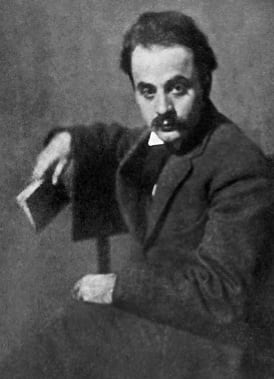
Khalil Gibran en 1913 · Public domain
Con le sue parole
«Your children are not your children. They are the sons and daughters of Life’s longing for itself.»The Prophet (1923), «On Children»

La sua idea centrale
Almustafa and the prophetic voice: Gibran does not present himself as a prophet: he creates one.
Vederlo nel contesto
Biografia
5 min di lettura
Traduzione assistita dall'originale spagnolo, in attesa di revisione da parte di un traduttore madrelingua.
Bsharri, ai piedi dei cedri
Gibran Khalil Gibran nacque il 6 gennaio 1883 a Bsharri, un villaggio maronita arroccato sopra la valle della Qadisha, sul Monte Libano, che era allora un mutasarrifato autonomo dell'Impero ottomano. La madre, Kamila Rahmeh, figlia di un sacerdote, portava al matrimonio un figlio nato da un'unione precedente, Butros; il padre, Khalil, uomo dal carattere difficile e indebitato per il gioco, fu incarcerato nel 1891 con l'accusa di malversazione mentre era esattore delle imposte, e i beni della famiglia furono pignorati. L'infanzia del futuro poeta trascorse tra la povertà, la scuola parrocchiale — dove apprese i rudimenti dell'arabo e del siriaco — e un paesaggio di gole, cedri e monasteri che sarebbe riapparso, trasfigurato, in quasi tutto ciò che scrisse.
Boston e lo sguardo degli altri
Nel giugno 1895 Kamila prese una decisione inaudita per una donna del suo ambiente: emigrare negli Stati Uniti con i quattro figli, lasciandosi alle spalle il marito. La famiglia si stabilì nel South End di Boston, uno dei maggiori quartieri di immigrati siro-libanesi del paese. Il ragazzo fu iscritto alla scuola Josiah Quincy con la grafia inglese «Kahlil Gibran», che avrebbe sempre conservato, e cominciò a disegnare presso la casa di accoglienza di Denison House. Le sue maestre lo presentarono al fotografo ed editore Fred Holland Day, figura centrale dell'estetismo bostoniano, che lo ritrasse in abiti orientali, gli prestò libri e gli aprì le porte di un mondo artistico che un ragazzo della sua origine difficilmente avrebbe raggiunto da solo.
Tra Beirut e il lutto
Temendo che dimenticasse le proprie radici, la famiglia lo mandò nel 1898 a Beirut a studiare nel collegio maronita della Sapienza (Madrasat al-Hikma), dove si formò nella lingua e nella letteratura arabe. Tornò a Boston nel 1902, quando seppe che la sorella minore, Sultana, era morta di tubercolosi. Nei mesi seguenti perse il fratellastro Butros, vittima della stessa malattia, e la madre, morta di cancro nel giugno 1903. A vent'anni rimase solo con la sorella Marianna, che mantenne entrambi con il suo lavoro di sarta. I biografi concordano nel ritenere che quel triplice lutto abbia fissato il tono elegiaco della sua prima opera.
Mary Haskell e Parigi
Nel 1904 espose per la prima volta i suoi disegni nello studio di Day, e lì conobbe Mary Haskell, direttrice di una scuola femminile di Boston, di nove anni più grande di lui. Fu l'incontro decisivo della sua vita: Haskell finanziò la sua formazione, discusse con lui ogni idea e rivide per anni, frase per frase, l'inglese dei suoi libri. I diari di lei e la corrispondenza tra i due, pubblicati nel 1972 con il titolo Beloved Prophet, sono la fonte più ricca sull'uomo nella sua intimità. Grazie a lei trascorse a Parigi gli anni dal 1908 al 1910, prima all'Académie Julian e poi nell'atelier del simbolista Pierre Marcel-Béronneau. Nel frattempo pubblicava in arabo: un breve saggio sulla musica (1905), i racconti delle Ninfe della valle (1906) e Spiriti ribelli (1908), un atto d'accusa contro il potere ecclesiastico e feudale che, secondo quanto raccontò anni dopo Barbara Young, fu bruciato sulla pubblica piazza di Beirut.
New York e la Lega della Penna
Nel 1911 si stabilì in uno studio del Tenth Street Studio Building di New York, che chiamava «l'Eremo» e dove visse fino alla morte. L'anno seguente pubblicò Le ali spezzate, un breve romanzo sull'amore impossibile in una società dominata dal clero e dai notabili, e avviò la corrispondenza con la scrittrice May Ziadeh, che viveva al Cairo: durò quasi vent'anni, senza che i due si incontrassero mai. Nel 1914 uscì Una lacrima e un sorriso, che raccoglieva i poemi in prosa apparsi sulla stampa dell'emigrazione. Durante la prima guerra mondiale lavorò nel comitato di soccorso alle vittime della carestia del Monte Libano e nel 1920 rifondò con Nasib Arida, Abd al-Masih Haddad, Mikhail Naimy e altri scrittori emigrati la Lega della Penna (al-Rabita al-Qalamiyya), che rinnovò la lingua poetica araba dall'esilio americano.
Il Profeta
Dal 1918 scrisse soprattutto in inglese. Alfred A. Knopf pubblicò quell'anno Il folle, una raccolta di parabole, e poi Il precursore (1920). Nel 1923 uscì Il Profeta: ventisei discorsi in prosa poetica che Almustafa, un saggio che da dodici anni attende la nave che dovrà riportarlo alla sua isola natale, rivolge agli abitanti della città di Orphalese sull'amore, il matrimonio, i figli, il lavoro, il dolore, la libertà o la morte. La critica lo accolse con freddezza, ma il libro non ha mai smesso di essere ristampato ed è stato tradotto in più di cento lingue. Gibran lo illustrò di persona con acquerelli monocromi di corpi nudi e volti velati, debitori di William Blake e di Rodin.
Gli ultimi anni
Seguirono Sabbia e schiuma (1926), un libro di aforismi, e Gesù figlio dell'uomo (1928), in cui settantasette contemporanei immaginari — amici, nemici, discepoli — evocano Gesù. In questa fase poté contare sulla poetessa Barbara Young, che gli fece da segretaria senza compenso e che, dopo la sua morte, completò e pubblicò Il giardino del Profeta (1933). La salute di Gibran, che beveva in eccesso, si era deteriorata dalla fine degli anni Venti. Fu ricoverato al St. Vincent's Hospital di New York il 10 aprile 1931 e morì quello stesso giorno, a quarantotto anni; il certificato di morte indicò una cirrosi epatica con tubercolosi incipiente in un polmone. I biografi riferiscono che rifiutò gli ultimi sacramenti.
Ritorno alla montagna
La salma fu traslata in Libano nell'estate del 1931 e deposta nell'antico monastero di Mar Sarkis, a Bsharri, che la famiglia acquistò e che oggi è il Museo Gibran. Lasciò in eredità al villaggio natale i futuri diritti dei suoi libri negli Stati Uniti, e Mary Haskell donò nel 1950 quasi un centinaio delle sue opere figurative al Telfair Museum di Savannah. La critica accademica ha guardato con diffidenza al suo successo popolare, ma nella letteratura araba moderna il suo posto è indiscusso: Salma Khadra Jayyusi lo considerò l'influenza più importante sulla poesia araba della prima metà del Novecento. In Occidente Il Profeta fu il libro di culto della controcultura degli anni Sessanta e continua a essere letto a matrimoni e funerali, spesso senza che il lettore sappia nulla dell'emigrante maronita che lo scrisse.
Fonti: Bushrui, Suheil y Jenkins, Joe. Kahlil Gibran, Man and Poet: A New Biography. Oxford: Oneworld, 1998. · Gibran, Jean y Gibran, Kahlil. Kahlil Gibran: His Life and World. Boston: New York Graphic Society, 1974 (ed. rev. Nueva York: Interlink, 1991). · Waterfield, Robin. Prophet: The Life and Times of Kahlil Gibran. Londres: Allen Lane / Nueva York: St. Martin's Press, 1998. · Hilu, Virginia (ed.). Beloved Prophet: The Love Letters of Kahlil Gibran and Mary Haskell, and Her Private Journal. Nueva York: Alfred A. Knopf, 1972. · Naimy, Mikhail. Kahlil Gibran: A Biography. Nueva York: Philosophical Library, 1950 (orig. árabe, Beirut, 1934).
Cronologia
La vita, anno per anno
Ogni punto è un evento documentato. Fai clic per leggerlo, con la sua fonte e il suo grado di certezza.
6 gennaio 18830 anniBsharri, Monte Líbano
Birth
Jubran Khalil Jubran is born into a poor Maronite family in Bsharri, son of Khalil Jubran and Kamila Rahmeh.
DocumentatoBushrui, Suheil y Jenkins, Joe. Kahlil Gibran, Man and Poet: A New Biography. Oxford: Oneworld, 1998.
Dopo la sua morte
- 1933The Garden of the Prophet
- 1950Gift to the Telfair
- 1972Beloved Prophet
6 gennaio 1883 · 0 anni
Birth
Jubran Khalil Jubran is born into a poor Maronite family in Bsharri, son of Khalil Jubran and Kamila Rahmeh.
Documentato
1891 · 8 anni
His father's imprisonment
Khalil Jubran is imprisoned for embezzlement and the family property is seized; the mother decides to emigrate.
Documentato
25 giugno 1895 · 12 anni
Emigration to the United States
Kamila leaves with Boutros, Jubran, Marianna and Sultana; the family settles in Boston's South End and the boy enters the Josiah Quincy School.
Documentato
1896 · 13 anni
F. Holland Day
Through Denison House he meets the photographer and publisher Fred Holland Day, who photographs him and introduces him to Boston's artistic circles.
Documentato
1898 – 1902 · 15 anni
Studies in Beirut
He enters the Maronite Collège de la Sagesse (Madrasat al-Hikma), studying Arabic and literature until 1902.
Documentato
2 aprile 1902 · 19 anni
Death of Sultana
His younger sister dies of tuberculosis; Gibran returns to Boston. Boutros dies in March 1903 and his mother in June.
Documentato
gennaio 1904 · 21 anni
First exhibition; Mary Haskell
He exhibits drawings at Day's studio and meets Mary Haskell, who will become his patron, confidante and editor.
Documentato
1905 · 22 anni
First book in Arabic
The press of the newspaper al-Muhajir publishes Nubdha fi fann al-musiqa, a short essay on music.
Documentato
luglio 1908 – 1910 · 25 anni
Studies in Paris
With Haskell's financial support he studies at the Académie Julian and then with Pierre Marcel-Béronneau, returning in October 1910. That year Spirits Rebellious is published.
Documentato
1911 · 28 anni
Settles in New York
He settles in the Tenth Street Studio Building, in the studio he will call 'the Hermitage', where he lives until his death.
Documentato
1912 · 29 anni
The Broken Wings and May Ziadeh
He publishes al-Ajniha al-mutakassira and sends a copy to May Ziadeh, beginning a correspondence of nearly twenty years without ever meeting her.
Documentato
1918 · 35 anni
The Madman
His first book in English, published by Alfred A. Knopf, his publisher from then on.
Documentato
1920 · 37 anni
The Pen League
With Nasib Arida, Abd al-Masih Haddad, Mikhail Naimy and other Mahjar writers he refounds the Pen League, of which he is president.
Documentato
settembre 1923 · 40 anni
The Prophet
Knopf publishes The Prophet, illustrated by the author. Lukewarm critical reception; enduring readership to this day.
Probabile
1928 · 45 anni
Jesus, the Son of Man
He publishes his choral portrait of Jesus through seventy-seven imagined witnesses.
Documentato
10 aprile 1931 · 48 anni
Death
He dies on the day of his admission; the recorded cause is cirrhosis of the liver with incipient tuberculosis.
Documentato
agosto 1931
Burial at Mar Sarkis
His remains reach Bsharri and rest in the former monastery of Mar Sarkis, now the Gibran Museum.
Documentato
1933
The Garden of the Prophet
Barbara Young completes and publishes the posthumous book from the author's manuscripts.
Documentato
1950
Gift to the Telfair
Mary Haskell Minis gives nearly a hundred of Gibran's artworks to the Telfair Museum.
Documentato
1972
Beloved Prophet
Virginia Hilu publishes the letters of Gibran and Haskell and her journals, the principal source for his biography.
Documentato
Opere
Opere essenziali
Le opere senza le quali non si comprende la sua eredità.
Opera scritta · 1912
The Broken Wings
الأجنحة المتكسرة
A short novel narrated by a young man who at eighteen falls in love with Selma Karamy in Beirut. The archbishop forces her father to marry her to his nephew, and their love burns out in secret meetings until Selma dies in childbirth. Regarded as one of the first modern romantic novels in Arabic, it is both an idealised autobiographical tale and an indictment of women's condition in Lebanese society.
4 edizioni

Opera scritta · 1923
The Prophet
Gibran's masterpiece. Almustafa, who has waited twelve years in the city of Orphalese for the ship that will take him home, answers before leaving the questions of the seeress Almitra and the townspeople on twenty-six subjects: love, marriage, children, giving, work, joy and sorrow, freedom, reason and passion, pain, friendship, prayer, beauty, religion and death. Rhythmic prose with biblical resonances, illustrated with twelve drawings by the author. Despite cool reviews it has never gone out of print since 1923 and has been translated into more than a hundred languages.
11 edizioni

Opera scritta · 1928
Jesus, the Son of Man
Jesus, the Son of Man: His Words and His Deeds as Told and Recorded by Those Who Knew Him
A choral portrait of Jesus through seventy-seven imagined testimonies—Peter, Mary Magdalene, Caiaphas, Pilate, a Lebanese shepherd, a Greek philosopher. Gibran presents a virile Jesus, poet and rebel, far from the 'lamb' of devotional imagery. Its genesis has been linked to the portrait he drew of ʿAbdu'l-Bahá in New York in 1912.
5 edizioni

Corrispondenza · 1972
Beloved Prophet
Beloved Prophet: The Love Letters of Kahlil Gibran and Mary Haskell, and Her Private Journal
Virginia Hilu's edition of hundreds of letters exchanged by Gibran and Mary Haskell between 1908 and 1931, with extracts from her journal, in which she recorded their conversations word for word. It is the most important documentary source for his life, his working method and the making of The Prophet.
2 edizioni
Tutta la sua opera (24)
Kahlil Gibran
Music (A Profile of the Art of Music)
The Conscious LibraryMusic (A Profile of the Art of Music)
1905

Nymphs of the Valley
1906

Spirits Rebellious
1908

A Tear and a Smile
1914

The Madman
1918

The Processions
1919

Twenty Drawings
1919
Kahlil Gibran
The Tempests
The Conscious LibraryThe Tempests
1920

The Forerunner
1920
Kahlil Gibran
The New and the Marvelous
The Conscious LibraryThe New and the Marvelous
1923

Sand and Foam
1926

The Earth Gods
1931

The Wanderer
1932
The Garden of the Prophet
1933

Prose Poems
1934

A Treasury of Kahlil Gibran
1951

Thoughts and Meditations
1960

A Self-Portrait
1959

Lazarus and His Beloved
1973
Kahlil Gibran
Blue Flame: The Love Letters of Kahlil Gibran to May Ziadah
The Conscious LibraryBlue Flame: The Love Letters of Kahlil Gibran to May Ziadah
1979
Citazioni
Citazioni localizzate in un'opera precisa. Ciascuna porta con sé la sua provenienza e il suo grado di affidabilità.
Your children are not your children. They are the sons and daughters of Life’s longing for itself.VerificataThe Prophet (1923), «On Children»
Citazioni apocrife o di attribuzione discussa (2)
«"If you love somebody, let them go, for if they return, they were always yours. And if they don't, they never were."»
It circulates widely under Gibran's name, but it does not appear in The Prophet, The Madman, The Forerunner or Sand and Foam (checked against Project Gutenberg and Wikisource), nor in the anthologies of his Arabic work. It is an anonymous self-help maxim from the second half of the twentieth century.
«Kennedy's line 'Ask not what your country can do for you…' comes from Gibran.»
In 'The New Frontier' (1925) Gibran contrasts those who ask what their country can do for them with those who ask what they can do for their country. The resemblance to the 1961 inaugural address is real, but there is no documentary proof that Kennedy or his speechwriters knew the text: it is a hypothesis, not a quotation.
Ultime parole
Non esistono testimonianze verificabili delle sue ultime parole.
No reliably attested last words exist. He died at St. Vincent's Hospital in New York on the night of 10 April 1931, a few hours after admission; Barbara Young, who was with him, left a devout account of those days (This Man from Lebanon, 1945), and later biographers report that he refused the last rites, but none records a verifiable final sentence.
Fonte: Young, Barbara. This Man from Lebanon: A Study of Kahlil Gibran. Nueva York: Alfred A. Knopf, 1945.
Chiedi
Ciò a cui risponde la sua opera
Dodici grandi domande dell'umanità e ciò che i suoi testi permettono di rispondere, con riferimenti. Non gli mettiamo mai parole in bocca.
Che cos'è l'Assoluto? Dio esiste?
A God who plays with children and in whose heart we live
Personale e impersonale insiemeSi deduce dalla sua dottrina
Gibran built no theology, but his English work sketches a God at once intimate and cosmic. In The Prophet, Almustafa advises not to seek God as a solver of riddles: it is enough to look around to see Him playing with the children, walking in the clouds, smiling in the flowers and waving His hands in the trees. This God diffused in nature is also Someone in whom one dwells: when you love, the book says, do not say that God is in your heart, but rather that you are in the heart of God. Gibran also speaks of a divine self in each person, greater than the small self, towards which man grows. His Jesus, the Son of Man and his Arabic stories distrust churches that lock God into dogmas at the service of power.
Confronta questa domanda con altri maestriChi sono io? Esiste un vero sé?
A soul that unfolds like a lotus of countless petals
Un'anima in evoluzioneLo dice espressamente
In The Prophet, Gibran presents the self as a sea boundless and measureless, impossible to chart: whoever claims to have found the truth should say he has found a truth, because the soul walks upon all paths and unfolds itself like a lotus of countless petals. In man there coexist a divine self, comparable to the ocean or the sun, and a part that is not yet fully human, shapeless and clumsy, seeking its own awakening. Life consists in growing towards that greater self. And this growth does not end with death: in the book's farewell, Almustafa announces that after a brief rest upon the wind another woman shall bear him. Gibran thinks of the self as a process, not a finished substance.
Confronta questa domanda con altri maestriPerché soffriamo?
Pain is the shell that breaks so that understanding may be born
Il karma e l'apprendimento dell'animaLo dice espressamente
In The Prophet, Gibran gives pain a meaning of growth: pain is the breaking of the shell that encloses understanding, like the stone of the fruit that must break so its heart may stand in the sun. Much of suffering, he adds, is self-chosen: it is the bitter potion by which the physician within heals the sick self. And sorrow enlarges: the deeper it carves into one's being, the more joy one can contain, for joy and sorrow are inseparable. The same Gibran, in his early Arabic stories, denounced the suffering inflicted by the clergy and the feudal lords on the poor and on the women of Lebanon. But in his mature work pain is above all a school of the soul.
Confronta questa domanda con altri maestriChe cosa accade dopo la morte?
To die is to melt into the sun; and another woman shall bear me
Rinascita secondo il karmaLo dice espressamente
In The Prophet, when Almitra asks him about death, Almustafa replies that to know its secret one must seek it in the heart of life, for life and death are one, even as the river and the sea are one. To die is not to vanish but to stand naked in the wind and melt into the sun, to let the breath be freed from its restless tides so that it may seek God unencumbered. And in the book's farewell the prophet announces his return: a little while, a moment of rest upon the wind, and another woman shall bear him. Gibran thus combines two images, dissolution into the greater life and return to another existence, without fixing them in a doctrine. What there is not in his work is fear: death belongs to the same movement as life.
Confronta questa domanda con altri maestriCome si raggiunge la liberazione o la salvezza?
Free when we break the chains we ourselves have forged
Con la conoscenza direttaSi deduce dalla sua dottrina
Gibran proposes no doctrine of salvation; what his work describes is an inner liberation. In The Prophet, Almustafa warns those who prostrate themselves before freedom that they will be free not when their days are without a care, but when cares girdle their life and yet they rise above them naked and unbound. The chains that weigh on them, he says, they have forged themselves, and what they would cast off is a fragment of their own self. The path is self-knowledge: the heart knows in silence the secrets of the days and the nights, and that knowledge must be allowed to reach words without trying to measure it. To be freed is to recognise the greater self waiting within and to stop identifying with the small one.
Confronta questa domanda con altri maestriServe un maestro?
The teacher only leads to the threshold of one's own mind
Il maestro è dentroLo dice espressamente
In The Prophet, when a teacher asks him to speak of teaching, Almustafa replies that no one can reveal to another anything but what already lies half asleep in the dawning of his own knowledge. The teacher who walks in the shadow of the temple among his followers gives not of his wisdom but of his faith and his lovingness; if he is indeed wise he does not bid you enter the house of his wisdom, but leads you to the threshold of your own mind. The vision of one lends not its wings to another: each must stand alone in his knowledge of God. Gibran, who lived surrounded by readers who treated him as a prophet, always distrusted that role; his Almustafa teaches and departs.
Confronta questa domanda con altri maestriIl mondo è reale?
God walks in the clouds and waves His hands in the trees
Manifestazione del divinoLo dice espressamente
Gibran sees the world as a place of the divine. In The Prophet, whoever would know God need only look around: he will see Him playing with the children, walking in the cloud, outstretching His arms in the lightning and descending in rain, smiling in flowers and rising to wave His hands in trees. Daily life is the temple and the religion. This vision, heir to romanticism and mysticism, does not make the world an appearance: the earth, work, the body and love have a sacred value in his work, and beauty is almost a revelation; we live, says one of his aphorisms, only to discover it. What Gibran fights is not the world but the institutions that diminish it.
Confronta questa domanda con altri maestriChe cos'è l'amore?
Love neither possesses nor would be possessed: we are in the heart of God
Amore di Dio e del prossimoLo dice espressamente
The chapter on love in The Prophet is Gibran's most widely read. Love crowns and crucifies, makes one grow and prunes; it gives naught but itself and takes naught but from itself; it possesses not nor would it be possessed, for love is sufficient unto love. Whoever loves must not think he can direct the course of love: it is love that, if it finds him worthy, directs his. And its origin is divine: when you love, says Almustafa, do not say that God is in your heart, but rather that you are in the heart of God. In marriage he asks that there be spaces in the togetherness. In Jesus, the Son of Man, love is also charity without frontiers towards the other, the poor and the enemy.
Confronta questa domanda con altri maestriSiamo liberi o è tutto determinato?
You will be free by rising above your bonds, not by lacking them
Un libero arbitrio realeSi deduce dalla sua dottrina
Gibran does not discuss determinism in philosophical terms, but his work affirms a demanding inner freedom. In The Prophet, freedom does not consist in a life without cares but in rising above them unbound; the chains that weigh are usually those one has forged oneself. In the chapter on reason and passion, the soul is a ship that needs the rudder of reason and the sails of passion: man steers his course, though not the winds. Gibran also insists on shared responsibility: the righteous man is not wholly innocent of the deeds of the wicked, because all are part of one life. Freedom is real, but it is conquered and never purely individual.
Confronta questa domanda con altri maestriPerché meditare o pregare?
I cannot teach you to pray in words: prayer is the expansion of oneself
La meditazione non è una tecnicaLo dice espressamente
In The Prophet, when a priestess asks him to speak of prayer, Almustafa answers that people pray in their distress and need, and he wishes they would pray also in the fullness of their joy. Prayer is not asking: it is the expansion of oneself into the living ether. Whoever enters the temple only to ask will receive nothing; it is enough to enter the temple invisible. And he adds that he cannot teach anyone to pray in words, for God listens to no words save those He Himself utters through our lips. In the chapter on religion he goes further: daily life is the temple and the religion, and whoever sets apart one hour for God and another for himself has understood nothing.
Confronta questa domanda con altri maestriPuò la ragione conoscere l'ultimo?
The heart knows in silence what reason merely steers
L'ultimo è al di là della menteSi deduce dalla sua dottrina
Gibran does not despise reason, but he places it. In The Prophet, reason and passion are the rudder and the sails of the seafaring soul: reason alone is a confining force, passion alone a flame that burns itself out; the soul must exalt reason to the height of passion so that it may sing. The deepest knowledge, however, is not reasoned. Your hearts, says Almustafa, know in silence the secrets of the days and the nights, and the ear thirsts to hear that knowledge; but the self is a sea without measure, and one should not try to sound it with a measuring rod. That is why whoever says he has found the truth should say he has found a truth.
Confronta questa domanda con altri maestriRitirarsi dal mondo o trasformarlo?
Work is love made visible, and tyranny must be denounced
Impegnarsi nel mondoLo dice espressamente
Gibran never preached withdrawal. His early Arabic stories, such as Spirits Rebellious, denounced the oppression exercised by the clergy and feudal lords over the peasants and women of Lebanon, and the book was badly received by the religious authorities. In New York he took part in the life of the Arab emigration, founded the Pen League with other writers and worked for relief to Syria and Mount Lebanon during the famine of the First World War. In The Prophet, spirituality is lived in work, marriage, the house and trade: work is love made visible, and whoever works without love would do better to sit at the temple gate and take alms.
Confronta questa domanda con altri maestri
Affinità e tensioni
Affinità e tensioni
Calcolate domanda per domanda a partire dalle sue posizioni. Il perché di ogni accordo o contrasto, con un clic.
La pensa in modo simile a
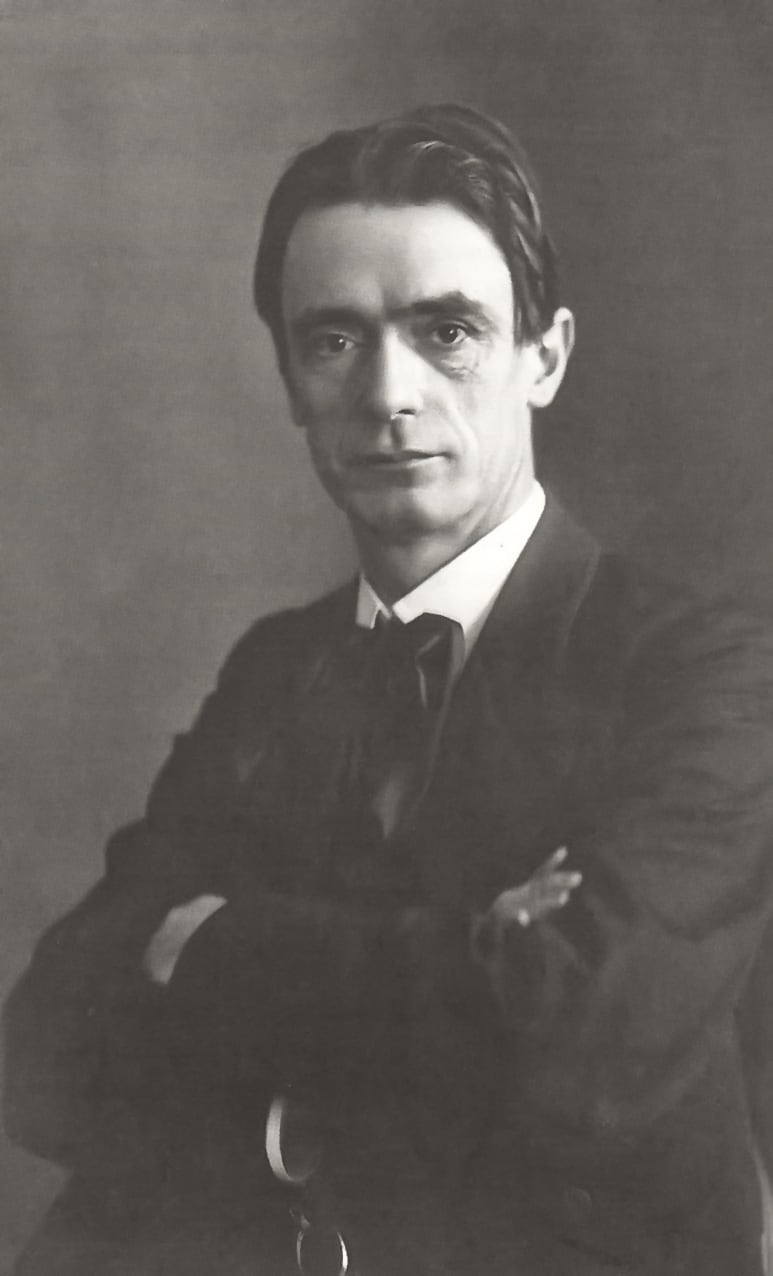
Rudolf Steiner
Concordano su: Perché soffriamo? · Che cos'è l'Assoluto? Dio esiste? · Chi sono io? Esiste un vero sé?
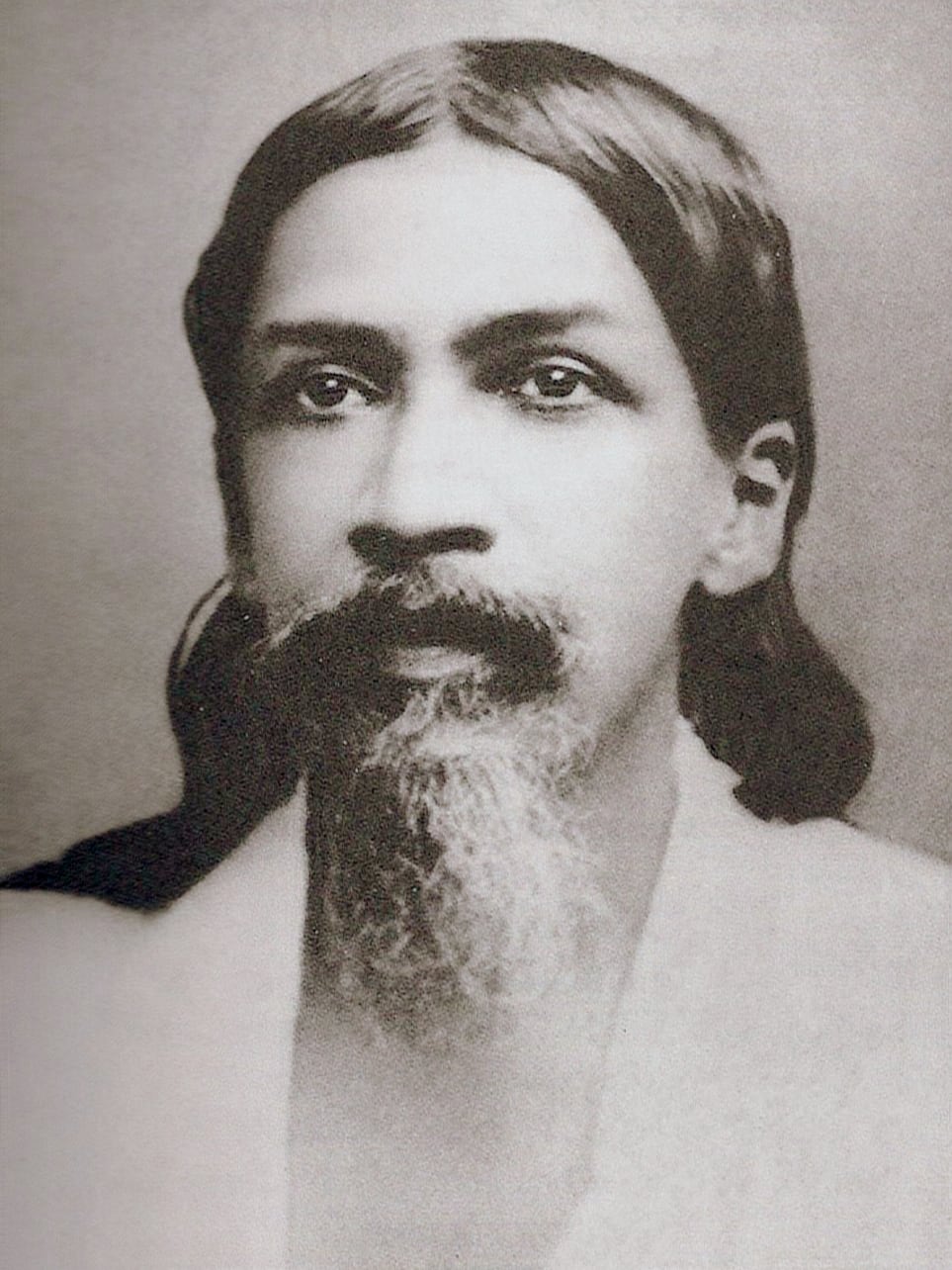
Sri Aurobindo
Concordano su: Che cos'è l'Assoluto? Dio esiste? · Chi sono io? Esiste un vero sé? · Che cosa accade dopo la morte?
Alice A. Bailey
Concordano su: Che cos'è l'Assoluto? Dio esiste? · Chi sono io? Esiste un vero sé? · Perché soffriamo?
Huineng
Concordano su: Come si raggiunge la liberazione o la salvezza? · Serve un maestro? · Il mondo è reale?
La pensa diversamente da

Rabia al-Adawiyya
Si scontrano su: Che cosa accade dopo la morte?
Shinran
Si scontrano su: Che cosa accade dopo la morte?

Mirabai
Si scontrano su: Che cos'è l'Assoluto? Dio esiste? · Perché soffriamo? · Come si raggiunge la liberazione o la salvezza?

Chaitanya Mahaprabhu
Si scontrano su: Che cosa accade dopo la morte?
Aneddoti e racconti
Aneddoti e racconti
Documentato1896–1898
The boy in Holland Day's photographs
Origine del racconto: Account reconstructed by Jean and Kahlil Gibran from the correspondence of Day and Jessie Beale; the photographs are held by the Library of Congress (LCCN 95503209) and the Metropolitan Museum.
Fonte: Gibran, Jean y Gibran, Kahlil. Kahlil Gibran: His Life and World. Boston: New York Graphic Society, 1974 (ed. rev. Nueva York: Interlink, 1991).
Contestato1908
Spirits Rebellious on the bonfire
Origine del racconto: The burning comes from Barbara Young, This Man from Lebanon (1945); Waterfield and Bushrui-Jenkins confirm the scandal but find no record of a formal excommunication.
Fonte: Young, Barbara. This Man from Lebanon: A Study of Kahlil Gibran. Nueva York: Alfred A. Knopf, 1945.
Documentato1908–1931
The editing evenings with Mary Haskell
Origine del racconto: Mary Haskell's journals and letters, held at the University of North Carolina and edited by Virginia Hilu in Beloved Prophet (1972).
Fonte: Hilu, Virginia (ed.). Beloved Prophet: The Love Letters of Kahlil Gibran and Mary Haskell, and Her Private Journal. Nueva York: Alfred A. Knopf, 1972.
Documentato1912–1931
Twenty years of letters without a meeting
Origine del racconto: Gibran's letters edited by Salma Haffar al-Kuzbari and Suheil Bushrui (al-Shu'la al-zarqa', 1979; Blue Flame, 1983).
Fonte: Bushrui, Suheil y Kuzbari, Salma Haffar (eds. y trads.). Blue Flame: The Love Letters of Kahlil Gibran to May Ziadah. Harlow: Longman, 1983.
Non verificabile1908–1910
'The William Blake of the twentieth century'
Origine del racconto: An attribution going back to Gibran himself and Barbara Young (1945); critical biographers find no trace of it in Rodin's papers.
Fonte: Waterfield, Robin. Prophet: The Life and Times of Kahlil Gibran. Londres: Allen Lane / Nueva York: St. Martin's Press, 1998.
Testimonianza1912
The portrait of ʿAbdu'l-Bahá
Origine del racconto: Juliet Thompson's diary (published as The Diary of Juliet Thompson, 1983); the portrait survives. The link with Jesus, the Son of Man is an interpretation by later scholars.
Insegnamenti
Insegnamenti
Le nozioni che articolano il suo pensiero, spiegate nel loro contesto.
Almustafa and the prophetic voicealmustafa-la-voz-profetica
Wisdom literature, Nietzsche and the biblical prophetic tradition read from the Mahjar.
Fonte: Bushrui, Suheil y Jenkins, Joe. Kahlil Gibran, Man and Poet: A New Biography. Oxford: Oneworld, 1998.
The god-selfel-yo-divino
Romantic pantheism, Blake and Sufi mysticism; an ethics of inwardness.
Reconciled oppositeslos-contrarios-reconciliados
Romanticism and Eastern Christian mysticism.
Love that does not possessel-amor-que-no-posee
A critique of patriarchal marriage in Mount Lebanon; a mysticism of love.
Work as love made visibletrabajo-amor-visible
An ethic of craft; Arts and Crafts; wisdom tradition.
The Mahjar and the Arabic prose poemmahyar-y-poema-en-prosa
Modern Arabic literature; Lebanese emigration to the Americas.
Fonte: Hawi, Khalil S. Kahlil Gibran: His Background, Character and Works. Beirut: American University of Beirut, 1963 (reed. Londres: Third World Centre, 1982).
Video
Video
Registrazioni, interviste e documentari. I video vengono riprodotti da YouTube; non sono ospitati qui.
وثائقي عن جبران خليل جبران (Documental sobre Gibran)
Documentario· AR· 26 min
Gibran National CommitteeCanale ufficiale
أرواح متمردة – جبران خليل جبران (Espíritus rebeldes)
Documentario· AR· 53 min
Al Jazeera Documentary
Khalil Gibran – Une vie, une œuvre (France Culture, 1990)
Documentario· FR· 1990· 78 min
ÉCLAIR BRUT
Khalil Gibran
Documentario· FR· 52 min
KTO TV
Gibran Khalil Gibran
Documentario· ES· 27 min
Canal22Canale ufficiale
Gibran Kahlil Gibran Museum, an in-depth explanation with Mr. Joseph Geagea
Documentario· EN· 26 min
Anthony Rahayel
Gibran, Naimy and Afifa Karam: Gender Politics in Mahjar Literature — Elizabeth Saylor
Conferenza· EN· 21 min
Gibran ChairCanale ufficiale
In Search of a Prophet — Kahlil Gibran: An Unparalleled Guide for Our Times (Paul-Gordon Chandler)
Conferenza· EN· 66 min
The Jerusalem Fund & Palestine Center
Kahlil Gibran ~ with Paul-Gordon Chandler
Conferenza· EN· 62 min
Banyen Books & Sound
Interview of Kahlil Gibran, artist, by David Ossman in Boston
Intervista· EN· 10 min
ArtistKahlil Gibran
Academy Conversations: Khalil Gibran's The Prophet
Intervista· EN· 2015· 12 min
OscarsCanale ufficiale
The Madman by Kahlil Gibran (audiolibro)
Registrazione di terzi· EN· 45 min
LearnOutLoud
Galleria
Galleria
Immagini con licenza verificata. Ciascuna conserva la sua paternità e la sua attribuzione.
Manoscritti
Manoscritti
Testimoni manoscritti e testi antichi, con il loro custode e le loro condizioni di consultazione.
EN · Latin · 1904–1931
Kahlil Gibran–Mary Haskell papers
- Testimone conservato
- Cartas autógrafas y diarios de Mary Haskell
- Custode
- Southern Historical Collection, University of North Carolina at Chapel Hill
Relazioni
Relazioni
Influenze, discepolati e affinità. Si distingue la relazione documentata dalla somiglianza individuata per analisi.
Ricevette l'influenza di
He devoted to him one of the portraits in al-Bada'i' wa-l-Tara'if (1923), as part of his interest in Islamic mysticism.
Relazione documentata
Ebbe corrispondenza con
Mary Haskell
Patron, editor and confidante from 1904 to 1931; hundreds of letters and her journal document the relationship.
Relazione documentata
Ebbe corrispondenza con
May Ziadeh
Literary and amorous correspondence from 1912 to 1931; they never met.
Relazione documentata
Incontrò
Mijaíl Naimy
Close friend from 1916, fellow member of the Pen League and author of a biography of Gibran (1934).
Relazione documentata
Incontrò
Fred Holland Day
Boston photographer and publisher who discovered him in 1896 and organised his first exhibition in 1904.
Relazione documentata
Incontrò
ʿAbdu'l-Bahá
Gibran drew his portrait in New York in 1912; the meeting left a lasting impression.
Relazione documentata
Ricevette l'influenza di
Friedrich Nietzsche
A decisive reading in his Paris and New York years; Thus Spoke Zarathustra is the formal antecedent of The Madman and The Prophet.
Relazione documentata
Ricevette l'influenza di
William Blake
A model as visionary poet-painter, acknowledged by Gibran and noted by all his biographers.
Relazione documentata
Ricevette l'influenza di
Central figure of his religious imagination; he devoted Jesus, the Son of Man (1928) to him, and he is the implicit model for Almustafa.
Relazione documentata
Influenzò
Osho commented on The Prophet in two volumes of talks, The Messiah (1987), and quoted it often.
Relazione documentata
Idee affini a
Love as a consuming and transforming force, and poetry as a mystical path, bring Gibran close to Rumi; no direct influence is documented.
Somiglianza individuata per analisi
Contemporaneo di
Contemporaries in the United States of the 1890s with no known contact; both contributed to the American reception of Eastern spirituality.
Somiglianza individuata per analisi
Collegato da altre schede
Fonti
Fonti
Bibliografia e cataloghi consultati per questa scheda.
- Bushrui, Suheil y Jenkins, Joe. Kahlil Gibran, Man and Poet: A New Biography. Oxford: Oneworld, 1998.
- Gibran, Jean y Gibran, Kahlil. Kahlil Gibran: His Life and World. Boston: New York Graphic Society, 1974 (ed. rev. Nueva York: Interlink, 1991).
- Waterfield, Robin. Prophet: The Life and Times of Kahlil Gibran. Londres: Allen Lane / Nueva York: St. Martin's Press, 1998.
- Hilu, Virginia (ed.). Beloved Prophet: The Love Letters of Kahlil Gibran and Mary Haskell, and Her Private Journal. Nueva York: Alfred A. Knopf, 1972.
- Naimy, Mikhail. Kahlil Gibran: A Biography. Nueva York: Philosophical Library, 1950 (orig. árabe, Beirut, 1934).
- Young, Barbara. This Man from Lebanon: A Study of Kahlil Gibran. Nueva York: Alfred A. Knopf, 1945.
- Wikidata, «Kahlil Gibran» (Q47737).
- Hawi, Khalil S. Kahlil Gibran: His Background, Character and Works. Beirut: American University of Beirut, 1963 (reed. Londres: Third World Centre, 1982).
- Project Gutenberg: Gibran, Kahlil, The Prophet (Nueva York: Knopf, 1923), ebook n.º 58585; The Madman (1918), n.º 5616; The Forerunner (1920), n.º 54580.
- Gibran National Committee (Comité National Gibran), Museo Gibran, Bsharri.
- Telfair Museums, Savannah: colección Kahlil Gibran (legado de Mary Haskell Minis, 1950).
- Wikipedia (en), «Kahlil Gibran», consultada el 25 de octubre de 2026 (sección «Later years and death»).
- Wikisource en árabe: textos de Yubrán Jalil Yubrán (al-Ajniha al-mutakassira; Dam'a wa-ibtisama, 1914; al-Arwah al-mutamarrida, 1908; Nubdha fi fann al-musiqa, 1905).
- Bushrui, Suheil y Kuzbari, Salma Haffar (eds. y trads.). Blue Flame: The Love Letters of Kahlil Gibran to May Ziadah. Harlow: Longman, 1983.
- Library of Congress, Prints and Photographs Division: F. Holland Day, retratos de Kahlil Gibran (c. 1898), LCCN 95503209.
- Wikisource en inglés: Gibran, Kahlil, Sand and Foam: A Book of Aphorisms (Nueva York: Knopf, 1926).
- Osho (Bhagwan Shree Rajneesh). The Messiah: Commentaries on Kahlil Gibran's The Prophet. 2 vols. Rajneeshpuram / Poona: Rajneesh Foundation International, 1987.
- Titolare dei diritti
- Gibran National Committee (Bsharri), beneficiario por legado testamentario de los derechos de autor del escritor. Las obras publicadas hasta 1930 son de dominio público en EE. UU.; toda la obra del autor (m. 1931) es de dominio público en la UE desde 2002 y en España desde 2012. Las traducciones y ediciones modernas tienen sus propios derechos.
- Sito ufficiale
- www.gibrankhalilgibran.org/
In attesa di conferma
Ciò che questa scheda non ha ancora potuto chiarire. Preferiamo dirlo piuttosto che riempirlo.
- Confirmar el día exacto de publicación de The Prophet (septiembre de 1923, según la tradición editorial de Knopf).
- Localizar ISBN verificados de ediciones en árabe moderno, ruso e hindi de The Prophet y de al-Ajniha al-mutakassira (no figuran en Open Library).
- Verificar ISBN de las traducciones inglesas de A Tear and a Smile (Nahmad, 1950) y The Broken Wings (Ferris, 1957).
- Fechar y registrar las piezas dramáticas póstumas (The Blind y las cinco obras breves en árabe publicadas entre 1973 y 1993).
- Comprobar si la Southern Historical Collection (UNC) ofrece digitalización de los papeles Haskell-Gibran y su signatura.
- The Earth Gods (1931), The Wanderer (1932) y The Garden of the Prophet (1933) entrarán en dominio público en EE. UU. en 2027, 2028 y 2029: añadirlos entonces a la sala de lectura si hay texto en línea.
Ricerca effettuata il 2026-10-25