Buddismo · Mahayana
Shinran
親鸞 · 愚禿釋親鸞 · 範宴 · 藤井善信 · 見真大師
1173 – 1263Persona storicamente documentata
Monaco giapponese (1173-1263), discepolo di Hōnen e fondatore postumo della scuola Jōdo Shinshū, la «vera scuola della Terra Pura». Dopo vent'anni sul monte Hiei abbracciò l'invocazione del nome di Amida, fu esiliato nel 1207 e da allora visse «né monaco né laico», sposato e con figli. Insegnò che la rinascita nella Terra Pura non dipende dallo sforzo personale, ma dalla fiducia (shinjin) concessa dal Voto di Amida. La sua opera maggiore è il Kyōgyōshinshō; le sue parole più lette, quelle del Tannishō.
- opere
- 30opere
- edizioni
- 37edizioni
- citazioni
- 9citazioni
- video
- 11video
- immagini
- 6immagini
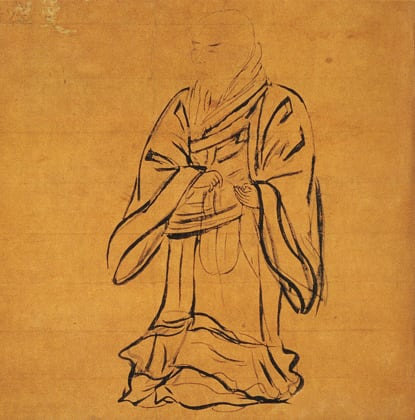
Retrato de Shinran «del espejo» (Kagami no goei) · Public domain
Con le sue parole
«I, Shaku Shinran, the foolish bald-headed one, in the year of the metal rooster of the Kennin era [1201], abandoned the sundry practices and took refuge in the Primal Vow.»Kyōgyōshinshō, epílogo del capítulo sobre los budas y tierras transformados. Traducción propia.
Shinran
Kyōgyōshinshō (The True Teaching, Practice and Realization of the Pure Land Way)
Per cominciare, un'opera
Kyōgyōshinshō (The True Teaching, Practice and Realization of the Pure Land Way)La sua idea centrale
Other Power (tariki): A term taken from Tanluan's commentary that Shinran makes the key to his whole teaching.
Vederlo nel contesto
Biografia
4 min di lettura
Traduzione assistita dall'originale spagnolo, in attesa di revisione da parte di un traduttore madrelingua.
Un nobile minore sulla montagna
Shinran nacque nel 1173 a Hino, a sud-est di Kyōto, in un ramo modesto del clan Fujiwara; il padre, Hino Arinori, era un funzionario di corte. Del bambino non si sa quasi nulla con certezza. La biografia composta nel 1295 dal suo pronipote Kakunyo racconta che fu ordinato a nove anni da Jien, abate dello Shōren-in e futuro patriarca del Tendai, e che trascorse i vent'anni successivi sul monte Hiei. Le lettere della moglie, Eshinni, precisano che lì prestò servizio come «monaco di sala» (dōsō) in uno dei padiglioni dedicati all'invocazione ininterrotta del buddha Amida.
Il sogno del Rokkakudō e l'incontro con Hōnen
Nel 1201, a ventinove anni, lasciò la montagna. Secondo il racconto di Eshinni, si ritirò per cento giorni nel Rokkakudō di Kyōto, il tempio dedicato al principe Shōtoku, e all'alba del novantacinquesimo giorno ricevette in sogno una rivelazione del principe. Si recò allora da Hōnen, che a Yoshimizu predicava che bastava l'invocazione del nome di Amida (nembutsu) per rinascere nella sua Terra Pura, e lo ascoltò per altri cento giorni. Anni dopo Shinran lo riassunse in una frase celebre: quell'anno «abbandonai le pratiche miste e presi rifugio nel Voto originale».
Fu un discepolo vicino al maestro. Nel 1205 Hōnen gli permise di copiare la sua opera principale, il Senchakushū, e il suo ritratto, e scrisse di suo pugno il nuovo nome del discepolo. Shinran ne lasciò un ricordo commosso nell'epilogo del Kyōgyōshinshō, perché pochi ricevettero quel privilegio.
Né monaco né laico
Nel 1207 la corte proibì il movimento del nembutsu in seguito a uno scandalo in cui erano coinvolte dame di palazzo; quattro discepoli furono giustiziati, Hōnen esiliato nella provincia di Tosa e Shinran in quella di Echigo, sulla costa del Mar del Giappone, ridotto allo stato laicale con il nome di Fujii Yoshizane. Egli rispose assumendo un'identità nuova: non era più monaco, ma nemmeno laico, e da allora si firmò Gutoku, «lo stolto dalla testa rasata». In un momento imprecisato di quegli anni sposò Eshinni, figlia, secondo la tradizione, di Miyoshi Tamenori, un funzionario con interessi nell'Echigo, dalla quale ebbe diversi figli.
Graziato nel 1211, non tornò a Kyōto; Hōnen morì l'anno seguente. Nel 1214 si trasferì con la famiglia nella regione del Kantō, nell'est del paese. Eshinni avrebbe poi ricordato un episodio di quel viaggio: Shinran cominciò a recitare mille volte i tre sutra della Terra Pura a beneficio degli esseri e si interruppe dopo qualche giorno, comprendendo che stava confidando nel proprio sforzo anziché nel nome di Amida.
Vent'anni nel Kantō
Per circa due decenni Shinran visse nella provincia di Hitachi e nei dintorni, insegnando a contadini, guerrieri e mercanti che si riunivano in piccole sale di pratica (dōjō), non in templi. A quest'epoca risale la prima stesura del Kyōgyōshinshō, che la scuola data al 1224 sulla base di un riferimento interno; il manoscritto autografo, il cosiddetto esemplare di Bandō, con correzioni di tutta una vita, è conservato nello Higashi Honganji ed è Tesoro nazionale.
Kyōto: la scrittura della vecchiaia
Intorno al 1235, ormai oltre i sessant'anni, tornò a Kyōto, dove visse fino alla morte in case prestate, sostenuto dalle offerte dei seguaci del Kantō. Fu il periodo più fecondo della sua scrittura: completò il Kyōgyōshinshō, che già nel 1247 lasciava copiare; compose in giapponese centinaia di inni (wasan) che rendevano la dottrina accessibile a chi non leggeva il cinese; scrisse commenti a testi di altri maestri e intrattenne una fitta corrispondenza con le comunità dell'est.
Quella corrispondenza rivela anche il dramma dei suoi ultimi anni. Le comunità del Kantō si divisero tra chi riteneva che, salvati da Amida, si potesse compiere il male senza preoccupazione, e chi esigeva sforzi morali e pratiche aggiuntive. Shinran mandò il figlio Zenran a riportare l'ordine, ma questi diffuse insegnamenti propri, sostenendo di aver ricevuto dal padre una dottrina segreta. Nel 1256, a ottantatré anni, Shinran lo ripudiò per lettera.
Una fede ricevuta
Il centro del suo pensiero è una radicalizzazione dell'insegnamento di Hōnen. Per Shinran nessun atto umano, nemmeno la recitazione del nome, può produrre la rinascita nella Terra Pura: tutto procede dal «potere dell'altro» (tariki), il Voto con cui Amida si è impegnato a salvare tutti gli esseri. Decisiva è la fiducia sincera (shinjin), che non è una conquista del credente, ma un dono che Amida gli concede; dall'istante in cui sorge, la rinascita è già assicurata in questa stessa vita. L'invocazione del nome cessa di essere una pratica meritoria e diventa espressione di gratitudine.
La morte e la scuola
Morì a Kyōto nell'undicesimo mese del 1262 secondo il calendario giapponese, ossia già nel gennaio del 1263, a ottantanove anni, nella casa del fratello minore. La figlia Kakushinni, che lo aveva assistito, scrisse alla madre nell'Echigo; la risposta di Eshinni, giunta fino a noi, consola la figlia assicurandole che, comunque fosse morto, la rinascita di Shinran nella Terra Pura era certa. Nel 1272 Kakushinni fece costruire a Ōtani un mausoleo che sarebbe diventato lo Honganji, e Kakunyo, suo nipote, vi organizzò attorno la scuola Jōdo Shinshū.
Intorno al 1290 un discepolo, Yuien, raccolse nel Tannishō parole del maestro udite dalla sua viva voce, per correggere le deviazioni che osservava nella propria comunità; con il suo paradosso dell'«uomo malvagio» come oggetto del Voto, è diventato dalla fine dell'Ottocento il testo più letto di Shinran. All'inizio del Novecento alcuni storici arrivarono a dubitare della sua esistenza storica, perché quasi tutto ciò che si sapeva di lui proveniva dalla sua stessa scuola; la scoperta, nel 1921, delle lettere di Eshinni negli archivi del Nishi Honganji chiuse la questione. Oggi i due rami principali della Jōdo Shinshū costituiscono la più grande famiglia buddhista del Giappone.
Fonti: Dobbins, James C. Jōdo Shinshū: Shin Buddhism in Medieval Japan. Bloomington: Indiana University Press, 1989 (reimpr. Honolulu: University of Hawai'i Press, 2002, ISBN 9780824826208). · Dobbins, James C. Letters of the Nun Eshinni: Images of Pure Land Buddhism in Medieval Japan. Honolulu: University of Hawai'i Press, 2004. ISBN 9780824826673. · Hirota, Dennis (dir.) et al. (trads.). The Collected Works of Shinran. 2 vols. Kioto: Jōdo Shinshū Hongwanji-ha, 1997. Edición en línea del Hongwanji. · Bloom, Alfred. Shinran's Gospel of Pure Grace. Tucson: University of Arizona Press, 1965. ISBN 9780816504053. · Ueda, Yoshifumi; Hirota, Dennis. Shinran: An Introduction to His Thought. Kioto: Hongwanji International Center, 1989.
Cronologia
La vita, anno per anno
Ogni punto è un evento documentato. Fai clic per leggerlo, con la sua fonte e il suo grado di certezza.
14 maggio 11730 anniHino (Kioto)
Birth
Born on the 1st day of the 4th month of Jōan 3 (14 May 1173 Julian; 21 May proleptic Gregorian, the date celebrated by the school), son of Hino Arinori.
DocumentatoWikidata, entidad Q512934 «Shinran» (P31=Q5; 28 enlaces entre wikis; nacimiento 1173, muerte 1263 en Kioto; firma 愚禿釋親鸞).
Dopo la sua morte
- 1272Ōtani mausoleum
- 1295Kakunyo's illustrated biography
- 1876Title of Kenshin Daishi
- 1921Discovery of Eshinni's letters
14 maggio 1173 · 0 anni
Birth
Born on the 1st day of the 4th month of Jōan 3 (14 May 1173 Julian; 21 May proleptic Gregorian, the date celebrated by the school), son of Hino Arinori.
Documentato
1181 · 8 anni
Ordination
According to Kakunyo's biography, he receives the tonsure at nine from Jien under the name Han'en.
Tradizione
1201 · 28 anni
Rokkakudō retreat and joining Hōnen
Leaves Mount Hiei after twenty years, receives a revelatory dream at the Rokkakudō and becomes Hōnen's disciple: "I abandoned the sundry practices and took refuge in the Primal Vow".
Documentato
1205 · 32 anni
Copy of the Senchakushū
Hōnen allows him to copy the Senchakushū and his portrait and gives him a new name, according to the postscript of the Kyōgyōshinshō.
Documentato
1207 · 34 anni
Exile to Echigo
The Jōgen persecution: Hōnen is exiled to Tosa and Shinran to Echigo under a lay name. From then on he declares himself "neither monk nor layman" and signs as Gutoku.
Documentato
1211 · 38 anni
Pardon
Receives a pardon but remains in Echigo; Hōnen dies in Kyoto the following year.
Documentato
1214 · 41 anni
Move to Kantō
Settles with his family in the Kantō region, where he will teach for some twenty years.
Documentato
1224 · 51 anni
First draft of the Kyōgyōshinshō
The date the school assigns to the composition of the Kyōgyōshinshō, on the basis of an internal reference to the year Gennin 1, and regards as its founding.
Probabile
ca. 1235 · 62 anni
Return to Kyoto
Returns to Kyoto at about sixty-two; he will live there on the donations of his followers.
Probabile
1248 · 75 anni
Hymns of the Pure Land and of the Masters
Composes the Jōdo wasan and the Kōsō wasan, aged seventy-five.
Documentato
1256 · 83 anni
Disowning of Zenran
On the 29th day of the 5th month he signs the letter breaking with his son Zenran over his teachings.
Documentato
1258 · 85 anni
Hymns of the Dharma-Ages
Completes the Shōzōmatsu wasan; the same year his disciple Kenchi records his words on jinen hōni.
Documentato
9 gennaio 1263 · 89 anni
Death
Dies on the 28th day of the 11th month of Kōchō 2 (9 January 1263 Julian; 16 January proleptic Gregorian) at his brother Jin'u's house, aged eighty-nine.
Documentato
1272
Ōtani mausoleum
His daughter Kakushinni builds a mausoleum that will be the origin of the Honganji.
Documentato
1295
Kakunyo's illustrated biography
Kakunyo composes the Godenshō, the basis of the traditional image of Shinran.
Documentato
1876
Title of Kenshin Daishi
Emperor Meiji grants him the posthumous title Kenshin Daishi.
Documentato
1921
Discovery of Eshinni's letters
His wife's letters are discovered in the Nishi Honganji archives, confirming the essential facts of his life.
Documentato
Opere
Opere essenziali
Le opere senza le quali non si comprende la sua eredità.
Shinran
Kyōgyōshinshō (The True Teaching, Practice and Realization of the Pure Land Way)
Opera scritta · ca. 1247
Kyōgyōshinshō (The True Teaching, Practice and Realization of the Pure Land Way)
顕浄土真実教行証文類
Shinran's major doctrinal work and the founding text of Jōdo Shinshū. In six chapters —Teaching, Practice, Shinjin, Realization, True Buddha and Land, Transformed Buddhas and Lands— it gathers and comments on hundreds of passages from sutras and the seven Pure Land patriarchs to show that everything, from practice to entrusting, is transferred by Amida. It includes the "Hymn of True Shinjin and the Nembutsu" (Shōshinge) and an autobiographical postscript.
4 edizioni
Shinran
Shōshinge (Hymn of True Shinjin and the Nembutsu)
Opera scritta · ca. 1247
Shōshinge (Hymn of True Shinjin and the Nembutsu)
正信念仏偈
Sixty seven-character verses (120 lines) summarising Jōdo Shinshū doctrine: they praise Amida and his Vow and celebrate the teaching of the seven patriarchs of India, China and Japan. Since Rennyo in the 15th century it has been the text recited daily by the school's followers.
1 edizione
Shinran
Sanjō wasan (The Three Collections of Hymns)
Raccolta posteriore · ca. 1258
Sanjō wasan (The Three Collections of Hymns)
三帖和讃
Some three hundred and fifty four-line Japanese hymns that spread the doctrine among followers who could not read Chinese and form, with the Shōshinge, the core of the school's liturgy. They celebrate Amida and his land, the seven patriarchs and the situation of beings in the final Dharma age, culminating in Gutoku's hymns of lament and reflection.
2 edizioni

Raccolta posteriore · ca. 1288
Tannishō (A Record in Lament of Divergences)
歎異抄
A short book of eighteen chapters with preface and epilogue, the most read text of the tradition. It contains the most famous sayings attributed to Shinran: "if even a good person attains birth, how much more the evil person!", that he has not a single disciple, that he never recited the nembutsu for his parents, or that the Vow, properly considered, was "for me, Shinran, alone". Popularised from the Meiji era, it influenced 20th-century Japanese philosophers and writers.
7 edizioni
Tutta la sua opera (30)
Shinran
Kyōgyōshinshō, ch. 1: Chapter on Teaching
The Conscious LibraryKyōgyōshinshō, ch. 1: Chapter on Teaching
1247
Shinran
Kyōgyōshinshō, ch. 2: Chapter on Practice
The Conscious LibraryKyōgyōshinshō, ch. 2: Chapter on Practice
1247
Shinran
Kyōgyōshinshō, ch. 3: Chapter on Shinjin
The Conscious LibraryKyōgyōshinshō, ch. 3: Chapter on Shinjin
1247
Shinran
Kyōgyōshinshō, ch. 4: Chapter on Realization
The Conscious LibraryKyōgyōshinshō, ch. 4: Chapter on Realization
1247
Shinran
Kyōgyōshinshō, ch. 5: Chapter on the True Buddha and Land
The Conscious LibraryKyōgyōshinshō, ch. 5: Chapter on the True Buddha and Land
1247
Shinran
Kyōgyōshinshō, ch. 6: Chapter on Transformed Buddha-Bodies and Lands
The Conscious LibraryKyōgyōshinshō, ch. 6: Chapter on Transformed Buddha-Bodies and Lands
1247
Shinran
Jōdo monrui jushō (Passages on the Pure Land Way)
The Conscious LibraryJōdo monrui jushō (Passages on the Pure Land Way)
1251
Shinran
Gutokushō (Gutoku's Notes)
The Conscious LibraryGutokushō (Gutoku's Notes)
1255
Shinran
Nyūshutsu nimon geju (Hymn of the Two Gateways of Entrance and Emergence)
The Conscious LibraryNyūshutsu nimon geju (Hymn of the Two Gateways of Entrance and Emergence)
1256
Shinran
Jōdo sangyō ōjō monrui (Passages on the Types of Birth in the Three Pure Land Sutras)
The Conscious LibraryJōdo sangyō ōjō monrui (Passages on the Types of Birth in the Three Pure Land Sutras)
1255
Shinran
Songō shinzō meimon (Notes on the Inscriptions on Sacred Scrolls)
The Conscious LibrarySongō shinzō meimon (Notes on the Inscriptions on Sacred Scrolls)
1255
Shinran
Ichinen tanen mon'i (Notes on Once-calling and Many-calling)
The Conscious LibraryIchinen tanen mon'i (Notes on Once-calling and Many-calling)
1257
Shinran
Yuishinshō mon'i (Notes on Essentials of Faith Alone)
The Conscious LibraryYuishinshō mon'i (Notes on Essentials of Faith Alone)
1250
Shinran
Nyorai nishu ekō mon (Passages on the Two Aspects of the Tathāgata's Directing of Virtue)
The Conscious LibraryNyorai nishu ekō mon (Passages on the Two Aspects of the Tathāgata's Directing of Virtue)
1256
Shinran
Mida nyorai myōgō toku (The Virtue of the Name of Amida Tathāgata)
The Conscious LibraryMida nyorai myōgō toku (The Virtue of the Name of Amida Tathāgata)
1260
Shinran
Jōdo wasan (Hymns of the Pure Land)
The Conscious LibraryJōdo wasan (Hymns of the Pure Land)
1248
Shinran
Kōsō wasan (Hymns of the Pure Land Masters)
The Conscious LibraryKōsō wasan (Hymns of the Pure Land Masters)
1248
Shinran
Shōzōmatsu wasan (Hymns of the Dharma-Ages)
The Conscious LibraryShōzōmatsu wasan (Hymns of the Dharma-Ages)
1258
Shinran
Kōtaishi Shōtoku hōsan (Hymns in Praise of Prince Shōtoku)
The Conscious LibraryKōtaishi Shōtoku hōsan (Hymns in Praise of Prince Shōtoku)
1255
Shinran
Dai Nihonkoku zokusan-ō Shōtoku taishi hōsan (Hymns to Prince Shōtoku, Ruler of Great Japan)
The Conscious LibraryDai Nihonkoku zokusan-ō Shōtoku taishi hōsan (Hymns to Prince Shōtoku, Ruler of Great Japan)
1257
Shinran
Jinen hōni shō (On Jinen Hōni)
The Conscious LibraryJinen hōni shō (On Jinen Hōni)
1258
Shinran
Mattōshō (Lamp for the Latter Ages)
The Conscious LibraryMattōshō (Lamp for the Latter Ages)
1333
Shinran
Goshōsoku shū (A Collection of Letters)
The Conscious LibraryGoshōsoku shū (A Collection of Letters)
1260
Shinran
Letter Disowning Zenran
The Conscious LibraryLetter Disowning Zenran
1256
Citazioni
Citazioni localizzate in un'opera precisa. Ciascuna porta con sé la sua provenienza e il suo grado di affidabilità.
I, Shaku Shinran, the foolish bald-headed one, in the year of the metal rooster of the Kennin era [1201], abandoned the sundry practices and took refuge in the Primal Vow.然愚禿釋鸞、建仁辛酉暦、棄雜行兮歸本願。
VerificataKyōgyōshinshō, epílogo del capítulo sobre los budas y tierras transformados. Traducción propia.
Citazioni apocrife o di attribuzione discussa (1)
«"Though my life come to its end and I return to the Pure Land, I shall come back again and again like the waves of Waka bay. When you are alone and rejoice, think that there are two; when you are two and rejoice, think that there are three: that other one is Shinran."»
This is the so-called Gorinmatsu no gosho ("Deathbed Writing"), dated the 11th month of 1262 and signed "Gutoku Shinran, fully ninety years old". Widespread in popular piety, scholarship regards it as apocryphal: it appears neither in the early collections of his writings nor in Kakunyo's biography. It was transmitted in later compilations, such as Shimaji Daitō's Seiten (1928).
Ultime parole
Attribuzione tradizionale
«"He did not mingle worldly matters in his words; he spoke only of the depth of the Buddha's benevolence. His voice uttered nothing else: the invocation of the name never ceased."»口に世事をまじへず、ただ仏恩のふかきことをのぶ。声に余言をあらはさず、もつぱら称名たゆることなし。
No last words of Shinran survive. This passage from Kakunyo's biography (Godenshō, 1295), written thirty-two years later, describes his last days: from the end of the 11th month he was ill, spoke only of gratitude to the Buddha and recited Amida's name unceasingly, until he died lying on his right side, head to the north and face to the west. Eshinni's letter to her daughter Kakushinni, written after receiving the news, transmits no words of his and simply affirms that his birth in the Pure Land was certain. The "Deathbed Writing" circulating under his name is apocryphal.
Fonte: Kakunyo. Honganji Shōnin Shinran den'e (Godenshō, «Biografía ilustrada de Shinran»), 1295. Trad. inglesa en The Life of Shinran Shonin: The Journey to Self-Acceptance, de Alfred Bloom (Leiden: Brill, 1968).
Chiedi
Ciò a cui risponde la sua opera
Dodici grandi domande dell'umanità e ciò che i suoi testi permettono di rispondere, con riferimenti. Non gli mettiamo mai parole in bocca.
Che cos'è l'Assoluto? Dio esiste?
Amida is compassion that calls, and also the form of the formless
Personale e impersonale insiemeLo dice espressamente
For Shinran, the ultimate manifests as Amida, the Buddha of Immeasurable Light and Immeasurable Life, whose Vow seeks out and embraces beings: a face that knows and calls. But Amida is not a creator god, and Shinran does not stop at the face. Following Tanluan, in his Notes on «Essentials of Faith Alone» he distinguishes a dharma-body as suchness, without colour or form, and a dharma-body as compassionate means, from which the bodhisattva Dharmākara and his Vow arise. In the brief On Jinen Hōni he says it more plainly: the supreme Buddha is formless, and Amida is the means by which we come to know that reality which works of itself (jinen). The personal face is true, but it is the form the formless takes to reach beings.
Confronta questa domanda con altri maestriChi sono io? Esiste un vero sé?
No speculation on the self: he knows himself a fool full of passions
Non si è pronunciato
Shinran does not pronounce on the ontology of the self; he takes the Buddhist framework for granted and does not discuss it. What he says of himself is of another order: existential and moral. He calls himself Gutoku, the foolish bald one; in the Hymns of the Dharma Ages he confesses that, though he has taken refuge in the true teaching, he is false and insincere and there is no trace of a pure heart in him. In the chapter on shinjin of the Kyōgyōshinshō he takes from Shandao the two sides of deep faith: recognising oneself as an ordinary being, bound by karma from time without beginning, with no way out by one's own powers, and trusting at the same time that Amida's Vow embraces one. Who am I, for Shinran, is answered in the light of the Vow, not by introspection.
Confronta questa domanda con altri maestriPerché soffriamo?
We are beings bound by blind passions, unable to escape by our own power
Brama e attaccamentoLo dice espressamente
Shinran locates the root of suffering in the blind passions (bonnō) that fill the ordinary being until the last moment of life, and in the karma carried from a beginningless past. What is specific to his diagnosis is what he adds: in the final age of the Dharma, lamented in his Hymns of the Dharma Ages, no one can cut off those passions by their own effort. The Tannishō, compiled by his disciple Yuien, attributes to him the idea that the good and evil we do depend on past karma more than on our will. Hence the remedy is not a discipline but Amida's Vow, which embraces beings as they are, without requiring them first to stop suffering or desiring.
Confronta questa domanda con altri maestriChe cosa accade dopo la morte?
With shinjin, birth is already settled: at death one attains nirvana
Vita eterna e resurrezioneLo dice espressamente
For Shinran, whoever has received shinjin is already, in this life, among those whose birth in the Pure Land is assured. That is why, in the first of the letters collected in Lamp for the Latter Ages, he holds that one need not wait for the hour of death nor rely on Amida's coming at the deathbed, as other schools taught: birth is settled at the moment shinjin arises. At death the ordinary being is born in the Pure Land, which for Shinran is not a paradise of enjoyment but the immediate realisation of great nirvana, as the chapter on realisation of the Kyōgyōshinshō sets out. And from there one returns to this world to guide others.
Confronta questa domanda con altri maestriCome si raggiunge la liberazione o la salvezza?
Not even faith is one's own merit: all is the work of Amida's Vow
Attraverso la grazia e l'amoreLo dice espressamente
Shinran takes the doctrine of other-power (tariki) further than anyone in his tradition. Birth in the Pure Land depends not on practices, merits or virtues but on Amida's Vow; and shinjin itself is not an act of the practitioner but Amida's mind given to him, as the third chapter of the Kyōgyōshinshō argues. Even the nembutsu is the activity of the name, not an effort. Hence the sentence the Tannishō attributes to him: if even the good person attains birth, how much more the evil one, because whoever relies on good works still leans on their own power. The human being neither prepares nor cooperates: he receives, and responds with gratitude.
Confronta questa domanda con altri maestriServe un maestro?
He has no disciples: all are companions receiving the same Vow
Comunità e tradizioneLo dice espressamente
Shinran acknowledges an immense debt to his teacher Hōnen: according to the Tannishō, he said that even if Hōnen had deceived him and he fell into hell for saying the nembutsu, he would have no regrets. And he devoted the Hymns of the Pure Land Masters to the seven patriarchs who transmitted the teaching from India onwards. But he refuses to occupy the place of teacher himself: the same text attributes to him the sentence «I, Shinran, do not have a single disciple», because shinjin is given by no human being but by Amida. Those who listen with him are companions on the way (dōbō), and the teaching lives in that community of equals and in the texts that transmit it, not in a personal authority.
Confronta questa domanda con altri maestriIl mondo è reale?
This world is a burning house; only the nembutsu is true
Apparenza sull'unica realtàLo dice espressamente
Shinran does not develop a metaphysics of the world, but he judges it harshly. In the epilogue of the Tannishō, his disciple Yuien records a sentence he attributes to him: for an ordinary being full of passions, in this impermanent world, which is like a burning house, all things are empty and false, with nothing true; only the nembutsu is true. The Hymns of the Dharma Ages also describe the period as the final age, in which the teaching declines and practices no longer bear fruit. The world is real as a place of suffering and karma, but lacks ultimate truth; the only true thing is what comes from Amida's Vow, and the Pure Land is a realm of light beyond any conceivable form.
Confronta questa domanda con altri maestriChe cos'è l'amore?
Our compassion falls short; only Amida's saves all
Compassione senza limitiLo dice espressamente
Shinran is clear-sighted about the limits of human love. The fourth chapter of the Tannishō attributes to him a distinction between two compassions: that of the path of sages, which consists in pitying, loving and caring for beings, but rarely manages to save them completely; and that of the Pure Land, which consists in saying the nembutsu, swiftly attaining buddhahood and, with great compassion, freely benefiting beings. However much one loves and pities in this life, that love does not persevere. True compassion is Amida's, whose Vow, according to a sentence the same text's epilogue attributes to him, was for him, Shinran, alone. The human response is gratitude and return to the world after birth.
Confronta questa domanda con altri maestriSiamo liberi o è tutto determinato?
Nothing rests on one's calculation: evil comes from karma, salvation from the Vow
Non c'è un agenteLo dice espressamente
Shinran radically distrusts self-will where salvation is concerned. In On Jinen Hōni he explains that birth in the Pure Land comes about of itself (jinen), without the practitioner's calculation (hakarai), because it is the working of the Vow; shinjin itself is given, not chosen. The Tannishō, compiled by Yuien, further attributes to him the idea that the good and evil we do depend on the conditions of past karma: if conditions led to it, one might kill a thousand people. But Shinran does not draw a licence from this: in his letters he rebukes those who justify evil by the Vow, like someone who takes poison because an antidote exists.
Confronta questa domanda con altri maestriPerché meditare o pregare?
The nembutsu is neither practice nor merit: it is gratitude to one who embraces
Amicizia con DioLo dice espressamente
Shinran does not teach meditation: he regards meditative practices and good works as efforts of self-power, insufficient in the final age. What remains is the nembutsu, saying the name of Amida. But its meaning changes completely: according to the Tannishō, for the one who says it, it is neither a practice nor a good act, because it is not done by one's own calculation and produces no merit. In the chapter on practice of the Kyōgyōshinshō he presents it as the working of the name itself, transferred by the Vow. Saying it is, at bottom, a response of gratitude to a compassion that has already embraced the person, as the opening lines of the Shōshinge express: I take refuge in the Tathāgata of Immeasurable Life.
Confronta questa domanda con altri maestriPuò la ragione conoscere l'ultimo?
The sutras and the masters, not one's own judgement, show the way
Scrittura e ragionamentoLo dice espressamente
Shinran's major work, the Kyōgyōshinshō, is largely an anthology: it gathers passages from the sutras and from the masters of India, China and Japan, and orders and comments on them to show the true teaching. His method is scriptural: authority lies in the Larger Sutra of Immeasurable Life, which reveals the Vow, and in the chain of the seven patriarchs. Shinran interprets with great freedom, sometimes reading the Chinese in unusual ways to draw out a new sense, but he does not appeal to autonomous reason; he distrusts one's own calculation (hakarai), which he treats as a way of leaning on self-power. The ultimate, nirvana or what is naturally so, lies beyond what the mind can conceive.
Confronta questa domanda con altri maestriRitirarsi dal mondo o trasformarlo?
Neither monk nor layman: ordinary family life is the place of the Vow
Contemplazione nell'azioneLo dice espressamente
Shinran broke with the monastic model in which he had trained for twenty years on Mount Hiei. After the exile of 1207 he declared himself, in the epilogue of the Kyōgyōshinshō, neither monk nor layman, and took as his surname the character for «bald». He married, had children and lived among peasants and ordinary people in the Kantō region, where the first communities formed. Since Amida's Vow embraces beings as they are, there is no need to abandon ordinary life to receive it: the home, the trade and the family are the place where shinjin is lived and answered with gratitude. He preached no organised social action, but no withdrawal either.
Confronta questa domanda con altri maestri
Affinità e tensioni
Affinità e tensioni
Calcolate domanda per domanda a partire dalle sue posizioni. Il perché di ogni accordo o contrasto, con un clic.
La pensa in modo simile a
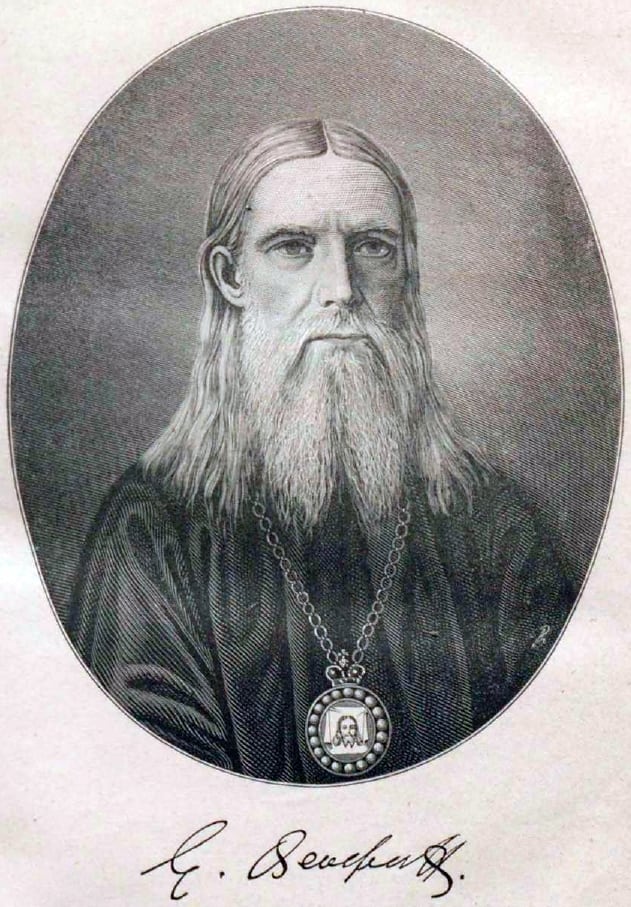
Theophan the Recluse
Concordano su: Che cosa accade dopo la morte? · Come si raggiunge la liberazione o la salvezza? · Serve un maestro?
Ibn Arabi
Concordano su: Che cos'è l'Assoluto? Dio esiste? · Che cosa accade dopo la morte? · Siamo liberi o è tutto determinato?
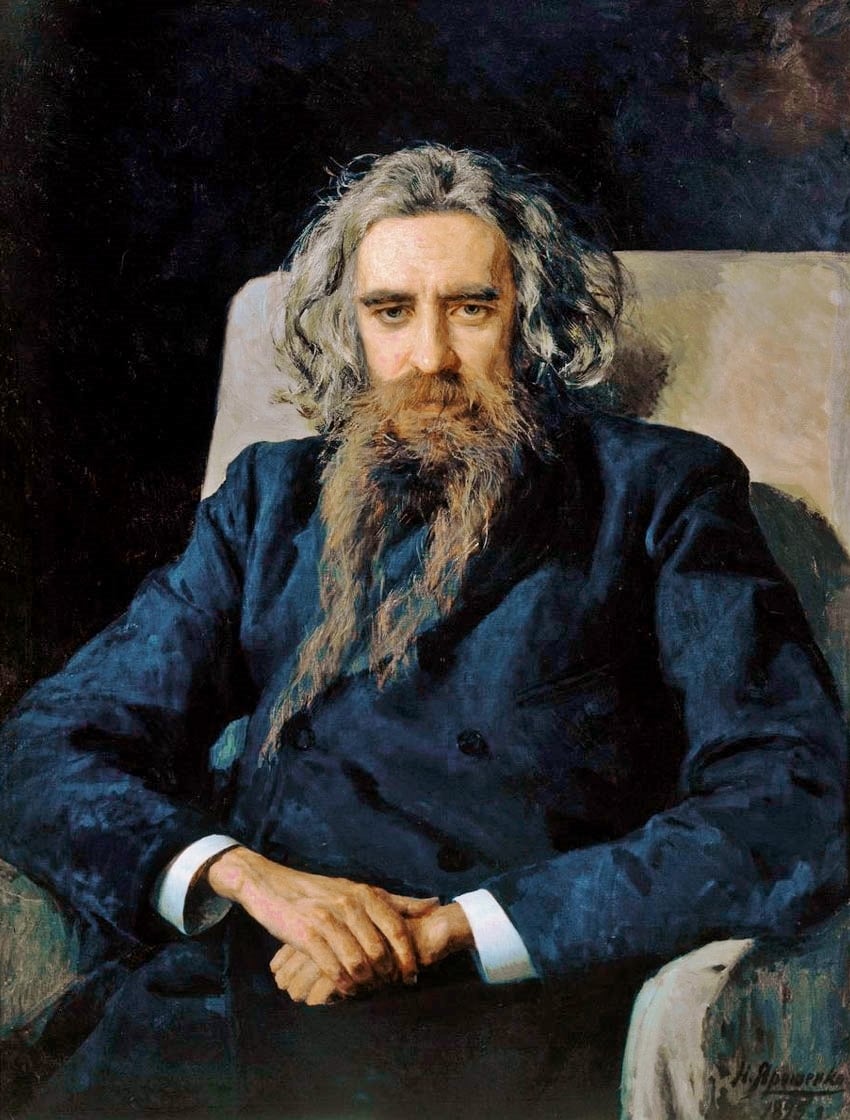
Vladimir Solovyov
Concordano su: Che cos'è l'Assoluto? Dio esiste? · Che cosa accade dopo la morte? · Come si raggiunge la liberazione o la salvezza?

Francis of Assisi
Concordano su: Che cosa accade dopo la morte? · Come si raggiunge la liberazione o la salvezza? · Serve un maestro?
La pensa diversamente da
Socrates
Si scontrano su: Il mondo è reale?
Empedocles
Si scontrano su: Che cosa accade dopo la morte?
Carl Gustav Jung
Si scontrano su: Che cos'è l'Assoluto? Dio esiste? · Perché soffriamo? · Che cosa accade dopo la morte?
Baruch Spinoza
Si scontrano su: Che cos'è l'Assoluto? Dio esiste? · Perché soffriamo? · Che cosa accade dopo la morte?
Aneddoti e racconti
Aneddoti e racconti
Testimonianza1201
The dream of the ninety-fifth day
Origine del racconto: Eshinni's letter to her daughter Kakushinni (1263), discovered in 1921 at Nishi Honganji: testimony of his wife, who heard it from him. The Kannon verse comes from the so-called Shinran muki and Kakunyo's biography.
Fonte: Dobbins, James C. Letters of the Nun Eshinni: Images of Pure Land Buddhism in Medieval Japan. Honolulu: University of Hawai'i Press, 2004. ISBN 9780824826673.
Testimonianza1214 y 1231
The interrupted thousand readings
Origine del racconto: Eshinni's letters (1263), written half a century later but by a direct witness.
Fonte: Dobbins, James C. Letters of the Nun Eshinni: Images of Pure Land Buddhism in Medieval Japan. Honolulu: University of Hawai'i Press, 2004. ISBN 9780824826673.
Documentato1207
"Neither monk nor layman"
Origine del racconto: Postscript of the Kyōgyōshinshō, in Shinran's own words; the list of those executed and exiled appears in the appendix to the Tannishō.
Documentato1256
The disowning of Zenran
Origine del racconto: Letter of disownment (Kenchi's copy, Senju-ji) and letter to Shōshin of the same date, in the collections of Shinran's letters.
Documentato1263
Eshinni's letter to her daughter
Origine del racconto: Eshinni's autograph letters (Nishi Honganji), discovered in 1921 and published by Washio Kyōdō.
Fonte: Dobbins, James C. Letters of the Nun Eshinni: Images of Pure Land Buddhism in Medieval Japan. Honolulu: University of Hawai'i Press, 2004. ISBN 9780824826673.
Insegnamenti
Insegnamenti
Le nozioni che articolano il suo pensiero, spiegate nel loro contesto.
Other Power (tariki)tariki
Kyōgyōshinshō, Yuishinshō mon'i, letters and Tannishō.
Fonte: Ueda, Yoshifumi; Hirota, Dennis. Shinran: An Introduction to His Thought. Kioto: Hongwanji International Center, 1989.
True entrusting (shinjin)shinjin
Kyōgyōshinshō, third chapter (Shinjin).
The evil person as the true object of the Vow (akunin shōki)akunin-shoki
Tannishō, ch. 3; letters of the Mattōshō.
Fonte: Unno, Taitetsu (trad.). Tannisho: A Shin Buddhist Classic. Honolulu: Buddhist Study Center Press, 1984 (ed. rev. 1996). ISBN 9780938474043.
Naturalness (jinen hōni)jinen-honi
Jinen hōni shō (1258), recorded by Kenchi; Yuishinshō mon'i.
Neither monk nor layman (hisō hizoku)hiso-hizoku
Postscript of the Kyōgyōshinshō.
Fonte: Dobbins, James C. Jōdo Shinshū: Shin Buddhism in Medieval Japan. Bloomington: Indiana University Press, 1989 (reimpr. Honolulu: University of Hawai'i Press, 2002, ISBN 9780824826208).
The two aspects of transference: going and returning (ōsō ekō, gensō ekō)oso-genso-eko
Kyōgyōshinshō (chs. 1 and 4); Nyorai nishu ekō mon.
The truly settled (shōjōju)shojoju
Kyōgyōshinshō (chs. 3 and 4); Mattōshō, letter 1.
Video
Video
Registrazioni, interviste e documentari. I video vengono riprodotti da YouTube; non sono ospitati qui.
親鸞聖人の生涯~ご誕生から入滅まで~
Documentario· JA· 2024· 5 min
真宗大谷派東本願寺【公式】Canale ufficiale
立教開宗の書 教行信証《坂東本》の世界
Documentario· JA· 2023· 36 min
真宗大谷派東本願寺【公式】Canale ufficiale
本廟創立と東本願寺の歴史―親鸞聖人の示寂と大谷廟堂の創建―
Documentario· JA· 2021· 4 min
真宗大谷派東本願寺【公式】Canale ufficiale
「初めて学ぶ〈親鸞聖人のご生涯〉講座」第1回(比叡山時代の親鸞聖人)
Conferenza· JA· 2025· 63 min
浄土真宗本願寺派Canale ufficiale
2021 Annual Symposium: The Radical Other Power of Shinran (1173-1263)
Conferenza· EN· 2022· 107 min
UBC Asian StudiesCanale ufficiale
Mark Blum, "Critically Reading the Tannisho", February 10, 2017
Conferenza· EN· 2017· 77 min
Smith College Buddhist StudiesCanale ufficiale
Mark Unno - Shin Buddhism in Interreligious Dialogue: A World of Teaching and Learning
Conferenza· EN· 2010· 46 min
The University of British ColumbiaCanale ufficiale
Introduction to Buddhism-Shinran ①
Conferenza· EN· 2021· 22 min
American Buddhist Study Center
Shinran's Understanding of Pure Land Buddhism by Reverend Professor Kemmyo Taira Sato
Guarda su YouTube
Questo video non consente l'incorporamento; si apre su YouTube.
Shinran's Understanding of Pure Land Buddhism by Reverend Professor Kemmyo Taira Sato
Conferenza· EN· 2025· 89 min
The Buddhist SocietyCanale ufficiale
El Buda Amida y Su Tierra Pura y La Fe y el Nembutsu no son creados por nuestras mentes
Registrazione di terzi· ES· 2020· 14 min
Templo Internacional Amidaji de Hispanoamérica
Shinran et le bouddhisme de la Terre Pure - Sagesses bouddhistes - France 2
Documentario· FR· 2022· 15 min
Inspiration- Zen
Galleria
Galleria
Immagini con licenza verificata. Ciascuna conserva la sua paternità e la sua attribuzione.
Manoscritti
Manoscritti
Testimoni manoscritti e testi antichi, con il loro custode e le loro condizioni di consultazione.
ZH · Kanji con anotaciones en katakana · Redacción iniciada hacia 1224 y corregida hasta la década de 1250
顕浄土真実教行証文類 (坂東本)
- Testimone conservato
- Seis volúmenes con numerosas correcciones, tachaduras y hojas añadidas por el autor
- Custode
- Shinshū Ōtani-ha, Higashi Honganji (Kioto)
- Digitalizzazione
- commons.wikimedia.org/wiki/File:Kyogyoshinsho.jp…
JA · s. XIII
紙本墨画親鸞聖人像 (鏡御影)
- Testimone conservato
- Rollo colgante, tinta sobre papel, 35,2 × 33 cm
- Custode
- Jōdo Shinshū Hongwanji-ha, Nishi Honganji (Kioto)
- Digitalizzazione
- commons.wikimedia.org/wiki/File:Shinran_Shonin.j…
JA · Kana y kanji · 1256–1268
恵信尼消息
- Testimone conservato
- Diez cartas de Eshinni a su hija Kakushinni
- Custode
- Nishi Honganji (Kioto)
JA · Kanji y kana · Copia del siglo XV
歎異抄 (蓮如書写本)
- Testimone conservato
- Manuscrito más antiguo conservado del Tannishō, con la nota de Rennyo que restringe su lectura
- Custode
- Nishi Honganji (Kioto)
Relazioni
Relazioni
Influenze, discepolati e affinità. Si distingue la relazione documentata dalla somiglianza individuata per analisi.
Discepolo di
Hōnen
Shinran's teacher from 1201; Shinran regards him as the true master who revealed to him the nembutsu path and includes him among the seven patriarchs.
Relazione documentata
Famiglia di
Eshinni
His wife; her letters to their daughter Kakushinni (1256–1268) are the main independent source on his life.
Relazione documentata
Famiglia di
Kakushinni
His youngest daughter, who cared for him at the end of his life and founded the Ōtani mausoleum, origin of the Honganji.
Relazione documentata
Famiglia di
Zenran
His eldest son, whom he disowned in 1256 for spreading teachings he attributed to a secret transmission from his father.
Relazione documentata
Maestro di
Yuien
A Kantō disciple, compiler of the Tannishō around 1288.
Relazione documentata
Influenzò
Kakunyo
Shinran's great-grandson and third custodian of the mausoleum, author of the illustrated biography (1295) and organiser of the Honganji as a school.
Relazione documentata
Ricevette l'influenza di
First of the seven Pure Land patriarchs in the Shōshinge and the Kōsō wasan, for his presentation of the "easy path".
Relazione documentata
Contemporaneo di
Contemporaries in Kamakura-period Kyoto and founders of the two most numerous Japanese schools, with opposite paths: trust in Amida's power and seated practice. There is no record that they met.
Relazione documentata
Idee affini a
A distant contemporary: poverty, preaching to simple people and a movement that overflowed the religious institutions of its time. A typological comparison, without contact.
Somiglianza individuata per analisi
Collegato da altre schede
Fonti
Fonti
Bibliografia e cataloghi consultati per questa scheda.
- Wikidata, entidad Q512934 «Shinran» (P31=Q5; 28 enlaces entre wikis; nacimiento 1173, muerte 1263 en Kioto; firma 愚禿釋親鸞).
- Dobbins, James C. Jōdo Shinshū: Shin Buddhism in Medieval Japan. Bloomington: Indiana University Press, 1989 (reimpr. Honolulu: University of Hawai'i Press, 2002, ISBN 9780824826208).
- Dobbins, James C. Letters of the Nun Eshinni: Images of Pure Land Buddhism in Medieval Japan. Honolulu: University of Hawai'i Press, 2004. ISBN 9780824826673.
- Hirota, Dennis (dir.) et al. (trads.). The Collected Works of Shinran. 2 vols. Kioto: Jōdo Shinshū Hongwanji-ha, 1997. Edición en línea del Hongwanji.
- Bloom, Alfred. Shinran's Gospel of Pure Grace. Tucson: University of Arizona Press, 1965. ISBN 9780816504053.
- Ueda, Yoshifumi; Hirota, Dennis. Shinran: An Introduction to His Thought. Kioto: Hongwanji International Center, 1989.
- Kakunyo. Honganji Shōnin Shinran den'e (Godenshō, «Biografía ilustrada de Shinran»), 1295. Trad. inglesa en The Life of Shinran Shonin: The Journey to Self-Acceptance, de Alfred Bloom (Leiden: Brill, 1968).
- Akamatsu Toshihide. Shinran. Tokio: Yoshikawa Kōbunkan (Jinbutsu sōsho), 1961.
- «正信念仏偈», texto original de Shinran (final del capítulo de la Práctica del Kyōgyōshinshō), en Wikisource japonés, con nota sobre la variante del manuscrito autógrafo de Bandō.
- «善鸞義絶状» (carta de repudio de Zenran, 1256), texto según la copia de Kenchi conservada en el Senju-ji, en Wikisource japonés.
- Imadate, Tosui (trad.). The Tannisho (Tract on Deploring the Heterodoxies). Kioto: The Eastern Buddhist Society, 1928. Ejemplar digitalizado en Internet Archive.
- Yamabe, S.; Beck, L. Adams (trads.). Buddhist Psalms Translated from the Japanese of Shinran Shōnin. Londres: John Murray (Wisdom of the East), 1921. Project Gutenberg n.º 7015.
- Shinshū Ōtani-ha (Higashi Honganji). «親鸞聖人の生涯» (La vida de Shinran), sitio oficial.
- Unno, Taitetsu (trad.). Tannisho: A Shin Buddhist Classic. Honolulu: Buddhist Study Center Press, 1984 (ed. rev. 1996). ISBN 9780938474043.
- Suzuki, Daisetz Teitaro (trad.). The Kyōgyōshinshō. Kioto: Shinshū Ōtaniha, 1973; reed. como Shinran's Kyogyoshinsho, Nueva York: Oxford University Press, 2012. ISBN 9780199863105.
- Inagaki, Hisao (trad.). Kyōgyōshinshō: On Teaching, Practice, Faith, and Enlightenment. Berkeley: Numata Center for Buddhist Translation and Research (BDK English Tripiṭaka 105-I), 2003. ISBN 9781886439160.
- Ducor, Jérôme (trad.). Le Tannishô. Paris: Cerf (Patrimoines – Orient), 2011. ISBN 9782204093781.
- Wikipedia en japonés, «親鸞» (cronología, obras y títulos póstumos). Consultada el 25-10-2026 y contrastada con s2, s3 y s13.
- «歎異抄 (意訳聖典)», versión en japonés moderno publicada por el Honganji en Iyaku seiten (Naigai shuppan, 1923), en Wikisource japonés.
- Bandō, Shōjun; Stewart, Harold (trads.). Tannishō: Passages Deploring Deviations of Faith. Berkeley: Numata Center for Buddhist Translation and Research, 1996. ISBN 9781886439030.
- Titolare dei diritti
- Obra en dominio público. Las traducciones modernas pertenecen a sus traductores o editoriales; la traducción inglesa completa (The Collected Works of Shinran, 1997) es del Jōdo Shinshū Hongwanji-ha, que la ofrece gratuitamente en línea.
- Sito ufficiale
- www.higashihonganji.or.jp/about/shinran/
In attesa di conferma
Ciò che questa scheda non ha ancora potuto chiarire. Preferiamo dirlo piuttosto che riempirlo.
- Ediciones en español: no se ha localizado en catálogos (Open Library, búsquedas generales) ninguna traducción española publicada con ISBN del Kyōgyōshinshō ni del Tannishō; existen versiones de comunidades jōdo shinshū hispanohablantes sin datos editoriales comprobados y una traducción española de «Las canciones de Shinran Shōnin» de Beatrice Lane Suzuki en Internet Archive sin traductor identificado (no incluida en la sala de lectura). Buscar en la BNE y en el Hongwanji International Center.
- Fechas en calendario juliano (14-05-1173 y 09-01-1263, como Wikidata); la escuela celebra el 21 de mayo y el 16 de enero, equivalentes en gregoriano proléptico.
- Datación de obras menores aproximada (Jōdo monrui jushō, Nyūshutsu nimon geju, Nyorai nishu ekō mon, Mida nyorai myōgō toku, notas a los sutras); confirmar con la cronología de la edición Teihon Shinran Shōnin zenshū.
- Sala de lectura: no hay en línea un texto original completo del Kyōgyōshinshō ni del Tannishō en una fuente libre de derechos editoriales comprobada (WikiArc reproduce la edición anotada del Hongwanji). Se registran el Shōshinge, la carta a Zenran, la versión de 1923 del Tannishō, la traducción inglesa de Imadate (1928) y Buddhist Psalms (1921).
- Confirmar la condición de Bien Cultural Importante de las cartas de Eshinni y la autoría tradicional del «retrato del espejo» (Sen'amidabutsu).
- Relaciones con slugs no presentes en el catálogo del Atlas (honen, eshinni, kakushinni, zenran, yuien, kakunyo): revisar si se crean fichas.
- Vídeos: la conferencia de Kemmyo Taira Sato (The Buddhist Society) no es insertable (oEmbed 401); la emisión de France 2 procede de un canal de terceros.
Ricerca effettuata il 2026-10-25