Induismo · Bhakti
Mirabai
मीराबाई · મીરાંબાઈ
ca. 1498 – ca. 1547Storicità dibattuta
Poetessa e santa rajput del XVI secolo (1498 ca.-1547 ca.), devota di Krishna, di cui si dichiarò sposa. Principessa del clan Rathore di Merta, vedova dell'erede del Mewar, sfidò le norme della sua casta e della sua condizione, e la tradizione la ricorda perseguitata dalla famiglia del marito e scomparsa a Dwarka. Le si attribuiscono centinaia di canti (pada) ancora intonati in tutta l'India, benché quasi nessuno compaia in manoscritti anteriori al Settecento.
- opere
- 11opere
- edizioni
- 14edizioni
- citazioni
- 5citazioni
- video
- 11video
- immagini
- 7immagini
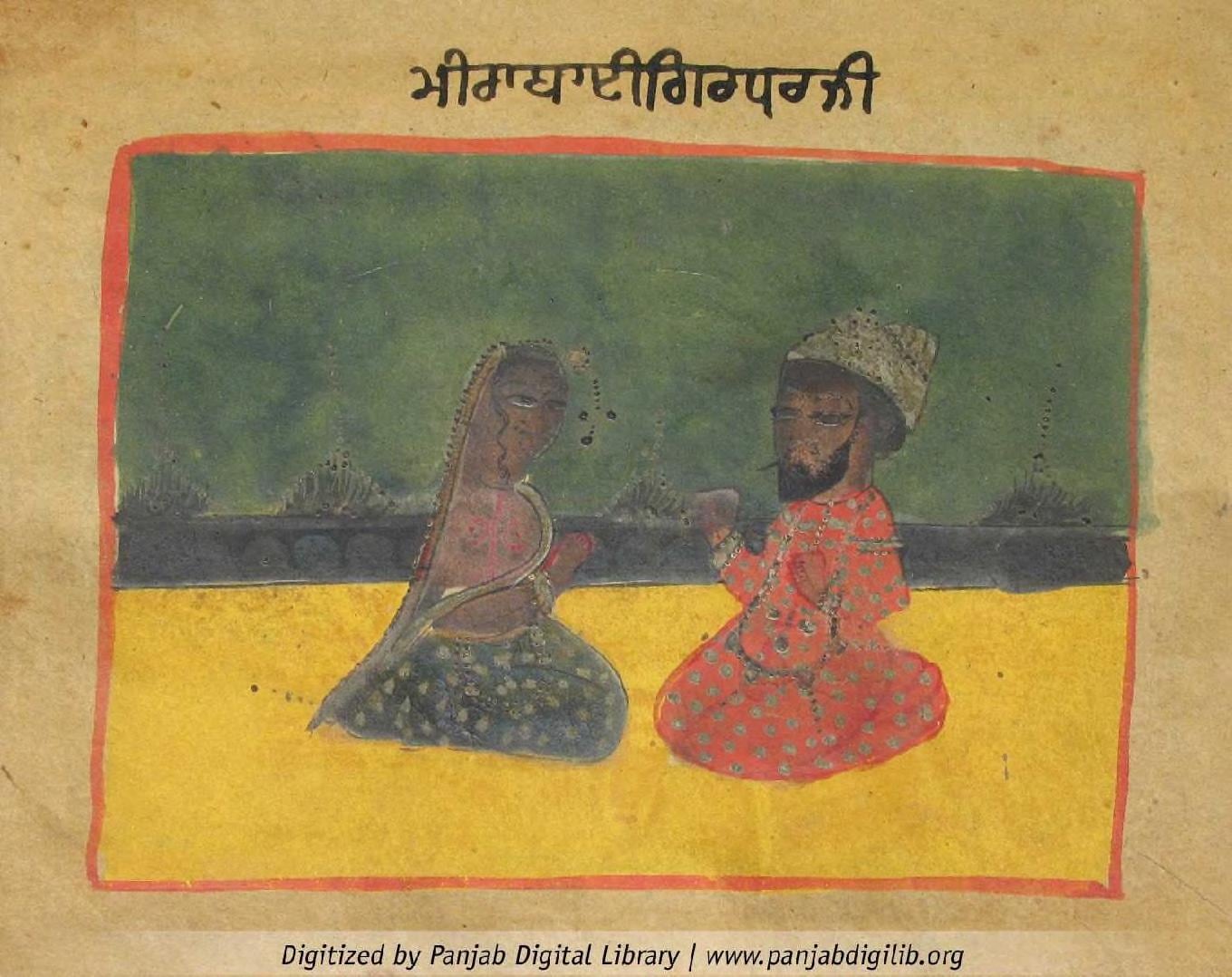
Mirabai y Girdharji en la Prem Ambodh Pothi · Public domain
Con le sue parole
«Mine is Giridhar Gopal, and no one else. The one who wears the peacock-feather crown on his head, he is my husband.»Pada atribuido, en la Mīrāṃbāī kī padāvalī de P. Chaturvedi. Traducción propia.
Per cominciare, un'opera
Padavali (Mirabai's songs)La sua idea centrale
Krishna as husband (Giridhar Nagar): The most personal feature of Mira's devotion is its form: she does not love Krishna as one of the many cowherd women of legend, but as a wife married to him, and she calls her god by the epithet Giridhar Nagar, the gallant who held up Mount Govardhana to protect the herders.
Vederlo nel contesto
Biografia
4 min di lettura
Traduzione assistita dall'originale spagnolo, in attesa di revisione da parte di un traduttore madrelingua.
Una principessa di Merta
Mira – Mirabai, con l'appellativo di rispetto – nacque verso il 1498 a Kudki, un villaggio del territorio di Merta, nel cuore del Rajasthan. Apparteneva al ramo di Merta del clan rajput dei Rathore: era figlia di Ratan Singh, nipote di Rao Duda, fondatore della città, e cugina di Jaimal, il difensore di Chittor. La tradizione racconta che da bambina ricevette una piccola immagine di Krishna e che, vedendo passare un corteo nuziale, chiese alla madre chi sarebbe stato il suo sposo; la madre indicò l'immagine. È una scena di leggenda, ma condensa il nucleo della sua figura: una donna che si dichiarò sposa di Krishna, il Giridhar, «colui che sollevò il monte».
Ciò che si sa e ciò che si racconta
Conviene separare fin dall'inizio due strati. Il primo è esiguo: nessuna cronaca del suo tempo la nomina e i riferimenti più antichi risalgono al Seicento, tutti a meno di centocinquant'anni dalla sua morte. Il più antico databile è una strofa del Bhaktamal di Nabhadas, verso il 1600, che la paragona alle pastorelle di Krishna, dice che abbandonò il pudore pubblico e le catene della famiglia e che bevve come nettare il veleno datole dai malvagi. Il secondo strato è immenso: il commento di Priyadas (1712), le leggende regionali, i canti, il cinema. Fra i due si è costruita una vita che gli storici non possono confermare in quasi nessun dettaglio e che la gente continua a cantare.
Chittor
Verso il 1516 fu data in sposa a Bhoj Raj, primogenito di Rana Sanga, sovrano del Mewar, il più prestigioso dei regni rajput, con capitale nella fortezza di Chittor. Bhoj Raj morì giovane, prima del padre, verso il 1521, probabilmente per ferite di guerra. Poi venne il disastro: nel 1527 Babur sconfisse la coalizione rajput a Khanwa; il padre di Mira morì in seguito a quella battaglia, e Sanga poco dopo. Gli anni successivi furono di lotte di successione nel Mewar e di assedi: nel 1535 Bahadur Shah del Gujarat prese Chittor. È ragionevole pensare, come propone Nancy Martin, che il conflitto di Mira con la corte fosse politico quanto religioso: una vedova di alto rango, di un clan alleato e poi rivale, che si rifiutava di comportarsi come tale.
La vedova che non volle esserlo
Il racconto tradizionale è un altro. Mira rifiuta di osservare il lutto delle vedove rajput e, secondo le versioni tarde, anche di immolarsi sul rogo; canta e danza nei templi davanti a sadhu di ogni casta; accoglie pellegrini; dice che il suo sposo è Krishna. Il cognato Vikramaditya, che governò il Mewar all'inizio degli anni Trenta del Cinquecento, tenta di ucciderla: una coppa di veleno che si muta in nettare, un serpente in un cesto di fiori che si trasforma in un'immagine di Krishna o in una ghirlanda, un letto di chiodi che diventa un giaciglio di fiori. Il veleno c'è già in Nabhadas; il resto lo aggiungono Priyadas e la tradizione orale. Le poesie che portano la sua firma raccolgono il lamento: la gente dice che Mira è impazzita, la suocera che disonora la famiglia.
Vrindavan e Dwarka
Le tradizioni concordano nel dire che lasciò Chittor, tornò per un periodo a Merta e intraprese poi il pellegrinaggio a Vrindavan, la terra di Krishna, dove Priyadas colloca il suo incontro con il teologo Jiva Gosvamin, che non riceveva donne. Di lì passò a Dwarka, sulla costa del Gujarat, la città del Krishna re. La leggenda finale narra che un'ambasceria di brahmani giunse dal Mewar per riportarla indietro e minacciò di digiunare fino alla morte se avesse rifiutato; Mira chiese il permesso di congedarsi dall'immagine di Ranchhodji nel tempio, vi entrò e non ne uscì più: rimase soltanto il suo sari avvolto intorno alla statua. L'episodio si data verso il 1546 o il 1547, senza documenti che lo confermino.
Un corpus cresciuto con lei
Le si attribuiscono centinaia di pada, canti brevi con il suo nome nell'ultimo verso, in una mescolanza di rajasthani e braj bhasha, e anche in gujarati. Ma la base manoscritta è sorprendentemente debole. John Stratton Hawley, che l'ha studiata più di chiunque altro, ha trovato soltanto due poesie attribuite a Mira in manoscritti anteriori al Settecento; la maggior parte del corpus compare in copie della fine del XVIII e del XIX secolo. L'edizione critica di Parashuram Chaturvedi (1932), su cui poggiano quasi tutte le traduzioni moderne, riunisce circa duecento poesie senza indicare i manoscritti utilizzati. Di qui la cautela di Hawley: parlare della poesia di Mirabai significa sempre parlare di un enigma. Ciò che si può descrivere è invece uno stile: l'amore per Krishna vissuto come matrimonio, l'impazienza dell'amante che attende, il Krishna yogi che seduce e se ne va, la sfida aperta all'onore della famiglia.
Una figura del popolo
Mira è, come ha scritto Parita Mukta, una santa del popolo prima che della corte: nel Rajasthan la cantano soprattutto contadini, tessitori e caste basse, che la ricordano come la regina che scelse per guru il calzolaio Raidas e disprezzò l'onore del suo lignaggio, mentre la memoria della nobiltà rajput la guardò per secoli con disagio. Il Novecento ne fece un emblema. Gandhi vide nella sua resistenza non violenta un modello e diede il suo nome alla discepola inglese Madeleine Slade, Mirabehn; M. S. Subbulakshmi la interpretò al cinema nel 1945; Gulzar le dedicò un film nel 1979. Le traduzioni di Robert Bly, Jane Hirshfield o Andrew Schelling l'hanno portata in altre lingue come poetessa della libertà interiore. Dietro tutte queste Mira c'è una donna reale di cui sappiamo pochissimo e una voce che non ha mai smesso di cambiare.
Fonti: Hawley, John Stratton. Three Bhakti Voices: Mirabai, Surdas, and Kabir in Their Times and Ours. Nueva Delhi: Oxford University Press, 2005. ISBN 9780195670851. · Hawley, John Stratton, y Mark Juergensmeyer. Songs of the Saints of India. Nueva York: Oxford University Press, 1988. ISBN 9780195052213. · Mukta, Parita. Upholding the Common Life: The Community of Mirabai. Delhi: Oxford University Press, 1994. ISBN 9780195631159. · Nābhādās. Bhaktamāl (c. 1600), con el comentario Bhaktirasabodhinī de Priyādās (1712). Ed. y trad. parcial en Hawley, Three Bhakti Voices, y en Mukta, Upholding the Common Life. · Martin, Nancy M. Mirabai: The Making of a Saint. Nueva York: Oxford University Press, 2023. ISBN 9780195153903.
Cronologia
La vita, anno per anno
Ogni punto è un evento documentato. Fai clic per leggerlo, con la sua fonte e il suo grado di certezza.
ca. 14980 anniKudki, territorio de Merta (Rajastán)
Birth
Born into the Merta branch of the Rathor clan, daughter of Ratan Singh and granddaughter of Rao Duda. The year is a historians' estimate; other proposals go as late as 1504.
ProbabileGoetz, Hermann. Mira Bai: Her Life and Times. Bombay: Bharatiya Vidya Bhavan, 1966.
Dopo la sua morte
- ca. 1600Nabhadas's Bhaktamal
- 1712Priyadas's commentary
- 1829James Tod confuses her with Rana Kumbha's wife
- 1932Parashuram Chaturvedi's edition
- 1945Meera, with M. S. Subbulakshmi
ca. 1498 · 0 anni
Birth
Born into the Merta branch of the Rathor clan, daughter of Ratan Singh and granddaughter of Rao Duda. The year is a historians' estimate; other proposals go as late as 1504.
Probabile
ca. 1516 · 18 anni
Marriage to Bhoj Raj
She is married to the heir of Rana Sanga of Mewar. Tradition says she already considered herself married to Krishna.
Probabile
ca. 1521 · 23 anni
Death of Bhoj Raj
Her husband dies before succeeding his father, probably of war wounds. Mira is left a childless widow.
Probabile
marzo 1527 · 29 anni
Battle of Khanwa
Babur defeats Rana Sanga's Rajput coalition; Mira's father dies as a result of the battle and Sanga soon afterwards.
Documentato
ca. 1531 · 33 anni
The persecution
Under Vikramaditya (c. 1531-1536), according to tradition, she suffers poisoning attempts and the court's hostility for her public devotion. Nabhadas (c. 1600) already mentions the poison.
Tradizione
ca. 1535 · 37 anni
Departure from Mewar and pilgrimage
She leaves Chittor, returns to Merta and makes the pilgrimage to Vrindavan. Priyadas places her meeting with Jiva Gosvamin there.
Tradizione
ca. 1540
Dwarka
She settles in Dwarka, the city of Krishna as king, where she will spend her last years.
Tradizione
ca. 1547 · 49 anni
Death or disappearance
Legend has her vanish into the image of Ranchhodji when a delegation from Mewar comes for her. It is dated to around 1546-1547; other sources give later dates.
Discusso
ca. 1600
Nabhadas's Bhaktamal
The first datable reference to Mira: a stanza presenting her as a fearless devotee who drank poison as nectar.
Documentato
1712
Priyadas's commentary
Priyadas's Bhaktirasabodhini expands Mira's life with the episodes of the snake, Jiva Gosvamin and Dwarka.
Documentato
1829
James Tod confuses her with Rana Kumbha's wife
The Annals and Antiquities of Rajast'han place her a century earlier, as Kumbha's wife; the error was repeated for decades.
Documentato
1932
Parashuram Chaturvedi's edition
The Hindi Sahitya Sammelan's Mīrāṃbāī kī padāvalī fixes the corpus of some two hundred padas on which almost all translators work.
Documentato
1945
Meera, with M. S. Subbulakshmi
Tamil film by Ellis R. Dungan with the singer in the lead role; the 1947 Hindi version was introduced by Sarojini Naidu.
Documentato
Opere
Opere essenziali
Le opere senza le quali non si comprende la sua eredità.
Raccolta posteriore
Padavali (Mirabai's songs)
मीराँबाई की पदावली
Short songs, composed to be sung to a raga, ending with the signature "Mira ke prabhu Giridhar Nagar" ("Mira's lord is the gallant Giridhar"). They speak of Krishna as a husband chosen against the family's will, of waiting and separation, of the yogi Krishna who seduces and leaves, of mockery and persecution, of the joy of meeting. The language mixes Rajasthani and Braj Bhasha; there is also a Gujarati corpus. Musical tradition also attributes to her a variant of raga Malhar, called "Mira ki Malhar". It is the work for which she is known throughout India.
8 edizioni
Mirabai
"Mere to Giridhar Gopal" ("Mine is Giridhar Gopal")
Attribuzione tradizionale
"Mere to Giridhar Gopal" ("Mine is Giridhar Gopal")
मेरे तो गिरधर गोपाल, दूसरो न कोई
Probably the pada most associated with her name. The singer declares she has no one but Krishna, the one with the peacock-feather crown, and that for him she has lost the family's honour: she has sat with the saints, cast off public shame, watered the creeper of love with her tears. It sums up the break with lineage that defines her figure.
1 edizione
Mirabai
"Payoji maine Ram ratan dhan payo" ("I have found the jewel of Ram's name")
Attribuzione tradizionale
"Payoji maine Ram ratan dhan payo" ("I have found the jewel of Ram's name")
पायो जी मैंने राम रतन धन पायो
A song of gratitude for the divine name, presented as a treasure that is never spent, that thieves cannot steal and that grows every day. It is one of the most popular bhajans of modern India, spread by Lata Mangeshkar's recording and by singing in temples and schools.
1 edizione
Tutta la sua opera (11)
Mirabai
Narsi ji ro Mahero
The Conscious LibraryNarsi ji ro Mahero
Mirabai
Commentary on the Gita Govinda
The Conscious LibraryCommentary on the Gita Govinda
Mirabai
Rag Govind
The Conscious LibraryRag Govind
Mirabai
Padas in raga Sorath
The Conscious LibraryPadas in raga Sorath

Three Bhakti Voices (John Stratton Hawley)
2005
Mirabai
Upholding the Common Life (Parita Mukta)
The Conscious LibraryUpholding the Common Life (Parita Mukta)
1994
Mirabai
Mirabai: The Making of a Saint (Nancy M. Martin)
The Conscious LibraryMirabai: The Making of a Saint (Nancy M. Martin)
2023
Mirabai
Mira Bai: Her Life and Times (Hermann Goetz)
The Conscious LibraryMira Bai: Her Life and Times (Hermann Goetz)
1966
Citazioni
Citazioni localizzate in un'opera precisa. Ciascuna porta con sé la sua provenienza e il suo grado di affidabilità.
Mine is Giridhar Gopal, and no one else. The one who wears the peacock-feather crown on his head, he is my husband.मेरे तो गिरधर गोपाल, दूसरो न कोई। जाके सिर मोर मुकुट, मेरो पति सोई॥
DiscussaPada atribuido, en la Mīrāṃbāī kī padāvalī de P. Chaturvedi. Traducción propia.
Ultime parole
Non esistono testimonianze verificabili delle sue ultime parole.
There is no testimony of her last words or her death. The legend transmitted since Priyadas (1712) has her enter the temple of Ranchhodji in Dwarka and vanish into the image; some popular versions attribute a final song to her, but there is no fixed form and no early source that records it.
Fonte: Nābhādās. Bhaktamāl (c. 1600), con el comentario Bhaktirasabodhinī de Priyādās (1712). Ed. y trad. parcial en Hawley, Three Bhakti Voices, y en Mukta, Upholding the Common Life.
Chiedi
Ciò a cui risponde la sua opera
Dodici grandi domande dell'umanità e ciò che i suoi testi permettono di rispondere, con riferimenti. Non gli mettiamo mai parole in bocca.
Che cos'è l'Assoluto? Dio esiste?
The ultimate has a name and a face: Giridhar Gopal, her husband
Un Dio personaleLo dice espressamente
In the songs attributed to Mirabai the divine is neither a principle nor an idea: it is Krishna, Giridhar Gopal, the one who lifts the mountain, the cowherd with the peacock-feather crown. Her most famous pada declares him hers and no one else’s, and calls him husband. Mirabai does not debate the nature of the Absolute or compare schools; her theology is that of loving bhakti, which presupposes a personal God who can be loved, awaited and lost. In other songs she also invokes the name of Ram as a jewel received from her teacher, but the figure that dominates her work is a concrete lover with a face, to whom she gives herself above family and convention.
Confronta questa domanda con altri maestriChi sono io? Esiste un vero sé?
She does not theorise the self: she knows herself as Krishna’s bride
Non si è pronunciato
The songs attributed to Mirabai contain no doctrine of soul or ego. The closest thing to an answer is the way she names herself: as the bride of Giridhar Gopal, as the one who has lost all shame before public opinion (lok-laj), as a woman mad with love whom nobody understands. Her identity is defined by her relation to Krishna and by her break with the roles assigned to her by caste, by the royal family of Mewar and by widowhood. In some songs she says she was his in earlier lives, which presupposes a persisting soul, but she draws no theory from it. Asking her for an anthropology would force a voice that is, above all, lyrical.
Confronta questa domanda con altri maestriPerché soffriamo?
The pain of separation from the Beloved, which no one else understands
La separazione da DioLo dice espressamente
The songs attributed to Mirabai are shot through with viraha, the pain of separation from Krishna: sleepless nights, eyes that never dry, a wound no physician can heal. One of the most quoted lines says it plainly: she is mad with love and no one knows her pain. To that suffering is added another, inflicted by her in-laws and by society for choosing Krishna above the norms of caste and widowhood; tradition tells of attempts to poison her. Mirabai does not explain the origin of pain: she sings it. But in her songs the suffering of separation is inseparable from love, and the only possible cure is the Beloved’s coming.
Confronta questa domanda con altri maestriChe cosa accade dopo la morte?
No speculation on the afterlife: she sings a love across lives
Non si è pronunciato
The songs attributed to Mirabai contain no teaching about what happens after death. What appears is the conviction of a bond with Krishna that precedes this life and outlives it: in some padas she presents herself as his bride from previous births and asks not to be separated from him in those to come. Hagiography gives her a symbolic end: in Dwarka, before the image of Krishna, she is said to have vanished into it, leaving no body. That story expresses the devotional hope of a union that death does not interrupt, but it is not a doctrine of Mirabai’s, rather a later legend. In her voice death hardly matters: what matters is not being far from the Beloved.
Confronta questa domanda con altri maestriCome si raggiunge la liberazione o la salvezza?
Giving herself wholly to Giridhar, though the world calls her mad
Con la devozione e l'abbandonoLo dice espressamente
In the songs attributed to Mirabai the only path is love of Krishna lived without reserve. She does not speak of liberation in a technical sense; what she seeks is the Beloved’s presence. Her devotion is expressed in song and dance: one of her best-known verses shows her dancing with bells on her ankles while people say she has gone mad and her mother-in-law that she is the ruin of the family. Another pada speaks of the Name of Ram as a priceless jewel received from her true teacher. Surrendering like this means breaking with public opinion (lok-laj), with caste and with the royal family: for Mirabai devotion is also a form of freedom.
Confronta questa domanda con altri maestriServe un maestro?
The true master gave her the jewel of the Name
IndispensabileSi deduce dalla sua dottrina
The songs attributed to Mirabai mention the teacher in few places, but with weight. In the pada that begins by saying she has found the treasure, the jewel of Ram’s name, she states that her true teacher gave her something priceless and, by his grace, made her his own. Another verse says she found her guru, Raidas, the saintly cobbler, who gave her the pill of knowledge. The link with Raidas, of untouchable caste, carries a strong social meaning: a Rajput princess declaring herself the disciple of an untouchable. Whatever the historicity, Mirabai’s tradition makes the teacher the one who hands over the Name, without which devotion does not catch fire.
Confronta questa domanda con altri maestriIl mondo è reale?
She does not ask about the world’s reality: she turns from it for love
Non si è pronunciato
The songs attributed to Mirabai do not ask whether the world is real or illusory. What they do is relativise it from love: palaces, jewels, honours and kinship are worthless beside Giridhar Gopal, and other people’s opinion (lok-laj) ceases to matter. Some padas call the world fleeting, a fair of a few days, in the common language of North Indian bhakti, but without developing an ontology. Her relation to the world is more ethical and social than metaphysical: she leaves the one assigned to her as princess and widow to live among devotees. Attributing to her a doctrine on the nature of the real would go beyond what the texts say.
Confronta questa domanda con altri maestriChe cos'è l'amore?
Mad with love for Giridhar, defying the world
Anelito e unioneLo dice espressamente
The songs attributed to Mirabai are above all love songs. Krishna is her husband, to whom she has always belonged; she waits for him at night, calls him, complains of his absence and celebrates his arrival. One of her most quoted lines shows her mad with love with no one to understand her pain. Her love is not abstract: it has body, desire and jealousy, and uses the language of lover and wife. What sets it apart from human love is its object and its radicality: for it she renounces honour, family and the social place that was hers. In Mirabai divine love is longing for union lived as transgression.
Confronta questa domanda con altri maestriSiamo liberi o è tutto determinato?
She does not speak of fate: she chooses Krishna against what was imposed
Non si è pronunciato
The songs attributed to Mirabai do not deal with the problem of freedom and fate. What they show is a radical choice: against marriage, caste, the widow’s duty and the royal family’s honour, she chooses Krishna and declares him her only husband. In some padas she ascribes that choice to a bond older than this life, as if her destiny were precisely to belong to Giridhar, and in others to the grace of the teacher who gave her the Name. But none of this is presented as doctrine. Modern readings that see Mirabai as an emblem of women’s freedom start from that choice, not from any theory of hers.
Confronta questa domanda con altri maestriPerché meditare o pregare?
Singing and dancing before Giridhar: prayer as love song
Amicizia con DioLo dice espressamente
Mirabai’s prayer, as the songs attributed to her preserve it, is song and dance before the image of Krishna. One of her verses shows her dancing with bells on her ankles amid people’s mockery and her family’s scandal; others show her keeping vigil at night, talking to the Beloved, complaining of his absence or begging him to come. There is no technique or method: prayer is the direct expression of a loving relationship with a personal God. The songs themselves serve that function for those who sing them, which is why they have survived in the oral tradition of northern India. To pray, for Mirabai, is to speak to the Beloved.
Confronta questa domanda con altri maestriPuò la ragione conoscere l'ultimo?
She does not discuss knowledge: love suffices her
Non si è pronunciato
The songs attributed to Mirabai do not address the relation between reason and the divine. They contain no arguments nor any critique of scholars comparable to Kabir’s; what they contain is the affirmation that love of Krishna suffices and that no one who has not felt it can understand her pain or her madness. One pada speaks of the pill of knowledge received from the teacher, but that knowledge is of the Name, not a doctrine. Her voice belongs to the bhakti tradition that values loving experience above learning, but she does not formulate that hierarchy as a theory. Attributing an epistemology to her would go beyond the texts.
Confronta questa domanda con altri maestriRitirarsi dal mondo o trasformarlo?
Breaking with court and convention to live among devotees
Ritirarsi per trovareSi deduce dalla sua dottrina
Mirabai’s tradition narrates a rupture: a Rajput princess married into the royal house of Mewar, she refused the roles of wife and widow, kept company with devotees and wandering saints, endured her in-laws’ hostility and finally left court to live in Vrindavan and Dwarka. Her songs repeat that she has abandoned shame before public opinion (lok-laj) and cares nothing for palace or jewels. It is not the regulated renunciation of the monastery but the abandonment of a social order for love of Krishna. Some studies have read that rupture as social protest, but its meaning in the texts is above all devotional.
Confronta questa domanda con altri maestri
Affinità e tensioni
Affinità e tensioni
Calcolate domanda per domanda a partire dalle sue posizioni. Il perché di ogni accordo o contrasto, con un clic.
La pensa in modo simile a
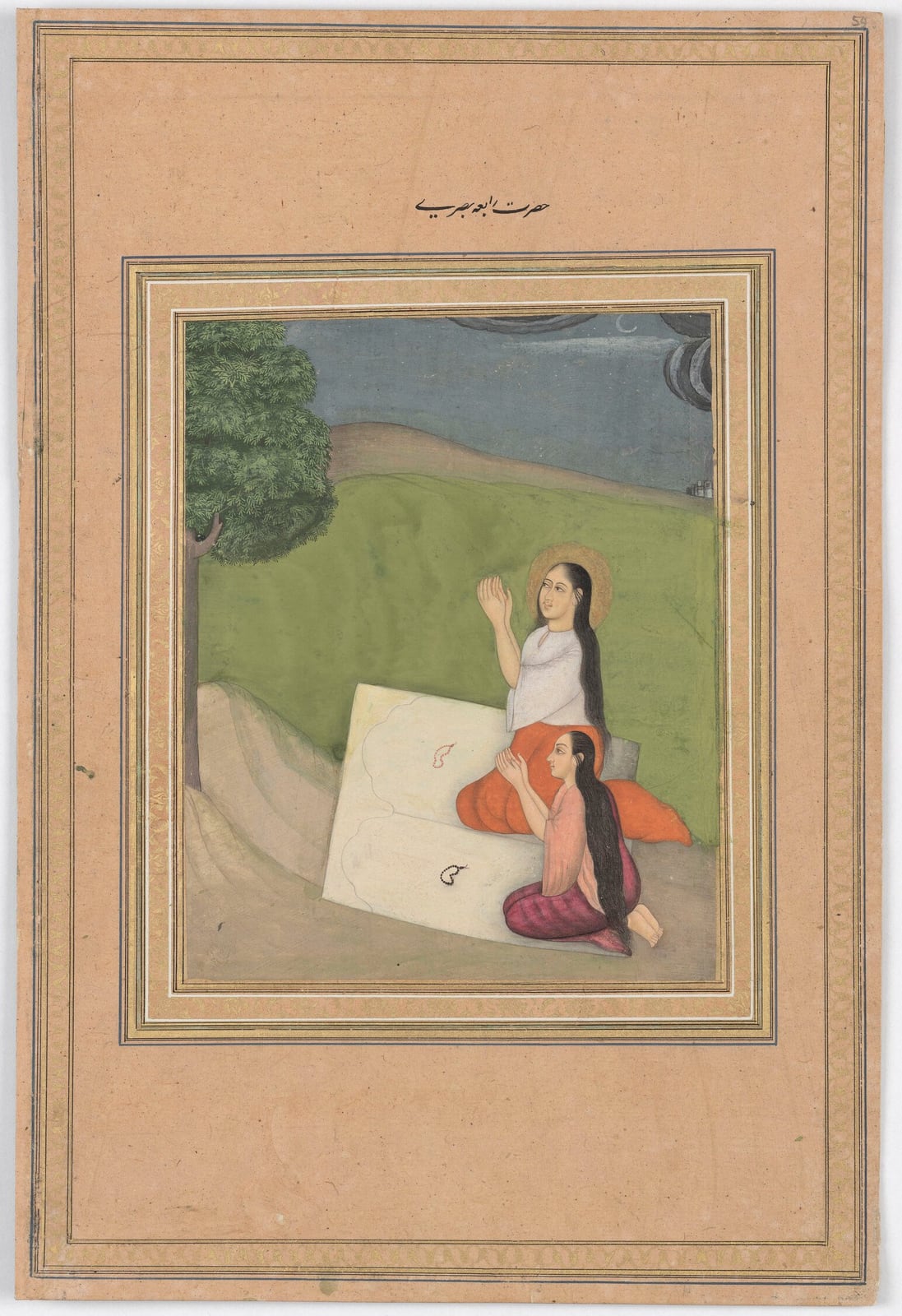
Rabia al-Adawiyya
Concordano su: Perché soffriamo? · Che cos'è l'Assoluto? Dio esiste? · Come si raggiunge la liberazione o la salvezza?
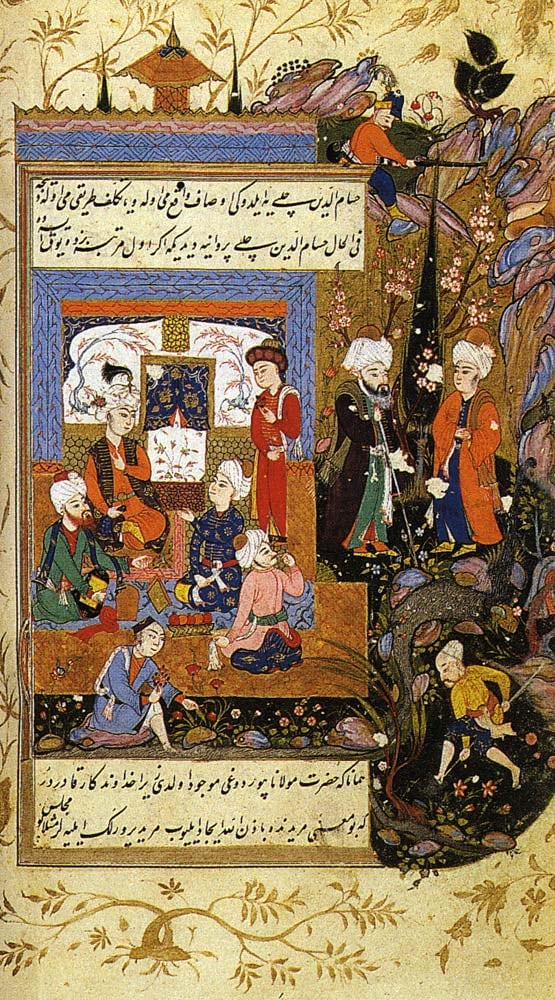
Rumi
Concordano su: Che cos'è l'Assoluto? Dio esiste? · Perché soffriamo? · Come si raggiunge la liberazione o la salvezza?
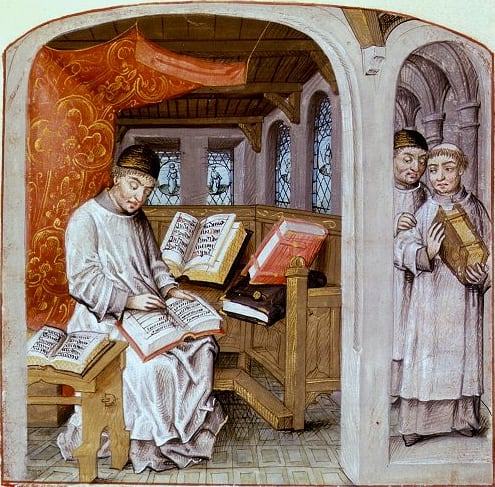
Thomas à Kempis
Concordano su: Che cos'è l'Assoluto? Dio esiste? · Perché soffriamo? · Come si raggiunge la liberazione o la salvezza?
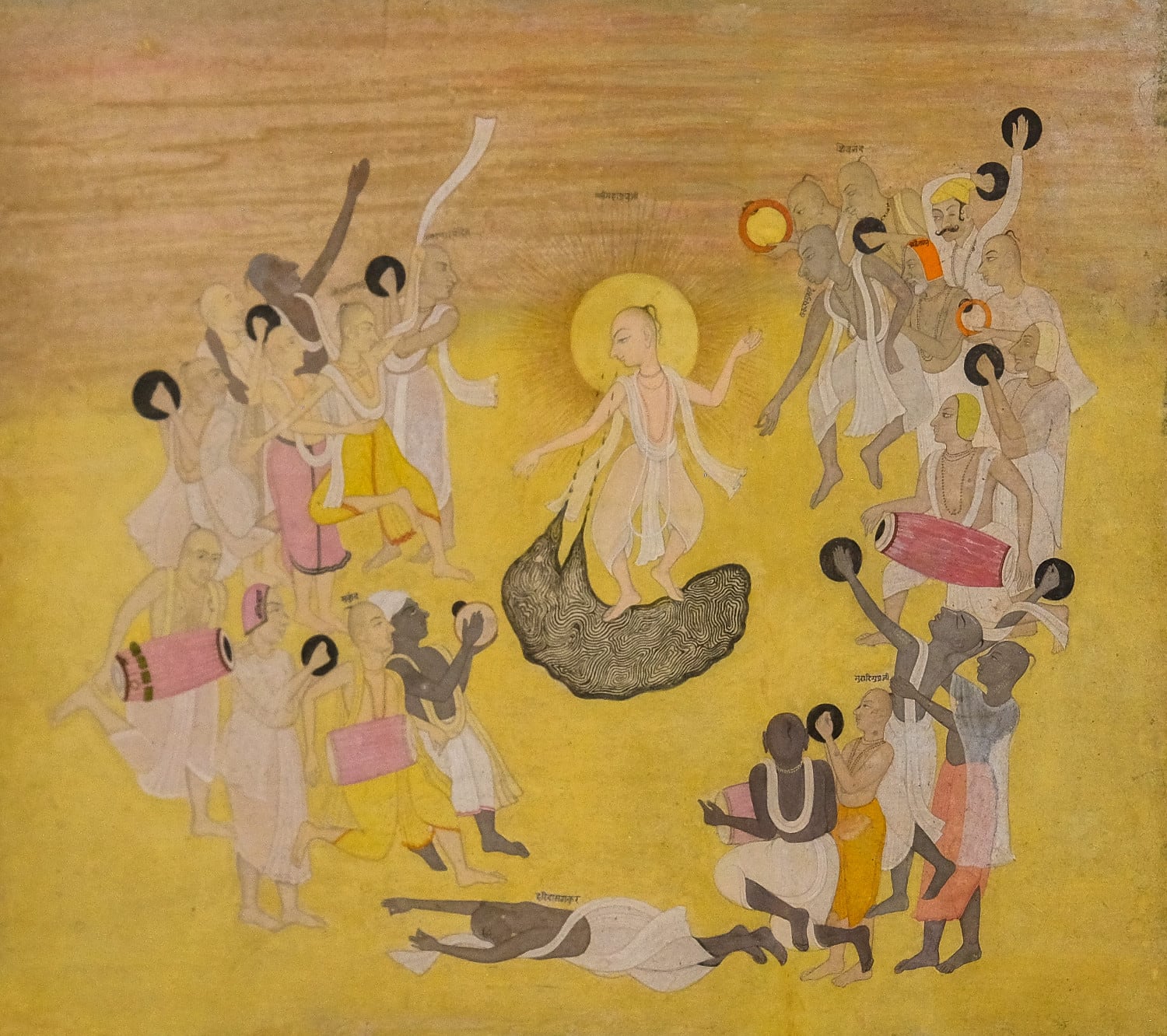
Chaitanya Mahaprabhu
Concordano su: Che cos'è l'Assoluto? Dio esiste? · Perché soffriamo? · Come si raggiunge la liberazione o la salvezza?
La pensa diversamente da
Alan Watts
Si scontrano su: Come si raggiunge la liberazione o la salvezza? · Serve un maestro?
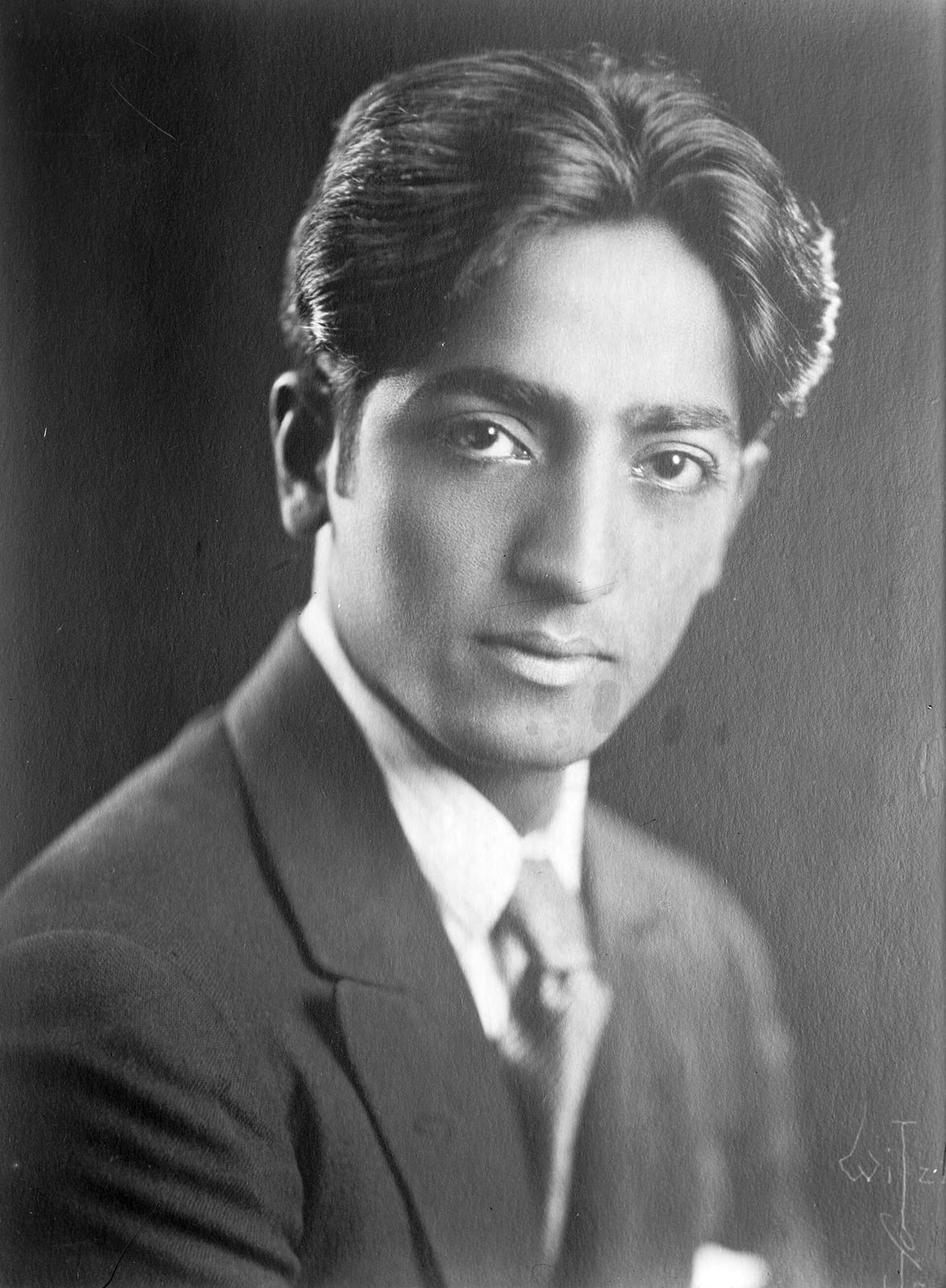
Jiddu Krishnamurti
Si scontrano su: Come si raggiunge la liberazione o la salvezza? · Serve un maestro?
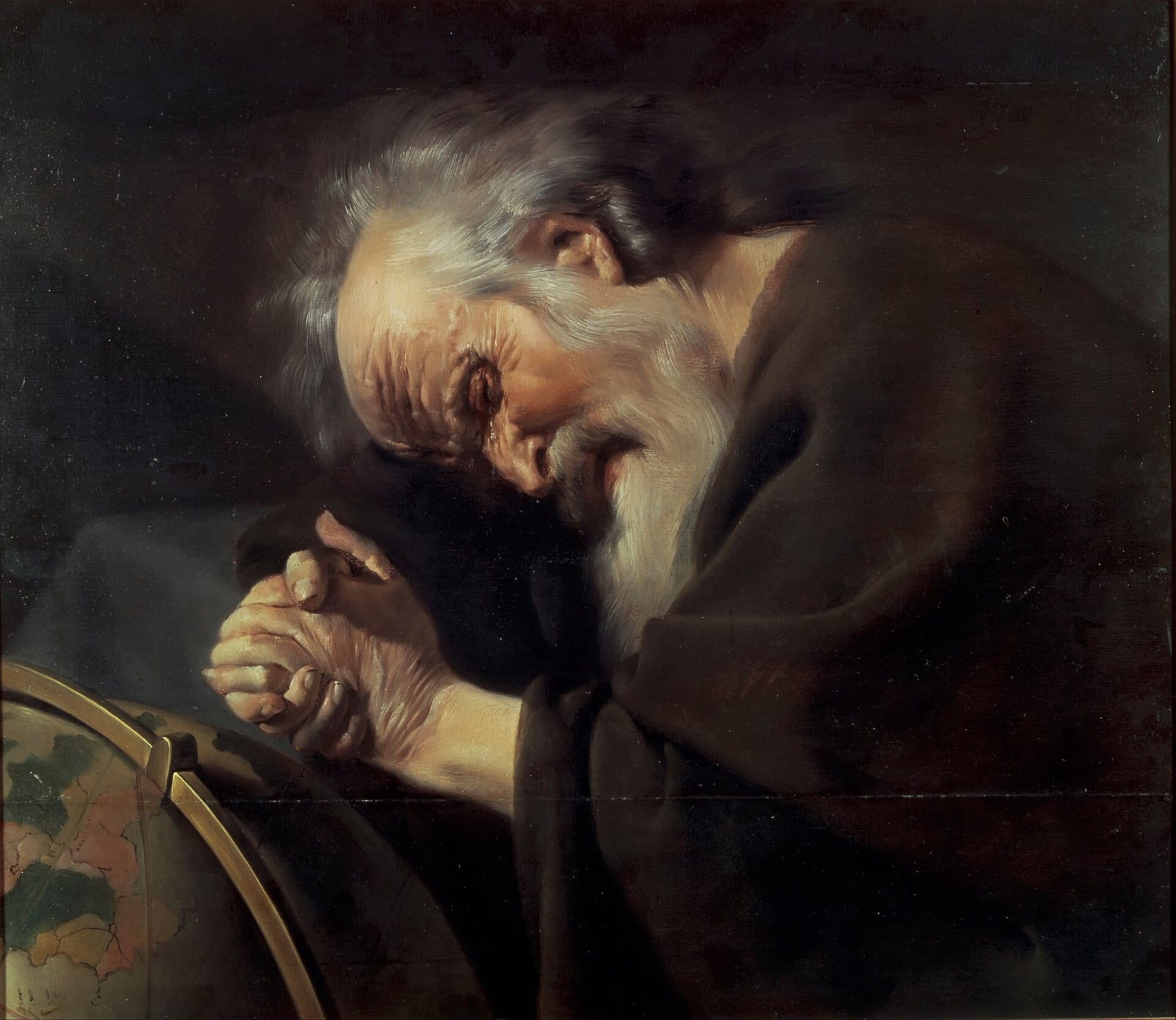
Heraclitus
Si scontrano su: Serve un maestro?
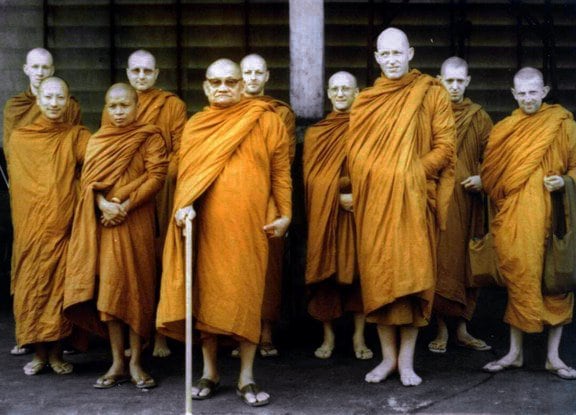
Ajahn Chah
Si scontrano su: Che cos'è l'Assoluto? Dio esiste?
Aneddoti e racconti
Aneddoti e racconti
Racconto agiograficoc. 1530
The cup of poison
Origine del racconto: Nabhadas's Bhaktamal (c. 1600), stanza on Mira; developed by Priyadas (1712) and by the attributed poems ("the Rana sent me a cup of poison").
Fonte: Nābhādās. Bhaktamāl (c. 1600), con el comentario Bhaktirasabodhinī de Priyādās (1712). Ed. y trad. parcial en Hawley, Three Bhakti Voices, y en Mukta, Upholding the Common Life.
Racconto agiograficoc. 1530
The snake in the basket
Origine del racconto: Absent from Nabhadas; it appears in Priyadas's commentary (1712) and in attributed padas. No documentary basis.
Fonte: Nābhādās. Bhaktamāl (c. 1600), con el comentario Bhaktirasabodhinī de Priyādās (1712). Ed. y trad. parcial en Hawley, Three Bhakti Voices, y en Mukta, Upholding the Common Life.
Racconto agiograficoc. 1540
"I thought there was only one male in Vrindavan"
Origine del racconto: Priyadas's Bhaktirasabodhini (1712); it does not appear in Gaudiya sources. The meeting is chronologically possible but undocumented.
Fonte: Nābhādās. Bhaktamāl (c. 1600), con el comentario Bhaktirasabodhinī de Priyādās (1712). Ed. y trad. parcial en Hawley, Three Bhakti Voices, y en Mukta, Upholding the Common Life.
Contestatos. XVI (legendario)
Akbar and Tansen at the temple
Origine del racconto: Popular tradition recorded in modern biographies and in films; it does not appear in Nabhadas and is anachronistic.
Fonte: Goetz, Hermann. Mira Bai: Her Life and Times. Bombay: Bharatiya Vidya Bhavan, 1966.
Non verificabiles. XVI (legendario)
The letter to Tulsidas
Origine del racconto: Tulsidas's poem exists in the Vinaya Patrika; Mira's letter and its connection with the poem come from late oral tradition and have no documentary support.
Fonte: Nilsson, Usha S. Mira Bai. Nueva Delhi: Sahitya Akademi (Makers of Indian Literature), 1969.
Racconto agiograficoc. 1546-1547
The sari on the image of Ranchhodji
Origine del racconto: Priyadas (1712) and later tradition of Dwarka and Mewar. There is no historical record of her death.
Fonte: Nābhādās. Bhaktamāl (c. 1600), con el comentario Bhaktirasabodhinī de Priyādās (1712). Ed. y trad. parcial en Hawley, Three Bhakti Voices, y en Mukta, Upholding the Common Life.
Documentato1925
Gandhi and Mirabehn
Origine del racconto: Madeleine Slade, The Spirit's Pilgrimage (1960); Mukta (1994) analyses the nationalist appropriation of Mira.
Fonte: Slade, Madeleine (Mirabehn). The Spirit's Pilgrimage. Londres: Longmans, 1960.
Insegnamenti
Insegnamenti
Le nozioni che articolano il suo pensiero, spiegate nel loro contesto.
Krishna as husband (Giridhar Nagar)giridhar-nagar
Krishnaite bhakti of northern India; madhurya attitude; comparison with the gopis in Nabhadas.
Fonte: Hawley, John Stratton. Three Bhakti Voices: Mirabai, Surdas, and Kabir in Their Times and Ours. Nueva Delhi: Oxford University Press, 2005. ISBN 9780195670851.
Separation (viraha)viraha
Lyric of the seasons (baramasa) and the poetics of viraha; compare with the vipralambha of Chaitanya's school.
Fonte: Hawley, John Stratton. Three Bhakti Voices: Mirabai, Surdas, and Kabir in Their Times and Ours. Nueva Delhi: Oxford University Press, 2005. ISBN 9780195670851.
Casting off "public shame" (lok laj)lok-laj
Rajput ethics of honour; critique of caste in bhakti; Mukta's study (1994).
Fonte: Mukta, Parita. Upholding the Common Life: The Community of Mirabai. Delhi: Oxford University Press, 1994. ISBN 9780195631159.
The yogi and the yoginijogi
Nath and Sant traditions of Rajasthan; the literary motif of the yogi lover.
Fonte: Hawley, John Stratton, y Mark Juergensmeyer. Songs of the Saints of India. Nueva York: Oxford University Press, 1988. ISBN 9780195052213.
Video
Video
Registrazioni, interviste e documentari. I video vengono riprodotti da YouTube; non sono ospitati qui.
"Seeking Mirabai: Scholarly Engagement and Personal Empowerment" lecture with Nancy M. Martin, PhD
Conferenza· EN· 71 min
Loyola Marymount University, BCLA Yoga StudiesCanale ufficiale
"Mirabai speaks....": The Emergent Voice of Medieval Saint
Conferenza· EN· 2017· 70 min
Claremont McKenna CollegeCanale ufficiale
Meera, Thaare Kain Laage Gopal? | Meera, Who Is Krishna To You After All?
Documentario· HI· 41 min
ajab shahar - kabir projectCanale ufficiale
Meera | Movie | 1945 | Part-1
Registrazione di terzi· HI· 1947· 35 min
Prasar Bharati ArchivesCanale ufficiale
Meera Bhajan by M.S. Subbulakshmi
Guarda su YouTube
Questo video non consente l'incorporamento; si apre su YouTube.
Meera Bhajan by M.S. Subbulakshmi
Registrazione di terzi· HI· 5 min
Prasar Bharati ArchivesCanale ufficiale
Pandit Kumar Gandharva sings a Meerabai Bhajan
Registrazione di terzi· HI· 11 min
Sangeetveda1
Payoji Maine Ram Ratan Dhan Payo (Official Lyric Video) | Lata Mangeshkar
Registrazione di terzi· HI· 4 min
Universal Music IndiaCanale ufficiale
Meera (1979) {HD + Eng Subs}
Registrazione di terzi· HI· 1979· 140 min
ShemarooCanale ufficiale
Mirabai's Life and Teachings – Swami Mukundananda | Saints of India
Conferenza· EN· 48 min
Swami MukundanandaCanale ufficiale
Mirabai (Meera) - Selected Poems for Meditation
Registrazione di terzi· EN· 22 min
Samaneri Jayasāra - Wisdom of the Masters
Mirabai: La princesa que dejó un reino por amor a un dios (Audio Podcast)
Analisi· ES· 36 min
Almas de la Historia
Galleria
Galleria
Immagini con licenza verificata. Ciascuna conserva la sua paternità e la sua attribuzione.
Relazioni
Relazioni
Influenze, discepolati e affinità. Si distingue la relazione documentata dalla somiglianza individuata per analisi.
Idee affini a
Both belong to northern bhakti and share the challenge to caste and ritualism; Kabir sings to a formless God, Mira to Krishna. Tradition links both with Raidas.
Somiglianza individuata per analisi
Idee affini a
Contemporaries and devotees of Krishna in the language of the separated lover; Priyadas brings her into contact with Jiva Gosvamin, of Chaitanya's school, not with him.
Somiglianza individuata per analisi
Contemporaneo di
Contemporaries. A Mira pada appears in the Bhai Banno recension of the Adi Granth, which the Sikh canon excluded, and the Prem Ambodh Pothi (1693) counts her among the bhakti saints.
Somiglianza individuata per analisi
Idee affini a
A frequent comparison: two contemporary women who lived their relationship with God as betrothal and confronted the norms of their milieu. No historical connection.
Somiglianza individuata per analisi
Idee affini a
Two female figures of the love of God turned into legend, with an attributed corpus of uncertain authenticity. No historical connection.
Somiglianza individuata per analisi
Collegato da altre schede
Fonti
Fonti
Bibliografia e cataloghi consultati per questa scheda.
- Hawley, John Stratton. Three Bhakti Voices: Mirabai, Surdas, and Kabir in Their Times and Ours. Nueva Delhi: Oxford University Press, 2005. ISBN 9780195670851.
- Hawley, John Stratton, y Mark Juergensmeyer. Songs of the Saints of India. Nueva York: Oxford University Press, 1988. ISBN 9780195052213.
- Mukta, Parita. Upholding the Common Life: The Community of Mirabai. Delhi: Oxford University Press, 1994. ISBN 9780195631159.
- Nābhādās. Bhaktamāl (c. 1600), con el comentario Bhaktirasabodhinī de Priyādās (1712). Ed. y trad. parcial en Hawley, Three Bhakti Voices, y en Mukta, Upholding the Common Life.
- Martin, Nancy M. Mirabai: The Making of a Saint. Nueva York: Oxford University Press, 2023. ISBN 9780195153903.
- Alston, A. J. (trad.). The Devotional Poems of Mīrābāī. Delhi: Motilal Banarsidass, 1980 (reimpr. 1998, ISBN 9788120804425).
- Caturvedī, Paraśurām (ed.). Mīrāṃbāī kī padāvalī. Prayāg: Hindī Sāhitya Sammelan, 1932 (ediciones posteriores de 1947 y 1966).
- Tod, James. Annals and Antiquities of Rajast'han, or the Central and Western Rajpoot States of India. 2 vols. Londres: Smith, Elder, 1829-1832.
- Wikidata, «Meera / Mirabai» (Q466330).
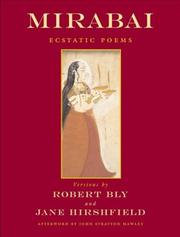
- Bly, Robert, y Jane Hirshfield. Mirabai: Ecstatic Poems. Epílogo de John Stratton Hawley. Boston: Beacon Press, 2004. ISBN 9780807063866.
- Schelling, Andrew (trad.). For Love of the Dark One: Songs of Mirabai. Boston: Shambhala, 1993 (ISBN 9780877738725); ed. rev. Prescott: Hohm Press, 1998 (ISBN 9780934252843).
- Goetz, Hermann. Mira Bai: Her Life and Times. Bombay: Bharatiya Vidya Bhavan, 1966.
- Nilsson, Usha S. Mira Bai. Nueva Delhi: Sahitya Akademi (Makers of Indian Literature), 1969.
- Futehally, Shama (trad.). In the Dark of the Heart: Songs of Meera. Prólogo de M. S. Subbulakshmi. San Francisco: HarperCollins, 1994. ISBN 9780060628819.
- Slade, Madeleine (Mirabehn). The Spirit's Pilgrimage. Londres: Longmans, 1960.
- Prasar Bharati Archives. «Meera | Movie | 1945 | Part-1» (versión hindi de 1947 con la presentación de Sarojini Naidu). YouTube, 2020.
- Mīrābāī kī śabdāvalī aura jīvana-caritra. Allahabad: Belvedere Printing Works (serie Santbānī), principios del siglo XX. Ejemplar digitalizado en Internet Archive (colección hindi-urdu de Sarai, CSDS).
- Titolare dei diritti
- Los padas atribuidos a Mirabai son de dominio público. Las traducciones y ediciones modernas tienen titulares propios (Beacon Press, Shambhala y Hohm Press, Motilal Banarsidass, Oxford University Press, HarperCollins; la edición de Chaturvedi, el Hindi Sahitya Sammelan).
In attesa di conferma
Ciò che questa scheda non ha ancora potuto chiarire. Preferiamo dirlo piuttosto che riempirlo.
- No se localizó ninguna traducción española publicada de los padas de Mirabai con ISBN (consultas en Open Library y en la web).
- No hay en Wikisource ni en Project Gutenberg una edición en dominio público de la Padavali; la de Belvedere en Internet Archive queda con cautela (editor desconocido, OCR sin verificar).
- Localizar los dos manuscritos anteriores al siglo XVIII que, según Hawley, contienen poemas de Mira, para fichar su signatura en manuscripts[].
- Contrastar la datación (1498-1547) con Martin (2023); las fechas proceden en buena parte de Goetz (1966) y son conjeturales.
- Confirmar la numeración de los padas citados en la edición de Chaturvedi.
Ricerca effettuata il 2026-10-25