Induismo · Bhakti · Tradizione vedica
Valmiki
वाल्मीकि · Vālmīki · रामायण · வால்மீகி
Figura leggendaria
Poeta leggendario a cui la tradizione attribuisce il Ramayana e che chiama ādikavi, «il primo poeta». Tutto ciò che si sa di lui proviene dal poema stesso, dove compare come il saggio che trasforma in versi il dolore per una gru uccisa e come protettore di Sita e maestro dei suoi figli, e da leggende tarde come quella del brigante convertito. La filologia data il nucleo dell'epopea tra l'VIII e il V secolo a.C. e considera tardi il primo e l'ultimo libro. Gli si attribuisce anche la narrazione dello Yoga Vāsiṣṭha.
- opere
- 12opere
- edizioni
- 24edizioni
- citazioni
- 4citazioni
- video
- 14video
- immagini
- 8immagini
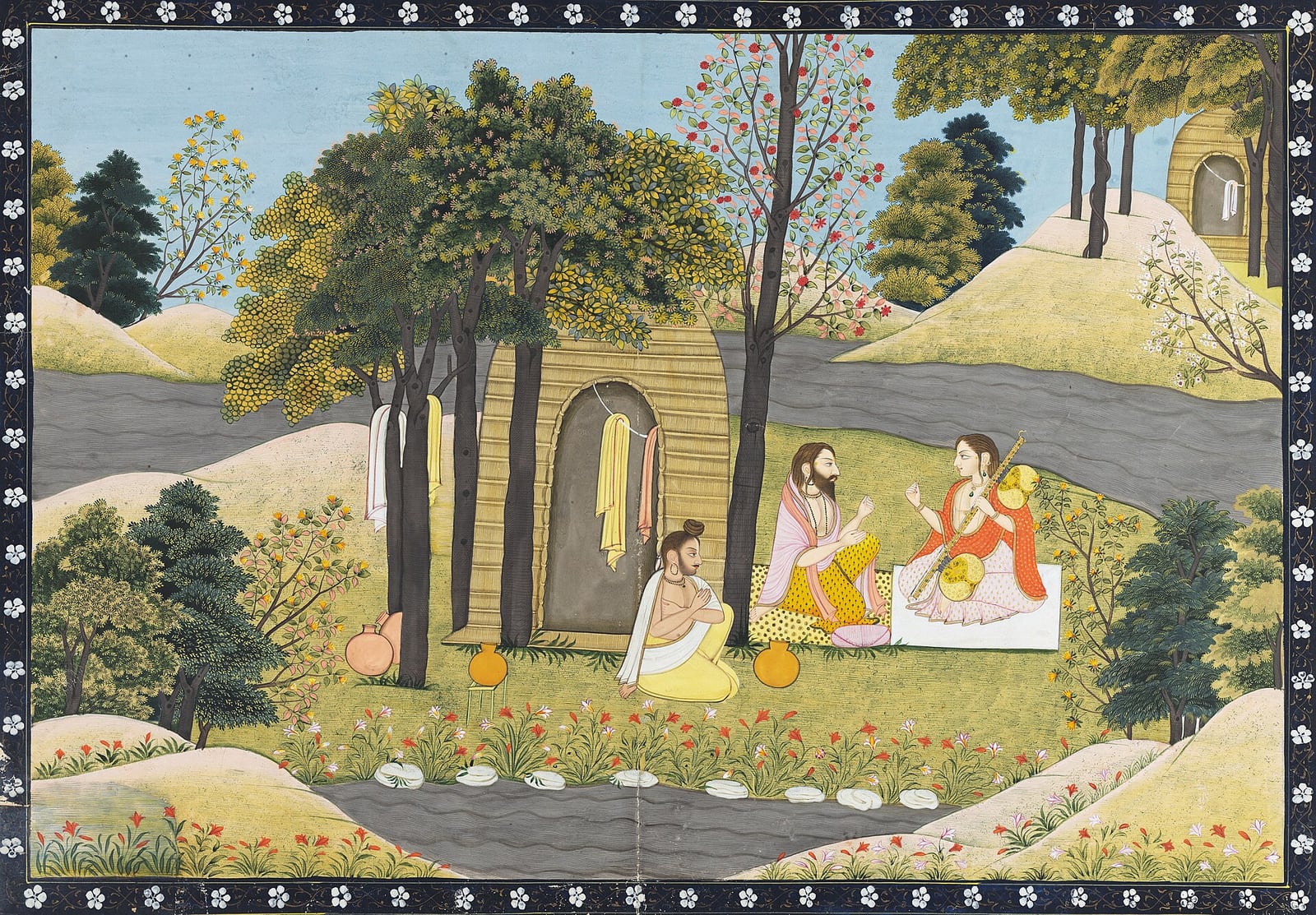
Nārada en la ermita de Vālmīki · Public domain
Con le sue parole
«No fame be thine for endless time, / Because, base outcast, of thy crime, / Whose cruel hand was fain to slay / One of this gentle pair at play!»Rāmāyaṇa, Bālakāṇḍa, canto II (1.2.14 de la edición crítica); trad. en verso de R. T. H. Griffith (1870, dominio público); versión española del investigador

La sua idea centrale
Śloka (the stanza born of grief): The śloka is the stanza of two lines of sixteen syllables, divided into four feet of eight (anuṣṭubh), which became the metre par excellence of the epic and of classical Sanskrit literature.
Vederlo nel contesto
Biografia
4 min di lettura
Traduzione assistita dall'originale spagnolo, in attesa di revisione da parte di un traduttore madrelingua.
Il primo poeta
La tradizione indiana chiama Valmiki ādikavi, «il primo poeta», e il suo Ramayana ādikāvya, «il primo poema»: l'opera con cui sarebbe nata la poesia colta in sanscrito. È un'affermazione sull'origine di un genere, non sulla biografia di un uomo. Di Valmiki non esiste alcun documento esterno ai testi; tutto ciò che si sa proviene dal poema stesso, in cui compare come personaggio, e da leggende molto più tarde. La filologia lo tratta come il nome che la tradizione ha dato all'autore — o agli autori — di un'epopea composta e ampliata nel corso di diversi secoli.
Un poema che racconta la propria nascita
Il Ramayana si apre con un racconto su sé stesso. Valmiki chiede al saggio Narada se esista al mondo un uomo virtuoso, valoroso, veritiero e compassionevole, e Narada gli riassume la vita di Rama. Poco dopo, sulle rive del fiume Tamasa, il poeta vede un cacciatore uccidere il maschio di una coppia di gru krauñca, mentre la femmina grida accanto al corpo. Commosso, maledice il cacciatore, e le sue parole gli escono misurate, in due versi di otto sillabe per piede: il dolore (śoka) si è fatto strofa (śloka). Brahma gli appare e gli ordina di narrare in quel metro la storia di Rama. Robert Goldman ha dimostrato che questi primi canti sono una cornice tarda che trasforma l'epopea in mito d'origine della poesia; secoli dopo, Anandavardhana avrebbe fatto della scena la prova che l'anima della poesia è l'emozione.
Personaggio della propria opera
Nell'ultimo libro, l'Uttarakāṇḍa, il poeta entra nella storia. Rama, ormai re ad Ayodhya, ripudia Sita per le maldicenze del popolo, ed ella, incinta, trova rifugio nell'eremo di Valmiki, dove nascono i suoi figli gemelli, Kusha e Lava. Il saggio li educa e insegna loro il poema, che i ragazzi canteranno davanti allo stesso Rama durante il grande sacrificio del cavallo. Valmiki conduce allora Sita davanti all'assemblea e giura sulle sue austerità che è innocente: «Sono il decimo figlio di Pracetas, e la menzogna non germoglia neppure nella mia mente». Sita chiede alla Terra di accoglierla se è stata fedele, e la Terra si apre. Il poeta è così testimone, protettore e garante della verità del proprio racconto.
Un testo di molti secoli
Il Ramayana conta circa ventiquattromila strofe secondo la tradizione, ripartite in sette libri (kāṇḍa), e si è trasmesso in due grandi recensioni, settentrionale e meridionale, con numerose varianti regionali. Tra il 1960 e il 1975 l'Oriental Institute di Baroda ne ha pubblicato l'edizione critica, che cerca di ricostruire il testo più antico raggiungibile. C'è accordo sul fatto che i libri dal II al VI ne costituiscano il nucleo e che il primo e il settimo siano aggiunte posteriori: Ralph Griffith scriveva già nel 1874 che l'Uttarakāṇḍa «è semplicemente un'appendice». Le date variano secondo gli autori: Goldman colloca la composizione del nucleo tra l'VIII e il VI secolo a.C.; John Brockington descrive un processo di crescita che va dal V secolo a.C. ai primi secoli dell'era volgare. Se è esistito un Valmiki storico, sarebbe il poeta di quel nucleo, oggi impossibile da identificare.
Il brigante divenuto santo
La leggenda più popolare su Valmiki non si trova nel Ramayana. Secondo testi devozionali posteriori, come l'Adhyātma Rāmāyaṇa, fu un bandito di strada che, incontrati alcuni saggi, scoprì che la sua famiglia non avrebbe condiviso la colpa dei suoi crimini; incapace di pronunciare il nome di Rama, ricevette l'istruzione di ripetere marā, che invertito lo produce, e meditò tanto a lungo immobile che un formicaio (valmīka) lo ricoprì, da cui deriverebbe il suo nome. Julia Leslie ha studiato come questa storia di conversione, divenuta canonica, si scontri con la devozione delle comunità che venerano Valmiki come loro guida spirituale e respingono l'immagine del brigante.
L'autorità di un nome
Come quello di Vyasa, il nome di Valmiki servì a conferire autorità ad altre opere. Gli si attribuiscono la narrazione dello Yoga Vāsiṣṭha, il grande dialogo medievale in cui Vasishtha istruisce Rama; l'Adbhuta Rāmāyaṇa e l'Ānanda Rāmāyaṇa, tarde riscritture della storia di Rama, e alcuni inni come il Gaṅgāṣṭaka. I drammaturghi ne fecero un personaggio: Bhavabhuti, nell'VIII secolo, gli fa comporre un dramma all'interno del suo Uttararāmacarita.
Ricezione
Il Ramayana di Valmiki è la fonte di centinaia di versioni nelle lingue dell'India e del Sud-est asiatico, da quella di Kampan in tamil al Rāmcaritmānas di Tulsidas in awadhi, e di una lunga tradizione pittorica: le botteghe moghul lo illustrarono alla fine del XVI secolo. Nel 1881 il giovane Rabindranath Tagore scrisse e interpretò Vālmīki Pratibhā, un'opera lirica sulla conversione del poeta. La prima traduzione inglese in versi fu quella di Ralph Griffith (1870–1874), che tralasciò l'ultimo libro; quella in prosa di Manmatha Nath Dutt (1891–1894) lo incluse; quella della Princeton University, diretta da Robert e Sally Goldman, si è conclusa nel 2016, con il volume dell'Uttarakāṇḍa, dopo quattro decenni di lavoro.
Ciò che si può affermare
Lo storico può sostenere che una grande epopea su Rama, composta in sanscrito nel corso di diversi secoli prima e dopo l'inizio dell'era volgare, si è trasmessa sotto il nome di Valmiki, e che la sua cornice narrativa ha fatto di quel nome quello dell'inventore della poesia. Dell'uomo, se è esistito, non resta nulla di verificabile: né date, né luogo, né un'opera che si possa separare con certezza dalle mani che l'hanno ampliata.
Fonti: Goldman, Robert P. (trad. e introd.). The Rāmāyaṇa of Vālmīki: An Epic of Ancient India. Vol. I: Bālakāṇḍa. Princeton: Princeton University Press, 1984. Introducción (autor, fecha, el episodio de las grullas y el marco del poema). · Brockington, John. The Sanskrit Epics. Leiden: Brill, 1998 (Handbuch der Orientalistik, 2. Abt., Bd. 12). Capítulos sobre el Rāmāyaṇa: transmisión, recensiones, estratos y datación. · Brockington, John. Righteous Rāma: The Evolution of an Epic. Delhi: Oxford University Press, 1984. · Griffith, Ralph T. H. (trad.). The Rámáyan of Válmíki, translated into English verse. 5 vols. Londres: Trübner; Benarés: E. J. Lazarus, 1870–1874. Project Gutenberg n.º 24869 (cantos I–II del libro I; nota sobre el Uttarakáṇḍa). · Bhatt, G. H., y U. P. Shah (eds. gen.). The Vālmīki-Rāmāyaṇa: Critical Edition. 7 vols. Baroda: Oriental Institute, 1960–1975.
Cronologia
La vita, anno per anno
Ogni punto è un evento documentato. Fai clic per leggerlo, con la sua fonte e il suo grado di certezza.
ca. 500 a.C. – 100 a.C.Norte de la India
The core of the Rāmāyaṇa
Composition of books II to VI, the core of the epic, orally transmitted. Brockington describes growth in stages from the fifth century BCE; Goldman proposes older dates for the core (eighth to sixth centuries BCE). If there was a historical Vālmīki, he would be its poet.
DiscussoBrockington, John. The Sanskrit Epics. Leiden: Brill, 1998 (Handbuch der Orientalistik, 2. Abt., Bd. 12). Capítulos sobre el Rāmāyaṇa: transmisión, recensiones, estratos y datación.
ca. 500 a.C. – 100 a.C.
The core of the Rāmāyaṇa
Composition of books II to VI, the core of the epic, orally transmitted. Brockington describes growth in stages from the fifth century BCE; Goldman proposes older dates for the core (eighth to sixth centuries BCE). If there was a historical Vālmīki, he would be its poet.
Discusso
ca. 100 – 300
The first and last books are added
The Bālakāṇḍa, with the account of the birth of poetry, and the Uttarakāṇḍa, where Vālmīki shelters Sītā and teaches the poem to her sons, are incorporated as late strata. Griffith already considered the last book an appendix in 1874.
Discusso
1597 – 1605
The illustrated Freer Rāmāyaṇa
Painters of the Mughal workshop illustrate a Persian manuscript of Vālmīki's Rāmāyaṇa, now in the Freer Gallery in Washington, with scenes such as that of the hunter and the cranes.
Documentato
1870 – 1874
Griffith's verse translation
Ralph T. H. Griffith publishes in five volumes the first English verse translation of the first six books, with a summary of the Uttarakāṇḍa.
Documentato
1881
Tagore's Vālmīki Pratibhā
Rabindranath Tagore writes and performs Vālmīki Pratibhā, a Bengali opera on the conversion of the bandit into a poet.
Documentato
1891 – 1894
M. N. Dutt's prose translation
Manmatha Nath Dutt publishes the complete English prose translation, including the Uttarakāṇḍa (1894).
Documentato
1900
Vivekananda speaks on the Rāmāyaṇa
Swami Vivekananda devotes a lecture to the Rāmāyaṇa before an American audience and presents Vālmīki as India's first poet.
Documentato
1960 – 1975
The critical edition
The Oriental Institute of Baroda publishes in seven volumes the critical edition of Vālmīki's Rāmāyaṇa, based on the collation of the northern and southern recensions.
Documentato
1984 – 2016
The Princeton translation
The first volume of the annotated translation directed by Robert P. Goldman, based on the critical edition, appears; the seventh, the Uttarakāṇḍa, completes the work in 2016.
Documentato
Opere
Opere essenziali
Le opere senza le quali non si comprende la sua eredità.
Attribuzione tradizionale · ca. 500 a.C.
Rāmāyaṇa (The Journey of Rāma)
रामायण (Rāmāyaṇa)
Sanskrit epic of some twenty-four thousand stanzas, according to tradition, in seven books: Bāla, Ayodhyā, Araṇya, Kiṣkindhā, Sundara, Yuddha and Uttara. It narrates the life of Rāma, prince of Ayodhyā: his fourteen-year exile, the abduction of his wife Sītā by Rāvaṇa, king of Laṅkā, the alliance with the monkeys and with Hanumān, the war and the return to the throne. A model of learned poetry (kāvya) and of the ideal of dharma, it is the source of hundreds of versions across Asia.
12 edizioni

Attribuzione tradizionale · ca. 1100
Yoga Vāsiṣṭha (Mahārāmāyaṇa)
योगवासिष्ठ (Yogavāsiṣṭha), también महारामायण
A great philosophical dialogue in six books in which Vasiṣṭha teaches the young Rāma that the world is a projection of the mind and that liberation is possible in life. Vālmīki appears as narrator within a chain of frames, which made it possible to present the work as a 'Great Rāmāyaṇa' complementing the epic poem. Its main entry is under Vasiṣṭha.
2 edizioni
Tutta la sua opera (12)

Bālakāṇḍa (Book of Childhood)
Valmiki
Ayodhyākāṇḍa (Book of Ayodhyā)
The Conscious LibraryAyodhyākāṇḍa (Book of Ayodhyā)
Valmiki
Araṇyakāṇḍa (Book of the Forest)
The Conscious LibraryAraṇyakāṇḍa (Book of the Forest)

Kiṣkindhākāṇḍa (Book of Kiṣkindhā)
Valmiki
Sundarakāṇḍa (The Beautiful Book)
The Conscious LibrarySundarakāṇḍa (The Beautiful Book)
Valmiki
Yuddhakāṇḍa (Book of the War)
The Conscious LibraryYuddhakāṇḍa (Book of the War)
Valmiki
Uttarakāṇḍa (The Last Book)
The Conscious LibraryUttarakāṇḍa (The Last Book)
Valmiki
Adbhuta Rāmāyaṇa (The Wondrous Rāmāyaṇa)
The Conscious LibraryAdbhuta Rāmāyaṇa (The Wondrous Rāmāyaṇa)
Valmiki
Ānanda Rāmāyaṇa
The Conscious LibraryĀnanda Rāmāyaṇa
Valmiki
Gaṅgāṣṭaka (Eight Stanzas to the Ganges)
The Conscious LibraryGaṅgāṣṭaka (Eight Stanzas to the Ganges)
Citazioni
Citazioni localizzate in un'opera precisa. Ciascuna porta con sé la sua provenienza e il suo grado di affidabilità.
No fame be thine for endless time, / Because, base outcast, of thy crime, / Whose cruel hand was fain to slay / One of this gentle pair at play!mā niṣāda pratiṣṭhāṃ tvam agamaḥ śāśvatīḥ samāḥ / yat krauñcamithunād ekam avadhīḥ kāmamohitam
VerificataRāmāyaṇa, Bālakāṇḍa, canto II (1.2.14 de la edición crítica); trad. en verso de R. T. H. Griffith (1870, dominio público); versión española del investigador
Citazioni apocrife o di attribuzione discussa (1)
«Mother and motherland are greater than heaven (jananī janmabhūmiś ca svargād api garīyasī).»
It is constantly quoted as a verse of Vālmīki's, spoken by Rāma before Laṅkā, but it does not appear in the Baroda critical edition; it circulates in some late versions and anthologies. It should be regarded as of doubtful attribution.
Ultime parole
Non esistono testimonianze verificabili delle sue ultime parole.
There is no record of his death. Vālmīki is a legendary figure whose only 'biography' comes from the Rāmāyaṇa and later legends; none of them narrates his end.
Fonte: Goldman, Robert P. (trad. e introd.). The Rāmāyaṇa of Vālmīki: An Epic of Ancient India. Vol. I: Bālakāṇḍa. Princeton: Princeton University Press, 1984. Introducción (autor, fecha, el episodio de las grullas y el marco del poema).
Chiedi
Ciò a cui risponde la sua opera
Dodici grandi domande dell'umanità e ciò che i suoi testi permettono di rispondere, con riferimenti. Non gli mettiamo mai parole in bocca.
Che cos'è l'Assoluto? Dio esiste?
The gods act in history, and Rāma is finally revealed as Viṣṇu
Un Dio personaleSi deduce dalla sua dottrina
The Rāmāyaṇa does not formulate a theology, but its world is peopled by personal gods who deliberate, ask for help and grant boons: Brahmā grants Rāvaṇa invulnerability against gods and demons, and the gods turn to Viṣṇu so that he may be born as a man and kill him. In the Bālakāṇḍa that incarnation is explicit, and in the Yuddhakāṇḍa, after Sītā's ordeal by fire, Brahmā reveals to Rāma that he is Nārāyaṇa. The divine thus appears as someone who intervenes to restore dharma. The core of the poem, however, tells the life of a prince who suffers, doubts and weeps as a man, and its opening question is not who God is, but whether there exists in the world a fully virtuous man.
Confronta questa domanda con altri maestriChi sono io? Esiste un vero sé?
The poem shows characters and duties, not a doctrine of the self
Non si è pronunciato
The Rāmāyaṇa does not ask who the self is. Its interest lies in what a person does with his position and his word: Rāma accepts exile so that his father may not break a promise, Sītā keeps her fidelity in captivity, Bharata rules in his brother's name with his sandals on the throne. The self that appears in the poem is that of a character tested in duty and in grief, not a substance to be discovered. When later tradition sought to give Rāma's story a doctrine of the Self, it did so in other texts: the Adhyātma Rāmāyaṇa or the Yoga Vāsiṣṭha, in which Vālmīki appears only as narrator and the teaching on the Self is given by Vasiṣṭha.
Confronta questa domanda con altri maestriPerché soffriamo?
Pain comes when dharma is broken; the poem is born of grief
Il disordine sociale e moraleSi deduce dalla sua dottrina
The Rāmāyaṇa begins with grief: Vālmīki sees a hunter kill one of a pair of cranes and, moved, utters a curse that comes out metrical; he calls it śloka because it was born of śoka, sorrow. The whole poem rests on that emotion. The misfortunes it narrates almost always originate in a breach of order: the promise Kaikeyī extracts from Daśaratha, Sītā's abduction by Rāvaṇa. Daśaratha attributes his own death to an old fault, the accidental killing of an ascetic's son. Rāma, consoling his brother Bharata, adds a sober teaching: all that is accumulated is exhausted, every union ends in separation and every life in death. The remedy is to restore dharma, and Rāma's Ayodhyā is the image of a kingdom where no one weeps.
Confronta questa domanda con altri maestriChe cosa accade dopo la morte?
Every life ends in death; what matters is keeping one's word
Silenzio o riserboSi deduce dalla sua dottrina
The Rāmāyaṇa is full of deaths, funeral rites and heavens, but it develops no doctrine of the beyond. Its most explicit teaching on death is given by Rāma to Bharata, who comes to the forest after their father's death to ask him to return: everything accumulated is exhausted, everything raised falls, every union ends in separation and every life in death; man is not his own master, and grieving for the dead is useless. The consequence is not speculation about the fate of the dead, but a demand on the living: Rāma refuses to return, so that his father's word may not be broken. The poem takes for granted that the virtuous reach heaven, and the last book ends with Rāma entering the river Sarayū and returning to the form of Viṣṇu.
Confronta questa domanda con altri maestriCome si raggiunge la liberazione o la salvezza?
The ideal is the virtuous man who never strays from dharma
Con la virtù e l'armoniaSi deduce dalla sua dottrina
The Rāmāyaṇa is not about liberation from the cycle of rebirth, but about how to live rightly. Its opening question, which Vālmīki addresses to Nārada, is whether there exists in the world a man who is virtuous, brave, truthful, firm in his vows, grateful and benevolent to every creature (Bālakāṇḍa 1). Rāma is the answer: he accepts exile so that his father may not break his word, treats allies and enemies with respect, and places his duty as king above his own happiness. What the poem proposes is not to flee the world, but to embody dharma in it, and the reward it promises the virtuous is heaven and fame. In the frame of the Yoga Vāsiṣṭha, which tradition has him narrate, the sage Agastya says that knowledge and action lead to the goal like the two wings of a bird.
Confronta questa domanda con altri maestriServe un maestro?
The word is received, learned by heart and sung to others
Comunità e tradizioneSi deduce dalla sua dottrina
The Rāmāyaṇa presents itself as the fruit of a transmission. Vālmīki receives Rāma's story from Nārada, Brahmā commissions him to compose it, and he teaches it to Kuśa and Lava, Sītā's twin sons who grow up in his hermitage, who later recite it before the assembly and before Rāma himself (Bālakāṇḍa 1–4). The poem is also full of teachers: Vasiṣṭha, preceptor of the royal house, and Viśvāmitra, who instructs Rāma in arms and entrusts him with secret knowledge. Knowledge, in this world, passes from mouth to mouth within a community of sages, reciters and disciples. The text does not ask whether one can do without a teacher; what it shows is that what is valuable is learned from another and sung to others.
Confronta questa domanda con altri maestriIl mondo è reale?
The poem celebrates the visible world, but does not ask whether it is real
Non si è pronunciato
The Rāmāyaṇa does not raise the question of the world's reality. On the contrary, it is one of the great poems of the visible: it describes in detail forests, rivers, the seasons —the coming of the rains and of autumn in Kiṣkindhā—, cities, palaces and the emotions of its characters, and Indian poetics took it as the model of cultivated poetry precisely for that richness. Its world is a real stage, governed by dharma and by time, in which acts have consequences. The thesis that the world is an appearance is developed by the Yoga Vāsiṣṭha, which tradition has Vālmīki narrate, but there the doctrine is Vasiṣṭha's, not the poet's.
Confronta questa domanda con altri maestriChe cos'è l'amore?
Poetry is born of compassion for a wounded crane
Compassione senza limitiSi deduce dalla sua dottrina
The Rāmāyaṇa places an act of compassion at the origin of poetry. Vālmīki sees a hunter shoot one of two cranes in love, hears the female's lament and, moved, utters a stanza that becomes the first śloka. The whole epic is thus marked by love and separation: that of Rāma and Sītā, parted by abduction, exile and finally repudiation, and Rāma's grief for his lost wife, which fills entire books. Its hero answers Vālmīki's opening question about a man «benevolent to every creature», and his dealings with allies of other species —the vulture Jaṭāyu, the monkeys, the demon Vibhīṣaṇa— extend that benevolence beyond his own.
Confronta questa domanda con altri maestriSiamo liberi o è tutto determinato?
Fate brings the blows; keeping dharma is each person's task
Destino e responsabilitàSi deduce dalla sua dottrina
The Rāmāyaṇa dramatises the debate between fate and effort at the moment Rāma learns of his exile. Lakṣmaṇa, furious, argues that only the weak submit to fate and proposes seizing the kingdom by force; Rāma replies that what has happened, Kaikeyī's sudden demand, can only be explained by fate (daiva), and that no one can oppose it. Later, consoling Bharata, he adds that man is not his own master and that time drags him hither and thither. But this acceptance exempts him from nothing: what Rāma does control is his conduct, and he chooses to keep his father's word though no one compels him. Circumstances are given; the rectitude with which one responds to them is one's own responsibility.
Confronta questa domanda con altri maestriPerché meditare o pregare?
Sacrifice, austerity and daily rites order the life of the poem
Rito e coltivazione di séSi deduce dalla sua dottrina
The Rāmāyaṇa teaches no meditation technique, but its world is organised by religious practice. Daśaratha obtains his sons through a sacrifice; Rāma and Lakṣmaṇa perform the dawn and dusk rites; the forest sages live devoted to austerity (tapas), and Rāma comes to defend their hermitages from the demons who defile their rites. Vālmīki himself appears as an ascetic by the river Tamasā, and the poem ends with Rāma's great horse sacrifice (aśvamedha), during which his sons recite the epic. Practice here is not an inner path to transform consciousness, but the cultivation of order: rite, asceticism and right conduct sustain both the person and the world.
Confronta questa domanda con altri maestriPuò la ragione conoscere l'ultimo?
Rāma rejects the reasoning that mocks the Veda and dharma
Scrittura e ragionamentoSi deduce dalla sua dottrina
The Rāmāyaṇa is not a treatise, but it contains an episode in which it confronts sceptical reason. In the Ayodhyākāṇḍa, the brahmin Jābāli tries to persuade Rāma to return and reign with materialist arguments: ties of kinship are fleeting, there is no other world, offerings to the dead are a waste, and the precepts of the texts were invented by clever men to obtain gifts. Rāma rejects him harshly: whoever abandons truth and dharma for such reasonings is lost, and he will not break his father's word. The poem places authority in the Veda, in dharma and in the promised truth; the reasoning that undermines them is, for it, a straying.
Confronta questa domanda con altri maestriRitirarsi dal mondo o trasformarlo?
Rāma's kingdom: wisdom is realised in good government
Ordinare la societàSi deduce dalla sua dottrina
The Rāmāyaṇa is, among other things, a treatise in narrative form on the just king. Rāma places duty above happiness, protects ascetics, keeps his father's word and, once restored to the throne, governs in such a way that his reign becomes proverbial: the poem describes a kingdom without weeping widows, without disease or thieves, where rain falls in its season and no one dies before their time. Tradition calls Rāma maryādā-puruṣottama, the best of men in respecting limits. Withdrawal appears in the poem —the exile, the hermitages, Vālmīki's own hermitage—, but as trial or refuge, not as goal: the ideal is a just order embodied in the ruler.
Confronta questa domanda con altri maestri
Affinità e tensioni
Affinità e tensioni
Calcolate domanda per domanda a partire dalle sue posizioni. Il perché di ogni accordo o contrasto, con un clic.
La pensa in modo simile a
Confucius
Concordano su: Perché soffriamo? · Che cosa accade dopo la morte? · Come si raggiunge la liberazione o la salvezza?
Zeno of Citium
Concordano su: Perché soffriamo? · Che cosa accade dopo la morte? · Come si raggiunge la liberazione o la salvezza?
Laozi
Concordano su: Perché soffriamo? · Che cosa accade dopo la morte? · Come si raggiunge la liberazione o la salvezza?
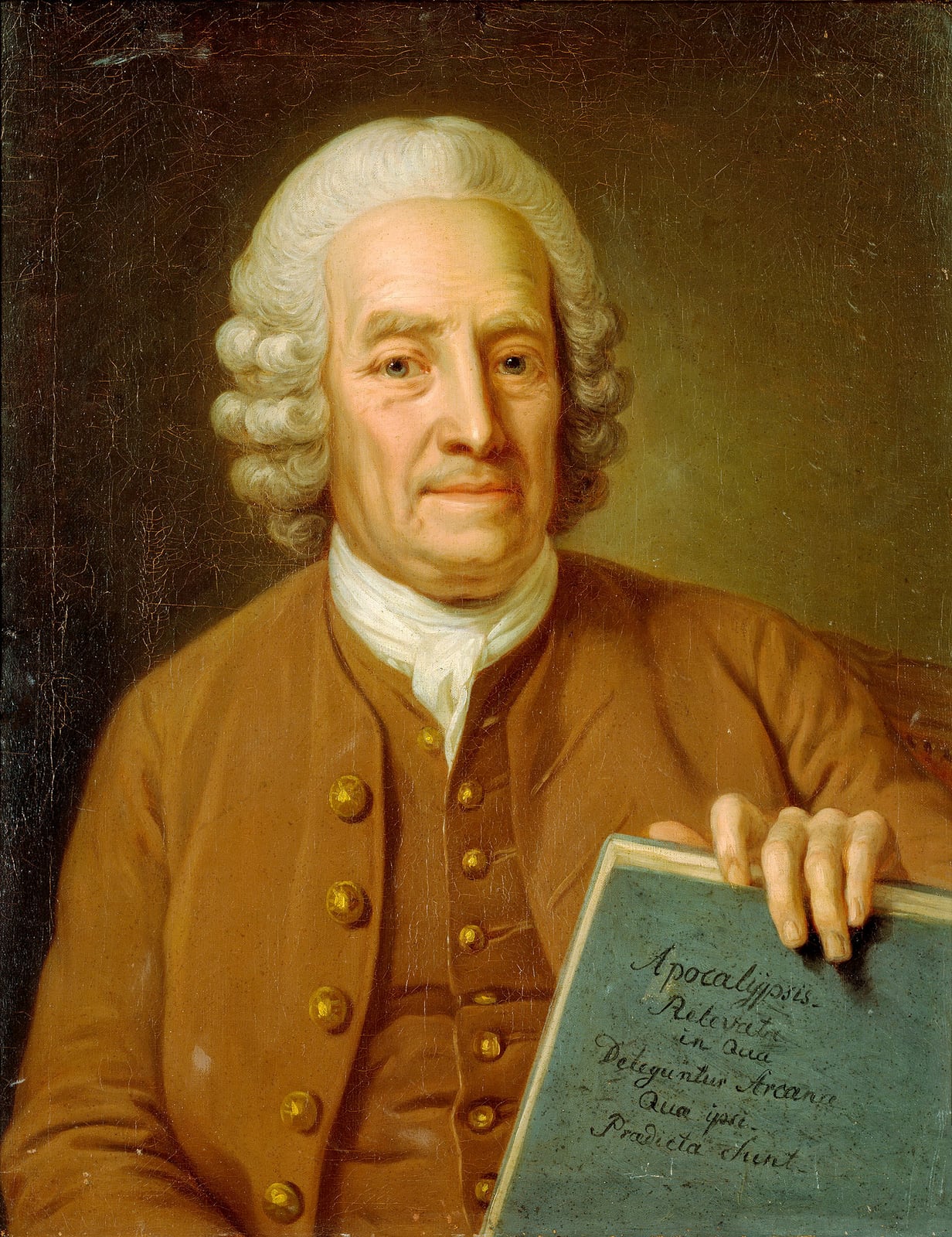
Emanuel Swedenborg
Concordano su: Che cos'è l'Assoluto? Dio esiste? · Come si raggiunge la liberazione o la salvezza? · Perché meditare o pregare?
La pensa diversamente da
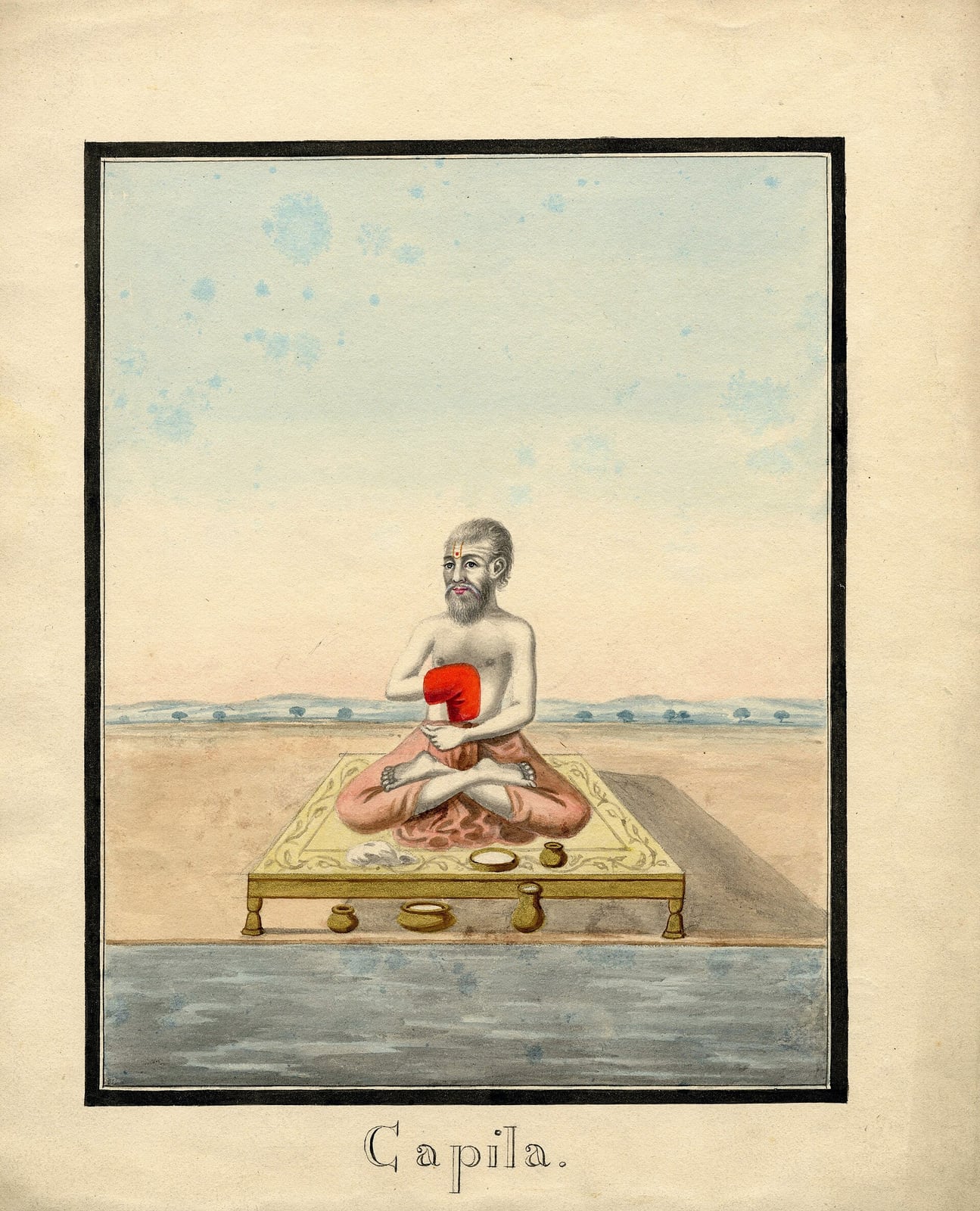
Kapila
Si scontrano su: Che cos'è l'Assoluto? Dio esiste?
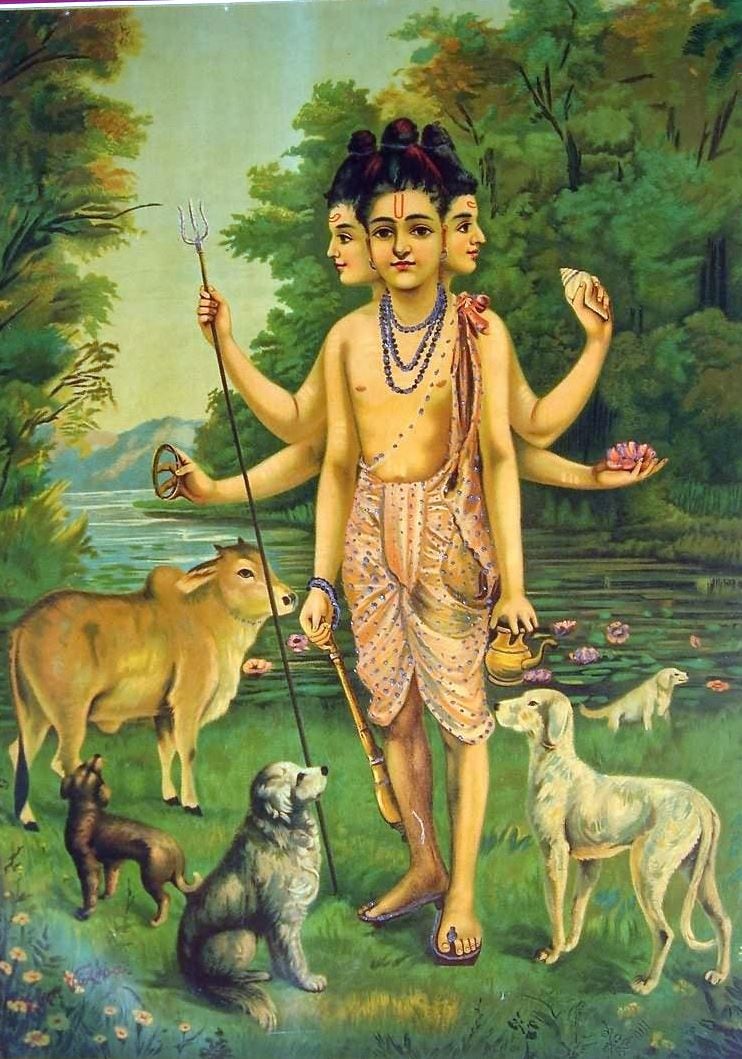
Dattatreya
Si scontrano su: Che cos'è l'Assoluto? Dio esiste? · Perché soffriamo? · Che cosa accade dopo la morte?
Uddalaka Aruni
Si scontrano su: Che cos'è l'Assoluto? Dio esiste? · Che cosa accade dopo la morte? · Come si raggiunge la liberazione o la salvezza?
Vasishtha
Si scontrano su: Che cos'è l'Assoluto? Dio esiste? · Perché soffriamo? · Che cosa accade dopo la morte?
Aneddoti e racconti
Aneddoti e racconti
Racconto agiograficorelato épico
The grief that became verse
Origine del racconto: Rāmāyaṇa, Bālakāṇḍa, sarga 2 (Griffith's translation, canto II). Goldman regards it as part of the poem's late frame. Ānandavardhana (9th c.) cites it in the Dhvanyāloka as an example that the soul of poetry is emotion.
Racconto agiograficorelato épico
The question to Nārada
Origine del racconto: Rāmāyaṇa, Bālakāṇḍa, sarga 1 (Griffith's translation, canto I). It belongs to the poem's late frame.
Racconto agiograficorelato épico
The hermitage that sheltered Sītā
Origine del racconto: Rāmāyaṇa, Uttarakāṇḍa (Dutt's translation, vol. 4). It is a late stratum of the poem, which philology regards as an addition.
Racconto agiograficorelato épico
The poet's oath
Origine del racconto: Rāmāyaṇa, Uttarakāṇḍa, section CIX of M. N. Dutt's translation (1894), checked against the text.
Racconto agiograficoleyenda medieval y moderna
The bandit of the anthill
Origine del racconto: It does not appear in Vālmīki's Rāmāyaṇa. It is documented in the Adhyātma Rāmāyaṇa (Ayodhyākāṇḍa) and in later texts and vernacular versions; the name Ratnākara belongs to late versions. Julia Leslie (2003) studied its history and its rejection by the Vālmīki community.
Fonte: Leslie, Julia. Authority and Meaning in Indian Religions: Hinduism and the Case of Vālmīki. Aldershot: Ashgate, 2003.
Documentato1881
Tagore in the role of Vālmīki
Origine del racconto: A fact documented by the history of Bengali theatre and by the photograph of the performance (Commons, from Indira Devi Chaudhurani's memoirs, Visva-Bharati, 1974). The exact date of the premiere should be confirmed in a Tagore biography.
Insegnamenti
Insegnamenti
Le nozioni che articolano il suo pensiero, spiegate nel loro contesto.
Śloka (the stanza born of grief)sloka
Sanskrit metrics; Bālakāṇḍa, sarga 2.
Ādikāvya and ādikavi (the first poem, the first poet)adikavya
Sanskrit poetics and literary genres.
Fonte: Goldman, Robert P. (trad. e introd.). The Rāmāyaṇa of Vālmīki: An Epic of Ancient India. Vol. I: Bālakāṇḍa. Princeton: Princeton University Press, 1984. Introducción (autor, fecha, el episodio de las grullas y el marco del poema).
Karuṇa rasa (the compassionate sentiment)karuna-rasa
Ānandavardhana's Dhvanyāloka (9th c.), 1.5.
Fonte: Goldman, Robert P. (trad. e introd.). The Rāmāyaṇa of Vālmīki: An Epic of Ancient India. Vol. I: Bālakāṇḍa. Princeton: Princeton University Press, 1984. Introducción (autor, fecha, el episodio de las grullas y el marco del poema).
The recensions and the critical editionrecensiones-ramayana
Textual criticism of the Rāmāyaṇa.
Fonte: Bhatt, G. H., y U. P. Shah (eds. gen.). The Vālmīki-Rāmāyaṇa: Critical Edition. 7 vols. Baroda: Oriental Institute, 1960–1975.
Rāma, the ideal man of dharmamaryada-purushottama
Ethics and theology of the Rāmāyaṇa.
Fonte: Brockington, John. Righteous Rāma: The Evolution of an Epic. Delhi: Oxford University Press, 1984.
Video
Video
Registrazioni, interviste e documentari. I video vengono riprodotti da YouTube; non sono ospitati qui.
Robert Goldman sings from the Ramayana
Conferenza· SA· 2016· 2 min
UC BerkeleyCanale ufficiale
Famous Ramayana epic now in modern English
Documentario· EN· 2016· 4 min
UC BerkeleyCanale ufficiale
CMTC workshop (02.06.2021) Mary Brockington (Oriental Studies, Oxford)
Conferenza· EN· 2021· 53 min
CMTC Media
Reading Ramayana in the 21st Century | Arshia Sattar | India ki Khoj
Conferenza· EN· 2019· 52 min
IIT GandhinagarCanale ufficiale
A critical edition of the Valmiki Ramayana
Conferenza· HI· 2025· 11 min
Pandulipi Sanvadah
Bharat Ek Khoj | Episode-7 | Ramayana, Part-I
Documentario· HI· 1988· 48 min
Prasar Bharati ArchivesCanale ufficiale
Bharat Ek Khoj | Episode-8 | Ramayana, Part II
Documentario· HI· 1988· 44 min
Prasar Bharati ArchivesCanale ufficiale
Mewar Ramayana brought alive
Documentario· EN· 2014· 5 min
Chhatrapati Shivaji Maharaj Vastu SangrahalayaCanale ufficiale
Ramayana Storytelling Performance
Registrazione di terzi· EN· 2016· 93 min
Asian Art MuseumCanale ufficiale
Rama and the Ramayana: Crash Course World Mythology #27
Analisi· EN· 2017· 13 min
CrashCourseCanale ufficiale
Complete Chant of SundaraKanda from Valmiki Ramayanam in Sanskrit
Registrazione di terzi· SA· 2021· 693 min
The Sanskrit Channel
Life and Teachings of Maharishi Valmiki, Author of Ramayana also known as Adi Kavi
Analisi· HI· 2020· 21 min
StudyIQ IAS
RAMAYANA
Registrazione di terzi· ES· 2020· 18 min
Casa de la India in SpainCanale ufficiale
Râmâyana : la légende de Rama, avatar de Vishnou - Mythologie hindoue
Analisi· FR· 2020· 20 min
Arcana les Mystères du Monde
Galleria
Galleria
Immagini con licenza verificata. Ciascuna conserva la sua paternità e la sua attribuzione.
Manoscritti
Manoscritti
Testimoni manoscritti e testi antichi, con il loro custode e le loro condizioni di consultazione.
FA · Nastaʿlīq (persa) · Texto épico sánscrito (s. V a. C.–III d. C. aprox.); traducción persa de época de Akbar
Rāmāyaṇa de Vālmīki (traducción persa), copia ilustrada conocida como «Freer Ramayana»
- Testimone conservato
- Manuscrito ilustrado de 1597–1605
- Custode
- Freer Gallery of Art, Smithsonian National Museum of Asian Art (Washington) · F1907.271
- Digitalizzazione
- www.asia.si.edu/collections/singleObject.cfm?Obj…
Relazioni
Relazioni
Influenze, discepolati e affinità. Si distingue la relazione documentata dalla somiglianza individuata per analisi.
Incontrò
In the first canto of the Rāmāyaṇa, Nārada answers Vālmīki's question and tells him the life of Rāma. A textual, not a historical, relation.
Relazione documentata
Contemporaneo di
In the Rāmāyaṇa, Vasiṣṭha is the purohita of Ayodhyā in Rāma's time; the Yoga Vāsiṣṭha puts in Vālmīki's mouth the narration of Vasiṣṭha's dialogue with Rāma. A literary relation.
Relazione documentata
Idee affini a
The two 'authors' of the Sanskrit epics are at once characters in their works and names that authorise whole corpora; tradition pairs them as the first poet and the compiler of history.
Somiglianza individuata per analisi
Influenzò
In 1900 Vivekananda devoted a lecture to the Rāmāyaṇa, in which he presents Vālmīki as India's first poet.
Relazione documentata
Influenzò
Tulsīdās
Tulsīdās's Rāmcaritmānas (16th c.), in Awadhi, is the great devotional rewriting of the story told in the Rāmāyaṇa; it also draws on the Adhyātma Rāmāyaṇa.
Relazione documentata
Idee affini a
The repetition of Rāma's name as a path of salvation, central to the late legend of Vālmīki, is also the core of Kabīr's devotion; the affinity is thematic.
Somiglianza individuata per analisi
Collegato da altre schede
Fonti
Fonti
Bibliografia e cataloghi consultati per questa scheda.
- Wikidata, «Valmiki», QID Q715607 (LCCN n80036601; GND 118840274; BnF 11927528q; VIAF 288016626).
- Goldman, Robert P. (trad. e introd.). The Rāmāyaṇa of Vālmīki: An Epic of Ancient India. Vol. I: Bālakāṇḍa. Princeton: Princeton University Press, 1984. Introducción (autor, fecha, el episodio de las grullas y el marco del poema).
- Brockington, John. The Sanskrit Epics. Leiden: Brill, 1998 (Handbuch der Orientalistik, 2. Abt., Bd. 12). Capítulos sobre el Rāmāyaṇa: transmisión, recensiones, estratos y datación.
- Brockington, John. Righteous Rāma: The Evolution of an Epic. Delhi: Oxford University Press, 1984.
- Griffith, Ralph T. H. (trad.). The Rámáyan of Válmíki, translated into English verse. 5 vols. Londres: Trübner; Benarés: E. J. Lazarus, 1870–1874. Project Gutenberg n.º 24869 (cantos I–II del libro I; nota sobre el Uttarakáṇḍa).
- Bhatt, G. H., y U. P. Shah (eds. gen.). The Vālmīki-Rāmāyaṇa: Critical Edition. 7 vols. Baroda: Oriental Institute, 1960–1975.
- Goldman, Robert P., y Sally J. Sutherland Goldman (trads.). The Rāmāyaṇa of Vālmīki: An Epic of Ancient India. Vol. VII: Uttarakāṇḍa. Princeton: Princeton University Press, 2016; edición completa en un volumen: The Rāmāyaṇa of Vālmīki: The Complete English Translation, 2021.
- Leslie, Julia. Authority and Meaning in Indian Religions: Hinduism and the Case of Vālmīki. Aldershot: Ashgate, 2003.
- Dutt, Manmatha Nath (trad.). The Rāmāyaṇa. 4 vols. Calcuta: edición y publicación del traductor, 1891–1894. Vol. 4: Uttara Kāṇḍa, sección CIX (el juramento de Vālmīki). Project Gutenberg n.º 57265, 57826, 60188, 62496.
- Wikipedia (inglés), «Valmiki», sobre la leyenda de Ratnākara en el Adhyātma Rāmāyaṇa y otras fuentes tardías, y sobre la comunidad que lo venera.
- Mitra, Vihari-Lala (trad.). The Yoga-Vásishtha Mahárámáyana of Válmiki. 4 vols. en 7 partes. Calcuta: Bonnerjee & Co., 1891–1899. Project Gutenberg n.º 71326 y siguientes.
- Smithsonian, National Museum of Asian Art, Freer Gallery of Art: Rāmāyaṇa de Vālmīki ilustrado (la «Freer Ramayana»), taller mogol, 1597–1605, F1907.271.
- Wikipedia (inglés), «Valmiki Pratibha» (ópera de Rabindranath Tagore, 1881) y «Uttararamacharita» (drama de Bhavabhūti, s. VIII).
- Vivekananda, Swami. «The Ramayana», conferencia en Pasadena, 31 de enero de 1900. The Complete Works of Swami Vivekananda, vol. 4 (Wikisource).
- Titolare dei diritti
- Texto sánscrito de dominio público. Traducciones con derechos propios: Princeton University Press (Goldman et al.), Penguin India (Debroy; Sattar), Gallimard (Pléiade), Diederichs, Clásicos Bergua, Iberia. Son de dominio público las de Griffith (1870–1874), Dutt (1891–1894) y Fauche (1854–1858).
In attesa di conferma
Ciò che questa scheda non ha ancora potuto chiarire. Preferiamo dirlo piuttosto che riempirlo.
- Fechas: no hay nacimiento ni muerte; la línea de tiempo usa las fechas de la composición del Rāmāyaṇa. Precisar con la introducción de Goldman (1984) la horquilla que propone para el núcleo y con Brockington (1998) las etapas.
- Ediciones en español: las de Clásicos Bergua (2001), Iberia (1990) y Juventud (1984) no indican traductor en Open Library; identificarlo y comprobar si son traducciones íntegras o adaptaciones. Buscar ediciones en italiano, ruso e hindi (Gita Press) con ISBN.
- Obras atribuidas (Adbhuta Rāmāyaṇa, Ānanda Rāmāyaṇa, Gaṅgāṣṭaka): falta fuente académica propia y ediciones; precisar fechas.
- Anécdota de Vālmīki Pratibhā: confirmar la fecha exacta del estreno (febrero de 1881) en una biografía de Tagore.
- Cita apócrifa «jananī janmabhūmiś ca…»: localizar en qué manuscritos o versiones aparece y citar el aparato de la edición crítica.
- Mitra (Yoga Vāsiṣṭha): fecha de muerte del traductor sin verificar (caution en la sala de lectura).
- Manuscritos: añadir el Rāmāyaṇa de Mewar (British Library y CSMVS, s. XVII) con signaturas verificadas.
Ricerca effettuata il 2026-10-26