Индуизм · Адвайта-веданта · Ведическая традиция
Uddalaka Aruni
उद्दालक आरुणि
Историчность оспаривается
Ведийский мудрец из Куру-Панчалы, из рода Гаутамы, которого упанишады представляют учителем своего сына Шветакету и Яджнавалкьи. В шестой книге «Чхандогья-упанишады» он с помощью опытов — глины, семени баньяна, соли, растворённой в воде, — показывает, что всё происходит из сущего, «единого, без второго», и подытоживает это припевом «тат твам аси». Он ничего не написал; его образ, историчность которого оспаривается, известен из «Шатапатха-брахманы» и древнейших упанишад, созданных примерно в VII–VI веках до н. э.
- трудов
- 9трудов
- изданий
- 24изданий
- цитат
- 7цитат
- видео
- 12видео
- изображений
- 4изображений
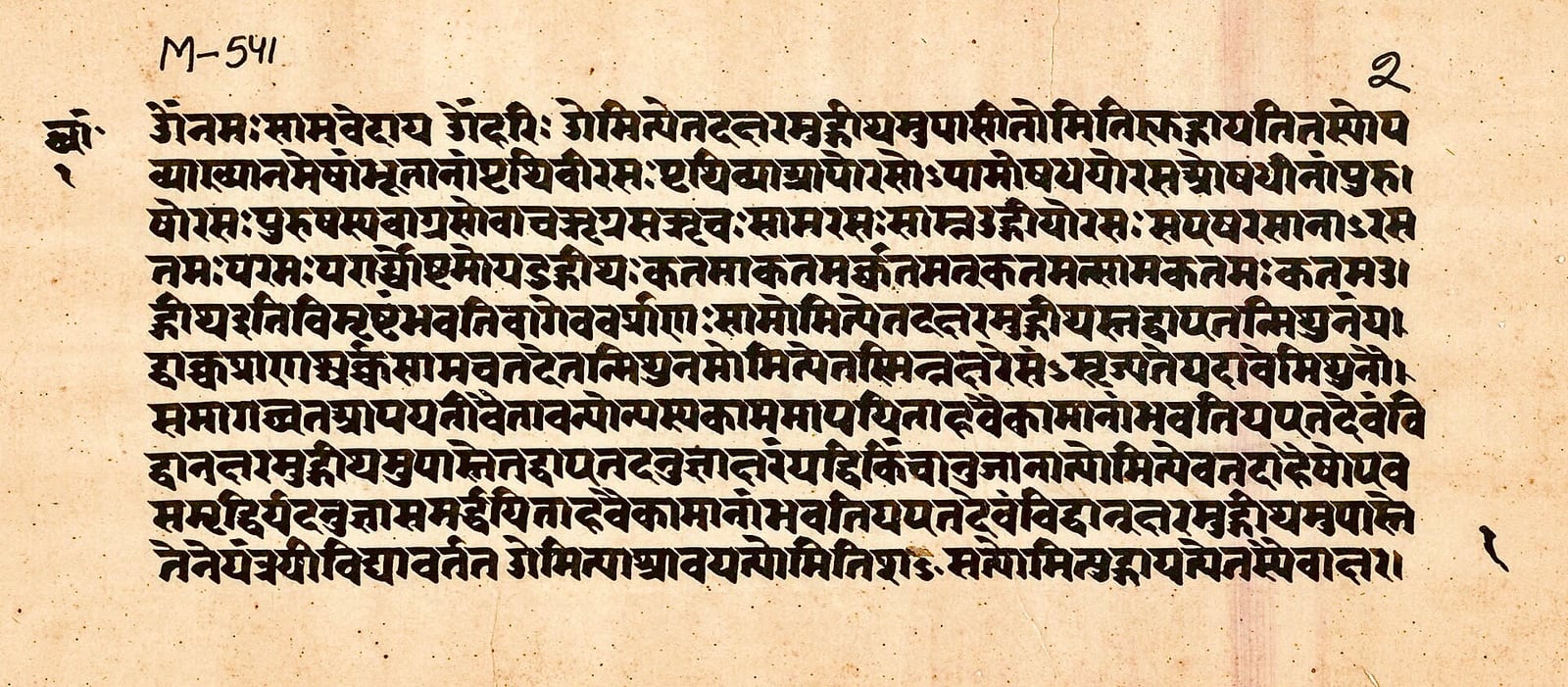
Manuscrito de la Chāndogya Upaniṣad (1849) · CC BY-SA 4.0
Своими словами
«In the beginning, my dear, this was being alone, one only, without a second.»Chāndogya Upaniṣad 6.2.1 (traducción propia)

Главная мысль
Tat tvam asi ("you are that"): The refrain that closes nine of Uddālaka's lessons to Śvetaketu in the Chāndogya (6.8.7–6.16.3): that subtle essence (aṇiman) is what all this has as its self; that is the real; that is the ātman; tat tvam asi.
В контексте
Биография
4 мин чтения
Перевод с испанского оригинала, выполненный с помощью ИИ; ожидает проверки носителем языка.
Учитель в списках учителей
Уддалака Аруни не оставил ни одного сочинения. Его имя то и дело встречается в поздневедийской прозе — в «Шатапатха-брахмане», в «Брихадараньяка-» и «Чхандогья-упанишадах», в «Каушитаки», в «Джайминия-упанишад-брахмане» — как авторитет в вопросах обряда, как участник диспутов и прежде всего как учитель. Тексты называют его также Гаутамой — по роду — и дают ему отца, Аруну Аупавеши, и сына, Шветакету Арунею; по этим упоминаниям Михаэль Витцель восстановил родословное древо в четыре поколения. Он был брахманом из Куру-Панчалы, сердца ведийского мира на западе Гангской равнины, и списки учителей «Брихадараньяки» делают его наставником Яджнавалкьи: «Яджнавалкья — от Уддалаки; Уддалака — от Аруны».
Странник на севере
«Шатапатха-брахмана» сохранила эпизод, рисующий его странствующим жрецом. Уддалака обходил северную страну как совершитель обрядов и носил с собой золотую монету, ибо в древности, говорит текст, тот, кто так путешествовал, назначал награду, вызывая других на диспут. Северные брахманы, опасаясь, как бы этот брахман из Куру-Панчалы не отнял у них их угодья, выставили против него Свайдаяну Шаунаку. Тот задал ему ряд вопросов о сокровенном смысле жертвоприношений новолуния и полнолуния; Уддалака отдал ему монету, признал его знание, а затем вернулся с дровами в руках — жестом того, кто просит принять его в ученики, — чтобы тот ему всё объяснил. В другом месте уже он сам отвечает, один за другим, на вопросы Шаучеи Прачинайогьи об агнихотре.
Отец и учитель
Учение, прославившее его, изложено в шестой книге «Чхандогьи». Его сын Шветакету, отправленный учиться в двенадцать лет, возвращается в двадцать четыре, как рассказывает текст, «надменным, самонадеянным, считающим себя учёным». Отец спрашивает, знает ли он то наставление, благодаря которому слышат неслышанное, мыслят немыслимое и познают непознанное. Видя его неведение, отец открывает ему это наставление: как по одному комку глины познаётся всё сделанное из глины — а сосуды суть лишь «дело слов, видоизменение, имя», — так через сущее (сат) познаётся всё, что существует. «Вначале, дорогой мой, это было одним лишь сущим, единым, без второго». Из него возникают жар, вода и пища, которые, соединяясь, образуют все вещи.
Девять уроков и один припев
Уддалака учит опытом. Он велит сыну пятнадцать дней поститься, только пить воду, и убеждается, что тот не может читать наизусть Веды; когда сын снова начинает есть, память возвращается, как уголёк, раздутый соломой. Затем следуют девять уроков: мёд, собирающий нектар многих деревьев так, что ни одна капля не знает, с какого дерева она взята; реки, теряющиеся в море; дерево, живущее, пока его пронизывает жизнь; семя баньяна, в котором, если его расколоть, ничего не видно и из которого тем не менее вырастает огромное дерево; соль, растворённая в воде, которую не видно, но которую ощущаешь на вкус повсюду; человек с завязанными глазами, находящий дорогу обратно в Гандхару, потому что кто-то указал ему путь. Каждый урок кончается одним и тем же припевом: эта тончайшая сущность — то, чем является всё это; это истинное; это атман; тат твам аси, Шветакету.
Что значит «тат твам аси»
Традиция адвайты, начиная с Шанкары, читала эту фразу как утверждение тождества — «ты есть то»: индивидуальный атман есть брахман — и причислила её к четырём «великим изречениям» упанишад. В 1986 году Джоэл Бреретон предложил иное прочтение, внимательное к грамматике и контексту: местоимение среднего рода отсылает к тончайшей сущности, о которой только что шла речь, и фраза означает нечто вроде «таков ты». Патрик Оливелл соответственно переводит: «и таков ты, Шветакету». Оба прочтения сходятся в главном — сын состоит из той же невидимой реальности, что и всё остальное, — но расходятся в том, формулирует ли текст метафизическое тождество или объясняет природу человека.
Брахман, готовый учиться
Тексты настойчиво подчёркивают одну черту его характера: Уддалака не боится снова стать учеником. При дворе Джанаки он расспрашивает Яджнавалкью о «нити», связующей миры, и о «внутреннем правителе», вспоминает то, чему научился у Патанчалы Капьи в стране мадров, и, выслушав ответ, умолкает. Когда царь Правахана Джайвали унижает Шветакету пятью вопросами об участи после смерти, отец сам отправляется ко двору, просит наставления и получает учение о пяти огнях, которое, по словам царя, никогда прежде не доходило до брахмана. Другим брахманам, спрашивающим его о вселенском атмане, он признаётся, что не сможет ответить им до конца, и ведёт их к царю Ашвапати Кайкее. Брайан Блэк исследовал эти сцены, в которых знание переходит от царей к жрецам.
Что известно и что нет
Дат нет: историчность Уддалаки оспаривается так же, как историчность всего поколения ранних упанишад, которые Оливелл относит примерно к VII–VI векам до н. э., а Витцель — к поздневедийской эпохе, до Будды. Бен-Ами Шарфштейн причисляет его к первым философам в истории, а марксист Дебипрасад Чаттопадхьяя видел в нём первого «естествоиспытателя» за его метод наблюдения и опыта. «Катха-упанишада» упоминает некоего Ауддалаки Аруни, отца Начикетаса, которого Шанкара отождествил с ним; Макс Мюллер заметил, что форма имени вызывает сомнения.
Аруни эпоса
«Махабхарата» наделила его легендарной юностью. Аруни из Панчалы, ученика мудреца Айоды Дхаумьи, послали заделать пролом в плотине на поле; не сумев этого сделать, он лёг в пролом и остановил воду своим телом. Когда учитель позвал его, он поднялся, прорвав плотину, и Дхаумья дал ему имя Уддалака — «поднявшийся из плотины». Тот же эпос делает его дочь Суджату матерью Аштавакры и приписывает Шветакету установление супружеской верности. Его имя носит поздняя упанишада об отречении, «Аруни-упанишада», а Мадхва цитировал ныне утраченную «Аруни-шрути». Припев «Чхандогьи» между тем стал одной из самых часто повторяемых фраз индийской духовности.
Источники: Olivelle, Patrick (ed. y trad.). The Early Upaniṣads: Annotated Text and Translation. Nueva York: Oxford University Press, 1998. Chāndogya 5.3–5.24 y 6; Bṛhadāraṇyaka 3.7, 6.2, 6.3.7 y 6.5; Kauṣītaki 1.1. · Olivelle, Patrick (trad.). Upaniṣads. Oxford World's Classics. Oxford: Oxford University Press, 1996 (traducción «And that's how you are, Śvetaketu» de Chāndogya 6.8.7 y ss.). · Müller, F. Max (trad.). The Upanishads, Part I (Sacred Books of the East, vol. 1). Oxford: Clarendon Press, 1879 (Khândogya y Kaushîtaki-brâhmaṇa-upanishad); y Part II (SBE 15), 1884, nota a Kaṭha 1.11. · Eggeling, Julius (trad.). The Śatapatha-Brāhmaṇa, Part V (Sacred Books of the East, vol. 44). Oxford: Clarendon Press, 1900. XI.4.1 (Uddālaka Āruṇi y Svaidāyana) y XI.5.3 (Śauceya Prācīnayogya y Uddālaka Āruṇi sobre el agnihotra). · Chattopadhyaya, Debiprasad. Science and Society in Ancient India. Calcuta: Research India Publications, 1977.
Хронология
Жизнь год за годом
Каждая точка — документированное событие. Нажмите, чтобы прочитать о нём, с источником и степенью достоверности.
VIII век до н. э. – 600 до н. э.Kuru-Pañcāla
Ritual authority of the Śatapatha Brāhmaṇa
His opinions and debates appear in the later books of the Śatapatha (XI.4.1, XI.5.3) and in the Jaiminīya Upaniṣad Brāhmaṇa. The range is an estimate of the period of the texts.
ВероятноEggeling, Julius (trad.). The Śatapatha-Brāhmaṇa, Part V (Sacred Books of the East, vol. 44). Oxford: Clarendon Press, 1900. XI.4.1 (Uddālaka Āruṇi y Svaidāyana) y XI.5.3 (Śauceya Prācīnayogya y Uddālaka Āruṇi sobre el agnihotra).
VIII век до н. э. – 600 до н. э.
Ritual authority of the Śatapatha Brāhmaṇa
His opinions and debates appear in the later books of the Śatapatha (XI.4.1, XI.5.3) and in the Jaiminīya Upaniṣad Brāhmaṇa. The range is an estimate of the period of the texts.
Вероятно
VII век до н. э.
Svaidāyana's challenge
Travelling in the north as an officiant, he loses a disputation to Svaidāyana Śaunaka and returns with firewood in hand to be instructed (Śatapatha XI.4.1).
Предание
VII век до н. э.
The teaching to Śvetaketu
Chāndogya 6: being, one without a second, the experiments and the refrain "tat tvam asi".
Предание
VII век до н. э.
Pupil of King Pravāhaṇa Jaivali
After his son's humiliation at the Pañcāla assembly, he receives from the king the doctrine of the five fires (Chāndogya 5.3–10; Bṛhadāraṇyaka 6.2).
Предание
VII век до н. э.
He questions Yājñavalkya
He asks about the "thread" and the "inner controller" and falls silent after the answer (Bṛhadāraṇyaka 3.7).
Предание
II век до н. э. – 400
The Āruṇi of the Mahābhārata
The epic, fixed between the third century BCE and the fourth century CE, tells the episode of the dyke and how his teacher Dhaumya gave him the name Uddālaka.
Вероятно
1862
First English translation of the Chāndogya
Rājendralāla Mitra publishes the Chāndogya with extracts from Śaṅkara's commentary in the Bibliotheca Indica.
Документировано
1879
The Chāndogya in the Sacred Books of the East
Max Müller opens the series with the Chāndogya and popularizes the rendering "Thou art that".
Документировано
1986
Brereton rereads "tat tvam asi"
Joel Brereton proposes reading the refrain in its grammatical context as "that's how you are", a reading Olivelle adopts.
Документировано
Труды
Главные труды
Труды, без которых не понять это наследие.
Традиционная атрибуция · VII век до н. э.
The teaching to Śvetaketu (Chāndogya Upaniṣad, book VI)
छान्दोग्योपनिषद् षष्ठोऽध्यायः (Chāndogya Upaniṣad VI)
Sixteen prose sections. Śvetaketu returns conceited after twelve years of study, and his father teaches him what he did not learn: how, by knowing one thing, everything is known. He sets out the origin of the world from being (sat), "one without a second", which produces heat, water and food; the threefold composition of all things; the experiment of fasting; and nine illustrations — honey, rivers, the tree, the fig seed, salt in water, the man from Gandhāra, the dying man, the thief put to the ordeal of the axe — ending with the refrain "tat tvam asi, Śvetaketu". It is one of the founding texts of Vedānta.
9 изданий
Uddalaka Aruni
Chāndogya Upaniṣad (passages of Uddālaka Āruṇi)
Позднейший сборник · VII век до н. э.
Chāndogya Upaniṣad (passages of Uddālaka Āruṇi)
छान्दोग्योपनिषद् (Chāndogya Upaniṣad)
Together with the Bṛhadāraṇyaka, the oldest of the Upaniṣads. Its first books interpret the chants (sāman) and the syllable Om; the following ones contain teachings on the ātman and brahman attributed to various masters. In book 5 Uddālaka receives from King Pravāhaṇa the doctrine of the five fires and the two paths of the dead, and accompanies other brahmins to Aśvapati Kaikeya to learn the universal ātman (vaiśvānara). Book 6 is his teaching to Śvetaketu.
6 изданий
Все труды (9)
The question of the thread and the inner controller (Bṛhadāraṇyaka 3.7)
650
The doctrine of the five fires (pañcāgni-vidyā), received from Pravāhaṇa Jaivali
650
The teaching of the universal ātman (vaiśvānara-vidyā), before Aśvapati Kaikeya
650
Uddalaka Aruni
Uddālaka's debates in the Śatapatha Brāhmaṇa
The Conscious LibraryUddālaka's debates in the Śatapatha Brāhmaṇa
700
Kauṣītaki Upaniṣad, chapter 1: Āruṇi and Citra Gāṅgyāyani
500

Āruṇi Upaniṣad (Āruṇeyī Upaniṣad)
Uddalaka Aruni
Āruṇi-śruti (lost text)
The Conscious LibraryĀruṇi-śruti (lost text)
Изречения
Изречения, найденные в конкретном труде. Каждое сопровождается указанием происхождения и степени надёжности.
In the beginning, my dear, this was being alone, one only, without a second.सदेव सोम्येदमग्र आसीदेकमेवाद्वितीयम् ।
ПровереноChāndogya Upaniṣad 6.2.1 (traducción propia)
Последние слова
Проверяемых записей о последних словах не существует.
There is no account of his death or last words in the Vedic texts, the epic or the Purāṇas. The only words of his that survive are the teachings and dialogues attributed to him by the Śatapatha Brāhmaṇa and the Upaniṣads.
Источник: Olivelle, Patrick (ed. y trad.). The Early Upaniṣads: Annotated Text and Translation. Nueva York: Oxford University Press, 1998. Chāndogya 5.3–5.24 y 6; Bṛhadāraṇyaka 3.7, 6.2, 6.3.7 y 6.5; Kauṣītaki 1.1.
Спросить
На что отвечают эти труды
Двенадцать великих вопросов человечества и то, что позволяют на них ответить эти тексты, со ссылками. Мы никогда не вкладываем слова в чужие уста.
Что такое Абсолют? Существует ли Бог?
In the beginning there was only being, one without a second
Безличный АбсолютСказано прямо
In the sixth book of the Chāndogya Upaniṣad, Uddālaka Āruṇi teaches his son Śvetaketu that in the beginning there was only being (sat), one without a second, and rejects those who held that being was born from non-being. From that principle come heat, water and food, and from their mixture all things. He does not describe a god who judges or loves: he describes a single substance, so subtle that it is not perceived, which is the ātman of all that exists. His examples —the clay of which all pots are made, the dissolved salt that is unseen yet present in every sip, the invisible seed from which the fig tree grows— aim to make the disciple recognise that principle in things and in himself.
Сравнить этот вопрос с другими учителямиКто я? Существует ли истинное «я»?
The subtle essence of all is the ātman, «and that's how you are»
Самость есть АбсолютСказано прямо
Nine of Uddālaka's lessons to Śvetaketu in the Chāndogya end with the same refrain: that subtle essence (aṇiman) is what all this has as its ātman; that is the real; that is the ātman; tat tvam asi (6.8.7–6.16.3). Śvetaketu's self is therefore not something apart: like the river that returns to the sea and no longer knows it was that river, or like honey made from different flowers, the individual comes from being and shares its essence. The Advaita tradition read the refrain as the great saying «you are that», a strict identity between the individual and brahman. The lesson is not presented as a theory, but as something the disciple must verify in things and recognise in himself.
Сравнить этот вопрос с другими учителямиПочему мы страдаем?
He does not analyse pain; he speaks of one lost who needs guidance
Не высказывался
The teachings the Chāndogya puts in Uddālaka Āruṇi's mouth contain no diagnosis of suffering. Their subject is the origin and essence of things, not the cause of pain. The closest is a parable (6.14): a man is blindfolded, led far from his land of Gandhāra and abandoned in a deserted place; he cries out that he has been brought there blindfolded, until someone removes the blindfold and points out the way, and he, asking from village to village, returns home. So, says Uddālaka, one who has a teacher knows that he will remain here only as long as he is not set free. The image suggests that the human condition is a disorientation that knowledge corrects, but the text does not formulate it as a theory of suffering.
Сравнить этот вопрос с другими учителямиЧто происходит после смерти?
The body deprived of life dies; life does not die
То, что я есть, не рождается и не умираетСледует из учения
Uddālaka explains death to Śvetaketu with the image of a great tree: if its root, trunk or crown is struck, it bleeds but lives, because life pervades it; if life leaves a branch, the branch withers. So, he concludes, it is the body deprived of life that dies; life does not die (Chāndogya 6.11.3). In another passage he describes the process: in the dying person, speech is gathered into the mind, the mind into breath, breath into heat and heat into the highest deity, the being from which all proceeds (6.8.6; 6.15). Death is thus a return to the subtle essence that never ceased to be. Uddālaka also appears, in book V, receiving from a king the doctrine of the five fires and of the paths beyond.
Сравнить этот вопрос с другими учителямиКак достигается освобождение или спасение?
To know that by which the unheard is heard and the unthought is thought
Через прямое знаниеСледует из учения
Uddālaka's teaching in the Chāndogya begins with a reproach: Śvetaketu returns proud after twelve years of Vedic study, and his father asks whether he knows the teaching by which the unheard becomes heard, the unthought thought and the unknown known (6.1.2–3). The goal is that knowledge of the being from which everything proceeds, and what follows are the lessons through which it is reached: clay, salt, the fig seed. The parable of the man from Gandhāra shows where it leads: one who has a teacher knows that he will remain here only as long as he is not set free, and then he will arrive (6.14.2). In the last lesson, the one who speaks the truth is not burned when he grasps the red-hot axe (6.16). Known truth protects and frees.
Сравнить этот вопрос с другими учителямиНужен ли учитель?
One who has a teacher knows the way home
НезаменимСказано прямо
Uddālaka is, in the Chāndogya, the figure of the father who teaches: his entire sixth book is an instruction to his son Śvetaketu, made of questions, examples and small tests. And it is in that book that the need for a teacher is most clearly formulated. A blindfolded man is abandoned far from his land of Gandhāra; only when someone removes the blindfold and points out the direction can he return, asking from village to village. So, Uddālaka concludes, one who has a teacher (ācāryavān) knows: I remain here only as long as I am not set free, and then I shall arrive (6.14.2). The teacher does not replace the path, which the disciple walks himself, but without him one does not know which way to go.
Сравнить этот вопрос с другими учителямиРеален ли мир?
Being became many: heat, water and food, and entered into them
Проявление божественногоСказано прямо
For Uddālaka, the world comes from being (sat), which, wishing to be many, emitted heat; heat, water; and water, food (Chāndogya 6.2.3–4). It then entered those three «deities» with the living ātman and made them threefold, so that each thing contains all three: the red of fire is that of heat, the white that of water, the black that of food (6.3–4). His most famous example is clay: by one lump everything made of clay is known, because the modification is «a matter of words», a name, and the real is the substance (6.1.4). The world is not a dream, but being itself under names and forms; what dissolves on understanding it is the belief that things are something apart from their source.
Сравнить этот вопрос с другими учителямиЧто такое любовь?
His lessons concern being, not love; they ask for trust
Не высказывался
The teachings the Chāndogya and the Bṛhadāraṇyaka put in Uddālaka Āruṇi's mouth do not address love. Their subject is the origin of things, the subtle essence that sustains them and the relation between that essence and the disciple. The closest thing to an affective dimension lies in the tone of the teaching: he is a father instructing his son, calls him «dear one» (somya) again and again and, when Śvetaketu cannot see the invisible essence of the fig seed, asks him for trust (śraddhā). But the trust he asks for is that of a disciple who accepts what he does not yet understand, not a love directed to God or to one's neighbour, and the text does not develop it as a teaching.
Сравнить этот вопрос с другими учителямиСвободны ли мы или всё предопределено?
He does not treat freedom; his last lesson is about truth
Не высказывался
The teachings ascribed to Uddālaka Āruṇi do not address the question of freedom or fate. Their interest lies in the origin of things and in the subtle essence that sustains them, not in human action or its consequences. The doctrine of rebirth according to deeds, which the Chāndogya sets out in book V, Uddālaka receives from a king, Pravāhaṇa Jaivali, who warns him that this knowledge had not previously reached the brahmins. The closest thing to an ethic in his teaching is the last lesson to Śvetaketu (6.16): a man accused of theft is made to grasp a red-hot axe; if he has lied he is burned, and if he speaks the truth, protected by it, he is not. Truth is what frees, not a choice between alternatives.
Сравнить этот вопрос с другими учителямиЗачем медитировать или молиться?
He teaches no meditation: he teaches looking and verifying
Не высказывался
Uddālaka's lessons in the Chāndogya contain no practice of meditation or prayer. His method is different: questions, observation and small tests. He has Śvetaketu fast for fifteen days so that he finds that, without food, he cannot recall the Vedas, and that on eating he remembers them again (6.7); he asks him to dissolve salt in water and look for it by sight and by taste (6.13); he has him split a fig fruit and then a seed until he sees nothing inside (6.12). What is sought is not an induced inner state, but that the disciple should see for himself the subtle essence in things. When observation no longer reaches, Uddālaka proposes not a technique, but trust: «have faith, my dear».
Сравнить этот вопрос с другими учителямиМожет ли разум познать предельное?
Observe, compare, verify; and where sight fails, trust
Вера и разум помогают друг другуСледует из учения
Uddālaka's method in the Chāndogya is almost experimental. To teach Śvetaketu, who returns proud after twelve years of study, he does not cite texts: he has him fast for fifteen days to verify the relation between food and mind (6.7), dissolve salt in water and taste it (6.13), split a fig seed until he sees nothing (6.12). He reasons by analogies drawn from clay, copper and iron, and argues against those who said that being was born from non-being: how could that happen? (6.2.2). But observation has a limit: when the essence of the seed cannot be seen, Uddālaka asks for trust (śraddhā). Reason prepares and trust completes, in a knowledge the disciple must end up recognising in himself.
Сравнить этот вопрос с другими учителямиУйти от мира или преобразить его?
A householder who teaches his son; he does not raise renunciation
Не высказывался
Uddālaka Āruṇi's teachings do not address the choice between withdrawing from the world and transforming it. His figure, as presented by the Śatapatha Brāhmaṇa and the Upaniṣads, is that of a brahmin householder, an expert in ritual, who debates in assemblies, travels to learn from others —including kings such as Pravāhaṇa Jaivali and Aśvapati Kaikeya— and passes his knowledge on to his son and his disciples. He sends Śvetaketu to study with a teacher, receives him on his return and instructs him at home. The knowledge of being that he teaches does not require leaving that life, but the text does not raise it as a question either. The renunciation associated with his name belongs to the Āruṇi Upaniṣad, a much later text.
Сравнить этот вопрос с другими учителями
Созвучия и противоречия
Созвучия и противоречия
Рассчитаны вопрос за вопросом на основе позиций. Причина каждого совпадения или расхождения — по нажатию.
Ближе всего к
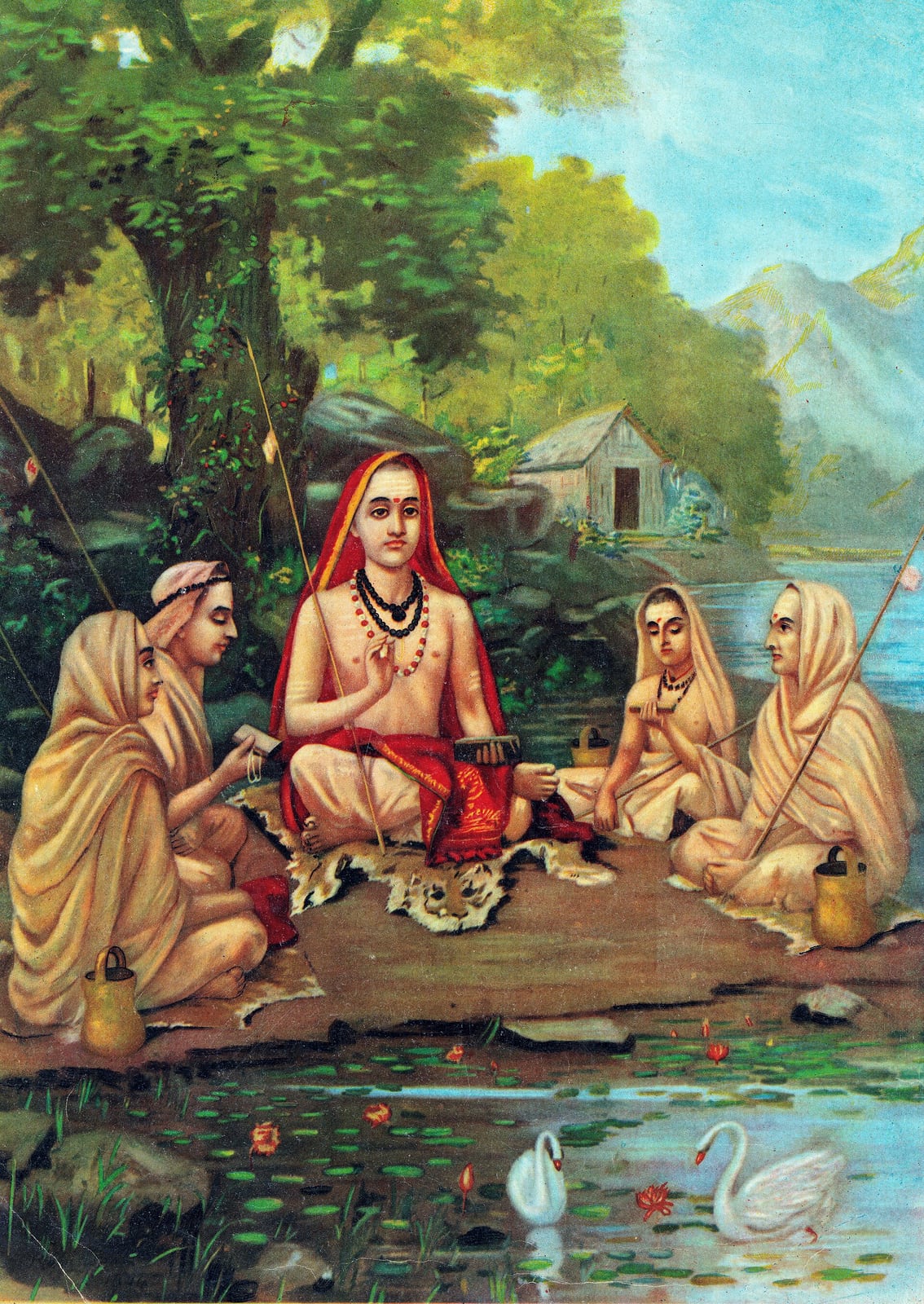
Adi Shankara
Совпадают в вопросах: Что такое Абсолют? Существует ли Бог? · Кто я? Существует ли истинное «я»? · Что происходит после смерти?
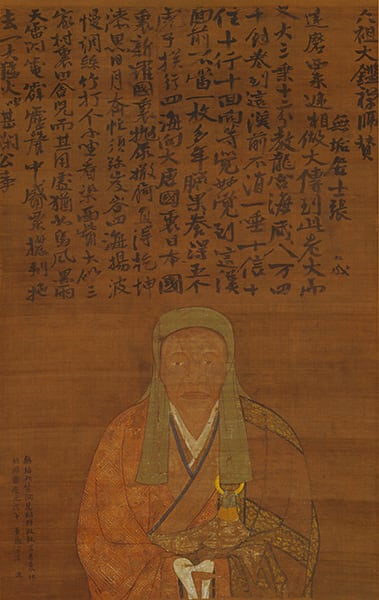
Huineng
Совпадают в вопросах: Что такое Абсолют? Существует ли Бог? · Кто я? Существует ли истинное «я»? · Что происходит после смерти?
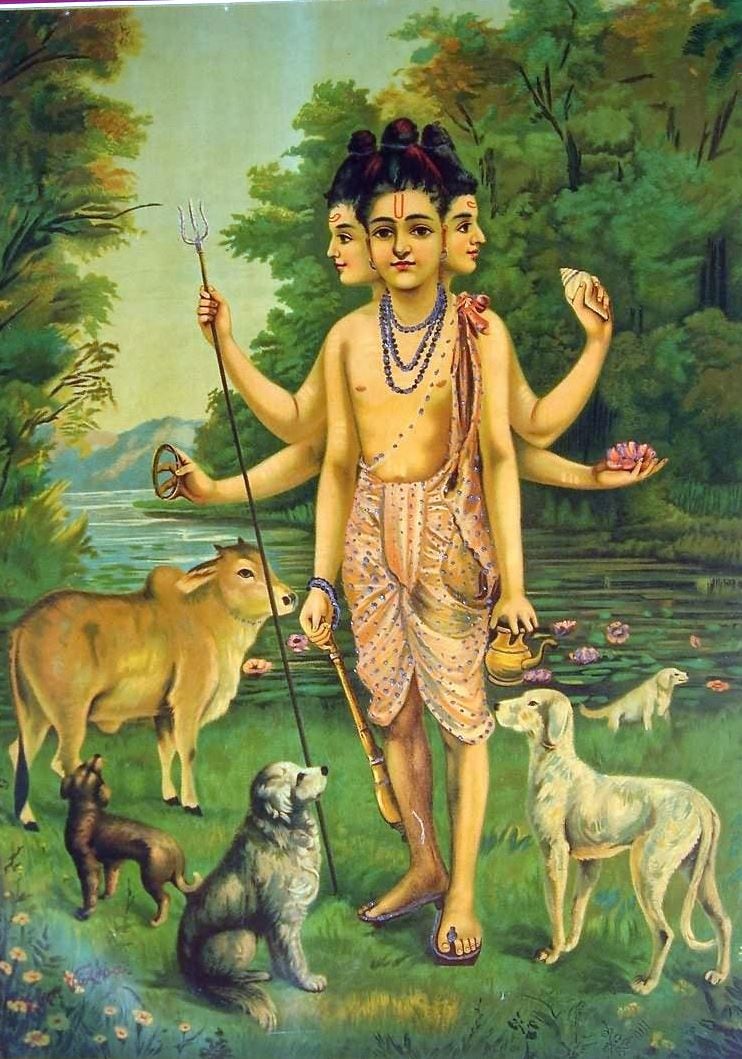
Dattatreya
Совпадают в вопросах: Что такое Абсолют? Существует ли Бог? · Кто я? Существует ли истинное «я»? · Что происходит после смерти?
Leo Tolstoy
Совпадают в вопросах: Что такое Абсолют? Существует ли Бог? · Кто я? Существует ли истинное «я»? · Что происходит после смерти?
Дальше всего от

Nikolai Berdyaev
Расходятся в вопросах: Кто я? Существует ли истинное «я»? · Нужен ли учитель?

Pema Chödrön
Расходятся в вопросах: Кто я? Существует ли истинное «я»?

Emanuel Swedenborg
Расходятся в вопросах: Кто я? Существует ли истинное «я»?

Francis of Assisi
Расходятся в вопросах: Кто я? Существует ли истинное «я»?
Предания и рассказы
Предания и рассказы
Документированоépoca védica tardía (Chāndogya, ss. VII–VI a. C.)
Salt in water
Происхождение рассказа: Chāndogya Upaniṣad 6.13. "Documented" indicates that the story is in the text, not that the scene is historical.
Источник: Olivelle, Patrick (ed. y trad.). The Early Upaniṣads: Annotated Text and Translation. Nueva York: Oxford University Press, 1998. Chāndogya 5.3–5.24 y 6; Bṛhadāraṇyaka 3.7, 6.2, 6.3.7 y 6.5; Kauṣītaki 1.1.
Документированоépoca védica tardía
The fifteen-day fast
Происхождение рассказа: Chāndogya Upaniṣad 6.7. The "scientific" reading is Chattopadhyaya's (1977).
Источник: Chattopadhyaya, Debiprasad. Science and Society in Ancient India. Calcuta: Research India Publications, 1977.
Документированоépoca védica tardía
The gold coin and the firewood
Происхождение рассказа: Śatapatha Brāhmaṇa XI.4.1.1–10 (Eggeling's translation, SBE 44, pp. 50–54), with a parallel version in Gopatha Brāhmaṇa 1.3.6. The exact meaning of some phrases (the coin, the "head that splits") is disputed, as Eggeling notes.
Документированоépoca védica tardía
The king's five questions
Происхождение рассказа: Chāndogya Upaniṣad 5.3 (with another version in Bṛhadāraṇyaka 6.2). Black (2007) analyses these scenes of knowledge passing from kings to brahmins.
Источник: Black, Brian. The Character of the Self in Ancient India: Priests, Kings, and Women in the Early Upaniṣads. Albany: State University of New York Press, 2007.
Житийное повествованиеrelato épico (Mahābhārata, ss. III a. C.–IV d. C.)
The pupil who lay down in the dyke
Происхождение рассказа: Mahābhārata 1.3 (Pauṣya-parvan; section 3 of Ganguli's translation). There is no Vedic parallel; the relation between this Āruṇi and the Uddālaka of the Upaniṣads is a traditional identification.
Устная традицияrelato épico
Śvetaketu and the law of marriage
Происхождение рассказа: Mahābhārata 1.113 of the critical edition (section 122 of Ganguli's translation). It is an epic legend with no basis in the Vedic texts.
Учение
Учение
Понятия, на которых строится мысль учителя, объяснённые в их контексте.
Tat tvam asi ("you are that")tat-tvam-asi
Chāndogya Upaniṣad 6; Brereton 1986; Olivelle 1996.
Источник: Brereton, Joel P. «Tat Tvam Asi in Context». Zeitschrift der Deutschen Morgenländischen Gesellschaft 136 (1986): 98–109.
Sat (being, one without a second)sat
Chāndogya 6.2.
Источник: Olivelle, Patrick (ed. y trad.). The Early Upaniṣads: Annotated Text and Translation. Nueva York: Oxford University Press, 1998. Chāndogya 5.3–5.24 y 6; Bṛhadāraṇyaka 3.7, 6.2, 6.3.7 y 6.5; Kauṣītaki 1.1.
Trivṛtkaraṇa (the triplication of the elements)trivrtkarana
Chāndogya 6.3–6.6.
Источник: Chattopadhyaya, Debiprasad. Science and Society in Ancient India. Calcuta: Research India Publications, 1977.
Aṇiman (the subtle essence)animan
Chāndogya 6.8–6.16.
Источник: Olivelle, Patrick (ed. y trad.). The Early Upaniṣads: Annotated Text and Translation. Nueva York: Oxford University Press, 1998. Chāndogya 5.3–5.24 y 6; Bṛhadāraṇyaka 3.7, 6.2, 6.3.7 y 6.5; Kauṣītaki 1.1.
Vācārambhaṇa (modification is only a name)vacarambhana
Chāndogya 6.1.4–6; Brahmasūtra 2.1.14 and its commentaries.
Источник: Olivelle, Patrick (ed. y trad.). The Early Upaniṣads: Annotated Text and Translation. Nueva York: Oxford University Press, 1998. Chāndogya 5.3–5.24 y 6; Bṛhadāraṇyaka 3.7, 6.2, 6.3.7 y 6.5; Kauṣītaki 1.1.
Видео
Видео
Записи, интервью и документальные фильмы. Видео воспроизводятся с YouTube; здесь они не хранятся.
Tat Tvam Asi (That Thou Art) | Swami Sarvapriyananda
Лекция· EN· 2021· 101 min
Vedanta Society of New YorkОфициальный канал
Talk on Tat Tvam Asi - The Ultimate Equation by Swami Sarvapriyananda
Лекция· EN· 2026· 115 min
Ramakrishna Vedanta Centre U.K.Официальный канал
The Story of Svetaketu - Thou Art That - Chandogya Upanishad | Pravrajika Divyanandaprana
Лекция· EN· 2018· 20 min
VivekaVani
Chandogya Upanishad Chapter-6 01
Лекция· EN· 2022· 74 min
Chinmaya Mission San JoseОфициальный канал
Chandogya Upanishad Ch 6 – An Exposition of Tat Tvam Asi | Swami Ramakrishnananda | Dis 01
Лекция· EN· 2026· 68 min
Shravana Mangalam
Chandogya Upanishad Lecture - 1 (Chapter 6 - 1 - 1 to 6 - 1 - 4)
Лекция· EN· 2026· 76 min
Vedanta Students
श्वेतकेतु और उद्दालक, उपनिषद की कहानी, छान्द्योग्यापनिषद
Лекция· HI· 2020· 35 min
G.V.B. The University of Veda
CHANDOGYA. VER LO INVISIBLE
Разбор· ES· 2022· 14 min
Vedanta en Español
El pensamiento en la India: Hinduismo
Документальный фильм· ES· 2017· 25 min
UNED DocumentosОфициальный канал
The Upanishads: The Sacred Text that Changed India and the West | Jeffery Long, Ph.D.
Лекция· EN· 2022· 56 min
Theosophical SocietyОфициальный канал
Introduction to the Rig Veda and Upanishads | Kendall Sharp | First Friday Lecture
Лекция· EN· 2024· 78 min
The University of Chicago Graham SchoolОфициальный канал
The Central Doctrines of the Upanishads
Лекция· EN· 2016· 37 min
Vidya-mitraОфициальный канал
Галерея
Галерея
Изображения с проверенной лицензией. Каждое сохраняет своё авторство и атрибуцию.
Рукописи
Рукописи
Рукописные свидетельства и древние тексты, с указанием хранителя и условий доступа.
SA · Devanagari · c. ss. VII–VI a. C. (Olivelle)
छान्दोग्योपनिषद् (1.1.1–1.1.9)
- Сохранившийся список
- Manuscrito fechado en 1849
- Оцифровка
- commons.wikimedia.org/wiki/File:Chandogya_Upanis…
SA · Grantha
छान्दोग्योपनिषद्विवरण
- Сохранившийся список
- Hoja de palma adquirida en julio de 1836
- Хранитель
- Kahle-Austin Foundation (según la descripción de Commons)
- Оцифровка
- commons.wikimedia.org/wiki/File:1836_CE_July_pur…
Связи
Связи
Влияния, ученичество и близость взглядов. Документированная связь отличается от сходства, выявленного путём анализа.
Учитель
The Bṛhadāraṇyaka's lists of teachers make Yājñavalkya Uddālaka's pupil ("Yājñavalkya from Uddālaka; Uddālaka from Aruṇa").
Документированная связь
Расходился во взглядах с
He questions him at Janaka's court about the thread and the inner controller and falls silent after his answer (Bṛhadāraṇyaka 3.7).
Документированная связь
Родственник
Śvetaketu Āruṇeya
His son and pupil, recipient of the teaching of Chāndogya 6.
Документированная связь
Родственник
According to the Mahābhārata (3.132–134), Aṣṭāvakra was the son of Sujātā, Uddālaka's daughter, and of his pupil Kahoḍa; that is, his grandson. A legendary, not Vedic, relationship.
Сходство, выявленное путём анализа
Ученик
Pravāhaṇa Jaivali
The king of the Pañcālas teaches him the doctrine of the five fires (Chāndogya 5.3–10; Bṛhadāraṇyaka 6.2).
Документированная связь
Повлиял на
Śaṅkara commented on the Chāndogya and made "tat tvam asi" one of the great sayings of Advaita; he analyses it at length in the Upadeśasāhasrī.
Документированная связь
Идеи, близкие к
Inquiry into the self as the substratum of all experience extends the Advaita reading of "tat tvam asi".
Сходство, выявленное путём анализа
Идеи, близкие к
Comparative philosophy (Scharfstein) has linked Uddālaka's search for a single principle behind change with that of the first Greek philosophers.
Сходство, выявленное путём анализа
Идеи, близкие к
The theory of three elements combining in all things has been compared with Empedocles' roots.
Сходство, выявленное путём анализа
Идеи, близкие к
The rejection of being arising from non-being (Chāndogya 6.2.2) is a frequent parallel in comparative philosophy.
Сходство, выявленное путём анализа
Повлиял на
Gauḍapāda's Kārikā develops, in terms of non-origination, the thesis that the effect is not different from its cause, illustrated by the clay of Chāndogya 6.1.
Сходство, выявленное путём анализа
Источники
Источники
Библиография и каталоги, использованные для этой статьи.
- Wikidata, «Aruni» (Uddālaka Āruṇi), QID Q2724299.
- Olivelle, Patrick (ed. y trad.). The Early Upaniṣads: Annotated Text and Translation. Nueva York: Oxford University Press, 1998. Chāndogya 5.3–5.24 y 6; Bṛhadāraṇyaka 3.7, 6.2, 6.3.7 y 6.5; Kauṣītaki 1.1.
- Olivelle, Patrick (trad.). Upaniṣads. Oxford World's Classics. Oxford: Oxford University Press, 1996 (traducción «And that's how you are, Śvetaketu» de Chāndogya 6.8.7 y ss.).
- Müller, F. Max (trad.). The Upanishads, Part I (Sacred Books of the East, vol. 1). Oxford: Clarendon Press, 1879 (Khândogya y Kaushîtaki-brâhmaṇa-upanishad); y Part II (SBE 15), 1884, nota a Kaṭha 1.11.
- Brereton, Joel P. «Tat Tvam Asi in Context». Zeitschrift der Deutschen Morgenländischen Gesellschaft 136 (1986): 98–109.
- Eggeling, Julius (trad.). The Śatapatha-Brāhmaṇa, Part V (Sacred Books of the East, vol. 44). Oxford: Clarendon Press, 1900. XI.4.1 (Uddālaka Āruṇi y Svaidāyana) y XI.5.3 (Śauceya Prācīnayogya y Uddālaka Āruṇi sobre el agnihotra).
- Chattopadhyaya, Debiprasad. Science and Society in Ancient India. Calcuta: Research India Publications, 1977.
- Witzel, Michael. «Yājñavalkya as Ritualist and Philosopher, and His Personal Language». En S. Adhami (ed.), Paitimāna: Essays in Iranian, Indo-European, and Indian Studies in Honor of Hanns-Peter Schmidt. Costa Mesa: Mazda, 2003, pp. 103–143 (n. 13: árbol genealógico Upaveśi – Aruṇa Aupaveśi – Uddālaka Āruṇi Gautama – Śvetaketu Āruṇeya).
- Black, Brian. The Character of the Self in Ancient India: Priests, Kings, and Women in the Early Upaniṣads. Albany: State University of New York Press, 2007.
- Ganguli, Kisari Mohan (trad.). The Mahabharata of Krishna-Dwaipayana Vyasa, vol. 1: Adi Parva. Calcuta, 1883–1896; Project Gutenberg n.º 15474 (sección 3, Āruṇi y Dhaumya; sección 122 de la vulgata, Śvetaketu). Para Aṣṭāvakra, Vana Parva 132–134 de la edición crítica.
- Olivelle, Patrick (trad.). The Saṃnyāsa Upaniṣads: Hindu Scriptures on Asceticism and Renunciation. Nueva York: Oxford University Press, 1992 (Āruṇi Upaniṣad).
- Scharfstein, Ben-Ami. A Comparative History of World Philosophy: From the Upanishads to Kant. Albany: State University of New York Press, 1998.
- Wikisource en sánscrito, «छान्दोग्योपनिषद्» (texto por adhyāya; adhyāya 5 y 6) y «बृहदारण्यकोपनिषद्» (6.5).
- Wikipedia (en inglés), «Uddalaka Aruni», consultada el 26 de octubre de 2026 (Āruṇi Upaniṣad, Āruṇi-śruti citada por Madhva, episodio de Dhaumya).
- Hume, Robert Ernest (trad.). The Thirteen Principal Upanishads. Londres: Oxford University Press, 1921.
- Ilárraz, Félix G., y Óscar Pujol (trads.). La sabiduría del bosque: antología de las principales Upaniṣad. Madrid: Trotta, 2003.
- Wikimedia Commons, ficheros y metadatos de licencia consultados mediante la API (imageinfo/extmetadata).
- Mitra, Rājendralāla (trad.). The Chhándogya Upanishad of the Sáma Veda, with Extracts from the Commentary of Śankara Áchárya. Calcuta: Baptist Mission Press (Bibliotheca Indica), 1862.
- Gambhirananda, Swami (trad.). Chāndogya Upaniṣad, with the Commentary of Śaṅkarācārya. Calcuta: Advaita Ashrama, 1983 (reimpr. 2006).
- Deussen, Paul (trad.). Sechzig Upanishad's des Veda. Leipzig: F. A. Brockhaus, 1897.
- Правообладатель
- Los textos sánscritos son de dominio público. Las traducciones modernas tienen derechos propios: Oxford University Press (Olivelle; Hume hasta 2029 en España), Trotta (Ilárraz y Pujol), Penguin (Roebuck), Advaita Ashrama (Gambhirananda), Hastinapura (versión española de Nikhilananda). Las de Mitra (1862), Müller (1879), Eggeling (1900) y Deussen (1897) son de dominio público.
Ожидает подтверждения
То, что в этой статье пока не удалось установить. Мы предпочитаем сказать об этом, а не заполнять пробел.
- Mahābhārata: comprobar en la edición crítica las referencias 1.3 (Āruṇi y Dhaumya), 1.113 (Śvetaketu) y 3.132–134 (Aṣṭāvakra) frente a la numeración de Ganguli.
- Kaṭha Upaniṣad 1.11: localizar la nota exacta de Max Müller (SBE 15) sobre «Auddālaki Āruṇi» y la identificación de Śaṅkara.
- Chattopadhyaya, Science and Society in Ancient India: confirmar paginación del capítulo sobre Uddālaka y la editorial de la primera edición (Calcuta, 1977; reimpresión de B. R. Grüner, Ámsterdam).
- Āruṇi-śruti citada por Madhva: localizar la referencia en las obras de Madhva o en un estudio especializado.
- Ediciones: buscar ISBN de traducciones de la Chāndogya al francés, alemán, ruso e hindi; identificar al traductor español de la edición de Hastinapura (ISBN 9789509102699).
- Relaciones: los slugs svetaketu y pravahana-jaivali no existen en el Atlas.
- Vídeos: no se ha encontrado un documental de televisión pública ni una clase universitaria monográfica sobre Uddālaka; los vídeos registrados son conferencias de instituciones vedánticas y clases generales sobre las Upaniṣad.
Исследовано 2026-10-26