Индуизм · Йога · Тантра · Адвайта-веданта
Dattatreya
दत्तात्रेय
Легендарная фигура
Бог, аватара и учитель йогинов в индуизме, легендарный сын мудреца Атри и Анасуи, почитаемый как совместное воплощение Брахмы, Вишну и Шивы и как архетип авадхуты — освобожденного, живущего по ту сторону всяких норм. Пураны приписывают ему наставление царя Аларки в йоге и, согласно традиционному отождествлению, рассказ о двадцати четырех учителях из «Бхагавата-пураны». Ему приписываются «Авадхута-гита» и «Даттатрея-йога-шастра»; он почитается как изначальный гуру традиции Датты и натхов.
- трудов
- 9трудов
- изданий
- 28изданий
- цитат
- 7цитат
- видео
- 14видео
- изображений
- 6изображений
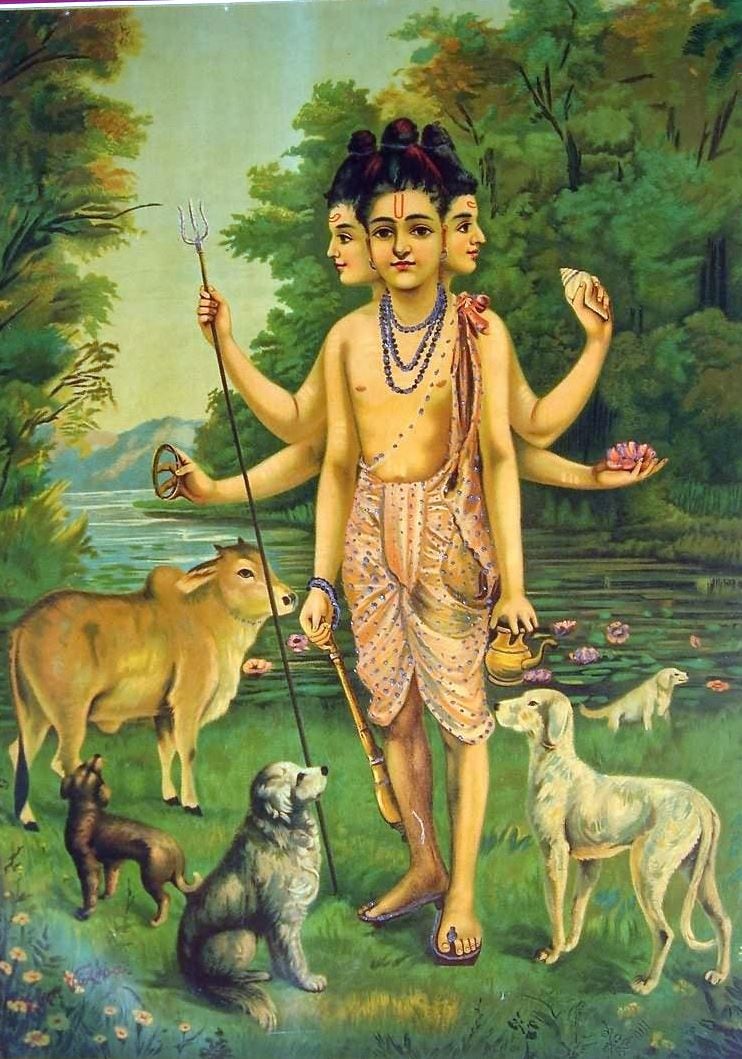
Dattātreya, cromolitografía de la Ravi Varma Press · Public domain
Своими словами
«That by which all this is filled, the Self by the Self in the Self: how shall I salute the formless, undivided, imperishable Śiva?»Avadhūta Gītā 1.2 (texto sánscrito de Wikisource); versiones del investigador

Главная мысль
The avadhūta: Avadhūta literally means "one who has shaken off": the renouncer who has rid himself of social, ritual and moral conventions because he no longer identifies with anything they regulate.
В контексте
Биография
4 мин чтения
Перевод с испанского оригинала, выполненный с помощью ИИ; ожидает проверки носителем языка.
Бог, который есть учитель
Даттатрея занимает в индуизме особое место: он одновременно бог, которому воздают культ, аватара Вишну, для многих почитателей — совместное воплощение Брахмы, Вишну и Шивы и архетип странствующего учителя, вышедшего за пределы всякой нормы, — авадхуты. Никакие данные не позволяют считать его исторической личностью. Существует лишь длинный ряд текстов, которые на протяжении более чем тысячелетия приписывают ему рождения, подвиги и поучения, и сеть живых традиций, почитающих его как изначального гуру. Основное исследование, монография Антонио Ригопулоса (1998), описывает его именно через способность к превращению и вбиранию: это «йогин-пчела», собирающий нектар со всех цветов традиции.
Сын Атри и Анасуи
Имя его объясняется происхождением: Датта — «данный», Атрея — «сын Атри». «Маркандея-пурана» (песни 16–17 в переводе Парджитера) рассказывает, что Анасуя, супруга мудреца Атри, получила от богов дар за то, что заступилась за верную жену, остановившую восход солнца; от нее родились три сына, частицы трех великих богов: Сома — от Брахмы, Даттатрея — от Вишну и Дурваса — от Шивы. «Бхагавата-пурана» называет его шестым воплощением Господа, рожденным от Атри по просьбе Анасуи, и уточняет, что он преподал науку о душе Аларке, Прахладе и другим (1.3.11). Популярный образ трехглавого бога, соединяющего в одном теле тримурти, — позднейшее развитие этой генеалогии.
Йогин из озера
Древнейшие сказания представляют его йогином, приводящим в замешательство. «Маркандея-пурана» повествует, что, окруженный юными подвижниками, которые не желали его покидать, он надолго погрузился в озеро, чтобы от них избавиться; а когда они все равно продолжали его ждать, вышел из воды с женщиной, пил вино и предавался музыке, но ничто из этого его не оскверняло, ибо он был «владыкой йогинов». К этому учителю, скрывавшемуся за предосудительным поведением, пришел царь Картавирья Арджуна и получил от него свои дары. «Махабхарата» упоминает его в этой роли («Араньяка-парва» 115; «Анушасана-парва» 152–153 по критической нумерации): милостью Даттатреи царь хайхаев обрел в битве тысячу рук и праведно правил землей.
Двадцать четыре учителя
Два поучения сделали его фигурой первой величины. В «Маркандея-пуране» (песни 37–43) Даттатрея наставляет удрученного войной царя Аларку, излагая йогу во всей полноте: душу, дыхание, препятствия, слог Ом и знаки приближения смерти. В одиннадцатой книге «Бхагавата-пураны» (11.7–9) юный безымянный авадхута объясняет царю Яду, что у него было двадцать четыре учителя: земля, воздух, небо, вода, огонь, луна, солнце, голубь, питон, море, мотылек, пчела, слон, похититель меда, олень, рыба, куртизанка Пингала, скопа, ребенок, девушка, мастер стрел, змея, паук и оса. Текст не называет его Даттатреей; это отождествление традиционно, его приняли комментаторы и народное благочестие.
Владыка йоги и отрекшихся
Его имя рано появляется в упанишадах об отречении: «Джабала-упанишада», созданная, по Оливеллу, между III веком до н. э. и III веком н. э., причисляет его к великим аскетам. Позднее он становится учителем, излагающим восьмичленную йогу своему ученику Санкрити в «Джабаладаршана-упанишаде» и дающим определение авадхуты в «Авадхута-упанишаде», которую Оливелл и Шпрокхофф датируют примерно XIV–XV веками. «Даттатрея-йога-шастра», составленная около 1200 года на юге Индии, согласно Джеймсу Маллинсону, выпустившему ее критическое издание в 2024 году, — первый текст, соединяющий восьмичленную йогу Патанджали с телесными техниками хатха-йоги; в нем Даттатрея преподает их Санкрити. Йогины-натхи почитают его как изначального гуру; Маллинсон утверждает, что эта преемственность поздняя — присвоение, относящееся примерно к XVIII веку.
Приписываемые сочинения
Традиция приписывает ему несколько текстов радикального недуализма. Самый знаменитый из них — «Авадхута-гита», «Песнь освобожденного», в восьми главах и примерно 289 стихах, по подсчету Ригопулоса, который считает ее созданной, вероятно, в Декане, с последней главой, добавленной позднее; Граймс и Абхаянанда относят ее примерно к IX–X векам. Ее последний стих объявляет ее творением «Даттатреи, авадхуты, чей образ — блаженство». «Дживанмукта-гита» описывает освобожденного при жизни. «Трипура-рахасья», принадлежащая к школе богини Трипуры и созданная между XI и XVII веками, ему не принадлежит: ее рассказывает Нараде Харитаяна, но излагает она учение, которое Даттатрея преподал Парашураме на горе Гандхамадана. Ни одна из этих атрибуций не выдерживает исторической проверки: так традиция подписывает свои тексты именем своего архетипического учителя.
Традиция Датты
Со времен Средневековья Даттатрея находится в центре собственного культа в Декане. Маханубхавы причисляют его к своим божественным воплощениям; традиция «Гуручаритры», маратхского текста Сарасвати Гангадхары, почитает как его воплощения Шрипаду Шривалабху и Нарасимху Сарасвати, чье святилище в Ганагапуре служит местом паломничества, а праздник Даттатреи, Датта-джаянти, отмечается в полнолуние месяца маргаширша. Самая распространенная его иконография изображает его с тремя головами и шестью руками, в сопровождении коровы и четырех собак, в которых традиция видит землю и четыре Веды; некоторые ранние изображения, например в Бадами или Нараянпуре, наделяют его одной головой.
Читатели Нового времени
Авадхута прошел и через современную веданту. Вивекананда читал и переводил отрывки из «Авадхута-гиты» в своих беседах в Таузенд-Айленд-парке в июле 1895 года. Рамана Махарши в 1935 году ответил У. И. Эванс-Венцу, что у древнего авадхуты было больше двадцати четырех учителей, в том числе неодушевленных, ибо учитель — тот, у кого чему-то научаешься. А Нисаргадатта Махарадж объяснял посетителям, что, по преданию, первым учителем его линии — линии «девяти учителей» (Навнатх) — был риши Даттатрея, хотя и добавлял, что эти девять учителей мифологичны.
Источники: Rigopoulos, Antonio. Dattātreya: The Immortal Guru, Yogin, and Avatāra. A Study of the Transformative and Inclusive Character of a Multi-faceted Hindu Deity. Albany: State University of New York Press, 1998. ISBN 9780791436967 (tapa dura), 9780791436950 (rústica). Las páginas citadas (43, 57, 77, 195–197, 227–228) se toman de las referencias de la Wikipedia en inglés; no se ha consultado el libro directamente. · Pargiter, F. Eden (trad.). The Mārkaṇḍeya Purāṇa. Calcuta: Asiatic Society (Bibliotheca Indica), 1888–1904; cantos XVI–XIX (nacimiento de Dattātreya, el lago, Kārtavīrya Arjuna) y XXXVII–XLIII (enseñanza a Alarka). · Mahābhārata: Āraṇyakaparvan 115 y Anuśāsanaparvan 91, 152–157 (numeración de la traducción de Ganguli; en la edición crítica, 3.115.12, 12.49.36–37, 13.152.5 y 13.153.12). Ganguli, Kisari Mohan (trad.). The Mahabharata of Krishna-Dwaipayana Vyasa. Calcuta: Pratap Chandra Roy, 1883–1896. · Mallinson, James (ed. y trad.). The Dattātreyayogaśāstra. Pondicherry: Institut Français de Pondichéry / École française d'Extrême-Orient, 2024 (Collection Indologie 162; Haṭha Yoga Series 5). ISBN 9782855392967 (EFEO), 9788184702552 (IFP). · Abhayananda, Swami (trad.). Dattatreya: Song of the Avadhut. Olympia (Washington): Atma Books, 1992, p. 10 (datación en los siglos IX–X). Con Grimes, John A. A Concise Dictionary of Indian Philosophy. Albany: SUNY Press, 1996, p. 110. Ambas citadas según la Wikipedia en inglés.
Хронология
Жизнь год за годом
Каждая точка — документированное событие. Нажмите, чтобы прочитать о нём, с источником и степенью достоверности.
I век
Earliest mentions: the Jābāla Upaniṣad
The Jābāla Upaniṣad, which Olivelle dates between the third century BCE and the third century CE, includes Dattātreya in its list of great renouncers. The year is only the midpoint of the range.
ВероятноOlivelle, Patrick (trad.). The Saṃnyāsa Upaniṣads: Hindu Scriptures on Asceticism and Renunciation. Nueva York: Oxford University Press, 1992 (datación de la Jābāla y de la Avadhūta Upaniṣad, citadas según la Wikipedia en inglés). Texto sánscrito de la Avadhūtopaniṣad en Wikisource.
I век
Earliest mentions: the Jābāla Upaniṣad
The Jābāla Upaniṣad, which Olivelle dates between the third century BCE and the third century CE, includes Dattātreya in its list of great renouncers. The year is only the midpoint of the range.
Вероятно
III век
Dattātreya in the Mahābhārata
The epic mentions him as the sage whose favour gave King Kārtavīrya Arjuna his thousand arms and his kingdom (Āraṇyakaparvan 115; Anuśāsanaparvan 152–153) and as an ancestor in the story of the origin of the śrāddha. The dates of composition of these passages are uncertain.
Вероятно
V век
The cantos of the Mārkaṇḍeya Purāṇa
The Mārkaṇḍeya Purāṇa narrates his birth from Atri and Anasūyā, the episode of the lake, the boons to Kārtavīrya and the teaching of yoga to King Alarka. The dating of this part of the Purāṇa is much debated.
Оспаривается
IX век
The avadhūta of the Bhāgavata Purāṇa
The Bhāgavata Purāṇa, composed around the ninth or tenth century according to most specialists, counts him as the sixth avatāra (1.3.11) and narrates the dialogue between an unnamed avadhūta and King Yadu on the twenty-four teachers (11.7–9), which tradition ascribes to him.
Вероятно
X век
Composition of the Avadhūta Gītā (hypothesis)
Grimes and Abhayananda place the poem around the ninth or tenth century; Rigopoulos believes it was probably composed in the Deccan and regards the eighth chapter as an addition.
Оспаривается
ок. 1200
The Dattātreyayogaśāstra
Around 1200, in South India according to Mallinson, the first treatise integrating eight-limbed yoga with the techniques of haṭhayoga is composed, placed in Dattātreya's mouth.
Вероятно
XIV век
The Upaniṣads of Dattātreya
Olivelle and Sprockhoff date the Avadhūta Upaniṣad, in which Dattātreya defines the avadhūta for Sāṅkṛti, to around the fourteenth or fifteenth century; the Dattātreya Upaniṣad, tantric and sectarian, is considered of the same period.
Вероятно
XVII век
Incorporation into the Nāth lineage (Mallinson's hypothesis)
According to Mallinson, Dattātreya was adopted as guru by the Nāth yogins around the eighteenth century, in a context of syncretism between Vaiṣṇavas and Śaivas; Rigopoulos presents him as the lineage's primordial guru.
Оспаривается
28 июля 1895 г.
Vivekananda and the Avadhūta Gītā
At Thousand Island Park (New York), Vivekananda glosses and translates passages of the Avadhūta Gītā before his disciples; the notes of the talk were published as Inspired Talks.
Документировано
1904
Pargiter completes the Mārkaṇḍeya Purāṇa
F. Eden Pargiter completes in the Bibliotheca Indica the English translation of the Mārkaṇḍeya Purāṇa, with the cantos devoted to Dattātreya and Alarka.
Документировано
2 февраля 1935 г.
Ramana Maharshi and the twenty-four teachers
Before W. Y. Evans-Wentz, Ramana recalls that the ancient avadhūta had more than twenty-four teachers, some of them inanimate.
Документировано
1957
The Maharaja of Mysore's book
Jaya Chamarajendra Wadiyar publishes Dattātreya: The Way and the Goal, with a translation and commentary of the Jīvanmukta Gītā and the Avadhūta Gītā and a foreword by S. Radhakrishnan.
Документировано
1998
Rigopoulos's monograph
Antonio Rigopoulos publishes with SUNY Press the first comprehensive study of the figure and its transformations.
Документировано
2024
Critical edition of the Dattātreyayogaśāstra
James Mallinson publishes in Pondicherry (EFEO and IFP) the critical edition and annotated translation of the treatise.
Документировано
Труды
Главные труды
Труды, без которых не понять это наследие.
Традиционная атрибуция · X век
Avadhūta Gītā (Song of the Liberated One)
अवधूतगीता (Avadhūtagītā)
A Sanskrit poem in eight chapters, of some 289 verses according to Rigopoulos, in which the liberated one speaks in the first person, recognising himself as identical with the formless Self. It opens by asking how one can salute what fills everything, denies any difference between self and world, teacher and disciple, castes and genders, and sings the state of "equal taste" (samarasa) and the "nectar of the natural" (sahaja). It has been an essential text for the Nāth yogins and for readers of modern Vedānta.
11 изданий

Традиционная атрибуция
Tripurā Rahasya (The Mystery of Tripurā)
त्रिपुरारहस्य (Tripurārahasya), también हारितायनसंहिता (Hāritāyanasaṃhitā)
A work in three sections, two of which survive: that of the goddess's greatness (Māhātmya) and that of knowledge (Jñāna), the latter in twenty-two chapters. Paraśurāma, after his defeat by Rāma and twelve years of worship of the goddess, recalls the words of the avadhūta Saṃvarta and goes to Dattātreya on Mount Gandhamādana. The teacher shows him, through stories such as that of Prince Hemacūḍa and his wife Hemalekhā, that consciousness alone is real and that the world is its reflection. Ramana Maharshi quoted it to his visitors, and his ashram published Munagala Venkataramiah's English translation.
5 изданий
Dattatreya
Dattātreyayogaśāstra (Dattātreya's Treatise on Yoga)
Традиционная атрибуция · ок. 1200
Dattātreyayogaśāstra (Dattātreya's Treatise on Yoga)
दत्तात्रेययोगशास्त्र (Dattātreyayogaśāstra)
A treatise of 193 verses that distinguishes four kinds of yoga (mantra, laya, haṭha and rāja) and devotes most of its exposition to haṭhayoga. It is the first text to combine Patañjali's eight-limbed yoga, which it ascribes to Yājñavalkya, with physical techniques: breath retentions, the inverted posture and ten practices later called mudrās, among them khecarī, mahāmudrā, jālandhara and vajrolī. The Haṭhapradīpikā borrows many of its verses.
4 издания
Dattatreya
The twenty-four teachers: dialogue of the avadhūta with Yadu (Bhāgavata Purāṇa 11.7–9)
Традиционная атрибуция · IX век
The twenty-four teachers: dialogue of the avadhūta with Yadu (Bhāgavata Purāṇa 11.7–9)
भागवतपुराण ११.७–९ (Bhāgavatapurāṇa 11.7–9), अवधूत-यदु-संवाद
Kṛṣṇa tells Uddhava how King Yadu met a young brahmin avadhūta, wise and fearless, and asked him where his joy came from. The ascetic answers that he has learned from twenty-four teachers, from the earth to the wasp, and draws a lesson from each: the patience of the earth, the detachment of the air, the solitude of the girl whose bracelets jingled, the abandoned hope of the courtesan Piṅgalā. Some verses of this same eleventh book (11.11.29–31) coincide with the Avadhūta Gītā (8.2–4).
1 издание
Все труды (9)
Dattatreya
Jīvanmukta Gītā (Song of the One Liberated While Living)
The Conscious LibraryJīvanmukta Gītā (Song of the One Liberated While Living)
Dattatreya
Jābāladarśana Upaniṣad (Darśana Upaniṣad)
The Conscious LibraryJābāladarśana Upaniṣad (Darśana Upaniṣad)

Avadhūta Upaniṣad
1400
Dattatreya
The teaching of yoga to Alarka (Mārkaṇḍeya Purāṇa)
The Conscious LibraryThe teaching of yoga to Alarka (Mārkaṇḍeya Purāṇa)
Dattatreya
Dattātreya Tantra
The Conscious LibraryDattātreya Tantra
Изречения
Изречения, найденные в конкретном труде. Каждое сопровождается указанием происхождения и степени надёжности.
That by which all this is filled, the Self by the Self in the Self: how shall I salute the formless, undivided, imperishable Śiva?येनेदं पूरितं सर्वमात्मनैवात्मनात्मनि। निराकारं कथं वन्दे ह्यभिन्नं शिवमव्ययम्॥
ПровереноAvadhūta Gītā 1.2 (texto sánscrito de Wikisource); versiones del investigador
Последние слова
Проверяемых записей о последних словах не существует.
There are no last words: tradition regards Dattātreya as immortal (ciranjīvin) and present in his incarnations, and no text narrates his death.
Спросить
На что отвечают эти труды
Двенадцать великих вопросов человечества и то, что позволяют на них ответить эти тексты, со ссылками. Мы никогда не вкладываем слова в чужие уста.
Что такое Абсолют? Существует ли Бог?
All is filled by the Self: formless Śiva, undivided and imperishable
Безличный АбсолютСказано прямо
The Avadhūta Gītā, which tradition places in Dattātreya's mouth, identifies the Absolute with the Self that fills everything and calls it Śiva, but in a strictly non-dual sense: from its second verse it asks how one could salute the formless, undivided and imperishable, when there is no one distinct to do the saluting. «All is brahman», the poem repeats, and there is neither a you nor an I. The Tripurā Rahasya, also attributed to his teaching, names that same ground as the goddess Tripurā and describes it as pure consciousness reflected in the world like a city in a mirror. In both texts the divine name does not designate a separate person governing from outside, but the consciousness that is the reality of all.
Сравнить этот вопрос с другими учителямиКто я? Существует ли истинное «я»?
You were neither born nor have died: the Self is Śiva, with no you or I
Самость есть АбсолютСказано прямо
The Avadhūta Gītā denies one by one the identifications by which we usually define ourselves: for the sage there is no good or bad act of mind, body or speech, for he is the nectar of knowledge, pure and beyond the senses; he was never born, has not died and has never had a body; nor is there, ultimately, a you and an I, so that disputes over lineage and caste are false. What remains is the Self, which the poem calls Śiva, the supreme reality. The Tripurā Rahasya, also attributed to his teaching, reaches the same point by enquiry: the self is the pure consciousness that illumines all states, and in it the world appears like an image in a mirror.
Сравнить этот вопрос с другими учителямиПочему мы страдаем?
Hope is the greatest suffering; expecting nothing, the greatest bliss
Жажда и привязанностьСказано прямо
In the Bhāgavata Purāṇa, the avadhūta whom tradition identifies with Dattātreya explains to King Yadu what he has learnt from his twenty-four teachers, and almost every lesson concerns desire and attachment. The pigeon that loses its young and throws itself into the net shows the danger of binding affection; the moth that flies into the flame, that of the senses; and the courtesan Piṅgalā, who spends the night waiting for a client who never comes, discovers that hope is the greatest suffering and expecting nothing the greatest bliss, and then sleeps in peace (11.8.44). The Avadhūta Gītā states the same in another register: pain belongs to one who believes himself body and agent, and it dissolves in the nectar of the natural (sahaja).
Сравнить этот вопрос с другими учителямиЧто происходит после смерти?
You were never born and have never died; you never had a body
То, что я есть, не рождается и не умираетСказано прямо
The Avadhūta Gītā answers with a formula that leaves no loophole: you were never born and have never died, you never had a body, and revelation proclaims in many ways that all is brahman. Death, like birth, belongs to the body and to the ideas of caste, lineage and action that the avadhūta has shaken off; the Self, which the poem calls Śiva, is imperishable and formless. The text's frame nonetheless keeps the belief in rebirth for others: its colophon promises that those who read or hear it will not be born again. Purāṇic tradition, for its part, makes Dattātreya one of the immortals who still roam the earth, which belongs to myth rather than doctrine.
Сравнить этот вопрос с другими учителямиКак достигается освобождение или спасение?
To be liberated is to know oneself as Śiva; enquiry dissolves what yoga prepares
Через прямое знаниеСказано прямо
The texts attributed to Dattātreya do not speak with a single voice. The Avadhūta Gītā understands liberation as immediate knowledge: there is no good or bad act for one who knows himself as the nectar of knowledge, and the liberated one lives in sameness of taste (samarasa), in the natural state (sahaja) that need not be produced because it already is. The Tripurā Rahasya makes enquiry (vicāra) the direct cause of liberation, preceded by devotion to the goddess, which awakens the desire for freedom. The Dattātreyayogaśāstra, by contrast, sets out a path of practice: four yogas —mantra, laya, haṭha and rāja— leading to absorption (samādhi). The tradition's synthesis places practice at the service of knowledge, not the reverse.
Сравнить этот вопрос с другими учителямиНужен ли учитель?
Twenty-four teachers: everything teaches one who knows how to look
Учитель внутриСказано прямо
The best-known teaching associated with Dattātreya is that of the twenty-four teachers, which the Bhāgavata Purāṇa places in the mouth of an avadhūta before King Yadu. The sage has had no human guru, but the earth, from which he learnt patience; the air, which passes among things without clinging; the sky, untouched by what it contains; the spider, which weaves its web and draws it back in; or the courtesan Piṅgalā, who discovered that hope is the greatest suffering. The lesson is twofold: anything can be a teacher to one who knows how to look, and whoever discerns is ultimately his own teacher. Paradoxically, later devotion has made Dattātreya the guru par excellence, source of lineages such as that of the Nāths.
Сравнить этот вопрос с другими учителямиРеален ли мир?
The world is consciousness reflected, like a city in a mirror
Проявление божественногоСледует из учения
The texts attributed to Dattātreya waver between two readings of the world. The Avadhūta Gītā, strictly Advaitic in tone, reduces it to appearance: all is brahman and there is truly neither you nor I. The Tripurā Rahasya, close to Śaiva and Śākta non-dualism, prefers another image: the universe appears in consciousness like a city reflected in a mirror, inseparable from it and without existence of its own, yet not for that reason empty, because it is consciousness itself, the goddess Tripurā, that manifests. The terms the Avadhūta Gītā shares with the Nāth yogis, sameness of taste (samarasa) and the natural (sahaja), point the same way: a non-duality that does not separate the transcendent from the immanent.
Сравнить этот вопрос с другими учителямиЧто такое любовь?
Sameness of taste: when the boundary between self and other falls
То, что появляется, когда «я» прекращаетсяСледует из учения
The texts attributed to Dattātreya do not treat love as such, but they describe a state that takes its place. The Avadhūta Gītā calls sameness of taste (samarasa) the experience in which everything has the same flavour because there is no longer any difference between self and other, between one's own body and another's: the avadhūta dwells happily in an empty house, purified by that sameness. Of love as a bond, by contrast, the Bhāgavata has the avadhūta of the twenty-four teachers speak with caution: the pigeon that throws itself into the net after its young teaches that binding affection leads to ruin. What remains when the self falls is not indifference but an identity with everything that needs to cling to nothing.
Сравнить этот вопрос с другими учителямиСвободны ли мы или всё предопределено?
For the sage there is no good or bad act: he is pure knowledge
Нет делающегоСледует из учения
The Avadhūta Gītā does not discuss free will, but its doctrine leaves it without a subject. The sage declares that for him there is no good or bad act of mind, nor of body, nor of speech, because he is the nectar of knowledge, pure and beyond the senses. If there is no self that acts, neither is there a destiny weighing on it: action and its fruits belong to the body and mind, which the avadhūta has shaken off. The ideal that follows is that of the liberated one who lives spontaneously, in the natural (sahaja), like the python of the Bhāgavata that is content with whatever comes. Freedom does not consist in choosing well, but in not mistaking oneself for the one who chooses.
Сравнить этот вопрос с другими учителямиЗачем медитировать или молиться?
How can one salute the formless? Enquiry is returning to consciousness
Возвращение к источнику «я»Следует из учения
Dattātreya's heritage gathers opposite attitudes to practice. From its second verse the Avadhūta Gītā asks how it could salute Śiva, formless and undivided, when it is that itself, and declares that, being Śiva, it has no one to bow to: dualistic worship and meditation are left behind. The Tripurā Rahasya, also attributed to his teaching, proposes an explicit path instead: enquiry (vicāra) into the nature of consciousness, which the work considers the direct cause of liberation and which earned the esteem of Ramana Maharshi. The Dattātreyayogaśāstra, finally, sets out the techniques of haṭhayoga. The common denominator is that every practice aims at recognising the consciousness one already is.
Сравнить этот вопрос с другими учителямиМожет ли разум познать предельное?
The nectar of knowledge lies beyond the senses and beyond words
Предельное лежит за пределами умаСледует из учения
The Avadhūta Gītā presents itself as the song of one who has already left reasoning behind: the sage declares himself the nectar of knowledge, pure and beyond the senses, and denies one by one the categories by which the mind orders experience —you and I, caste and lineage, merit and demerit—. It invokes revelation («all is brahman») not as the premise of an argument but as confirmation of what is seen. The Tripurā Rahasya grants reason more: it makes enquiry (vicāra) the instrument of liberation and argues at length. But for it too, the consciousness sought cannot be an object of thought, because it is the light in which every thought appears.
Сравнить этот вопрос с другими учителямиУйти от мира или преобразить его?
The avadhūta shakes off caste, rite and convention, and wanders free
Уйти, чтобы найтиСказано прямо
Dattātreya is the model of the avadhūta, «the one who has shaken off» social, ritual and moral conventions because he no longer identifies with anything they regulate. The Avadhūta Gītā describes him beyond castes and stages of life, with no one to bow to, dwelling happily in an empty house; the avadhūta of the Bhāgavata wanders homeless, learning from the air, which passes among things without clinging, and from the python, which is content with whatever comes. There is no project here of transforming society: the liberated one detaches from it. But neither does he withdraw to seek anything, for he lacks nothing; his withdrawal is the consequence of freedom, not its means.
Сравнить этот вопрос с другими учителями
Созвучия и противоречия
Созвучия и противоречия
Рассчитаны вопрос за вопросом на основе позиций. Причина каждого совпадения или расхождения — по нажатию.
Ближе всего к
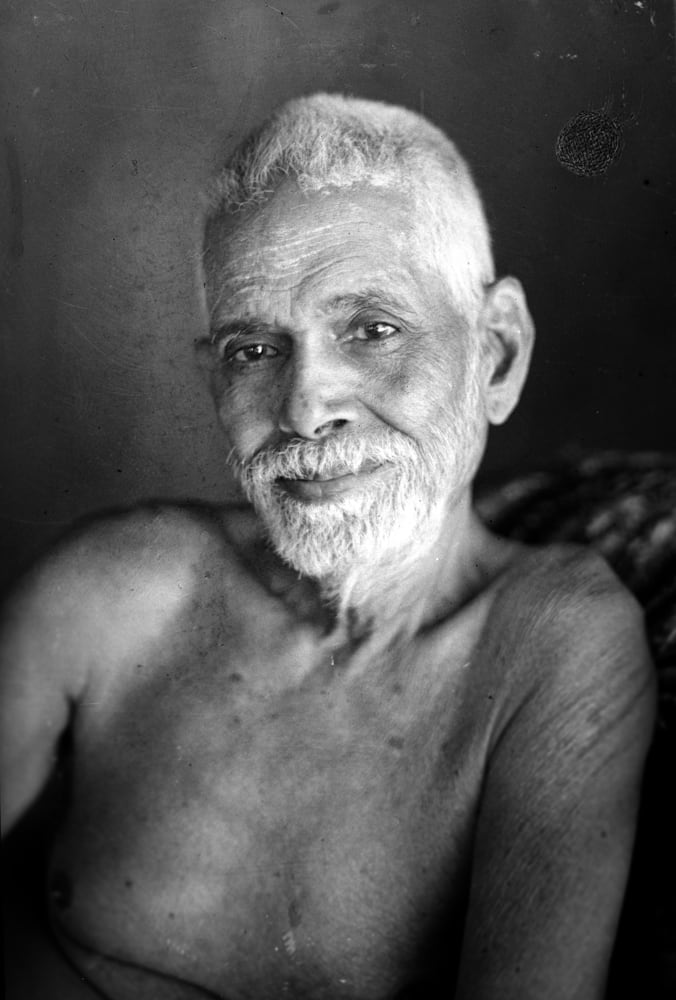
Ramana Maharshi
Совпадают в вопросах: Что такое Абсолют? Существует ли Бог? · Кто я? Существует ли истинное «я»? · Что происходит после смерти?
Uddalaka Aruni
Совпадают в вопросах: Что такое Абсолют? Существует ли Бог? · Кто я? Существует ли истинное «я»? · Что происходит после смерти?
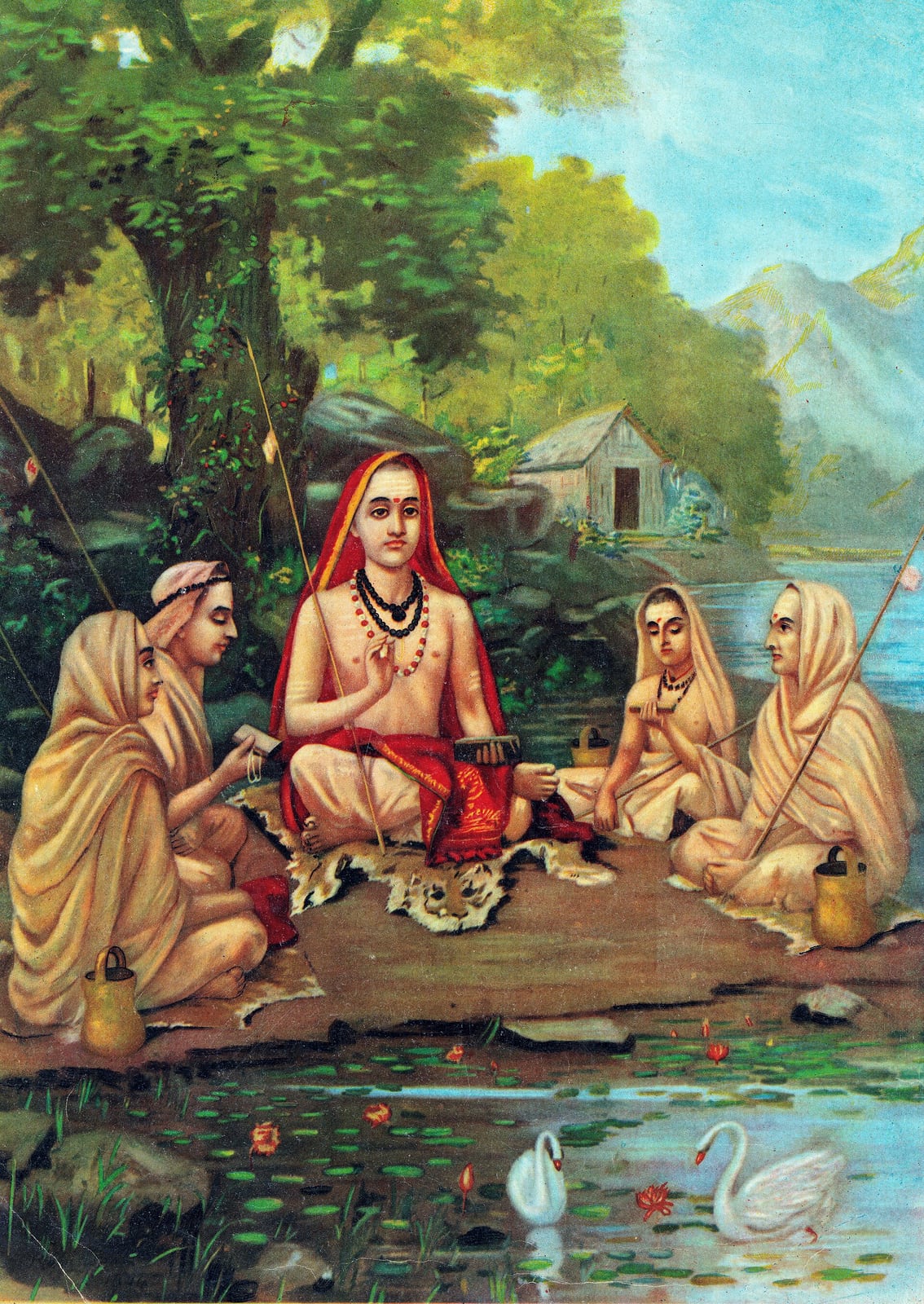
Adi Shankara
Совпадают в вопросах: Что такое Абсолют? Существует ли Бог? · Кто я? Существует ли истинное «я»? · Что происходит после смерти?
Nisargadatta Maharaj
Совпадают в вопросах: Кто я? Существует ли истинное «я»? · Что происходит после смерти? · Как достигается освобождение или спасение?
Дальше всего от

Francis of Assisi
Расходятся в вопросах: Кто я? Существует ли истинное «я»?

Emanuel Swedenborg
Расходятся в вопросах: Кто я? Существует ли истинное «я»?

Theophan the Recluse
Расходятся в вопросах: Кто я? Существует ли истинное «я»?
Ignatius of Loyola
Расходятся в вопросах: Кто я? Существует ли истинное «я»?
Предания и рассказы
Предания и рассказы
Житийное повествованиеtiempo mítico
The three sons of Anasūyā
Происхождение рассказа: Mārkaṇḍeya Purāṇa, cantos XVI–XVII (Pargiter's translation, 1888–1904). In Pargiter the cursed brahmin is unnamed and the one who curses him is Māṇḍavya; other versions call him Kauśika. Variants of the birth appear in the Bhāgavata (4.1) and other Purāṇas.
Житийное повествованиеtiempo mítico
The yogin who hid in the lake
Происхождение рассказа: Mārkaṇḍeya Purāṇa, canto XVII (Pargiter's translation, pp. 100–101).
Житийное повествованиеtiempo mítico
The boons of Kārtavīrya Arjuna
Происхождение рассказа: Mahābhārata, Anuśāsanaparvan, section CLII of Ganguli's translation (dialogue of Pavana and Arjuna) and Āraṇyakaparvan 115; Mārkaṇḍeya Purāṇa, cantos XVIII–XIX (Pargiter's translation).
Житийное повествованиеtiempo mítico
The girl with the bracelets
Происхождение рассказа: Bhāgavata Purāṇa 11.9.5–10. The text does not name the avadhūta; the identification with Dattātreya is traditional.
Житийное повествованиеtiempo mítico
Piṅgalā, the courtesan who stopped waiting
Происхождение рассказа: Bhāgavata Purāṇa 11.8.22–44. Piṅgalā also appears in the Mahābhārata (Śāntiparvan) as an example of renouncing hope.
Житийное повествованиеtiempo mítico
Paraśurāma on Mount Gandhamādana
Происхождение рассказа: Tripurā Rahasya, Jñānakhaṇḍa, ch. 1 (vv. 23–57 in the Kaviraj and Khiste edition, Wikisource text), referring to the Māhātmyakhaṇḍa for the meeting with Saṃvarta.
Свидетельство1935
"The guru may be inanimate"
Происхождение рассказа: Talks with Sri Ramana Maharshi, talk 23, dated 2 February 1935; notes by Munagala Venkataramiah, published by Sri Ramanasramam in 1955.
Учение
Учение
Понятия, на которых строится мысль учителя, объяснённые в их контексте.
The avadhūtaavadhuta
The ideal belongs to the literature of renunciation (saṃnyāsa) and has parallels in the paramahaṃsa of the late Upaniṣads and in tantric and Nāth yogins.
The twenty-four teachersveinticuatro-gurus
Ramana Maharshi used this passage to explain that the guru is ultimately the Self; in the Datta tradition it is the core of the teaching on the teacher.
Equal taste (samarasa) and the natural (sahaja)samarasa
Sahaja and samarasa are also key terms of tantric Buddhism (the siddhas) and of Nāth and Sant poetry in North India.
Haṭhayoga and eight-limbed yogahatha-ashtanga
The Jābāladarśana Upaniṣad, also in Dattātreya's mouth, sets out eight-limbed yoga with ten restraints and ten observances.
The synthesis of the trimūrtitrimurti-sintesis
The fused trimūrti iconography is common in modern India, especially in Maharashtra, Karnataka and Gujarat.
Видео
Видео
Записи, интервью и документальные фильмы. Видео воспроизводятся с YouTube; здесь они не хранятся.
Dattātreya: An Introduction | by Prof. Antonio Rigopoulos | Seminar Session 1
Лекция· EN· 2025· 55 min
Let's Talk Tattva
YSP 37 James Mallinson | Dattātreya's Discourse on Yoga
Интервью· EN· 2023· 51 min
Yogic StudiesОфициальный канал
Avadhūta Gītā Retreat | Session 1 | Swami Sarvapriyananda
Лекция· EN· 2026· 51 min
Vedanta Society of New YorkОфициальный канал
The Song of the Avadhoota I · Swami Sarvapriyananda (Class 1 of 3)
Лекция· EN· 2026· 90 min
Vedanta Society of Southern CaliforniaОфициальный канал
Upanishad Ganga | Episode 25 | Guru! | Who Are Dattatreya's 24 Gurus? | Guru Tatva
Документальный фильм· HI· 2022· 23 min
ChinmayaChannelОфициальный канал
The Whole World is my Guru! | DattaGuru Special
Запись третьих лиц· HI· 2025· 10 min
ChinmayaChannelОфициальный канал
Tripura Rahasya (Ch-22) Talk 01 of 7 @ Prem Puri 2018 (English)
Лекция· EN· 2018· 65 min
Anubhavananda Saraswati - Smiling SwamiОфициальный канал
How Dattatreya Made Parashuram His Disciple – Sadhguru
Запись третьих лиц· EN· 2019· 12 min
SadhguruОфициальный канал
Dr. Robert Svoboda's Living with Reality Ep. 20: Dattatreya Story Time
Лекция· EN· 2021· 48 min
Be Here Now NetworkОфициальный канал
|| अवधूत - यदु संवाद (दत्तात्रयांचे २४ गुरु) || भाग- 01
Лекция· MR· 2026· 50 min
Chaitanya Maharaj Deglurkar : OfficialОфициальный канал
Ganagapur Dattatreya | Documentary Video | English
Документальный фильм· EN· 2021· 15 min
PrakhyatBhatt Pujari Ganagapur
Avadhuta Gita Capítulo 1
Запись третьих лиц· ES· 2021· 40 min
Silencio entre palabras
Avadhûta Gîtâ - I - Le Soi [Advaita Vedanta]
Запись третьих лиц· FR· 2022· 40 min
Le Vieux Sage
AVADHUTA GITA - Audiolibro completo
Запись третьих лиц· IT· 2023· 70 min
Nisargadatta Maharaj in italiano
Галерея
Галерея
Изображения с проверенной лицензией. Каждое сохраняет своё авторство и атрибуцию.
Связи
Связи
Влияния, ученичество и близость взглядов. Документированная связь отличается от сходства, выявленного путём анализа.
Повлиял на
Nisargadatta explained that, according to legend, the first teacher of his lineage of the "nine masters" (Navnāth Sampradāya) was the ṛṣi Dattātreya, though he regarded those nine masters as mythological (I Am That, ch. 97).
Документированная связь
Повлиял на
Ramana cited the "ancient saint Avadhūta" of the twenty-four teachers (talk 23, 1935) and the Tripurā Rahasya (talks 314 and 616), the work that sets out Dattātreya's teaching to Paraśurāma.
Документированная связь
Повлиял на
Vivekananda glossed and translated passages of the Avadhūta Gītā in his talks at Thousand Island Park (28 July 1895).
Документированная связь
Идеи, близкие к
The Dattātreyayogaśāstra integrates for the first time Patañjali's eight-limbed yoga with the techniques of haṭhayoga (Mallinson, 2024).
Документированная связь
Идеи, близкие к
The Dattātreyayogaśāstra ascribes the teaching of eight-limbed yoga to Yājñavalkya; a yoga text (Yogayājñavalkya) also circulates under his name.
Сходство, выявленное путём анализа
Идеи, близкие к
Kapila and Dattātreya appear together in the Bhāgavata Purāṇa's list of avatāras (1.3.10–11), fifth and sixth, both as teachers of the science of the soul; the Dattātreyayogaśāstra ascribes haṭhayoga practices to Kapila.
Сходство, выявленное путём анализа
Идеи, близкие к
Tradition ascribes to Vyāsa the Mahābhārata and the Bhāgavata Purāṇa, the works that transmit the stories about Dattātreya and the avadhūta of the twenty-four teachers.
Сходство, выявленное путём анализа
Идеи, близкие к
In the Tripurā Rahasya, Haritāyana narrates to Nārada the teaching Dattātreya gave to Paraśurāma.
Сходство, выявленное путём анализа
Идеи, близкие к
The Avadhūta Gītā sets out a radical non-dualism akin to Śaṅkara's Advaita, though with a vocabulary (samarasa, sahaja) closer to tantric and Nāth traditions.
Сходство, выявленное путём анализа
Идеи, близкие к
The Avadhūta Gītā and the Aṣṭāvakra Gītā are often published together (Alexandra David-Néel translated them in one volume) because of their uncompromising non-dualism.
Сходство, выявленное путём анализа
Идеи, близкие к
Rigopoulos notes, according to the secondary literature, that the Avadhūta Gītā's ideas on attributeless brahman influenced Kabir's poetry; the relationship is not directly documented.
Сходство, выявленное путём анализа
Упоминается в других статьях
Источники
Источники
Библиография и каталоги, использованные для этой статьи.
- Rigopoulos, Antonio. Dattātreya: The Immortal Guru, Yogin, and Avatāra. A Study of the Transformative and Inclusive Character of a Multi-faceted Hindu Deity. Albany: State University of New York Press, 1998. ISBN 9780791436967 (tapa dura), 9780791436950 (rústica). Las páginas citadas (43, 57, 77, 195–197, 227–228) se toman de las referencias de la Wikipedia en inglés; no se ha consultado el libro directamente.
- Pargiter, F. Eden (trad.). The Mārkaṇḍeya Purāṇa. Calcuta: Asiatic Society (Bibliotheca Indica), 1888–1904; cantos XVI–XIX (nacimiento de Dattātreya, el lago, Kārtavīrya Arjuna) y XXXVII–XLIII (enseñanza a Alarka).
- Bhāgavata Purāṇa 1.3.11 (Dattātreya, sexto avatāra) y 11.7.25–11.9 (el avadhūta y el rey Yadu: los veinticuatro maestros, lista en 11.7.33–35); texto sánscrito y traducción en Vedabase (Bhaktivedanta Book Trust).
- Mahābhārata: Āraṇyakaparvan 115 y Anuśāsanaparvan 91, 152–157 (numeración de la traducción de Ganguli; en la edición crítica, 3.115.12, 12.49.36–37, 13.152.5 y 13.153.12). Ganguli, Kisari Mohan (trad.). The Mahabharata of Krishna-Dwaipayana Vyasa. Calcuta: Pratap Chandra Roy, 1883–1896.
- Mallinson, James (ed. y trad.). The Dattātreyayogaśāstra. Pondicherry: Institut Français de Pondichéry / École française d'Extrême-Orient, 2024 (Collection Indologie 162; Haṭha Yoga Series 5). ISBN 9782855392967 (EFEO), 9788184702552 (IFP).
- Mallinson, James. «Nāth Sampradāya». En Knut A. Jacobsen et al. (eds.), Brill's Encyclopedia of Hinduism, vol. III. Leiden: Brill, 2011, pp. 407–428 (tesis de la incorporación tardía de Dattātreya al linaje nāth, pp. 407–411, citada según la Wikipedia en inglés).
- अवधूतगीता (Avadhūtagītā), texto sánscrito completo en ocho capítulos, Wikisource en sánscrito; colofón en 8.10.
- Abhayananda, Swami (trad.). Dattatreya: Song of the Avadhut. Olympia (Washington): Atma Books, 1992, p. 10 (datación en los siglos IX–X). Con Grimes, John A. A Concise Dictionary of Indian Philosophy. Albany: SUNY Press, 1996, p. 110. Ambas citadas según la Wikipedia en inglés.
- Olivelle, Patrick (trad.). The Saṃnyāsa Upaniṣads: Hindu Scriptures on Asceticism and Renunciation. Nueva York: Oxford University Press, 1992 (datación de la Jābāla y de la Avadhūta Upaniṣad, citadas según la Wikipedia en inglés). Texto sánscrito de la Avadhūtopaniṣad en Wikisource.
- जाबालदर्शनोपनिषत् (Jābāladarśanopaniṣad), texto sánscrito en diez khaṇḍa, Wikisource en sánscrito: Dattātreya enseña el yoga de ocho miembros a Sāṅkṛti (1.1–5).
- Tripurārahasya, Jñānakhaṇḍa, con la Tātparyadīpikā de Śrīnivāsa. Ed. Gopinath Kaviraj y Nārāyaṇa Śāstrī Khiste. Benarés: Government Sanskrit College, 1925–1933 (Princess of Wales Sarasvati Bhavana Texts 15); texto en Wikisource en sánscrito. Traducción inglesa: Munagala S. Venkataramiah (Swami Ramanananda Saraswathi), Tripura Rahasya or The Mystery beyond the Trinity, Tiruvannamalai, Sri Ramanasramam (ed. 2006, ISBN 9788188018291).
- Venkataramiah, Munagala (comp.). Talks with Sri Ramana Maharshi. Tiruvannamalai: Sri Ramanasramam, 1955; charla 23 (2 de febrero de 1935, preguntas de W. Y. Evans-Wentz) y charlas 314 y 616 (citas de la Tripurā Rahasya).
- Nisargadatta Maharaj. I Am That: Talks with Sri Nisargadatta Maharaj. Trad. Maurice Frydman, ed. Sudhakar S. Dikshit. Bombay: Chetana, 1973; cap. 97, «Mind and the World are not Separate».
- Vivekananda, Swami. Inspired Talks, «Sunday, July 28» (1895), en The Complete Works of Swami Vivekananda, vol. 7. Mayavati: Advaita Ashrama.
- Wikidata: «Dattatreya» (Q850805); «Avadhuta Gita» (Q790053); «Tripura Rahasya» (Q17036247); «Dattatreya Yoga Shastra» (Q104870312).
- Wadiyar, Jaya Chamarajendra. Dattātreya: The Way and the Goal. Introducción de S. Radhakrishnan. Londres: George Allen & Unwin, 1957 (traducción y comentario de la Jīvanmukta Gītā y la Avadhūta Gītā).
- जीवन्मुक्तगीता (Jīvanmuktagītā), texto sánscrito con el comentario de Jaya Chamarajendra Wadiyar, Wikisource en sánscrito; colofón: «compuesta por Śrī Dattātreya, león del vedānta».
- दत्तात्रेयोपनिषत् (Dattātreyopaniṣad), texto sánscrito, Wikisource en sánscrito.
- Hulin, Michel (trad.). La doctrine secrète de la déesse Tripurā: Tripurā Rahasya, section de la connaissance. París: Fayard, 1979 (Documents spirituels). ISBN 9782213008127.
- «Dattatreya», Wikipedia en inglés (consultada el 26-10-2026): síntesis de las tradiciones datta (Mahānubhāva, Gurucaritra, Navnāth), de la iconografía y de la Datta Jayantī, con referencias a Rigopoulos (1998), Bühnemann (1988) y Gopinatha Rao (1914). Fuente terciaria: se usa solo para datos de tradición.
- Open Library: Dattātreya Tantra, «Dattātreya viracita», con comentario hindi de Rudradeva Tripāṭhī. Delhi: Rañjana Pablikeśansa, 1995 (OL23606841W).
- Правообладатель
- Textos sánscritos anónimos en dominio público. Las traducciones y ediciones modernas tienen derechos propios: SUNY Press (Rigopoulos), EFEO / Institut Français de Pondichéry (Mallinson), Sri Ramanasramam y World Wisdom (Tripurā Rahasya), Sri Ramakrishna Math y Advaita Ashrama (Avadhūta Gītā), Shanti Sadan (Shastri), Atma Books (Abhayananda), José J. de Olañeta, Luis Cárcamo, Éditions du Rocher, Fayard (Hulin), Oxford University Press (Olivelle).
Ожидает подтверждения
То, что в этой статье пока не удалось установить. Мы предпочитаем сказать об этом, а не заполнять пробел.
- Fechas: Dattātreya es figura de la tradición, sin fechas; la línea de tiempo usa las de los textos, todas aproximadas y discutidas.
- Consultar directamente Rigopoulos (1998): las páginas citadas (43, 57, 77, 195–197, 227–228) proceden de las referencias de la Wikipedia en inglés.
- Confirmar en la edición de Mallinson (2024) la forma de diálogo con Sāṅkṛti y la relación con la Haṭhapradīpikā.
- Confirmar en Brill's Encyclopedia of Hinduism, vol. III (2011), las páginas de Mallinson sobre la incorporación de Dattātreya al linaje nāth (la Wikipedia cita «Mallinson 2012, pp. 407–411»).
- Avadhūta Gītā: la cifra de 289 versos es de Rigopoulos; la edición de Wikisource numera unos 280. Comparar con una edición impresa.
- Traducción de Shri Purohit Swami (Munshiram Manoharlal, 1979): es póstuma y no se ha encontrado en línea; en EE. UU. no es de dominio público (primera publicación en 1979). Un vendedor indica una 2.ª edición con ISBN 8121502451, no comprobada en catálogo.
- Traducción de Lala Kannoo Mal (Madrás, 1920): se desconoce la fecha de muerte del traductor; el escaneo del Digital Library of India (dli.ernet.214590) corresponde por error a otro libro. Buscar un escaneo válido.
- Dattātreya Tantra: comprobar contenido y forma (diálogo) en una edición crítica o un estudio; aquí se describe según las ediciones populares.
- Datta Saṃhitā: la tradición śrīvidyā menciona una «Dattasaṃhitā» perdida; no se registra hasta encontrar una fuente fiable.
- No se ha encontrado ninguna traducción española de la Tripurā Rahasya ni del Dattātreyayogaśāstra con ISBN.
- Sala de lectura: el Mārkaṇḍeya Purāṇa de Pargiter (dominio público) y la traducción de Ganguli contienen los relatos, pero en volúmenes que reúnen la obra entera; no se registran como lectura propia de Dattātreya.
- Vídeos: los del canal oficial de OSHO, de Sri M y otros sobre la Tripurā Rahasya no se han registrado por no ser oficiales o no estar verificados.
- Project Gutenberg no tiene ninguna edición de estas obras (búsqueda en gutenberg.org el 2026-10-26: «No records found»).
Исследовано 2026-10-26