हिन्दू धर्म · योग · वैदिक परंपरा · सांख्य
Kapila
कपिल
पौराणिक व्यक्तित्व
भारतीय परंपरा के वे मुनि जिन्हें सांख्य दर्शन का प्रवर्तक माना जाता है — चैतन्य (पुरुष) और प्रकृति का वह द्वैत जो योग का तत्त्वमीमांसीय आधार है। उनकी कोई रचना उपलब्ध नहीं: इस दर्शन का सबसे प्राचीन ग्रंथ ईश्वरकृष्ण की सांख्यकारिका (चौथी-पाँचवीं शताब्दी ई.) है, और उनके नाम से प्रचलित सांख्यसूत्र चौदहवीं-पंद्रहवीं शताब्दी के हैं। पुराणों ने उन्हें विष्णु का अवतार और माता देवहूति का गुरु बनाया; महाकाव्यों ने उन्हें वह तपस्वी बनाया जिन्होंने सगर के पुत्रों को भस्म किया।
- कृतियाँ
- 13कृतियाँ
- संस्करण
- 22संस्करण
- उद्धरण
- 6उद्धरण
- वीडियो
- 14वीडियो
- चित्र
- 5चित्र
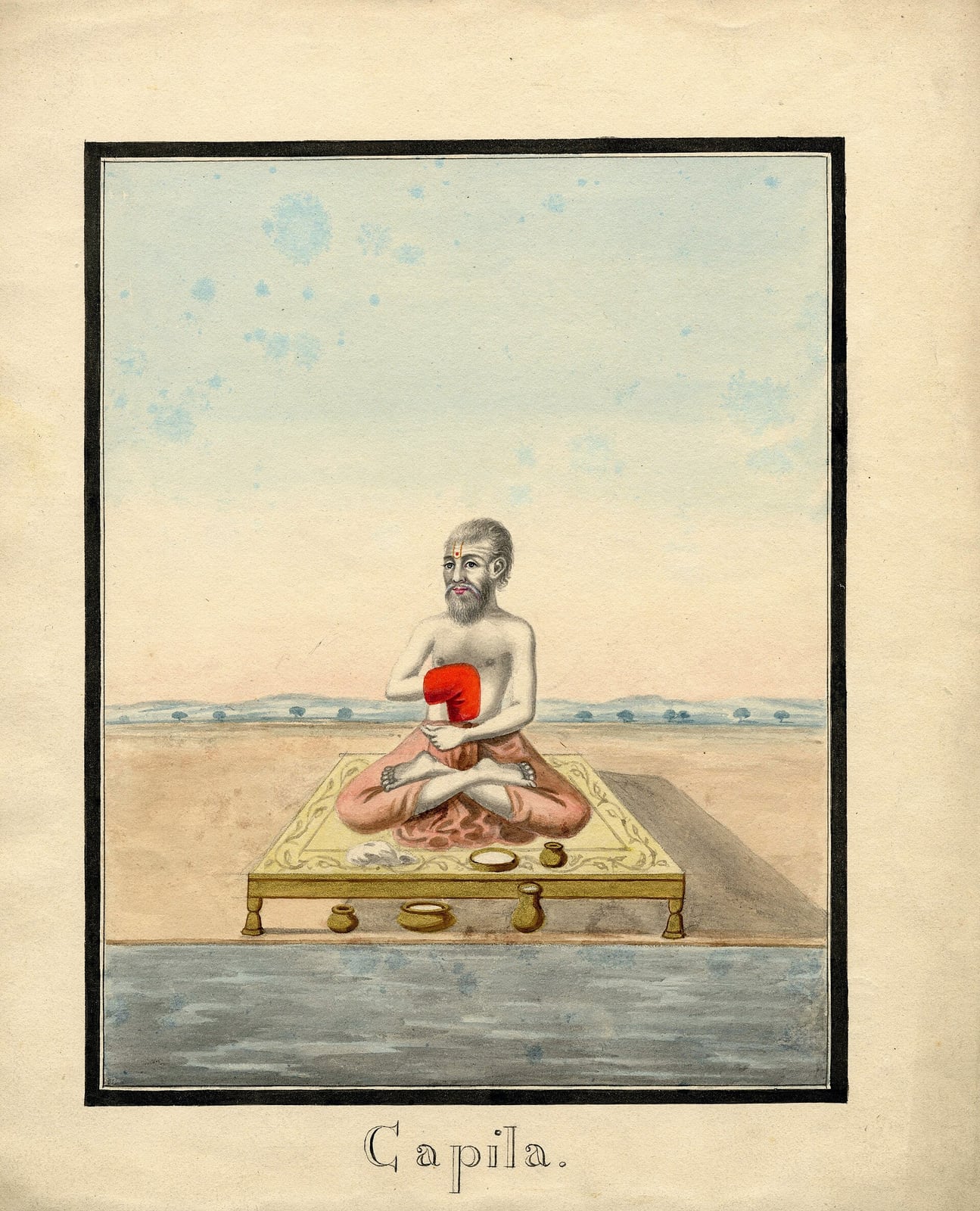
Kapila, sabio védico (pintura de la Company School) · Public domain
उनके अपने शब्दों में
«Well, the complete cessation of pain, [which is] of three kinds, is the complete end of man.»Sāṃkhya Sūtra I.1 (obra atribuida, s. XIV–XV); trad. inglesa de Ballantyne (1885, dominio público); versión española del investigador.

मूल विचार
Puruṣa (witnessing consciousness): In Sāṃkhya, puruṣa is pure consciousness: it does not act, change or produce anything and has no qualities; it merely witnesses.
संदर्भ में देखें
जीवनी
6 मिनट का पाठ
स्पैनिश मूल से सहायता-प्राप्त अनुवाद, मातृभाषी अनुवादक द्वारा समीक्षा लंबित।
दर्शन की देहरी पर एक नाम
प्राचीन भारत के बहुत कम नाम ऐसे हैं जो इतनी कम जीवनी के साथ इतना भार उठाते हों। परंपरा के लिए कपिल "आदिविद्वान्" हैं — वे प्रथम ज्ञानी जिन्होंने सांख्य का प्रकाश किया, जो ब्राह्मणीय दर्शनों में व्यवस्थित रूप पाने वाला सबसे प्राचीन दर्शन है; आलोचनात्मक इतिहास के लिए वे मुख्यतः एक प्रमाण-पुरुष हैं, जिनका आश्रय उनसे बहुत बाद के ग्रंथ लेते हैं। ऐसी कोई रचना उपलब्ध नहीं जिसे निश्चयपूर्वक उनकी कहा जा सके; न उनके जीवन की कोई तिथि है, न उनकी मृत्यु का कोई स्थान; और स्वयं यह नाम — संस्कृत में जिसका अर्थ है "कपिश", "ललाई लिए भूरा" — भारतीय साहित्य में अनेक भिन्न व्यक्तियों का बोध कराता है। इसलिए उनके विषय में जो कहा जा सकता है, वह एक स्मृति का इतिहास है: किस प्रकार एक दर्शन-संप्रदाय, एक उपासना और एक पवित्र भूगोल ने धीरे-धीरे एक नाम को देह प्रदान की।
प्रारंभिक पदचिह्न
सबसे प्राचीन संदर्भ के रूप में प्रायः श्वेताश्वतर उपनिषद् (5.2) का वह मंत्र उद्धृत किया जाता है जो आदि में उत्पन्न और ज्ञान से पोषित एक "कपिल ऋषि" की बात करता है: "ऋषिं प्रसूतं कपिलं यस्तमग्रे ज्ञानैर्बिभर्ति"। आधुनिक भाषाशास्त्र को संदेह है कि यहाँ किसी व्यक्ति का उल्लेख है: लार्सन और भट्टाचार्य इसमें विश्व-तत्त्व हिरण्यगर्भ का विशेषण पढ़ते हैं, और आठवीं शताब्दी में ही शंकराचार्य ने ध्यान दिलाया था कि श्रुति में केवल नाम की समानता है — "कपिलमिति श्रुतिसामान्यमात्रत्वात्" — वह यह नहीं बताती कि कौन-से कपिल अभिप्रेत हैं। इसके विपरीत, महाभारत स्पष्ट है: शांतिपर्व के मोक्ष को समर्पित खंड मोक्षधर्म में कपिल वे परमर्षि हैं जिन्होंने सांख्य का उपदेश किया, जैसे हिरण्यगर्भ योग के — "सांख्यस्य वक्ता कपिलः परमर्षिः स उच्यते। हिरण्यगर्भो योगस्य वक्ता" — और वहीं वे तपस्वी स्यूमरश्मि से वैदिक यज्ञ की तुलना में संन्यास और अहिंसा की महत्ता पर शास्त्रार्थ करते दिखाई देते हैं।
आसुरि के गुरु
जिस गुरु-शिष्य परंपरा को इस दर्शन ने अपनी माना, वह ईश्वरकृष्ण की सांख्यकारिका में स्थिर हुई, जिसकी रचना लगभग चौथी-पाँचवीं शताब्दी ई. में हुई और जो वस्तुतः शास्त्रीय सांख्य का सबसे प्राचीन उपलब्ध ग्रंथ है। उसकी अंतिम कारिकाएँ घोषित करती हैं कि मुनि ने करुणावश यह पवित्र सिद्धांत आसुरि को दिया, आसुरि ने पंचशिख को सिखाया और उन्होंने इसका व्यापक प्रसार किया — "एतत् पवित्रमग्र्यं मुनिरासुरयेऽनुकम्पया प्रददौ। आसुरिरपि पञ्चशिखाय तेन च बहुधा कृतं तन्त्रम्॥" — और अंततः ईश्वरकृष्ण ने इसे आर्या छंद में संक्षिप्त किया: "शिष्यपरम्परयागतमीश्वरकृष्णेन चैतदार्याभिः संक्षिप्तम्"। योगसूत्र का भाष्य (योगभाष्य) पंचशिख के नाम से एक वचन उद्धृत करता है जिसमें कपिल वे "आदिविद्वान्" हैं जिन्होंने करुणावश निर्मित चित्त धारण करके जिज्ञासु आसुरि को तंत्र का उपदेश दिया: "आदिविद्वान् निर्माणचित्तमधिष्ठाय कारुण्याद् भगवान् परमर्षिरासुरये जिज्ञासमानाय तन्त्रं प्रोवाच"। इसी सूत्र में वह द्वैधता पहले से निहित है जो कपिल के साथ सदा बनी रहेगी: वे एक मानव गुरु भी हैं और साथ ही एक ब्रह्मांडीय विभूति भी, जो सृष्टि-चक्र के आरंभ में उपदेश करती है।
सांख्य की शिक्षा
उनसे जोड़ा जाने वाला दर्शन एक कठोर द्वैतवाद है। एक ओर पुरुष है — शुद्ध चैतन्य, अनेक, निष्क्रिय और मात्र साक्षी; दूसरी ओर प्रकृति है — मूल प्रकृति, एक और गतिशील, तीन गुणों — सत्त्व, रजस् और तमस् — से बुनी हुई, जिनकी साम्यावस्था भंग होने पर परिणाम-क्रम से जगत् के तत्त्वों का विस्तार होता है: बुद्धि (महत्), अहंकार, मनस्, इंद्रियाँ, तन्मात्राएँ और महाभूत। दुःख का जन्म साक्षी को उस वस्तु से एक मान लेने में है जिसे वह देखता है; मोक्ष — कैवल्य, अर्थात् "पृथक्त्व" — उस विवेकज्ञान से प्राप्त होता है जो दोनों को अलग कर देता है। सांख्यसूत्र का पहला सूत्र इसे लगभग चिकित्सकीय संयम के साथ कहता है: "अथ त्रिविधदुःखात्यन्तनिवृत्तिरत्यन्तपुरुषार्थः" — तीनों प्रकार के दुःखों की आत्यंतिक निवृत्ति ही मनुष्य का परम पुरुषार्थ है। इसी आधार पर पतंजलि के योग का निर्माण हुआ, जिसका तत्त्वमीमांसीय ढाँचा मूलतः सांख्य का ही है।
उनके नाम से एक परवर्ती ग्रंथ
आज जो ग्रंथ कपिल के नाम से जाने जाते हैं, वे उनके लिए किसी भी तर्कसंगत तिथि से बहुत बाद के हैं। सांख्यसूत्र — जिसे सांख्यप्रवचनसूत्र भी कहा जाता है, छह अध्यायों में पाँच सौ से कुछ अधिक सूत्र — चौदहवीं शताब्दी में माधव द्वारा कारिका के आधार पर प्रस्तुत सांख्य-निरूपण में दिखाई नहीं देता, और इसके प्रथम ज्ञात टीकाकार अनिरुद्ध और विज्ञानभिक्षु हैं, जिनमें विज्ञानभिक्षु सोलहवीं शताब्दी के उत्तरार्ध के हैं। गार्बे इसे पहले ही बहुत परवर्ती मानते थे, और लार्सन तथा भट्टाचार्य इसे लगभग चौदहवीं-पंद्रहवीं शताब्दी में रखते हैं। तत्त्वसमास की तिथि और भी अनिश्चित है — तत्त्वों की यह अत्यंत संक्षिप्त सूची मैक्स मूलर को बहुत प्राचीन लगी थी, पर बाद की आलोचना इसे भी, जिस रूप में यह हम तक पहुँची है, परवर्ती मानती है। इन दोनों में से किसी भी कृति को कपिल की वाणी के रूप में नहीं पढ़ा जा सकता: ये उस शिक्षा की शास्त्रीय स्मृति हैं जो उनसे जोड़ी जाती थी।
अवतार और माता
भक्ति-साहित्य में कपिल विष्णु का एक रूप बन गए। भागवत पुराण उन्हें भगवान के अवतारों में गिनता है — पाँचवाँ अवतार, सिद्धों के स्वामी, जिन्होंने काल के प्रवाह में लुप्त हुए सांख्य का उपदेश आसुरि को दिया: "पञ्चमः कपिलो नाम सिद्धेशः कालविप्लुतम्। प्रोवाचासुरये सांख्यं तत्त्वग्रामविनिर्णयम्॥" — और अपने तृतीय स्कंध में उन्हें एक लंबा आख्यान समर्पित करता है: ऋषि कर्दम और मनु की पुत्री देवहूति के पुत्र कपिल, देवहूति के पति कर्दम के गृहत्याग कर तपस्वी जीवन अपना लेने के बाद, अपनी माता को एक ईश्वरवादी सांख्य का उपदेश देते हैं जिसमें तत्त्वों का ज्ञान भगवद्भक्ति में परिणत होता है। यह परंपरा की एक भिन्न परत है, संभवतः नवीं-दसवीं शताब्दी के आसपास रचित, जो द्वैतवाद के दार्शनिक को भक्ति का आचार्य बना देती है। भगवद्गीता ने इस प्रतिष्ठा का पूर्वाभास दे दिया था, जहाँ कृष्ण कहते हैं कि सिद्धों में वे कपिल मुनि हैं: "सिद्धानां कपिलो मुनिः"।
सगर-पुत्रों को भस्म करने वाले मुनि
एक अन्य कथा-धारा, महाकाव्यों की, ने कपिल को एक भयावह तपस्वी बना दिया। रामायण और महाभारत के अनुसार राजा सगर के साठ हज़ार पुत्र यज्ञ के अश्व को खोजते हुए पृथ्वी खोदते गए और अंततः उसे कपिल के पास पाया, जिन्हें उन्होंने चोर समझ लिया; मुनि ने उन्हें भस्म कर दिया, और उनके अवशेषों की शुद्धि केवल गंगावतरण से हुई, जिसे पीढ़ियों बाद भगीरथ ने अपनी तपस्या से संभव किया। इसी कथा से गंगासागर की तीर्थयात्रा का जन्म हुआ, गंगा के मुहाने पर, जहाँ हर जनवरी (मकर संक्रांति पर) कपिल मुनि का मंदिर अपार जनसमूह का स्वागत करता है। शंकराचार्य ने इस द्वैधता का उपयोग सांख्य को वैदिक प्रामाण्य से वंचित करने के लिए किया: उन्होंने लिखा कि स्मृति एक "अन्य कपिल" को भी जानती है, जिन्होंने सगर-पुत्रों को भस्म किया था — "अन्यस्य च कपिलस्य सगरपुत्राणां प्रतप्तुर्वासुदेवनाम्नः स्मरणात्"।
कपिलवस्तु और अन्य विरासतें
बौद्ध परंपरा शाक्यों की उस नगरी कपिलवस्तु के नाम को, जहाँ सिद्धार्थ गौतम पले-बढ़े, कपिल नामक एक मुनि के आश्रम से जोड़ती है: अश्वघोष सौंदरनंद के प्रथम सर्ग में यही कथा कहते हैं। यह एक लोक-व्युत्पत्ति है, जिसका ऐतिहासिक मूल्य अनिश्चित है और जो प्राचीन भूगोल से अधिक इस नाम की प्रतिष्ठा के विषय में बताती है। जैन धर्म भी एक कपिल को जानता है — उत्तराध्ययन के "कापिलीय" अध्ययन के रचयिता — पर वे एक अन्य व्यक्ति हैं। समनामी व्यक्तियों, परस्पर असंगत वंशावलियों — ब्रह्मा के पुत्र, कर्दम के पुत्र, कश्यप के पुत्र — और पवित्र स्थलों की यह बहुलता ही उनकी उत्तरकालीन स्मृति की सबसे विशिष्ट पहचान है।
ग्रंथ के बिना एक प्रमाण
अंत में जो शेष रहता है, वह रचना के बिना एक प्रमाण-पुरुष है। विवेकानंद ने 1897 में उन्हें मनोवैज्ञानिक और दार्शनिक क्षेत्र में भारत के इतिहास का संभवतः सबसे महान नाम कहा, और आधुनिक विद्वान, अधिक संयम के साथ, सांख्य में प्रकृति को एक कार्य-कारण प्रक्रिया के रूप में समझने का पहला बड़ा भारतीय प्रयास पहचानते हैं, जिसे किसी सृष्टिकर्ता ईश्वर की आवश्यकता नहीं: स्वयं सूत्र ईश्वर को स्वीकार करने से इसलिए इनकार करते हैं कि वह सिद्ध नहीं है — "ईश्वरासिद्धेः"। कपिल वह नाम है जो भारत ने उस प्रयास के उद्गम को दिया; शेष सब — उनके वचन, उनकी शताब्दी, उनका मुख — किंवदंती या मौन का है।
स्रोत: Larson, Gerald James y Ram Shankar Bhattacharya (eds.). Sāṃkhya: A Dualist Tradition in Indian Philosophy. Encyclopedia of Indian Philosophies, vol. IV. Princeton: Princeton University Press / Delhi: Motilal Banarsidass, 1987. · Larson, Gerald James. Classical Sāṃkhya: An Interpretation of its History and Meaning. Delhi: Motilal Banarsidass, 1969; 2.ª ed. revisada, 1979 (ISBN 9788120805033). · Jacobsen, Knut A. Kapila, Founder of Sāṃkhya and Avatāra of Viṣṇu: With a Translation of Kapilāsurisaṃvāda. Nueva Delhi: Munshiram Manoharlal, 2008 (ISBN 9788121511940). · Ballantyne, James Robert (trad.). The Sánkhya Aphorisms of Kapila, with Illustrative Extracts from the Commentaries. 3.ª ed., ed. Fitzedward Hall. Londres: Trübner & Co., 1885 (Trübner's Oriental Series). Texto consultado en el OCR de Internet Archive. · Colebrooke, Henry Thomas (trad.) y Horace Hayman Wilson (trad. y coment.). The Sánkhya Káriká, or Memorial Verses on the Sánkhya Philosophy, by Íswara Krishna; also the Bháshya or Commentary of Gaurapáda. Oxford: Oriental Translation Fund, 1837. Estrofas LXIX–LXXI y comentario de Wilson, pp. 188–191.
कालक्रम
जीवन, वर्ष-दर-वर्ष
प्रत्येक बिंदु एक प्रमाणित घटना है। उसे स्रोत और निश्चितता के स्तर सहित पढ़ने के लिए क्लिक करें।
IVवीं सदी ई.पू.
A “reddish seer” in the Śvetāśvatara Upaniṣad
Verse 5.2 mentions a ṛṣi kapila begotten in the beginning. The Upaniṣad’s date is uncertain (last centuries BCE) and scholars doubt that the word names a person rather than an epithet of Hiraṇyagarbha.
विवादितLarson, Gerald James y Ram Shankar Bhattacharya (eds.). Sāṃkhya: A Dualist Tradition in Indian Philosophy. Encyclopedia of Indian Philosophies, vol. IV. Princeton: Princeton University Press / Delhi: Motilal Banarsidass, 1987.
IVवीं सदी ई.पू.
A “reddish seer” in the Śvetāśvatara Upaniṣad
Verse 5.2 mentions a ṛṣi kapila begotten in the beginning. The Upaniṣad’s date is uncertain (last centuries BCE) and scholars doubt that the word names a person rather than an epithet of Hiraṇyagarbha.
विवादित
लगभग 200 ई.पू. – 400
Kapila, proclaimer of Sāṃkhya in the Mahābhārata
The Mokṣadharma of the Śāntiparvan presents him as the supreme sage who taught Sāṃkhya and records his dialogues with Āsuri and Syūmaraśmi. The epic took shape between c. 300 BCE and 400 CE; the dating of these sections is approximate.
संभावित
Iवीं सदी
Kapilavastu, city of the sage Kapila
Aśvaghoṣa relates in the Saundarananda (canto I) that the Śākya princes founded their city beside the hermitage of Kapila Gautama and named it Kapilavastu. It is a folk etymology.
परंपरा
लगभग 350 – 450
The Sāṃkhya Kārikā fixes the line Kapila–Āsuri–Pañcaśikha
Īśvarakṛṣṇa composes the oldest surviving text of classical Sāṃkhya; stanzas 69–71 ascribe the doctrine to the “sage” who taught it to Āsuri. Before 569 Paramārtha translated it into Chinese with a commentary.
संभावित
लगभग 400
The “First Knower” in the Yoga-bhāṣya
The commentary on the Yogasūtra (I.25) quotes a fragment of Pañcaśikha: the First Knower, assuming a created mind out of compassion, declared the doctrine to Āsuri.
संभावित
VIIIवीं सदी
Śaṅkara distinguishes “another Kapila”
In the Brahmasūtra-bhāṣya (II.1.1) Śaṅkara denies Vedic authority to Kapila’s smṛti and recalls that tradition knows another Kapila, the one who burned the sons of Sagara.
प्रमाणित
लगभग 900
Kapila, avatar of Viṣṇu and teacher of Devahūti
The Bhāgavata Purāṇa (I.3.10 and III.24–33) counts him as Viṣṇu’s fifth incarnation and narrates his teaching of a devotional Sāṃkhya to his mother. The Purāṇa’s date is debated (c. 9th–10th centuries).
विवादित
लगभग 1400 – 1500
The Sāṃkhya Sūtra
The aphorisms that tradition calls the “sūtras of Kapila” are fixed. Larson and Bhattacharya place them around the 14th–15th centuries; their earliest known commentator is Aniruddha.
संभावित
1837
First European translation of the Kārikā
Colebrooke and Wilson publish the Sāṃkhya Kārikā with Gauḍapāda’s commentary in Oxford; Wilson summarises the traditions about Kapila.
प्रमाणित
1852
Ballantyne translates the Sāṃkhya Sūtra
James R. Ballantyne publishes in India his English version of the aphorisms with extracts from the commentaries; the third edition, revised by Fitzedward Hall, appears in London in 1885.
प्रमाणित
1897
Vivekananda praises Kapila
In a lecture in Calcutta he calls him perhaps the greatest name in Indian history in psychology and philosophy.
प्रमाणित
कृतियाँ
आवश्यक कृतियाँ
वे कृतियाँ जिनके बिना उनकी विरासत को समझा नहीं जा सकता।
पारंपरिक आरोपण · लगभग 1400
Sāṃkhya Sūtra (Sāṃkhya-pravacana Sūtra)
सांख्यसूत्र (साङ्ख्यप्रवचनसूत्र)
Some five hundred aphorisms (527 in the Wikisource numbering; editions vary by one or two) in six books: the first sets out the doctrine and the theory of knowledge, the second and third the evolution of nature and the means of liberation, the fourth a series of illustrative parables, the fifth refutes rival schools and the sixth recapitulates. It defends the dualism of puruṣa and prakṛti, the pre-existence of the effect in its cause and the impossibility of proving the existence of a Lord (I.92). It was commented on by Aniruddha (c. 1500), Vijñānabhikṣu (second half of the 16th century), who read it in a theistic and Vedāntic key, and Mahādeva Vedāntin.
6 संस्करण

पारंपरिक आरोपण · लगभग 900
Kapila’s teaching to Devahūti (Kapila-gītā, Bhāgavata Purāṇa III.25–33)
कपिलगीता (भागवतपुराण ३.२५–३३)
Nine chapters in which Kapila, presented as an incarnation of Viṣṇu, answers his mother Devahūti, who asks him to free her from attachment to the body and to “mine”. He expounds the Sāṃkhya principles, nature and puruṣa, the practice of yoga and meditation on the divine form, the kinds of devotion according to the three qualities, the cycle of transmigration and the fate of those who live for pleasure. Its thesis is that the mind bound to the qualities enslaves and the mind fixed on God liberates. It ends with Devahūti’s liberation.
4 संस्करण
Kapila
Tattva Samāsa
पारंपरिक आरोपण
Tattva Samāsa
तत्त्वसमास (तत्त्वसमाससूत्र)
A very brief list of some twenty-two to twenty-five statements that enumerates, without argument, the categories of the system: the eight “producers” (nature, intellect, the sense of self and the five subtle elements), the sixteen modifications, puruṣa, the three qualities, the processes of manifestation and dissolution, the dispositions of the intellect, the forms of error and of perfection, and liberation. It works as a mnemonic index of the doctrine, and its meaning depends entirely on the accompanying commentary.
3 संस्करण
संपूर्ण कृतित्व (13)

Dialogue of Kapila and Āsuri (Kapilāsurisaṃvāda)
Kapila
Dialogue of Kapila and Syūmaraśmi (Gokapilīya)
The Conscious LibraryDialogue of Kapila and Syūmaraśmi (Gokapilīya)
Kapila
Ṣaṣṭitantra (“Treatise of Sixty Topics”)
The Conscious LibraryṢaṣṭitantra (“Treatise of Sixty Topics”)

Sāṃkhya Kārikā (a work by Īśvarakṛṣṇa, not by Kapila)
350
Kapila
Kapila Purāṇa
The Conscious LibraryKapila Purāṇa
Kapila
Kapila Saṃhitā
The Conscious LibraryKapila Saṃhitā
Kapila
Kapila Smṛti
The Conscious LibraryKapila Smṛti
Kapila
Kapila Pañcarātra
The Conscious LibraryKapila Pañcarātra
Kapila, Founder of Sāṃkhya and Avatāra of Viṣṇu (Knut A. Jacobsen)
2008

Classical Sāṃkhya (Gerald James Larson)
1969
वचन
किसी निश्चित कृति में स्थित वचन। प्रत्येक के साथ उसका स्रोत और विश्वसनीयता का स्तर है।
Well, the complete cessation of pain, [which is] of three kinds, is the complete end of man.atha trividhaduḥkhātyantanivṛttir atyantapuruṣārthaḥ
सत्यापितSāṃkhya Sūtra I.1 (obra atribuida, s. XIV–XV); trad. inglesa de Ballantyne (1885, dominio público); versión española del investigador.
अंतिम शब्द
उनके अंतिम शब्दों का कोई सत्यापन-योग्य अभिलेख उपलब्ध नहीं है।
There is no record of Kapila’s last words: he is a legendary figure without a documented biography, and the traditional sources do not narrate his death.
पूछें
उनकी कृतियाँ क्या उत्तर देती हैं
मानवता के बारह महान प्रश्न और उनके ग्रंथ उनका जो उत्तर देने देते हैं, संदर्भों सहित। हम कभी उनके मुख में अपने शब्द नहीं रखते।
परम सत्य क्या है? क्या ईश्वर है?
The existence of a Lord is not proven: there are consciousnesses and nature
कोई सृष्टिकर्ता ईश्वर नहींस्पष्ट रूप से कहा है
The Sāṃkhya tradition that goes back to Kapila explains reality by two uncreated principles: consciousness (puruṣa), plural, inactive and witnessing, and primordial nature (prakṛti), single, unconscious and active, from which everything else proceeds. It needs no creator God: nature unfolds by itself for the sake of the consciousnesses, as milk flows for the calf. The Sāṃkhya Sūtras that bear his name dismiss the theistic objection with a terse formula, «because the existence of a Lord is not proven» (1.92), and in book V they examine and reject the arguments for a governor of the world. The ultimate is not a being to be worshipped but pure consciousness, which has never been mixed with what it beholds.
इस प्रश्न की अन्य गुरुओं से तुलना करेंमैं कौन हूँ? क्या कोई सच्चा आत्म है?
The «I» is a product of nature; the witnessing consciousness is not
अहं विचार की रचना हैस्पष्ट रूप से कहा है
In Sāṃkhya, everything we usually call «I» —thinking, deciding, feeling, saying «this is mine»— belongs to nature (prakṛti). The sense of I (ahaṃkāra) is one of its products: it arises from the intellect and gives rise to the mind and the senses. The true self is something else: puruṣa, pure consciousness that does not act or change and merely witnesses, illumining these processes without mixing with them. The fundamental illusion is to ascribe the states of the mind to oneself, and liberating knowledge is formulated as a triple negation: «I am not, nothing is mine, there is no I» (Sāṃkhya Kārikā, verse 64). Unlike non-dual Vedānta, the puruṣas are many, one for each conscious being, and none merges into a common Absolute.
इस प्रश्न की अन्य गुरुओं से तुलना करेंहम दुःख क्यों भोगते हैं?
The threefold pain arises from not distinguishing consciousness from nature
हम क्या हैं, इसका अज्ञानस्पष्ट रूप से कहा है
Sāṃkhya begins with pain. The Sāṃkhya Sūtras open by declaring that the complete cessation of pain, which is of three kinds, is the complete end of man (1.1): the pain that arises from oneself, that which comes from other beings and that which proceeds from supernatural forces. Neither ordinary remedies nor Vedic rites remove it, because their effect is temporary. Its cause is lack of discrimination (aviveka): consciousness, which merely witnesses, ascribes to itself the states of nature, in which the quality rajas is activity and pain. As long as puruṣa believes itself the one who suffers, suffering belongs to it; when it recognises that it was never mind or body, nature ceases to act with respect to it.
इस प्रश्न की अन्य गुरुओं से तुलना करेंमृत्यु के बाद क्या होता है?
The subtle body transmigrates, not consciousness, until discrimination
कर्म के अनुसार पुनर्जन्मस्पष्ट रूप से कहा है
The Sāṃkhya tradition accepts rebirth, but explains it with technical precision. What passes from one body to another is the subtle body (liṅga), made up of intellect, the sense of I, mind, senses and subtle elements, which carries acquired dispositions as an actor changes roles (Kārikā, verses 40–42). Consciousness, puruṣa, never transmigrates: strictly speaking, says verse 62, no puruṣa is bound, liberated or wanders from life to life; it is nature that transmigrates, is bound and is freed. When discriminating knowledge matures, the body continues for a time by inertia, like the potter's wheel that keeps turning after the hand is withdrawn (verse 67), and at its fall comes final isolation (kaivalya).
इस प्रश्न की अन्य गुरुओं से तुलना करेंमुक्ति या उद्धार कैसे प्राप्त होता है?
Through discrimination between consciousness and nature, which leaves the witness alone
प्रत्यक्ष ज्ञान सेस्पष्ट रूप से कहा है
Sāṃkhya is above all a path of knowledge. Since neither ordinary remedies nor Vedic rites end the threefold pain, only discriminating knowledge (viveka) achieves it: understanding that puruṣa is not nature nor any of its products. The Kārikā sums it up in the formula «I am not, nothing is mine, there is no I» (verse 64). The Sāṃkhya Sūtras illustrate it with the parable of the king's son raised among hunters, who knows himself a prince only when someone tells him: discrimination arises from teaching about the truth (4.1). Its purpose fulfilled, nature withdraws like the dancer who has finished her dance (3.69), and consciousness remains in kaivalya, isolated and free from all experience.
इस प्रश्न की अन्य गुरुओं से तुलना करेंक्या गुरु आवश्यक है?
Discrimination arises from teaching, like the prince unaware he is one
सहायक, पर अनिवार्य नहींउनके सिद्धांत से निष्कर्षित
Sāṃkhya grants teaching a decisive role but does not turn it into submission to a person. The Sāṃkhya Sūtras open their fourth book with the parable of the king's son, raised among humble people, who knows himself a prince only when someone reveals his origin: likewise, discrimination between consciousness and nature arises from teaching about the truth (4.1). The school also preserves a lineage of transmission: the Sāṃkhya Kārikā relates that the sage Kapila compassionately imparted this doctrine to Āsuri, he to Pañcaśikha, and from him it spread (verse 70). But taught knowledge must become one's own discernment, and Kapila himself is for the tradition the «first knower», born already with wisdom.
इस प्रश्न की अन्य गुरुओं से तुलना करेंक्या संसार वास्तविक है?
The world is real: nature unfolding from three qualities
परिवर्तनशील प्राकृतिक व्यवस्थास्पष्ट रूप से कहा है
For Sāṃkhya the world is neither an illusion nor a divine creation, but the real transformation of primordial nature (prakṛti). Its theory of causation holds that the effect pre-exists in the cause —the oil in the sesame seed, the pot in the clay— so that nothing arises from nothing: the universe is the manifestation of what was latent, and dissolution is its return to that state (Kārikā, verse 9). Nature unfolds in twenty-four principles, from intellect to the gross elements, and its diversity is explained by the varying proportion of three qualities: sattva, rajas and tamas. Unconscious yet ordered, it acts with a purpose: to offer consciousness experience and, afterwards, the discrimination that frees it.
इस प्रश्न की अन्य गुरुओं से तुलना करेंप्रेम क्या है?
Sāṃkhya is silent; the Bhāgavata's Kapila makes attachment to saints a door
इस पर कुछ नहीं कहा
The Sāṃkhya tradition has no doctrine of love. Its theme is the separation of consciousness from nature, and affection appears in it as one more modification of the mind, which belongs to prakṛti and binds as long as consciousness ascribes it to itself. It is otherwise with the Kapila of the Bhāgavata Purāṇa, an avatar of Viṣṇu, who in his teaching to his mother Devahūti says that the mind is the cause of bondage and liberation: attached to the qualities it binds, enamoured of the supreme Person it frees (3.25.15); and that attachment, the unageing chain of the soul, when placed in the saints is the open door to liberation (3.25.20). But that is the voice of a later devotional figure, not of Sāṃkhya.
इस प्रश्न की अन्य गुरुओं से तुलना करेंक्या हम स्वतंत्र हैं, या सब कुछ पूर्वनिर्धारित है?
Nature acts; consciousness only seems an agent through proximity
कोई कर्ता नहींस्पष्ट रूप से कहा है
In Sāṃkhya action is real, but it does not belong to whom we think. All doing —deciding, desiring, moving the body— is the activity of nature, of its three qualities and of the instruments it produces: intellect, sense of I, mind and senses. Consciousness (puruṣa) is by essence inactive, witnessing and indifferent; through its union with nature, says the Kārikā, the unconscious seems conscious and, although the agent is nature, consciousness seems to be the one who acts (verse 20). The merits, demerits and dispositions that condition each new life reside in the intellect, not in puruṣa. To be liberated is not to conquer free will, but to recognise that the witness was never the author of anything.
इस प्रश्न की अन्य गुरुओं से तुलना करेंध्यान या प्रार्थना क्यों करें?
Meditating in order to discern: seeing that consciousness is not the mind
यथार्थ को जैसा है वैसा देखनास्पष्ट रूप से कहा है
The Sāṃkhya tradition knows no prayer, since there is no Lord to address, but it does know meditation. The Sāṃkhya Sūtras, in their third book, define it as the means that removes attachment and list a stable and comfortable posture and the performance of one's own duties among its conditions; Patañjali's Yoga, which adopts Sāṃkhya metaphysics, develops these techniques in detail. But in Sāṃkhya meditation serves a knowledge: the discernment (viveka) that puruṣa is not nature nor any of its products. The Kārikā says that through the repeated practice of the true principles there arises a complete, pure and unerring knowledge: «I am not, nothing is mine, there is no I» (verse 64).
इस प्रश्न की अन्य गुरुओं से तुलना करेंक्या बुद्धि परम को जान सकती है?
Perception, inference and testimony: reason reaches the unmanifest
शास्त्र और तर्कस्पष्ट रूप से कहा है
Sāṃkhya is probably the most rationalist of the classical Indian schools. It admits three means of knowledge: perception, inference and reliable testimony, which includes revelation (Kārikā, verses 4–6). But it gives inference a decisive role: what is not perceived —unmanifest nature, consciousness— is known by reasoning, and the existence of puruṣa is proven because every aggregate exists for another and someone must experience. With the same tool the Sāṃkhya Sūtras deny that a Lord is proven (1.92). Revelation is accepted, but its ritual part is criticised, which the Kārikā judges impure and ineffective (verse 2). The ultimate, liberating discrimination, is a knowledge that ripens with practice, not a leap beyond reason.
इस प्रश्न की अन्य गुरुओं से तुलना करेंसंसार से हटें या उसे बदलें?
Detachment and isolation: the goal is for nature to cease acting
पाने के लिए हटनाउनके सिद्धांत से निष्कर्षित
Sāṃkhya offers no programme for the world, because its goal is the isolation (kaivalya) of consciousness from nature. The path runs through detachment (vairāgya) and renunciation: the Sāṃkhya Sūtras illustrate in their fourth book, with a series of parables, the wisdom of living without hopes, without distracting company and without accumulating, like the courtesan Piṅgalā, who was happy once she stopped expecting. The Kārikā warns that not even the Vedic rites, which promise better worlds, free from pain (verse 2). Life in the world is not condemned, but it is regarded as a field of experiences that consciousness, once satisfied, leaves behind, like the spectator who has already seen the dance (verse 59).
इस प्रश्न की अन्य गुरुओं से तुलना करें
निकटता और तनाव
निकटता और तनाव
उनके मतों के आधार पर प्रश्न-दर-प्रश्न आकलित। प्रत्येक सहमति या टकराव का कारण क्लिक करने पर।
इनसे मिलता-जुलता सोचते हैं

Patañjali
इन पर सहमत: परम सत्य क्या है? क्या ईश्वर है? · हम दुःख क्यों भोगते हैं? · मृत्यु के बाद क्या होता है?
Gaudapada
इन पर सहमत: हम दुःख क्यों भोगते हैं? · मुक्ति या उद्धार कैसे प्राप्त होता है? · क्या हम स्वतंत्र हैं, या सब कुछ पूर्वनिर्धारित है?

Nāgārjuna
इन पर सहमत: मुक्ति या उद्धार कैसे प्राप्त होता है? · परम सत्य क्या है? क्या ईश्वर है? · मृत्यु के बाद क्या होता है?

Siddhartha Gautama, the Buddha
इन पर सहमत: परम सत्य क्या है? क्या ईश्वर है? · मृत्यु के बाद क्या होता है? · क्या गुरु आवश्यक है?
इनसे भिन्न सोचते हैं

Francis of Assisi
इन पर टकराव: परम सत्य क्या है? क्या ईश्वर है? · मृत्यु के बाद क्या होता है?
Hafez
इन पर टकराव: परम सत्य क्या है? क्या ईश्वर है? · मृत्यु के बाद क्या होता है?
Pavel Florensky
इन पर टकराव: परम सत्य क्या है? क्या ईश्वर है? · मृत्यु के बाद क्या होता है?
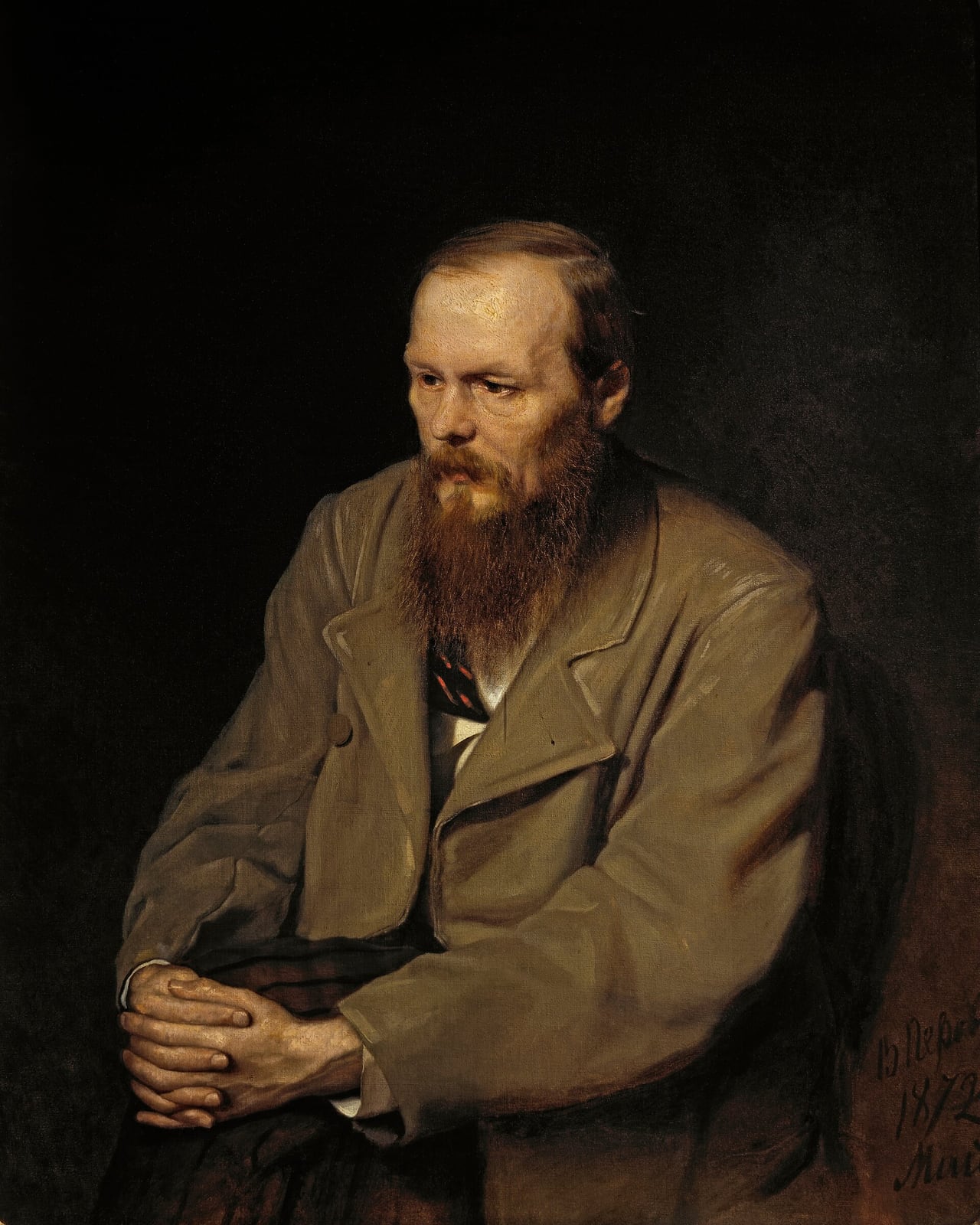
Fyodor Dostoevsky
इन पर टकराव: परम सत्य क्या है? क्या ईश्वर है? · मृत्यु के बाद क्या होता है?
प्रसंग और वृत्तांत
प्रसंग और वृत्तांत
संत-चरित वृत्तांतtiempo mítico
The sixty thousand sons of Sagara
वृत्तांत का स्रोत: An epic narrative of the Rāmāyaṇa (Bālakāṇḍa) and the Mahābhārata (Āraṇyakaparvan), taken up by the Bhāgavata Purāṇa (IX.8). Wilson (1837) already noted that the Rāmāyaṇa identifies this Kapila with Vāsudeva; Śaṅkara (8th c.) distinguished him from the founder of Sāṃkhya. The link with Gaṅgāsāgar is a pilgrimage tradition studied by Jacobsen (2013).
संत-चरित वृत्तांतtiempo mítico
The mother who asked to be set free
वृत्तांत का स्रोत: Bhāgavata Purāṇa III.21–33, a devotional text of debated date (c. 9th–10th centuries). Burnouf (1840) already noted that this story is not found elsewhere and turns Kapila into a form of Bhagavat. The identification with Siddhpur is a pilgrimage tradition studied by Jacobsen (2013).
मौखिक परंपराtiempo épico
The sage and the sacrificial cow
वृत्तांत का स्रोत: Mahābhārata, Śāntiparvan (Mokṣadharma), the episode called Gokapilīya in the Poona critical edition. It is a didactic epic narrative, not a historical testimony. Kapila’s exact exclamation varies among translations; the content is summarised here without quoting it.
स्रोत: The Mahābhārata. Edición crítica, vols. 13–16: Śāntiparvan, ed. S. K. Belvalkar. Poona: Bhandarkar Oriental Research Institute, 1949–1966 (Mokṣadharma; diálogos de Kapila con Syūmaraśmi y con Āsuri; XII.337.60 sobre Kapila como proclamador del Sāṃkhya).
मौखिक परंपराs. XIV–XVI (texto y comentario)
The prince raised by a forester
वृत्तांत का स्रोत: Sāṃkhya Sūtra IV.1 (a text ascribed to Kapila, 14th–15th c.) and Vijñānabhikṣu’s commentary (16th c.), in Ballantyne’s translation (1885), pp. 284–285. It is a didactic parable, not an episode in Kapila’s life.
प्रमाणितs. VIII
Śaṅkara and “the other Kapila”
वृत्तांत का स्रोत: Brahmasūtra-bhāṣya II.1.1, in Thibaut’s translation (SBE 34, 1890), checked against the OCR of the volume. Śaṅkara’s date (c. 8th century) is the usual scholarly one.
संत-चरित वृत्तांतtiempo legendario (texto del s. I–II)
Kapilavastu, the city beside the hermitage
वृत्तांत का स्रोत: Aśvaghoṣa, Saundarananda, canto I (1st–2nd c. CE), ed. and trans. E. H. Johnston. An aetiological story; the Pali tradition preserves other versions of the origin of the Śākyas.
स्रोत: Johnston, E. H. (ed. y trad.). The Saundarananda of Aśvaghoṣa. Oxford University Press / Panjab University, 1928 (texto) y 1932 (traducción). Canto I, sobre la fundación de Kapilavastu junto a la ermita del sabio Kapila Gautama.
संत-चरित वृत्तांतépoca de Prasenajit (s. VI–V a. C., según el relato)
The other Kapila: two gold coins
वृत्तांत का स्रोत: Jain commentary on Uttarādhyayana VIII, summarised by Hermann Jacobi in his translation (SBE 45, 1895, p. 31, note 1); verse 17 is the one the story places in Kapila’s mouth before the king. It is included to dispel the homonymy: this is another Kapila.
शिक्षाएँ
शिक्षाएँ
वे अवधारणाएँ जो उनके चिंतन को रूप देती हैं, उनके संदर्भ में समझाई गई।
Puruṣa (witnessing consciousness)purusha
It is one of the two irreducible principles of Sāṃkhya and the point at which it diverges most from Vedānta, which affirms a single consciousness. Patañjali’s Yoga inherits the notion (as draṣṭṛ, “the seer”).
स्रोत: Larson, Gerald James. Classical Sāṃkhya: An Interpretation of its History and Meaning. Delhi: Motilal Banarsidass, 1969; 2.ª ed. revisada, 1979 (ISBN 9788120805033).
Prakṛti (primordial nature)prakriti
The theory of prakṛti was adopted by Yoga, by much of Purāṇic cosmology and by Āyurvedic medicine, although Vedānta reinterpreted it as the power (māyā) of a single Brahman.
स्रोत: Larson, Gerald James. Classical Sāṃkhya: An Interpretation of its History and Meaning. Delhi: Motilal Banarsidass, 1969; 2.ª ed. revisada, 1979 (ISBN 9788120805033).
The three qualities (guṇa)gunas
The guṇas already appear in the epic and are systematised in the Kārikā (stanzas 12–13). They are one of the notions most widely shared among Indian schools.
The twenty-five principles (tattva)tattvas
The list of twenty-five principles is the classical form fixed in the Kārikā; in the epic there are different counts (twenty-six or seventeen), a sign of a doctrine still in formation. The Tattva Samāsa is essentially an index of these categories.
स्रोत: Larson, Gerald James y Ram Shankar Bhattacharya (eds.). Sāṃkhya: A Dualist Tradition in Indian Philosophy. Encyclopedia of Indian Philosophies, vol. IV. Princeton: Princeton University Press / Delhi: Motilal Banarsidass, 1987.
Satkāryavāda (the effect pre-exists in the cause)satkaryavada
It is one of the logical pillars of the system and the reason why Sāṃkhya can dispense with a creator god. The Sāṃkhya Sūtra defend it in book I.
Viveka and kaivalya (discrimination and isolation)kaivalya
The term kaivalya passed into Patañjali’s Yoga, which names its fourth chapter after it (Kaivalya-pāda). The devotional version of the Bhāgavata replaces isolation with loving union with God.
वीडियो
वीडियो
रिकॉर्डिंग, साक्षात्कार और वृत्तचित्र। वीडियो YouTube से चलते हैं; वे यहाँ संग्रहीत नहीं हैं।
Kapila of Sāṃkhya: Manifestations and interpretations by Prof. Knut Axel Jacobsen
व्याख्यान· EN· 93 min
Bhaktivedanta Research Center
Sāṃkhya philosophy and Yoga practice: how are they related? - Dr Mikel Burley
व्याख्यान· EN· 76 min
SOAS Centre Of Yoga Studiesआधिकारिक चैनल
Samkhya Karikas (Part 1) - Edwin Bryant
व्याख्यान· EN· 139 min
Edwin Bryant Officialआधिकारिक चैनल
Hindu Philosophy Introduction 7: Yoga and Sāṃkhya - Edwin Bryant
व्याख्यान· EN· 60 min
Edwin Bryant Officialआधिकारिक चैनल
“Concept of Mind in Yoga and Sankhya Philosophy" Lecture with Dr. N. Ganesh Rao
व्याख्यान· EN· 75 min
Loyola Marymount University, BCLA Yoga Studiesआधिकारिक चैनल
Revisiting Sāṃkhya Kārikās 25-31: The Determinative Nature of the Guṇas
व्याख्यान· EN· 49 min
Loyola Marymount University, BCLA Yoga Studiesआधिकारिक चैनल
Saga of the Soul 065 - Samkhya Darshan (Kapila School Of Philosophy)
व्याख्यान· EN· 64 min
Chicago Vedantaआधिकारिक चैनल
Swami Purnananda explains the 24 elements of the Sankhya philosophy and verses from Katha Upanishad
व्याख्यान· EN· 60 min
Éire Vedanta Societyआधिकारिक चैनल
Know our Shastras: Essentials of Sankhya Philosophy
व्याख्यान· EN· 84 min
MIT IIKS
Samkhya-Sutra, El hilo de oro del Indo, por Ibn Asad y Fernando Sánchez Dragó (1ª Parte - Ponencia)
व्याख्यान· ES· 56 min
LaDanzaFinaldeKali
Introducción a la filosofía Samkhya. Yogacharya Emiliano Crivellari
व्याख्यान· ES· 37 min
Emiliano Crivellariआधिकारिक चैनल
कपिल अवतार और सांख्य शास्त्र के प्रवर्तक कपिल मुनि अलग थे
विश्लेषण· HI· 2 min
Govardhan Math, Puriआधिकारिक चैनल
सांख्य दर्शन SANKHYA DARSHAN की सरल और व्यावहारिक व्याख्या - DR HIMMAT SINGH SINHA
व्याख्यान· HI· 14 min
The Quest
সাগরের জল স্পর্শ করে, কপিল মুনির আশীর্বাদের আশা, এর পেছনে পৌরাণিক ঘটনা, শুনব| ABP Ananda
वृत्तचित्र· BN· 2 min
ABP ANANDAआधिकारिक चैनल
चित्रशाला
चित्रशाला
सत्यापित लाइसेंस वाले चित्र। प्रत्येक में उसके रचयिता और श्रेय का उल्लेख सुरक्षित है।
संबंध
संबंध
प्रभाव, शिष्यत्व और वैचारिक निकटता। प्रमाणित संबंध को विश्लेषण से पहचानी गई समानता से अलग दर्शाया गया है।
इनसे मतभेद
Śaṅkara refuted Sāṃkhya in his Brahmasūtra-bhāṣya (II.1.1 and II.2) and denied Vedic authority to “Kapila’s smṛti”, also distinguishing “another Kapila”, the one who burned the sons of Sagara.
प्रमाणित संबंध
इन्हें प्रभावित किया
Patañjali’s Yoga adopts the metaphysical framework of Sāṃkhya (puruṣa, prakṛti, guṇa, kaivalya), and its commentary (Yoga-bhāṣya I.25) quotes the Pañcaśikha fragment presenting Kapila as the “First Knower”.
प्रमाणित संबंध
इन्हें प्रभावित किया
The Yoga-bhāṣya, traditionally ascribed to Vyāsa, quotes Kapila’s teaching to Āsuri; the Bhagavad Gītā, in the Mahābhārata ascribed to Vyāsa, names Kapila among the perfected. A textual, not historical, relation.
प्रमाणित संबंध
इन्हें प्रभावित किया
A commentary on the Sāṃkhya Kārikā bears Gauḍapāda’s name and quotes a verse counting Kapila among the sons of Brahmā. Whether its author is the Gauḍapāda of the Māṇḍūkya-kārikā is doubtful.
प्रमाणित संबंध
इन्हें प्रभावित किया
In 1897 he called him “perhaps the greatest name in the history of India in psychological and philosophical lines” and devoted several lectures to Sāṃkhya.
प्रमाणित संबंध
इनसे मिलते-जुलते विचार
Siddhartha Gautama, the Buddha
Buddhist tradition associates Kapilavastu, the Buddha’s city, with the hermitage of a sage Kapila (a folk etymology). Since Max Müller the Sāṃkhya and Buddhist diagnoses of suffering have been compared, though their paths differ.
विश्लेषण से पहचानी गई समानता
इनसे मिलते-जुलते विचार
The Bhagavad Gītā (10.26) has Kṛṣṇa say in the same verse that among divine sages he is Nārada and among the perfected, Kapila; the Mahābhārata presents Nārada as versed in Sāṃkhya.
विश्लेषण से पहचानी गई समानता
इनसे मिलते-जुलते विचार
Uddālaka’s teaching in the Chāndogya Upaniṣad (VI), with its analysis of effects as modifications of one substance (clay and its pots), anticipates themes of Sāṃkhya’s satkāryavāda.
विश्लेषण से पहचानी गई समानता
इनसे मिलते-जुलते विचार
The figure of the witness that cannot be seen, in Yājñavalkya’s teachings in the Bṛhadāraṇyaka Upaniṣad, is one of the Upaniṣadic antecedents of the notion of puruṣa.
विश्लेषण से पहचानी गई समानता
इनसे मिलते-जुलते विचार
The Gauḍīya tradition founded by Caitanya reads Kapila’s teaching to Devahūti as a devotional Sāṃkhya; Bhaktivedanta Swami’s commentary (Teachings of Lord Kapila) comes from it.
विश्लेषण से पहचानी गई समानता
स्रोत
स्रोत
इस प्रविष्टि के लिए देखे गए ग्रंथ-सूची और सूचीपत्र।
- Wikidata, «Kapila» (sabio védico de la tradición hindú), QID Q574355; LCCN n50059441; GND 119244233; BnF 11909405v; VIAF 9848428.
- Larson, Gerald James y Ram Shankar Bhattacharya (eds.). Sāṃkhya: A Dualist Tradition in Indian Philosophy. Encyclopedia of Indian Philosophies, vol. IV. Princeton: Princeton University Press / Delhi: Motilal Banarsidass, 1987.
- Larson, Gerald James. Classical Sāṃkhya: An Interpretation of its History and Meaning. Delhi: Motilal Banarsidass, 1969; 2.ª ed. revisada, 1979 (ISBN 9788120805033).
- Jacobsen, Knut A. Kapila, Founder of Sāṃkhya and Avatāra of Viṣṇu: With a Translation of Kapilāsurisaṃvāda. Nueva Delhi: Munshiram Manoharlal, 2008 (ISBN 9788121511940).
- Ballantyne, James Robert (trad.). The Sánkhya Aphorisms of Kapila, with Illustrative Extracts from the Commentaries. 3.ª ed., ed. Fitzedward Hall. Londres: Trübner & Co., 1885 (Trübner's Oriental Series). Texto consultado en el OCR de Internet Archive.
- Colebrooke, Henry Thomas (trad.) y Horace Hayman Wilson (trad. y coment.). The Sánkhya Káriká, or Memorial Verses on the Sánkhya Philosophy, by Íswara Krishna; also the Bháshya or Commentary of Gaurapáda. Oxford: Oriental Translation Fund, 1837. Estrofas LXIX–LXXI y comentario de Wilson, pp. 188–191.
- Woods, James Haughton (trad.). The Yoga-System of Patañjali. Cambridge (Mass.): Harvard University Press, 1914 (Harvard Oriental Series 17). Yoga-bhāṣya I.25, con la cita de Pañcaśikha sobre el «Primer Conocedor».
- Thibaut, George (trad.). The Vedânta-Sûtras with the Commentary by Sankarâkârya, parte I. Oxford: Clarendon Press, 1890 (Sacred Books of the East 34). Brahmasūtra-bhāṣya II.1.1, sobre la «smṛti de Kapila».
- Jacobi, Hermann (trad.). Gaina Sûtras, parte II: The Uttarâdhyayana Sûtra, The Sûtrakritâṅga Sûtra. Oxford: Clarendon Press, 1895 (Sacred Books of the East 45). Lección VIII, «Kapila's Verses», con la nota sobre el relato del comentario.
- Burnouf, Eugène (trad.). Le Bhâgavata Purâna, ou Histoire poétique de Krĭchṇa, tome premier. París: Imprimerie royale, 1840. Libros I–III; prefacio sobre el relato de Kapila y Devahūti; I.3.10 (Kapila, quinta encarnación).
- Wikisource en sánscrito: «साङ्ख्यसूत्राणि» (Sāṃkhya Sūtra, 527 aforismos numerados) y «श्रीमद्भागवतपुराणम्/स्कन्धः ३/अध्यायः २५» (Bhāgavata Purāṇa III.25).
- Arnold, Edwin (trad.). The Song Celestial, or Bhagavad-Gîtâ. Londres: Trübner, 1885. Capítulo X (verso 26: «Kapila of Munis»). Project Gutenberg n.º 2388.
- Vivekananda, Swami. «The Vedanta in all its phases» (Calcuta, 1897), en Lectures from Colombo to Almora; The Complete Works of Swami Vivekananda, vol. 3. Texto en Wikisource.
- Ballantyne, James Robert. A Lecture on the Sánkhya Philosophy, embracing the Text of the Tattwa Samása. Mirzapur: Orphan School Press, 1850.
- Sinha, Nandalal (trad.). The Sāmkhya Philosophy: containing Sāmkhya-pravachana Sūtram, with the Vritti of Aniruddha and the Bhāsya of Vijñāna Bhiksu…; Tattva Samāsa; Sāmkhya Kārikā; Panchaśikha Sūtram. Allahabad: Pāṇini Office, 1915 (Sacred Books of the Hindus 11).
- Johnston, E. H. (ed. y trad.). The Saundarananda of Aśvaghoṣa. Oxford University Press / Panjab University, 1928 (texto) y 1932 (traducción). Canto I, sobre la fundación de Kapilavastu junto a la ermita del sabio Kapila Gautama.
- Garbe, Richard. Die Sâṃkhya-Philosophie: eine Darstellung des indischen Rationalismus. Leipzig: H. Haessel, 1894 (2.ª ed. 1917).
- The Mahābhārata. Edición crítica, vols. 13–16: Śāntiparvan, ed. S. K. Belvalkar. Poona: Bhandarkar Oriental Research Institute, 1949–1966 (Mokṣadharma; diálogos de Kapila con Syūmaraśmi y con Āsuri; XII.337.60 sobre Kapila como proclamador del Sāṃkhya).
- Müller, F. Max. The Six Systems of Indian Philosophy. Londres: Longmans, Green & Co., 1899. Capítulo sobre el Sāṃkhya y el Tattva-samāsa.
- Jacobsen, Knut A. Pilgrimage in the Hindu Tradition: Salvific Space. Londres y Nueva York: Routledge, 2013 (lugares de Kapila, entre ellos Gaṅgāsāgar).
- Wikipedia en inglés, «Kapila» (consultada para la lista de obras menores atribuidas y las genealogías purāṇicas; contrastada con Larson y Bhattacharya, 1987).
- अधिकार-धारक
- Textos sánscritos en dominio público. Las traducciones de Ballantyne (1852, 1885), Colebrooke y Wilson (1837), Burnouf (1840) y Woods (1914) son de dominio público; las ediciones modernas (Routledge, Munshiram Manoharlal, Motilal Banarsidass, Bhaktivedanta Book Trust, Agamat) tienen derechos propios.
पुष्टि की प्रतीक्षा में
जो यह प्रविष्टि अभी तक निश्चित नहीं कर सकी है। हम उसे भर देने के बजाय कह देना बेहतर समझते हैं।
- Ediciones en español con ISBN de los Sāṃkhya Sūtra, de la Sāṃkhya Kārikā y del canto III del Bhāgavata (Bhaktivedanta Book Trust): no localizadas en Open Library; Google Books devolvió error 429 durante la investigación.
- Verificar la numeración exacta (edición crítica de Poona) del Gokapilīya y del Kapilāsurisaṃvāda en el Śāntiparvan, y la cita del Mokṣadharma (XII.337.60) sobre Kapila como proclamador del Sāṃkhya.
- Comprobar la fecha de muerte de Nandalal Sinha para decidir el dominio público de su traducción de 1915 en la UE y España.
- Confirmar en Jacobsen (2008, 2013) los datos sobre Siddhpur (Bindu Sarovar) y Gaṅgāsāgar.
- Localizar manuscritos digitalizados de los Sāṃkhya Sūtra con signatura (campo manuscripts vacío).
- Los vídeos no traen año de publicación en oEmbed; se dejó year en null.
2026-10-26 को शोधित