हिन्दू धर्म · योग · अद्वैत वेदान्त · वैदिक परंपरा
Yajnavalkya
याज्ञवल्क्य
ऐतिहासिकता विवादित
वैदिक ऋषि, बृहदारण्यक उपनिषद् के नायक और शतपथ ब्राह्मण में यज्ञ-विधि के प्रमाण-पुरुष; ये दोनों ग्रंथ शुक्ल यजुर्वेद की उस शाखा के हैं जिसका प्रवर्तन उन्हीं से जोड़ा जाता है। विदेह के राजा जनक की सभा में वे ब्राह्मणों को परास्त करते हैं, गार्गी को अक्षर का उपदेश देते हैं और राजा को बताते हैं कि आत्मा स्वयंज्योति है, जिसका निर्देश केवल "नेति नेति" से हो सकता है। संन्यासी बनकर जाने से पहले वे अपनी पत्नी मैत्रेयी को उपदेश देते हैं। उनकी ऐतिहासिकता विवादित है; उनके नाम वाली याज्ञवल्क्य स्मृति और योग याज्ञवल्क्य कहीं बाद की रचनाएँ हैं।
- कृतियाँ
- 12कृतियाँ
- संस्करण
- 35संस्करण
- उद्धरण
- 11उद्धरण
- वीडियो
- 15वीडियो
- चित्र
- 7चित्र
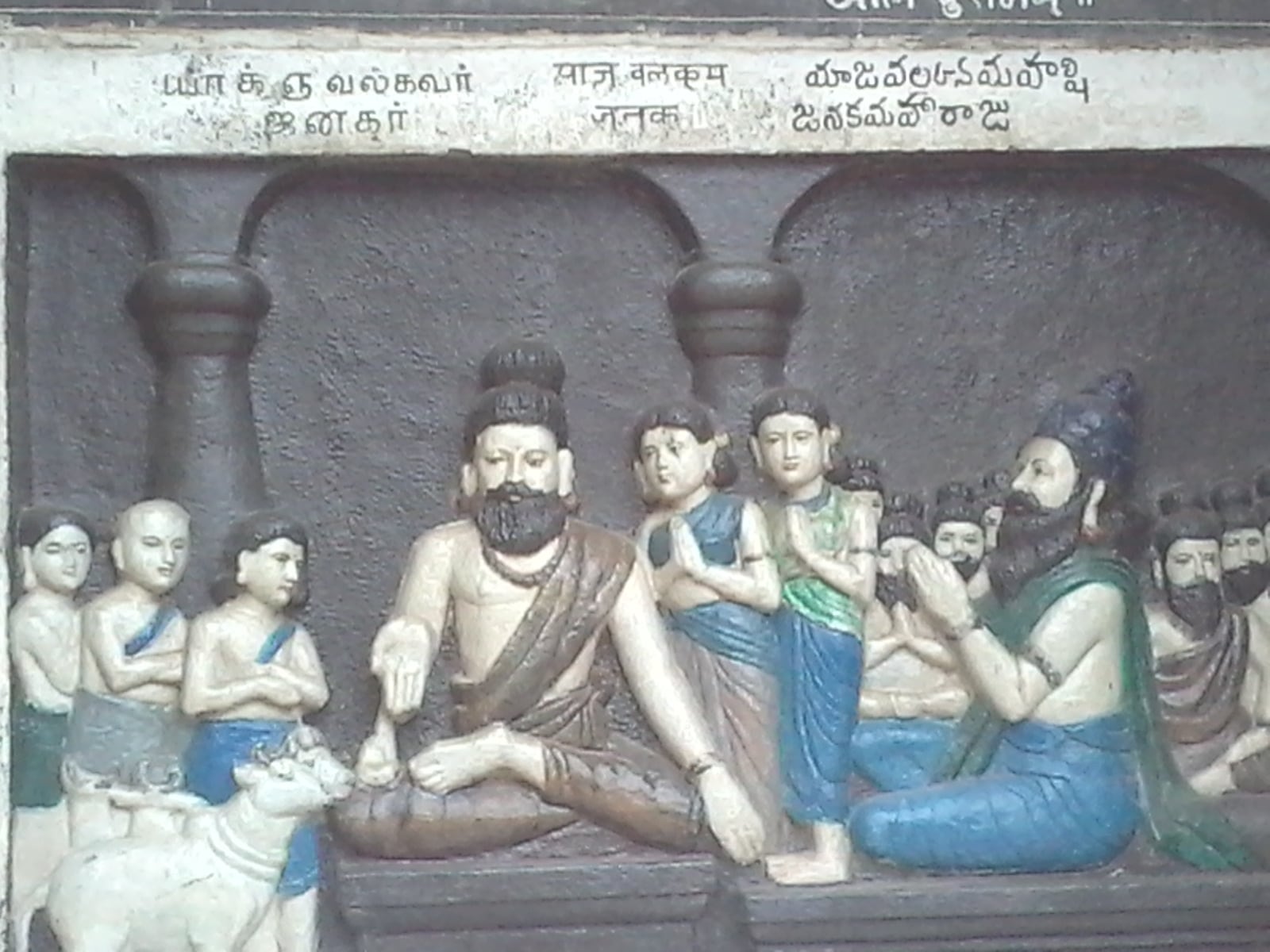
Yājñavalkya con el rey Janaka (relieve) · CC BY-SA 3.0
उनके अपने शब्दों में
«It is not for the love of the husband, my dear, that a husband is loved, but for the love of the ātman. […] It is the ātman, my dear, that must be seen, heard, reflected on and meditated upon, Maitreyī.»Bṛhadāraṇyaka Upaniṣad 2.4.5 (traducción propia del sánscrito)

मूल विचार
Neti neti ("not this, not this"): The formula with which the Bṛhadāraṇyaka designates the ātman or brahman: it cannot be described by any attribute, because anything said of it would turn it into one object among others.
संदर्भ में देखें
जीवनी
6 मिनट का पाठ
स्पैनिश मूल से सहायता-प्राप्त अनुवाद, मातृभाषी अनुवादक द्वारा समीक्षा लंबित।
एक नाम, जो केवल दो ग्रंथों में मिलता है
याज्ञवल्क्य के बारे में जो कुछ कहा जा सकता है, वह लगभग सब शुक्ल यजुर्वेद की शाखा के दो ग्रंथों से आता है: शतपथ ब्राह्मण, जो यज्ञ का महान शास्त्र है, और बृहदारण्यक उपनिषद्, जो उसका अंतिम खंड है। दोनों ग्रंथ दो पाठ-परंपराओं में सुरक्षित रहे हैं, काण्व और माध्यंदिन, और माइकल विट्ज़ेल के अनुसार यही दोहरी परंपरा इस बात की पुष्टि करने देती है कि यह चित्र किसी एक शाखा की कल्पना नहीं है। न कोई शिलालेख है, न कोई इतिवृत्त, न कोई बाहरी साक्ष्य: याज्ञवल्क्य ग्रंथों का एक पात्र है, और उनकी ऐतिहासिकता विवादित है। इतना अवश्य कहा जा सकता है कि परंपरा उन्हें "शुक्ल" यजुस् के मंत्रों के प्रकटकर्ता मानती है, और स्वयं शतपथ अपनी गुरु-परंपरा को इन शब्दों के साथ समाप्त करता है कि सूर्य से प्राप्त ये मंत्र याज्ञवल्क्य वाजसनेय द्वारा कहे गए — "आदित्यानीमानि शुक्लानि यजूंषि वाजसनेयेन याज्ञवल्क्येनाख्यायन्ते"।
कर्मकांडी, जो नियमों पर हँसता था
सबसे प्राचीन याज्ञवल्क्य एक पुरोहित हैं। शतपथ के पहले से पाँचवें कांड तक, और फिर ग्यारहवें से तेरहवें कांड तक, वे यज्ञ की तकनीकी बारीकियों पर ऐसी तीक्ष्णता से विचार करते हैं जो कभी-कभी धृष्टता की सीमा छू लेती है। जहाँ ग्रंथ गाय और बैल का मांस खाने का निषेध करता है, क्योंकि ये पशु "पृथ्वी पर जो कुछ है, उस सबको धारण करते हैं", वहीं वह बिना किसी संक्रमण के जोड़ देता है: "फिर भी याज्ञवल्क्य ने कहा: मैं तो खाता हूँ, यदि वह कोमल हो" — "तदु होवाच याज्ञवल्क्योऽश्नाम्येवाहमंसलं चेद्भवतीति" (शतपथ 3.1.2.21)। एक अन्य प्रसंग में वे वृद्ध दिखाई देते हैं, अपनी सफ़ेद रोओं वाली भुजाएँ दिखाते हुए। विट्ज़ेल का कहना है कि वे छठे से दसवें कांड तक, जो अधिक पश्चिमी परंपरा के हैं, कहीं नहीं आते, और वे उन्हें पूर्व की, विदेह राज्य के, एक व्यक्तित्व के रूप में देखते हैं, यद्यपि ग्रंथ उन्हें कुरु-पांचाल के ब्राह्मणों में गिनता है: अर्थात् एक प्रवासी, उस पूर्व में जो बुद्ध से पहले की शताब्दियों में वैदिक संस्कृति में समाहित हो रहा था।
जनक की सभा में सहस्र गायें
जिस दृश्य ने उन्हें साहित्यिक अमरता दी, वह बृहदारण्यक के तीसरे अध्याय में है। विदेह के राजा जनक बहुदक्षिणा यज्ञ करते हैं और सबसे बड़े ब्रह्मवेत्ता ब्राह्मण के लिए एक हज़ार गायें अलग कर देते हैं, जिनके सींगों पर सोने के सिक्के बँधे हैं। कोई उन पर दावा करने का साहस नहीं करता, सिवाय याज्ञवल्क्य के, जो अपने शिष्य सामश्रवा को उन्हें हाँक ले जाने का आदेश देते हैं; कोलाहल उठने पर वे उत्तर देते हैं कि वे सबसे बड़े ब्रह्मवेत्ता को नमस्कार करते हैं, पर उन्हें तो केवल गायें चाहिए — "नमो वयं ब्रह्मिष्ठाय कुर्मो गोकामा एव वयं स्मः"। फिर एक के बाद एक उनसे प्रश्न करते हैं अश्वल, आर्तभाग, भुज्यु, उषस्त, कहोल, गार्गी वाचक्नवी, उद्दालक आरुणि, फिर से गार्गी और अंत में विदग्ध शाकल्य। आर्तभाग के साथ वे एकांत में बात करने चले जाते हैं, और ग्रंथ कहता है कि उनकी चर्चा का विषय कर्म था: मनुष्य पुण्य कर्म से पुण्यवान होता है और पाप कर्म से पापी — "पुण्यो वै पुण्येन कर्मणा भवति पापः पापेन"। गार्गी, जो पूछती हैं कि ब्रह्मलोक किस पर टिके हैं, उन्हें वे चेताते हैं कि अधिक प्रश्न न करें, नहीं तो उनका सिर गिर पड़ेगा — "गार्गि मातिप्राक्षीर्मा ते मूर्धा व्यपप्तत्"; जब वे "बाणों जैसे" दो प्रश्न लेकर लौटती हैं, तो वे उनसे उस अक्षर की बात करते हैं जो देखता है पर देखा नहीं जाता — "अदृष्टं द्रष्टृ"। शाकल्य, जो हठ नहीं छोड़ते, फटे हुए सिर के साथ मर जाते हैं।
पुरुष की ज्योति और "नेति नेति"
चौथे अध्याय में याज्ञवल्क्य स्वयं जनक को उपदेश देते हैं। राजा पूछते हैं कि पुरुष की ज्योति क्या है — "किंज्योतिरयं पुरुषः": सूर्य, वे उत्तर देते हैं, और सूर्य अस्त हो जाए तो चंद्रमा; फिर अग्नि, फिर वाणी, और जब यह सब न रहे तो आत्मा, जो स्वयं अपनी ज्योति है — "आत्मैवास्य ज्योतिर्भवति"। इसके बाद चेतना की अवस्थाओं की खोज आती है — जाग्रत, स्वप्न और सुषुप्ति, जिसमें द्रष्टा "एक ही समुद्र, अद्वितीय" बन जाता है ("सलिल एको द्रष्टाद्वैतो भवति") — और कामना तथा कर्म के अनुसार मृत्यु और पुनर्जन्म की व्याख्या: "यथाकारी यथाचारी तथा भवति", जैसा कोई करता है, वैसा ही बनता है। आत्मा की ओर केवल निषेध से संकेत किया जा सकता है: नेति नेति, "यह नहीं, यह नहीं"; वह अगृह्य है, अविनाशी है, असंग है — "स एष नेति नेत्यात्मागृह्यो न हि गृह्यते"। अंत में जनक स्वयं को और अपनी प्रजा को गुरु के दास के रूप में अर्पित कर देते हैं — "सोऽहं भगवते विदेहान्ददामि मां चापि सह दास्याय"।
मैत्रेयी और प्रस्थान
उपनिषद् दो बार बताता है कि गृहस्थ जीवन छोड़ने को उद्यत याज्ञवल्क्य अपनी संपत्ति अपनी दो पत्नियों, मैत्रेयी और कात्यायनी, के बीच बाँटना चाहते थे। मैत्रेयी, जिन्हें ग्रंथ "ब्रह्मवादिनी" कहता है, पूछती हैं कि क्या धन से भरी पूरी पृथ्वी उन्हें अमर बना देगी; नकारात्मक उत्तर पाकर वे कहती हैं: "जिससे मैं अमर न होऊँ, उसे लेकर मैं क्या करूँगी?" — "येनाहं नामृता स्यां किमहं तेन कुर्याम्"। तब वे उन्हें सिखाते हैं कि पति, पत्नी, पुत्र या धन उनके अपने लिए प्रिय नहीं होते, बल्कि आत्मा के लिए — "आत्मनस्तु कामाय सर्वं प्रियं भवति" — और जहाँ सब कुछ आत्मा ही हो गया हो, वहाँ कोई नहीं बचता जो किसी दूसरे को देखे: "यत्र त्वस्य सर्वमात्मैवाभूत्तत्केन कं पश्येत्"। विट्ज़ेल रेखांकित करते हैं कि वे पहले व्यक्ति हैं जिनके बारे में कोई भारतीय ग्रंथ कहता है कि उन्होंने गृहहीन जीवन बिताने के लिए घर छोड़ा; जोएल ब्रेरेटन ने दिखाया है कि संवाद के दोनों रूप एक सुविचारित योजना के अनुसार रचे और जोड़े गए।
ग्रंथ क्या कहते हैं और आलोचना क्या कहती है
पैट्रिक ओलिवेल बृहदारण्यक और छान्दोग्य, इन दो सबसे प्राचीन उपनिषदों, को लगभग सातवीं और छठी शताब्दी ई.पू. में, बुद्ध से पहले, रखते हैं, और सावधान करते हैं कि पहला ग्रंथ परतों में रची गई कृति है। विट्ज़ेल, त्सुजी का अनुसरण करते हुए, मानते हैं कि शतपथ का कर्मकांडी और उपनिषद् का चिंतक एक ही व्यक्ति हैं और उनके समकालीन — उद्दालक आरुणि, विदेह के जनक, काशी के अजातशत्रु — बुद्ध से पहले के युग की ओर संकेत करते हैं; होर्श या रूबेन जैसे अन्य विद्वानों ने इस एकता पर संदेह किया। ब्रायन ब्लैक और स्टीवन लिंडक्विस्ट इस पात्र को एक साहित्यिक रचना के रूप में पढ़ते हैं: शास्त्रार्थ जीतने वाले ब्राह्मण का आदर्श, जिसकी जीवनी उन्हीं शास्त्रार्थों के माध्यम से लिखी जाती है। इनमें से कोई भी पाठ जन्म या मृत्यु की तिथियाँ निश्चित करने की अनुमति नहीं देता।
वह नाम, जो बढ़ता ही गया
उपनिषदों के बाद याज्ञवल्क्य का नाम एक चुंबक बन गया। विष्णु पुराण बताता है कि उनके गुरु वैशम्पायन ने अप्रसन्न होकर उनसे सीखी हुई विद्या लौटाने को कहा; उन्होंने यजुस् के मंत्र उगल दिए, जिन्हें अन्य शिष्यों ने तीतर (तित्तिर) बनकर चुग लिया — कहते हैं, इसी से तैत्तिरीय शाखा का नाम पड़ा — और फिर अश्व-रूप में प्रकट हुए सूर्य से वाजसनेयियों का शुक्ल यजुस् प्राप्त किया। महाभारत उनसे राजा जनक के सामने सांख्य दर्शन का निरूपण करवाता है, और जैन आगम उन्हें जण्णवक्क नाम से अपने ऋषियों में गिनते हैं। उनके नाम से कहीं बाद की रचनाएँ प्रचलित हैं: याज्ञवल्क्य स्मृति, धर्म और व्यवहार का एक शास्त्र, जिसे ओलिवेल चौथी या पाँचवीं शताब्दी ईसवी का मानते हैं और जिसने मिताक्षरा टीका के साथ हिंदू विधि के बड़े भाग का नियमन किया; और योग याज्ञवल्क्य, योग की एक पुस्तिका, जिसकी तिथि ईसवी सन् के आरंभ से बारहवीं शताब्दी के बीच विवादित है।
वेदान्त की जड़ में एक विरासत
शंकराचार्य ने बृहदारण्यक पर भाष्य लिखा, और याज्ञवल्क्य के संवादों में मिलने वाली निषेध की पद्धति, स्वयंज्योति आत्मा और आत्मा तथा ब्रह्म की एकता अद्वैत वेदान्त के केंद्रीय तत्त्व बन गए। संन्यास की परंपराओं ने उनके प्रस्थान में संन्यास का आदर्श देखा, और दो परवर्ती उपनिषद्, जाबाल और उनके नाम वाला याज्ञवल्क्य उपनिषद्, उन्हें संन्यास की दीक्षा का उपदेश देते हुए प्रस्तुत करते हैं। तुलनात्मक दर्शन के लिए याज्ञवल्क्य उन पहले चिंतकों में हैं जिनकी कुछ-कुछ अपनी आवाज़ जैसी कोई चीज़ बची रह गई है: व्यंग्यप्रिय, गायों के लोभी, शास्त्रार्थ में निर्मम, और साथ ही वह पहले व्यक्ति जिन्होंने कहा कि परम तत्त्व का नाम नहीं लिया जा सकता।
स्रोत: Olivelle, Patrick (ed. y trad.). The Early Upaniṣads: Annotated Text and Translation. Nueva York: Oxford University Press, 1998 (South Asia Research). Introducción (datación, pp. 12–13) y Bṛhadāraṇyaka 2.4, 3.1–3.9, 4.1–4.5, 6.5. · Olivelle, Patrick (trad.). Upaniṣads. Oxford World's Classics. Oxford: Oxford University Press, 1996. · Müller, F. Max (trad.). The Upanishads, Part II (Sacred Books of the East, vol. 15). Oxford: Clarendon Press, 1884. Incluye la Bṛhadāraṇyaka Upaniṣad. · Eggeling, Julius (trad.). The Śatapatha-Brāhmaṇa according to the Text of the Mādhyandina School, 5 vols. (Sacred Books of the East, vols. 12, 26, 41, 43, 44). Oxford: Clarendon Press, 1882–1900. · Black, Brian. The Character of the Self in Ancient India: Priests, Kings, and Women in the Early Upaniṣads. Albany: State University of New York Press, 2007.
कालक्रम
जीवन, वर्ष-दर-वर्ष
प्रत्येक बिंदु एक प्रमाणित घटना है। उसे स्रोत और निश्चितता के स्तर सहित पढ़ने के लिए क्लिक करें।
VIIIवीं सदी ई.पू. – 600 ई.पू.Videha y Kuru-Pañcāla (llanura del Ganges)
The ritualist of the Śatapatha Brāhmaṇa
The ritual opinions attributed to Yājñavalkya in books 1–5 and 11–13 of the Śatapatha Brāhmaṇa reflect, according to Witzel, the late Vedic period before the Buddha. The range is an estimate, not a date.
संभावितWitzel, Michael. «Yājñavalkya as Ritualist and Philosopher, and His Personal Language». En Siamak Adhami (ed.), Paitimāna: Essays in Iranian, Indo-European, and Indian Studies in Honor of Hanns-Peter Schmidt. Costa Mesa: Mazda Publishers, 2003, pp. 103–143.
VIIIवीं सदी ई.पू. – 600 ई.पू.
The ritualist of the Śatapatha Brāhmaṇa
The ritual opinions attributed to Yājñavalkya in books 1–5 and 11–13 of the Śatapatha Brāhmaṇa reflect, according to Witzel, the late Vedic period before the Buddha. The range is an estimate, not a date.
संभावित
VIIवीं सदी ई.पू.
Revelation of the White Yajus (according to tradition)
The Bṛhadāraṇyaka (6.5.3) credits Yājñavalkya Vājasaneya with proclaiming the "white" Yajus formulas received from the Sun; the Purāṇas add the story of Vaiśaṃpāyana and the partridges.
परंपरा
VIIवीं सदी ई.पू.
The debate of the thousand cows
At Janaka's sacrifice Yājñavalkya answers nine interlocutors, including Gārgī Vācaknavī and Uddālaka Āruṇi (Bṛhadāraṇyaka 3.1–3.9). It is a literary account of uncertain date.
परंपरा
VIIवीं सदी ई.पू.
The teachings to Janaka
The light of man, the states of waking, dreaming and deep sleep, death and rebirth, and "neti neti" (Bṛhadāraṇyaka 4.1–4.4).
परंपरा
VIIवीं सदी ई.पू.
Dialogue with Maitreyī and departure as an ascetic
Before leaving household life he teaches Maitreyī the doctrine of the ātman (Bṛhadāraṇyaka 2.4 and 4.5). Witzel regards it as the first textual case of a "proto-renouncer".
परंपरा
IIवीं सदी ई.पू. – 400
Yājñavalkya in the Mahābhārata
The Śāntiparvan (12.298 ff.) has him expound Sāṃkhya doctrine to Janaka. The epic took shape between the third century BCE and the fourth century CE.
संभावित
IVवीं सदी – 500
Composition of the Yājñavalkya Smṛti
Treatise on dharma in three books attributed to Yājñavalkya; Olivelle dates it to around the fourth or fifth century CE.
संभावित
XIवीं सदी
Vijñāneśvara's Mitākṣarā
Vijñāneśvara's commentary on the Yājñavalkya Smṛti (late eleventh or twelfth century) became the principal authority of Hindu law in much of India and, later, the basis of the "Hindu law" of British courts.
संभावित
1884
Max Müller's translation
Max Müller publishes the Bṛhadāraṇyaka in volume 15 of the Sacred Books of the East, which made Yājñavalkya's dialogues known in the West.
प्रमाणित
2019
Olivelle's edition of the Yājñavalkya Smṛti
Patrick Olivelle publishes the text and translation of the Smṛti in the Murty Classical Library of India.
प्रमाणित
कृतियाँ
आवश्यक कृतियाँ
वे कृतियाँ जिनके बिना उनकी विरासत को समझा नहीं जा सकता।
परवर्ती संकलन · VIIवीं सदी ई.पू.
Bṛhadāraṇyaka Upaniṣad (The Great Forest Upaniṣad)
बृहदारण्यकोपनिषद् (Bṛhadāraṇyaka Upaniṣad)
The longest and probably the oldest of the Upaniṣads. It is traditionally divided into three sections: the Madhu-kāṇḍa (chapters 1–2), with the first dialogue between Yājñavalkya and Maitreyī; the Muni- or Yājñavalkya-kāṇḍa (3–4), with the debate at Janaka's court and the teachings to the king on the light of the ātman, the states of consciousness, death and "neti neti"; and the Khila-kāṇḍa (5–6), a supplement of doctrines and rites ending with the lists of teachers. It is the main source for the early form of the doctrine of karma and rebirth, and one of the textual foundations of Vedānta.
13 संस्करण · amazon.es
पारंपरिक आरोपण · VIIवीं सदी ई.पू.
Yājñavalkya-kāṇḍa (Muni-kāṇḍa): the debate at Janaka's court and the teachings to the king
याज्ञवल्कीयकाण्ड / मुनिकाण्ड (Bṛhadāraṇyaka 3–4)
Chapter 3 narrates the contest at the sacrifice of Janaka of Videha: Yājñavalkya answers Aśvala, Ārtabhāga, Bhujyu, Uṣasta, Kahola, Gārgī Vācaknavī, Uddālaka Āruṇi and Vidagdha Śākalya on ritual, death, karma, the "inner controller" (antaryāmin) and the imperishable (akṣara). Chapter 4 records his conversations with Janaka: the light of man, the states of waking, dreaming and deep sleep, death and rebirth, desire and liberation, and the doctrine of the ātman as "not this, not this". It ends with the second version of the dialogue with Maitreyī.
3 संस्करण · amazon.es
Yajnavalkya
Śatapatha Brāhmaṇa (The Brāhmaṇa of a Hundred Paths)
पारंपरिक आरोपण · VIIIवीं सदी ई.पू.
Śatapatha Brāhmaṇa (The Brāhmaṇa of a Hundred Paths)
शतपथब्राह्मण (Śatapatha Brāhmaṇa)
The longest of the Vedic prose treatises on sacrifice. It explains, rite by rite, the meaning of the new- and full-moon offerings, the soma sacrifice, the great fire altar (agnicayana), royal consecration and the horse sacrifice, and includes famous narratives such as the flood and Manu, Purūravas and Urvaśī, and Videgha Māthava, which tells of the eastward spread of the sacrificial fire. Its later books contain the first speculative debates (brahmodya) involving Yājñavalkya, Uddālaka Āruṇi and Janaka.
4 संस्करण

पारंपरिक आरोपण · IVवीं सदी
Yājñavalkya Smṛti (Yājñavalkya's Treatise on Dharma)
याज्ञवल्क्यस्मृति (Yājñavalkya Smṛti)
About a thousand verses in three books: conduct (ācāra), legal procedure (vyavahāra) and expiation (prāyaścitta). More concise and systematic than the Laws of Manu, it gives priority to documentary evidence, describes the trial in four stages (plaint, answer, proof and verdict) and grants women broader inheritance rights. It also includes passages on medicine, embryology and yoga. With Vijñāneśvara's Mitākṣarā commentary (eleventh–twelfth century) it was the main authority of Hindu law across much of India and the basis of the "Hindu law" applied by British courts.
5 संस्करण
संपूर्ण कृतित्व (12)

The dialogue with Maitreyī
650
Yajnavalkya
Vājasaneyi Saṃhitā (White Yajurveda)
The Conscious LibraryVājasaneyi Saṃhitā (White Yajurveda)
800

Yoga Yājñavalkya
Yajnavalkya
Bṛhad Yogi Yājñavalkya Smṛti
The Conscious LibraryBṛhad Yogi Yājñavalkya Smṛti

Jābāla Upaniṣad and Yājñavalkya Upaniṣad (Upaniṣads of renunciation)
Yajnavalkya
The dialogue of Yājñavalkya and Janaka in the Mahābhārata
The Conscious LibraryThe dialogue of Yājñavalkya and Janaka in the Mahābhārata
100
Yajnavalkya
Vṛddha-Yājñavalkya and Bṛhad-Yājñavalkya (fragments)
The Conscious LibraryVṛddha-Yājñavalkya and Bṛhad-Yājñavalkya (fragments)
Yajnavalkya
Yājñavalkya Śikṣā (treatise on phonetics)
The Conscious LibraryYājñavalkya Śikṣā (treatise on phonetics)
वचन
किसी निश्चित कृति में स्थित वचन। प्रत्येक के साथ उसका स्रोत और विश्वसनीयता का स्तर है।
It is not for the love of the husband, my dear, that a husband is loved, but for the love of the ātman. […] It is the ātman, my dear, that must be seen, heard, reflected on and meditated upon, Maitreyī.न वा अरे पत्युः कामाय पतिः प्रियो भवत्यात्मनस्तु कामाय पतिः प्रियो भवति । … आत्मा वा अरे द्रष्टव्यः श्रोतव्यो मन्तव्यो निदिध्यासितव्यो मैत्रेयि ।
सत्यापितBṛhadāraṇyaka Upaniṣad 2.4.5 (traducción propia del sánscrito)
अंतिम शब्द
उनके अंतिम शब्दों का कोई सत्यापन-योग्य अभिलेख उपलब्ध नहीं है।
There is no record of his death or of his last words. The Bṛhadāraṇyaka closes his story with a departure, not a death: the last words the text gives him are those addressed to Maitreyī, "such, my dear, is immortality" (etāvad are khalv amṛtatvam), after which "Yājñavalkya went away" (4.5.15). They are not last words in a biographical sense. What the Purāṇas and the local traditions of Mithilā tell afterwards is late hagiography.
स्रोत: Olivelle, Patrick (ed. y trad.). The Early Upaniṣads: Annotated Text and Translation. Nueva York: Oxford University Press, 1998 (South Asia Research). Introducción (datación, pp. 12–13) y Bṛhadāraṇyaka 2.4, 3.1–3.9, 4.1–4.5, 6.5.
पूछें
उनकी कृतियाँ क्या उत्तर देती हैं
मानवता के बारह महान प्रश्न और उनके ग्रंथ उनका जो उत्तर देने देते हैं, संदर्भों सहित। हम कभी उनके मुख में अपने शब्द नहीं रखते।
परम सत्य क्या है? क्या ईश्वर है?
«Not this, not this»: the ultimate cannot be the object of any knowing
अनिर्वचनीयस्पष्ट रूप से कहा है
In the Bṛhadāraṇyaka Upaniṣad, Yājñavalkya designates the ātman, identical with brahman, by the formula «not this, not this» (neti neti): it is ungraspable because it cannot be grasped, indestructible because it is not destroyed. To Gārgī he describes the imperishable (akṣara) through a long series of negations —neither coarse nor fine, neither short nor long, with no inside or outside— and, at the same time, as that under whose command the sun and moon are held apart. The reason for so much negation is epistemological: the ultimate is the knower, and he asks Maitreyī by what the knower could be known. It is not nihilism; it is the impossibility of turning into an object what is the subject of all knowing.
इस प्रश्न की अन्य गुरुओं से तुलना करेंमैं कौन हूँ? क्या कोई सच्चा आत्म है?
The ātman sees without being seen: it is its own light and is brahman
आत्मन् ही ब्रह्म हैस्पष्ट रूप से कहा है
In the Bṛhadāraṇyaka, Yājñavalkya defines the ātman as the ultimate subject of experience: the one who sees without being seen, hears without being heard, thinks without being thought and knows without being known (3.7.23). When King Janaka asks him what the light of a person is once the sun and moon have set, the fire has gone out and the voice is silent, he answers that the ātman is then its own light (4.3.6). That ātman persists in waking, dream and deep sleep, where it becomes «one ocean, without a second» (4.3.32). And Yājñavalkya identifies it plainly with the principle of everything: «this ātman is brahman» (4.4.5). The true self is not the body or the mind, but what illumines them and cannot be known as an object.
इस प्रश्न की अन्य गुरुओं से तुलना करेंहम दुःख क्यों भोगते हैं?
Everything other than the ātman is afflicted
हम क्या हैं, इसका अज्ञानस्पष्ट रूप से कहा है
In the debate at Janaka's court, Yājñavalkya closes several of his answers with the same phrase: what is other than the ātman is afflicted (ārta). He says it to Uṣasta, to Kahola and to Uddālaka Āruṇi, after describing the ātman as the one who sees without being seen (3.4.2; 3.5.1; 3.7.23). Suffering is thus tied to living turned towards what is perceived as something else, instead of recognising oneself in the subject who perceives it. Before Janaka he adds the mechanism: a person is made of desire; as is his desire, so is his will, as his will, so his action, and as his action, so he becomes (4.4.5). Whoever knows the ātman, he tells Kahola, leaves behind hunger, thirst, sorrow, delusion, old age and death.
इस प्रश्न की अन्य गुरुओं से तुलना करेंमृत्यु के बाद क्या होता है?
As a caterpillar moves from blade to blade, the ātman passes to another body
कर्म के अनुसार पुनर्जन्मस्पष्ट रूप से कहा है
The Bṛhadāraṇyaka contains, in Yājñavalkya's mouth, one of the first formulations of transmigration according to one's deeds. What he discusses alone with Ārtabhāga, away from the debate, is action: one becomes good by good action and bad by bad (3.2.13). Before Janaka he describes death: the senses gather in the heart, and the ātman, with its knowledge, its deeds and its past experience, leaves the body like a caterpillar that reaches for another blade before letting go of the last, or like a goldsmith who gives gold a new and more beautiful form (4.4.3–4). As is his desire, so will be his action, and as his action, so he will become. But one who desires nothing, whose only desire is the ātman, does not transmigrate: being brahman, he goes to brahman (4.4.6).
इस प्रश्न की अन्य गुरुओं से तुलना करेंमुक्ति या उद्धार कैसे प्राप्त होता है?
Whoever knows the ātman and desires nothing more becomes brahman
प्रत्यक्ष ज्ञान सेस्पष्ट रूप से कहा है
For the Yājñavalkya of the Bṛhadāraṇyaka, liberation is knowledge. He tells Maitreyī that it is the ātman that must be seen, heard, reflected on and meditated upon, for by knowing it everything is known (2.4.5). He teaches Janaka that one who desires nothing, whose only desire is the ātman, does not transmigrate: being brahman, he goes to brahman (4.4.6). That knowledge goes together with renunciation: the brahmins who know the ātman, he says, give up the desire for sons, wealth and worlds, and live on alms (3.5.1). Ritual, Vedic study, generosity and austerity serve to make one wish to know it (4.4.22), but do not produce it. He himself, before departing as an ascetic, proposes to divide his goods between his two wives.
इस प्रश्न की अन्य गुरुओं से तुलना करेंक्या गुरु आवश्यक है?
Knowledge is won in debate and passes through a lineage of teachers
संघ और परंपराउनके सिद्धांत से निष्कर्षित
Yājñavalkya appears in the Bṛhadāraṇyaka within a network of teachers and disciples. He is presented as a pupil of Uddālaka Āruṇi (6.3.7) and in turn teaches King Janaka, his wife Maitreyī and those who question him at court. Knowledge is tested in public, in the theological debate (brahmodya) for Janaka's thousand cows, where Yājñavalkya answers eight opponents, and transmitted in private, as when he withdraws with Ārtabhāga to speak of action. The Upaniṣad closes its sections with lists of lineages (vaṃśa) that trace the teaching from teacher to teacher back to its source. The text contains no thesis on the need for a teacher: what it shows is that knowledge of the ātman lives in a community that debates, transmits and tests.
इस प्रश्न की अन्य गुरुओं से तुलना करेंक्या संसार वास्तविक है?
Where there is something like duality, one sees the other
एक सत्य पर आभासउनके सिद्धांत से निष्कर्षित
Yājñavalkya does not deny that the world exists: he explains to Gārgī that all that is above the sky, below the earth and between them is woven on space, and space on the imperishable (3.8). But he introduces a decisive distinction. He tells Maitreyī that where there is «something like duality» (dvaitam iva) one sees, hears and knows the other; when everything has become one's own ātman, with what and whom would one see? (2.4.14). Multiplicity belongs to ordinary experience; in the ultimate vision there is no second. Verses he quotes before Janaka add that there is no diversity here at all, and that whoever sees as if there were goes from death to death (4.4.19). The world is real as that in which the ātman is manifest, not as something separate from it.
इस प्रश्न की अन्य गुरुओं से तुलना करेंप्रेम क्या है?
The husband is not loved for the husband's sake, but for the ātman
विरह और मिलनस्पष्ट रूप से कहा है
Yājñavalkya's most famous passage on love is in his farewell dialogue with Maitreyī. Before leaving as an ascetic he offers to divide his goods; she asks whether wealth would make her immortal, and he answers with a teaching: it is not for love of the husband that the husband is dear, but for love of the ātman; and likewise the wife, the sons, wealth, the gods and all beings (2.4.5). All love has the ātman as its ultimate object, and that is why it is the ātman that must be seen, heard, reflected on and meditated upon. Love, then, is not rejected: one discovers what it was always seeking. Beneath every bond lies a longing for the one thing that is not lost, and wisdom consists in recognising it.
इस प्रश्न की अन्य गुरुओं से तुलना करेंक्या हम स्वतंत्र हैं, या सब कुछ पूर्वनिर्धारित है?
As is one's desire, so is one's will; as one's action, so one becomes
कर्म और चुनावस्पष्ट रूप से कहा है
The Bṛhadāraṇyaka ascribes to Yājñavalkya an early and precise formulation of the relation between action and destiny. Before Janaka he explains that a person is made of desire: as is his desire, so is his will; as his will, so his action; and according to the action he performs, so he becomes (4.4.5). As one acts and behaves, so one becomes: the one who does good becomes good; the one who does evil, evil. The past conditions, because at death the ātman departs accompanied by its deeds and experience; but the chain begins in desire, and that is why it can be broken. One who desires nothing, whose only desire is the ātman, leaves it. Responsibility thus rests on what each person desires and does.
इस प्रश्न की अन्य गुरुओं से तुलना करेंध्यान या प्रार्थना क्यों करें?
It is the ātman that must be seen, heard, reflected on and meditated upon
'मैं' के स्रोत पर लौटनास्पष्ट रूप से कहा है
The phrase Yājñavalkya addresses to Maitreyī —it is the ātman, my dear, that must be seen, heard, reflected on and meditated upon (2.4.5)— became the programme of Vedāntic practice: hearing the teaching (śravaṇa), reflecting on it (manana) and meditating on it until it becomes evident (nididhyāsana). What is meditated on is not an image or an external god, but the subject itself: the one who sees without being seen and knows without being known. His dialogues with Janaka traverse the states of waking, dream and deep sleep to show what remains in all three, and ask the knower to become calm, restrained, withdrawn, patient and collected, and to see the ātman in himself (4.4.23).
इस प्रश्न की अन्य गुरुओं से तुलना करेंक्या बुद्धि परम को जान सकती है?
By what could one know the knower?
परम मन से परे हैस्पष्ट रूप से कहा है
Yājñavalkya is a master of debate: at Janaka's court he answers eight opponents and wins the king's thousand cows. And yet what he defends with arguments is that the ultimate cannot be reached by them. To Uṣasta, who asks him to show the ātman as one points to a cow, he replies that one cannot see the seer of seeing or think the thinker of thought (3.4.2). He asks Maitreyī by what one could know the knower (2.4.14). To Gārgī, who insists on asking on what brahman is woven, he warns her not to ask too much, or her head will fall off (3.6.1). Reasoning can clear away errors and point towards the subject, but the subject never becomes an object of thought.
इस प्रश्न की अन्य गुरुओं से तुलना करेंसंसार से हटें या उसे बदलें?
Those who know the ātman leave sons, wealth and worlds, and beg
पाने के लिए हटनास्पष्ट रूप से कहा है
The Bṛhadāraṇyaka presents Yājñavalkya on the point of «going forth» from his home to lead a wandering life: before leaving he wishes to divide his goods between his two wives, and Maitreyī asks for his teaching instead (2.4.1; 4.5.2). In Janaka's debate he describes the knowers of the ātman as those who, giving up the desire for sons, wealth and worlds, live on alms (3.5.1). Knowledge of the ātman leads to detachment from everything else, and detachment is expressed in a way of life. Michael Witzel regards him as the first textual case of a «proto-renouncer», prior to the systematisation of the stages of life. The late Upaniṣads of renunciation made him the teacher par excellence of saṃnyāsa.
इस प्रश्न की अन्य गुरुओं से तुलना करें
निकटता और तनाव
निकटता और तनाव
उनके मतों के आधार पर प्रश्न-दर-प्रश्न आकलित। प्रत्येक सहमति या टकराव का कारण क्लिक करने पर।
इनसे मिलता-जुलता सोचते हैं
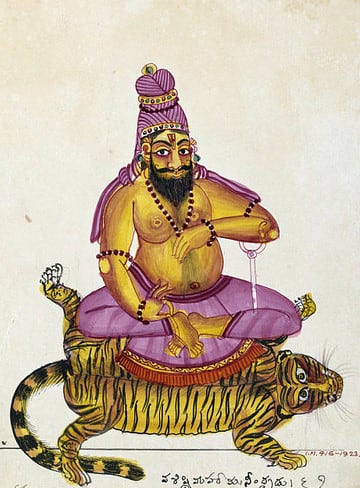
Vasishtha
इन पर सहमत: मैं कौन हूँ? क्या कोई सच्चा आत्म है? · हम दुःख क्यों भोगते हैं? · मुक्ति या उद्धार कैसे प्राप्त होता है?
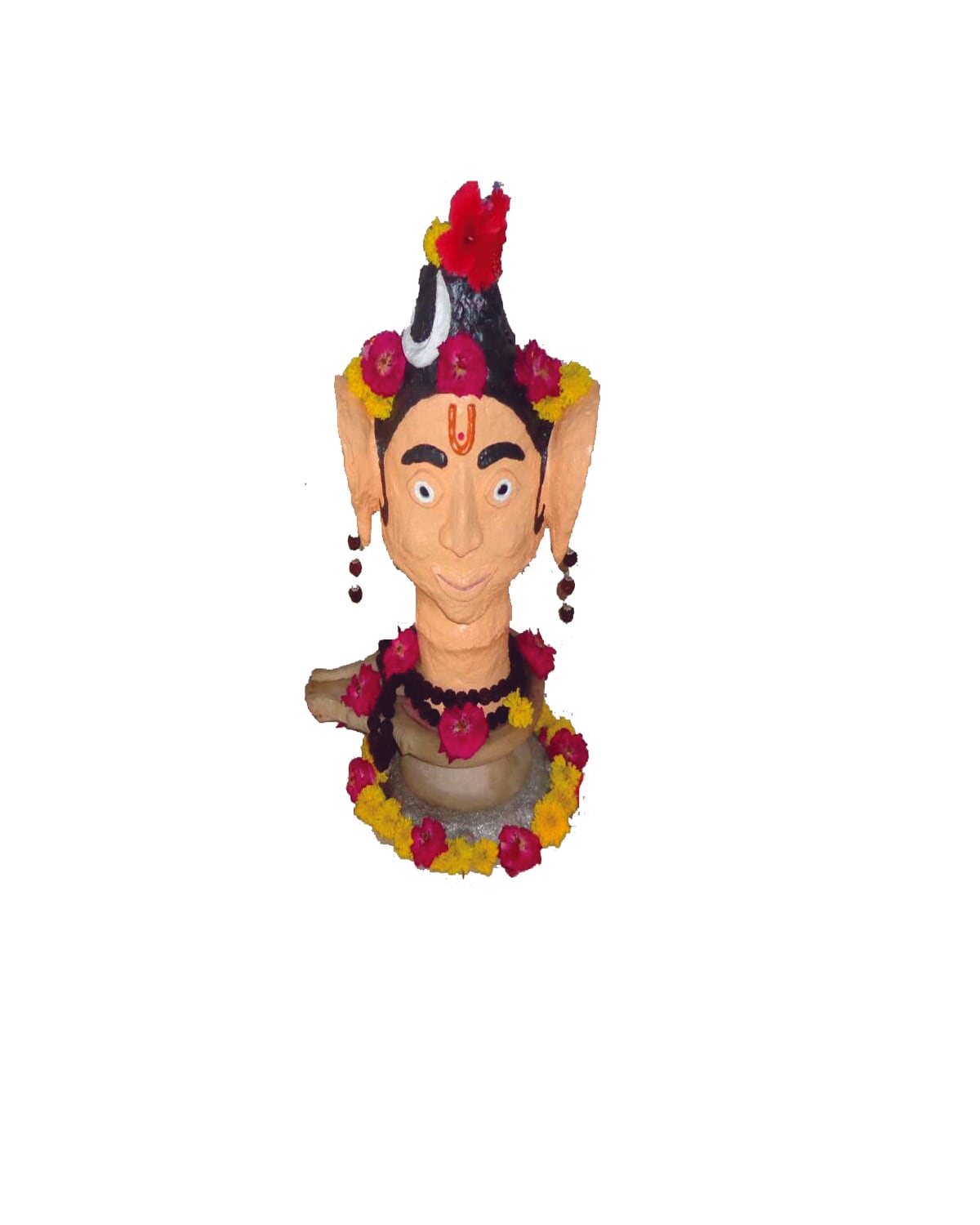
Nisargadatta Maharaj
इन पर सहमत: परम सत्य क्या है? क्या ईश्वर है? · मैं कौन हूँ? क्या कोई सच्चा आत्म है? · हम दुःख क्यों भोगते हैं?
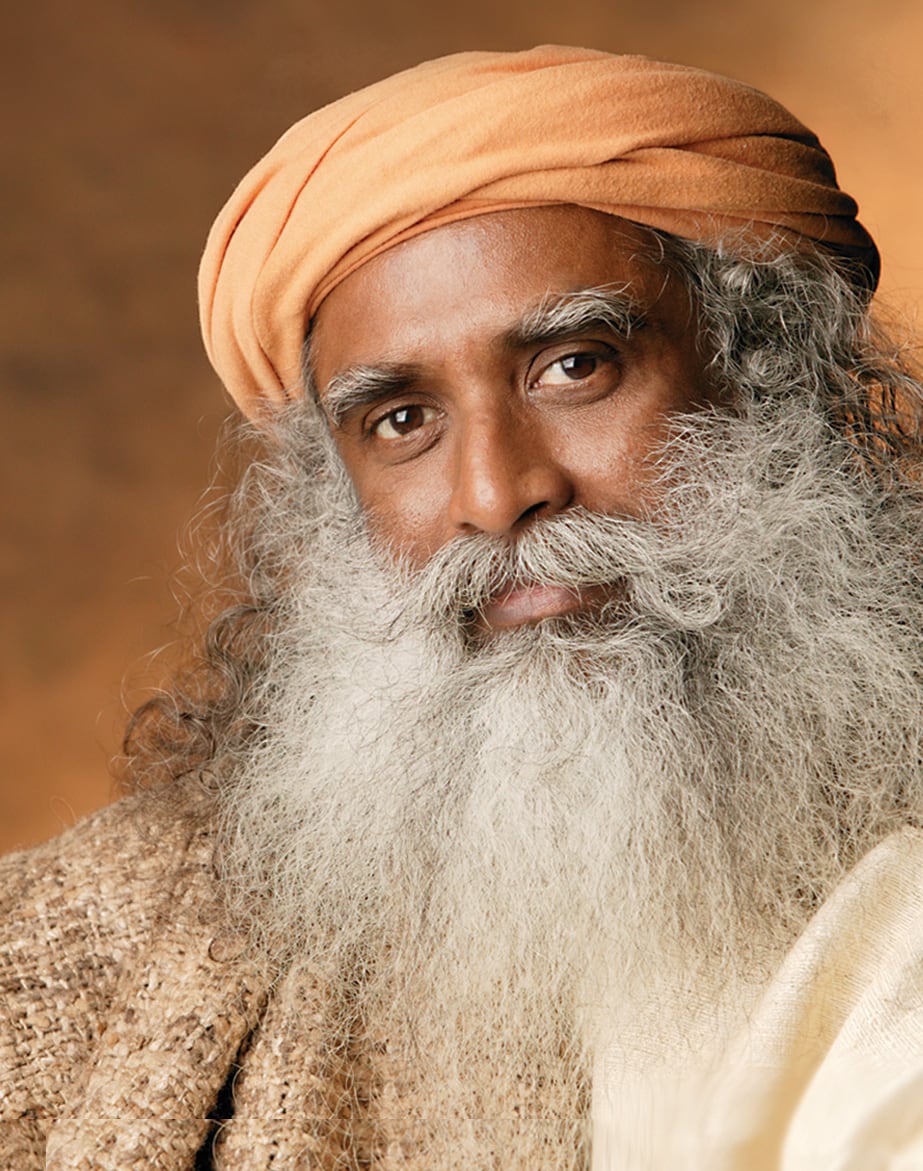
Sadhguru
इन पर सहमत: मैं कौन हूँ? क्या कोई सच्चा आत्म है? · मृत्यु के बाद क्या होता है? · क्या संसार वास्तविक है?
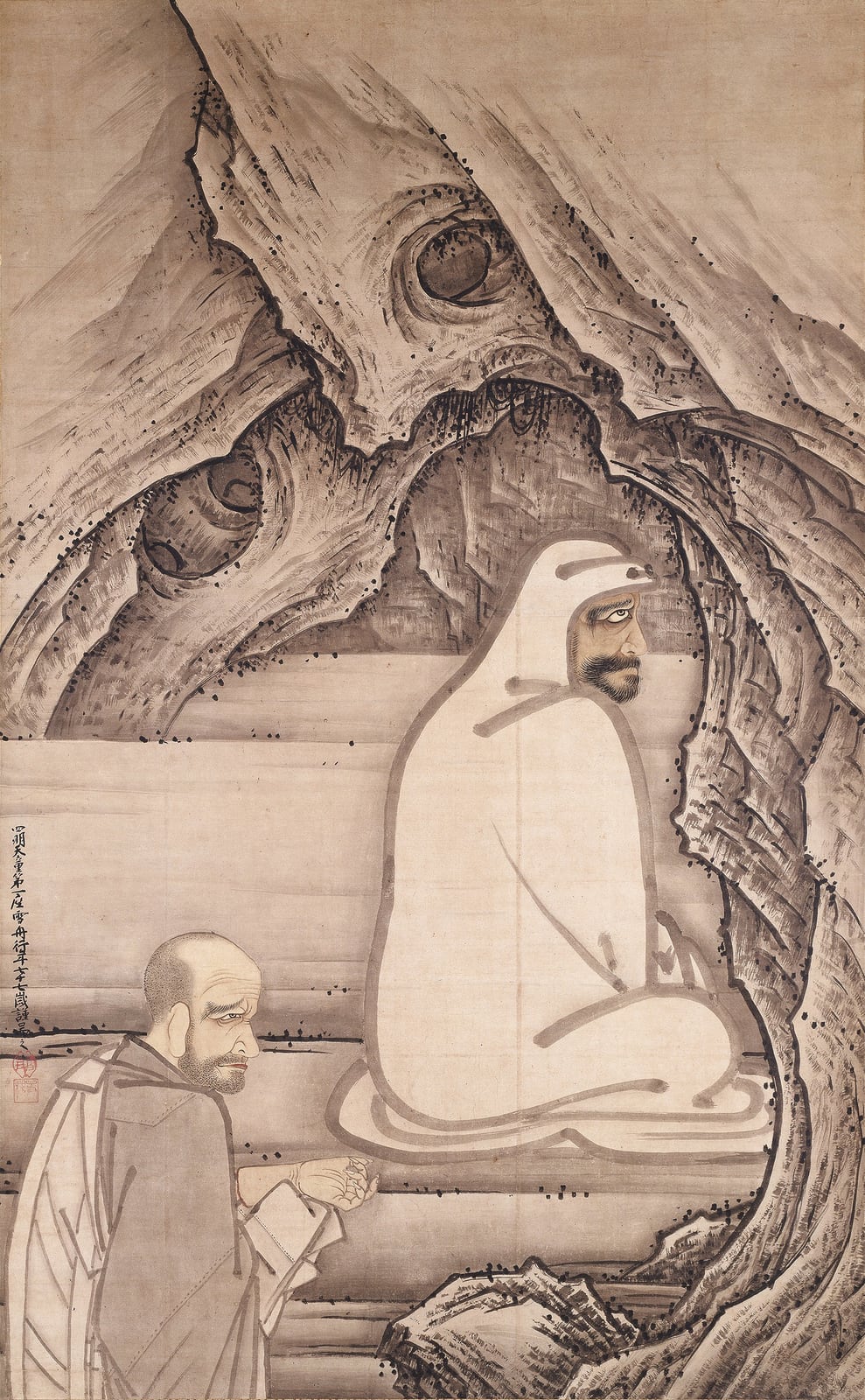
Bodhidharma
इन पर सहमत: मैं कौन हूँ? क्या कोई सच्चा आत्म है? · मृत्यु के बाद क्या होता है? · क्या हम स्वतंत्र हैं, या सब कुछ पूर्वनिर्धारित है?
इनसे भिन्न सोचते हैं
Ignatius of Loyola
इन पर टकराव: मैं कौन हूँ? क्या कोई सच्चा आत्म है? · मृत्यु के बाद क्या होता है? · क्या संसार वास्तविक है?

Teresa of Ávila
इन पर टकराव: मैं कौन हूँ? क्या कोई सच्चा आत्म है? · मृत्यु के बाद क्या होता है? · क्या संसार वास्तविक है?
Jesus of Nazareth
इन पर टकराव: क्या संसार वास्तविक है? · मैं कौन हूँ? क्या कोई सच्चा आत्म है? · मृत्यु के बाद क्या होता है?

Francis of Assisi
इन पर टकराव: मैं कौन हूँ? क्या कोई सच्चा आत्म है? · मृत्यु के बाद क्या होता है? · क्या संसार वास्तविक है?
प्रसंग और वृत्तांत
प्रसंग और वृत्तांत
प्रमाणितépoca védica tardía (ss. VII–VI a. C., según la datación del texto)
The thousand cows with gold on their horns
वृत्तांत का स्रोत: Bṛhadāraṇyaka Upaniṣad 3.1.1–2 (parallel in Śatapatha Brāhmaṇa 11.6.3). "Documented" means here that the story is in the text; it does not imply that the scene is historical.
स्रोत: Olivelle, Patrick (ed. y trad.). The Early Upaniṣads: Annotated Text and Translation. Nueva York: Oxford University Press, 1998 (South Asia Research). Introducción (datación, pp. 12–13) y Bṛhadāraṇyaka 2.4, 3.1–3.9, 4.1–4.5, 6.5.
प्रमाणितépoca védica tardía
Gārgī and the two arrows
वृत्तांत का स्रोत: Bṛhadāraṇyaka Upaniṣad 3.6 and 3.8. Later traditions turn her into a philosopher of Janaka's court or, in one manuscript of the Yoga Yājñavalkya, into Yājñavalkya's wife; none of this is in the Upaniṣad.
स्रोत: Lindquist, Steven E. «Gender at Janaka's Court: Women in the Bṛhadāraṇyaka Upaniṣad Reconsidered». Journal of Indian Philosophy 36 (2008): 405–426.
प्रमाणितépoca védica tardía
The death of Śākalya
वृत्तांत का स्रोत: Bṛhadāraṇyaka Upaniṣad 3.9 (with a parallel in Śatapatha Brāhmaṇa 11.6.3 and in Jaiminīya Brāhmaṇa 2.76–77, according to Witzel). The analysis is Lindquist's (2011).
स्रोत: Lindquist, Steven E. «Literary Lives and a Literal Death: Yājñavalkya, Śākalya, and an Upaniṣadic Death Sentence». Journal of the American Academy of Religion 79, n.º 1 (2011): 33–57.
प्रमाणितépoca védica tardía
"I eat it, provided it is tender"
वृत्तांत का स्रोत: Śatapatha Brāhmaṇa 3.1.2.21 (and 3.8.2.24 for the scene of the grey-haired arms), following Eggeling's translation and Witzel's analysis (2003).
संत-चरित वृत्तांतrelato purāṇico (primer milenio d. C.)
The pupil who vomited the Veda
वृत्तांत का स्रोत: Viṣṇu Purāṇa 3.5 and Bhāgavata Purāṇa 12.6. It does not come from the Taittirīya Upaniṣad, as is sometimes said, but from the Purāṇas, which thus explain the names of the two schools of the Yajurveda. The Bṛhadāraṇyaka (6.5.3) says only that the white formulas come from the Sun.
प्रमाणितépoca védica tardía
Janaka offers himself as a slave
वृत्तांत का स्रोत: Bṛhadāraṇyaka Upaniṣad 4.3.1–4.4.23 (the final sentence at 4.4.23). The reading of the relation between king and brahmin is Black's (2007).
स्रोत: Black, Brian. The Character of the Self in Ancient India: Priests, Kings, and Women in the Early Upaniṣads. Albany: State University of New York Press, 2007.
शिक्षाएँ
शिक्षाएँ
वे अवधारणाएँ जो उनके चिंतन को रूप देती हैं, उनके संदर्भ में समझाई गई।
Neti neti ("not this, not this")neti-neti
Bṛhadāraṇyaka 2.3.6, 3.9.26, 4.2.4, 4.4.22, 4.5.15 (Kāṇva recension). Gauḍapāda quotes it in the Māṇḍūkya Kārikā 3.26.
स्रोत: Olivelle, Patrick (ed. y trad.). The Early Upaniṣads: Annotated Text and Translation. Nueva York: Oxford University Press, 1998 (South Asia Research). Introducción (datación, pp. 12–13) y Bṛhadāraṇyaka 2.4, 3.1–3.9, 4.1–4.5, 6.5.
Ātman (the self)atman
Bṛhadāraṇyaka 2.4, 3.4–3.7, 4.3–4.5.
स्रोत: Olivelle, Patrick (ed. y trad.). The Early Upaniṣads: Annotated Text and Translation. Nueva York: Oxford University Press, 1998 (South Asia Research). Introducción (datación, pp. 12–13) y Bṛhadāraṇyaka 2.4, 3.1–3.9, 4.1–4.5, 6.5.
Karma and rebirthkarman-y-renacimiento
Bṛhadāraṇyaka 3.2.13 and 4.4.2–7; Witzel 2003.
Akṣara (the imperishable)akshara
Bṛhadāraṇyaka 3.8.
स्रोत: Olivelle, Patrick (ed. y trad.). The Early Upaniṣads: Annotated Text and Translation. Nueva York: Oxford University Press, 1998 (South Asia Research). Introducción (datación, pp. 12–13) y Bṛhadāraṇyaka 2.4, 3.1–3.9, 4.1–4.5, 6.5.
Antaryāmin (the inner controller)antaryamin
Bṛhadāraṇyaka 3.7.
स्रोत: Olivelle, Patrick (ed. y trad.). The Early Upaniṣads: Annotated Text and Translation. Nueva York: Oxford University Press, 1998 (South Asia Research). Introducción (datación, pp. 12–13) y Bṛhadāraṇyaka 2.4, 3.1–3.9, 4.1–4.5, 6.5.
Renunciation (saṃnyāsa)renuncia-samnyasa
Bṛhadāraṇyaka 3.5.1, 4.4.22, 4.5.1; Olivelle 1992.
स्रोत: Olivelle, Patrick (trad.). The Saṃnyāsa Upaniṣads: Hindu Scriptures on Asceticism and Renunciation. Nueva York: Oxford University Press, 1992 (incluye la Jābāla y la Yājñavalkya Upaniṣad).
वीडियो
वीडियो
रिकॉर्डिंग, साक्षात्कार और वृत्तचित्र। वीडियो YouTube से चलते हैं; वे यहाँ संग्रहीत नहीं हैं।
1. Brihadaranyaka Upanishad - Introduction | Swami Sarvapriyananda
व्याख्यान· EN· 2026· 71 min
Vedanta Society of New Yorkआधिकारिक चैनल
3. Brihadaranyaka Upanishad - Mantras 2.4.1 to 2.4.5 | Swami Sarvapriyananda
व्याख्यान· EN· 2026· 73 min
Vedanta Society of New Yorkआधिकारिक चैनल
4. Brihadaranyaka Upanishad - Mantra 2.4.5 continued | Swami Sarvapriyananda
व्याख्यान· EN· 2026· 68 min
Vedanta Society of New Yorkआधिकारिक चैनल
5. Brihadaranyaka Upanishad - Mantra 2.4.6 | Swami Sarvapriyananda
व्याख्यान· EN· 2026· 75 min
Vedanta Society of New Yorkआधिकारिक चैनल
Swami Atmajnanananda on "Yajnavalkya and Maitreyi - An Interesting Dialogue"
व्याख्यान· EN· 2016· 66 min
Austin Vedantaआधिकारिक चैनल
Swami Yogatmananda - Dialogue on the Self (Yajnavalkya and Maitreyi)
व्याख्यान· EN· 2021· 58 min
VedantaSTLआधिकारिक चैनल
Yagnavalkya Upadesham (Brihadaranyaka Upanishad) | Kanchipuram | 2024
व्याख्यान· TA· 2024· 95 min
Voice of Rishis Swami Ramanacharanatirtha (Nochur)आधिकारिक चैनल
Understanding the Dharma Shastras: A Conversation with Dr. Patrick Olivelle and Dr. Donald Davis
साक्षात्कार· EN· 2022· 113 min
Meru Media
Patrick Olivelle on Law, Religion, and Dharma
व्याख्यान· EN· 2014· 45 min
Central European Universityआधिकारिक चैनल
The Central Doctrines of the Upanishads
व्याख्यान· EN· 2016· 37 min
Vidya-mitraआधिकारिक चैनल
'Introduction to Shatpath Brahmana' - 100 paths of Moksha; Dr Aparna Dhir Khandelwal
व्याख्यान· EN· 2021· 31 min
Sattology
Shatapatha Brahmana Parayana in presence of His Holiness
मूल रिकॉर्डिंग· SA· 2020· 20 min
Sri Kanchi Kamakoti Peetam, Kanchipuramआधिकारिक चैनल
Yajnavalkya / ಯಾಜ್ಞವಲ್ಕ್ಯ | Upanishat Rushigalu | Vid C G Vijayasimha Acharya
व्याख्यान· KN· 2021· 12 min
JnanaGamya Prasarana
YAJNAVALKYA: La Búsqueda del Conocimiento Interior y de la Realidad Última. 1
विश्लेषण· ES· 2024· 28 min
Una Historia Pequeña de la Filosofía
La metafísica de los Upanishad. José Carlos Fernández
व्याख्यान· ES· 2021· 60 min
Nueva Acrópolis Españaआधिकारिक चैनल
चित्रशाला
चित्रशाला
सत्यापित लाइसेंस वाले चित्र। प्रत्येक में उसके रचयिता और श्रेय का उल्लेख सुरक्षित है।
पांडुलिपियाँ
पांडुलिपियाँ
पांडुलिपि-साक्ष्य और प्राचीन पाठ, उनके संरक्षक और अध्ययन की शर्तों सहित।
SA · Devanagari · c. ss. VII–VI a. C. (Olivelle)
बृहदारण्यकोपनिषद् (adhyāya 1, folio 3b)
- संरक्षित पाठ-साक्ष्य
- Manuscrito en papel sin fecha publicada
- संरक्षक
- University of Pennsylvania Libraries (Filadelfia)
- डिजिटलीकरण
- commons.wikimedia.org/wiki/File:Brihadaranyaka_u…
SA · Devanagari · c. ss. VIII–VI a. C.
शतपथब्राह्मण (kāṇḍa 14, prapāṭhaka 3–4)
- संरक्षित पाठ-साक्ष्य
- Manuscrito del siglo XIII según la descripción de Commons
- डिजिटलीकरण
- commons.wikimedia.org/wiki/File:13th-century_Sha…
SA · Escrituras del norte de la India sobre hoja de palma · Fecha discutida (entre el inicio de la era común y el s. XII)
योगयाज्ञवल्क्य
- संरक्षित पाठ-साक्ष्य
- Manuscritos en hoja de palma de finales del s. IX o inicios del X y de 1024 d. C., según Wujastyk
- संरक्षक
- National Archives of Nepal (Katmandú, NAK 5-696) y British Library (Londres, Or. 3568) · NAK 5-696; BL Or. 3568
संबंध
संबंध
प्रभाव, शिष्यत्व और वैचारिक निकटता। प्रमाणित संबंध को विश्लेषण से पहचानी गई समानता से अलग दर्शाया गया है।
इनसे मतभेद
Debate on the "thread" and the "inner controller" (Bṛhadāraṇyaka 3.7), which Uddālaka loses.
प्रमाणित संबंध
इनके शिष्य
The Bṛhadāraṇyaka's lists of teachers make him a pupil of Uddālaka Āruṇi: in the list for the mantha rite (6.3.7, Kāṇva recension) and in the final lineage, "Yājñavalkya from Uddālaka; Uddālaka from Aruṇa"; in 3.7 Uddālaka questions him at Janaka's court and falls silent. Witzel regards them as contemporaries.
प्रमाणित संबंध
इनके गुरु
Janaka de Videha
King of Videha, organizer of the contest and Yājñavalkya's pupil in Bṛhadāraṇyaka 4.1–4.4 and Śatapatha 11.6.2.
प्रमाणित संबंध
इनसे भेंट
Gārgī Vācaknavī
His interlocutor in Bṛhadāraṇyaka 3.6 and 3.8.
प्रमाणित संबंध
इनके परिवार से
Maitreyī
One of his two wives, together with Kātyāyanī; recipient of the dialogue on the ātman (Bṛhadāraṇyaka 2.4 and 4.5).
प्रमाणित संबंध
इन्हें प्रभावित किया
Śaṅkara wrote an extensive commentary on the Bṛhadāraṇyaka and based much of his doctrine of the ātman and of renunciation on Yājñavalkya's dialogues.
प्रमाणित संबंध
इन्हें प्रभावित किया
The Māṇḍūkya Kārikā (3.26) quotes the Bṛhadāraṇyaka's "neti neti" as proof that scripture denies all difference.
प्रमाणित संबंध
इनसे प्रभावित
According to the Purāṇas, Yājñavalkya was a pupil of Vaiśaṃpāyana, himself a pupil of Vyāsa, who is said to have divided the Veda. This is a traditional lineage, not a historical fact.
विश्लेषण से पहचानी गई समानता
इनसे मिलते-जुलते विचार
The Yājñavalkya of the Mahābhārata (12.298 ff.) expounds to Janaka the Sāṃkhya doctrine that tradition attributes to Kapila.
विश्लेषण से पहचानी गई समानता
इनसे मिलते-जुलते विचार
The Yoga Yājñavalkya expands the eight-limbed yoga of the Yoga Sūtras (ten restraints and ten observances instead of five and five).
विश्लेषण से पहचानी गई समानता
इनसे मिलते-जुलते विचार
Ramana's "Who am I?" inquiry and his description of the self as an objectless witness recall "neti neti" and the ātman that sees without being seen.
विश्लेषण से पहचानी गई समानता
इनसे मिलते-जुलते विचार
His method of denying identification with body and mind has a clear precedent in "not this, not this".
विश्लेषण से पहचानी गई समानता
इनसे मिलते-जुलते विचार
A classic comparison in comparative philosophy (Rudolf Otto, among others) between Eckhart's negative way and the ungraspable ātman of the Upaniṣads.
विश्लेषण से पहचानी गई समानता
स्रोत
स्रोत
इस प्रविष्टि के लिए देखे गए ग्रंथ-सूची और सूचीपत्र।
- Wikidata, «Yajnavalkya», QID Q1423663.
- Olivelle, Patrick (ed. y trad.). The Early Upaniṣads: Annotated Text and Translation. Nueva York: Oxford University Press, 1998 (South Asia Research). Introducción (datación, pp. 12–13) y Bṛhadāraṇyaka 2.4, 3.1–3.9, 4.1–4.5, 6.5.
- Olivelle, Patrick (trad.). Upaniṣads. Oxford World's Classics. Oxford: Oxford University Press, 1996.
- Müller, F. Max (trad.). The Upanishads, Part II (Sacred Books of the East, vol. 15). Oxford: Clarendon Press, 1884. Incluye la Bṛhadāraṇyaka Upaniṣad.
- Eggeling, Julius (trad.). The Śatapatha-Brāhmaṇa according to the Text of the Mādhyandina School, 5 vols. (Sacred Books of the East, vols. 12, 26, 41, 43, 44). Oxford: Clarendon Press, 1882–1900.
- Witzel, Michael. «Yājñavalkya as Ritualist and Philosopher, and His Personal Language». En Siamak Adhami (ed.), Paitimāna: Essays in Iranian, Indo-European, and Indian Studies in Honor of Hanns-Peter Schmidt. Costa Mesa: Mazda Publishers, 2003, pp. 103–143.
- Brereton, Joel P. «The Composition of the Maitreyī Dialogue in the Bṛhadāraṇyaka Upaniṣad». Journal of the American Oriental Society 126, n.º 3 (2006): 323–345.
- Black, Brian. The Character of the Self in Ancient India: Priests, Kings, and Women in the Early Upaniṣads. Albany: State University of New York Press, 2007.
- Lindquist, Steven E. «Literary Lives and a Literal Death: Yājñavalkya, Śākalya, and an Upaniṣadic Death Sentence». Journal of the American Academy of Religion 79, n.º 1 (2011): 33–57.
- Olivelle, Patrick (ed. y trad.). Yājñavalkya: A Treatise on Dharma. Murty Classical Library of India 20. Cambridge (Mass.): Harvard University Press, 2019. Introducción, pp. vii–xxxvii.
- Mohan, A. G., con Ganesh Mohan (trad.). Yoga Yājñavalkya. 2.ª ed. Singapur: Svastha Yoga, 2013.
- Dutt, Manmatha Nath (trad.). A Prose English Translation of Vishnupuranam. Calcuta, 1896; libro III, cap. 5 (la historia de Yājñavalkya y Vaiśaṃpāyana). Project Gutenberg n.º 66208. Véase también H. H. Wilson, The Vishńu Puráńa, Londres, 1840.
- Mahābhārata, Śāntiparvan 12.298 y ss. (edición crítica de Poona): diálogo de Yājñavalkya y Janaka (Daivarāti). Trad. inglesa de Kisari Mohan Ganguli, The Mahabharata of Krishna-Dwaipayana Vyasa, Calcuta, 1883–1896.
- Wikipedia (en inglés), «Yajnavalkya», consultada el 26 de octubre de 2026.
- Hume, Robert Ernest (trad.). The Thirteen Principal Upanishads. Londres: Oxford University Press, 1921.
- Herold, A.-Ferdinand (trad.). L'Upanishad du grand Aranyaka (Bṛhadāraṇyakopaniṣad). París: Librairie de l'art indépendant, 1894.
- Wikisource en sánscrito, «बृहदारण्यकोपनिषद्» (texto sánscrito, seis adhyāya).
- Röer, Edward, y W. A. Montriou (trads.). Hindu Law and Judicature from the Dharma-Sástra of Yájnavalkya. Calcuta, 1859. Project Gutenberg n.º 21918.
- Divanji, Prahlad Chandrashekhar (ed.). Yoga-Yājñavalkya: A Treatise on Yoga as Taught by Yogī Yājñavalkya. Bombay: Bombay Branch of the Royal Asiatic Society, 1954.
- Wikipedia (en inglés), «Yoga Yajnavalkya» y «Yajnavalkya Smriti» (resumen de las dataciones de Divanji, Mohan, White, Wujastyk y Olivelle), consultadas el 26 de octubre de 2026.
- Ilárraz, Félix G., y Óscar Pujol (trads.). La sabiduría del bosque: antología de las principales Upaniṣad. Madrid: Trotta, 2003.
- Martín, Consuelo (trad.). Gran Upaniṣad del Bosque (Bṛhadāraṇyaka Upaniṣad), con el comentario advaita de Śaṅkara. Madrid: Trotta, 2002.
- Wikisource en sánscrito, «याज्ञवल्क्यस्मृतिः» (texto de la Yājñavalkya Smṛti por prakaraṇa).
- Wikisource en sánscrito, «शतपथब्राह्मणम्» (texto del Śatapatha Brāhmaṇa por kāṇḍa).
- Deussen, Paul (trad.). Sechzig Upanishad's des Veda. Leipzig: F. A. Brockhaus, 1897.
- Wikimedia Commons, ficheros y metadatos de licencia consultados mediante la API (imageinfo/extmetadata).
- Olivelle, Patrick (trad.). The Saṃnyāsa Upaniṣads: Hindu Scriptures on Asceticism and Renunciation. Nueva York: Oxford University Press, 1992 (incluye la Jābāla y la Yājñavalkya Upaniṣad).
- Dvivedi, Manilal N. (trad.). The Māṇḍūkyopanishad with Gauḍapāda's Kārikās and the Bhāshya of Śaṅkara. Bombay: Tookaram Tatya, 1894 (Kārikā 3.26).
- Lindquist, Steven E. «Gender at Janaka's Court: Women in the Bṛhadāraṇyaka Upaniṣad Reconsidered». Journal of Indian Philosophy 36 (2008): 405–426.
- अधिकार-धारक
- Los textos sánscritos (Śatapatha Brāhmaṇa, Bṛhadāraṇyaka, Yājñavalkya Smṛti, Yoga Yājñavalkya) son de dominio público. Las traducciones modernas tienen derechos propios: Oxford University Press (Olivelle; Hume hasta 2029 en España), Harvard University Press (Olivelle 2019), Trotta (Ilárraz y Pujol; Consuelo Martín), Penguin (Roebuck), Svastha Yoga (Mohan). Las de Müller (1884), Eggeling (1882–1900), Herold (1894), Deussen (1897), Stenzler (1849), Röer y Montriou (1859) y Vidyarnava (1918) son de dominio público.
पुष्टि की प्रतीक्षा में
जो यह प्रविष्टि अभी तक निश्चित नहीं कर सकी है। हम उसे भर देने के बजाय कह देना बेहतर समझते हैं।
- Mahābhārata: confirmar en la edición crítica de Poona el final del diálogo de Yājñavalkya y Janaka (empieza en 12.298) y la equivalencia con las secciones de Ganguli; confirmar el año del volumen de Ganguli (Śānti Parva).
- Bṛhad Yogi Yājñavalkya Smṛti: confirmar año y responsables de la edición de Kaivalyadhama y localizar el estudio de 2017 que revisa la tesis de White sobre la autoría común con el Yoga Yājñavalkya.
- Yoga Yājñavalkya: comprobar en el libro la atribución a T. K. V. Desikachar de la edición del Krishnamacharya Yoga Mandiram (ISBN 9788187847007); Open Library no indica traductor.
- Ediciones: buscar ISBN de traducciones al español, alemán, italiano, ruso e hindi de la Bṛhadāraṇyaka y de la Yājñavalkya Smṛti; confirmar el ISBN de la edición de Motilal de Deussen (Sixty Upanishads).
- Sala de lectura: no se ha encontrado en Internet Archive un escaneo con OCR de Deussen, Sechzig Upanishad's des Veda (1897); no hay texto español de dominio público de la Bṛhadāraṇyaka en es.wikisource.
- Relaciones: los slugs janaka-de-videha, gargi-vachaknavi y maitreyi no existen todavía en el Atlas.
- Isibhāsiyāiṃ: localizar el capítulo exacto de «Jannavakka» en la edición de Schubring.
- Vídeos: no se ha encontrado una clase universitaria monográfica en español ni un documental de televisión pública sobre Yājñavalkya.
2026-10-26 को शोधित