हिन्दू धर्म · योग · तन्त्र · अद्वैत वेदान्त
Dattatreya
दत्तात्रेय
पौराणिक व्यक्तित्व
हिंदू धर्म के देवता, अवतार और योगियों के गुरु, ऋषि अत्रि और अनसूया के पौराणिक पुत्र, जिन्हें ब्रह्मा, विष्णु और शिव के संयुक्त अवतार के रूप में और अवधूत — हर मर्यादा से परे जीने वाले मुक्त पुरुष — के आदर्श रूप में पूजा जाता है। पुराण उन्हें राजा अलर्क को योग का उपदेश देने वाला मानते हैं और पारंपरिक पहचान के आधार पर भागवत के चौबीस गुरुओं का प्रसंग भी उन्हीं से जोड़ते हैं। अवधूत गीता और दत्तात्रेययोगशास्त्र उनके नाम से जुड़े हैं, और वे दत्त परंपरा तथा नाथ संप्रदाय के आदिगुरु हैं।
- कृतियाँ
- 9कृतियाँ
- संस्करण
- 28संस्करण
- उद्धरण
- 7उद्धरण
- वीडियो
- 14वीडियो
- चित्र
- 6चित्र
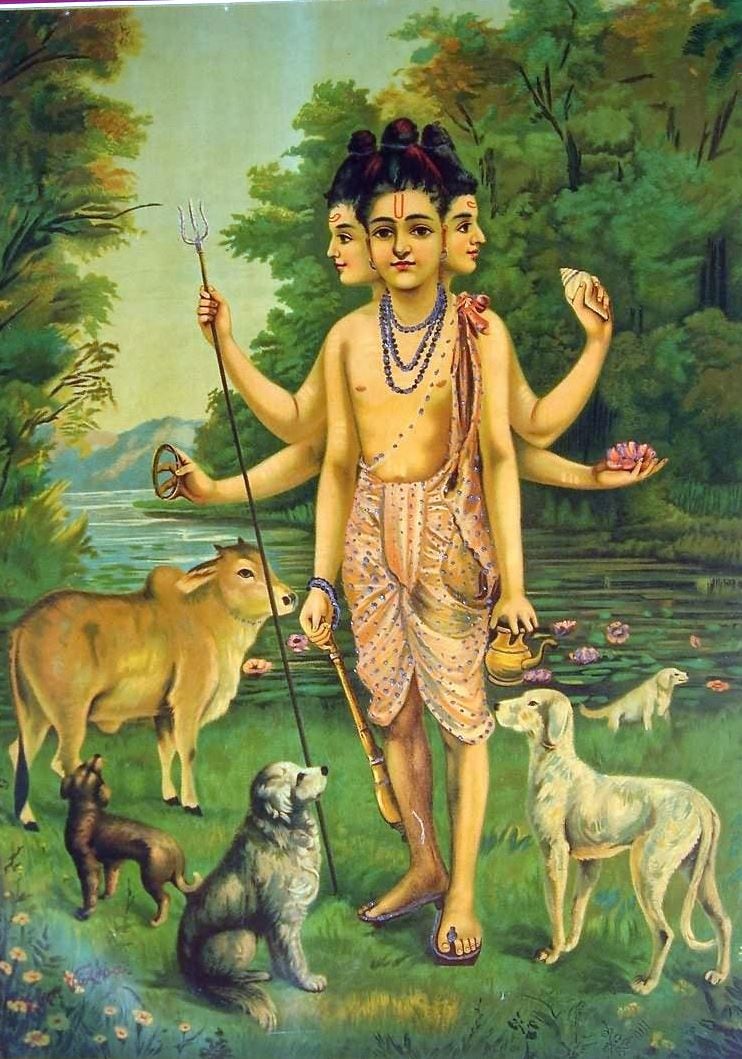
Dattātreya, cromolitografía de la Ravi Varma Press · Public domain
उनके अपने शब्दों में
«That by which all this is filled, the Self by the Self in the Self: how shall I salute the formless, undivided, imperishable Śiva?»Avadhūta Gītā 1.2 (texto sánscrito de Wikisource); versiones del investigador

मूल विचार
The avadhūta: Avadhūta literally means "one who has shaken off": the renouncer who has rid himself of social, ritual and moral conventions because he no longer identifies with anything they regulate.
संदर्भ में देखें
जीवनी
5 मिनट का पाठ
स्पैनिश मूल से सहायता-प्राप्त अनुवाद, मातृभाषी अनुवादक द्वारा समीक्षा लंबित।
एक देवता जो गुरु है
हिंदू धर्म में दत्तात्रेय का स्थान अनूठा है: वे एक साथ उपास्य देवता हैं, विष्णु के अवतार हैं, अनेक भक्तों के लिए ब्रह्मा, विष्णु और शिव के संयुक्त अवतार हैं, और उस घुमक्कड़ गुरु के आदर्श रूप हैं जो हर मर्यादा से परे जा चुका है — अवधूत। कोई भी प्रमाण उन्हें ऐतिहासिक व्यक्ति मानने की अनुमति नहीं देता। जो विद्यमान है, वह ग्रंथों की एक लंबी शृंखला है, जो एक सहस्राब्दी से अधिक समय तक उन्हें जन्म, पराक्रम और उपदेश सौंपती रही, और जीवित परंपराओं का एक जाल है जो उन्हें आदिगुरु के रूप में पूजता है। इस विषय का मानक अध्ययन, अंतोनियो रिगोपुलोस का शोध-ग्रंथ (1998), उनका वर्णन ठीक उनकी रूपांतरण और समावेश की क्षमता के द्वारा करता है: एक “मधुमक्खी योगी”, जो परंपरा के हर पुष्प से रस ग्रहण करता है।
अत्रि और अनसूया के पुत्र
उनका नाम उनकी वंश-परंपरा को स्पष्ट करता है: दत्त, अर्थात् “दिया हुआ”, और आत्रेय, अर्थात् “अत्रि का पुत्र”। मार्कंडेय पुराण (पार्जिटर के अनुवाद में सर्ग 16–17) बताता है कि ऋषि अत्रि की पत्नी अनसूया ने एक पतिव्रता स्त्री के पक्ष में मध्यस्थता की थी, जिसने सूर्योदय रोक दिया था, और इसके फलस्वरूप उन्हें देवताओं से वरदान मिला; उनसे तीन पुत्र जन्मे, जो तीन महान देवताओं के अंश थे: ब्रह्मा से सोम, विष्णु से दत्तात्रेय और शिव से दुर्वासा। भागवत पुराण उन्हें भगवान का छठा अवतार गिनाता है और स्पष्ट करता है: “षष्ठमत्रेरपत्यत्वं वृतः प्राप्तोऽनसूयया। आन्वीक्षिकीमलर्काय प्रह्लादादिभ्य ऊचिवान्॥” (1.3.11) — अनसूया की प्रार्थना पर वे अत्रि के पुत्र बने और उन्होंने अलर्क, प्रह्लाद आदि को आत्मविद्या का उपदेश दिया। तीन सिरों वाले देवता की लोकप्रिय छवि, जो त्रिमूर्ति को एक ही देह में समाहित करती है, इसी वंशावली का परवर्ती विकास है।
सरोवर के योगी
सबसे प्राचीन कथाएँ उन्हें एक हैरान कर देने वाले योगी के रूप में प्रस्तुत करती हैं। मार्कंडेय पुराण वर्णन करता है कि जब युवा तपस्वियों ने उन्हें घेर लिया और वे उन्हें छोड़ने को तैयार नहीं थे, तो उनसे छुटकारा पाने के लिए वे लंबे समय तक एक सरोवर में डूबे रहे; जब वे फिर भी प्रतीक्षा करते रहे, तो वे एक स्त्री के साथ जल से बाहर निकले, मदिरा पी और संगीत में डूब गए, फिर भी इनमें से कुछ भी उन्हें मलिन नहीं कर सका, क्योंकि वे “योगियों के स्वामी” थे। अपने निंदनीय आचरण के पीछे छिपे इसी गुरु के पास राजा कार्तवीर्य अर्जुन आए और उनसे अपने वरदान प्राप्त किए। महाभारत उन्हें इसी भूमिका में स्मरण करता है (समीक्षित क्रमांकन में आरण्यकपर्व 115; अनुशासनपर्व 152–153): दत्तात्रेय की कृपा से हैहयों के राजा को युद्ध में सहस्र भुजाएँ मिलीं और उन्होंने धर्मपूर्वक पृथ्वी पर शासन किया।
चौबीस गुरु
दो उपदेशों ने उन्हें प्रथम श्रेणी का व्यक्तित्व बना दिया। मार्कंडेय पुराण (सर्ग 37–43) में दत्तात्रेय युद्ध से संतप्त राजा अलर्क को योग की संपूर्ण व्याख्या देते हैं: आत्मा, प्राण, विघ्न, ओंकार और मृत्यु के लक्षण। भागवत पुराण के एकादश स्कंध (11.7–9) में एक अनाम युवा अवधूत राजा यदु को बताता है कि उसके चौबीस गुरु रहे हैं: “पृथिवी वायुराकाशमापोऽग्निश्चन्द्रमा रविः। कपोतोऽजगरः सिन्धुः पतङ्गो मधुकृद्गजः॥ मधुहा हरिणो मीनः पिङ्गला कुररोऽर्भकः। कुमारी शरकृत्सर्प ऊर्णनाभिः सुपेशकृत्॥” — पृथ्वी, वायु, आकाश, जल, अग्नि, चंद्रमा, सूर्य, कबूतर, अजगर, समुद्र, पतंगा, मधुमक्खी, हाथी, मधु-हरण करने वाला, हिरण, मछली, गणिका पिंगला, कुरर पक्षी, बालक, कुमारी, बाण बनाने वाला, सर्प, मकड़ी और भृंगी (कीट)। ग्रंथ उसे दत्तात्रेय नहीं कहता; यह पहचान पारंपरिक है, और इसे टीकाकारों तथा लोक-भक्ति ने अपनाया है।
योग और संन्यासियों के स्वामी
उनका नाम संन्यास उपनिषदों में जल्दी ही प्रकट हो जाता है: ओलिवेल के अनुसार ईसा पूर्व तीसरी शताब्दी और ईसवी तीसरी शताब्दी के बीच रचित जाबाल उपनिषद् उन्हें महान तपस्वियों में गिनती है। बाद में वे वह गुरु बन जाते हैं जो जाबालदर्शन उपनिषद् में अपने शिष्य सांकृति को अष्टांग योग का उपदेश देते हैं, और जो अवधूत उपनिषद् में अवधूत की परिभाषा करते हैं, जिसे ओलिवेल और श्प्रॉकहॉफ़ लगभग चौदहवीं–पंद्रहवीं शताब्दी का मानते हैं। दत्तात्रेययोगशास्त्र, जो जेम्स मैलिनसन के अनुसार — जिन्होंने 2024 में इसका समीक्षित संस्करण प्रकाशित किया — लगभग 1200 ई. में दक्षिण भारत में रचा गया, पहला ग्रंथ है जो पतंजलि के अष्टांग योग को हठयोग की शारीरिक विधियों से जोड़ता है और दत्तात्रेय को उन्हें सांकृति को सिखाते हुए प्रस्तुत करता है। नाथ संप्रदाय के योगी उन्हें आदिगुरु मानते हैं; मैलिनसन का मत है कि यह संबंध परवर्ती है, लगभग अठारहवीं शताब्दी का एक आत्मसात्करण।
आरोपित कृतियाँ
परंपरा उन्हें मूलगामी अद्वैत के कई ग्रंथों का रचयिता मानती है। इनमें सबसे प्रसिद्ध अवधूत गीता है, “मुक्त पुरुष का गीत”, जो रिगोपुलोस के अनुसार आठ अध्यायों और लगभग 289 श्लोकों में है; वे इसे संभवतः दक्कन में रचित मानते हैं, जिसका अंतिम अध्याय बाद में जोड़ा गया; ग्राइम्स और अभयानंद इसे लगभग नौवीं–दसवीं शताब्दी में रखते हैं। इसका अंतिम श्लोक — “दत्तात्रेयावधूतेन निर्मितानन्दरूपिणा” — इसे “आनंदस्वरूप अवधूत दत्तात्रेय” की रचना घोषित करता है। जीवन्मुक्त गीता जीवन्मुक्त का वर्णन करती है। त्रिपुरा रहस्य, जो देवी त्रिपुरा की उपासना-परंपरा से संबद्ध है और ग्यारहवीं से सत्रहवीं शताब्दी के बीच रचा गया, उनका नहीं है: इसे हारितायन नारद को सुनाते हैं, किंतु इसमें वह उपदेश निरूपित है जो दत्तात्रेय ने गंधमादन पर्वत पर परशुराम को दिया था। इनमें से कोई भी आरोपण ऐतिहासिक कसौटी पर नहीं टिकता: ये वह ढंग हैं जिससे कोई परंपरा अपने ग्रंथों पर अपने आदर्श गुरु के नाम की मुहर लगाती है।
दत्त परंपरा
मध्यकाल से दत्तात्रेय दक्कन में एक स्वतंत्र उपासना के केंद्र रहे हैं। महानुभाव संप्रदाय उन्हें अपने दिव्य अवतारों में गिनता है; सरस्वती गंगाधर के मराठी ग्रंथ गुरुचरित्र की परंपरा श्रीपाद श्रीवल्लभ और नृसिंह सरस्वती को उनका अवतार मानकर पूजती है — नृसिंह सरस्वती का गाणगापुर स्थित स्थान तीर्थ है — और दत्तात्रेय का उत्सव, दत्त जयंती, मार्गशीर्ष पूर्णिमा को मनाया जाता है। उनकी सबसे प्रचलित प्रतिमा उन्हें तीन सिरों और छह भुजाओं के साथ, एक गाय और चार कुत्तों से घिरा दिखाती है, जिन्हें परंपरा पृथ्वी और चार वेदों के रूप में पढ़ती है; कुछ प्राचीन मूर्तियाँ, जैसे बादामी या नारायणपुर की, उन्हें एक ही सिर देती हैं।
आधुनिक पाठक
अवधूत आधुनिक वेदांत में भी प्रवेश कर गया। विवेकानंद ने जुलाई 1895 में थाउज़ेंड आइलैंड पार्क में अपने प्रवचनों के दौरान अवधूत गीता के अंश पढ़े और उनका अनुवाद किया। रमण महर्षि ने 1935 में डब्ल्यू. वाई. इवांस-वेंट्ज़ को उत्तर दिया कि प्राचीन अवधूत के चौबीस से अधिक गुरु थे, जिनमें कुछ जड़ भी थे, क्योंकि गुरु वही है जिससे कुछ सीखा जाए। और निसर्गदत्त महाराज अपने आगंतुकों को समझाते थे कि किंवदंती के अनुसार उनकी परंपरा — “नौ नाथों” (नवनाथ) की परंपरा — के प्रथम गुरु ऋषि दत्तात्रेय थे, यद्यपि वे यह भी जोड़ते थे कि वे नौ नाथ पौराणिक हैं।
स्रोत: Rigopoulos, Antonio. Dattātreya: The Immortal Guru, Yogin, and Avatāra. A Study of the Transformative and Inclusive Character of a Multi-faceted Hindu Deity. Albany: State University of New York Press, 1998. ISBN 9780791436967 (tapa dura), 9780791436950 (rústica). Las páginas citadas (43, 57, 77, 195–197, 227–228) se toman de las referencias de la Wikipedia en inglés; no se ha consultado el libro directamente. · Pargiter, F. Eden (trad.). The Mārkaṇḍeya Purāṇa. Calcuta: Asiatic Society (Bibliotheca Indica), 1888–1904; cantos XVI–XIX (nacimiento de Dattātreya, el lago, Kārtavīrya Arjuna) y XXXVII–XLIII (enseñanza a Alarka). · Mahābhārata: Āraṇyakaparvan 115 y Anuśāsanaparvan 91, 152–157 (numeración de la traducción de Ganguli; en la edición crítica, 3.115.12, 12.49.36–37, 13.152.5 y 13.153.12). Ganguli, Kisari Mohan (trad.). The Mahabharata of Krishna-Dwaipayana Vyasa. Calcuta: Pratap Chandra Roy, 1883–1896. · Mallinson, James (ed. y trad.). The Dattātreyayogaśāstra. Pondicherry: Institut Français de Pondichéry / École française d'Extrême-Orient, 2024 (Collection Indologie 162; Haṭha Yoga Series 5). ISBN 9782855392967 (EFEO), 9788184702552 (IFP). · Abhayananda, Swami (trad.). Dattatreya: Song of the Avadhut. Olympia (Washington): Atma Books, 1992, p. 10 (datación en los siglos IX–X). Con Grimes, John A. A Concise Dictionary of Indian Philosophy. Albany: SUNY Press, 1996, p. 110. Ambas citadas según la Wikipedia en inglés.
कालक्रम
जीवन, वर्ष-दर-वर्ष
प्रत्येक बिंदु एक प्रमाणित घटना है। उसे स्रोत और निश्चितता के स्तर सहित पढ़ने के लिए क्लिक करें।
Iवीं सदी
Earliest mentions: the Jābāla Upaniṣad
The Jābāla Upaniṣad, which Olivelle dates between the third century BCE and the third century CE, includes Dattātreya in its list of great renouncers. The year is only the midpoint of the range.
संभावितOlivelle, Patrick (trad.). The Saṃnyāsa Upaniṣads: Hindu Scriptures on Asceticism and Renunciation. Nueva York: Oxford University Press, 1992 (datación de la Jābāla y de la Avadhūta Upaniṣad, citadas según la Wikipedia en inglés). Texto sánscrito de la Avadhūtopaniṣad en Wikisource.
Iवीं सदी
Earliest mentions: the Jābāla Upaniṣad
The Jābāla Upaniṣad, which Olivelle dates between the third century BCE and the third century CE, includes Dattātreya in its list of great renouncers. The year is only the midpoint of the range.
संभावित
IIIवीं सदी
Dattātreya in the Mahābhārata
The epic mentions him as the sage whose favour gave King Kārtavīrya Arjuna his thousand arms and his kingdom (Āraṇyakaparvan 115; Anuśāsanaparvan 152–153) and as an ancestor in the story of the origin of the śrāddha. The dates of composition of these passages are uncertain.
संभावित
Vवीं सदी
The cantos of the Mārkaṇḍeya Purāṇa
The Mārkaṇḍeya Purāṇa narrates his birth from Atri and Anasūyā, the episode of the lake, the boons to Kārtavīrya and the teaching of yoga to King Alarka. The dating of this part of the Purāṇa is much debated.
विवादित
IXवीं सदी
The avadhūta of the Bhāgavata Purāṇa
The Bhāgavata Purāṇa, composed around the ninth or tenth century according to most specialists, counts him as the sixth avatāra (1.3.11) and narrates the dialogue between an unnamed avadhūta and King Yadu on the twenty-four teachers (11.7–9), which tradition ascribes to him.
संभावित
Xवीं सदी
Composition of the Avadhūta Gītā (hypothesis)
Grimes and Abhayananda place the poem around the ninth or tenth century; Rigopoulos believes it was probably composed in the Deccan and regards the eighth chapter as an addition.
विवादित
लगभग 1200
The Dattātreyayogaśāstra
Around 1200, in South India according to Mallinson, the first treatise integrating eight-limbed yoga with the techniques of haṭhayoga is composed, placed in Dattātreya's mouth.
संभावित
XIVवीं सदी
The Upaniṣads of Dattātreya
Olivelle and Sprockhoff date the Avadhūta Upaniṣad, in which Dattātreya defines the avadhūta for Sāṅkṛti, to around the fourteenth or fifteenth century; the Dattātreya Upaniṣad, tantric and sectarian, is considered of the same period.
संभावित
XVIIवीं सदी
Incorporation into the Nāth lineage (Mallinson's hypothesis)
According to Mallinson, Dattātreya was adopted as guru by the Nāth yogins around the eighteenth century, in a context of syncretism between Vaiṣṇavas and Śaivas; Rigopoulos presents him as the lineage's primordial guru.
विवादित
28 जुलाई 1895
Vivekananda and the Avadhūta Gītā
At Thousand Island Park (New York), Vivekananda glosses and translates passages of the Avadhūta Gītā before his disciples; the notes of the talk were published as Inspired Talks.
प्रमाणित
1904
Pargiter completes the Mārkaṇḍeya Purāṇa
F. Eden Pargiter completes in the Bibliotheca Indica the English translation of the Mārkaṇḍeya Purāṇa, with the cantos devoted to Dattātreya and Alarka.
प्रमाणित
2 फ़रवरी 1935
Ramana Maharshi and the twenty-four teachers
Before W. Y. Evans-Wentz, Ramana recalls that the ancient avadhūta had more than twenty-four teachers, some of them inanimate.
प्रमाणित
1957
The Maharaja of Mysore's book
Jaya Chamarajendra Wadiyar publishes Dattātreya: The Way and the Goal, with a translation and commentary of the Jīvanmukta Gītā and the Avadhūta Gītā and a foreword by S. Radhakrishnan.
प्रमाणित
1998
Rigopoulos's monograph
Antonio Rigopoulos publishes with SUNY Press the first comprehensive study of the figure and its transformations.
प्रमाणित
2024
Critical edition of the Dattātreyayogaśāstra
James Mallinson publishes in Pondicherry (EFEO and IFP) the critical edition and annotated translation of the treatise.
प्रमाणित
कृतियाँ
आवश्यक कृतियाँ
वे कृतियाँ जिनके बिना उनकी विरासत को समझा नहीं जा सकता।
पारंपरिक आरोपण · Xवीं सदी
Avadhūta Gītā (Song of the Liberated One)
अवधूतगीता (Avadhūtagītā)
A Sanskrit poem in eight chapters, of some 289 verses according to Rigopoulos, in which the liberated one speaks in the first person, recognising himself as identical with the formless Self. It opens by asking how one can salute what fills everything, denies any difference between self and world, teacher and disciple, castes and genders, and sings the state of "equal taste" (samarasa) and the "nectar of the natural" (sahaja). It has been an essential text for the Nāth yogins and for readers of modern Vedānta.
11 संस्करण

पारंपरिक आरोपण
Tripurā Rahasya (The Mystery of Tripurā)
त्रिपुरारहस्य (Tripurārahasya), también हारितायनसंहिता (Hāritāyanasaṃhitā)
A work in three sections, two of which survive: that of the goddess's greatness (Māhātmya) and that of knowledge (Jñāna), the latter in twenty-two chapters. Paraśurāma, after his defeat by Rāma and twelve years of worship of the goddess, recalls the words of the avadhūta Saṃvarta and goes to Dattātreya on Mount Gandhamādana. The teacher shows him, through stories such as that of Prince Hemacūḍa and his wife Hemalekhā, that consciousness alone is real and that the world is its reflection. Ramana Maharshi quoted it to his visitors, and his ashram published Munagala Venkataramiah's English translation.
5 संस्करण
Dattatreya
Dattātreyayogaśāstra (Dattātreya's Treatise on Yoga)
पारंपरिक आरोपण · लगभग 1200
Dattātreyayogaśāstra (Dattātreya's Treatise on Yoga)
दत्तात्रेययोगशास्त्र (Dattātreyayogaśāstra)
A treatise of 193 verses that distinguishes four kinds of yoga (mantra, laya, haṭha and rāja) and devotes most of its exposition to haṭhayoga. It is the first text to combine Patañjali's eight-limbed yoga, which it ascribes to Yājñavalkya, with physical techniques: breath retentions, the inverted posture and ten practices later called mudrās, among them khecarī, mahāmudrā, jālandhara and vajrolī. The Haṭhapradīpikā borrows many of its verses.
4 संस्करण
Dattatreya
The twenty-four teachers: dialogue of the avadhūta with Yadu (Bhāgavata Purāṇa 11.7–9)
पारंपरिक आरोपण · IXवीं सदी
The twenty-four teachers: dialogue of the avadhūta with Yadu (Bhāgavata Purāṇa 11.7–9)
भागवतपुराण ११.७–९ (Bhāgavatapurāṇa 11.7–9), अवधूत-यदु-संवाद
Kṛṣṇa tells Uddhava how King Yadu met a young brahmin avadhūta, wise and fearless, and asked him where his joy came from. The ascetic answers that he has learned from twenty-four teachers, from the earth to the wasp, and draws a lesson from each: the patience of the earth, the detachment of the air, the solitude of the girl whose bracelets jingled, the abandoned hope of the courtesan Piṅgalā. Some verses of this same eleventh book (11.11.29–31) coincide with the Avadhūta Gītā (8.2–4).
1 संस्करण
संपूर्ण कृतित्व (9)
Dattatreya
Jīvanmukta Gītā (Song of the One Liberated While Living)
The Conscious LibraryJīvanmukta Gītā (Song of the One Liberated While Living)
Dattatreya
Jābāladarśana Upaniṣad (Darśana Upaniṣad)
The Conscious LibraryJābāladarśana Upaniṣad (Darśana Upaniṣad)

Avadhūta Upaniṣad
1400
Dattatreya
The teaching of yoga to Alarka (Mārkaṇḍeya Purāṇa)
The Conscious LibraryThe teaching of yoga to Alarka (Mārkaṇḍeya Purāṇa)
Dattatreya
Dattātreya Tantra
The Conscious LibraryDattātreya Tantra
वचन
किसी निश्चित कृति में स्थित वचन। प्रत्येक के साथ उसका स्रोत और विश्वसनीयता का स्तर है।
That by which all this is filled, the Self by the Self in the Self: how shall I salute the formless, undivided, imperishable Śiva?येनेदं पूरितं सर्वमात्मनैवात्मनात्मनि। निराकारं कथं वन्दे ह्यभिन्नं शिवमव्ययम्॥
सत्यापितAvadhūta Gītā 1.2 (texto sánscrito de Wikisource); versiones del investigador
अंतिम शब्द
उनके अंतिम शब्दों का कोई सत्यापन-योग्य अभिलेख उपलब्ध नहीं है।
There are no last words: tradition regards Dattātreya as immortal (ciranjīvin) and present in his incarnations, and no text narrates his death.
पूछें
उनकी कृतियाँ क्या उत्तर देती हैं
मानवता के बारह महान प्रश्न और उनके ग्रंथ उनका जो उत्तर देने देते हैं, संदर्भों सहित। हम कभी उनके मुख में अपने शब्द नहीं रखते।
परम सत्य क्या है? क्या ईश्वर है?
All is filled by the Self: formless Śiva, undivided and imperishable
निराकार परम सत्तास्पष्ट रूप से कहा है
The Avadhūta Gītā, which tradition places in Dattātreya's mouth, identifies the Absolute with the Self that fills everything and calls it Śiva, but in a strictly non-dual sense: from its second verse it asks how one could salute the formless, undivided and imperishable, when there is no one distinct to do the saluting. «All is brahman», the poem repeats, and there is neither a you nor an I. The Tripurā Rahasya, also attributed to his teaching, names that same ground as the goddess Tripurā and describes it as pure consciousness reflected in the world like a city in a mirror. In both texts the divine name does not designate a separate person governing from outside, but the consciousness that is the reality of all.
इस प्रश्न की अन्य गुरुओं से तुलना करेंमैं कौन हूँ? क्या कोई सच्चा आत्म है?
You were neither born nor have died: the Self is Śiva, with no you or I
आत्मन् ही ब्रह्म हैस्पष्ट रूप से कहा है
The Avadhūta Gītā denies one by one the identifications by which we usually define ourselves: for the sage there is no good or bad act of mind, body or speech, for he is the nectar of knowledge, pure and beyond the senses; he was never born, has not died and has never had a body; nor is there, ultimately, a you and an I, so that disputes over lineage and caste are false. What remains is the Self, which the poem calls Śiva, the supreme reality. The Tripurā Rahasya, also attributed to his teaching, reaches the same point by enquiry: the self is the pure consciousness that illumines all states, and in it the world appears like an image in a mirror.
इस प्रश्न की अन्य गुरुओं से तुलना करेंहम दुःख क्यों भोगते हैं?
Hope is the greatest suffering; expecting nothing, the greatest bliss
तृष्णा और आसक्तिस्पष्ट रूप से कहा है
In the Bhāgavata Purāṇa, the avadhūta whom tradition identifies with Dattātreya explains to King Yadu what he has learnt from his twenty-four teachers, and almost every lesson concerns desire and attachment. The pigeon that loses its young and throws itself into the net shows the danger of binding affection; the moth that flies into the flame, that of the senses; and the courtesan Piṅgalā, who spends the night waiting for a client who never comes, discovers that hope is the greatest suffering and expecting nothing the greatest bliss, and then sleeps in peace (11.8.44). The Avadhūta Gītā states the same in another register: pain belongs to one who believes himself body and agent, and it dissolves in the nectar of the natural (sahaja).
इस प्रश्न की अन्य गुरुओं से तुलना करेंमृत्यु के बाद क्या होता है?
You were never born and have never died; you never had a body
जो मैं हूँ, वह न जन्मता है न मरता हैस्पष्ट रूप से कहा है
The Avadhūta Gītā answers with a formula that leaves no loophole: you were never born and have never died, you never had a body, and revelation proclaims in many ways that all is brahman. Death, like birth, belongs to the body and to the ideas of caste, lineage and action that the avadhūta has shaken off; the Self, which the poem calls Śiva, is imperishable and formless. The text's frame nonetheless keeps the belief in rebirth for others: its colophon promises that those who read or hear it will not be born again. Purāṇic tradition, for its part, makes Dattātreya one of the immortals who still roam the earth, which belongs to myth rather than doctrine.
इस प्रश्न की अन्य गुरुओं से तुलना करेंमुक्ति या उद्धार कैसे प्राप्त होता है?
To be liberated is to know oneself as Śiva; enquiry dissolves what yoga prepares
प्रत्यक्ष ज्ञान सेस्पष्ट रूप से कहा है
The texts attributed to Dattātreya do not speak with a single voice. The Avadhūta Gītā understands liberation as immediate knowledge: there is no good or bad act for one who knows himself as the nectar of knowledge, and the liberated one lives in sameness of taste (samarasa), in the natural state (sahaja) that need not be produced because it already is. The Tripurā Rahasya makes enquiry (vicāra) the direct cause of liberation, preceded by devotion to the goddess, which awakens the desire for freedom. The Dattātreyayogaśāstra, by contrast, sets out a path of practice: four yogas —mantra, laya, haṭha and rāja— leading to absorption (samādhi). The tradition's synthesis places practice at the service of knowledge, not the reverse.
इस प्रश्न की अन्य गुरुओं से तुलना करेंक्या गुरु आवश्यक है?
Twenty-four teachers: everything teaches one who knows how to look
गुरु भीतर हैस्पष्ट रूप से कहा है
The best-known teaching associated with Dattātreya is that of the twenty-four teachers, which the Bhāgavata Purāṇa places in the mouth of an avadhūta before King Yadu. The sage has had no human guru, but the earth, from which he learnt patience; the air, which passes among things without clinging; the sky, untouched by what it contains; the spider, which weaves its web and draws it back in; or the courtesan Piṅgalā, who discovered that hope is the greatest suffering. The lesson is twofold: anything can be a teacher to one who knows how to look, and whoever discerns is ultimately his own teacher. Paradoxically, later devotion has made Dattātreya the guru par excellence, source of lineages such as that of the Nāths.
इस प्रश्न की अन्य गुरुओं से तुलना करेंक्या संसार वास्तविक है?
The world is consciousness reflected, like a city in a mirror
दिव्य की अभिव्यक्तिउनके सिद्धांत से निष्कर्षित
The texts attributed to Dattātreya waver between two readings of the world. The Avadhūta Gītā, strictly Advaitic in tone, reduces it to appearance: all is brahman and there is truly neither you nor I. The Tripurā Rahasya, close to Śaiva and Śākta non-dualism, prefers another image: the universe appears in consciousness like a city reflected in a mirror, inseparable from it and without existence of its own, yet not for that reason empty, because it is consciousness itself, the goddess Tripurā, that manifests. The terms the Avadhūta Gītā shares with the Nāth yogis, sameness of taste (samarasa) and the natural (sahaja), point the same way: a non-duality that does not separate the transcendent from the immanent.
इस प्रश्न की अन्य गुरुओं से तुलना करेंप्रेम क्या है?
Sameness of taste: when the boundary between self and other falls
जो अहं के मिटने पर प्रकट होता हैउनके सिद्धांत से निष्कर्षित
The texts attributed to Dattātreya do not treat love as such, but they describe a state that takes its place. The Avadhūta Gītā calls sameness of taste (samarasa) the experience in which everything has the same flavour because there is no longer any difference between self and other, between one's own body and another's: the avadhūta dwells happily in an empty house, purified by that sameness. Of love as a bond, by contrast, the Bhāgavata has the avadhūta of the twenty-four teachers speak with caution: the pigeon that throws itself into the net after its young teaches that binding affection leads to ruin. What remains when the self falls is not indifference but an identity with everything that needs to cling to nothing.
इस प्रश्न की अन्य गुरुओं से तुलना करेंक्या हम स्वतंत्र हैं, या सब कुछ पूर्वनिर्धारित है?
For the sage there is no good or bad act: he is pure knowledge
कोई कर्ता नहींउनके सिद्धांत से निष्कर्षित
The Avadhūta Gītā does not discuss free will, but its doctrine leaves it without a subject. The sage declares that for him there is no good or bad act of mind, nor of body, nor of speech, because he is the nectar of knowledge, pure and beyond the senses. If there is no self that acts, neither is there a destiny weighing on it: action and its fruits belong to the body and mind, which the avadhūta has shaken off. The ideal that follows is that of the liberated one who lives spontaneously, in the natural (sahaja), like the python of the Bhāgavata that is content with whatever comes. Freedom does not consist in choosing well, but in not mistaking oneself for the one who chooses.
इस प्रश्न की अन्य गुरुओं से तुलना करेंध्यान या प्रार्थना क्यों करें?
How can one salute the formless? Enquiry is returning to consciousness
'मैं' के स्रोत पर लौटनाउनके सिद्धांत से निष्कर्षित
Dattātreya's heritage gathers opposite attitudes to practice. From its second verse the Avadhūta Gītā asks how it could salute Śiva, formless and undivided, when it is that itself, and declares that, being Śiva, it has no one to bow to: dualistic worship and meditation are left behind. The Tripurā Rahasya, also attributed to his teaching, proposes an explicit path instead: enquiry (vicāra) into the nature of consciousness, which the work considers the direct cause of liberation and which earned the esteem of Ramana Maharshi. The Dattātreyayogaśāstra, finally, sets out the techniques of haṭhayoga. The common denominator is that every practice aims at recognising the consciousness one already is.
इस प्रश्न की अन्य गुरुओं से तुलना करेंक्या बुद्धि परम को जान सकती है?
The nectar of knowledge lies beyond the senses and beyond words
परम मन से परे हैउनके सिद्धांत से निष्कर्षित
The Avadhūta Gītā presents itself as the song of one who has already left reasoning behind: the sage declares himself the nectar of knowledge, pure and beyond the senses, and denies one by one the categories by which the mind orders experience —you and I, caste and lineage, merit and demerit—. It invokes revelation («all is brahman») not as the premise of an argument but as confirmation of what is seen. The Tripurā Rahasya grants reason more: it makes enquiry (vicāra) the instrument of liberation and argues at length. But for it too, the consciousness sought cannot be an object of thought, because it is the light in which every thought appears.
इस प्रश्न की अन्य गुरुओं से तुलना करेंसंसार से हटें या उसे बदलें?
The avadhūta shakes off caste, rite and convention, and wanders free
पाने के लिए हटनास्पष्ट रूप से कहा है
Dattātreya is the model of the avadhūta, «the one who has shaken off» social, ritual and moral conventions because he no longer identifies with anything they regulate. The Avadhūta Gītā describes him beyond castes and stages of life, with no one to bow to, dwelling happily in an empty house; the avadhūta of the Bhāgavata wanders homeless, learning from the air, which passes among things without clinging, and from the python, which is content with whatever comes. There is no project here of transforming society: the liberated one detaches from it. But neither does he withdraw to seek anything, for he lacks nothing; his withdrawal is the consequence of freedom, not its means.
इस प्रश्न की अन्य गुरुओं से तुलना करें
निकटता और तनाव
निकटता और तनाव
उनके मतों के आधार पर प्रश्न-दर-प्रश्न आकलित। प्रत्येक सहमति या टकराव का कारण क्लिक करने पर।
इनसे मिलता-जुलता सोचते हैं
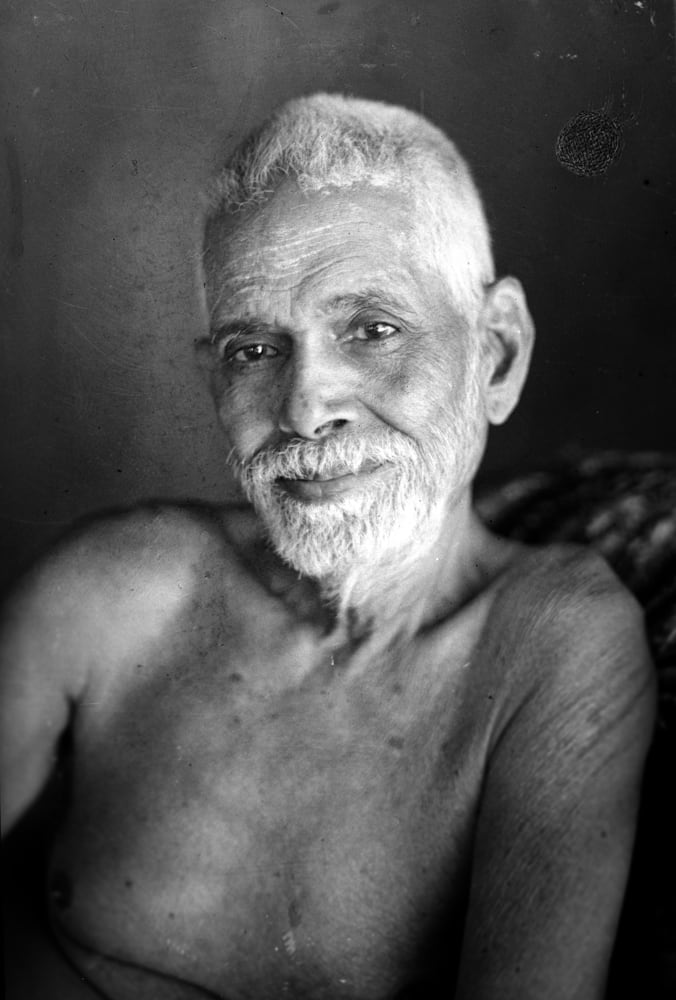
Ramana Maharshi
इन पर सहमत: परम सत्य क्या है? क्या ईश्वर है? · मैं कौन हूँ? क्या कोई सच्चा आत्म है? · मृत्यु के बाद क्या होता है?
Uddalaka Aruni
इन पर सहमत: परम सत्य क्या है? क्या ईश्वर है? · मैं कौन हूँ? क्या कोई सच्चा आत्म है? · मृत्यु के बाद क्या होता है?
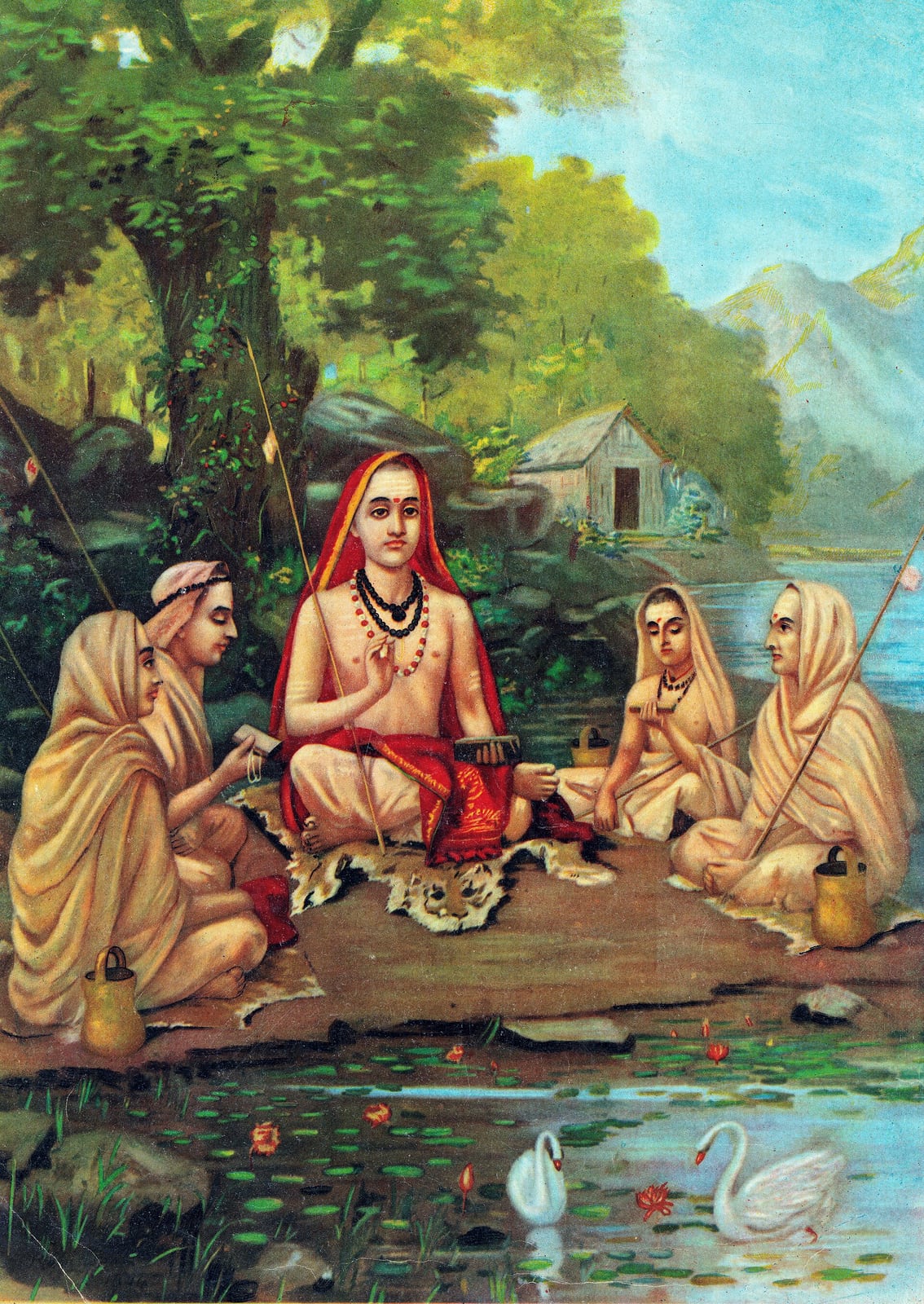
Adi Shankara
इन पर सहमत: परम सत्य क्या है? क्या ईश्वर है? · मैं कौन हूँ? क्या कोई सच्चा आत्म है? · मृत्यु के बाद क्या होता है?
Nisargadatta Maharaj
इन पर सहमत: मैं कौन हूँ? क्या कोई सच्चा आत्म है? · मृत्यु के बाद क्या होता है? · मुक्ति या उद्धार कैसे प्राप्त होता है?



प्रसंग और वृत्तांत
प्रसंग और वृत्तांत
संत-चरित वृत्तांतtiempo mítico
The three sons of Anasūyā
वृत्तांत का स्रोत: Mārkaṇḍeya Purāṇa, cantos XVI–XVII (Pargiter's translation, 1888–1904). In Pargiter the cursed brahmin is unnamed and the one who curses him is Māṇḍavya; other versions call him Kauśika. Variants of the birth appear in the Bhāgavata (4.1) and other Purāṇas.
संत-चरित वृत्तांतtiempo mítico
The yogin who hid in the lake
वृत्तांत का स्रोत: Mārkaṇḍeya Purāṇa, canto XVII (Pargiter's translation, pp. 100–101).
संत-चरित वृत्तांतtiempo mítico
The boons of Kārtavīrya Arjuna
वृत्तांत का स्रोत: Mahābhārata, Anuśāsanaparvan, section CLII of Ganguli's translation (dialogue of Pavana and Arjuna) and Āraṇyakaparvan 115; Mārkaṇḍeya Purāṇa, cantos XVIII–XIX (Pargiter's translation).
संत-चरित वृत्तांतtiempo mítico
The girl with the bracelets
वृत्तांत का स्रोत: Bhāgavata Purāṇa 11.9.5–10. The text does not name the avadhūta; the identification with Dattātreya is traditional.
संत-चरित वृत्तांतtiempo mítico
Piṅgalā, the courtesan who stopped waiting
वृत्तांत का स्रोत: Bhāgavata Purāṇa 11.8.22–44. Piṅgalā also appears in the Mahābhārata (Śāntiparvan) as an example of renouncing hope.
संत-चरित वृत्तांतtiempo mítico
Paraśurāma on Mount Gandhamādana
वृत्तांत का स्रोत: Tripurā Rahasya, Jñānakhaṇḍa, ch. 1 (vv. 23–57 in the Kaviraj and Khiste edition, Wikisource text), referring to the Māhātmyakhaṇḍa for the meeting with Saṃvarta.
साक्ष्य1935
"The guru may be inanimate"
वृत्तांत का स्रोत: Talks with Sri Ramana Maharshi, talk 23, dated 2 February 1935; notes by Munagala Venkataramiah, published by Sri Ramanasramam in 1955.
शिक्षाएँ
शिक्षाएँ
वे अवधारणाएँ जो उनके चिंतन को रूप देती हैं, उनके संदर्भ में समझाई गई।
The avadhūtaavadhuta
The ideal belongs to the literature of renunciation (saṃnyāsa) and has parallels in the paramahaṃsa of the late Upaniṣads and in tantric and Nāth yogins.
The twenty-four teachersveinticuatro-gurus
Ramana Maharshi used this passage to explain that the guru is ultimately the Self; in the Datta tradition it is the core of the teaching on the teacher.
Equal taste (samarasa) and the natural (sahaja)samarasa
Sahaja and samarasa are also key terms of tantric Buddhism (the siddhas) and of Nāth and Sant poetry in North India.
Haṭhayoga and eight-limbed yogahatha-ashtanga
The Jābāladarśana Upaniṣad, also in Dattātreya's mouth, sets out eight-limbed yoga with ten restraints and ten observances.
The synthesis of the trimūrtitrimurti-sintesis
The fused trimūrti iconography is common in modern India, especially in Maharashtra, Karnataka and Gujarat.
वीडियो
वीडियो
रिकॉर्डिंग, साक्षात्कार और वृत्तचित्र। वीडियो YouTube से चलते हैं; वे यहाँ संग्रहीत नहीं हैं।
Dattātreya: An Introduction | by Prof. Antonio Rigopoulos | Seminar Session 1
व्याख्यान· EN· 2025· 55 min
Let's Talk Tattva
YSP 37 James Mallinson | Dattātreya's Discourse on Yoga
साक्षात्कार· EN· 2023· 51 min
Yogic Studiesआधिकारिक चैनल
Avadhūta Gītā Retreat | Session 1 | Swami Sarvapriyananda
व्याख्यान· EN· 2026· 51 min
Vedanta Society of New Yorkआधिकारिक चैनल
The Song of the Avadhoota I · Swami Sarvapriyananda (Class 1 of 3)
व्याख्यान· EN· 2026· 90 min
Vedanta Society of Southern Californiaआधिकारिक चैनल
Upanishad Ganga | Episode 25 | Guru! | Who Are Dattatreya's 24 Gurus? | Guru Tatva
वृत्तचित्र· HI· 2022· 23 min
ChinmayaChannelआधिकारिक चैनल
The Whole World is my Guru! | DattaGuru Special
तृतीय पक्ष की रिकॉर्डिंग· HI· 2025· 10 min
ChinmayaChannelआधिकारिक चैनल
Tripura Rahasya (Ch-22) Talk 01 of 7 @ Prem Puri 2018 (English)
व्याख्यान· EN· 2018· 65 min
Anubhavananda Saraswati - Smiling Swamiआधिकारिक चैनल
How Dattatreya Made Parashuram His Disciple – Sadhguru
तृतीय पक्ष की रिकॉर्डिंग· EN· 2019· 12 min
Sadhguruआधिकारिक चैनल
Dr. Robert Svoboda's Living with Reality Ep. 20: Dattatreya Story Time
व्याख्यान· EN· 2021· 48 min
Be Here Now Networkआधिकारिक चैनल
|| अवधूत - यदु संवाद (दत्तात्रयांचे २४ गुरु) || भाग- 01
व्याख्यान· MR· 2026· 50 min
Chaitanya Maharaj Deglurkar : Officialआधिकारिक चैनल
Ganagapur Dattatreya | Documentary Video | English
वृत्तचित्र· EN· 2021· 15 min
PrakhyatBhatt Pujari Ganagapur
Avadhuta Gita Capítulo 1
तृतीय पक्ष की रिकॉर्डिंग· ES· 2021· 40 min
Silencio entre palabras
Avadhûta Gîtâ - I - Le Soi [Advaita Vedanta]
तृतीय पक्ष की रिकॉर्डिंग· FR· 2022· 40 min
Le Vieux Sage
AVADHUTA GITA - Audiolibro completo
तृतीय पक्ष की रिकॉर्डिंग· IT· 2023· 70 min
Nisargadatta Maharaj in italiano
चित्रशाला
चित्रशाला
सत्यापित लाइसेंस वाले चित्र। प्रत्येक में उसके रचयिता और श्रेय का उल्लेख सुरक्षित है।
संबंध
संबंध
प्रभाव, शिष्यत्व और वैचारिक निकटता। प्रमाणित संबंध को विश्लेषण से पहचानी गई समानता से अलग दर्शाया गया है।
इन्हें प्रभावित किया
Nisargadatta explained that, according to legend, the first teacher of his lineage of the "nine masters" (Navnāth Sampradāya) was the ṛṣi Dattātreya, though he regarded those nine masters as mythological (I Am That, ch. 97).
प्रमाणित संबंध
इन्हें प्रभावित किया
Ramana cited the "ancient saint Avadhūta" of the twenty-four teachers (talk 23, 1935) and the Tripurā Rahasya (talks 314 and 616), the work that sets out Dattātreya's teaching to Paraśurāma.
प्रमाणित संबंध
इन्हें प्रभावित किया
Vivekananda glossed and translated passages of the Avadhūta Gītā in his talks at Thousand Island Park (28 July 1895).
प्रमाणित संबंध
इनसे मिलते-जुलते विचार
The Dattātreyayogaśāstra integrates for the first time Patañjali's eight-limbed yoga with the techniques of haṭhayoga (Mallinson, 2024).
प्रमाणित संबंध
इनसे मिलते-जुलते विचार
The Dattātreyayogaśāstra ascribes the teaching of eight-limbed yoga to Yājñavalkya; a yoga text (Yogayājñavalkya) also circulates under his name.
विश्लेषण से पहचानी गई समानता
इनसे मिलते-जुलते विचार
Kapila and Dattātreya appear together in the Bhāgavata Purāṇa's list of avatāras (1.3.10–11), fifth and sixth, both as teachers of the science of the soul; the Dattātreyayogaśāstra ascribes haṭhayoga practices to Kapila.
विश्लेषण से पहचानी गई समानता
इनसे मिलते-जुलते विचार
Tradition ascribes to Vyāsa the Mahābhārata and the Bhāgavata Purāṇa, the works that transmit the stories about Dattātreya and the avadhūta of the twenty-four teachers.
विश्लेषण से पहचानी गई समानता
इनसे मिलते-जुलते विचार
In the Tripurā Rahasya, Haritāyana narrates to Nārada the teaching Dattātreya gave to Paraśurāma.
विश्लेषण से पहचानी गई समानता
इनसे मिलते-जुलते विचार
The Avadhūta Gītā sets out a radical non-dualism akin to Śaṅkara's Advaita, though with a vocabulary (samarasa, sahaja) closer to tantric and Nāth traditions.
विश्लेषण से पहचानी गई समानता
इनसे मिलते-जुलते विचार
The Avadhūta Gītā and the Aṣṭāvakra Gītā are often published together (Alexandra David-Néel translated them in one volume) because of their uncompromising non-dualism.
विश्लेषण से पहचानी गई समानता
इनसे मिलते-जुलते विचार
Rigopoulos notes, according to the secondary literature, that the Avadhūta Gītā's ideas on attributeless brahman influenced Kabir's poetry; the relationship is not directly documented.
विश्लेषण से पहचानी गई समानता
अन्य प्रविष्टियों से जुड़ा
स्रोत
स्रोत
इस प्रविष्टि के लिए देखे गए ग्रंथ-सूची और सूचीपत्र।
- Rigopoulos, Antonio. Dattātreya: The Immortal Guru, Yogin, and Avatāra. A Study of the Transformative and Inclusive Character of a Multi-faceted Hindu Deity. Albany: State University of New York Press, 1998. ISBN 9780791436967 (tapa dura), 9780791436950 (rústica). Las páginas citadas (43, 57, 77, 195–197, 227–228) se toman de las referencias de la Wikipedia en inglés; no se ha consultado el libro directamente.
- Pargiter, F. Eden (trad.). The Mārkaṇḍeya Purāṇa. Calcuta: Asiatic Society (Bibliotheca Indica), 1888–1904; cantos XVI–XIX (nacimiento de Dattātreya, el lago, Kārtavīrya Arjuna) y XXXVII–XLIII (enseñanza a Alarka).
- Bhāgavata Purāṇa 1.3.11 (Dattātreya, sexto avatāra) y 11.7.25–11.9 (el avadhūta y el rey Yadu: los veinticuatro maestros, lista en 11.7.33–35); texto sánscrito y traducción en Vedabase (Bhaktivedanta Book Trust).
- Mahābhārata: Āraṇyakaparvan 115 y Anuśāsanaparvan 91, 152–157 (numeración de la traducción de Ganguli; en la edición crítica, 3.115.12, 12.49.36–37, 13.152.5 y 13.153.12). Ganguli, Kisari Mohan (trad.). The Mahabharata of Krishna-Dwaipayana Vyasa. Calcuta: Pratap Chandra Roy, 1883–1896.
- Mallinson, James (ed. y trad.). The Dattātreyayogaśāstra. Pondicherry: Institut Français de Pondichéry / École française d'Extrême-Orient, 2024 (Collection Indologie 162; Haṭha Yoga Series 5). ISBN 9782855392967 (EFEO), 9788184702552 (IFP).
- Mallinson, James. «Nāth Sampradāya». En Knut A. Jacobsen et al. (eds.), Brill's Encyclopedia of Hinduism, vol. III. Leiden: Brill, 2011, pp. 407–428 (tesis de la incorporación tardía de Dattātreya al linaje nāth, pp. 407–411, citada según la Wikipedia en inglés).
- अवधूतगीता (Avadhūtagītā), texto sánscrito completo en ocho capítulos, Wikisource en sánscrito; colofón en 8.10.
- Abhayananda, Swami (trad.). Dattatreya: Song of the Avadhut. Olympia (Washington): Atma Books, 1992, p. 10 (datación en los siglos IX–X). Con Grimes, John A. A Concise Dictionary of Indian Philosophy. Albany: SUNY Press, 1996, p. 110. Ambas citadas según la Wikipedia en inglés.
- Olivelle, Patrick (trad.). The Saṃnyāsa Upaniṣads: Hindu Scriptures on Asceticism and Renunciation. Nueva York: Oxford University Press, 1992 (datación de la Jābāla y de la Avadhūta Upaniṣad, citadas según la Wikipedia en inglés). Texto sánscrito de la Avadhūtopaniṣad en Wikisource.
- जाबालदर्शनोपनिषत् (Jābāladarśanopaniṣad), texto sánscrito en diez khaṇḍa, Wikisource en sánscrito: Dattātreya enseña el yoga de ocho miembros a Sāṅkṛti (1.1–5).
- Tripurārahasya, Jñānakhaṇḍa, con la Tātparyadīpikā de Śrīnivāsa. Ed. Gopinath Kaviraj y Nārāyaṇa Śāstrī Khiste. Benarés: Government Sanskrit College, 1925–1933 (Princess of Wales Sarasvati Bhavana Texts 15); texto en Wikisource en sánscrito. Traducción inglesa: Munagala S. Venkataramiah (Swami Ramanananda Saraswathi), Tripura Rahasya or The Mystery beyond the Trinity, Tiruvannamalai, Sri Ramanasramam (ed. 2006, ISBN 9788188018291).
- Venkataramiah, Munagala (comp.). Talks with Sri Ramana Maharshi. Tiruvannamalai: Sri Ramanasramam, 1955; charla 23 (2 de febrero de 1935, preguntas de W. Y. Evans-Wentz) y charlas 314 y 616 (citas de la Tripurā Rahasya).
- Nisargadatta Maharaj. I Am That: Talks with Sri Nisargadatta Maharaj. Trad. Maurice Frydman, ed. Sudhakar S. Dikshit. Bombay: Chetana, 1973; cap. 97, «Mind and the World are not Separate».
- Vivekananda, Swami. Inspired Talks, «Sunday, July 28» (1895), en The Complete Works of Swami Vivekananda, vol. 7. Mayavati: Advaita Ashrama.
- Wikidata: «Dattatreya» (Q850805); «Avadhuta Gita» (Q790053); «Tripura Rahasya» (Q17036247); «Dattatreya Yoga Shastra» (Q104870312).
- Wadiyar, Jaya Chamarajendra. Dattātreya: The Way and the Goal. Introducción de S. Radhakrishnan. Londres: George Allen & Unwin, 1957 (traducción y comentario de la Jīvanmukta Gītā y la Avadhūta Gītā).
- जीवन्मुक्तगीता (Jīvanmuktagītā), texto sánscrito con el comentario de Jaya Chamarajendra Wadiyar, Wikisource en sánscrito; colofón: «compuesta por Śrī Dattātreya, león del vedānta».
- दत्तात्रेयोपनिषत् (Dattātreyopaniṣad), texto sánscrito, Wikisource en sánscrito.
- Hulin, Michel (trad.). La doctrine secrète de la déesse Tripurā: Tripurā Rahasya, section de la connaissance. París: Fayard, 1979 (Documents spirituels). ISBN 9782213008127.
- «Dattatreya», Wikipedia en inglés (consultada el 26-10-2026): síntesis de las tradiciones datta (Mahānubhāva, Gurucaritra, Navnāth), de la iconografía y de la Datta Jayantī, con referencias a Rigopoulos (1998), Bühnemann (1988) y Gopinatha Rao (1914). Fuente terciaria: se usa solo para datos de tradición.
- Open Library: Dattātreya Tantra, «Dattātreya viracita», con comentario hindi de Rudradeva Tripāṭhī. Delhi: Rañjana Pablikeśansa, 1995 (OL23606841W).
- अधिकार-धारक
- Textos sánscritos anónimos en dominio público. Las traducciones y ediciones modernas tienen derechos propios: SUNY Press (Rigopoulos), EFEO / Institut Français de Pondichéry (Mallinson), Sri Ramanasramam y World Wisdom (Tripurā Rahasya), Sri Ramakrishna Math y Advaita Ashrama (Avadhūta Gītā), Shanti Sadan (Shastri), Atma Books (Abhayananda), José J. de Olañeta, Luis Cárcamo, Éditions du Rocher, Fayard (Hulin), Oxford University Press (Olivelle).
पुष्टि की प्रतीक्षा में
जो यह प्रविष्टि अभी तक निश्चित नहीं कर सकी है। हम उसे भर देने के बजाय कह देना बेहतर समझते हैं।
- Fechas: Dattātreya es figura de la tradición, sin fechas; la línea de tiempo usa las de los textos, todas aproximadas y discutidas.
- Consultar directamente Rigopoulos (1998): las páginas citadas (43, 57, 77, 195–197, 227–228) proceden de las referencias de la Wikipedia en inglés.
- Confirmar en la edición de Mallinson (2024) la forma de diálogo con Sāṅkṛti y la relación con la Haṭhapradīpikā.
- Confirmar en Brill's Encyclopedia of Hinduism, vol. III (2011), las páginas de Mallinson sobre la incorporación de Dattātreya al linaje nāth (la Wikipedia cita «Mallinson 2012, pp. 407–411»).
- Avadhūta Gītā: la cifra de 289 versos es de Rigopoulos; la edición de Wikisource numera unos 280. Comparar con una edición impresa.
- Traducción de Shri Purohit Swami (Munshiram Manoharlal, 1979): es póstuma y no se ha encontrado en línea; en EE. UU. no es de dominio público (primera publicación en 1979). Un vendedor indica una 2.ª edición con ISBN 8121502451, no comprobada en catálogo.
- Traducción de Lala Kannoo Mal (Madrás, 1920): se desconoce la fecha de muerte del traductor; el escaneo del Digital Library of India (dli.ernet.214590) corresponde por error a otro libro. Buscar un escaneo válido.
- Dattātreya Tantra: comprobar contenido y forma (diálogo) en una edición crítica o un estudio; aquí se describe según las ediciones populares.
- Datta Saṃhitā: la tradición śrīvidyā menciona una «Dattasaṃhitā» perdida; no se registra hasta encontrar una fuente fiable.
- No se ha encontrado ninguna traducción española de la Tripurā Rahasya ni del Dattātreyayogaśāstra con ISBN.
- Sala de lectura: el Mārkaṇḍeya Purāṇa de Pargiter (dominio público) y la traducción de Ganguli contienen los relatos, pero en volúmenes que reúnen la obra entera; no se registran como lectura propia de Dattātreya.
- Vídeos: los del canal oficial de OSHO, de Sri M y otros sobre la Tripurā Rahasya no se han registrado por no ser oficiales o no estar verificados.
- Project Gutenberg no tiene ninguna edición de estas obras (búsqueda en gutenberg.org el 2026-10-26: «No records found»).
2026-10-26 को शोधित