हिन्दू धर्म · योग · भक्ति · अद्वैत वेदान्त
Swami Vivekananda
স্বামী বিবেকানন্দ · নরেন্দ্রনাথ দত্ত · स्वामी विवेकानन्द
1863 – 1902ऐतिहासिक रूप से प्रमाणित व्यक्ति
बंगाली संन्यासी, रामकृष्ण के प्रमुख शिष्य और रामकृष्ण मठ तथा रामकृष्ण मिशन के संस्थापक। शिकागो की विश्व धर्म महासभा (1893) में उनके भाषण ने उन्हें पश्चिम के सामने हिन्दू धर्म का पहला महान व्याख्याता बना दिया। सार्वजनिक शिक्षण के मात्र नौ वर्षों में उन्होंने एक व्यावहारिक वेदान्त प्रतिपादित किया — चार योग, प्रत्येक आत्मा की अंतर्निहित दिव्यता, मनुष्य की सेवा ही उपासना — जिसने आधुनिक योग, भारतीय राष्ट्रवाद और धर्मों के बीच संवाद पर गहरी छाप छोड़ी। उनतालीस वर्ष की आयु में उनका देहांत हुआ।
- कृतियाँ
- 55कृतियाँ
- संस्करण
- 113संस्करण
- उद्धरण
- 15उद्धरण
- वीडियो
- 12वीडियो
- चित्र
- 8चित्र
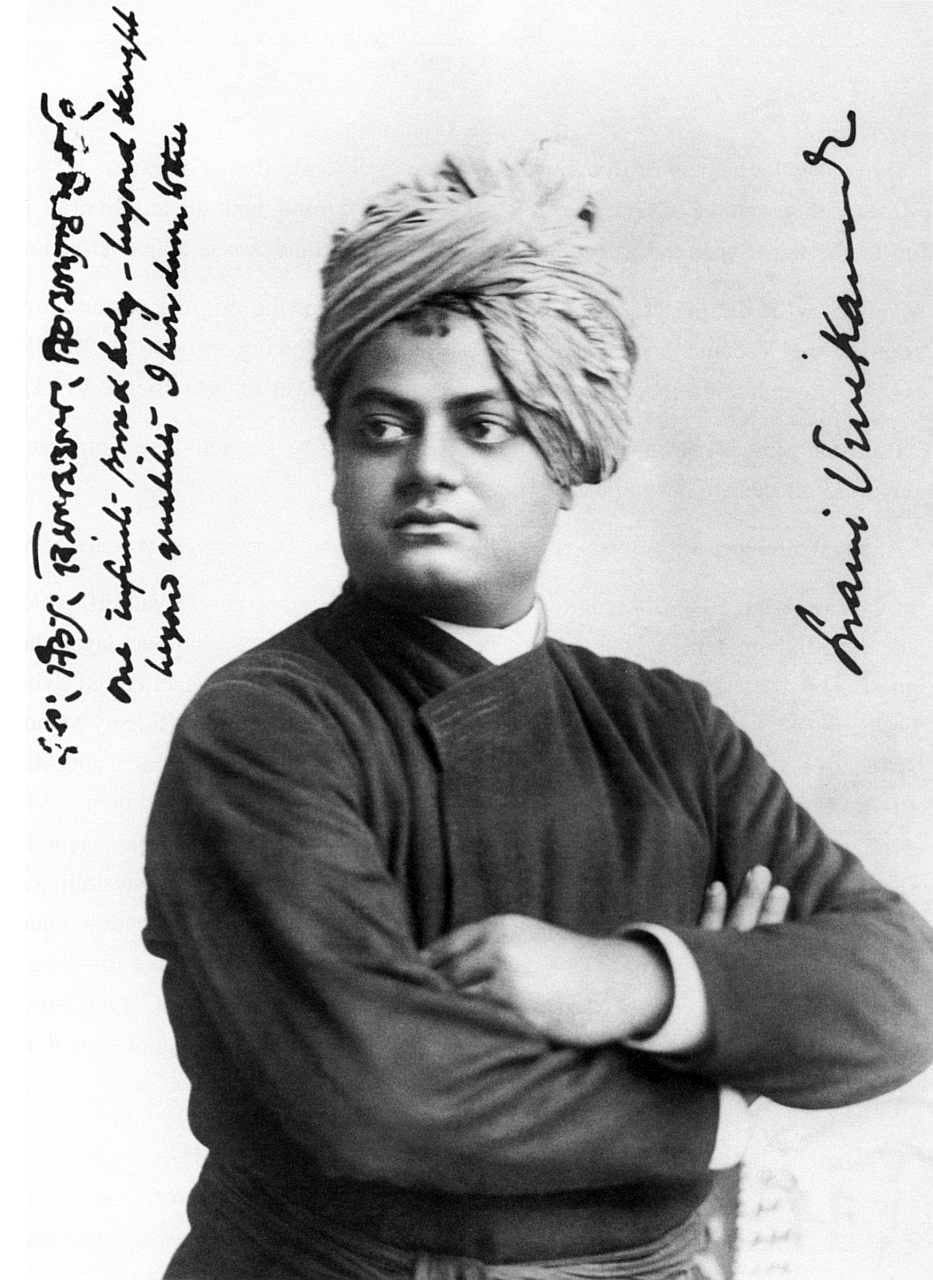
Swami Vivekananda en Chicago, septiembre de 1893 (con dedicatoria autógrafa) · Public domain
उनके अपने शब्दों में
«Sisters and Brothers of America,»Discurso de bienvenida, Parlamento Mundial de las Religiones, Chicago, 11 de septiembre de 1893 (Complete Works, vol. 1, «Response to Welcome»)

मूल विचार
The four yogas: Vivekananda organised Hindu spiritual practice into four paths corresponding to four temperaments: karma yoga, for the active, purifies through work done without attachment; bhakti yoga, for the emotional, transforms love into devotion to God; raja yoga, for the contemplative, controls the mind through concentration and meditation; jnana yoga, for the intellectual, attains freedom through discrimination between the real and the unreal.
संदर्भ में देखें
जीवनी
6 मिनट का पाठ
स्पैनिश मूल से सहायता-प्राप्त अनुवाद, मातृभाषी अनुवादक द्वारा समीक्षा लंबित।
कलकत्ता का एक युवक, जिसे प्रमाण चाहिए था
नरेन्द्रनाथ दत्त का जन्म 12 जनवरी 1863 को कलकत्ता के शिमला मोहल्ले में एक संपन्न कायस्थ परिवार में हुआ। उनके पिता विश्वनाथ दत्त उच्च न्यायालय में वकील थे — विश्वजनीन रुचियों वाले व्यक्ति और फ़ारसी काव्य के पाठक; माता भुवनेश्वरी देवी ने उन्हें रामायण और महाभारत की कथाएँ सौंपीं। नरेन्द्र प्रतिभाशाली किंतु अनियमित विद्यार्थी थे: शास्त्रीय संगीत, व्यायाम, पाश्चात्य तर्कशास्त्र, और जनरल असेंबलीज़ इंस्टीट्यूशन (आज का स्कॉटिश चर्च कॉलेज) में मिल, स्पेंसर और ह्यूम, जहाँ से उन्होंने 1884 में स्नातक उपाधि ली। बंगाली अभिजात वर्ग के अनेक युवकों की तरह वे ब्रह्म समाज में जाते रहे, उस सुधारवादी आंदोलन में जिसने मूर्तियों के स्थान पर एक तर्कसंगत ईश्वरवाद रखा था। पर प्रवचन उन्हें संतुष्ट नहीं करते थे। स्वयं उनके द्वारा वर्षों बाद दोहराए गए और उनके जीवनीकारों द्वारा दर्ज किए गए वृत्तांत के अनुसार, वे कलकत्ता के धर्मगुरुओं से पूछते फिरते थे कि क्या उन्होंने ईश्वर को देखा है। किसी ने भी हाँ नहीं कहा।
दक्षिणेश्वर
1881 के अंत के आसपास उनकी भेंट गंगा तट पर दक्षिणेश्वर के काली मंदिर के भावविभोर पुजारी रामकृष्ण से हुई। उसी प्रश्न पर लगभग निरक्षर उस व्यक्ति ने उत्तर दिया कि हाँ, वह ईश्वर को वैसे ही देखते हैं जैसे उसे देख रहे हैं, बल्कि उससे भी अधिक प्रगाढ़ता से। महेन्द्रनाथ गुप्त की दैनंदिनियों (श्रीश्रीरामकृष्ण कथामृत) में दर्ज दोनों का संबंध पाँच वर्षों तक शिष्य के संशय और गुरु की निश्चितता के बीच एक रस्साकशी रहा। नरेन्द्र मूर्तिपूजा का और अद्वैत के इस सिद्धांत का उपहास करते थे कि “सब कुछ ब्रह्म है”; रामकृष्ण उनसे एक चुने हुए व्यक्ति की तरह व्यवहार करते थे। 1884 में पिता की आकस्मिक मृत्यु ने परिवार को निर्धन कर दिया और नरेन्द्र को भूख के सामने ला खड़ा किया; यह वृत्तांत कि रामकृष्ण ने उन्हें देवी से भौतिक सहायता माँगने भेजा और वे केवल विवेक और वैराग्य ही माँग सके, संघ की परंपरा से आया है और उसे उसी रूप में पढ़ा जाना चाहिए। अगस्त 1886 में जब काशीपुर में रामकृष्ण का देहांत हुआ, तब तक नरेन्द्र युवकों की एक छोटी मंडली के केंद्र बन चुके थे, जिसने उसी वर्ष के अंत में वराहनगर के एक जीर्ण-शीर्ण मकान में स्वयं को एक संन्यासी समुदाय के रूप में संगठित किया।
परिव्राजक संन्यासी
1888 से 1893 के बीच उन्होंने बदलते संन्यास-नामों के साथ पैदल और रेल से भारत का भ्रमण किया, कभी महाराजाओं के महलों में तो कभी अछूतों की झोंपड़ियों में रात बिताते हुए। इन वर्षों ने — जिनका प्रलेखन पत्रों और दशकों बाद एकत्र की गई गवाहियों से असमान रूप में हुआ है — उन्हें ग्रामीण दरिद्रता और जाति-व्यवस्था की हीनता का प्रत्यक्ष अनुभव दिया, जो आगे चलकर उनकी सामाजिक आलोचना को पोषित करता रहा। दिसंबर 1892 में वे उपमहाद्वीप के दक्षिणी छोर कन्याकुमारी पहुँचे और तट के सामने एक चट्टान पर ध्यान किया; वहीं, जैसा उन्होंने बाद में अपने पत्रों में बताया, उनके मन में यह विचार आया कि भारत की जनता को ऊपर उठाने के साधन पश्चिम में खोजे जाएँ। “विवेक का आनंद” अर्थ वाला विवेकानन्द नाम यात्रा से कुछ ही पहले खेतड़ी के महाराजा के परिवेश में स्थिर हुआ, जिन्होंने समुद्र-यात्रा का कुछ ख़र्च उठाया।
शिकागो, 1893
जुलाई 1893 में वे किसी भी संस्था के प्रमाण-पत्र के बिना शिकागो पहुँचे। हार्वर्ड में यूनानी के प्राध्यापक जॉन हेनरी राइट ने उन्हें कोलंबियन प्रदर्शनी के अंतर्गत आयोजित विश्व धर्म महासभा में प्रवेश दिलाया। 11 सितंबर को उन्होंने अपना संक्षिप्त भाषण “Sisters and Brothers of America” (“अमेरिका के बहनो और भाइयो”) शब्दों से आरंभ किया, जिन पर जॉन हेनरी बैरोज़ द्वारा संकलित विवरणों के अनुसार देर तक तालियाँ बजती रहीं। अगले दिनों में उन्होंने जाति और मूर्तियों से रहित एक हिन्दू धर्म प्रस्तुत किया, जिसके केंद्र में आत्मा की दिव्यता थी — “हिन्दू आपको पापी कहने से इनकार करता है” — और सभी धर्मों का सामंजस्य। समाचार-पत्रों ने उन्हें महासभा का प्रमुख चेहरा बना दिया।
पश्चिम में आचार्य
तीन वर्ष से अधिक समय तक वे संयुक्त राज्य अमेरिका और इंग्लैंड में व्याख्यान देते रहे। 1894 में उन्होंने न्यूयॉर्क की वेदान्त सोसाइटी की स्थापना की; 1895 की गर्मियों में थाउज़ंड आइलैंड पार्क में एक छोटे समूह को शिक्षा दी (देववाणी — Inspired Talks); लंदन में उनकी भेंट मार्गरेट नोबल से हुई, जो आगे चलकर भगिनी निवेदिता बनीं; ऑक्सफ़ोर्ड में वे मैक्स मूलर से और कील में पॉल डॉयसन से मिले। इन कक्षाओं से वे चार पुस्तकें जन्मीं जिन्होंने उनकी पद्धति को स्थिर किया: कर्मयोग और राजयोग (1896), भक्तियोग और, मरणोपरांत, ज्ञानयोग शीर्षक से संकलित व्याख्यान। पतंजलि के योगसूत्र के टीका-सहित अनुवाद के साथ राजयोग दशकों तक पाश्चात्य पाठक के लिए योग का प्रवेश-द्वार रहा; इतिहासकार एलिज़ाबेथ डे मिकेलिस ध्यान की उसकी मनोवैज्ञानिक और प्रयोगात्मक व्याख्या के कारण उसे “आधुनिक योग” का आधार-ग्रंथ मानती हैं।
सेवा के लिए वापसी
जनवरी 1897 में वे कोलम्बो में उतरे और विशाल स्वागत-समारोहों के बीच दक्षिण भारत से होते हुए अल्मोड़ा तक गए; इस यात्रा के व्याख्यान, कोलम्बो से अल्मोड़ा तक व्याख्यान (Lectures from Colombo to Almora), भारतीयों के लिए उनके संदेश का सार हैं: शक्ति, आत्मविश्वास, जनसाधारण की शिक्षा, और छुआछूत तथा कर्मकांड की निर्मम आलोचना। 1 मई 1897 को उन्होंने कलकत्ता में रामकृष्ण मिशन एसोसिएशन की स्थापना की, जिसने संन्यास-जीवन को समाज-सेवा से जोड़ा; दिसंबर 1898 में बेलूर मठ की प्रतिष्ठा हुई और 1899 में मायावती में अद्वैत आश्रम की। उनका सूत्र, जिसका मूल रामकृष्ण से जोड़ा जाता है, यह था कि मनुष्य की सेवा स्वयं ईश्वर मानकर की जाए (शिव ज्ञाने जीव सेवा)। 1899–1900 में उन्होंने पश्चिम की दूसरी यात्रा की — कैलिफ़ोर्निया, न्यूयॉर्क, पेरिस की धर्मेतिहास कांग्रेस — जब वे मधुमेह और दमे से गंभीर रूप से पीड़ित हो चुके थे।
उनतालीस वर्ष की आयु में मृत्यु
4 जुलाई 1902 को संध्या के समय, ध्यान करते हुए, बेलूर मठ में उनका देहांत हुआ; उनके साथियों ने उस दिन को सामान्य बताया। वे उनतालीस वर्ष के थे; शिष्यों को याद था कि उन्होंने कहा था कि वे चालीस तक नहीं पहुँचेंगे। गंगा के किनारे, ठीक उस स्थान के सामने उनका दाह-संस्कार हुआ जहाँ सोलह वर्ष पहले उनके गुरु का पार्थिव शरीर अग्नि को सौंपा गया था।
प्रलेखित और परंपरा से प्राप्त
विवेकानन्द के संबंध में प्राथमिक स्रोतों की असाधारण राशि सुरक्षित है: आशुलिपि में दर्ज व्याख्यान, पत्र, लेख और वार्तालाप, जो कम्प्लीट वर्क्स (सम्पूर्ण ग्रंथावली) के नौ खंडों में संकलित हैं। इसके विपरीत, परिव्राजक-काल के वर्ष और रामकृष्ण के साथ उनके संबंध के अनेक प्रसंग मुख्यतः उनके शिष्यों द्वारा लिखित आधिकारिक जीवनी (1912–1918) और परवर्ती गवाहियों से ज्ञात हैं, जिनमें इस विधा का स्वाभाविक संत-चरित झुकाव है। मैरी लुईज़ बर्क के अमेरिकी समाचार-पत्रों पर किए गए शोध ने अमेरिकी वर्षों का सटीक पुनर्निर्माण संभव बनाया और एक से अधिक किंवदंती को सुधारा। उनकी आवाज़ की कोई ध्वनि-रिकॉर्डिंग सुरक्षित नहीं है: जो रिकॉर्डिंग इस रूप में प्रचलित हैं, वे बाद के पाठ हैं।
विरासत
बेलूर स्थित रामकृष्ण मठ और रामकृष्ण मिशन आज सैकड़ों केंद्र, अस्पताल और विद्यालय चलाते हैं। वेदान्त की उनकी व्याख्या — अनुभव को धर्म का प्रमाण मानना, धर्मों की एकता, हिन्दू धर्म को सार्वभौम आस्था के रूप में देखना — की अनंतानंद रामबचन और विल्हेल्म हाल्बफ़ास जैसे विद्वानों ने परंपरा पर पाश्चात्य कोटियाँ आरोपित करने के लिए आलोचना की है, और हिन्दू राष्ट्रवाद ने उसे ऐसे अर्थों में अपनाया जिनकी उन्होंने कल्पना नहीं की थी। गांधी, रवीन्द्रनाथ ठाकुर, श्री अरविन्द और सुभाषचन्द्र बोस ने उनके प्रभाव को स्वीकार किया, और भारत उनकी जयंती को राष्ट्रीय युवा दिवस के रूप में मनाता है। भारत के बाहर, उनके बिना पश्चिम में योग, वेदान्त और एक सार्वभौम आध्यात्मिकता के विचार के आगमन को समझा नहीं जा सकता।
स्रोत: Vivekananda, Swami. The Complete Works of Swami Vivekananda. Mayavati Memorial Edition, 9 vols. Calcuta: Advaita Ashrama, 1907–1997 (vol. 9 añadido en 1997). · His Eastern and Western Disciples. The Life of Swami Vivekananda. 2 vols. Mayavati / Calcuta: Advaita Ashrama, 1912–1918; 6.ª ed. revisada, 1979–1981. · Nikhilananda, Swami. Vivekananda: A Biography. Nueva York: Ramakrishna-Vivekananda Center, 1953. · Burke, Marie Louise. Swami Vivekananda in the West: New Discoveries. 6 vols. Calcuta: Advaita Ashrama, 1983–1987 (1.ª ed. en un volumen, 1958). · Barrows, John Henry (ed.). The World's Parliament of Religions. 2 vols. Chicago: The Parliament Publishing Company, 1893.
कालक्रम
जीवन, वर्ष-दर-वर्ष
प्रत्येक बिंदु एक प्रमाणित घटना है। उसे स्रोत और निश्चितता के स्तर सहित पढ़ने के लिए क्लिक करें।
12 जनवरी 18630 वर्षCalcuta
Birth of Narendranath Datta
Born at the family home in Gourmohan Mukherjee Street, son of the attorney Vishwanath Datta and Bhuvaneswari Devi.
प्रमाणितHis Eastern and Western Disciples. The Life of Swami Vivekananda. 2 vols. Mayavati / Calcuta: Advaita Ashrama, 1912–1918; 6.ª ed. revisada, 1979–1981.
उनके निधन के बाद
- 1907First Complete Works
- 1984National Youth Day
12 जनवरी 1863 · 0 वर्ष
Birth of Narendranath Datta
Born at the family home in Gourmohan Mukherjee Street, son of the attorney Vishwanath Datta and Bhuvaneswari Devi.
प्रमाणित
1881 · 18 वर्ष
First meeting with Ramakrishna
Ramakrishna hears him sing at Surendranath Mitra's house (November 1881, according to the official biography) and he soon visits Dakshineswar, where he asks whether he has seen God.
संभावित
1884 · 21 वर्ष
Degree and father's death
He graduates (B.A.) from Calcutta University. His father's sudden death leaves the family in debt and poverty.
प्रमाणित
16 अगस्त 1886 · 23 वर्ष
Death of Ramakrishna
Ramakrishna dies of throat cancer at the Cossipore garden house, where Narendra and other young men had nursed him for months.
प्रमाणित
दिसंबर 1886 · 23 वर्ष
Birth of the monastic community
The young disciples settle in a house at Baranagar—the Order's first monastery—and at Antpur on Christmas Eve take the vow of renunciation; formal ordination (viraja homa) follows early in 1887.
प्रमाणित
1888 – 1893 · 25 वर्ष
Years of wandering
He travels India as a wandering monk until 1893, in contact with maharajas, pandits and peasants.
प्रमाणित
दिसंबर 1892 · 29 वर्ष
The rock at Kanyakumari
He meditates on a rock off Cape Comorin; in his letters he places there the decision to seek help for India's masses. The rock now holds the Vivekananda Rock Memorial (1970).
प्रमाणित
31 मई 1893 · 30 वर्ष
Sails for America
He sails from Bombay via Ceylon, Singapore, Hong Kong, Japan and Vancouver, reaching Chicago at the end of July.
प्रमाणित
11 सितंबर 1893 · 30 वर्ष
Welcome address at the Parliament of Religions
'Sisters and Brothers of America.' Until 27 September he speaks several times, the 'Paper on Hinduism' (19 September) being the central text.
प्रमाणित
नवंबर 1894 · 31 वर्ष
Vedanta Society of New York
He founds the first Vedanta society in the West, still active.
प्रमाणित
जून 1895 · 32 वर्ष
The Thousand Island Park talks
Seven weeks of teaching a small group of disciples; Sarah Ellen Waldo's notes will be published as Inspired Talks (1908).
प्रमाणित
नवंबर 1895 · 32 वर्ष
Meeting Margaret Noble
The Irish educator, the future Sister Nivedita, hears him in a West End drawing room.
प्रमाणित
1896 · 33 वर्ष
Raja Yoga, Karma Yoga and meetings with Max Müller and Deussen
Longmans publishes Raja Yoga in London; Karma Yoga and Bhakti Yoga appear. He visits Max Müller in Oxford (May) and Paul Deussen in Kiel (September).
प्रमाणित
15 जनवरी 1897 · 34 वर्ष
Triumphant return to India
He lands at Colombo and travels north to Calcutta and Almora; his speeches form Lectures from Colombo to Almora.
प्रमाणित
1 मई 1897 · 34 वर्ष
Founding of the Ramakrishna Mission
He establishes the Ramakrishna Mission Association, joining monastic renunciation to social service.
प्रमाणित
9 दिसंबर 1898 · 35 वर्ष
Consecration of Belur Math
He installs Ramakrishna's relics in the new monastery on the Ganges, the Order's headquarters.
प्रमाणित
20 जून 1899 – 1900 · 36 वर्ष
Second journey to the West
He leaves with Turiyananda and Nivedita; teaches in New York and California (Shanti Ashrama) and in 1900 attends the Congress of the History of Religions in Paris.
प्रमाणित
4 जुलाई 1902 · 39 वर्ष
Death
He dies in the evening in his room, during meditation; the monks speak of mahasamadhi. He is cremated the next day on the bank of the Ganges.
प्रमाणित
1907
First Complete Works
Advaita Ashrama begins publishing the Complete Works (Mayavati Memorial Edition), which will reach nine volumes in 1997.
प्रमाणित
1984
National Youth Day
The Government of India declares 12 January, his birthday, National Youth Day (observed since 1985).
प्रमाणित
कृतियाँ
आवश्यक कृतियाँ
वे कृतियाँ जिनके बिना उनकी विरासत को समझा नहीं जा सकता।
प्रकाशित व्याख्यान · 1896
Raja Yoga
Raja Yoga, or Conquering the Internal Nature
The exposition of meditative yoga that most influenced the West for half a century. It presents raja yoga as an experimental science of the mind—posture, control of prana, withdrawal of the senses, concentration, meditation and samadhi—without prior faith. The second part translates and comments on Patañjali's aphorisms. Its language of energy, psychology and method, and its syncretism with notions of the time, were decisive in making yoga understood in the West as a universal technique; Elizabeth De Michelis regards it as the founding text of modern yoga.
8 संस्करण · amazon.com

प्रकाशित व्याख्यान · 1896
Karma Yoga
Karma-Yoga
The yoga of action: how work done without attachment to its fruits purifies the mind and leads to freedom. Drawing on the Bhagavad Gita, Vivekananda develops an ethic of duty relative to each person ('each is great in his own place'), the idea that in helping the world we help ourselves, and the ideal of work for work's sake. It is the doctrinal foundation of the Ramakrishna Mission and of social service as spiritual practice.
7 संस्करण · amazon.com

प्रकाशित व्याख्यान · लगभग 1896
Bhakti Yoga
Bhakti-Yoga
The path of love for God. Vivekananda defines bhakti as 'a real, genuine search after the Lord' that begins, continues and ends in love, and follows it from preparatory devotion—with symbols, images, names and the need for a teacher—to supreme devotion, in which lover, love and beloved merge. He defends image worship as a legitimate step against reformist critics and reconciles it with non-dual Vedanta.
6 संस्करण · amazon.com

प्रकाशित व्याख्यान · लगभग 1899
Jnana Yoga
Jnana-Yoga
The path of knowledge according to Advaita Vedanta: the necessity of religion, maya as a statement of facts rather than a theory, the personal and impersonal God, the unity of existence and the realisation of the Self. It is his most philosophical exposition: a defence of monism as the rational culmination of religion, in dialogue with the science and agnosticism of his time, and the basis of his thesis that all religions lead to the same unity.
8 संस्करण · amazon.com
संपूर्ण कृतित्व (55)
Swami Vivekananda
Chicago Addresses
The Conscious LibraryChicago Addresses
1893

The Complete Works
1907

Lectures from Colombo to Almora
1897

Inspired Talks
1908

My Master
1901
Swami Vivekananda
Letters
The Conscious LibraryLetters
1940

Practical Vedanta
1896

The Vedanta Philosophy (Harvard address)
1896
Swami Vivekananda
Memoirs of European Travel (Parivrajak)
The Conscious LibraryMemoirs of European Travel (Parivrajak)
1899
Swami Vivekananda
Modern India (Bartaman Bharat)
The Conscious LibraryModern India (Bartaman Bharat)
1899
Swami Vivekananda
The East and the West (Prachya o Paschatya)
The Conscious LibraryThe East and the West (Prachya o Paschatya)
1902
Swami Vivekananda
Poems
The Conscious LibraryPoems
1947

Talks with Swami Vivekananda
1902

Meditation and Its Methods
1976
Swami Vivekananda
Sangeet Kalpataru
The Conscious LibrarySangeet Kalpataru
1887
Swami Vivekananda
The Ideal of a Universal Religion
The Conscious LibraryThe Ideal of a Universal Religion
1896
Swami Vivekananda
The Real and the Apparent Man
The Conscious LibraryThe Real and the Apparent Man
1896
Swami Vivekananda
Vedanta Philosophy: Lecture on "The Atman"
The Conscious LibraryVedanta Philosophy: Lecture on "The Atman"
1896

Speeches and Writings of Swami Vivekananda: A Comprehensive Collection
1899
Swami Vivekananda
Christ, the Messenger
The Conscious LibraryChrist, the Messenger
1900
Swami Vivekananda
The Science and Philosophy of Religion
The Conscious LibraryThe Science and Philosophy of Religion
1908

Essentials of Hinduism
1919

Hinduism
1943

Religion of Love
1947
वचन
किसी निश्चित कृति में स्थित वचन। प्रत्येक के साथ उसका स्रोत और विश्वसनीयता का स्तर है।
Sisters and Brothers of America,सत्यापितDiscurso de bienvenida, Parlamento Mundial de las Religiones, Chicago, 11 de septiembre de 1893 (Complete Works, vol. 1, «Response to Welcome»)
अप्रामाणिक या विवादित आरोपण वाले उद्धरण (3)
«'Talk to yourself once in a day, otherwise you may miss meeting an excellent person in this world.'»
It circulates massively on social media and posters under his name, but it does not appear in any of the nine volumes of the Complete Works (search of the full Wikisource text, 2026-10-23). Neither its style nor its vocabulary is Vivekananda's.
«'In a day, when you don't come across any problems – you can be sure that you are travelling in a wrong path.'»
Not located in the Complete Works (Wikisource search, 2026-10-23). It belongs to the self-help sayings attributed online without a source.
«The audio recordings circulating as 'the voice of Swami Vivekananda' delivering the Chicago address.»
No sound recording of Vivekananda survives. The recordings presented as his 'own voice' are modern readings; neither the Ramakrishna Order nor Marie Louise Burke's research on his American stay mentions any recording.
अंतिम शब्द
उनके अंतिम शब्दों का कोई सत्यापन-योग्य अभिलेख उपलब्ध नहीं है।
His disciples' official biography (The Life of Swami Vivekananda, 1912–1918) describes 4 July 1902 in detail—three hours of meditation in the morning, a Sanskrit grammar class, a walk, talk of a planned Vedic college—and says that around seven in the evening he withdrew to meditate and died at about nine; sources differ on the time (9:10 or 9:20). It records no words spoken at the moment of death. A remark he supposedly made that day, overheard by a brother monk, that only 'another Vivekananda' would understand what Vivekananda had done, circulates widely; it could not be checked against the primary source and is in any case not his last words.
स्रोत: His Eastern and Western Disciples. The Life of Swami Vivekananda. 2 vols. Mayavati / Calcuta: Advaita Ashrama, 1912–1918; 6.ª ed. revisada, 1979–1981.
पूछें
उनकी कृतियाँ क्या उत्तर देती हैं
मानवता के बारह महान प्रश्न और उनके ग्रंथ उनका जो उत्तर देने देते हैं, संदर्भों सहित। हम कभी उनके मुख में अपने शब्द नहीं रखते।
परम सत्य क्या है? क्या ईश्वर है?
The personal God is the Absolute as read by the human mind
साकार भी, निराकार भीस्पष्ट रूप से कहा है
Swami Vivekananda, disciple of Ramakrishna, defends Advaita Vedanta without disdaining devotion. In his Jnana Yoga lectures he holds that the only reality is the impersonal Brahman, existence, consciousness and bliss, and that the human soul is identical with it. In Bhakti Yoga, in the chapter on the philosophy of Ishvara, he explains that the personal God is that same Absolute as perceived by the human mind: not an illusion to be discarded but the highest reading of the Absolute available to one who still feels himself an individual. Hence his claim that dualism, qualified non-dualism and non-dualism are stages of one path. For Vivekananda, the divine has a face that is loved and a formless ground with which, ultimately, one is identified.
इस प्रश्न की अन्य गुरुओं से तुलना करेंमैं कौन हूँ? क्या कोई सच्चा आत्म है?
Each soul is potentially divine; the real man is the infinite Atman
आत्मन् ही ब्रह्म हैस्पष्ट रूप से कहा है
Swami Vivekananda distinguishes, in the lecture «The Real and the Apparent Man» collected in Jnana Yoga, between the limited individual we believe ourselves to be and the real man, the Atman, infinite, immortal and one with Brahman. The apparent man is a passing manifestation of that Atman through body and mind; everything that limits us belongs to the level of appearance. Hence his motto, which heads his exposition of Raja Yoga: each soul is potentially divine, and the goal is to manifest this divinity within by controlling nature, external and internal, through work, devotion, psychic control or philosophy. Vivekananda stresses the ethical consequences: if we are all the same Self, serving another is serving God. The true self is not a part of the Absolute but the Absolute itself.
इस प्रश्न की अन्य गुरुओं से तुलना करेंहम दुःख क्यों भोगते हैं?
Maya always mixes pleasure and pain; only the Atman is free of both
हम क्या हैं, इसका अज्ञानस्पष्ट रूप से कहा है
Swami Vivekananda treats suffering in his lectures on maya, collected in Jnana Yoga. Maya is not for him a theory of illusion but a statement of the contradiction in which we live: every pleasure drags its pain, every good its evil, and no worldly progress will remove that mixture, because it belongs to the nature of the relative world. Whoever seeks complete happiness in the finite is condemned to frustration. The root of suffering is ignorance of our true nature: we identify with body and mind, subject to contradiction, rather than with the Atman, which lies beyond it. Vivekananda does not draw indifference from this: in Karma Yoga he proposes working to relieve the pain of others without attachment to results, as a way of purifying oneself and of serving God in every being.
इस प्रश्न की अन्य गुरुओं से तुलना करेंमृत्यु के बाद क्या होता है?
The Atman is immortal; bodies change, are reborn and are finally known as illusory
जो मैं हूँ, वह न जन्मता है न मरता हैस्पष्ट रूप से कहा है
Vivekananda sets out the question of death from Vedanta in lectures such as «Immortality», included in Jnana Yoga. He denies that the soul is created or can die: what has a beginning has an end, and the Atman, which is Brahman, has none. On the relative plane he accepts reincarnation: the subtle mind, laden with impressions (samskaras), leaves the body and seeks another in accordance with its karma, and Vivekananda defends it as a more rational explanation of the differences between beings than the creation of new souls at each birth. But on the ultimate plane, that of non-duality, the soul never came and never went: the same infinite Self appears under names and forms. The goal is not an eternal life in a heaven, which would be another form of birth, but to recognise that one was never born.
इस प्रश्न की अन्य गुरुओं से तुलना करेंमुक्ति या उद्धार कैसे प्राप्त होता है?
Manifest the inner divinity through work, devotion, mental control or knowledge
अनुशासित साधना सेस्पष्ट रूप से कहा है
Swami Vivekananda sums up his position in the preface to Raja Yoga: each soul is potentially divine and the goal is to manifest that divinity by controlling nature, external and internal, whether by work, by worship, by psychic control or by philosophy, by one, several or all of these means. The other elements of religion (doctrines, rites, books or temples) are secondary details. He devoted a book to each path: Karma Yoga, Bhakti Yoga, Raja Yoga and Jnana Yoga. His originality lies in presenting them as verifiable, almost experimental methods suited to different temperaments, and in joining them to service of others, whom he asked people to see as manifestations of the divine. The ultimate horizon is the Advaitic realisation of identity with Brahman.
इस प्रश्न की अन्य गुरुओं से तुलना करेंक्या गुरु आवश्यक है?
Spiritual impulse passes from soul to soul: a true guru is needed
अनिवार्यस्पष्ट रूप से कहा है
In Bhakti Yoga, Swami Vivekananda devotes chapters to the need for a guru and to the qualities of the aspirant and the teacher. He holds that books alone do not awaken the soul: the spiritual impulse must come from another, already awakened soul, and the one who transmits it is the guru. He asks much of the teacher: he must know the spirit of the scriptures, be free from sin and not teach for money or fame. And he asks of the disciple purity, thirst for knowledge and perseverance. His own life illustrates this position: he attributed everything he was to his master Ramakrishna. At the same time, Vivekananda rejected credulity and asked that teaching be examined; the guru is necessary, but not just anyone is one.
इस प्रश्न की अन्य गुरुओं से तुलना करेंक्या संसार वास्तविक है?
Maya is not a theory: it is a description of the world as it is
एक सत्य पर आभासस्पष्ट रूप से कहा है
In the lectures collected in Jnana Yoga, Swami Vivekananda devotes several talks to maya and warns against understanding it as a claim that the world does not exist. Maya is, for him, a description of facts: the world is a contradictory mixture of good and evil, pleasure and pain, life and death, which cannot be resolved within itself. It is neither simply unreal nor real in the ultimate sense: it is the appearance the Absolute takes on through time, space and causality. Behind that appearance stands Brahman, the only reality, which is also the Self of each person. Hence his practical emphasis: seeing the divine in the beings one serves.
इस प्रश्न की अन्य गुरुओं से तुलना करेंप्रेम क्या है?
Love for love's sake, without asking or fearing, leads to union
विरह और मिलनस्पष्ट रूप से कहा है
Vivekananda devoted one of his four yogas to love. In Bhakti Yoga he defines devotion as the search for God through love and describes its culmination, supreme devotion (para-bhakti), through what he calls the triangle of love: love asks nothing in return, knows no fear and has no other object than love itself, which is its own ideal. He goes through the forms the relationship with God takes — as Father, as Mother, as friend, as beloved — and holds that all human love, even the most limited, is a reflection of divine love. At its height, the lover, love and the beloved become one, and devotion flows into the same non-duality that knowledge reaches. At the same time, Vivekananda joins love of God with service: to serve the human being is to serve God present in him.
इस प्रश्न की अन्य गुरुओं से तुलना करेंक्या हम स्वतंत्र हैं, या सब कुछ पूर्वनिर्धारित है?
We are what our acts have made us, and we can remake ourselves
कर्म और चुनावस्पष्ट रूप से कहा है
Vivekananda stresses human responsibility with almost programmatic vigour: in *Karma Yoga* (1896) he holds that each person is the sum of his past thoughts and actions, and therefore holds in his own hands what he will become. His critique of the fatalism of the India of his day is explicit: weakness, not destiny, is the cause of misery. But as a Vedantin he distinguishes levels. In his *Jnana Yoga* lectures he explains that the will, as a phenomenon of the world of *māyā*, is subject to cause and effect and is not free in an absolute sense; what is free is the Ātman, beyond the causal chain. Practice consists in using conditioned action to reach that freedom which does not depend on choosing.
इस प्रश्न की अन्य गुरुओं से तुलना करेंध्यान या प्रार्थना क्यों करें?
Concentrating the mind until the soul knows itself in samadhi
'मैं' के स्रोत पर लौटनास्पष्ट रूप से कहा है
In *Raja Yoga* (1896), his commentary on Patañjali's *Yoga Sutras*, Vivekananda presents meditation as an experimental science: just as the chemist focuses his instruments on matter, the yogi focuses the mind on itself. His ladder runs from ethics and posture through breath control, withdrawal of the senses, concentration and meditation up to *samādhi*, a superconscious state in which the soul recognises itself as free and independent of nature. He does not deny the value of devotion, to which he devotes *Bhakti Yoga*, nor of selfless action, but for him the end of meditative practice is realisation of the Ātman, identical with Brahman, not petition to a separate God.
इस प्रश्न की अन्य गुरुओं से तुलना करेंक्या बुद्धि परम को जान सकती है?
Religion must withstand reason's scrutiny and culminate in superconsciousness
श्रद्धा और तर्क एक-दूसरे के सहायकस्पष्ट रूप से कहा है
Vivekananda claims for religion the same rational scrutiny applied to science: in his lecture «Reason and Religion» he holds that a religion unable to defend itself before reason does not deserve to survive, and presents Vedānta as the most rational of doctrines. But in *Raja Yoga* (ch. 7, «Dhyāna and Samādhi») he sets out a scale of knowledge: instinct, reason and superconsciousness. Reason surpasses instinct but moves within a limited circle; beyond it is *samādhi*, in which truths are known that reason cannot reach, though they never contradict it. The statements of sages and scriptures, he insists, must be verified in one's own experience.
इस प्रश्न की अन्य गुरुओं से तुलना करेंसंसार से हटें या उसे बदलें?
Serving the human being is worshipping God: a practical Vedanta
संसार में जुड़नास्पष्ट रूप से कहा है
Swami Vivekananda, a renunciant monk, set out to bring Vedanta out of the forests and caves and into daily life. In his lectures on Practical Vedanta, delivered in London in 1896, he holds that the unity of all beings in the Ātman is not an idea for isolated contemplation but the foundation of an ethic of service: if God is in every human being, serving the poor, the sick or the ignorant is worshipping God. He takes up his master Ramakrishna's teaching of serving beings by seeing them as Shiva, and in 1897 founds the Ramakrishna Mission, which joins monastic life with hospitals, schools and relief in famines and epidemics. In Karma Yoga he presents selfless action as a path to liberation. He harshly criticised a religiosity concerned with rites while the people of India went hungry.
इस प्रश्न की अन्य गुरुओं से तुलना करें
निकटता और तनाव
निकटता और तनाव
उनके मतों के आधार पर प्रश्न-दर-प्रश्न आकलित। प्रत्येक सहमति या टकराव का कारण क्लिक करने पर।
इनसे मिलता-जुलता सोचते हैं
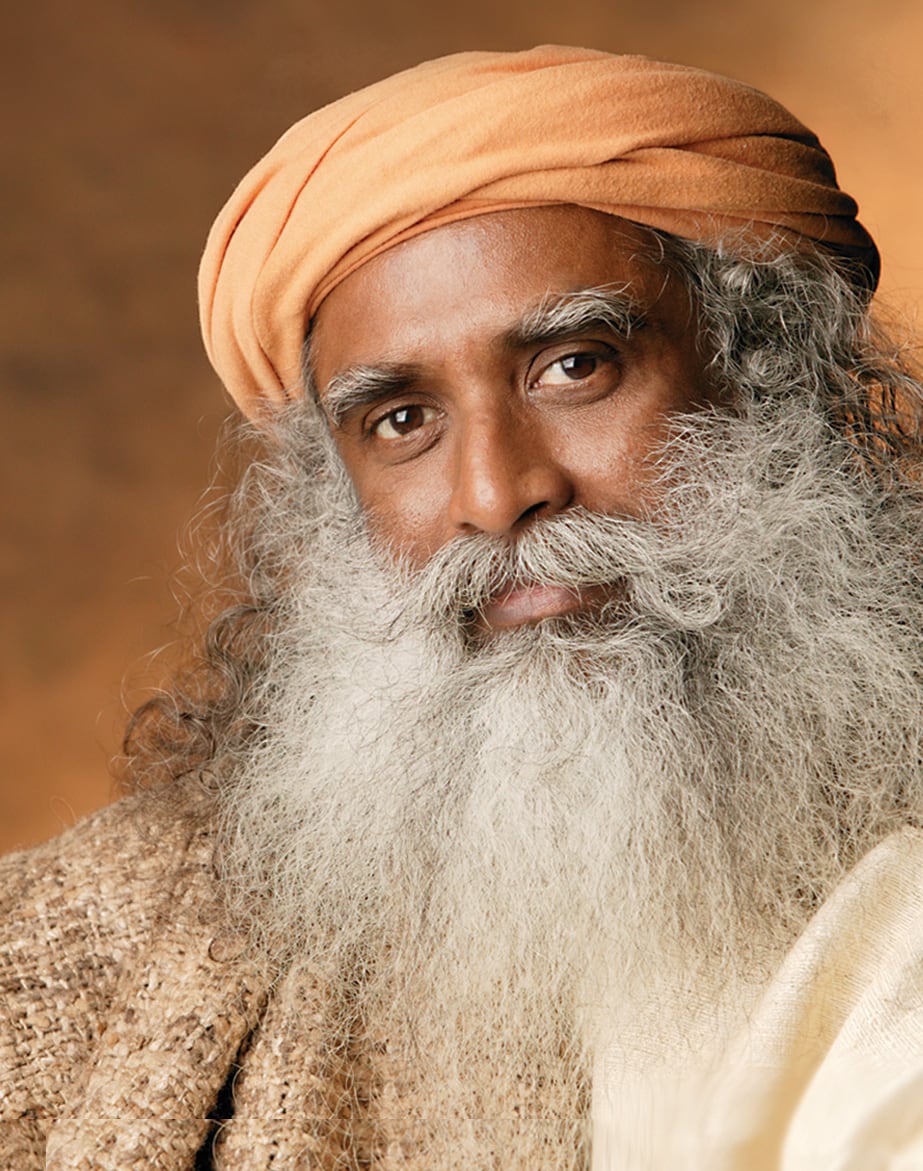
Sadhguru
इन पर सहमत: मुक्ति या उद्धार कैसे प्राप्त होता है? · मैं कौन हूँ? क्या कोई सच्चा आत्म है? · क्या गुरु आवश्यक है?
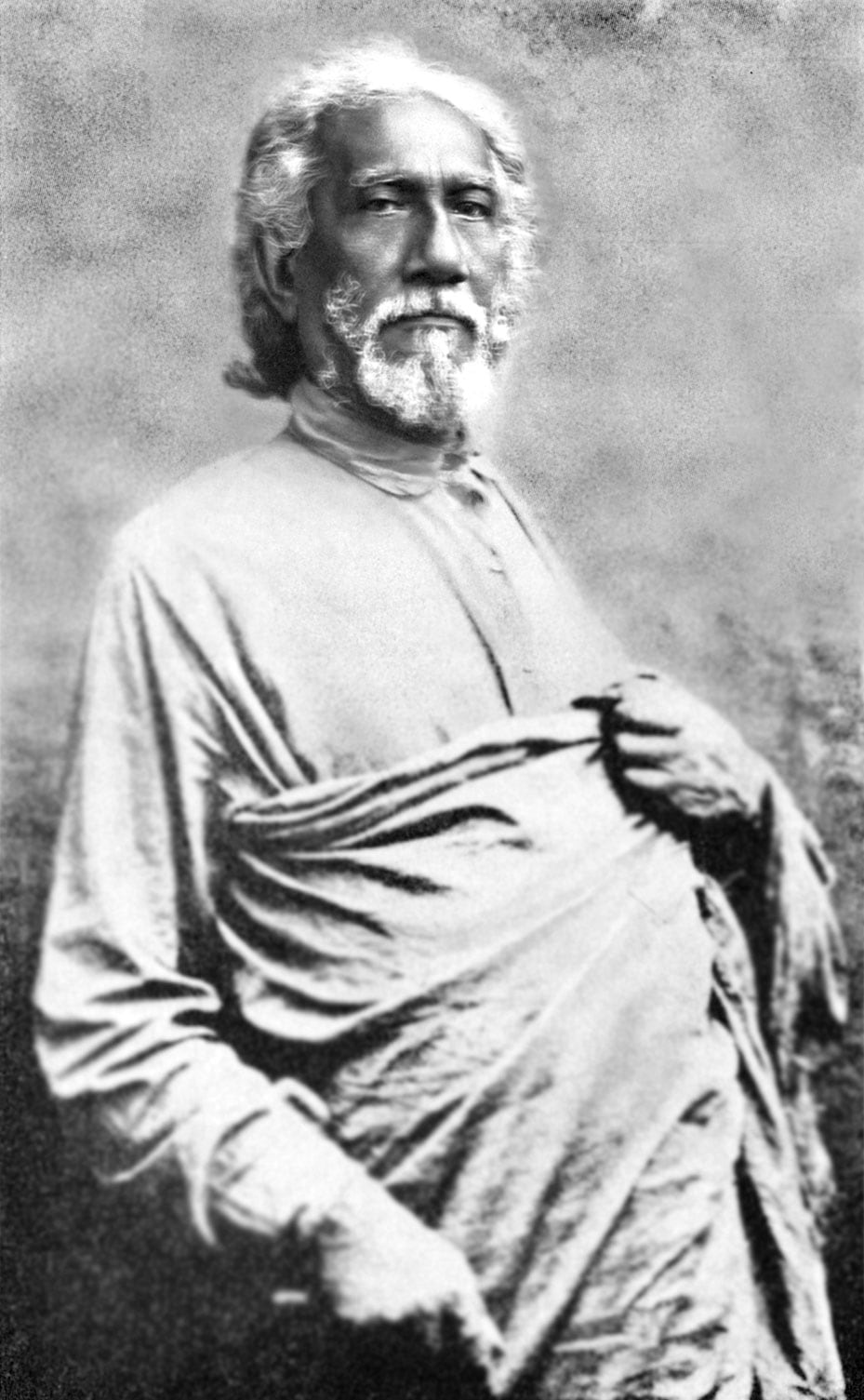
Sri Yukteswar
इन पर सहमत: ध्यान या प्रार्थना क्यों करें? · मैं कौन हूँ? क्या कोई सच्चा आत्म है? · हम दुःख क्यों भोगते हैं?
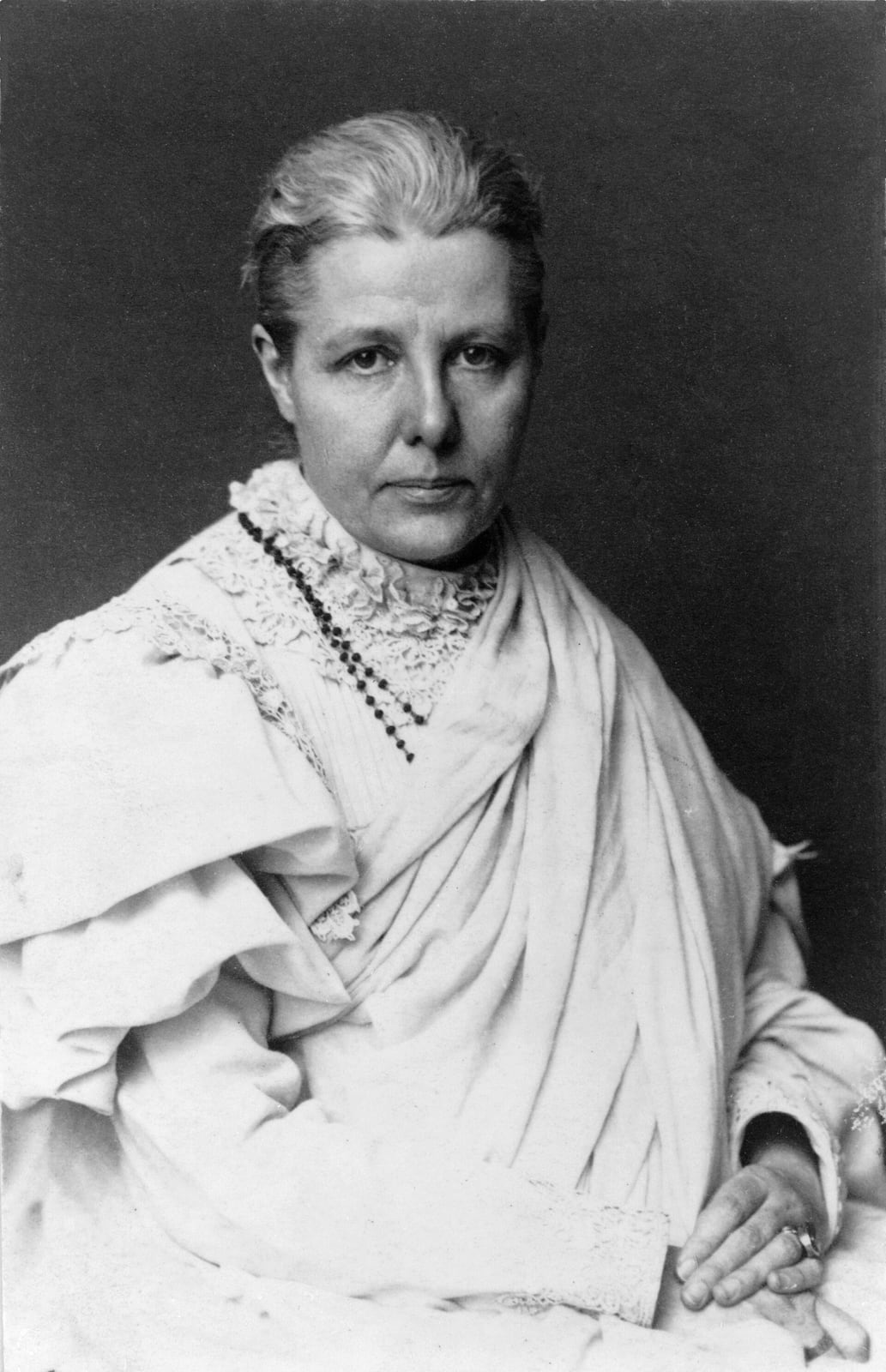
Annie Besant
इन पर सहमत: क्या हम स्वतंत्र हैं, या सब कुछ पूर्वनिर्धारित है? · परम सत्य क्या है? क्या ईश्वर है? · मुक्ति या उद्धार कैसे प्राप्त होता है?
Anandamayi Ma
इन पर सहमत: परम सत्य क्या है? क्या ईश्वर है? · मैं कौन हूँ? क्या कोई सच्चा आत्म है? · हम दुःख क्यों भोगते हैं?
इनसे भिन्न सोचते हैं

Francis of Assisi
इन पर टकराव: मैं कौन हूँ? क्या कोई सच्चा आत्म है? · क्या संसार वास्तविक है?

Seraphim of Sarov
इन पर टकराव: मैं कौन हूँ? क्या कोई सच्चा आत्म है? · क्या संसार वास्तविक है?

Fyodor Dostoevsky
इन पर टकराव: मैं कौन हूँ? क्या कोई सच्चा आत्म है? · क्या संसार वास्तविक है?
Jiddu Krishnamurti
इन पर टकराव: मुक्ति या उद्धार कैसे प्राप्त होता है? · क्या गुरु आवश्यक है?
इन पर टकरावआभासी विरोधाभास
Swami Vivekananda · Adi Shankara
The sage who renounces and the sage who serves: two readings of the same Advaita
क्यों: The contradiction is largely apparent. Shankara does not condemn action: he regards it as the purifying duty of those who do not yet know, and Vivekananda presents karma yoga precisely as a path of purification towards a knowledge that remains, for him, the summit. What changes is audience and era. Shankara writes for renunciants, in a scholastic dispute with those who combined ritual and knowledge; Vivekananda, who saw himself as heir to Advaita, speaks to a colonised and impoverished India and to a Western public, and turns service into worship of the divine in every being. A real difference of emphasis remains: in Shankara the liberated one ceases to act; in Vivekananda, he goes on serving.
इन पर टकरावमूलभूत असहमति
Swami Vivekananda · Annie Besant
Chicago, 1893: the wisdom of the hidden Masters versus a Vedanta to be verified
क्यों: The relationship is historical: both spoke at the 1893 Parliament of Religions in Chicago, which launched Vivekananda, and they later competed to represent India's wisdom before the West. Vivekananda publicly distanced himself from the Theosophical Society and its doctrine of the Mahatmas, which he regarded as foreign to the Vedantic tradition. The tension is not only one of rivalry: Besant inherits from Blavatsky a wisdom presented as hidden and revealed to initiates; Vivekananda, from Ramakrishna and Vedanta, a public teaching anyone can test through practice. Both wanted to reconcile religion and science; they differed over the place they left for secrecy.
इन पर सहमत
Swami Vivekananda · The 14th Dalai Lama (Tenzin Gyatso)
A religion that accepts examination: the monk of Chicago and the monk of Nalanda
क्यों: The convergence is explained by context: both present an Asian tradition before a West shaped by modern science and by the critique of religion, and both want to show that their tradition does not fear that examination. Each also draws on resources specific to his tradition: Vivekananda, on the experimental reading of yoga and on Vedanta; the Dalai Lama, on the logic and epistemology of Nalanda. They differ on the goal: for Vivekananda experience culminates in identity with Brahman; for the Dalai Lama, in the understanding of emptiness, which denies precisely a permanent Self. No relationship between them is documented.
प्रसंग और वृत्तांत
प्रसंग और वृत्तांत
साक्ष्य1881–1882
'Have you seen God?'
वृत्तांत का स्रोत: Vivekananda's own account transmitted by his disciples: The Life of Swami Vivekananda (1912–1918) and Nikhilananda, Vivekananda: A Biography (1953). Ramakrishna left his own version of the first meetings in the conversations recorded by M. in the Kathamrita.
स्रोत: His Eastern and Western Disciples. The Life of Swami Vivekananda. 2 vols. Mayavati / Calcuta: Advaita Ashrama, 1912–1918; 6.ª ed. revisada, 1979–1981.
संत-चरित वृत्तांत1884–1885
The prayer before the goddess
वृत्तांत का स्रोत: It comes from the disciples' biography (The Life…) and Swami Saradananda's Sri Ramakrishna Lilaprasanga (1909–1919), which present it as Vivekananda's own recollection. There is no independent contemporary testimony.
स्रोत: His Eastern and Western Disciples. The Life of Swami Vivekananda. 2 vols. Mayavati / Calcuta: Advaita Ashrama, 1912–1918; 6.ª ed. revisada, 1979–1981.
साक्ष्यc. 1888–1890
'Face the brutes'
वृत्तांत का स्रोत: Autobiographical account in the lecture 'What Is Religion?', Complete Works, vol. 1 (Lectures and Discourses). There are no witnesses; it is his own recollection used as a moral example.
प्रमाणितDiciembre de 1892
The rock at Kanyakumari
वृत्तांत का स्रोत: The plan conceived at Kanyakumari is documented in his letter to Ramakrishnananda of 19 March 1894 (Complete Works, vol. 6). The swim and the length of the meditation come from the Order's oral tradition recorded in The Life…, with no direct testimony.
साक्ष्यSeptiembre de 1893
The night in the freight car
वृत्तांत का स्रोत: Account transmitted by the disciples' biography from Vivekananda's own recollections and those of the Hale family; Marie Louise Burke (Swami Vivekananda in the West: New Discoveries) checked the chronology against the Chicago press and confirms the Hales' role, though the details of the night rest on the protagonist's account.
स्रोत: His Eastern and Western Disciples. The Life of Swami Vivekananda. 2 vols. Mayavati / Calcuta: Advaita Ashrama, 1912–1918; 6.ª ed. revisada, 1979–1981.
मौखिक परंपरा1891 o 1893
The singer of Khetri
वृत्तांत का स्रोत: It comes from The Life of Swami Vivekananda, which attributes it to Vivekananda's own recollections; the date (first visit to Khetri in 1891 or that of 1893) and the singer's name vary between versions. No contemporary source.
स्रोत: His Eastern and Western Disciples. The Life of Swami Vivekananda. 2 vols. Mayavati / Calcuta: Advaita Ashrama, 1912–1918; 6.ª ed. revisada, 1979–1981.
शिक्षाएँ
शिक्षाएँ
वे अवधारणाएँ जो उनके चिंतन को रूप देती हैं, उनके संदर्भ में समझाई गई।
The four yogasfour-yogas
Karma Yoga, Raja Yoga, Bhakti Yoga and Jnana Yoga (1896–1907); Complete Works, vols. 1–3. On its role in modern yoga: De Michelis (2004).
स्रोत: De Michelis, Elizabeth. A History of Modern Yoga: Patañjali and Western Esotericism. Londres / Nueva York: Continuum, 2004.
The potential divinity of the soulpotential-divinity
Raja Yoga (1896); 'Paper on Hinduism' (1893); writings on education collected in the Complete Works.
Practical Vedantapractical-vedanta
Practical Vedanta (London, 1896); Lectures from Colombo to Almora (1897). Critiques: Halbfass (1988), Rambachan (1994).
स्रोत: Halbfass, Wilhelm. India and Europe: An Essay in Understanding. Albany: State University of New York Press, 1988.
Serving human beings as God (shiva jnane jiva seva)service-as-worship
Founding of the Ramakrishna Mission (1897); letters of 1894–1897; Lectures from Colombo to Almora.
स्रोत: His Eastern and Western Disciples. The Life of Swami Vivekananda. 2 vols. Mayavati / Calcuta: Advaita Ashrama, 1912–1918; 6.ª ed. revisada, 1979–1981.
Universal acceptance of religionsharmony-of-religions
Chicago addresses (1893), especially 'Response to Welcome' and 'Address at the Final Session'; lectures on universal religion (Complete Works, vol. 2).
Maya as a statement of factsmaya-statement-of-facts
Jnana Yoga, lectures 'Maya and Illusion' and 'Maya and the Evolution of the Conception of God' (London, 1896; Complete Works, vol. 2).
साधना-शिविर
साधना-शिविर और केंद्र
उनकी शिक्षा से जुड़े स्थान और समागम। हम आपको उनके आयोजकों से जोड़ते हैं।
Belur, Howrah (junto a Calcuta), Bengala Occidental · India
Belur Math, headquarters of the Ramakrishna Order
Ramakrishna Math and Ramakrishna Mission
Belur Math, on the banks of the Ganges, is the headquarters of the Ramakrishna Order that Swami Vivekananda founded on his return from the West, and the place where he died in 1902. The grounds hold the Sri Ramakrishna temple, whose architecture Vivekananda conceived to bring together motifs from different religions, the temples of Sarada Devi and of Vivekananda himself, the room where he lived and a museum. The institution describes it as a place of pilgrimage for people of all faiths. It has a guest house for pilgrims, and its branch centres worldwide share the same spirit of service and study.
Kanyakumari, Tamil Nadu · India
Vivekananda Rock Memorial and Vivekananda Kendra, Kanyakumari
Vivekananda Rock Memorial & Vivekananda Kendra
At the southern tip of India, on a rock off Kanyakumari, Vivekananda meditated in December 1892 before setting out for the West; the Vivekananda Rock Memorial now stands there. Its sister organisation, Vivekananda Kendra, is based at Vivekanandapuram on the mainland and describes itself as a spiritually oriented service mission working in education, health and rural development. As well as receiving the pilgrims who visit the memorial, it runs residential yoga camps, certificate courses and spiritual retreats, taught mainly in English and Hindi, under the motto that they alone live who live for others.
Nueva York (Upper West Side) · Estados Unidos
Vedanta Society of New York
Vedanta Society of New York (Orden de Ramakrishna)
The Vedanta Society of New York is the first Vedanta society in the West: Swami Vivekananda founded it in 1894, during his first stay in the United States, and it belongs to the Ramakrishna Order. From its home on West 71st Street it offers Sunday lectures, weekday discussions on the Upanishads, the Bhagavad Gita and other texts, and daily vesper services. Its talks, particularly those of its current minister, are published openly as videos and podcasts, which has made it one of the most accessible sources for studying Advaita Vedanta in Vivekananda's line from anywhere in the world.
वीडियो
वीडियो
रिकॉर्डिंग, साक्षात्कार और वृत्तचित्र। वीडियो YouTube से चलते हैं; वे यहाँ संग्रहीत नहीं हैं।
Swami Vivekananda in Chicago 1893: A short film
वृत्तचित्र· EN· 24 min
Ramakrishna Math & Ramakrishna Mission, Belur Mathआधिकारिक चैनल
Vivekananda By Vivekananda (película biográfica, versión inglesa)
वृत्तचित्र· EN· 128 min
Sri Ramakrishna Math Chennaiआधिकारिक चैनल
स्वामी विवेकानंद की आत्मकथा (Vivekananda Ki Atmakatha), versión hindi
वृत्तचित्र· HI· 127 min
Sri Ramakrishna Math Chennaiआधिकारिक चैनल
A Documentary on Swami Vivekananda's Swadesh Chetana
वृत्तचित्र· EN· 38 min
Ramakrishna Math & Ramakrishna Mission, Belur Mathआधिकारिक चैनल
The Life and Message of Swami Vivekananda / स्वामी विवेकानंद का जीवन और संदेश
वृत्तचित्र· EN· 71 min
Films Divisionआधिकारिक चैनल
BELUR MATH: The heart of Ramakrishna Movement (documental completo)
वृत्तचित्र· EN· 54 min
Ramakrishna Mission Ashrama, Narendrapurआधिकारिक चैनल
Swami Ranganathananda – Swami Vivekananda at the World's Parliament of Religions in Chicago 1893
व्याख्यान· EN· 40 min
Vedanta Video
Karma Yoga: The Path of Action (Part 1) | Swami Sarvapriyananda
व्याख्यान· EN· 68 min
Vedanta Society of New Yorkआधिकारिक चैनल
Swami Vivekananda en Chicago, 1893 | Serie de Discursos Famosos | Audio en Español
तृतीय पक्ष की रिकॉर्डिंग· ES· 9 min
Moksha Life
Swami Vivekananda's 1893 Speech at the World's Parliament of Religions
तृतीय पक्ष की रिकॉर्डिंग· EN· 4 min
Satchidananda Ashram – Yogaville
Swami Vivekananda – Die vier Stufen des Yoga
विश्लेषण· DE· 10 min
Neue Akropolis – Schule der Philosophie
Swami Vivekananda's Chicago Address | Chicago Addresses | English Speech
YouTube पर देखें
यह वीडियो एम्बेड करने की अनुमति नहीं देता; यह YouTube पर खुलेगा।
Swami Vivekananda's Chicago Address | Chicago Addresses | English Speech
तृतीय पक्ष की रिकॉर्डिंग· EN· 4 min
Udbodhan – Ramakrishna Math Baghbazarआधिकारिक चैनल
चित्रशाला
चित्रशाला
सत्यापित लाइसेंस वाले चित्र। प्रत्येक में उसके रचयिता और श्रेय का उल्लेख सुरक्षित है।
संबंध
संबंध
प्रभाव, शिष्यत्व और वैचारिक निकटता। प्रमाणित संबंध को विश्लेषण से पहचानी गई समानता से अलग दर्शाया गया है।
इनके शिष्य
Chief disciple from 1881–82 until the master's death in 1886; organised his disciples into a monastic order and spread his message.
प्रमाणित संबंध
इनसे प्रभावित
His jnana yoga starts from Shankara's Advaita, which he often quotes and discusses, while reinterpreting it in a practical, universalist key.
प्रमाणित संबंध
इनसे प्रभावित
He translated and commented on the Yoga Sutras in the second part of Raja Yoga (1896).
प्रमाणित संबंध
इनके गुरु
Sister Nivedita (Margaret Noble)
He met her in London in 1895 and initiated her as a brahmacharini in Calcutta in 1898; she left the portrait The Master as I Saw Him (1910).
प्रमाणित संबंध
इन्हें प्रभावित किया
Aurobindo wrote that during his imprisonment at Alipore (1908–09) he felt Vivekananda's presence guiding his meditation for a fortnight; they never met.
प्रमाणित संबंध
इनके समकालीन
Both spoke at the World's Parliament of Religions in Chicago (1893). Vivekananda later criticised the Theosophical Society in his 1897 speeches.
प्रमाणित संबंध
इनसे मिलते-जुलते विचार
Two successive generations of Bengali monks who founded lasting organisations in the United States to teach yoga and Vedanta and presented meditation as a universal science. Similarity identified by the editors, with no personal relationship (Yogananda was nine when Vivekananda died).
विश्लेषण से पहचानी गई समानता
इनसे मिलते-जुलते विचार
Both join Vedantic spirituality to India's national regeneration and conceive spiritual realisation as transforming life in the world.
विश्लेषण से पहचानी गई समानता
अन्य प्रविष्टियों से जुड़ा
- Annie Besant · इनसे भेंट
- Adi Shankara · इन्हें प्रभावित किया
- Sri Aurobindo · इनसे प्रभावित
- Helena Blavatsky · इनसे मतभेद
- Patañjali · इन्हें प्रभावित किया
- Nicholas Roerich · इनसे प्रभावित
- Ramakrishna · इनके गुरु
- Helena Roerich · इनसे प्रभावित
- Kahlil Gibran · इनके समकालीन
- Paramahansa Yogananda · इनसे मिलते-जुलते विचार
- Sri Yukteswar · इनके समकालीन
- Sadhguru · इनसे मिलते-जुलते विचार
स्रोत
स्रोत
इस प्रविष्टि के लिए देखे गए ग्रंथ-सूची और सूचीपत्र।
- Vivekananda, Swami. The Complete Works of Swami Vivekananda. Mayavati Memorial Edition, 9 vols. Calcuta: Advaita Ashrama, 1907–1997 (vol. 9 añadido en 1997).
- His Eastern and Western Disciples. The Life of Swami Vivekananda. 2 vols. Mayavati / Calcuta: Advaita Ashrama, 1912–1918; 6.ª ed. revisada, 1979–1981.
- Nikhilananda, Swami. Vivekananda: A Biography. Nueva York: Ramakrishna-Vivekananda Center, 1953.
- Burke, Marie Louise. Swami Vivekananda in the West: New Discoveries. 6 vols. Calcuta: Advaita Ashrama, 1983–1987 (1.ª ed. en un volumen, 1958).
- Barrows, John Henry (ed.). The World's Parliament of Religions. 2 vols. Chicago: The Parliament Publishing Company, 1893.
- De Michelis, Elizabeth. A History of Modern Yoga: Patañjali and Western Esotericism. Londres / Nueva York: Continuum, 2004.
- Wikidata, «Swami Vivekananda» (Q47478): nacimiento 12-01-1863, muerte 04-07-1902, 138 enlaces entre wikis.
- Gupta, Mahendranath («M.»). The Gospel of Sri Ramakrishna. Trad. de Swami Nikhilananda. Nueva York: Ramakrishna-Vivekananda Center, 1942 (original bengalí: Sri Sri Ramakrishna Kathamrita, 1902–1932).
- Sen, Amiya P. Swami Vivekananda. Nueva Delhi: Oxford University Press, 2000.
- Rambachan, Anantanand. The Limits of Scripture: Vivekananda's Reinterpretation of the Vedas. Honolulu: University of Hawaii Press, 1994.
- Nivedita, Sister (Margaret E. Noble). The Master as I Saw Him: Being Pages from the Life of the Swami Vivekananda. Londres / Nueva York: Longmans, Green and Co., 1910.
- Ramakrishna Math & Ramakrishna Mission, Belur Math. Sitio oficial (historia de la Orden, Swami Vivekananda).
- Advaita Ashrama (Mayavati), departamento de publicaciones de la Orden Ramakrishna. Sitio oficial y tienda en línea.
- Open Library, registros de ediciones de Swami Vivekananda (consultados por ISBN).
- Halbfass, Wilhelm. India and Europe: An Essay in Understanding. Albany: State University of New York Press, 1988.
- Wikimedia Commons, metadatos de licencia de las fotografías de Swami Vivekananda (API imageinfo).
- Vivekananda, Swami. Raja Yoga, or Conquering the Internal Nature. Londres / Nueva York: Longmans, Green and Co., 1896.
- Aurobindo, Sri. Sri Aurobindo on Himself and on the Mother. Pondicherry: Sri Aurobindo Ashram, 1953 (ed. ampliada en Collected Works, vol. 26, 1972).
- Rolland, Romain. La vie de Vivekananda et l'évangile universel. París: Stock, 1930.
- Wikipedia (en). «Swami Vivekananda», sección Works/Publications (lista de obras publicadas en vida y póstumas, con referencias a Chattopadhyaya 1999).
- Wikipedia (en), «National Youth Day (India)»: el Gobierno de la India declaró en 1984 el 12 de enero, aniversario del nacimiento de Vivekananda, Día Nacional de la Juventud, celebrado desde 1985; consultada el 2026-10-25.
- Ramakrishna Math & Ramakrishna Mission, Belur Math, «Fact Check and Clarifications»: la voz de Vivekananda se grabó un par de veces en vida, pero esas grabaciones no se han localizado; los vídeos que dicen contener su «voz original» son falsos. Consultada el 2026-10-25.
- अधिकार-धारक
- Dominio público (fallecido en 1902; toda su obra publicada antes de 1929 está en dominio público). Las traducciones, compilaciones y aparato editorial modernos pertenecen a sus editores, principalmente Advaita Ashrama (Ramakrishna Math, Belur), titular de la edición de referencia de las Complete Works.
- आधिकारिक वेबसाइट
- belurmath.org/
पुष्टि की प्रतीक्षा में
जो यह प्रविष्टि अभी तक निश्चित नहीं कर सकी है। हम उसे भर देने के बजाय कह देना बेहतर समझते हैं।
- Cotejar en The Life of Swami Vivekananda (ed. 1979-1981) la frase atribuida a Vivekananda el 4 de julio de 1902 sobre «otro Vivekananda» y quién la oyó (se suele citar a Swami Premananda).
- Hora exacta de la muerte (9:10 o 9:20 p. m.) y diagnóstico: las fuentes de la Orden difieren.
- Resuelto (2026-10-25): Fecha y editorial de la primera edición en libro de Jnana Yoga (conferencias de Londres, 1896): el prefacio de 1907 dice que apareció «varios años antes»; no localizada. → localizada la edición de 1902 (Nueva York, The Vedânta Society; Internet Archive vedaantaphilosop00viveuoft), añadida a las ediciones.
- Ediciones con ISBN en alemán, italiano y ruso de Raja Yoga y Jnana Yoga publicadas por editoriales establecidas: Open Library solo registra ediciones antiguas sin ISBN o autoediciones.
- Ediciones bengalíes de Udbodhan Karyalaya (Bani o Rachana, 10 vols.) con ISBN: no localizadas en Open Library.
- Los cuatro primeros títulos de Kier (Raja, Karma, Gnana, Bhakti) figuran sin año en algunos registros; confirmar en el catálogo de la editorial.
- Las fotografías subidas a Commons en 2025 por «RKM Archives» llevan licencia CC BY-SA 2.5 aunque son de 1886-1899 (dominio público por antigüedad): confirmar la procedencia del escaneo.
- Identificar al fotógrafo del retrato de Chicago de septiembre de 1893 (la ficha de Commons solo nombra al usuario que lo subió).
- Obras (2026-10-25): se añadieron 26 obras (libro de 1887, folletos de conferencias de 1896-1900 publicados en vida, colecciones de Natesan y antologías de la Orden Ramakrishna). Quedan fuera, por ser folletos sueltos o extractos ya incluidos en otras obras: Six Lessons on Raja Yoga, Work and Its Secret, Is Vedanta the Future Religion?, Immortality, Powers of the Mind, Personality Development, Thus Spake Vivekananda, Ramakrishna and His Message, My India the India Eternal, Para-Bhakti, Addresses on Bhakti-Yoga, la traducción de los Narada Bhakti Sutras y decenas de antologías en lenguas indias (Open Library registra unos 550 títulos bajo su nombre, mayoritariamente ediciones y selecciones).
- Sangeet Kalpataru (1887): localizar una edición (original bengalí o reimpresión moderna) con editorial y año; no figura en Open Library.
- Bhavbar Katha (ensayos bengalíes) y Pavhari Baba: confirmar si circularon como libros independientes antes de integrarse en The Complete Works.
- Fechas de primera edición de las antologías de la Orden (Thoughts on Vedanta, Realisation and Its Methods, Teachings, To the Youth of India, Our Women, etc.): las de Open Library pueden ser reimpresiones; se marcaron como aproximadas.
- Sala de lectura (2026-10-25): confirmar la fecha y el traductor de las versiones inglesas de Bartaman Bharat (Modern India), Prachya o Paschatya (The East and the West) y Parivrajak (Memoirs of European Travel) que transcribe Wikisource; mientras tanto van con caution.
- Sala de lectura: confirmar la primera publicación de «Is Vedanta the Future Religion?» (vol. 8 de las Complete Works); si es posterior a 1930, puede no ser dominio público en EE. UU. (va con caution).
- Sala de lectura: no se ha localizado ninguna traducción española de Vivekananda en dominio público (las de Kier y otras editoriales son modernas); solo se registran textos en inglés.
- Obras (2026-10-25): añadidas 11 (Para-Bhakti, Addresses on Bhakti-Yoga, Narada-Bhakti-Sutras, Work and Its Secret, The Powers of the Mind, Is Vedanta the Future Religion?, Ramakrishna and His Message, Thus Spake Vivekananda, Personality Development, My India: The India Eternal, Living at the Source). Siguen fuera Six Lessons on Raja Yoga e Immortality (sin edición independiente localizada en Open Library) y la biografía de Pavhari Baba (artículo sin edición independiente localizada).
2026-10-23 को शोधित