Индуизм · Йога · Адвайта-веданта · Ведическая традиция
Vasishtha
वसिष्ठ · Vasiṣṭha · योगवासिष्ठ
Легендарная фигура
Ведийский мудрец, которому традиция приписывает седьмую книгу «Ригведы», сложенную родом поэтов-жрецов во второй половине II тысячелетия до н. э. В гимнах он выступает рядом с царём Судасом в битве десяти царей; в «Рамаяне» он капеллан династии Айодхьи, соперник Вишвамитры и наставник Рамы, в «Махабхарате» — прадед Вьясы. Его имя носят «Васиштха-дхармасутра» и «Йога-Васиштха» — средневековый ведантический диалог, переработанный из кашмирской «Мокшопаи». Это не документально засвидетельствованное лицо, а жреческий род и легендарный образ.
- трудов
- 10трудов
- изданий
- 15изданий
- цитат
- 6цитат
- видео
- 13видео
- изображений
- 9изображений
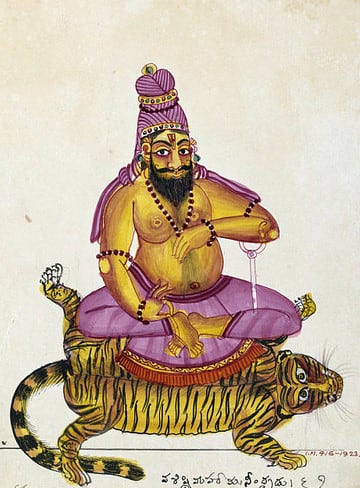
Maharishi Vasiṣṭha sentado sobre una piel de tigre · Public domain
Своими словами
«Free us from sins committed by our fathers, from those wherein we have ourselves offended. O King, loose, like a thief who feeds the cattle, as from the cord a calf, set free Vasistha.»Ṛgveda 7.86.5; trad. inglesa de R. T. H. Griffith (1896, dominio público); versión española del investigador

Главная мысль
The world as a projection of the mind: The Yoga Vāsiṣṭha maintains that the whole universe is a creation of the mind (manas) or of consciousness (cit), comparable to a dream or an imagined city: it exists while it is thought and ceases to exist when thought is stilled.
В контексте
Биография
4 мин чтения
Перевод с испанского оригинала, выполненный с помощью ИИ; ожидает проверки носителем языка.
Имя, прошедшее сквозь три тысячелетия
Немногие фигуры санскритской литературы появляются в стольких её пластах, как Васиштха. Это поэт-жрец, которому традиция приписывает седьмую книгу «Ригведы»; капеллан Солнечной династии Айодхьи в «Рамаяне»; соперник Вишвамитры; прадед Вьясы в «Махабхарате»; одна из звёзд Большой Медведицы и, уже в Средние века, наставник, поучающий Раму в «Йога-Васиштхе». Ни один документ не позволяет говорить об историческом лице за пределами ведийских гимнов: имя обозначает одновременно жреческий род — Васиштх, брахманскую готру, существующую и поныне, — и легендарного мудреца, причисленного к семи небесным риши. Даты, которые можно назвать, — это даты текстов, но никогда не даты человека.
Поэт седьмой книги
В книгах II–VII «Ригведы», так называемых «родовых книгах», собраны гимны различных кланов поэтов. Седьмая книга, насчитывающая 104 гимна, приписывается Васиштхе Майтраваруни и его потомкам и принадлежит к древнейшему ядру собрания: согласно наиболее принятой датировке, она сложилась в Пенджабе во второй половине II тысячелетия до н. э. В ней есть гимны Агни, Индре, Заре и прежде всего цикл, обращённый к Варуне (7.86–89), — необычайно личный по тону: поэт вопрошает, какой проступок он совершил, и молит бога освободить его, «как телёнка от верёвки». Гимн 7.33 повествует о рождении Васиштхи: он сын Митры и Варуны, рождённый от их влечения к апсаре Урваши из семени, собранного в кувшин, из которого вышел и Агастья. Проверить такие генеалогии невозможно; зато они свидетельствуют о том, каким видел себя жреческий род, притязавший на божественное происхождение.
Судас и битва десяти царей
Гимны 7.18, 7.33 и 7.83 прославляют победу Судаса, царя тритсу-бхаратов, над коалицией десяти царей у реки Парушни, нынешней Рави. Васиштхи приписывают заслугу себе: Индра, говорят они, услышал их молитву и даровал тритсу «простор и свободу». Михаэль Витцель прочёл эти гимны как отражение реального события средневедийского периода — возвышения бхаратов, которые со временем дадут имя Индии, — и заметил, что третья книга, книга Вишвамитры, тоже знает Судаса. Отсюда, по-видимому, и берёт начало соперничество двух жреческих родов, которое эпос превратит в одну из своих великих тем.
Соперничество с Вишвамитрой
«Рамаяна» облекает это предание в драму. В «Бала-канде» царь Вишвамитра посещает обитель Васиштхи, и тот щедро потчует его благодаря Шабале, корове изобилия; царь хочет забрать её, корова порождает войска, и мощь воина разбивается о силу брахмана — пока Вишвамитра не отрекается от престола и не предаётся на тысячелетия подвижничеству, чтобы быть признанным брахмарши. «Махабхарата» добавляет самый мрачный эпизод: царь Калмашапада, обращённый в демона, пожирает Шакти, старшего сына Васиштхи; мудрец пытается покончить с собой, но реки отказываются его топить; желание жить возвращает ему лишь голос внука Парашары, читающего Веду из материнского чрева. Парашара станет отцом Вьясы.
Капеллан Икшваку и наставник Рамы
В эпосе Васиштха — наследственный пурохита царей Айодхьи: он совершает обряды Дашаратхи, воспитывает царевичей, посылает за Бхаратой после смерти царя и в лесу Читракута напоминает Раме обычай, обязывающий первенца царствовать. Его супруга Арундхати стала образцом супружеской верности; её именем названа маленькая звезда Алькор рядом с Мицаром — звездой Васиштхи в Большой Медведице, — которую в свадебном обряде показывают новобрачной. Индолог Георг Бюлер ещё в 1882 году заметил, что авторитетом этого Васиштхи, «поборника брахманизма», объясняется то, что столько сочинений было поставлено под его имя.
«Йога-Васиштха»
Самое влиятельное произведение, носящее его имя, — «Йога-Васиштха», или «Махарамаяна», огромный диалог (по традиции — около тридцати тысяч стихов) в шести книгах. Юный Рама возвращается из паломничества, охваченный разочарованием; ко двору прибывает Вишвамитра, и Васиштха берётся его наставлять — в цепи обрамляющих повествований, рассказчиком которых выступает Вальмики. Его учение — радикальный идеализм: мир есть проекция ума, и сознание, которое грезит его, может пробудиться ещё при жизни (дживанмукти). Он излагает его в незабываемых историях — о Лиле, о царе Лаване, о брахмане Гадхи, о царице Чудале — и с особой настойчивостью говорит о человеческом усилии перед лицом судьбы. Предлагавшиеся датировки колеблются от VI до XIV века; Вальтер Слайе и Юрген Ханнедер показали, что текст представляет собой ведантическую переработку более раннего кашмирского сочинения, «Мокшопаи», созданного около X века. Существует также его сокращённая версия, «Лагху-Йога-Васиштха», приписываемая Гауде Абхинанде, и персидский перевод, выполненный при могольском дворе, иллюстрированная рукопись которого 1602 года хранится в Дублине.
Законы, йога, фонетика и астрономия
Имя служило и печатью авторитета. «Васиштха-дхармасутра», один из четырёх сохранившихся прозаических трактатов о дхарме, для Бюлера — последний остаток исчезнувшей ведийской школы, а для Патрика Оливелла — самый поздний в этой группе, с позднейшими вставками; сам текст трижды ссылается на Васиштху и завершается приветствием «сыну Митры и Варуны и Урваши». Его имя носят также «Васиштха-самхита» о йоге, «Васиштха-смрити», трактат о ведийской фонетике («Васиштхи-шикша»), трактат о стрельбе из лука («Дханурведа-самхита») и астрономическая система «Васиштха-сиддханта», изложенная в сжатом виде Варахамихирой в VI веке. Ни одно из этих сочинений нельзя приписать конкретному лицу: атрибуция говорит лишь о том, на чей авторитет хотели сослаться.
Что можно утверждать
Историк вправе утверждать, что в ведийскую эпоху существовал род поэтов и жрецов, называвший себя Васиштхами, что он сложил или передал седьмую книгу «Ригведы» и был связан с двором Судаса. Всё остальное — рождение из кувшина, чудесная корова, гибель ста сыновей, наставничество при Раме — принадлежит литературной традиции, которая продолжала писаться более двух тысяч лет и сделала Васиштху воплощением мудрого брахмана: невозмутимого перед силой, верного слову и наставника царей.
Источники: Jamison, Stephanie W., y Joel P. Brereton (trads.). The Rigveda: The Earliest Religious Poetry of India. 3 vols. Nueva York: Oxford University Press, 2014. Introducción general e introducción al libro VII. · Griffith, Ralph T. H. (trad.). The Hymns of the Rigveda. 2.ª ed. Benarés: E. J. Lazarus, 1896–1897. Libro VII (himnos 18, 33, 59, 83, 86–89), texto en Wikisource. · Goldman, Robert P. (trad. e introd.). The Rāmāyaṇa of Vālmīki: An Epic of Ancient India. Vol. I: Bālakāṇḍa. Princeton: Princeton University Press, 1984 (episodio de Vasiṣṭha y Viśvāmitra, sargas 50–64 de la edición crítica). · Mitra, Vihari-Lala (trad.). The Yoga-Vásishtha Mahárámáyana of Válmiki. 4 vols. en 7 partes. Calcuta: Bonnerjee & Co., 1891–1899. Edición digital en Project Gutenberg (n.º 71326 y siguientes). · Slaje, Walter. Vom Mokṣopāya-Śāstra zum Yogavāsiṣṭha-Mahārāmāyaṇa. Philologische Untersuchungen zur Entwicklungs- und Überlieferungsgeschichte eines indischen Lehrwerks mit Anspruch auf Heilsrelevanz. Viena: Verlag der Österreichischen Akademie der Wissenschaften, 1994.
Хронология
Жизнь год за годом
Каждая точка — документированное событие. Нажмите, чтобы прочитать о нём, с источником и степенью достоверности.
ок. 1300 до н. э. – 1000 до н. э.Panyab (Sapta Sindhu)
The hymns of the seventh book of the Ṛgveda
Composition, by the priestly family of the Vasiṣṭhas, of the 104 hymns of maṇḍala VII, one of the 'family books' that form the ancient core of the Ṛgveda. The range is that of the composition of the corpus, not of a person.
ВероятноJamison, Stephanie W., y Joel P. Brereton (trads.). The Rigveda: The Earliest Religious Poetry of India. 3 vols. Nueva York: Oxford University Press, 2014. Introducción general e introducción al libro VII.
ок. 1300 до н. э. – 1000 до н. э.
The hymns of the seventh book of the Ṛgveda
Composition, by the priestly family of the Vasiṣṭhas, of the 104 hymns of maṇḍala VII, one of the 'family books' that form the ancient core of the Ṛgveda. The range is that of the composition of the corpus, not of a person.
Вероятно
ок. 1200 до н. э.
The Battle of the Ten Kings
Hymns 7.18, 7.33 and 7.83 celebrate the victory of King Sudās of the Tṛtsu-Bharatas over a coalition of ten kings and ascribe Indra's favour to the prayer of the Vasiṣṭhas. Witzel interprets it as a real event of the Vedic period; the date is approximate.
Оспаривается
ок. 500 до н. э. – 300
Vasiṣṭha in the Rāmāyaṇa
In the Rāmāyaṇa, whose composition spans centuries (the Bālakāṇḍa and the Uttarakāṇḍa are late strata), Vasiṣṭha is Daśaratha's purohita, the teacher of the princes and the protagonist of the conflict with Viśvāmitra over the cow Śabalā.
Вероятно
ок. 300 до н. э. – 300
Vasiṣṭha in the Mahābhārata
The Ādiparvan narrates the death of Śakti at the hands of King Kalmāṣapāda, Vasiṣṭha's attempts at suicide frustrated by the rivers Vipāśā and Śatadru, and the birth of his grandson Parāśara, father of Vyāsa.
Предание
ок. 100 до н. э. – 100
The Vasiṣṭha Dharmasūtra
Redaction of the treatise on dharma that bears his name, the latest of the four surviving dharmasūtras according to Olivelle, with later additions. The range is approximate.
Оспаривается
ок. 950
The Mokṣopāya
Composition in Kashmir of the Mokṣopāya, the dialogue between Vasiṣṭha and Rāma that Slaje and Hanneder have identified as the basis of the Yoga Vāsiṣṭha.
Вероятно
ок. 1100 – 1400
The Vedāntic version: the Yoga Vāsiṣṭha
Reworking of the Mokṣopāya in a Vedāntic key and spread of the Yoga Vāsiṣṭha or Mahārāmāyaṇa, together with the abridgement ascribed to Gauḍa Abhinanda (Laghu Yoga Vāsiṣṭha). The dates are still debated.
Оспаривается
1602
The illustrated Jūg Bāsisht
For Prince Salīm, the future emperor Jahāngīr, an illustrated copy of the Persian translation of the Yoga Vāsiṣṭha is completed at Allahabad, with paintings by Bishan Das and others; it is now in the Chester Beatty Library, Dublin.
Документировано
1882
Bühler translates the Vasiṣṭha Dharmasūtra
Georg Bühler publishes the English translation of the Vasiṣṭha Dharmasūtra in volume 14 of the Sacred Books of the East.
Документировано
1891 – 1899
Vihari-Lala Mitra's translation
The first complete English translation of the Yoga Vāsiṣṭha, in four volumes, by Vihari-Lala Mitra, appears in Calcutta.
Документировано
1896
Griffith publishes the Ṛgveda in English
Second edition of Ralph T. H. Griffith's The Hymns of the Rigveda, the complete public-domain English translation in which Vasiṣṭha's hymns are read today.
Документировано
Труды
Главные труды
Труды, без которых не понять это наследие.
Позднейший сборник · ок. 1200 до н. э.
Ṛgveda, Book VII (hymns of the Vasiṣṭhas)
ऋग्वेद, सप्तमं मण्डलम् (Ṛgveda, saptamaṃ maṇḍalam)
The 104 hymns of the seventh book of the Ṛgveda, one of the 'family books'. They include hymns to Agni, Indra, Uṣas, the Maruts and Mitra-Varuṇa; the chronicle of the Battle of the Ten Kings (7.18, 7.33, 7.83); the account of Vasiṣṭha's birth (7.33); the confessional hymns to Varuṇa (7.86–89); the mantra to Tryambaka (7.59.12), still recited as the 'mahāmṛtyuñjaya', and the hymn of the frogs (7.103). It is one of the oldest strata of Indian literature.
4 издания

Традиционная атрибуция · ок. 1100
Yoga Vāsiṣṭha (Mahārāmāyaṇa)
योगवासिष्ठ (Yogavāsiṣṭha), también महारामायण (Mahārāmāyaṇa), आर्षरामायण, वासिष्ठरामायण
A dialogue of some thirty thousand verses, according to tradition, in six books (prakaraṇa): Vairāgya (Rāma's disenchantment), Mumukṣu (the seeker of liberation), Utpatti (creation), Sthiti (persistence), Upaśama (quiescence) and Nirvāṇa (extinction). Vasiṣṭha teaches Rāma that the world is a projection of the mind and that liberation is possible in life, through dozens of nested tales —Līlā, Lavaṇa, Gādhi, Cūḍālā and Śikhidhvaja, the crow Bhuśuṇḍa— and a constant defence of human effort (pauruṣa) against fate.
6 изданий

Традиционная атрибуция · ок. 100 до н. э.
Vasiṣṭha Dharmasūtra (The Sacred Law of Vasiṣṭha)
वासिष्ठधर्मसूत्र / वासिष्ठधर्मशास्त्र (Vāsiṣṭha Dharmasūtra / Dharmaśāstra)
A prose manual with interspersed verses, in thirty chapters, on the rules of conduct: the sources of dharma, the four social classes, the stages of life (student, householder, hermit, ascetic), purity, women, inheritance, adoption, lawful interest on loans, the king and penances. It ends with a chapter of maxims and a salutation to Vasiṣṭha, 'son of Mitra and Varuṇa and of Urvaśī'.
3 издания
Все труды (10)
Vasishtha
Mokṣopāya ('The Means to Liberation')
The Conscious LibraryMokṣopāya ('The Means to Liberation')
950

Laghu Yoga Vāsiṣṭha (The Shorter Yoga Vāsiṣṭha)
Vasishtha
Vasiṣṭha Saṃhitā (Yoga section)
The Conscious LibraryVasiṣṭha Saṃhitā (Yoga section)
Vasishtha
Vasiṣṭha Smṛti
The Conscious LibraryVasiṣṭha Smṛti
Vasishtha
Vāsiṣṭhī Śikṣā (treatise on Vedic phonetics)
The Conscious LibraryVāsiṣṭhī Śikṣā (treatise on Vedic phonetics)
Vasishtha
Vasiṣṭha's Dhanurveda Saṃhitā (treatise on archery)
The Conscious LibraryVasiṣṭha's Dhanurveda Saṃhitā (treatise on archery)
Vasishtha
Vasiṣṭha Siddhānta (astronomical system)
The Conscious LibraryVasiṣṭha Siddhānta (astronomical system)
Изречения
Изречения, найденные в конкретном труде. Каждое сопровождается указанием происхождения и степени надёжности.
Free us from sins committed by our fathers, from those wherein we have ourselves offended. O King, loose, like a thief who feeds the cattle, as from the cord a calf, set free Vasistha.áva drugdhā́ni pítryā sṛjā nó, áva yā́ vayáṃ cakṛmā́ tanū́bhiḥ / áva rājan paśutṛ́paṃ ná tāyúṃ sṛjā́ vatsáṃ ná dā́mno vásiṣṭham
ПровереноṚgveda 7.86.5; trad. inglesa de R. T. H. Griffith (1896, dominio público); versión española del investigador
Последние слова
Проверяемых записей о последних словах не существует.
There is no record of his death or of any last words. Vasiṣṭha is a lineage name and a legendary figure; tradition places him among the seven sages who dwell as stars in the Great Bear.
Источник: Jamison, Stephanie W., y Joel P. Brereton (trads.). The Rigveda: The Earliest Religious Poetry of India. 3 vols. Nueva York: Oxford University Press, 2014. Introducción general e introducción al libro VII.
Спросить
На что отвечают эти труды
Двенадцать великих вопросов человечества и то, что позволяют на них ответить эти тексты, со ссылками. Мы никогда не вкладываем слова в чужие уста.
Что такое Абсолют? Существует ли Бог?
The only reality is pure consciousness; the universe is its imagining
Безличный АбсолютСказано прямо
In the Yoga Vāsiṣṭha, Vasiṣṭha teaches Rāma that the ultimate is brahman, pure consciousness (cit) without form, beginning or second. Worlds, bodies and the gods themselves appear in that consciousness like the images of a dream or an imagined city, and have no substance other than it. The work's stories —Līlā, who traverses her husband's successive lives within the space of a single room; King Lavaṇa, who lives a whole existence as an outcaste in an instant— serve to dissolve the solidity of what is taken to be real. Brahmā, Viṣṇu and Śiva appear in the text, but as figures within that consciousness, not as its ground. The question of a creator God is thus absorbed into another: what is the consciousness that represents the world to itself.
Сравнить этот вопрос с другими учителямиКто я? Существует ли истинное «я»?
The suffering self is a product of the mind; the Self is pure consciousness
Самость есть АбсолютСказано прямо
In the Yoga Vāsiṣṭha, Vasiṣṭha distinguishes between the ego (ahaṃkāra), which arises when consciousness thinks itself to be a particular body and mind, and the Self, which is unbounded consciousness (cit) itself. The ego has no more reality than a dream: it arises with accumulated impressions and desires (vāsanā) and dissolves when they are extinguished. What remains is not nothingness, but the consciousness that always was, identical with brahman. The work does not present this identity as a dogma, but as the result of an enquiry: Rāma must examine who it is that suffers until he finds that he cannot find him. Whoever understands this is liberated while living (jīvanmukta), and goes on acting in the world without identifying with any of it.
Сравнить этот вопрос с другими учителямиПочему мы страдаем?
We suffer because the mind takes as real the world it imagines
Незнание того, кто мы естьСказано прямо
The Yoga Vāsiṣṭha opens with Rāma's despondency: back from a pilgrimage, the young prince stops eating and acting, because he has seen the transience of youth, wealth and the body, and the thirst (tṛṣṇā) that is never quenched. Vasiṣṭha does not deny that diagnosis, but takes it deeper. Suffering arises because consciousness identifies with a body and a mind and takes as solid the world the mind itself projects, like someone suffering within a dream. What sustains that identification are accumulated impressions and desires (vāsanā). That is why the remedy is not to flee the world, but to understand its nature: when the vāsanās are extinguished and the mind grows still, suffering loses the ground it stood on.
Сравнить этот вопрос с другими учителямиЧто происходит после смерти?
Death is a change of dream; consciousness is neither born nor dies
То, что я есть, не рождается и не умираетСказано прямо
In the Yoga Vāsiṣṭha, death interrupts nothing essential. The story of Līlā shows it: at the death of her husband Padma, the queen discovers that he goes on living, in the same instant and within the space of her own chamber, the life of King Vidūratha, who in turn dies and finds himself again in another world. For Vasiṣṭha, what we call dying is the mind, laden with its impressions (vāsanā), ceasing to represent one body and beginning to represent another, like passing from one dream to the next. As long as those impressions persist, the round of births continues. But consciousness itself, which is brahman, is neither born nor dies; whoever recognises it is liberated while still living and has nowhere to go.
Сравнить этот вопрос с другими учителямиКак достигается освобождение или спасение?
Enquiry, sustained by one's own effort, liberates in this life
Через прямое знаниеСказано прямо
For the Vasiṣṭha of the Yoga Vāsiṣṭha, liberation results from knowledge gained through enquiry (vicāra): examining who I am, what the world is and where suffering arises, until impressions and desires (vāsanā) are extinguished and the mind grows still. It is not a gift nor the fruit of a rite, and it demands personal effort (pauruṣa): Vasiṣṭha holds that what is called fate is nothing but past action, and that present effort can overcome it as the stronger ram overcomes the weaker. The work describes seven stages of knowledge, from the wish for the good to a state with no trace of duality. Its ideal is the one liberated while living (jīvanmukta): not someone who abandons the world, but someone who lives in it without bonds.
Сравнить этот вопрос с другими учителямиНужен ли учитель?
The teacher and the texts guide; one's own understanding liberates
Полезен, но не обязателенСказано прямо
The Yoga Vāsiṣṭha takes the form of a teaching: Vasiṣṭha, teacher of the royal house, instructs Rāma for days before the court. But the text stresses that neither the teacher nor the scriptures suffice without the disciple's own understanding. Vasiṣṭha even says that reasonable words should be accepted even if spoken by a child, and that what does not accord with reason should be discarded like straw even if Brahmā himself had said it. His praise of personal effort (pauruṣa) points the same way: fate saves no one, and neither does the mere presence of a sage. The teacher awakens, reasons and offers stories that make one see; the disciple must enquire for himself until the teaching becomes his own evidence.
Сравнить этот вопрос с другими учителямиРеален ли мир?
The world is like a dream: it exists while the mind thinks it
Видимость поверх единой реальностиСказано прямо
The central thesis of the Yoga Vāsiṣṭha is that the entire universe is a creation of the mind (manas) or of consciousness (cit), comparable to a dream, an imagined city or the sky that looks blue without being so. It exists while it is thought and ceases to exist when thought grows still. Vasiṣṭha demonstrates this with stories of worlds within worlds: Līlā visits, within the space of a room, lives that last for years, and King Lavaṇa lives in an instant an entire existence as an outcaste, which he later finds confirmed in a real village. Time and space thus lose their solidity. The world is nothing in itself, but neither is it an absolute nothing: it is consciousness appearing to itself in forms.
Сравнить этот вопрос с другими учителямиЧто такое любовь?
The Yoga Vāsiṣṭha does not make love a path; the hymns seek divine friendship
Не высказывался
The Yoga Vāsiṣṭha has no doctrine of love. Its affective vocabulary revolves around attachment (rāga) and thirst (tṛṣṇā), which it treats as bonds, and its ideal is the one liberated while living, who acts with equanimity and without aversion to anyone. The story of Cūḍālā and Śikhidhvaja, in which an awakened queen patiently guides her husband to liberation and both return to rule together, shows a bond in the service of awakening, but the text does not raise it to a theory. The closest thing to love in the work ascribed to Vasiṣṭha lies in another place and age: in Ṛgveda VII, the poet ponders in his own heart how he may again be united with Varuṇa and find him gracious (7.86.2), and recalls an ancient friendship with the god.
Сравнить этот вопрос с другими учителямиСвободны ли мы или всё предопределено?
Fate is past action; present effort can overcome it
Карма и выборСказано прямо
One of the most characteristic theses of the Yoga Vāsiṣṭha is the primacy of human effort (pauruṣa) over fate (daiva). In the opening chapters of the book of the seeker, Vasiṣṭha holds that what is called fate is not an external force, but the subject's own past action. Fate and effort, he says, contend with each other like two rams of unequal strength, in which the mightier overcomes the other, and present effort, well directed, can prevail. Fatalism is the excuse of the lazy. The thesis is striking in a work that also holds that the world is a mental projection: the effort it demands is, above all, that of the enquiry that leads to recognising the illusory nature of one's bonds.
Сравнить этот вопрос с другими учителямиЗачем медитировать или молиться?
Enquire who I am until the mind comes to rest in its source
Возвращение к источнику «я»Сказано прямо
The Yoga Vāsiṣṭha makes enquiry (vicāra) its central practice: asking who I am, what this world is and where suffering arises, until the mind, deprived of the objects with which it identified, comes to rest in the consciousness from which it arises. Vasiṣṭha recognises two means of stilling the mind's agitation: yoga, understood as mastery of the breath, and knowledge; and although he devotes stories to the first —that of the immortal crow Bhusuṇḍa, who lives through control of the breath—, he prefers the second. Meditation does not mean withdrawing from life, but seeing through it: the one liberated while living meditates while ruling, conversing or fighting, because he no longer takes as real what the mind projects.
Сравнить этот вопрос с другими учителямиМожет ли разум познать предельное?
Reasoning guides to the threshold; the mind is extinguished in crossing it
Предельное лежит за пределами умаСказано прямо
Few Indian works grant reasoning as much value as the Yoga Vāsiṣṭha. Vasiṣṭha even says that reasonable words (yukti) should be accepted even if spoken by a child, and that what does not accord with reason must be discarded like straw even if Brahmā himself had said it. His stories work as arguments that dismantle the solidity of time and space. But reasoning is not the goal: it is the instrument of an enquiry that ends when the mind itself is extinguished (manonāśa). The ultimate is not a true thought about consciousness, but the objectless consciousness that remains when thinking ceases. Reason, well used, leads beyond itself.
Сравнить этот вопрос с другими учителямиУйти от мира или преобразить его?
Rāma must not withdraw: the one liberated in life rules without bonds
Созерцание в действииСказано прямо
The whole Yoga Vāsiṣṭha answers a temptation to withdraw. Rāma, disillusioned with the world, wants to abandon his princely duties, and Viśvāmitra needs him to protect a sacrifice. Vasiṣṭha's teaching does not invite him to renounce, but to understand: whoever has seen the nature of the world can go on acting in it without identifying with anything. That is the one liberated while living (jīvanmukta). The work illustrates this with kings: Janaka attains knowledge on hearing the song of some sages and goes on reigning; Queen Cūḍālā, awakened, guides her husband Śikhidhvaja, who had withdrawn to the forest, and both return to rule. Liberation lies not in the place where one lives, but in the manner of being there.
Сравнить этот вопрос с другими учителями
Созвучия и противоречия
Созвучия и противоречия
Рассчитаны вопрос за вопросом на основе позиций. Причина каждого совпадения или расхождения — по нажатию.
Ближе всего к
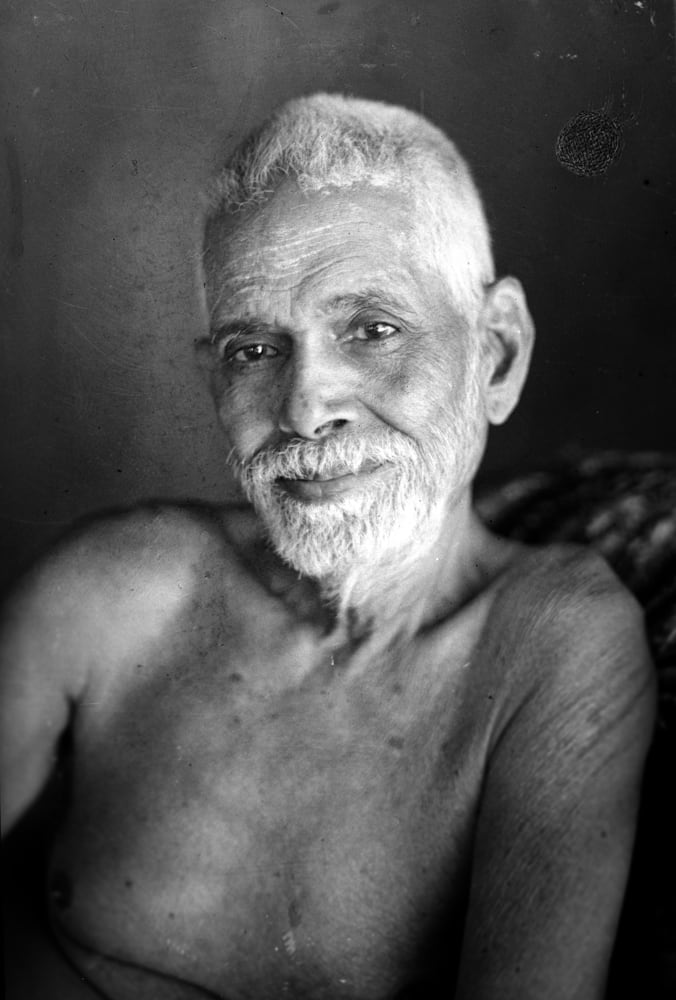
Ramana Maharshi
Совпадают в вопросах: Что такое Абсолют? Существует ли Бог? · Реален ли мир? · Кто я? Существует ли истинное «я»?
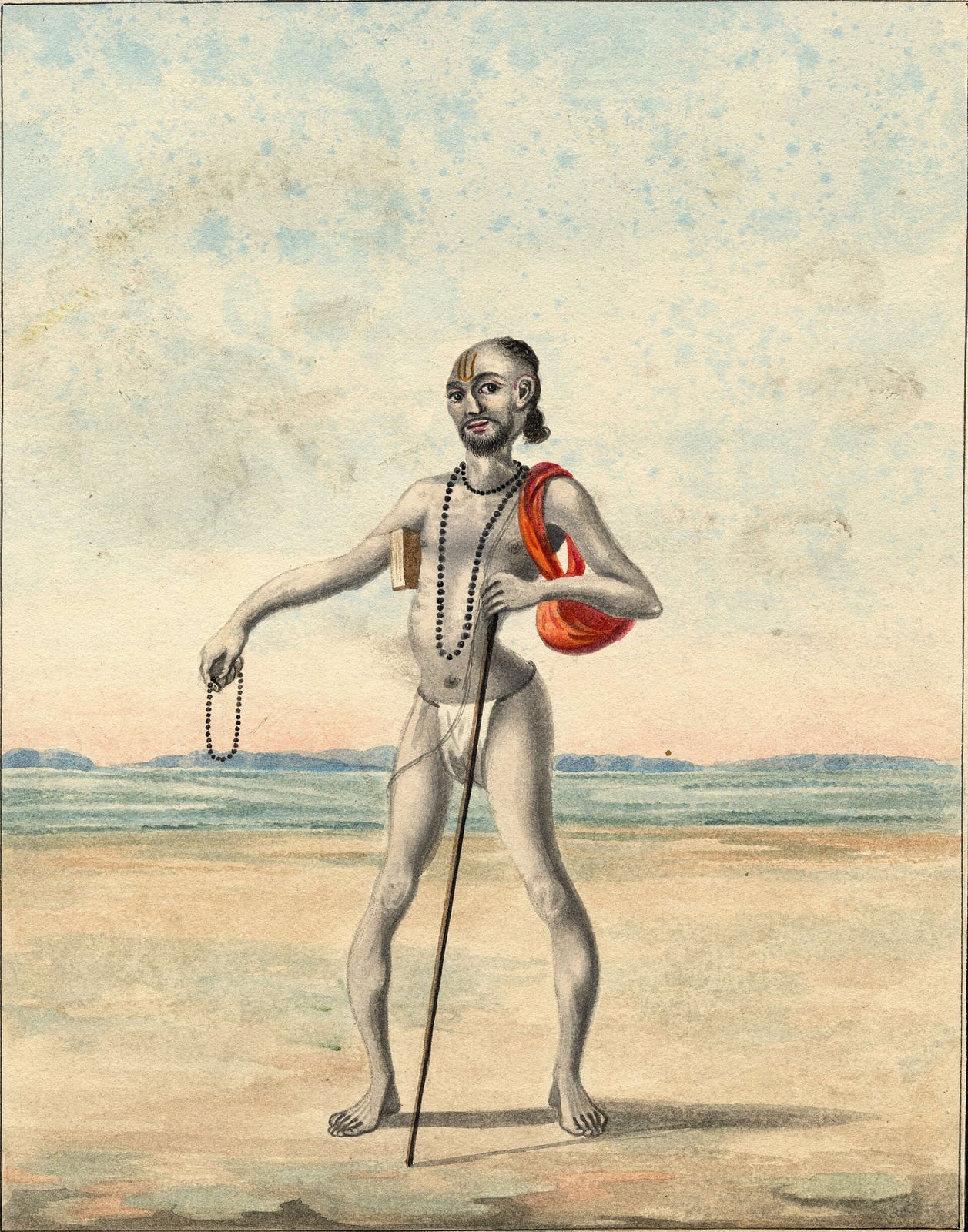
Ashtavakra
Совпадают в вопросах: Что такое Абсолют? Существует ли Бог? · Кто я? Существует ли истинное «я»? · Почему мы страдаем?
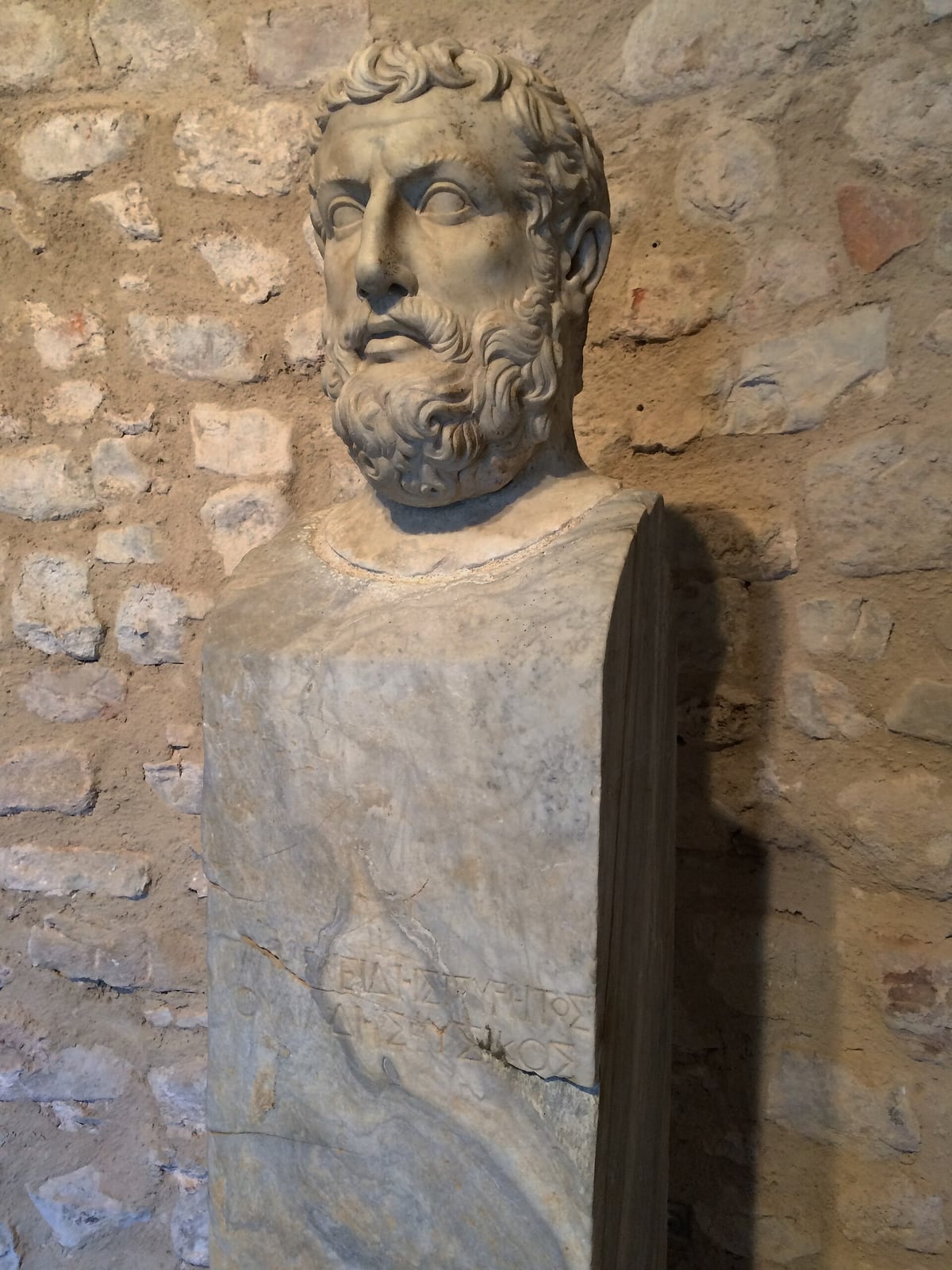
Parmenides
Совпадают в вопросах: Что такое Абсолют? Существует ли Бог? · Как достигается освобождение или спасение? · Нужен ли учитель?
Huineng
Совпадают в вопросах: Что такое Абсолют? Существует ли Бог? · Кто я? Существует ли истинное «я»? · Почему мы страдаем?
Дальше всего от

Julian of Norwich
Расходятся в вопросах: Кто я? Существует ли истинное «я»? · Реален ли мир?
Catherine of Siena
Расходятся в вопросах: Кто я? Существует ли истинное «я»? · Реален ли мир?
Jesus of Nazareth
Расходятся в вопросах: Реален ли мир? · Кто я? Существует ли истинное «я»?

Francis of Assisi
Расходятся в вопросах: Кто я? Существует ли истинное «я»? · Реален ли мир?
Предания и рассказы
Предания и рассказы
Устная традицияperiodo védico
Born from a pitcher
Происхождение рассказа: Ṛgveda 7.33.9–13 (Griffith's translation, Wikisource), from Vedic oral transmission. The Vasiṣṭha Dharmasūtra (30.11) preserves the same genealogy in its final salutation.
Устная традицияperiodo védico
'Set Vasiṣṭha free like a calf'
Происхождение рассказа: Ṛgveda 7.86 (Griffith's translation). The attribution to Vasiṣṭha comes from the anukramaṇī and from the hymn itself, which names him in verse 5.
Житийное повествованиеrelato épico
The cow of plenty
Происхождение рассказа: Rāmāyaṇa, Bālakāṇḍa, sargas 50–55 of the critical edition (Goldman's translation, 1984). The Mahābhārata (Ādiparvan) tells a version in which the cow is called Nandinī. It is epic legend with no verifiable historical basis, though it probably remembers the real rivalry of two priestly families.
Источник: Goldman, Robert P. (trad. e introd.). The Rāmāyaṇa of Vālmīki: An Epic of Ancient India. Vol. I: Bālakāṇḍa. Princeton: Princeton University Press, 1984 (episodio de Vasiṣṭha y Viśvāmitra, sargas 50–64 de la edición crítica).
Житийное повествованиеrelato épico
The rivers that would not drown him
Происхождение рассказа: Mahābhārata, Ādiparvan (Caitraratha), in K. M. Ganguli's translation, sections CLXXVIII–CLXXIX. It is an epic aetiology of the names of the rivers Beas (Vipāśā) and Sutlej (Śatadru), with no historical basis.
Житийное повествованиеYoga Vāsiṣṭha (s. X–XIV)
The queen who taught her husband
Происхождение рассказа: A didactic tale from book VI (Nirvāṇa-prakaraṇa, first half) of the Yoga Vāsiṣṭha, put in Vasiṣṭha's mouth (Mitra's translation, 1891–1899). It is a parable, not an event: the work presents it as an example.
Устная традицияtradición ritual
Arundhatī, the star shown to the bride
Происхождение рассказа: Astronomical and ritual tradition recorded in the gṛhyasūtras (wedding rites) and in the Mahābhārata (episode of Agni and the wives of the ṛṣis); summary after the bibliography cited in s14. It is not a historical fact about Vasiṣṭha but a documented practice around his figure.
Учение
Учение
Понятия, на которых строится мысль учителя, объяснённые в их контексте.
The world as a projection of the mindmundo-como-mente
Central doctrine of the Yoga Vāsiṣṭha and the Mokṣopāya.
Источник: Hanneder, Jürgen. Studies on the Mokṣopāya. Wiesbaden: Harrassowitz, 2006 (Abhandlungen für die Kunde des Morgenlandes 58).
Purohita (royal chaplain)purohita
Vedic and epic society; relation between Brahmins and kings.
Источник: Witzel, Michael. «Rigvedic History: Poets, Chieftains and Polities». En George Erdosy (ed.), The Indo-Aryans of Ancient South Asia: Language, Material Culture and Ethnicity. Berlín y Nueva York: Walter de Gruyter, 1995, pp. 307–352.
Saptarṣi (the seven sages)saptarshi
Mythology, astronomy and Brahmin kinship.
Pauruṣa (human effort versus fate)paurusha
Yoga Vāsiṣṭha, Mumukṣu-prakaraṇa, chaps. IV–IX.
Jīvanmukti (liberation while living)jivanmukti
Yoga Vāsiṣṭha and later Vedāntic tradition.
Dharma in the dharmasūtrasdharma
Brahmin normative literature (3rd c. BCE–1st c. CE).
Источник: Olivelle, Patrick (trad.). Dharmasūtras: The Law Codes of Āpastamba, Gautama, Baudhāyana, and Vasiṣṭha. Oxford: Oxford University Press (Oxford World's Classics), 1999. Introducción, sobre la fecha y la composición del Vasiṣṭha Dharmasūtra.
Видео
Видео
Записи, интервью и документальные фильмы. Видео воспроизводятся с YouTube; здесь они не хранятся.
Dream, Reality, and Love in Yoga Vasistha | Prof. Arindam Chakrabarti
Лекция· EN· 2019· 96 min
Vedanta Society of New YorkОфициальный канал
Inside the Dream of Vasistha | Prof. Sthaneshwar Timalsina
Лекция· EN· 2026· 62 min
Vedanta Society of New YorkОфициальный канал
On Freedom and Fatalism: The Yogavasistha and Arthur Schopenhauer | Dr. Aleksandar Uskokov
Лекция· EN· 2026· 85 min
Vedanta Society of New YorkОфициальный канал
Swami Sarvapriyananda - The Serene Light of the Yoga Vasistha
Лекция· EN· 2025· 51 min
Theosophical Society in England & WalesОфициальный канал
Elizabeth Crofts - The teaching on Liberation in The Yoga Vasistha
Лекция· EN· 2025· 56 min
Theosophical Society in England & WalesОфициальный канал
Sampoorna Yoga Vasishtha | सत्र 1 | स्वामी अभेदानन्द
Лекция· HI· 2025· 89 min
Chinmaya Mission South AfricaОфициальный канал
Dashrajna War of the Rigveda - The First Epochal War of India
Лекция· EN· 2021· 33 min
Bhandarkar Oriental Research InstituteОфициальный канал
Bharat Ek Khoj | Episode-3 | The Vedic People and The Rigveda
Документальный фильм· HI· 1988· 52 min
Prasar Bharati ArchivesОфициальный канал
Introduction to the Rig Veda and Upanishads | Kendall Sharp | First Friday Lecture
Лекция· EN· 2024· 78 min
The University of Chicago Graham SchoolОфициальный канал
Introduction to the Rig Veda | Swami Tattwamayananda
Лекция· EN· 2022· 77 min
Vedanta Society of New YorkОфициальный канал
Vedic Chanting | Vedamu | Rig Veda | Samhitapatha | Mandala 7 (7.1.1–7.67.10)
Запись третьих лиц· SA· 2023· 134 min
Vedamu org
Complete Rigveda Recitation - Part 28; Mandala 7 Sookta 1 to Mandala 7 Sookta 20
Запись третьих лиц· SA· 2021· 44 min
Vedokhilo Dharmamoolam
Yoga Vasishtha: La enseñanza de la no dualidad | Introducción al retiro
Лекция· ES· 2023· 8 min
Advaitavidya Vídeos
Галерея
Галерея
Изображения с проверенной лицензией. Каждое сохраняет своё авторство и атрибуцию.
Рукописи
Рукописи
Рукописные свидетельства и древние тексты, с указанием хранителя и условий доступа.
FA · Nastaʿlīq (persa) · Copia terminada en Allahabad en 1602
Jūg Bāsisht (traducción persa del Yoga Vāsiṣṭha), copia ilustrada
- Сохранившийся список
- Manuscrito ilustrado de 1602
- Хранитель
- Chester Beatty Library, Dublín · In 05
Связи
Связи
Влияния, ученичество и близость взглядов. Документированная связь отличается от сходства, выявленного путём анализа.
Родственник
According to the Mahābhārata, Vyāsa is the son of Parāśara, grandson of Śakti and great-grandson of Vasiṣṭha. It is a textual genealogy, not a historical one.
Документированная связь
Современник
In the Rāmāyaṇa both are contemporaries of Rāma; the Yoga Vāsiṣṭha puts its teachings in Vasiṣṭha's mouth and the narration in Vālmīki's. A literary relationship.
Документированная связь
Идеи, близкие к
The Yoga Vāsiṣṭha was read as an Advaita Vedānta text because of its doctrine of the world as an appearance of consciousness; there is no documented relation between the work and Śaṅkara.
Сходство, выявленное путём анализа
Идеи, близкие к
Affinity between the Yoga Vāsiṣṭha's thesis (the world as the mind's dream) and the non-origination of the Māṇḍūkya-kārikā.
Сходство, выявленное путём анализа
Идеи, близкие к
The enquiry and liberation in life of the Yoga Vāsiṣṭha come close to Ramana's teaching; the affinity is doctrinal.
Сходство, выявленное путём анализа
Идеи, близкие к
The Vasiṣṭha Saṃhitā sets out an eight-limbed yoga related to that of the Yogasūtras; there is no documented relation between the figures.
Сходство, выявленное путём анализа
Идеи, близкие к
Both are Vedic sages to whom treatises on dharma and texts on yoga and knowledge are ascribed alike.
Сходство, выявленное путём анализа
Идеи, близкие к
The Yoga Vāsiṣṭha's exaltation of human effort (pauruṣa) matches the tone of Vivekananda's Vedāntic preaching; no documented link is recorded in this entry.
Сходство, выявленное путём анализа
Упоминается в других статьях
Источники
Источники
Библиография и каталоги, использованные для этой статьи.
- Jamison, Stephanie W., y Joel P. Brereton (trads.). The Rigveda: The Earliest Religious Poetry of India. 3 vols. Nueva York: Oxford University Press, 2014. Introducción general e introducción al libro VII.
- Wikidata, «Vasiṣṭha», QID Q241900 (sabio de la India antigua; LCCN n85108214; GND 139310479; BnF 10636717x).
- Griffith, Ralph T. H. (trad.). The Hymns of the Rigveda. 2.ª ed. Benarés: E. J. Lazarus, 1896–1897. Libro VII (himnos 18, 33, 59, 83, 86–89), texto en Wikisource.
- Witzel, Michael. «Rigvedic History: Poets, Chieftains and Polities». En George Erdosy (ed.), The Indo-Aryans of Ancient South Asia: Language, Material Culture and Ethnicity. Berlín y Nueva York: Walter de Gruyter, 1995, pp. 307–352.
- Goldman, Robert P. (trad. e introd.). The Rāmāyaṇa of Vālmīki: An Epic of Ancient India. Vol. I: Bālakāṇḍa. Princeton: Princeton University Press, 1984 (episodio de Vasiṣṭha y Viśvāmitra, sargas 50–64 de la edición crítica).
- Mitra, Vihari-Lala (trad.). The Yoga-Vásishtha Mahárámáyana of Válmiki. 4 vols. en 7 partes. Calcuta: Bonnerjee & Co., 1891–1899. Edición digital en Project Gutenberg (n.º 71326 y siguientes).
- Slaje, Walter. Vom Mokṣopāya-Śāstra zum Yogavāsiṣṭha-Mahārāmāyaṇa. Philologische Untersuchungen zur Entwicklungs- und Überlieferungsgeschichte eines indischen Lehrwerks mit Anspruch auf Heilsrelevanz. Viena: Verlag der Österreichischen Akademie der Wissenschaften, 1994.
- Hanneder, Jürgen. Studies on the Mokṣopāya. Wiesbaden: Harrassowitz, 2006 (Abhandlungen für die Kunde des Morgenlandes 58).
- Chapple, Christopher. «Introduction». En Swami Venkatesananda (trad.), The Concise Yoga Vāsiṣṭha. Albany: State University of New York Press, 1984 (resumen de las dataciones propuestas, del s. VI al XIV).
- Olivelle, Patrick (trad.). Dharmasūtras: The Law Codes of Āpastamba, Gautama, Baudhāyana, and Vasiṣṭha. Oxford: Oxford University Press (Oxford World's Classics), 1999. Introducción, sobre la fecha y la composición del Vasiṣṭha Dharmasūtra.
- Bühler, Georg (trad.). The Sacred Laws of the Âryas as Taught in the Schools of Âpastamba, Gautama, Vâsishtha, and Baudhâyana. Part II: Vâsishtha and Baudhâyana. Oxford: Clarendon Press, 1882 (Sacred Books of the East 14). Introducción a Vasiṣṭha, pp. ix–xxviii; cap. XXX.
- Ganguli, Kisari Mohan (trad.). The Mahabharata of Krishna-Dwaipayana Vyasa. Calcuta: Bharata Press / P. C. Roy, 1883–1896. Ādi Parva (Caitraratha Parva), secciones CLXXIV–CLXXXIII (Vasiṣṭha, Viśvāmitra, Kalmāṣapāda y el nacimiento de Parāśara). Project Gutenberg n.º 15474.
- Leach, Linda York. Mughal and Other Indian Paintings from the Chester Beatty Library. 2 vols. Londres: Scorpion Cavendish, 1995 (el Jūg Bāsisht ilustrado para el príncipe Salīm, Allahabad, 1602, CBL In 05).
- Wikipedia (inglés), «Vasishtha», con sus referencias sobre Arundhatī, el saptarṣi y las obras atribuidas.
- Wikisource en sánscrito: «वासिष्ठधर्मशास्त्रम्» (texto del Vasiṣṭha Dharmasūtra) y relación de textos atribuidos a Vasiṣṭha (Vasiṣṭha Smṛti, Vāsiṣṭhī Śikṣā, Vasiṣṭha Dhanurveda Saṃhitā).
- Wikisource en sánscrito: «योगवासिष्ठः» y «लघुयोगवासिष्ठः» (texto sánscrito por libros y cantos).
- Правообладатель
- Textos sánscritos de dominio público. Traducciones con derechos propios: Oxford University Press (Jamison y Brereton; Olivelle), Penguin Classics (Doniger), State University of New York Press y Timeless Books (Venkatesananda), Theosophical Publishing House (Aiyer, reimpr.), Collège de France (Chenet). Son de dominio público las de Griffith (1896), Bühler (1882) y, en EE. UU., Mitra (1891–1899).
Ожидает подтверждения
То, что в этой статье пока не удалось установить. Мы предпочитаем сказать об этом, а не заполнять пробел.
- Fechas: no hay nacimiento ni muerte; la línea de tiempo usa las fechas de los textos. La horquilla del Vasiṣṭha Dharmasūtra (c. 100 a. C.–100 d. C.) es aproximada: precisar con la introducción de Olivelle (1999/2000).
- Yoga Vāsiṣṭha: precisar con Slaje (1994) y Hanneder (2006) la fecha de la reelaboración vedántica y la del Laghu Yoga Vāsiṣṭha de Gauḍa Abhinanda.
- Sala de lectura: la traducción de Mitra queda con caution por desconocerse la fecha de muerte del traductor; buscar una autoridad bibliográfica (VIAF, Biblioteca Nacional de la India) que la fije. La traducción de K. N. Aiyer del Laghu Yoga Vāsiṣṭha (1896) también tiene traductor de fecha de muerte no verificada; no se ha registrado.
- Ediciones: no se han encontrado en Open Library ediciones en español con ISBN del Yoga Vāsiṣṭha ni del Ṛgveda completo; buscar las de Kairós, Trotta o Siruela, y ediciones en alemán e italiano.
- Obras atribuidas menores (Vasiṣṭha Saṃhitā, Vasiṣṭha Smṛti, Vāsiṣṭhī Śikṣā, Dhanurveda Saṃhitā, Vasiṣṭha Siddhānta): faltan ediciones con ISBN (p. ej., la de Kaivalyadhama de la Vasiṣṭha Saṃhitā) y fuente académica propia para cada una.
- Imagen y manuscrito: localizar la URL del visor digital de la Chester Beatty Library para el Jūg Bāsisht (In 05).
Исследовано 2026-10-26