Индуизм · Бхакти · Ведическая традиция
Valmiki
वाल्मीकि · Vālmīki · रामायण · வால்மீகி
Легендарная фигура
Легендарный поэт, которому традиция приписывает «Рамаяну» и которого называет адикави, «первым поэтом». Всё, что о нём известно, взято из самой поэмы, где он предстаёт мудрецом, облекающим в стих скорбь об убитом журавле, покровителем Ситы и наставником её сыновей, а также из поздних легенд, например о раскаявшемся разбойнике. Филология датирует ядро эпопеи VIII–V веками до н. э. и считает первую и последнюю книги поздними. Ему приписывают и повествование «Йога-Васиштхи».
- трудов
- 12трудов
- изданий
- 24изданий
- цитат
- 4цитат
- видео
- 14видео
- изображений
- 8изображений
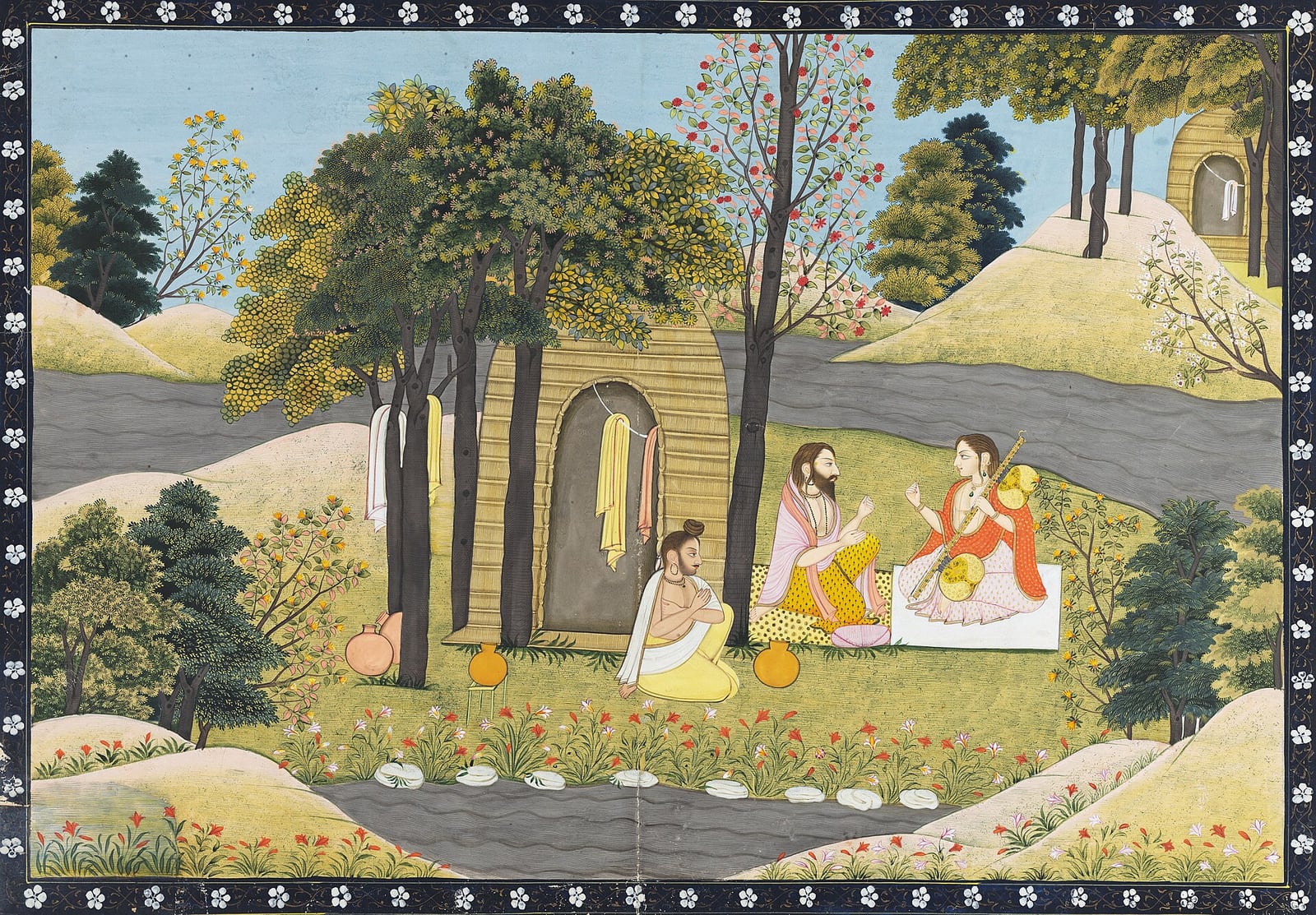
Nārada en la ermita de Vālmīki · Public domain
Своими словами
«No fame be thine for endless time, / Because, base outcast, of thy crime, / Whose cruel hand was fain to slay / One of this gentle pair at play!»Rāmāyaṇa, Bālakāṇḍa, canto II (1.2.14 de la edición crítica); trad. en verso de R. T. H. Griffith (1870, dominio público); versión española del investigador

Главная мысль
Śloka (the stanza born of grief): The śloka is the stanza of two lines of sixteen syllables, divided into four feet of eight (anuṣṭubh), which became the metre par excellence of the epic and of classical Sanskrit literature.
В контексте
Биография
3 мин чтения
Перевод с испанского оригинала, выполненный с помощью ИИ; ожидает проверки носителем языка.
Первый поэт
Индийская традиция называет Вальмики адикави, «первым поэтом», а его «Рамаяну» — адикавьей, «первой поэмой»: произведением, с которого будто бы началась учёная поэзия на санскрите. Это утверждение о происхождении жанра, а не о жизни человека. О Вальмики нет ни одного свидетельства за пределами текстов; всё, что о нём известно, взято из самой поэмы, где он выступает как персонаж, и из гораздо более поздних легенд. Филология рассматривает его как имя, которое традиция дала автору — или авторам — эпопеи, складывавшейся и разраставшейся на протяжении нескольких столетий.
Поэма, рассказывающая о собственном рождении
«Рамаяна» открывается рассказом о самой себе. Вальмики спрашивает мудреца Нараду, есть ли на свете человек добродетельный, доблестный, правдивый и сострадательный, и Нарада излагает ему жизнь Рамы. Вскоре после этого на берегу реки Тамасы поэт видит, как охотник убивает самца из пары журавлей краунча, а самка кричит над его телом. Потрясённый, он проклинает охотника, и слова его сами собой выходят мерными — двумя стихами с восьмисложными стопами: скорбь (шока) стала строфой (шлокой). Ему является Брахма и велит рассказать этим размером историю Рамы. Роберт Гольдман показал, что эти начальные песни — поздняя рамка, превращающая эпос в миф о происхождении поэзии; столетия спустя Анандавардхана увидит в этой сцене доказательство того, что душа поэзии — чувство.
Персонаж собственного произведения
В последней книге, «Уттара-канде», поэт входит в повествование. Рама, уже царствующий в Айодхье, изгоняет Ситу из-за пересудов народа, и она, беременная, находит приют в обители Вальмики, где рождаются её сыновья-близнецы Куша и Лава. Мудрец воспитывает их и обучает поэме, которую юноши будут петь перед самим Рамой во время великого жертвоприношения коня. Тогда Вальмики приводит Ситу в собрание и клянётся своими подвигами аскезы, что она невинна: «Я десятый сын Прачетаса, и ложь не зарождается даже в моём уме». Сита просит Землю принять её, если она была верна, и Земля разверзается. Так поэт становится свидетелем, покровителем и поручителем правдивости собственного рассказа.
Текст многих столетий
По традиции «Рамаяна» насчитывает около двадцати четырёх тысяч строф, разделённых на семь книг (канд), и дошла до нас в двух больших редакциях, северной и южной, со множеством региональных вариантов. В 1960–1975 годах Восточный институт в Бароде выпустил её критическое издание, цель которого — восстановить древнейший достижимый текст. Учёные согласны в том, что книги II–VI составляют ядро, а первая и седьмая — позднейшие добавления: ещё в 1874 году Ральф Гриффит писал, что «Уттара-канда» — «всего лишь приложение». Датировки расходятся: Гольдман относит сложение ядра к VIII–VI векам до н. э.; Джон Брокингтон описывает процесс роста, длившийся с V века до н. э. до первых веков н. э. Если исторический Вальмики существовал, он был бы поэтом этого ядра, установить личность которого сегодня невозможно.
Разбойник, ставший святым
Самая известная легенда о Вальмики не содержится в «Рамаяне». Согласно позднейшим религиозным текстам, таким как «Адхьятма-рамаяна», он был дорожным грабителем, который, встретив мудрецов, понял, что семья не разделит с ним вины за его преступления; не в силах произнести имя Рамы, он получил наставление повторять мара — слово, которое при обращении даёт это имя, — и так долго медитировал неподвижно, что его покрыл муравейник (валмика), откуда будто бы и пошло его имя. Джулия Лесли исследовала, как эта история обращения, ставшая канонической, вступает в конфликт с благочестием общин, которые почитают Вальмики как своего духовного наставника и отвергают образ разбойника.
Авторитет имени
Как и имя Вьясы, имя Вальмики служило для того, чтобы придать авторитет другим произведениям. Ему приписывают повествование «Йога-Васиштхи» — великого средневекового диалога, в котором Васиштха наставляет Раму; «Адбхута-рамаяну» и «Ананда-рамаяну», поздние переложения истории Рамы, а также некоторые гимны, например «Гангаштаку». Драматурги сделали его персонажем: Бхавабхути в VIII веке заставляет его сочинить пьесу внутри своей «Уттарарамачариты».
Восприятие
«Рамаяна» Вальмики стала источником сотен версий на языках Индии и Юго-Восточной Азии — от тамильской поэмы Камбана до «Рамачаритаманасы» Тулсидаса на авадхи — и долгой живописной традиции: могольские мастерские иллюстрировали её в конце XVI века. В 1881 году молодой Рабиндранат Тагор написал оперу об обращении поэта «Вальмики-пратибха» («Гений Вальмики») и сам исполнил в ней главную роль. Первым английским стихотворным переводом стал перевод Ральфа Гриффита (1870–1874), не включавший последнюю книгу; прозаический перевод Манматхи Натха Датта (1891–1894) её включил; перевод Принстонского университета под руководством Роберта и Салли Гольдман был завершён в 2016 году томом «Уттара-канды» после четырёх десятилетий работы.
Что можно утверждать
Историк вправе утверждать, что великая эпопея о Раме, складывавшаяся на санскрите на протяжении нескольких веков до и после рубежа эр, передавалась под именем Вальмики и что её повествовательная рамка сделала это имя именем изобретателя поэзии. От человека, если он существовал, не осталось ничего проверяемого: ни дат, ни места, ни произведения, которое можно было бы с уверенностью отделить от рук, его расширявших.
Источники: Goldman, Robert P. (trad. e introd.). The Rāmāyaṇa of Vālmīki: An Epic of Ancient India. Vol. I: Bālakāṇḍa. Princeton: Princeton University Press, 1984. Introducción (autor, fecha, el episodio de las grullas y el marco del poema). · Brockington, John. The Sanskrit Epics. Leiden: Brill, 1998 (Handbuch der Orientalistik, 2. Abt., Bd. 12). Capítulos sobre el Rāmāyaṇa: transmisión, recensiones, estratos y datación. · Brockington, John. Righteous Rāma: The Evolution of an Epic. Delhi: Oxford University Press, 1984. · Griffith, Ralph T. H. (trad.). The Rámáyan of Válmíki, translated into English verse. 5 vols. Londres: Trübner; Benarés: E. J. Lazarus, 1870–1874. Project Gutenberg n.º 24869 (cantos I–II del libro I; nota sobre el Uttarakáṇḍa). · Bhatt, G. H., y U. P. Shah (eds. gen.). The Vālmīki-Rāmāyaṇa: Critical Edition. 7 vols. Baroda: Oriental Institute, 1960–1975.
Хронология
Жизнь год за годом
Каждая точка — документированное событие. Нажмите, чтобы прочитать о нём, с источником и степенью достоверности.
ок. 500 до н. э. – 100 до н. э.Norte de la India
The core of the Rāmāyaṇa
Composition of books II to VI, the core of the epic, orally transmitted. Brockington describes growth in stages from the fifth century BCE; Goldman proposes older dates for the core (eighth to sixth centuries BCE). If there was a historical Vālmīki, he would be its poet.
ОспариваетсяBrockington, John. The Sanskrit Epics. Leiden: Brill, 1998 (Handbuch der Orientalistik, 2. Abt., Bd. 12). Capítulos sobre el Rāmāyaṇa: transmisión, recensiones, estratos y datación.
ок. 500 до н. э. – 100 до н. э.
The core of the Rāmāyaṇa
Composition of books II to VI, the core of the epic, orally transmitted. Brockington describes growth in stages from the fifth century BCE; Goldman proposes older dates for the core (eighth to sixth centuries BCE). If there was a historical Vālmīki, he would be its poet.
Оспаривается
ок. 100 – 300
The first and last books are added
The Bālakāṇḍa, with the account of the birth of poetry, and the Uttarakāṇḍa, where Vālmīki shelters Sītā and teaches the poem to her sons, are incorporated as late strata. Griffith already considered the last book an appendix in 1874.
Оспаривается
1597 – 1605
The illustrated Freer Rāmāyaṇa
Painters of the Mughal workshop illustrate a Persian manuscript of Vālmīki's Rāmāyaṇa, now in the Freer Gallery in Washington, with scenes such as that of the hunter and the cranes.
Документировано
1870 – 1874
Griffith's verse translation
Ralph T. H. Griffith publishes in five volumes the first English verse translation of the first six books, with a summary of the Uttarakāṇḍa.
Документировано
1881
Tagore's Vālmīki Pratibhā
Rabindranath Tagore writes and performs Vālmīki Pratibhā, a Bengali opera on the conversion of the bandit into a poet.
Документировано
1891 – 1894
M. N. Dutt's prose translation
Manmatha Nath Dutt publishes the complete English prose translation, including the Uttarakāṇḍa (1894).
Документировано
1900
Vivekananda speaks on the Rāmāyaṇa
Swami Vivekananda devotes a lecture to the Rāmāyaṇa before an American audience and presents Vālmīki as India's first poet.
Документировано
1960 – 1975
The critical edition
The Oriental Institute of Baroda publishes in seven volumes the critical edition of Vālmīki's Rāmāyaṇa, based on the collation of the northern and southern recensions.
Документировано
1984 – 2016
The Princeton translation
The first volume of the annotated translation directed by Robert P. Goldman, based on the critical edition, appears; the seventh, the Uttarakāṇḍa, completes the work in 2016.
Документировано
Труды
Главные труды
Труды, без которых не понять это наследие.
Традиционная атрибуция · ок. 500 до н. э.
Rāmāyaṇa (The Journey of Rāma)
रामायण (Rāmāyaṇa)
Sanskrit epic of some twenty-four thousand stanzas, according to tradition, in seven books: Bāla, Ayodhyā, Araṇya, Kiṣkindhā, Sundara, Yuddha and Uttara. It narrates the life of Rāma, prince of Ayodhyā: his fourteen-year exile, the abduction of his wife Sītā by Rāvaṇa, king of Laṅkā, the alliance with the monkeys and with Hanumān, the war and the return to the throne. A model of learned poetry (kāvya) and of the ideal of dharma, it is the source of hundreds of versions across Asia.
12 изданий

Традиционная атрибуция · ок. 1100
Yoga Vāsiṣṭha (Mahārāmāyaṇa)
योगवासिष्ठ (Yogavāsiṣṭha), también महारामायण
A great philosophical dialogue in six books in which Vasiṣṭha teaches the young Rāma that the world is a projection of the mind and that liberation is possible in life. Vālmīki appears as narrator within a chain of frames, which made it possible to present the work as a 'Great Rāmāyaṇa' complementing the epic poem. Its main entry is under Vasiṣṭha.
2 издания
Все труды (12)

Bālakāṇḍa (Book of Childhood)
Valmiki
Ayodhyākāṇḍa (Book of Ayodhyā)
The Conscious LibraryAyodhyākāṇḍa (Book of Ayodhyā)
Valmiki
Araṇyakāṇḍa (Book of the Forest)
The Conscious LibraryAraṇyakāṇḍa (Book of the Forest)

Kiṣkindhākāṇḍa (Book of Kiṣkindhā)
Valmiki
Sundarakāṇḍa (The Beautiful Book)
The Conscious LibrarySundarakāṇḍa (The Beautiful Book)
Valmiki
Yuddhakāṇḍa (Book of the War)
The Conscious LibraryYuddhakāṇḍa (Book of the War)
Valmiki
Uttarakāṇḍa (The Last Book)
The Conscious LibraryUttarakāṇḍa (The Last Book)
Valmiki
Adbhuta Rāmāyaṇa (The Wondrous Rāmāyaṇa)
The Conscious LibraryAdbhuta Rāmāyaṇa (The Wondrous Rāmāyaṇa)
Valmiki
Ānanda Rāmāyaṇa
The Conscious LibraryĀnanda Rāmāyaṇa
Valmiki
Gaṅgāṣṭaka (Eight Stanzas to the Ganges)
The Conscious LibraryGaṅgāṣṭaka (Eight Stanzas to the Ganges)
Изречения
Изречения, найденные в конкретном труде. Каждое сопровождается указанием происхождения и степени надёжности.
No fame be thine for endless time, / Because, base outcast, of thy crime, / Whose cruel hand was fain to slay / One of this gentle pair at play!mā niṣāda pratiṣṭhāṃ tvam agamaḥ śāśvatīḥ samāḥ / yat krauñcamithunād ekam avadhīḥ kāmamohitam
ПровереноRāmāyaṇa, Bālakāṇḍa, canto II (1.2.14 de la edición crítica); trad. en verso de R. T. H. Griffith (1870, dominio público); versión española del investigador
Апокрифические изречения и изречения спорной атрибуции (1)
«Mother and motherland are greater than heaven (jananī janmabhūmiś ca svargād api garīyasī).»
It is constantly quoted as a verse of Vālmīki's, spoken by Rāma before Laṅkā, but it does not appear in the Baroda critical edition; it circulates in some late versions and anthologies. It should be regarded as of doubtful attribution.
Последние слова
Проверяемых записей о последних словах не существует.
There is no record of his death. Vālmīki is a legendary figure whose only 'biography' comes from the Rāmāyaṇa and later legends; none of them narrates his end.
Источник: Goldman, Robert P. (trad. e introd.). The Rāmāyaṇa of Vālmīki: An Epic of Ancient India. Vol. I: Bālakāṇḍa. Princeton: Princeton University Press, 1984. Introducción (autor, fecha, el episodio de las grullas y el marco del poema).
Спросить
На что отвечают эти труды
Двенадцать великих вопросов человечества и то, что позволяют на них ответить эти тексты, со ссылками. Мы никогда не вкладываем слова в чужие уста.
Что такое Абсолют? Существует ли Бог?
The gods act in history, and Rāma is finally revealed as Viṣṇu
Личный БогСледует из учения
The Rāmāyaṇa does not formulate a theology, but its world is peopled by personal gods who deliberate, ask for help and grant boons: Brahmā grants Rāvaṇa invulnerability against gods and demons, and the gods turn to Viṣṇu so that he may be born as a man and kill him. In the Bālakāṇḍa that incarnation is explicit, and in the Yuddhakāṇḍa, after Sītā's ordeal by fire, Brahmā reveals to Rāma that he is Nārāyaṇa. The divine thus appears as someone who intervenes to restore dharma. The core of the poem, however, tells the life of a prince who suffers, doubts and weeps as a man, and its opening question is not who God is, but whether there exists in the world a fully virtuous man.
Сравнить этот вопрос с другими учителямиКто я? Существует ли истинное «я»?
The poem shows characters and duties, not a doctrine of the self
Не высказывался
The Rāmāyaṇa does not ask who the self is. Its interest lies in what a person does with his position and his word: Rāma accepts exile so that his father may not break a promise, Sītā keeps her fidelity in captivity, Bharata rules in his brother's name with his sandals on the throne. The self that appears in the poem is that of a character tested in duty and in grief, not a substance to be discovered. When later tradition sought to give Rāma's story a doctrine of the Self, it did so in other texts: the Adhyātma Rāmāyaṇa or the Yoga Vāsiṣṭha, in which Vālmīki appears only as narrator and the teaching on the Self is given by Vasiṣṭha.
Сравнить этот вопрос с другими учителямиПочему мы страдаем?
Pain comes when dharma is broken; the poem is born of grief
Социальный и нравственный беспорядокСледует из учения
The Rāmāyaṇa begins with grief: Vālmīki sees a hunter kill one of a pair of cranes and, moved, utters a curse that comes out metrical; he calls it śloka because it was born of śoka, sorrow. The whole poem rests on that emotion. The misfortunes it narrates almost always originate in a breach of order: the promise Kaikeyī extracts from Daśaratha, Sītā's abduction by Rāvaṇa. Daśaratha attributes his own death to an old fault, the accidental killing of an ascetic's son. Rāma, consoling his brother Bharata, adds a sober teaching: all that is accumulated is exhausted, every union ends in separation and every life in death. The remedy is to restore dharma, and Rāma's Ayodhyā is the image of a kingdom where no one weeps.
Сравнить этот вопрос с другими учителямиЧто происходит после смерти?
Every life ends in death; what matters is keeping one's word
Молчание или сдержанностьСледует из учения
The Rāmāyaṇa is full of deaths, funeral rites and heavens, but it develops no doctrine of the beyond. Its most explicit teaching on death is given by Rāma to Bharata, who comes to the forest after their father's death to ask him to return: everything accumulated is exhausted, everything raised falls, every union ends in separation and every life in death; man is not his own master, and grieving for the dead is useless. The consequence is not speculation about the fate of the dead, but a demand on the living: Rāma refuses to return, so that his father's word may not be broken. The poem takes for granted that the virtuous reach heaven, and the last book ends with Rāma entering the river Sarayū and returning to the form of Viṣṇu.
Сравнить этот вопрос с другими учителямиКак достигается освобождение или спасение?
The ideal is the virtuous man who never strays from dharma
Через добродетель и гармониюСледует из учения
The Rāmāyaṇa is not about liberation from the cycle of rebirth, but about how to live rightly. Its opening question, which Vālmīki addresses to Nārada, is whether there exists in the world a man who is virtuous, brave, truthful, firm in his vows, grateful and benevolent to every creature (Bālakāṇḍa 1). Rāma is the answer: he accepts exile so that his father may not break his word, treats allies and enemies with respect, and places his duty as king above his own happiness. What the poem proposes is not to flee the world, but to embody dharma in it, and the reward it promises the virtuous is heaven and fame. In the frame of the Yoga Vāsiṣṭha, which tradition has him narrate, the sage Agastya says that knowledge and action lead to the goal like the two wings of a bird.
Сравнить этот вопрос с другими учителямиНужен ли учитель?
The word is received, learned by heart and sung to others
Община и традицияСледует из учения
The Rāmāyaṇa presents itself as the fruit of a transmission. Vālmīki receives Rāma's story from Nārada, Brahmā commissions him to compose it, and he teaches it to Kuśa and Lava, Sītā's twin sons who grow up in his hermitage, who later recite it before the assembly and before Rāma himself (Bālakāṇḍa 1–4). The poem is also full of teachers: Vasiṣṭha, preceptor of the royal house, and Viśvāmitra, who instructs Rāma in arms and entrusts him with secret knowledge. Knowledge, in this world, passes from mouth to mouth within a community of sages, reciters and disciples. The text does not ask whether one can do without a teacher; what it shows is that what is valuable is learned from another and sung to others.
Сравнить этот вопрос с другими учителямиРеален ли мир?
The poem celebrates the visible world, but does not ask whether it is real
Не высказывался
The Rāmāyaṇa does not raise the question of the world's reality. On the contrary, it is one of the great poems of the visible: it describes in detail forests, rivers, the seasons —the coming of the rains and of autumn in Kiṣkindhā—, cities, palaces and the emotions of its characters, and Indian poetics took it as the model of cultivated poetry precisely for that richness. Its world is a real stage, governed by dharma and by time, in which acts have consequences. The thesis that the world is an appearance is developed by the Yoga Vāsiṣṭha, which tradition has Vālmīki narrate, but there the doctrine is Vasiṣṭha's, not the poet's.
Сравнить этот вопрос с другими учителямиЧто такое любовь?
Poetry is born of compassion for a wounded crane
Безграничное состраданиеСледует из учения
The Rāmāyaṇa places an act of compassion at the origin of poetry. Vālmīki sees a hunter shoot one of two cranes in love, hears the female's lament and, moved, utters a stanza that becomes the first śloka. The whole epic is thus marked by love and separation: that of Rāma and Sītā, parted by abduction, exile and finally repudiation, and Rāma's grief for his lost wife, which fills entire books. Its hero answers Vālmīki's opening question about a man «benevolent to every creature», and his dealings with allies of other species —the vulture Jaṭāyu, the monkeys, the demon Vibhīṣaṇa— extend that benevolence beyond his own.
Сравнить этот вопрос с другими учителямиСвободны ли мы или всё предопределено?
Fate brings the blows; keeping dharma is each person's task
Судьба и ответственностьСледует из учения
The Rāmāyaṇa dramatises the debate between fate and effort at the moment Rāma learns of his exile. Lakṣmaṇa, furious, argues that only the weak submit to fate and proposes seizing the kingdom by force; Rāma replies that what has happened, Kaikeyī's sudden demand, can only be explained by fate (daiva), and that no one can oppose it. Later, consoling Bharata, he adds that man is not his own master and that time drags him hither and thither. But this acceptance exempts him from nothing: what Rāma does control is his conduct, and he chooses to keep his father's word though no one compels him. Circumstances are given; the rectitude with which one responds to them is one's own responsibility.
Сравнить этот вопрос с другими учителямиЗачем медитировать или молиться?
Sacrifice, austerity and daily rites order the life of the poem
Ритуал и самосовершенствованиеСледует из учения
The Rāmāyaṇa teaches no meditation technique, but its world is organised by religious practice. Daśaratha obtains his sons through a sacrifice; Rāma and Lakṣmaṇa perform the dawn and dusk rites; the forest sages live devoted to austerity (tapas), and Rāma comes to defend their hermitages from the demons who defile their rites. Vālmīki himself appears as an ascetic by the river Tamasā, and the poem ends with Rāma's great horse sacrifice (aśvamedha), during which his sons recite the epic. Practice here is not an inner path to transform consciousness, but the cultivation of order: rite, asceticism and right conduct sustain both the person and the world.
Сравнить этот вопрос с другими учителямиМожет ли разум познать предельное?
Rāma rejects the reasoning that mocks the Veda and dharma
Писание и рассуждениеСледует из учения
The Rāmāyaṇa is not a treatise, but it contains an episode in which it confronts sceptical reason. In the Ayodhyākāṇḍa, the brahmin Jābāli tries to persuade Rāma to return and reign with materialist arguments: ties of kinship are fleeting, there is no other world, offerings to the dead are a waste, and the precepts of the texts were invented by clever men to obtain gifts. Rāma rejects him harshly: whoever abandons truth and dharma for such reasonings is lost, and he will not break his father's word. The poem places authority in the Veda, in dharma and in the promised truth; the reasoning that undermines them is, for it, a straying.
Сравнить этот вопрос с другими учителямиУйти от мира или преобразить его?
Rāma's kingdom: wisdom is realised in good government
Упорядочить обществоСледует из учения
The Rāmāyaṇa is, among other things, a treatise in narrative form on the just king. Rāma places duty above happiness, protects ascetics, keeps his father's word and, once restored to the throne, governs in such a way that his reign becomes proverbial: the poem describes a kingdom without weeping widows, without disease or thieves, where rain falls in its season and no one dies before their time. Tradition calls Rāma maryādā-puruṣottama, the best of men in respecting limits. Withdrawal appears in the poem —the exile, the hermitages, Vālmīki's own hermitage—, but as trial or refuge, not as goal: the ideal is a just order embodied in the ruler.
Сравнить этот вопрос с другими учителями
Созвучия и противоречия
Созвучия и противоречия
Рассчитаны вопрос за вопросом на основе позиций. Причина каждого совпадения или расхождения — по нажатию.
Ближе всего к
Confucius
Совпадают в вопросах: Почему мы страдаем? · Что происходит после смерти? · Как достигается освобождение или спасение?
Zeno of Citium
Совпадают в вопросах: Почему мы страдаем? · Что происходит после смерти? · Как достигается освобождение или спасение?
Laozi
Совпадают в вопросах: Почему мы страдаем? · Что происходит после смерти? · Как достигается освобождение или спасение?

Emanuel Swedenborg
Совпадают в вопросах: Что такое Абсолют? Существует ли Бог? · Как достигается освобождение или спасение? · Зачем медитировать или молиться?
Дальше всего от
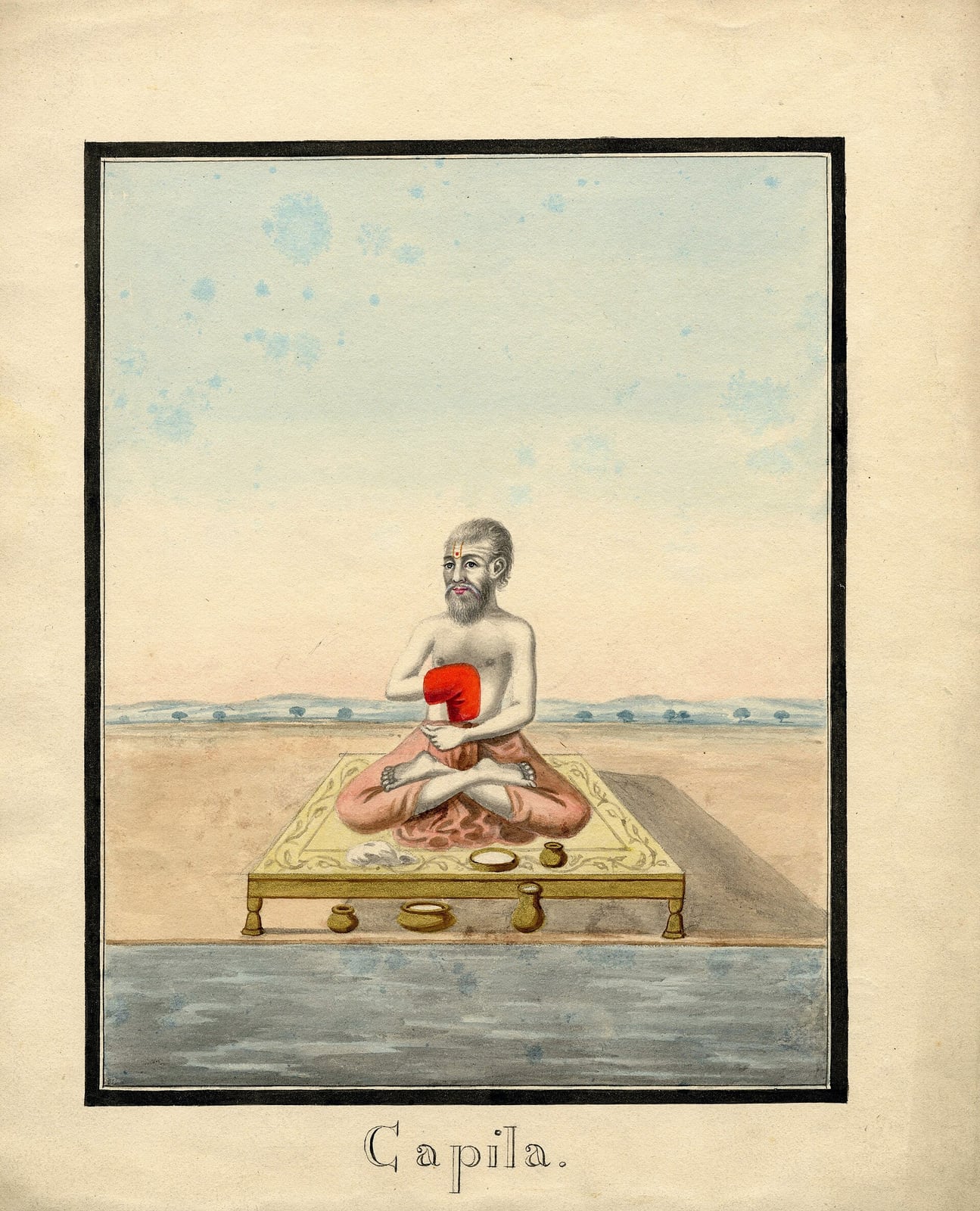
Kapila
Расходятся в вопросах: Что такое Абсолют? Существует ли Бог?
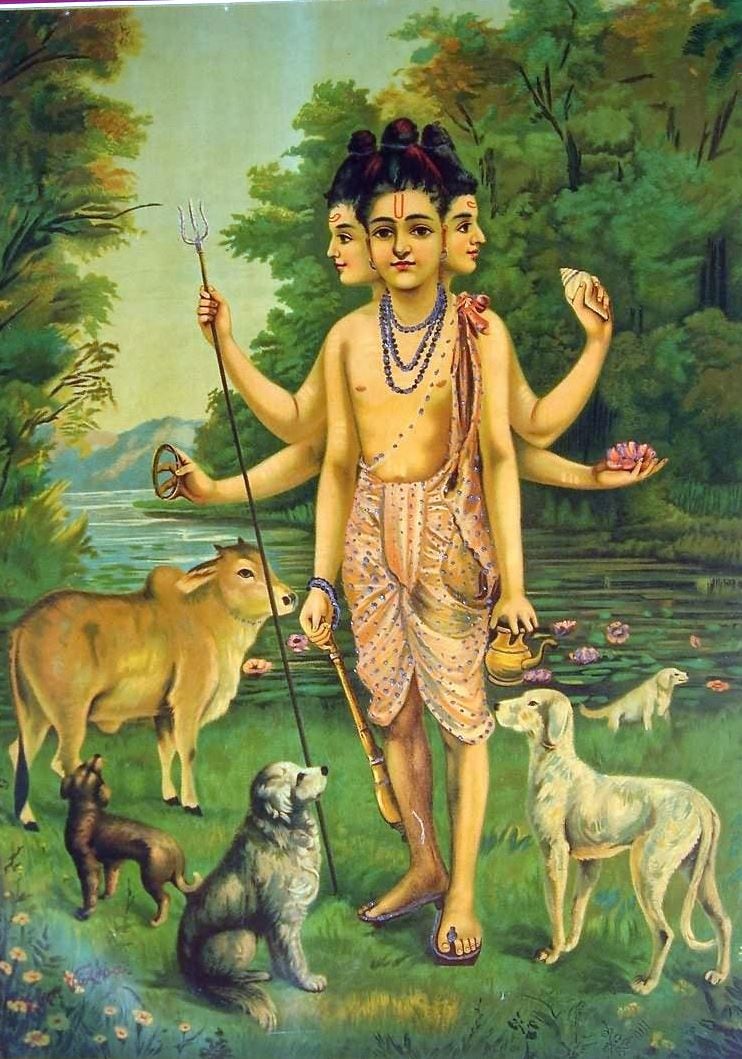
Dattatreya
Расходятся в вопросах: Что такое Абсолют? Существует ли Бог? · Почему мы страдаем? · Что происходит после смерти?
Uddalaka Aruni
Расходятся в вопросах: Что такое Абсолют? Существует ли Бог? · Что происходит после смерти? · Как достигается освобождение или спасение?
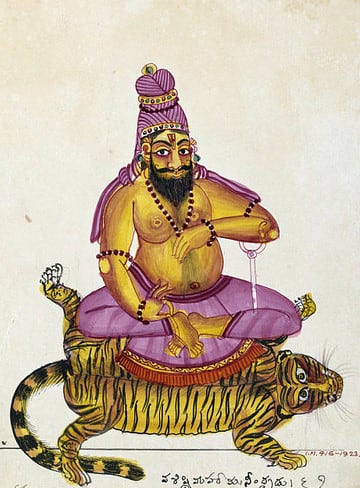
Vasishtha
Расходятся в вопросах: Что такое Абсолют? Существует ли Бог? · Почему мы страдаем? · Что происходит после смерти?
Предания и рассказы
Предания и рассказы
Житийное повествованиеrelato épico
The grief that became verse
Происхождение рассказа: Rāmāyaṇa, Bālakāṇḍa, sarga 2 (Griffith's translation, canto II). Goldman regards it as part of the poem's late frame. Ānandavardhana (9th c.) cites it in the Dhvanyāloka as an example that the soul of poetry is emotion.
Житийное повествованиеrelato épico
The question to Nārada
Происхождение рассказа: Rāmāyaṇa, Bālakāṇḍa, sarga 1 (Griffith's translation, canto I). It belongs to the poem's late frame.
Житийное повествованиеrelato épico
The hermitage that sheltered Sītā
Происхождение рассказа: Rāmāyaṇa, Uttarakāṇḍa (Dutt's translation, vol. 4). It is a late stratum of the poem, which philology regards as an addition.
Житийное повествованиеrelato épico
The poet's oath
Происхождение рассказа: Rāmāyaṇa, Uttarakāṇḍa, section CIX of M. N. Dutt's translation (1894), checked against the text.
Житийное повествованиеleyenda medieval y moderna
The bandit of the anthill
Происхождение рассказа: It does not appear in Vālmīki's Rāmāyaṇa. It is documented in the Adhyātma Rāmāyaṇa (Ayodhyākāṇḍa) and in later texts and vernacular versions; the name Ratnākara belongs to late versions. Julia Leslie (2003) studied its history and its rejection by the Vālmīki community.
Источник: Leslie, Julia. Authority and Meaning in Indian Religions: Hinduism and the Case of Vālmīki. Aldershot: Ashgate, 2003.
Документировано1881
Tagore in the role of Vālmīki
Происхождение рассказа: A fact documented by the history of Bengali theatre and by the photograph of the performance (Commons, from Indira Devi Chaudhurani's memoirs, Visva-Bharati, 1974). The exact date of the premiere should be confirmed in a Tagore biography.
Учение
Учение
Понятия, на которых строится мысль учителя, объяснённые в их контексте.
Śloka (the stanza born of grief)sloka
Sanskrit metrics; Bālakāṇḍa, sarga 2.
Ādikāvya and ādikavi (the first poem, the first poet)adikavya
Sanskrit poetics and literary genres.
Источник: Goldman, Robert P. (trad. e introd.). The Rāmāyaṇa of Vālmīki: An Epic of Ancient India. Vol. I: Bālakāṇḍa. Princeton: Princeton University Press, 1984. Introducción (autor, fecha, el episodio de las grullas y el marco del poema).
Karuṇa rasa (the compassionate sentiment)karuna-rasa
Ānandavardhana's Dhvanyāloka (9th c.), 1.5.
Источник: Goldman, Robert P. (trad. e introd.). The Rāmāyaṇa of Vālmīki: An Epic of Ancient India. Vol. I: Bālakāṇḍa. Princeton: Princeton University Press, 1984. Introducción (autor, fecha, el episodio de las grullas y el marco del poema).
The recensions and the critical editionrecensiones-ramayana
Textual criticism of the Rāmāyaṇa.
Источник: Bhatt, G. H., y U. P. Shah (eds. gen.). The Vālmīki-Rāmāyaṇa: Critical Edition. 7 vols. Baroda: Oriental Institute, 1960–1975.
Rāma, the ideal man of dharmamaryada-purushottama
Ethics and theology of the Rāmāyaṇa.
Источник: Brockington, John. Righteous Rāma: The Evolution of an Epic. Delhi: Oxford University Press, 1984.
Видео
Видео
Записи, интервью и документальные фильмы. Видео воспроизводятся с YouTube; здесь они не хранятся.
Robert Goldman sings from the Ramayana
Лекция· SA· 2016· 2 min
UC BerkeleyОфициальный канал
Famous Ramayana epic now in modern English
Документальный фильм· EN· 2016· 4 min
UC BerkeleyОфициальный канал
CMTC workshop (02.06.2021) Mary Brockington (Oriental Studies, Oxford)
Лекция· EN· 2021· 53 min
CMTC Media
Reading Ramayana in the 21st Century | Arshia Sattar | India ki Khoj
Лекция· EN· 2019· 52 min
IIT GandhinagarОфициальный канал
A critical edition of the Valmiki Ramayana
Лекция· HI· 2025· 11 min
Pandulipi Sanvadah
Bharat Ek Khoj | Episode-7 | Ramayana, Part-I
Документальный фильм· HI· 1988· 48 min
Prasar Bharati ArchivesОфициальный канал
Bharat Ek Khoj | Episode-8 | Ramayana, Part II
Документальный фильм· HI· 1988· 44 min
Prasar Bharati ArchivesОфициальный канал
Mewar Ramayana brought alive
Документальный фильм· EN· 2014· 5 min
Chhatrapati Shivaji Maharaj Vastu SangrahalayaОфициальный канал
Ramayana Storytelling Performance
Запись третьих лиц· EN· 2016· 93 min
Asian Art MuseumОфициальный канал
Rama and the Ramayana: Crash Course World Mythology #27
Разбор· EN· 2017· 13 min
CrashCourseОфициальный канал
Complete Chant of SundaraKanda from Valmiki Ramayanam in Sanskrit
Запись третьих лиц· SA· 2021· 693 min
The Sanskrit Channel
Life and Teachings of Maharishi Valmiki, Author of Ramayana also known as Adi Kavi
Разбор· HI· 2020· 21 min
StudyIQ IAS
RAMAYANA
Запись третьих лиц· ES· 2020· 18 min
Casa de la India in SpainОфициальный канал
Râmâyana : la légende de Rama, avatar de Vishnou - Mythologie hindoue
Разбор· FR· 2020· 20 min
Arcana les Mystères du Monde
Галерея
Галерея
Изображения с проверенной лицензией. Каждое сохраняет своё авторство и атрибуцию.
Рукописи
Рукописи
Рукописные свидетельства и древние тексты, с указанием хранителя и условий доступа.
FA · Nastaʿlīq (persa) · Texto épico sánscrito (s. V a. C.–III d. C. aprox.); traducción persa de época de Akbar
Rāmāyaṇa de Vālmīki (traducción persa), copia ilustrada conocida como «Freer Ramayana»
- Сохранившийся список
- Manuscrito ilustrado de 1597–1605
- Хранитель
- Freer Gallery of Art, Smithsonian National Museum of Asian Art (Washington) · F1907.271
- Оцифровка
- www.asia.si.edu/collections/singleObject.cfm?Obj…
Связи
Связи
Влияния, ученичество и близость взглядов. Документированная связь отличается от сходства, выявленного путём анализа.
Встречался с
In the first canto of the Rāmāyaṇa, Nārada answers Vālmīki's question and tells him the life of Rāma. A textual, not a historical, relation.
Документированная связь
Современник
In the Rāmāyaṇa, Vasiṣṭha is the purohita of Ayodhyā in Rāma's time; the Yoga Vāsiṣṭha puts in Vālmīki's mouth the narration of Vasiṣṭha's dialogue with Rāma. A literary relation.
Документированная связь
Идеи, близкие к
The two 'authors' of the Sanskrit epics are at once characters in their works and names that authorise whole corpora; tradition pairs them as the first poet and the compiler of history.
Сходство, выявленное путём анализа
Повлиял на
In 1900 Vivekananda devoted a lecture to the Rāmāyaṇa, in which he presents Vālmīki as India's first poet.
Документированная связь
Повлиял на
Tulsīdās
Tulsīdās's Rāmcaritmānas (16th c.), in Awadhi, is the great devotional rewriting of the story told in the Rāmāyaṇa; it also draws on the Adhyātma Rāmāyaṇa.
Документированная связь
Идеи, близкие к
The repetition of Rāma's name as a path of salvation, central to the late legend of Vālmīki, is also the core of Kabīr's devotion; the affinity is thematic.
Сходство, выявленное путём анализа
Упоминается в других статьях
Источники
Источники
Библиография и каталоги, использованные для этой статьи.
- Wikidata, «Valmiki», QID Q715607 (LCCN n80036601; GND 118840274; BnF 11927528q; VIAF 288016626).
- Goldman, Robert P. (trad. e introd.). The Rāmāyaṇa of Vālmīki: An Epic of Ancient India. Vol. I: Bālakāṇḍa. Princeton: Princeton University Press, 1984. Introducción (autor, fecha, el episodio de las grullas y el marco del poema).
- Brockington, John. The Sanskrit Epics. Leiden: Brill, 1998 (Handbuch der Orientalistik, 2. Abt., Bd. 12). Capítulos sobre el Rāmāyaṇa: transmisión, recensiones, estratos y datación.
- Brockington, John. Righteous Rāma: The Evolution of an Epic. Delhi: Oxford University Press, 1984.
- Griffith, Ralph T. H. (trad.). The Rámáyan of Válmíki, translated into English verse. 5 vols. Londres: Trübner; Benarés: E. J. Lazarus, 1870–1874. Project Gutenberg n.º 24869 (cantos I–II del libro I; nota sobre el Uttarakáṇḍa).
- Bhatt, G. H., y U. P. Shah (eds. gen.). The Vālmīki-Rāmāyaṇa: Critical Edition. 7 vols. Baroda: Oriental Institute, 1960–1975.
- Goldman, Robert P., y Sally J. Sutherland Goldman (trads.). The Rāmāyaṇa of Vālmīki: An Epic of Ancient India. Vol. VII: Uttarakāṇḍa. Princeton: Princeton University Press, 2016; edición completa en un volumen: The Rāmāyaṇa of Vālmīki: The Complete English Translation, 2021.
- Leslie, Julia. Authority and Meaning in Indian Religions: Hinduism and the Case of Vālmīki. Aldershot: Ashgate, 2003.
- Dutt, Manmatha Nath (trad.). The Rāmāyaṇa. 4 vols. Calcuta: edición y publicación del traductor, 1891–1894. Vol. 4: Uttara Kāṇḍa, sección CIX (el juramento de Vālmīki). Project Gutenberg n.º 57265, 57826, 60188, 62496.
- Wikipedia (inglés), «Valmiki», sobre la leyenda de Ratnākara en el Adhyātma Rāmāyaṇa y otras fuentes tardías, y sobre la comunidad que lo venera.
- Mitra, Vihari-Lala (trad.). The Yoga-Vásishtha Mahárámáyana of Válmiki. 4 vols. en 7 partes. Calcuta: Bonnerjee & Co., 1891–1899. Project Gutenberg n.º 71326 y siguientes.
- Smithsonian, National Museum of Asian Art, Freer Gallery of Art: Rāmāyaṇa de Vālmīki ilustrado (la «Freer Ramayana»), taller mogol, 1597–1605, F1907.271.
- Wikipedia (inglés), «Valmiki Pratibha» (ópera de Rabindranath Tagore, 1881) y «Uttararamacharita» (drama de Bhavabhūti, s. VIII).
- Vivekananda, Swami. «The Ramayana», conferencia en Pasadena, 31 de enero de 1900. The Complete Works of Swami Vivekananda, vol. 4 (Wikisource).
- Правообладатель
- Texto sánscrito de dominio público. Traducciones con derechos propios: Princeton University Press (Goldman et al.), Penguin India (Debroy; Sattar), Gallimard (Pléiade), Diederichs, Clásicos Bergua, Iberia. Son de dominio público las de Griffith (1870–1874), Dutt (1891–1894) y Fauche (1854–1858).
Ожидает подтверждения
То, что в этой статье пока не удалось установить. Мы предпочитаем сказать об этом, а не заполнять пробел.
- Fechas: no hay nacimiento ni muerte; la línea de tiempo usa las fechas de la composición del Rāmāyaṇa. Precisar con la introducción de Goldman (1984) la horquilla que propone para el núcleo y con Brockington (1998) las etapas.
- Ediciones en español: las de Clásicos Bergua (2001), Iberia (1990) y Juventud (1984) no indican traductor en Open Library; identificarlo y comprobar si son traducciones íntegras o adaptaciones. Buscar ediciones en italiano, ruso e hindi (Gita Press) con ISBN.
- Obras atribuidas (Adbhuta Rāmāyaṇa, Ānanda Rāmāyaṇa, Gaṅgāṣṭaka): falta fuente académica propia y ediciones; precisar fechas.
- Anécdota de Vālmīki Pratibhā: confirmar la fecha exacta del estreno (febrero de 1881) en una biografía de Tagore.
- Cita apócrifa «jananī janmabhūmiś ca…»: localizar en qué manuscritos o versiones aparece y citar el aparato de la edición crítica.
- Mitra (Yoga Vāsiṣṭha): fecha de muerte del traductor sin verificar (caution en la sala de lectura).
- Manuscritos: añadir el Rāmāyaṇa de Mewar (British Library y CSMVS, s. XVII) con signaturas verificadas.
Исследовано 2026-10-26