Иудаизм · Светская созерцательность
Martin Buber
מרטין בובר · מארטין בובער
1878 – 1965Исторически документированная личность
Мартин Бубер (1878–1965), еврейский философ и религиозный мыслитель родом из Вены, сформулировал в книге «Я и Ты» (1923) различие между отношением Я — Ты, встречей всем существом, и опытом Я — Оно, превращающим другого в предмет. Он пересказал хасидские легенды для европейского читателя, перевёл вместе с Францем Розенцвейгом Библию на немецкий язык и отстаивал в Иерусалиме идею двунационального еврейско-арабского государства.
- трудов
- 65трудов
- изданий
- 127изданий
- цитат
- 8цитат
- видео
- 13видео
- изображений
- 9изображений
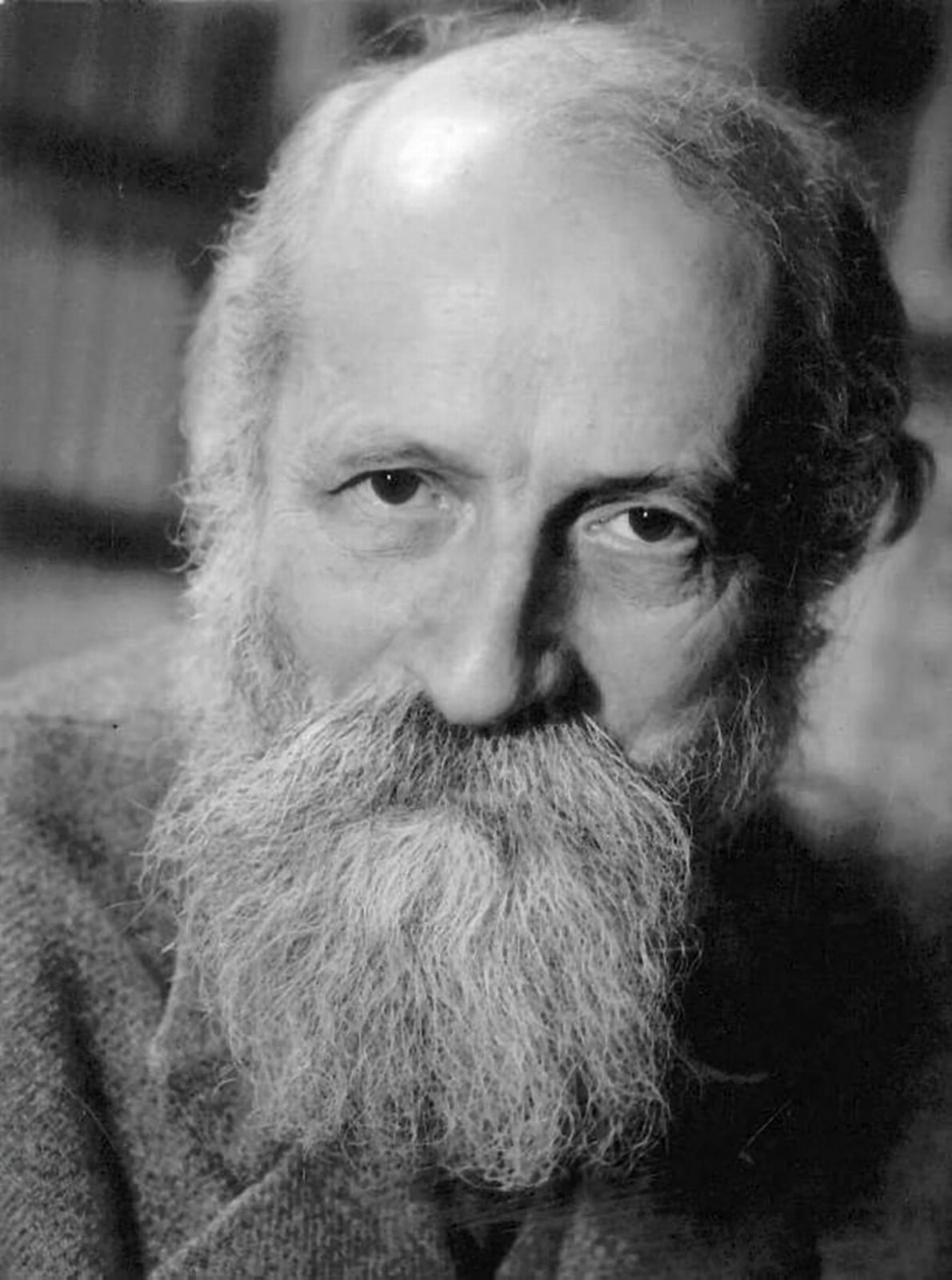
Retrato de Martin Buber · Public domain
Своими словами
«All real living is meeting.»Ich und Du (1923), primera parte

Для начала — одна книга
I and ThouГлавная мысль
The primary word I-It is not an evil: without it there would be no science, technology or social order. The danger is that the world of It grows until it stifles the capacity for relation, and that we treat persons too merely as objects of experience and use.
В контексте
Биография
4 мин чтения
Перевод с испанского оригинала, выполненный с помощью ИИ; ожидает проверки носителем языка.
Ребёнок, с которым не попрощались
Мартин Бубер родился в Вене 8 февраля 1878 года в состоятельной еврейской семье Габсбургской монархии. Ему не исполнилось и четырёх лет, когда родители разошлись и мать без единого слова исчезла из его жизни; мальчика отправили в Лемберг (ныне Львов), в австрийскую Галицию, к деду и бабушке по отцу. Соломон Бубер был знатоком Мидраша, издателем раввинистических текстов и коммерсантом; бабушка Адель — страстной читательницей немецкой литературы. Мартин рос среди идиша, немецкого, польского языка гимназии и иврита синагоги, и это многоязычие, как он сам потом рассказывал, наложило на него печать на всю жизнь. Опыт отсутствующей матери позднее подсказал ему слово Vergegnung — «невстреча», — чтобы назвать крушение подлинной встречи двух людей.
От культурного сионизма к хасидизму
Он изучал философию, историю искусства, германистику и психологию в Вене, Лейпциге, Цюрихе и Берлине, где слушал Вильгельма Дильтея и Георга Зиммеля, а в 1904 году защитил в Вене диссертацию о проблеме индивидуации у Николая Кузанского и Якоба Бёме. С 1898 года он участвовал в сионистском движении: недолго редактировал «Ди Вельт», орган Герцля, и входил в «Демократическую фракцию», которая требовала прежде всего еврейского культурного возрождения, а не одного лишь дипломатического решения. В Цюрихе в 1899 году он познакомился с Паулой Винклер, писательницей католического происхождения, которая приняла иудаизм и стала его спутницей на всю жизнь. Около 1904 года он отошёл от активной политики и погрузился в хасидские тексты, с которыми мельком соприкоснулся ещё ребёнком в Галиции: «Истории рабби Нахмана» (1906) и «Легенда о Баал Шеме» (1908) пересказывали эти предания изысканной немецкой прозой и представляли их европейской публике как выражение живой религиозности.
От мистики к диалогу
Годы перед Первой мировой войной были его мистическим периодом: он составил антологию «Экстатические исповеди» (1909) — свидетельства мистиков всех традиций, перевёл Чжуан-цзы и выпустил «Даниила» (1913), диалоги об «осуществлении». Начало войны он, как и многие немецкие интеллектуалы, встретил с воодушевлением, за которое его друг, анархист Густав Ландауэр, сурово его упрекал. Сам Бубер связывал свой поворот с ничтожным, казалось бы, эпизодом: после утра религиозного восторга к нему пришёл за советом молодой человек; Бубер принял его приветливо, но не будучи вполне присутствующим, а позже узнал, что посетитель, к тому времени уже погибший, приходил с вопросом жизни и смерти. С тех пор, писал он, он отказался от «религиозного» как исключения и экстаза и не владел «ничем, кроме повседневности».
«Я и Ты»
В 1916 году он поселился с семьёй в Хеппенхайме, у Бергштрассе, и основал журнал «Дер Юде», который редактировал до 1924 года. Там он написал «Я и Ты» (1923) — одну из самых влиятельных философских книг столетия. Её тезис умещается в несколько строк: у человека два отношения к миру, выраженные двумя «основными словами». В сочетании Я — Оно он познаёт и использует вещи и людей как предметы; в сочетании Я — Ты вступает с ними в отношение всем своим существом, без посредства и без цели. Без Оно человек не может жить, но тот, кто живёт только с ним, — не человек. Всякое подлинное отношение к Ты позволяет прозреть «вечное Ты», Бога, которого нельзя описать, к которому можно лишь обратиться.
Писание по-немецки
С 1923 по 1933 год он преподавал еврейскую философию и этику во Франкфуртском университете и сотрудничал с Францем Розенцвейгом в Свободном еврейском доме учения. В 1925 году они вдвоём взялись за новый перевод еврейской Библии на немецкий, стремившийся сохранить ритм, корни слов и устную природу оригинала; Розенцвейг умер в 1929 году, и Бубер завершил перевод один, в Иерусалиме, в 1961-м. С приходом Гитлера к власти он оставил кафедру и возглавил центр образования взрослых для немецких евреев, который старался дать им духовные силы выстоять; в 1935 году гестапо запретило ему выступать публично. В марте 1938 года он принял кафедру социальной философии в Еврейском университете в Иерусалиме; несколько месяцев спустя его дом в Хеппенхайме был разграблен во время ноябрьского погрома.
Неудобный сионизм
В Палестине он вместе с Иудой Магнесом и группой «Ихуд» отстаивал двунациональное государство, в котором евреи и арабы делили бы власть, и критиковал национализм, набиравший силу в сионистском движении. В 1939 году он ответил Ганди, советовавшему немецким евреям ненасильственное сопротивление и отрицавшему их право на Палестину, открытым письмом, в котором защищал одновременно еврейское дело и необходимость справедливого соглашения с арабами. После 1948 года он продолжал требовать возвращения беженцев и создания региональной федерации, что принесло ему в новом государстве смесь почитания и изоляции. В 1953 году он принял во Франкфурте Премию мира немецкой книготорговли — жест, вызвавший в Израиле острые споры, — а в 1962 году просил не казнить Адольфа Эйхмана.
Последние годы и наследие
В книгах зрелых лет он распространил диалогический принцип на Библию («Моисей», «Вера пророков»), на критику современной религии («Затмение Бога», с полемикой против К. Г. Юнга), на педагогику, на психотерапию — в 1957 году он вёл публичный диалог с Карлом Роджерсом — и на социальную философию («Пути в Утопию»). Он получил Государственную премию Израиля в 1958 году и премию Эразма в 1963-м. Паула умерла в Венеции в 1958 году, сам он — в своём доме в иерусалимском квартале Тальбие 13 июня 1965 года. Гершом Шолем упрекал его в том, что он превратил хасидизм в экзистенциальную философию, отбирая легенды и пренебрегая учением; Эмманюэль Левинас оспаривал взаимность отношения Я — Ты. Его влияние на богословие, педагогику и психологию встречи живо до сих пор, а критическое собрание его сочинений в двадцати одном томе было завершено в 2019 году.
Источники: Mendes-Flohr, Paul. Martin Buber: A Life of Faith and Dissent. New Haven/Londres: Yale University Press (Jewish Lives), 2019. · Friedman, Maurice. Martin Buber's Life and Work. 3 vols. (The Early Years 1878–1923; The Middle Years 1923–1945; The Later Years 1945–1965). Nueva York: E. P. Dutton, 1981–1983; reed. Detroit: Wayne State University Press, 1988. · Buber, Martin. Ich und Du. Leipzig: Insel-Verlag, 1923 (ejemplar digitalizado en Internet Archive, «ich-und-du»). · Buber, Martin. Begegnung. Autobiographische Fragmente. Stuttgart: W. Kohlhammer, 1960 (trad. ingl.: Meetings, ed. Maurice Friedman, La Salle, Open Court, 1973). · Martin Buber Werkausgabe (MBW), ed. Paul Mendes-Flohr, Peter Schäfer y Bernd Witte, por encargo de la Academia de Ciencias de Berlín-Brandeburgo, la Israel Academy of Sciences and Humanities y la Universidad Heinrich Heine de Düsseldorf. 21 vols. Gütersloh: Gütersloher Verlagshaus, 2001–2019.
Хронология
Жизнь год за годом
Каждая точка — документированное событие. Нажмите, чтобы прочитать о нём, с источником и степенью достоверности.
8 февраля 1878 г.0 летViena
Birth
Born in Vienna, son of Carl Buber and Elise Wurhaft.
ДокументированоWikidata, Q84423: «Martin Buber» (8 de febrero de 1878 – 13 de junio de 1965), 79 enlaces entre wikis.
После смерти
- 2019Werkausgabe completed
8 февраля 1878 г. · 0 лет
Birth
Born in Vienna, son of Carl Buber and Elise Wurhaft.
Документировано
ок. 1882 · 4 года
With his grandparents in Lemberg
After his parents' separation he grows up in the home of his grandparents Solomon and Adele Buber, in Austrian Galicia.
Документировано
1896 – 1899 · 18 лет
Student years
Studies philosophy, art history, German literature and psychology; hears Dilthey and Simmel in Berlin.
Документировано
1898 · 20 лет
Joins the Zionist movement
Joins Zionism and takes part in its congresses; in 1901 he briefly edits Die Welt and joins the "democratic faction".
Документировано
1899 · 21 год
Meets Paula Winkler
Meets the writer Paula Winkler; Rafael (1900) and Eva (1901) are born. They marry in 1907, after Paula's conversion to Judaism.
Документировано
1904 · 26 лет
Doctorate and retreat into Hasidism
Takes his doctorate with a thesis on individuation in Nicholas of Cusa and Jakob Böhme and withdraws from politics to study Hasidic texts.
Документировано
1906 · 28 лет
The tales of Rabbi Nachman
Publishes Die Geschichten des Rabbi Nachman; in 1908, Die Legende des Baalschem.
Документировано
1909 – 1911 · 31 год
Addresses on Judaism
Delivers before the Bar Kochba student association in Prague the addresses collected in Drei Reden über das Judentum (1911).
Документировано
1916 · 38 лет
Heppenheim and Der Jude
Settles in Heppenheim and founds the journal Der Jude, which he edits until 1924.
Документировано
1923 · 45 лет
Ich und Du
Publishes Ich und Du with Insel, the statement of his philosophy of dialogue. Begins teaching at the University of Frankfurt (until 1933).
Документировано
1925 · 47 лет
Bible translation begins with Rosenzweig
With Franz Rosenzweig he undertakes Die Schrift, a new German version of the Hebrew Bible; after Rosenzweig's death (1929) he continues alone.
Документировано
1933 · 55 лет
Resigns his chair
After Hitler comes to power he leaves the university and directs the Mittelstelle für jüdische Erwachsenenbildung; in 1935 he is banned from speaking in public.
Документировано
март 1938 г. · 60 лет
Emigration to Jerusalem
Accepts a chair of social philosophy at the Hebrew University; in November his Heppenheim house is ransacked.
Документировано
февраль 1939 г. · 61 год
Open letter to Gandhi
Answers Gandhi's article "The Jews" (1938) with a letter defending the Jewish claim to Palestine and the need for a just agreement with the Arabs.
Документировано
1942 · 64 года
Founding of Ihud
With Judah Magnes and others he founds Ihud, advocating a binational Jewish-Arab state.
Документировано
1949 · 71 год
The Hasidic tales
Publishes Die Erzählungen der Chassidim (Manesse), his great collection of Hasidic tales.
Документировано
1952 · 74 года
Controversy with Jung
Criticises C. G. Jung's psychology of religion in Merkur; Jung replies, and the debate is collected in Gottesfinsternis (1953).
Документировано
27 сентября 1953 г. · 75 лет
Peace Prize of the German Book Trade
Receives the prize in the Paulskirche and delivers "Das echte Gespräch und die Möglichkeit des Friedens"; his acceptance is much disputed in Israel.
Документировано
апрель 1957 г. · 79 лет
Public dialogue with Carl Rogers
Holds a public conversation with the psychologist Carl Rogers at the University of Michigan on the therapeutic relationship and encounter.
Документировано
1958 · 80 лет
Paula's death and the Israel Prize
Paula Buber dies in Venice on the way back from a journey; Buber receives the Israel Prize for the humanities.
Документировано
1961 · 83 года
Die Schrift completed
Completes the German Bible translation begun with Rosenzweig thirty-six years earlier.
Документировано
май 1962 г. · 84 года
Plea for clemency for Eichmann
With Hugo Bergmann, Gershom Scholem and others he asks President Ben-Zvi to commute Adolf Eichmann's death sentence.
Документировано
3 июля 1963 г. · 85 лет
Erasmus Prize
Prince Bernhard presents him with the Erasmus Prize at the Tropenmuseum in Amsterdam.
Документировано
13 июня 1965 г. · 87 лет
Death
Dies at his home in Talbiyeh, Jerusalem.
Документировано
2019
Werkausgabe completed
The 21-volume critical edition of his works (Martin Buber Werkausgabe) is completed.
Документировано
Труды
Главные труды
Труды, без которых не понять это наследие.
Письменный труд · 1923
I and Thou
Ich und Du
His principal philosophical work, written in Heppenheim and published by Insel in 1923. In three parts of aphoristic prose it distinguishes two human attitudes, expressed in the "primary words" I-Thou and I-It: relation, which occurs with the whole being and in the present, and experience, which objectifies and uses. It then examines how modern civilisation has hypertrophied the world of It and concludes with the relation to the "eternal Thou", God, who can only be addressed, not described. In 1957 he added an afterword. Translated into dozens of languages, it influenced twentieth-century theology, pedagogy, psychotherapy and philosophy.
11 изданий
Martin Buber
Die Schrift (German Bible translation, with Franz Rosenzweig)
Письменный труд · 1926
Die Schrift (German Bible translation, with Franz Rosenzweig)
Die Schrift (verdeutscht von Martin Buber gemeinsam mit Franz Rosenzweig)
Translation of the Hebrew Bible into German undertaken in 1925 with Franz Rosenzweig and completed by Buber in 1961. It renounces Luther's literary language in order to reproduce the structure of Hebrew: its recurrent roots (*Leitwörter*), its breathing rhythm and its character as a text to be spoken aloud. Fifteen volumes appeared up to 1938; the complete version, in four volumes, between 1954 and 1962. It is, with Moses Mendelssohn's Torah, the great Jewish Bible in German.
3 издания

Опубликованные лекции · 1948
The Way of Man according to the Teaching of Hasidism
Der Weg des Menschen nach der chassidischen Lehre
Short book born of a lecture at Bentveld (Netherlands) in 1947. In six chapters (heart-searching, the particular way, resolution, beginning with oneself, not to be preoccupied with oneself, here where one stands) it condenses into Hasidic tales an ethic of personal responsibility; it includes the story of Rabbi Zusya, who in the world to come will not be asked why he was not Moses, but why he was not Zusya. It is his most widely read work outside academia.
5 изданий

Письменный труд · 1949
Tales of the Hasidim
Die Erzählungen der Chassidim (Or ha-ganuz)
His great collection of Hasidic tales, published by Manesse in 1949 (in Hebrew, *Or ha-ganuz*, 1946–1947). Organised by masters, from the Baal Shem Tov to the rabbis of the nineteenth century, it presents hundreds of short anecdotes and sayings rewritten with a sobriety very different from the ornamental style of his first books. It is the way most Western readers have come to know Hasidism, and the main target of Scholem's critique.
7 изданий
Все труды (65)
Martin Buber
On the History of the Problem of Individuation (Nicholas of Cusa and Jakob Böhme)
The Conscious LibraryOn the History of the Problem of Individuation (Nicholas of Cusa and Jakob Böhme)
1904

A Jewish University
1902
Martin Buber
Jewish Artists
The Conscious LibraryJewish Artists
1903

The Tales of Rabbi Nachman
1906

The Legend of the Baal-Shem
1908

Ecstatic Confessions
1909
Martin Buber
Sayings and Parables of Zhuangzi
The Conscious LibrarySayings and Parables of Zhuangzi
1910

Chinese Ghost and Love Stories
1911

Three Addresses on Judaism
1911

Daniel: Dialogues on Realization
1913

The Four Branches of the Mabinogi
1914

On the Spirit of Judaism
1916

The Jewish Movement: Collected Essays and Addresses
1916

Events and Meetings
1917
Martin Buber
The Discourse, the Teaching and the Song
The Conscious LibraryThe Discourse, the Teaching and the Song
1917
Martin Buber
My Way to Hasidism
The Conscious LibraryMy Way to Hasidism
1918
Martin Buber
The Holy Way
The Conscious LibraryThe Holy Way
1919

Words to the Time
1919
Martin Buber
The Great Maggid and His Succession
The Conscious LibraryThe Great Maggid and His Succession
1922

The Hidden Light
1924
Martin Buber
The Baal Shem Tov's Instruction in Intercourse with God
The Conscious LibraryThe Baal Shem Tov's Instruction in Intercourse with God
1927
Martin Buber
The Hasidic Books
The Conscious LibraryThe Hasidic Books
1928

Dialogue
1932

Kingship of God
1932
Изречения
Изречения, найденные в конкретном труде. Каждое сопровождается указанием происхождения и степени надёжности.
All real living is meeting.Alles wirkliche Leben ist Begegnung.
ПровереноIch und Du (1923), primera parte
Основные идеи (редакционное изложение)
Из уважения к авторскому праву эти идеи изложены своими словами и не выдаются за дословные цитаты.
- The primary word I-It is not an evil: without it there would be no science, technology or social order. The danger is that the world of It grows until it stifles the capacity for relation, and that we treat persons too merely as objects of experience and use.
- God is not an object that can be spoken about in the third person, but the eternal Thou who can only be spoken to. Every genuine relation with a human being, an animal, a tree or a work of art affords a glimpse of that Thou, who never becomes an It.
- True dialogue does not consist in exchanging opinions but in turning toward the other and accepting him in his uniqueness, even in disagreement. Buber distinguishes genuine dialogue, technical dialogue, which seeks only understanding about something, and monologue disguised as dialogue.
- Buber described his position as that of someone walking a narrow ridge between two abysses: without doctrinal certainties to support him, but with the certainty of meeting what remains inexpressible.
- The modern age has not witnessed the death of God but his eclipse: something has come between man and the divine light, above all the tendency to turn God into an idea, a psychic function or a cultural product.
- Zionism, for Buber, made sense only as Hebrew humanism: the task of building in the land of Israel a just community, which could not be raised on injustice toward the Arabs. Hence his advocacy of a binational state and, after 1948, of a regional federation.
- Education consists neither in imposing nor in letting grow without guidance, but in a relation in which the teacher, while remaining himself, selects the world for the pupil and wins his trust; only thus can character be formed.
- Redemption is not forced through politics or magic: it is prepared in the turning of the heart and the hallowing of everyday life. That is the thesis of his novel Gog and Magog and of his reading of Hasidism.
Последние слова
Проверяемых записей о последних словах не существует.
No reliable record of his last words is known. He died at his home in Jerusalem on 13 June 1965 after some weeks of illness; the biographies by Friedman and Mendes-Flohr describe his last days without attributing a final sentence to him.
Источник: Mendes-Flohr, Paul. Martin Buber: A Life of Faith and Dissent. New Haven/Londres: Yale University Press (Jewish Lives), 2019.
Спросить
На что отвечают эти труды
Двенадцать великих вопросов человечества и то, что позволяют на них ответить эти тексты, со ссылками. Мы никогда не вкладываем слова в чужие уста.
Что такое Абсолют? Существует ли Бог?
God is the eternal Thou: not spoken about, but spoken to
Личный БогСказано прямо
For Buber, God is the eternal Thou: the one who by essence cannot become an It and in whom the lines of all relations with beings are extended. God cannot be spoken about as an object; He can only be addressed. That is why Buber distrusts both the metaphysics that defines Him and the mysticism that dissolves Him into a unity with no one to address. In the afterword he added to I and Thou in 1957 he admits that calling God a person is indispensable for whoever meets Him, though the word does not exhaust Him: He is the absolute Person, the one without limits who nevertheless enters into direct relation with man. Eclipse of God describes the modern age as a time when the Thou is hidden behind the It that man interposes, not as proof that He does not exist.
Сравнить этот вопрос с другими учителямиКто я? Существует ли истинное «я»?
There is no I as such: man becomes an I through the Thou
«Я», взращённое в отношенияхСказано прямо
For Buber there is no I as such, prior to relations. There are two primary words, I-Thou and I-It, and the I of one is not the I of the other: when a man says Thou with his whole being he is a person; when he says It he is a subject who uses and knows things. In the beginning is the relation, and man becomes an I through the Thou: the child discovers his I after having lived the encounter. That is why Buber shifts the question what is man? towards the sphere of the interhuman, the between: human reality lies neither in the isolated individual nor in the collective, but in what happens between one and another. The true self is not discovered by looking inward but by responding.
Сравнить этот вопрос с другими учителямиПочему мы страдаем?
We suffer when the It invades everything and God is eclipsed
Отделённость от БогаСледует из учения
Buber answers not with a theory of evil but with a reading of the texts in which the righteous man suffers. In his commentary on the Psalms he dwells on Psalm 73: the psalmist sees the wicked prosper and nearly stumbles, until he enters the sanctuary and understands that his good is nearness to God; suffering is not explained, but relation passes through it. From Job he retains that God gives him not reasons but presence. On the scale of the age, the diagnosis of I and Thou is that the world of It grows without measure and modern man no longer knows how to say Thou; Eclipse of God describes this time in which something interposes itself between heaven and earth. The deepest suffering is broken relation, with God and with others.
Сравнить этот вопрос с другими учителямиЧто происходит после смерти?
Of death we know nothing; the life entrusted to us is enough
Молчание или сдержанностьСказано прямо
Buber keeps a deliberate reserve before the hereafter. In a short reply written for a survey on life after death, collected in his last book, he acknowledges that of death we know nothing except that we shall die, and that the fitting thing is to accept it as the limit of what we can imagine, without claiming to picture what lies beyond. This sobriety is consistent with his reading of the Hebrew Bible, which centres faith on the relationship with God in this world, and with all his thought: eternity is touched in the present encounter with the Thou, not in speculation about an afterwards. He does not deny Jewish hope or trust in God in the face of death; he refuses to turn them into knowledge.
Сравнить этот вопрос с другими учителямиКак достигается освобождение или спасение?
The Thou comes by grace, but answering is an act of one's whole being
Через благодать и любовьСказано прямо
Buber distrusts the word salvation understood as flight from the world or as a technique. In I and Thou he puts it precisely: the Thou meets one through grace, it is not found by seeking; but speaking the primary word to it is an act of one's own being. Relation is at once choosing and being chosen, suffering and action. In The Way of Man according to the Teaching of Hasidism he translates this into a practice without method: to examine oneself, to discover the unique way that belongs to each person, to begin with oneself without ending with oneself, and to do things with one's whole being, in the place where one stands. Redemption is not elsewhere: the world is hallowed in dealings with beings and things, and God answers to that.
Сравнить этот вопрос с другими учителямиНужен ли учитель?
The master gives no doctrine: he shows something and helps one find one's way
Полезен, но не обязателенСказано прямо
Buber said of himself that he had no doctrine: he only showed something. That is also his idea of the master. In his Hasidic books he admires the tsaddik as a helper: someone who, through his presence and whole life, helps each person find his unique way without exempting him from travelling it. In The Way of Man he recalls Rabbi Zusya's saying: in the world to come he will not be asked why he was not Moses, but why he was not Zusya. Buber criticised the degeneration of Hasidism into dynasties of righteous men before whom the faithful abdicate their responsibility. In his addresses on education, the good educator influences by what he is, not by what he imposes, and respects the other side of the relation.
Сравнить этот вопрос с другими учителямиРеален ли мир?
The world is not divine play but divine destiny: it is hallowed, not abandoned
Благое и реальное творениеСказано прямо
Buber affirms the world as real creation, addressed to man like a word. In I and Thou he writes that the world is not divine play but divine destiny, and that God is found neither by abandoning the world nor by staying in it as a possession, but by saying Thou to beings. Things can become It, objects of use and knowledge, and that is not bad in itself; what is grave is that the It should invade everything. Against mysticisms that declare reality illusory, Buber defends the concreteness of this world and this moment. His reading of Hasidism insists on the same thing: meaning is not sought elsewhere but realised by hallowing the everyday, here.
Сравнить этот вопрос с другими учителямиЧто такое любовь?
Love is not a feeling: it is an I's responsibility for a Thou
Любовь к Богу и ближнемуСказано прямо
Buber carefully distinguishes love from the feelings that accompany it. Feelings are had; love happens: it is not in the I as its content but between the I and the Thou. That is why, he writes in I and Thou, love is the responsibility of an I for a Thou, and in this lies the equality of all who love, from the least to the greatest. Whoever loves in this way can love even someone he does not find agreeable, because he loves not a quality but the whole person. In his Bible translation with Rosenzweig, the commandment in Leviticus asks one to love one's neighbour as one like oneself. Love of God and love of the other are not two loves: the eternal Thou is met in every Thou.
Сравнить этот вопрос с другими учителямиСвободны ли мы или всё предопределено?
Freedom and destiny embrace: destiny needs the free man
Судьба и ответственностьСказано прямо
In the second part of I and Thou, Buber writes that freedom and destiny belong to each other. The free man is not the one who does what he likes, but the one who wills without arbitrariness: he believes in reality, in the real bond between I and Thou, and he believes in destiny and that destiny needs him. It does not lead him; it waits for him; he must go out to meet it without knowing where it is, but knowing that he must go with his whole being. The opposite is not determinism but the arbitrariness of one who knows only the world of It, for whom everything is causality or whim. For Buber decision is real, and in it man answers a call he has not chosen.
Сравнить этот вопрос с другими учителямиЗачем медитировать или молиться?
To pray is to say Thou, not to sink into oneself
Дружба с БогомСказано прямо
For Buber, prayer is the purest form of the I-Thou relation: speaking to God instead of speaking about Him. In the third part of I and Thou he criticises the doctrines of absorption, which propose sinking into oneself or dissolving the I into the One, because they abolish precisely the two who speak to each other; he himself, in his youth, had sought ecstatic states and abandoned them after an episode he recounts in his autobiographical fragments. From Hasidism he retains prayer with one's whole being, without reserve, and the idea that there is no profane place or hour for turning to God. Eclipse of God laments that modern man no longer knows how to say Thou and merely thinks of God in the third person.
Сравнить этот вопрос с другими учителямиМожет ли разум познать предельное?
God is not thought as an object: He is met in relation
Предельное лежит за пределами умаСказано прямо
Buber was a philosopher and a university professor, and he did not despise reason; but he held that the ultimate is not an object of knowledge. In Eclipse of God he analyses how philosophy, by turning God into an idea, concept or postulate, transforms Him into an It and loses precisely what religion affirms: a Thou who can be addressed. Faith is not accepting propositions but trust in Someone within a relationship; in Two Types of Faith he thus distinguishes it from faith as assent to statements. That is why knowledge of God is not the culmination of reasoning but an encounter that cannot be proved or reduced to doctrine. Reason orders the world of It; the Thou is given in another sphere.
Сравнить этот вопрос с другими учителямиУйти от мира или преобразить его?
The individual is not saved by withdrawing: he answers the world and his people
Действовать в миреСказано прямо
Buber explicitly rejected salvation through withdrawal. In The Question to the Single One he argues with Kierkegaard: the Single One does not meet God by turning his back on the crowd but by taking on his responsibility in the world, politics included. His life was consistent with this: he took part in cultural Zionism from 1900, directed Jewish adult education in Nazi Germany, defended in Palestine a binational state and understanding with the Arabs, and in Paths in Utopia proposed a communal socialism of small living communities against centralised socialism. For Buber religion that takes refuge in inwardness is suspect: the holy is realised in common life, in relation to the other.
Сравнить этот вопрос с другими учителями
Созвучия и противоречия
Созвучия и противоречия
Рассчитаны вопрос за вопросом на основе позиций. Причина каждого совпадения или расхождения — по нажатию.
Ближе всего к
Guru Nanak
Совпадают в вопросах: Зачем медитировать или молиться? · Что такое Абсолют? Существует ли Бог? · Почему мы страдаем?

Francis of Assisi
Совпадают в вопросах: Что такое Абсолют? Существует ли Бог? · Почему мы страдаем? · Как достигается освобождение или спасение?
Ignatius Brianchaninov
Совпадают в вопросах: Почему мы страдаем? · Что такое Абсолют? Существует ли Бог? · Как достигается освобождение или спасение?
Teresa of Ávila
Совпадают в вопросах: Что такое Абсолют? Существует ли Бог? · Почему мы страдаем? · Как достигается освобождение или спасение?


Предания и рассказы
Предания и рассказы
Свидетельство1882 y después
"Mismeeting"
Происхождение рассказа: Begegnung. Autobiographische Fragmente (1960), first fragment; taken up by Friedman and Mendes-Flohr.
Источник: Buber, Martin. Begegnung. Autobiographische Fragmente. Stuttgart: W. Kohlhammer, 1960 (trad. ingl.: Meetings, ed. Maurice Friedman, La Salle, Open Court, 1973).
Свидетельствоc. 1889
The dapple-grey horse
Происхождение рассказа: Zwiesprache (1929/1932) and Begegnung (1960): Buber's own autobiographical account.
Источник: Buber, Martin. Zwiesprache. Berlín: Schocken, 1932 (primera publicación en Die Kreatur, 1929); reunido en Das dialogische Prinzip, Heidelberg: Lambert Schneider, 1962.
Свидетельствоc. 1892–1895
Kant in adolescence
Происхождение рассказа: Begegnung (1960), fragment "Philosophers".
Источник: Buber, Martin. Begegnung. Autobiographische Fragmente. Stuttgart: W. Kohlhammer, 1960 (trad. ingl.: Meetings, ed. Maurice Friedman, La Salle, Open Court, 1973).
Свидетельствоc. 1914
A conversion
Происхождение рассказа: Zwiesprache (1929/1932), section "Eine Bekehrung", and Begegnung (1960). Some biographers identify the young man; Buber does not give his name.
Источник: Buber, Martin. Zwiesprache. Berlín: Schocken, 1932 (primera publicación en Die Kreatur, 1929); reunido en Das dialogische Prinzip, Heidelberg: Lambert Schneider, 1962.
Документировано1938–1939
The letter to Gandhi
Происхождение рассказа: The letter was published in 1939 in the pamphlet Two Letters to Gandhi (with Judah Magnes's) and is included in A Land of Two Peoples (1983).
Источник: Mendes-Flohr, Paul R. (ed.). A Land of Two Peoples: Martin Buber on Jews and Arabs. Nueva York: Oxford University Press, 1983.
Документировано1953
In the Paulskirche
Происхождение рассказа: Official text of the speech "Das echte Gespräch und die Möglichkeit des Friedens" published by the Friedenspreis des Deutschen Buchhandels.
Документировано1962
Against Eichmann's gallows
Происхождение рассказа: National Library of Israel blog ("Who Opposed Eichmann's Execution?") and Mendes-Flohr's biography (2019).
Источник: National Library of Israel Blog. «Who Opposed Eichmann's Execution?».
Учение
Учение
Понятия, на которых строится мысль учителя, объяснённые в их контексте.
I-Thou (Ich-Du)ich-du
Set out in I and Thou (1923), in dialogue with Feuerbach, Kierkegaard, Hermann Cohen, Ferdinand Ebner and Franz Rosenzweig.
I-It (Ich-Es)ich-es
Second part of I and Thou, devoted to the critique of modern civilisation.
The eternal Thouewiges-du
Third part of I and Thou; developed in Eclipse of God (1952–1953).
The between (das Zwischen)das-zwischen
What Is Man? (1942/1948) and Elements of the Interhuman (1954).
Genuine dialogueechtes-gespraech
Dialogue (1929/1932) and the 1953 speech.
Источник: Buber, Martin. Zwiesprache. Berlín: Schocken, 1932 (primera publicación en Die Kreatur, 1929); reunido en Das dialogische Prinzip, Heidelberg: Lambert Schneider, 1962.
Eclipse of Godgottesfinsternis
Eclipse of God (1952) / Gottesfinsternis (1953).
Источник: Buber, Martin. Gottesfinsternis. Betrachtungen zur Beziehung zwischen Religion und Philosophie. Zúrich: Manesse, 1953 (ed. ingl.: Eclipse of God, Nueva York: Harper, 1952), con el debate con C. G. Jung publicado en Merkur (1952).
Vergegnung (mismeeting)vergegnung
Meetings: Autobiographical Fragments (1960).
Источник: Buber, Martin. Begegnung. Autobiographische Fragmente. Stuttgart: W. Kohlhammer, 1960 (trad. ingl.: Meetings, ed. Maurice Friedman, La Salle, Open Court, 1973).
Видео
Видео
Записи, интервью и документальные фильмы. Видео воспроизводятся с YouTube; здесь они не хранятся.
Martin Buber - Das Wort, das gesprochen wird (Audio)
Оригинальная запись· DE· 61 min
PhilosophieKanal
BUBER - PRIZE - NO SOUND
Оригинальная запись· EN· 1 min
British MovietoneОфициальный канал
Martin Buber and Martin Heidegger in Dialogue, Paul Mendes-Flohr
Лекция· EN· 80 min
The University of ChicagoОфициальный канал
Martin Buber: A Life of Faith and Dissent by Paul Mendes-Flohr (Jewish Lives Book Club)
Интервью· EN· 71 min
Jewish LivesОфициальный канал
Dissent and Dialogue: On Buber, Faith and Jewish Identity (Paul Mendes-Flohr)
Лекция· EN· 58 min
JBS
Wish You Were Here: Martin Buber
Лекция· EN· 65 min
thejewishmuseumОфициальный канал
Martin Buber and His Legacy | 08/16 Buber, Levinas, and the Idea of Hebrew... - Guy G. Stroumsa
Лекция· EN· 21 min
The Israel Academy of Sciences and HumanitiesОфициальный канал
Martin Buber and His Legacy | 10/16 Buber: A Jewish Icon for the World after... - Dominique Bourel
Лекция· EN· 21 min
The Israel Academy of Sciences and HumanitiesОфициальный канал
On The Life & Philosophy of Martin Buber (1878-1965) With Dr. Zachary J. Braiterman (Syracuse Uni)
Интервью· EN· 42 min
The Young Idealist
19 - מרטין בובר ופרנץ רוזנצווייג - חלק א
Лекция· HE· 29 min
The Open University of IsraelОфициальный канал
Martin Buber, La révolution hassidique, avec Catherine Chalier, Dominique Bourel et Macha Fogel
Лекция· FR· 32 min
AkademОфициальный канал
Begegnungen mit Martin Buber
Лекция· DE· 96 min
Katholische Akademie BerlinОфициальный канал
Martín Buber: El humanismo del encuentro
Лекция· ES· 72 min
Universidad Católica del UruguayОфициальный канал
Галерея
Галерея
Изображения с проверенной лицензией. Каждое сохраняет своё авторство и атрибуцию.
Связи
Связи
Влияния, ученичество и близость взглядов. Документированная связь отличается от сходства, выявленного путём анализа.
Испытал влияние
Buber devoted *Die Legende des Baalschem* (1908) and an anthology of sayings (1927) to the founder of Hasidism, and saw in Hasidism a model of the hallowing of everyday life. Scholem reproached him for a selective reading.
Документированная связь
Испытал влияние
He translated and commented on a selection from the *Zhuangzi* in *Reden und Gleichnisse des Tschuang-Tse* (1910), with the afterword "Die Lehre vom Tao".
Документированная связь
Испытал влияние
His afterword on the Tao (1910) and the course on the *Tao Te Ching* he gave at Monte Verità in 1924 show his interest in Taoism as a doctrine of realised unity.
Документированная связь
Испытал влияние
His doctoral thesis (Vienna, 1904) studied the problem of individuation in Nicholas of Cusa and Jakob Böhme.
Документированная связь
Расходился во взглядах с
In 1952 Buber accused Jung's psychology in *Merkur* of reducing God to an immanent psychic reality; Jung answered and Buber replied. The debate is collected in *Eclipse of God*.
Документированная связь
Расходился во взглядах с
Siddhartha Gautama, the Buddha
The third part of *I and Thou* discusses the Buddha at length: it admires his capacity to say Thou to men but rejects the goal of an absorption or extinction that abolishes relation.
Документированная связь
Идеи, близкие к
Buber included medieval mysticism in his *Ecstatic Confessions* and mentions the Eckhartian idea of God's birth in the soul in *I and Thou*, in order to distance himself from every mysticism of immersion.
Сходство, выявленное путём анализа
Идеи, близкие к
In the preface to *Two Types of Faith* (1950) Buber declares that since his youth he has felt Jesus to be his "great brother", and places his teaching within Jewish faith-as-trust (*emunah*).
Документированная связь
Идеи, близкие к
Two opposite models of Jewish thought about God: Maimonides's negative theology and intellectualism versus personal relation with the eternal Thou; both deny that God can be an object of description.
Сходство, выявленное путём анализа
Идеи, близкие к
Both share the critique of religion reduced to an institution and the pursuit of dialogue between religious traditions; no direct relationship is documented here.
Сходство, выявленное путём анализа
Упоминается в других статьях
Источники
Источники
Библиография и каталоги, использованные для этой статьи.
- Mendes-Flohr, Paul. Martin Buber: A Life of Faith and Dissent. New Haven/Londres: Yale University Press (Jewish Lives), 2019.
- Friedman, Maurice. Martin Buber's Life and Work. 3 vols. (The Early Years 1878–1923; The Middle Years 1923–1945; The Later Years 1945–1965). Nueva York: E. P. Dutton, 1981–1983; reed. Detroit: Wayne State University Press, 1988.
- Zank, Michael, y Zachary Braiterman. «Martin Buber». Stanford Encyclopedia of Philosophy (primera publicación 2004; revisión sustancial 2026).
- Buber, Martin. Ich und Du. Leipzig: Insel-Verlag, 1923 (ejemplar digitalizado en Internet Archive, «ich-und-du»).
- Buber, Martin. Begegnung. Autobiographische Fragmente. Stuttgart: W. Kohlhammer, 1960 (trad. ingl.: Meetings, ed. Maurice Friedman, La Salle, Open Court, 1973).
- Wikidata, Q84423: «Martin Buber» (8 de febrero de 1878 – 13 de junio de 1965), 79 enlaces entre wikis.
- Martin Buber Werkausgabe (MBW), ed. Paul Mendes-Flohr, Peter Schäfer y Bernd Witte, por encargo de la Academia de Ciencias de Berlín-Brandeburgo, la Israel Academy of Sciences and Humanities y la Universidad Heinrich Heine de Düsseldorf. 21 vols. Gütersloh: Gütersloher Verlagshaus, 2001–2019.
- Scholem, Gershom. «Martin Buber's Interpretation of Hasidism». Commentary 32 (octubre de 1961); reimpr. en The Messianic Idea in Judaism, Nueva York: Schocken, 1971.
- Cohn, Margot, y Rafael Buber. Martin Buber: A Bibliography of His Writings, 1897–1978. Jerusalén: Magnes Press; Múnich: K. G. Saur, 1980.
- Buber, Martin. Zwiesprache. Berlín: Schocken, 1932 (primera publicación en Die Kreatur, 1929); reunido en Das dialogische Prinzip, Heidelberg: Lambert Schneider, 1962.
- Buber, Martin. «Das echte Gespräch und die Möglichkeit des Friedens», discurso de aceptación del Premio de la Paz del Comercio Librero Alemán, Paulskirche de Fráncfort, 27 de septiembre de 1953 (PDF oficial del Friedenspreis des Deutschen Buchhandels).
- Mendes-Flohr, Paul R. (ed.). A Land of Two Peoples: Martin Buber on Jews and Arabs. Nueva York: Oxford University Press, 1983.
- National Library of Israel Blog. «Who Opposed Eichmann's Execution?».
- Wikimedia Commons, categoría «Martin Buber» (licencias leídas por la API imageinfo).
- Wikipedia en alemán, «Martin Buber» (sección «Schriften»), contrastada con el catálogo de Open Library por autor.
- Anderson, Rob, y Kenneth N. Cissna. The Martin Buber–Carl Rogers Dialogue: A New Transcript with Commentary. Albany: State University of New York Press, 1997.
- Buber, Martin. Gottesfinsternis. Betrachtungen zur Beziehung zwischen Religion und Philosophie. Zúrich: Manesse, 1953 (ed. ingl.: Eclipse of God, Nueva York: Harper, 1952), con el debate con C. G. Jung publicado en Merkur (1952).
- Berlin-Brandenburgische Akademie der Wissenschaften, documento sobre la Martin Buber Werkausgabe que cita «Aus einer philosophischen Rechenschaft» (1961), en Werke I, Múnich/Heidelberg, 1962.
- Правообладатель
- Herederos de Martin Buber (murió en 1965: sus obras están protegidas en la UE hasta el 1 de enero de 2036 y en España hasta 2046). Las primeras ediciones alemanas anteriores a 1930 son de dominio público en EE. UU. El archivo personal se conserva en la Biblioteca Nacional de Israel. Las traducciones tienen derechos propios de sus traductores y editores.
Ожидает подтверждения
То, что в этой статье пока не удалось установить. Мы предпочитаем сказать об этом, а не заполнять пробел.
- Sala de lectura: no se registra ningún texto. Ich und Du (Insel, 1923) está escaneado en Internet Archive (ich-und-du) y es de dominio público en EE. UU., pero no en la UE (hasta 2036) ni en España (hasta 2046); no hay traducciones libres.
- Confirmar en Mendes-Flohr (2019) el mes exacto de la emigración a Jerusalén (marzo de 1938) y la fecha de la carta a Gandhi (24 de febrero de 1939).
- Verificar el editor y el año de la primera edición de Worte an die Zeit (1919) y de Die vier Zweige des Mabinogi (1914) en el catálogo de la DNB.
- Comprobar la titularidad de la grabación sonora «Das Wort, das gesprochen wird» (Sj7Y0cTz3R4); buscar la versión oficial del archivo de la Bayerische Akademie der Schönen Künste o de la radio pública.
- Identificar el premio que muestra el noticiario de British Movietone (k5JMxWWDpGs).
- Ediciones italianas (Il principio dialogico, Il cammino dell'uomo) y árabes sin ISBN verificado en Open Library.
- Localizar el texto alemán exacto de «Ich habe keine Lehre. Ich zeige nur etwas» en Werke I (1962) para pasar la cita de probable a verificada.
Исследовано 2026-10-25