Leo Tolstoy
Complete Works in 90 Volumes (Jubilee Edition)
Critical edition
Complete Works in 90 Volumes (Jubilee Edition)
Полное собрание сочинений в 90 томах
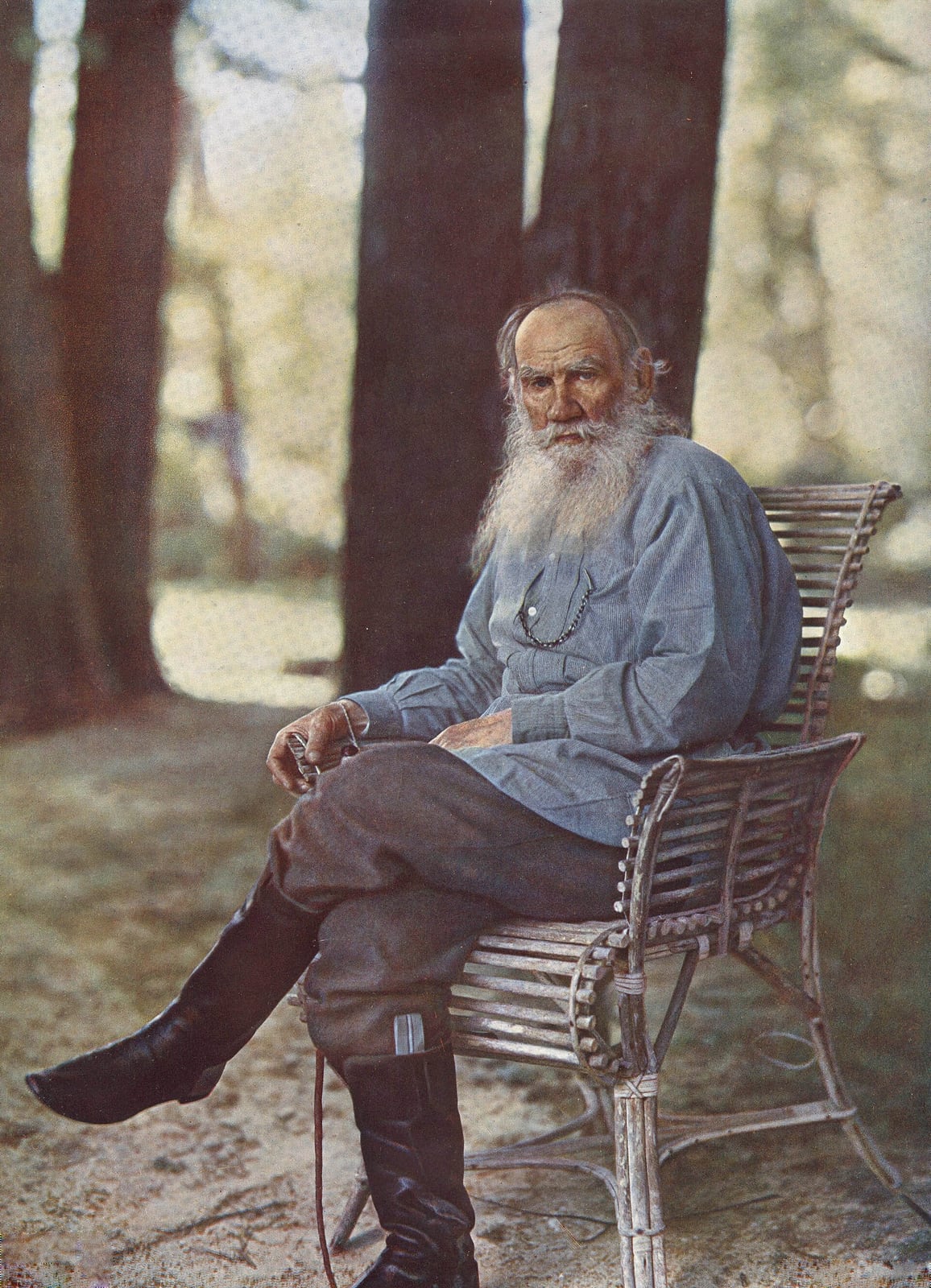
The standard scholarly edition, published in Moscow between 1928 and 1958 under the direction of V. G. Chertkov and then of a team of philologists: series I, literary, religious and journalistic works with variants (vols 1–45); series II, diaries and notebooks (vols 46–58); series III, letters (vols 59–89); vol. 90, supplements. The State L. N. Tolstoy Museum has digitised it in full and offers it online.
amazon.com · Link to the store.
Editions and translations
Editions in your language first, without hiding the others. Each with its cover and its store.
Русский
Leo Tolstoy
Полное собрание сочинений в 90 томах
The Conscious LibraryПолное собрание сочинений в 90 томах
Государственное издательство художественной литературы, 1958
1928–1958; edición digital del Museo Estatal L. N. Tolstói.
Other works by Leo Tolstoy
- War and Peace · 1869
- Anna Karenina · 1877
- Resurrection · 1899
- Childhood · 1852
- Boyhood · 1854
- Youth · 1857
- The Cossacks · 1863
- Family Happiness · 1859
- The Death of Ivan Ilyich · 1886
- The Kreutzer Sonata · 1889
- Hadji Murat · 1904
- Father Sergius · 1898
- Master and Man · 1895
- The Devil · 1889
- The Forged Coupon · 1904
- Polikushka · 1863
- A Landowner's Morning · 1856
- Two Hussars · 1856
- Albert · 1858
- Kholstomer (Strider) · 1886
- Notes of a Madman · 1884
- Posthumous Notes of the Elder Fyodor Kuzmich · 1905
- A History of Yesterday · 1851
- The Raid · 1853
- A Christmas Night · 1853
- Uncle Zhdanov and Cavalier Chernov · 1854
- How Russian Soldiers Die (The Alarm) · 1854
- Notes of a Billiard Marker · 1855
- The Wood-Felling · 1855
- Sevastopol Sketches · 1856
- Sevastopol in December · 1855
- Sevastopol in May · 1855
- Sevastopol in August 1855 · 1856
- The Snowstorm · 1856
- The Demoted Officer (An Old Acquaintance) · 1856
- Lucerne · 1857
- Three Deaths · 1859
- Fragments of Stories from Village Life · 1862
- Idyll · 1862
- Tikhon and Malanya · 1862
- The Decembrists · 1884
- Novel of the Time of Peter I · 1873
- Prince Fyodor Shchetinin · 1878
- A Hundred Years · 1879
- The Toiling and Burdened · 1879
- The Mother · 1891
- Who Is Right? · 1893
- The Porcelain Doll · 1863
- What Men Live By · 1881
- The Two Brothers and the Gold · 1885
- Ilyas · 1885
- Where Love Is, God Is · 1885
- Evil Allures, but Good Endures · 1885
- Little Girls Wiser than Old Men · 1885
- A Spark Neglected Burns the House · 1885
- Two Old Men · 1885
- The Candle · 1885
- The Tale of Ivan the Fool · 1885
- The Three Hermits · 1886
- How the Little Devil Redeemed the Crust · 1886
- The Repentant Sinner · 1886
- A Grain as Big as a Hen's Egg · 1886
- How Much Land Does a Man Need? · 1886
- The Godson · 1886
- Emelyan and the Empty Drum · 1886
- The Three Sons · 1887
- Ending of the Little Russian Legend «Forty Years» · 1886
- Croesus and Fate · 1886
- The Coffee-House of Surat · 1887
- Too Dear! · 1890
- Françoise · 1891
- Karma · 1894
- The Young Tsar · 1894
- Three Parables · 1895
- Two Different Versions of the History of a Beehive with a Bark Lid · 1900
- The Destruction of Hell and Its Restoration · 1902
- Esarhaddon, King of Assyria · 1903
- Work, Death and Sickness · 1903
- Three Questions · 1903
- After the Ball · 1903
- Alyosha the Pot · 1905
- Korney Vasiliev · 1905
- Berries · 1905
- Divine and Human · 1905
- For What? · 1906
- What I Saw in a Dream · 1906
- Poor People · 1905
- Father Vasily · 1906
- The Power of Childhood · 1908
- The Wolf · 1908
- Children's Wisdom · 1909
- A Talk with a Wayfarer · 1909
- The Traveller and the Peasant · 1909
- Songs in the Village · 1909
- Three Days in the Village · 1909
- Khodynka · 1910
- Unintentionally · 1910
- Grateful Soil · 1910
- There Are No Guilty People · 1909
- The Three Bears · 1875
- How Uncle Semyon Told What Happened to Him in the Forest · 1875
- The Cow · 1875
- Filipok · 1875
- The Ant and the Dove · 1872
- The Blind Man and the Deaf Man · 1872
- The Tortoise and the Eagle · 1872
- The Foundling · 1872
- The Head and the Tail of the Snake · 1872
- The Stone · 1872
- The Eskimos · 1872
- The Polecat · 1872
- How Auntie Told How She Learned to Sew · 1872
- Fine Thread · 1872
- Speed Makes Power · 1872
- The Lion and the Mouse · 1872
- The Fire Dogs · 1872
- The Monkey · 1872
- How a Boy Told How He Was Not Taken to Town · 1872
- The Liar · 1872
- How a House Was Repaired in Paris · 1872
- The Ass and the Horse · 1872
- How a Boy Told How a Thunderstorm Caught Him in the Forest · 1872
- The Jackdaw and the Doves · 1872
- The Peasant and the Cucumbers · 1872
- The Woman and the Hen · 1872
- The Old Grandfather and the Grandson · 1872
- Dividing the Inheritance · 1872
- Where Does the Sea Water Go? · 1872
- The Lion, the Bear and the Fox · 1872
- How a Boy Told How He Found Queen Bees for His Grandfather · 1872
- The Dog, the Cock and the Fox · 1872
- The Sea · 1872
- The Horse and the Groom · 1872
- The Fire · 1872
- The Frog and the Lion · 1872
- The Elephant · 1872
- The Monkey and the Peas · 1872
- How a Boy Told How He Stopped Fearing Blind Beggars · 1872
- The Milch Cow · 1872
- The Chinese Empress Si Ling-chi · 1872
- The Dragonfly and the Ants · 1872
- The Mouse Maiden · 1872
- The Hen and the Golden Eggs · 1872
- Lipunyushka · 1872
- The Wolf and the Old Woman · 1872
- The Kitten · 1872
- The Learned Son · 1872
- How the Bukharans Learned to Breed Silkworms · 1872
- The Peasant and the Horse · 1872
- How Auntie Told Grandmother How the Bandit Yemelka Pugachev Gave Her Ten Kopecks · 1872
- The Vizier Abdul · 1872
- How the Thief Gave Himself Away · 1872
- The Burden · 1872
- The Plum Stone · 1872
- The Two Merchants · 1872
- The Dog of the St Gotthard · 1872
- A Peasant's Story of Why He Loves His Elder Brother · 1872
- How I Killed My First Hare · 1872
- Tom Thumb · 1872
- The Fool (A Tale in Verse) · 1872
- Svyatogor the Bogatyr · 1872
- The Girl and the Mushrooms · 1872
- The Ass in the Lion's Skin · 1872
- What Dew on the Grass Is Like · 1872
- The Hen and the Swallow · 1872
- The Indian and the Englishwomen · 1872
- The Stag and the Fawn · 1872
- The Waistcoat · 1872
- The Fox and the Grapes · 1872
- Luck · 1872
- The Maidservants and the Cock · 1872
- The Self-Spinning Wheel · 1872
- The Fisherman and the Little Fish · 1872
- Touch and Sight · 1872
- The Fox and the Goat · 1872
- How a Peasant Removed a Stone · 1872
- The Dog and Its Shadow · 1872
- The Shat and the Don · 1872
- The Crane and the Stork · 1872
- Sudoma · 1872
- The Gardener and His Sons · 1872
- The Owl and the Hare · 1872
- The Wolf and the Crane · 1872
- The Eagle · 1872
- The Duck and the Moon · 1872
- The Bear on the Cart · 1872
- The Wolf in the Dust · 1872
- The Willow · 1872
- The Mouse under the Barn · 1872
- How Wolves Teach Their Young · 1872
- The Hares and the Frogs · 1872
- How Auntie Told of Her Tame Sparrow, Zhivchik · 1872
- Three Rolls and One Pretzel · 1872
- A Thousand Gold Pieces · 1872
- Peter I and the Peasant · 1872
- The Mad Dog · 1872
- The Two Horses · 1872
- The Lion and the Little Dog · 1872
- An Equal Inheritance · 1872
- The Three Thieves · 1872
- The Father and His Sons · 1872
- What Causes Wind? · 1872
- What Is Wind For? · 1872
- The Best Pears · 1872
- The Volga and the Vazuza · 1872
- The Calf on the Ice · 1872
- The Golden-Haired Princess · 1872
- The Falcon and the Cock · 1872
- Warmth (I) · 1872
- Warmth (II) · 1872
- Warmth (III) · 1872
- The Jackals and the Elephant · 1872
- The Magnet · 1872
- The Heron, the Fish and the Crab · 1872
- How Uncle Told How He Rode on Horseback · 1872
- The Hedgehog and the Hare · 1872
- The Two Brothers · 1872
- The Water Sprite and the Pearl · 1872
- The Grass Snake · 1872
- The Sparrow and the Swallows · 1872
- Cambyses and Psammenitus · 1872
- The Shark · 1872
- Why Do Windows Sweat and Dew Form? · 1872
- The Bishop and the Robber · 1872
- Yermak · 1872
- Sukhman · 1872
- The King and the Falcon · 1872
- The Fox · 1872
- A Severe Punishment · 1872
- The Wild Ass and the Tame Ass · 1872
- The Hare and the Hound · 1872
- The Stag · 1872
- Hares · 1872
- The Dog and the Wolf · 1872
- The King's Brothers · 1872
- The Blind Man and the Milk · 1872
- The Grey Hare · 1872
- The Wolf and the Bow · 1872
- How a Peasant Divided the Geese · 1872
- The Gnat and the Lion · 1872
- The Apple Trees · 1872
- The Horse and Its Masters · 1872
- The Bedbugs · 1872
- The Old Man and Death · 1872
- How the Geese Saved Rome · 1872
- Why Do Trees Crack in Frost? · 1872
- Moisture (I) · 1872
- Moisture (II) · 1872
- The Different Connection of Particles · 1872
- The Lion and the Fox · 1872
- The Righteous Judge · 1872
- The Stag and the Vineyard · 1872
- The King's Son and His Companions · 1872
- The Young Jackdaw · 1872
- How I Learned to Ride · 1872
- The Axe and the Saw · 1872
- The Soldier's Wife's Life · 1862
- The Cat and the Mice · 1872
- Ice, Water and Steam · 1872
- The Quail and Her Chicks · 1872
- Bulka · 1872
- Bulka and the Wild Boar · 1872
- The Pheasants · 1872
- Milton and Bulka · 1872
- The Turtle · 1872
- Bulka and the Wolf · 1872
- What Happened to Bulka in Pyatigorsk · 1872
- The End of Bulka and Milton · 1872
- The Birds and the Net · 1872
- The Sense of Smell · 1872
- The Dogs and the Cook · 1872
- The Founding of Rome · 1872
- God Sees the Truth, but Waits · 1872
- Crystals · 1872
- The Wolf and the Goat · 1872
- Polycrates of Samos · 1872
- Volga the Bogatyr · 1872
- The King and the Shirt · 1872
- The Reed and the Olive Tree · 1872
- The Wolf and the Peasant · 1872
- The Two Companions · 1872
- The Jump · 1872
- The Oak and the Hazel · 1872
- Harmful Air · 1872
- Bad Air · 1872
- The Wolf and the Lamb · 1872
- Specific Gravity · 1872
- The Lion, the Wolf and the Fox · 1872
- The King's New Clothes · 1872
- The Fox's Tail · 1872
- The Silkworm · 1872
- The King and the Elephants · 1872
- Hunting Is Worse than Bondage · 1872
- The Hen and Her Chicks · 1872
- Gases (I) · 1872
- Gases (II) · 1872
- The Lion, the Ass and the Fox · 1872
- The Old Poplar · 1872
- The Bird Cherry · 1872
- How Trees Walk · 1872
- The Corncrake and His Mate · 1872
- How Balloons Are Made · 1872
- An Aeronaut's Story · 1872
- The Cow and the Goat · 1872
- The Raven and His Young · 1872
- The Sun Is Warmth · 1872
- Why There Is Evil in the World · 1872
- Galvanism · 1872
- The Peasant and the Water Sprite · 1872
- The Raven and the Fox · 1872
- A Prisoner of the Caucasus · 1872
- Mikulushka Selyaninovich · 1872
- The Wolf and the Mare · 1872
- The Bees and the Drones · 1872
- The Old Horse · 1872
- The Big Stove · 1875
- The Find · 1875
- The Girl and the Robbers · 1875
- The Hazel Branch · 1875
- The Little Bird · 1875
- The Azbuka (ABC) · 1872
- The New Azbuka · 1875
- Russian Readers (I–IV) · 1875
- Arithmetic · 1875
- The Infected Family · 1864
- The Nihilist · 1866
- The Power of Darkness · 1886
- Dramatic Version of the Legend of Aggei · 1886
- The First Distiller · 1886
- The Fruits of Enlightenment · 1889
- Peter the Baker · 1894
- The Living Corpse · 1900
- The Light Shines in Darkness · 1900
- The Cause of It All · 1910
- Song of the Battle of the Chernaya River, 4 August 1855 · 1855
- A Confession · 1882
- A Critique of Dogmatic Theology · 1880
- The Four Gospels Harmonized and Translated · 1881
- The Gospel in Brief · 1881
- What I Believe · 1884
- What Then Must We Do? · 1886
- On Life · 1887
- The Kingdom of God Is Within You · 1893
- The Christian Teaching · 1896
- What Is Religion, and Wherein Lies Its Essence? · 1902
- Religion and Morality · 1893
- How to Read the Gospel and What Is Its Essence? · 1896
- The Teaching of Christ Told for Children · 1908
- Thoughts of Wise Men for Every Day · 1903
- A Calendar of Wisdom (Circle of Reading) · 1906
- For Every Day · 1910
- The Path of Life · 1910
- The Law of Love and the Law of Violence · 1908
- Reply to the Synod's Edict · 1901
- Church and State · 1879
- Project for Reforming the Army · 1855
- Note on the Question of the Nobility · 1858
- On the Moscow Census · 1882
- Nicholas Stick · 1887
- It Is Time to Come to One's Senses! · 1889
- Why Do Men Stupefy Themselves? · 1890
- Afterword to The Kreutzer Sonata · 1890
- The First Step · 1891
- On the Famine · 1891
- A Terrible Question · 1891
- On Means of Helping the Population Suffering from Crop Failure · 1891
- Among the Needy · 1892
- In Memory of I. I. Raevsky · 1891
- Non-Activity · 1893
- Christianity and Patriotism · 1894
- Shame! · 1895
- Senseless Dreams · 1895
- The Persecution of Christians in Russia in 1895 · 1895
- The Beginning of the End · 1897
- Famine or No Famine? · 1898
- Two Wars · 1898
- Carthago delenda est · 1898
- The Slavery of Our Times · 1900
- Where Is the Way Out? · 1900
- Thou Shalt Not Kill · 1900
- Patriotism and Government · 1900
- The Only Means · 1901
- To the Tsar and His Assistants · 1901
- On Religious Toleration · 1901
- A Soldier's Memo · 1901
- An Officer's Memo · 1901
- To the Working People · 1902
- To the Clergy · 1902
- Bethink Yourselves! · 1904
- A Great Iniquity · 1905
- The End of the Age · 1905
- The One Thing Needful: On State Power · 1905
- The Meaning of the Russian Revolution · 1906
- The Only Possible Solution of the Land Question · 1906
- Thou Shalt Kill No One · 1907
- I Cannot Be Silent! · 1908
- Recollections of a Soldier's Trial · 1908
- The Inevitable Revolution · 1909
- The Only Commandment · 1909
- It Is Time to Understand · 1909
- The Superstition of the State · 1910
- On Socialism · 1910
- Speech to the Society of Lovers of Russian Literature · 1859
- On Popular Education (1862) · 1862
- The Yasnaya Polyana School in November and December · 1862
- On Methods of Teaching Reading · 1862
- Draft of a General Plan for Popular Schools · 1862
- Upbringing and Education · 1862
- Progress and the Definition of Education · 1862
- Who Should Learn Writing of Whom: Peasant Children of Us, or We of Peasant Children? · 1862
- On the Language of Popular Books · 1862
- On Popular Education (1874) · 1874
- Speech on Popular Editions · 1884
- Some Words about War and Peace · 1868
- Preface to the Collection «Tsvetnik» · 1886
- On Art · 1889
- On What Is Called Art · 1896
- What Is Art? · 1898
- Preface to the English Edition of What Is Art? · 1898
- On Shakespeare and the Drama · 1906
- On Gogol · 1909
- Preface to the Works of Guy de Maupassant · 1894
- Preface to S. T. Semenov's Peasant Stories · 1894
- Preface to W. von Polenz's Novel Der Büttnerbauer · 1901
- Afterword to Chekhov's Story «The Darling» · 1905
- Preface to V. S. Morozov's Story «For a Single Word» · 1908
- Preface to A. I. Ertel's Novel The Gardenins · 1908
- Preface to N. Orlov's Album «Russian Peasants» · 1908
- Introduction to Amiel's Journal · 1893
- On N. N. Ge's Painting «Christ's Last Conversation with His Disciples» · 1886
- Preface to T. M. Bondarev's «Industry and Parasitism» · 1888
- Preface to the Russian Translation of Alice Stockham's Tokology · 1890
- Preface to Edward Carpenter's «Modern Science» · 1898
- Preface to the Russian Translation of Henry George's Social Problems · 1907
- Letter to a Peasant on the Land · 1905
- On the Visit of Henry George's Son · 1909
- Letters · 1910
- Correspondence with N. N. Strakhov · 1896
- Letter to Alexander III · 1881
- Letter to the Editors of Russkie Vedomosti and Novoe Vremya · 1891
- Letter to M. E. Zdziechowski on Patriotism · 1895
- Patriotism or Peace? · 1896
- A Letter to the Liberals · 1896
- Letter to a Non-Commissioned Officer · 1899
- Letter to Nicholas II · 1902
- Letter to a Chinese · 1906
- A Letter to a Hindu · 1908
- Correspondence with Gandhi · 1910
- Letter to P. A. Stolypin · 1909
- Diaries · 1910
- A Landowner's Diary · 1856
- Fragment of the Diary of 1857 · 1857
- Notes of a Christian · 1881
- Dialogue · 1910
- The «Secret» Diary of 1908 · 1908
- Diary for Myself Alone · 1910
- Reminiscences · 1906
- My Life · 1879
- Chinese Wisdom · 1884
- Sayings of the Chinese Sage Lao-Tze, Selected by L. N. Tolstoy · 1910
- Tao Te King, or The Scripture of Morality (with D. P. Konishi) · 1913
- Essay on the Teaching of Confucius · 1903
- Mo Ti, a Chinese Philosopher: The Teaching of Universal Love · 1910
- How the Chinese Live · 1889
- Thief's Son · 1906
- What a Christian May Do · 1887
- The Holiday of Enlightenment of the 12th of January · 1889
- On the Relations between the Sexes · 1890
- God or Mammon? · 1895
- Nobel's Bequest · 1897
- Concerning the Congress of Peace · 1899
- The Commune and the World · 1899
- On Suicide · 1900
- On the Street Riots · 1901
- The Crisis in Russia · 1905
- Love Each Other · 1906
- Letter to a Revolutionary · 1886
- Letter to N. N. Engelhardt · 1882
- Letter to a Kind Youth · 1887
- Manual Labour and Intellectual Activity (Letter to Romain Rolland) · 1887
- Letter to A. V. Vlasov · 1889
- On Non-Resistance to Evil · 1890
- Letter to Sofia Tolstaya on the Famine · 1892
- Letters on Henry George · 1893
- Replies to Critics (Letters to the Daily Chronicle and a Polish Journalist) · 1895
- Reason and Religion · 1895
- Correspondence with P. V. Verigin · 1896
- Non-Resistance (Letter to Ernest H. Crosby) · 1896
- Letter to Eugen Heinrich Schmitt · 1896
- On the Deception of the Church · 1896
- Help! (Postscript to an Appeal for the Doukhobors) · 1896
- Letter to the Doukhobors of the Caucasus · 1897
- Correspondence with the Doukhobors in Canada · 1900
- Letters to an Orthodox Priest and a French Pastor · 1901
- On the Franco-Russian Alliance (Letter to Pietro Mazzini) · 1901
- Letter to the Tolstoy Society of Manchester · 1901
- Letters to Svobodna Misal · 1901
- Letter to a Jew · 1903
- Epilogue to Drozhzhin's Life and Death · 1895
- Apropos of A. I. Ershov's Recollections of Sevastopol · 1889
- Three Phases of Life · 1899
- Letter to the Ministers of the Interior and of Justice · 1896
- Letter to the Commander of the Irkutsk Disciplinary Battalion · 1896
- Letter to the Orthodox Clergy · 1903
- Complete Works in 100 Volumes (Academic Edition) · 2000
Sources
- Толстой, Л. Н. Полное собрание сочинений в 90 томах (edición del Jubileo). Moscú–Leningrado: Gosudárstvennoe izdátelstvo judózhestvennoi literatury, 1928–1958. Serie I: obras (t. 1–45); serie II: diarios (t. 46–58); serie III: cartas (t. 59–89); t. 90: suplementos. Edición digital del Museo Estatal L. N. Tolstói.
Affiliate link: if you buy through it, the library may receive a commission at no extra cost to you. When an edition's real cover is not available, we show an illustrative library cover.