
Written work
On Generation and Corruption
Περὶ γενέσεως καὶ φθορᾶς
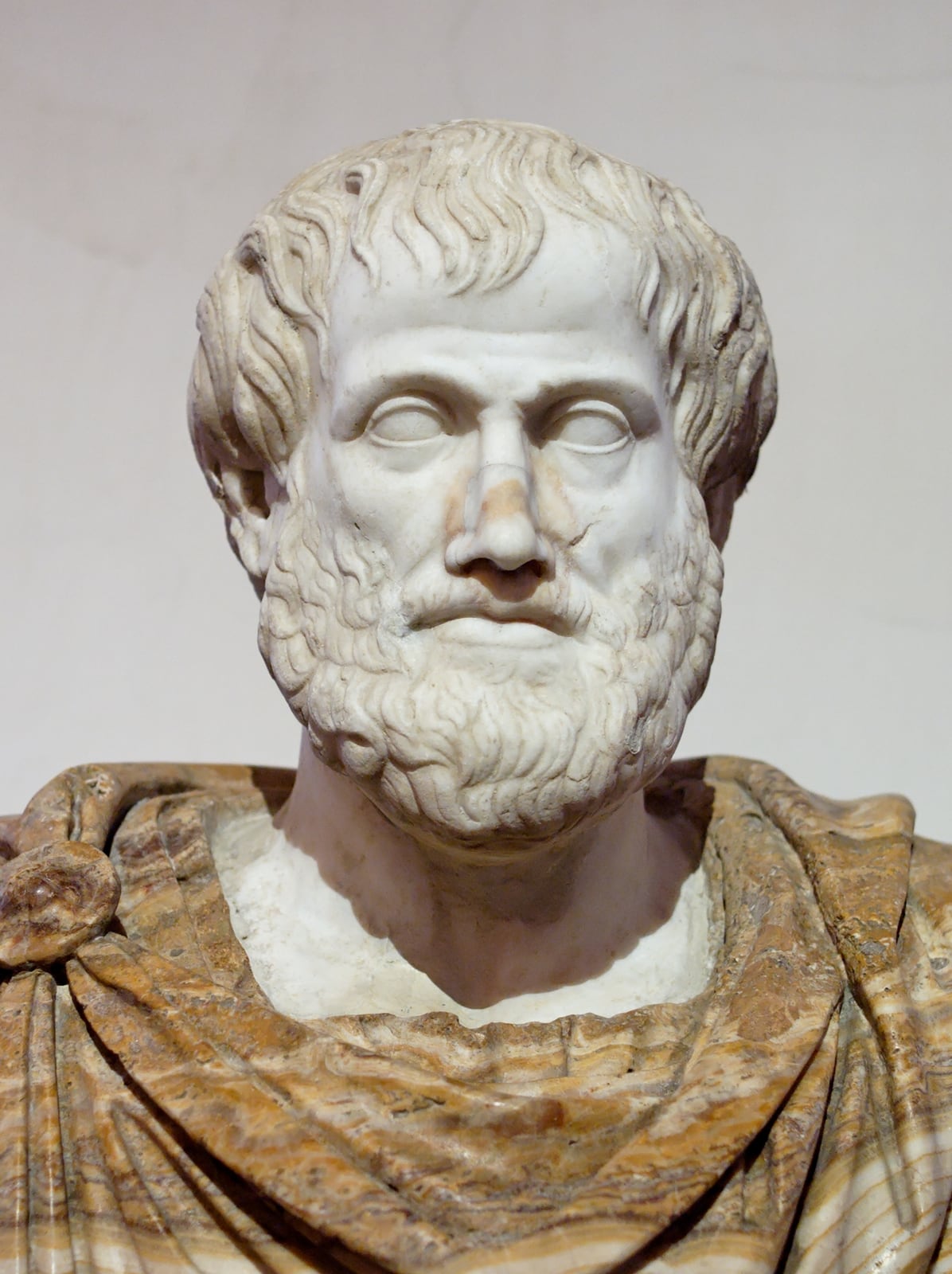
It distinguishes generation and corruption in the unqualified sense — the coming to be and passing away of a substance — from alteration, growth and mixture, and criticises the atomists and Empedocles. It explains how the four elements, defined by the pairs of qualities hot-cold and dry-moist, transform into one another, and attributes the continuity of the cycle of generation to the Sun's motion along the ecliptic. It is Aristotle's chemistry.
amazon.com · Link to the store.
Authorship note
A school treatise of the Aristotelian corpus, regarded as authentic. Like the other surviving treatises, it consists of Aristotle's own teaching materials rather than books meant for the public; the arrangement and titles largely derive from Andronicus of Rhodes's edition (first century BCE). Two books. Bekker 314a–338b.
Editions and translations
Editions in your language first, without hiding the others. Each with its cover and its store.
English

The Complete Works of Aristotle: The Revised Oxford Translation
Princeton University Press, 1984
Translation: Varios (traducción de Oxford revisada, ed. Jonathan Barnes)
ISBN 0691016518
Edición en dos volúmenes (Bollingen Series LXXI.2); ISBN del registro de Open Library de la obra completa.

On Sophistical Refutations. On Coming-to-be and Passing Away. On the Cosmos
Harvard University Press (Loeb Classical Library, 400), 1955
Translation: E. S. Forster y D. J. Furley
ISBN 9780674994416
Griego antiguo
Aristotle
Aristotelis Opera, vol. I (ed. Immanuel Bekker)
The Conscious LibraryAristotelis Opera, vol. I (ed. Immanuel Bekker)
G. Reimer / Academia Regia Borussica, 1831
Edición crítica de referencia; su paginación (Bekker) es el sistema universal de cita.
Español

Acerca de la generación y la corrupción. Tratados breves de historia natural
Gredos (Biblioteca Clásica Gredos, 107), 1998
Translation: Ernesto La Croce y Alberto Bernabé Pajares
ISBN 9788424912420
Primera edición: 1987. Los Parva naturalia, traducidos por Alberto Bernabé, ocupan la segunda parte del volumen.
Other works by Aristotle
- Categories
- On Interpretation (De interpretatione)
- Prior Analytics
- Posterior Analytics
- Topics
- Sophistical Refutations
- Physics
- On the Heavens (De caelo)
- Meteorology (Meteorologica)
- On the Cosmos (De mundo)
- On the Soul (De anima)
- On Sense and the Sensible
- On Memory and Recollection
- On Sleep and Waking
- On Dreams
- On Divination in Sleep
- On Length and Shortness of Life
- On Youth and Old Age, On Life and Death
- On Respiration
- On Breath (De spiritu)
- History of Animals (Historia animalium)
- Parts of Animals
- Movement of Animals (De motu animalium)
- Progression of Animals (De incessu animalium)
- Generation of Animals
- On Colours (De coloribus)
- On Things Heard (De audibilibus)
- Physiognomics (Physiognomonica)
- On Plants (De plantis)
- On Marvellous Things Heard (De mirabilibus auscultationibus)
- Mechanical Problems (Mechanica)
- Problems (Problemata)
- On Indivisible Lines (De lineis insecabilibus)
- Situations and Names of Winds (Ventorum situs)
- On Melissus, Xenophanes and Gorgias
- Metaphysics
- Nicomachean Ethics
- Magna Moralia
- Eudemian Ethics
- On Virtues and Vices
- Politics
- Economics (Oeconomica)
- Rhetoric
- Rhetoric to Alexander (Rhetorica ad Alexandrum)
- Poetics
- Constitution of the Athenians (Athenaion Politeia) · 328
- Protrepticus (Exhortation to Philosophy) · 350
- On Philosophy
- Eudemus, or On the Soul
- Gryllus, or On Rhetoric · 360
- On Ideas
- On the Good
- On Poets
- Homeric Problems
- Constitutions of 158 Cities
- List of Pythian Victors · 335
- Didascaliae (Records of Dramatic Productions)
- On Justice
- On Kingship and Alexander, or On Behalf of Colonists
- Hymn to Virtue (to Hermias) · 341
- Will · 322
- Letters
- Fragments (collections of the lost works)
- Theology of Aristotle · 840
- Book of Causes (Liber de causis) · 850
- Secret of Secrets (Secretum secretorum) · 950
Sources
- Bekker, Immanuel (ed.). Aristotelis Opera, edidit Academia Regia Borussica. 5 vols. Berlín: G. Reimer, 1831–1870 (vols. I–II, texto griego, 1831).
Affiliate link: if you buy through it, the library may receive a commission at no extra cost to you. When an edition's real cover is not available, we show an illustrative library cover.