Mystique chrétienne · Théosophie · Anthroposophie
Rudolf Steiner
1861 – 1925Personne historiquement documentée
Philosophe, ésotériste et réformateur autrichien (1861-1925). Éditeur des écrits scientifiques de Goethe et auteur de La Philosophie de la liberté (1894), il dirigea la section allemande de la Société théosophique, puis fonda en 1913 l'anthroposophie, une « science de l'esprit » d'inspiration chrétienne et goethéenne. De son œuvre sont nées la pédagogie Waldorf, l'agriculture biodynamique, la médecine anthroposophique et l'eurythmie. Il a laissé plus de trente livres et quelque six mille conférences, contestés pour leur caractère pseudoscientifique.
- œuvres
- 68œuvres
- éditions
- 131éditions
- citations
- 7citations
- vidéos
- 12vidéos
- images
- 10images
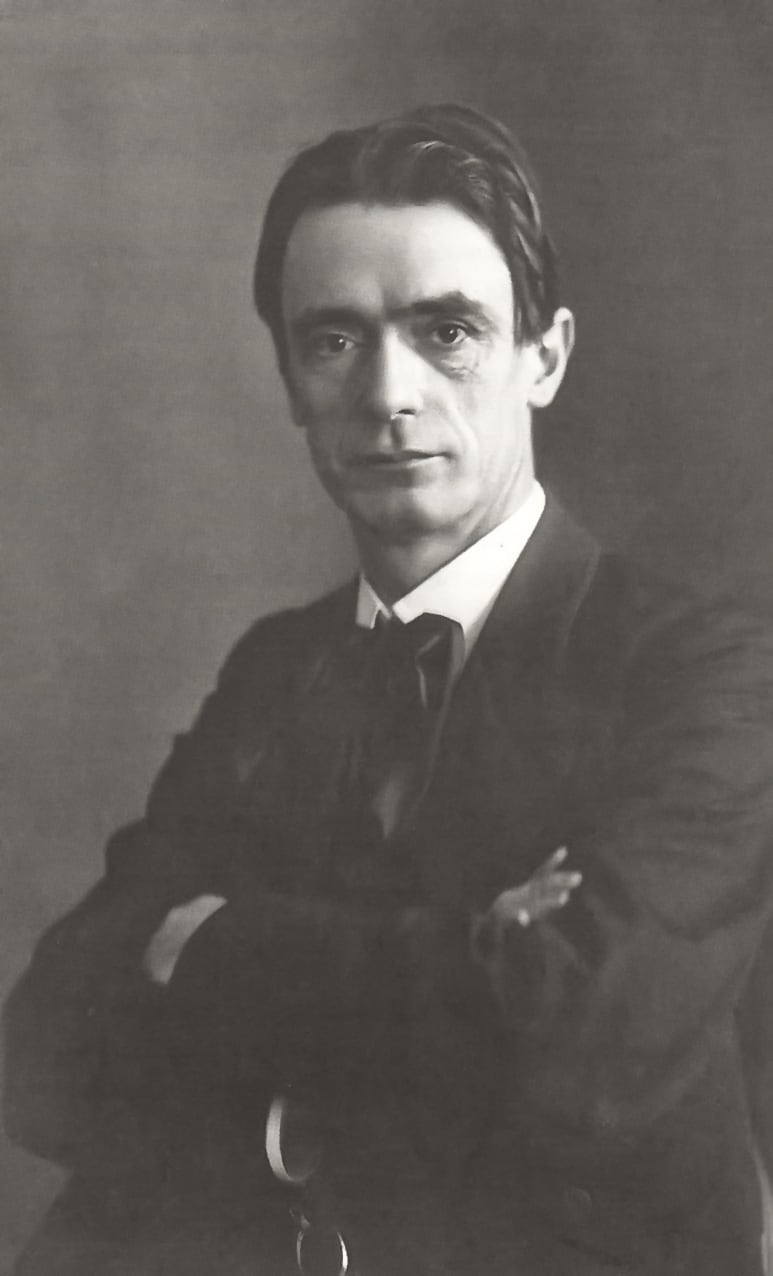
Rudolf Steiner hacia 1905 · Public domain
Dans ses propres mots
«Only when I follow my love for the object is it I myself who act.»Die Philosophie der Freiheit (1894), cap. «Die Idee der Freiheit»

Pour commencer, une œuvre
The Philosophy of Freedom (Intuitive Thinking as a Spiritual Path)Son idée centrale
Anthroposophy (spiritual science): Steiner took the term 'anthroposophy' from a book by the Austrian philosopher Robert Zimmermann (1856) and defined it as 'a path of knowledge that would lead the spiritual in the human being to the spiritual in the universe'.
Le voir en contexte
Biographie
5 min de lecture
Traduction assistée à partir de l'original espagnol, en attente de relecture par un traducteur natif.
Le fils du télégraphiste
Rudolf Joseph Lorenz Steiner naquit à Kraljevec, dans la région du Muraköz — qui appartenait alors au royaume de Hongrie et appartient aujourd'hui à la Croatie —, le 27 février 1861 selon la date qu'il donna toujours lui-même, bien que des documents familiaux indiquent le 25. Son père, Johann Steiner, avait été garde forestier des comtes de Hoyos et travaillait comme télégraphiste au chemin de fer du Sud autrichien ; sa mère, Franziska Blie, avait servi dans la même maison. La famille vécut dans de petites gares de Basse-Autriche — Mödling, Pottschach — puis, à partir de 1869, à Neudörfl, village hongrois situé à la frontière de la Basse-Autriche, entre le télégraphe, les trains et le paysage alpin. Dans son autobiographie, Steiner raconte qu'enfant il trouva dans la géométrie la preuve que l'âme peut connaître ce que les sens ne voient pas, et qu'à huit ou neuf ans il eut la première perception de ce qu'il appellerait le monde spirituel. Ce sont des souvenirs écrits soixante ans plus tard, et la critique les lit comme une part de la construction de son propre personnage.
Vienne et Goethe
Il étudia à la Realschule de Wiener Neustadt puis, de 1879 à 1883, à l'École technique supérieure de Vienne, où il suivit des cours de mathématiques, de sciences naturelles, de littérature et de philosophie sans aller jusqu'au diplôme. Il y rencontra son maître, le germaniste Karl Julius Schröer, qui le recommanda en 1882 à Joseph Kürschner pour éditer les écrits scientifiques de Goethe dans la collection Deutsche National-Litteratur. À vingt et un ans, le jeune homme rédigea les introductions de ces volumes (1883-1897) ainsi qu'Une théorie de la connaissance chez Goethe (1886). Pour gagner sa vie, il fut pendant six ans précepteur dans la famille Specht, à Vienne, où il réussit à instruire un garçon hydrocéphale jugé incapable d'apprendre, qui devint plus tard médecin.
Weimar et la philosophie de la liberté
En 1890, il s'installa à Weimar pour travailler aux Archives Goethe et Schiller à la grande édition des œuvres de Goethe. En 1891, il obtint son doctorat de philosophie à l'université de Rostock avec une thèse sur la théorie de la connaissance de Fichte, développée l'année suivante sous le titre Vérité et science. En 1894 parut La Philosophie de la liberté, l'ouvrage qu'il tint toujours pour le fondement de tout ce qui suivit : une théorie de la connaissance qui fait de la pensée l'activité où l'être humain s'éprouve libre, et une éthique de l'« individualisme éthique », où l'action libre naît de l'amour de l'action elle-même et non de normes extérieures. Ces années-là, il fréquenta Ernst Haeckel, admira Max Stirner et écrivit Friedrich Nietzsche, un combattant contre son temps (1895) ; en 1896, Elisabeth Förster-Nietzsche le conduisit auprès du philosophe malade.
Berlin : de la libre pensée à la théosophie
En 1897, il s'établit à Berlin comme directeur du Magazin für Literatur et fréquenta les cercles bohèmes et anarchistes individualistes de la capitale. Il enseigna l'histoire et l'art oratoire à l'École de formation ouvrière fondée par Wilhelm Liebknecht (1899-1904) et épousa en 1899 Anna Eunike, une veuve chez qui il logeait. L'année suivante, en 1900, il commença à donner des conférences dans la bibliothèque théosophique des comtes de Brockdorff ; en 1902, alors qu'il n'avait adhéré à la Société théosophique qu'en janvier de cette même année, il accepta de devenir secrétaire général de sa nouvelle section allemande, aux côtés de Marie von Sivers, qui serait sa collaboratrice et, à partir de 1914, sa seconde épouse. En quelques années, il publia les livres qui forment le noyau de son enseignement : Théosophie (1904), L'Initiation, ou comment acquérir des connaissances sur les mondes supérieurs (1904-1905) et La Science de l'occulte (1910).
L'anthroposophie et le Goetheanum
Steiner orienta la théosophie vers la tradition ésotérique occidentale — le rosicrucianisme, la mystique allemande, Goethe — et plaça en son centre le « Mystère du Golgotha », l'incarnation du Christ comprise comme un événement cosmique unique. Les tensions avec la direction d'Adyar culminèrent lorsque Annie Besant proclama le jeune Jiddu Krishnamurti futur instructeur du monde ; en 1912-1913, la majorité de la section allemande fit sécession et fonda la Société anthroposophique. Entre 1910 et 1913, il écrivit et créa à Munich quatre drames-mystères et, avec Marie von Sivers, élabora l'eurythmie, un art du mouvement. En 1913 fut posée à Dornach, près de Bâle, la première pierre du Goetheanum, un grand édifice de bois à deux coupoles qu'il dessina lui-même et que des volontaires venus de dix-sept pays élevèrent pendant la Première Guerre mondiale.
Les impulsions pratiques
La défaite allemande de 1918 conduisit Steiner à l'action sociale. Il proposa la « tri-articulation de l'organisme social » — la séparation de la vie culturelle, juridique et économique — dans Éléments fondamentaux pour la solution du problème social (1919). La même année, à la demande de l'industriel Emil Molt, il fonda à Stuttgart, pour les enfants des ouvriers de la manufacture de cigarettes Waldorf-Astoria, la première école Waldorf. Suivirent des cours pour médecins, donnés avec Ita Wegman, qui furent à l'origine de la médecine anthroposophique et du laboratoire Weleda ; un cours pour prêtres d'où naquit en 1922 la Communauté des chrétiens de Friedrich Rittelmeyer ; et, en 1924, le cours d'agriculture de Koberwitz, origine de l'agriculture biodynamique. Dans le même temps, il était la cible de la droite nationaliste : en 1922, l'une de ses conférences à Munich fut violemment interrompue.
L'incendie et le Noël 1923
Dans la nuit de la Saint-Sylvestre 1922, le premier Goetheanum fut entièrement détruit par un incendie que la police attribua probablement à un acte criminel. Steiner conçut un second édifice, en béton cette fois, achevé en 1928. À Noël 1923, il refonda la Société sous le nom de Société anthroposophique universelle, en assuma personnellement la présidence ainsi que celle de son Université libre de science de l'esprit, et prononça la Méditation de la pierre de fondation. L'année 1924 fut d'une activité épuisante : des centaines de conférences, parmi lesquelles les cycles sur les relations karmiques et les cours de pédagogie curative, d'agriculture et d'art de la parole.
Fin et héritage
Le 28 septembre 1924, il donna sa dernière conférence ; malade, il passa les mois suivants dans son atelier de Dornach, où il continua de rédiger son autobiographie, Mon chemin de vie, qu'il laissa inachevée à la hauteur de l'année 1907. Il y mourut le 30 mars 1925, à soixante-quatre ans. Il laissait plus de trente livres et quelque six mille conférences, pour la plupart transcrites par des sténographes et non revues par lui, qui forment aujourd'hui une Gesamtausgabe de plus de 350 volumes. Son œuvre a suscité autant d'adhésion que de critiques sévères : des historiens comme Helmut Zander ont relevé ses emprunts à la littérature théosophique, le caractère pseudoscientifique de nombre de ses affirmations et sa théorie des races, tandis que ses initiatives — plus de mille écoles Waldorf, l'agriculture biodynamique, la médecine anthroposophique, les communautés Camphill — restent actives dans le monde entier.
Sources: Steiner, Rudolf. Mein Lebensgang. Eine nicht vollendete Autobiographie (GA 28). Dornach: Philosophisch-Anthroposophischer Verlag, 1925; ed. actual Basilea: Rudolf Steiner Verlag. · Lindenberg, Christoph. Rudolf Steiner. Eine Biographie. 2 vols. Stuttgart: Verlag Freies Geistesleben, 1997. · Zander, Helmut. Rudolf Steiner. Die Biografie. Múnich: Piper, 2011 (ed. rústica 2016). · Lachman, Gary. Rudolf Steiner: An Introduction to His Life and Work. Nueva York: Jeremy P. Tarcher/Penguin, 2007. · Steiner, Rudolf. Die Philosophie der Freiheit. Grundzüge einer modernen Weltanschauung. Berlín: Emil Felber, 1894 (texto en Project Gutenberg, ebook n.º 53493).
Chronologie
La vie, année après année
Chaque point est un événement documenté. Cliquez pour le lire, avec sa source et son degré de certitude.
27 février 18610 ansKraljevec (Muraköz, Reino de Hungría; hoy Donji Kraljevec, Croacia)
Birth
The first child of the railway telegraphist Johann Steiner and Franziska Blie is born. Steiner always gave 27 February; family documents suggest the 25th.
ContestéSteiner, Rudolf. Mein Lebensgang. Eine nicht vollendete Autobiographie (GA 28). Dornach: Philosophisch-Anthroposophischer Verlag, 1925; ed. actual Basilea: Rudolf Steiner Verlag.
Après sa mort
- 29 septembre 1928Second Goetheanum
- 1956The Gesamtausgabe begins
27 février 1861 · 0 ans
Birth
The first child of the railway telegraphist Johann Steiner and Franziska Blie is born. Steiner always gave 27 February; family documents suggest the 25th.
Contesté
1869 · 8 ans
Neudörfl
The family settles in Neudörfl; Steiner would date his first supersensible experiences and his fascination with geometry to these years.
Probable
1879 – 1883 · 18 ans
Vienna Technical University
He studies science and attends Karl Julius Schröer's literature lectures; he leaves in 1883 without a degree.
Documenté
1882 · 21 ans
Editor of Goethe
On Schröer's recommendation, Joseph Kürschner commissions him to edit Goethe's scientific writings (published 1883–1897).
Documenté
1884 – 1890 · 23 ans
Tutor to the Specht family
For six years he tutors the children of the merchant Ladislaus Specht, among them a hydrocephalic boy who later becomes a physician.
Documenté
1890 – 1897 · 29 ans
Goethe and Schiller Archive
He works on the Weimar (Sophien) edition of Goethe's scientific works until 1897.
Documenté
octobre 1891 · 30 ans
Doctorate
He takes his doctorate at the University of Rostock with a thesis on Fichte's theory of knowledge.
Probable
1894 · 33 ans
The Philosophy of Freedom
He publishes Die Philosophie der Freiheit (dated 1894, issued at the end of 1893).
Documenté
janvier 1896 · 34 ans
Before Nietzsche
Elisabeth Förster-Nietzsche takes him to see her brother, already incapacitated; for a time Steiner arranges the philosopher's library.
Probable
1897 · 36 ans
Magazin für Literatur
He moves to Berlin as co-owner and editor of the literary magazine; in 1899 he marries Anna Eunike and begins teaching at the Workers' Education School.
Documenté
octobre 1902 · 41 ans
General Secretary of the German Section of the Theosophical Society
With Marie von Sivers he takes charge of the new German Section; he publishes Christianity as Mystical Fact.
Documenté
1904 · 43 ans
Theosophy and the path of knowledge
He publishes Theosophy and begins serialising How to Know Higher Worlds in Lucifer-Gnosis.
Documenté
mai 1907 · 46 ans
Munich Congress
He organises the congress of the Federation of European Sections of the Theosophical Society, with a Rosicrucian aesthetic announcing his own direction.
Documenté
1910 · 49 ans
Occult Science and the first mystery drama
Die Geheimwissenschaft im Umriss appears (dated 1910) and The Portal of Initiation is premiered in Munich.
Documenté
février 1913 · 51 ans
Founding of the Anthroposophical Society
After expulsion from the Theosophical Society over the Krishnamurti dispute, most of the German Section forms the Anthroposophical Society.
Documenté
20 septembre 1913 · 52 ans
Foundation stone of the Goetheanum
The foundation stone of the double-domed wooden building designed by Steiner is laid.
Documenté
24 décembre 1914 · 53 ans
Marriage to Marie von Sivers
He marries his collaborator of twelve years; Anna Eunike had died in 1911.
Probable
7 septembre 1919 · 58 ans
First Waldorf school
He opens the Freie Waldorfschule for the children of workers at Emil Molt's Waldorf-Astoria factory; that year he publishes Towards Social Renewal.
Documenté
31 décembre 1922 · 61 ans
Fire at the Goetheanum
On New Year's Eve the first Goetheanum burns to the ground; police point to arson.
Documenté
24 décembre 1923 – 1924 · 62 ans
Christmas Conference
He refounds the General Anthroposophical Society, assumes its presidency and gives the Foundation Stone Meditation (24 December 1923 – 1 January 1924).
Documenté
7 juin 1924 · 63 ans
Agriculture course
He gives the eight lectures that originate biodynamic agriculture (7–16 June).
Documenté
28 septembre 1924 · 63 ans
Last lecture
He gives his last address, on the eve of Michaelmas; thereafter he remains ill in his studio.
Documenté
30 mars 1925 · 64 ans
Death
He dies in his studio beside the Goetheanum under construction; the autobiography is left unfinished.
Documenté
29 septembre 1928
Second Goetheanum
The second Goetheanum, in concrete, built to Steiner's model, is inaugurated.
Probable
1956
The Gesamtausgabe begins
The Rudolf Steiner Nachlassverwaltung begins the complete edition (GA), which today exceeds 350 volumes.
Probable
Œuvres
Œuvres essentielles
Les œuvres sans lesquelles on ne comprend pas son héritage.
Œuvre écrite · 1894
The Philosophy of Freedom (Intuitive Thinking as a Spiritual Path)
Die Philosophie der Freiheit. Grundzüge einer modernen Weltanschauung (GA 4)
Steiner's central philosophical work. Part one, 'The Science of Freedom', analyses the observation of thinking as the secure starting point of knowledge and the relation between percept and concept; part two, 'The Reality of Freedom', founds an 'ethical individualism': free action springs from a moral intuition loved for its own sake, guided by 'moral imagination'. Steiner reissued it in 1918 with additions and regarded it as the philosophical germ of anthroposophy.
5 éditions
Œuvre écrite · 1904
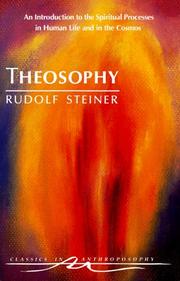
Theosophy
Theosophie. Einführung in übersinnliche Welterkenntnis und Menschenbestimmung (GA 9)
A fundamental book of his teaching. It describes the human being in three aspects—body, soul and spirit—subdivided into nine members; explains reincarnation and karma as spiritual law; surveys the three worlds (physical, soul and spiritual) through which the human being passes between death and a new birth; and ends with an outline of the 'path of knowledge'. Steiner revised it in many editions.
4 éditions

Œuvre écrite · v. 1904
How to Know Higher Worlds
Wie erlangt man Erkenntnisse der höheren Welten? (GA 10)
A manual of inner development serialised in Lucifer-Gnosis (1904–1905) and published as a book in 1909. It describes the conditions of discipleship—reverence, inner calm, control of thought, equanimity—meditation exercises and the stages of preparation, illumination and initiation, with the warning to take three steps in moral improvement for every step in occult knowledge.
5 éditions

Œuvre écrite · 1910
An Outline of Esoteric Science
Die Geheimwissenschaft im Umriss (GA 13)
His principal cosmological work, issued in December 1909 with the date 1910. It describes the nature of the human being, sleep and death, and the evolution of the cosmos through the planetary states of Saturn, Sun, Moon, Earth and the future Jupiter, Venus and Vulcan, with the intervention of the spiritual hierarchies, of Lucifer and Ahriman and of Christ; it closes with the path of knowledge of higher worlds.
5 éditions
Toute son œuvre (68)

Goethean Science
1883

A Theory of Knowledge Implicit in Goethe's World-Conception
1886

Truth and Knowledge
1892

Documents on The Philosophy of Freedom
1994

Friedrich Nietzsche, Fighter for Freedom
1895

Goethe's World View
1897

Mysticism at the Dawn of the Modern Age
1901

Christianity as Mystical Fact
1902

Cosmic Memory
1904

The Stages of Higher Knowledge
1905

The Education of the Child in the Light of Anthroposophy
1907

Four Mystery Dramas
1910

The Spiritual Guidance of the Individual and Humanity
1911

A Way of Self-Knowledge
1912

The Threshold of the Spiritual World
1913

The Riddles of Philosophy
1914

The Riddle of Man
1916

Riddles of the Soul
1917

Goethe's Standard of the Soul
1918

Towards Social Renewal (The Threefold Commonwealth)
1919

The Renewal of the Social Organism
1961
Rudolf Steiner
Cosmology, Religion and Philosophy
The Conscious LibraryCosmology, Religion and Philosophy
1922

Anthroposophical Leading Thoughts
1925
Rudolf Steiner
Extending Practical Medicine (Fundamentals of Therapy)
The Conscious LibraryExtending Practical Medicine (Fundamentals of Therapy)
1925
Citations
Citations localisées dans une œuvre précise. Chacune porte sa provenance et son degré de fiabilité.
Only when I follow my love for the object is it I myself who act.Nur wenn ich meiner Liebe zu dem Objekte folge, dann bin ich es selbst, der handelt.
VérifiéeDie Philosophie der Freiheit (1894), cap. «Die Idee der Freiheit»
Citations apocryphes ou d'attribution contestée (1)
«"Receive the child in reverence, educate him in love, and send him forth in freedom."»
A widely circulated Waldorf motto attributed to Steiner. We have not found this literal wording in his books or in the GA education cycles; it summarises ideas from his lectures to teachers and appears to be a later synthesis by the Waldorf movement. It should be cited as a motto, not as a verbatim quotation.
Dernières paroles
Il n'existe aucun témoignage vérifiable de ses dernières paroles.
No reliable last words survive. He died on the morning of 30 March 1925 in his studio at Dornach, attended by the physician Ita Wegman; Marie Steiner arrived from Stuttgart after he had died. The accounts of those present, gathered by Guenther Wachsmuth, describe a peaceful death, with his hands crossed on his breast, but record no final sentence.
Source: Wachsmuth, Guenther. Die Geburt der Geisteswissenschaft. Rudolf Steiners Lebensgang von der Jahrhundertwende bis zum Tode. Dornach: Philosophisch-Anthroposophischer Verlag, 1941 (trad. ingl. The Life and Work of Rudolf Steiner, 1955).
Interroger
Ce que répond son œuvre
Douze grandes questions de l'humanité et ce que ses textes permettent d'y répondre, références à l'appui. Nous ne lui prêtons jamais de paroles.
Qu'est-ce que l'Absolu ? Dieu existe-t-il ?
A divine-spiritual world with hierarchies of beings and a cosmic Christ
À la fois personnel et impersonnelCela se déduit de sa doctrine
Steiner hardly uses the word God in the abstract. In The Philosophy of Freedom he defends a monism that needs no lawgiver outside the world. In his anthroposophical period he describes, in An Outline of Esoteric Science, a divine-spiritual world populated by hierarchies of beings who, through the cosmic phases he calls Saturn, Sun, Moon and Earth, have guided the evolution of the human being. Within that picture he places a trinity: the paternal ground of the world, Christ as a cosmic being incarnated in Jesus, whose death at Golgotha he regards as the centre of earthly evolution, and the Spirit. The divine thus has an aspect of universal ground and another of personal beings with whom the human being relates, but both are to be known through spiritual research, not accepted on faith.
Comparer cette question avec d'autres maîtresQui suis-je ? Existe-t-il un vrai soi ?
The I is the spiritual core that reincarnates in body, soul and spirit
Une âme en évolutionIl le dit expressément
In Theosophy, of 1904, Steiner describes the human being as body, soul and spirit, and divides these members into a physical body, an etheric or life body, an astral body and the I, to which are added spiritual members still in germ. The I is the centre: the instance that says I of itself and that no other person can utter for it. This spiritual core is not exhausted in one life; in the chapter on the reincarnation of the spirit and destiny he maintains that it incarnates again, and that the capacities and destiny of each biography are the fruit of earlier lives. Already in The Philosophy of Freedom he had placed individuality in thinking and free action. The true self is not an illusion: it is a spiritual individuality in evolution.
Comparer cette question avec d'autres maîtresPourquoi souffrons-nous ?
Destiny is the fruit of earlier lives and an organ of the I's development
Le karma et l'apprentissage de l'âmeIl le dit expressément
Steiner approaches suffering through karma. In Theosophy he maintains that each person's destiny, including their pains, is the consequence of what their individuality did in earlier lives; and in the lecture cycle Manifestations of Karma, of 1910, he studies how illnesses, accidents and catastrophes relate to spiritual causes. But he insists that karma is neither punishment nor fatalism: the I, before birth, in some way seeks out the circumstances it needs in order to compensate and develop, and pain can become strength and capacity in a future life. In his cosmology, moreover, suffering is inscribed in the evolution of humanity, in which act powers he calls Luciferic and Ahrimanic, which the Christ impulse makes it possible to balance.
Comparer cette question avec d'autres maîtresQue se passe-t-il après la mort ?
The I passes through the soul world and spirit land before reincarnating
Renaissance selon le karmaIl le dit expressément
Steiner describes the path after death in the chapter on the three worlds in Theosophy. At death the human being leaves the physical body and, shortly afterwards, the etheric, at which point he beholds his past life as a great tableau. He then passes through the soul world, where he must free himself from desires bound to the physical, a phase he elsewhere calls kamaloka, and enters spirit land, where he works over the fruits of the completed life and prepares the next. Afterwards he incarnates again, according to accumulated karma. In his lectures he developed these stages in detail, as well as the relation between the living and the dead, to whom he recommended reading spiritual texts. Death is neither end nor fusion, but a rhythm in the evolution of the I.
Comparer cette question avec d'autres maîtresComment atteint-on la libération ou le salut ?
A path of conscious exercises awakening organs of spiritual perception
Par un travail intérieur conscientIl le dit expressément
Steiner does not speak of salvation in an ecclesiastical sense, but of a development of the human being that each person can freely undertake. In How to Know Higher Worlds and in An Outline of Esoteric Science he describes a path of exercises: reverence, inner calm, a retrospective review of the day, concentration of thought, control of the will, equanimity, unprejudiced openness and meditation on images and phrases, which gradually awaken faculties of spiritual perception he calls imagination, inspiration and intuition. The moral condition is strict: for every step in occult knowledge, three must be taken in the perfection of character. To one's own work he adds the Christ impulse, which he regards as the force that makes the freedom of the I possible in the Earth's evolution, but which does not replace conscious effort.
Comparer cette question avec d'autres maîtresFaut-il un maître ?
The teacher gives directions, but the modern pupil must test everything by thinking
Utile mais pas indispensableIl le dit expressément
Steiner was for decades the teacher of a large movement and gave personal esoteric instruction to many pupils, but he insisted that the modern path of knowledge does not require blind obedience. In How to Know Higher Worlds he explains that the spiritual teacher can indicate the exercises and conditions, but that the pupil must travel them freely and understand what he is doing; the communications of spiritual research, he adds in other writings, can be examined with sound thinking even before one has verified them by one's own vision. Already in The Philosophy of Freedom he had argued that authentic moral action springs from one's own intuition and not from authority. He therefore recognises the guide's value, but subordinates it to the freedom of the I.
Comparer cette question avec d'autres maîtresLe monde est-il réel ?
Physical world, soul world and spirit land, in cosmic evolution
Des plans d'existenceIl le dit expressément
In Theosophy, Steiner describes three worlds: the physical, perceived by the senses; the soul world, made of forces of sympathy and antipathy, desires and feelings; and spirit land, where the archetypes of everything that exists reside. The human being belongs to all three through body, soul and spirit. In An Outline of Esoteric Science he adds a temporal dimension: the present world is the fourth phase of a cosmic evolution, preceded by those he calls Saturn, Sun and Moon, in which hierarchies of spiritual beings have gradually formed the cosmos and the human being. The physical world is real and must be studied with the rigour of natural science, which Steiner admired since his work on Goethe, but it is the outer manifestation of spiritual realities accessible to an extended knowledge.
Comparer cette question avec d'autres maîtresQu'est-ce que l'amour ?
The Earth is the cosmos of love; free action is born of love for the deed
L'amour de Dieu et du prochainIl le dit expressément
Steiner treats love on two levels. In The Philosophy of Freedom, truly free action proceeds not from duty or authority but from love of the action's object: only when I follow my love for the object am I the one who acts; and the maxim of free human beings is to live in love for the deed and let live in understanding of the other's will. In An Outline of Esoteric Science he gives love a cosmic dimension: the old Moon was the cosmos of wisdom, and the Earth's mission is to become the cosmos of love. In that process he assigns a central role to the Christ impulse, which he regards as the source of a love able to unite human beings without cancelling their individuality. Love is thus both the fruit of freedom and the task of evolution.
Comparer cette question avec d'autres maîtresSommes-nous libres ou tout est-il déterminé ?
Freedom is not given: it is won in pure thinking, within karma
Le karma et le choixIl le dit expressément
The Philosophy of Freedom, of 1894, asks whether the human being is free or determined, and answers that he is neither in advance: he can become free. He is free when he acts moved by moral intuitions he himself grasps through thinking, and not by impulses, habits or others' commands; Steiner calls this view ethical individualism. In his anthroposophical period he adds the law of karma: the circumstances of each life are the consequence of earlier lives, but they do not determine how the I responds to them, which can transform them and, by present action, sow future destiny. In his writings and lectures on karma he insists that it does not contradict freedom: it inherits the starting situation, not the response.
Comparer cette question avec d'autres maîtresPourquoi méditer ou prier ?
Meditating to awaken organs that perceive spiritual reality
Voir la réalité telle qu'elle estIl le dit expressément
Steiner conceives meditation as an instrument of knowledge. In How to Know Higher Worlds and An Outline of Esoteric Science he proposes exercises of concentration on symbolic images and phrases, such as the cross with roses, which strengthen the soul until faculties of spiritual perception awaken in it: imagination, inspiration and intuition. The aim is to see reality as it is, including what the senses do not reach, with the same clarity with which scientific thinking sees nature. Meditation must be practised in full consciousness, without losing the I or falling into trance states, and accompanied by moral work. He also wrote meditative verses for each week of the year in the Calendar of the Soul.
Comparer cette question avec d'autres maîtresLa raison peut-elle connaître l'ultime ?
There are no limits to knowledge: thinking can investigate the spiritual
Une connaissance ésotériqueIl le dit expressément
Steiner argues expressly with Kant and with those who assert insuperable limits to knowledge. In Truth and Knowledge, in A Theory of Knowledge Implicit in Goethe's World-Conception and in The Philosophy of Freedom he holds that knowing is the synthesis of percept and concept, and that thinking, which lies beyond subject and object, grasps reality itself, not a subjective representation of it. From there he takes the step to his spiritual science: if thinking is strengthened through meditative exercises, it can investigate the spiritual worlds with a rigour comparable to that of natural science. He calls this research anthroposophy and maintains that its results, though born of supersensible experience, can be examined with sound thinking.
Comparer cette question avec d'autres maîtresSe retirer du monde ou le transformer ?
Spiritual science must fertilise school, farm, medicine and social order
S'engager dans le mondeIl le dit expressément
Few spiritual teachers have left so practical a mark as Steiner. From 1919 he applied his spiritual science to almost every field: he founded in Stuttgart the first Waldorf school for the children of workers at a cigarette factory; in 1924 he gave the agriculture course from which biodynamic farming arose; with the physician Ita Wegman he developed anthroposophical medicine and a curative education; and in The Threefold Social Order he proposed a threefolding of the social organism into three autonomous spheres, free spiritual life, egalitarian legal life and fraternal economic life. He warned that there is no panacea for ordering social relations. Inner life is not separated from the world: it must transform it.
Comparer cette question avec d'autres maîtres
Affinités et tensions
Affinités et tensions
Calculées question par question à partir de ses positions. La raison de chaque accord ou de chaque désaccord s'affiche d'un clic.
Pense comme
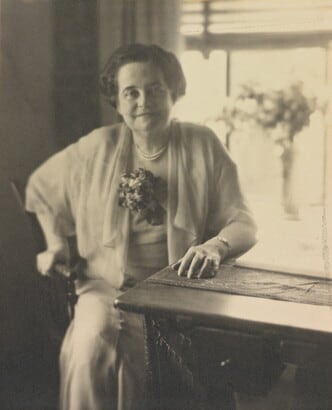
Alice A. Bailey
Ils concordent sur: Qu'est-ce que l'Absolu ? Dieu existe-t-il ? · Qui suis-je ? Existe-t-il un vrai soi ? · Pourquoi souffrons-nous ?
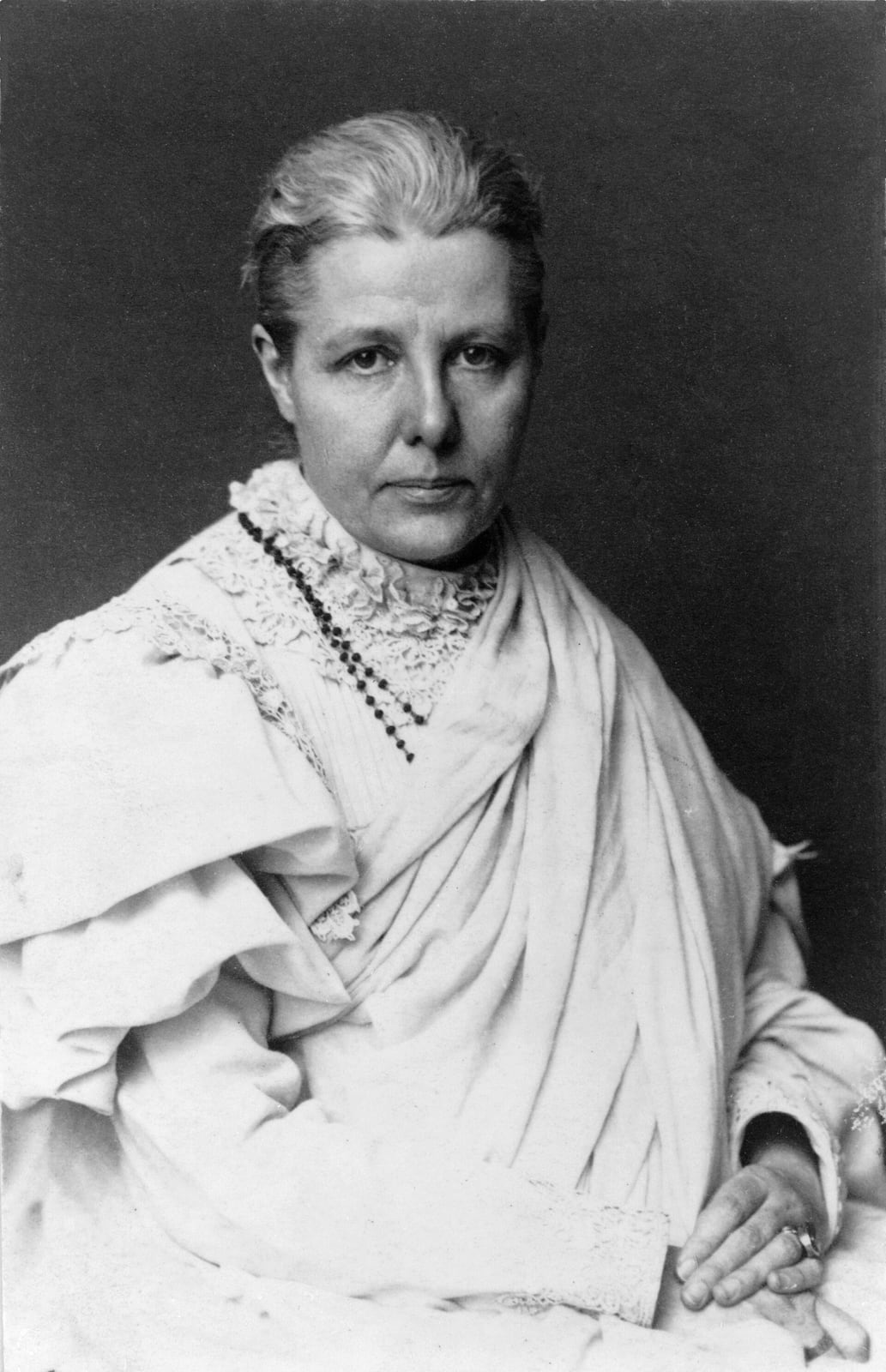
Annie Besant
Ils concordent sur: Sommes-nous libres ou tout est-il déterminé ? · Qu'est-ce que l'Absolu ? Dieu existe-t-il ? · Qui suis-je ? Existe-t-il un vrai soi ?
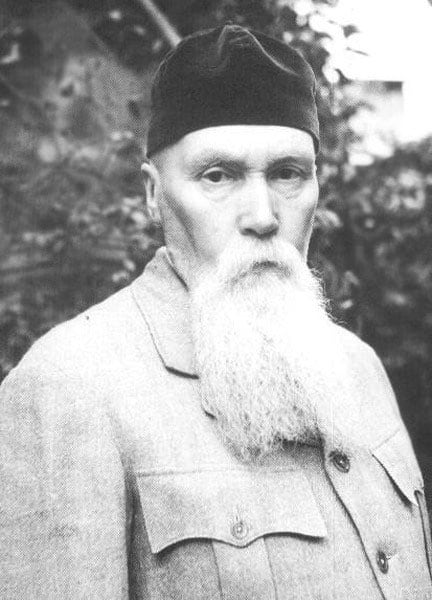
Nicholas Roerich
Ils concordent sur: Le monde est-il réel ? · La raison peut-elle connaître l'ultime ? · Se retirer du monde ou le transformer ?
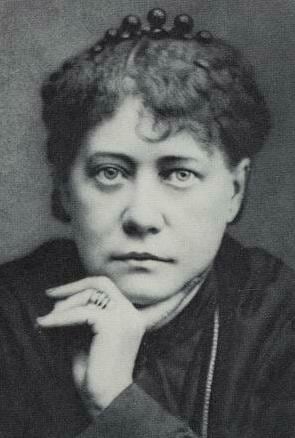
Helena Blavatsky
Ils concordent sur: Sommes-nous libres ou tout est-il déterminé ? · Qui suis-je ? Existe-t-il un vrai soi ? · Pourquoi souffrons-nous ?


Anecdotes et récits
Anecdotes et récits
Témoignagec. 1868
The visit of the dead aunt
Origine du récit: Steiner's autobiographical lecture in Berlin, 4 February 1913 (published in the Beiträge zur Rudolf Steiner Gesamtausgabe); recorded by Lindenberg and critically discussed by Zander.
Source: Lindenberg, Christoph. Rudolf Steiner. Eine Biographie. 2 vols. Stuttgart: Verlag Freies Geistesleben, 1997.
Témoignagec. 1879–1882
The herb gatherer on the train
Origine du récit: The Course of My Life, ch. III; Koguzki's identity and house were documented by anthroposophical researchers. The figure of the 'Master' has no documentary support (Zander).
Source: Steiner, Rudolf. Mein Lebensgang. Eine nicht vollendete Autobiographie (GA 28). Dornach: Philosophisch-Anthroposophischer Verlag, 1925; ed. actual Basilea: Rudolf Steiner Verlag.
Témoignage1884–1890
The boy who could not learn
Origine du récit: The Course of My Life, ch. VI. Otto Specht's medical career and death in the war are confirmed by biographers (Lindenberg); the degree of his initial disability is known only from Steiner.
Source: Steiner, Rudolf. Mein Lebensgang. Eine nicht vollendete Autobiographie (GA 28). Dornach: Philosophisch-Anthroposophischer Verlag, 1925; ed. actual Basilea: Rudolf Steiner Verlag.
Documenté1896
Before the sick Nietzsche
Origine du récit: The Course of My Life, ch. XVIII, and Steiner's articles on the Nietzsche archive (1900). The lessons and the break with Elisabeth Förster-Nietzsche are documented in letters.
Source: Steiner, Rudolf. Mein Lebensgang. Eine nicht vollendete Autobiographie (GA 28). Dornach: Philosophisch-Anthroposophischer Verlag, 1925; ed. actual Basilea: Rudolf Steiner Verlag.
Documenté1922–1923
The night of the fire
Origine du récit: Police reports and contemporary press; eyewitness accounts gathered by Wachsmuth and Lindenberg. Responsibility for the fire remains unproven.
Source: Zander, Helmut. Rudolf Steiner. Die Biografie. Múnich: Piper, 2011 (ed. rústica 2016).
Documenté1924
The farmers of Koberwitz
Origine du récit: Transcript of the course (GA 327) and documentation of the Agriculture Section of the Goetheanum.
Source: Steiner, Rudolf. Geisteswissenschaftliche Grundlagen zum Gedeihen der Landwirtschaft. Landwirtschaftlicher Kurs (GA 327). Koberwitz, 7–16 de junio de 1924.
Enseignements
Enseignements
Les notions qui structurent sa pensée, expliquées dans leur contexte.
Anthroposophy (spiritual science)antroposofia
From German idealism and Goethe to Theosophy and Western esotericism.
Source: Zander, Helmut. Rudolf Steiner. Die Biografie. Múnich: Piper, 2011 (ed. rústica 2016).
Ethical individualism and free thinkingindividualismo-etico
Post-Kantian epistemology; nineteenth-century individualism.
The members of the human beingmiembros-del-ser-humano
Reworked Theosophical anthropology.
Source: Zander, Helmut. Rudolf Steiner. Die Biografie. Múnich: Piper, 2011 (ed. rústica 2016).
Reincarnation and karmareencarnacion-y-karma
Theosophy; German idealism (Lessing).
Source: Zander, Helmut. Rudolf Steiner. Die Biografie. Múnich: Piper, 2011 (ed. rústica 2016).
Imagination, Inspiration, Intuitionimaginacion-inspiracion-intuicion
Western mysticism and Rosicrucian esotericism.
Source: Steiner, Rudolf. Mein Lebensgang. Eine nicht vollendete Autobiographie (GA 28). Dornach: Philosophisch-Anthroposophischer Verlag, 1925; ed. actual Basilea: Rudolf Steiner Verlag.
The threefold social ordertriformacion-social
Postwar German crisis; European social thought.
The Mystery of Golgotha, Lucifer and Ahrimanmisterio-del-golgota
Esoteric Christology; break with the Theosophical Society.
Source: Zander, Helmut. Rudolf Steiner. Die Biografie. Múnich: Piper, 2011 (ed. rústica 2016).
Vidéos
Vidéos
Enregistrements, entretiens et documentaires. Les vidéos sont lues depuis YouTube ; elles ne sont pas hébergées ici.
Rudolf Steiner and his Waldorf philosophy
Documentaire· EN· 2025· 43 min
DW DocumentaryChaîne officielle
Rudolf Steiner y su universo Waldorf
Documentaire· ES· 2025· 43 min
DW DocumentalChaîne officielle
Mythos Rudolf Steiner – was steckt hinter Waldorfschulen, Weleda und Demeter?
Documentaire· DE· 2024· 30 min
Terra X HistoryChaîne officielle
Rudolf Steiner und die Anthroposophie (Sternstunde Philosophie)
Entretien· DE· 2022· 65 min
SRF Kultur SternstundenChaîne officielle
Dr. Rudolf Steiner, aus seinem Lebensgang (ARTE)
Documentaire· DE· 2025· 90 min
videoattac2
The Life of Rudolf Steiner (Rudolf Steiners Leben)
Documentaire· DE· 59 min
Steinerfilms
The Challenge of Rudolf Steiner, part one
Documentaire· DE· 93 min
Steinerfilms
The Life and Work of Rudolf Steiner with Gary Lachman
Entretien· EN· 2018· 66 min
New Thinking Allowed with Jeffrey Mishlove
Rudolf Steiner's First Goetheanum with Brian Gray
Conférence· EN· 2022· 94 min
Anthroposophical Society · Faust Branch Sacramento
André Leu — Rudolf Steiner: 100 years ahead of the science of his time
Conférence· EN· 2019· 31 min
Sektion für LandwirtschaftChaîne officielle
Intuitive Thinking as a Spiritual Path (The Philosophy of Freedom) — audiolibro
Enregistrement de tiers· EN· 2019· 457 min
Rudolf Steiner Press AudioChaîne officielle
El desafío de Rudolf Steiner
Voir sur YouTube
Cette vidéo ne peut pas être intégrée ; elle s'ouvre sur YouTube.
El desafío de Rudolf Steiner
Documentaire· ES· 93 min
Benjamin Moreno
Galerie
Galerie
Images dont la licence a été vérifiée. Chacune conserve son auteur et son attribution.
Manuscrits
Manuscrits
Témoins manuscrits et textes anciens, avec leur dépositaire et leurs conditions de consultation.
DE · Latin (Kurrent y escritura latina) · 1879–1925
Nachlass Rudolf Steiner (manuscritos, cuadernos de notas, cartas, dibujos de pizarra)
- Témoin conservé
- Unos 600 cuadernos de notas, manuscritos de libros, cartas y alrededor de 1100 dibujos en pizarra
- Dépositaire
- Rudolf Steiner Archiv, Dornach (Suiza)
DE · Taquigrafía Gabelsberger · 1900–1924
Mitschriften der Vorträge (estenogramas)
- Témoin conservé
- Unas 3700 transcripciones taquigráficas de conferencias
- Dépositaire
- Rudolf Steiner Archiv, Dornach
Relations
Relations
Influences, filiations et affinités. On distingue la relation documentée de la similitude identifiée par analyse.
A reçu l'influence de
Her cosmology (root races, Atlantis, planes) is a reworked source of Cosmic Memory and Occult Science; Steiner acknowledged her work and disagreed with its Eastern orientation.
Relation documentée
En désaccord avec
She appointed him head of the Esoteric School in Germany (1904); the proclamation of Krishnamurti as World Teacher led to the 1912–1913 break.
Relation documentée
En désaccord avec
Steiner publicly rejected the doctrine that Krishnamurti was the vehicle of the World Teacher; it was the immediate cause of the German Section's separation.
Relation documentée
A rencontré
Friedrich Nietzsche
He devoted a book to him (1895) and saw him ill at Naumburg in 1896.
Relation documentée
A reçu l'influence de
Johann Wolfgang von Goethe
Editor of his scientific writings (1883–1897); his method of observation is the basis of Steiner's theory of knowledge and gives the Goetheanum its name.
Relation documentée
Disciple de
Karl Julius Schröer
His teacher in Vienna, who introduced him to Goethe and recommended him to Kürschner.
Relation documentée
Famille de
Marie Steiner-von Sivers
Collaborator from 1902 and wife from 1914; co-founder of eurythmy and speech formation and editor of his legacy.
Relation documentée
A rencontré
Ita Wegman
Physician, co-author of Extending Practical Medicine and member of the Society's executive from 1923; she attended him in his last illness.
Relation documentée
A reçu l'influence de
The first chapter of Mysticism at the Dawn of the Modern Age (1901).
Relation documentée
A reçu l'influence de
Studied in Mysticism at the Dawn of the Modern Age (1901) as a precursor of his spiritual science.
Relation documentée
A reçu l'influence de
The centre of his Christology: he devoted cycles to the four Gospels and to the 'fifth Gospel'.
Relation documentée
A rencontré
Édouard Schuré
Friend and collaborator; Steiner adapted and staged his dramas (GA 42), and Schuré prefaced the French translation of Christianity as Mystical Fact.
Relation documentée
A reçu l'influence de
Ernst Haeckel
Steiner defended his evolutionary monism in Haeckel and His Opponents (1900) before his Theosophical period.
Relation documentée
Contemporain de
Contemporaries in the German-speaking world with shared interests in Goethe, Gnosis and the life of the spirit, with no documented relationship.
Similitude identifiée par analyse
Contemporain de
Contemporaries in early twentieth-century European esotericism; no direct relationship is recorded.
Similitude identifiée par analyse
Idées proches de
Both conceived Christ and Sophia within a religious philosophy of evolution; the affinity was noted by Russian anthroposophists, not by Steiner himself.
Similitude identifiée par analyse
Contemporain de
Both reworked Blavatsky's Theosophy in their own directions; there was no relationship.
Similitude identifiée par analyse
Sources
Sources
Bibliographie et catalogues consultés pour cette fiche.
- Steiner, Rudolf. Mein Lebensgang. Eine nicht vollendete Autobiographie (GA 28). Dornach: Philosophisch-Anthroposophischer Verlag, 1925; ed. actual Basilea: Rudolf Steiner Verlag.
- Lindenberg, Christoph. Rudolf Steiner. Eine Biographie. 2 vols. Stuttgart: Verlag Freies Geistesleben, 1997.
- Zander, Helmut. Rudolf Steiner. Die Biografie. Múnich: Piper, 2011 (ed. rústica 2016).
- Lachman, Gary. Rudolf Steiner: An Introduction to His Life and Work. Nueva York: Jeremy P. Tarcher/Penguin, 2007.
- Steiner, Rudolf. Die Philosophie der Freiheit. Grundzüge einer modernen Weltanschauung. Berlín: Emil Felber, 1894 (texto en Project Gutenberg, ebook n.º 53493).
- Goetheanum, Dornach: sede de la Sociedad Antroposófica General y de la Escuela Superior de Ciencia Espiritual.
- McDermott, Robert (ed.). The Essential Steiner. San Francisco: Harper & Row, 1984 (nueva ed. The New Essential Steiner, Lindisfarne, 2009).
- Wikipedia (de), «Rudolf Steiner» (secciones «Edition des Werkes» y «Schriften»), y Wikipedia (en), «Rudolf Steiner», consultadas el 25 de octubre de 2026.
- Wikidata, «Rudolf Steiner» (Q78484).
- Rudolf Steiner Archiv, Dornach / Rudolf Steiner Verlag, Basilea: Rudolf Steiner Gesamtausgabe (GA).
- Rudolf Steiner Archive (Steiner Online Library), rsarchive.org: índice de la GA con traducciones inglesas (p. ej. «GA 37. Writings on the History of the Anthroposophical Movement and Society 1902–1925»).
- Jonas, Margaret (comp.). GA–RSE Titles: Listing of GA volumes and published English translations. Londres: Rudolf Steiner House Library, 1999, act. 2019.
- Deutsche Nationalbibliothek, catálogo en línea (SRU): ediciones del Rudolf Steiner Verlag por número de GA.
- Project Gutenberg: obras de Rudolf Steiner en alemán e inglés (Die Philosophie der Freiheit, n.º 53493; Die Kernpunkte der sozialen Frage, n.º 28494; The Way of Initiation, n.º 39986; etc.).
- Wachsmuth, Guenther. Die Geburt der Geisteswissenschaft. Rudolf Steiners Lebensgang von der Jahrhundertwende bis zum Tode. Dornach: Philosophisch-Anthroposophischer Verlag, 1941 (trad. ingl. The Life and Work of Rudolf Steiner, 1955).
- Steiner, Rudolf. Geisteswissenschaftliche Grundlagen zum Gedeihen der Landwirtschaft. Landwirtschaftlicher Kurs (GA 327). Koberwitz, 7–16 de junio de 1924.
- Ayant droit
- Dominio público en la UE (desde 1996) y en España (desde 2006) para toda la obra de Steiner (m. 1925), y en EE. UU. para lo publicado antes de 1930. Las ediciones de la GA, sus aparatos críticos y las traducciones modernas pertenecen a la Rudolf Steiner-Nachlassverwaltung / Rudolf Steiner Verlag (Basilea) y a sus editoriales.
- Site officiel
- www.rudolf-steiner.com/
En attente de confirmation
Ce que cette fiche n'a pas encore pu établir. Nous préférons le dire plutôt que de combler.
- Fecha de nacimiento: Steiner dio siempre el 27 de febrero de 1861; algunos documentos y biógrafos apuntan al 25. Se registra el 27 con certeza «disputed» en la cronología.
- Verificar el título y contenido exactos de la GA 41 y de la reordenación reciente de documentos (GA 46) que aparece en rsarchive.org; no se han registrado por falta de fuente fiable.
- Completar ISBN españoles e ingleses para varias obras escritas (GA 5, 7, 11, 14, 16, 18, 20, 22, 24–25, 29–39, 42–44) y localizar ediciones en francés, italiano y ruso.
- Registrar uno por uno los demás ciclos de conferencias significativos (p. ej. GA 107, 113, 129, 136, 146, 157, 194, 230, 233) siempre como transcripciones no revisadas.
- Cotejar con el texto alemán de GA 4 (ed. 1918) y GA 10 las dos citas marcadas como «probable».
- Confirmar las fechas marcadas como probables: doctorado (octubre de 1891), boda con Marie von Sivers (24-XII-1914), inauguración del segundo Goetheanum (29-IX-1928) e inicio de la GA (1956).
- Localizar textos alemanes de dominio público en línea (Wikisource alemán, Internet Archive con OCR limpio) de Theosophie, Wie erlangt man…? y Die Geheimwissenschaft im Umriss para la sala de lectura.
Recherche effectuée le 2026-10-25