Théosophie · Quatrième Voie
P. D. Ouspensky
Пётр Демьянович Успенский
1878 – 1947Personne historiquement documentée
Piotr Demianovitch Ouspensky (1878-1947), journaliste et penseur russe, passa des spéculations sur la quatrième dimension (Tertium Organum, 1912) au rôle de grand exposant de l'enseignement de G. I. Gurdjieff, auprès de qui il travailla de 1915 à 1924. De Londres, puis du New Jersey, il enseigna pendant vingt-cinq ans la « Quatrième Voie » à des groupes d'où sortirent des disciples comme Maurice Nicoll ou Rodney Collin. Les Fragments d'un enseignement inconnu, parus après sa mort, demeurent l'exposé le plus clair de ce système.
- œuvres
- 17œuvres
- éditions
- 42éditions
- citations
- 8citations
- vidéos
- 11vidéos
- images
- 3images
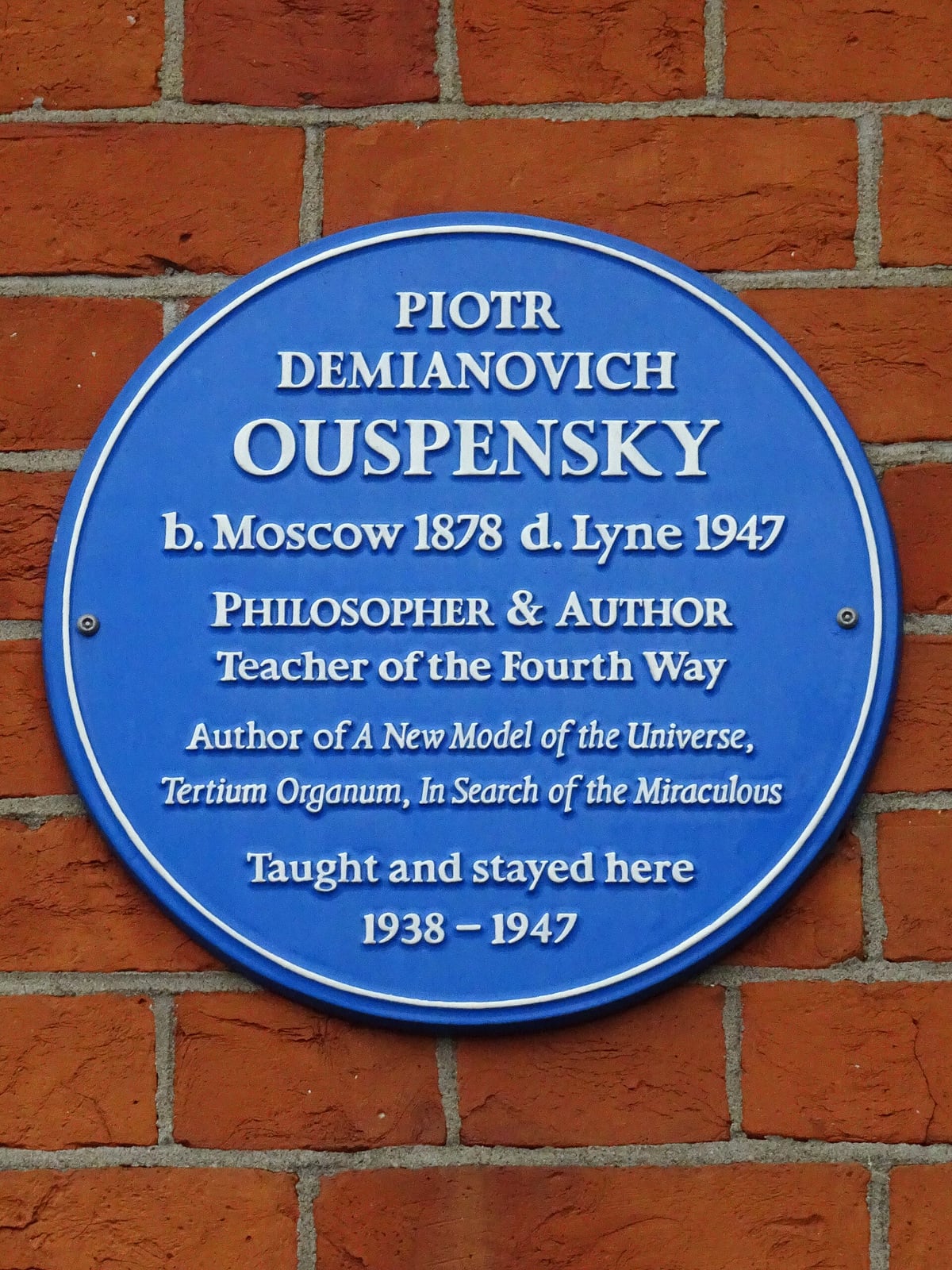
Placa azul de P. D. Ouspensky en Colet House · CC BY-SA 4.0
Dans ses propres mots
«Man does not know himself.»The Psychology of Man's Possible Evolution, primera conferencia

Son idée centrale
Ordinary man does not 'do': everything happens to him, just as wars and revolutions happen to nations. Only one who has achieved inner unity and consciousness can act in the proper sense.
Le voir en contexte
Biographie
4 min de lecture
Traduction assistée à partir de l'original espagnol, en attente de relecture par un traducteur natif.
Un autodidacte dans le Moscou du tournant du siècle
Piotr Demianovitch Ouspensky naquit à Moscou en mars 1878, dans une famille de fonctionnaires d'origine modeste : son père servait dans l'administration du cadastre et à l'Hospice des enfants trouvés ; sa mère était fille de marchand. Les sources divergent sur le jour exact, car le calendrier julien était encore en vigueur en Russie. Il étudia au Deuxième Gymnase de Moscou, dont il fut renvoyé vers l'âge de seize ans — rapporte la tradition biographique — pour avoir griffonné une inscription sur un mur sous les yeux d'un inspecteur. Dès lors il se forma seul, avec une passion précoce pour les mathématiques, la psychologie et les phénomènes que la science de son temps laissait de côté.
Journaliste et chercheur
Dans les premières années du siècle, il travailla comme journaliste à Moscou et à Saint-Pétersbourg. Vers 1907, il découvrit la théosophie, alors en pleine expansion en Russie, et en 1908 il entreprit un premier voyage en Orient. L'année suivante, il publia La Quatrième Dimension, une brochure redevable à Charles Howard Hinton, où la quatrième dimension est une extension de l'espace que notre perception ne saisit pas. De cette intuition naquit Tertium Organum (1912), sa première grande œuvre : un « troisième canon de la pensée », après l'Organon d'Aristote et le Novum Organum de Bacon, qui nie la réalité ultime de l'espace et du temps et propose une logique supérieure dans laquelle A est à la fois A et non-A. À la même époque, il publia un essai sur le symbolisme du tarot, deux conférences sur le « cercle intérieur » et le surhomme, une brochure sur le yoga, des Conversations avec le diable et le roman Kinemadrama, qui deviendrait L'Étrange Vie d'Ivan Ossokine.
En 1913-1914, il se rendit en Égypte, en Inde et à Ceylan à la recherche d'une école vivante de connaissance ésotérique ; il visita le siège théosophique d'Adyar, mais le déclenchement de la Première Guerre mondiale l'obligea à rentrer sans l'avoir trouvée. Au printemps 1915, il donna à Saint-Pétersbourg et à Moscou des conférences sur ses voyages qu'il intitulait, précisément, À la recherche du miraculeux.
La rencontre avec Gurdjieff
La même année, après avoir décliné plusieurs invitations, il accepta de rencontrer dans un petit café de Moscou un homme au type oriental, à la moustache noire et au regard perçant, qui lui parut « déguisé » : Georges Ivanovitch Gurdjieff. La conversation changea sa vie. Au cours des années suivantes, Ouspensky fit partie du groupe de Saint-Pétersbourg, prit des notes minutieuses des explications du maître sur l'homme-machine, les centres, la loi de trois et celle de sept, l'ennéagramme et le « rappel de soi », et vécut des expériences qu'il relaterait avec une sobriété scrupuleuse, comme la communication télépathique qu'il dit avoir eue avec Gurdjieff en Finlande en août 1916.
La révolution dispersa le groupe. Ouspensky suivit Gurdjieff à Essentouki en 1917, prit ses distances avec lui en 1918 et survécut à la guerre civile dans le sud de la Russie ; de là, il envoya les chroniques qu'A. R. Orage publia à Londres et qui seraient réunies sous le titre Lettres de Russie, 1919. En 1920, il trouva refuge à Constantinople.
Londres et l'indépendance
Entre-temps, Tertium Organum avait atteint les États-Unis : l'architecte Claude Bragdon le traduisit avec Nicholas Bessaraboff et le publia en 1920, et son succès fit d'un émigré inconnu un auteur célèbre. Avec le soutien de Lady Rothermere, Ouspensky s'installa à Londres en 1921 ; ses conférences y attirèrent écrivains, médecins et journalistes, et les sources citent parmi ses auditeurs Aldous Huxley, T. S. Eliot et Gerald Heard. Il aida à réunir des fonds pour que Gurdjieff puisse ouvrir son Institut à Fontainebleau, mais en 1924 il annonça qu'il poursuivrait seul. Dans le dernier chapitre des Fragments, il explique sa décision par une phrase d'une rare noblesse : la voie de Gurdjieff pouvait être plus juste que la sienne, mais ce n'était pas la sienne.
Pendant quinze ans, il enseigna à Londres — à partir de 1938 également à Colet House — et à Lyne Place (Surrey), où ses groupes associaient l'étude des idées à un travail pratique. En 1931 parut Un nouveau modèle de l'univers, qui rassemblait et développait les essais écrits avant Gurdjieff. Parmi ses disciples figurèrent Maurice Nicoll, Kenneth Walker, Robert S. de Ropp, Rodney Collin et, pendant un temps, J. G. Bennett.
Les États-Unis et la fin
La Seconde Guerre mondiale le conduisit aux États-Unis en 1941 ; il s'y installa avec son épouse, Sofia Grigorievna, dans une ferme du New Jersey et continua de donner des causeries à New York. Gravement malade, il rentra seul en Angleterre en 1947. Lors des réunions de ces mois-là, il déconcerta ses élèves en insistant pour qu'ils recommencent depuis le début et ne se fient pas au « système » appris ; Rodney Collin en conclut qu'il avait abandonné l'enseignement, lecture que les comptes rendus de ces réunions ne confirment pas clairement. Il mourut à Lyne Place le 2 octobre 1947 et repose dans le cimetière de l'église de la Sainte-Trinité de Lyne.
Une œuvre en deux temps
Peu après sa mort parurent les Fragments d'un enseignement inconnu — avec l'aval, selon la tradition, de Gurdjieff lui-même — et L'Homme et son évolution possible, cinq conférences conçues comme une introduction. Suivirent Le Quatrième Chemin (1957) et plusieurs recueils de réunions. L'œuvre d'Ouspensky connaît ainsi deux temps : celui du penseur qui cherchait une logique au-delà du sens commun, et celui du disciple qui mit par écrit, avec une précision de journaliste, l'enseignement d'un autre. La clarté de cette transcription explique que la Quatrième Voie soit aujourd'hui encore connue surtout à travers sa voix. Ses papiers sont conservés à la bibliothèque de l'université Yale.
Sources: Ouspensky, P. D. In Search of the Miraculous: Fragments of an Unknown Teaching. Nueva York: Harcourt, Brace & World, 1949; Londres: Routledge & Kegan Paul, 1950. · Ouspensky, P. D. The Psychology of Man's Possible Evolution. Nueva York: Hedgehog Press, 1950. · Lachman, Gary. In Search of P. D. Ouspensky: The Genius in the Shadow of Gurdjieff. Wheaton: Quest Books, 2004. · Webb, James. The Harmonious Circle: The Lives and Work of G. I. Gurdjieff, P. D. Ouspensky, and Their Followers. Nueva York: G. P. Putnam's Sons, 1980. · Ouspensky, P. D. Tertium Organum: The Third Canon of Thought, a Key to the Enigmas of the World. Trad. de Nicholas Bessaraboff y Claude Bragdon. Rochester (NY): Manas Press, 1920.
Chronologie
La vie, année après année
Chaque point est un événement documenté. Cliquez pour le lire, avec sa source et son degré de certitude.
mars 18780 ansMoscú
Born in Moscow
Pyotr Demyanovich Uspensky is born, son of Demyan Petrovich Uspensky, an official, and Ekaterina Semyonovna Borisova. Sources give 4, 5 or 17 March, depending on the calendar used.
DocumentéWikidata, «Peter Demianovich Ouspensky» (Q434266): fechas y lugares de nacimiento y muerte (registra tres fechas de nacimiento: 4, 5 y 17 de marzo de 1878).
Après sa mort
- 1949In Search of the Miraculous published
mars 1878 · 0 ans
Born in Moscow
Pyotr Demyanovich Uspensky is born, son of Demyan Petrovich Uspensky, an official, and Ekaterina Semyonovna Borisova. Sources give 4, 5 or 17 March, depending on the calendar used.
Documenté
v. 1894 · 16 ans
Expelled from the gymnasium
He is expelled from the Second Moscow Gymnasium, tradition says for graffiti painted in view of an inspector. From then on he is self-taught.
Probable
1907 · 29 ans
Journalism and Theosophy
He works as a journalist on the Moscow daily Utro (The Morning) and discovers Theosophy, which will shape his first books.
Documenté
1909 · 31 ans
The Fourth Dimension
He publishes his first book, on theories of the fourth dimension.
Documenté
1912 · 34 ans
Tertium Organum
Tertium Organum appears, his first major work, proposing a higher logic and a theory of cosmic consciousness.
Documenté
1913 – 1914
Journey to the East
He travels to Egypt, India and Ceylon in search of an esoteric school; he visits Adyar. The war forces him back to Russia.
Documenté
février 1915 · 36 ans
Lectures 'In Search of the Miraculous'
In February and March he lectures in St Petersburg on his travels under the titles 'In Search of the Miraculous' and 'The Problems of Death'.
Documenté
1915 · 37 ans
Meeting Gurdjieff
In a small Moscow café he meets G. I. Gurdjieff and joins his work group.
Documenté
août 1916 · 38 ans
The Finland experiences
By his own account he has telepathic communication with Gurdjieff at a Finnish country house. He himself admits he cannot prove it.
Contesté
1918 · 40 ans
First separation from Gurdjieff
Having followed him to the Caucasus, he decides to leave Gurdjieff and continue the work independently.
Documenté
1919 · 41 ans
Letters from Russia
During the civil war he sends dispatches that A. R. Orage publishes in London in The New Age.
Documenté
1920 · 42 ans
Exile in Constantinople; Tertium Organum in English
A refugee in Constantinople, he is unaware that in Rochester Claude Bragdon has published Tertium Organum in English with great success.
Documenté
août 1921 · 43 ans
Arrival in London
He leaves Constantinople in August and settles in London with Lady Rothermere's support; he begins lecturing.
Documenté
1924 · 46 ans
Final break with Gurdjieff
He announces in London that he will continue teaching independently, apart from Gurdjieff and his Fontainebleau Institute.
Documenté
1931 · 53 ans
A New Model of the Universe
The collection of his pre-Gurdjieff essays is published in English.
Documenté
1938 · 60 ans
Colet House
He teaches at Colet House, later the home of The Study Society, where a blue plaque now commemorates him.
Documenté
1941 · 63 ans
Move to the United States
Because of the war he moves to the United States; with his wife Sophia Grigorievna he settles on a New Jersey farm and lectures in New York.
Probable
2 octobre 1947 · 69 ans
Death at Lyne Place
Having returned to England that year, he dies at Lyne Place. He is buried in Holy Trinity churchyard, Lyne.
Documenté
1949
In Search of the Miraculous published
In Search of the Miraculous is published posthumously and becomes the standard account of Gurdjieff's system.
Documenté
Œuvres
Œuvres essentielles
Les œuvres sans lesquelles on ne comprend pas son héritage.
Œuvre écrite · 1912
Tertium Organum: A Key to the Enigmas of the World
Tertium Organum. Ключ к загадкам мира
His first major work: after Aristotle's Organon and Bacon's Novum Organum, it proposes a 'third canon of thought' that denies the ultimate reality of space and time, explores cosmic consciousness (Bucke, the mystics) and formulates a higher logic in which A is both A and not-A. It was a success in America in the 1920s.
4 éditions · amazon.com

Œuvre écrite · 1931
A New Model of the Universe
A collection of essays on esotericism, the fourth dimension, the superman, Christianity and the New Testament, the Tarot, yoga, dreams, eternal recurrence, sex and evolution, unified by the 'psychological method': examining each problem from the level of consciousness of the one who thinks it.
4 éditions · amazon.com

Œuvre posthume · 1949
In Search of the Miraculous
In Search of the Miraculous: Fragments of an Unknown Teaching
A first-person chronicle of the years with Gurdjieff in Moscow, St Petersburg and the Caucasus and a systematic account of his teaching: man as a machine, the seven categories of man, the centres, self-remembering, the laws of three and seven, the ray of creation, the enneagram. It is the standard introduction to the Fourth Way.
7 éditions · amazon.fr

Conférences publiées · 1950
The Psychology of Man's Possible Evolution
The five lectures Ouspensky read to newcomers: man does not know himself, is a machine capable of knowing it, lives in lower states of consciousness and can evolve only through conscious work on himself. It is the shortest and clearest gateway to his teaching.
4 éditions · amazon.com
Toute son œuvre (17)
P. D. Ouspensky
The Fourth Dimension
The Conscious LibraryThe Fourth Dimension
1909

The Symbolism of the Tarot
1912
P. D. Ouspensky
The Inner Circle: On the Superman
The Conscious LibraryThe Inner Circle: On the Superman
1913

What Is Yoga?
1913

Strange Life of Ivan Osokin
1915

Talks with a Devil
1916

The Fourth Way
1957

Letters from Russia, 1919
1978

Conscience: The Search for Truth
1979

A Further Record
1986

The Cosmology of Man's Possible Evolution
1989

A Record of Meetings
1992
P. D. Ouspensky
Memory
The Conscious LibraryMemory
1953
Citations
Citations localisées dans une œuvre précise. Chacune porte sa provenance et son degré de fiabilité.
Man does not know himself.VérifiéeThe Psychology of Man's Possible Evolution, primera conferencia
Idées essentielles (résumé éditorial)
Par respect du droit d'auteur, ces idées sont résumées avec nos propres mots et ne sont pas présentées comme des citations littérales.
- Ordinary man does not 'do': everything happens to him, just as wars and revolutions happen to nations. Only one who has achieved inner unity and consciousness can act in the proper sense.
- There are four possible states of consciousness — sleep, ordinary waking state, self-consciousness and objective consciousness — and man lives almost always in the first two while believing he has the last two.
- Human evolution is neither automatic nor collective: it is an individual possibility requiring knowledge, conscious effort and the guidance of a school.
- Time is the way we imperfectly perceive a higher dimension of space; hence the possibility that life recurs, an idea he dramatised in Strange Life of Ivan Osokin.
- Every great question of science, religion or art should be examined with a 'psychological method', asking from what level of consciousness it is posed.
Dernières paroles
Il n'existe aucun témoignage vérifiable de ses dernières paroles.
There is no reliable record of his last words. Accounts of his final months — notably Rodney Collin's and the records of the 1947 meetings — report his insistence that pupils 'start again', but transmit no verifiable final words.
Interroger
Ce que répond son œuvre
Douze grandes questions de l'humanité et ce que ses textes permettent d'y répondre, références à l'appui. Nous ne lui prêtons jamais de paroles.
Qu'est-ce que l'Absolu ? Dieu existe-t-il ?
At the top of the ray of creation, the Absolute, subject to one law
Un Absolu impersonnelCela se déduit de sa doctrine
P. D. Ouspensky approached the Absolute in two stages. In Tertium Organum (1912), before meeting Gurdjieff, he speculates on higher dimensions of space and on a cosmic consciousness the human being may attain, without appealing to a personal God. In In Search of the Miraculous (1949), where he records what he learned from Gurdjieff, he sets out the ray of creation: a scale of worlds descending from the Absolute, subject to one law, down to the Moon, subject to ninety-six; each level is more mechanical the further it is from the source. The Absolute appears there as the principle from which everything proceeds and whose will reaches directly only the first level, not as someone with whom one has dealings. His interest is not devotional but cosmological and psychological: to understand where the human being stands on that scale.
Comparer cette question avec d'autres maîtresQui suis-je ? Existe-t-il un vrai soi ?
Man has no permanent I, only many I's taking turns
Il n'y a pas de soi permanentIl le dit expressément
P. D. Ouspensky sets out in In Search of the Miraculous (1949) and The Psychology of Man's Possible Evolution (1950) the central thesis of the Fourth Way: the ordinary human being has no single, permanent I. Each thought, desire or sensation says «I» for a moment and is replaced by another; there are hundreds of small I's, often contradictory, taking turns in command without any of them representing the whole. Man in this state is a machine: everything happens to him, he does nothing. Self-observation reveals this multiplicity, and seeing it is the first step. Unlike Buddhist non-self, however, the teaching holds that a real I can come to be formed through long and conscious work; the point is not to discover a Self already given but to create what does not yet exist.
Comparer cette question avec d'autres maîtresPourquoi souffrons-nous ?
We suffer from identification, imagination and needless negative emotions
L'ignorance de ce que nous sommesIl le dit expressément
P. D. Ouspensky sets out in The Psychology of Man's Possible Evolution (1950) and The Fourth Way (1957) a psychological explanation of suffering. Ordinary man lives asleep: he identifies with every thought, emotion or circumstance, loses himself in it and believes he is that. To identification are added imagination, which produces uncontrolled scenarios, and the expression of negative emotions, which Ouspensky regards as unnecessary: they have no centre of their own in the organism, are maintained by habit and justified by reasoning. Much human suffering, he holds, comes from this mechanical functioning, which passes for natural. Self-observation, non-identification and ceasing to express negative emotions make it possible to reduce it. The teaching further distinguishes this useless mechanical suffering from the conscious suffering that work on oneself may demand.
Comparer cette question avec d'autres maîtresQue se passe-t-il après la mort ?
Life repeats itself: eternal recurrence, which only consciousness can change
Renaissance selon le karmaIl le dit expressément
Ouspensky defended throughout his life an idea of his own, eternal recurrence, which he sets out in A New Model of the Universe and fictionalises in Strange Life of Ivan Osokin. At death, the human being does not pass into another world or a different body: he is born again into the same life, at the same time and with the same circumstances, because time has more dimensions than we perceive. Most people repeat the same things mechanically; only someone who acquires memory and self-consciousness can introduce changes into the repetition. In In Search of the Miraculous he also records Gurdjieff's doctrine: ordinary man does not have an immortal soul already given, but the possibility of forming higher bodies through work, and only what has crystallised can survive the death of the body.
Comparer cette question avec d'autres maîtresComment atteint-on la libération ou le salut ?
Man is a sleeping machine; awakening requires self-remembering within a school
Par un travail intérieur conscientIl le dit expressément
Peter D. Ouspensky sets out in In Search of the Miraculous the teaching he received from Gurdjieff between 1915 and 1918, and in The Psychology of Man's Possible Evolution the version he himself taught. The starting point is that ordinary human beings live asleep: each is a machine moved by external influences, without a permanent «I» but with a multitude of small I's succeeding one another. Evolution is neither automatic nor guaranteed; it is only possible for those who undertake it consciously. Its tools are self-observation, «self-remembering», effort against mechanicalness and work with others within a school, because no one can awaken alone. The end of that development is higher states of consciousness.
Comparer cette question avec d'autres maîtresFaut-il un maître ?
No one awakens alone: a school is needed, with its system and group work
La communauté et la traditionIl le dit expressément
In In Search of the Miraculous, Peter D. Ouspensky transmitted the idea, received from Gurdjieff, that a sleeping man cannot wake himself: he needs a system of knowledge and other people to remind him of his sleep. That is the reason for schools, organised groups working with rules, with knowledge coming from a higher source and with common tasks. After separating from Gurdjieff in 1918 and definitively in the 1920s, Ouspensky led his own groups in London for decades, centred on studying the system. His emphasis falls more on the school and collective work than on the personal figure of the teacher.
Comparer cette question avec d'autres maîtresLe monde est-il réel ?
The ray of creation: worlds of differing density and number of laws
Des plans d'existenceIl le dit expressément
In In Search of the Miraculous, Peter D. Ouspensky sets out the cosmology he received from Gurdjieff: the ray of creation, a scale of worlds running from the Absolute to the Moon through all worlds, our galaxy, the Sun, the planets and the Earth. Each level is subject to an increasing number of laws, so that the Earth, subject to many, is a place of great mechanicalness. Human beings live in one of the worst places in the universe, in the system's expression, and their possible evolution consists in freeing themselves from some of those laws. Before meeting Gurdjieff, in Tertium Organum, he had already argued that the three-dimensional world is a limited perception of a reality of more dimensions.
Comparer cette question avec d'autres maîtresQu'est-ce que l'amour ?
Love is a cosmic phenomenon that can open onto higher consciousness
Le désir ardent et l'unionCela se déduit de sa doctrine
In Tertium Organum, P. D. Ouspensky treats love as a cosmic phenomenon not made to the measure of human ends: people use it for reproduction, pleasure or possession, but its nature exceeds all of that and belongs to an order of reality of higher dimensions. That is why, he holds, love can momentarily open a higher perception, akin to the mystical consciousness he studies in the same book, and also why it is degraded when shut up in the personal. In A New Model of the Universe, in the chapter on sex and evolution, he examines sexual energy as a force that can serve inner evolution or be wasted. Later, within the Fourth Way, he would add that mechanical man cannot truly love as long as he lacks a permanent I.
Comparer cette question avec d'autres maîtresSommes-nous libres ou tout est-il déterminé ?
Man is a machine: everything happens to him, he does nothing
Nous sommes des machines jusqu'à l'éveilIl le dit expressément
*In Search of the Miraculous* (1949) records as the starting point of Gurdjieff's teaching the thesis that ordinary man is a machine: he cannot do, everything happens to him, as it rains or clears up. Ouspensky makes it the axis of his own lectures, published as *The Psychology of Man's Possible Evolution*: the human being has no single permanent self but many small «I»s that take turns, and therefore has no will. Freedom is not a given but a possibility. Only through work on oneself, beginning with self-remembering, can a centre capable of doing be formed. Most people, he warns, will never leave mechanicalness.
Comparer cette question avec d'autres maîtresPourquoi méditer ou prier ?
Self-remembering: being present to oneself while acting
Être présentIl le dit expressément
In the Fourth Way Ouspensky sets out in *In Search of the Miraculous* and *The Fourth Way*, the central practice is neither sitting meditation nor prayer but self-remembering: dividing attention so that, while looking at something, one is at the same time aware of oneself looking. Ouspensky recounts that when he tried it he discovered he almost never remembered himself and that most of his life passed in sleep. To that effort are added non-judgemental self-observation and the struggle against identification and the expression of negative emotions. The aim is to wake from mechanicalness and form a permanent self; self-remembering is the first step towards consciousness.
Comparer cette question avec d'autres maîtresLa raison peut-elle connaître l'ultime ?
A higher logic and a school knowledge ordinary science cannot reach
Une connaissance ésotériqueIl le dit expressément
Ouspensky trained as a mathematician and journalist, and his first answer was intellectual: in *Tertium Organum* (1912) he proposed a «third logic» to surpass those of Aristotle and Bacon in order to think about consciousness and the higher dimensions of space. Meeting Gurdjieff in 1915 convinced him that something more was needed: an esoteric knowledge preserved by schools, which, according to *In Search of the Miraculous*, is not transmitted through books but from teacher to pupil, and only to one who has prepared his being to receive it. That knowledge must be verified personally: nothing is to be accepted on faith. The ordinary, mechanical intellect cannot reach it; one developed by work on oneself can.
Comparer cette question avec d'autres maîtresSe retirer du monde ou le transformer ?
The Fourth Way requires no withdrawal: one works in ordinary life
La contemplation dans l'actionIl le dit expressément
In In Search of the Miraculous, P. D. Ouspensky sets out Gurdjieff's classification of the traditional ways: that of the fakir, who works on the body; that of the monk, on the emotions; and that of the yogi, on the mind. All three require leaving ordinary life and withdrawing. The Fourth Way, by contrast, does not ask one to go to the desert or the monastery: it is followed in the conditions of ordinary life, which are considered the best possible for work on oneself, and it works at once on body, emotions and mind. The practitioner keeps his trade and his family, but uses them as material for self-remembering and for observing his mechanicalness. Ouspensky led groups for decades, in London and later in the United States, on this basis. As for society, he was sceptical: collective changes, he said, happen mechanically.
Comparer cette question avec d'autres maîtres
Affinités et tensions
Affinités et tensions
Calculées question par question à partir de ses positions. La raison de chaque accord ou de chaque désaccord s'affiche d'un clic.
Pense comme
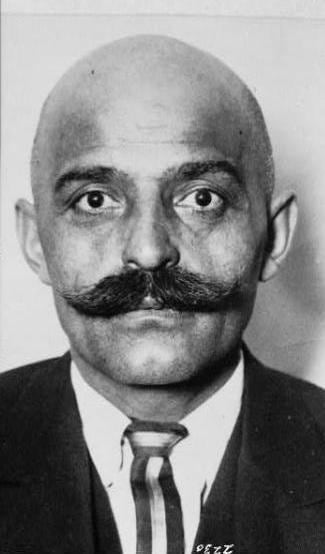
G. I. Gurdjieff
Ils concordent sur: Qui suis-je ? Existe-t-il un vrai soi ? · Pourquoi souffrons-nous ? · Comment atteint-on la libération ou le salut ?
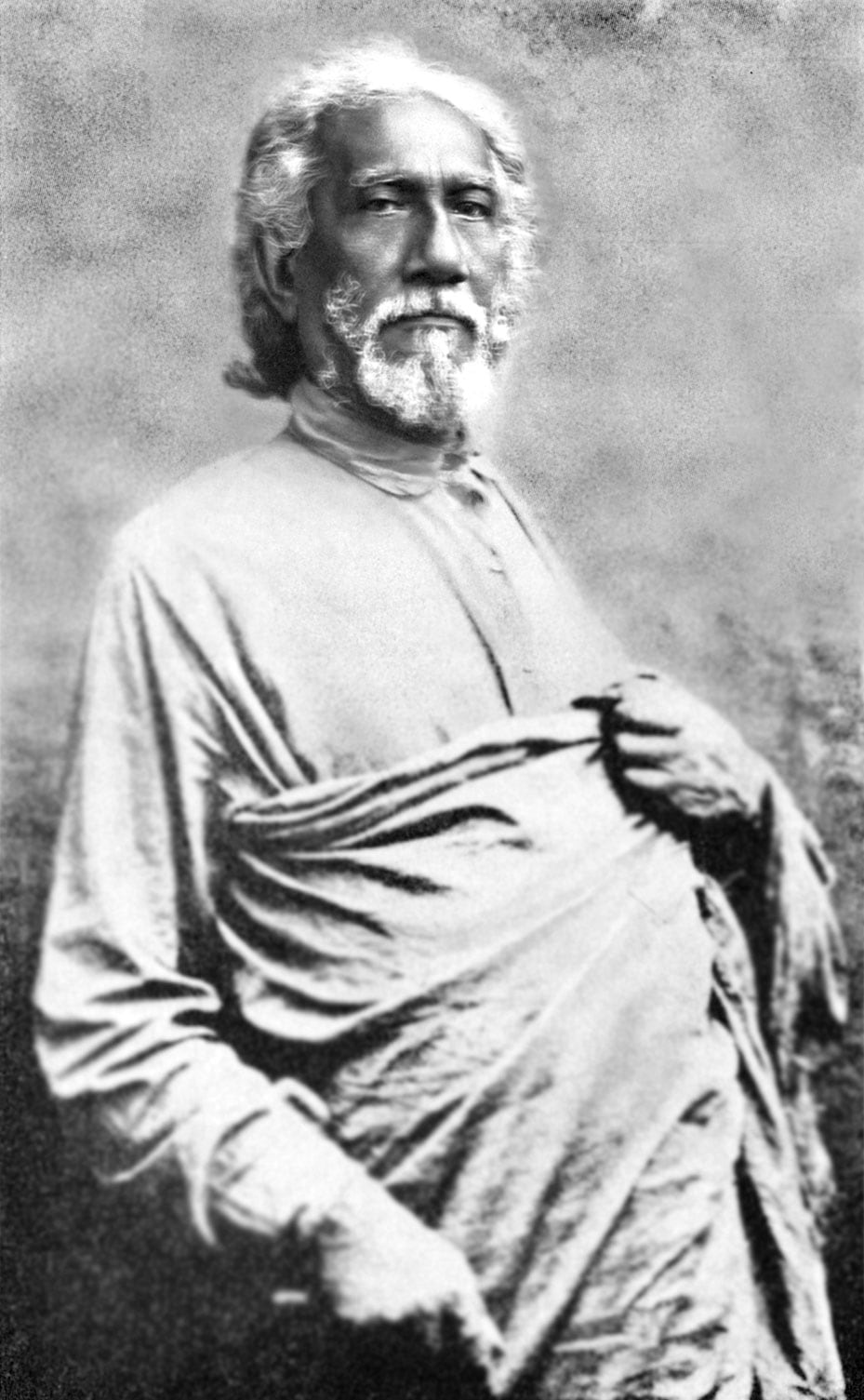
Sri Yukteswar
Ils concordent sur: Qu'est-ce que l'Absolu ? Dieu existe-t-il ? · Pourquoi souffrons-nous ? · Que se passe-t-il après la mort ?
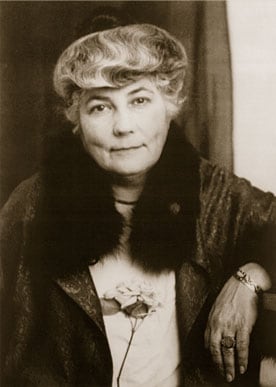
Helena Roerich
Ils concordent sur: Qu'est-ce que l'Absolu ? Dieu existe-t-il ? · Que se passe-t-il après la mort ? · Le monde est-il réel ?
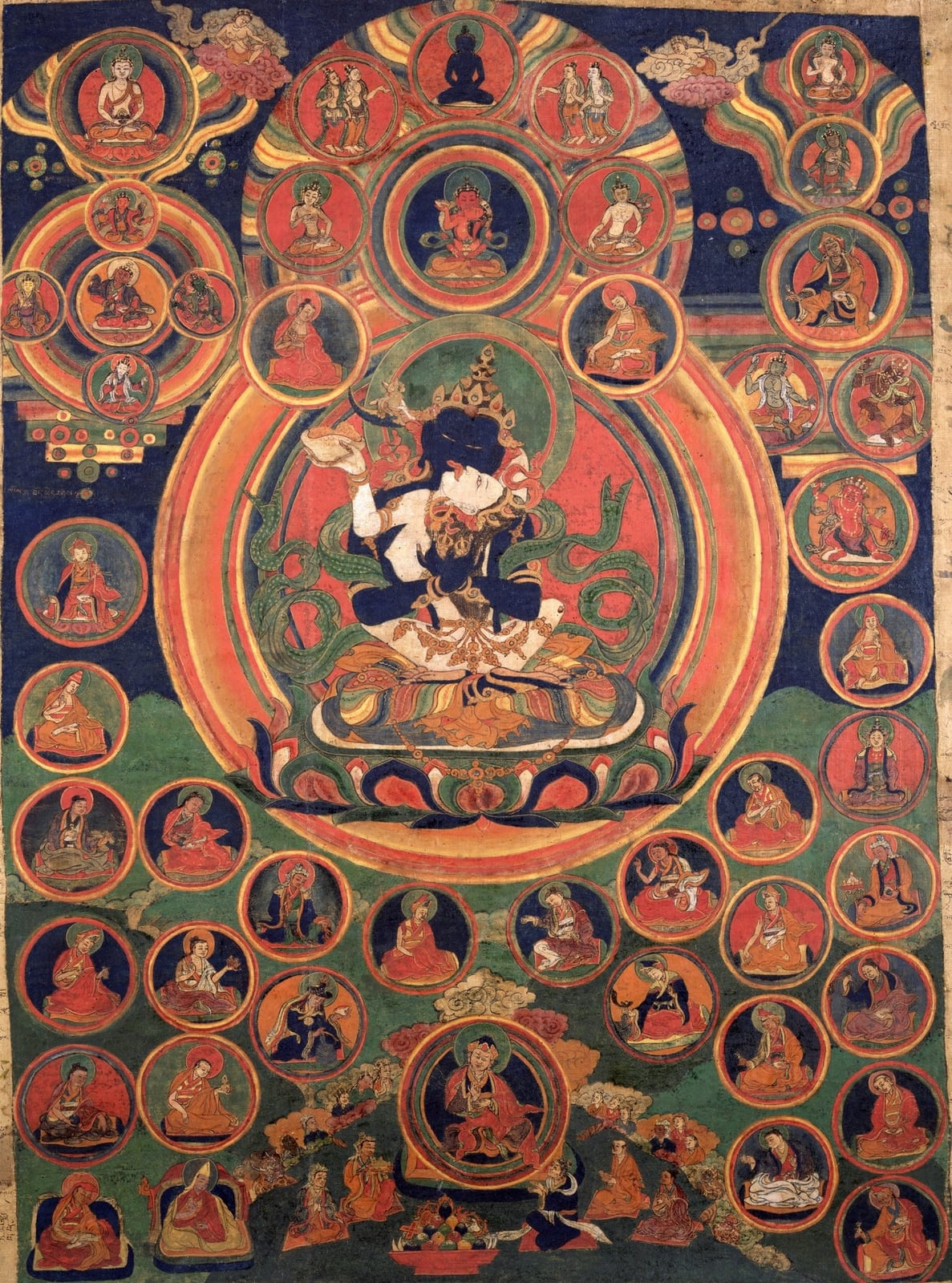
Padmasambhava
Ils concordent sur: Qu'est-ce que l'Absolu ? Dieu existe-t-il ? · Qui suis-je ? Existe-t-il un vrai soi ? · Pourquoi souffrons-nous ?
Pense autrement que

Nikolai Berdyaev
Ils s'opposent sur: Qui suis-je ? Existe-t-il un vrai soi ? · Que se passe-t-il après la mort ?
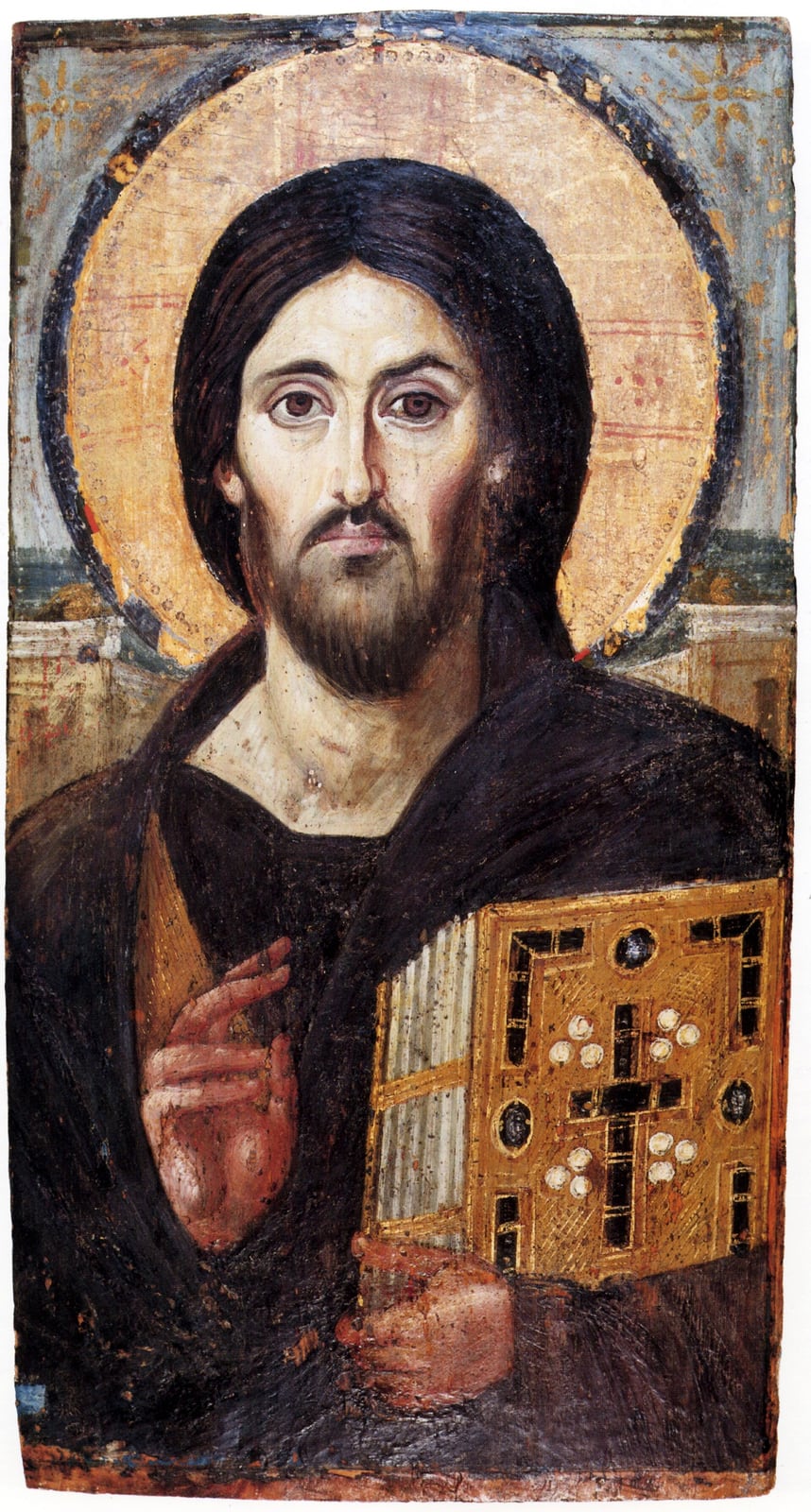
Jesus of Nazareth
Ils s'opposent sur: Qui suis-je ? Existe-t-il un vrai soi ? · Que se passe-t-il après la mort ?

Ignatius Brianchaninov
Ils s'opposent sur: Qui suis-je ? Existe-t-il un vrai soi ? · Que se passe-t-il après la mort ?

Al-Hallaj
Ils s'opposent sur: Qui suis-je ? Existe-t-il un vrai soi ? · Que se passe-t-il après la mort ?
Ils s'opposent surContradiction apparente
P. D. Ouspensky · Ramana Maharshi
Many I's or a single Self: the same word for two levels
Pourquoi: The contradiction is apparent at the level of diagnosis because they use the word I for different levels: Ouspensky calls I's the psychological states of ordinary man; Ramana reserves the term Self for the awareness that witnesses them all, which is neither a state nor a content. Ramana's ego and Ouspensky's many I's are the same reality seen from two systems. There is a real difference in the goal: the Fourth Way aims to build a permanent I through work, whereas for Ramana the Self is not built but recognised. One starts from a psychology of the machine; the other, from a Vedantic metaphysics.
Ils concordent sur
P. D. Ouspensky · G. I. Gurdjieff
Man is a machine: the master and the disciple who systematised his teaching
Pourquoi: The affinity is that of a master and his most systematic disciple: Ouspensky worked with Gurdjieff in Russia between 1915 and 1918 and transmitted that teaching in In Search of the Miraculous, published posthumously in 1949. The relationship broke down: Ouspensky withdrew in 1918 and definitively in the 1920s, and led his own groups in London, centred on the study of the system rather than on the figure of the master. They agree in doctrine, not in style: Gurdjieff taught in a demanding and disconcerting way, with dances, movements and provoked situations; Ouspensky, intellectually and in an orderly fashion. Hence they part on the question of the master: one deems him indispensable; the other stresses the school.
Ils concordent sur
P. D. Ouspensky · Eckhart Tolle
Waking from automatic pilot: self-remembering and the power of now
Pourquoi: There is no documented relationship between them, although the vocabulary of awakening and automatic pilot found in contemporary spirituality owes much to the Fourth Way. The affinity has clear limits. Self-remembering demands effort, a deliberate division of attention and a system of group work, and its goal is to form a permanent self that does not yet exist; Tolle's presence is presented as something not manufactured or reached in time but recognised as one's own being. Ouspensky writes for a school with discipline and hierarchy; Tolle, for individual readers without a tradition. They agree on the first step, not on the path or the goal.
Anecdotes et récits
Anecdotes et récits
Témoignage1915
The disguised man in the Moscow café
Origine du récit: In Search of the Miraculous, ch. 1, written by Ouspensky years later from his notes.
Témoignage1915–1916
The cigarettes on the Nevsky
Origine du récit: In Search of the Miraculous, ch. 7. Autobiographical account; there are no other witnesses.
Témoignage1916
The voice in the chest: Finland, August 1916
Origine du récit: In Search of the Miraculous, ch. 13. Ouspensky deliberately omits the content of the questions.
Documenté1920–1921
The book that travelled to America on its own
Origine du récit: Documented by the Manas Press edition (1920) and recounted by Wikipedia and Lachman (2004).
Source: Wikipedia (en), «P. D. Ouspensky» (vida, obras y bibliografía).
Contesté1947
'Start again': the 1947 meetings
Origine du récit: English Wikipedia records Collin's view and qualifies it with A Record of Meetings; the detailed version is in Lachman (2004) and the published records.
Source: Wikipedia (en), «P. D. Ouspensky» (vida, obras y bibliografía).
Enseignements
Enseignements
Les notions qui structurent sa pensée, expliquées dans leur contexte.
Self-rememberingrecuerdo-de-si
In many respects the functional equivalent of Buddhist mindfulness or the 'watchfulness' of other traditions, though framed in its own psychological vocabulary.
Man as a machinehombre-maquina
It comes from Gurdjieff; Ouspensky made it the core of his introductory exposition.
Source: Ouspensky, P. D. The Psychology of Man's Possible Evolution. Nueva York: Hedgehog Press, 1950.
The four states of consciousnessestados-de-conciencia
Ouspensky had already explored 'cosmic consciousness' in Tertium Organum before meeting Gurdjieff.
Source: Ouspensky, P. D. The Psychology of Man's Possible Evolution. Nueva York: Hedgehog Press, 1950.
The Fourth Waycuarto-camino
It gives its name to the Atlas's fourth-way tradition.
Source: Wikipedia (en), «P. D. Ouspensky» (vida, obras y bibliografía).
Eternal recurrence and the fourth dimensioneterno-retorno
It is in dialogue with Nietzsche, Hinton and early twentieth-century theories of time.
Retraites
Retraites et centres
Lieux et rencontres liés à son enseignement. Nous vous mettons en relation avec ceux qui les organisent.
Nueva York (Upper East Side) · Estados Unidos
Gurdjieff Foundation of New York
The Gurdjieff Foundation of New York
The Gurdjieff Foundation of New York belongs to the network of foundations established after Gurdjieff's death by his pupil Jeanne de Salzmann, together with the Institut Gurdjieff in Paris and the Gurdjieff Society in London. Its first president, Lord Pentland, had been a pupil of Ouspensky before working with Gurdjieff, and many of Ouspensky's pupils joined this work. It offers weekly group meetings led by senior students, classes in the Movements, the sacred dances and exercises Gurdjieff taught, meditation and retreats. Access is gradual and begins with introductory events.
Barons Court, Londres · Reino Unido
The Study Society, Colet House (London)
The Study Society
The Study Society was registered in 1951, four years after Ouspensky's death, at the initiative of his pupil Dr Francis Roles, to continue his work as a school of the Fourth Way. It is based at Colet House in west London, which presents itself as a spiritual gateway in the centre of the city. Its current programme brings together meditation, the Movements, study groups on the Masnavi and meetings devoted to Rumi, the dervish turning and a Sunday Advaita gathering. Its main website sometimes rejects automated requests; the Colet House site responds normally.
Londres · Reino Unido
Gurdjieff Studies, London
Gurdjieff Studies Ltd (organización benéfica registrada)
Gurdjieff Studies is a London charity devoted to the Fourth Way that offers group meetings, reading groups, practical activities, Movements classes and intensive residential stays. It holds that the teaching is passed on from teacher to pupil in direct lines of transmission, and maintains two reference websites: one on Gurdjieff's life and work, with his music, dances and chronology, and another devoted to P. D. Ouspensky, reconstructing his work in England, including the Lyne Place period. It is independent of the network of foundations established by Jeanne de Salzmann.
Vidéos
Vidéos
Enregistrements, entretiens et documentaires. Les vidéos sont lues depuis YouTube ; elles ne sont pas hébergées ici.
Gary Lachman - Gurdjieff, Ouspensky, and the Fourth Way
Conférence· EN· 80 min
Theosophical Society in England & Wales
Gary Lachman on P.D. Ouspensky — Kensington Central Library
Conférence· EN· 96 min
Gary Lachman
P. D. Ouspensky and the Gurdjieff Work with Gary Lachman
Entretien· EN· 83 min
New Thinking Allowed with Jeffrey Mishlove
The Philosophy of the Cosmic Dance 2017 pt1. The Story of Colet House
Conférence· EN· 57 min
Philip Jacobs
The Strange Life of P.D. Ouspensky
Analyse· EN· 6 min
Theodore Nottingham
С. А. Панин — Семинар: «Эзотерический текст как форма философии. П. Д. Успенский, Tertium Organum»
Conférence· RU· 2020· 96 min
АИЭМ · ASEM
Шелковников А. Ю. — Пётр Демьянович Успенский — философ эзотеризма
Conférence· RU· 2026· 27 min
АИЭМ · ASEM
Валерий Бондаренко «Пётр Успенский. Искатель чудесного»
Conférence· RU· 2019· 127 min
СМИБС
Tertium Organum by P.D. Ouspensky (Book Review)
Analyse· EN· 2026· 32 min
Hermitix Podcast
Gurdjieff in Finland, Pinpointing the Legendary Ouspensky Telepathy Incident
Entretien· EN· 2022· 7 min
Appleknocker Radio
¿Quién fue P.D. Ouspensky?
Enregistrement de tiers· ES· 2023· 7 min
Vojo Talks
Galerie
Galerie
Images dont la licence a été vérifiée. Chacune conserve son auteur et son attribution.
Manuscrits
Manuscrits
Témoins manuscrits et textes anciens, avec leur dépositaire et leurs conditions de consultation.
RU · Cyrillic / Latin · 1900–1947
P. D. Ouspensky Memorial Collection
- Témoin conservé
- Papeles, manuscritos y notas de reuniones (1935–1947)
- Dépositaire
- Yale University Library, Manuscripts and Archives · MS 840
- Numérisation
- hdl.handle.net/10079/fa/mssa.ms.0840…
Relations
Relations
Influences, filiations et affinités. On distingue la relation documentée de la similitude identifiée par analyse.
Disciple de
Gurdjieff's pupil from 1915 to 1918 in Russia and intermittent collaborator until 1924; author of the most widely read account of his teaching.
Relation documentée
En désaccord avec
He separated from him in 1918 and definitively in 1924; in In Search of the Miraculous he explains that Gurdjieff's way was not his.
Relation documentée
A reçu l'influence de
Ouspensky was interested in Theosophy from 1907 and visited Adyar in 1913–1914; the influence is that of the Theosophical movement generally, not a personal relationship (Blavatsky had died in 1891).
Similitude identifiée par analyse
Contemporain de
Contemporaries from the Theosophical milieu who founded their own esoteric schools in the interwar English-speaking world; no relationship between them is recorded.
Similitude identifiée par analyse
Lié depuis d'autres fiches
Sources
Sources
Bibliographie et catalogues consultés pour cette fiche.
- Ouspensky, P. D. In Search of the Miraculous: Fragments of an Unknown Teaching. Nueva York: Harcourt, Brace & World, 1949; Londres: Routledge & Kegan Paul, 1950.
- Wikidata, «Peter Demianovich Ouspensky» (Q434266): fechas y lugares de nacimiento y muerte (registra tres fechas de nacimiento: 4, 5 y 17 de marzo de 1878).
- Ouspensky, P. D. The Psychology of Man's Possible Evolution. Nueva York: Hedgehog Press, 1950.
- Open Library, autor OL2263413A (Uspenskiĭ, Petr Demʹi͡anovich): obras y ediciones con ISBN.
- Lachman, Gary. In Search of P. D. Ouspensky: The Genius in the Shadow of Gurdjieff. Wheaton: Quest Books, 2004.
- Webb, James. The Harmonious Circle: The Lives and Work of G. I. Gurdjieff, P. D. Ouspensky, and Their Followers. Nueva York: G. P. Putnam's Sons, 1980.
- Ouspensky, P. D. Tertium Organum: The Third Canon of Thought, a Key to the Enigmas of the World. Trad. de Nicholas Bessaraboff y Claude Bragdon. Rochester (NY): Manas Press, 1920.
- Ouspensky, P. D. A New Model of the Universe: Principles of the Psychological Method in Its Application to Problems of Science, Religion, and Art. Londres: Kegan Paul, Trench, Trubner, 1931.
- Wikipedia (en), «P. D. Ouspensky» (vida, obras y bibliografía).
- Wikipedia (ru), «Успенский, Пётр Демьянович» (familia, primeras publicaciones rusas y bibliografía).
- Yale University Library, Manuscripts and Archives. P. D. Ouspensky Memorial Collection (MS 840).
- Wikisource en ruso, «Автор:Пётр Демьянович Успенский» (página de autor con la relación de textos de dominio público: Tertium Organum, Символы Таро, Странная жизнь Ивана Осокина, Разговоры с дьяволом).
- Wikidata, «Nicholas Bessaraboff» (Q26244034): musicólogo estadounidense, cotraductor de Tertium Organum (1894–1973).
- Ayant droit
- Herederos de P. D. Ouspensky y editoriales titulares de cada obra (Knopf/Penguin Random House, Routledge, Harcourt). Fallecido en 1947: dominio público en los países con plazo de 70 años post mortem desde 2018; en EE. UU. siguen protegidas las obras publicadas desde 1931.
En attente de confirmation
Ce que cette fiche n'a pas encore pu établir. Nous préférons le dire plutôt que de combler.
- «Obispon invita», en la transcripción original del encargo, podría referirse a P. D. Ouspensky (posible error de dictado de «Ouspensky»); confirmarlo con quien hizo el encargo.
- Día exacto de nacimiento: Wikipedia (en) da el 5 de marzo de 1878, Wikipedia (ru) el 17 de marzo (5 de marzo del calendario juliano) y Wikidata registra además el 4; se deja con precisión de mes.
- Año de la primera edición rusa de Tertium Organum (1911 o 1912) y de El simbolismo del tarot (1912 o 1913); de Kinemadrama / Iván Osokin (1915 o 1917).
- Edición castellana verificada de Conversaciones con el diablo, La cuarta dimensión y de las recopilaciones póstumas (A Further Record, Cosmology, A Record of Meetings).
- Fecha y circunstancias exactas de su traslado a EE. UU. (enero de 1941 según algunas biografías) y del regreso a Inglaterra en 1947.
- Obras menores no registradas como obra: Memory (Stourton Press, 1953), New Horizons (Globe Press, 1990) y las traducciones de Kipling, Bret Harte, Poe, Ouida, Mark Twain, Edward Carpenter y Hinton que Ouspensky hizo al ruso (fuente: Open Library OL2263413A y Wikipedia ru). Los títulos de Kessinger (Superman, What Is Yoga?, etc.) son capítulos sueltos de A New Model of the Universe.
- No hay en Wikimedia Commons un retrato fotográfico de Ouspensky con licencia libre verificada; buscar fotografías anteriores a 1917 en archivos rusos de dominio público.
- Sala de lectura (2026-10-25): los seis textos registrados quedan con caution por la regla española de 80 años (Ouspensky †1947, libre en España el 1 de enero de 2028). Además: la traducción inglesa de Tertium Organum lleva derechos de Bessaraboff (†1973) en la UE y en España; falta la fecha de muerte de R. R. Merton, traductor de A New Model of the Universe (en EE. UU. libre el 1 de enero de 2027); y hay que fijar qué redacción reproducen las páginas rusas de Символы Таро y de Iván Osokin. No registrados: Четвёртое измерение (sin texto en línea fiable localizado) y Letters from Russia 1919 (la copia de Internet Archive lleva la introducción de la edición de 1978, con derechos; el texto original está en The New Age, 1919, en el Modernist Journals Project, en números sueltos).
- Vídeos (2026-10-25): en español solo se ha localizado una semblanza divulgativa breve (Vojo Talks); no hay conferencias académicas en castellano ni documentales de televisión pública sobre Ouspensky en YouTube.
Recherche effectuée le 2026-10-25