Christianisme · Mystique chrétienne · Soufisme
Kahlil Gibran
جبران خليل جبران
1883 – 1931Personne historiquement documentée
Poète, essayiste et peintre libanais émigré aux États-Unis (1883-1931). Il écrivit en arabe des récits, des poèmes en prose et des essais qui renouvelèrent la littérature du Mahjar, et en anglais des livres de paraboles et d'aphorismes. Son œuvre la plus célèbre, Le Prophète (1923), réunit vingt-six discours sur l'amour, le travail, la liberté ou la mort et compte parmi les livres les plus traduits du XXe siècle. Il présida la Ligue de la plume à New York.
- œuvres
- 24œuvres
- éditions
- 65éditions
- citations
- 13citations
- vidéos
- 12vidéos
- images
- 10images
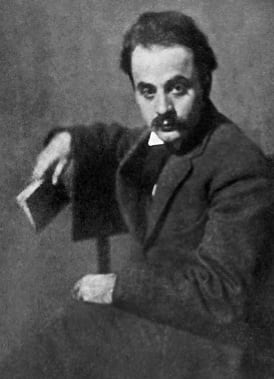
Khalil Gibran en 1913 · Public domain
Dans ses propres mots
«Your children are not your children. They are the sons and daughters of Life’s longing for itself.»The Prophet (1923), «On Children»

Son idée centrale
Almustafa and the prophetic voice: Gibran does not present himself as a prophet: he creates one.
Le voir en contexte
Biographie
5 min de lecture
Traduction assistée à partir de l'original espagnol, en attente de relecture par un traducteur natif.
Bsharri, au pied des cèdres
Gibran Khalil Gibran naquit le 6 janvier 1883 à Bsharri, un village maronite perché au-dessus de la vallée de la Qadisha, dans le Mont-Liban, qui était alors une moutassarifat autonome de l'Empire ottoman. Sa mère, Kamila Rahmeh, fille d'un prêtre, apportait au ménage un fils né d'une union précédente, Boutros ; son père, Khalil, homme au caractère difficile et endetté par le jeu, fut emprisonné en 1891, accusé de malversation alors qu'il exerçait les fonctions de collecteur d'impôts, et les biens de la famille furent saisis. L'enfance du futur poète se passa entre la pauvreté, l'école paroissiale — où il apprit les rudiments de l'arabe et du syriaque — et un paysage de gorges, de cèdres et de monastères qui reparaîtrait, transfiguré, dans presque tout ce qu'il écrivit.
Boston et le regard des autres
En juin 1895, Kamila prit une décision inouïe pour une femme de son milieu : émigrer aux États-Unis avec ses quatre enfants en laissant son mari derrière elle. La famille s'installa dans le South End de Boston, l'un des plus grands quartiers d'immigrés syro-libanais du pays. L'enfant fut inscrit à l'école Josiah Quincy sous la graphie anglaise « Kahlil Gibran », qu'il garderait toujours, et se mit à dessiner à la maison d'accueil de Denison House. Ses institutrices le présentèrent au photographe et éditeur Fred Holland Day, figure centrale de l'esthétisme bostonien, qui le photographia en costume oriental, lui prêta des livres et lui ouvrit les portes d'un monde artistique qu'un garçon de son origine aurait difficilement atteint par ses propres moyens.
Entre Beyrouth et le deuil
Craignant qu'il n'oublie ses racines, la famille l'envoya en 1898 à Beyrouth étudier au collège maronite de la Sagesse (Madrasat al-Hikma), où il se forma à la langue et à la littérature arabes. Il revint à Boston en 1902 en apprenant que sa sœur cadette, Sultana, était morte de la tuberculose. Dans les mois qui suivirent, il perdit son demi-frère Boutros, emporté par la même maladie, puis sa mère, morte d'un cancer en juin 1903. À vingt ans, il se retrouva seul avec sa sœur Marianna, qui les fit vivre tous deux de son travail de couturière. Ses biographes s'accordent à penser que ce triple deuil donna à sa première œuvre sa tonalité élégiaque.
Mary Haskell et Paris
En 1904, il exposa pour la première fois ses dessins dans l'atelier de Day, et c'est là qu'il rencontra Mary Haskell, directrice d'une école de jeunes filles de Boston, de neuf ans son aînée. Ce fut la rencontre décisive de sa vie : Haskell finança sa formation, discuta avec lui chacune de ses idées et revit pendant des années, phrase après phrase, l'anglais de ses livres. Ses journaux et leur correspondance, publiés en 1972 sous le titre Beloved Prophet, sont la source la plus riche sur l'homme intime. C'est grâce à elle qu'il passa à Paris les années 1908 à 1910, d'abord à l'Académie Julian, puis dans l'atelier du symboliste Pierre Marcel-Béronneau. Il publiait entre-temps en arabe : un bref essai sur la musique (1905), les récits des Nymphes des vallées (1906) et Esprits rebelles (1908), réquisitoire contre le pouvoir ecclésiastique et féodal qui, selon ce que raconta des années plus tard Barbara Young, fut brûlé sur la place publique à Beyrouth.
New York et la Ligue de la plume
En 1911, il s'installa dans un atelier du Tenth Street Studio Building, à New York, qu'il appelait « l'Ermitage » et où il vécut jusqu'à sa mort. L'année suivante, il publia Les Ailes brisées, court roman sur l'amour impossible dans une société gouvernée par le clergé et les notables, et entama sa correspondance avec l'écrivaine May Ziadé, qui vivait au Caire : elle dura près de vingt ans, sans qu'ils se rencontrent jamais. En 1914 parut Une larme et un sourire, qui rassemblait ses poèmes en prose publiés dans la presse de l'émigration. Pendant la Première Guerre mondiale, il travailla au comité de secours aux victimes de la famine du Mont-Liban et, en 1920, il refonda avec Nassib Arida, Abd al-Massih Haddad, Mikhaïl Naïmy et d'autres écrivains émigrés la Ligue de la plume (al-Rabita al-Qalamiyya), qui renouvela la langue poétique arabe depuis l'exil américain.
Le Prophète
À partir de 1918, il écrivit surtout en anglais. Alfred A. Knopf publia cette année-là Le Fou, recueil de paraboles, puis Le Précurseur (1920). En 1923 parut Le Prophète : vingt-six discours en prose poétique qu'Almustafa, un sage qui attend depuis douze ans le navire qui doit le ramener dans son île natale, adresse aux habitants de la cité d'Orphalese sur l'amour, le mariage, les enfants, le travail, la douleur, la liberté ou la mort. La critique l'accueillit avec froideur, mais le livre n'a cessé d'être réimprimé et a été traduit en plus de cent langues. Gibran l'illustra lui-même de lavis montrant des corps nus et des visages voilés, redevables à William Blake et à Rodin.
Les dernières années
Suivirent Le Sable et l'Écume (1926), un livre d'aphorismes, et Jésus fils de l'homme (1928), dans lequel soixante-dix-sept contemporains imaginaires — amis, ennemis, disciples — évoquent Jésus. Durant cette période, il put compter sur la poétesse Barbara Young, qui lui servit de secrétaire sans rémunération et qui, après sa mort, compléta et publia Le Jardin du Prophète (1933). La santé de Gibran, qui buvait à l'excès, s'était dégradée depuis la fin des années 1920. Il entra à l'hôpital Saint-Vincent de New York le 10 avril 1931 et y mourut le jour même, à quarante-huit ans ; le certificat de décès mentionna une cirrhose du foie accompagnée d'une tuberculose naissante à un poumon. Ses biographes rapportent qu'il refusa les derniers sacrements.
Retour à la montagne
Son corps fut rapatrié au Liban à l'été 1931 et déposé dans l'ancien monastère de Mar Sarkis, à Bsharri, que sa famille acquit et qui est aujourd'hui le musée Gibran. Il légua à son village natal les droits futurs de ses livres aux États-Unis, et Mary Haskell fit don en 1950 de près d'une centaine de ses œuvres plastiques au Telfair Museum de Savannah. La critique universitaire a regardé avec méfiance son succès populaire, mais sa place dans la littérature arabe moderne est incontestable : Salma Khadra Jayyusi le tenait pour l'influence la plus importante sur la poésie arabe de la première moitié du XXe siècle. En Occident, Le Prophète fut le livre de chevet de la contre-culture des années soixante et continue d'être lu dans les mariages et les funérailles, bien souvent sans que le lecteur sache rien de l'émigré maronite qui l'écrivit.
Sources: Bushrui, Suheil y Jenkins, Joe. Kahlil Gibran, Man and Poet: A New Biography. Oxford: Oneworld, 1998. · Gibran, Jean y Gibran, Kahlil. Kahlil Gibran: His Life and World. Boston: New York Graphic Society, 1974 (ed. rev. Nueva York: Interlink, 1991). · Waterfield, Robin. Prophet: The Life and Times of Kahlil Gibran. Londres: Allen Lane / Nueva York: St. Martin's Press, 1998. · Hilu, Virginia (ed.). Beloved Prophet: The Love Letters of Kahlil Gibran and Mary Haskell, and Her Private Journal. Nueva York: Alfred A. Knopf, 1972. · Naimy, Mikhail. Kahlil Gibran: A Biography. Nueva York: Philosophical Library, 1950 (orig. árabe, Beirut, 1934).
Chronologie
La vie, année après année
Chaque point est un événement documenté. Cliquez pour le lire, avec sa source et son degré de certitude.
6 janvier 18830 ansBsharri, Monte Líbano
Birth
Jubran Khalil Jubran is born into a poor Maronite family in Bsharri, son of Khalil Jubran and Kamila Rahmeh.
DocumentéBushrui, Suheil y Jenkins, Joe. Kahlil Gibran, Man and Poet: A New Biography. Oxford: Oneworld, 1998.
Après sa mort
- 1933The Garden of the Prophet
- 1950Gift to the Telfair
- 1972Beloved Prophet
6 janvier 1883 · 0 ans
Birth
Jubran Khalil Jubran is born into a poor Maronite family in Bsharri, son of Khalil Jubran and Kamila Rahmeh.
Documenté
1891 · 8 ans
His father's imprisonment
Khalil Jubran is imprisoned for embezzlement and the family property is seized; the mother decides to emigrate.
Documenté
25 juin 1895 · 12 ans
Emigration to the United States
Kamila leaves with Boutros, Jubran, Marianna and Sultana; the family settles in Boston's South End and the boy enters the Josiah Quincy School.
Documenté
1896 · 13 ans
F. Holland Day
Through Denison House he meets the photographer and publisher Fred Holland Day, who photographs him and introduces him to Boston's artistic circles.
Documenté
1898 – 1902 · 15 ans
Studies in Beirut
He enters the Maronite Collège de la Sagesse (Madrasat al-Hikma), studying Arabic and literature until 1902.
Documenté
2 avril 1902 · 19 ans
Death of Sultana
His younger sister dies of tuberculosis; Gibran returns to Boston. Boutros dies in March 1903 and his mother in June.
Documenté
janvier 1904 · 21 ans
First exhibition; Mary Haskell
He exhibits drawings at Day's studio and meets Mary Haskell, who will become his patron, confidante and editor.
Documenté
1905 · 22 ans
First book in Arabic
The press of the newspaper al-Muhajir publishes Nubdha fi fann al-musiqa, a short essay on music.
Documenté
juillet 1908 – 1910 · 25 ans
Studies in Paris
With Haskell's financial support he studies at the Académie Julian and then with Pierre Marcel-Béronneau, returning in October 1910. That year Spirits Rebellious is published.
Documenté
1911 · 28 ans
Settles in New York
He settles in the Tenth Street Studio Building, in the studio he will call 'the Hermitage', where he lives until his death.
Documenté
1912 · 29 ans
The Broken Wings and May Ziadeh
He publishes al-Ajniha al-mutakassira and sends a copy to May Ziadeh, beginning a correspondence of nearly twenty years without ever meeting her.
Documenté
1918 · 35 ans
The Madman
His first book in English, published by Alfred A. Knopf, his publisher from then on.
Documenté
1920 · 37 ans
The Pen League
With Nasib Arida, Abd al-Masih Haddad, Mikhail Naimy and other Mahjar writers he refounds the Pen League, of which he is president.
Documenté
septembre 1923 · 40 ans
The Prophet
Knopf publishes The Prophet, illustrated by the author. Lukewarm critical reception; enduring readership to this day.
Probable
1928 · 45 ans
Jesus, the Son of Man
He publishes his choral portrait of Jesus through seventy-seven imagined witnesses.
Documenté
10 avril 1931 · 48 ans
Death
He dies on the day of his admission; the recorded cause is cirrhosis of the liver with incipient tuberculosis.
Documenté
août 1931
Burial at Mar Sarkis
His remains reach Bsharri and rest in the former monastery of Mar Sarkis, now the Gibran Museum.
Documenté
1933
The Garden of the Prophet
Barbara Young completes and publishes the posthumous book from the author's manuscripts.
Documenté
1950
Gift to the Telfair
Mary Haskell Minis gives nearly a hundred of Gibran's artworks to the Telfair Museum.
Documenté
1972
Beloved Prophet
Virginia Hilu publishes the letters of Gibran and Haskell and her journals, the principal source for his biography.
Documenté
Œuvres
Œuvres essentielles
Les œuvres sans lesquelles on ne comprend pas son héritage.
Œuvre écrite · 1912
The Broken Wings
الأجنحة المتكسرة
A short novel narrated by a young man who at eighteen falls in love with Selma Karamy in Beirut. The archbishop forces her father to marry her to his nephew, and their love burns out in secret meetings until Selma dies in childbirth. Regarded as one of the first modern romantic novels in Arabic, it is both an idealised autobiographical tale and an indictment of women's condition in Lebanese society.
4 éditions

Œuvre écrite · 1923
The Prophet
Gibran's masterpiece. Almustafa, who has waited twelve years in the city of Orphalese for the ship that will take him home, answers before leaving the questions of the seeress Almitra and the townspeople on twenty-six subjects: love, marriage, children, giving, work, joy and sorrow, freedom, reason and passion, pain, friendship, prayer, beauty, religion and death. Rhythmic prose with biblical resonances, illustrated with twelve drawings by the author. Despite cool reviews it has never gone out of print since 1923 and has been translated into more than a hundred languages.
11 éditions

Œuvre écrite · 1928
Jesus, the Son of Man
Jesus, the Son of Man: His Words and His Deeds as Told and Recorded by Those Who Knew Him
A choral portrait of Jesus through seventy-seven imagined testimonies—Peter, Mary Magdalene, Caiaphas, Pilate, a Lebanese shepherd, a Greek philosopher. Gibran presents a virile Jesus, poet and rebel, far from the 'lamb' of devotional imagery. Its genesis has been linked to the portrait he drew of ʿAbdu'l-Bahá in New York in 1912.
5 éditions

Correspondance · 1972
Beloved Prophet
Beloved Prophet: The Love Letters of Kahlil Gibran and Mary Haskell, and Her Private Journal
Virginia Hilu's edition of hundreds of letters exchanged by Gibran and Mary Haskell between 1908 and 1931, with extracts from her journal, in which she recorded their conversations word for word. It is the most important documentary source for his life, his working method and the making of The Prophet.
2 éditions
Toute son œuvre (24)
Kahlil Gibran
Music (A Profile of the Art of Music)
The Conscious LibraryMusic (A Profile of the Art of Music)
1905

Nymphs of the Valley
1906

Spirits Rebellious
1908

A Tear and a Smile
1914

The Madman
1918

The Processions
1919

Twenty Drawings
1919
Kahlil Gibran
The Tempests
The Conscious LibraryThe Tempests
1920

The Forerunner
1920
Kahlil Gibran
The New and the Marvelous
The Conscious LibraryThe New and the Marvelous
1923

Sand and Foam
1926

The Earth Gods
1931

The Wanderer
1932
The Garden of the Prophet
1933

Prose Poems
1934

A Treasury of Kahlil Gibran
1951

Thoughts and Meditations
1960

A Self-Portrait
1959

Lazarus and His Beloved
1973
Kahlil Gibran
Blue Flame: The Love Letters of Kahlil Gibran to May Ziadah
The Conscious LibraryBlue Flame: The Love Letters of Kahlil Gibran to May Ziadah
1979
Citations
Citations localisées dans une œuvre précise. Chacune porte sa provenance et son degré de fiabilité.
Your children are not your children. They are the sons and daughters of Life’s longing for itself.VérifiéeThe Prophet (1923), «On Children»
Citations apocryphes ou d'attribution contestée (2)
«"If you love somebody, let them go, for if they return, they were always yours. And if they don't, they never were."»
It circulates widely under Gibran's name, but it does not appear in The Prophet, The Madman, The Forerunner or Sand and Foam (checked against Project Gutenberg and Wikisource), nor in the anthologies of his Arabic work. It is an anonymous self-help maxim from the second half of the twentieth century.
«Kennedy's line 'Ask not what your country can do for you…' comes from Gibran.»
In 'The New Frontier' (1925) Gibran contrasts those who ask what their country can do for them with those who ask what they can do for their country. The resemblance to the 1961 inaugural address is real, but there is no documentary proof that Kennedy or his speechwriters knew the text: it is a hypothesis, not a quotation.
Dernières paroles
Il n'existe aucun témoignage vérifiable de ses dernières paroles.
No reliably attested last words exist. He died at St. Vincent's Hospital in New York on the night of 10 April 1931, a few hours after admission; Barbara Young, who was with him, left a devout account of those days (This Man from Lebanon, 1945), and later biographers report that he refused the last rites, but none records a verifiable final sentence.
Source: Young, Barbara. This Man from Lebanon: A Study of Kahlil Gibran. Nueva York: Alfred A. Knopf, 1945.
Interroger
Ce que répond son œuvre
Douze grandes questions de l'humanité et ce que ses textes permettent d'y répondre, références à l'appui. Nous ne lui prêtons jamais de paroles.
Qu'est-ce que l'Absolu ? Dieu existe-t-il ?
A God who plays with children and in whose heart we live
À la fois personnel et impersonnelCela se déduit de sa doctrine
Gibran built no theology, but his English work sketches a God at once intimate and cosmic. In The Prophet, Almustafa advises not to seek God as a solver of riddles: it is enough to look around to see Him playing with the children, walking in the clouds, smiling in the flowers and waving His hands in the trees. This God diffused in nature is also Someone in whom one dwells: when you love, the book says, do not say that God is in your heart, but rather that you are in the heart of God. Gibran also speaks of a divine self in each person, greater than the small self, towards which man grows. His Jesus, the Son of Man and his Arabic stories distrust churches that lock God into dogmas at the service of power.
Comparer cette question avec d'autres maîtresQui suis-je ? Existe-t-il un vrai soi ?
A soul that unfolds like a lotus of countless petals
Une âme en évolutionIl le dit expressément
In The Prophet, Gibran presents the self as a sea boundless and measureless, impossible to chart: whoever claims to have found the truth should say he has found a truth, because the soul walks upon all paths and unfolds itself like a lotus of countless petals. In man there coexist a divine self, comparable to the ocean or the sun, and a part that is not yet fully human, shapeless and clumsy, seeking its own awakening. Life consists in growing towards that greater self. And this growth does not end with death: in the book's farewell, Almustafa announces that after a brief rest upon the wind another woman shall bear him. Gibran thinks of the self as a process, not a finished substance.
Comparer cette question avec d'autres maîtresPourquoi souffrons-nous ?
Pain is the shell that breaks so that understanding may be born
Le karma et l'apprentissage de l'âmeIl le dit expressément
In The Prophet, Gibran gives pain a meaning of growth: pain is the breaking of the shell that encloses understanding, like the stone of the fruit that must break so its heart may stand in the sun. Much of suffering, he adds, is self-chosen: it is the bitter potion by which the physician within heals the sick self. And sorrow enlarges: the deeper it carves into one's being, the more joy one can contain, for joy and sorrow are inseparable. The same Gibran, in his early Arabic stories, denounced the suffering inflicted by the clergy and the feudal lords on the poor and on the women of Lebanon. But in his mature work pain is above all a school of the soul.
Comparer cette question avec d'autres maîtresQue se passe-t-il après la mort ?
To die is to melt into the sun; and another woman shall bear me
Renaissance selon le karmaIl le dit expressément
In The Prophet, when Almitra asks him about death, Almustafa replies that to know its secret one must seek it in the heart of life, for life and death are one, even as the river and the sea are one. To die is not to vanish but to stand naked in the wind and melt into the sun, to let the breath be freed from its restless tides so that it may seek God unencumbered. And in the book's farewell the prophet announces his return: a little while, a moment of rest upon the wind, and another woman shall bear him. Gibran thus combines two images, dissolution into the greater life and return to another existence, without fixing them in a doctrine. What there is not in his work is fear: death belongs to the same movement as life.
Comparer cette question avec d'autres maîtresComment atteint-on la libération ou le salut ?
Free when we break the chains we ourselves have forged
Par la connaissance directeCela se déduit de sa doctrine
Gibran proposes no doctrine of salvation; what his work describes is an inner liberation. In The Prophet, Almustafa warns those who prostrate themselves before freedom that they will be free not when their days are without a care, but when cares girdle their life and yet they rise above them naked and unbound. The chains that weigh on them, he says, they have forged themselves, and what they would cast off is a fragment of their own self. The path is self-knowledge: the heart knows in silence the secrets of the days and the nights, and that knowledge must be allowed to reach words without trying to measure it. To be freed is to recognise the greater self waiting within and to stop identifying with the small one.
Comparer cette question avec d'autres maîtresFaut-il un maître ?
The teacher only leads to the threshold of one's own mind
Le maître est à l'intérieurIl le dit expressément
In The Prophet, when a teacher asks him to speak of teaching, Almustafa replies that no one can reveal to another anything but what already lies half asleep in the dawning of his own knowledge. The teacher who walks in the shadow of the temple among his followers gives not of his wisdom but of his faith and his lovingness; if he is indeed wise he does not bid you enter the house of his wisdom, but leads you to the threshold of your own mind. The vision of one lends not its wings to another: each must stand alone in his knowledge of God. Gibran, who lived surrounded by readers who treated him as a prophet, always distrusted that role; his Almustafa teaches and departs.
Comparer cette question avec d'autres maîtresLe monde est-il réel ?
God walks in the clouds and waves His hands in the trees
Manifestation du divinIl le dit expressément
Gibran sees the world as a place of the divine. In The Prophet, whoever would know God need only look around: he will see Him playing with the children, walking in the cloud, outstretching His arms in the lightning and descending in rain, smiling in flowers and rising to wave His hands in trees. Daily life is the temple and the religion. This vision, heir to romanticism and mysticism, does not make the world an appearance: the earth, work, the body and love have a sacred value in his work, and beauty is almost a revelation; we live, says one of his aphorisms, only to discover it. What Gibran fights is not the world but the institutions that diminish it.
Comparer cette question avec d'autres maîtresQu'est-ce que l'amour ?
Love neither possesses nor would be possessed: we are in the heart of God
L'amour de Dieu et du prochainIl le dit expressément
The chapter on love in The Prophet is Gibran's most widely read. Love crowns and crucifies, makes one grow and prunes; it gives naught but itself and takes naught but from itself; it possesses not nor would it be possessed, for love is sufficient unto love. Whoever loves must not think he can direct the course of love: it is love that, if it finds him worthy, directs his. And its origin is divine: when you love, says Almustafa, do not say that God is in your heart, but rather that you are in the heart of God. In marriage he asks that there be spaces in the togetherness. In Jesus, the Son of Man, love is also charity without frontiers towards the other, the poor and the enemy.
Comparer cette question avec d'autres maîtresSommes-nous libres ou tout est-il déterminé ?
You will be free by rising above your bonds, not by lacking them
Un libre arbitre réelCela se déduit de sa doctrine
Gibran does not discuss determinism in philosophical terms, but his work affirms a demanding inner freedom. In The Prophet, freedom does not consist in a life without cares but in rising above them unbound; the chains that weigh are usually those one has forged oneself. In the chapter on reason and passion, the soul is a ship that needs the rudder of reason and the sails of passion: man steers his course, though not the winds. Gibran also insists on shared responsibility: the righteous man is not wholly innocent of the deeds of the wicked, because all are part of one life. Freedom is real, but it is conquered and never purely individual.
Comparer cette question avec d'autres maîtresPourquoi méditer ou prier ?
I cannot teach you to pray in words: prayer is the expansion of oneself
La méditation n'est pas une techniqueIl le dit expressément
In The Prophet, when a priestess asks him to speak of prayer, Almustafa answers that people pray in their distress and need, and he wishes they would pray also in the fullness of their joy. Prayer is not asking: it is the expansion of oneself into the living ether. Whoever enters the temple only to ask will receive nothing; it is enough to enter the temple invisible. And he adds that he cannot teach anyone to pray in words, for God listens to no words save those He Himself utters through our lips. In the chapter on religion he goes further: daily life is the temple and the religion, and whoever sets apart one hour for God and another for himself has understood nothing.
Comparer cette question avec d'autres maîtresLa raison peut-elle connaître l'ultime ?
The heart knows in silence what reason merely steers
L'ultime est au-delà du mentalCela se déduit de sa doctrine
Gibran does not despise reason, but he places it. In The Prophet, reason and passion are the rudder and the sails of the seafaring soul: reason alone is a confining force, passion alone a flame that burns itself out; the soul must exalt reason to the height of passion so that it may sing. The deepest knowledge, however, is not reasoned. Your hearts, says Almustafa, know in silence the secrets of the days and the nights, and the ear thirsts to hear that knowledge; but the self is a sea without measure, and one should not try to sound it with a measuring rod. That is why whoever says he has found the truth should say he has found a truth.
Comparer cette question avec d'autres maîtresSe retirer du monde ou le transformer ?
Work is love made visible, and tyranny must be denounced
S'engager dans le mondeIl le dit expressément
Gibran never preached withdrawal. His early Arabic stories, such as Spirits Rebellious, denounced the oppression exercised by the clergy and feudal lords over the peasants and women of Lebanon, and the book was badly received by the religious authorities. In New York he took part in the life of the Arab emigration, founded the Pen League with other writers and worked for relief to Syria and Mount Lebanon during the famine of the First World War. In The Prophet, spirituality is lived in work, marriage, the house and trade: work is love made visible, and whoever works without love would do better to sit at the temple gate and take alms.
Comparer cette question avec d'autres maîtres
Affinités et tensions
Affinités et tensions
Calculées question par question à partir de ses positions. La raison de chaque accord ou de chaque désaccord s'affiche d'un clic.
Pense comme
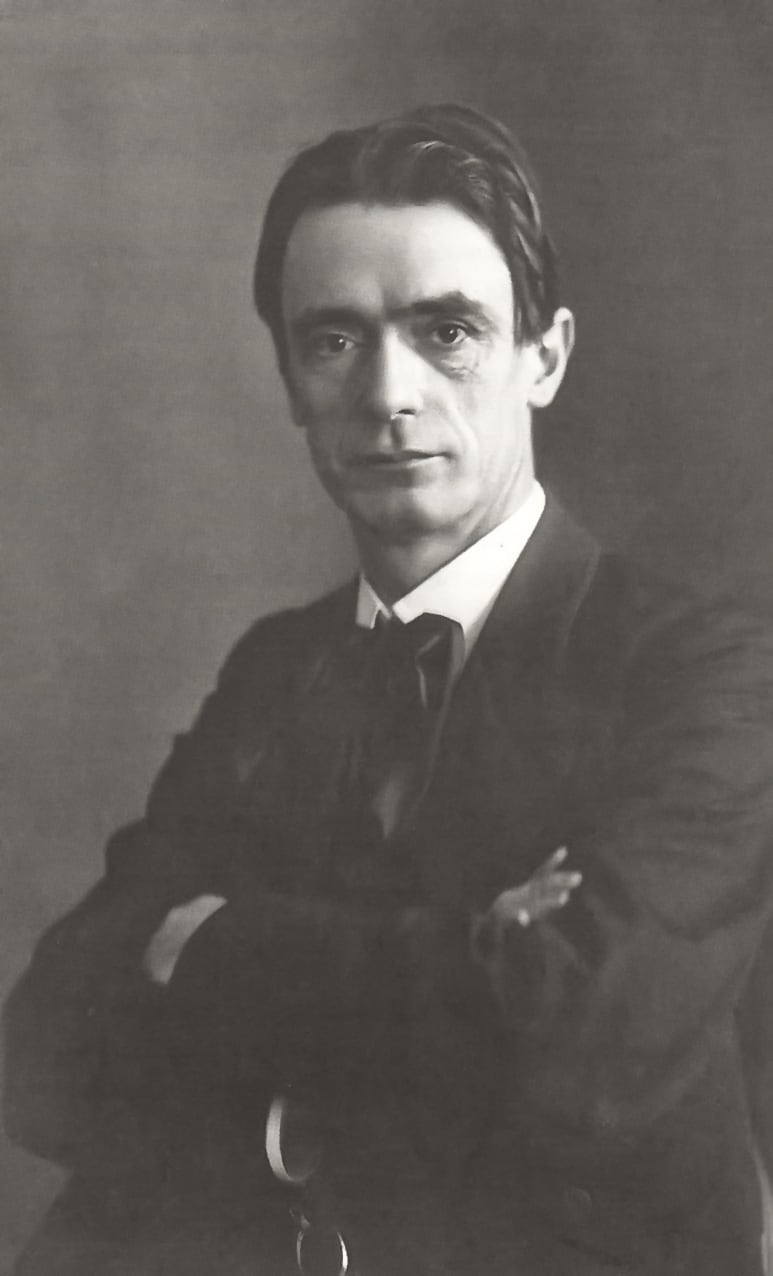
Rudolf Steiner
Ils concordent sur: Pourquoi souffrons-nous ? · Qu'est-ce que l'Absolu ? Dieu existe-t-il ? · Qui suis-je ? Existe-t-il un vrai soi ?
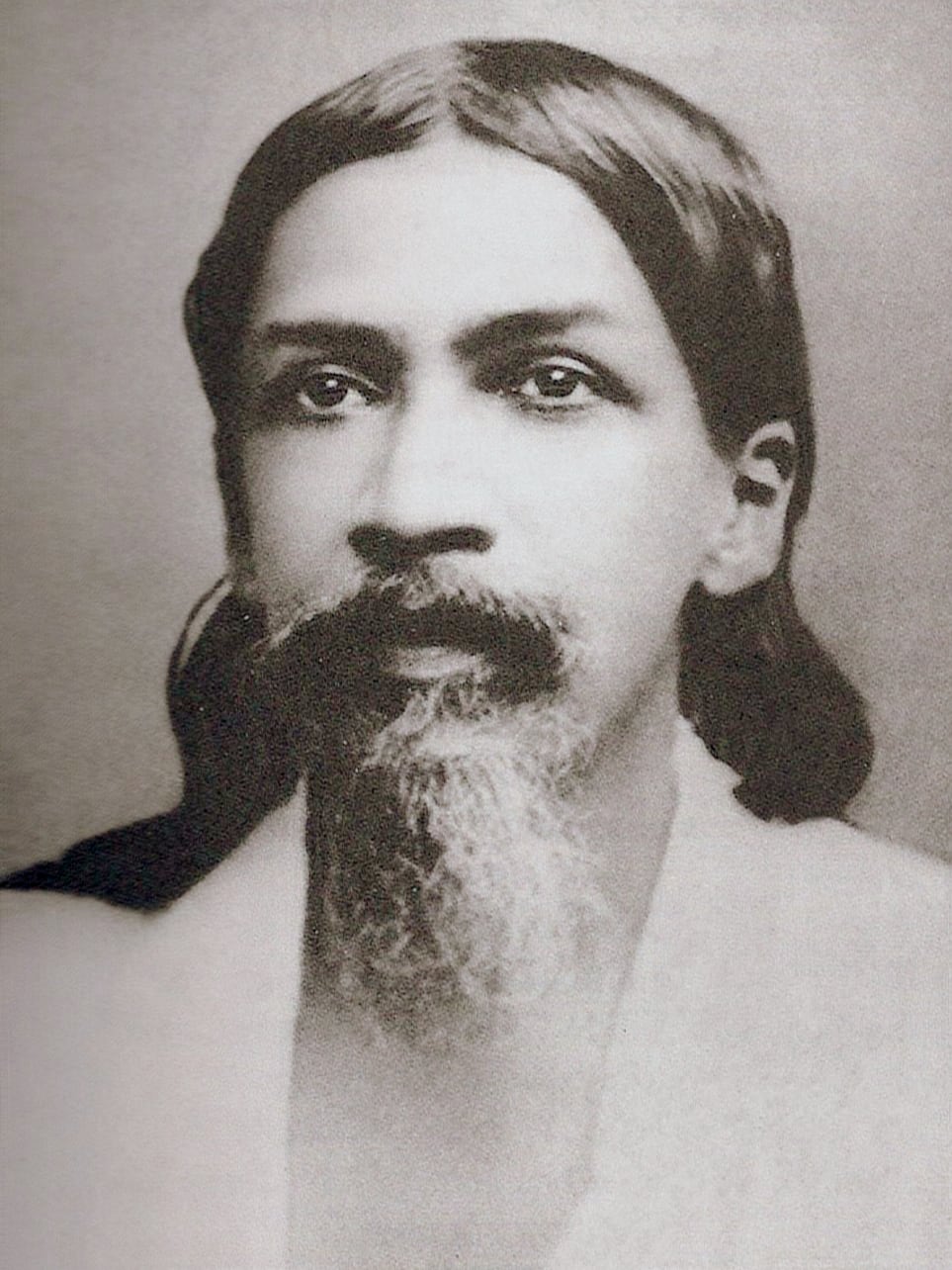
Sri Aurobindo
Ils concordent sur: Qu'est-ce que l'Absolu ? Dieu existe-t-il ? · Qui suis-je ? Existe-t-il un vrai soi ? · Que se passe-t-il après la mort ?
Alice A. Bailey
Ils concordent sur: Qu'est-ce que l'Absolu ? Dieu existe-t-il ? · Qui suis-je ? Existe-t-il un vrai soi ? · Pourquoi souffrons-nous ?
Huineng
Ils concordent sur: Comment atteint-on la libération ou le salut ? · Faut-il un maître ? · Le monde est-il réel ?
Pense autrement que

Rabia al-Adawiyya
Ils s'opposent sur: Que se passe-t-il après la mort ?
Shinran
Ils s'opposent sur: Que se passe-t-il après la mort ?
Mirabai
Ils s'opposent sur: Qu'est-ce que l'Absolu ? Dieu existe-t-il ? · Pourquoi souffrons-nous ? · Comment atteint-on la libération ou le salut ?
Chaitanya Mahaprabhu
Ils s'opposent sur: Que se passe-t-il après la mort ?
Anecdotes et récits
Anecdotes et récits
Documenté1896–1898
The boy in Holland Day's photographs
Origine du récit: Account reconstructed by Jean and Kahlil Gibran from the correspondence of Day and Jessie Beale; the photographs are held by the Library of Congress (LCCN 95503209) and the Metropolitan Museum.
Source: Gibran, Jean y Gibran, Kahlil. Kahlil Gibran: His Life and World. Boston: New York Graphic Society, 1974 (ed. rev. Nueva York: Interlink, 1991).
Contesté1908
Spirits Rebellious on the bonfire
Origine du récit: The burning comes from Barbara Young, This Man from Lebanon (1945); Waterfield and Bushrui-Jenkins confirm the scandal but find no record of a formal excommunication.
Source: Young, Barbara. This Man from Lebanon: A Study of Kahlil Gibran. Nueva York: Alfred A. Knopf, 1945.
Documenté1908–1931
The editing evenings with Mary Haskell
Origine du récit: Mary Haskell's journals and letters, held at the University of North Carolina and edited by Virginia Hilu in Beloved Prophet (1972).
Source: Hilu, Virginia (ed.). Beloved Prophet: The Love Letters of Kahlil Gibran and Mary Haskell, and Her Private Journal. Nueva York: Alfred A. Knopf, 1972.
Documenté1912–1931
Twenty years of letters without a meeting
Origine du récit: Gibran's letters edited by Salma Haffar al-Kuzbari and Suheil Bushrui (al-Shu'la al-zarqa', 1979; Blue Flame, 1983).
Source: Bushrui, Suheil y Kuzbari, Salma Haffar (eds. y trads.). Blue Flame: The Love Letters of Kahlil Gibran to May Ziadah. Harlow: Longman, 1983.
Invérifiable1908–1910
'The William Blake of the twentieth century'
Origine du récit: An attribution going back to Gibran himself and Barbara Young (1945); critical biographers find no trace of it in Rodin's papers.
Source: Waterfield, Robin. Prophet: The Life and Times of Kahlil Gibran. Londres: Allen Lane / Nueva York: St. Martin's Press, 1998.
Témoignage1912
The portrait of ʿAbdu'l-Bahá
Origine du récit: Juliet Thompson's diary (published as The Diary of Juliet Thompson, 1983); the portrait survives. The link with Jesus, the Son of Man is an interpretation by later scholars.
Enseignements
Enseignements
Les notions qui structurent sa pensée, expliquées dans leur contexte.
Almustafa and the prophetic voicealmustafa-la-voz-profetica
Wisdom literature, Nietzsche and the biblical prophetic tradition read from the Mahjar.
Source: Bushrui, Suheil y Jenkins, Joe. Kahlil Gibran, Man and Poet: A New Biography. Oxford: Oneworld, 1998.
The god-selfel-yo-divino
Romantic pantheism, Blake and Sufi mysticism; an ethics of inwardness.
Reconciled oppositeslos-contrarios-reconciliados
Romanticism and Eastern Christian mysticism.
Love that does not possessel-amor-que-no-posee
A critique of patriarchal marriage in Mount Lebanon; a mysticism of love.
Work as love made visibletrabajo-amor-visible
An ethic of craft; Arts and Crafts; wisdom tradition.
The Mahjar and the Arabic prose poemmahyar-y-poema-en-prosa
Modern Arabic literature; Lebanese emigration to the Americas.
Source: Hawi, Khalil S. Kahlil Gibran: His Background, Character and Works. Beirut: American University of Beirut, 1963 (reed. Londres: Third World Centre, 1982).
Vidéos
Vidéos
Enregistrements, entretiens et documentaires. Les vidéos sont lues depuis YouTube ; elles ne sont pas hébergées ici.
وثائقي عن جبران خليل جبران (Documental sobre Gibran)
Documentaire· AR· 26 min
Gibran National CommitteeChaîne officielle
أرواح متمردة – جبران خليل جبران (Espíritus rebeldes)
Documentaire· AR· 53 min
Al Jazeera Documentary
Khalil Gibran – Une vie, une œuvre (France Culture, 1990)
Documentaire· FR· 1990· 78 min
ÉCLAIR BRUT
Khalil Gibran
Documentaire· FR· 52 min
KTO TV
Gibran Khalil Gibran
Documentaire· ES· 27 min
Canal22Chaîne officielle
Gibran Kahlil Gibran Museum, an in-depth explanation with Mr. Joseph Geagea
Documentaire· EN· 26 min
Anthony Rahayel
Gibran, Naimy and Afifa Karam: Gender Politics in Mahjar Literature — Elizabeth Saylor
Conférence· EN· 21 min
Gibran ChairChaîne officielle
In Search of a Prophet — Kahlil Gibran: An Unparalleled Guide for Our Times (Paul-Gordon Chandler)
Conférence· EN· 66 min
The Jerusalem Fund & Palestine Center
Kahlil Gibran ~ with Paul-Gordon Chandler
Conférence· EN· 62 min
Banyen Books & Sound
Interview of Kahlil Gibran, artist, by David Ossman in Boston
Entretien· EN· 10 min
ArtistKahlil Gibran
Academy Conversations: Khalil Gibran's The Prophet
Entretien· EN· 2015· 12 min
OscarsChaîne officielle
The Madman by Kahlil Gibran (audiolibro)
Enregistrement de tiers· EN· 45 min
LearnOutLoud
Galerie
Galerie
Images dont la licence a été vérifiée. Chacune conserve son auteur et son attribution.
Manuscrits
Manuscrits
Témoins manuscrits et textes anciens, avec leur dépositaire et leurs conditions de consultation.
EN · Latin · 1904–1931
Kahlil Gibran–Mary Haskell papers
- Témoin conservé
- Cartas autógrafas y diarios de Mary Haskell
- Dépositaire
- Southern Historical Collection, University of North Carolina at Chapel Hill
Relations
Relations
Influences, filiations et affinités. On distingue la relation documentée de la similitude identifiée par analyse.
A reçu l'influence de
He devoted to him one of the portraits in al-Bada'i' wa-l-Tara'if (1923), as part of his interest in Islamic mysticism.
Relation documentée
A correspondu avec
Mary Haskell
Patron, editor and confidante from 1904 to 1931; hundreds of letters and her journal document the relationship.
Relation documentée
A correspondu avec
May Ziadeh
Literary and amorous correspondence from 1912 to 1931; they never met.
Relation documentée
A rencontré
Mijaíl Naimy
Close friend from 1916, fellow member of the Pen League and author of a biography of Gibran (1934).
Relation documentée
A rencontré
Fred Holland Day
Boston photographer and publisher who discovered him in 1896 and organised his first exhibition in 1904.
Relation documentée
A rencontré
ʿAbdu'l-Bahá
Gibran drew his portrait in New York in 1912; the meeting left a lasting impression.
Relation documentée
A reçu l'influence de
Friedrich Nietzsche
A decisive reading in his Paris and New York years; Thus Spoke Zarathustra is the formal antecedent of The Madman and The Prophet.
Relation documentée
A reçu l'influence de
William Blake
A model as visionary poet-painter, acknowledged by Gibran and noted by all his biographers.
Relation documentée
A reçu l'influence de
Central figure of his religious imagination; he devoted Jesus, the Son of Man (1928) to him, and he is the implicit model for Almustafa.
Relation documentée
A influencé
Osho commented on The Prophet in two volumes of talks, The Messiah (1987), and quoted it often.
Relation documentée
Idées proches de
Love as a consuming and transforming force, and poetry as a mystical path, bring Gibran close to Rumi; no direct influence is documented.
Similitude identifiée par analyse
Contemporain de
Contemporaries in the United States of the 1890s with no known contact; both contributed to the American reception of Eastern spirituality.
Similitude identifiée par analyse
Lié depuis d'autres fiches
Sources
Sources
Bibliographie et catalogues consultés pour cette fiche.
- Bushrui, Suheil y Jenkins, Joe. Kahlil Gibran, Man and Poet: A New Biography. Oxford: Oneworld, 1998.
- Gibran, Jean y Gibran, Kahlil. Kahlil Gibran: His Life and World. Boston: New York Graphic Society, 1974 (ed. rev. Nueva York: Interlink, 1991).
- Waterfield, Robin. Prophet: The Life and Times of Kahlil Gibran. Londres: Allen Lane / Nueva York: St. Martin's Press, 1998.
- Hilu, Virginia (ed.). Beloved Prophet: The Love Letters of Kahlil Gibran and Mary Haskell, and Her Private Journal. Nueva York: Alfred A. Knopf, 1972.
- Naimy, Mikhail. Kahlil Gibran: A Biography. Nueva York: Philosophical Library, 1950 (orig. árabe, Beirut, 1934).
- Young, Barbara. This Man from Lebanon: A Study of Kahlil Gibran. Nueva York: Alfred A. Knopf, 1945.
- Wikidata, «Kahlil Gibran» (Q47737).
- Hawi, Khalil S. Kahlil Gibran: His Background, Character and Works. Beirut: American University of Beirut, 1963 (reed. Londres: Third World Centre, 1982).
- Project Gutenberg: Gibran, Kahlil, The Prophet (Nueva York: Knopf, 1923), ebook n.º 58585; The Madman (1918), n.º 5616; The Forerunner (1920), n.º 54580.
- Gibran National Committee (Comité National Gibran), Museo Gibran, Bsharri.
- Telfair Museums, Savannah: colección Kahlil Gibran (legado de Mary Haskell Minis, 1950).
- Wikipedia (en), «Kahlil Gibran», consultada el 25 de octubre de 2026 (sección «Later years and death»).
- Wikisource en árabe: textos de Yubrán Jalil Yubrán (al-Ajniha al-mutakassira; Dam'a wa-ibtisama, 1914; al-Arwah al-mutamarrida, 1908; Nubdha fi fann al-musiqa, 1905).
- Bushrui, Suheil y Kuzbari, Salma Haffar (eds. y trads.). Blue Flame: The Love Letters of Kahlil Gibran to May Ziadah. Harlow: Longman, 1983.
- Library of Congress, Prints and Photographs Division: F. Holland Day, retratos de Kahlil Gibran (c. 1898), LCCN 95503209.
- Wikisource en inglés: Gibran, Kahlil, Sand and Foam: A Book of Aphorisms (Nueva York: Knopf, 1926).
- Osho (Bhagwan Shree Rajneesh). The Messiah: Commentaries on Kahlil Gibran's The Prophet. 2 vols. Rajneeshpuram / Poona: Rajneesh Foundation International, 1987.
- Ayant droit
- Gibran National Committee (Bsharri), beneficiario por legado testamentario de los derechos de autor del escritor. Las obras publicadas hasta 1930 son de dominio público en EE. UU.; toda la obra del autor (m. 1931) es de dominio público en la UE desde 2002 y en España desde 2012. Las traducciones y ediciones modernas tienen sus propios derechos.
- Site officiel
- www.gibrankhalilgibran.org/
En attente de confirmation
Ce que cette fiche n'a pas encore pu établir. Nous préférons le dire plutôt que de combler.
- Confirmar el día exacto de publicación de The Prophet (septiembre de 1923, según la tradición editorial de Knopf).
- Localizar ISBN verificados de ediciones en árabe moderno, ruso e hindi de The Prophet y de al-Ajniha al-mutakassira (no figuran en Open Library).
- Verificar ISBN de las traducciones inglesas de A Tear and a Smile (Nahmad, 1950) y The Broken Wings (Ferris, 1957).
- Fechar y registrar las piezas dramáticas póstumas (The Blind y las cinco obras breves en árabe publicadas entre 1973 y 1993).
- Comprobar si la Southern Historical Collection (UNC) ofrece digitalización de los papeles Haskell-Gibran y su signatura.
- The Earth Gods (1931), The Wanderer (1932) y The Garden of the Prophet (1933) entrarán en dominio público en EE. UU. en 2027, 2028 y 2029: añadirlos entonces a la sala de lectura si hay texto en línea.
Recherche effectuée le 2026-10-25