चौथा मार्ग
G. I. Gurdjieff
Георгий Иванович Гурджиев · Գեորգի Գյուրջիև
लगभग 1872 – 1949ऐतिहासिक रूप से प्रमाणित व्यक्ति
आध्यात्मिक गुरु, लेखक और संगीतकार, जिनका जन्म रूसी आर्मेनिया में लगभग 1866 से 1877 के बीच हुआ और देहांत 1949 में पेरिस में। उन्होंने सिखाया कि मनुष्य एक मशीन की तरह सोया हुआ जीता है, और जागरण के लिए साधारण जीवन के बीच ही शरीर, भावना और विचार का एक साथ काम करना आवश्यक है। उन्होंने “मनुष्य के समरस विकास का संस्थान” स्थापित किया, “मूवमेंट्स” रचे, थॉमस द हार्टमन के साथ लगभग दो सौ रचनाएँ कीं और “ऑल ऐंड एवरीथिंग” नामक त्रयी छोड़ी, जिसका पहला खंड “बील्ज़ेबब की अपने पोते को सुनाई कथाएँ” है।
- कृतियाँ
- 14कृतियाँ
- संस्करण
- 60संस्करण
- उद्धरण
- 7उद्धरण
- वीडियो
- 10वीडियो
- चित्र
- 8चित्र
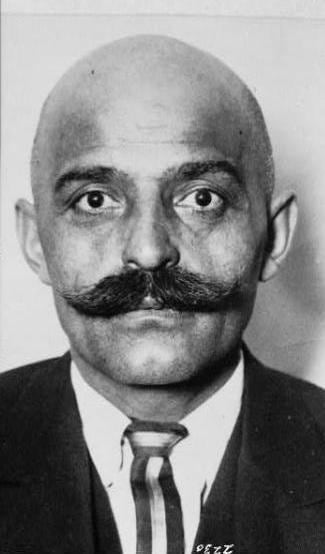
Retrato de G. I. Gurdjieff, 1925 · Public domain
उनके अपने शब्दों में
«In life never do as others do.»Beelzebub's Tales to His Grandson, cap. 1, «The Arousing of Thought»: consejo de la abuela moribunda

मूल विचार
Ordinary man has no single, permanent I but a multitude of small I's that take turns according to circumstance; each speaks in the name of the whole, which is why no one keeps what he promises.
संदर्भ में देखें
जीवनी
6 मिनट का पाठ
स्पैनिश मूल से सहायता-प्राप्त अनुवाद, मातृभाषी अनुवादक द्वारा समीक्षा लंबित।
सरहद का एक बालक
जॉर्ज इवानोविच गुर्जिएफ़ का जन्म अलेक्सांद्रोपोल में हुआ — जो आज आर्मेनिया का ग्युमरी नगर है —, रूसी साम्राज्य का एक छावनी-नगर, जहाँ आर्मेनियाई, यूनानी, रूसी, कुर्द और तुर्क साथ-साथ रहते थे। जन्म का वर्ष निश्चित रूप से ज्ञात नहीं है, और यह बात आरंभ में ही कह देना उचित है: पासपोर्ट और सरकारी दस्तावेज़ 1877 बताते हैं, और दिन 28 दिसंबर; स्वयं गुर्जिएफ़ ने अपने शिष्यों के सामने 1866 या 1867 के आसपास की तिथि का उल्लेख किया, जिसका समर्थन उनकी भतीजी लूबा गुर्जिएफ़ एवरिट और उनके जीवनीकार जेम्स मूर करते हैं; एक पारिवारिक स्मृति और आवों में उनकी समाधि का शिलापट 1872 की ओर संकेत करते हैं। वे अपना जन्मदिन जूलियन पंचांग के अनुसार 1 जनवरी को मनाते थे, जो ग्रेगोरियन पंचांग में 13 जनवरी पड़ता है। उनके पिता, इवान इवानोविच जॉर्जियादेस, यूनानी परिवार से थे; वे एक पशुपालक थे जिन्हें पशुओं की महामारी ने बरबाद कर दिया था, और साथ ही एक आशुग़ — लोक-गायक, जो लंबे महाकाव्य कंठस्थ सुनाते थे; उनकी माँ आर्मेनियाई थीं, यद्यपि कुछ हाल के शोधकर्ता उन्हें भी यूनानी मानते हैं। परिवार कार्स में जा बसा, जिसे रूस ने हाल ही में जीता था; वहाँ बालक ने गिरजाघर की गायक-मंडली में गाया और डीन बोर्श का संरक्षण पाया, जिनका चित्रण आगे चलकर असाधारण लोगों से भेंट (Meetings with Remarkable Men) के सबसे स्नेहिल प्रसंगों में से एक बना।
खोज के वर्ष
इसके बाद का समय, लगभग 1887 से 1911 तक, हम लगभग केवल उनके अपने वृत्तांत से जानते हैं, और वह वृत्तांत जान-बूझकर रूपकात्मक है। असाधारण लोगों से भेंट में गुर्जिएफ़ स्वयं को “सत्य के अन्वेषकों” के एक दल का सदस्य बताते हैं, जो किसी प्राचीन ज्ञान की खोज में मिस्र, अबीसीनिया, फ़ारस, तुर्किस्तान और हिंदूकुश में भटका और अंततः मध्य एशिया में सारमौंग नामक एक भ्रातृसंघ के मठ तक जा पहुँचा। कोई स्वतंत्र दस्तावेज़ न इन यात्राओं की पुष्टि करता है, न उस भ्रातृसंघ के अस्तित्व की। इतिहासकार — जेम्स वेब, जेम्स मूर — मानते हैं कि उन्होंने बहुत यात्राएँ कीं और सूफ़ी मत, पूर्वी ईसाइयत तथा काकेशस और मध्य एशिया के संगीत और नृत्यों को प्रत्यक्ष रूप से जाना, किंतु वे इस पुस्तक को एक प्रतीकात्मक आत्मकथा के रूप में पढ़ते हैं, और स्वयं लेखक ने चेताया था कि इसे पंक्तियों के बीच पढ़ना होगा। उन्होंने यह भी बताया कि उन्होंने व्यापारी, सम्मोहनकर्ता, चीज़ों की मरम्मत करने वाले और क़ालीनों के सौदागर के रूप में जीविका कमाई, और यहाँ तक कि गौरैयों को रँगकर अमेरिकी कैनरी के नाम से बेचा।
मॉस्को, क्रांति और प्रव्रजन
लगभग 1912 में वे मॉस्को में दिखाई देते हैं, पोलिश मूल की एक युवती यूलिया ओस्त्रोव्स्का से विवाहित, और शिष्यों को जुटाना आरंभ करते हैं। 1915 में उनसे पी. डी. ऊस्पेंस्की की भेंट होती है — एक पत्रकार और गणित तथा गूढ़विद्या संबंधी विषयों के लेखक, जो अभी-अभी भारत से लौटे थे। उनका वृत्तांत, एक अज्ञात शिक्षा के अंश (In Search of the Miraculous), जो 1949 में प्रकाशित हुआ, आज भी उन वर्षों की शिक्षा का सबसे सुव्यवस्थित निरूपण है: मनुष्य एक मशीन के रूप में जो सोई हुई जीती है, किसी स्थायी “मैं” का अभाव, तीन केंद्र, तीन का नियम और सात का नियम, एनियाग्राम, और “आत्म-स्मरण” की आवश्यकता। 1916 में संगीतकार थॉमस द हार्टमन और उनकी पत्नी ओल्गा भी साथ आ मिलते हैं। क्रांति के साथ गुर्जिएफ़ एक छोटे दल को काकेशस में येस्सेन्तुकी ले जाते हैं; 1919 में तिफ़्लिस में वे “मनुष्य के समरस विकास का संस्थान” स्थापित करते हैं, जिससे अलेक्सांद्र और ज़ान द साल्ज़मान जुड़ते हैं। कुस्तुंतुनिया और बर्लिन होते हुए वे 1922 में पेरिस पहुँचते हैं।
आवों का प्रियोरे
अक्टूबर 1922 में वे संस्थान को फ़ोंतेनब्लो के निकट आवों में शातो दु प्रियोरे दे बास लोज में स्थापित करते हैं। थका देने वाले खेतिहर श्रम, निर्माण-कार्य, रसोई और ध्यान के अभ्यासों के बीच वहाँ “मूवमेंट्स” सिखाए जाते थे — अत्यंत कठिन नृत्य, जिनके बारे में गुर्जिएफ़ का कहना था कि उन्होंने इन्हें पूर्व के मठों और भ्रातृसंघों से संकलित किया है। क्षयरोग से पीड़ित लेखिका कैथरीन मैन्सफ़ील्ड ने अपने अंतिम महीने वहीं बिताए और 9 जनवरी 1923 को वहीं उनका देहांत हुआ, जिससे ब्रिटिश प्रेस में प्रियोरे की बदनामी फैल गई। 1923 के अंत में मूवमेंट्स का प्रदर्शन पेरिस के थिएटर दे शाँज़-एलिज़े में हुआ और 1924 में वे न्यूयॉर्क तथा अन्य अमेरिकी नगरों तक गए। द न्यू एज के भूतपूर्व संपादक ए. आर. ओरेज अमेरिका में उनके प्रतिनिधि बने।
दुर्घटना और लेखन
जुलाई 1924 में फ़ोंतेनब्लो के पास गुर्जिएफ़ एक भीषण मोटर-दुर्घटना के शिकार हुए। स्वस्थ होने पर उन्होंने संस्थान को उसके पुराने रूप में बंद करने की घोषणा की और लेखन में डूब गए। उसी वर्ष दिसंबर में उन्होंने बील्ज़ेबब की अपने पोते को सुनाई कथाएँ (Beelzebub's Tales to His Grandson) आरंभ की — एक विराट ब्रह्मांडीय रूपक-कथा, जिसमें किसी दूसरे सौरमंडल का एक प्राणी अपने पोते को पृथ्वी के निवासियों के विचित्र मनोविज्ञान को समझाता है। वे एक दशक तक इस पर काम करते रहे: पेरिस के कैफ़ों में रूसी और आर्मेनियाई में लिखते, शिष्यों के सामने अध्यायों का पाठ करवाते और उन्हें फिर से लिखते, ताकि वे जल्दबाज़ी में पढ़ने वाले के लिए कम सुलभ हो जाएँ। 1925 में उनकी माँ का देहांत हुआ और 1926 में उनकी पत्नी का। हार्टमन के साथ सहयोग से, विशेषकर 1925 से 1927 के बीच, पियानो के लिए लगभग दो सौ रचनाएँ जन्मीं। ऋणों से घिरा प्रियोरे 1932 में बंद हो गया। 1933 में उन्होंने निजी संस्करण के रूप में आगामी कल्याण का अग्रदूत (The Herald of Coming Good) छपवाई — एकमात्र पुस्तक जो उन्होंने अपने जीवनकाल में प्रकाशित की — और कुछ ही समय बाद उसे वापस ले लिया।
पेरिस, “रस्सी” और जर्मन क़ब्ज़ा
1936 से वे रू दे कोलोनेल-रेनार के 6 नंबर के एक फ़्लैट में रहे। वहाँ उन्होंने “रस्सी” नामक स्त्रियों के एक समूह को — जेन हीप, मार्गरेट एंडरसन, सोलिटा सोलानो, कैथरीन ह्यूम — और 1940 से सेव्र में ज़ान द साल्ज़मान के समूह को शिक्षा दी। जर्मन क़ब्ज़े के दौरान उन्होंने अपने अनुष्ठानिक भोज जारी रखे, जिनमें “मूर्खों” की विभिन्न श्रेणियों के नाम जाम उठाए जाते थे, और ऐसी बैठकें भी, जिनके लिखित विवरण सुरक्षित हैं। युद्ध के बाद पुराने शिष्य लौट आए और 1947 में दिवंगत हुए ऊस्पेंस्की के शिष्य भी आए; जे. जी. बेनेट ने पच्चीस वर्ष बाद, 1948 में, उन्हें फिर देखा।
मृत्यु और विरासत
1949 में, बीमारी की अवस्था में, उन्होंने बील्ज़ेबब के प्रकाशन की तैयारी की। 29 अक्टूबर 1949 को नुई-स्यूर-सेन के अमेरिकी अस्पताल में उनका देहांत हुआ और उन्हें प्रियोरे से कुछ दूर आवों में दफ़नाया गया। पुस्तक 1950 में प्रकाशित हुई; असाधारण लोगों से भेंट फ़्रेंच में 1960 में और अंग्रेज़ी में 1963 में; जीवन तभी वास्तविक है जब “मैं हूँ” (Life Is Real Only Then, When "I Am") सत्तर के दशक के मध्य में निजी संस्करण के रूप में। ज़ान द साल्ज़मान ने, जिन्हें उन्होंने परंपरा आगे बढ़ाने का दायित्व सौंपा था, पेरिस में गुर्जिएफ़ इंस्टीट्यूट, 1953 में स्थापित न्यूयॉर्क का गुर्जिएफ़ फ़ाउंडेशन, लंदन की गुर्जिएफ़ सोसाइटी और काराकास का प्रतिष्ठान संगठित किए। इस तंत्र से बाहर अन्य धाराएँ भी उभरीं, जैसे बेनेट या विलेम नाइलैंड की। पीटर ब्रुक ने 1979 में असाधारण लोगों से भेंट को परदे पर उतारा।
गुर्जिएफ़ आज भी असहज करने वाले व्यक्तित्व बने हुए हैं। उनके शिष्य एक अभिभूत कर देने वाली उपस्थिति का वर्णन करते हैं, जो अत्यंत व्यावहारिक करुणा और सोची-समझी कठोरता, दोनों में समर्थ थी; उनके आलोचक एक ऐसे व्यक्ति का, जो बेझिझक धन माँगता था, लोगों से चालें चलता था और जिसकी अपनी शिष्याओं से कई संतानें हुईं। दोनों छवियों को दस्तावेज़ों का आधार प्राप्त है। जिस बात पर कोई विवाद नहीं, वह है उनका प्रभाव: यह विचार कि मनुष्य सोया हुआ जीता है और जागरण के लिए शरीर, भावना और विचार — तीनों के साथ एक साथ काम करना आवश्यक है, साधारण जीवन के बीच, न कि उससे बाहर — जिसे ऊस्पेंस्की ने “चौथा मार्ग” कहा —, बीसवीं शताब्दी की पश्चिमी आध्यात्मिकता के एक बड़े भाग में व्याप्त है।
स्रोत: Ouspensky, P. D. In Search of the Miraculous: Fragments of an Unknown Teaching. Nueva York: Harcourt, Brace, 1949. · Moore, James. Gurdjieff: The Anatomy of a Myth. Shaftesbury: Element, 1991. · De Hartmann, Thomas y Olga de Hartmann. Our Life with Mr. Gurdjieff. Nueva York: Cooper Square, 1964 (ed. ampliada, Harper & Row, 1983). · Gurdjieff, G. I. Meetings with Remarkable Men. Londres: Routledge & Kegan Paul, 1963 (ed. francesa: Rencontres avec des hommes remarquables, París: Julliard, 1960). · Gurdjieff, G. I. All and Everything: Beelzebub's Tales to His Grandson. Nueva York: Harcourt, Brace, 1950; Londres: Routledge & Kegan Paul, 1950.
कालक्रम
जीवन, वर्ष-दर-वर्ष
प्रत्येक बिंदु एक प्रमाणित घटना है। उसे स्रोत और निश्चितता के स्तर सहित पढ़ने के लिए क्लिक करें।
लगभग 18720 वर्षAlexandropol (hoy Gyumri, Armenia)
Birth (disputed date)
Born in Alexandropol. Three versions: 1877 (28 December, in passports and official papers); c. 1866–1867 (what he told pupils; supported by his niece Luba Gurdjieff Everitt and James Moore); 1872 (a family recollection and the plaque on his grave at Avon). He celebrated his birthday on 1/13 January.
विवादितWikipedia (en), «George Gurdjieff», sección sobre la fecha de nacimiento (remite a Churton, Tobias. Deconstructing Gurdjieff, Inner Traditions, 2017, pp. 3–4 y 316–317).
उनके निधन के बाद
- 1950Beelzebub published
- 1953Gurdjieff Foundation
- 1979Peter Brook's film
लगभग 1872 · 0 वर्ष
Birth (disputed date)
Born in Alexandropol. Three versions: 1877 (28 December, in passports and official papers); c. 1866–1867 (what he told pupils; supported by his niece Luba Gurdjieff Everitt and James Moore); 1872 (a family recollection and the plaque on his grave at Avon). He celebrated his birthday on 1/13 January.
विवादित
लगभग 1878
The family in Kars
After his father's ruin the family moves to Kars, newly taken by Russia. He sings in the cathedral choir and is tutored by Dean Borsh (according to Meetings with Remarkable Men).
परंपरा
लगभग 1887
The years of search
Period of travels (c. 1887–1911) known almost only from his allegorical account: the 'Seekers of Truth', the Sarmoung Brotherhood. No independent documentary confirmation.
परंपरा
लगभग 1912
First groups in Moscow
He appears in Moscow, married to Julia Ostrowska, and begins to gather pupils in Moscow and St Petersburg.
संभावित
1915
Meeting with Ouspensky
P. D. Ouspensky meets him in a Moscow café; from that meeting comes In Search of the Miraculous.
प्रमाणित
1916
The de Hartmanns join
The composer Thomas de Hartmann and his wife Olga become his pupils.
प्रमाणित
1917
Essentuki
With the revolution he withdraws with a small group to Essentuki, where intensive work continues.
प्रमाणित
1919
Institute for the Harmonious Development of Man
He founds the Institute in Tiflis; Alexandre and Jeanne de Salzmann join.
प्रमाणित
अक्टूबर 1922
The Prieuré
After Constantinople and Berlin, he installs the Institute at the Château du Prieuré des Basses Loges.
प्रमाणित
9 जनवरी 1923
Death of Katherine Mansfield
The writer, ill with tuberculosis, dies at the Prieuré after spending her last months there.
प्रमाणित
जनवरी 1924
The Movements in America
After the Paris demonstrations (December 1923), he presents the Movements in New York and other cities.
प्रमाणित
जुलाई 1924
The accident
Serious car accident. On recovering he closes the Institute in its former shape and turns to writing.
प्रमाणित
दिसंबर 1924
Beelzebub begun
He begins writing Beelzebub's Tales to His Grandson, on which he will work for a decade.
प्रमाणित
जून 1926
Death of his wife
Julia Ostrowska dies of cancer; his mother had died in 1925.
प्रमाणित
1932
The Prieuré closes
The Prieuré ceases to operate, beset by debts.
प्रमाणित
1933
The Herald of Coming Good
He prints privately the only book published in his lifetime; he soon withdraws it.
प्रमाणित
1936
The Rope
He settles in the flat on rue des Colonels-Renard, where he teaches the women's group 'the Rope'.
प्रमाणित
1940
The Occupation
He begins teaching Jeanne de Salzmann's group at Sèvres; during the Occupation he keeps up meetings and ritual meals.
प्रमाणित
1948
Ouspensky's pupils arrive
After Ouspensky's death (1947), his pupils and J. G. Bennett come to Paris.
प्रमाणित
29 अक्टूबर 1949
Death
He dies at the American Hospital in Neuilly; funeral at the Russian Orthodox cathedral on rue Daru and burial at Avon.
प्रमाणित
1950
Beelzebub published
All and Everything: Beelzebub's Tales to His Grandson appears.
प्रमाणित
1953
Gurdjieff Foundation
The Gurdjieff Foundation of New York is established, within the network organised by Jeanne de Salzmann.
प्रमाणित
1979
Peter Brook's film
Release of Meetings with Remarkable Men, directed by Peter Brook in collaboration with Jeanne de Salzmann.
प्रमाणित
कृतियाँ
आवश्यक कृतियाँ
वे कृतियाँ जिनके बिना उनकी विरासत को समझा नहीं जा सकता।
मरणोपरांत कृति · 1950
Beelzebub's Tales to His Grandson
Рассказы Вельзевула своему внуку / Beelzebub's Tales to His Grandson
First series of All and Everything. Beelzebub, a cosmic being travelling on the ship Karnak, tells his grandson Hassein what he observed on Earth over centuries: the history of a humanity that, through a cosmic accident and the atrophy of an organ that let it see reality, lives ruled by vanity, self-love and suggestibility. Beneath outsized humour and an invented vocabulary, the book sets out a complete cosmology—the law of three, the law of seven, the reciprocal feeding of everything that exists—and a relentless critique of religion, science, art and war. Gurdjieff wanted it read three times and in different ways.
14 संस्करण · amazon.com

मरणोपरांत कृति · 1963
Meetings with Remarkable Men
Встречи с замечательными людьми / Meetings with Remarkable Men
A memoir of youth organised as portraits: the bard father, Dean Borsh, Prince Yuri Lubovedsky, Professor Skridlov, Ekim Bey and other companions among the 'Seekers of Truth', up to the arrival at the monastery of the Sarmoung Brotherhood. It is at once autobiography, adventure story and training manual: each meeting teaches a quality. Critics agree it should not be read as literal chronicle; none of its exotic episodes has independent documentary confirmation. Peter Brook filmed it in 1979.
9 संस्करण · amazon.com

मरणोपरांत कृति · लगभग 1975
Life Is Real Only Then, When 'I Am'
Жизнь реальна только тогда, когда «Я есть» / Life Is Real Only Then, When 'I Am'
Gurdjieff's most personal book: the account of the crisis after the 1924 accident, the decision to 'remember himself' through constant effort, the break with the New York pupils in 1931 and a series of lectures on 'I am', the body and sensation. Fragmentary and sometimes abrupt, it shows the teacher applying his own method to himself and doubting it.
8 संस्करण · amazon.com

लिखित कृति · 1933
The Herald of Coming Good
A programmatic booklet subtitled 'First appeal to contemporary humanity'. It sets out the history of the Institute, the aims of the work, the plan of the All and Everything trilogy and a long declaration of intent, in a deliberately convoluted style. Its withdrawal made it a rarity; reprinted since 1969, it is a key document for dating the crisis of 1931–1933.
6 संस्करण · amazon.com
संपूर्ण कृतित्व (14)

Views from the Real World
1973

The Struggle of the Magicians
1957
G. I. Gurdjieff
Gurdjieff–de Hartmann Music for the Piano
The Conscious LibraryGurdjieff–de Hartmann Music for the Piano
1996
G. I. Gurdjieff
Transcripts of Gurdjieff's Meetings 1941–1946
The Conscious LibraryTranscripts of Gurdjieff's Meetings 1941–1946
2008
G. I. Gurdjieff
Gurdjieff's Early Talks 1914–1931
The Conscious LibraryGurdjieff's Early Talks 1914–1931
2014

Paris Meetings 1943
2017

In Search of the Miraculous (P. D. Ouspensky)
1949

Our Life with Mr. Gurdjieff (Thomas and Olga de Hartmann)
1964

The Reality of Being (Jeanne de Salzmann)
2010

In Search of Being
2012
वचन
किसी निश्चित कृति में स्थित वचन। प्रत्येक के साथ उसका स्रोत और विश्वसनीयता का स्तर है।
In life never do as others do.सत्यापितBeelzebub's Tales to His Grandson, cap. 1, «The Arousing of Thought»: consejo de la abuela moribunda
मूल विचार (संपादकीय सार)
कॉपीराइट के सम्मान में, ये विचार हमारे अपने शब्दों में संक्षेपित हैं और इन्हें शब्दशः उद्धरण के रूप में प्रस्तुत नहीं किया गया है।
- Ordinary man has no single, permanent I but a multitude of small I's that take turns according to circumstance; each speaks in the name of the whole, which is why no one keeps what he promises.
- Man cannot do: in him everything happens, as it rains or clears. True doing presupposes a unified being, and that unity is not a gift but the result of long work.
- Work on oneself requires conditions of friction: difficult people, uncomfortable tasks, fatigue. Without resistance there is no effort and without effort no transformation.
- Knowledge must be accompanied by an equivalent development of being; knowledge that grows without being becomes theoretical, useless or dangerous.
अप्रामाणिक या विवादित आरोपण वाले उद्धरण (1)
«'I leave you all in a fine mess' ('Je vous laisse dans de beaux draps'), as last words.»
It circulates online as Gurdjieff's final words, but it has not been found in the published testimonies of his pupils or in the biographies consulted. No primary source.
अंतिम शब्द
परस्पर विरोधी संस्करण
«Do everything, even the impossible, to develop what I have brought.»Do everything, even the impossible, to develop what I have brought.
There is no single, unambiguously attested final phrase; several versions of differing weight circulate. (1) Testimony attributed to Jeanne de Salzmann: the phrase above, which she reportedly received as his last words to her; it recurs in the literature on Gurdjieff, but its original publication has not been located (Wikipedia flags it 'citation needed'). (2) Instructions from his last weeks, passed on by de Salzmann and recorded by W. P. Patterson (Struggle of the Magicians, pp. 224–225): publish the first and second series 'as and when you are sure that the time has come', first prepare a nucleus of people, and the third need not be published. These are not last words in the strict sense. (3) J. G. Bennett, who saw him often in 1948–1949, narrated his last months (Witness, 1962; the diaries published as Idiots in Paris), but it has not been verified that he records a final phrase; pending. (4) His American physician William Welch left a testimony on the manner of his death—'he died like a king'—which are not Gurdjieff's words. (5) The phrase 'I leave you all in a fine mess' has no source and is treated as apocryphal.
स्रोत: The Gurdjieff Legacy Foundation, «Jeanne de Salzmann» (archivo), que cita a William Patrick Patterson, Struggle of the Magicians, pp. 224–225.
पूछें
उनकी कृतियाँ क्या उत्तर देती हैं
मानवता के बारह महान प्रश्न और उनके ग्रंथ उनका जो उत्तर देने देते हैं, संदर्भों सहित। हम कभी उनके मुख में अपने शब्द नहीं रखते।
परम सत्य क्या है? क्या ईश्वर है?
Our Common Father Endlessness created the universe and suffers for it
साकार, व्यक्तिगत ईश्वरस्पष्ट रूप से कहा है
G. I. Gurdjieff speaks of God chiefly in Beelzebub's Tales to His Grandson (1950), a cosmic allegory in deliberately strange language. There the creator bears names such as Our Common Father, His Endlessness or Our Lord Sovereign Endlessness; He dwells on the Sun Absolute and creates the universe to counter the destructive action of time, the Heropass, establishing a system of reciprocal exchange of substances. This God has purpose, sends messengers to humanity and, according to the tale, grieves over the state of beings. The aim of inner work is partly to help Him: the conscious human being can lighten the burden of his Creator. Unlike the abstract account transmitted by Ouspensky, here the Absolute is someone with will and feeling, though wrapped in a myth designed to disconcert the reader.
इस प्रश्न की अन्य गुरुओं से तुलना करेंमैं कौन हूँ? क्या कोई सच्चा आत्म है?
Man is born without a soul or an I: work must form them
कोई स्थायी आत्म नहींस्पष्ट रूप से कहा है
According to G. I. Gurdjieff's teachings as recorded by Ouspensky, ordinary man lacks individuality, a single I and will: he is a plurality of I's following one another mechanically. In one of the Moscow talks reproduced in chapter 2 of In Search of the Miraculous, Gurdjieff compares the human being to a carriage, a horse, a coachman and a master who is absent, and states that man is not born with an immortal soul: he may come to form higher bodies, and with them a permanent I, only through intense work. In Beelzebub's Tales to His Grandson he develops this idea in mythic language, speaking of bodies that a being may or may not crystallise. The self, then, is not a given substance but a possibility that most people do not realise.
इस प्रश्न की अन्य गुरुओं से तुलना करेंहम दुःख क्यों भोगते हैं?
The legacy of the organ Kundabuffer: man lives asleep and suffers senselessly
हम क्या हैं, इसका अज्ञानस्पष्ट रूप से कहा है
G. I. Gurdjieff offers in Beelzebub's Tales to His Grandson a mythic explanation of human suffering. According to the tale, at the dawn of humanity higher powers implanted in human beings an organ, the Kundabuffer, which made them perceive reality upside down and prevented them from seeing their true situation; although it was later removed, its properties — vanity, self-love, suggestibility, egoism — were passed down from generation to generation. Hence war, reciprocal destruction and mechanical life, which plunge people into a sleep of which they are unaware. In the teachings transmitted by Ouspensky, this state appears as identification and sleep. Gurdjieff distinguishes mechanical suffering, which serves no purpose, from intentional suffering, consciously accepted, which together with conscious labour is the means of the being's evolution.
इस प्रश्न की अन्य गुरुओं से तुलना करेंमृत्यु के बाद क्या होता है?
Immortality is not possessed: it is acquired by first dying to oneself
हर दिन ज्ञात के प्रति मरनास्पष्ट रूप से कहा है
Gurdjieff denies that ordinary man possesses an immortal soul. According to the teaching recorded by Ouspensky in In Search of the Miraculous, man is a machine without a permanent I, and the only thing that could survive death are the higher bodies — the astral and those beyond it — which are formed only through conscious work and voluntary suffering; whoever has not formed them dies completely. In Beelzebub's Tales he speaks of the Kesdjan body and the higher being-body as achievements, not gifts. Hence the importance of an earlier death: Gurdjieff taught that to be born again one must die, and to die one must awaken; what must die is false personality, with its vanity and self-love. The decisive question is not what happens after death, but whether there is already someone capable of surviving it.
इस प्रश्न की अन्य गुरुओं से तुलना करेंमुक्ति या उद्धार कैसे प्राप्त होता है?
Awakening through conscious effort and voluntary suffering: the Fourth Way in ordinary life
सचेत आंतरिक कार्य सेस्पष्ट रूप से कहा है
George I. Gurdjieff taught that human beings are born without a finished soul and, unless they work on themselves, remain asleep and mechanical. According to Ouspensky's testimony, he distinguished four ways: the fakir's, working on the body; the monk's, on the emotions; the yogi's, on the mind; and a Fourth Way working on all three at once without leaving ordinary life. Its means are self-observation, self-remembering, the movements and dances he designed, and what Beelzebub's Tales to His Grandson calls conscious labours and intentional sufferings. The work requires a teacher who knows and a group; the result is the formation of a real and permanent «I».
इस प्रश्न की अन्य गुरुओं से तुलना करेंक्या गुरु आवश्यक है?
Only one who knows can wake the sleeper: teacher and school are necessary
अनिवार्यस्पष्ट रूप से कहा है
According to Ouspensky's testimony, George I. Gurdjieff taught that ordinary human beings cannot escape their sleep alone, because the very means they would use to wake up are asleep. They need someone who is awake, or more awake, who knows the way and enables them to work on themselves; and that knowledge is not invented but received from a source that possesses it. Gurdjieff played that role demandingly, often disconcertingly, with his pupils in Russia and later at the Prieuré in Fontainebleau. In Meetings with Remarkable Men he presents his own formation as a search for teachers and ancient knowledge through Central Asia and the Near East.
इस प्रश्न की अन्य गुरुओं से तुलना करेंक्या संसार वास्तविक है?
A hierarchical cosmos of laws and matters, where everything feeds on everything
अस्तित्व के लोकस्पष्ट रूप से कहा है
George I. Gurdjieff taught a cosmology in which the universe is a hierarchy of worlds governed by two fundamental laws, the law of three and the law of seven (the octave). According to Ouspensky's testimony, everything in it is material, though with different degrees of density and vibration, and everything forms part of a reciprocal exchange of substances in which each level feeds others. In Beelzebub's Tales to His Grandson he develops it in mythic form, with a Sun Absolute at the centre and the Earth as a peripheral place where mechanical humanity serves cosmic purposes it does not know. The world is fully real, but ordinary human beings do not see it as it is, because they live asleep.
इस प्रश्न की अन्य गुरुओं से तुलना करेंप्रेम क्या है?
Mechanical man cannot love: only one who is conscious truly loves
जो अहं के मिटने पर प्रकट होता हैस्पष्ट रूप से कहा है
Gurdjieff denies that ordinary man is capable of loving. According to the teaching recorded by Ouspensky, mechanical man can do nothing, and cannot love either: what he calls love is a mixture of attraction, habit, identification and self-love, which changes with circumstances and easily turns into its opposite. In a talk collected in Views from the Real World he distinguishes love of the body, which depends on type and polarity; love of feeling, which evokes its opposite; and conscious love, which evokes the same in response. In Beelzebub's Tales, vanity and self-love appear as consequences of the organ Kundabuffer and as the main obstacles to development. Real love is possible only for one who, through conscious labour and intentional suffering, has ceased to be governed by those forces.
इस प्रश्न की अन्य गुरुओं से तुलना करेंक्या हम स्वतंत्र हैं, या सब कुछ पूर्वनिर्धारित है?
No one does anything: only one who works on himself gains a will
जागने तक हम यंत्र हैंस्पष्ट रूप से कहा है
The thesis of human mechanicalness is the core of Gurdjieff's teaching as his pupils recorded it. Man has no self but a multitude of contradictory «I»s; he is not conscious but lives asleep, and what he calls his decisions are reactions of a machine driven by external influences. In his talks collected in *Views from the Real World* and in his major work, *Beelzebub's Tales to His Grandson*, he adds that humanity, being mechanical, serves cosmic purposes it does not understand. Only conscious labour and intentional suffering can create a permanent self and a real will. Freedom is not a birthright but something that must be manufactured.
इस प्रश्न की अन्य गुरुओं से तुलना करेंध्यान या प्रार्थना क्यों करें?
Remembering oneself amid life, through conscious effort
उपस्थित रहनास्पष्ट रूप से कहा है
For Gurdjieff the human being lives asleep, and all practice has a single aim: to wake up. The main instrument, according to his pupils' testimony, is self-remembering, divided attention that includes the perceiver along with the perceived, exercised amid ordinary activities and not in retreat. To this he added practices of his own: the Movements, sacred dances requiring simultaneous attention of body, emotions and mind, exercises in sensing the body, hard physical work and what he called intentional suffering. In *Life Is Real Only Then, When «I Am»*, his last book, he describes that effort of presence as the condition for a real «I» to arise in man.
इस प्रश्न की अन्य गुरुओं से तुलना करेंक्या बुद्धि परम को जान सकती है?
Real knowledge is scarce, material and transmitted; knowledge without being is useless
गूढ़ ज्ञानस्पष्ट रूप से कहा है
According to Ouspensky's testimony in *In Search of the Miraculous*, Gurdjieff held that there is a true knowledge, preserved by an esoteric circle of humanity and transmitted through schools, and that this knowledge is in a certain sense material and limited: it cannot be shared out to everyone. He insisted on distinguishing knowledge from being: a man may know a great deal and be unable to do anything, and knowledge that grows without the development of being produces only theories. In *Meetings with Remarkable Men* he narrates his youthful search for that knowledge across the East, with the «Seekers of Truth». Ordinary reason belongs to the man-machine; real understanding requires transformation.
इस प्रश्न की अन्य गुरुओं से तुलना करेंसंसार से हटें या उसे बदलें?
Wars cannot be stopped from outside: mechanical man cannot do
क्रांति भीतर हैस्पष्ट रूप से कहा है
Gurdjieff holds that ordinary man cannot do anything: everything happens to him, as rain happens. According to the 1915 conversation recorded by Ouspensky, when asked in the midst of the world war whether war could be stopped, he answered that it could not, because it is the result of cosmic influences and of the mechanicalness of millions of people, and that only men who had ceased to be machines could change things. In Beelzebub's Tales the periodic «reciprocal destruction» of the beings of the Earth is the most terrible symptom of their lack of consciousness. That is why he proposes no social reforms but work on oneself. Nor withdrawal: his Institute for the Harmonious Development of Man, at the Prieuré in Fontainebleau-Avon, was a community of intense physical work, sacred dances and deliberate friction between people, that is, life in the world used as a school.
इस प्रश्न की अन्य गुरुओं से तुलना करें
निकटता और तनाव
निकटता और तनाव
उनके मतों के आधार पर प्रश्न-दर-प्रश्न आकलित। प्रत्येक सहमति या टकराव का कारण क्लिक करने पर।
इनसे मिलता-जुलता सोचते हैं
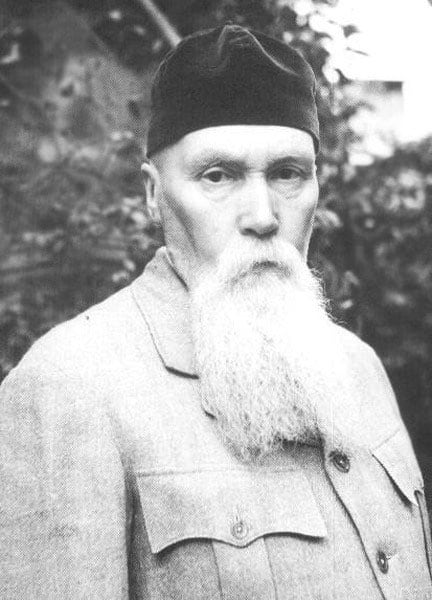
Nicholas Roerich
इन पर सहमत: क्या गुरु आवश्यक है? · क्या संसार वास्तविक है? · क्या बुद्धि परम को जान सकती है?
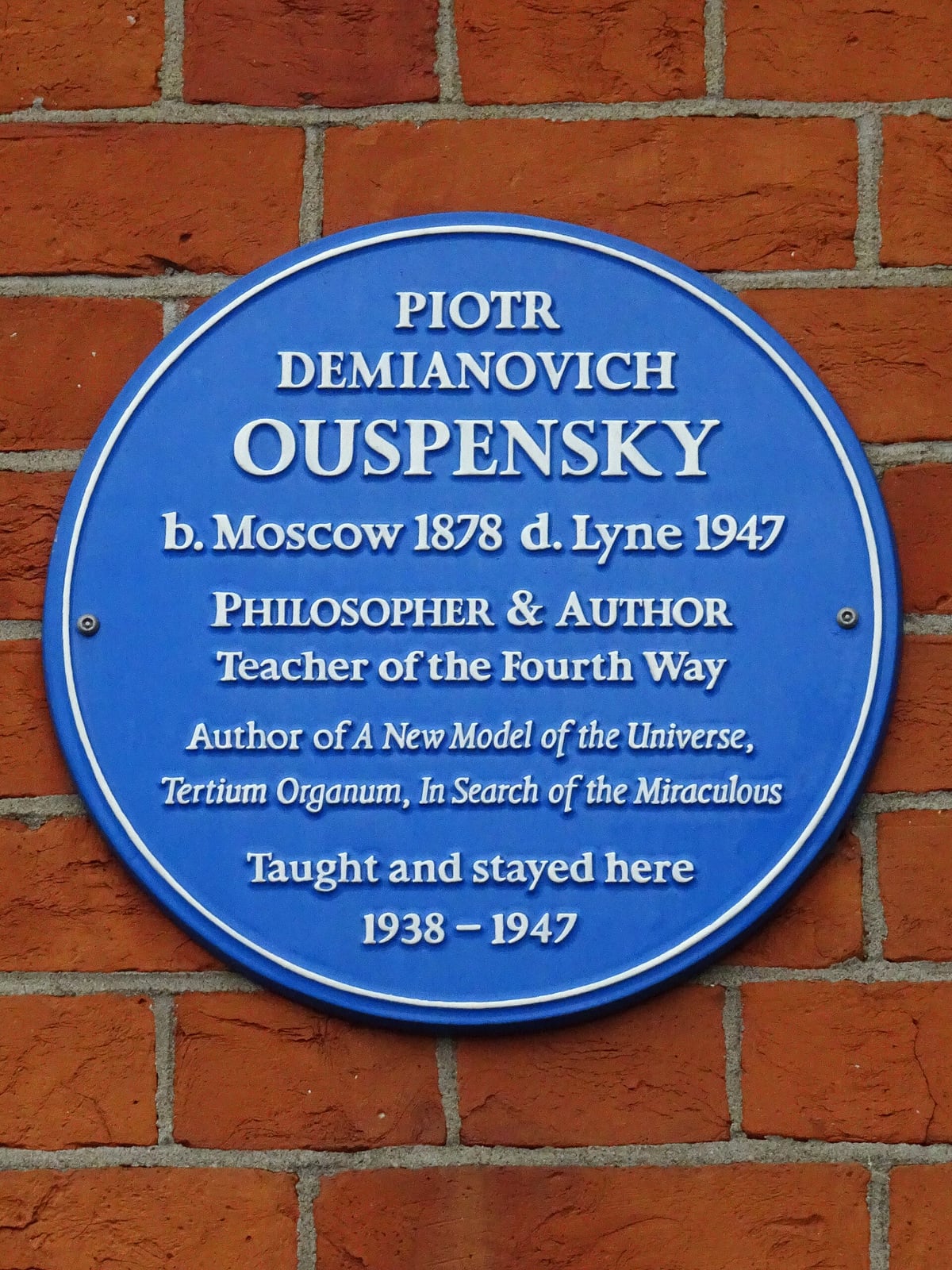
P. D. Ouspensky
इन पर सहमत: मैं कौन हूँ? क्या कोई सच्चा आत्म है? · हम दुःख क्यों भोगते हैं? · मुक्ति या उद्धार कैसे प्राप्त होता है?

Eckhart Tolle
इन पर सहमत: प्रेम क्या है? · क्या हम स्वतंत्र हैं, या सब कुछ पूर्वनिर्धारित है? · ध्यान या प्रार्थना क्यों करें?
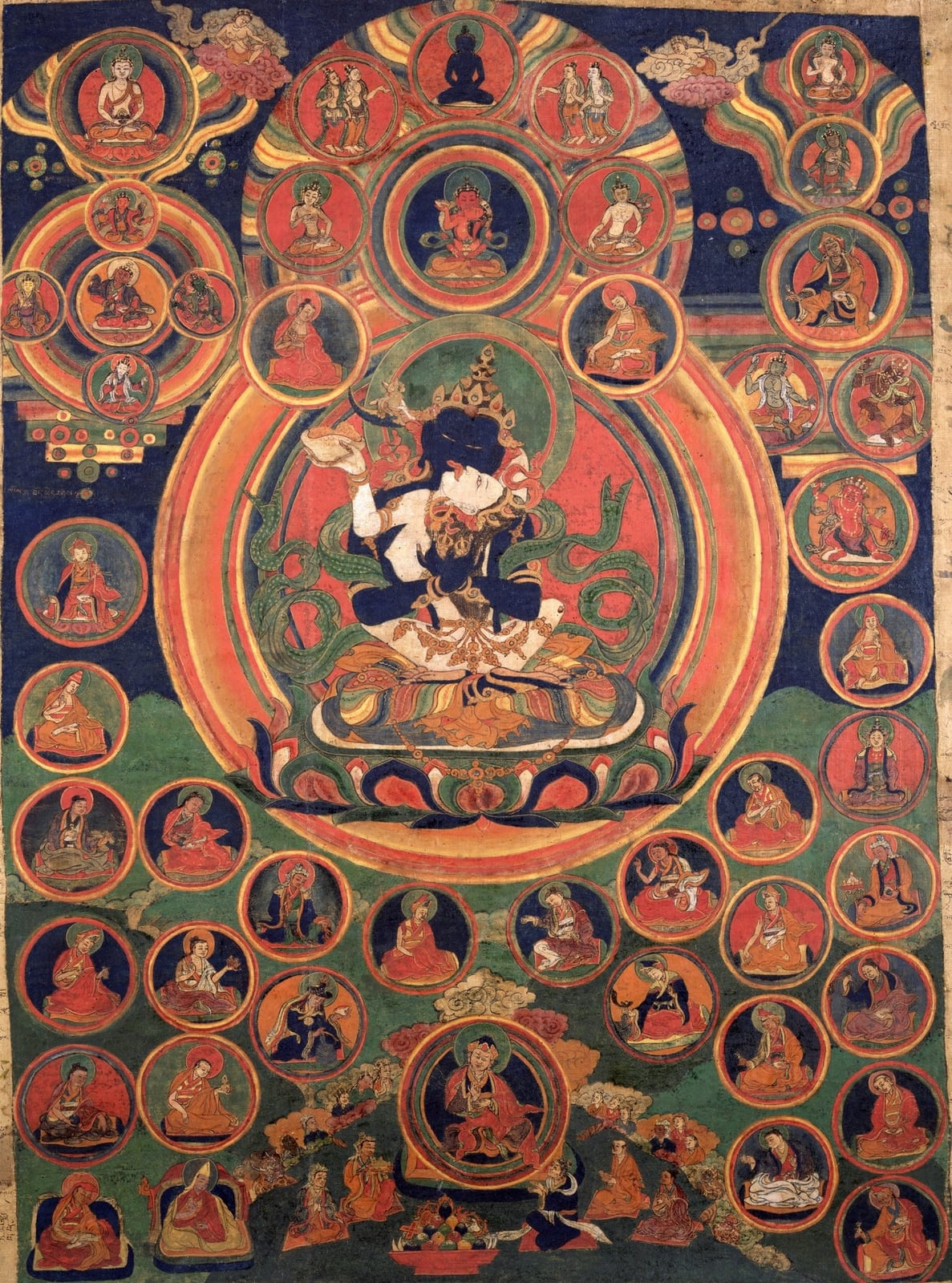
Padmasambhava
इन पर सहमत: मैं कौन हूँ? क्या कोई सच्चा आत्म है? · हम दुःख क्यों भोगते हैं? · क्या गुरु आवश्यक है?
इनसे भिन्न सोचते हैं

Nikolai Berdyaev
इन पर टकराव: मैं कौन हूँ? क्या कोई सच्चा आत्म है? · क्या गुरु आवश्यक है?

Patañjali
इन पर टकराव: परम सत्य क्या है? क्या ईश्वर है? · मैं कौन हूँ? क्या कोई सच्चा आत्म है?
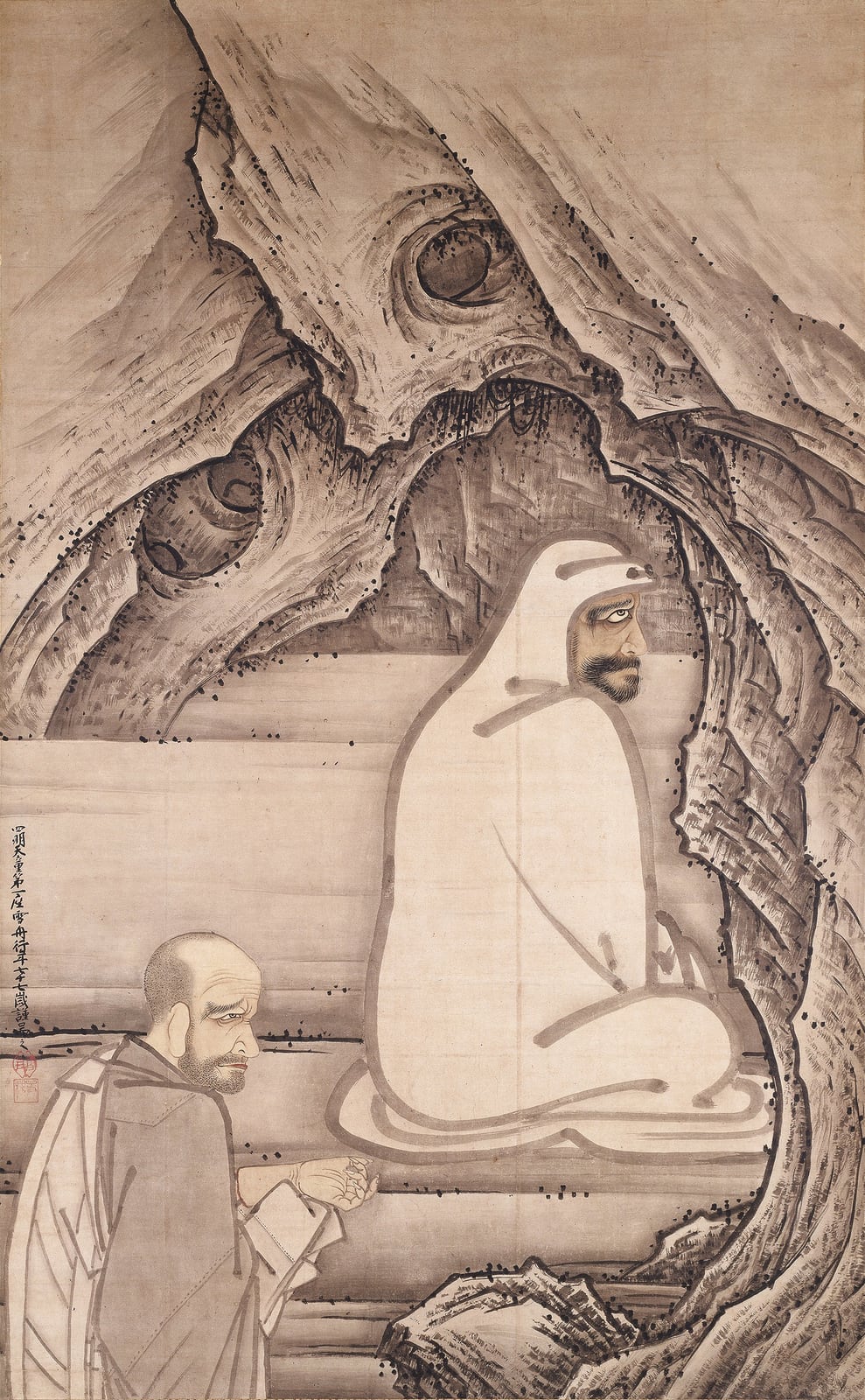
Bodhidharma
इन पर टकराव: मैं कौन हूँ? क्या कोई सच्चा आत्म है?
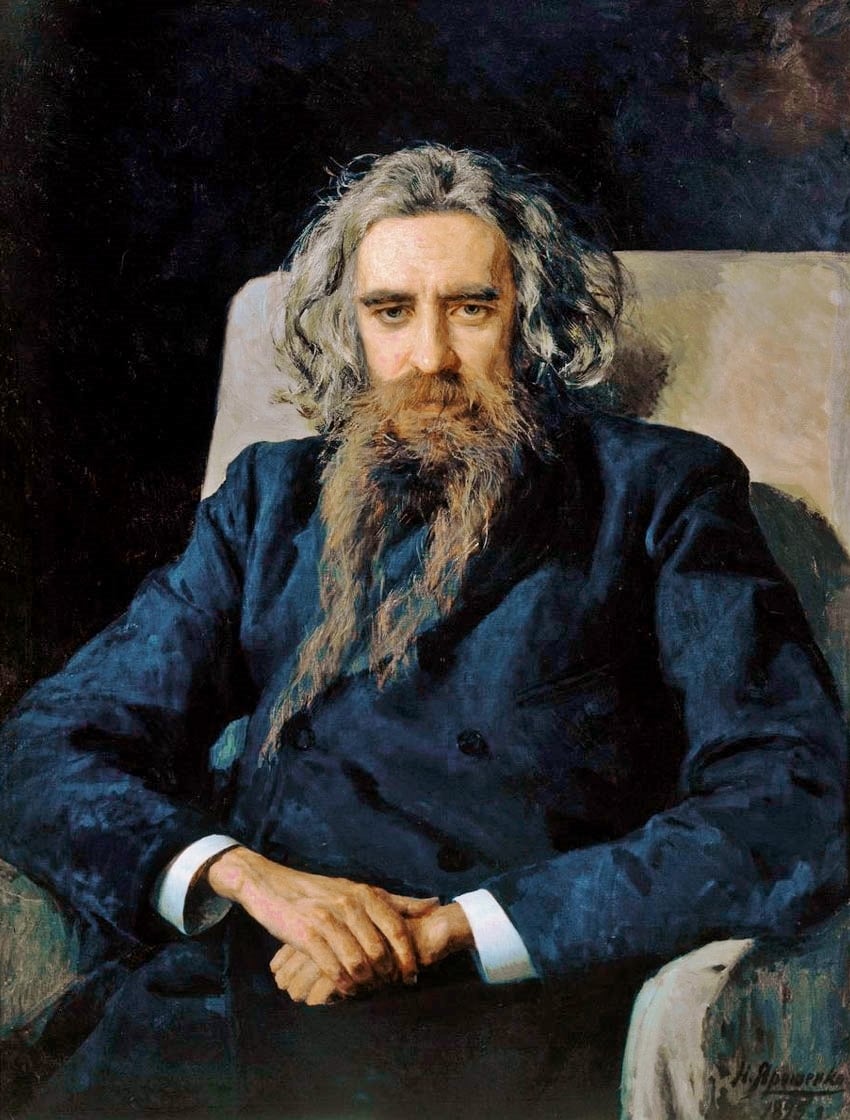
Vladimir Solovyov
इन पर टकराव: मैं कौन हूँ? क्या कोई सच्चा आत्म है?
इन पर टकरावआभासी विरोधाभास
G. I. Gurdjieff · Ramana Maharshi
Conscious effort versus being what one already is: a smaller conflict than it seems
क्यों: The contradiction is largely apparent because they speak from different levels. Gurdjieff describes the human being from the side of sleep and the machine, and his effort is the condition for something to awaken; Ramana speaks from the Self, for which effort produces nothing new, and he admits it only as a means of stopping the ego from interfering. Both deny the ordinary doer. A real difference remains, however, and should not be glossed over: for Gurdjieff the permanent self does not exist and must be created; for Ramana it already exists and one need only stop veiling it. In one effort builds; in the other, it clears away.
इन पर सहमत
G. I. Gurdjieff · P. D. Ouspensky
Man is a machine: the master and the disciple who systematised his teaching
क्यों: The affinity is that of a master and his most systematic disciple: Ouspensky worked with Gurdjieff in Russia between 1915 and 1918 and transmitted that teaching in In Search of the Miraculous, published posthumously in 1949. The relationship broke down: Ouspensky withdrew in 1918 and definitively in the 1920s, and led his own groups in London, centred on the study of the system rather than on the figure of the master. They agree in doctrine, not in style: Gurdjieff taught in a demanding and disconcerting way, with dances, movements and provoked situations; Ouspensky, intellectually and in an orderly fashion. Hence they part on the question of the master: one deems him indispensable; the other stresses the school.
इन पर टकरावमूलभूत असहमति
G. I. Gurdjieff · Teresa of Ávila
The soul as gift or as achievement: the diamond castle versus an immortality to be manufactured
क्यों: The contradiction is real and touches the core of both anthropologies. Teresa speaks from the Christian doctrine of creation, in which God gives each soul its immortal being and grace precedes effort. Gurdjieff builds a cosmology of his own, of laws and materials, in which immortality is conditional and must be acquired. There is nonetheless a point of contact: both think that most people live outside themselves, in the outer courtyard of the castle or in sleep, and that knowing oneself demands long and painful work. But in Teresa what is unknown is already there, and in Gurdjieff what is unknown is that there is not yet anyone.
इन पर टकरावमूलभूत असहमति
G. I. Gurdjieff · Jiddu Krishnamurti
Both see man as conditioned; one demands a school and effort, the other forbids them
क्यों: The contradiction is real and comes from two opposite experiences of teaching. Gurdjieff presents himself as a seeker of an ancient knowledge transmitted in schools of Central Asia, and believes that this knowledge, scarce and almost material, can pass only from one who has it to one who works. Krishnamurti was raised precisely within an esoteric organisation with masters, grades and initiations, and his break in 1929 made the rejection of all authority the centre of his teaching. Both distrust comfortable spirituality and inherited beliefs; they part over whether directed effort awakens or lulls.
प्रसंग और वृत्तांत
प्रसंग और वृत्तांत
साक्ष्यc. 1870s–1880s
The grandmother's advice
वृत्तांत का स्रोत: It comes from Gurdjieff himself, in chapter 1 of Beelzebub's Tales ('The Arousing of Thought'). There are no independent witnesses; it is an autobiographical account within an allegorical work.
स्रोत: Gurdjieff, G. I. All and Everything: Beelzebub's Tales to His Grandson. Nueva York: Harcourt, Brace, 1950; Londres: Routledge & Kegan Paul, 1950.
साक्ष्यc. 1890s
The sparrows of Samarkand
वृत्तांत का स्रोत: Gurdjieff's own account in Meetings with Remarkable Men. No independent confirmation; its parable-like character is obvious.
स्रोत: Gurdjieff, G. I. Meetings with Remarkable Men. Londres: Routledge & Kegan Paul, 1963 (ed. francesa: Rencontres avec des hommes remarquables, París: Julliard, 1960).
साक्ष्य1915
Ouspensky in the Moscow café
वृत्तांत का स्रोत: Ouspensky's testimony in chapter 1 of In Search of the Miraculous (1949), written years after the events.
स्रोत: Ouspensky, P. D. In Search of the Miraculous: Fragments of an Unknown Teaching. Nueva York: Harcourt, Brace, 1949.
प्रमाणित1922–1923
Katherine Mansfield in the cowshed
वृत्तांत का स्रोत: Documented by Mansfield's letters (ed. Murry, 1928) and by Moore's biographies (Gurdjieff and Mansfield, 1980; The Anatomy of a Myth, 1991).
स्रोत: Mansfield, Katherine. The Letters of Katherine Mansfield. Ed. J. Middleton Murry. Londres: Constable, 1928 (cartas desde el Priorato, octubre de 1922 – enero de 1923).
साक्ष्य1920s
Rachmilievitch, the necessary irritant
वृत्तांत का स्रोत: Fritz Peters's testimony in Boyhood with Gurdjieff (1964), written some thirty years later; Gurdjieff's words are the author's reconstruction.
स्रोत: Peters, Fritz. Boyhood with Gurdjieff. Nueva York: E. P. Dutton, 1964.
प्रमाणित1924
The 1924 accident
वृत्तांत का स्रोत: The accident is documented (Moore; de Hartmann; WRSP). The details of the cushion and of the recovery come from pupils' testimonies; the interpretation, from Gurdjieff himself.
स्रोत: Moore, James. Gurdjieff: The Anatomy of a Myth. Shaftesbury: Element, 1991.
सत्यापन-योग्य नहींc. 1900
The Sarmoung Brotherhood
वृत्तांत का स्रोत: Sole source: Meetings with Remarkable Men. Webb (The Harmonious Circle) and Moore analyse the hypotheses about its location without finding confirmation.
स्रोत: Gurdjieff, G. I. Meetings with Remarkable Men. Londres: Routledge & Kegan Paul, 1963 (ed. francesa: Rencontres avec des hommes remarquables, París: Julliard, 1960).
शिक्षाएँ
शिक्षाएँ
वे अवधारणाएँ जो उनके चिंतन को रूप देती हैं, उनके संदर्भ में समझाई गई।
Self-rememberingrecuerdo-de-si
Set out in Fragments (ch. 7) and in the Prieuré aphorisms; it runs through every phase of the teaching.
स्रोत: Ouspensky, P. D. In Search of the Miraculous: Fragments of an Unknown Teaching. Nueva York: Harcourt, Brace, 1949.
Sleep and man-machinesueno-y-mecanicidad
Core of the Russian teaching (1915–1918) according to Ouspensky; it reappears satirically in Beelzebub.
स्रोत: Ouspensky, P. D. In Search of the Miraculous: Fragments of an Unknown Teaching. Nueva York: Harcourt, Brace, 1949.
The three centrestres-centros
Basis of the Institute's name and of the 'fourth way' concept, which works on all three centres at once as against the ways of the fakir, the monk and the yogi.
स्रोत: Ouspensky, P. D. In Search of the Miraculous: Fragments of an Unknown Teaching. Nueva York: Harcourt, Brace, 1949.
The law of three and the law of sevenley-de-tres-y-ley-de-siete
Set out by Ouspensky (chs. 4–5 and 7) and developed in mythic key in Beelzebub.
स्रोत: Ouspensky, P. D. In Search of the Miraculous: Fragments of an Unknown Teaching. Nueva York: Harcourt, Brace, 1949.
The enneagrameneagrama
Ouspensky transmits it in chapter 14 of Fragments.
स्रोत: Ouspensky, P. D. In Search of the Miraculous: Fragments of an Unknown Teaching. Nueva York: Harcourt, Brace, 1949.
The fourth waycuarto-camino
Origin of the tradition's name (fourth-way) in the Atlas.
स्रोत: Ouspensky, P. D. In Search of the Miraculous: Fragments of an Unknown Teaching. Nueva York: Harcourt, Brace, 1949.
Conscious labour and intentional sufferingtrabajo-consciente-y-sufrimiento-intencional
Doctrine of the Prieuré period and of Beelzebub.
स्रोत: Gurdjieff, G. I. All and Everything: Beelzebub's Tales to His Grandson. Nueva York: Harcourt, Brace, 1950; Londres: Routledge & Kegan Paul, 1950.
साधना-शिविर
साधना-शिविर और केंद्र
उनकी शिक्षा से जुड़े स्थान और समागम। हम आपको उनके आयोजकों से जोड़ते हैं।
Nueva York (Upper East Side) · Estados Unidos
Gurdjieff Foundation of New York
The Gurdjieff Foundation of New York
The Gurdjieff Foundation of New York belongs to the network of foundations established after Gurdjieff's death by his pupil Jeanne de Salzmann, together with the Institut Gurdjieff in Paris and the Gurdjieff Society in London. Its first president, Lord Pentland, had been a pupil of Ouspensky before working with Gurdjieff, and many of Ouspensky's pupils joined this work. It offers weekly group meetings led by senior students, classes in the Movements, the sacred dances and exercises Gurdjieff taught, meditation and retreats. Access is gradual and begins with introductory events.
San Francisco y Guerneville (Sonoma), California · Estados Unidos
Gurdjieff Foundation of California
The Gurdjieff Foundation of California
The Gurdjieff Foundation of California was founded in 1955 under the direction of Lord John Pentland, whom Gurdjieff himself had entrusted with the early American groups, and describes itself as the oldest group in California devoted to his teaching of inner development. It is a non-profit voluntary community based in San Francisco, with a second property in Guerneville, Sonoma County, where practical work takes place. It offers group meetings, Movements, sittings, study of the ideas and music, and belongs to the International Association of the Gurdjieff Foundations alongside Paris, New York and London.
Londres · Reino Unido
Gurdjieff Studies, London
Gurdjieff Studies Ltd (organización benéfica registrada)
Gurdjieff Studies is a London charity devoted to the Fourth Way that offers group meetings, reading groups, practical activities, Movements classes and intensive residential stays. It holds that the teaching is passed on from teacher to pupil in direct lines of transmission, and maintains two reference websites: one on Gurdjieff's life and work, with his music, dances and chronology, and another devoted to P. D. Ouspensky, reconstructing his work in England, including the Lyne Place period. It is independent of the network of foundations established by Jeanne de Salzmann.
वीडियो
वीडियो
रिकॉर्डिंग, साक्षात्कार और वृत्तचित्र। वीडियो YouTube से चलते हैं; वे यहाँ संग्रहीत नहीं हैं।
June 18, 1949 (improvisación al armonio)
मूल रिकॉर्डिंग· ZXX· 1949· 2 min
G. I. Gurdjieff - Topic
Mme de Salzmann in New York 1988
मूल रिकॉर्डिंग· EN· 1988· 3 min
Gurdjieff Meetings
Jacob Needleman - Gurdjieff: A Life in the Work
व्याख्यान· EN· 116 min
CommonwealNewSchoolआधिकारिक चैनल
'Meetings with Remarkable Men' – An interview with Peter Brook
साक्षात्कार· EN· 10 min
Clarendon Events
The Gurdjieff Work and Gurdjieff Movements – J.G. Bennett at Sherborne, 1973
मूल रिकॉर्डिंग· EN· 1973· 3 min
Avrom Altman
Gurdjieff: The Rascal Saint – Sadhguru Exclusive
विश्लेषण· EN· 7 min
Sadhguruआधिकारिक चैनल
Gurdjieff : un maître spirituel unique en son genre
विश्लेषण· FR· 7 min
Sadhguru Françaisआधिकारिक चैनल
L'avenir de Gurdjieff avec Pierre Schaeffer par Michel Camus
साक्षात्कार· FR· 20 min
Résonance[s]
El Cuarto Camino, Gurdjieff, 1992 (documental de TVE2, La tabla redonda)
वृत्तचित्र· ES· 1992· 56 min
beapuertas
Георгий Гурджиев / George Gurdjieff. Жизнь Замечательных Людей
वृत्तचित्र· RU· 62 min
ЖИЗНЬ ЗАМЕЧАТЕЛЬНЫХ ЛЮДЕЙ
चित्रशाला
चित्रशाला
सत्यापित लाइसेंस वाले चित्र। प्रत्येक में उसके रचयिता और श्रेय का उल्लेख सुरक्षित है।
संबंध
संबंध
प्रभाव, शिष्यत्व और वैचारिक निकटता। प्रमाणित संबंध को विश्लेषण से पहचानी गई समानता से अलग दर्शाया गया है।
इनके गुरु
His pupil from 1915; he separated from him in the 1920s and taught independently in London. His In Search of the Miraculous is the main exposition of the Russian teaching.
प्रमाणित संबंध
इनके गुरु
Thomas de Hartmann
Composer, pupil from 1916 and collaborator on some two hundred piano pieces until 1929.
प्रमाणित संबंध
इनके गुरु
Jeanne de Salzmann
Pupil from 1919 in Tiflis; continuer of the teaching and organiser of the foundations after 1949.
प्रमाणित संबंध
इनके गुरु
J. G. Bennett
Met him in Constantinople in 1920 and studied with him in 1923 and 1948–1949; later founded his own line at Coombe Springs and Sherborne.
प्रमाणित संबंध
इनके गुरु
A. R. Orage
Editor of The New Age; pupil from 1922 and his representative in New York (1924–1931); collaborated on the translation of Beelzebub.
प्रमाणित संबंध
इनसे भेंट
Katherine Mansfield
Spent her last months at the Prieuré (1922–1923).
प्रमाणित संबंध
इनसे मिलते-जुलते विचार
Both presented ancient knowledge transmitted by Eastern masters; Gurdjieff nonetheless mocked Theosophists and parlour occultism.
विश्लेषण से पहचानी गई समानता
इनके समकालीन
Contemporaries in interwar Europe; both gave movement—eurythmy or dance—a central place in spiritual training. No meeting is recorded.
विश्लेषण से पहचानी गई समानता
इनसे मिलते-जुलते विचार
Both insisted on self-observation without illusions about the 'I'; unlike Gurdjieff, Krishnamurti rejected every method and every school.
विश्लेषण से पहचानी गई समानता
स्रोत
स्रोत
इस प्रविष्टि के लिए देखे गए ग्रंथ-सूची और सूचीपत्र।
- Ouspensky, P. D. In Search of the Miraculous: Fragments of an Unknown Teaching. Nueva York: Harcourt, Brace, 1949.
- Wikidata, «George Gurdjieff» (Q217771).
- Moore, James. Gurdjieff: The Anatomy of a Myth. Shaftesbury: Element, 1991.
- De Hartmann, Thomas y Olga de Hartmann. Our Life with Mr. Gurdjieff. Nueva York: Cooper Square, 1964 (ed. ampliada, Harper & Row, 1983).
- Gurdjieff, G. I. Meetings with Remarkable Men. Londres: Routledge & Kegan Paul, 1963 (ed. francesa: Rencontres avec des hommes remarquables, París: Julliard, 1960).
- Gurdjieff, G. I. All and Everything: Beelzebub's Tales to His Grandson. Nueva York: Harcourt, Brace, 1950; Londres: Routledge & Kegan Paul, 1950.
- Gurdjieff, G. I. Views from the Real World: Early Talks of Gurdjieff. Nueva York: E. P. Dutton, 1973.
- World Religions and Spirituality Project (Virginia Commonwealth University), «Gurdjieff» (perfil y cronología).
- The Gurdjieff Legacy Foundation, «Jeanne de Salzmann» (archivo), que cita a William Patrick Patterson, Struggle of the Magicians, pp. 224–225.
- The Gurdjieff Legacy Foundation, «Final Years» (últimos años, muerte y funeral).
- Wikipedia (en), «George Gurdjieff», sección sobre la fecha de nacimiento (remite a Churton, Tobias. Deconstructing Gurdjieff, Inner Traditions, 2017, pp. 3–4 y 316–317).
- Webb, James. The Harmonious Circle: The Lives and Work of G. I. Gurdjieff, P. D. Ouspensky, and Their Followers. Londres: Thames & Hudson, 1980.
- Peters, Fritz. Boyhood with Gurdjieff. Nueva York: E. P. Dutton, 1964.
- Bennett, J. G. Witness: The Story of a Search. Londres: Hodder & Stoughton, 1962.
- Open Library, registros de autor y ediciones de Georges Ivanovitch Gurdjieff (consultados para los ISBN).
- Gurdjieff Society of Austin, «Aphorisms» (aforismos inscritos en la Study House del Priorato; recogidos en Views from the Real World).
- Mansfield, Katherine. The Letters of Katherine Mansfield. Ed. J. Middleton Murry. Londres: Constable, 1928 (cartas desde el Priorato, octubre de 1922 – enero de 1923).
- Shambhala Publications, ficha de In Search of Being: The Fourth Way to Consciousness, por G. I. Gurdjieff, ed. Stephen A. Grant (2012; reed. 2021).
- अधिकार-धारक
- Derechos vigentes sobre los textos póstumos y sus traducciones. Las ediciones autorizadas en inglés salen bajo el sello Triangle Editions (vinculado a la Gurdjieff Foundation de Nueva York) y Penguin; en francés, las de la red del Institut Gurdjieff. Pendiente de confirmar el titular exacto en cada territorio.
- आधिकारिक वेबसाइट
- institut-gurdjieff.com/
पुष्टि की प्रतीक्षा में
जो यह प्रविष्टि अभी तक निश्चित नहीं कर सकी है। हम उसे भर देने के बजाय कह देना बेहतर समझते हैं।
- Fecha de nacimiento: no resoluble con las fuentes disponibles (1866/1867, 1872, 1877); el campo birth usa 1872 «approx» como valor central, con las tres versiones en la cronología.
- Localizar la publicación original de las palabras «Do everything, even the impossible, to develop what I have brought», atribuidas a Jeanne de Salzmann.
- Comprobar en Witness (Bennett, 1962/1974) y en Idiots in Paris si Bennett recoge una frase final de Gurdjieff.
- Cotejar contra un ejemplar de Views from the Real World la redacción y la página de los aforismos citados (verificados contra la lista de la Gurdjieff Society of Austin).
- ISBN de las ediciones inglesas de Book Studio (Transcripts 1941–1946; Early Talks) y de Paris Meetings 1943; editor de la edición de 2008 de Struggle of the Magicians.
- Ediciones italianas de editoriales establecidas (Incontri con uomini straordinari, Racconti di Belzebù): no localizadas con ISBN en Open Library.
- Titular exacto de los derechos por territorio (Triangle Editions / herederos / Institut Gurdjieff).
- Fechas de fundación del Institut Gurdjieff (París) y de la Gurdjieff Society (Londres): solo se ha confirmado 1953 para Nueva York.
- Obras completas (2026-10-25): cotejado el catálogo de Open Library (OL767343A y variantes). Todo lo publicado de Gurdjieff está registrado; además existen grabaciones de sus improvisaciones al armonio (1948–1949) editadas en disco, que no son libros y no se registran como obras. Las entradas atribuidas a Gurdjieff de Psychology of Man's Possible Evolution, Tertium Organum, A Further Record o The Theory of Conscious Harmony son errores de catálogo (obras de Ouspensky y de Rodney Collin).
- Sala de lectura (2026-10-25): sin textos registrables. Lo único publicado en vida, The Herald of Coming Good (París, 1933, en inglés, traductores no identificados), tiene escaneo en Internet Archive (in.ernet.dli.2015.127965), pero su OCR no es limpio y la obra no cumple los tres derechos: libre en la UE desde 2020 (autor fallecido en 1949), no en España hasta 2030 (80 años) ni en EE. UU. hasta 2029 (obra extranjera de 1933 restaurada por la URAA, 95 años). Las demás obras son póstumas (1950 en adelante) y tienen derechos vigentes de Triangle Editions y de sus traductores. Revisar en 2030.
2026-10-23 को शोधित