Hinduismus · Yoga
Sri Yukteswar
শ্রীযুক্তেশ্বর গিরি · श्रीयुक्तेश्वर गिरि
1855 – 1936Historisch belegte Person
Sri Yukteswar Giri (1855–1936), geboren als Priya Nath Karar in Serampore, war Schüler Lahiri Mahasayas, Meister des Kriya Yoga und Guru von Paramahansa Yogananda. Er schrieb Kaivalya Darshanam (Die heilige Wissenschaft, 1894), das die Einheit von indischem Samkhya und Neuem Testament sucht und eine Chronologie der Yugas mit einem Zyklus von 24 000 Jahren vorschlägt. Astrologe, Erzieher und Gründer der Einsiedeleien von Serampore und Puri, ist er uns vor allem durch die Autobiographie eines Yogi bekannt.
- Werke
- 8Werke
- Ausgaben
- 18Ausgaben
- Zitate
- 10Zitate
- Videos
- 12Videos
- Bilder
- 7Bilder
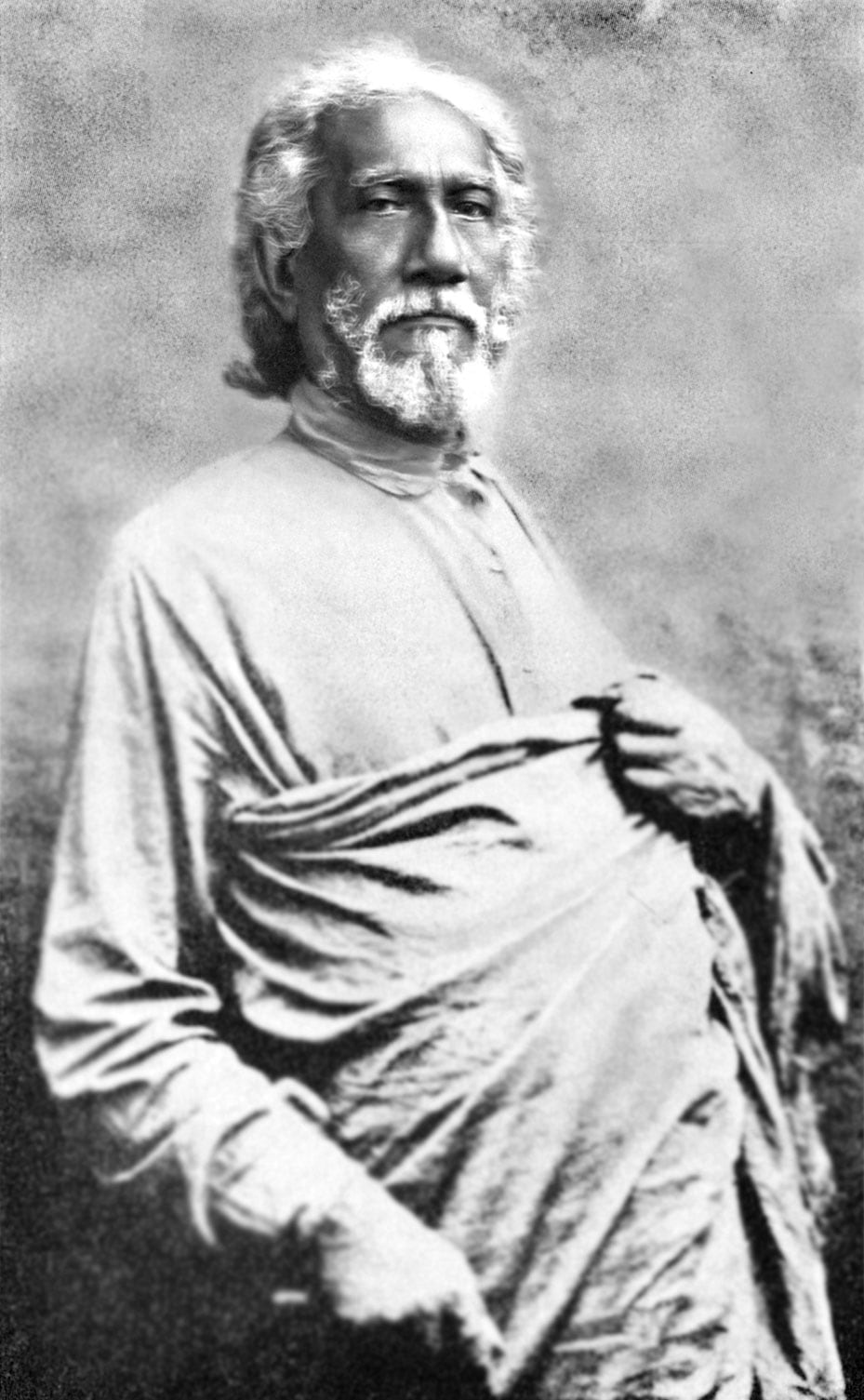
Sri Yukteswar, retrato de la primera edición de la Autobiografía · Public domain
In eigenen Worten
«The purpose of this book is to show as clearly as possible that there is an essential unity in all religions; that there is no difference in the truths inculcated by the various faiths; that there is but one method by which the world, both external and internal, has evolved; and that there is but one Goal admitted by all scriptures.»The Holy Science, ed. SRF 1972 (texto de 1894), Introducción

Zum Einstieg ein Werk
Kaivalya Darsanam: The Holy ScienceDer zentrale Gedanke
The 24,000-year cycle of the yugas: In the introduction to *The Holy Science*, Sri Yukteswar holds that the Sun, with its planets, revolves around a companion star in a period of about 24,000 years, and that nearness to or distance from a 'grand centre' of divine magnetism determines the development of human intelligence.
Im Zusammenhang sehen
Biografie
5 Min. Lesezeit
Unterstützte Übersetzung aus dem spanischen Original, Durchsicht durch einen muttersprachlichen Übersetzer ausstehend.
Ein Sohn von Grundbesitzern in Serampore
Priya Nath Karar wurde am 10. Mai 1855 in Serampore geboren, der ehemaligen dänischen Niederlassung am Ufer des Hugli, rund zwanzig Kilometer von Kalkutta entfernt. Seine Eltern, Kshetranath Karar und Kadambini, entstammten einer Familie ländlicher Grundbesitzer; der Vater starb früh, und der junge Mann musste die Verwaltung der Familiengüter übernehmen. Er besuchte das christliche Missionskolleg der Stadt, wo er mit der Bibel eine Vertrautheit gewann, die er nie wieder aufgab, und studierte knapp zwei Jahre Medizin in Kalkutta, ohne einen Abschluss zu erwerben. Er heiratete, bekam eine Tochter und wurde nach wenigen Jahren Witwer. Dies ist der am schlechtesten belegte Abschnitt seines Lebens: Was wir darüber wissen, stammt aus der bengalischen Biographie seines Schülers Swami Satyananda Giri und aus den Seiten, die ihm Paramahansa Yogananda widmete – beides Texte von Anhängern.
Lahiri Mahasaya und der Kriya Yoga
1884 lernte er in Benares Shyama Charan Lahiri kennen, den seine Anhänger Lahiri Mahasaya nannten: einen Buchhalter der britischen Verwaltung, der Familienvätern eine auf Atemlenkung beruhende Meditationstechnik lehrte, den Kriya Yoga. Priya Nath empfing von ihm die Einweihung und besuchte ihn in den folgenden Jahren häufig. Die Überlieferung der Linie bewahrt, dass der Meister ihn liebevoll »Priya«, den Geliebten, nannte. Von Lahiri übernahm er zwei Züge, die seine Lehre prägen sollten: die Überzeugung, dass sich meditative Praxis leben lässt, ohne der Welt zu entsagen, und eine Lesart der heiligen Schriften als Landkarten innerer Zustände.
Allahabad 1894: die Heilige Wissenschaft
Im Januar 1894 wurde er während der Kumbh Mela in Allahabad, nach seinem eigenen Zeugnis, von einem Unbekannten ans Ufer des Ganges gerufen und vor Babaji geführt, den Meister Lahiri Mahasayas – eine Gestalt, für die es keine unabhängige historische Überlieferung gibt. In diesem Gespräch bat ihn Babaji, stets nach dem Bericht des Autors, um ein kurzes Buch, das die Übereinstimmung zwischen den christlichen und den hinduistischen Schriften aufzeige, und verlieh ihm den Titel eines Swami. Das Buch, Kaivalya Darshanam, die »Darlegung der letzten Wahrheit«, gibt sich auf seiner ersten Seite als Werk des »Priya Nath Swami«, verfasst auf Bitten Babajis im Jahr 194 des Dvapara Yuga. Die Kapitel erschienen zunächst in seiner Zeitschrift Sadhusambad; 1920 ließ sein Schüler Atul Chandra Chowdhury sie als Buch drucken, und 1949 veröffentlichte die Self-Realization Fellowship eine überarbeitete Fassung unter dem Titel The Holy Science (deutsch Die heilige Wissenschaft).
Das Buch hat vier Kapitel – das Evangelium, das Ziel, das Verfahren und die Offenbarung –, gegliedert in Sanskrit-Aphorismen, die der Autor selbst verfasste und auf Englisch kommentierte, mit zahlreichen Zitaten aus dem Neuen Testament und vor allem aus der Offenbarung des Johannes. Sein Gerüst ist die Kosmologie des Samkhya; seine These, dass alle Religionen ein einziges Ziel teilen. Die Einleitung enthält den berühmtesten und umstrittensten Teil: eine Chronologie der Yugas, die die Hunderttausende von Jahren der puranischen Überlieferung durch einen Zyklus von 24 000 Jahren ersetzt, verknüpft mit einer angeblichen Umlaufbahn der Sonne um einen Begleitstern, und die die Menschheit nicht im Kali Yuga, sondern seit 1699 im aufsteigenden Dvapara verortet. Die akademische Astronomie stützt die Doppelsternhypothese nicht; die Chronologie dagegen hat in der spirituellen Literatur eine lange Nachkommenschaft gefunden.
Zwei Einsiedeleien und eine strenge Zucht
Nach seiner förmlichen Aufnahme in den Orden der Swamis, die er vom Abt von Bodh Gaya im Zweig der Giri empfing, verwandelte er das Familienhaus in Serampore in eine Einsiedelei und gründete 1903 eine zweite in Puri, am Golf von Bengalen: den Karar Ashram, dessen Einweihung er der Überlieferung des Hauses zufolge auf die Frühlings-Tagundnachtgleiche legte. Im Lauf des Jahres pendelte er zwischen beiden. Er gründete eine Vereinigung, die Sadhu Sabha, um Religiose verschiedener Richtungen zusammenzuführen; er verfasste Lehrpläne für Physik, Physiologie, Geographie und Astronomie, ein Lehrbuch des Englischen und des Hindi für Bengalen und eine elementare Abhandlung über Astrologie, und er setzte sich für die Bildung von Frauen ein. Er übte den Jyotisha, die indische Astrologie, und verordnete seinen Schülern Armreifen aus Metallen und Edelsteinen, überzeugt, dass die Sternkunde als Abkürzung dienen könne, solange die Seele nicht frei sei.
Beständige Schüler hatte er nur wenige. Yogananda führte das auf eine Methode zurück, die »nicht anders als drastisch beschrieben werden kann«: Er tadelte öffentlich, verlangte häusliche Ordnung und duldete keine Selbstgefälligkeit. Der Anthropologe und Tibetologe W. Y. Evans-Wentz, der ihn in Serampore besuchte, erinnerte sich an einen großen, aufrechten Mann mit sanfter Stimme und gelassener Ausstrahlung.
Der Meister Yoganandas
1910 begegnete er in einer Straße von Benares Mukunda Lal Ghosh, einem siebzehnjährigen Jungen, der auf der Suche nach einem Meister von zu Hause fortgelaufen war. Ein Jahrzehnt lang bildete er ihn in Serampore und Puri aus; im Juli 1915 weihte er ihn unter dem Namen Yogananda zum Swami und ermutigte ihn 1920, die Einladung zu einem religiösen Kongress in Boston anzunehmen. Als Yogananda 1935 nach Indien zurückkehrte, verlieh ihm Sri Yukteswar den Titel Paramahansa und bestimmte ihn zu seinem Nachfolger an der Spitze der Sadhu Sabha und seiner Einsiedeleien. Andere Schüler, etwa Swami Satyananda Giri, Sailendra Bejoy Dasgupta oder Swami Hariharananda, begründeten später parallele Kriya-Yoga-Linien, die seine Gestalt anders akzentuieren als die Self-Realization Fellowship.
Der Tod in Puri und die Entstehung der Erzählung
Er starb am 9. März 1936 um sieben Uhr abends im Karar Ashram in Puri nach kurzem Fieber, nach Aussage derer, die seinen Leichnam fanden, im Lotossitz. Yogananda, der sich in Kalkutta aufhielt, traf am folgenden Tag ein und leitete die Bestattung im Garten der Einsiedelei, gemäß dem Brauch der Swamis, die nicht eingeäschert werden. Die Kalkuttaer Amrita Bazar Patrika würdigte ihn als einen der großen Ausleger der Bhagavadgita. In der Autobiographie eines Yogi (1946) fügte Yogananda ein Kapitel hinzu, in dem er berichtet, ihn am 19. Juni 1936 in einem Hotel in Bombay leibhaftig gesehen und von ihm eine ausführliche Beschreibung der Astralwelt empfangen zu haben. Es ist ein Glaubenszeugnis des Schülers, keine überprüfbare Tatsache, und sollte auch so gelesen werden.
Vermächtnis
Das Bild Sri Yukteswars, das in der Welt verbreitet ist, ist großenteils jenes, das Yogananda gezeichnet hat: der Jnanavatar, die »Inkarnation der Weisheit«, anspruchsvoll und liebevoll, Astrologe und Bibelleser. Sein Gesicht findet sich unter denen auf dem Cover von Sgt. Pepper's Lonely Hearts Club Band (1967), und Die heilige Wissenschaft wird bis heute in einem Dutzend Sprachen verlegt. Sein bengalischer Kommentar zur Gita, 2004 von Yoga Niketan ins Englische übersetzt, und die Biographie Satyanandas zeigen einen technischeren und weniger legendären Autor, den man neben dem Porträt der Autobiographie lesen sollte.
Quellen: Yogananda, Paramhansa. Autobiography of a Yogi. Nueva York: The Philosophical Library, 1946 (1.ª ed.), caps. 10, 12, 14-16, 36, 42 y 43; prefacio de W. Y. Evans-Wentz. Texto en Wikisource y Project Gutenberg #7452. · Yukteswar Giri, Swami Sri. The Holy Science (Kaivalya Darsanam). Los Ángeles: Self-Realization Fellowship, 7.ª ed. 1972, 3.ª reimpr. 1977 (texto de 1894; copyright de la revisión, 1949). Consultado en Internet Archive. · Satyananda Giri, Swami. «Swami Sri Yuktesvar Giri Maharaj: A Biography», en A Collection of Biographies of 4 Kriya Yoga Gurus. Trad. Yoga Niketan. Lincoln (Nebraska): iUniverse, 2006. ISBN 9780595386758. · Selbie, Joseph, y David Steinmetz. The Yugas: Keys to Understanding Our Hidden Past, Emerging Present and Future Enlightenment. Nevada City: Crystal Clarity Publishers, 2010. ISBN 9781565892538. · Dasgupta, Sailendra Bejoy. Kriya Yoga and Swami Sriyukteshvar. Calcuta: S. B. Dasgupta, 1979.
Zeitleiste
Das Leben, Jahr für Jahr
Jeder Punkt ist ein belegtes Ereignis. Klicken Sie, um es mit Quelle und Grad der Gewissheit zu lesen.
10. Mai 18550 JahreSerampore
Birth of Priya Nath Karar
Born into a family of Bengali landowners, son of Kshetranath Karar and Kadambini.
BelegtYogoda Satsanga Society of India, «Swami Sri Yukteswar».
Nach dem Tod
- Dezember 1946*Autobiography of a Yogi* spreads his figure
- 1949Revised Self-Realization Fellowship edition
- Juni 1967On the cover of *Sgt. Pepper*
10. Mai 1855 · 0 Jahre
Birth of Priya Nath Karar
Born into a family of Bengali landowners, son of Kshetranath Karar and Kadambini.
Belegt
um 1875
Studies at the missionary college and the medical college
Studies at the Christian missionary college of Serampore, where he becomes interested in the Bible, and spends about two years at medical college in Calcutta. Approximate dates.
Wahrscheinlich
um 1880
Marriage, a daughter and widowhood
After his father's death he marries at his mother's wish; he has a daughter and is widowed a few years later.
Wahrscheinlich
1884 · 29 Jahre
Initiation into kriya yoga by Lahiri Mahasaya
Meets Lahiri Mahasaya, who initiates him into kriya yoga; he will visit him often in the following years.
Belegt
Januar 1894 · 38 Jahre
Meeting with Babaji at the Kumbha Mela
By his own account in the introduction to *Kaivalya Darsanam*, Babaji asks him for a book on the harmony of Christian and Hindu scriptures and gives him the title of swami. Babaji has no independent historical documentation.
Überlieferung
1894 · 39 Jahre
Writes *Kaivalya Darsanam*
Writes the work in a short time, dated to the 194th year of the Dvapara Yuga; the chapters first appear in his journal *Sadhusambad*.
Belegt
22. März 1903 · 47 Jahre
Founding of the Karar Ashram
Founds his seaside hermitage in Puri; his lineage's tradition dates the opening to the spring equinox, chosen for astrological reasons.
Überlieferung
1910 · 55 Jahre
Meeting with Mukunda Lal Ghosh
Meets the future Paramahansa Yogananda, who will spend ten years training in his hermitages.
Belegt
Juli 1915 · 60 Jahre
Ordains Yogananda a swami
Gives Mukunda the vows of the Swami order, Giri branch, with the name Yogananda.
Belegt
1920 · 65 Jahre
First book edition of *Kaivalya Darsanam*
His disciple Atul Chandra Chowdhury, secretary of the Sadhu Sabha, privately prints the book.
Belegt
1935 · 80 Jahre
Confers on Yogananda the title of paramahansa
During Yogananda's visit to India he grants him the monastic title of paramahansa and charges him with continuing his work.
Belegt
9. März 1936 · 80 Jahre
Death at the Karar Ashram
Dies at about seven in the evening after a brief fever; he is buried on 10 March in the hermitage garden. The funeral bhandara is held on 21 March.
Belegt
Dezember 1946
*Autobiography of a Yogi* spreads his figure
Yogananda devotes several chapters of his autobiography to him, including the account of his appearance after death, which builds his international image.
Belegt
1949
Revised Self-Realization Fellowship edition
SRF publishes *The Holy Science* with a foreword by Yogananda and changes to terminology and grammar; in 1963 an English translation of the Sanskrit sutras is added.
Belegt
Juni 1967
On the cover of *Sgt. Pepper*
His portrait appears among the figures on the cover of the Beatles' album.
Belegt
Werke
Grundlegende Werke
Die Werke, ohne die sich das Vermächtnis nicht verstehen lässt.
Schriftliches Werk · 1894
Kaivalya Darsanam: The Holy Science
Kaivalya Darsanam (The Holy Science)
A treatise in four chapters—the Gospel, the Goal, the Procedure and the Revelation—that sets out Samkhya cosmology and yogic practice through commented Sanskrit aphorisms and places them alongside passages from the New Testament and Revelation. It argues that all religions share a single goal and describes five states of the heart through which the seeker advances, guided by the 'heart's natural love'. Its introduction proposes a 24,000-year cycle of yugas, tied to a hypothetical companion star of the Sun, and places humanity in an ascending Dvapara: the most famous and most disputed part of the book.
15 Ausgaben

Schriftliches Werk
Spiritual commentary on the Bhagavad Gita
Srimad Bhagavad Gita (comentario espiritual, bengalí)
A reading of the *Bhagavad Gita* as an allegory of kriya yoga practice, in the line begun by Lahiri Mahasaya: the poem's characters and battles are interpreted as forces and states of the practitioner's consciousness. It is the text that best shows the technical Sri Yukteswar, the meditation teacher, as against the literary character of *Autobiography of a Yogi*. Yogananda said his master encouraged him to give his own interpretation of the *Gita*, the distant origin of *God Talks with Arjuna*.
1 Ausgabe
Das gesamte Werk (8)
Sri Yukteswar
First Book (English and Hindi primer)
The Conscious LibraryFirst Book (English and Hindi primer)
Sri Yukteswar
Elementary treatise on astrology
The Conscious LibraryElementary treatise on astrology
Sri Yukteswar
School science syllabi
The Conscious LibrarySchool science syllabi
Sri Yukteswar
Sadhusambad (journal)
The Conscious LibrarySadhusambad (journal)

Biography of Sri Yukteswar by Swami Satyananda Giri
Sri Yukteswar
Kriya Yoga and Swami Sriyukteshvar (S. B. Dasgupta)
The Conscious LibraryKriya Yoga and Swami Sriyukteshvar (S. B. Dasgupta)
1979
Zitate
Zitate, die in einem bestimmten Werk nachgewiesen sind. Jedes trägt seine Herkunft und seinen Grad an Verlässlichkeit.
The purpose of this book is to show as clearly as possible that there is an essential unity in all religions; that there is no difference in the truths inculcated by the various faiths; that there is but one method by which the world, both external and internal, has evolved; and that there is but one Goal admitted by all scriptures.GeprüftThe Holy Science, ed. SRF 1972 (texto de 1894), Introducción
Letzte Worte
Es gibt keine überprüfbaren Aufzeichnungen der letzten Worte.
No reliable record of his last words is known. Yogananda, his main biographer, was not present (he was in Calcutta and reached Puri the next day) and says so explicitly in a note to the *Autobiography*. The words 'My task on earth is now finished; you must carry on', addressed to Yogananda when conferring the title of paramahansa in 1935, are sometimes quoted as a farewell, but they precede his death by months.
Quelle: Yogananda, Paramhansa. Autobiography of a Yogi. Nueva York: The Philosophical Library, 1946 (1.ª ed.), caps. 10, 12, 14-16, 36, 42 y 43; prefacio de W. Y. Evans-Wentz. Texto en Wikisource y Project Gutenberg #7452.
Fragen
Was das Werk beantwortet
Zwölf große Fragen der Menschheit und was sich aus den Texten darauf antworten lässt, mit Belegen. Wir legen niemandem Worte in den Mund.
Was ist das Absolute? Gibt es Gott?
Parambrahma, the one eternal substance, manifests as Father, Son and Om
Ein unpersönliches AbsolutesAusdrücklich gesagt
In the Kaivalya Darsanam Sri Yukteswar opens with the statement that Parambrahma, Spirit, is the only real substance, eternal, complete and without beginning or end. From it he explains creation with a scheme meant to show the unity of Hinduism and Christianity: God the Father (Sat) is beyond creation; his manifestation as vibration, the Word or Om, is the Holy Ghost; and his conscious reflection in creation is the Son (Tat), the Christ consciousness. The ultimate is therefore not a person who acts but a substance of love and consciousness that expresses itself through vibration and maya. The personal figures of Father and Son are ways of naming those aspects, not beings distinct from the Absolute.
Diese Frage mit anderen Meistern vergleichenWer bin ich? Gibt es ein wahres Selbst?
Man is a son of God wrapped in five sheaths
Das Selbst ist das AbsoluteAusdrücklich gesagt
In the Kaivalya Darsanam Sri Yukteswar describes the human being as a reflection of Spirit, the ‘son of God’, covered by five sheaths (koshas) ranging from the subtlest to the physical. Out of ignorance man identifies with those sheaths and with the body, and forgets his divine nature. Wisdom consists in progressively withdrawing consciousness from these layers until one recognises that the true self is one with the eternal Father, beyond creation. To describe that return he uses both the vocabulary of Samkhya and that of the Gospel: the prodigal son coming home is the soul recovering its unity with Spirit. Kaivalya, oneness, is the name of that goal.
Diese Frage mit anderen Meistern vergleichenWarum leiden wir?
Ignorance makes man think himself the body and exiles him from the inner Eden
Unwissenheit über das, was wir sindAusdrücklich gesagt
In the Kaivalya Darsanam Sri Yukteswar explains that man suffers because, through avidya, ignorance, he identifies with the material body and its desires and forgets that he is a reflection of Spirit. From that identification arise attachment, aversion and fear, which he sets out in the vocabulary of yoga’s afflictions. Yogananda, in his Autobiography, attributes to him a biblical image of the same idea: outward longings drive us from the inner Eden and offer false pleasures that supplant the soul’s happiness, and the lost paradise is regained through meditation. Suffering is thus an exile from one’s own nature, and the way back is the heart’s natural love disciplined by yoga.
Diese Frage mit anderen Meistern vergleichenWas geschieht nach dem Tod?
The soul passes to subtle worlds and returns according to its karma
Wiedergeburt nach dem KarmaAus der Lehre abgeleitet
Sri Yukteswar taught within the framework of reincarnation: as long as the soul is not freed from desires and karma it is born again, and his astrology presupposes that each birth matches that individual karma. In the Kaivalya Darsanam he describes creation as a series of spheres (lokas) of decreasing density between the physical world and Spirit, through which the soul descends and ascends. The best-known description of his teaching on the afterlife is not his own: in Autobiography of a Yogi Yogananda relates a posthumous appearance of his master in which he describes the astral and causal worlds where souls live between one incarnation and the next.
Diese Frage mit anderen Meistern vergleichenWie erlangt man Befreiung oder Erlösung?
Kriya yoga, discipline and the heart’s natural love
Durch disziplinierte ÜbungAusdrücklich gesagt
Sri Yukteswar, a disciple of Lahiri Mahasaya, transmitted Kriya Yoga as a precise method for withdrawing consciousness from the body and directing it towards Spirit. In the Kaivalya Darsanam he makes the heart’s natural love the main requirement and defines faith (sraddha) as its intensification; from there he sets out the steps of yoga: ethical discipline, breath control, interiorisation and meditation on the vibration of Om. His teaching combines method with moral demand: according to Yogananda he was a stern master who corrected without indulgence. Liberation is a gradual process the disciple travels by his own effort, guided by a true master, until he recognises himself one with the Father.
Diese Frage mit anderen Meistern vergleichenBraucht es einen Lehrer?
The true master, the sadguru, is the disciple’s saviour
UnverzichtbarAusdrücklich gesagt
In the Kaivalya Darsanam Sri Yukteswar describes the meeting with the sadguru, the true master, as the decisive step: the heart’s natural love leads the seeker into the company of the saints, and from there to the master who initiates him into practice and guides him to the goal. He himself lived that relationship with Lahiri Mahasaya and exercised it with his disciples. Yogananda describes in his Autobiography the strict discipline of the Serampore ashram, where the master corrected each of the disciple’s faults so that he could receive the teaching. For Sri Yukteswar the guru does not replace the disciple’s effort, but without his transmission and guidance practice bears no fruit.
Diese Frage mit anderen Meistern vergleichenIst die Welt wirklich?
Creation is the vibration of Om in fourteen spheres
DaseinsebenenAusdrücklich gesagt
In the Kaivalya Darsanam Sri Yukteswar explains creation as the manifestation of Spirit through the vibration of Om, which gives rise to maya, the illusion of separateness, and to a series of spheres of increasing density. He describes seven worlds (lokas), from the subtlest, close to Spirit, to the material, together with their corresponding regions of darkness, forming a hierarchical creation. To that scheme he adds a cyclical theory of time, that of the yugas, which he adjusts to his own astronomical calculations. The physical world is not false, but it is the densest plane of a stratified reality, and the human being is called to climb back through those planes to their source.
Diese Frage mit anderen Meistern vergleichenWas ist Liebe?
The heart’s natural love is the gateway to the holy life
Sehnsucht und VereinigungAusdrücklich gesagt
In the Kaivalya Darsanam Sri Yukteswar places love at the start of the path: the heart’s natural love is the main requirement for a holy life, and faith (sraddha) is its intensification. That love is the soul’s attraction to its source, Spirit, and when rightly directed it leads to the company of saints and to the master. Yogananda attributes to him in his Autobiography a clear distinction: ordinary love is selfish, rooted in desires and gratifications, whereas divine love has no condition, no limit and no change. Sri Yukteswar, known for his severity, understood the demanding correction of the disciple as a form of that unconditional love.
Diese Frage mit anderen Meistern vergleichenSind wir frei, oder ist alles vorherbestimmt?
The stars reflect karma, but spiritual effort overcomes it
Karma und WahlAusdrücklich gesagt
Sri Yukteswar was an astrologer and defended astrology as a science, but not as fatalism. According to Yogananda’s account in Autobiography of a Yogi, he taught that a child is born at the moment when the celestial rays are in mathematical harmony with its individual karma: the horoscope does not cause destiny, it reflects it. And that karma can be changed. The same account attributes to him the exhortation to forget the past, since human conduct is uncertain until anchored in the divine, and all will improve if spiritual effort is made now. He even recommended astrological remedies, but insisted that wisdom and the practice of yoga are the real means of freeing oneself from such influences.
Diese Frage mit anderen Meistern vergleichenWozu meditieren oder beten?
Reverse the current inward and regain the inner Eden
Zur Quelle des Ich zurückkehrenAusdrücklich gesagt
For Sri Yukteswar meditation is the return of consciousness to its source. In the Kaivalya Darsanam he describes how, through regulation of the breath and interiorisation, the yogi withdraws attention from the senses, perceives the light and sound of Om and climbs back through the sheaths that separate him from Spirit. This is the logic of the Kriya Yoga he received from Lahiri Mahasaya: not a prayer addressed to an external God but a technique for reversing the life current that flows outward. Yogananda attributes to him the image of the lost paradise quickly regained through divine meditation. To meditate is to return home, to where the soul knows itself one with the Father.
Diese Frage mit anderen Meistern vergleichenKann die Vernunft das Letzte erkennen?
A holy science that reconciles scriptures and is verified within oneself
Esoterisches WissenAusdrücklich gesagt
Sri Yukteswar wrote the Kaivalya Darsanam, translated as The Holy Science, with a purpose stated in its opening: to show as clearly as possible the essential unity of all religions. To that end he compares passages of the Bible and Hindu texts with reasoned arguments and presents his system as a science. But that science is not merely intellectual: it rests on a technique transmitted from master to disciple, Kriya Yoga, and on a cosmic chronology, that of the yugas, which he regards as recovered knowledge. Yogananda attributes to him the warning not to confuse understanding with a larger vocabulary: wisdom is assimilated not with the eyes but with the atoms.
Diese Frage mit anderen Meistern vergleichenSich von der Welt zurückziehen oder sie verwandeln?
From home to ashram: inner discipline does not require flight
Kontemplation im HandelnAus der Lehre abgeleitet
Sri Yukteswar lived most of his life as a householder and property owner in Serampore, and only after being widowed did he take monastic vows in the Giri order. His master, Lahiri Mahasaya, was the model of the yogi who attains realisation without leaving work or family, and Kriya Yoga was transmitted precisely as a practice compatible with life in the world. Sri Yukteswar took an interest in education, astronomy and medicine, wrote science syllabuses for schools and guided his disciples with practical rigour. For him what mattered was not where one lives but inner discipline and the heart’s love directed towards Spirit.
Diese Frage mit anderen Meistern vergleichen
Affinitäten und Spannungen
Affinitäten und Spannungen
Frage für Frage aus den Positionen berechnet. Den Grund jeder Übereinstimmung und jedes Widerspruchs zeigt ein Klick.
Denkt ähnlich wie
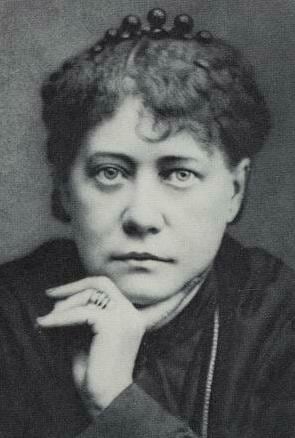
Helena Blavatsky
Übereinstimmung bei: Was ist das Absolute? Gibt es Gott? · Ist die Welt wirklich? · Was geschieht nach dem Tod?
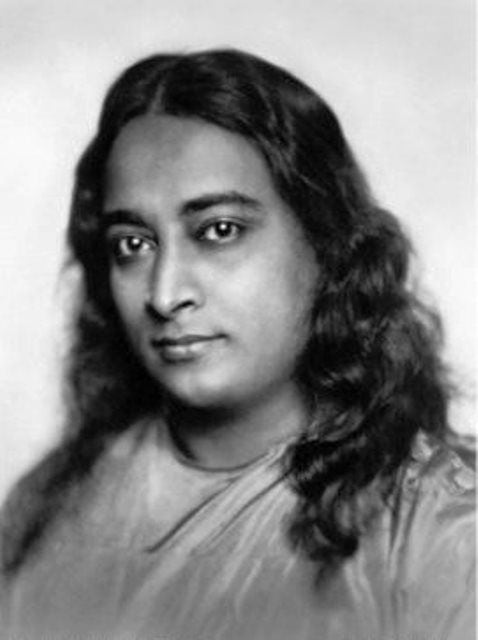
Paramahansa Yogananda
Übereinstimmung bei: Was geschieht nach dem Tod? · Wie erlangt man Befreiung oder Erlösung? · Braucht es einen Lehrer?
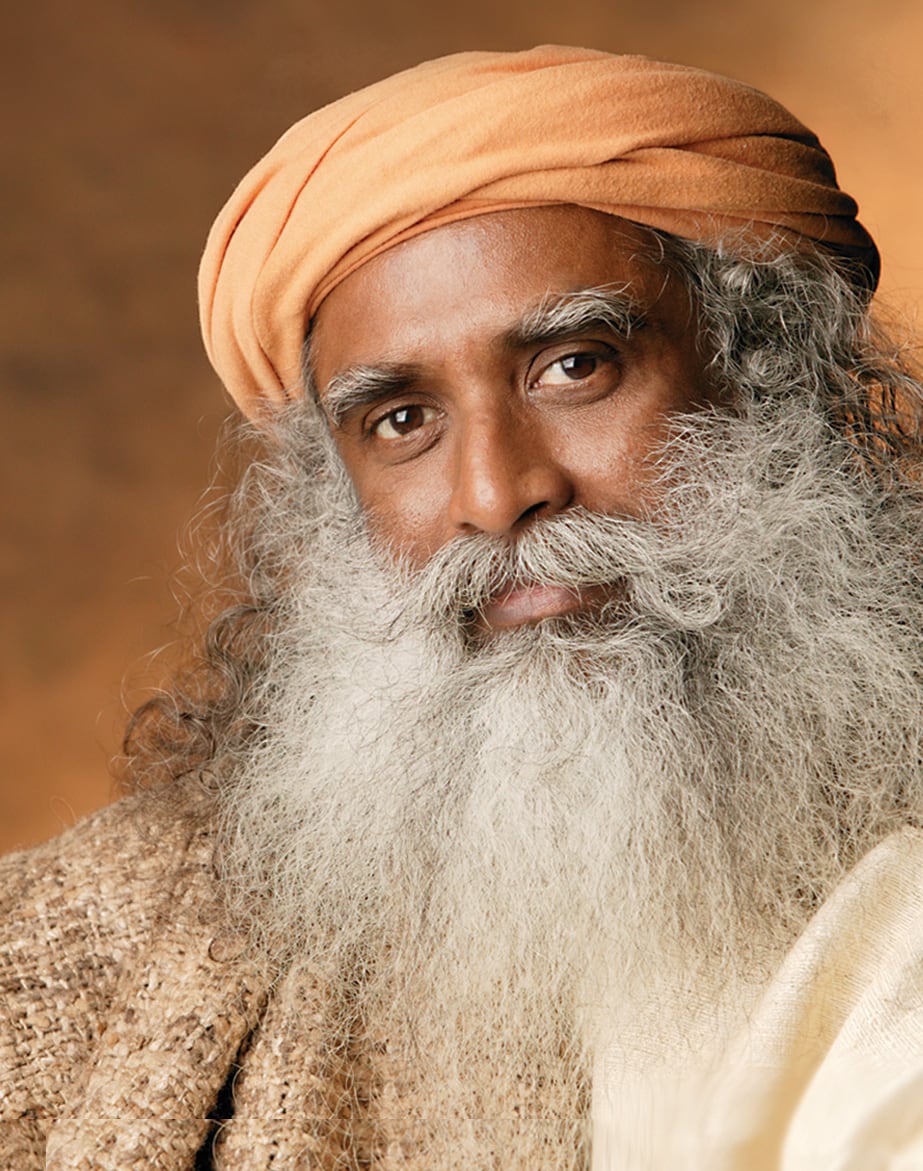
Sadhguru
Übereinstimmung bei: Was ist das Absolute? Gibt es Gott? · Wer bin ich? Gibt es ein wahres Selbst? · Was geschieht nach dem Tod?
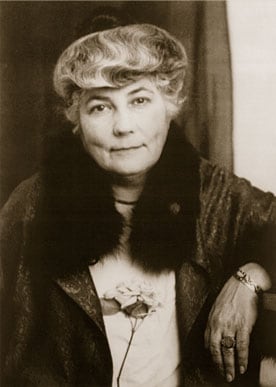
Helena Roerich
Übereinstimmung bei: Was ist das Absolute? Gibt es Gott? · Was geschieht nach dem Tod? · Braucht es einen Lehrer?
Denkt anders als

Nikolai Berdyaev
Widerspruch bei: Wer bin ich? Gibt es ein wahres Selbst? · Was geschieht nach dem Tod? · Braucht es einen Lehrer?
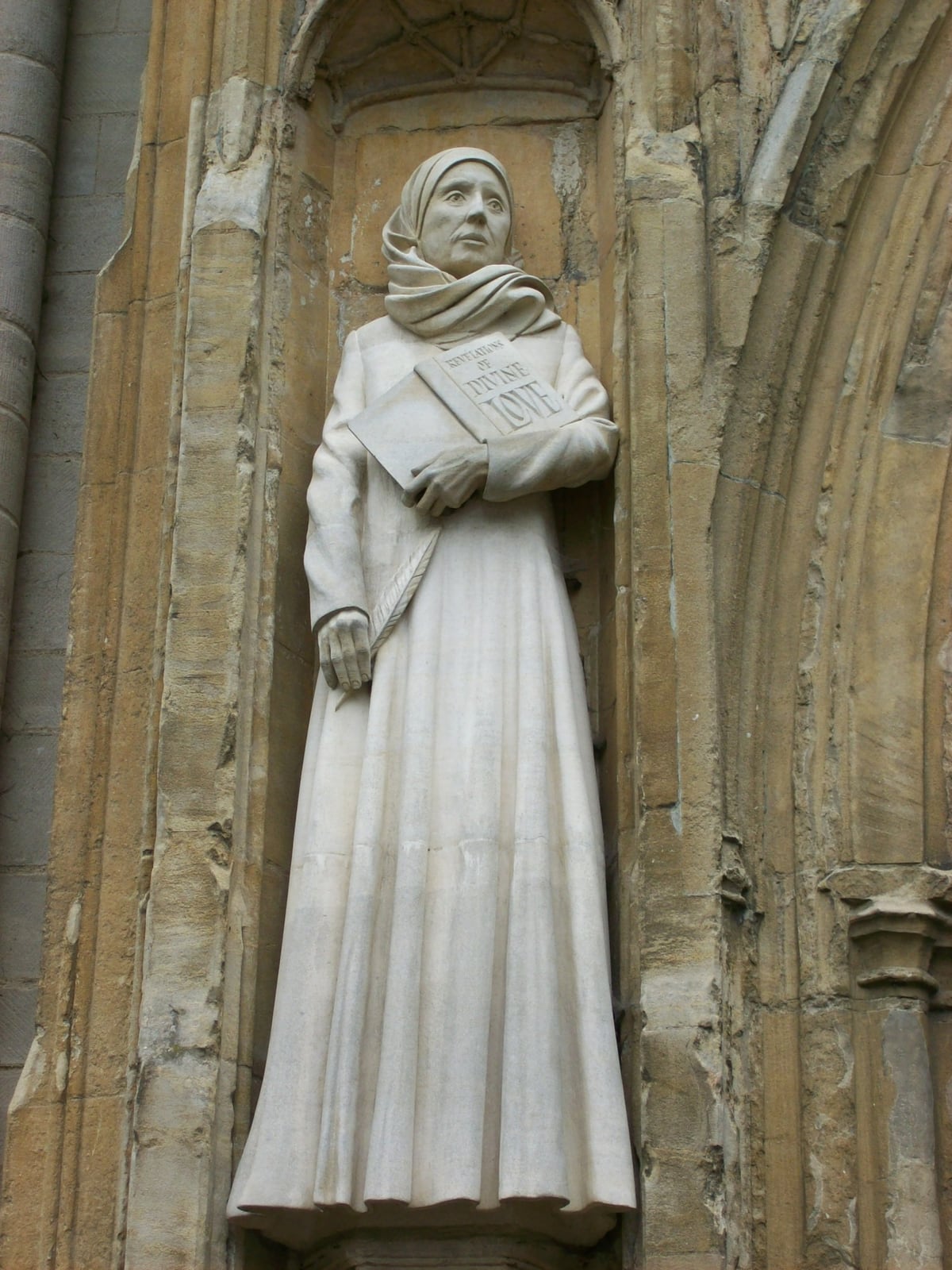
Julian of Norwich
Widerspruch bei: Wer bin ich? Gibt es ein wahres Selbst? · Was geschieht nach dem Tod?
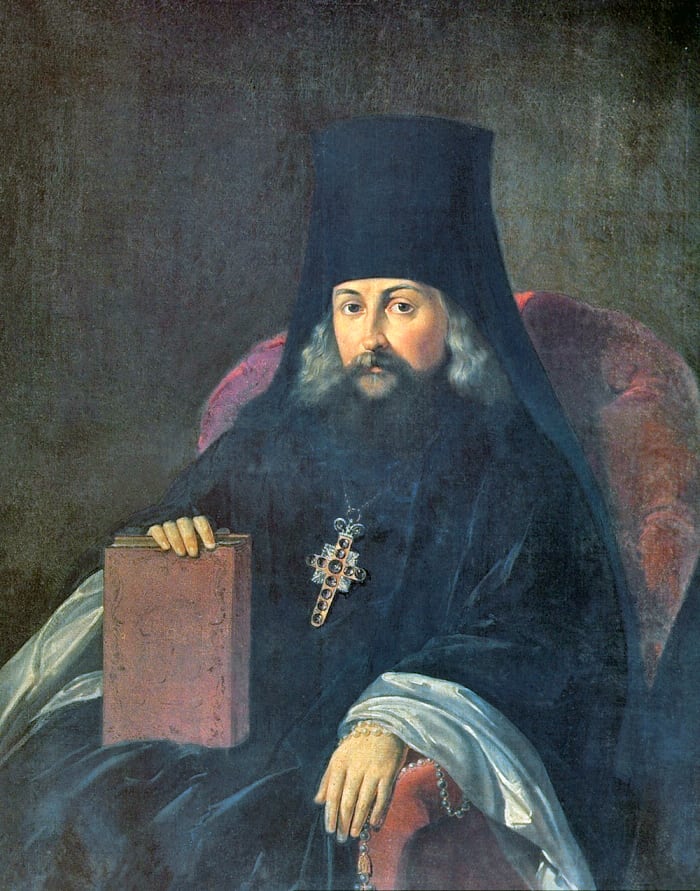
Ignatius Brianchaninov
Widerspruch bei: Wer bin ich? Gibt es ein wahres Selbst? · Was geschieht nach dem Tod?
Seraphim of Sarov
Widerspruch bei: Wer bin ich? Gibt es ein wahres Selbst? · Was geschieht nach dem Tod?
Anekdoten und Erzählungen
Anekdoten und Erzählungen
Zeugnis1910
'How many years I have waited for you!'
Herkunft der Erzählung: Yogananda's account in *Autobiography of a Yogi* (1946), ch. 10, written thirty-five years later. There are no independent witnesses.
Zeugnisc. 1910-1915
The cauliflower robbery
Herkunft der Erzählung: *Autobiography of a Yogi* (1946), ch. 15, 'The Cauliflower Robbery'. Sole source; the element of clairvoyance is the narrator's interpretation.
Zeugnisc. 1910-1911
A tap on the chest
Herkunft der Erzählung: *Autobiography of a Yogi* (1946), ch. 14, 'An Experience in Cosmic Consciousness'. A subjective experience narrated by the one who lived it.
Zeugnis1894
The commission at Allahabad
Herkunft der Erzählung: Two sources from the protagonist himself: the introduction to *Kaivalya Darsanam* (1894) and his account recorded by Yogananda in *Autobiography of a Yogi*, ch. 36. Babaji's historical existence is not documented outside his lineage.
Hagiographische Erzählung1936
The appearance in the Bombay hotel
Herkunft der Erzählung: *Autobiography of a Yogi* (1946), ch. 43. A vision narrated by a single witness, Yogananda himself, beyond verification; the Kriya Yoga International lineage relates similar appearances to Swami Hariharananda.
Zeugnisc. 1915
The bangle against the stars
Herkunft der Erzählung: *Autobiography of a Yogi* (1946), ch. 16, 'Outwitting the Stars'. The prediction and its fulfilment are recorded only in the disciple's account.
Lehren
Lehren
Die Begriffe, die das Denken gliedern, in ihrem Zusammenhang erklärt.
The 24,000-year cycle of the yugasciclo-de-los-yugas
A reinterpretation of the Puranic doctrine of the four ages (*caturyuga*) with nineteenth-century astronomical arguments.
The essential unity of religionsunidad-de-las-religiones
A commission attributed to Babaji in 1894; inherited by Self-Realization Fellowship as a founding principle.
The heart's natural love (sraddha)amor-natural-del-corazon
Aphorisms 5-6 of chapter 3; takes up the notion of *śraddhā* from the *Yoga Sutras* (I.20).
Kriya yogakriya-yoga
Lineage Babaji – Lahiri Mahasaya – Sri Yukteswar – Yogananda.
The guru as guide, not saviourguru
The conception of the guru in the kriya yoga lineage.
Astrology as a science of karmaastrologia-como-ciencia
The Indian astrological tradition (*jyotisha*) read in a yogic key.
Videos
Videos
Aufnahmen, Gespräche und Dokumentarfilme. Die Videos werden von YouTube wiedergegeben; sie werden nicht hier gespeichert.
Sri Yukteshwar video 2
Originalaufnahme· UND· 1 min
Avatarsandyogis
Sri Yukteshwar video 1
Originalaufnahme· UND· 1 min
Avatarsandyogis
Paramahansa Yogananda & Swami Sri Yukteswar
Originalaufnahme· UND· 1 min
Fred McCabe (cgny69)
The Yugas and Spiritual Awakening: The Revolutionary Wisdom of Swami Sri Yukteswar
Vortrag· EN· 58 min
Ananda Sangha WorldwideOffizieller Kanal
Swami Sri Yukteswar: Inspiration from the "Holy Science"
Vortrag· EN· 44 min
Ananda Sangha WorldwideOffizieller Kanal
Sri Yukteswar's Advice on How to Develop the Natural Love of the Heart
Vortrag· EN· 51 min
Ananda Sangha WorldwideOffizieller Kanal
"What are the Yugas?" with Joseph Selbie, co-author of "The Yugas"
Gespräch· EN· 6 min
Ananda Sangha WorldwideOffizieller Kanal
Puri - with the Kriya Yoga Ashram founded by Sri Yukteswar, India 1977
Dokumentarfilm· EN· 1977· 34 min
Kriya Yoga Masters of Kriya Yoga InternationalOffizieller Kanal
Online Class on The Holy Science by Sri Yukteswar April & May 2020
Vortrag· EN· 2020· 12 min
Kriya Yoga Online with Ryan Kurczak
The Spiritual Guidance of Swami Sri Yukteswar: Navigating Life's Challenges
Vortrag· EN· 51 min
Yogacharya Ellen Grace O'Brian
Swami Sri Yukteswar Giri: O Leão da Bengala | Grandes Mestres Ep. 6
Analyse· PT· 32 min
Guilherme Romano
Home of Swami Sri Yukteshwar ji, Ananda Lok & Babaji's Banyan Tree | Serampore
Dokumentarfilm· HI· 12 min
Connect with Thyself - Ruchi Shukla
Galerie
Galerie
Bilder mit geprüfter Lizenz. Jedes bewahrt seine Urheberschaft und seinen Herkunftsnachweis.
Beziehungen
Beziehungen
Einflüsse, Schülerschaften und Verwandtschaften. Die belegte Beziehung wird von der durch Analyse ermittelten Ähnlichkeit unterschieden.
Schüler von
Lahiri Mahasaya
His guru; initiated him into kriya yoga in 1884.
Belegte Beziehung
Begegnete
Mahavatar Babaji
A meeting the author himself relates in his book's introduction (Allahabad, 1894); Babaji's historical existence is not documented outside the lineage.
Belegte Beziehung
Lehrer von
His best-known disciple (1910-1936); ordained him swami in 1915 and gave him the title of paramahansa in 1935.
Belegte Beziehung
Lehrer von
Swami Satyananda Giri
Disciple and biographer; ran the Ranchi school.
Belegte Beziehung
Lehrer von
Paramahamsa Hariharananda
Disciple who spread kriya yoga from the Karar Ashram and founded Kriya Yoga International.
Belegte Beziehung
Beeinflusst von
Comments on the words of Jesus and Revelation in *Kaivalya Darsanam* as expressions of the same truths as the Vedas.
Belegte Beziehung
Beeinflusst von
The practice and the notion of *śraddhā* in his third chapter closely follow the *Yoga Sutras*.
Durch Analyse ermittelte Ähnlichkeit
Begegnete
W. Y. Evans-Wentz
The scholar visited him at Serampore and described him in the preface to the *Autobiography*.
Belegte Beziehung
Zeitgenosse von
A Bengali contemporary who, like him, presented yoga to the West as a universal science of religion.
Durch Analyse ermittelte Ähnlichkeit
Zeitgenosse von
A contemporary from the Calcutta region; both defended the convergence of religions, by different paths.
Durch Analyse ermittelte Ähnlichkeit
Von anderen Einträgen aus verknüpft
Quellen
Quellen
Für diesen Eintrag herangezogene Bibliografie und Kataloge.
- Yogananda, Paramhansa. Autobiography of a Yogi. Nueva York: The Philosophical Library, 1946 (1.ª ed.), caps. 10, 12, 14-16, 36, 42 y 43; prefacio de W. Y. Evans-Wentz. Texto en Wikisource y Project Gutenberg #7452.
- Yukteswar Giri, Swami Sri. The Holy Science (Kaivalya Darsanam). Los Ángeles: Self-Realization Fellowship, 7.ª ed. 1972, 3.ª reimpr. 1977 (texto de 1894; copyright de la revisión, 1949). Consultado en Internet Archive.
- Satyananda Giri, Swami. «Swami Sri Yuktesvar Giri Maharaj: A Biography», en A Collection of Biographies of 4 Kriya Yoga Gurus. Trad. Yoga Niketan. Lincoln (Nebraska): iUniverse, 2006. ISBN 9780595386758.
- Wikidata, «Yukteswar Giri» (Q380790).
- Wikipedia (en), «Swami Sri Yukteswar Giri» (apoyada en la biografía de Satyananda y en la Autobiografía).
- «The Holy Science – 1920 Original Edition: Introduction and Study». Yogananda Harmony (estudio de la historia editorial: Sadhusambad, edición de Atul Chandra Chowdhury de 1920, revisiones de SRF de 1949, 1963 y 1972).
- Yogoda Satsanga Society of India, «Swami Sri Yukteswar».
- Kriya Yoga International (linaje de Paramahamsa Hariharananda), «Swami Shriyukteshwar Giri».
- Yoga Niketan, «Scriptural Commentaries» (Srimad Bhagavad Gita, Spiritual Commentary by Swami Sriyukteshvar Giri).
- Open Library, ediciones de The Holy Science y del comentario a la Gita (ISBN 9780876120514, 9780876120569, 9780595665211, 9788189955038, etc.).
- Selbie, Joseph, y David Steinmetz. The Yugas: Keys to Understanding Our Hidden Past, Emerging Present and Future Enlightenment. Nevada City: Crystal Clarity Publishers, 2010. ISBN 9781565892538.
- Dasgupta, Sailendra Bejoy. Kriya Yoga and Swami Sriyukteshvar. Calcuta: S. B. Dasgupta, 1979.
- Rechteinhaber
- El texto original de 1894/1920 es de dominio público (autor fallecido en 1936). Self-Realization Fellowship (Los Ángeles) y Yogoda Satsanga Society of India son titulares de la edición revisada de 1949 y de sus traducciones; Yoga Niketan, de la traducción inglesa del comentario a la Gita.
- Offizielle Website
- yssofindia.org/about/swami-sri-yukteswar
Bestätigung ausstehend
Was dieser Eintrag noch nicht klären konnte. Wir sagen es lieber, als es aufzufüllen.
- Localizar un facsímil o transcripción con OCR limpio de la edición de 1920 de Kaivalya Darsanam (dominio público en EE. UU., UE y España): las copias de Internet Archive son de la edición revisada de SRF (copyright 1949) y no sirven para la sala de lectura.
- Confirmar fechas y alcance del comentario bengalí a la Bhagavad Gita (¿primeros capítulos?) y la fecha de su primera edición en Bengala.
- Identificar título y ejemplares del tratado de astrología y del «First Book», conocidos solo por la biografía de Satyananda.
- Consultar directamente la biografía de Satyananda (iUniverse, 2006) para fijar las fechas de los estudios, el matrimonio y la ordenación en Bodh Gaya.
- Vídeos: no se encontró material serio en español sobre él; las filmaciones históricas están subidas por terceros sin datos de procedencia (posiblemente la película de C. Richard Wright de 1935-1936).
- Imágenes: la serie «Sri-Yukteswar-1» a «-8» de Commons tiene metadatos inverosímiles (fechas inventadas, el propio Yukteswar como autor); no se ha usado.
- Relaciones con slugs fuera del catálogo (lahiri-mahasaya, mahavatar-babaji, swami-satyananda-giri, swami-hariharananda, w-y-evans-wentz): la ficha de Yogananda usa «sri-yukteswar-giri» como slug de esta persona; conviene unificarlo con «sri-yukteswar».
Recherchiert am 2026-10-25