Non-duality
अद्वैत
advaita
sa · Devanagari
Not-two; in Śaṅkara’s Vedānta, the identity of the Self with Brahman, the sole reality, against which the plural world is appearance.
अद्वय
advaya
sa · Devanagari
Without duality; in Mahāyāna Buddhism, the absence of ultimate opposition between saṃsāra and nirvāṇa, being and non-being, subject and object, without asserting a single reality.
不二
bù èr
zh · Han
Not-two; Chinese Buddhist term, central to the Vimalakīrti Sūtra and to Chan, for the Dharma gate of non-duality.
གཉིས་མེད
gnyis med
bo · Tibetan
Without two; in Tibetan Buddhism, a quality of awareness in which the division between perceiver and perceived dissolves.
وحدة الوجود
waḥdat al-wujūd
ar · Arabic
Unity of being or existence; a formula associated with the school of Ibn Arabi, although he did not use it as a technical term.
τὸ ἕν
tò hén
grc · Greek
The One; in Plotinus, the principle beyond being and thought from which everything proceeds and to which the soul returns.
Not-two is not the same as one
Ordinary experience is made of pairs: I and the world, seer and seen, sacred and profane, suffering and its end. The question traditions raise with non-duality is whether that division is the last word on what is real, or a way of seeing that can be passed through. The affirmative answer appears in very different cultures, which is why it has become the favourite ground of those who hold that all mysticisms say the same thing. It is precisely here that caution is most needed.
The first distinction is logical. To say not-two is not to say one. Śaṅkara's Vedānta does affirm a single reality: Brahman, consciousness without attributes, against which plurality is superimposition. Gauḍapāda's Kārikā (2.32) goes as far as denying origin, dissolution, bondage or liberation from the ultimate standpoint. Mahāyāna Buddhism, by contrast, speaks of advaya to deny that there are two opposed realities without affirming that there is one. Nāgārjuna writes in the Verses on the Middle Way (25.19) that there is not the slightest difference between saṃsāra and nirvāṇa, but that statement follows from the emptiness of both, not from a common substance. In the Vimalakīrti Sūtra (ch. 9) the bodhisattvas define in turn the entry into non-duality; Mañjuśrī says that it lies beyond words, and Vimalakīrti remains silent.
Many non-dualities
Within India itself there are deep disagreements. Kashmir Śaivism, with Utpaladeva and Abhinavagupta, is non-dual but regards the world as a real manifestation of Śiva's consciousness, not an appearance that fades away. Rāmānuja proposed a qualified non-dualism in which souls and the world are real and distinct, though inseparable from God. Tibetan Buddhism, in Mahāmudrā and Dzogchen, describes an awareness without two (gnyis med) that is recognised in direct experience, without turning it into a metaphysical Absolute.
In Islam the formula waḥdat al-wujūd, unity of being, became associated with Ibn Arabi through his commentators, and his critic Ibn Taymiyya made it a target of polemic. For Ibn Arabi there is only one true being, that of God, and creatures are His manifestations; but the Essence remains unknowable, and the creature is at once He and not He. Centuries later Aḥmad Sirhindī proposed speaking of unity of witnessing (waḥdat al-shuhūd): unity is lived in the mystic's perception, not in being. In Neoplatonism, Plotinus speaks of a union with the One in which seer and seen are no longer two (Enneads VI.9), but the One lies beyond being, and the world proceeds from it by degrees.
What is shared and what cannot be unified
The similarities exist. All these currents hold that the division between subject and object is not the ultimate structure of experience, that language does not reach what they describe, and that understanding it requires a transformation of the knower. They also share the risk of being misread as moral indifference, against which almost all of them warn.
The differences, however, are doctrinal and not matters of style. Some affirm a single reality; others deny duality without affirming unity; some hold the world to be illusory and others a real manifestation; some preserve a personal God and others do not consider one. Calling all of this non-dual is possible as long as one remembers that the word describes a shared refusal, not a common doctrine.
Da ciascuna tradizione
Advaita Vedanta · advaita
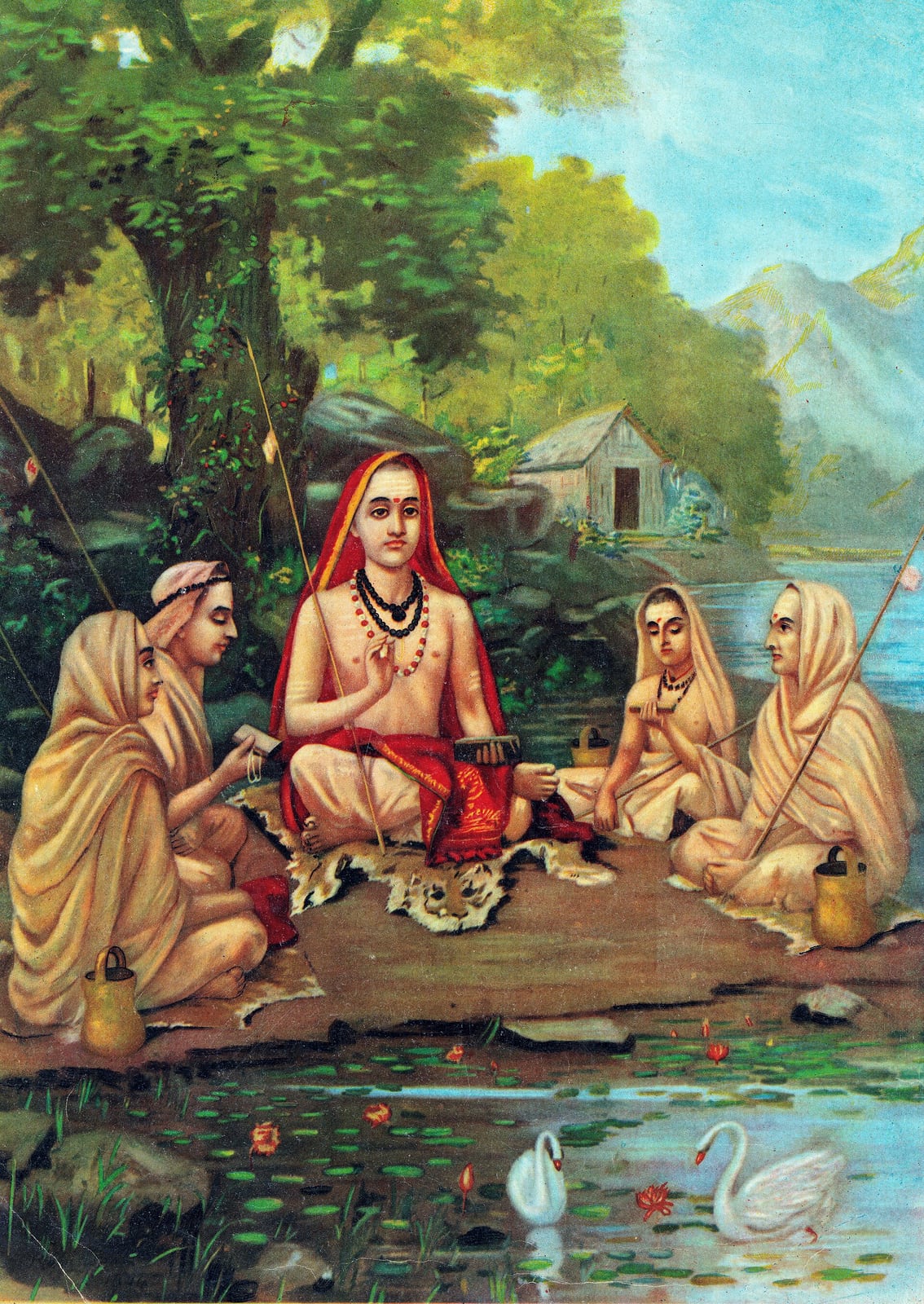
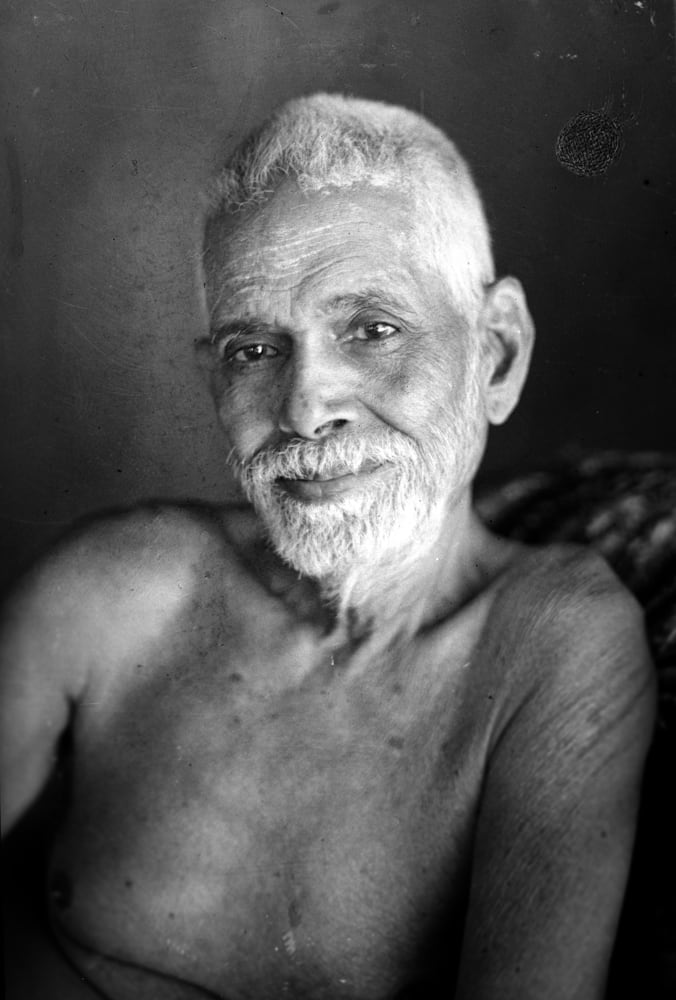
For Śaṅkara only Brahman is real in the ultimate sense; the world is real for ordinary experience but is superimposed on Brahman like the snake on a rope seen in the half-light, an image the school uses frequently. The individual ātman is not a part of Brahman but Brahman itself, and the difference is due to the limitations of mind and body. Non-duality is not attained: it is recognised when ignorance falls away. Ramana Maharshi and Nisargadatta Maharaj, in the twentieth century, taught this position without the scholastic apparatus, insisting on direct enquiry into the subject rather than on the study of texts.
Mahayana · advaya / 不二
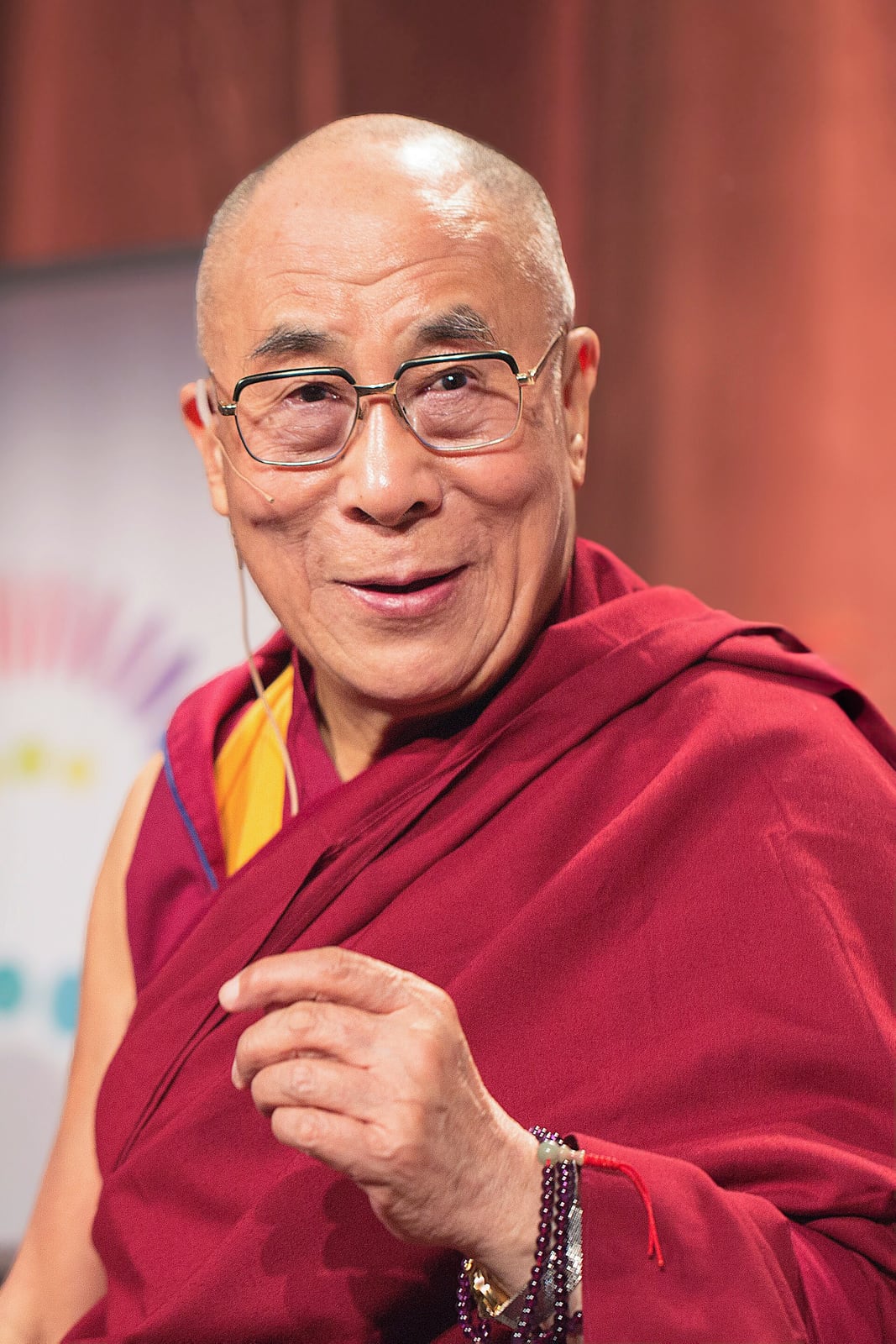
Mahāyāna non-duality arises from emptiness. Nāgārjuna holds in the Verses on the Middle Way (ch. 25) that saṃsāra is in no way distinct from nirvāṇa, because neither has inherent existence. The Vimalakīrti Sūtra devotes chapter 9 to the Dharma gate of non-duality: the bodhisattvas define it as overcoming pairs, good and evil, purity and impurity, self and not-self, and Vimalakīrti answers with silence. Unlike Vedānta, this non-duality does not issue in a single reality but in the absence of essence in everything. The Dalai Lama and Thich Nhat Hanh present it as interdependence and dependent origination.
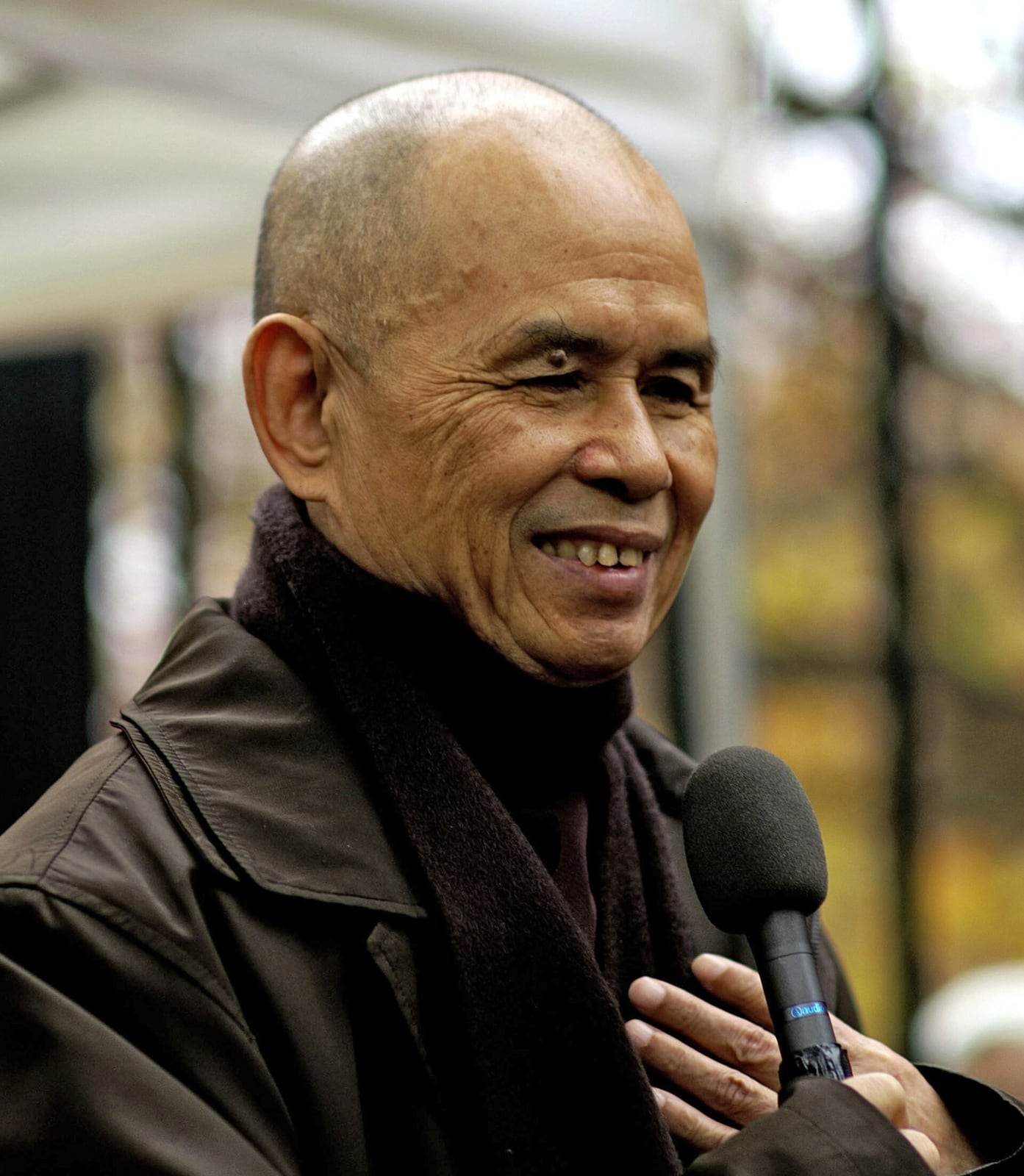
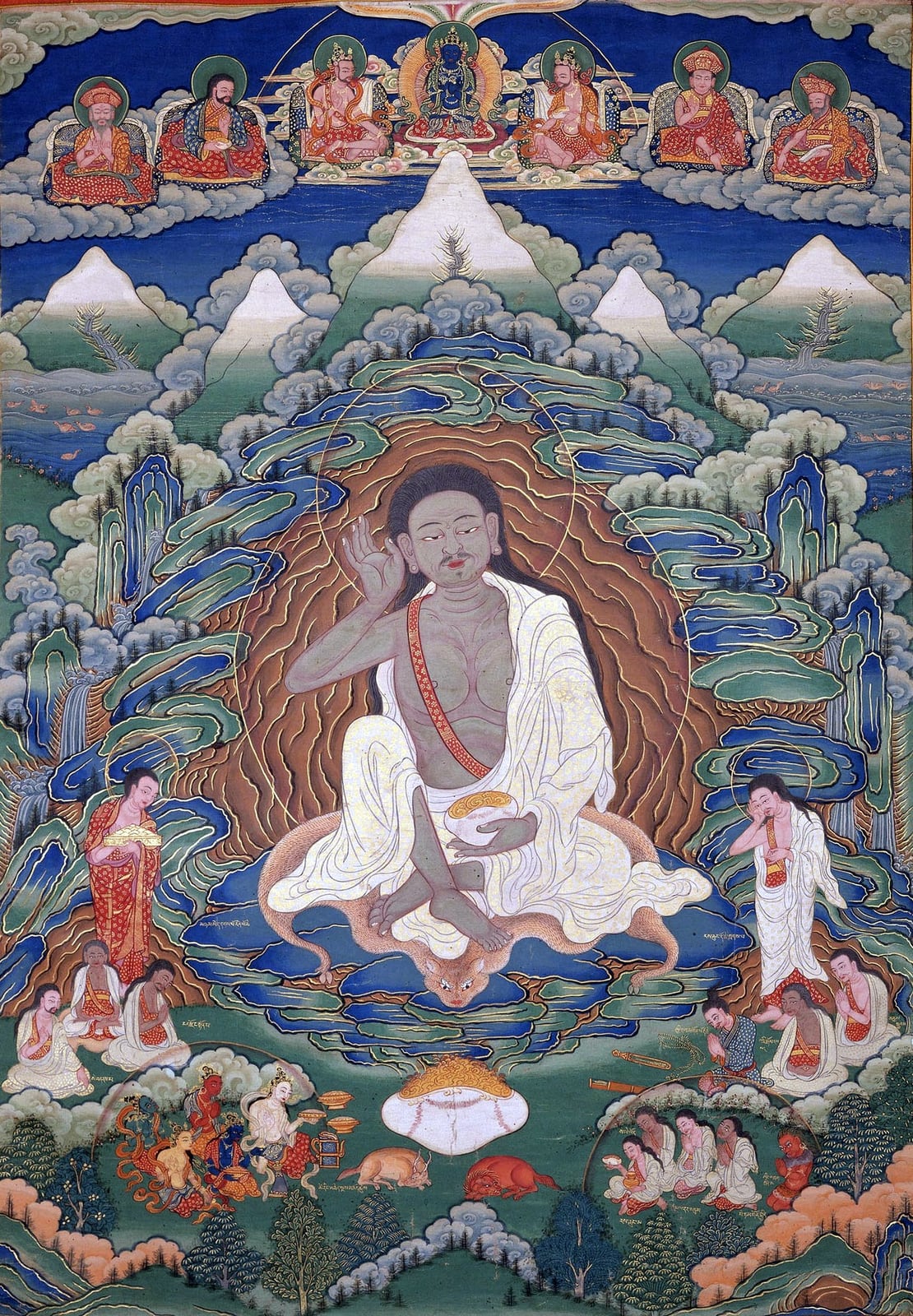
Buddismo tibetano · gnyis med
In Mahāmudrā, which the Kagyu lineage received from Nāropa through Marpa and Milarepa, and in the Dzogchen of the Nyingma school, non-duality is approached as the recognition of the nature of mind: an empty and luminous awareness in which perceiver and perceived are not separate. The songs attributed to Milarepa return again and again to that nature and to the futility of seeking it elsewhere. The tradition insists that this recognition usually requires a teacher's direct introduction and a foundation of preliminary practice. No Absolute is posited as the ground of the world; an experience is described that is recognised and stabilised.
Tantra · advaya
Kashmir Śaivism, systematised by Utpaladeva in the tenth century and by Abhinavagupta shortly after, offers a non-duality different from Śaṅkara's. Everything is Śiva's consciousness, but that consciousness is not passive: it has light (prakāśa) and the capacity to recognise itself (vimarśa), and that is why it manifests as the world. The universe is not a superimposed illusion but a real, though not separate, expression of that consciousness. Liberation is recognition (pratyabhijñā): the individual discovers that he himself is Śiva. This school showed that non-duality can affirm the world rather than deny it, and that there is no single way of understanding it in India.
Sufismo · waḥdat al-wujūd
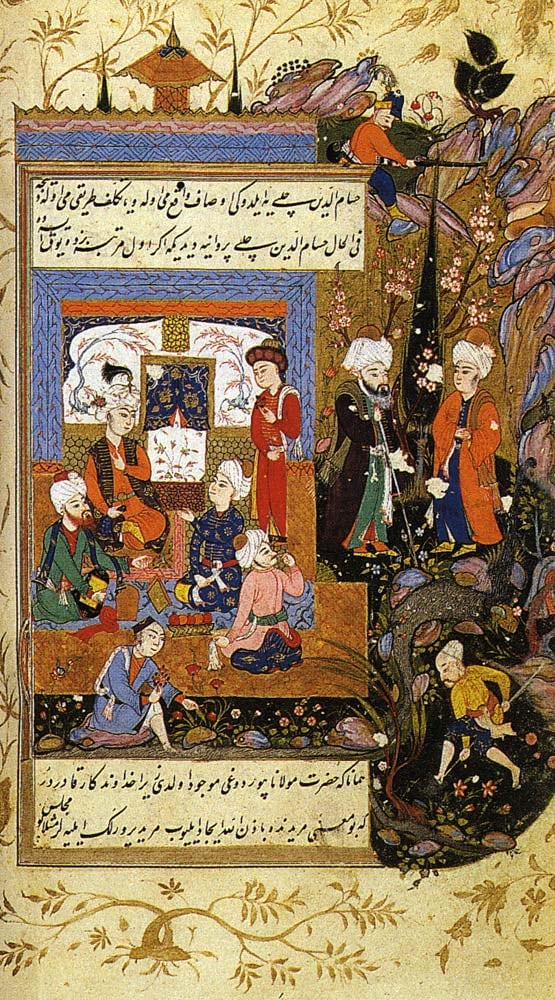
Ibn Arabi holds that true being belongs to God alone and that creatures exist as loci of His manifestation, according to the eternal dispositions of each. But he does not confuse God with the world: the Essence is inaccessible, and of the creature one must say that it is He and not He. The expression unity of being was spread by his disciples, such as Ṣadr al-Dīn al-Qūnawī, and attacked by Ibn Taymiyya. In Mughal India, Aḥmad Sirhindī defended against it the unity of witnessing: the One is seen, but Creator and creature remain distinct. Rumi expresses unity in images of love, not in an ontology.
Neoplatonismo · tò hén
Plotinus places at the origin of everything the One, beyond being and thought, from which the Intellect and the Soul proceed by overflowing. The soul's return culminates in a union he describes at the end of the treatise On the Good or the One (Enneads VI.9): in it the seer does not see something other than himself, and the duality between contemplator and contemplated disappears. Porphyry, in his Life of Plotinus (ch. 23), states that his master attained that union four times while he was with him. But the One is not the sum of things: the world proceeds from it by degrees and keeps its difference, which separates this non-duality from monism.
Domande correlate