Contemplation
θεωρία
theōría
grc · Greek
Act of looking, spectacle; in Plato and Aristotle, intellectual vision of the true and the highest form of life; in Plotinus, the activity from which everything proceeds.
contemplatio
contemplatio
la · Latin
From templum, the space the augur marked out for observation; in Christian theology, a simple and loving knowledge of God, sometimes received as a gift.
הִתְבּוֹנְנוּת
hitbonenut
he · Hebrew
Reflection, careful consideration; in Chabad Hasidism, sustained contemplation of the greatness and unity of God meant to awaken love and awe.
مشاهدة
mushāhada
ar · Arabic
Witnessing, seeing in person; in Sufism, the state in which the heart beholds the manifestations of the divine.
觀
guān
zh · Han
To look, to observe; in the Daodejing, to watch the return of beings; in Chinese Buddhism, penetrating insight (vipaśyanā), joined to calm (止).
Looking without wanting anything
Contemplation answers a question that is not practical: whether there is a way of knowing that consists not in using things but in seeing them. Many traditions have held that the highest thing a human being can do is neither to produce nor to govern, but to look. What is looked at, how, and who takes the initiative vary so much that the common term is misleading.
The Greek word theōría first designated the envoys a city sent to a sanctuary or a festival to witness it. Philosophy interiorised it. Aristotle, in Book X of the Nicomachean Ethics (chs. 7 and 8), argues that the happiest life is the contemplative one, because it is the activity of what is most divine in us, the intellect, and the most self-sufficient. Plotinus goes further: in the treatise On Nature, Contemplation and the One (Enneads III.8) he holds that everything, even the nature that produces plants, is contemplation or its effect. Theōría here is not an emotional state but knowledge.
From intellect to love, and from love to gift
The Latin contemplatio, related to templum, the precinct the augur traced to observe the sky, passed into Christianity with this Greek legacy and transformed it. The fathers read in Martha and Mary (Luke 10:38-42) the pair of active and contemplative life, and medieval theology, from Gregory the Great to Thomas Aquinas (Summa theologiae II-II, questions 179 to 182), set it in order. But Christian contemplation gradually shifted from intellect to love. John of the Cross, in the Dark Night (Book II, ch. 5), calls it an inflow of God into the soul which contemplatives call infused contemplation or mystical theology. The initiative no longer belongs to the one who looks: it is received.
Sufism distinguishes degrees. Al-Qushayrī, in his Risāla, presents presence of heart (muḥāḍara), unveiling (mukāshafa) and witnessing (mushāhada). For Ibn Arabi what is contemplated is never the divine Essence, which remains inaccessible, but its self-disclosures (tajalliyāt), and each person sees according to his capacity. In Chabad Hasidism, hitbonenut is a deliberate, almost discursive contemplation of the unity of God, whose aim is that understanding should awaken love and awe.
In China the character 觀 appears in the first chapter of the Daodejing: to contemplate the subtle and to contemplate the boundaries. In chapter 16 one contemplates the return of beings to their root. Chinese Buddhism used the same character for penetrating insight, joined to calm (止觀), and the Tiantai school made that pair into a complete method. In Vedānta the closest term is nididhyāsana, the profound meditation that the Bṛhadāraṇyaka Upaniṣad (2.4.5) places after hearing and reflecting.
Resemblances and divergences
All these forms share stillness, simplicity of act and the suspicion that busyness prevents seeing. But they differ in what is essential. Aristotelian theōría is an activity proper to the human intellect; Christian infused contemplation is passive and presupposes a God who communicates himself; Sufi mushāhada beholds manifestations, never the essence; Daoist 觀 observes natural processes without addressing anyone; Buddhist insight looks at impermanence in order to let go, not to possess. Translating them all as contemplation is unavoidable, but it does not entitle us to believe that they describe the same experience.
Da ciascuna tradizione
Neoplatonismo · theōría
Plotinus makes contemplation the principle of all reality. In treatise 30 (Enneads III.8) he proposes, almost as a game, that all beings aspire to contemplation, and then develops it seriously: nature produces by contemplating, the soul contemplates the Intellect, the Intellect contemplates itself and, in doing so, contemplates the One from which it proceeds. Action is, for Plotinus, a weakened contemplation, proper to those who cannot look directly. But the One itself lies beyond all contemplation, because contemplating implies a duality between seer and seen; the final encounter with it, described in Enneads VI.9, is no longer theōría.
Mistica cristiana · contemplatio
Sixteenth-century Spanish mysticism carefully distinguishes what the soul can do from what it can only receive. Teresa of Ávila calls supernatural the prayer that is not acquired by diligence, and in the fourth dwelling places of the Interior Castle she separates consolations, which arise from one's own effort, from spiritual delights, which come from God. John of the Cross defines contemplation as a loving and dark knowledge that God communicates, and in the Dark Night (Book II, ch. 5) identifies it with mystical theology. The passage from discursive meditation to contemplation is not forced: it is recognised by signs and accepted. This passivity sets it apart from Greek theōría.

Sufismo · mushāhada
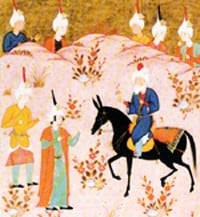
Classical Sufi manuals such as al-Qushayrī's Risāla (eleventh century) order contemplative experience in degrees: presence of heart, unveiling and finally mushāhada, the witnessing in which the heart beholds without discursive intermediary. Ibn Arabi specifies that the divine Essence is never contemplated; what is seen are its self-disclosures (tajalliyāt), and each contemplative receives them according to the disposition of his heart, which changes form with each manifestation. Rumi says it in images: the forms of the world are foam on a sea that cannot be seen. Mushāhada does not abolish the distance between Creator and creature; it makes it transparent.
Ebraismo · hitbonenut
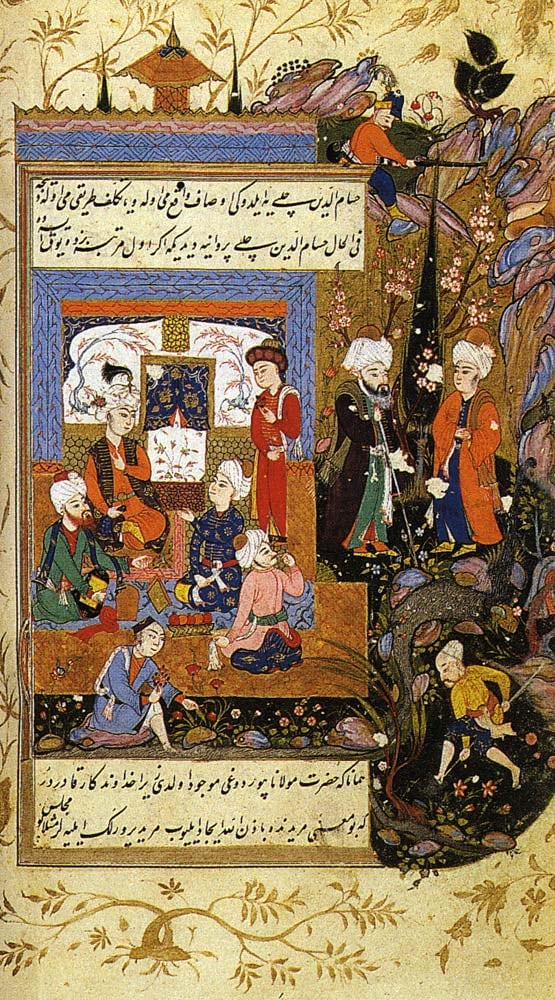
In Chabad Hasidism, founded by Shneur Zalman of Liadi at the end of the eighteenth century, hitbonenut is at the centre of divine service. The point is not to empty the mind but to fill it: to meditate in detail on how divine vitality sustains every creature at every instant, until that intellectual understanding awakens love and awe of God in the heart. The Tanya, Shneur Zalman's principal work, describes this movement from mind to heart as a daily task linked to prayer. It is a discursive and directed contemplation, with precise doctrinal content, very different from the objectless stillness of other traditions.
Taoismo · 觀
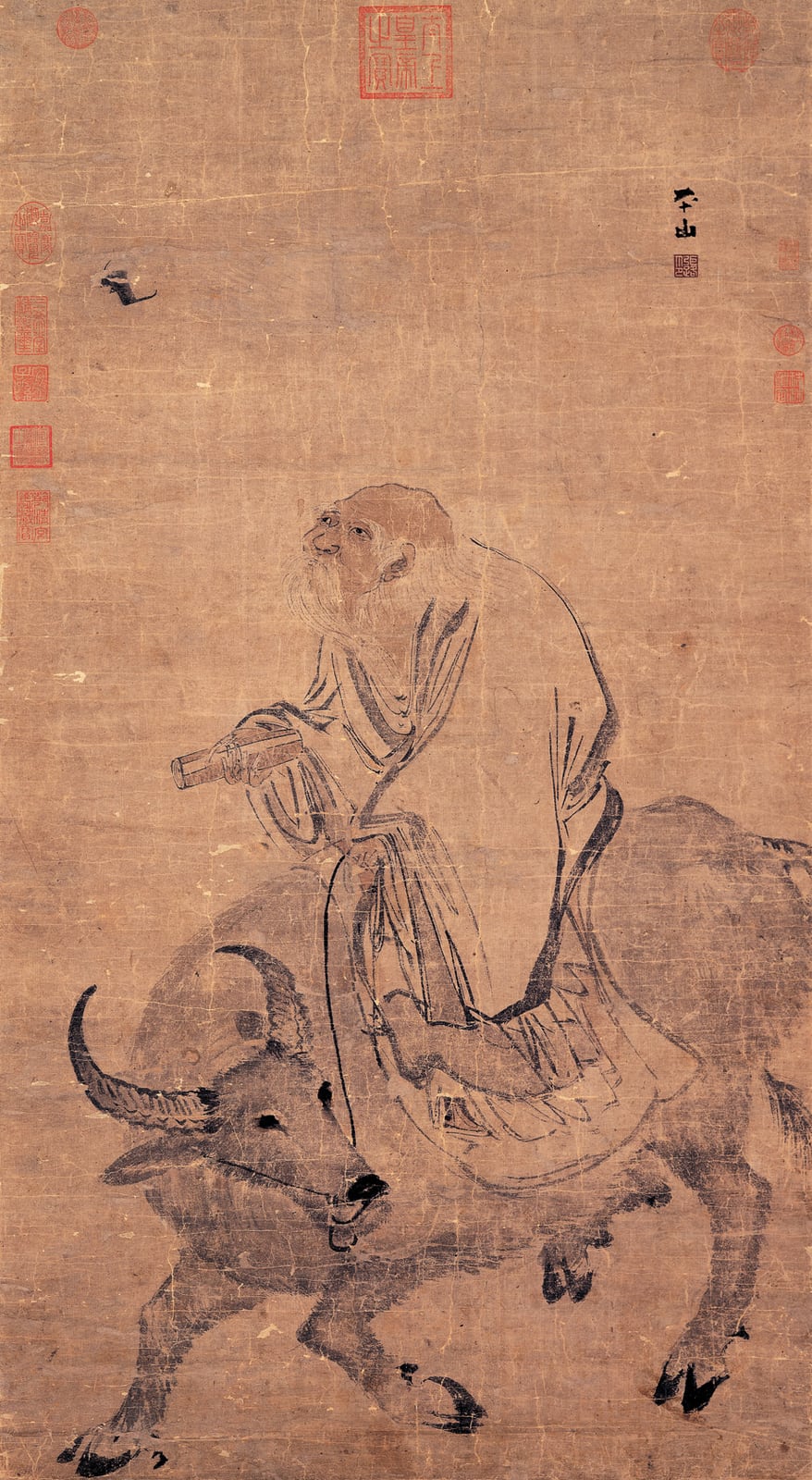
The first chapter of the Daodejing distinguishes two ways of looking: without desire one contemplates the subtlety of the Dao; with desire, its boundaries or manifestations. Chapter 16 proposes attaining utmost emptiness and keeping stillness in order to contemplate how the countless beings arise and return to their root. This contemplation is directed neither to a God nor to a world of ideas, but to the very process of nature, and its fruit is a way of conduct: whoever knows the constant is all-embracing and impartial. The Zhuangzi adds the fasting of the heart (ch. 4), an emptying that allows one to listen with the vital breath rather than with the ear or the mind.
Advaita Vedanta · nididhyāsana
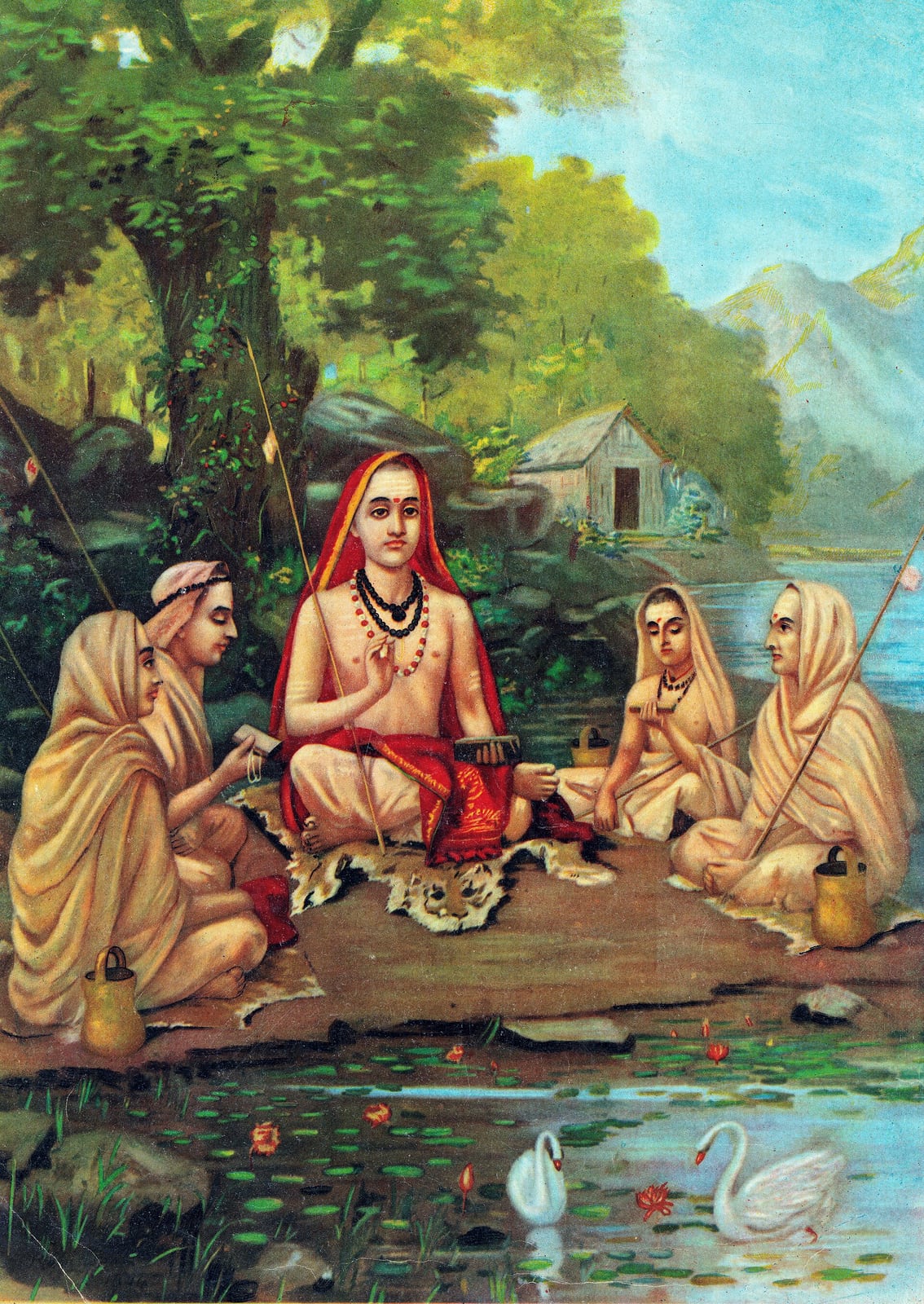
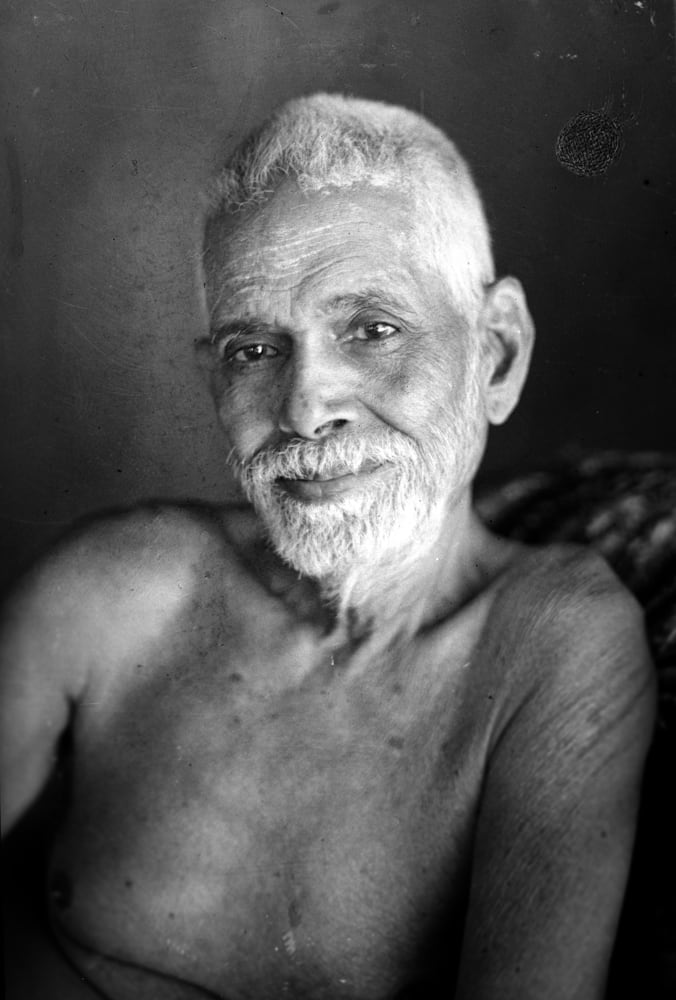
The Bṛhadāraṇyaka Upaniṣad (2.4.5) lists three steps before the Self: hearing of it, reflecting on it and meditating on it deeply (nididhyāsana). Śaṅkara's tradition interprets the third as the sustained contemplation that settles in the mind the knowledge received from scripture and teacher until it ceases to be an idea. For Śaṅkara, however, it is not contemplation that liberates but knowledge; contemplation removes the obstacles. Ramana Maharshi simplified the process into the enquiry into who it is that contemplates. In this school, contemplator and contemplated are not two at the end of the path, which separates it from theistic mysticism.
Domande correlate