Emptiness
शून्यता
śūnyatā
sa · Devanagari
Emptiness; in the Mahāyāna, the absence of inherent existence (svabhāva) in all phenomena, which Nāgārjuna identifies with dependent arising. It does not mean nothingness.
སྟོང་པ་ཉིད
stong pa nyid
bo · Tibetan
Emptiness; Tibetan translation of śūnyatā, the subject of a long debate between self-emptiness (rang stong) and other-emptiness (gzhan stong).
空
kōng
zh · Han
Empty, sky, hollow; the character Chinese Buddhism eventually used to translate śūnyatā.
無
wú
zh · Han
Not having, non-being; in the Daodejing, the fruitful absence from which what exists is born; in Zen, the answer of Zhaozhou’s kōan.
κένωσις
kénōsis
grc · Greek
Self-emptying; from Philippians 2:7, where Christ emptied himself, taking the form of a servant. Later, the believer’s inner stripping.
צִמְצוּם
tsimtsûm
he · Hebrew
Contraction, withdrawal; in Isaac Luria’s Kabbalah, the self-withdrawal of the Infinite that opens an empty space in which the world can exist.
Neither nothing nor lack
Few words unsettle the Western reader as much as emptiness, because in European languages it tends to sound like lack, loss of meaning or a threatening nothingness. The traditions that have made emptiness a central concept, however, are speaking of none of these. The question they ask is different: whether things have an independent being of their own or whether their consistency is relational, and whether being emptied of something is a condition for receiving or for seeing. Beneath one English word, answers are gathered here that not only differ but sometimes exclude each other.
The central case is śūnyatā. For Nāgārjuna, in the Verses on the Middle Way (24.18), whatever arises dependent on conditions is what is called emptiness, and emptiness is in turn a dependent designation: the middle way. Empty means empty of inherent existence, not non-existent. The table exists, but not by itself. The Heart Sūtra condenses this in a famous formula: form is emptiness and emptiness is form. And Nāgārjuna warns (13.8) that emptiness is the relinquishing of all views, and that whoever turns it into one more view is beyond help.
Emptiness in China and in the West
When Buddhism reached China, the first translators borrowed Daoist words to make themselves understood, and rendered śūnyatā with 無, non-being. The method, called geyi, matching meanings, produced misunderstandings that were later corrected by preferring 空. The confusion was understandable. The Daodejing (ch. 11) observes that it is the hollow of the hub that makes the wheel useful, the emptiness of the bowl that makes the vessel useful; and in chapter 40 it states that beings are born from what is, and what is, from what is not. But Daoist 無 is a fruitful source; Buddhist śūnyatā is the source of nothing, but rather the condition of whatever is dependent.
The Abrahamic traditions know another emptiness: the one a person makes in himself, or the one God makes for another. The hymn in Philippians (2:6-7) says that Christ, being in the form of God, emptied himself (ekénōsen), taking the form of a servant. Kénōsis is a self-lowering out of love, and Christian mysticism turned it into a path: John of the Cross, in the Ascent of Mount Carmel (Book I, ch. 13), teaches going by way of nothing in order to reach the all. The Kabbalah of Isaac Luria, in the sixteenth century, imagined that the Infinite withdrew (tsimtsûm) to leave an empty space where what is not God could exist.
What resembles and what does not
In the twentieth century the Kyoto School, with Nishida and Nishitani, tried to think an absolute nothingness in dialogue with European philosophy, and comparisons between Buddhist emptiness and negative theology multiplied.
There are real similarities: almost all these traditions distrust the solidity with which human beings cling to things and to themselves, and they see in self-emptying an opening. But the emptinesses do not coincide. Mahāyāna emptiness is a thesis about how phenomena exist; Daoist non-being is a source; kénōsis is the gesture of a personal God who lowers himself; tsimtsûm is a withdrawal that makes creation possible. Confusing them produces two symmetrical errors: reading Buddhism as nihilism, or reading the Christian mystics as Buddhists.
С точки зрения каждой традиции
Махаяна · śūnyatā
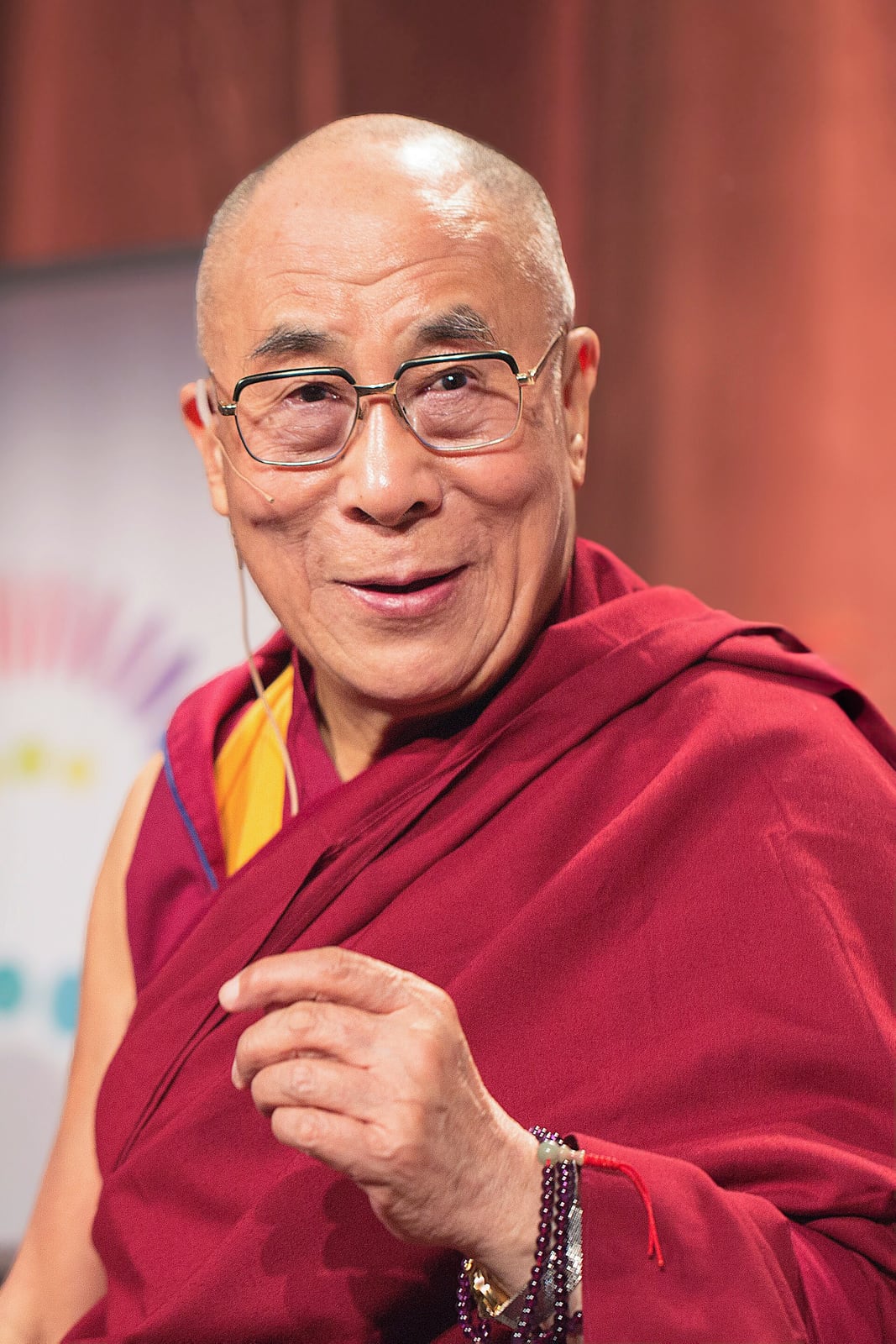
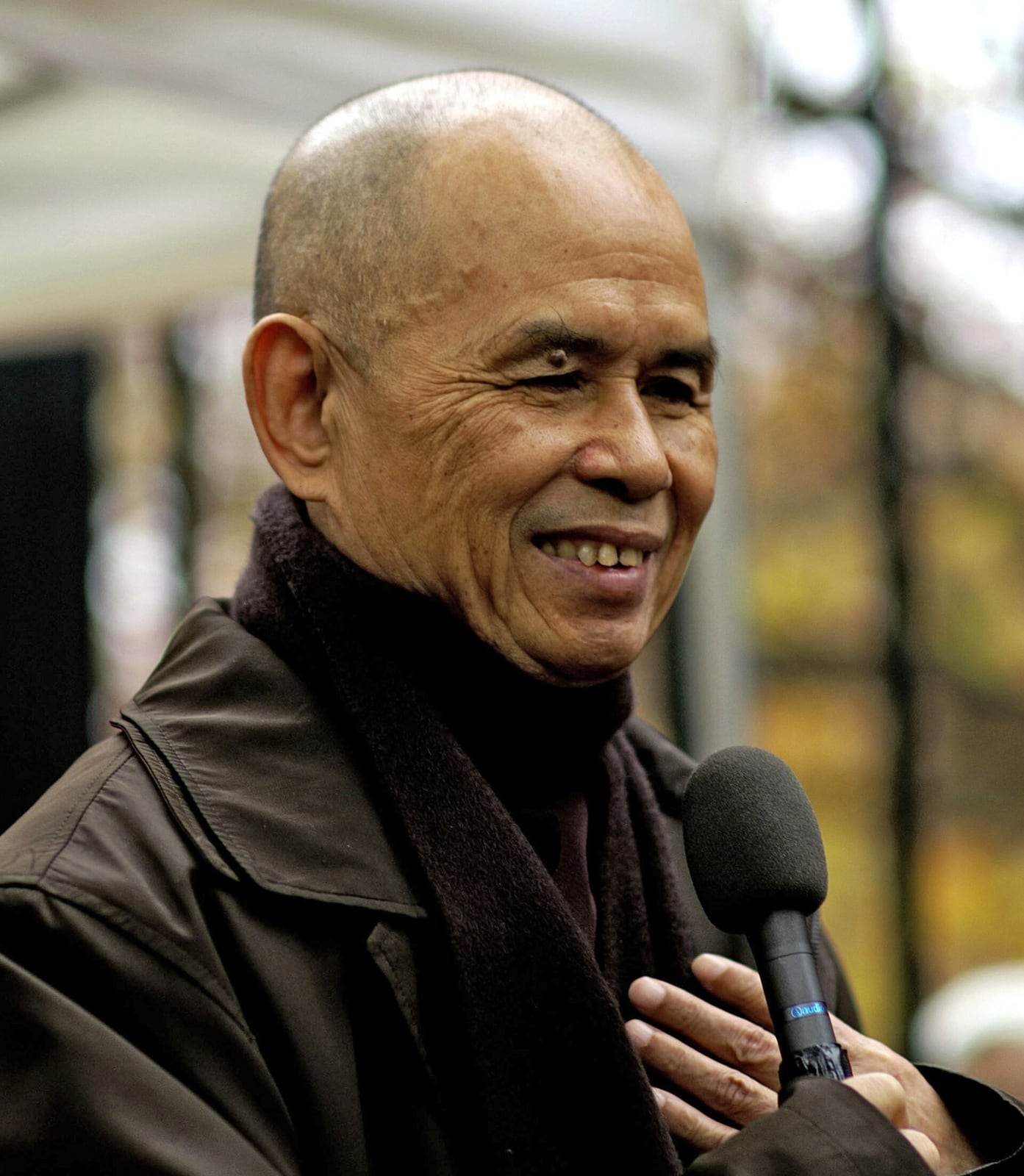
The Perfection of Wisdom sūtras and Nāgārjuna, in the second century, made emptiness the centre of the Mahāyāna. Every phenomenon lacks inherent existence because it depends on causes, on parts and on mental designation; that is why emptiness coincides with dependent arising (Verses on the Middle Way 24.18). Far from denying the world, emptiness makes it possible: if things had a fixed essence, nothing could change (24.20). The Dalai Lama expounds this teaching according to the Prāsaṅgika school and links it to compassion. Thich Nhat Hanh, in his commentary on the Heart Sūtra, renders it as interbeing: to be empty is to be empty of a separate self.
Тибетский буддизм · stong pa nyid
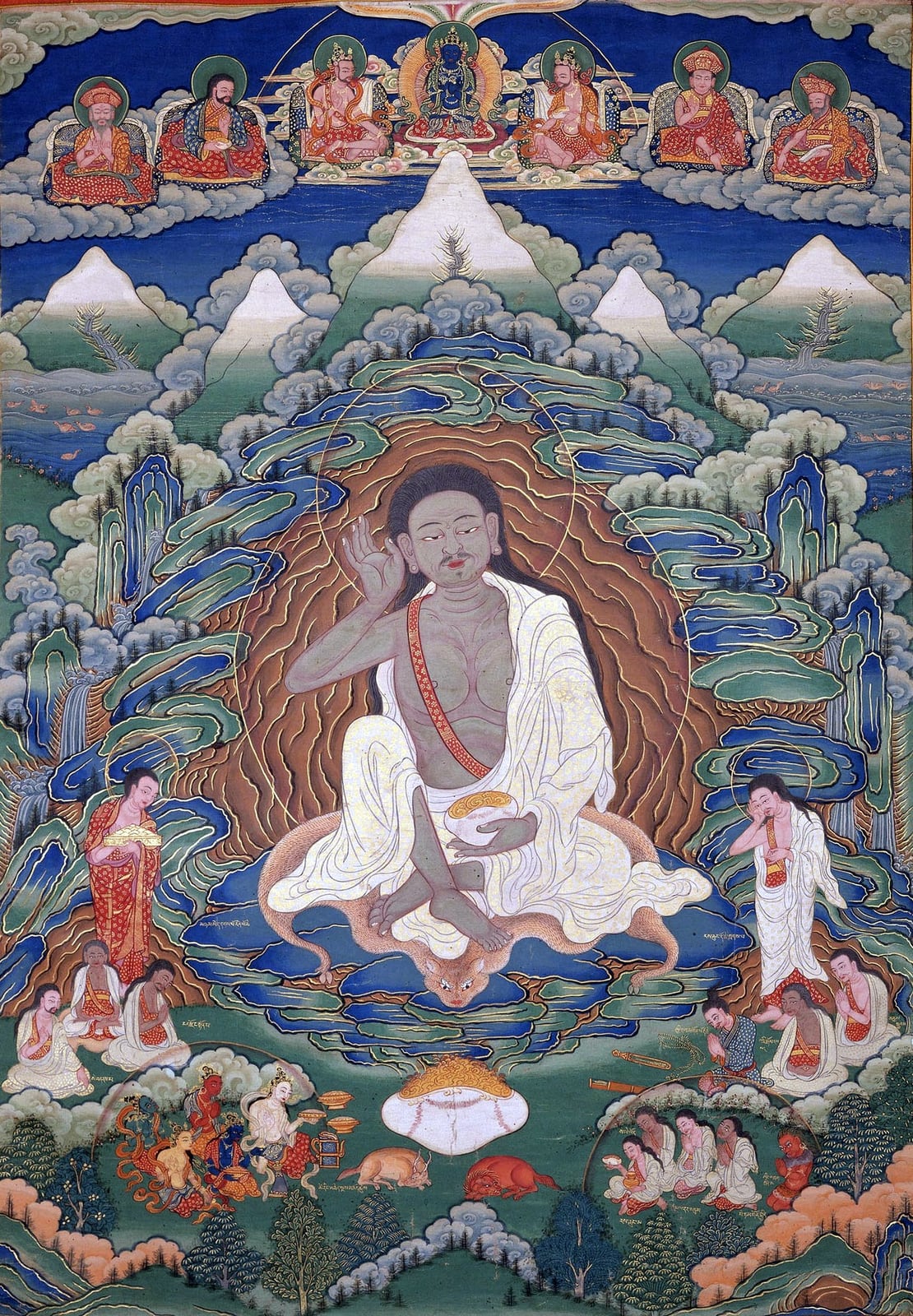
Tibetan Buddhism debated for centuries what is empty and of what. The position of self-emptiness (rang stong), defended by Tsongkhapa and the Gelug school, holds that everything, including ultimate nature, is empty of inherent existence. The position of other-emptiness (gzhan stong), formulated by Dolpopa in the fourteenth century, affirms that ultimate reality is empty of what is adventitious but not of its own luminous qualities. The songs attributed to Milarepa speak of a mind at once empty and luminous. The debate shows that even within a single tradition the word emptiness does not always designate the same thing.
Дзэн / Чань · 無
Chinese Chan and Japanese Zen inherited both Indian emptiness and the Daoist vocabulary of non-being. The first case of the kōan collection The Gateless Barrier (Wumenguan, 1228) relates that a monk asked Zhaozhou whether a dog has buddha-nature, and he answered wú, in Japanese mu. The answer is not a doctrinal denial, since the sūtras affirm that all beings have it, but an obstacle the practitioner must pass through with his whole being. In Zen, emptiness is not thought about: it is embodied in sitting, in gesture and in the absence of clinging to results, including clinging to emptiness itself.
Даосизм · 無
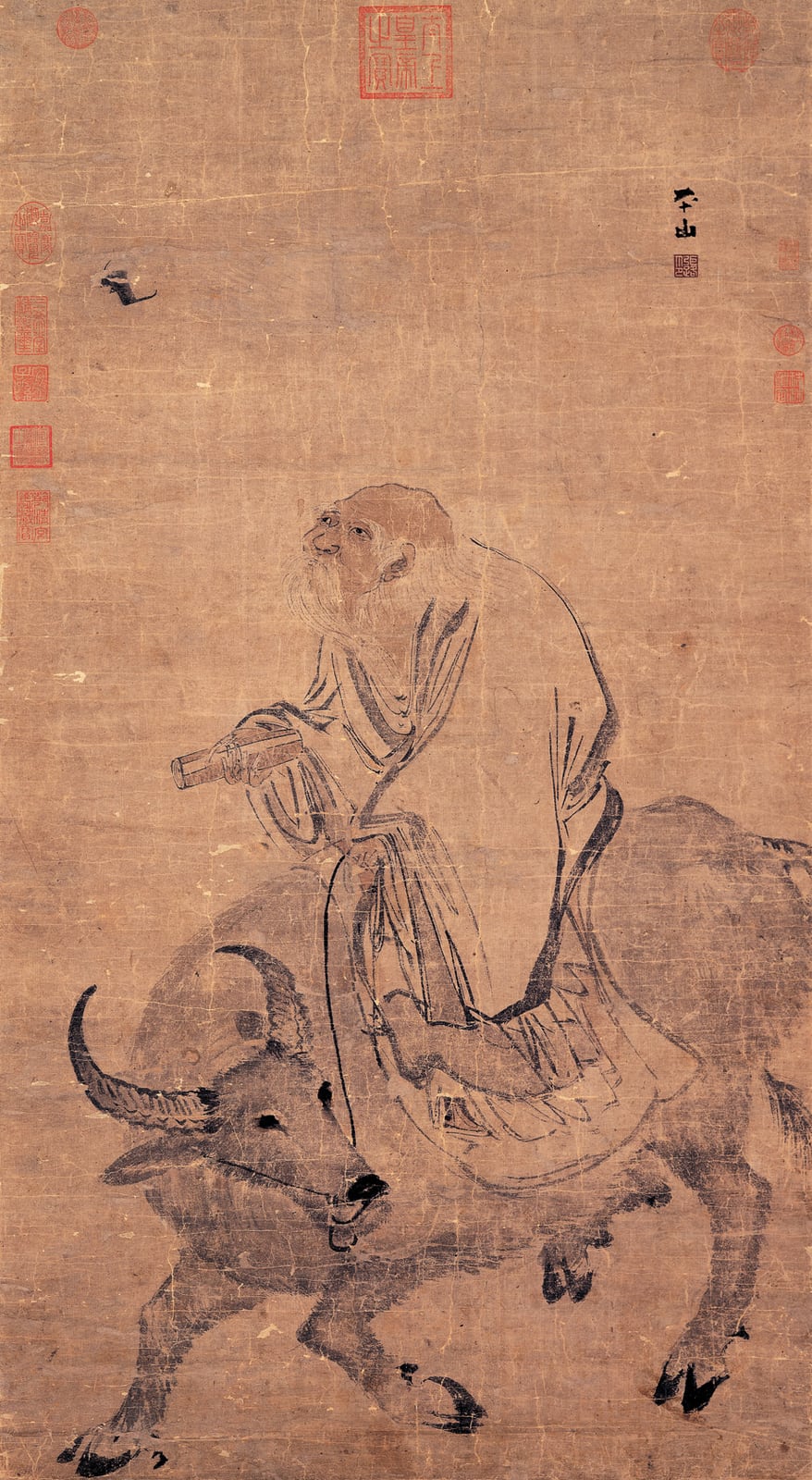
The Daodejing values emptiness for its usefulness and fruitfulness. In chapter 11, thirty spokes converge on a hub, and it is the hollow that allows the cart to be used; clay is shaped into a vessel, and it is the emptiness that makes it useful. Chapter 40 states that beings are born from what is, and what is is born from what is not. The sage imitates that emptiness: he does not accumulate, does not impose himself, acts without forcing (無為). The Zhuangzi adds the fasting of the heart, which empties the mind so that it can receive. Here non-being is origin and reserve, not the absence of inherent existence of which Buddhism speaks.
Христианская мистика · kénōsis
The starting point is Christological: in Philippians 2:6-8 Paul quotes a hymn according to which Christ did not cling to his equality with God but emptied himself, took the form of a servant and became obedient unto death. Christian mysticism made that self-emptying a path for the believer. John of the Cross, Teresa of Ávila's companion in reform, teaches in the Ascent of Mount Carmel (Book I, ch. 13) the denial of every appetite in order to reach God, and sums up the itinerary in the word nothing. This emptiness is not a thesis about the nature of things: it is the stripping of the will so that God, who is someone, may fill it.

Каббала · tsimtsûm
Isaac Luria, who taught in Safed in the sixteenth century and whose doctrine was transmitted above all by Ḥayyim Vital, posed a problem: if the Infinite (ʾên sôf) fills everything, there is no room for the world. His answer was tsimtsûm: God contracts or withdraws from himself and leaves an empty space in which, through a ray of light, the worlds emanate. That emptiness is not the nature of things but the divine gesture that makes otherness possible. Interpretation varied afterwards: some took it literally, and Chabad Hasidism read it as a concealment that exists only from the creature's perspective.
Связанные вопросы