Library Siddhartha Gautama, the Buddha

Later compilation · Essential works
Tipitaka, the Pali Canon ("Three Baskets")
Tipiṭaka
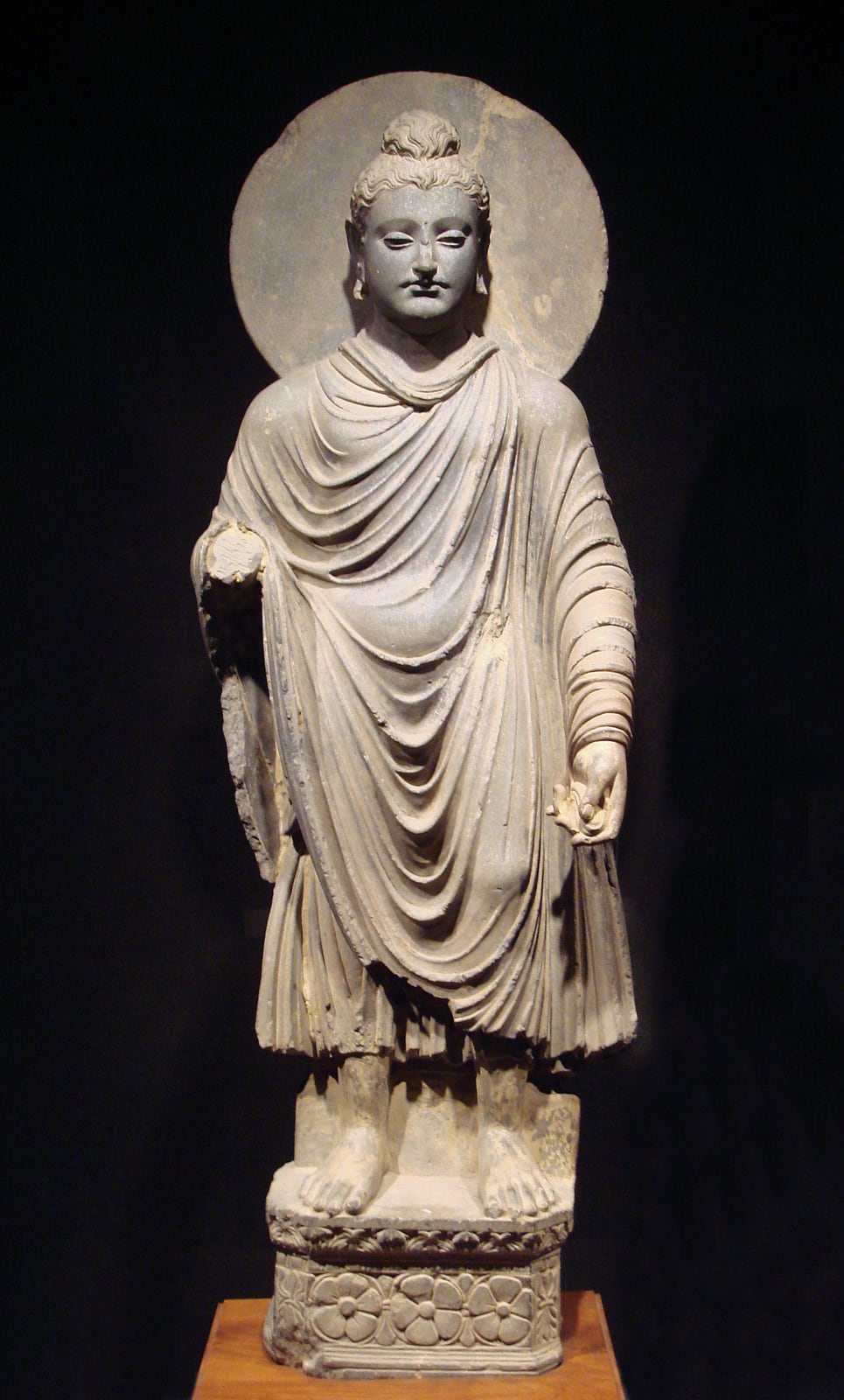
The only complete collection of early Buddhist scripture preserved in an Indic language, canonical for the Theravada tradition. It is divided into three "baskets": the Vinaya Pitaka (monastic discipline), the Sutta Pitaka (the discourses, arranged in five nikayas: Digha, Majjhima, Samyutta, Anguttara and Khuddaka) and the Abhidhamma Pitaka (systematic analysis, clearly later). Its language, Pali, is a literary Prakrit close to the dialects the Buddha may have spoken, but not identical to them. The Burmese Sixth Council edition (1954–1956) and that of the Pali Text Society are the standard ones.
amazon.es · Español · Link to the store.
What it is about
The Tipitaka — "the three baskets" — is the canon of Buddhist scripture in the Pali language, the body of texts that the Theravada tradition, today predominant in Sri Lanka, Myanmar, Thailand, Cambodia and Laos, regards as the word of the Buddha and his immediate disciples. It is not a book but a library: dozens of volumes gathering monastic rules, thousands of discourses, poems, stories of former lives and analytical treatises. It is, moreover, the only complete collection of early Buddhist scripture preserved in an Indic language, and therefore the main source for what the historical Buddha taught, though not the only one: its parallels in Chinese, Sanskrit and Tibetan allow it to be checked.
The three baskets are very different in kind. The Vinaya Pitaka records the discipline of the monastic community: the rules for monks and nuns, each accompanied by the story that prompted it, and the procedures for ordination, the rains retreat or the settling of disputes. The Sutta Pitaka contains the discourses, arranged in five collections or nikayas: the long, the middle-length, those grouped by topic, those arranged numerically, and a "minor" collection of varied texts, among them the Dhammapada. The Abhidhamma Pitaka, clearly later, systematises the teaching in a minute analysis of mental states and phenomena.
The doctrinal heart lies in the suttas. There one finds the four noble truths — suffering, its origin in thirst or craving, its cessation and the path leading to it — the eightfold path, the dependent origination of phenomena, the analysis of the person into five aggregates that do not constitute a permanent self, and a detailed theory and practice of meditation, from the establishing of mindfulness to the absorptions. All this appears not as an abstract system but in dialogues with monks, brahmins, rival ascetics, kings, merchants and farmers, so that the canon is also a fresco of north Indian society in the fifth century BCE.
Its importance can hardly be overstated. For Theravada Buddhism it is the final authority in doctrine and discipline; for the study of Buddhism in general, the most extensive witness to its first centuries; for the history of religion and philosophy, one of the great corpora of antiquity, comparable in ambition to the Vedas or the Bible. Its style, repetitive and formulaic because it was transmitted by memory for centuries, puzzles the modern reader, but behind those repetitions lies a surprising psychological precision and a constant invitation to test for oneself what is taught.
Authorship note
The Buddha wrote nothing. The discourses were transmitted orally for centuries by specialised reciters and committed to writing in Sri Lanka in the first century BCE; authorship is collective and attribution to the Buddha traditional. Scholarship distinguishes early strata from later additions by comparing the Pali canon with its Chinese, Sanskrit and Tibetan parallels.
Context of composition
The Buddha wrote nothing. According to tradition, shortly after his death — which current research places around 400 BCE, against the traditional dates of 483 or 544 BCE — five hundred monks met at Rajagaha in the first council: Ananda recited the discourses and Upali the discipline. A second council, at Vesali a century later, debated points of discipline, and the Theravada tradition places a third at Pataliputra under the emperor Ashoka, in the third century BCE. The exact historicity of these councils is disputed, but they reflect a real process of oral fixation by specialised reciters, the bhanakas.
According to the Sinhalese chronicles, the teaching reached Sri Lanka with Mahinda, son of Ashoka, and the canon was written down on palm leaves at the Aluvihara monastery in the first century BCE, under King Vattagamani Abhaya, when war and famine threatened the chain of oral transmission. Its language, Pali, is a Middle Indo-Aryan literary language, close to the dialects the Buddha may have spoken, though not identical with them.
Structure
- 01
Vinaya Pitaka (the discipline)
Three sections: the *Suttavibhanga*, analysing the rules of the monastic code (227 for monks and 311 for nuns) with the story behind each; the *Khandhaka* (*Mahavagga* and *Cullavagga*), with community procedures, the account of the awakening and first sermon, and the founding of the order of nuns; and the *Parivara*, a compendium.
- 02
Digha Nikaya (long discourses)
Thirty-four extended discourses in three sections. It includes the *Brahmajala*, a catalogue of the philosophical views of the age; the *Samannaphala*, on the fruits of the ascetic life; the *Mahaparinibbana*, an account of the Buddha's last months; the great discourse on mindfulness (*Mahasatipatthana*) and the *Sigalovada*, an ethics for lay people.
- 03
Majjhima Nikaya (middle-length discourses)
One hundred and fifty-two discourses of middle length, perhaps the most varied and accessible collection. It contains the *Satipatthana Sutta*, the similes of the raft and the snake (MN 22), the parable of the poisoned arrow (MN 63), the conversion of Angulimala (MN 86) and mindfulness of breathing (MN 118).
- 04
Samyutta Nikaya (connected discourses)
Thousands of short discourses grouped by topic into 56 *samyuttas*, divided into five sections. It is the doctrinal collection par excellence: dependent origination, the five aggregates, the six sense bases, the factors of awakening and, in the *Sacca Samyutta*, the first discourse on the four noble truths (SN 56.11).
- 05
Anguttara Nikaya (numerical discourses)
Discourses arranged in eleven sections according to the number of items they treat, from one to eleven: one thing leading to harm, two kinds of people, three roots of the unwholesome… It abounds in practical advice to lay people and contains the *Kalama Sutta* (AN 3.65), on how to examine teachings.
- 06
Khuddaka Nikaya (minor collection)
Fifteen books in the Sinhalese and Thai editions (eighteen in the Burmese), of varied periods and genres: the *Dhammapada*, the *Udana*, the *Itivuttaka*, the *Sutta Nipata*, the poems of monks and nuns (*Theragatha* and *Therigatha*), the stories of former lives (*Jataka*) and later works of a scholastic character.
- 07
Abhidhamma Pitaka (the higher teaching)
Seven treatises: *Dhammasangani*, *Vibhanga*, *Dhatukatha*, *Puggalapannatti*, *Kathavatthu*, *Yamaka* and *Patthana*. They classify mental states and phenomena and their conditional relations with almost mathematical thoroughness. Tradition ascribes it to the Buddha; scholarship dates it to the following centuries, and the *Kathavatthu* is linked to the third council.
Main themes
The four noble truths and dependent origination
The canon presents the teaching in the shape of a medical diagnosis: there is suffering, it has a cause — thirst or craving — it can cease, and there is a path. Dependent origination explains the mechanism: nothing arises by itself, but within a chain of conditions running from ignorance to ageing and death, which can be undone if one of its links is cut.
No permanent self
The person is analysed into five aggregates — form, feeling, perception, mental formations and consciousness — none of which is stable or can be called "I" or "mine". It is not a nihilistic denial of the person but a method for disarming attachment: what is impermanent is unsatisfactory, and what is unsatisfactory cannot be the core of oneself.
Meditation: mindfulness and absorption
The suttas contain the oldest and most detailed description of Buddhist meditation: the establishing of mindfulness on body, feelings, mind and phenomena; mindfulness of breathing; the four absorptions (*jhana*) and the development of loving-kindness and compassion. Practice is never separated from ethics or understanding.
Community and ethical life
The *Vinaya* shows a real community, with conflicts, abuses and remedies, and regulates monastic life in detail. The suttas addressed to lay people speak of household economy, friendship, the reciprocal duties of parents and children or of employers and workers. Early Buddhism thus appears as a proposal for the whole of society, not only for renunciants.
Testing for oneself
Several discourses insist that the teaching should be accepted not on tradition, authority or logic, but on one's own experience of what leads to good. Doctrine is compared to a raft used to cross over and left on the shore. That attitude does not exclude faith but subordinates it to verification, and it explains the canon's appeal to the modern reader.
Key passages
«This, monks, is the noble truth of suffering: birth is suffering, ageing is suffering, illness is suffering, death is suffering; union with what is not loved is suffering, separation from what is loved is suffering, not getting what one wants is suffering; in brief, the five aggregates of clinging are suffering.»
Idaṃ kho pana, bhikkhave, dukkhaṃ ariyasaccaṃ — jātipi dukkhā, jarāpi dukkhā, byādhipi dukkho, maraṇampi dukkhaṃ, appiyehi sampayogo dukkho, piyehi vippayogo dukkho, yampicchaṃ na labhati tampi dukkhaṃ — saṃkhittena pañcupādānakkhandhā dukkhā.
From the first discourse tradition ascribes to the Buddha, given in the deer park at Isipatana (Sarnath) to his five former companions. The word *dukkha* covers everything from physical pain to the subtle unsatisfactoriness of all that is conditioned; "suffering" is only an approximation.
«Come, Kalamas: do not go by repeated hearing, nor by tradition, nor by rumour, nor by the authority of scripture, nor by logic, nor by inference, nor by reasoning on appearances, nor by a view accepted after pondering it, nor by someone's apparent competence, nor by the thought "this ascetic is our teacher".»
Etha tumhe, kālāmā, mā anussavena, mā paramparāya, mā itikirāya, mā piṭakasampadānena, mā takkahetu, mā nayahetu, mā ākāraparivitakkena, mā diṭṭhinijjhānakkhantiyā, mā bhabbarūpatāya, mā samaṇo no garūti.
Often quoted as a manifesto of Buddhist free inquiry. The discourse continues: when one knows for oneself that something is unwholesome and leads to harm, one should abandon it, and take up what leads to good. It is not an invitation to distrust everything but to judge teachings by their effects.
«I have taught you the Dhamma as similar to a raft, monks: for crossing over, not for grasping.»
Kullūpamo vo, bhikkhave, dhammo desito nittharaṇatthāya, no gahaṇatthāya.
The raft simile tells of a man who builds a raft to cross a river and, once on the far shore, does not carry it on his back. It warns against clinging even to right teachings; in the same discourse, the snake simile cautions against their wrong use.
«Now, monks, I declare to you: conditioned things are subject to passing away. Strive on with heedfulness.»
Handa dāni, bhikkhave, āmantayāmi vo: vayadhammā saṅkhārā, appamādena sampādethā.
The Buddha's last words according to the canon, at Kusinara. They join impermanence and heedfulness, the two axes of his teaching. The same discourse records the advice to be "an island and refuge to oneself" and the refusal to name a successor: the Dhamma and the discipline will be the teacher.
Reception and influence
In the Theravada world the canon has never been read alone. In the fifth century Buddhaghosa and other commentators rendered into Pali and reorganised the old Sinhalese commentaries, and their interpretation — summed up in the Visuddhimagga — became orthodoxy. Transmission rested on the monasteries of Sri Lanka, Myanmar and Southeast Asia, which copied the text on palm leaves and wrote it in their own scripts. In 1868, under King Mindon, the whole was carved on 729 marble slabs at the Kuthodaw pagoda in Mandalay; in 1893 the first printed edition in book form appeared in Bangkok, and in 1954–1956 the Sixth Council in Rangoon established the Burmese edition that now circulates in digital form.
In the West, the Pali Text Society, founded in London in 1881 by T. W. Rhys Davids, published the edition in Roman script and the first complete translations. In recent decades the English versions of Bhikkhu Bodhi, Bhikkhu Ñanamoli and Maurice Walshe, and Bhikkhu Sujato's freely licensed translations on SuttaCentral, have renewed its reading. In Spanish there are partial translations, among them Amadeo Solé-Leris and Abraham Vélez de Cea's Majjhima Nikaya.
Scholars debate how far the canon reflects the teaching of the historical Buddha: some, such as Richard Gombrich, argue that its core is very old and coherent; others, such as Gregory Schopen, stress that the texts show the community of later centuries. Systematic comparison with the Chinese Agamas has revealed a remarkable agreement on essentials.
How to read it
No one reads the canon from beginning to end like a book, and it is unwise to try. The most sensible way in is a thematic anthology such as Bhikkhu Bodhi's *In the Buddha's Words*, which selects and orders the essential discourses. Then the *Majjhima Nikaya* is the best collection to read straight through; the *Samyutta* is consulted by topic; the *Digha* holds the great narratives; the *Anguttara*, practical advice. The *Vinaya* and *Abhidhamma* are for advanced readers. One must accept the repetitions: they are the trace of an oral tradition and, read aloud, have an almost meditative rhythm. Annotated translations prevent many terminological misunderstandings.
Editions and translations
Editions in your language first, without hiding the others. Each with its cover and its store.
English
Siddhartha Gautama, the Buddha
SuttaCentral: Early Buddhist texts, translations, and parallels
The Conscious LibrarySuttaCentral: Early Buddhist texts, translations, and parallels
SuttaCentral, 2018
Translation: Bhikkhu Sujato y otros
Traducciones inglesas completas de los cuatro primeros nikayas y gran parte del Khuddaka, en dominio público (CC0), con el texto pali y paralelos.
Pali
Siddhartha Gautama, the Buddha
Chaṭṭha Saṅgāyana Tipiṭaka (edición del Sexto Concilio)
The Conscious LibraryChaṭṭha Saṅgāyana Tipiṭaka (edición del Sexto Concilio)
Vipassana Research Institute (tipitaka.org), 1956
Texto pali íntegro en varias escrituras; acceso libre.
Español

Majjhima Nikâya. Los sermones medios del Buddha
Kairós, 2000
Translation: Amadeo Solé-Leris y Abraham Vélez de Cea
ISBN 9788472453784
Selección de discursos del Majjhima Nikāya (442 págs.); edición digital ISBN 9788472457935.
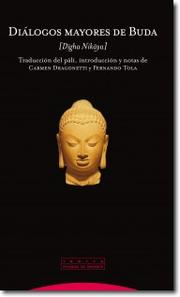
Diálogos mayores de Buda
Trotta, 2010
Translation: Carmen Dragonetti y Fernando Tola
ISBN 9788498791631
Discursos del Dīgha Nikāya traducidos del pali.
Further reading
- Majjhima Nikaya (The Middle Length Discourses)
The collection in the canon best suited for starting to read the discourses continuously.
- Dhammapada
The best-known book of the canon, summarising its ethics and doctrine in verse.
- The Lotus Sutra
It represents the other great current, the Mahayana, which reinterprets the teachings of the early canon as skilful means towards a single vehicle.
- Old Path White Clouds
A narrative biography of the Buddha built from the accounts in the Pali canon and its parallels.
Other works by Siddhartha Gautama, the Buddha
- Digha Nikaya (The Long Discourses) · 25
- Majjhima Nikaya (The Middle Length Discourses) · 25
- Samyutta Nikaya (The Connected Discourses) · 25
- Anguttara Nikaya (The Numerical Discourses) · 25
- Dhammapada (Verses on the Dhamma) · 25
- Sutta Nipata (The Group of Discourses) · 25
- Udana (Inspired Utterances) · 25
- Vinaya Pitaka (The Basket of Discipline) · 25
- The Discourse on Setting the Wheel of the Dhamma in Motion · 25
- Mahaparinibbana Sutta (The Great Discourse on the Final Extinguishment) · 25
- The Sutra in Forty-Two Sections · 150
- The Lotus Sutra (Saddharmapundarika) · 100
- The Diamond Sutra · 300
- The Heart Sutra · 650
- The Lankavatara Sutra · 400
- Itivuttaka (Thus It Was Said) · 25
- Khuddakapatha (The Minor Readings) · 25
- Jataka (Stories of the Buddha's Former Births) · 25
- Satipatthana Sutta (Discourse on the Foundations of Mindfulness) · 25
- Anattalakkhana Sutta (Discourse on the Characteristic of Not-Self) · 25
- Kalama Sutta (Discourse to the Kalamas) · 25
- Pure Land Sutras (Sukhavativyuha) · 150
- Avatamsaka Sutra (Flower Ornament Sutra) · 400
Sources
- Norman, K. R. Pāli Literature, Including the Canonical Literature in Prakrit and Sanskrit of All the Hīnayāna Schools of Buddhism. A History of Indian Literature, vol. VII, fasc. 2. Otto Harrassowitz, Wiesbaden, 1983.
- Norman, K. R. *Pāli Literature*. A History of Indian Literature, vol. VII, fasc. 2. Wiesbaden: Harrassowitz, 1983.
- Hinüber, Oskar von. *A Handbook of Pāli Literature*. Berlín y Nueva York: De Gruyter, 1996.
- Gombrich, Richard. *Theravāda Buddhism: A Social History from Ancient Benares to Modern Colombo*. Londres: Routledge, 1988.
- Bodhi, Bhikkhu (ed.). *In the Buddha's Words: An Anthology of Discourses from the Pāli Canon*. Boston: Wisdom Publications, 2005.
- Ñāṇamoli, Bhikkhu, y Bhikkhu Bodhi (trads.). *The Middle Length Discourses of the Buddha*. Boston: Wisdom Publications, 1995.
- Walshe, Maurice (trad.). *Thus Have I Heard: The Long Discourses of the Buddha*. Londres: Wisdom Publications, 1987.
- Schopen, Gregory. *Bones, Stones, and Buddhist Monks*. Honolulu: University of Hawai'i Press, 1997.
Affiliate link: if you buy through it, the library may receive a commission at no extra cost to you. When an edition's real cover is not available, we show an illustrative library cover.