
Later compilation · Essential works
The First and Last Freedom
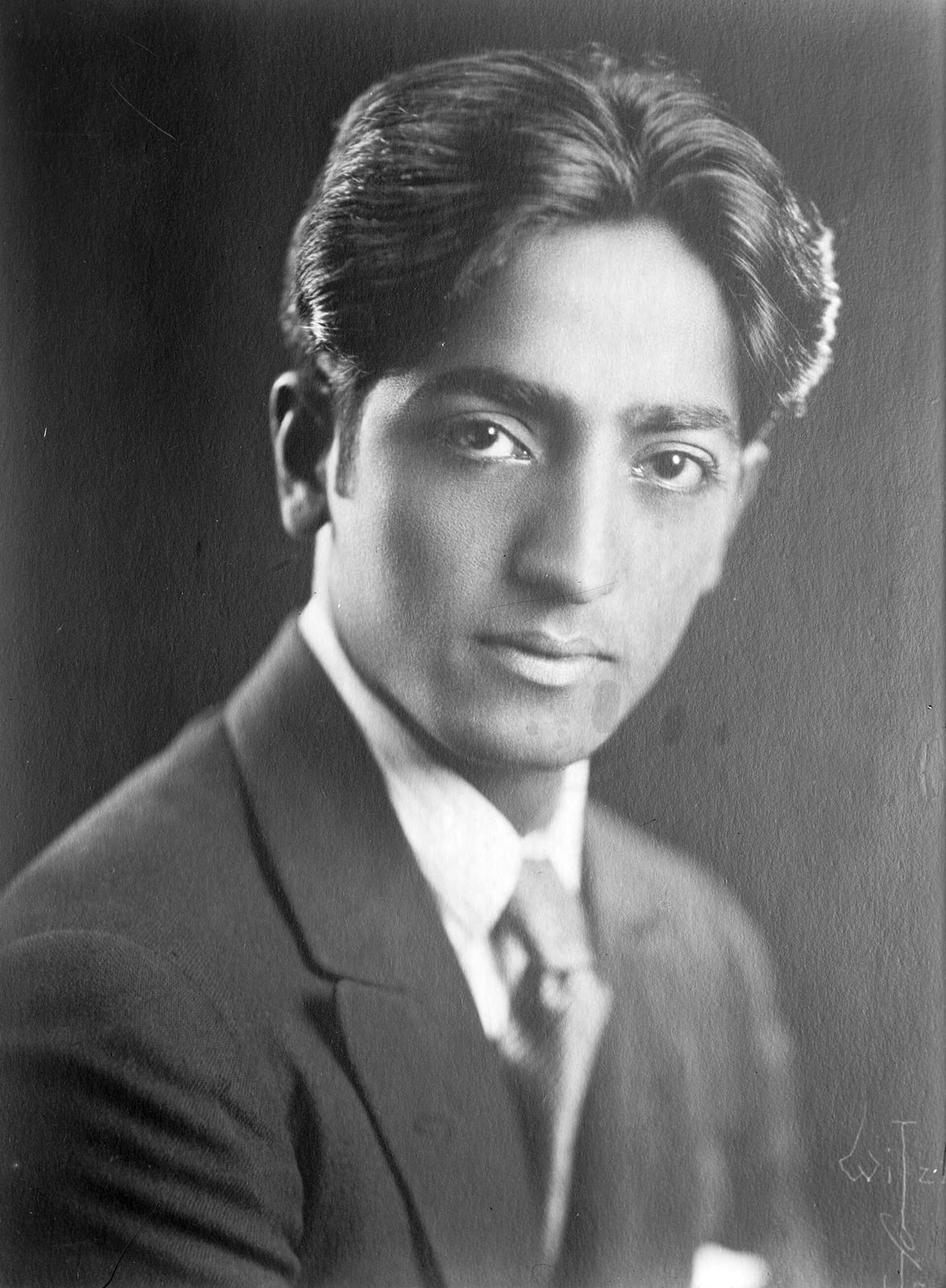
Twenty-one chapters and thirty-eight questions covering the whole of his mature thought: the individual and society, self-knowledge, belief, fear, relationship, the thinker and the thought, time and transformation. Huxley's foreword presented it to the educated English-speaking public as a radical critique of symbols and ideologies. It was the book that led David Bohm to seek him out and remains the most cited gateway to his work.
amazon.com · Link to the store.
What it is about
The First and Last Freedom is the book that introduced Jiddu Krishnamurti to the wider Western reading public and, seventy years on, it remains the most common gateway to his thought. It is not a treatise: it is a selection of talks and of answers to questions from audiences, arranged by theme, in which Krishnamurti already sets out, fully matured, the ideas he would go on repeating, with variations, for another thirty years.
Its starting thesis is as simple as it is uncomfortable: the world's crisis — war, nationalism, exploitation, organised suffering — is not a political, economic or religious problem that a better system could solve, but the projection of what each individual is inwardly. Society is the outcome of our relationships; if relationship is made of fear, ambition, envy and the craving for security, any outward reform will reproduce the same disorder with a different face. Hence the only serious starting point is self-knowledge, understood not as analytical introspection or an accumulation of psychological knowledge, but as an attentive, moment-to-moment observation of how one's own mind works in daily life.
From that core the book dismantles, one by one, the props with which human beings try to escape from themselves: belief, which divides and dulls; the effort to become something else, which perpetuates the conflict between what is and what should be; the authority of teachers, organisations and techniques of meditation; the notion that transformation is a gradual process that requires time. Krishnamurti argues that thought, by its very nature, is the response of memory and cannot produce the new, and that the "thinker" who claims to direct and correct his thoughts is not an entity separate from them but another product of the same thinking. When this is truly seen — not as a conclusion but as a perceived fact — inner conflict loses its basis and the mind can fall silent. Only in that stillness, he says, does something appear that is not a fabrication of the mind and that he declines to name.
The work matters for two reasons. For its content, because it condenses with rare clarity a radical critique of institutional religion, of ideologies and of the spiritual search itself, without offering any method or doctrine in return. And for its form, because in the answers of the second part one sees Krishnamurti at work: he turns the question back, refuses to console, and makes the questioner look at the problem instead of seeking a solution. Reading it well means accepting that game; whoever looks for a system in it will come away frustrated, and whoever reads it as an invitation to self-observation will find one of the most demanding and lucid texts of twentieth-century spirituality.
Authorship note
A selection of talks from 1947–1952 and answers to questions, edited by D. Rajagopal, with a foreword by Aldous Huxley.
Context of composition
The book was published in 1954, simultaneously in London and New York, when Krishnamurti was fifty-nine. Twenty-five years earlier he had dissolved the Order of the Star, the organisation the Theosophical Society had founded to proclaim him the coming World Teacher, and since then he had spoken on his own, without formal followers. After the Second World War years, which he spent largely withdrawn in Ojai (California), he resumed public talks in 1947 in newly independent India, where he drew large crowds, and later in Europe and the United States.
The material comes from those talks and from the question sessions of the immediately following years (the publisher's note places them between 1947 and 1952). It was selected and arranged by D. Rajagopal, his collaborator and editorial manager at the time. The foreword was written by Aldous Huxley, his friend since the late 1930s, who saw in him a critique of symbols and ideologies akin to his own concerns. Its intended reader was thus the educated post-war reader, disenchanted with the great political and religious doctrines.
Structure
- 01
Foreword by Aldous Huxley
Huxley presents Krishnamurti as a thinker who denounces the idolatry of words, symbols and systems, and places him in a tradition of inner freedom over against ideologies. It is a personal reading, written from Huxley's own concerns, but it remains one of the best short introductions to the work.
- 02
Chapters 1–4: the problem and the starting point
Introduction, "What Are We Seeking?", "Individual and Society" and "Self-Knowledge". They set out the central thesis: the world's crisis is the individual's crisis, and the search for security, gratification or teachers is an escape. The only possible beginning is to understand oneself in everyday relationship.
- 03
Chapters 5–9: the mechanisms of the self
"Action and Idea", "Belief", "Effort", "Contradiction" and "What Is the Self?". They analyse how the idea interposes itself between perception and action, how belief isolates, and how the effort to become sustains the inner contradiction that constitutes the self.
- 04
Chapters 10–15: fear, desire, relationship
"Fear", "Simplicity", "Awareness", "Desire", "Relationship and Isolation" and "The Thinker and the Thought". This is the heart of the book: choiceless observation of fear and desire, relationship as the mirror in which one discovers oneself, and the thesis that the thinker is not separate from thought.
- 05
Chapters 16–21: the limits of thought and time
"Can Thinking Solve Our Problems?", "The Function of the Mind", "Self-Deception", "Self-Centred Activity", "Time and Transformation" and "Power and Realization". They argue that thought cannot solve what it itself creates and that transformation is not gradual: it happens in seeing, not in progressing.
- 06
Part two: 38 questions and answers
Answers to audience questions on the present crisis, nationalism, spiritual teachers, discipline, loneliness, suffering, war, sex, love, death, prayer, God, memory and the meaning of life. Here the dialogical method is visible: Krishnamurti turns the question back instead of answering it.
Main themes
The individual is the world
Society is not an abstract entity that can be reformed from outside but the sum of our relationships. Wars, frontiers and inequalities are the collective projection of each person's greed, fear and need for security. That is why Krishnamurti dismisses outward revolutions and utopias: only a transformation of the individual, which does not wait for others, truly alters the social structure.
Self-knowledge and choiceless awareness
To know oneself is not to analyse oneself or follow a psychology, but to observe one's own thoughts, reactions and motives as they arise, without condemning or justifying them. That choiceless awareness — which neither picks what it likes nor rejects what disturbs it — is for Krishnamurti the only path that is not a path: it is not practised as a technique, because every technique introduces an end and, with it, conflict.
The thinker and the thought
We believe there is a self that thinks, judges and corrects its thoughts from outside. Krishnamurti holds that this "thinker" is a creation of thought, which separates itself in order to secure permanence and control. As long as the division persists there is conflict: the observer fights the observed. To see that they are one is, for him, the end of inner struggle.
Against authority, belief and method
The book rejects gurus, churches, spiritual organisations and systems of meditation, including any attempt to turn his own words into doctrine. Belief, he says, divides human beings and replaces perception with an image. Discipline and imitation produce a mechanical mind. What he proposes is not another belief but the freedom to examine without props.
Time and transformation
We usually think inner change is a matter of time: tomorrow I shall be less violent, more serene. Krishnamurti sees in that gradualness a postponement that keeps intact what one wants to change. Transformation is not the result of a process but of an immediate perception of what is. Psychological time — becoming — is precisely what has to be understood and dropped.
Key passages
«"What you are, the world is."»
What you are, the world is.
The formula sums up the book's thesis: there is no world problem separate from the individual problem. Neither politics nor organised religion can change what arises from each person's relationship with others; that is why the work begins, and in a sense ends, with oneself.
«"The thinker is the thought."»
The thinker is the thought.
This is the most characteristic and difficult idea in the book. Krishnamurti denies that there is an independent self that watches over and corrects the mind; the watcher is another form of thought. What he proposes is not to accept this as a thesis but to verify it by observing, and to see what happens to conflict when the division disappears.
Reception and influence
The book was received at once in the English-speaking world, largely thanks to Huxley's foreword, which opened the doors of an educated public with no connection to Theosophy. It became Krishnamurti's signature title and has been translated into dozens of languages; in Spanish it has circulated for decades in several editions as La libertad primera y última.
Its best-known influence was on the physicist David Bohm, who came across it in an English library in the late 1950s, was struck by the analysis of the observer and the observed, and wrote to Krishnamurti: a dialogue of a quarter of a century followed, recorded in works such as The Ending of Time. It also left its mark on psychotherapists, educators and the counterculture of the sixties, although Krishnamurti always refused to be adopted as a guide.
Critics have pointed to its repetitiveness, natural in a text made of talks; to the paradox of a teaching that denies every method yet demands an attentiveness few readers know how to begin; and to the abstraction of its social diagnoses. Its publishing history has a shadow too: the relationship between Krishnamurti and Rajagopal, who had prepared the volume, broke down in the late 1960s and led to long lawsuits over the rights to his works, settled in the 1980s.
How to read it
It is best read slowly, one chapter per sitting, pausing whenever the text asks you to look at something in yourself: it is not a book for underlining conclusions but for testing them. One can begin with chapters 2 to 4, which set out the problem, and leave chapter 15 ("The Thinker and the Thought"), the hardest, for last. The second part, of questions and answers, can be read out of order and is a good way in for anyone who gets lost in continuous prose. It is worth choosing an edition that keeps Huxley's foreword. Readers of translations should check the English now and then, since some render terms such as *awareness*, which Krishnamurti keeps deliberately plain, in a more technical way.
Editions and translations
Editions in your language first, without hiding the others. Each with its cover and its store.
English
Jiddu Krishnamurti
The First and Last Freedom
The Conscious LibraryThe First and Last Freedom
Harper & Row, 1975
ISBN 0060648317
Jiddu Krishnamurti
The First and Last Freedom
The Conscious Library
Español
Jiddu Krishnamurti
La libertad primera y última
The Conscious LibraryJiddu Krishnamurti
La libertad primera y última
The Conscious LibraryLa libertad primera y última
Kier, 2000
ISBN 9789501721287

La libertad primera y última
Kairós, 2007
ISBN 9788472453548
Français

La première et dernière liberté
Le Livre de Poche (LGF), 1995
ISBN 9782253138211
Further reading
- Commentaries on Living
Written in the same years, at Huxley's urging, they show the same ideas embodied in concrete encounters and landscapes; they are the narrative complement to this book.
- Freedom from the Known
Fifteen years later, it sets out the same core in continuous prose without questions; reading both shows what stayed constant and what was refined in his teaching.
- The Ending of Time
Dialogues with David Bohm, this book's most famous reader, which explore in depth the questions of thought, time and the observer.
- Who Am I? (Nan Yar)
Another radical inquiry into the nature of the self in twentieth-century India, but from within the Advaita tradition and with an explicit practice, self-inquiry, which Krishnamurti would have rejected as a method.
Other works by Jiddu Krishnamurti
- At the Feet of the Master · 1910
- The Kingdom of Happiness · 1927
- The Immortal Friend · 1928
- Truth is a Pathless Land · 1929
- Education and the Significance of Life · 1953
- Commentaries on Living · 1956
- Life Ahead · 1963
- Think on These Things · 1964
- Freedom from the Known · 1969
- The Only Revolution · 1970
- The Urgency of Change · 1970
- The Flight of the Eagle · 1971
- You Are the World · 1972
- The Awakening of Intelligence · 1973
- Beginnings of Learning · 1975
- Krishnamurti's Notebook · 1976
- Truth and Actuality · 1977
- The Wholeness of Life · 1978
- Meditations · 1979
- Exploration into Insight · 1979
- Letters to the Schools · 1981
- Krishnamurti's Journal · 1982
- The Network of Thought · 1982
- The Ending of Time · 1985
- The Future of Humanity · 1986
- Last Talks at Saanen 1985 · 1986
- Krishnamurti to Himself · 1987
- The Future Is Now · 1988
- The Collected Works of J. Krishnamurti · 1991
- The Book of Life · 1995
- Total Freedom · 1996
- The Limits of Thought · 1999
- Education as Service · 1912
- Towards Discipleship · 1926
- The Search · 1927
- The Pool of Wisdom · 1928
- Life in Freedom · 1928
- The Song of Life · 1931
- Early Writings · 1969
- From Darkness to Light · 1980
- The Impossible Question · 1972
- Beyond Violence · 1973
- Tradition and Revolution · 1972
- Krishnamurti in India, 1970–71 · 1971
- Krishnamurti on Education · 1974
- Talks with American Students · 1988
- Questions and Answers · 1982
- Mind Without Measure · 1984
- The Flame of Attention · 1984
- The Way of Intelligence · 1985
- Washington D.C. 1985 Talks · 1988
- Meeting Life · 1991
- A Wholly Different Way of Living · 1991
- On Freedom · 1991
- On Nature and the Environment · 1991
- On God · 1992
- On Living and Dying · 1992
- On Relationship · 1992
- On Right Livelihood · 1992
- On Mind and Thought · 1993
- On Conflict · 1994
- On Fear · 1994
- On Learning and Knowledge · 1994
- On Love and Loneliness · 1994
- On Truth · 1995
- Action · 1990
- Choiceless Awareness · 1992
- The Mirror of Relationship · 1992
- Fire in the Mind · 1995
- Questioning Krishnamurti · 1996
- Krishnamurti: Reflections on the Self · 1997
- This Light in Oneself · 1999
- All the Marvelous Earth · 2000
- To Be Human · 2000
- What Are You Doing with Your Life? · 2001
- Relationships: To Oneself, to Others, to the World · 2004
- Can Humanity Change? · 2003
- Facing a World in Crisis · 2005
- Inward Revolution · 2005
- The Whole Movement of Life Is Learning · 2006
- As One Is · 2007
- In the Problem Is the Solution · 2008
- Where Can Peace Be Found? · 2011
- The Quotable Krishnamurti · 2011
- Happy Is the One Who Is Nothing · 2020
- What Are You Looking For? · 2021
- Why Should I Meditate? · 2023
- Can Conflict End? · 2023
- How to Find Peace · 2024
- The Penguin Krishnamurti Reader · 1970
- The Second Penguin Krishnamurti Reader · 1973
- Sayings of J. Krishnamurti · 1986
Sources
- Krishnamurti, J. The First and Last Freedom. Prólogo de Aldous Huxley. Nueva York: Harper & Brothers; Londres: Victor Gollancz, 1954.
- Krishnamurti, J. *The First and Last Freedom*. Prólogo de Aldous Huxley. Londres: Victor Gollancz, 1954; Nueva York: Harper & Brothers, 1954.
- Lutyens, Mary. *Krishnamurti: The Years of Fulfilment*. Londres: John Murray, 1983.
- Lutyens, Mary. *The Life and Death of Krishnamurti*. Londres: John Murray, 1990.
- Jayakar, Pupul. *Krishnamurti: A Biography*. San Francisco: Harper & Row, 1986.
- Peat, F. David. *Infinite Potential: The Life and Times of David Bohm*. Reading (Mass.): Addison-Wesley, 1997.
- Krishnamurti, J., y David Bohm. *The Ending of Time*. Londres: Victor Gollancz, 1985.
Affiliate link: if you buy through it, the library may receive a commission at no extra cost to you. When an edition's real cover is not available, we show an illustrative library cover.