Heraclitus zugeschrieben
«Everything flows (panta rhei).»
Falsch zugeschrieben
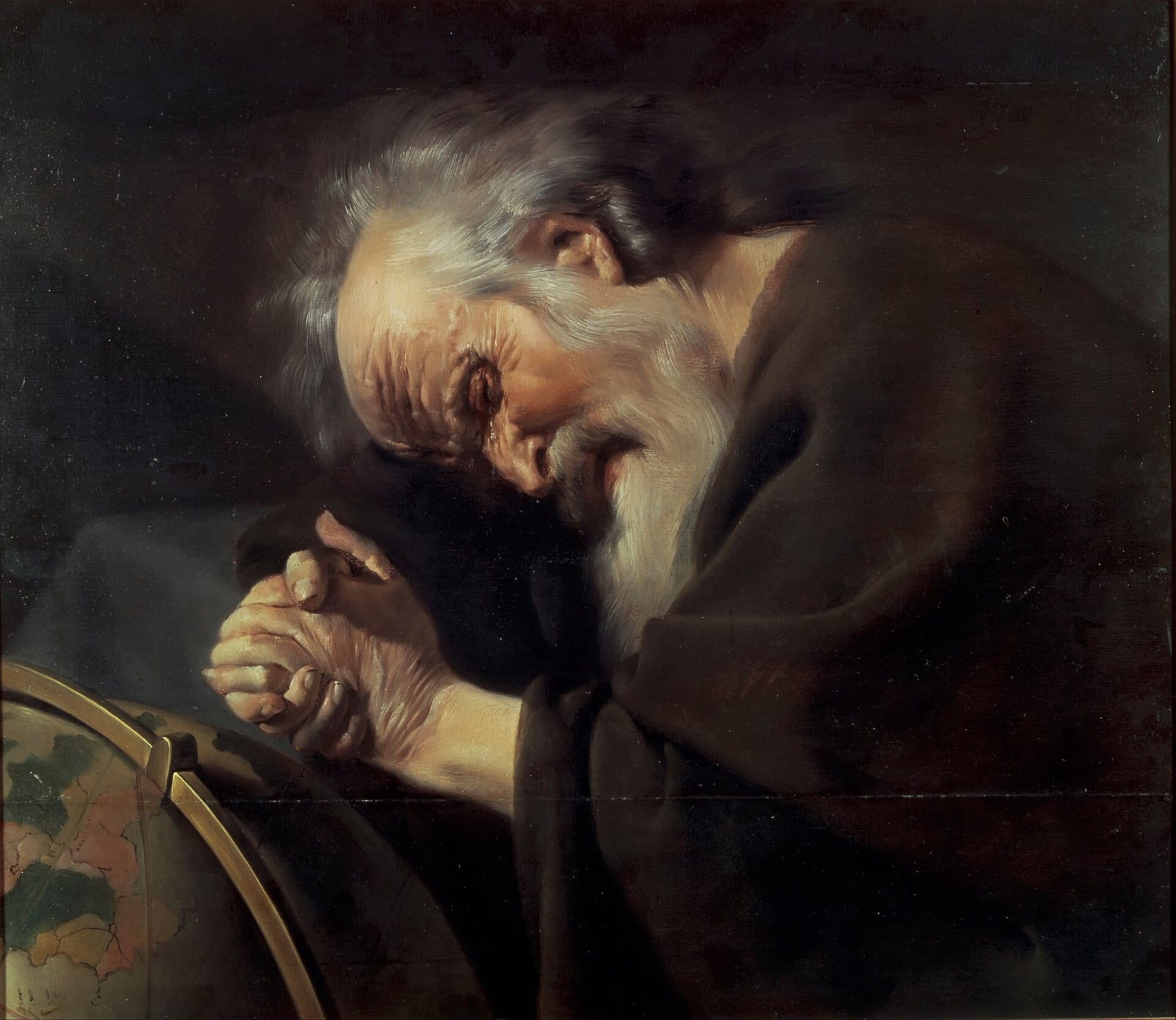
Urteil
Es steht nicht im Werk von Heraclitus
The formula appears in no fragment. It sums up Plato's reading of Heraclitus ("everything moves and nothing stays", Cratylus 402a), and the literal expression πάντα ῥεῖ comes from late commentators such as Simplicius. Many scholars think Heraclitus stressed the stability resulting from measured change, not universal flux.
Was wirklich gesagt wurde
Belegte Worte von Heraclitus
«Though this Word is true evermore, yet men are as unable to understand it when they hear it for the first time as before they have heard it at all. For, though all things come to pass in accordance with this Word, men seem as if they had no experience of them, when they make trial of words and deeds such as I set forth, dividing each thing according to its nature and showing how it truly is. But other men know not what they are doing when awake, even as they forget what they do in sleep.»
DK 22 B1, transmitido por Sexto Empírico, Contra los matemáticos VII 132; Aristóteles (Retórica III 5) lo cita como comienzo del libro. Griego: Diels-Kranz; inglés: John Burnet, Early Greek Philosophy (1908), fr. 2 de la numeración de Bywater; español: traducción propia.
«It is wise to hearken, not to me, but to my Word, and to confess that all things are one.»
DK 22 B50, en Hipólito, Refutación de todas las herejías IX 9.1. Griego: Diels-Kranz; inglés: John Burnet, Early Greek Philosophy (1908), fr. 1 de la numeración de Bywater; español: traducción propia.
«This world, which is the same for all, no one of gods or men has made; but it was ever, is now, and ever shall be an ever-living Fire, with measures kindling, and measures going out.»
DK 22 B30, en Clemente de Alejandría, Stromata V 104.2. Griego: Diels-Kranz; inglés: John Burnet, Early Greek Philosophy (1908), fr. 20 de la numeración de Bywater; español: traducción propia.