
Written work · Essential works
Isis Unveiled
Isis Unveiled: A Master-Key to the Mysteries of Ancient and Modern Science and Theology
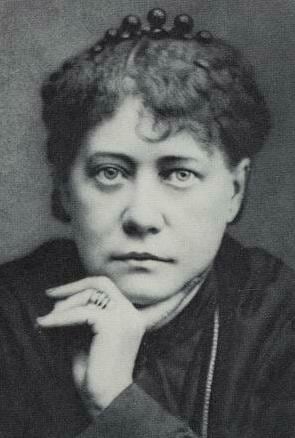
Blavatsky's first major work, in two volumes ('Science' and 'Theology'). It attacks both the materialism of Huxley and Tyndall and the dogmatism of the churches, arguing that a primordial 'Wisdom-Religion', guarded by the ancient mysteries, the Kabbalah, Hermeticism and the schools of India, underlies all religions as their fragments. It ranges over magic, spiritualism, Paracelsus, the Vedas and the Gospels with torrential and disorderly erudition. The doctrine of reincarnation does not yet appear clearly; the author would develop it later. It is, above all, the manifesto of an occultism that wants to be science.
amazon.com · Link to the store.
What it is about
Isis Unveiled is Helena Petrovna Blavatsky's first major book and, strictly speaking, the intellectual birth certificate of modern Theosophy. Its subtitle says it all: "a master-key to the mysteries of ancient and modern science and theology". Across two volumes and some thirteen hundred pages, the author fights a war on two fronts. Against the materialist science of her day — Huxley, Tyndall, the positivism that reduced the universe to atoms in motion — she argues that there are forces and faculties physics cannot measure and that the ancients knew. Against the Christian churches she argues that their dogmas are degraded, and often plagiarised, versions of an older wisdom.
That older wisdom is the book's central thesis: a primordial "wisdom-religion", guarded by initiates down the centuries, of which the Egyptian mysteries, the Kabbalah, Neoplatonism, Hermeticism, the Vedas and Buddhism would be more or less faithful fragments. India already appears, in the closing chapter of the first volume, as "the cradle of the race", and the East as the keeper of what the West forgot. The author champions Paracelsus, the alchemists and the Neoplatonists against academic science, and offers a reading of spiritualist phenomena — so fashionable in 1870s America — that ascribes them not to the spirits of the dead but to hidden natural forces, to the "astral light" and to elemental entities.
The book is torrential and disorderly. It mixes genuine learning, second-hand quotation, travel anecdote, journalistic polemic and prophecy. Many of her later doctrines are not yet settled: reincarnation, which would become a pillar of The Secret Doctrine, appears here ambiguously and is largely denied for the ordinary case, something the author herself had to explain years later. There is as yet no scheme of seven principles and no cosmogony of the Stanzas of Dzyan.
Its importance, nonetheless, is enormous. Isis Unveiled fixed the gesture that would define modern esotericism: the idea that all religions share a common esoteric core, that science and religion can be reconciled in a higher knowledge, and that this knowledge may be sought in the East. From that intuition, far more than from the book's details, drew the Theosophical Society, the spiritual orientalism of the late nineteenth century and much of what we now call alternative spirituality. To read it is to witness the moment that way of thinking was first formulated, with all its ambition and all its seams showing.
Authorship note
Written in New York between 1875 and 1877 with the editorial help of H. S. Olcott and Alexander Wilder, who wrote the preface. W. E. Coleman documented some two thousand passages taken without acknowledgement from about a hundred works.
Context of composition
Blavatsky reached New York in 1873 and moved first in spiritualist circles, where in 1874 she met the lawyer and journalist Henry Steel Olcott. In September 1875 the two of them, with William Quan Judge and others, proposed the Theosophical Society, formally inaugurated on 17 November; that same year she began writing the book; according to Olcott, the first sheets were drafted during a stay in Ithaca, at the home of Professor Hiram Corson. The work went on in the apartments they shared in Manhattan, the last of them nicknamed the "Lamasery", on West 47th Street. Olcott corrected the author's English for months and left in Old Diary Leaves an account of the writing — with pages that, he claimed, appeared in different handwritings — which is part of the book's legend. The Platonist Alexander Wilder revised the manuscript and advised the publisher. The intended title was The Veil of Isis, but it had to be changed because a work of that name already existed. The readership it addressed was the educated English-speaking reader, disenchanted both with materialist Darwinism and with dogmatic Christianity, and drawn to spiritualism.
Structure
- 01
Preface and "Before the Veil" (vol. I)
The preface states the intention — to help the student detect the vital principles of the ancient systems — and the combative tone of the work. "Before the Veil" is a long introduction with a glossary of terms (adept, magic, theurgy, astral light…) and a first account of Plato's philosophy and the doctrine of emanations.
- 02
Volume I, "Science", chs. I–VII
From "Old Things with New Names" to "The Elements, Elementals, and Elementaries": the author argues that modern discoveries are rediscoveries, attacks scientists who deny the phenomena ("Blind Leaders of the Blind") and puts forward her theory of the ether or "astral light" as the medium of psychic phenomena.
- 03
Volume I, "Science", chs. VIII–XV
Mysteries of nature, cyclic phenomena, the inner and outer man, psychological marvels, the "impassable chasm" between matter and spirit, and the distinction between reality and illusion. The volume closes with two historical chapters: "Egyptian Wisdom" and "India the Cradle of the Race".
- 04
Volume II, "Theology", chs. I–VI
A frontal attack on the churches: "The Church: Where Is It?", "Christian Crimes and Heathen Virtues", the divisions of early Christianity, Oriental cosmogonies against the biblical record, the mysteries of the Kabbalah and the esoteric doctrines of Buddhism which, the author claims, Christianity parodied.
- 05
Volume II, "Theology", chs. VII–XII
Heresies and secret societies, Jesuitry and Masonry, the Vedas and the Bible, the devil-myth, a comparison of the fruits of Buddhism and Christianity, and "Conclusions and Illustrations", which sum up the book's doctrine in ten propositions and recount marvels witnessed in the East.
Main themes
The primordial wisdom-religion
The book's guiding idea: beneath the diversity of cults lies a single, ancient, esoteric doctrine handed down by initiates. The historical religions would be its dialects, and their coincidences — trinities, saviours, floods — prove not borrowing from one another but a common origin. This thesis, rejected today by the history of religions, was nevertheless the great engine of modern spiritual comparativism.
Against scientific materialism
Blavatsky does not attack science but its claim to have explained everything. She accuses scientists of denying without examination the phenomena that do not fit their system, and champions the tradition of Paracelsus, Van Helmont or the Neoplatonists as a broader science. Her argument often rests on physics now superseded, but it anticipates the tone of many later critiques of reductionism.
Against dogmatic theology
The second volume is an indictment of institutional Christianity: its history of persecution, its internal disputes and its dependence, the author claims, on pagan and Buddhist myths. She nonetheless distinguishes between the churches and the figure of Jesus, whom she presents as an initiate. The tone is often pamphleteering and the sources uneven.
Phenomena and the astral light
Written at the height of the spiritualist vogue, the book offers an alternative explanation of table-turning, materialisations and mediums: it is not the dead who manifest, but forces of nature, the trained will of the adept and entities without moral consciousness. The "astral light", partly borrowed from Éliphas Lévi, is the universal medium in which everything is recorded.
The East as keeper
India, Tibet and Buddhism appear as the places where the ancient wisdom has been best preserved. It is an idealised vision, poorly informed in its details, but decisive: it foreshadows the Theosophical Society's move to India in 1879 and the role Theosophy would play in the Hindu and Buddhist revivals of the late nineteenth century.
Key passages
«The work now submitted to public judgment is the fruit of a somewhat intimate acquaintance with Eastern adepts and study of their science. […] It is an attempt to aid the student to detect the vital principles which underlie the philosophical systems of old.»
The work now submitted to public judgment is the fruit of a somewhat intimate acquaintance with Eastern adepts and study of their science. It is offered to such as are willing to accept truth wherever it may be found, and to defend it, even looking popular prejudice straight in the face. It is an attempt to aid the student to detect the vital principles which underlie the philosophical systems of old.
The book's opening lines already contain its double wager: an authority that comes not from the academy but from "Eastern adepts", and a comparativist programme. The Spanish rendering is our own.
«Men and parties, sects and schools are but the mere ephemera of the world's day. TRUTH, high-seated upon its rock of adamant, is alone eternal and supreme.»
Men and parties, sects and schools are but the mere ephemera of the world's day. TRUTH, high-seated upon its rock of adamant, is alone eternal and supreme.
It anticipates the motto the Theosophical Society would adopt, "there is no religion higher than truth". Truth is placed above every allegiance, including one's own school.
«The universe is the combination of a thousand elements, and yet the expression of a single spirit — a chaos to the sense, a cosmos to the reason.»
The universe is the combination of a thousand elements, and yet the expression of a single spirit—a chaos to the sense, a cosmos to the reason.
It closes an account of Pythagorean number mysticism. The formula sums up the monism running through all of Blavatsky's work: multiplicity is appearance; unity, intelligibility.
«The author dedicates these volumes to the Theosophical Society, which was founded at New York, A.D. 1875, to study the subjects on which they treat.»
The Author dedicates these Volumes to the Theosophical Society, which was founded at New York, A.D. 1875, to study the subjects on which they treat.
The dedication dates the book and ties it to an institution: *Isis* is born as the study programme of a newly founded society, not as an isolated revelation.
Reception and influence
The first printing of a thousand copies, published by J. W. Bouton in September 1877, sold out within days, and the book was reprinted several times in the following years. The New York press greeted it with a mixture of astonishment and ridicule; the spiritualist circles it corrected read it warily, and scientists ignored it. Among educated readers, however, it made Blavatsky a public figure and gave the young Theosophical Society a reference book.
The harshest criticism came later. In 1895 the spiritualist William Emmette Coleman published, as an appendix to Vsevolod Solovyov's A Modern Priestess of Isis, a study attributing to the book some two thousand passages taken without acknowledgement from around a hundred works, including handbooks on the history of magic and works of comparative mythology. Blavatsky herself, in the article "My Books" (Lucifer, May 1891), admitted errors and blamed some of them on editing and haste, particularly regarding reincarnation. René Guénon, in Le Théosophisme (1921), made these inconsistencies the core of his condemnation.
For all that, Isis Unveiled remains in print. There are translations into French, Russian, Portuguese and Spanish (from several publishers, among them Sirio, in four volumes), and an edition annotated by Boris de Zirkoff that identifies many of the quoted sources. For the history of esotericism it is an indispensable document.
How to read it
This is not a book to read straight through. It is best to begin with the preface, "Before the Veil" and the last two chapters of the first volume ("Egyptian Wisdom" and "India the Cradle of the Race"), which give the thesis in pure form; then the closing chapter of the second volume, "Conclusions and Illustrations", which sums it up in propositions. The rest can be consulted by topic. For a critical reading, Boris de Zirkoff's edition, which traces the sources, is very helpful; the first edition is freely available on Project Gutenberg. Read alongside a critical biography, the book gains: it makes sense as a document of its age rather than as a treatise.
Editions and translations
Editions in your language first, without hiding the others. Each with its cover and its store.
English
Helena Blavatsky
Isis Unveiled, vols. 1–2
The Conscious LibraryIsis Unveiled, vols. 1–2
Project Gutenberg, 2022
Textos íntegros gratuitos: #68705 (vol. 1) y #75871 (vol. 2).

Isis Unveiled
Theosophical University Press, Pasadena, 1998
ISBN 9780911500035
Edición facsímil en 2 vols. (ISBN-10 0911500030 en Open Library).

Isis Unveiled
Theosophical Publishing House / Quest, 1994
ISBN 9780835602471
Edición en 2 vols. preparada por Boris de Zirkoff (Collected Writings edition).

Isis Unveiled
Theosophy Company, Los Ángeles, 1931
ISBN 9780938998013
Facsímil de la edición original, reimpreso por la United Lodge of Theosophists.
Helena Blavatsky
Isis Unveiled
The Conscious LibraryIsis Unveiled
J. W. Bouton, Nueva York, 1877
Primera edición, 2 vols. Digitalizada en Internet Archive (cu31924092304579).
Português

Español
Helena Blavatsky
Isis sin velo
The Conscious LibraryIsis sin velo
Editorial Humanitas, Barcelona, 1998
ISBN 9788479100896
Tomo II; tomo III ISBN 9788479100902.
Helena Blavatsky
Isis sin velo
The Conscious LibraryIsis sin velo
Editorial Sirio, Málaga, 2000
ISBN 9788478083251
Edición en 4 tomos.
Русский
Helena Blavatsky
Разоблачённая Изида
The Conscious LibraryРазоблачённая Изида
Сталкер, Donetsk, 1999
ISBN 9789665962199
Edición rusa en 2 vols.
Français

Isis dévoilée, tome 1
Éditions Adyar, París, 2000
ISBN 9782850001345
Further reading
- The Secret Doctrine
Eleven years later Blavatsky arranges into a system — three propositions, cosmic cycles, root races — what in *Isis* was scattered intuition, and revises her stance on reincarnation.
- The Key to Theosophy
Her clearest exposition, in question-and-answer form: the best doorway before tackling the major works.
- The Ancient Wisdom
Twenty years later Besant takes up the thesis of a wisdom common to all religions and turns it into a systematic handbook.
Other works by Helena Blavatsky
- The Secret Doctrine · 1888
- The Key to Theosophy · 1889
- The Voice of the Silence · 1889
- The Theosophical Glossary · 1892
- From the Caves and Jungles of Hindostan · 1879
- Nightmare Tales · 1892
- Studies in Occultism · 1895
- A Modern Panarion · 1895
- Collected Writings · 1950
- Esoteric Instructions · 1889
- Gems from the East · 1890
- Transactions of the Blavatsky Lodge · 1890
- The Letters of H. P. Blavatsky to A. P. Sinnett · 1925
- The Letters of H. P. Blavatsky, vol. 1 · 2003
- The Durbar in Lahore · 1881
- The Secret Doctrine, Volume III · 1897
- The People of the Blue Mountains · 1883
- Some Unpublished Letters of Helena Petrovna Blavatsky · 1929
- Five Messages to the American Theosophists · 1888
- The Original Programme of the Theosophical Society · 1931
- Practical Occultism · 1888
- Raja-Yoga, or Occultism · 1931
- Dynamics of the Psychic World · 1972
- Personal Memoirs of H. P. Blavatsky · 1937
- H. P. B. Speaks · 1950
- The Inner Group Teachings of H. P. Blavatsky · 1985
- The Esoteric Character of the Gospels · 1887
- Theosophical Articles · 1982
Sources
- Open Library, autora H. P. Blavatsky (OL2889852A): registros de obras y ediciones con ISBN consultados el 2026-10-22.
- H. P. Blavatsky, *Isis Unveiled: A Master-Key to the Mysteries of Ancient and Modern Science and Theology*, 2 vols., Nueva York, J. W. Bouton, 1877 (4.ª ed. 1878, Project Gutenberg #68705 y #75871).
- H. P. Blavatsky, *Isis Unveiled*, ed. de Boris de Zirkoff, 2 vols., Wheaton, Theosophical Publishing House, 1972 (con «How Isis Unveiled Was Written»).
- Henry Steel Olcott, *Old Diary Leaves: The True Story of the Theosophical Society*, First Series, Nueva York/Londres, Putnam, 1895.
- William Emmette Coleman, «The Sources of Madame Blavatsky's Writings», apéndice a Vsevolod S. Solovyoff, *A Modern Priestess of Isis*, Londres, Longmans, Green & Co., 1895.
- H. P. Blavatsky, «My Books», *Lucifer*, vol. VIII, n.º 45, mayo de 1891.
- Nicholas Goodrick-Clarke, *Helena Blavatsky*, Berkeley, North Atlantic Books, 2004.
- James A. Santucci, «Blavatsky, Helena Petrovna», en W. J. Hanegraaff (ed.), *Dictionary of Gnosis & Western Esotericism*, Leiden, Brill, 2006, pp. 177–185.
- René Guénon, *Le Théosophisme, histoire d'une pseudo-religion*, París, Nouvelle Librairie Nationale, 1921.
Affiliate link: if you buy through it, the library may receive a commission at no extra cost to you. When an edition's real cover is not available, we show an illustrative library cover.